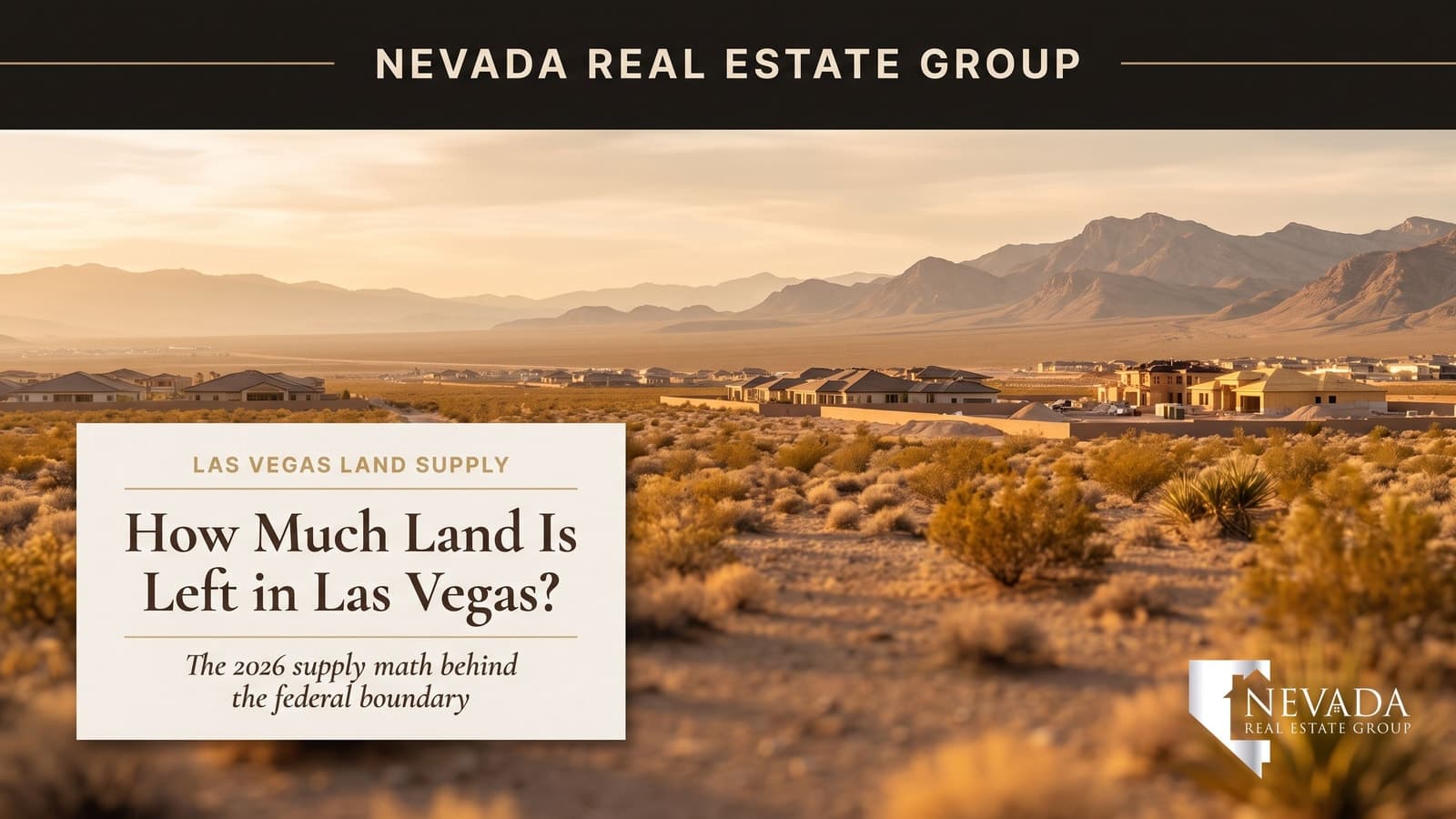

Every conversation about Las Vegas home prices eventually reaches the same question, usually phrased as a complaint: why does a metro surrounded by empty desert behave like a land-constrained market? The answer is that the desert is not available. It is federal, and the line that separates what can be built from what cannot was drawn by Congress.
The Las Vegas Valley has roughly 25,000 developable acres left, inside a federal disposal boundary set by the Southern Nevada Public Land Management Act of 1998. Land outside that line is not for sale at any price. About 44,000 acres are already conveyed, and the BLM releases the rest in auctions of a few hundred acres — 223 acres across 22 parcels in April 2026.
- Roughly 25,000 developable acres remain inside the valley's federal disposal boundary.
- Nearly 44,000 acres have already been sold or conveyed since 1998 under SNPLMA.
- The April 2026 auction offered just 223 acres across 22 parcels in three jurisdictions.
- Auction proceeds split 85% to Nevada projects, 10% to the water authority, 5% to education.
- Expanding the boundary requires an act of Congress — not a Clark County vote.
Why Is Las Vegas Land-Constrained When It Is Surrounded by Desert?
Because almost none of that desert belongs to anyone who can sell it to a builder. Nevada is the most federally owned state in the country, and in Clark County the pattern is extreme: the Las Vegas Valley is a bowl of private land ringed by federal holdings, tribal land, military reservations, and conservation areas including Red Rock Canyon and Lake Mead National Recreation Area.
According to the Bureau of Land Management, the mechanism that governs which of that federal land can become housing is the Southern Nevada Public Land Management Act, passed in 1998. SNPLMA drew a disposal boundary around the Las Vegas Valley. Inside the line, BLM may sell parcels at public auction and the proceeds fund public projects. Outside the line, the land is simply not available — not expensive, not slow, not difficult. Unavailable.
That single distinction explains more about Las Vegas pricing than any local zoning debate. A builder in Dallas or Phoenix who wants more lots buys further out. A builder in Las Vegas who wants more lots waits for a federal auction.
How Much Developable Land Is Actually Left in the Valley?
Roughly 25,000 acres. That is the working figure for developable land remaining in the Las Vegas Valley, and at the start of Fiscal Year 2025 the BLM reported more than 27,000 acres still available for disposal inside the SNPLMA boundary.
To put 25,000 acres in perspective: a typical Las Vegas production subdivision runs four to six homes per acre. Even at the denser end, the entire remaining inventory represents something on the order of a decade and a half of construction at recent absorption rates — and that assumes every acre is buildable, which it is not. Some parcels are constrained by flood channels, some by utility corridors, some by topography, and some are committed to schools, parks, and public purposes rather than housing.
According to the BLM, nearly 44,000 acres have already been sold or conveyed since SNPLMA took effect, through both competitive auctions and Recreation and Public Purpose Act leases and patents. The valley has been spending down a fixed account for a quarter century.
There is a second, frequently confused bucket worth naming: infill. A Southern Nevada Strong study presented to the Regional Transportation Commission identified roughly 84,000 acres of vacant and partially vacant land countywide — an area larger than the entire city of Henderson — pointing to the Historic Westside, downtown Las Vegas, and downtown Henderson as redevelopment candidates. That figure measures scattered private parcels and underutilized lots, not the BLM's raw-land account, and RCG Economics has disputed how much of it is genuinely developable once ownership fragmentation, infrastructure, and parcel economics are counted. Both sides of that argument reinforce the core point of this article: whatever the true infill number, it is expensive, scattered, and slow — nothing about it repeals the auction math that governs large-scale homebuilding at the valley's edge.
| Measure | Figure | What it means |
|---|---|---|
| Acres sold or conveyed since 1998 | Nearly 44,000 | Most of the easy inventory is gone |
| Acres remaining for disposal (FY2025 start) | Over 27,000 | The account that is left |
| Developable acres remaining in the valley | Roughly 25,000 | After constraints and public uses |
| April 2026 auction size | 223 acres / 22 parcels | Release rate is slow and lumpy |
| Boundary expansion mechanism | Act of Congress | Not a local decision |
How Does the BLM Actually Sell Land to Builders?
Through public auction, in batches, on the federal government's timetable. The process is deliberately formal: BLM publishes a realty action in the Federal Register, identifies the parcels, sets minimum bids based on appraised fair market value, and holds a modified competitive sale.
The 2026 cycle is a good illustration of scale. According to the Bureau of Land Management, the agency proposed selling 22 parcels totaling 223 acres, with the auction set for April 28, 2026 — nine parcels in unincorporated Clark County, seven inside the City of Las Vegas, and six in Henderson. A separate offering put 893 acres on the block at an August auction.
Two hundred twenty-three acres is not a lot of housing. At five homes per acre it is roughly 1,100 lots across an entire metropolitan area, released in a single event that builders compete for nationally.
Prices reflect that competition. Individual SNPLMA sales have generated $138.5 million and $68 million in single events. Those are land costs, paid before a foundation is poured, and they flow into the price of every finished home on the parcel.
Where Does the Auction Money Go?
Not into the federal general fund, which surprises most people. Under SNPLMA the split is fixed:
- 85% to a special account funding Nevada projects — parks, trails, natural areas, capital improvements on federal land, acquisition of environmentally sensitive land, hazardous fuels reduction, and landscape restoration
- 10% to the Southern Nevada Water Authority for water infrastructure
- 5% to the State of Nevada for education
This is why the program has broad local support despite constraining supply. The trails, park improvements, and conservation acquisitions that Southern Nevadans use are substantially funded by selling the valley's remaining land. It is a genuine trade-off, not a villain story: the same mechanism that limits housing supply pays for a large share of the region's public amenities.
What Does the Land Constraint Do to Home Prices?
It puts a floor under them, and it changes what builders build.
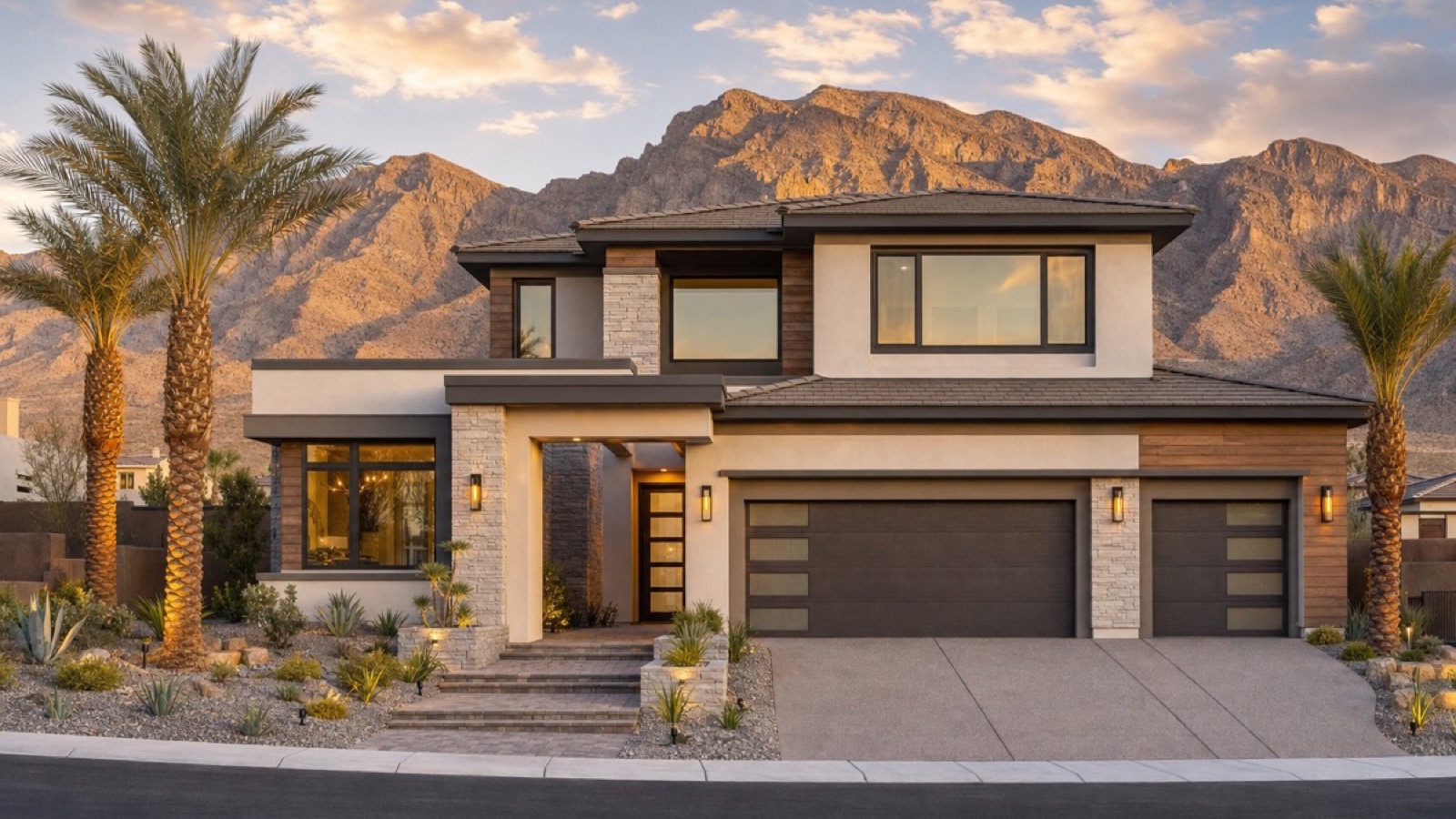
When finished-lot supply is scarce and expensive, three things follow predictably. Builders shift toward higher density, because more homes per acre spreads the land cost. They shift toward higher price points, because margin on an expensive lot is easier to make on a $700,000 home than a $350,000 one. And they compete harder for infill — older, closer-in parcels that were skipped the first time.
All three are visible in the valley right now. Lot sizes in new master plans have trended smaller. Entry-level detached product has thinned. Townhome and paired-home plans have proliferated in places that would have been single-family a decade ago.
The demand side matters just as much. Our own Clark County population growth analysis covers the other half of this equation — supply constraint only drives prices when population is still growing into it, and the rate of that growth is what determines how hard the constraint bites.
What Does a Finished Lot Actually Cost in Las Vegas?
This is where the abstraction becomes a number on a purchase contract. A builder's cost stack has three big components — raw land, horizontal development, and vertical construction — and the first two are exactly what the supply constraint inflates.
Raw auction land is bought by the acre. Horizontal development then adds grading, streets, sewer, water, dry utilities, drainage, and impact fees before a single lot can be sold. Industry practice across most US markets puts finished lot cost somewhere near 20% to 25% of the finished home price; in supply-constrained Western markets that share drifts upward, and Las Vegas has been drifting for a decade.
Run it against real valley price points. On a $450,000 new home, a 22% lot share is roughly $99,000 of dirt and improvements. On a $650,000 home it is about $143,000. On a $1,200,000 luxury home in a guard-gated enclave, the lot alone can run $264,000 or more — and on the western Summerlin ridgelines, custom homesites have traded far above that because the supply of view parcels is finite in a way the supply of houses is not.
| Finished home price | Lot at 20% | Lot at 25% | Typical product |
|---|---|---|---|
| $375,000 | $75,000 | $93,750 | Attached / townhome |
| $450,000 | $90,000 | $112,500 | Entry detached, small lot |
| $550,000 | $110,000 | $137,500 | Move-up detached |
| $650,000 | $130,000 | $162,500 | Larger master-plan detached |
| $850,000 | $170,000 | $212,500 | Premium master plan |
| $1,200,000 | $240,000 | $300,000 | Luxury / gated |
Those percentages are conventions, not quotes, and any individual community varies with terrain and impact fees. But the direction is the point: when dirt gets more expensive, the cheapest product is the first thing that stops being built, because a $75,000 lot under a $375,000 home leaves very little room for anything to go wrong.
That is the mechanism behind a pattern buyers notice and misread. It is not that builders stopped wanting to sell affordable homes. It is that a fixed land cost is a far larger share of a small home's price, so the entry-level product gets squeezed out first. Across our 9,600+ closed transactions we've watched the valley's true entry price ratchet upward in steps that line up with land cost rather than with mortgage rates.
The public auction numbers make the same point from the other direction. Individual SNPLMA sales have generated $138.5 million and $68 million in single events — money paid for raw, unimproved desert before any horizontal work begins. According to the Bureau of Land Management, those proceeds flow to public projects rather than to the seller of a house, which means the cost lands entirely on the eventual homebuyer.
How Should Buyers Use This When Comparing New Construction to Resale?
Compare the total, not the sticker. A $520,000 new build on a 4,000 square foot lot and a $505,000 resale on a 8,000 square foot lot are not the same purchase, and the difference is the scarce input.
Three practical checks before choosing between them:
- Price the lot, not just the house. Ask the sales office what the premium is for a larger or view homesite. On many valley plans the lot premium runs $15,000 to $85,000, and on ridgeline or golf-frontage parcels well past $150,000. That premium is the land constraint made explicit.
- Check what is entitled next door. A discount today for backing to vacant ground can become a permanent view or a permanent wall, depending on a public file you can read in an afternoon.
- Weigh the ongoing costs the land drives. Newer master plans frequently carry LID or SID assessments on the tax bill to pay for the very infrastructure that made the dirt developable — often $800 to $2,400 a year on top of HOA dues, and running for 20 years or more.
According to the Clark County Assessor, those special assessments appear on the parcel's tax record, so they are verifiable before you write rather than a surprise at closing. Across our 789 closings in 2025, the assessment line was the single most common item buyers had not budgeted for when comparing a new build to a resale.
Which Parts of the Valley Still Have Room to Grow?
The remaining disposal parcels are not evenly distributed. Growth has pushed to the edges of the bowl, and that is where the inventory sits:
| Direction | Areas | Constraint |
|---|---|---|
| Northwest | Skye Canyon, far Centennial Hills | Terrain rises toward the Spring Mountains |
| North | Apex corridor, Tule Springs edge | Industrial demand competes for the same acres |
| Southwest | Far southwest beyond Mountain's Edge | Approaching the boundary line |
| Southeast | West Henderson, Inspirada edge | Sloping terrain, higher site costs |
| West | Summerlin's western villages | Red Rock conservation area is a hard stop |
| Central | Infill throughout the valley | Assembly and teardown costs, not availability |
North Las Vegas is the most active frontier, which is why the Apex industrial corridor and the housing around it draw so much attention. Summerlin is the clearest example of a hard stop — its western edge runs into conservation land that will not be released. Henderson still has room in the west and southeast, at higher site-preparation cost because of the terrain.
What Would It Take to Add More Land?
An act of Congress. This is the part most buyers do not realize: the disposal boundary is federal statute, so Clark County cannot vote to expand it, the governor cannot expand it, and no amount of local housing pressure moves the line by itself.
Boundary expansions and land-transfer reforms are proposed regularly — our coverage of the ROAD to Housing Act and Nevada federal land walks through the current federal legislation and what it would actually change for Nevada housing supply. Read that piece for the legislative mechanics; this one is about the supply math as it stands today.
The practical takeaway for a buyer or a seller is that the constraint is durable. Federal land legislation moves on a scale of years and rarely arrives when a housing market needs it.
Should Buyers Care About This When Choosing a Home?
Yes, in three concrete ways.
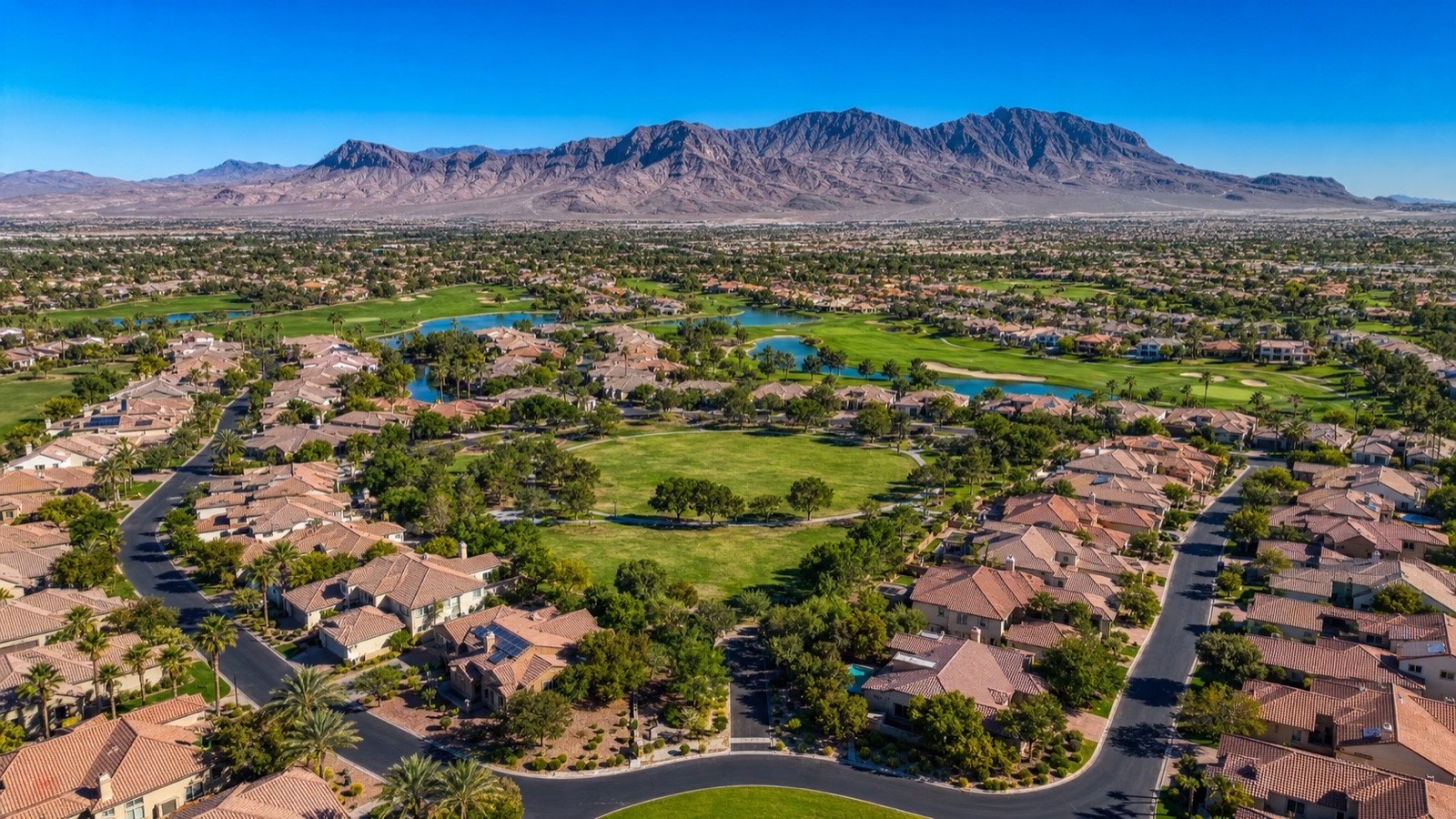
Location durability. A home that backs to permanently protected federal land has a view that cannot be built out. A home that backs to a disposal parcel does not. That is a checkable fact before you write an offer, not a matter of opinion, and it is one of the few things about a view that can be verified.
New-construction timing. When a builder's land pipeline is thin, incentives tighten and standing inventory shrinks. When a large auction clears, the opposite happens roughly two to three years later as those parcels come to market. Builder incentives are a lagging indicator of land auctions.
Resale competition. Existing homes compete with new construction. In submarkets with no remaining developable land, resale sellers face less new competition — which is a quiet advantage of buying in a built-out area rather than a frontier one.
How Does This Compare With Other Western Metros?
Las Vegas is not unique in being land-constrained, but the mechanism is unusual. Most constrained metros are limited by geography, by growth-boundary policy, or by the sheer cost of going further out. Las Vegas is limited by federal ownership with a statutory release valve.
| Dimension | Las Vegas | Phoenix | Coastal California |
|---|---|---|---|
| Primary constraint | Federal ownership | Water and distance | Geography and entitlement |
| Who controls supply | Congress and BLM | State and local | Local and state |
| Can the boundary move? | Only by federal statute | Yes, incrementally | Rarely, politically hard |
| Release pattern | Lumpy auctions | Continuous | Project by project |
| Effect on lot cost | High and step-wise | Moderate | Very high |
| Effect on density | Rising steadily | Rising slowly | Already high |
The step-wise pattern is the distinctive feature. Phoenix land costs drift; Las Vegas land costs jump when an auction clears at a number nobody expected, and that jump shows up in finished-home pricing two to three years later.
What Should Sellers Understand About the Supply Picture?
That scarcity is on your side in the medium term, and that it is not a reason to overprice today. Land constraint supports values over a five to ten year horizon. It does nothing for a listing that is priced above what buyers can finance this month.
The more useful seller application is competitive: know whether new construction is coming near you. A seller in a built-out submarket can price against resale comps alone. A seller two miles from a recently auctioned parcel will be competing with a builder's incentive package within a couple of years, and that argues for selling earlier in the cycle rather than later. If you are weighing timing, our Las Vegas sellers desk can pull what is entitled near your address.
Where Can You Verify Any of This Yourself?
All of it is public, which is unusual for a market fundamental this important:
- BLM publishes each proposed sale, parcel list, and sales matrix before every auction
- The Federal Register carries the formal realty action with legal descriptions
- Clark County, the City of Las Vegas, and Henderson publish zoning and pending land-use applications for every parcel
- SNPLMA revenue and project allocations are published by the BLM
If you are buying a home whose value depends on what happens to the vacant ground beside it, that ground has a public file. Read it before you write an offer rather than after.
Frequently Asked Questions
How many acres of developable land are left in Las Vegas?
Roughly 25,000 developable acres remain in the Las Vegas Valley, with more than 27,000 acres still available for disposal inside the SNPLMA boundary as of the start of Fiscal Year 2025. Not all of it is buildable housing land — some is committed to public purposes, some is constrained by flood control, utilities, or terrain.
Why can't Las Vegas just expand into the surrounding desert?
Because that desert is federally owned and sits outside the disposal boundary established by the Southern Nevada Public Land Management Act of 1998. Moving the boundary requires an act of Congress. No local government in Southern Nevada has the authority to release that land.
Who buys the land at BLM auctions?
Primarily homebuilders and land developers, competing nationally. Sales are modified competitive auctions with minimum bids set at appraised fair market value. Individual SNPLMA sales have generated $138.5 million and $68 million in single events.
Does the land shortage mean Las Vegas home prices only go up?
No. Land constraint supports prices over long horizons, but it does not override interest rates, employment, or migration in any given year. A constrained market can still fall when demand falls — the constraint shapes the floor and the recovery, not the month-to-month direction.
How can I tell whether the vacant lot next to a house will be developed?
Check the parcel's ownership and zoning with Clark County, the City of Las Vegas, or Henderson, and look for pending land-use applications. If it is federal land, check whether it sits inside the disposal boundary and whether it has appeared in a proposed BLM sale. This is public record and worth checking before you write an offer.
Where does the money from BLM land sales actually go?
Under SNPLMA, 85% funds Nevada projects including parks, trails, conservation acquisition, and capital improvements on federal land; 10% goes to the Southern Nevada Water Authority; and 5% goes to the State of Nevada for education. None of it goes to the federal general fund.
Is new construction going to get more expensive because of this?
Land cost per lot has been rising and density has been increasing in response, which is the market's normal answer to expensive dirt. Expect continued movement toward smaller lots, more attached product, and higher price points in new communities. Existing homes on larger lots become relatively scarcer over time.
Which Sources Inform This Las Vegas Land Supply Guide?
- Bureau of Land Management — SNPLMA program — disposal boundary, program structure, revenue allocation
- BLM — proposed public land sale, Las Vegas Valley — 22-parcel, 223-acre 2026 offering
- Federal Register — formal realty actions and parcel legal descriptions
- Southern Nevada Water Authority — water infrastructure funded by SNPLMA revenue
- Clark County — zoning, pending land-use applications, parcel records
- City of Las Vegas — municipal land use and planning
- City of North Las Vegas — Apex corridor and northern growth planning
- City of Henderson — west and southeast Henderson development
- Clark County Assessor — parcel ownership and assessed values
- U.S. Census Bureau — Las Vegas metro population and household growth
- Las Vegas REALTORS — inventory and median price context
- Nevada Department of Taxation — property tax structure on newly developed parcels
Methodology: acreage and auction figures come from BLM program publications and sale announcements as of August 2026. Developable-acre estimates are inherently approximate because parcel buildability depends on terrain, flood control, utility corridors, and committed public uses; treat them as an order of magnitude rather than an inventory count.
Ready to Talk Through What This Means for Your Address?
Whether a specific parcel near a home is likely to be developed is a question with a real answer, and it is worth asking before you buy rather than after. Our team pulls parcel records, zoning, and pending applications as part of normal due diligence on the Las Vegas side of the valley.
Start by browsing Las Vegas homes for sale, or get in touch and we will look at the ground around a specific address. Phone: (702) 637-1759. Email: info@nevadagroup.com.
This article is informational and not investment, legal, or land-use advice. Acreage figures and auction details come from public BLM and federal publications and change with each sale cycle. Verify parcel-specific facts with Clark County, the relevant municipality, and the BLM before making a purchase decision.