

If you own a Las Vegas property you do not live in, you have probably had the thought at two in the morning: what if somebody moves in, and what if they can eventually claim it is theirs?
I want to answer that plainly, because the internet handles it badly. Searching the question returns one page confidently saying Nevada's adverse possession period is five years and another just as confidently saying fifteen. Neither number is the part that matters, and a homeowner reading either one walks away more frightened than the statute justifies.
The clause that decides these cases is about taxes. And once you know it is there, the whole picture calms down.
Under NRS 11.150, adverse possession in Nevada is not established unless the land was occupied and claimed continuously for five years and the occupant paid every property tax levied against it during that period. Both conditions must hold. Someone living in your Las Vegas house without paying its tax bills is not building a claim of ownership, no matter how many years pass. They are a removal problem, and Nevada treats unlawful occupancy as a crime.
- NRS 11.150 requires five continuous years and payment of all property taxes.
- A squatter who never pays your tax bill can never take title in Nevada.
- Nevada criminalises housebreaking, unlawful occupancy, and unlawful reentry.
- Never change locks or cut utilities yourself — that can flip you into the wrong.
- Vacant homes need mail, eyes, and a paper trail more than they need alarms.
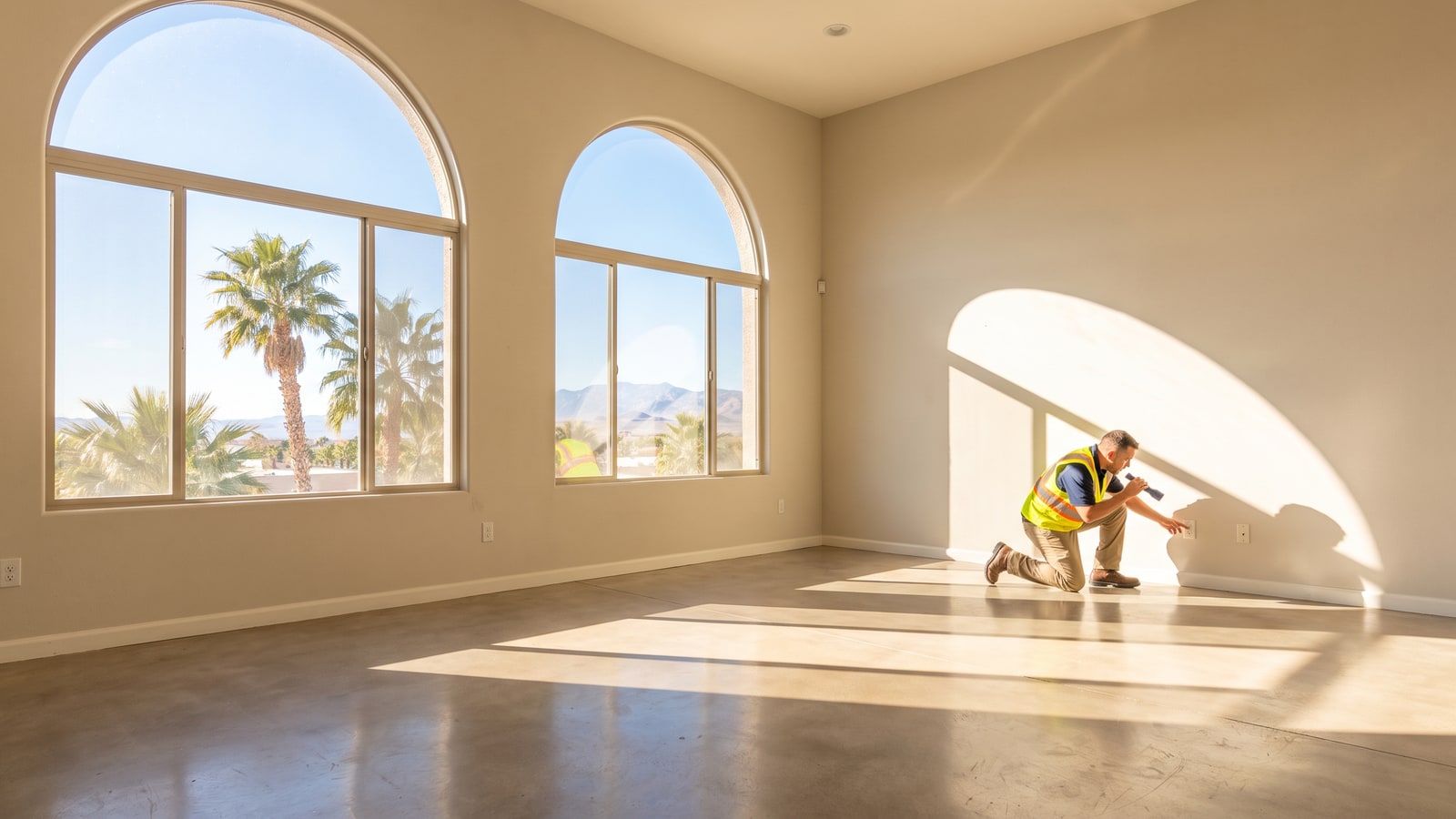
What Does Nevada Actually Require for Adverse Possession?
Adverse possession is the legal doctrine that lets long, open, hostile occupation of land eventually ripen into ownership. It exists in every state, and every state sets its own conditions. Nevada's are in Chapter 11 of the Nevada Revised Statutes, and the operative one is NRS 11.150.
According to the Nevada Legislature, that section reads: "In no case shall adverse possession be considered established unless it be shown, in addition to the requirements of NRS 11.120 or 11.140, that the land has been occupied and claimed for the period of 5 years, continuously, and that the party or persons, their predecessors and grantors have paid all taxes, state, county and municipal, which may have been levied and assessed against the land for the period mentioned, or have tendered payment thereof."
Read that twice, because it is doing two separate jobs. It sets the clock at five years. And it adds a second condition — payment of all taxes — that is not optional and not an alternative.
The phrase "in addition to the requirements of NRS 11.120 or 11.140" matters too. Those sections describe what possession has to look like: NRS 11.120 covers occupation under a written instrument or judgment, and NRS 11.140 covers occupation under a claim of title not founded on a written instrument. A claimant has to satisfy one of those and then satisfy NRS 11.150 on top of it.
| Requirement | Source | Can a typical squatter meet it? |
|---|---|---|
| Possession qualifying under a written instrument, judgment, or claim of title | NRS 11.120 or NRS 11.140 | Rarely — usually there is no instrument at all |
| Occupied and claimed continuously for five years | NRS 11.150 | Possible, but continuity breaks easily |
| Paid all state, county, and municipal taxes for that period | NRS 11.150 | Almost never |
| Possession not merely permissive | NRS 11.100, NRS 11.160 | Fails outright if they entered as a tenant |
Why Does the Tax Requirement Change the Whole Picture?
Because it asks the occupant to do the one thing that defeats the entire premise of squatting.
Someone occupying a house they have no right to is, by definition, trying to live somewhere without paying for it. Paying five consecutive years of Clark County property taxes on a home is not a quiet act. It requires knowing the parcel number, dealing with the Assessor and Treasurer, and spending real money every year with no guarantee of ever getting title. According to the Clark County Assessor, parcel records and tax status are public, which cuts both ways — it means you can check, at any time, whether anyone other than you has been paying.
In our experience, that check is the fastest reassurance available to a worried owner. Pull your parcel record. If your tax bills are paid by you or your escrow, the adverse possession clock is not running against you, full stop.
Across the 9,600-plus transactions our team has closed in Nevada — 789 of them in 2025, representing more than $361.5 million in volume — I can count on one hand the number of times an actual adverse possession claim was in play. The far more common situation is an occupancy problem that people mislabel as a squatters' rights problem because that is the phrase they found online.
Is a Squatter the Same Thing as a Holdover Tenant?
No, and confusing them is the single most expensive mistake an owner makes here. The remedies are different, and treating one like the other can put you on the wrong side of the law.
A trespasser is someone with no claim of any kind who has just entered. A squatter is someone occupying without permission and without a tenancy. A holdover tenant is someone who entered lawfully — with a lease or with permission — and stayed past the end of it. That last category is a landlord-tenant matter governed by Nevada's landlord-tenant law, and it carries tenant protections.
| Dimension | Trespasser | Squatter | Holdover tenant |
|---|---|---|---|
| Entered lawfully? | No | No | Yes |
| Landlord-tenant protections apply? | No | Generally no | Yes |
| Can build an adverse possession claim? | No | Only if taxes paid five years | No — possession is the owner's under NRS 11.160 |
| Criminal statutes potentially in play? | Yes | Yes — NRS 205.0813, 205.0817, 205.082 | No, it is a civil matter |
| Can you remove them yourself? | No | No | No |
| Typical first call | Police | Police, then counsel | Attorney, then court |
NRS 11.160 is worth knowing by name. It addresses how a landlord-tenant relationship affects adverse possession, and the effect is protective of owners: a tenant's possession is treated as the owner's possession. Someone who came in on a lease is not accumulating a hostile claim against you while they are there.
What Are Nevada's Criminal Statutes for Unlawful Occupancy?
This is the part most national articles leave out, and it is the part that actually helps.
Nevada does not treat squatting as purely a civil inconvenience. Chapter 205 of the Nevada Revised Statutes contains three distinct offenses aimed at exactly this conduct: NRS 205.0813 (housebreaking), NRS 205.0817 (unlawful occupancy), and NRS 205.082 (unlawful reentry). You can read all three in Chapter 205.
The existence of unlawful reentry as its own offense tells you something about how the Legislature was thinking. It anticipates the pattern where someone is removed and simply comes back.
I am deliberately not going to characterise the penalties or the exact elements here, because whether a given set of facts fits one of these statutes is a decision for law enforcement and prosecutors, not for me. What you should take from it is that "call the police" is a legitimate first step in Nevada rather than a dead end, and that framing your situation accurately when you call matters.

One more thing worth saying about the criminal statutes, because owners misread their significance in both directions. Their existence does not mean every occupancy dispute is a crime, and an owner who insists on that framing to a dispatcher when a lease is genuinely in play will not get the result they want. What the statutes do is make it legitimate to involve law enforcement at the outset instead of assuming the only road runs through a courtroom. Describe the facts accurately, let the responding officers assess them, and take the path those facts actually support rather than the one that feels fastest.
What Should You Do the Day You Find Someone in Your Property?
Slow down for an hour. What you do in the first day shapes how long the whole thing takes.
Document before you act. Photograph the exterior, the entry point, and anything visible. Note the date and time. If a neighbour noticed when it started, write down what they say. In my experience, owners who can establish a start date resolve these faster than owners who cannot.
Confirm your own status. Pull your parcel record and confirm your taxes are current and paid by you. That single document closes off the adverse possession question before anyone raises it.
Call the police and describe it accurately. Do not say "my tenant" if there was never a tenancy. Say what is true: you own the property, you gave no one permission to be there, and someone is occupying it.
Do not go in alone, and do not go in angry. An owner walking into their own property to confront an occupant is how a property dispute becomes a physical one, and it is how an owner with every legal advantage ends up explaining themselves to a responding officer. Whatever satisfaction that conversation promises, it is not worth what it costs.
Write down what you are told. Occupants explain themselves, and those explanations matter later. Someone who says a friend let them stay is describing something different from someone who produces a signed document, and those two situations follow different paths. Capture the claim accurately at the moment it is made rather than reconstructing it a month later.
Get Nevada counsel early if anyone claims a right to be there. The moment a lease is produced — real or not — you are in a different process, and the cost of guessing goes up sharply.
Can You Change the Locks or Shut Off the Utilities Yourself?
Do not do it. This is the trap, and it catches decent people who feel entirely justified.
Self-help removal — changing locks, cutting power or water, removing belongings, or physically forcing someone out — can expose an owner to liability and can convert a strong position into a weak one. It also hands the occupant a grievance that muddies an otherwise clean case.
The frustrating truth is that the lawful path is slower than the situation deserves, and it is still the right path. According to the Nevada Real Estate Division, which sits within the Department of Business and Industry, property owners and licensees operate under a regulated framework precisely so that disputes get resolved through process rather than force.
What Does a Nevada Removal Actually Cost an Owner?
The direct legal costs vary too much for me to quote a figure honestly — they depend on whether a lease is claimed, whether the occupant appears, and whether it stays in one proceeding. Anyone quoting you a flat number online has not seen your facts.
What I can quantify is the part owners underestimate: the carrying cost while it runs. That is the real bill.
| Monthly rent | 1 month | 3 months | 6 months | 12 months |
|---|---|---|---|---|
| $1,800 | $1,800 | $5,400 | $10,800 | $21,600 |
| $2,200 | $2,200 | $6,600 | $13,200 | $26,400 |
| $2,600 | $2,600 | $7,800 | $15,600 | $31,200 |
| $3,000 | $3,000 | $9,000 | $18,000 | $36,000 |
| $3,500 | $3,500 | $10,500 | $21,000 | $42,000 |
Add the mortgage, the taxes, the insurance, and any repair bill at the end, and a six-month situation on a mid-range Las Vegas rental can run past $20,000 before a lawyer sends a single invoice. Against a Southern Nevada median sale price near $436,699, that is a meaningful fraction of a year's appreciation gone.
How Do Out-of-State Owners Protect a Vacant Las Vegas Home?
Almost every case I have seen locally traces back to the same root: nobody looked at the property for months. Alarms and cameras help, but presence and paper help more.
The cheapest protection is someone physically walking the property on a schedule and telling you in writing that they did. Mail is the second: a house with an overflowing box announces itself. Utilities in your name, kept on, remove the "it looked abandoned" story entirely.
If you bought remotely and have never stood in the house, our guide to buying a Las Vegas home sight unseen covers the inspection and oversight side of that decision in more depth.
| Measure | Why it works | Effort |
|---|---|---|
| Scheduled physical checks, logged in writing | Establishes a start date and breaks continuity claims | Low, ongoing |
| Mail collected or forwarded | Removes the visible signal of abandonment | Low |
| Utilities on and in your name | Undercuts any claim the property was abandoned | Low, costs monthly |
| Taxes verified paid annually | Directly defeats the NRS 11.150 tax condition | Minimal |
| Landscaping maintained | Occupied appearance deters opportunists | Moderate |
| Cameras and alarms | Evidence after the fact, weaker as prevention | Moderate to high |

The arithmetic on prevention is not close. A monthly walk-through and a landscaping service on a typical valley home runs somewhere in the range of $120 to $300 a month, or roughly $1,440 to $3,600 a year. Set that against the table above: a single occupied month at $2,600 rent costs $2,600, and six months costs $15,600 before a single legal bill. Prevention pays for itself if it stops one incident a decade.
According to the Bureau of Labor Statistics, shelter costs across Western metros have climbed steadily through the last several years, which raises both sides of that equation — the rent you lose while a property is tied up, and the value of keeping it earning. Owners who treat a vacant Las Vegas property as a $400,000 asset with a maintenance budget do better than owners who treat it as a house that is fine because it was fine last year.
Which Las Vegas Properties Are Most Exposed?
Three profiles come up repeatedly.
Second homes and seasonal properties sitting empty for months at a stretch. Inherited homes during probate, where nobody has clear authority yet and everyone assumes someone else is checking. And properties between tenants, especially when a turnover stretches out.
Newer master-planned areas tend to have more eyes on them — neighbours notice, and HOA landscaping crews are on site regularly. A home in Summerlin or Henderson with an active association is a harder target than an older detached property on a large lot in a quieter part of North Las Vegas. That is not a knock on any area; it is a comment on foot traffic.

Does a Standard Homeowners Policy Cover a Vacant House?
Often less than owners assume, and this is worth a phone call rather than an assumption.
Many homeowners policies restrict or exclude coverage once a property has been vacant beyond a stated period, which is why vacant-property and dwelling-fire policies exist as separate products. If you have a Las Vegas property sitting empty, the question to ask your carrier is specific: after how many consecutive days of vacancy does my coverage change, and what changes.
According to the Consumer Financial Protection Bureau, insurance and escrow arrangements are among the items homeowners most frequently misunderstand about their own loans. Vacancy clauses sit squarely in that category.
What Happens When Someone Produces a Lease?
This is where a straightforward removal becomes complicated, and where an attorney stops being optional.
Sometimes the lease is real — a property manager or a family member rented the place without your knowledge, or a prior owner's tenancy was never properly terminated. Sometimes it is fabricated. Either way, once a document is on the table, you are likely headed into a landlord-tenant process rather than a simple trespass matter, and the timelines and notice requirements that come with Nevada's landlord-tenant law start to apply. Those requirements vary by the type of tenancy and the grounds, so verify the current rule for your facts rather than relying on a number from an article.
The practical lesson is preventive: know who has keys and who has authority to rent your property. Ambiguity there is what makes a fake lease plausible.
How Does a Tenant's Possession Affect an Adverse Possession Clock?
It stops it before it starts, which is a genuinely reassuring point that almost nobody mentions.
Under NRS 11.160, where a landlord-tenant relationship has existed, the tenant's possession is deemed to be the possession of the landlord. Occupation by permission is not hostile occupation, and hostility is foundational to any adverse possession theory. A former tenant who overstays is a holdover problem — a real one, sometimes a long one — but they are not quietly accruing a claim to your title while it plays out.
Combine that with NRS 11.100, which presumes possession to be in the legal owner unless the property is adversely held, and the structure of Nevada law starts to look distinctly owner-friendly. The five-year number that frightens people is hedged on every side.
What Makes an Inherited Las Vegas Home Especially Vulnerable?
Probate is the situation I worry about most, and it is worth its own answer because the vulnerability is structural rather than careless.
When an owner dies, there is a gap. The person who used to check on the house is gone, authority over the property has not yet formally passed to anyone, and the heirs are frequently in another state managing a funeral rather than a real estate asset. Mail piles up. Landscaping stops. Utilities lapse when the automatic payment fails against a closed account. Every visible signal that a property is cared for switches off at once, and it can stay that way for months while the estate works through the court.
That gap is also when the ownership question is genuinely murkiest, which makes any occupancy dispute harder to resolve quickly. An occupant who shows up during probate can create real delay simply because it takes time to establish who has standing to act.
The protections are unglamorous and they work. Someone should be assigned to the property in the first week, by name, with a schedule. Utilities should move to an account that will not lapse. Mail should be forwarded immediately rather than eventually. And the property taxes should keep being paid on time — which matters twice over here, because taxes are the condition NRS 11.150 hangs adverse possession on, and because a delinquent parcel attracts exactly the wrong kind of attention. Our breakdown of Nevada's property tax cap covers how a change in ownership affects the bill itself, which is a related trap heirs walk into.
If the estate is likely to sell, the calculus usually favours moving sooner rather than letting a house sit through a long probate. An empty home costs money every month whether or not anything goes wrong, and the risk is not evenly distributed across time — it grows with vacancy. When the estate is ready, our sellers' resources and the current Las Vegas inventory are the place to start, and it is worth understanding what comparable luxury or guard-gated properties are doing if the home sits in that tier.
This article explains what Nevada statutes say. It is not legal advice, it is not a substitute for a Nevada attorney on your specific facts, and criminal statutes are applied by law enforcement and prosecutors rather than by property owners. If someone is in your property right now, call the police and then call counsel.
Frequently Asked Questions
Is Nevada's adverse possession period five years or fifteen?
Five, under NRS 11.150 — but the number alone is misleading. The same section requires the occupant to have paid all state, county, and municipal taxes assessed against the land throughout that five-year period. Sources citing fifteen years are describing another state's rule.
Can someone take my Las Vegas house just by living in it long enough?
Not without paying your property taxes for five straight years and satisfying the possession requirements of NRS 11.120 or NRS 11.140. If your tax bills are paid by you or through your escrow, that path is closed. Verifying it takes one look at your parcel record.
Should I call the police or a lawyer first?
If nobody is claiming a right to be there, the police are a legitimate first call — Nevada has specific offenses at NRS 205.0813, 205.0817, and 205.082 covering this conduct. The moment someone claims a lease or tenancy, involve a Nevada attorney, because you are then in a different process.
Can I change the locks while they are out?
Do not. Self-help removal can expose you to liability and can weaken an otherwise strong position. It is the most common way an owner in the right ends up in trouble.
Does a holdover tenant build an adverse possession claim?
No. Under NRS 11.160, where a landlord-tenant relationship has existed, the tenant's possession is deemed the landlord's possession. A holdover is a removal problem, not an ownership threat.
How do I check whether someone else has been paying my property taxes?
Clark County parcel and tax records are public. Look up your parcel and confirm the payments are coming from you or your escrow. If anything looks unfamiliar, contact the Assessor's office directly.
Does an HOA help or hurt in this situation?
Generally it helps. Active associations mean more routine presence around a property, and violation notices create a dated paper trail. Our guide to Nevada HOA fines and your NRS 116 rights covers how that enforcement process works.
Which Sources Inform This Nevada Squatters Rights Guide?
The statutory language quoted here was read directly from the published Nevada Revised Statutes rather than from secondary summaries, because the widely circulated versions of this topic disagree with each other on the basic five-year question and omit the tax condition that decides most cases.
- Nevada Revised Statutes Chapter 11 — NRS 11.100, 11.120, 11.140, 11.150, and 11.160, the adverse possession framework
- Nevada Revised Statutes Chapter 205 — housebreaking, unlawful occupancy, and unlawful reentry
- Nevada Revised Statutes Chapter 40 — actions concerning real property, including unlawful detainer
- Nevada Revised Statutes Chapter 118A — residential landlord and tenant
- Clark County Assessor — parcel records and property tax status
- Nevada Real Estate Division — licensing and regulatory framework
- Nevada Department of Business and Industry — the Division's parent department
- Las Vegas REALTORS — Southern Nevada closed sales and median price reporting
- Consumer Financial Protection Bureau — homeowner insurance and escrow guidance
- U.S. Census Bureau — Las Vegas housing and occupancy data
- U.S. Department of Housing and Urban Development — federal housing guidance
- Bureau of Labor Statistics — Las Vegas metro rent and cost indices
Methodology note: NREG production figures cited here (9,600-plus career closings, 789 closings and more than $361.5 million in volume during 2025) are our own transaction records. The Southern Nevada median sale price reflects mid-2026 closed sales through our MLS data feed. Rent figures in the table are illustrative arithmetic across common Las Vegas rent levels, not a survey.
Own a Las Vegas property you cannot keep an eye on? Call me at (702) 637-1759 or reach the team. We can tell you what a set of eyes on it actually costs — which is almost always less than one month of the alternative.