
On Wednesday, July 22, 2026, UNLV's Center for Business and Economic Research published a forecast that quietly reframes the next thirty years of the Las Vegas housing market: Clark County will not reach 3 million residents until roughly 2055 — a full decade later than the 2045 milestone the same team projected a year earlier. CBER puts the county near 2,505,000 people in 2026, and the pace of new arrivals is set to cool from about 40,000 a year now to a 14,000-to-16,000 trickle from 2032 onward. Headlines will read that Las Vegas is "slowing down." As the broker who watches this valley trade every single day, I want to tell you what the forecast actually means for the price of a house — because the headline and the fundamentals point in different directions.
Here is the frame I'd ask you to hold before we dig in. In 2025 our team at Nevada Real Estate Group closed 789 homes worth more than $361.5 million, part of the 9,600-plus closings and $4.85 billion in volume we've represented across Nevada. From inside that many transactions, the single most important variable in a Las Vegas home price has never been the raw number of people moving here — it's the number of homes we're allowed to build against the number of buyers who show up. Clark County can grow slower and still see firm prices, because the land the valley can build on is capped by the federal government. That tension — cooling demand, hard-capped supply — is the whole story, and it's why "slower growth" is not the crash signal a casual reader might assume. You can watch the inventory move in real time on our live Las Vegas home search.
UNLV's Center for Business and Economic Research (CBER) now projects Clark County won't reach 3 million residents until about 2055 — a decade later than its earlier 2045 estimate. CBER puts the county near 2.5 million in 2026, adding about 40,000 people a year now and slowing to 14,000–16,000 a year from 2032, when deaths outnumber births and growth runs entirely on migration. Slower growth plus a hard federal-land supply cap points to steadier — not falling — Las Vegas prices. Don't wait for a crash.
- Clark County now projected to hit 3 million around 2055, not 2045 — a 10-year delay (UNLV CBER, July 2026).
- CBER puts 2026 population near 2.5 million; annual gains fall from about 40,000 to 14,000–16,000 from 2032.
- Around 2032 natural change turns negative — every added resident then comes from migration.
- Federal land caps buildable supply, keeping prices firm even as demand cools.
- Real GDP nearly doubles to $370.5 billion by 2060 — the economy outgrows the population.
What Did UNLV's 2026 Forecast Say About Clark County's Population?
The core finding is a slower slope, not a decline. According to UNLV's Center for Business and Economic Research, Clark County will keep growing every single year through 2060 — but the rate of that growth downshifts sharply. The 2026 report pegs the 2026 population near 2,505,000 (a CBER short-term forecast), projects about 2.77 million by 2040, and lands near 3.08 million by 2060. The symbolic 3-million threshold, once expected around 2045, now arrives closer to 2055. The official counts run a little lower: the Nevada State Demographer's October 1, 2026 projections use a Governor-certified estimate of 2,448,576 residents on July 1, 2025, and the Census Bureau's Vintage 2025 estimate for the same date is 2,407,226. Our Nevada demographics and population guide sets those Clark County figures beside Washoe County and the statewide picture.
CBER Director Andrew Woods framed the takeaway bluntly for policymakers: "Policymakers, businesses and community leaders should prepare for a world where population growth is not a given." That's a meaningful shift in tone for a metro that spent four decades as one of the fastest-growing in the United States.
Here is the year-by-year shape of the forecast, so you're reading the same numbers the county planners are:
| Year | Projected population | Approx. annual growth rate | What's driving it |
|---|---|---|---|
| 2026 | ~2,505,000 | 1.6% | Migration + positive natural change |
| 2029 | ~2,598,000 | 0.6% | Migration-led; births still positive |
| 2032 | ~2,649,000 | ~0.6% | Natural change turns negative |
| 2040 | ~2,770,000 | ~0.5% | Growth entirely migration-dependent |
| 2055 | ~3,000,000 | ~0.5% | Symbolic 3-million mark reached |
| 2060 | ~3,080,000 | ~0.5% | Slow, steady migration plateau |
The through-line: the valley keeps adding people for the entire forecast window, but it does so at a fraction of its historic clip. According to the Clark County consensus estimates reproduced in CBER's forecast tables, the county added between 36,000 and 58,000 residents a year from 2015 to 2020 and 50,099 as recently as 2024. A future of 14,000-to-16,000 per year is a different animal — and it changes how you should think about buying, selling, and holding real estate here.
Why Is Clark County's Population Growth Slowing Down?
Three forces are pressing on the same brake pedal at once. First, natural change is fading. The valley's population is aging, birth rates have fallen nationally, and CBER projects that Clark County's births will stop outnumbering its deaths around 2032. Second, domestic migration has cooled everywhere. Fewer Americans are relocating across state lines than a decade ago — a nationwide trend the Census has tracked since the pandemic-era moving surge unwound. Third, affordability now bites. The valley that once undercut California on price has itself gotten expensive: according to Las Vegas REALTORS' September 2026 report, as covered by FOX5, the Southern Nevada single-family median was $470,000 in September 2026, below the $490,000 record of May and June, a figure that filters out some of the price-driven in-migration that powered earlier decades.
None of that means the migration engine is dead. It means the engine is running at cruising speed instead of redline — and the elephant in the room that shapes every housing conversation in this valley is the land itself.
The growth story really has three chapters, and they behave very differently for housing. This is the table I'd tape to the wall:
| Dimension | Boom-echo phase (2026–2027) | Transition (2028–2031) | Mature plateau (2032–2060) |
|---|---|---|---|
| Residents added per year | ~40,000 | 38,000 in 2028, then 15,000–18,000 | ~14,000–16,000 |
| Annual growth rate | 1.6% | 1.5% in 2028, then 0.6–0.7% | 0.5–0.6% |
| Primary driver | Migration + births | Migration-led | Migration only (births negative) |
| Housing implication | Demand still outruns new supply | Market rebalances toward normal | Scarcity of land, not people, sets price |
When Will Clark County Actually Hit Three Million People?
Around 2055, per the 2026 forecast — versus the 2045 date CBER modeled in earlier reports. That ten-year push-back is the number generating headlines, but I'd caution against reading it as decline. A metro adding population every year for the next three decades is still growing; it's simply not compounding the way it did when Summerlin and Henderson were raw desert.
The real-estate translation is simple: the population may be growing more slowly, but it's still growing. That should anchor your expectations. Between CBER's 2026 figure of ~2,505,000 and its ~3,079,000 for 2060, the valley absorbs on the order of 574,000 additional residents. At an average of 2.5 people per household, that's well over 200,000 new households needing a roof over the forecast window — in a market that already struggles to deliver enough homes each year.
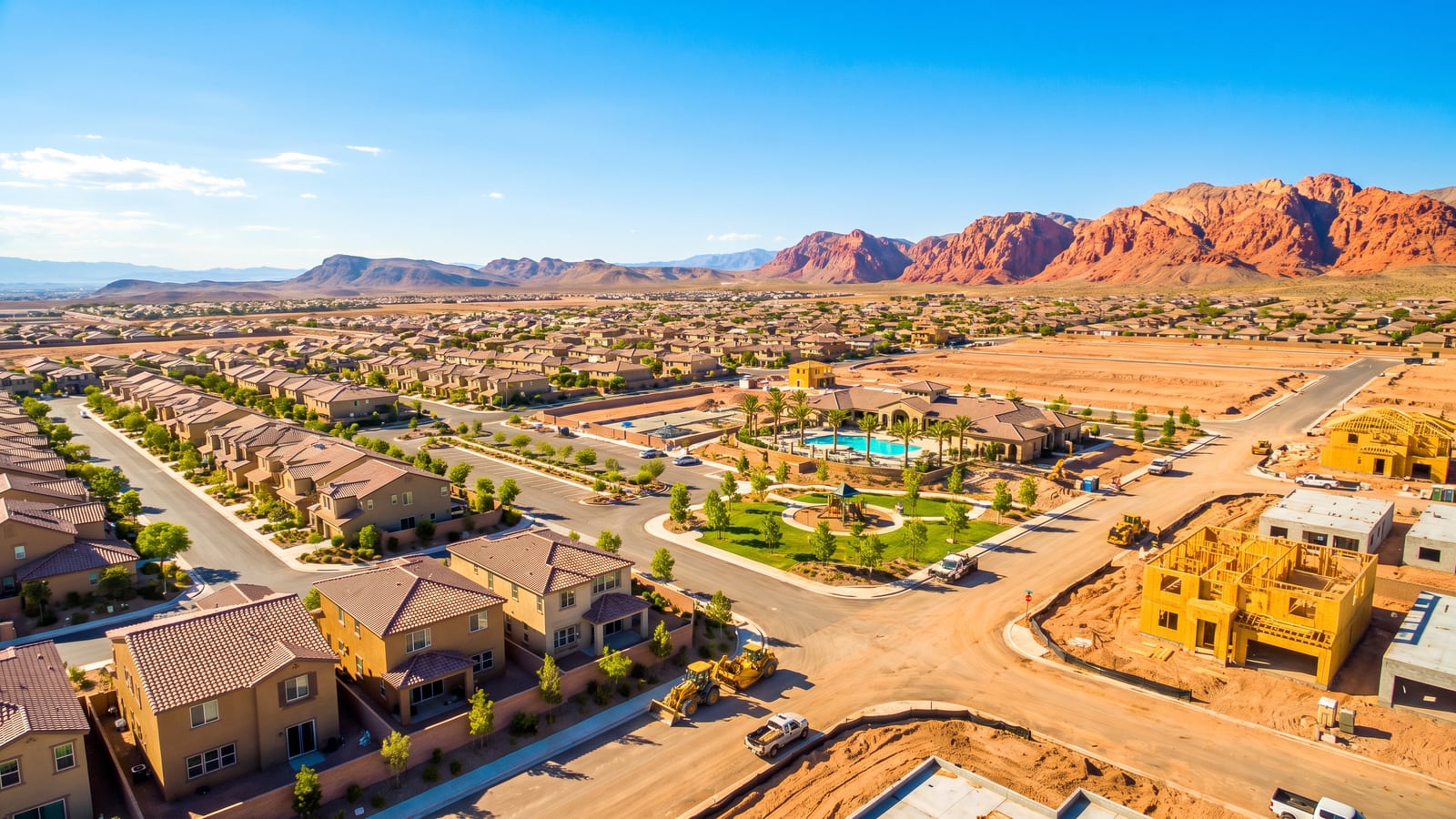
What Happens When Deaths Outnumber Births After 2032?
This is the subtlest — and most important — line in the whole report. According to CBER, "Clark County's natural change, the difference between births and deaths, will turn negative around 2032. After that point, growth depends entirely on net migration."
Translated for a homeowner: after 2032, the valley grows only if people keep choosing to move here. That makes Nevada's structural advantages — no state income tax, relative affordability against California, a diversifying job base, and 300-plus days of sun — less of a "nice to have" and more of the entire growth mechanism. It also means the region's leaders have a direct incentive to keep Las Vegas attractive to relocating households and employers, because organic replacement can no longer be counted on.
For real estate, migration-dependent growth is actually a more stable base than a birth-driven boom. Migration responds to jobs and affordability — levers the region can influence — whereas a declining birth rate is a demographic tide no policy reverses quickly. According to the Nevada Governor's Office of Economic Development, the state's active recruitment of employers in logistics, advanced manufacturing, and healthcare is precisely aimed at keeping that migration pipeline full.
Does Slower Population Growth Mean Las Vegas Home Prices Will Fall?
This is the question every client asks me the week a forecast like this drops, so let me answer it directly: not on these fundamentals. Slower growth trims the rate of demand increase; it does not create the oversupply that actually drives prices down. For prices to fall meaningfully, you need homes to pile up faster than buyers appear — and the one thing Las Vegas cannot easily do is flood itself with new lots.
Consider the arithmetic. Even at the mature-phase pace of ~15,000 new residents a year, the valley needs roughly 6,000 net new homes annually just to house them — before you account for household formation among existing residents, replacement of aging stock, or the second-home and investor demand that a global entertainment destination attracts. According to the Federal Housing Finance Agency, Las Vegas home values have compounded through multiple national slowdowns precisely because supply here has rarely kept pace with even moderate demand.
There's a mortgage-rate wrinkle worth naming too. According to Freddie Mac's Primary Mortgage Market Survey, the 30-year fixed has spent 2026 well above the sub-3% lows of the early decade, which suppresses listing supply — homeowners with a $250,000 balance at 3% are reluctant to sell and re-buy at 7.40%, Freddie Mac's 30-year average as of October 15, 2026. That "lock-in" keeps resale inventory thin, offsetting softer demand. When both the demand and supply curves shift down together, price tends to move sideways, not off a cliff.
How Does the Federal Land Shortage Keep Las Vegas Prices Supported?
Here's the structural fact that out-of-state buyers almost never appreciate until I show them a map. According to the Bureau of Land Management, the federal government controls the overwhelming majority of land in Clark County — well over 80% — and new development can only occur on parcels released through the Southern Nevada Public Land Management Act auction process. The valley is not a Texas or Phoenix metro that can sprawl in every direction; it's a bowl ringed by mountains and federal acreage, with a comparatively thin band of privately developable land.
Federal land control is a primary barrier to development here. What it means in practice: even when demand cools, builders cannot simply manufacture a glut, because the raw material — buildable dirt — is rationed by auction. That is the opposite of the 2006–2008 setup, when easy credit met a build-anything mentality. Today the constraint is physical and legal, and it puts a durable floor under land values.
This is why I tell relocating buyers that "slower growth" and "cheaper homes" are not the same sentence in Las Vegas. When you're touring new-construction communities or resale neighborhoods in Summerlin and Henderson, you're competing for lots inside a hard boundary. A 20% slowdown in in-migration doesn't unlock 20% more land.
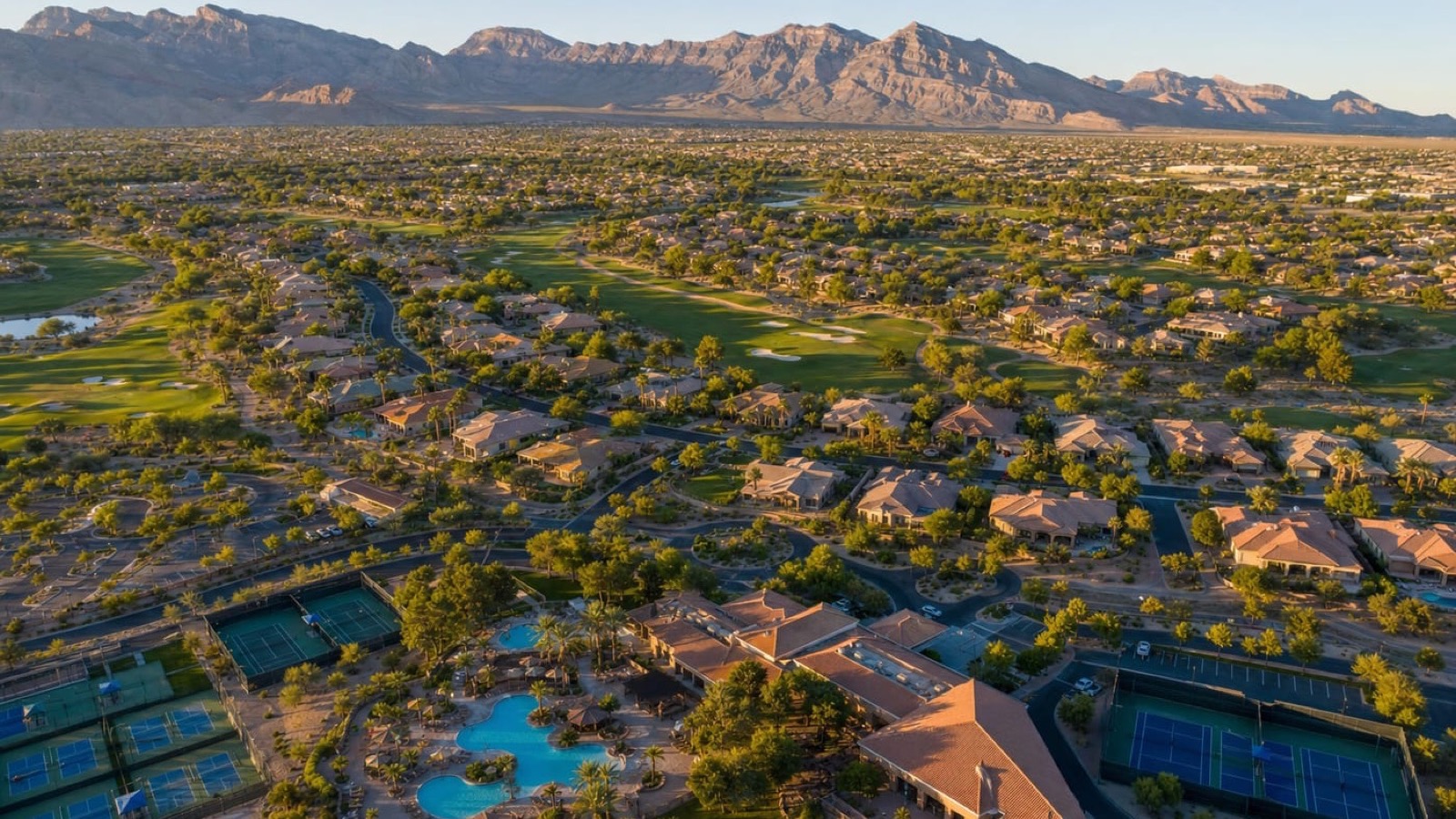
What Does the Slowdown Mean if You're Buying a Home in Las Vegas Now?
It means you can stop waiting for a crash that the data does not support — and start buying on your own timeline instead of the market's mythology. Here's the practical read for buyers:
- Time in the market beats timing the market. With growth cooling but supply capped, the base case is steady appreciation, not collapse. A buyer who holds a $470,000 home, the September 2026 single-family median, for seven years is far more likely to build equity than one who rents for three years waiting for a 20% discount — roughly $94,000 off that price — that the land constraint won't deliver. Even a $325,000 starter condo or a $650,000 single-family home follows the same logic.
- Negotiating leverage is real right now — use it. Softer demand at today's rates means more price cuts and builder incentives than the 2021 frenzy allowed. Across current inventory, a meaningful share of listings carry reductions — I've watched $20,000 to $40,000 come off list prices that would never have moved in 2021. That's your opening. First-time buyers especially should bring an agent who tracks days-on-market and cut-depth by neighborhood.
- New construction is negotiable. Publicly traded builders facing a slower absorption pace are discounting standing inventory and buying down rates. On a $500,000 build with 10% down, a 2-1 rate buydown at a 7.40% note rate cuts payments by about $7,100 in year one and about $10,700 over its two years — often a bigger early saving than a price cut of the same cost. Budget another $12,000 to $16,000 in closing costs on top.
- Watch the transactional pages, not the think-pieces. Our Las Vegas homes-for-sale hub and live search show real cut-depth and inventory the day it changes.
According to the U.S. Department of Housing and Urban Development, first-time buyers who purchase in slower-demand windows historically capture better terms than those chasing hot markets — the discipline is buying the house that fits your budget and holding it. If you want a straight read on a specific neighborhood, call our team at (702) 637-1759.
What Should Las Vegas Sellers Do as Growth Cools?
Sell to the comp, not to the headline — in either direction. A cooling growth narrative tempts some sellers to panic-price low and others to ignore that the frenzy is over and overprice high. Both leave money on the table. Here's the seller playbook for a slower-growth market:
- Price to the last 60 days of real closings on your street, not to what your neighbor got in 2022. Buyers at 7%-plus rates are precise; an overpriced listing sits, then sells for less after a stale-listing discount — I routinely see $25,000 to $30,000 evaporate from homes that launched $40,000 over the comp.
- Presentation compounds when demand is thinner. In a rationed-supply market, well-prepared homes still sell quickly; tired ones linger. The prep budget — paint, staging, photography — pays back multiples.
- Understand your leverage is durable. Because inventory is structurally tight, sellers are not facing a 2008-style buyer's market. According to the Bureau of Economic Analysis, the Las Vegas metro economy keeps expanding, which sustains the employed, qualified buyer pool that absorbs listings.
- Time it to the equity, not the forecast. If you've held your home five-plus years, your equity position likely dwarfs any near-term rate noise. Our sellers' resources walk through net-proceeds math before you list, and sellers who need speed over top dollar can compare a cash offer against a traditional listing.
This table is how I'd summarize the same forecast for three different people sitting across my desk:
| Consideration | Buyers | Sellers | Investors |
|---|---|---|---|
| Headline risk | Fear of buying "before a crash" | Fear of "missing the top" | Fear of soft rent growth |
| The reality | Capped supply floors prices | Tight inventory sustains demand | Migration keeps renters flowing |
| Best move | Buy the right home; hold 5–7+ yrs | Price to the comp; prep the home | Buy for cash flow, not flips |
| Key number | $470K single-family median (Sept. 2026) | Days-on-market by neighborhood | ~6,000 homes/yr of new demand |
Is Las Vegas Still a Smart Real Estate Investment in a Slower-Growth Decade?
Yes — arguably a better-quality one, because migration-led growth favors landlords. When a market grows through people choosing to move in rather than through births, the incoming cohort skews toward working-age adults and households — the exact demographic that rents before it buys and rents again between moves. According to the Bureau of Labor Statistics, the Las Vegas metro continues adding jobs across leisure, logistics, and healthcare, and CBER projects roughly 117,000 new jobs from 2026 to 2036 — each one a potential renter or buyer.
The investment thesis shifts from appreciation-first to cash-flow-plus-appreciation. A $400,000 rental renting for roughly $2,300 a month that pencils to positive cash flow today doesn't need a boom to perform; it needs a steady renter pool, which migration-dependent growth supplies. Factor property taxes near $2,800 a year and Nevada's landlord-friendly rules, and the math holds. And because land scarcity keeps a floor under values, the appreciation kicker remains — just at a calmer, more underwritable pace than the double-digit years. For investors cross-shopping metros, a market where you can't overbuild is a feature, not a bug: it protects your rents from a supply flood. Higher-end buyers eyeing $1.2 million-plus product in the valley's luxury communities and guard-gated enclaves benefit most from the same fixed-land dynamic.
How Do Jobs and GDP Fit Into the Population Story?
The economy is projected to grow faster than the population — and that's the most bullish line in the report for property owners. According to UNLV's CBER, Clark County's real GDP is forecast to rise from $200.8 billion in 2026 to $370.5 billion by 2060, while real GDP per capita climbs from about $80,000 to more than $120,000. In plain terms: fewer new people, but each resident generating far more economic output.
Rising output-per-person is exactly what supports higher home values over time — wealthier households can carry more housing cost, and a diversifying economy (away from pure gaming toward logistics, tech, sports, and health) deepens the qualified-buyer pool. Here's the economic backdrop against the population curve:
| Metric | 2026 | 2036 | 2060 |
|---|---|---|---|
| Population | ~2.51M | ~2.71M | ~3.08M |
| Real GDP | $200.8B | about $247B | $370.5B |
| Real GDP per capita | about $80,000 | about $91,000 | $120,000+ |
| Cumulative new jobs (from 2026) | — | ~117,000 | — |
The Nevada Department of Taxation data underscores why this matters locally: with no state income tax, Nevada funds itself on sales and gaming revenue that track economic activity, not headcount — so a higher-output, slower-growth valley is fiscally healthier than the sprawl-and-hope model of the past.
Which Las Vegas Communities Are Best Positioned for Slower Growth?
The master-planned, amenity-rich, land-constrained submarkets — the places where the "you can't build more of this" logic is strongest. In a slower-growth decade, differentiation wins: buyers become choosier, and communities with schools, parks, retail, and a finite footprint hold value best.
- Summerlin: hemmed against the Red Rock conservation boundary, with a nearly built-out western edge — the textbook case of demand meeting a fixed line. Premium villages here have historically outperformed the valley median.
- Henderson: Cadence, Inspirada, and Lake Las Vegas offer newer product with strong amenities; Henderson's employment base and safety reputation keep migration demand concentrated here.
- New-construction master plans: where builders are discounting today, a slower absorption pace is your leverage — tour our new-construction guide for where incentives are deepest.
The neighborhoods most exposed to a slowdown are the opposite: commodity, far-flung tracts with no amenity moat and easy comparable supply. That's the discernment a slower market rewards — and where a local agent earns their keep.
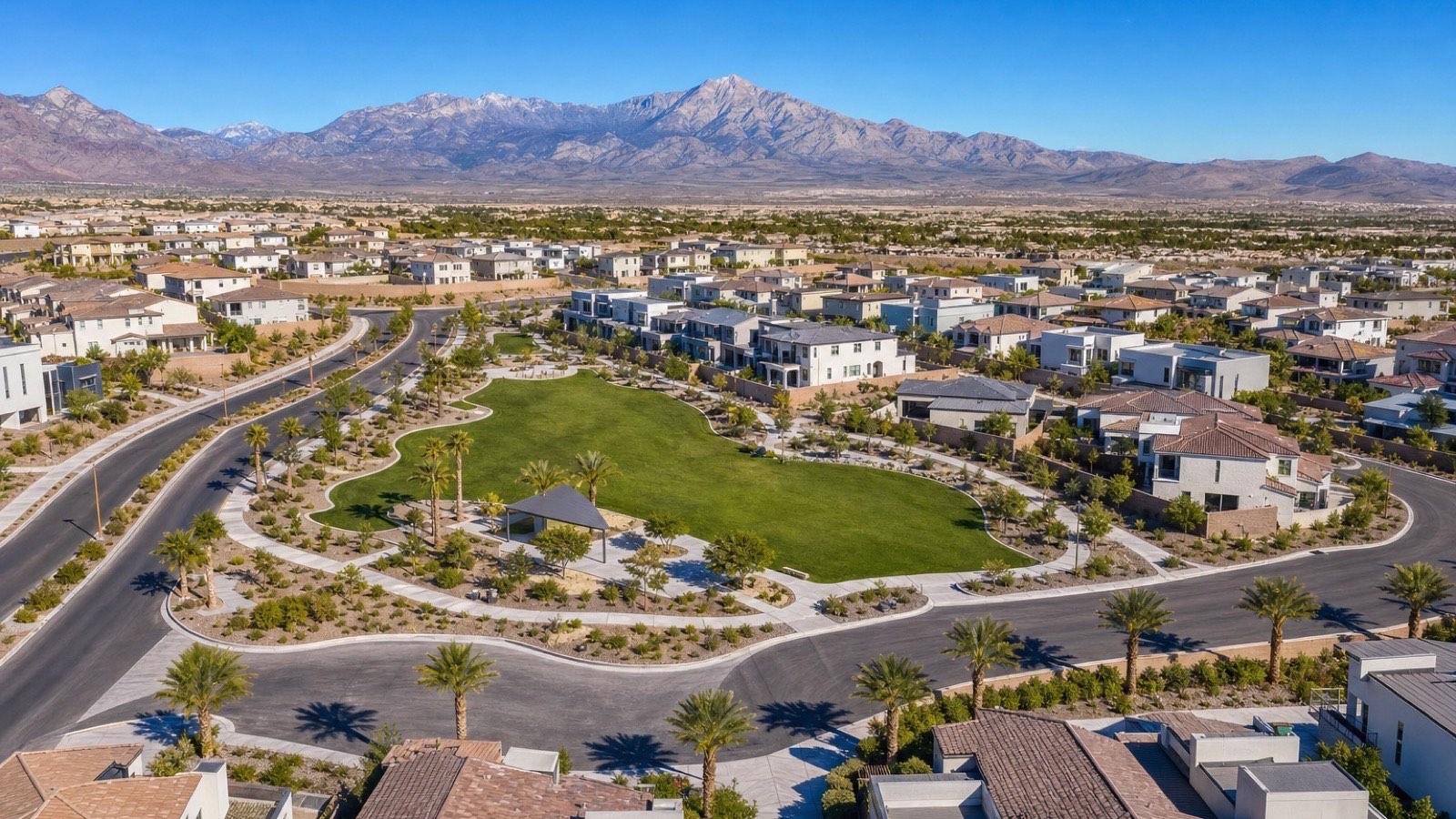
How Does Clark County's Slowdown Compare to the Rest of Nevada?
Clark County is still the state's growth engine, but the deceleration is part of a broader Nevada normalization. Northern Nevada — Reno, Sparks, and the Tahoe basin — rides its own migration and industrial-diversification story, while the state overall keeps ranking among the nation's growth leaders even as the pace moderates. According to the U.S. Census Bureau, Nevada has consistently placed in the top tier of state population-growth rankings this decade, a status our team unpacked in our guide to Nevada's growth and what it means for real estate.
The migration mix matters for both regions. The relocating households powering Clark County's numbers still lean heavily on California out-migration — a pattern we detailed in our roundup of the top states moving to Las Vegas in 2026. And the job base absorbing those movers is broadening well beyond the Strip, as our Las Vegas job-market breakdown lays out. Slower doesn't mean stalled — it means the valley is maturing from boomtown to established metro, and mature metros with capped land tend to reward patient owners.
Frequently Asked Questions
When will Las Vegas (Clark County) reach 3 million people?
According to UNLV's Center for Business and Economic Research 2026 forecast, Clark County is projected to reach 3 million residents around 2055 — roughly a decade later than the 2045 estimate from earlier reports. CBER puts the county near 2,505,000 in 2026 and projects about 3.08 million by 2060; the state's certified estimate for July 1, 2025 was 2,448,576.
Does slower population growth mean Las Vegas home prices will crash?
No, not on current fundamentals. A price crash requires supply to outpace demand, but Clark County's developable land is capped by federal ownership (over 80% of the county), so builders cannot flood the market even as demand cools. Slower growth trims the rate of demand increase; it does not create oversupply. The base case is steadier prices, not a collapse.
Why is Clark County's population growth slowing?
Three forces overlap: natural change (births minus deaths) turns negative around 2032, domestic migration has cooled nationwide since the pandemic-era surge, and Las Vegas is now more expensive — a $470,000 single-family median in September 2026, per Las Vegas REALTORS, filters out some price-driven arrivals. Growth continues, but at 14,000–16,000 residents a year from 2032 instead of the roughly 40,000 to 50,000 a year of 2023 to 2025.
What does "natural change turning negative" mean for real estate?
It means that after roughly 2032, Clark County will grow only through net migration — people choosing to move here. That makes Nevada's no-income-tax, job-growth, and lifestyle advantages the entire growth mechanism, and it makes migration-driven rental demand a stable base for investors, since incoming movers skew toward working-age renters.
Is Las Vegas still a good place to buy an investment property?
Yes. Migration-led growth favors landlords because it brings working-age households who rent, and CBER projects roughly 117,000 new jobs from 2026 to 2036. With land scarcity putting a floor under values, the thesis shifts toward cash-flow-plus-appreciation — a market where you can't overbuild protects rents from a supply glut.
How does the federal land shortage affect home prices?
The Bureau of Land Management controls over 80% of Clark County, and new development happens only on parcels released through federal auction. This rations buildable land, so even a demand slowdown can't easily produce a housing glut. It's the structural reason "slower growth" and "cheaper homes" are not the same thing in Las Vegas.
Should I wait to buy a home until prices drop?
The forecast argues against waiting. With capped supply and continued (if slower) growth, the likely path is sideways-to-up prices, not a discount worth waiting years for. Buyers who purchase the right home and hold five to seven-plus years are positioned to build equity — and today's softer demand already offers negotiating leverage and builder incentives. Call our team at (702) 637-1759 for a neighborhood-specific read.
What Should Las Vegas Buyers and Sellers Take Away From the Forecast?
Read the slowdown as maturation, not decline. Clark County keeps growing every year through 2060 — just at a calmer pace — while its economy nearly doubles in size and its buildable land stays rationed by the federal government. That combination is what separates a slower-growth metro from a falling-price market. For buyers, it removes the excuse to wait for a crash that the land constraint won't deliver; the winning move is buying the right home and holding it. For sellers, it rewards discipline — price to the comp, prep the home, and lean on structurally tight inventory. For investors, migration-led demand and a no-overbuild market make Las Vegas a cleaner long-term hold than the boom-era numbers ever were. The valley is trading its boomtown adolescence for the steadier economics of an established Western city — and steady, land-constrained metros tend to reward the owners who stay in them.
If you want that read applied to your specific street, budget, or timeline, that's exactly what our team does every day. Reach Nevada Real Estate Group at (702) 637-1759, or start with our live Las Vegas home search and buyer resources.
Which Sources Inform This Clark County Population Guide?
This analysis pairs UNLV's July 22, 2026 forecast with Nevada Real Estate Group's own transaction record — the 789 homes and $361.5 million-plus we closed in 2025, part of 9,600-plus career closings statewide — and the following authoritative sources:
- UNLV Center for Business and Economic Research (CBER), 2026 Population Forecast and UNLV's July 22, 2026 release — population, GDP and jobs projections
- Nevada State Demographer, Nevada County Population Projections 2026 to 2045 (October 1, 2026) — Governor-certified July 1, 2025 estimate
- U.S. Census Bureau QuickFacts, Clark County (Vintage 2025) — July 1, 2025 population estimate
- U.S. Census Bureau — historical county population and state growth rankings
- Nevada Governor's Office of Economic Development — employer recruitment and diversification
- Las Vegas REALTORS (LVR/GLVAR) and FOX5's coverage of its September 2026 report — Southern Nevada median-price data
- Bureau of Land Management — federal land ownership and SNPLMA land-release process
- Bureau of Labor Statistics — Las Vegas metro employment
- Bureau of Economic Analysis — metro GDP and economic output
- Federal Housing Finance Agency — Las Vegas home-price index history
- Freddie Mac Primary Mortgage Market Survey — 30-year fixed mortgage rates
- U.S. Department of Housing and Urban Development — first-time-buyer guidance
- Nevada Department of Taxation — state revenue structure
- Clark County, Nevada — county planning and development context
Population figures reflect UNLV CBER's 2026 forecast as released July 22, 2026, alongside the official July 1, 2025 estimates; median prices reflect Las Vegas REALTORS' September 2026 report, and mortgage rates Freddie Mac's survey as of October 15, 2026. Real estate values fluctuate; this guide is educational and not a guarantee of future results.