

Builder offers across the Las Vegas Valley this fall lead with a dollar figure. On October 8, 2026, Taylor Morrison's Las Vegas page offered "up to $12,000 towards closing costs" with its affiliated lender, Century Communities advertised "up to $30,000 in flex cash" for its Las Vegas Division, and Beazer Homes advertised "up to $100,000" that buyers can steer toward closing costs, upgrades, rate buydowns or the lot premium. Each carries conditions: a lender, sometimes a closing agent, a deadline and a cap set by your loan program. The credit is real money, but its value depends on those conditions and on the loan you take to get it.
I rebuilt this guide from primary sources on October 8, 2026, because earlier versions quoted average credit sizes and lender markups that no source supports. Every cap comes from the agency that sets it, every federal rule is quoted from the eCFR, every builder offer is quoted from the builder's own page as read in a browser that day, and every payment uses Freddie Mac's 7.40% average for the week of October 8, 2026. Nevada Real Estate Group is a brokerage, not a lender, so nothing here is a rate quote.
A builder closing cost credit is money the builder pays toward your closing costs at settlement. It lowers your cash to close, not your price, loan or payment. Loan rules cap it at 3%, 6% or 9% on conventional loans and 6% on FHA. Las Vegas offers read October 8, 2026 included up to $12,000 from Taylor Morrison, tied to its own lender. Compare any credit with an outside Loan Estimate before you sign.
- Fannie Mae caps builder credits at 3%, 6% or 9% of price or value, by down payment.
- FHA allows 6% of the sales price; VA caps concessions at 4% but not closing-cost credits.
- On October 8, 2026, Taylor Morrison's up-to-$12,000 credit and Century's closing-cost flex cash required affiliated lenders.
- Under 12 CFR 1024.2, a lender-tied discount must be optional, real and not recouped elsewhere.
- At 7.40%, a builder lender's rate 0.25 percentage point higher erases a $12,000 credit in about 12 years.
What Is a Builder Closing Cost Credit, and What Can It Pay For?
A builder closing cost credit is a dollar amount the builder, acting as the seller, agrees to pay toward your side of the settlement. It is applied at closing against your charges: the lender's origination charges and appraisal fee, title and escrow charges, recording fees, and prepaid items such as the first year of homeowners insurance and the interest from closing to the end of that month. It lowers the cash you bring to the closing table. It does not lower the contract price, the loan amount or the monthly payment.
Fannie Mae, whose rules govern most conventional loans, calls this an interested party contribution. According to Fannie Mae's Selling Guide topic B3-4.1-02, Interested Party Contributions (dated May 7, 2025, in the Guide published October 7, 2026), interested parties include "the builder or developer" and "any affiliate of the above," which takes in a builder-owned mortgage company. Financing concessions are acceptable when they go toward "borrower closing costs, including prepaids," or toward homeowners association assessments for no more than 12 months after settlement, and they may not fund the down payment or reserves. Anything that is not a closing cost, such as cash, furniture, moving costs or "decorator allowances," is a sales concession, and sales concessions "must be deducted from the property's sales price."
Two other kinds of builder help can look like a credit on a sales sheet and are not. A lender credit is a rebate from the lender, and according to the CFPB's Closing Disclosure explainer, lender credits "are typically provided in exchange for a higher interest rate than you would have paid otherwise." A rate buydown uses builder money to lower your interest rate, for a year or two or for the life of the loan, instead of paying your closing costs. One builder package can mix all three, and each is priced differently.
None of them is free. According to the CFPB's guide to closing fees, when you negotiate a seller credit toward closing costs, "the seller will usually require you to pay a higher price for the home in order to cover the costs of this credit." With a builder, the useful question is not whether the credit is paid for but where: in the price, in the rate, or out of the builder's margin on a home it wants to sell. The rest of this guide is about finding out which.
How Much Can a Builder Credit Be Under Fannie Mae, FHA and VA Rules?
The ceiling depends on your loan program and down payment, not on the builder's advertisement. Fannie Mae's maximum financing concessions are "calculated using the lower of the sales price or appraised value (not the loan amount)": 3% when the loan-to-value ratio is above 90%, 6% from 75.01% to 90%, and 9% at 75% or less for a principal residence or second home, and 2% for an investment property (Selling Guide B3-4.1-02). One carve-out: "typical fees and/or closing costs paid by a seller in accordance with local custom" do not count. Ask your escrow officer which charges a Clark County seller customarily pays, because those do not use your room.
FHA uses one number. According to HUD's Single Family Housing Policy Handbook 4000.1, in the version issued August 12, 2026, "Interested Parties may contribute up to 6 percent of the sales price toward the Borrower's origination fees, other closing costs, prepaid items, and Discount Points," and the 6% "also includes" builder-paid rate buydowns and payment of the upfront mortgage insurance premium (section II.A.4.d.iii(G)).
The VA separates closing costs from everything else. According to the VA's page on the funding fee and loan closing costs, "We don't limit credits for a loan's closing costs, but we do limit seller's concessions to no more than 4% of your home's reasonable value," and concessions include "credits for the VA Funding Fee, debt payoff, or prepayment of the buyer's hazard insurance." The VA's temporary buydown page adds that a buydown "provided by the builder or seller" is a seller concession inside that 4%.
| Loan and down payment | Rule | Cap | Dollars of room |
|---|---|---|---|
| Conventional, 5% down | LTV above 90% | 3% | $15,000 |
| Conventional, 10% or 20% down | LTV 75.01% to 90% | 6% | $30,000 |
| Conventional, 25% down | LTV 75% or less | 9% | $45,000 |
| Conventional, investment property | Any LTV | 2% | $10,000 |
| FHA, 3.5% down | Share of sales price | 6% | $30,000 |
| VA | Concessions, share of reasonable value | 4% | $20,000 in concessions; closing-cost credits not limited |
Two things in that table catch buyers. First, every builder dollar on your behalf draws on the same room. Fannie Mae says that when a temporary or permanent buydown is "funded by an interested party or a lender affiliated with one, the cost of that subsidy must be included in the IPC calculation," so a credit, a buydown and prepaid HOA dues share one cap. Second, a builder's own terms can be tighter than the agency's. Century Communities' October offer says any incentive to use its affiliate lender "may not exceed 3% of the sales price," which is $15,000 on a $500,000 home, half the $30,000 Fannie Mae would allow at 20% down. Our seller concessions guide applies the same caps to resale purchases.
What Happens When the Credit Is Bigger Than Your Closing Costs or the Cap?
The credit is limited twice: by the cap and by what you actually owe at closing. Fannie Mae's rule is direct: "financing concessions must be equal to or less than the sum of the borrower's closing costs. Any amount exceeding the borrower's closing costs must be treated as a sales concession." Concessions above the cap get the same treatment: they "must be deducted from the property's sales price," and the loan-to-value ratio is recalculated on the reduced figure (Selling Guide B3-4.1-02). The extra does not come back to you as cash. It shrinks the value your loan is measured against, which can push you into a higher loan-to-value band.
FHA works the same way in different words. HUD's handbook says contributions "that exceed actual origination fees, other closing costs, prepaid items, and Discount Points are considered an inducement to purchase," as is anything above 6%, and inducements "result in a dollar-for-dollar reduction to the purchase price when computing the Adjusted Value of the Property" (Handbook 4000.1, section II.A.4.d.iii(G) and (H)). The VA does not cap ordinary closing-cost credits, but its 4% concession limit still applies to everything else.
This matters most for the large flex cash offers. Beazer's Las Vegas offer, for contracts signed October 4 to October 31, 2026, is "community specific" and "subject to underwriting guidelines which ... limit third-party contributions." On a $500,000 conventional purchase with 20% down, no more than $30,000 of builder money could pay closing costs, and less if your costs are lower; the rest has to go to another use the offer allows, such as the lot premium or upgrades, or it goes unused. Century's terms make the same point: "The combined value of seller incentives, credits and other seller contributions may exceed lender limits," so the buyer "should ask his or her lender about the impact of such limits."
Settle it before you sign. Ask your loan officer for your estimated closing costs and your cap in dollars, and ask the builder in writing what happens to any part of the incentive the loan cannot use: whether it becomes a price reduction, moves to another allowed use, or is lost. Whether a builder will convert it is a negotiation, not a rule, so get the answer into the purchase agreement.
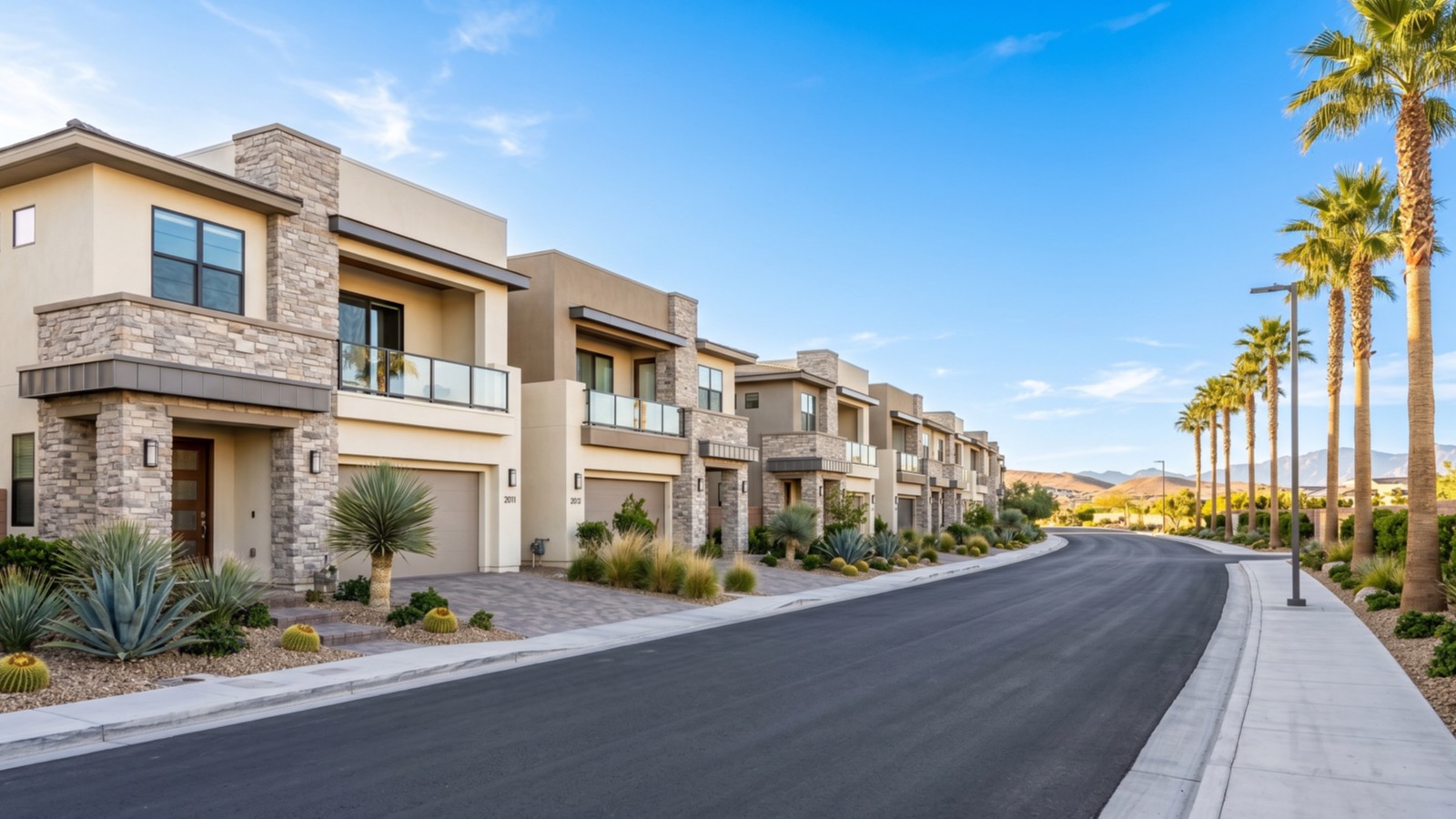
What Were Las Vegas Builders Offering on October 8, 2026?
I read the major builders' Las Vegas offer pages and their fine print in a browser on October 8, 2026. These are the builders' own advertised terms; they change weekly and apply only to the homes named. I found no published survey of typical Las Vegas builder credits, so this guide does not state an average. The table shows what was advertised that day.
| Builder offer | Dollars or rate | What it can pay for | Lender and other conditions | Dates |
|---|---|---|---|---|
| Taylor Morrison, Verona at Lake Las Vegas quick move-ins | Up to $12,000; FHA fixed 4.875% (5.66% APR) | "Temporary Buydown Fund, closing costs, pre-paids and/or discount points" | Taylor Morrison Home Funding, its "Affiliated Lender," plus the seller's chosen closing agent | Contracts 10/2/26 to 11/1/26; close by 11/30/26 |
| Century Communities, Las Vegas Division | Up to $30,000 in flex cash | Price, closing costs, buydown, lot premium, design options | Closing-cost and buydown use requires affiliate Inspire Home Loans, capped at 3% of price | Sign by 10/15/26; close by 10/30/26 |
| KB Home, linked from its Las Vegas page | 4.99% (5.781% APR) FHA 5/1 ARM; APR includes "a $5,000 closing cost credit" | Closing costs and rate buydown | KBHS Home Loans; lock within 30 days | Sign by 10/31/26 |
| Beazer Homes, Las Vegas | Up to $100,000 in flex cash, community specific | Closing costs, upgrades, buydowns, lot premium | A "Choice Lender," which Beazer says is unaffiliated | Contracts 10/4/26 to 10/31/26 |
| Lennar, greater Las Vegas | No credit stated; 2-1 to a 4.875% note (4.968% APR) | Lennar-paid discount points and buydown | Lennar Mortgage, "not required to purchase a home" | Sign 10/05/26 to 10/11/26; close by 11/20/26 |
| Toll Brothers, Nevada | No credit stated; 4.75% first year, jumbo 5/1 ARM with 2-1 (7.39% APR) | Temporary buydown | Toll Brothers Mortgage rate lock | Sign by 10/19/26; close by 11/20/26 |
Three patterns run through it. The dollar figures are ceilings that vary by community and home, so the number that matters is the one written into your contract for a specific homesite. The closing-cost money is the part tied to a lender: Century lets flex cash go to the price without its lender, but closing-cost and buydown use requires Inspire, and Taylor Morrison adds the seller's closing agent. And the low headline rates are partly bought with builder money in points or buydowns, which share the cap with any closing cost credit. Toll's own terms say its incentives are "subject to maximum interested party contribution limits."
Two builders had nothing to quote. D.R. Horton's Las Vegas page announced a move-in-ready sale starting the next day with no terms, and Pulte's carried only the fine print of an offer for agreements accepted July 3 through August 31, 2026. Read the offer page of Taylor Morrison, Century Communities, KB Home, Beazer, Lennar, Toll Brothers, D.R. Horton, Pulte and Del Webb, Tri Pointe, Richmond American or Touchstone the day you visit. Our 2-1 buydown guide works through Lennar's and Toll's rate offers in detail.
Can a Builder Require You to Use Its Lender to Get the Credit?
Federal rules let a builder tie an incentive to its lender, but not require that lender as a condition of buying, and the incentive has to be an optional, true discount. Under the Real Estate Settlement Procedures Act rules at 12 CFR 1024.15, an affiliated business arrangement, such as a builder referring buyers to a mortgage company it owns, is exempt from RESPA's anti-kickback section only if three conditions hold. The referrer gives a written Affiliated Business Arrangement Disclosure Statement explaining the ownership relationship and the provider's estimated charges. "No person making a referral has required (as defined in § 1024.2, 'required use') any person to use any particular provider of settlement services." And the referrer's only benefit is a return on its ownership interest. The rule names "builder or developer" among those in a position to refer settlement business.
The "required use" definition at 12 CFR 1024.2 is where incentives live: "the offering of a package (or combination of settlement services) or the offering of discounts or rebates to consumers for the purchase of multiple settlement services does not constitute a required use. Any package or discount must be optional to the purchaser. The discount must be a true discount below the prices that are otherwise generally available, and must not be made up by higher costs elsewhere in the settlement process."
The builders' own disclosures follow that structure. Lennar's October offer "requires financing through seller's affiliate Lennar Mortgage, LLC, but use of Lennar Mortgage, LLC is not required to purchase a home." KB Home's says it and KBHS Home Loans "share common ownership," and "You are not required to use both KB Home and KBHS Home Loans, LLC as a condition of settlement on your loan or for purchase or sale of any real estate." Taylor Morrison's says the buyer "is not required to finance through Affiliated Lender and/or to use such Closing Agent selected by Seller to purchase a home; however, buyer must use both" to receive the promotion. Richmond American's Las Vegas page discloses that its homebuilding, mortgage, insurance and title and escrow companies are affiliates and that using one does not require using the others.
Title insurance has its own rule. Under 12 U.S.C. 2608, "No seller of property that will be purchased with the assistance of a federally related mortgage loan shall require directly or indirectly, as a condition to selling the property, that title insurance covering the property be purchased by the buyer from any particular title company," and a seller who does is liable for three times the title charges. A closing-agent condition like Taylor Morrison's covers a different service, so read which one an offer names. The test that protects you is the regulation's own: is the incentive "a true discount below the prices that are otherwise generally available"? Only an outside lender's Loan Estimate for the same home on the same day answers that. Ask the sales office for the affiliated business disclosure too.
Is a $9,504 Credit Worth the Same as a $9,504 Price Cut?
On equal dollars and equal loan terms, a credit and a price cut end up in nearly the same place, if you have the cash to move. I use $9,504 because it is the size of a 2-1 buydown on a $400,000 loan at 7.40%, the example in our 2-1 buydown guide, so the two guides compare the same dollars. According to Freddie Mac's Primary Mortgage Market Survey, the 30-year fixed rate averaged 7.40% as of October 8, 2026, up from 7.28% the week before. That is a national average, not a quote.
Here is the trick. A builder cannot pay your down payment, but a credit that pays your closing costs frees your own cash, and you can put that cash into a larger down payment. A $9,504 credit with $109,504 down leaves you with the same $390,496 loan as a $9,504 price cut with $100,000 down, and the same total cash at closing.
| Measure | Credit, cash kept | Credit, cash moved to down payment | Price cut | 2-1 buydown |
|---|---|---|---|---|
| Contract price | $500,000 | $500,000 | $490,496 | $500,000 |
| Down payment | $100,000 | $109,504 | $100,000 | $100,000 |
| Loan and loan-to-value | $400,000, 80.0% | $390,496, 78.1% | $390,496, 79.6% | $400,000, 80.0% |
| Your cash at closing | Down payment + closing costs − $9,504 | Down payment + closing costs − $9,504 | Down payment + closing costs | Down payment + closing costs |
| Monthly payment | $2,770 | $2,704 | $2,704 | $2,246, $2,502, then $2,770 |
| Owed after 24 months | $392,192 | $382,874 | $382,874 | $392,192 |
| Uses cap room | $9,504 | $9,504 | None | $9,504 |
The two middle columns match in loan, payment, balance and total cash ($109,504 plus closing costs, less the credit, equals $100,000 plus closing costs). What separates them is the contract price the appraisal must support, the cap (a credit uses room, a price cut uses none), and the lender attached to the credit. The first column shows what keeping the cash really means: you borrow the $9,504 at 7.40% inside your mortgage. That costs $65.80 a month, $65.80 × 360 = $23,688 over 30 years, and after 24 months you owe $9,318 more than the price-cut buyer. That can be a good trade if cash is what stands between you and closing. It is not free money.
So if the builder offers the same dollars either way on the same loan terms, take the price cut if you have the cash, or take the credit and move the cash into your down payment. If the builder offers more as a credit than as a cut, run the four columns with the real numbers. Our look at builder price cuts on quick move-in homes shows what those reductions looked like in September.
How Much Higher Can the Builder's Rate Be Before the Credit Is Gone?
The math above assumes the builder's lender prices your loan the same as an outside lender. Test that, because there is a documented way for a rate to pay for a credit. Fannie Mae excludes "a lender credit derived from premium pricing, even if the lender is an interested party to the transaction," from the cap (Selling Guide B3-4.1-02), and the CFPB explains that lender credits come in exchange for a higher rate. The one published measurement I found is national and dated. According to Freddie Mac research published July 31, 2023, borrowers who took temporary buydowns from June 2022 to June 2023 "received interest rates that were 15 basis points higher on average," and the product was popular in new homes because builders, who "generally partner with mortgage company affiliates," can "simultaneously negotiate the sale price and the mortgage."
That is a 2022 and 2023 snapshot, not a description of any Las Vegas builder today, and the October 2026 offers above advertised rates well below the 7.40% PMMS average. So treat this table as a tool, not a finding. It shows how long a credit lasts if the lender attached to it quotes a higher rate than the best outside quote on the same loan.
| Rate with the credit | Payment | Extra each month | $5,000 credit used up | $12,000 credit used up |
|---|---|---|---|---|
| 7.40% (no gap) | $2,770 | $0 | Never | Never |
| 7.525% (0.125 higher) | $2,804 | $34.19 | Month 119 | Month 324 |
| 7.65% (0.25 higher) | $2,838 | $68.54 | Month 60 | Month 143 |
| 7.775% (0.375 higher) | $2,873 | $103.04 | Month 40 | Month 95 |
| 7.90% (0.50 higher) | $2,907 | $137.70 | Month 30 | Month 72 |
The $5,000 and $12,000 sizes come from two October offers: the closing cost credit in KB Home's advertised APR and the most Taylor Morrison's offer pays. The monthly differences are calculated before rounding, so they can differ by a dollar from subtracting the rounded payments. Freddie Mac's 15-basis-point average sits between the first two gap rows; at a quarter-point gap, a $12,000 credit lasts until month 143, about 12 years.
To use it, get two Loan Estimates on the same day for the same home and loan, one from the builder's lender with the credit and one from an outside lender without it. Compare the rate, the points in section A and the cash to close. If the builder's rate is equal or lower, the credit is close to pure value. If it is higher, find your gap and ask whether you will really keep the loan longer than the month shown. A plan to refinance early depends on rates nobody can promise, so I would not build the decision on one.
When Does a Closing Cost Credit Beat a 2-1 Buydown or Discount Points?
The same builder dollars can lower your cash, your early payments or your rate, and the choice turns on which is your binding constraint. A closing cost credit is the only one of the three that reduces the cash you need on closing day. A 2-1 buydown leaves your cash and loan unchanged and lowers your payment for two years: on the $400,000 example, $524 a month in year one and $268 in year two, $9,504 in all, before the payment returns to $2,770 in month 25. Discount points lower the rate for the life of the loan.
Only points make it easier to qualify. According to Fannie Mae's Selling Guide B2-1.4-04, with a temporary buydown "the lender must qualify the borrower based on the note rate without consideration of the bought-down rate," and a closing cost credit does not touch the payment at all. A price cut lowers the qualifying payment by shrinking the loan, about $66 a month on $9,504 at 7.40%, and permanent points lower it by lowering the rate. If your debt-to-income ratio is the problem, a credit will not solve it.
Points are the hardest to price because the exchange rate is the lender's. According to the CFPB's explanation of points and lender credits, "One point equals one percent of the loan amount," and "the amount that your interest rate is reduced depends on the specific lender, the kind of loan, and the overall mortgage market." So $9,504 is about 2.38 points on a $400,000 loan, and only a written quote tells you what rate it buys. Lennar's October offer is a live example of builder money spent this way: its APR is "achieved by Lennar paid discount points." The CFPB suggests asking a loan officer for options with and without points and "to calculate the total costs over a few different possible timeframes."
Many offers let you split the money. Taylor Morrison's can go to a "Temporary Buydown Fund, closing costs, pre-paids and/or discount points," and Century's to closing costs, a buydown, the price or upgrades. A sensible order is to cover closing costs first, because cash is usually the tightest limit at signing, then put the rest where it serves your payment. Our guide to rate buydowns versus rate locks runs the break-even math for points, and the buydown guide covers the temporary versions.
Where Does a Builder Credit Show Up on the Loan Estimate and Closing Disclosure?
Federal disclosure rules give a builder credit specific lines, and checking them is the fastest way to see what kind of money you are getting. A lender must deliver a Loan Estimate "not later than the third business day after the creditor receives the consumer's application" (12 CFR 1026.19(e)(1)(iii)), and an application is six items: your name, income, Social Security number, "the property address, an estimate of the value of the property, and the mortgage loan amount sought" (12 CFR 1026.2(a)(3)(ii)). Once you have a homesite address, you can get real Loan Estimates from the builder's lender and an outside lender before you sign.
On the Loan Estimate, the seller's contribution appears under Calculating Cash to Close as the amount the seller will pay toward loan costs and other costs, "disclosed as a negative number, labeled 'Seller Credits'" (12 CFR 1026.37(h)(1)(vi)). A lender's rebate appears separately as "Lender Credits," and points appear in Origination Charges as a percent of the loan amount. According to the CFPB's Loan Estimate explainer, your Estimated Cash to Close subtracts "any amount the seller has agreed to pay toward your closing costs (seller credits)."
The Closing Disclosure must reach you "no later than three business days before consummation" (12 CFR 1026.19(f)(1)(ii)). Page 2 lists each charge in columns for borrower-paid, "seller-paid at or before closing, or paid by others" (12 CFR 1026.38), and a lump-sum credit appears in the Summaries of Transactions as "Seller Credit." The CFPB's explainer tells you to check that "your Seller Credit reflects what you agreed upon with the seller," noting that specific costs the seller agreed to pay "may be listed as 'Seller Paid' line items on page 2 instead." For FHA loans, HUD requires the lender to document total contributions "on the sales contract or applicable legally binding document, form HUD-92900-LT, and Closing Disclosure."
| Kind of help | Loan Estimate | Closing Disclosure | Counts against the Fannie Mae cap? |
|---|---|---|---|
| Lump-sum builder credit | "Seller Credits" | "Seller Credit," Summaries of Transactions | Yes |
| Builder pays named charges | Within "Seller Credits" | Seller-paid column, page 2 | Yes, unless a local-custom seller cost |
| Builder-paid discount points | Points in Origination Charges; builder's payment in "Seller Credits" | Seller-paid column | Yes |
| Lender credit for a higher rate | "Lender Credits" | "Lender Credits" | No, even from an affiliated lender |
The last row is the one to watch. If the builder credit in your offer shows up as a Lender Credit, the rate is what pays for it, and the break-even table above is the right test.
Do Design Center Credits and Flex Cash Count the Same as a Closing Cost Credit?
Not always, and the difference is whether the money becomes part of the house or comes to you as an allowance. Upgrades the builder installs before closing are part of the home you buy and of the contract price the appraisal must support. A cash or credit allowance is treated differently. Fannie Mae lists "furniture, automobiles, decorator allowances, moving costs, and other giveaways" among sales concessions that "must be deducted from the property's sales price" (Selling Guide B3-4.1-02). HUD's FHA handbook lists "decorating allowances" and "repair allowances" among inducements that reduce the value dollar for dollar (Handbook 4000.1, section II.A.4.d.iii(H)). If an incentive is described as an allowance you can spend later, ask the lender how it will be treated before you count on it.
Flex cash offers make the choice explicit. Century's October terms let the money go to a price reduction, closing costs, an interest rate buydown, a lot premium reduction, or design options and upgrades, and Beazer's to "closing costs, design upgrades, rate buydowns, or the lot premium." A price or lot-premium reduction lowers the contract price, uses no contribution room and, in Century's terms, does not require its lender. The closing-cost and buydown uses carry the lender conditions and caps. If a builder lets you choose, the question is the same as in the four-column table: do you need the cash at closing, or would you rather owe less?
Design money deserves the same skepticism as any retail price. Design-center prices are the builder's prices, and the builder's own cost is not disclosed, so judge an upgrade by what the same work would cost after closing. Get a written quote from an outside contractor for any big-ticket item, such as countertops, flooring or a covered patio, before you spend incentive dollars on it, and favor work that is hard to add once the home is finished. Our new construction page lists active communities and builders across Las Vegas, Henderson, Summerlin and North Las Vegas.
Does a Credit or a Price Cut Change Your Nevada Property Tax or Your IRS Basis?
For Nevada property tax, the contract price is not the input, so neither a credit nor a price cut changes taxable value directly. Under NRS 361.227, the person determining taxable value appraises "the full cash value" of the land and values improvements "by subtracting from the cost of replacement of the improvements all applicable depreciation and obsolescence," with depreciation "calculated at 1.5 percent of the cost of replacement for each year." An earlier version of this post said a price reduction lowers the property tax assessment; that was wrong, and I removed it. Our guide to Clark County property tax on new construction explains how a new home's first bills are built.
Federal income tax is where the difference can show up, in your cost basis, the number you later subtract from a sale price to measure gain. I will keep this general, because it depends on your return. According to IRS Publication 530 (2025), "The basis of a home you bought is the amount you paid for it," so a price cut lowers your basis by the amount of the cut. The cost of your home "includes most settlement or closing costs you paid," and a fee counts as a cost of buying the home "if you would have had to pay it even if you paid cash for the home." IRS Publication 551 adds that "You can't include in your basis the fees and costs for getting a loan on property."
Points get a specific rule. Publication 530 says "The buyer treats seller-paid points as if the buyer had paid them," and "The buyer must also reduce the basis of the home by the amount of the seller-paid points." IRS Publication 523 (2025) carries the same adjustment in its worksheet, subtracting "Any mortgage points the seller paid for you when you bought your home" for homes bought after April 3, 1994. The publications describe settlement costs you paid and points a seller paid; they have no separate line for a lump-sum builder credit. An earlier version said IRS guidance treats a builder credit as a price reduction and not as income; I could not find that in the publications, so I took it out. Keep your Closing Disclosure and ask a tax professional how your credit should be treated.
What Should the Purchase Agreement Say About a Builder Credit?
An incentive you cannot find in the signed contract is one you may not get. The builders' own terms point the same way. Taylor Morrison's offer is "not to be combined with any other incentive offer, except as otherwise expressly set forth above or in an Incentive Addendum to the Purchase Agreement." Lennar's says any rate or discount point agreement "may only be made in writing signed by both the borrower and the lender." HUD requires FHA lenders to document total contributions on the sales contract, and Fannie Mae's lender checklist says to "scrutinize all loan and sales contract documents." Before you sign, make sure the purchase agreement or its incentive addendum answers these points in writing:
- The amount. A dollar figure for this homesite and plan, not "up to," and whether it is a credit, a price reduction, points or a buydown.
- What it may pay for. Closing costs, prepaids, points, a buydown or HOA dues, and any exclusions. Century's closing-cost offer "does not include payment of prepaid taxes, property or mortgage insurance, or mortgage installments."
- The conditions. The lender, any closing agent, any pre-application and any rate-lock deadline. KB Home's requires a rate lock "within 30 days of the purchase agreement."
- The dates. The signing window and the close-by date, and what happens if the builder, not you, delays closing past it. Taylor Morrison's offer requires closing by November 30, 2026, Lennar's by November 20 and Century's by October 30.
- The cap. What happens to any part your loan program cannot use: a price reduction, another use, or nothing.
- A change of lender. What happens if the affiliated lender declines the loan or you choose another. Beazer's terms say failing the Choice Contribution requirements "forfeits the offer," and KB's say a buyer using another lender "will be ineligible for this offer."
If the sales office cannot answer one of these, get the answer into the addendum before you sign. A builder may decline some requests, but you will know what you are signing.
Which Situations Favor the Credit, the Price Cut or the Buydown?
The right form of builder money depends on which limit you hit first: cash, qualifying ratio, early payments or time in the home. Your own Loan Estimates decide it, but the rules and arithmetic above sort the common cases.
If cash to close is your limit, the credit is the tool built for it, and on a low down payment the cap binds: 3% on a conventional loan with less than 10% down, 6% on FHA. A 5%-down conventional buyer on a $500,000 home has $15,000 of room, and a builder buydown would draw on the same room, so decide in advance which matters more.
If your debt-to-income ratio is the limit, neither a credit nor a temporary buydown helps, because lenders qualify you at the note rate; a price cut or permanent points do. If you have the cash and expect to keep the loan, the price cut, or the credit with the cash moved into the down payment, leaves you owing less and saves $65.80 a month on $9,504 at 7.40%.
If the early years are the pinch, for example while an out-of-state home sells, a 2-1 buydown front-loads the help: $524 a month in year one against $66 from the same dollars as a price cut. And if your plan depends on refinancing soon, it depends on rates no one can promise; Fannie Mae, FHA and VA all expect you to afford the full note-rate payment, and I would plan the same way. Our guide to year-end builder incentives looks at how fourth-quarter offers changed in past years, and our comparison of a $700,000 new build against a Summerlin resale shows how incentives stack up against the homes themselves.
Frequently Asked Questions
How much are builder closing cost credits in Las Vegas right now?
There is no published average, and offers change weekly, so look at dated ones. On October 8, 2026, KB Home's advertised APR included a $5,000 closing cost credit, Taylor Morrison offered up to $12,000 on select Verona at Lake Las Vegas homes, Century Communities offered up to $30,000 in flex cash, and Beazer advertised up to $100,000 in community-specific flex cash. Each tied the closing-cost part to a lender, and your loan program caps how much of any of it can pay closing costs.
Do I have to use the builder's lender to get the credit?
To get the advertised incentive, usually yes; to buy the house, no. Lennar's October 2026 offer "requires financing through seller's affiliate Lennar Mortgage, LLC, but use of Lennar Mortgage, LLC is not required to purchase a home." Under RESPA rules at 12 CFR 1024.15 and 1024.2, a discount for using a builder's affiliate must be "optional to the purchaser," "a true discount," and must "not be made up by higher costs elsewhere in the settlement process." An outside Loan Estimate for the same home is how you check.
Is a builder closing cost credit better than a price reduction?
On equal dollars and equal loan terms, they end in nearly the same place if you move the cash the credit frees into your down payment. A $9,504 credit with $109,504 down and a $9,504 price cut with $100,000 down both leave a $390,496 loan and a $2,704 payment at 7.40%, the October 8, 2026 PMMS average. Keeping the cash means borrowing it at your mortgage rate, $65.80 a month. The credit wins when cash at closing is your limit.
How much can a builder pay toward my closing costs on an FHA or VA loan?
On FHA, HUD's Handbook 4000.1 lets interested parties contribute "up to 6 percent of the sales price" toward origination fees, other closing costs, prepaid items and discount points, and the 6% includes builder-paid buydowns and the upfront mortgage insurance premium. The VA says "We don't limit credits for a loan's closing costs," but caps seller concessions, including builder-paid buydowns and paying the funding fee, at 4% of reasonable value. Confirm your room in dollars before you sign.
What happens if the builder credit is more than my closing costs?
The extra does not come back to you as cash. Fannie Mae says financing concessions "must be equal to or less than the sum of the borrower's closing costs," and any excess is a sales concession deducted from the sales price, which raises your loan-to-value ratio. HUD treats FHA contributions above actual costs, or above 6%, as an inducement to purchase that reduces the value dollar for dollar. Ask the builder in writing whether any unused amount becomes a price reduction.
Does a lower contract price lower my Las Vegas property taxes?
Not directly. Under NRS 361.227, Nevada's taxable value is the full cash value of the land plus the replacement cost of the improvements less depreciation of 1.5% a year, so the contract price is not the input. A credit and a price cut leave taxable value in the same place. A price cut still lowers your loan, your payment and your federal cost basis. Your bill depends on the Assessor's valuation, the district rate and whether you claim the primary-residence cap.
Do builder credits affect my federal taxes or my home's cost basis?
They can, and it depends on your return, so ask a tax professional. IRS Publication 530 says your basis is "the amount you paid for it," so a price cut lowers it, and closing costs you paid to buy the home can be added, while loan costs cannot, per Publication 551. Seller-paid points are treated as if you paid them, and you "must also reduce the basis of the home by the amount of the seller-paid points." The publications have no separate line for a lump-sum builder credit.
Can I negotiate a bigger builder credit?
You can always ask, and the builders' own terms show the numbers are not fixed: offers are "up to" amounts that vary by community, home and week, and builders reserve the right to change them before contract. Ask for the offer three ways in writing for the specific homesite: as a credit, as points or a buydown, and as a price reduction. Compare each with an outside Loan Estimate. The final number is the one in your purchase agreement.
How Can Nevada Real Estate Group Help You Compare a Builder Credit?
Most of the money in a new-construction purchase is decided before you meet a loan officer: which home, which incentive, and what the purchase agreement says. That is the part a buyer's agent handles. When you bring us a builder's offer, we can lay the credit, the same dollars as a price cut and the same dollars as points or a buydown side by side on your actual loan amount and rate, check how much of your interested-party cap the package uses, match the offer's signing and close-by dates to the home you want, and make sure every term lands in the contract or its incentive addendum in writing.
We are a brokerage, not a lender, so we will never quote you a rate or tell you where rates are going. Your loan officer gives you every binding number, and an outside Loan Estimate is the only way to know what a builder's financing is worth; our job is to make sure you are comparing the right numbers on the right home. If you are weighing a resale home too, the seller concessions guide shows how the same caps work when the seller is a homeowner, and first-time buyers can see the full process on our first-time buyer page. Communities with active new construction include Inspirada and Lake Las Vegas in Henderson, among many others across the valley.
I lead Nevada Real Estate Group, the #1 real estate team in Nevada with 150+ licensed agents and 9,146+ verified five-star reviews, and you can read more about the team on our about page. To compare a builder credit on a specific home, call our Las Vegas office at (702) 637-1759, email info@nevadagroup.com, or send us a message. Our office is at 8945 W Russell Rd, Suite 170, Las Vegas, NV 89148. Nevada Real Estate Group is brokered by LPT Realty, and my Nevada license is S.181401.
Which Sources Inform This Builder Closing Cost Credit Guide?
Payments are principal and interest on 30-year fixed loans at the stated rates, rounded to the dollar; they are illustrations, not quotes. Rules, regulations and builder offers were read on October 8, 2026.
- Freddie Mac Primary Mortgage Market Survey: 7.40% 30-year average as of October 8, 2026.
- Freddie Mac research, July 31, 2023: the 15-basis-point buydown finding.
- Fannie Mae Selling Guide B3-4.1-02: contribution caps, the closing-cost ceiling, sales concessions and exclusions.
- Fannie Mae Selling Guide B2-1.4-04: qualifying at the note rate.
- HUD Handbook 4000.1: FHA's 6% limit and inducements to purchase (issued August 12, 2026).
- VA funding fee and loan closing costs and VA temporary buydowns: closing-cost credits and the 4% concession cap.
- 12 CFR 1024.15 and 12 CFR 1024.2: affiliated business arrangements and "required use."
- 12 U.S.C. 2608: sellers may not require a particular title insurer.
- 12 CFR 1026.37, 12 CFR 1026.38, 12 CFR 1026.19 and 12 CFR 1026.2: Loan Estimate and Closing Disclosure content and timing.
- CFPB Loan Estimate explainer and Closing Disclosure explainer: seller and lender credits.
- CFPB on closing fees and CFPB on points and lender credits.
- NRS 361.227: how Nevada determines taxable value.
- IRS Publication 530, Publication 523 and Publication 551: basis, settlement costs and seller-paid points.
- Builder offers read October 8, 2026: Taylor Morrison, Las Vegas; Century Communities fall savings and affiliates; KB Home special rate; Beazer, Las Vegas; Lennar Fall Super Sale; Toll Brothers, Nevada; Richmond American, Las Vegas.