
The 21st Century ROAD to Housing Act is the largest federal housing bill in a generation, and no state has more riding on it than Nevada. In June 2026 it cleared Congress with overwhelming bipartisan votes — 358 to 32 in the House and 85 to 5 in the Senate — before a White House signing standoff put it on hold. This guide breaks down what the Act actually does, why Nevada's 80% federal-land footprint makes it the bill's biggest test case, and what it means for buyers and sellers in Las Vegas and every major Nevada city.
The 21st Century ROAD to Housing Act is a sweeping bipartisan housing-supply law Congress passed in June 2026. It pairs a $200 million annual Innovation Fund, the first FHA multifamily loan-limit update since 2003, limits on investors owning 350-plus homes, and faster federal-land reviews. Nevada gains most: Washington owns about 80% of the state, leaving Las Vegas roughly 25,000 developable acres — six to eight years of land.
- The Act passed 358-32 (House) and 85-5 (Senate) in June 2026, but Trump paused the signing.
- Nevada is the most federally owned state — about 80% — so federal-land rules drive Las Vegas prices.
- A $200 million Innovation Fund rewards cities that cut zoning and permitting barriers.
- New limits block investors owning 350-plus homes from buying more — a big deal in Las Vegas.
- The Las Vegas median sits near $478,000 with inventory back to a balanced 2.9 months.
What Is the 21st Century ROAD to Housing Act?
The 21st Century ROAD to Housing Act (H.R. 6644 in the 119th Congress) is a comprehensive federal housing package that merges two earlier efforts: the House-passed Housing for the 21st Century Act and the Senate's ROAD to Housing Act, where "ROAD" stands for Renewing Opportunity in the American Dream. According to the Bipartisan Policy Center, the final bill folds in 18 sections from those two measures plus at least 26 additional bipartisan provisions — 56 of them focused on housing supply, manufactured housing, mortgage financing, rural housing, and community banking.
It is, by most accounts, the most significant federal housing legislation in decades. Multiple outlets, including NPR, described it as the largest housing-affordability bill in a generation. The full statutory text is published at Congress.gov, and the Congressional Research Service summarized it in report R48732.
The bill is organized into ten titles covering counseling, supply, manufactured housing, FHA and mortgage finance, rural and federal program reform, veterans' housing, oversight, regulatory streamlining, investor limits, and a digital-currency provision. Rather than a single program, it is a toolkit — and Nevada needs nearly every tool in it.
Why Does the ROAD to Housing Act Matter So Much for Nevada?
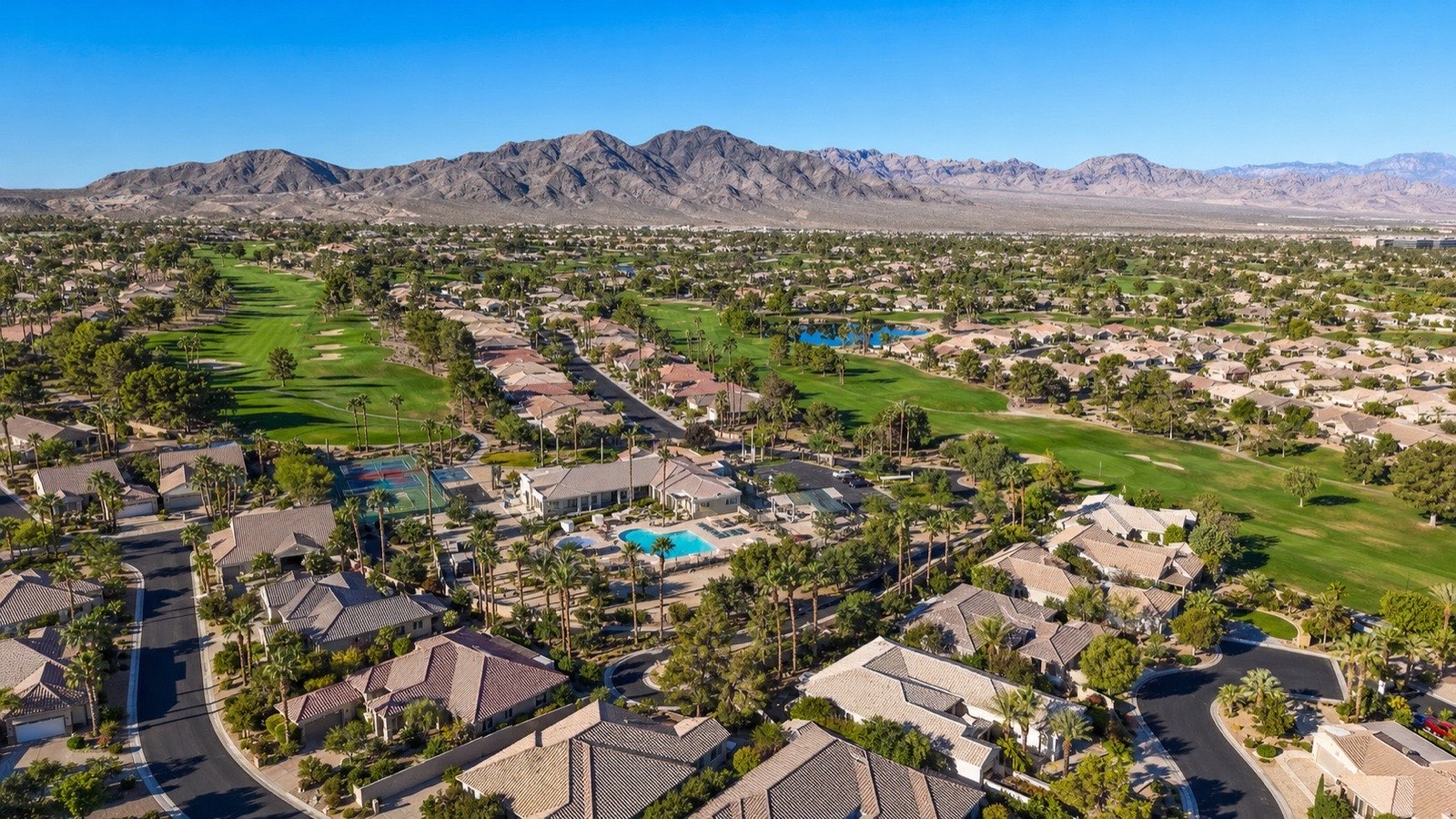
Most housing laws treat land as a given and tinker with financing. Nevada's problem is the opposite: the financing exists, but the land does not. According to the Las Vegas Review-Journal, the federal government controls roughly 85% of Nevada and about 90% of Clark County, with the Bureau of Land Management alone overseeing about 47 million acres. That makes Nevada the most federally owned state in the country.
The practical result is a hard ceiling on growth. Analysts cited by Nevada policy researchers estimate the Las Vegas Valley has only about 25,000 acres of privately developable land left — six to eight years of supply at the current build rate. Reno faces the same wall and could exhaust its developable land as early as 2027. When a fast-growing metro runs out of dirt, prices climb regardless of mortgage rates. That is why a bill that speeds federal-land transfers and rewards denser building matters more here than in Texas or Florida, where builders can simply expand outward.
A $478,000 median price in a desert metro is not a story about greed; it is a story about geography. The ROAD to Housing Act is the first federal package in years to treat land scarcity and permitting friction as the core problem — exactly Nevada's diagnosis.
How Does Nevada's Federal Land Problem Shape the Las Vegas Housing Market?
For 27 years, the release valve on Nevada's land squeeze has been the Southern Nevada Public Land Management Act (SNPLMA), passed in 1998, which lets the BLM auction federal parcels around Las Vegas and recycle the proceeds into parks, conservation, and infrastructure. According to the Bureau of Land Management, about 562.5 acres in the Las Vegas Valley have been reserved specifically for affordable-housing purposes.
More recently, the Departments of the Interior and Housing and Urban Development created a process to sell eligible public land for as little as $100 per acre — a fraction of fair-market value that can run well into six figures per acre at auction — for income-restricted housing. According to the Department of the Interior, the first tranche put 20 acres on the table at that $100-per-acre rate, and a separate federal land transfer has already delivered affordable senior housing in Las Vegas, documented by HUD.
The bottleneck has been process, not willingness. Appraising and conveying federal land is slow, and that is where Nevada's congressional delegation has focused. The ROAD to Housing Act's regulatory-streamlining title plugs directly into these existing Nevada pipelines, shortening the path from "BLM parcel" to "occupied home." If you want to understand why a Las Vegas homes-for-sale search shows what it shows, start with the map of who owns the dirt.
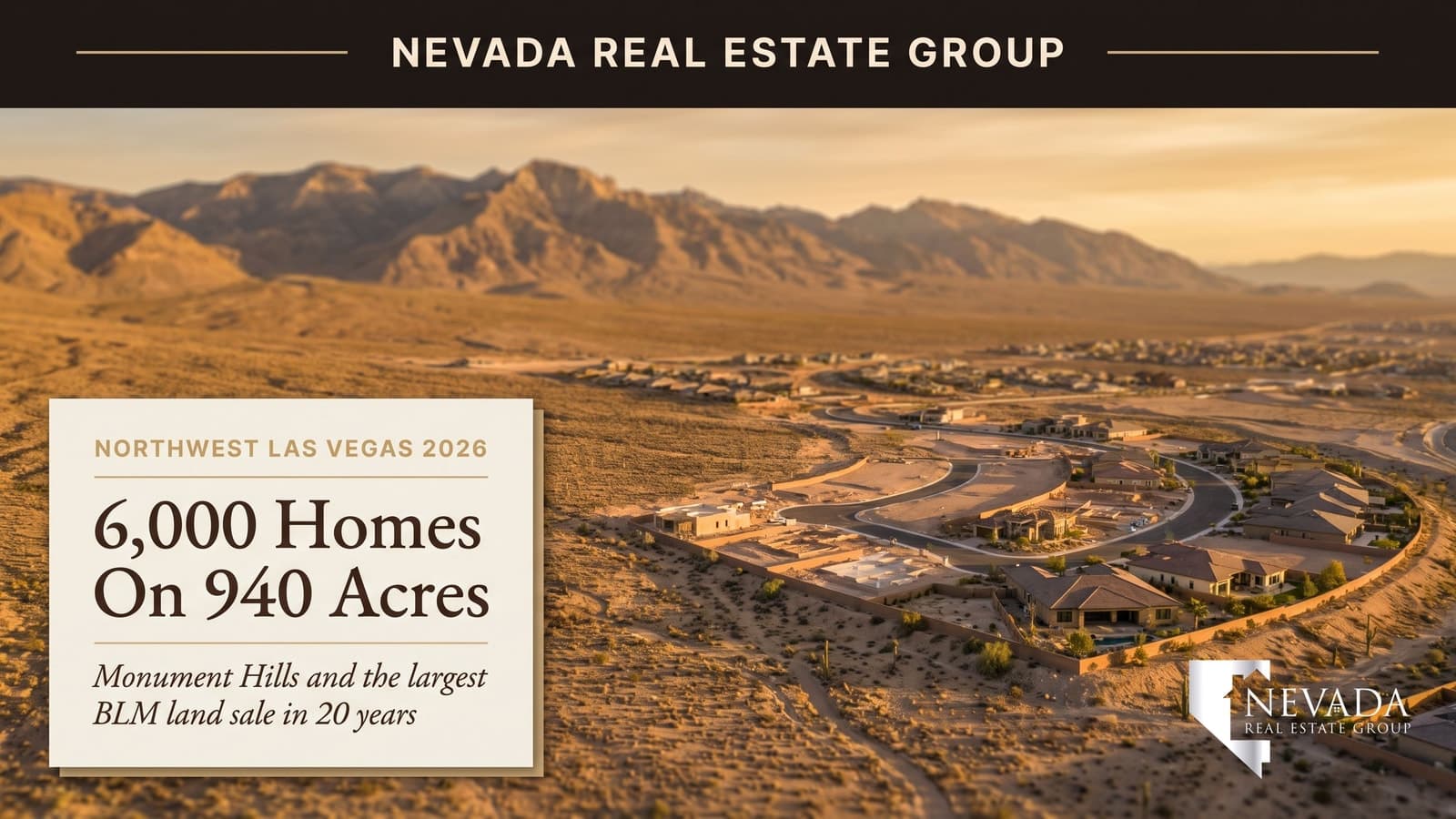
For a concrete local example of the land-supply question, read our account of the Monument Hills federal-land sale, keeping the proposal and timing distinctions in view.
What Does the Act Do to Boost Housing Supply?
Title 2, labeled "Building More in America," is the engine of the bill and the part Nevada cares about most. According to the Bipartisan Policy Center, it includes:
- A $200 million annual Innovation Fund (Section 210) of competitive grants for local governments and tribes that demonstrably increase housing supply through streamlined permitting and zoning reform.
- The Accelerating Home Building Act (Section 211), funding pre-reviewed designs for accessory dwelling units, duplexes, and townhouses, with 10% of dollars reserved for rural areas — relevant to Nevada's vast rural counties.
- The RESIDE Act (Section 212), a pilot to convert vacant commercial and industrial buildings into housing, prioritizing Opportunity Zones.
- NEPA streamlining through the BUILD Housing Act (Section 207) and the Unlocking Housing Supply Act (Section 208), which expand categorical exclusions so housing projects clear environmental review faster.
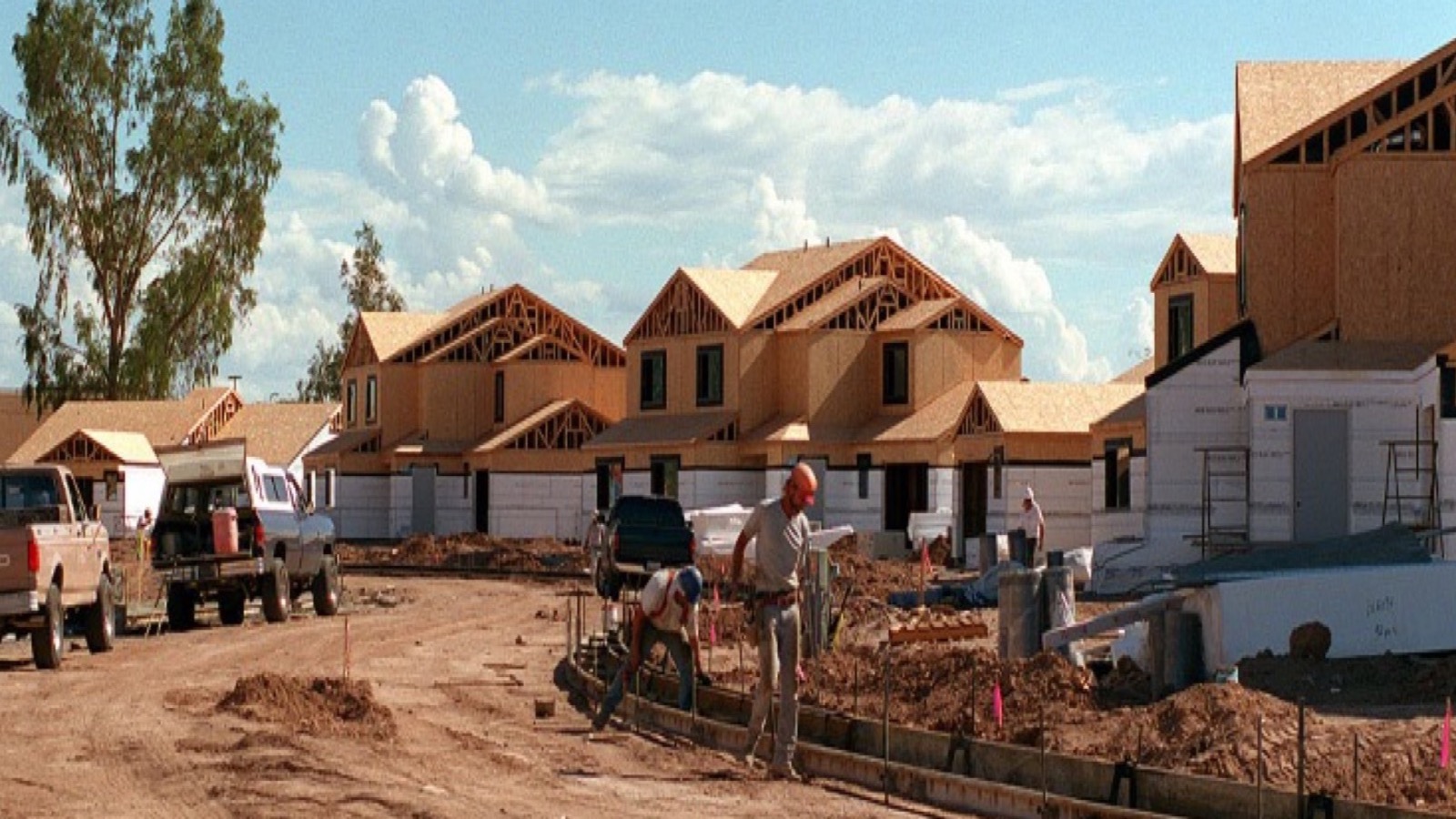
The common thread is incentive plus speed: pay cities to remove their own barriers, then remove the federal barriers on top. For a market that builds tens of thousands of homes a year but is racing a land clock, shaving even three to six months off entitlement timelines is worth real money — often $15,000 to $40,000 per home in carrying costs that ultimately land in the sale price.
How Will the Innovation Fund and Zoning Reforms Affect Las Vegas?
The $200 million Innovation Fund is structured as a carrot, not a mandate. Cities that loosen restrictive zoning, legalize ADUs, or compress permitting timelines compete for grants; cities that do nothing get nothing. Las Vegas, Henderson, North Las Vegas, and the unincorporated Clark County core are all strong candidates because they already face intense pressure to densify — there is simply nowhere left to sprawl.
Expect the biggest near-term effect in three forms. First, more attached product: townhomes and condos in the $310,000 to $375,000 band that first-time buyers can actually reach. Second, ADUs — casitas and garage conversions — becoming a legitimate income and multigenerational strategy on existing lots. Third, faster approvals that let builders respond to demand inside a single market cycle instead of missing it.
If you are weighing a purchase in Henderson or North Las Vegas, denser zoning is not an abstraction — it changes which floor plans get built near you over the next 24 months. And for sellers of older single-family homes on larger lots, ADU-friendly rules can quietly raise your land value.
What Does the Act Change for Manufactured and Modular Homes in Nevada?
Title 3 may be the most underrated part of the bill for Nevada affordability. According to the Bipartisan Policy Center, Section 301 eliminates the decades-old requirement that manufactured homes keep a permanent chassis, Section 303 raises FHA loan limits for manufactured housing and makes ADU construction an eligible use for property-improvement loans, and Section 304 reauthorizes the PRICE Act grants to preserve manufactured-home communities.
This matters because factory-built and modular housing is among the fastest, cheapest ways to add units on Nevada's scarce, expensive land. A modular home can be 10% to 20% cheaper per square foot than site-built construction and can be completed in a fraction of the time — critical when every month of carrying cost on a $100,000-plus parcel adds up. Removing the chassis rule lets manufactured homes look and finance more like conventional houses, which can lift appraised values and open conventional and FHA financing that previously priced these buyers out.
For rural Nevada — Pahrump, the I-80 corridor towns, and the high desert around Carson City — modular and manufactured reform is arguably the single most consequential provision in the entire Act.
How Does the Act Reform FHA Loans and Mortgages for Nevada Buyers?
Title 4 modernizes the financing plumbing. The headline, according to the House Financial Services Committee, is the first update to FHA multifamily mortgage loan limits since 2003 — a 23-year gap that had made FHA financing nearly useless for apartment construction in high-cost metros. The bill also directs the CFPB to study and ease rules around small-dollar mortgages under $100,000 (Section 401-402), and reforms appraisal licensing and training (Section 403) to attack the appraiser shortage that slows every Nevada closing.
Why does this hit Nevada buyers specifically? FHA is the workhorse loan for first-time and moderate-income buyers, and the Las Vegas market is full of them.
| Provision | Section | What it changes |
|---|---|---|
| FHA multifamily loan limits | 213 | First update since 2003; revives FHA financing for apartment construction |
| Small-dollar mortgages | 401-402 | Eases rules on loans under $100,000 — common for condos and starter homes |
| Appraisal reform | 403, 704 | Workforce grants plus reconsideration procedures to cut appraisal delays |
| Manufactured-home FHA limits | 303 | Higher limits and ADU-eligible property-improvement loans |
| Veterans' loan disclosures | 601-603 | Clearer VA-versus-FHA comparisons; excludes disability pay from HUD-VASH income tests |
On a $478,000 Las Vegas home, the difference between a smooth 30-day FHA close and a deal that dies over a low appraisal can be the entire transaction. Faster, better-staffed appraisals and small-dollar reform quietly widen the pool of buyers who can compete.
Will the Institutional Investor Limits Help Las Vegas Buyers?
Few provisions are more relevant to Las Vegas than Section 901, the "Homes are for People, Not Corporations" measure. According to the Bipartisan Policy Center, it restricts large institutional investors — those owning at least 350 single-family homes — from buying additional single-family homes, and requires existing rental holdings to be sold to individual homeowners over a seven-year window.
I've seen cash funds beat my first-time buyers on the same $400,000 houses more times than I can count, so I read Section 901 with real interest. Las Vegas was ground zero for institutional buying after 2011, when Wall Street-backed firms bought thousands of valley homes at the bottom of the cycle and converted them to rentals. At the peak, investors were responsible for a large share of entry-level purchases, directly competing with families for the same $350,000 to $450,000 houses. Capping the largest players does not magically add inventory, but it removes a buyer who never sleeps, never gets cold feet, and pays cash — which can meaningfully improve odds for an owner-occupant making an offer in Summerlin or the southwest valley.
The caveat: the limit targets only the biggest institutions (350-plus homes). Mom-and-pop landlords and mid-size investors are untouched, so this is a tilt of the field, not a level one. Still, for a first-time buyer who has lost three bidding wars to cash funds, even a modest tilt is welcome.
How Does the Act Streamline Federal Land Transfers for Housing in Nevada?
This is where the bill and Nevada's geography meet most directly. The Act's regulatory-streamlining provisions — expanded NEPA categorical exclusions, delegated environmental reviews to state and local agencies, and faster "special project" treatment for federally assisted housing — shorten the very steps that have bottlenecked Nevada's land pipeline for years.
According to reporting from The Nevada Independent, simply releasing federal land is not a cure-all; the parcels must be near existing water, roads, and sewer to pencil out. But pairing land release with faster reviews is the combination that works. Nevada's delegation has pushed complementary measures like the Accelerating Appraisals and Conservation Efforts Act to speed the appraisal of development-ready federal parcels, and Governor Joe Lombardo has, according to the Las Vegas Review-Journal, pursued federal-land agreements specifically for housing.
| Tool | What it does | ROAD Act effect |
|---|---|---|
| SNPLMA (1998) | Auctions BLM land around Las Vegas; 562.5 acres reserved for affordable housing | Faster reviews speed parcels to market |
| $100-per-acre program | Interior/HUD sell eligible land far below market for income-restricted housing | Streamlined NEPA shortens approval |
| Appraisal acceleration | Speeds valuation of development-ready federal parcels | Section 403/704 appraisal reforms reinforce it |
| Innovation Fund | $200M/year for cities that cut zoning and permitting friction | Rewards Nevada metros for densifying released land |
In other words, the Act does not hand Nevada more BLM land outright, but it makes the land Nevada can already access usable years faster — and on a six-to-eight-year land clock, years matter.
What Does the Act Mean for Reno, Sparks, and Carson City?
Northern Nevada is on the same collision course as the south, just with a tighter timeline. Reno could run out of developable land as early as 2027, and Sparks and the Truckee Meadows are absorbing in-migration from California faster than they can build. The Act's supply tools — the Innovation Fund, ADU and townhouse designs, NEPA streamlining, and modular reform — apply statewide, and they are arguably more urgent up north.
For buyers exploring Reno, Sparks, or Carson City, the practical takeaway is that the next wave of attainable inventory is likely to be denser and factory-built. The 10% rural set-aside in the Accelerating Home Building Act also reaches the smaller Northern Nevada and rural communities that big builders usually skip — places where a handful of modular homes can move the entire local market. With Reno-area medians running well above the national figure, any tool that adds sub-$500,000 product changes who can buy.
What Does It Mean for Henderson, North Las Vegas, and Boulder City?
Within the Las Vegas Valley, the Act's effects will vary by submarket. Henderson, the valley's master-plan capital, has the strongest case for Innovation Fund grants because its growth corridors are already pushing against federal land and water limits — denser, pre-approved designs let it keep adding homes without new sprawl. North Las Vegas has more raw land in play and stands to benefit most from faster federal-land releases on its northern edge, where Apex and surrounding BLM acreage sit ready for industrial-adjacent workforce housing.
Boulder City, by contrast, has chosen growth control by ordinance, so federal supply incentives will matter less there — its scarcity is self-imposed and intentional. And fast-growing exurbs like Pahrump lean heavily on manufactured and modular housing, making Title 3 the provision that touches them most. One bill, but six or seven different stories depending on which Nevada community you call home.

How Does the Current Las Vegas Housing Market Set the Stage?
The Act lands in a market that has already normalized from its pandemic extremes. According to Las Vegas REALTORS, the valley's median sale price sat near $478,000 in early 2026, up about 3.7% year over year, while the median existing single-family home traded around $473,875 in the spring. Single-family detached product carries a median near $485,000; townhomes and attached homes clear roughly $310,000 to $375,000.
| Metric | Early 2025 | Early 2026 |
|---|---|---|
| Median sale price | About $461,000 | About $478,000 |
| Active listings | About 5,200 | About 8,100 |
| Months of supply | 1.4 months | 2.9 months |
In my experience representing buyers and sellers across the valley, inventory rarely rebuilds this fast without a crash driving it. Inventory has climbed dramatically — from a cycle low near 2,650 active listings in 2022 to roughly 8,100 today — pushing months of supply from a white-hot 1.4 to a balanced 2.9. That is healthy normalization, not distress. But the underlying land constraint has not gone anywhere, which is why every analyst who looks past the next quarter keeps circling back to supply. For a deeper read on where prices head next, see our Las Vegas housing market forecast. The ROAD to Housing Act is, in effect, a federal bet that the only durable fix for a $478,000 median is more homes.
What Happens Next With the Trump Signing Standoff?
Here is the twist. Despite passing 358-32 and 85-5, the bill is not yet law. According to CNN and NPR, President Trump canceled the planned signing ceremony, saying he would act only after the separate SAVE America Act advances in Congress. That leaves a bill with rare, veto-proof bipartisan majorities in a holding pattern.
What does that mean for Nevada buyers and sellers in practice? Mostly patience. The provisions that require funding and rulemaking — the Innovation Fund, FHA limit updates, appraisal grants — will take months to stand up even after a signature, so nothing changes overnight regardless of the signing date. The federal-land and permitting tools that plug into Nevada's existing SNPLMA and Interior/HUD pipelines are the ones most likely to show up first. According to Time, the breadth of bipartisan support suggests the policy framework is durable even if the signing timeline slips. For Nevada, the destination matters more than the exact arrival date.
What Should Nevada Buyers and Sellers Do Now?
We've represented enough Nevada buyers through rate swings and bidding wars to give every client the same answer: decide on the home in front of you, not the headline. Do not wait for a press conference to make a sound housing decision. The Act, signed or not, confirms a trend Nevada families already feel: land is scarce, supply is the fix, and the most attainable new homes will increasingly be denser and factory-built. A few practical moves:
- Buyers: get fully underwritten now while inventory sits at a balanced 2.9 months. If FHA small-dollar and appraisal reforms widen the buyer pool later, today's relative breathing room narrows. Browse current Las Vegas homes for sale to gauge real pricing, not headlines.
- First-time buyers: watch for new ADU rules and sub-$375,000 attached product — the Act is designed to create exactly this tier.
- Sellers: if you own an older home on a larger lot, ADU-friendly zoning can lift your land value; price to the normalized 2026 market, not the 2022 peak.
- Investors below 350 homes: you are unaffected by the corporate cap, but a federally backed push for supply is a long-term headwind to the appreciation thesis — underwrite conservatively.
Whatever your situation, the team at Nevada Real Estate Group tracks every one of these provisions as they move from bill text to closing tables. Call us at (702) 637-1759 and we will map the Act to your specific street and price point.

Frequently Asked Questions
Is the 21st Century ROAD to Housing Act law yet?
Not as of late June 2026. It passed the House 358-32 and the Senate 85-5, but President Trump canceled the signing ceremony and tied his signature to the separate SAVE America Act. The bill sits on his desk with veto-proof bipartisan majorities, so most observers expect it to become law eventually, but the exact timing is uncertain. Even after a signature, the funded programs would take months of rulemaking to take effect.
How does the Act specifically help Las Vegas?
Las Vegas benefits most from the supply and federal-land provisions. The $200 million Innovation Fund rewards Clark County cities for cutting zoning and permitting barriers, NEPA streamlining speeds construction, and faster federal reviews plug into Nevada's existing SNPLMA and $100-per-acre land pipelines. Because the federal government owns about 88% of Clark County and the valley has roughly 25,000 developable acres left, tools that move land to market faster matter more in Las Vegas than almost anywhere else.
Will the ROAD to Housing Act lower home prices in Nevada?
Not immediately, and probably not dramatically. According to economists cited in national coverage, the Act is a supply bill, and supply takes years to move prices. The realistic effect is to slow future price growth by adding homes, especially attached and factory-built product in the $310,000 to $375,000 range, rather than to cut the $478,000 median. In a land-constrained market like Las Vegas, preventing prices from accelerating is itself a meaningful win for buyers.
What does the investor cap mean for Las Vegas rentals?
Section 901 stops institutions owning 350 or more single-family homes from buying additional ones and requires them to sell existing holdings to individual buyers over seven years. In Las Vegas, where Wall Street firms bought heavily after 2011, this gradually returns some homes to owner-occupants and reduces cash competition for entry-level houses. It does not affect smaller landlords, so most local mom-and-pop rental owners see no change at all.
Does the Act give Nevada more BLM land for housing?
Not directly. The Act does not transfer new Bureau of Land Management acreage by itself. Instead, it accelerates the reviews and appraisals that have bottlenecked Nevada's existing land tools, like SNPLMA and the Interior/HUD $100-per-acre affordable-housing program. Separate Nevada-specific bills handle the actual land disposal; the ROAD to Housing Act makes that disposal usable faster once it happens.
How does the Act affect manufactured and modular homes?
Significantly. It eliminates the permanent-chassis requirement for manufactured homes, raises FHA loan limits for them, and reauthorizes preservation grants for manufactured-home communities. Because factory-built housing can be 10% to 20% cheaper per square foot and far faster to deliver, these reforms are especially powerful in rural Nevada and exurbs like Pahrump, where modular construction is often the most realistic path to a sub-$400,000 home.
Should I buy a Las Vegas home now or wait for the Act to take effect?
For most buyers, now. Inventory sits at a balanced 2.9 months and prices have normalized, giving you negotiating room that did not exist in 2022. The Act's buyer-friendly financing reforms would, if anything, expand competition later, tightening that window. Waiting for a bill that is still unsigned and years from full implementation means paying today's prices later with more buyers in the pool. Get pre-approved and shop the real market now.
Which Sources Inform This Nevada Housing Guide?
This guide draws on federal legislative text, nonpartisan policy analysis, federal agency data, and local Nevada market reporting. According to the sources below, every statutory provision, federal-land figure, and market statistic cited here is verifiable as of June 2026. Figures are rounded for readability; confirm current numbers before making a transaction.
- Congress.gov — H.R. 6644 full text
- Congressional Research Service — ROAD to Housing Act summary (R48732)
- Bipartisan Policy Center — What's in the 21st Century ROAD to Housing Act
- National Low Income Housing Coalition — House passes amended bill
- House Financial Services Committee — Senate passage statement
- NPR — Congress passes housing affordability bill
- CNN — Trump cancels signing of housing bill
- Time — What to know about the landmark housing bill
- Bureau of Land Management — Affordable housing reservations in the Las Vegas Valley
- Department of the Interior — Interior and HUD action for Nevada housing
- HUD USER — Federal land brings senior housing to Las Vegas
- The Nevada Independent — Will federal land release help Nevada's housing crisis?
- Las Vegas Review-Journal — Why the federal government controls most of Nevada
- Las Vegas REALTORS — local market statistics
- U.S. Census Bureau — Nevada population and housing data