

Every few weeks a relocating buyer sits down across from me, puts their phone on the desk with a satellite photo of the white bathtub ring on it, and asks the question in the headline. It is a fair question, and it deserves a straight answer rather than either the doom version or the chamber-of-commerce version.
The straight answer has two halves that are both true at the same time. Lake Mead is in genuinely bad shape — it set an all-time record low this month, and the federal government just cut Nevada's Colorado River supply by more than double the previous reduction. And Southern Nevada is the single best-insulated city on the entire river, for reasons that are structural rather than lucky. Holding both of those in your head at once is the whole skill.
This guide was first published in June 2026 and substantially rewritten on September 12, 2026, because the facts moved. Two things happened over the summer that change the picture: the reservoir broke its record low, and on August 21 the Interior Department signed a Record of Decision replacing the rules that had governed the river since 2007. Everything below reflects that.
No. Lake Mead hit an all-time record low of about 1,038.9 feet in September 2026, and Nevada's Colorado River supply was cut by 50,000 acre-feet for 2027. But Southern Nevada returns almost every drop of indoor water to the lake for credit, consumed only about 164,000 of its 300,000 acre-foot allocation in 2025, and draws through an intake 35 feet below dead pool. Water rates and landscaping rules are the real homeowner exposure.
- Lake Mead sat at 1,038.93 feet and 26 percent full on September 7, 2026, an all-time record low.
- The August 21, 2026 Record of Decision cuts Nevada 50,000 acre-feet in both 2027 and 2028.
- Southern Nevada consumed roughly 164,000 acre-feet of its 300,000 acre-foot right in 2025.
- The Third Intake draws at 860 feet, about 35 feet below Lake Mead's 895-foot dead pool.
- Nevada's turf ban exempts single-family homes entirely, front yard and back yard.
How Low Is Lake Mead Right Now?
Low enough that the honest answer starts by conceding the point. According to the Bureau of Reclamation's weekly hydrologic update for September 7, 2026, Lake Mead sat at elevation 1,038.93 feet holding 6,904 thousand acre-feet — 26 percent of capacity. That is an all-time record low for the reservoir, which first filled in the 1930s. The previous record, set during the 2022 drought, has now been broken and then broken again; the lake touched its lowest daily reading on record on September 1, 2026.
The wider system is worse than the single number suggests. Colorado River total system contents stood at 18,163 thousand acre-feet, or 31 percent of capacity, against 22,091 thousand acre-feet and 38 percent at the same point a year earlier. That is a seven-percentage-point loss of the entire river's storage in twelve months. Lake Powell upstream was at 3,517.58 feet and 22 percent full.
The most uncomfortable figure in that report is not a reservoir level at all. Precipitation in the Lake Mead basin for water year 2026 ran 24.55 inches, or 111 percent of normal — an above-average year. Yet observed unregulated inflow into Lake Powell for April through July 2026 came in at 1,143 thousand acre-feet, just 18 percent of normal. Snow fell and the runoff did not arrive, because warmer soils and a thirstier atmosphere absorbed it before it reached the river. That decoupling of precipitation from runoff is what hydrologists mean by aridification rather than drought, and it is why a good snow year no longer rescues the system.
Looking forward, Reclamation projects Lake Mead ending calendar year 2026 at 1,034.74 feet, a figure revised down 2.57 feet from the previous month's study. That projection matters for a specific reason covered in the next section but one: it sits just below 1,035 feet, the elevation at which Hoover Dam's generating capacity degrades sharply.
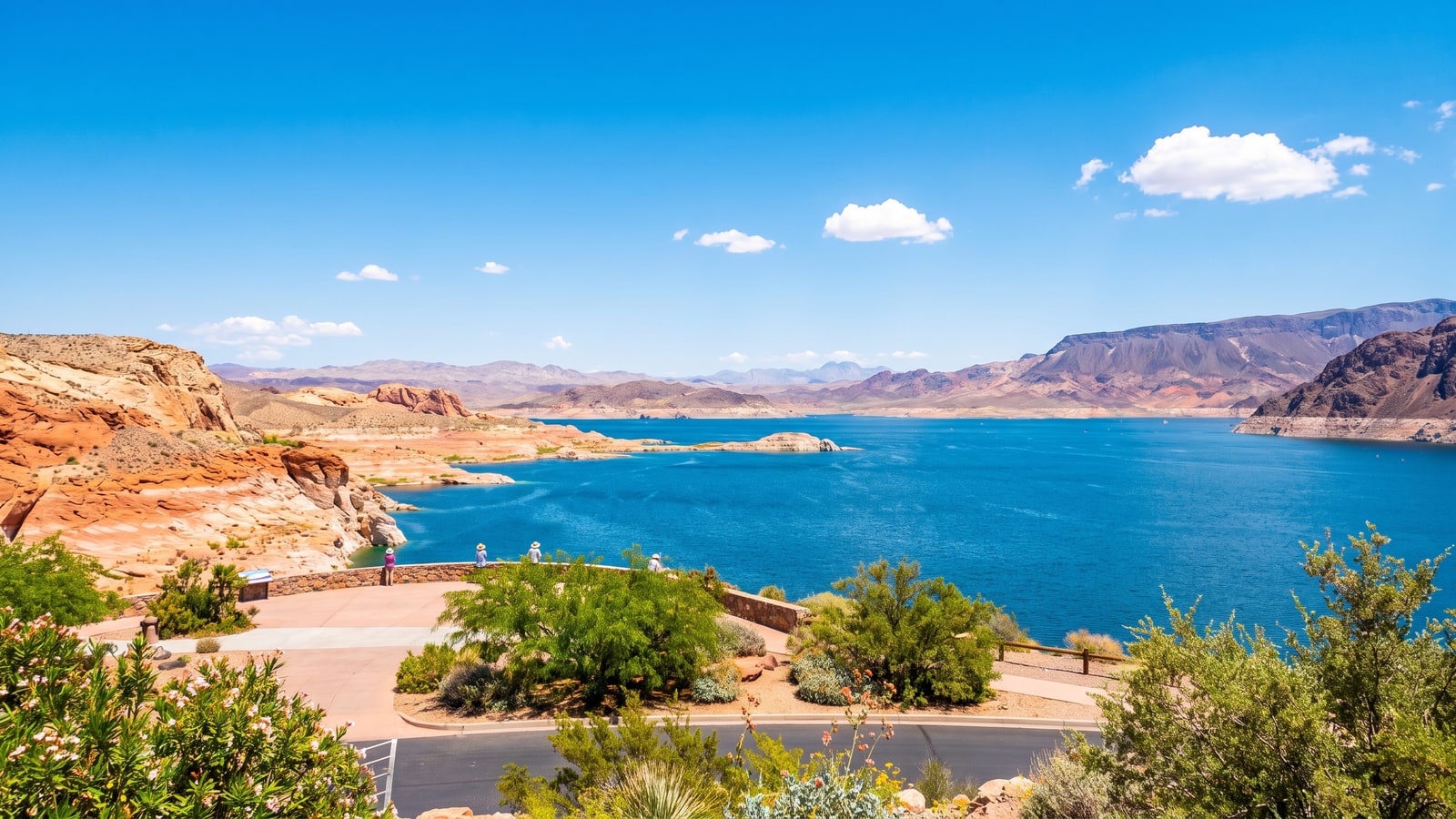
So if the question is whether the reservoir is in trouble, the answer is unambiguously yes. The question this guide exists to answer is a different one: what that means for the person buying a house in the valley.
What Did the August 2026 Record of Decision Change?
It replaced the rulebook. The 2007 Interim Guidelines and the 2019 Drought Contingency Plan that governed how the river is shared expired on September 30, 2026, and for most of the last two years the seven basin states failed to agree on a successor, blowing through deadlines in November and February. On August 21, 2026, the Interior Department signed a Record of Decision and imposed a framework.
The new structure is deliberately less permanent than what came before. According to Reclamation's post-2026 operations program, the framework runs ten years from 2027 through 2036 but nests three layers inside it: durable decade-long principles including Glen Canyon Dam protections and a Lake Powell release range of five to twelve million acre-feet, then two-year operating guidelines renegotiated every two years, then annual operating plans. The basin states had originally wanted a single durable twenty-to-thirty-year deal. What they got instead is a river that gets renegotiated roughly every other year — what one water manager described as an era of near-continuous negotiation.
For the Lower Basin, the first two-year block is concrete and painful. Arizona, California and Nevada must collectively cut 1.25 million acre-feet in both 2027 and 2028, allocated as follows.
| State | Annual reduction | Base apportionment | Share of apportionment cut |
|---|---|---|---|
| Arizona | 760,000 acre-feet | 2.8 million acre-feet | About 27 percent |
| California | 440,000 acre-feet | 4.4 million acre-feet | About 10 percent |
| Nevada | 50,000 acre-feet | 300,000 acre-feet | About 17 percent |
Nevada's 50,000 acre-foot cut is a significant escalation. Under the prior rules, the 2026 Tier 1 shortage reduced Nevada by 21,000 acre-feet, roughly 7 percent. The new reduction is nearly two and a half times larger. Anyone telling you the August decision was a nothing-burger for Nevada has not read it.
Three implementing agreements remain unfinished, including the successor to Minute 323, which governs Mexico's share. And the environmental impact statement released on July 31 deliberately declined to interpret the 1922 Colorado River Compact, leaving the Upper Basin and Lower Basin's fundamental legal disagreement — over which half has to absorb shortage — unresolved for another day. That fight is coming.
Why Does a 17 Percent Cut Barely Move Southern Nevada?
Because Nevada has not been using its full allocation for years, and the gap is large enough to absorb the cut with room left over.
Nevada's right is 300,000 acre-feet per year, established under the 1928 Boulder Canyon Project Act and the smallest of any Lower Basin state. But allocation is measured as consumptive use — diversions minus whatever is returned to the river. According to the Southern Nevada Water Authority's reporting, in the January through September 2025 period Southern Nevada diverted 346,564 acre-feet, earned 182,195 acre-feet in return-flow credits, and recorded net consumptive use of 164,368 acre-feet.
Read those three numbers together and the entire Las Vegas water story is in them. The region pulled more than its allocation out of the lake, put more than half of it back, and consumed about 55 percent of what it is legally entitled to consume. A 50,000 acre-foot cut takes the entitlement from 300,000 down to 250,000. Southern Nevada's actual consumption sits roughly 85,000 acre-feet below even the reduced ceiling.
That is the difference between Nevada and Arizona, and it is why the same river crisis lands so differently on either side of the state line. Arizona is absorbing a 760,000 acre-foot cut against usage that is far closer to its entitlement, which is why Arizona's cuts fall on farms in Pinal County and on the Central Arizona Project canal. Nevada's cut lands on headroom.
None of this means Southern Nevada is carefree. Headroom is finite, the valley keeps growing, and the next two-year negotiation will arrive in 2028 with the reservoir likely lower still. But the practical distance between "Nevada's allocation was cut 17 percent" and "Las Vegas runs short of water" is very large, and it is filled with the plumbing described next.
How Does the Return-Flow Credit System Actually Work?
It is the single most important mechanism in Southern Nevada water and the one almost no headline explains.
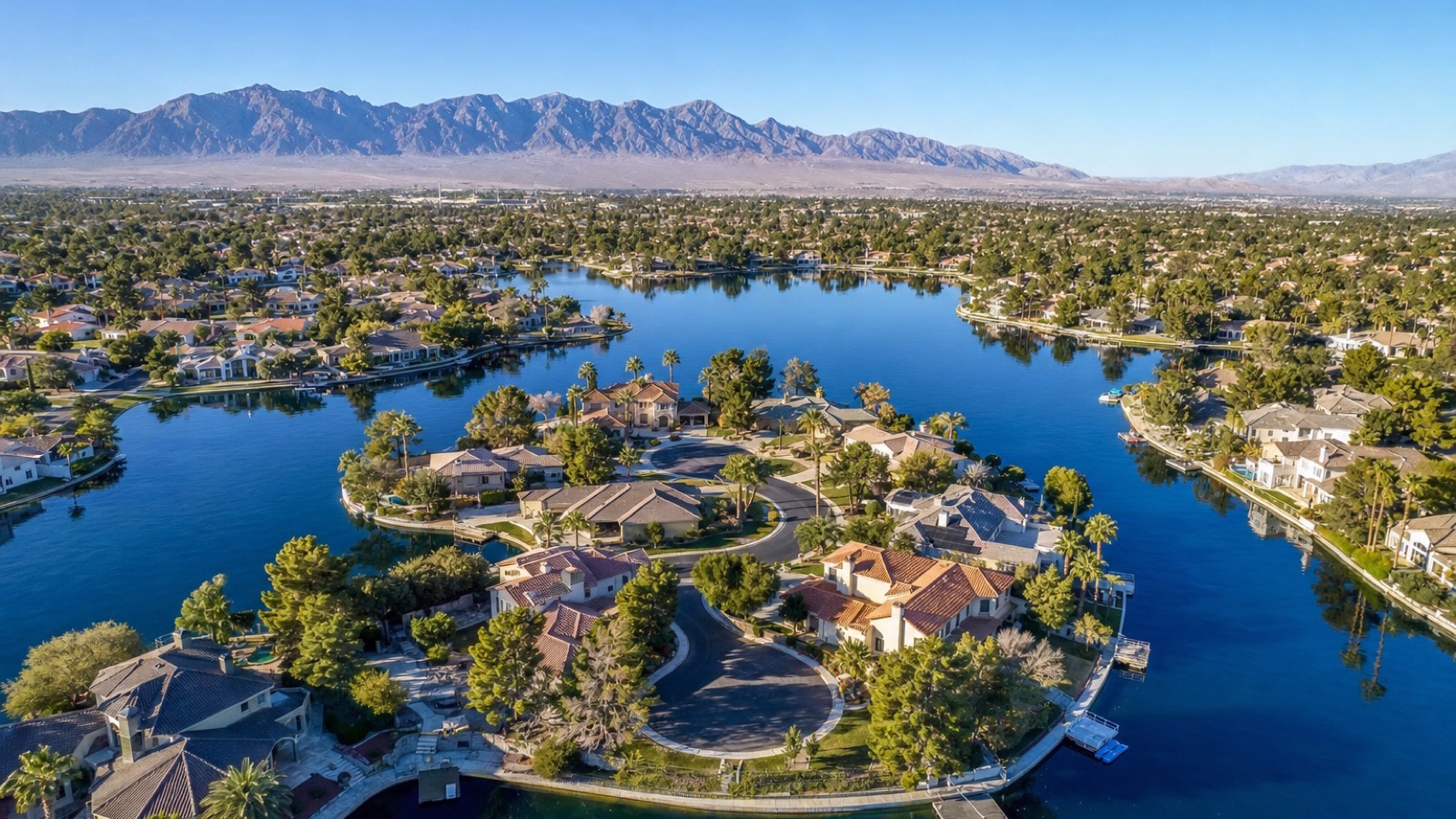
Every gallon used indoors in the valley — shower, sink, dishwasher, toilet, laundry — goes down a drain into the regional sewer system, is treated to standard, and is discharged back to Lake Mead through the Las Vegas Wash. According to the Southern Nevada Water Authority, those returned gallons earn return-flow credits, and the rule is simple: every gallon returned to the Colorado River lets Southern Nevada take another gallon out. The region recycles approximately 99 percent of the water it uses indoors, and indoor use is roughly 40 percent of total community use.
The practical consequence for a household is counterintuitive and worth stating plainly. Your long showers are close to free, in water-supply terms. A household using 8,000 gallons a month indoors produces a net depletion of the lake in the low tens of gallons, because essentially all of it comes back. What genuinely leaves the system is water that evaporates or gets taken up by plants — irrigation, pools, evaporative coolers, car washing. Outdoor use is the only use that really counts.
That is why every conservation rule in Southern Nevada, without exception, targets the outside of the house rather than the inside. There is no low-flow-showerhead mandate here because a low-flow showerhead would save the lake almost nothing. There is an aggressive turf program because grass is consumptive.
Roughly 90 percent of the valley's municipal supply comes from the Colorado River, with about 10 percent from local groundwater. So the return-flow system is not a side arrangement; it is the thing that lets a metro of well over two million people run on the smallest allocation on the river.
What Happens If Lake Mead Falls Below Hoover Dam's Intakes?
This is the scenario behind most of the alarming coverage, and Southern Nevada is the one user on the river that has already solved it.
Two elevations matter. At 1,035 feet, Hoover Dam's generating capacity degrades severely — some turbines must be taken offline and output drops sharply. Reclamation currently projects Lake Mead at 1,034.74 feet at the end of 2026, which means the power problem is not hypothetical or distant. At 895 feet, the reservoir reaches "dead pool," the level below which water physically cannot pass through the dam to California, Arizona or Mexico.
Las Vegas draws its water from somewhere else entirely. After the older, shallower intakes began looking vulnerable, SNWA built a third intake — the "Third Straw" — tunneled beneath the lake to draw at elevation 860 feet, roughly 35 feet below dead pool. It was approved in 2005 and went into service in September 2015. Because an intake that low cannot rely on gravity and lake pressure, SNWA then built the Low Lake Level Pumping Station to physically lift the water, completing it in 2020 at a cost of about $522 million.
The engineering consequence is stark: if Lake Mead ever fell to the point where Hoover Dam could no longer deliver water downstream to Los Angeles, Phoenix or Mexico, Las Vegas would still have roughly 35 feet of water above its intake and a pumping station built to lift it. Southern Nevada spent roughly half a billion dollars to be last in line rather than first.
That is the answer to the literal question in this article's title. The taps in the valley are not the failure point in any modeled scenario, because the system was deliberately engineered so that they would not be. The failure points on this river are agricultural deliveries, hydropower and interstate politics — all serious, none of which manifest as a dry faucet in a Summerlin kitchen.
Why Has Per-Capita Use Fallen While the Valley Kept Growing?
Because Southern Nevada started treating outdoor water as the enemy two decades before it became fashionable, and the results are the best of any major desert metro in the country.
According to the Southern Nevada Water Authority, the Las Vegas Valley used approximately 211 gallons per capita per day in 2002. By 2025 that figure had fallen to roughly 95 GPCD — a reduction of about 58 percent — while the population served grew by approximately 876,000 residents, from about 1.5 million to more than 2.2 million. Total Colorado River consumption fell in absolute terms over the same period. The valley is far larger and uses less water than it did.
Four policy levers did most of that work. New front-yard turf was prohibited on new homes beginning in 2003, which is why the vintage of a house tells you most of what you need to know about its landscaping. Water Smart Landscapes rebates pay property owners to tear out existing grass. Tiered pricing escalates steeply once a parcel exceeds its budget, so heavy irrigation becomes expensive rather than merely discouraged. And golf courses, resorts and common areas operate under binding water budgets rather than voluntary targets.
SNWA has set a further goal of 86 GPCD by 2035, which implies the ratchet continues. For a buyer, that is the honest forward-looking risk: not scarcity, but a steadily tightening regulatory environment around outdoor water, and rates designed to make waste hurt.
It is worth noting that the conservation program has real critics and at least one active lawsuit, which alleges that removing turf disrupted irrigation to mature trees and contributed to widespread tree die-off across Southern Nevada. Reasonable people disagree about execution. The aggregate water result is not seriously disputed.
Does Lake Mead Affect Home Values or Mortgage Approval?
Not in any mechanism anyone has been able to point me to, and I have asked lenders directly.
Conventional, FHA, VA and jumbo underwriting contains no reservoir-elevation condition. What a lender checks is that the property has a documented municipal water connection rather than depending on a private well — and every parcel inside the SNWA service territory has one. There is no Lake Mead rider, no shortage-tier adjustment, and no appraisal line item for Colorado River conditions.
The market data says the same thing. Across the 5,439 closings in Las Vegas, Henderson, North Las Vegas and Boulder City between June 1 and August 31, 2026, the 4,116 single-family sales carried a median price of $482,500 at $257 per square foot, moving in a median 26 days. That is a functioning, liquid market during the same summer the reservoir set a record low. Buyers are not pricing in a water discount, and the shortage has now been a running news story for the better part of a decade.
Where I would be careful is the long-cycle version of the question. If water rates climb meaningfully over a twenty- or thirty-year hold, the carrying cost of a water-hungry yard rises with them, and the premium buyers pay for a large lawn could compress relative to a well-designed desert yard. That is a plausible directional argument. I am not going to dress it up as a measured finding, because I do not have data that isolates landscaping from lot size, vintage and location — in our own closings the pre-2003 homes sold at a $445,000 median and $266 per square foot while the 2003-and-newer homes sold at $520,000 and $250, and that spread is about house size and age, not sprinklers.
The realistic homeowner exposure to the water story is a utility bill and a set of landscaping rules. Both are budgetable. Neither is a property-value event.
Do You Actually Have to Tear Out Your Front Lawn?
If you are buying a single-family home: no. This is the single most misunderstood rule in Southern Nevada, and I have watched buyers budget thousands of dollars for work the law does not require of them.
Nevada Assembly Bill 356, passed in 2021, provides that on and after January 1, 2027, Colorado River water distributed by SNWA or its member agencies may not be used to irrigate nonfunctional turf on any parcel not used exclusively as a single-family residence. According to the Nevada Legislature's record of the bill, the prohibition is aimed at streetscape turf along roads and sidewalks, medians and roundabouts, grass in front of and between commercial buildings, parking-lot islands, and HOA-managed common areas.
Single-family residences are outside it. Your front yard and your back yard are both exempt, whether or not anyone ever plays on the grass. The City of Henderson, SNWA and the state's own summary of the bill all say the same thing. Functional grass at schools and parks is likewise exempt.
What that means in practice for the three parties who ask me about it:
| Dimension | Single-family homeowner | HOA common areas | Commercial or multifamily |
|---|---|---|---|
| Covered by the prohibition | No | Yes, for nonfunctional turf | Yes, for nonfunctional turf |
| Must remove grass by 2027 | No | Yes, decorative and streetscape areas | Yes, decorative and streetscape areas |
| Front yard specifically | Exempt | Not applicable | Building-adjacent turf is covered |
| Rebate still available | Yes, voluntary | Yes | Yes |
| Practical 2026 pressure | Water bill and tiered rates | Assessment for conversion work | Compliance deadline |
The pressure on a homeowner is therefore economic rather than legal. Grass is expensive to water under tiered pricing and it gets more expensive as the ratchet tightens. Many owners convert for that reason alone, and the rebate is generous: SNWA's Water Smart Landscapes program pays up to $5 per square foot for the first 10,000 square feet, and as of January 2026 the Las Vegas Valley Water District added up to $2 per square foot on top in qualifying areas, for as much as $7 per square foot.
The one place a single-family buyer genuinely should look closely is the HOA. If you are buying into a community with wide turf streetscapes, entry medians and grassy common areas, that association is on the hook for conversion work before January 2027, and the money comes from assessments or reserves. Ask for the reserve study and the last two years of minutes and find out whether the conversion is funded, in progress, or still a line item somebody is hoping goes away.
What Should You Budget for Water as a Las Vegas Homeowner?
A typical single-family home in the valley runs roughly $80 to $150 a month for water service across indoor use plus modest irrigation, and the variable that moves that number is almost entirely what is growing outside.
The structure is what matters. Each residential parcel carries a water budget scaled to lot size and household, and consumption inside the budget is billed at a low tier. Push past it — which in practice means irrigating turf through a Mojave summer — and the marginal rate escalates steeply. The system is designed so that ordinary indoor living is cheap and heavy outdoor irrigation is not.
| Dimension | Full desert landscaping | Mixed desert with drip-irrigated shrubs | Traditional turf and shrubs |
|---|---|---|---|
| Typical monthly bill | Low end of the range | Middle of the range | High end, summer peaks above it |
| Exposure to tiered pricing | Minimal | Low | Moderate to high in summer |
| Exposure to future rate rises | Low | Moderate | High, scales with irrigated area |
| Rebate opportunity | Already captured | Partial, on remaining turf | Up to $5 per sq ft, plus $2 in qualifying areas |
| Legally required to convert | No | No | No, if single-family |
| Watering-day restrictions apply | Rarely relevant | Yes, seasonal schedule | Yes, seasonal schedule |
I have deliberately kept that table qualitative on the dollar amounts. Rates change, parcels differ enormously by lot size, and I would rather you pull the actual figure than trust a number I extrapolated. The reliable move is to ask the seller for twelve months of water bills on any home you are seriously considering. That single document tells you what the property actually costs to water, captures summer peaks, and reveals whether the current owner has been running above budget — which is exactly what you would inherit.
One more line item people forget: a pool. Evaporation from an uncovered pool through a Las Vegas summer is real consumptive use, and 1,408 of the 4,116 single-family homes that sold here between June and August 2026 had one. That is roughly a third of the market, so it is a mainstream consideration rather than a luxury edge case. A cover materially reduces the loss.
How Do New Builds and Older Resales Differ on Water?
Mostly by one date: 2003, the year new front-yard turf was prohibited on new homes.
That single rule cleaves the resale market cleanly, and the split is almost exactly even. Of the 4,116 single-family homes sold across the metro between June 1 and August 31, 2026, year built was recorded on 4,113. Pre-2003 homes made up 51 percent of sales and 2003-or-newer made up 49 percent. Broken down further: 19 percent were built before 1990, 31 percent between 1990 and 2002, 26 percent between 2003 and 2015, and 24 percent in 2016 or later.
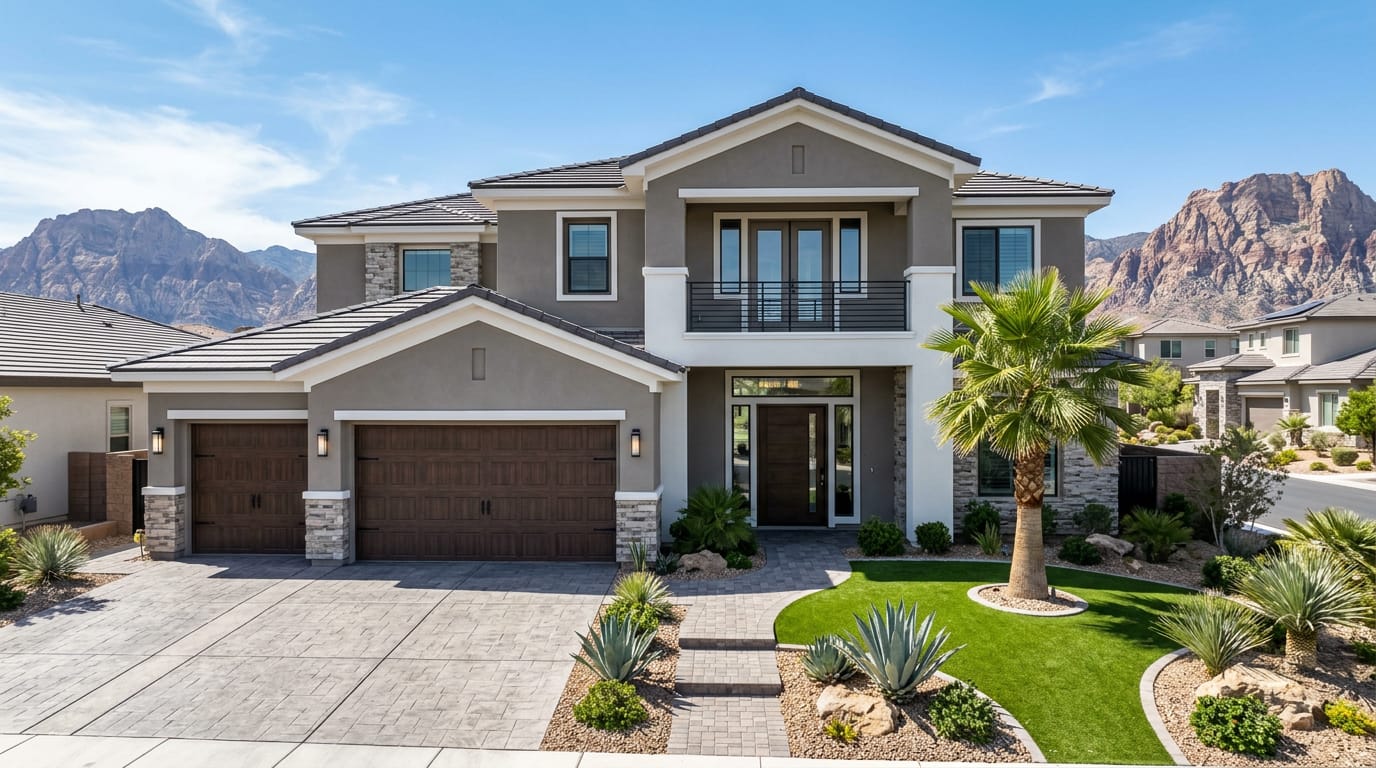
A home built in 2004 or later almost certainly arrived with a desert front yard, drip irrigation and a plant palette chosen for the climate. There is no conversion question, no rebate to chase and a structurally lower summer bill. New construction today goes further still, with smart irrigation controllers and moisture sensors as standard in most builder packages, and the newer master-planned villages across Summerlin and Henderson were designed to desert standards community-wide.
A home built in 1996 may well have a lawn, and — to repeat the point, because it is the one people get wrong — you are allowed to keep it. What you are choosing is an ongoing cost and an exposure to future rate increases, against a rebate that can reach $7 per square foot in qualifying areas if you decide to convert.
Interestingly, the remarks data suggests sellers have not fully caught up to how much buyers care. Among those 4,116 closings, only 252 mentioned desert landscaping or xeriscaping while 349 mentioned artificial turf and 227 mentioned grass or a lawn. Desert landscaping is close to universal on post-2003 homes but gets marketed on fewer than one listing in sixteen. If you are selling a fully converted yard in Las Vegas or North Las Vegas, that is a real and under-used selling point with a relocating buyer who has read the headlines.
Compare the approval and budget questions in our new-construction landscaping guide before committing to a yard design.
What Should You Ask Before Writing an Offer?
Six questions, and none of them are about Lake Mead.
Ask for twelve months of water bills. This is the highest-value document in the entire water conversation and sellers rarely refuse it. It shows the real cost, the summer peak and whether the parcel runs over budget.
Ask what the HOA owes on turf conversion. Single-family yards are exempt from the 2027 prohibition; HOA common areas are not. Read the reserve study and the recent minutes to find out whether the association has funded its conversion work or is heading toward a special assessment.
Ask whether the turf rebate has already been claimed on the parcel. The rebate generally attaches to the property and the conversion, so a yard converted by a previous owner is money already spent. If you are buying turf you intend to remove, confirm the parcel is still eligible before you price the conversion as free.
Ask about the irrigation system. Age and type drive both the bill and the near-term repair budget. Drip with a smart controller is a different proposition from twenty-year-old pop-up sprinklers on a mechanical timer.
Ask whether there is a pool, and whether it has a cover. A third of the homes selling here have one, and an uncovered pool is a standing summer water cost.
Ask which utility serves the parcel. Nearly everything in the valley is on an SNWA member agency, but outlying parcels — including some around Boulder City — can sit on a different provider with different rates and rules.
Notice what is missing from that list. Nothing about reservoir elevation, nothing about shortage tiers, nothing about the Compact. Those things shape the policy environment that produces your water rate. They do not belong in your purchase decision as anything other than context, and a buyer who lets them drive the decision is optimizing for the wrong risk.
If you want help running the water math on a specific property — pulling the bills, reading the HOA reserve study, checking rebate eligibility — that is a normal part of how we represent buyers here. Call Nevada Real Estate Group at (702) 637-1759 and we will do it before you are in contract rather than after.
Frequently Asked Questions
Is Las Vegas going to run out of water?
No credible modeling shows Southern Nevada running out of municipal water. The reservoir is genuinely at a record low — 1,038.93 feet and 26 percent full on September 7, 2026 — but three structural facts separate that from a dry tap: Southern Nevada recycles about 99 percent of indoor water for return-flow credit, it consumed roughly 164,000 acre-feet against a 300,000 acre-foot entitlement in 2025, and it draws through an intake at 860 feet, about 35 feet below the 895-foot level at which Hoover Dam can no longer pass water downstream. The genuine risks are rising rates and tightening outdoor-water rules.
How low is Lake Mead right now, and is that a record?
Yes, it is a record. According to Reclamation's weekly hydrologic update for September 7, 2026, Lake Mead stood at 1,038.93 feet holding 6,904 thousand acre-feet, or 26 percent of capacity — its lowest level since the reservoir filled, breaking the previous record set in 2022. Total Colorado River system storage was 31 percent of capacity against 38 percent a year earlier. Reclamation projects the lake will end 2026 at about 1,034.74 feet, just below the 1,035-foot mark where Hoover Dam's power generation degrades significantly.
Did Nevada just lose part of its Colorado River water?
Yes. On August 21, 2026 the Interior Department signed a Record of Decision establishing operating guidelines for 2027 and 2028, replacing rules that expired September 30, 2026. It requires the Lower Basin to cut 1.25 million acre-feet annually in both years: Arizona 760,000, California 440,000 and Nevada 50,000 acre-feet. Nevada's cut is about 17 percent of its 300,000 acre-foot entitlement and more than double the 21,000 acre-foot Tier 1 reduction that applied in 2026. Because Southern Nevada consumes well under its entitlement, the cut lands on headroom rather than on households.
Do I have to remove my grass in Las Vegas by 2027?
Not if you own a single-family home. Nevada AB 356 prohibits using Colorado River water to irrigate nonfunctional turf from January 1, 2027 only on parcels not used exclusively as a single-family residence. It targets streetscape grass along roads and sidewalks, medians, parking-lot islands, grass around commercial buildings and HOA common areas. Single-family front and back yards are exempt, as is functional grass at schools and parks. If you convert anyway, SNWA pays up to $5 per square foot for the first 10,000 square feet, with the Las Vegas Valley Water District adding up to $2 more in qualifying areas as of January 2026.
Does Lake Mead's level affect my mortgage or my home's value?
No. Conventional, FHA, VA and jumbo underwriting has no reservoir-elevation condition; lenders verify a municipal water connection rather than a private well, and every parcel in the SNWA service territory has one. The market bears that out: 5,439 homes closed across Las Vegas, Henderson, North Las Vegas and Boulder City between June 1 and August 31, 2026, with the 4,116 single-family sales at a $482,500 median and a 26-day median time on market — during the same summer the lake set its record low.
Why does Las Vegas get to keep growing if the river is shrinking?
Because growth in the valley has been decoupled from water consumption for two decades. Per-capita use fell from about 211 gallons per day in 2002 to roughly 95 in 2025, a 58 percent reduction, while the population served grew by about 876,000 people — and total Colorado River consumption fell in absolute terms over that period. The mechanism is that indoor water returns to the lake for credit, so growth in indoor use is close to water-neutral. What growth does consume is outdoor water, which is why new homes have been barred from installing front-yard turf since 2003.
Should I buy in Las Vegas or wait until the water situation is settled?
The water situation will not be "settled" on any timeline useful to a purchase decision — the new framework is explicitly renegotiated every two years through 2036, so the policy environment is permanently in motion. Waiting for resolution means waiting indefinitely while paying whatever the market does in the meantime. The rational approach is to treat water as a carrying cost rather than an existential question: buy the house that works financially, favor a desert-landscaped yard, pull twelve months of water bills before you remove contingencies, and check what your prospective HOA owes on its own turf conversion.
What is the Third Straw and why does it matter to homeowners?
It is Southern Nevada's deepest Lake Mead intake, and it is the reason the "dead pool" headlines do not describe a Las Vegas tap failure. SNWA approved the project in 2005 and put it into service in September 2015, tunneling beneath the lake to draw water at elevation 860 feet — roughly 35 feet below the 895-foot dead pool level at which Hoover Dam can no longer release water downstream. Because water that low cannot be moved by gravity, SNWA completed the Low Lake Level Pumping Station in 2020 at about $522 million to lift it. If the dam ever stopped delivering to California and Arizona, Las Vegas would still be drawing.
Which Sources Inform This Las Vegas Water Guide?
This guide was originally published June 21, 2026 and substantially rewritten September 12, 2026 to reflect Lake Mead's record low, the August 21, 2026 Record of Decision, and a correction to the description of Nevada's turf law. Reservoir figures come from the Bureau of Reclamation's weekly hydrologic update dated September 7, 2026: Lake Mead at 1,038.93 feet and 26 percent full, Lake Powell at 3,517.58 feet and 22 percent, system storage at 31 percent against 38 percent a year earlier, a projected end-of-2026 Lake Mead elevation of 1,034.74 feet, Lake Mead basin precipitation at 111 percent of normal, and April-to-July unregulated inflow at 18 percent of normal.
Post-2026 operating rules, the 2027 and 2028 reductions, and the three-layer ten-year framework come from Reclamation's Colorado River post-2026 operations program and the Record of Decision signed August 21, 2026. Nevada's 300,000 acre-foot entitlement, the return-flow credit mechanism, the 99 percent indoor recycling rate and the 2025 diversion, credit and consumptive-use figures come from the Southern Nevada Water Authority. Conservation history, the 211-to-95 gallon per capita trajectory, the 876,000-resident growth figure and the 86 GPCD target come from SNWA's conservation reporting.
The turf prohibition is described from the Nevada Legislature's record of Assembly Bill 356 of the 2021 session and SNWA's laws and ordinances guidance, both of which limit the January 1, 2027 prohibition to parcels not used exclusively as a single-family residence. Rebate terms come from SNWA's Water Smart Landscapes program. Intake and pumping-station details come from SNWA's Intake 3 and Low Lake Level Pumping Station documentation.
Market figures are measured from the GLVAR-fed listing data for Las Vegas, Henderson, North Las Vegas and Boulder City covering all 5,439 closings between June 1 and August 31, 2026, of which 4,116 were single-family: a $482,500 median at $257 per square foot, 26 days median time on market, 51 percent built before 2003, and 1,408 with a pool. Additional context from Las Vegas REALTORS and the U.S. Census Bureau.
For related reading, see our guide to the nonfunctional turf ban and HOA deadline and to desert landscaping and water rules in Summerlin.