

"You probably have more equity than you think" is the most repeated sentence in real estate marketing, and for a lot of Las Vegas owners it is simply not true.
We ran the numbers rather than the slogan. Using closed sales from the live MLS, we took the median price Las Vegas homes actually sold for in every year since 2018 — 184,000-plus transactions — and compared each one against what the median home closes at today. The result is not one answer. It is nine of them, and they range from $173,342 of gain to slightly less than nothing.
It depends almost entirely on when you bought. Against a 2026 median closed price of $438,605, a Las Vegas owner who bought in 2018 is up $173,342 and a 2020 buyer is up $138,036. A 2021 buyer is up $82,190. But a 2022 buyer — who bought at the peak — is up only $22,421, and a 2025 buyer is down $1,348. Equity in this market is a function of purchase year, not of owning.
- A 2018 Las Vegas buyer holds $173,342 in median gain; a 2020 buyer holds $138,036.
- A 2022 buyer holds $22,421 — which selling costs would consume entirely.
- A 2025 buyer is $1,348 underwater on paper against today's median.
- 2023 buyers are ahead of 2022 buyers, because 2022 was the price peak.
- Equity is only spendable after roughly 7–8% in selling costs comes off the top.
What Does the Median Las Vegas Home Actually Gain Per Purchase Year?
Here is the whole picture in one table, before any interpretation.
| Year bought | Median closed then | Sales that year | Median gain today | Percent |
|---|---|---|---|---|
| 2018 | $265,263 | 29,311 | +$173,342 | +65.3% |
| 2019 | $278,556 | 28,568 | +$160,049 | +57.5% |
| 2020 | $300,569 | 27,846 | +$138,036 | +45.9% |
| 2021 | $356,415 | 34,925 | +$82,190 | +23.1% |
| 2022 | $416,184 | 24,778 | +$22,421 | +5.4% |
| 2023 | $400,952 | 19,814 | +$37,653 | +9.4% |
| 2024 | $432,974 | 20,329 | +$5,631 | +1.3% |
| 2025 | $439,953 | 18,888 | −$1,348 | −0.3% |
Two rows deserve a second look before anything else.
2023 buyers are ahead of 2022 buyers. That looks like an error and is not. The median closed price fell from $416,184 in 2022 to $400,952 in 2023 — the rate shock repriced the market — so someone who waited a year bought $15,232 cheaper and is $15,232 further ahead today. Timing beat patience by a full year in that window.
2025 buyers are slightly underwater. Not dramatically, and not in a way that matters to anyone staying put. But it is the honest number, and it is the opposite of what a homeowner is usually told.
One note on the comparison column: the 2026 median is year to date — 12,264 closings through August — so the dollar figures will move by December. The ordering of the cohorts will not, because the gap between a $265,263 entry and a $416,184 one is not something four months of price movement can rearrange.
Why Is "You Have More Equity Than You Think" Misleading Here?
Because it is aimed at the 2018–2020 owner and delivered to everyone.
If you bought a median Las Vegas home in 2018 or 2019, the slogan understates your position if anything — $173,342 and $160,049 are life-changing numbers, and many owners in that group genuinely have not looked. According to the Federal Housing Finance Agency House Price Index, Las Vegas ran well above the national appreciation rate through that stretch, and the closed-sale medians above show it.
If you bought in 2022, the same sentence is close to false. $22,421 of median gain is real, but it is not spendable, for reasons the next section walks through. Telling that owner they are sitting on a windfall sets up a conversation that ends badly the first time somebody does the arithmetic.
The reason the slogan persists is that it is usually deployed by whoever wants a listing. According to the Consumer Financial Protection Bureau, homeowners consistently overestimate their own home's value, which makes the claim easy to make and hard for the owner to check. The table above is the check. The honest version of the slogan has a date attached: if you bought before 2021, you probably do have more equity than you think — and if you bought after, you probably have less.
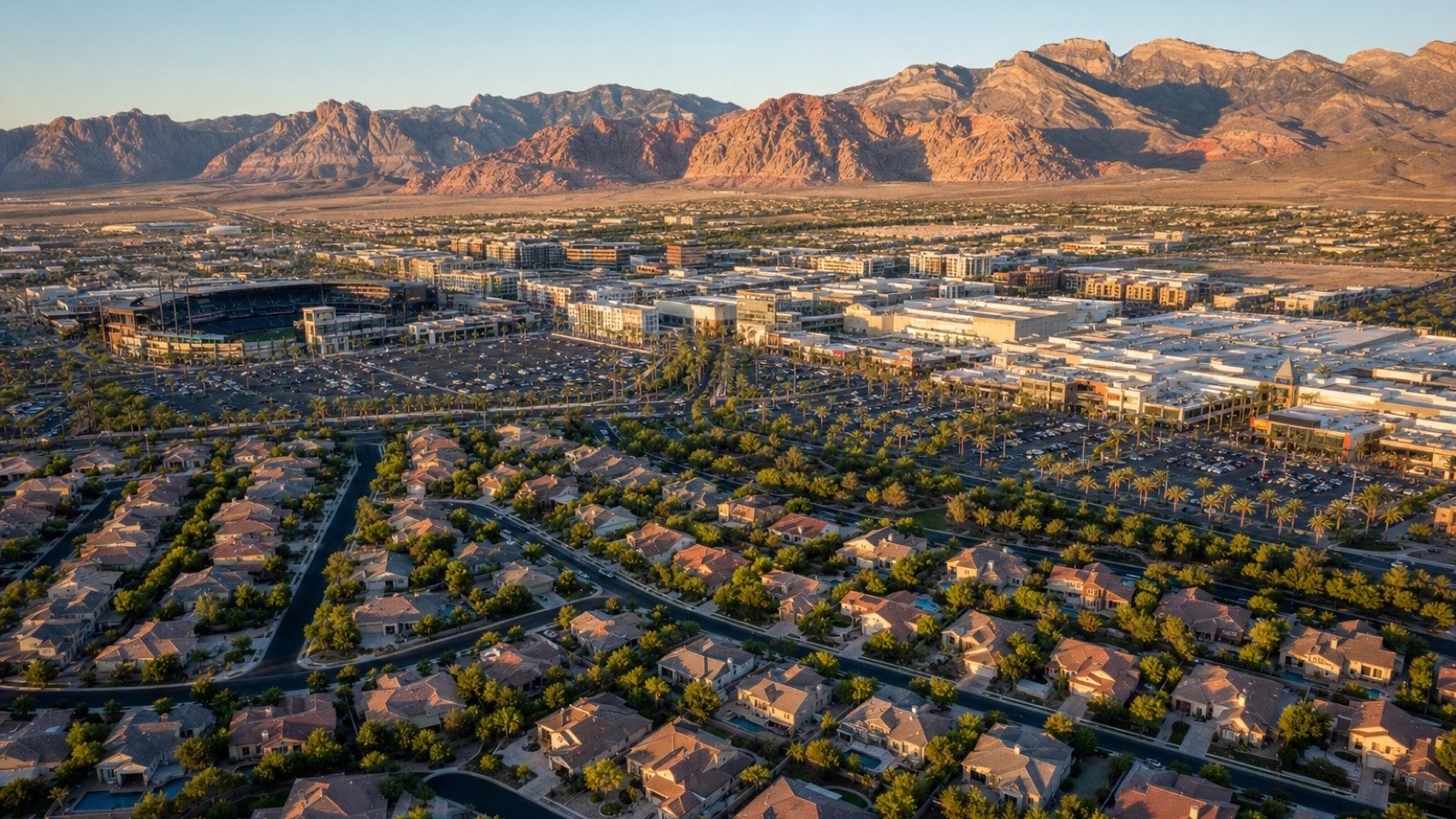
How Much of Your Equity Can You Actually Spend?
This is where most equity conversations quietly go wrong, because the number on a valuation is a gross figure and the number that reaches your next down payment is a net one.
Selling a home costs money. Commission is negotiable and varies, and after the 2024 industry settlement it is negotiated more openly than it used to be — but between brokerage compensation, title and escrow, transfer tax, owner's title policy, and the repairs that come out of an inspection, most Las Vegas sellers see somewhere in the range of 7% to 8% of the sale price leave the closing table. On a $438,605 sale that is roughly $30,700 to $35,100. According to the Nevada Department of Taxation, the real property transfer tax alone runs $2.55 per $500 of value in Clark County — about $2,240 on that sale, customarily paid by the seller — and it is already inside the estimate.
Run that against the table:
| Year bought | Median gain | After about $32,900 in costs | What that funds |
|---|---|---|---|
| 2018 | +$173,342 | $140,442 | 20% down on a $700,000 home |
| 2019 | +$160,049 | $127,149 | 20% down on a $635,000 home |
| 2020 | +$138,036 | $105,136 | 20% down on a $525,000 home |
| 2021 | +$82,190 | $49,290 | 10% down on a $490,000 home |
| 2022 | +$22,421 | −$10,479 | Nothing — the move costs money |
| 2025 | −$1,348 | −$34,248 | Nothing — requires cash to close |
That bottom half is the part nobody puts in a postcard. A 2022 buyer who sells at the median does not walk away with $22,421 — they walk away roughly $10,479 short, and they have to bring money to move. That is not a reason never to move. It is a reason to know before you list.
Note also what these figures do not include: whatever principal you have paid down since closing. An owner four years into a 30-year note has retired a meaningful slice of the loan, and that is real equity on top of appreciation. The table measures price movement only, because that is the part the market decides and the part people misjudge.
Which Las Vegas Purchase Years Are Sitting on Real Money?
2018 through 2020. That is the answer, and it is a large group — 85,725 homes closed in Las Vegas across those three years alone.
An owner in that cohort has $138,036 to $173,342 of median gain, and even after selling costs they clear $105,136 to $140,442. That is a genuine 20% down payment on a substantially better house, which is exactly the move that has been hard to make in this market for three years.
According to Freddie Mac PMMS data, the rate environment through 2026 has been stable enough to model a move rather than gamble on one, which matters more for this group than for anyone else: they are usually trading a very low pandemic-era rate for a current one, and the size of their equity is what decides whether that trade still works. A $140,000 down payment absorbs a lot of rate difference. A $49,000 one absorbs much less.
Two practical notes for this cohort. According to IRS Publication 523, the Section 121 exclusion shelters up to $250,000 of gain for a single filer and $500,000 for a married couple on a primary residence owned and occupied for two of the last five years, so a $173,342 median gain is untaxed for most 2018 buyers who lived in the home. And the trade-in value of the current rate is the part to model honestly: a 2020 buyer holding a pandemic-era rate gives it up on the whole new balance, not just on the equity, which is why the next payment — not the equity — is usually the number that decides the move.
What Should a 2022 Buyer Do Differently?
Recognise that you bought at the top, and that this is a timing outcome rather than a mistake.
2022 was the peak year in this data at a $416,184 median. Anyone who bought then paid more than buyers before or after, and their $22,421 of median gain is the thinnest of any pre-2024 cohort once you account for the fact that 2023 buyers — who came in a year later at a lower median — are ahead of them.
Three things follow.
Do not list on the assumption of a windfall. Get a net sheet before you get a sign in the yard. The difference between "I have $22,000 in equity" and "this move costs me $10,000" is one calculation, and it should happen first.
Time is the fix, and it is working. The gap closes as the market advances. Nothing about this position is permanent, and a 2022 buyer who stays put three more years at even modest appreciation is in a very different place.
Rate matters more than price for you. If you bought in 2022 you likely have a higher rate than the 2020 cohort. That makes a refinance — should rates allow — worth more to you than a move, which is the reverse of the advice a 2020 owner should be taking.
Does Purchase Year Matter More Than Neighborhood?
In this market, yes — and it is not close.
The spread between the best and worst purchase years is 65.6 percentage points, from +65.3% for a 2018 buyer to −0.3% for a 2025 buyer. No neighborhood choice in the Las Vegas valley produced a spread anywhere near that over the same period.
That does not mean location is irrelevant. It means that for the specific question "how much equity do I have," when you signed dominates where you signed. An owner who bought a modest home in an ordinary neighborhood in 2018 is further ahead than an owner who bought a nicer home in a better neighborhood in 2022, and that is uncomfortable but true.
One way to see the size of it. A 2018 buyer of a $265,263 median home who simply rode the citywide +65.3% is up $173,342. For a 2022 buyer to match that dollar gain from a $416,184 base, their specific home would need to have appreciated 41.6% in four years while the citywide median rose 5.4% — a spread no valley neighborhood produced in that window. The ZIP you chose changes your number by tens of thousands; the year you signed changed it by six figures.
For where the market is trading now by area, our Las Vegas neighborhood guide breaks the valley down community by community, and the search tool will show you what your equity buys at any price point today.
Once the equity estimate is grounded in your own payoff and valuation, compare the decision factors in our guide to selling a Las Vegas home now versus waiting.
How Does Las Vegas Compare to the Rest of the Valley?
The pattern holds across Southern Nevada, with the dollar amounts scaling to each market's price level.
| Market | 2020 median | 2026 median | Gain | Percent |
|---|---|---|---|---|
| Las Vegas | $300,569 | $438,605 | +$138,036 | +45.9% |
| Henderson | $357,404 | $491,432 | +$134,028 | +37.5% |
| North Las Vegas | $289,552 | $419,412 | +$129,860 | +44.8% |
North Las Vegas is the quiet outperformer on a percentage basis — a 2020 buyer there is up 44.8%, within a point of Las Vegas proper and ahead of Henderson's 37.5%, on the lowest entry price of the three. An owner who bought in North Las Vegas in 2020 has close to the same dollar gain as a Henderson owner on a purchase that cost $67,852 less. Put differently, the smallest 2020 entry price of the three bought a $129,860 gain — the best outcome per dollar invested in the valley.
Henderson's lower percentage is not weakness. It started higher, and percentage gains compress at higher price points. In dollars — the thing that actually funds a move — the three markets are within $8,176 of one another. (For reference, the same 2020-buyer comparison in Northern Nevada runs higher still, with Reno at +$178,915, though that is a different market with different supply constraints.)
When Does Equity Turn Into a Better House?
The move-up trade works when the equity you clear after costs covers the down payment on the next house and the payment difference is one you would accept.
Both halves matter, and the second is where 2026 differs from 2021. A 2020 owner holding a pandemic-era rate is not simply trading houses; they are trading a rate as well. The right way to test it is to price the actual monthly payment on the actual next house, not to reason about it in the abstract.
According to the Consumer Financial Protection Bureau, the Loan Estimate is the document that makes this comparable — every lender must present the same figures in the same order, which is what lets you put two scenarios side by side honestly. Get one for the move you are considering before you decide the move is impossible.
The owners for whom this trade currently works cleanly are the 2018–2020 cohort with $105,000-plus clearing after costs. For them the equity absorbs the rate difference. For a 2021 buyer clearing about $49,290 it is a closer call, and for a 2022 buyer it usually does not work yet.

What Are the Three Ways to Get at Your Equity?
Selling is the obvious one and not always the right one, so it is worth naming the alternatives before assuming a move is the only route.
Sell and buy. You realise the whole gain, minus the 7% to 8% that leaves at closing, and you reset your rate to today's. This is the right move for the 2018–2020 cohort with six figures clearing, and usually the wrong one for a 2022 buyer who would be paying for the privilege.
A home equity line of credit. You keep your existing first mortgage — and critically, your existing rate — and borrow against the equity separately. According to the Consumer Financial Protection Bureau, a HELOC is secured by your home, which is the whole reason the rate is lower than unsecured borrowing and also the whole risk: the consequence of not paying is not a collections call, it is foreclosure. For an owner sitting on a pandemic-era first mortgage, not disturbing that rate is often worth more than anything else on this page.
A cash-out refinance. You replace the existing loan with a larger one and take the difference. This resets your entire balance to today's rate, which for most 2018–2021 owners means giving up a very good rate on the whole loan to access part of the equity — rarely a good trade in the current environment, and the reason cash-out volume has stayed subdued. According to the Federal Reserve, household equity extraction has run far below what the aggregate equity position alone would predict, and the rate people are protecting is the explanation.
The pattern across all three is the same: the value of your existing rate is now part of the equity calculation. An owner at 3% holding $138,036 in gain has two assets, and the move that spends one of them should be a decision, not a default.
Why Is a Median a Useful Estimate and a Bad Appraisal?
Because your house is not the median, and the gap between those two facts is where people get hurt.
Every figure in this guide is a market-wide median. It tells you what the typical Las Vegas home did between your purchase year and now, and it is an excellent way to understand your rough position. It is not a valuation of your address. Two homes bought the same month on the same street diverge on condition, renovations, lot, view, and how the specific submarket moved.
We are unusually careful about this because we tested it. Back-testing our own valuation model against 82 real closed sales — each hidden from its own comparable pool — Las Vegas came back with a median error of 11.2%, and the middle-50% range we used to publish excluded the true value for roughly four in ten homeowners. That is why our home-value tool now declines to show a number when the comparables cannot support one, and routes to a conversation instead.
The same caution runs in reverse. An owner whose street outperformed the median — a renovated 1990s home in a ZIP that has since gentrified — may be sitting on materially more than the cohort table suggests, which is the one case where the slogan understates rather than oversells.
So use the table to know which cohort you are in. Use comparable sales on your actual street to know your number.
What Should You Do Next Depending on When You Bought?
A short version by cohort.
Bought 2018–2020: You are the group the slogan is actually about. If a larger home in Summerlin or Henderson has been the plan-someday, this is the position that funds it. Get a net sheet and price the next payment. This is the best move-up position in the valley and it has been available for a while without most of this cohort acting on it.
Bought 2021: You clear roughly $49,290 after costs at the median. Workable for a 10% down move, tight for 20%. Worth modelling rather than assuming either way.
Bought 2022: Do the net-sheet math before anything else, and expect it to say wait. Focus on rate rather than price.
Bought 2023–2024: You are near break-even. Staying put is the default; a move needs a reason beyond equity.
Bought 2025: You are marginally underwater against today's median and there is nothing to do about that except let time pass. It is a paper figure and it only becomes real if you sell.
Any year, planning to stay: None of this matters this year. Equity does not decay, it is not taxed while unrealised, and there is no penalty for ignoring it. The only owners who need to act on these numbers are the ones with a reason to move — a job, a school, a growing family, a shrinking one. A number on a page is not a reason.
Any year, considering a HELOC: Your cohort matters less here, because you are borrowing against the gap rather than realising it. What matters is how much equity sits above the lender's threshold and whether the payment fits. The 2018–2020 group has the most room; a 2025 owner has effectively none.
Any year, worried about a downturn: The 2022 and 2025 rows are the useful ones to look at, because they show what a flat-to-down stretch looks like from inside. Neither cohort lost their home or their footing; they simply stopped gaining for a while. Equity is only realised at sale, which means a paper dip is only a real loss if you are forced to transact during it — which is an argument for reserves, not for panic. Equity is a number on a page until you transact.

How Do You Find Out What Your Specific Home Is Worth?
Three levels of precision, in increasing order.
An online estimate gives you a starting bracket in seconds and should be treated as one. Every automated model — ours included — works from comparable sales and gets less reliable as your home gets less typical.
Comparable sales on your street, pulled by an agent from the MLS with the sold prices and condition notes attached, is the working number. It is what an appraiser will do, and it is free.
A pre-listing appraisal is the definitive answer and costs a few hundred dollars. Worth it on an unusual property, rarely necessary on a tract home with recent neighborhood sales.
Bring three things to that conversation: the closing statement from when you bought, which shows your true basis including the closing costs you paid; a list of improvements with rough costs and dates; and any refinance paperwork. A cash-out refinance in 2021 changed the loan balance the equity is measured against, and owners forget that more often than they forget the purchase price.
For most owners reading this, level two is the right stop. Call us at (702) 637-1759 and we will pull the comparables for your address — including what has actually closed on your street since you bought — and tell you where you sit against the cohort table above.
Frequently Asked Questions
How much equity does the average Las Vegas homeowner have in 2026?
There is no single average that means anything, because it depends on purchase year. Against a 2026 median closed price of $438,605, a 2018 buyer is up $173,342 at the median, a 2020 buyer $138,036, a 2021 buyer $82,190, a 2022 buyer $22,421, and a 2025 buyer is down $1,348. Those are price movements only and exclude principal paydown.
Do I really have more equity than I think?
If you bought in 2018, 2019 or 2020, quite possibly — those cohorts hold $138,036 to $173,342 of median gain. If you bought in 2022 or later, probably not: 2022 buyers hold $22,421 at the median, which selling costs would fully consume, and 2025 buyers are marginally underwater.
Why are 2023 buyers ahead of 2022 buyers?
Because 2022 was the price peak. The Las Vegas median closed price fell from $416,184 in 2022 to $400,952 in 2023 as rates repriced the market, so a 2023 buyer paid $15,232 less for the median home and is that much further ahead today.
How much does it cost to sell a home in Las Vegas?
Most sellers see roughly 7% to 8% of the sale price leave the closing table once brokerage compensation, title and escrow, transfer tax, the owner's title policy and inspection-driven repairs are counted. On a $438,605 sale that is about $30,700 to $35,100. Commission is negotiable, so treat any single figure as an estimate rather than a rate.
Can I use my equity as the down payment on my next home?
Yes, and for the 2018–2020 cohort it is usually enough for 20% down on a materially better home — $105,136 to $140,442 after costs. The test is not only whether the down payment covers; it is whether the new monthly payment is acceptable, which for owners holding a pandemic-era rate is the harder half of the question.
Should a 2022 buyer sell in 2026?
Usually not on equity grounds. At the median, a 2022 buyer's $22,421 gain is more than consumed by selling costs, so the move costs money rather than funding one. Get a net sheet for your specific address first — your home may have outperformed the median — and if the answer is to wait, a refinance is likely worth more to you than a sale.
Does my neighborhood matter more than the year I bought?
Not for this question. The spread between purchase years runs 65.6 percentage points, from +65.3% for a 2018 buyer to −0.3% for a 2025 buyer, and no valley neighborhood produced a spread close to that over the same period. Location drives what your home is worth; purchase year drives how much of it is gain.
Which Sources Inform This Las Vegas Equity Analysis?
The equity figures in this guide are original NREG analysis. We queried the live GLVAR MLS for residential closed sales in Las Vegas, calculated the median closed price for each calendar year from 2018 through 2025, and compared each against the 2026 year-to-date median of $438,605 across 12,264 closings. Annual sample sizes are shown in the first table and run from 18,888 to 34,925 sales, so each median rests on a deep sample. Figures are market-wide medians measuring price movement only — they exclude principal paydown, improvements, and any way in which a specific home differs from the typical one. Selling-cost illustrations use 7.5% and are estimates, not quotes. Verify your own position against comparable sales for your address before making a decision.
- Las Vegas REALTORS — Southern Nevada MLS statistics and monthly median reporting.
- Federal Housing Finance Agency House Price Index — Long-run Las Vegas appreciation benchmarks.
- Consumer Financial Protection Bureau — Loan Estimate, closing cost and seller disclosure guidance.
- Freddie Mac Primary Mortgage Market Survey — Weekly national mortgage rate benchmarks.
- U.S. Census Bureau — Clark County housing stock, tenure and owner-occupancy data.
- Clark County Assessor — Parcel-level assessed values and ownership records.
- Nevada Department of Taxation — Property tax abatement caps and real property transfer tax.
- U.S. Bureau of Labor Statistics — Las Vegas-Henderson MSA employment and wage data.
- Nevada Real Estate Division — Seller disclosure and common-interest community requirements.
- U.S. Department of Housing and Urban Development — FHA loan limits and owner-occupancy rules.
- National Association of REALTORS — Homeowner tenure and seller behavior research.
- Federal Reserve — Household balance sheet and home equity aggregates.
- IRS Publication 523 — The Section 121 exclusion on gain from the sale of a primary residence.
All market data reflects live GLVAR MLS information as of August 2026. Medians change continuously; contact Nevada Real Estate Group at (702) 637-1759 for current figures before making any buying or selling decision. Information is believed accurate but not guaranteed — verify all figures with a licensed Nevada real estate professional. Nevada Real Estate Group | LPT Realty | License S.181401 | 8945 W Russell Rd, Suite 170, Las Vegas, NV 89148.
Want your actual number instead of the median? Nevada Real Estate Group is Nevada's #1 real estate team with 150-plus agents, $4.85B-plus in closed sales volume, and 9,061-plus five-star reviews. We will pull the closed comparables for your street, show you what has sold since you bought, and give you a net sheet — what you would actually clear, not a headline.
Call or text (702) 637-1759 | Email info@nevadagroup.com | Check your home value | Talk to an agent