

The question I hear most from buyers walking a model home is not about granite or garage depth. It is "when can I move in?" The sales office will give you an answer, but the honest one depends on which of three products you are buying: a home the builder has not started yet, a home that is already framed or finished, or a custom home on your own lot. Each runs on a different clock, and each clock has its own published numbers if you know where to look.
For this October 2026 update I set the old version of this guide aside and rebuilt it from primary sources. On October 8, 2026, I read every one of KB Home's 35 Las Vegas community pages and all 49 of its Las Vegas move-in-ready listings, the build-time statements Toll Brothers, Pulte, Lennar and Richmond American publish, the U.S. Census Bureau's 2025 length-of-time tables for the West, Clark County's plan review goals and its September 2026 review report, and the federal and Nevada rules that decide when a new home can close. Where a builder or agency does not publish a number, I say so rather than guess. If you are earlier in the process, start with the seven mistakes first-time new-construction buyers make.
Building a production home in Las Vegas takes roughly five to seven months by KB Home's figures: 30 to 50 days for loan, design and permit steps, then four to five months of construction. Census data put 2025 built-for-sale homes in the West at 6.4 months from start to completion and custom homes at 14.0. A completed quick move-in closes on your loan's schedule. Time your lease and rate lock to match.
- KB Home lists 30 to 50 days of loan, design and permit steps, then four to five months building.
- Census data show 2025 built-for-sale homes in the West averaged 6.4 months from start to completion.
- Contractor-built custom homes in the West averaged 14.0 months of construction, before design and plan review.
- On October 8, 2026, KB listed 49 Las Vegas move-in-ready homes; only 17 were available now.
- CFPB says rate locks typically run 30, 45 or 60 days, so price an extended lock before signing.
How Long Does It Take to Build a New House in Las Vegas?
It depends on which of the three paths you take, and the published numbers line up better than most buyers expect.
A to-be-built production home is one you choose from a builder's floor plans on a lot in its community, then personalize at the design studio before construction starts. According to KB Home's homebuilding timeline page, the steps before groundbreaking (completing your mortgage loan, finalizing design studio selections and getting permit approval) "generally" take 30 to 50 days, and build time "is an average of between four to five months from start to home completion." Added together, that is roughly five to seven months from contract to a finished house. On October 8, 2026, 30 of KB's 35 Las Vegas community pages carried the same line: "Personalized new homes, delivered in just 4-5 months." The other five showed only move-in-ready homes.
A quick move-in home is already under construction or finished when you sign. If it is complete, the closing date is set by your loan, appraisal and title work rather than by framing crews. If it is still being built, the builder's estimated availability date governs, and that date can be months out, as the KB listings below show.
A custom home is designed for your own lot and built by a general contractor you hire. Census data for the West put the average for 2025 at 14.0 months from start of construction to completion, after an average of 1.5 months from permit to start, and those figures do not include the months you spend buying the lot, designing the house and getting plans approved.
The table below lines up the published figure for each path. Read the "what the clock covers" column carefully, because a builder's "four to five months" and the Census Bureau's "6.4 months" measure different stretches of the same process.
| Path | What the clock covers | Published figure | Source |
|---|---|---|---|
| To-be-built production home | Contract to groundbreaking, then start to completion | 30 to 50 days, then an average of four to five months | KB Home timeline page |
| Built-for-sale homes, West region | Permit to start; start to completion (2025) | 1.3 months; 6.4 months | Census Survey of Construction |
| Luxury production home | Building a home with the builder, start to finish | "on average between 6-12 months," varying by region and community | Toll Brothers FAQ |
| Quick move-in home | Builder's stated availability | 17 of 49 KB Las Vegas listings available now; 28 in one to two months; 4 in three to six months | KB Home listings |
| Custom home, contractor-built | Permit to start; start to completion (2025) | 1.5 months; 14.0 months | Census Survey of Construction |
| Owner-built home | Permit to start; start to completion (2025) | 2.1 months; 15.6 months | Census Survey of Construction |
What Do Las Vegas Builders Publish About Their Own Build Times?
Only some builders put a number in writing, and the ones that do describe different things, so it pays to read each statement for what it actually covers.
KB Home is the most specific. Its national timeline page gives the 30-to-50-day pre-construction window and the four-to-five-month average build, and it names the things that can move the schedule: "certain regions experience rainy seasons or freezing temperatures, weather conditions that can affect the time frame." The same page says your sales counselor and construction superintendent "will personally contact you once a week with a status report," and that the pre-drywall orientation and the homeowner orientation are two of the most important milestones. Its Las Vegas community pages, read October 8, 2026, repeat the "delivered in just 4-5 months" promise for personalized homes, from Sandstone at Tule Springs in North Las Vegas to Meriden and Caspian Bay in Henderson and Caldwell Park in Summerlin. Our KB Home builder page covers its active neighborhoods.
According to the Toll Brothers FAQ, "Building a home with Toll Brothers typically takes on average between 6-12 months, but this can vary by region and community," and many of its communities have homes available for immediate or quick move-in. That is a national statement, not a Las Vegas one, so ask the community sales office for the local schedule; our Toll Brothers page lists the valley communities.
Pulte's homebuilding steps page gives no total, but it pins two milestones to the calendar: the pre-drywall orientation comes "halfway through your home's construction process," and the pre-closing orientation "typically takes place one to two weeks before closing." Lennar's article on the new home orientation and final walkthrough says the consultant's scheduling notice "typically occurs 30 days prior to closing," the orientation comes about a week before closing, and the final walkthrough falls on or near closing day. Richmond American's own blog post on build times, dated March 4, 2022, gives no number of its own; it says your sales associate "will give you a time estimate based on what is realistic for that community."
| Builder | Published build time | Milestones it dates | What to ask locally |
|---|---|---|---|
| KB Home | 30 to 50 days before groundbreaking; four to five months average build; "delivered in just 4-5 months" on 30 of 35 Las Vegas pages | Weekly status contact; pre-drywall and homeowner orientations | The start date for your homesite and the permit status |
| Toll Brothers | "on average between 6-12 months," varying by region and community | Quick move-in homes offered in many communities | The community's current schedule for your plan |
| Pulte | No total published on the page read | Pre-drywall orientation halfway through construction; pre-closing orientation one to two weeks before closing | The estimated completion month in writing |
| Lennar | No total published on the article read | Scheduling notice about 30 days before closing; orientation about a week before; final walkthrough on or near closing | Whether the home is move-in ready or still under construction |
| Richmond American | No figure of its own; sales associate gives a community estimate | Not described on the post read | The estimate for your community, in the contract |
The pattern is consistent: builders date the end of the process (orientation and closing) more precisely than the start, because the start depends on your loan approval, your design selections and the permit. Our Pulte and Del Webb, Lennar and Richmond American pages list where each is building.
What Does the Census Bureau's Construction Data Show for the West?
The Census Bureau's Survey of Construction is the closest thing to an independent stopwatch. Each year it publishes length-of-time tables for new homes, by region and by who built them, and the page was last revised April 29, 2026 with 2025 data. Nevada is in the West region; the survey does not publish Las Vegas separately, so treat these as regional benchmarks.
Two definitions matter. According to the Survey of Construction definitions, a start "occurs when excavation begins for the footings or foundation," and a house is completed "when all finished flooring has been installed." So the Census clock begins after your contract, design selections and permit, and it stops before your final inspections, orientation and closing. "Built for sale" means houses built on the builder's land to sell house and land together, which covers production and spec homes; "contractor-built" means houses built on the owner's land under a single general contractor, the custom-home path; "owner-built" means the owner acted as the general contractor.
According to the Census Bureau's start-to-completion table, built-for-sale single-family homes in the West took an average of 6.4 months from start to completion for 2025, down from 7.1 months for 2024 and 8.4 for 2023. Contractor-built homes took 14.0 months and owner-built homes 15.6. The percent-distribution table shows the spread for homes completed in 2025: 54% of the West's built-for-sale homes were completed in four to six months from start, 12% in three months or less, 23% in seven to nine months, 6% in ten to twelve months and 5% in thirteen months or more. For contractor-built homes, 43% took thirteen months or more.
The authorization-to-start table adds the gap between permit and groundbreaking: 1.3 months for built-for-sale homes started in the West in 2025, 1.5 months for contractor-built and 2.1 for owner-built. These are survey estimates with sampling error, and the survey records only the month a home started and finished, not the day, so 6.4 is an average of month counts rather than a stopwatch reading.
| Measure | Built for sale | Contractor-built | Owner-built | All single-family |
|---|---|---|---|---|
| Permit to start, West, 2025 | 1.3 | 1.5 | 2.1 | 1.3 |
| Start to completion, West, 2025 | 6.4 | 14.0 | 15.6 | 8.3 |
| Start to completion, West, 2024 | 7.1 | 15.1 | 16.2 | 8.8 |
| Start to completion, West, 2023 | 8.4 | 13.4 | 17.7 | 9.9 |
| Start to completion, United States, 2025 | 6.1 | 10.5 | 12.8 | 7.4 |
| Share taking 13 months or more, West, 2025 | 5% | 43% | 57% | 15% |
The Census 6.4-month average sits about 1.4 to 2.4 months above KB's four-to-five-month build. That is not a contradiction: the regional figure averages every builder's homes completed across the West in 2025, while KB's figure is its own average. Neither number includes the weeks before groundbreaking or the weeks between flooring and keys.
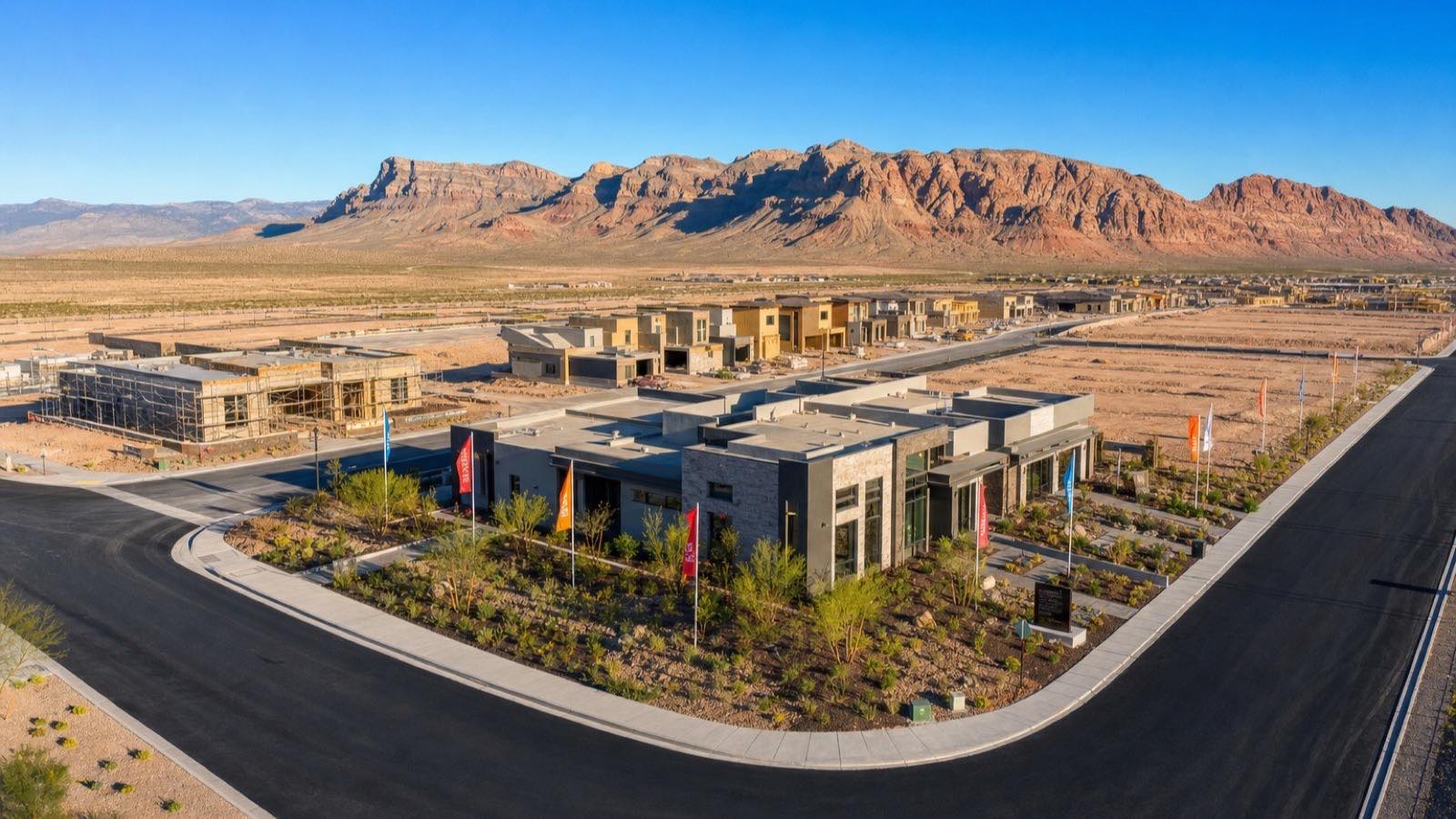
How Long Do Clark County Permits Take for a New Home?
Permits are where timeline guides most often guess, so here is what the county actually publishes. New homes in unincorporated Clark County are permitted by the Clark County Building Department; homes inside the City of Las Vegas, Henderson or North Las Vegas go through those cities' own building departments.
Production builders do not submit a full plan set for every house. Under the county's Standard Plan Process guide (BPG-186, dated July 8, 2026), plans "intended to be built more than once" are reviewed and permitted in three steps: the standard plan itself, which receives a model number; a subdivision plan review conducted after the final map records; and a lot (plot) plan for each homesite, after which permits "will be ready to issue," including the mechanical, plumbing, electrical and fire-sprinkler subtrade permits. Conditions before issuance can include water and sanitation purveyor clearances. The county's Department of Comprehensive Planning adds that single-family models and elevations only need to be reviewed by a planner once and can be reused on later projects, though that does not constitute a lot fit.
According to Clark County's plan review timelines page, the first-review goal is 21 days for a standard plan and 21 days for a custom single-family residence, with 10 days for revisions and for each correction or later review. The county's September 2026 timeliness report, generated October 7, 2026, shows how it performed against those goals.
| Review type | First-review goal | Reviews in September 2026 | Average days to first review | Share meeting goal |
|---|---|---|---|---|
| Standard plan projects | 21 days | 30 | 18.97 | 96.67% |
| Residential projects (21-day goal) | 21 days | 36 | 19.00 | 100.00% |
| Plan revisions | 10 days | 841 | 6.81 | 98.81% |
What this means for a production buyer: the full plan review happens once per model for each subdivision, not once per house, and each homesite then needs a lot-level approval. That is consistent with the Census finding that 42% of the West's built-for-sale homes started in 2025 broke ground in the same month their permit was authorized or earlier, and another 31% the next month. For a custom home, your plans go through the full first review, plus corrections, and that clock is yours.
How Fast Can You Close on a Quick Move-In Home in Las Vegas?
Builders use labels such as "quick move-in," "move-in ready" and "inventory home" for houses they started before a buyer signed. The label does not mean finished. On October 8, 2026, I opened every one of the 49 homes on KB Home's Las Vegas move-in-ready list and read the availability each one showed: 17 were marked "Available Now," 28 "Available 1-2 Months" and 4 "Available 3-6 Months." List prices ran from $346,922 to $1,069,750, with a median of $479,750, across neighborhoods in Las Vegas, Henderson and North Las Vegas. So 32 of the 49 "move-in-ready" homes on that list, about two in three, carried a future availability date rather than "Available Now."
Nationally, finished homes are now most of what sells. According to the Census Bureau's new houses sold by stage of construction, 396,000 of the 678,000 new homes sold in 2025 were already completed when the contract was signed or deposit accepted, about 58%; 215,000 were under construction and 67,000 had not started. The bureau does not publish that split for Las Vegas.
For a completed home, the closing date is set by financing. According to the CFPB, rate locks "are typically available for 30, 45, or 60 days, and sometimes longer." The CFPB's Closing Disclosure explainer adds that your lender must give you the Closing Disclosure "at least three business days before you close." Builders can move quickly on their side: Lennar's orientation article says that if you buy a move-in-ready home, "the day you sign your Purchase Agreement may also be the day you schedule your New Home Orientation and Final Walkthrough."
For a quick move-in still under construction, read the availability as an estimate and ask what stage the house is in today. If drywall is not up yet, you may still have time for a pre-drywall inspection; if it is finished, plan the final walk-through inspection instead. Our comparison of Cadence and KB Home's Landings at Caspian Bay shows how quick move-ins and to-be-built homes compare inside two Henderson neighborhoods.
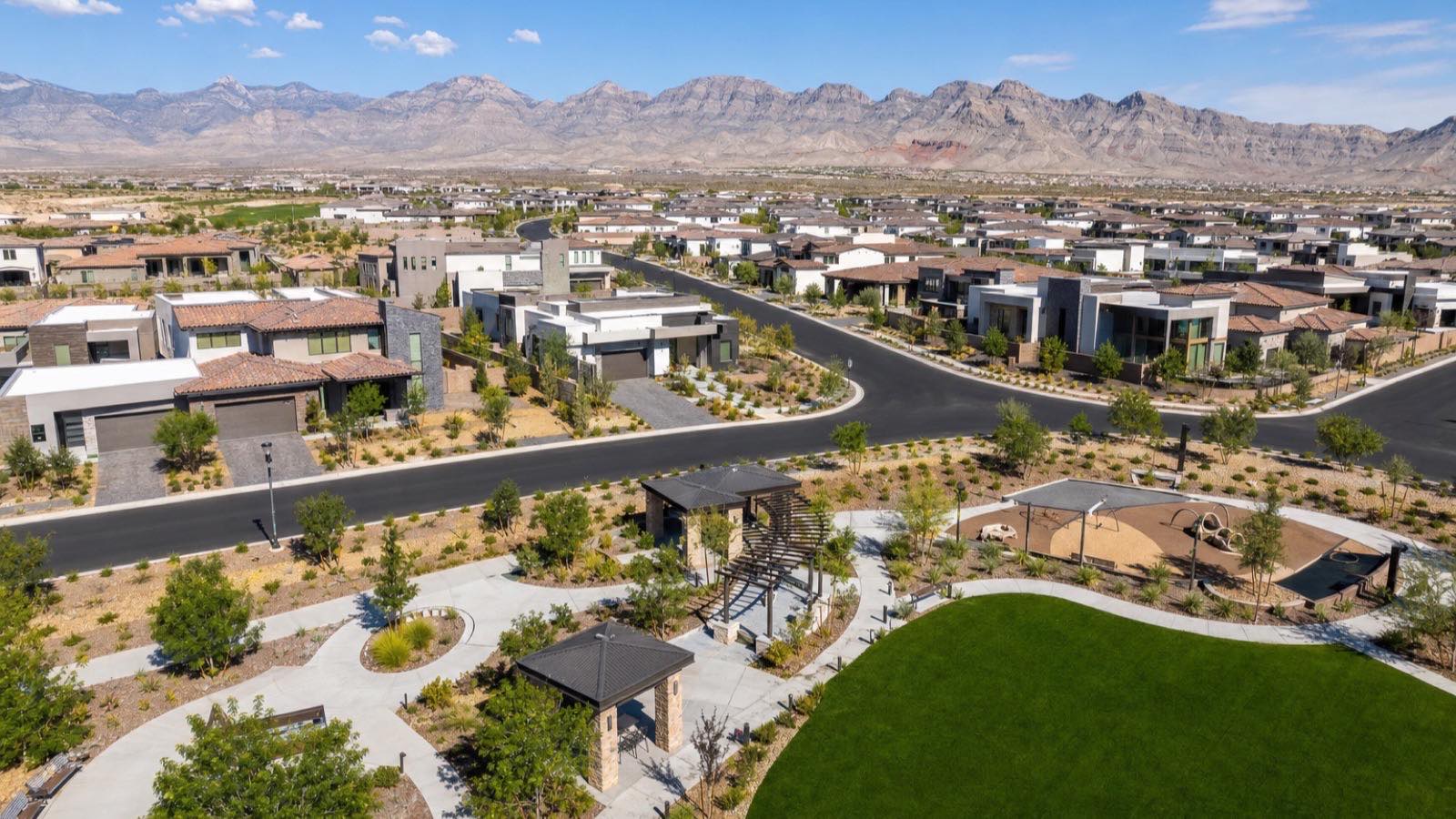
How Long Does a Custom Home Take From Lot to Keys?
A custom home has the longest clock because you own every step that a production builder handles in advance. You buy the lot, hire an architect, get any association design approval, submit a full plan set for permit review, and then build with a general contractor. Census measures only the build, and for the West in 2025 that build averaged 14.0 months for contractor-built homes, with 43% taking thirteen months or more, after an average of 1.5 months from permit to start. Owner-built homes, where you act as your own general contractor, averaged 15.6 months, and 57% took thirteen months or more.
Before that, plan review in unincorporated Clark County has a 21-day first-review goal for a custom single-family residence and a 10-day goal for each round of corrections, as shown above. The design phase itself is not measured by any public source I found, and it varies with the architect, the size of the house and how many revisions you ask for. Get the architect's schedule in writing, with dates for schematic design, construction documents and permit submittal.
Master-planned custom-lot communities can add their own deadlines. When lot sales began at Ascaya in Henderson, VEGAS INC reported on August 21, 2014 that buyers would have a year to submit their house design to the developer's architectural review board and 30 months from the lot purchase to start construction, "in addition to any city approvals and permits," with daily fines or a two-year extension for $50,000 if they missed the start deadline. Those were the 2014 terms; ask any custom-lot community for its current design-review calendar and building deadlines before you buy the land.
Add it up and the sourced pieces alone, about 1.5 months from permit to start plus 14.0 months of construction, come to more than 15 months before you count design, plan review or closing on the lot. That is why our guide to building a custom home in Las Vegas plans for 18 to 24 months from start to finish. Custom builders active in the valley include Christopher Homes and Blue Heron, and our luxury communities page shows where finished estates are for sale if you would rather skip the wait.
What Happens Between Contract, Groundbreaking and the Pre-Drywall Walk?
The first month or two after you sign a to-be-built contract is paperwork, and it is the part of the schedule you control most. KB's description is the most detailed one I found: before it can break ground, it needs your mortgage documents approved, your design studio selections finalized and the permit approved, which "generally" takes 30 to 50 days. If you want structural options or a longer design studio process, ask how they change the start date before you commit. Our design center budgeting guide covers the choices that are expensive to change later.
Two Nevada rules apply in this window when you buy from the developer in a common-interest community, the legal category that covers most Nevada subdivisions with a homeowners association; they do not apply to a home outside one. Under NRS 116.4108, unless you have personally inspected the unit, you may cancel the purchase contract by written notice until midnight of the fifth calendar day after you sign it; cancellation is "without penalty," and payments must be refunded promptly. Under NRS 116.411, a deposit on a unit from a developer required to deliver a public offering statement generally must be held in escrow until closing, default or refund, or covered by a bond, but a deposit or advance payment for "an additional item, improvement, optional item or alteration" may go into escrow "or delivered directly to the declarant, as the parties may contract." Ask which of your payments are in escrow.
Once construction starts, builders date their walk-throughs. Pulte holds its pre-drywall orientation halfway through construction. KB Home's Las Vegas 10 Quality Checkpoints and Buyer Orientations checklist, copyright 2021, places its pre-drywall orientation after the sixth checkpoint, Mechanical/Frame, and before drywall pre-tape, stucco, pre-paint, a final quality inspection, a community team walk and the homeowner orientation. Book a private inspector early: according to First Home Inspectors' scheduling page, "builders often require two to four weeks notice" so they can review the inspector's license and insurance. Our pre-drywall to 11-month inspection guide covers what each visit checks.
The county's inspections run alongside. According to Clark County's inspections FAQ, inspections "may be scheduled immediately after a permit has been issued," online or by phone up to five days in advance, and a requested morning or afternoon slot is not guaranteed. A failed re-inspection where earlier corrections were not done is "Disapproved with Penalty," with a $105.00 fee that must be paid before more inspections can be scheduled on that permit.
What Can Push a Las Vegas Build Past Its Estimate?
Every source above publishes an estimate, not a promise, and each names its own reasons a date can slip. None of them publishes how often delays happen, so the table below sticks to what each source says can move a schedule and what you can ask about it.
| Factor | What the source says | Source | What to ask |
|---|---|---|---|
| Loan approval and selections | Mortgage documents, design selections and permit approval come before groundbreaking, generally 30 to 50 days | KB Home | The date each item is due from you |
| Weather | Rainy seasons or freezing temperatures can affect the time frame | KB Home | How the contract treats weather days |
| Plan corrections | Each correction or later review has a 10-day goal on top of the first review | Clark County | Whether your plan is a standard plan already approved |
| Failed re-inspection | $105.00 penalty fee, paid before further inspections are scheduled | Clark County | Who pays and how the schedule absorbs it |
| Final clearances | Water, sewer, drainage, fire and other agency clearances before the building final | Clark County | Whether utilities and clearances are in place for your homesite |
| Appraisal age | An appraisal more than four months old at closing needs an update; over 12 months, a new appraisal | Fannie Mae | When the lender will order the appraisal |
| Rate lock expiry | A lock "may be expensive to extend if your transaction needs more time" | CFPB | The extension price schedule, in writing |
Two of these deserve emphasis. First, the start date matters as much as the build. The Census authorization-to-start table shows that 10% of the West's built-for-sale homes started in 2025 broke ground four months or more after the permit was authorized, so a permit in hand is not a start date. Ask for the scheduled start for your homesite. Second, summer heat and monsoon storms are part of building in the Mojave, and Richmond American's build-time post lists "high heat" among the weather impacts crews face. No builder I read publishes a seasonal delay figure for Las Vegas, so I do not give one; ask how the contract handles weather days instead.
What you can control is the paperwork. Answer lender requests the day they arrive, finish design selections on time, and avoid change orders after the start, because KB says selections "must be finalized before we start the build." If you are buying in a master plan with several phases, such as Cadence in Henderson or Aliante in North Las Vegas, also ask which phase your lot is in and whether its infrastructure is complete.
How Do Rate Locks Work When Your Home Takes Months to Build?
A rate lock is the timeline issue with the most money attached. The CFPB's explainer says a lock means "your interest rate won't change between the offer and closing, as long as you close within the specified time frame and there are no changes to your application," that locks are typically 30, 45 or 60 days and sometimes longer, and that "it may be expensive to extend if your transaction needs more time." It also warns that the Loan Estimate will not tell you what an extension costs or how much you are paying for the lock period, so you have to ask.
A five-to-seven-month build does not fit inside a 60-day lock. So the practical choices are to lock later in the build, to buy a longer lock at whatever price your lender quotes, or to buy a quick move-in that closes within a standard lock. A lender cannot tell you which will be cheaper in hindsight, and I will not guess where rates are going.
What I can show is how much rates moved over a recent six-month window, about the length of one production build. According to Freddie Mac's Primary Mortgage Market Survey, the 30-year fixed rate averaged 6.37% in the week of April 9, 2026 and 7.40% in the week of October 8, 2026; the 15-year averaged 6.73% the same October week. For every $100,000 borrowed on a 30-year fixed loan, principal and interest is about $623.54 a month at 6.37% and $692.38 at 7.40%, a difference of $68.84 a month. On a $400,000 loan, that is about $275 a month, before taxes, insurance and association dues. Those are survey averages, not quotes; your rate depends on your credit, down payment and points.
Questions to put to the lender before you sign the purchase contract: Will you lock at contract, at a construction milestone or near completion? What does a lock covering the builder's estimated completion cost, and what does each extension cost? Does a builder incentive pay for the lock or for points? And what happens if the builder's date slips past the lock? Our guide to rate buydowns versus rate locks walks through how locks, float-downs and seller-paid buydowns differ.
What Has to Happen Before a New Home Can Close?
"Completed" in the Census sense means the flooring is in. Before you can close and move in, four more things have to happen, and each has its own published rule.
The building final and clearances. Clark County's inspections FAQ lists the agency clearances most new-construction permits need before the building final, including water clearance from the Las Vegas Valley Water District, sewer clearance from the Clark County Water Reclamation District, a drainage compliance report and a fire department clearance. It also says single-family residences and townhomes "are not authorized" for a temporary certificate of occupancy, so a house is either finaled or not.
Substantial completion under Nevada law. In a common-interest community, NRS 116.412 lets the developer sign a contract early but says no interest in the unit may be conveyed until the declaration is recorded and the unit is "substantially completed, in accordance with local ordinances."
The appraisal. According to Fannie Mae's appraisal age rules (B4-1.2-04), a property must be appraised within the 12 months before the note date; if the appraisal is more than four months old, the appraiser must perform an update, reported on Form 1004D, "regardless of whether the property was appraised as proposed or existing construction," and if value has declined, a new appraisal is required. Single-close construction-to-permanent loans are an exception. For a home appraised from plans, Fannie Mae's completion rules (B4-1.2-05) require proof of completion, either a Form 1004D from the appraiser or a borrower and builder attestation letter with photos.
The walk-throughs and the Closing Disclosure. Pulte's pre-closing orientation comes one to two weeks before closing; Lennar's orientation comes about a week before and its final walkthrough on or near closing day; and your lender must deliver the Closing Disclosure at least three business days before you close. A private final inspection belongs a few days before the builder's orientation, and our Nevada new home warranty guide explains what the builder's coverage does after that.
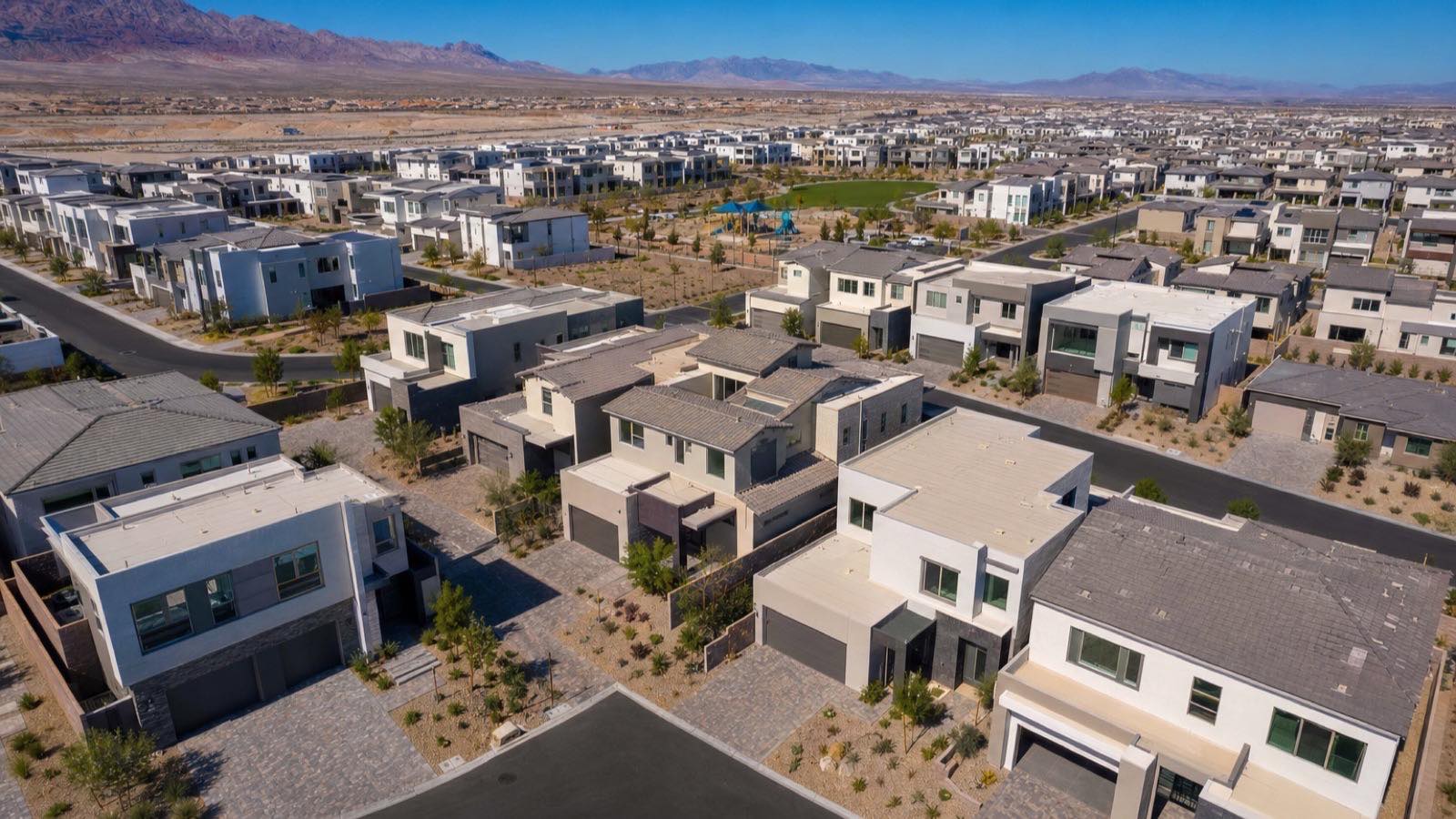
What Should Your Contract Say If the Build Runs Late?
The purchase contract, not the sales conversation, decides what happens if the house is late, so read it for four things before you sign: the estimated completion date or window, how and when the builder must notify you of a change, what counts as an excused delay, and what your remedies are, including whether you can cancel and recover your deposit.
Federal law gives one of those questions some weight. The Interstate Land Sales Full Disclosure Act generally requires registration and disclosure for lots sold in larger subdivisions, but 15 U.S.C. 1702(a)(2) exempts "the sale or lease of land under a contract obligating the seller or lessor to erect such a building thereon within a period of two years." That exemption is one more reason to ask the sales office to show you the completion obligation, and its deadline, in your contract, and to get any promised date in writing; a verbal "we're on track" is not a written commitment.
Builders describe their communication commitments in their own words. KB says that if it encounters "unexpected challenges or delays, we promptly let you know, and adjust accordingly," and Toll says its 6-to-12-month average "can vary by region and community." Neither is a guarantee, which is why the written terms matter.
Our builder contract clauses guide walks through the delay, deposit and arbitration clauses worth reading line by line. If a delay would cost you rent or a rate-lock extension, put that number in front of the builder before you sign, when you still have leverage, and ask whether it will cover any part of it in writing. Whether a builder agrees varies by builder and by community, so I will not tell you what to expect; I will tell you that the only concession you can count on is one written into the contract.
How Should You Plan a Move Around a New-Construction Timeline?
The most reliable plan ties every outside deadline to a builder milestone rather than to the first date you heard in the sales office. This is general planning guidance, not a promise about any builder's schedule.
If you rent, compare your lease end with the builder's estimate before you sign the purchase contract. A five-to-seven-month build signed today points to a completion window, not a day. Lennar's practice of sending the orientation scheduling notice about 30 days before closing, and Pulte's pre-closing orientation one to two weeks out, are the milestones that firm up a date; ask your landlord now what a month-to-month extension would cost.
If you are selling a home to buy, the same logic applies. Time your listing and your closing so that you are not forced to close the sale before the new home has a building final, a current appraisal and a Closing Disclosure in hand. A rent-back or a short-term lease bridges the gap, and both should be written into the sale.
If you are relocating to Las Vegas, a quick move-in that is available now removes most of the uncertainty, and a to-be-built home gives you time to plan a single move. Our moving to Las Vegas guide covers the rest of the logistics.
After closing, your first property tax bill on a new home can surprise you. Our Clark County reassessment guide for new construction explains why, and our SID and LID guide covers special assessments billed separately from the tax bill. Builders including D.R. Horton, Tri Pointe, Taylor Morrison and Touchstone Living also build across the valley; ask each sales office for its estimated completion date in writing, and compare it with the KB, Toll and Census benchmarks above. Our new construction page and first-time buyer page collect current inventory and the other steps.
Frequently Asked Questions
How long does it take to build a house in Las Vegas?
For a to-be-built production home, KB Home cites 30 to 50 days for loan, design and permit steps, then an average of four to five months of construction, which is roughly five to seven months to a finished house. Census data put 2025 built-for-sale homes in the West at 6.4 months from start to completion, plus 1.3 months from permit to start. Custom contractor-built homes averaged 14.0 months of construction alone, so plan for well over a year once you add design and plan review.
Is a quick move-in home ready right away?
Not always. On October 8, 2026, KB Home listed 49 move-in-ready homes in the Las Vegas area, and only 17 were marked "Available Now"; 28 showed one to two months and 4 showed three to six months. A completed home closes on your loan's schedule, and the CFPB says rate locks are typically 30, 45 or 60 days. A home still under construction closes when the builder finishes it, so ask what stage it is in today.
How long does Clark County take to approve building plans for a new home?
Clark County's first-review goal is 21 days for both standard plans and custom single-family residences, with 10 days for each correction. In September 2026 its report shows 30 standard-plan reviews averaging 18.97 days and 36 residential reviews averaging 19.00 days to first review. Production builders' standard plans are approved once for each subdivision, then each homesite needs a lot (plot) plan approval. Homes inside the City of Las Vegas, Henderson or North Las Vegas use those cities' departments.
Why does the Census Bureau's build time differ from what builders quote?
They measure different stretches. Census starts its clock when excavation begins for the footings or foundation and stops when the finished flooring is installed, so it excludes the weeks after you sign, before groundbreaking, and the inspections, orientation and closing at the end. It also averages every builder's homes across the West region. KB's four-to-five-month figure is its own average from start to completion; its 30 to 50 days of pre-construction steps come first.
Do I need to lock my rate for the whole build?
Not necessarily, but you need a plan for it. The CFPB says locks are typically 30, 45 or 60 days, sometimes longer, and that extensions may be expensive. On a build of five months or more, you can lock later, buy a longer lock or choose a quick move-in. Freddie Mac's survey average moved from 6.37% in the week of April 9, 2026 to 7.40% in the week of October 8, 2026, about $69 more a month per $100,000 borrowed.
Will my appraisal need to be redone if the build takes a long time?
Possibly. Fannie Mae requires the home to be appraised within the 12 months before the note date. If the appraisal is more than four months old at closing, the appraiser must perform an update on Form 1004D, and if the value has declined, a new appraisal is required; after 12 months, a new appraisal is required regardless. Single-close construction-to-permanent loans are treated differently, so ask your lender when it will order the appraisal.
Can I cancel a new-construction contract in Nevada?
When you buy from the developer in a common-interest community, NRS 116.4108 lets a buyer who has not personally inspected the unit cancel by written notice until midnight of the fifth calendar day after signing, without penalty, with payments refunded promptly. NRS 116 does not cover a home outside a common-interest community. After that, your rights depend on the contract, including its completion obligation and deposit terms. NRS 116.411 generally requires deposits to be held in escrow, but payments for options and upgrades may go directly to the developer if the contract allows. Have an attorney review the contract if a delay becomes serious.
How Can Nevada Real Estate Group Help You Plan a Build Timeline?
The single most useful thing you can do before signing is turn every estimate in this guide into a date in writing: the builder's estimated completion for your homesite, the lender's lock period and extension price, the appraisal timing, and your own lease or sale deadline. When those four line up, a new-construction purchase is a planning exercise rather than a gamble. When they do not, you find out before you are committed.
That is where a buyer's agent earns a place at the sales table. We can read the builder's contract with you, ask the sales office and the construction manager for the start and completion estimates for a specific homesite, compare a quick move-in that is available now against a to-be-built home on the same street, and coordinate the inspector, lender and title company around the builder's milestones. We can represent you with any builder in the valley, from production communities in Summerlin and Henderson to custom lots, and we will tell you plainly when a finished resale home fits your calendar better than any build.
Nevada Real Estate Group is the #1 real estate team in Nevada, with 150+ licensed agents, 9,600+ closed transactions, $4.85 billion+ in total sales volume and 9,097+ verified five-star reviews. In 2025 the team closed 789 homes and $361.5M+ in volume, according to the RealTrends Verified program. If you are weighing a new home in Las Vegas, Henderson or North Las Vegas, call or text me and my team at (702) 637-1759 or email info@nevadagroup.com, and bring the builder's estimate with you; we will help you test it against the numbers above. Nevada Real Estate Group is brokered by LPT Realty, license S.181401, at 8945 W Russell Rd, Suite 170, Las Vegas, NV 89148.
Which Sources Inform This Las Vegas Build-Timeline Guide?
Every builder statement, listing status and county figure below was read on October 8, 2026; listing availability and prices change daily. Census figures are regional estimates for the West, which includes Nevada, not Las Vegas-specific measurements. Nothing here is legal or lending advice.
- Length of Time tables, page last revised April 29, 2026, including average start to completion, percent distribution from start and average authorization to start — U.S. Census Bureau, Survey of Construction
- Survey of Construction definitions and new houses sold by stage of construction — U.S. Census Bureau
- Plan review timelines, September 2026 timeliness report, Standard Plan Process guide BPG-186, single-family model and elevation review and inspections FAQ — Clark County
- How long is the homebuilding process, Las Vegas communities, Las Vegas move-in-ready homes and 10 Quality Checkpoints and Buyer Orientations, Las Vegas, 2021 — KB Home
- Frequently asked questions — Toll Brothers
- Scheduling new construction inspections — First Home Inspectors
- New construction homebuilding steps — Pulte Homes
- New home orientation and final walkthrough — Lennar
- How long does it take to build a new house?, March 4, 2022 — Richmond American Homes
- What's a lock-in or a rate lock? and What is a Closing Disclosure? — Consumer Financial Protection Bureau
- Primary Mortgage Market Survey: 7.40% (30-year) and 6.73% (15-year) for the week of October 8, 2026; 6.37% for the week of April 9, 2026 — Freddie Mac
- B4-1.2-04, Appraisal Age and Use Requirements and B4-1.2-05, Requirements for Verifying Completion — Fannie Mae Selling Guide
- 15 U.S.C. 1702, Interstate Land Sales exemptions — Legal Information Institute, Cornell Law School
- NRS 116.4108, 116.411 and 116.412: purchaser's right to cancel, escrow of deposits and substantial completion — Nevada Legislature
- Sales of Henderson mountainside mansion lots underway at Ascaya, August 21, 2014 — VEGAS INC
- Best real estate agents in Nevada, enterprise teams by sides — RealTrends