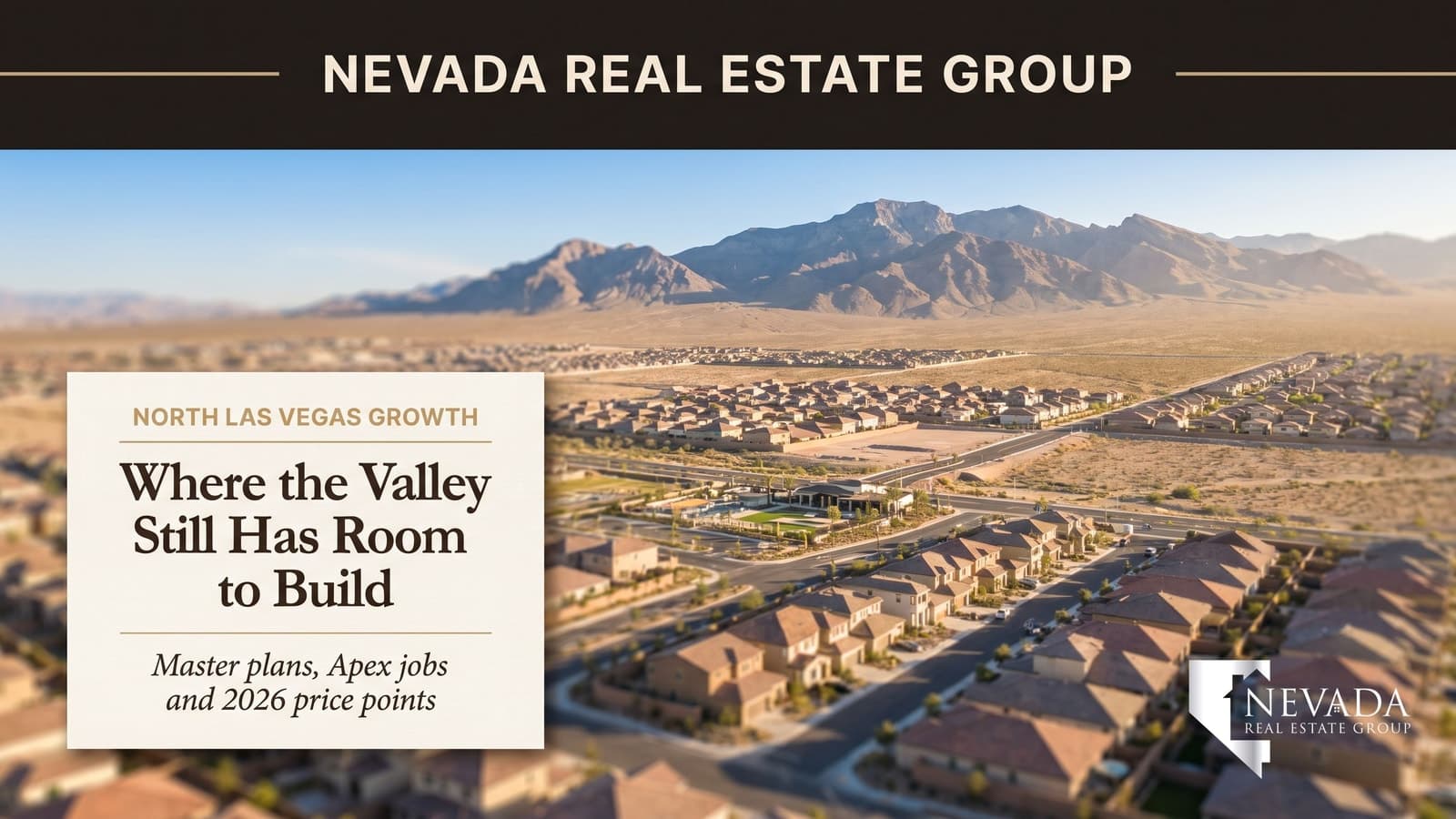

North Las Vegas spent decades as the valley's overlooked quadrant. In 2026 it is the one place with enough remaining land to absorb serious new construction, and an industrial job engine at Apex creating the demand to fill it.
North Las Vegas holds the Las Vegas Valley's largest remaining development frontier, with master plans including Villages at Tule Springs, Valley Vista, Park Highlands and Aliante still delivering. New construction generally runs $340,000 to $560,000 — the most accessible entry in the metro — while the Apex Industrial Park drives job growth on the north edge. The trade-off is commute distance to the resort corridor and infrastructure that is still catching up to the rooftops.
- New construction typically runs $340,000 to $560,000, the metro's most accessible entry point.
- Villages at Tule Springs, Valley Vista, Park Highlands and Aliante anchor the growth.
- Apex Industrial Park is the job engine driving demand on the northern edge.
- The valley has roughly 25,000 developable acres left, and much of it sits here.
- Verify LID and SID assessments — new master plans commonly add $800 to $2,400 a year.
Why Is North Las Vegas Growing Faster Than the Rest of the Valley?
Because it is one of the few places left that can. The Las Vegas Valley is bounded by federal land, and the remaining developable acreage is concentrated at the edges — with the north and northwest holding the largest contiguous share. Our Las Vegas land supply analysis covers the mechanics: roughly 25,000 developable acres remain valley-wide, released through federal auction rather than by local decision.
That scarcity has a direct consequence. When a builder needs lots and the southwest and west are effectively built out to their boundaries, the pipeline moves north. According to the U.S. Census Bureau, the Las Vegas metro has continued adding population through the mid-2020s, and that growth has to land somewhere with buildable ground.
The second driver is employment. The Apex Industrial Park on the far northern edge has drawn large-scale distribution, manufacturing, and logistics investment, creating a job base that did not meaningfully exist in the area fifteen years ago. Our coverage of the North Las Vegas Apex industrial boom goes deeper on the employers and the corridor itself.
Which Master Plans Are Actually Delivering Homes?
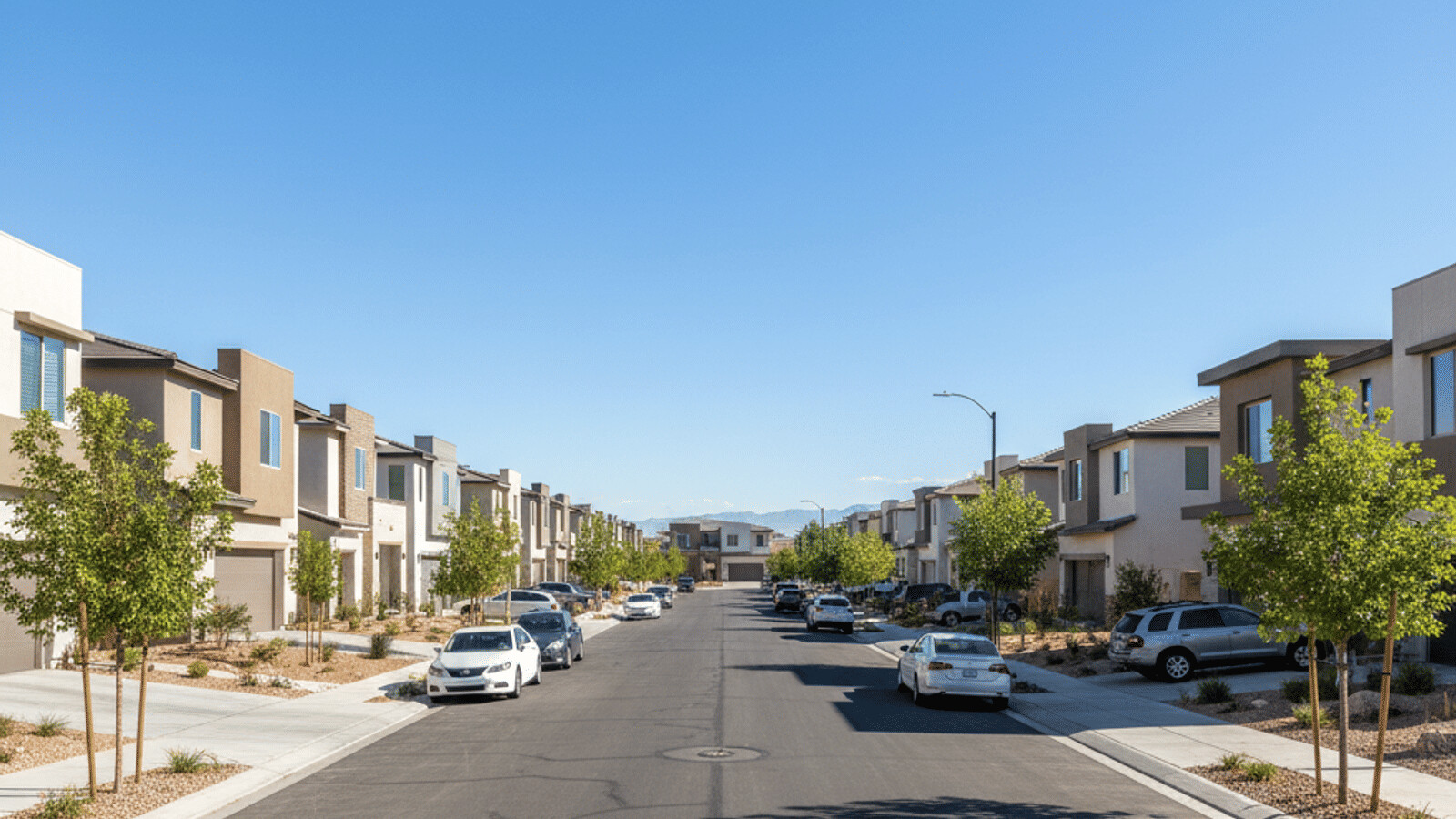
Four names account for most of the activity, and they are genuinely different products.
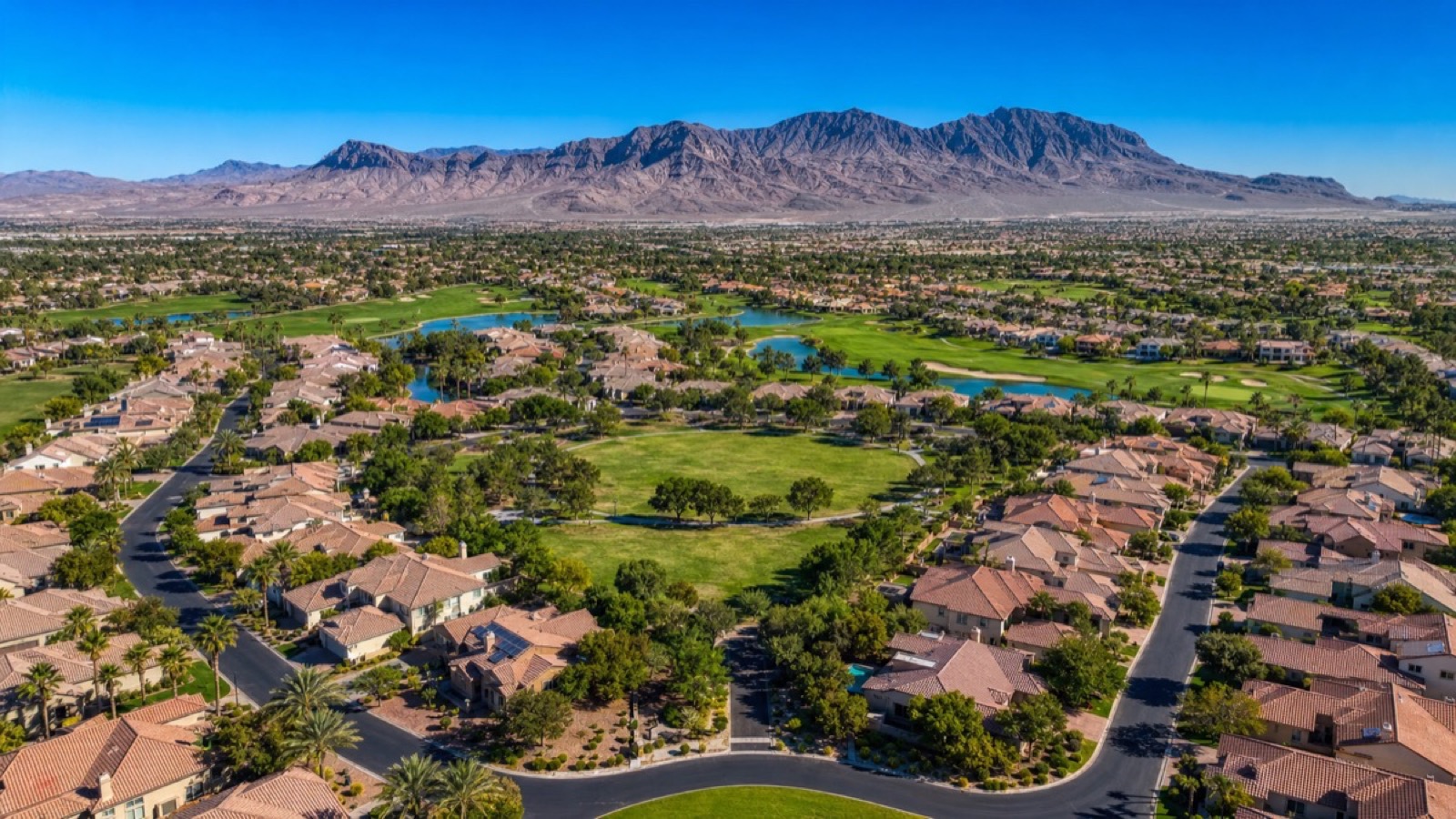
Villages at Tule Springs sits in the far northwest near the Tule Springs Fossil Beds National Monument, and it is the largest single master plan in the area. Multiple builders, a wide range of plans from attached product to larger detached homes, and the newest infrastructure in the city.
Valley Vista is a north-central master plan that has delivered steadily, oriented toward family buyers with community amenities and a mix of plan sizes.
Park Highlands occupies a large tract in the central north and has been built out in phases by multiple builders, with a range that reaches somewhat higher than the entry-level norm for the city.
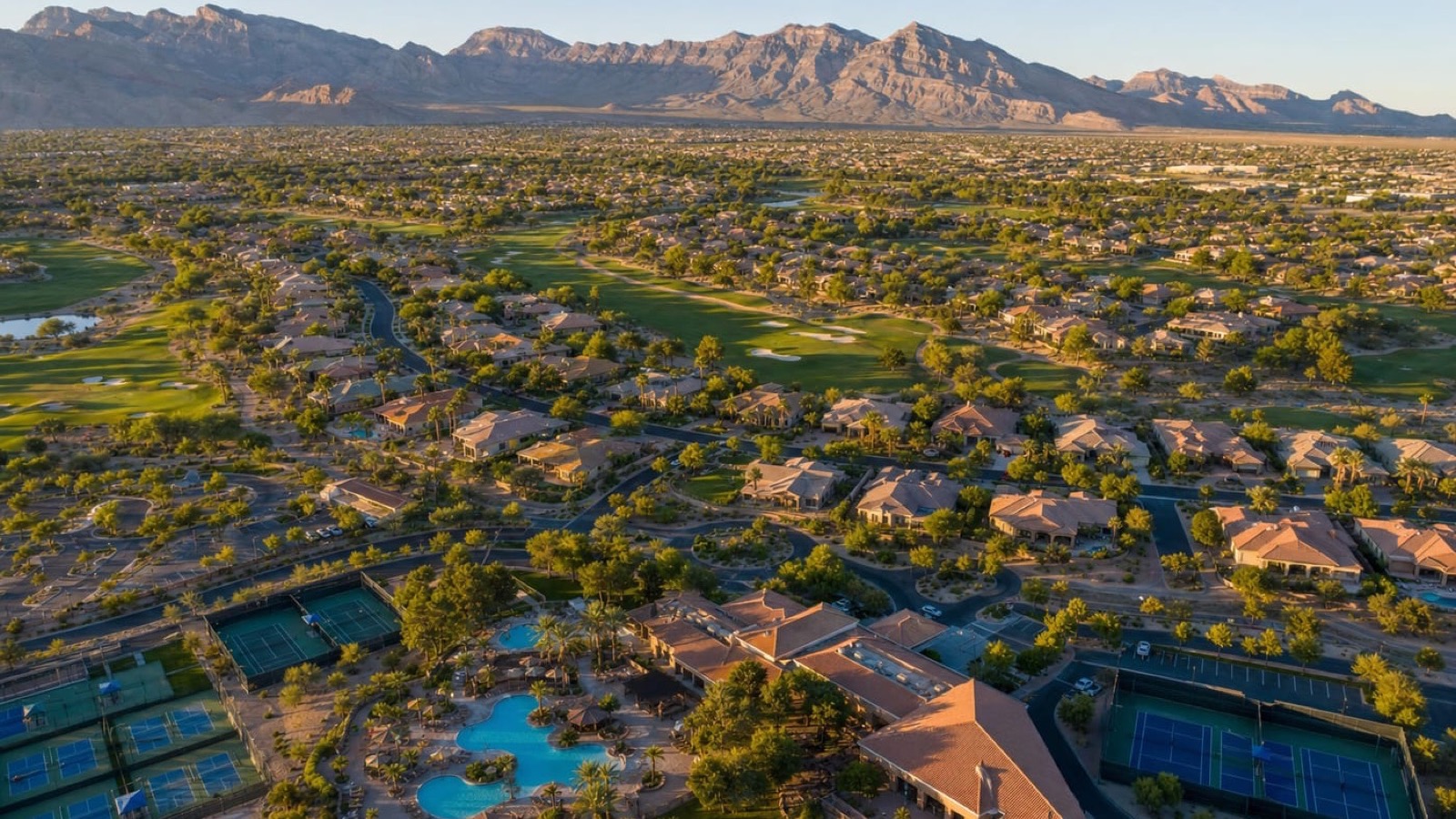
Aliante is the established one — a mature master plan with a golf course, retail, a casino resort, and housing stock that now spans roughly two decades. It functions less as a frontier and more as the city's proven, amenitized core.
| Master plan | Location | Typical new range | Best fit |
|---|---|---|---|
| Villages at Tule Springs | Far northwest | $350,000-$550,000 | First-time and move-up buyers wanting the newest infrastructure |
| Valley Vista | North central | $360,000-$520,000 | Families wanting amenities and newer schools |
| Park Highlands | Central north | $375,000-$600,000 | Buyers wanting a slightly higher tier |
| Aliante | Northwest | $400,000-$700,000 resale | Buyers wanting mature amenities now, not later |
| Sedona Ranch / infill | Scattered | $340,000-$480,000 | Value-focused buyers |
Ranges are directional and move with incentives, lot premiums, and plan selection. A base price is not a purchase price — the same plan can land $40,000 apart depending on lot premium and options.
What Does New Construction Actually Cost Here?
North Las Vegas is the most accessible new-construction market in the metro, and the gap against the rest of the valley is the reason buyers make the drive.
| Dimension | North Las Vegas | Southwest / Mountain's Edge | Summerlin |
|---|---|---|---|
| Typical new range | $340,000-$560,000 | $450,000-$750,000 | $600,000-$1,500,000+ |
| Lot premiums | $5,000-$45,000 | $15,000-$70,000 | $25,000-$250,000+ |
| Commute to Strip corridor | 25-40 minutes | 20-30 minutes | 20-30 minutes |
| Remaining land | Largest in valley | Approaching boundary | Hard stop at conservation land |
| HOA range | $45-$140 monthly | $60-$180 monthly | $120-$280 plus sub-association |
| Typical LID/SID exposure | Common, $800-$2,400 yearly | Common | Common in newer villages |
A buyer comparing a $420,000 North Las Vegas new build against a $560,000 southwest equivalent is looking at roughly $140,000 of price difference. At 6.5% on a 30-year fixed, that is close to $885 a month before taxes and insurance — real money that buys a lot of commuting. The honest counterweight is that the commute is daily and permanent, while the price gap is a one-time decision.
What Is Apex and Why Does It Matter to Housing?
Apex Industrial Park is a very large industrial zone on the far northern edge of the city, positioned along the I-15 corridor toward Utah. It has attracted distribution, logistics, and manufacturing operations at a scale that makes it one of the more significant industrial concentrations in the Southwest.
For housing, the significance is straightforward: those are jobs that did not exist locally before, held by people who need to live within a reasonable drive. North Las Vegas is the closest residential product to Apex by a wide margin. That creates a demand floor that is structurally different from a bedroom community whose residents all commute to the Strip.
It also creates a genuine consideration for buyers. Industrial growth brings truck traffic on the corridors that serve it, and the same land that makes housing possible makes industrial expansion possible. According to the City of North Las Vegas, zoning and land-use applications are public, and a buyer who cares what gets built on the vacant parcel across the arterial can find out before writing rather than after.
What Should Buyers Verify Before Writing an Offer?
Five items, and the first one costs people the most money.
LID and SID assessments. Newer master plans frequently carry Local Improvement District or Special Improvement District assessments on the property tax bill to repay the infrastructure that made the land developable — roads, sewer, drainage. These commonly run $800 to $2,400 a year and can persist 20 years or more. According to the Clark County Assessor, they appear on the parcel's tax record, so they are verifiable before you write. Across our 789 closings in 2025, this was the single most common cost buyers had not budgeted when comparing new construction to resale.
The full HOA picture. Master association dues plus any sub-association. Ask for both, in writing, plus the reserve study.
Builder incentives versus price. In this market builders defend base price and negotiate on concessions — rate buydowns, closing cost credits, design center allowances. The headline price often moves less than the package around it.
School zoning and its stability. The Clark County School District rezones periodically around new construction, which happens more here than anywhere else in the valley precisely because the rooftops are new. The school a home is zoned to today may not be the one it is zoned to in two years.
What is entitled nearby. This is a growth frontier. Vacant ground beside a new subdivision is not permanent open space; it is inventory. Check it.
How Do Commutes and Infrastructure Actually Work Out?
Honestly. The commute from the northern master plans to the resort corridor generally runs 25 to 40 minutes depending on the specific location and time of day, using I-15 or US 95. To downtown it is shorter. To the southwest employment areas it is longer.
Infrastructure has been catching up rather than leading. Retail, grocery, and medical services in the newest areas arrive after the rooftops, which means the earliest buyers in a phase live with a longer drive to basic services for a period. That improves over time and is the standard trade-off of buying early in a master plan anywhere.
Transit access via the Regional Transportation Commission of Southern Nevada is thinner in the far north than in the central valley, so households should assume they need a car per working adult. At $2,400 to $3,400 a year for insurance on two cars in Nevada, plus fuel and maintenance, that is a real line item to weigh against the price advantage.

Is North Las Vegas a Good Investment?
For the right thesis, yes — and it is a different thesis from Summerlin or Henderson.
The case for: it is the most accessible entry in the metro, it has the valley's largest remaining land supply, it has a genuine local employment base at Apex rather than pure bedroom-community demand, and rental demand from industrial employment is real. Purchase prices in the $340,000 to $480,000 band support rent-to-price ratios that the west valley cannot match.
The case against: appreciation in a land-rich submarket behaves differently from a land-constrained one. Where Summerlin's scarcity supports price, North Las Vegas's abundance means new supply competes with resale for years. A seller here is competing with a builder's incentive package in a way a seller in a built-out submarket is not.
That is the core investor distinction, and it is worth stating plainly: land abundance is good for buyers and a headwind for sellers. Across our 9,600+ closed transactions, the North Las Vegas resales that performed best were the ones in phases that had finished building out, where new-construction competition had moved on.
Who Is North Las Vegas Actually Right For?
Four profiles, consistently:
- First-time buyers priced out of the southwest and west. The $340,000 to $480,000 band is where the metro's realistic entry point now lives, and our first-time home buyer guide covers the loan programs that fit it.
- Growing families who need square footage more than they need a short commute — the price per square foot advantage here is substantial.
- Apex-corridor and north-valley workers for whom the commute argument reverses entirely.
- Yield-focused investors willing to accept slower appreciation for stronger current rent ratios.
It is generally not right for buyers whose work and social life center on the southwest or Henderson, or for buyers who want mature amenities immediately rather than in five years. Those buyers should look at Henderson or the established Las Vegas submarkets instead, and pay for the difference.
Which Builders Are Active in North Las Vegas?
The city is production-builder territory. That is not a criticism — production building is what makes an accessible price point possible — but it does shape what a buyer can expect. Plans are standardized, options come from a defined menu, and the negotiation happens on incentives rather than on the plan itself.
The national production builders most consistently active across North Las Vegas master plans include D.R. Horton, Lennar, KB Home, Century Communities, Richmond American, Beazer Homes, and Woodside Homes, with regional builders filling smaller infill parcels. Which builder is in which community changes as phases sell out, so treat any list as a snapshot rather than a fixture.
| Comparison point | What to ask | Why it matters |
|---|---|---|
| Base price versus final | Total with lot premium and required options | The same plan can vary $40,000 |
| Incentive structure | Rate buydown, closing costs, design allowance | Often worth more than a price cut |
| Lender tie | Is the incentive conditional on the builder's lender? | Compare the all-in rate, not the credit |
| Build timeline | Realistic completion, not the brochure | Drives your rent or rate-lock exposure |
| Warranty terms | Structural, systems, workmanship durations | Varies meaningfully by builder |
| What is standard | Landscaping, window coverings, appliances | Often $8,000-$25,000 of after-purchase cost |
That last row is the one that surprises buyers. Many North Las Vegas base prices exclude rear landscaping, window coverings, and sometimes refrigerators — items that run $8,000 to $25,000 to complete after closing and are not financed by the mortgage. Budget them as cash before you decide the new build is cheaper than the resale.
According to the Nevada State Contractors Board, builder license status and any disciplinary history are public and searchable, which is a two-minute check most buyers never make. Do it before you sign, not after a warranty dispute.
One further note on representation: builder sales agents work for the builder. Bringing your own agent costs the buyer nothing in this market and the registration usually has to happen on the first visit — walk in alone and you may forfeit representation on that community entirely. Our buyer resources cover how builder registration works in the valley.
What Are the Schools Like in North Las Vegas?
Schools are the most common reason a family rules a North Las Vegas community in or out, and the answer is more nuanced than a single rating.
The city is served by the Clark County School District, which enrolls roughly 300,000 students across more than 350 schools — the largest single-county district in the United States. According to the Nevada Department of Education, school-level performance is published annually, and at a district this size the district-level number is meaningless for any individual family. The campus matters; the district does not.
Three practical realities specific to this part of the valley:
Newer schools track newer rooftops. The master plans built in the last decade generally have newer campuses, because CCSD builds to follow development. That is an advantage in facilities and often in class size, at least until the surrounding phases fill in.
Rezoning is more common here than anywhere else in the valley. CCSD periodically redraws attendance zones around new construction, and North Las Vegas has the most new construction. The school a home is zoned to at purchase may not be the school it is zoned to in two or three years. Ask the district directly rather than relying on the builder's sales sheet, which is frequently out of date.
Magnet and charter options exist independent of the zoned school. CCSD runs an open-zone model with magnet programs and separate charter schools throughout the valley. Applications run on their own calendars, generally months before the school year, and a family that misses the window is limited to the zoned assignment for that year.
For buyers weighing school outcomes against price, the honest framing is that North Las Vegas trades some school-rating strength for a $100,000 to $200,000 price advantage against the west valley. Whether that trade is right depends on the household, the age of the children, and whether magnet or charter options are realistically accessible from the specific address. It is a real trade-off in both directions, and buyers are poorly served by anyone who pretends otherwise.
A final practical note on timing. Builders in this city price by phase, and a phase release is the moment when incentives are usually richest and lot selection is widest. Buyers who walk in mid-phase get the leftover lots and a thinner concession package. Ask the sales office when the next phase releases and what the current phase's incentive was at release — the answer tells you whether you are early or late, and that single question is worth more than any amount of negotiation on the base price.
Frequently Asked Questions
Is North Las Vegas a good place to buy a home in 2026?
For buyers who value price and newness over commute distance, yes. New construction generally runs $340,000 to $560,000, the most accessible in the metro, with the valley's largest remaining land supply and a genuine job base at Apex. The trade-offs are a 25 to 40 minute drive to the resort corridor and services that arrive after rooftops.
What are the main master-planned communities in North Las Vegas?
Villages at Tule Springs in the far northwest is the largest, alongside Valley Vista in the north central area, Park Highlands in the central north, and Aliante as the established amenitized master plan with golf and retail. Smaller infill communities fill in between them.
How much does a new home cost in North Las Vegas?
Typically $340,000 to $560,000 depending on plan, community, and lot. Lot premiums add $5,000 to $45,000, and the same plan can land $40,000 apart once options and premiums are counted. Base price is not purchase price.
What is a LID or SID assessment and will I have one?
A Local or Special Improvement District assessment repays the infrastructure that made the land developable — roads, sewer, drainage — and appears on your property tax bill. In newer North Las Vegas master plans they are common, often $800 to $2,400 a year, and can run 20 years or more. Check the parcel's tax record before writing an offer.
How long is the commute from North Las Vegas to the Strip?
Generally 25 to 40 minutes depending on the specific community and time of day, using I-15 or US 95. Downtown is shorter; southwest valley employment centers are longer. Drive it at your actual commute time before committing.
Does North Las Vegas appreciate as well as Summerlin?
Historically it has appreciated, but the dynamics differ. Summerlin's scarcity supports price; North Las Vegas has abundant remaining land, so new construction competes with resale for years. Land abundance favors buyers and works against sellers — which is why resales do best in phases that have finished building out.
Is North Las Vegas a good rental market?
Purchase prices in the $340,000 to $480,000 band support stronger rent-to-price ratios than the west valley, and the Apex industrial job base provides genuine tenant demand. Model rents on today's numbers rather than projected ones, and budget for the LID or SID assessment in the yield math.
Which Sources Inform This North Las Vegas Guide?
- City of North Las Vegas — zoning, land use, and Apex corridor planning
- Clark County Assessor — parcel records, assessed values, LID and SID assessments
- Clark County — regional land use and building activity
- Las Vegas REALTORS — submarket median prices and inventory
- U.S. Census Bureau — metro population and household growth
- Bureau of Land Management — SNPLMA disposal boundary and remaining acreage
- Clark County School District — attendance zones and rezoning
- Regional Transportation Commission of Southern Nevada — transit service and roadway planning
- Nevada Department of Taxation — property tax abatement caps
- Bureau of Labor Statistics — Las Vegas employment and cost data
- Nevada State Contractors Board — builder licensing verification
- Freddie Mac Primary Mortgage Market Survey — mortgage rate context
Methodology: price ranges are directional, drawn from valley MLS activity and our own transaction experience as of August 2026, and move with builder incentives and lot premiums. Verify community-specific pricing, assessments, and school zoning before relying on any figure.
Ready to Look at North Las Vegas?
The difference between a good and a poor purchase here usually comes down to three things nobody puts in a brochure: the assessment on the tax bill, what is entitled on the vacant ground nearby, and whether the incentive package is better than the price cut.
Browse North Las Vegas homes, see current new construction, or get in touch and we will pull the parcel record and the assessment history on any address you are considering. Phone: (702) 637-1759. Email: info@nevadagroup.com.
This article is informational and not investment advice. Price ranges, incentives, and assessments change continuously and vary by community and plan. Verify current pricing with the builder, assessments with the Clark County Assessor, and school zoning with CCSD before making a purchase decision.