

Buying your first home in Las Vegas in 2026 is more achievable than most people believe. Inventory has recovered, sellers are negotiating rate buydowns and closing-cost credits again, and Nevada stacks some of the strongest down payment assistance programs in the country on top of a state with no personal income tax. The catch is that mid-6% mortgage rates trimmed roughly 30% off buying power compared to 2021, so preparation — pre-approval, program stacking, and neighborhood targeting — matters more than it has in years. This guide walks you through the entire process, grounded in live Southern Nevada MLS data our team pulled this month.
First-time buyers in Las Vegas in 2026 should plan for a valley median near $475,000, though entry-level submarkets close well below it. Live GLVAR data pulled July 13, 2026 shows the city of Las Vegas at $418,500, North Las Vegas $390,000, and Henderson $426,250. FHA loans open the door with 3.5% down, and Nevada Housing Division assistance can cover most of the cash to close — plan on 5% to 8% of price.
- Live GLVAR median sold prices (July 2026): Las Vegas $418,500, North Las Vegas $390,000, Henderson $426,250.
- FHA needs 3.5% down; VA and USDA need 0%; conventional starts at 3% — pick the program before you shop.
- Nevada down payment assistance runs from 4% of the loan (Home Is Possible) up to $50,000 (Middle-Income grants).
- Best entry neighborhoods: North Las Vegas/Aliante, Cadence in Henderson, Southwest/Mountain's Edge, Centennial Hills, Skye Canyon.
- Budget 5% to 8% of price in cash and get pre-approved before your first showing — sellers require it.
Across the 9,600+ closings our team at Nevada Real Estate Group has represented, the first-time buyers who win are never the ones with the biggest budgets — they are the ones who arrive prepared. You can browse current Las Vegas listings, start with our first-time buyer resources, and weigh new construction versus resale as you build your plan.
What does the Las Vegas housing market look like for first-time buyers in 2026?
The Southern Nevada resale market entered mid-2026 in the most balanced position it has held since 2018. According to Las Vegas REALTORS market data, the valley-wide single-family median sits near $475,000, listings spend around 38 days on market, and inventory has climbed back to roughly three months of supply — a world away from the sub-one-month shortages of 2021 and 2022. For a first-time buyer, that combination means real choice and real negotiation room without the bidding-war pressure of the post-pandemic spike.
The headline valley median can be misleading, though, because it blends luxury Summerlin and Lake Las Vegas closings with entry-level tract homes. Live GLVAR data our team pulled through Repliers on July 13, 2026 shows where first-timers actually buy: the city of Las Vegas posted a median sold price of $418,500 across 1,008 closings since April, North Las Vegas came in at $390,000, and Henderson at $426,250, with average days on market of 35 to 37 across all three. Drill into the entry ZIPs and the numbers get friendlier still — North Las Vegas ZIP 89031 closed a median of $400,050 across 92 sales at just 17 days, and the 89011 Cadence corridor in Henderson closed at $385,000 across 33 sales.
According to Freddie Mac's Primary Mortgage Market Survey, the 30-year fixed rate has settled into a low-to-mid 6% range in 2026, below the 7.8% peaks of late 2023 but well above the sub-3% rates that made 2020 budgets feel oversized. The practical effect: a Clark County household earning the median income of roughly $77,000, per the U.S. Census Bureau, can comfortably support a home in the $375,000 to $425,000 band with conventional financing, or stretch higher with FHA and down payment assistance. Seller concessions on 2-1 buydowns and closing costs are common again — leverage that barely existed two years ago.

How much money do you really need to buy your first home in Las Vegas?
The old "you need 20% down" rule scares off more qualified first-time buyers than any other myth. In reality, the median first-time buyer nationally puts down roughly 8%, according to the National Association of Realtors profile of home buyers. In Las Vegas, the math on a $425,000 entry-level home typically looks like this.
An FHA loan at 3.5% down requires about $14,875 for the down payment. Closing costs in Clark County run roughly 2% to 3% of price, or another $8,500 to $12,750. Lenders want to see about two months of mortgage reserves — another $5,000 to $7,000 depending on taxes and insurance. That puts a realistic move-in budget near $28,000 to $35,000 in cash, or roughly 7% to 8% of the purchase price. A conventional 5%-down loan lands in the same neighborhood.
Here is where Nevada buyers leave money on the table: down payment assistance can erase most of that cash requirement. Stacking Nevada Housing Division Home Is Possible assistance with an FHA loan, plus a 1% to 2% seller credit on a home that has sat past 30 days, can drop true out-of-pocket below $10,000 on a $475,000 purchase. Veterans qualify for VA loans, which require zero down and carry no monthly mortgage insurance — an edge a Navy-veteran-led team like ours uses constantly with relocating service members near Nellis and Creech Air Force Bases.
| Cash Component | FHA 3.5% Down | Conventional 5% Down | VA 0% Down |
|---|---|---|---|
| Down payment on $425,000 | $14,875 | $21,250 | $0 |
| Closing costs (2%–3%) | $8,500–$12,750 | $8,500–$12,750 | $8,500–$12,750 |
| Reserves (≈2 months) | $5,000–$7,000 | $5,000–$7,000 | $5,000–$7,000 |
| Realistic total cash | $28,000–$35,000 | $34,000–$41,000 | $13,000–$20,000 |
Are you actually ready to buy a home in Las Vegas right now?
This is the question most guides skip, and it is the most important one. Owning a home is a financial tool, not a lifestyle requirement. Before you tour a single property, pressure-test four things. First, your financial foundation: beyond the down payment and closing costs, keep three to six months of living expenses in reserve, because water heaters and AC compressors do not care that you just spent your last dollar at the title company. Second, your credit — it directly sets your rate, and we cover the tiers in the next section.
Third, your income stability. Lenders want to see at least two years of consistent employment, ideally in the same field. A recent job change inside your industry is usually fine; a career pivot or an employment gap makes underwriting trickier, not impossible. If you are self-employed, be ready to show two years of business tax returns and a current profit-and-loss statement.
Fourth, your timeline. Plan to stay at least three to five years. That is roughly how long it takes to build enough equity to offset the transaction costs of buying and eventually selling. According to the Consumer Financial Protection Bureau, a longer expected tenure is the single biggest factor tilting the buy-versus-rent math toward buying. Our team's rule of thumb across Southern Nevada in 2026: the buy-versus-rent crossover sits near four to five years of expected stay at current price-to-rent ratios. If there is a real chance you relocate within two years, renting may be the smarter move — there is no shame in that.
What credit score do you need to buy a house in Las Vegas?
Your credit score is the lever with the highest dollar impact per hour of effort. According to myFICO scoring guidance, every meaningful tier you climb shaves your rate. Here is how the 2026 landscape generally breaks down for Las Vegas buyers.
| Credit Tier | Loan Access | Rate Impact | What To Do |
|---|---|---|---|
| 740+ | Best conventional pricing | Lowest available rate | Shop lenders and lock |
| 700–739 | Very competitive | Minor premium | Proceed; trim balances |
| 660–699 | Qualifies, higher rate | Noticeable premium | 3–6 months of clean-up first |
| 620–659 | Conventional/FHA floor | Significant premium | Pay down cards below 30% |
| 580–619 | FHA 3.5% down | High premium | FHA route; keep utilization low |
| Below 580 | FHA needs 10% down | Limited options | Credit repair before shopping |
The dollars are real. Every 20-point improvement in your score can save roughly 0.125% to 0.25% on your rate. On a $400,000 loan over 30 years, that is $20,000 to $40,000 in total interest. For Nevada Housing Division programs like Home Is Possible, the minimum score is 640, and FHA sets its 3.5%-down floor at 580. If your score sits below 640, the highest-return move you can make is three to six months of paying credit-card balances below 30% utilization and avoiding new inquiries before you apply — do not finance a car or open a store card in the run-up to buying.
Which mortgage loan program is right for a first-time buyer?
There are five loan programs that matter for Las Vegas first-timers, and picking the right one before you shop determines both your monthly payment and your cash to close. According to the U.S. Department of Housing and Urban Development, FHA remains the most-used first-time-buyer product because of its low 580 credit floor and 3.5% down requirement. Conventional loans reward stronger credit with removable mortgage insurance; VA and USDA offer zero down for those who qualify; and jumbo loans cover the small share of first purchases above the conforming limit.
| Feature | FHA | Conventional 97 | VA | USDA |
|---|---|---|---|---|
| Minimum down payment | 3.5% | 3% | 0% | 0% |
| Minimum credit score | 580 | 620 | 620 typical | 640 |
| Mortgage insurance | Life of loan under 10% down | Removable at 20% equity | None (funding fee) | Reduced guarantee fee |
| 2026 Clark County limit | $541,287 | $806,500 | No set cap | Income-based |
| Best for | Lower credit or small down | Strong credit, 5%+ down | Veterans and active military | Rural-zoned fringe areas |
According to the Federal Housing Finance Agency, the 2026 conforming loan limit for Clark County is $806,500, while the FHA single-family limit is $541,287 — both comfortably above the entry-level range, so first-timers rarely need a jumbo loan. A few nuances worth knowing: FHA mortgage insurance is permanent if you put less than 10% down, which is why buyers who can reach 20% equity within a few years often prefer conventional's removable PMI. In a 6% environment, a 5/1 ARM near 5.4% can save meaningfully during the first five years if you plan to sell or refinance before it adjusts — but for a 10-year-plus hold, fixed is almost always the safer bet. Southern Nevada averaged 700-plus VA purchase closings per month in 2025, per VA.gov data, so if you are eligible, that is usually the strongest product available.
What down payment assistance programs can Las Vegas first-time buyers use?
This is the most underused advantage in Nevada, and it is where our lender partners routinely find first-timers thousands of dollars. According to the Nevada Housing Division, the state and its partners run multiple stackable programs — most require a 640 credit score and completion of a homebuyer education course, and several do not even require first-time-buyer status.
| Program | Assistance | Key Requirements |
|---|---|---|
| Home Is Possible (HIP) | Up to 4% of loan amount for down payment and closing costs | 640 score, education course, income up to 120% AMI |
| Home First | Up to $15,000 down payment | 6 months Nevada residency, purchase price up to $570,000 |
| Worker Advantage (AB540) | $20,000 down payment | Healthcare, education, public safety, construction; up to 150% AMI |
| Middle-Income Grants | Up to $50,000 (no repayment) | Middle-income households; limited funds, apply early |
| Home Is Possible for Heroes | Reduced interest rate (≈0.5% lower) | First responders, military, veterans; 640 score |
| Home Is Possible for Teachers | $7,500 forgivable after 5 years | Licensed Nevada K-12 teachers |
A few of these deserve extra attention. The Worker Advantage Program, launched under Governor Lombardo's Nevada Housing Access and Attainability Act (AB540), provides $20,000 to essential workers and, critically, does not require first-time-buyer status — an essential worker who already owns can still qualify, subject to a $18 million funding cap covering roughly 900 households first-come, first-served. The Middle-Income Down Payment Assistance grants, offered through Greater Nevada Mortgage in partnership with the Federal Home Loan Bank of San Francisco, deliver up to $50,000 that never has to be repaid — funds are limited and go fast. The one non-negotiable: apply for assistance before you house-hunt, because most programs require lender certification 30 days or more ahead of your first offer. For a program-by-program walkthrough, see our Las Vegas homebuyer assistance programs guide.
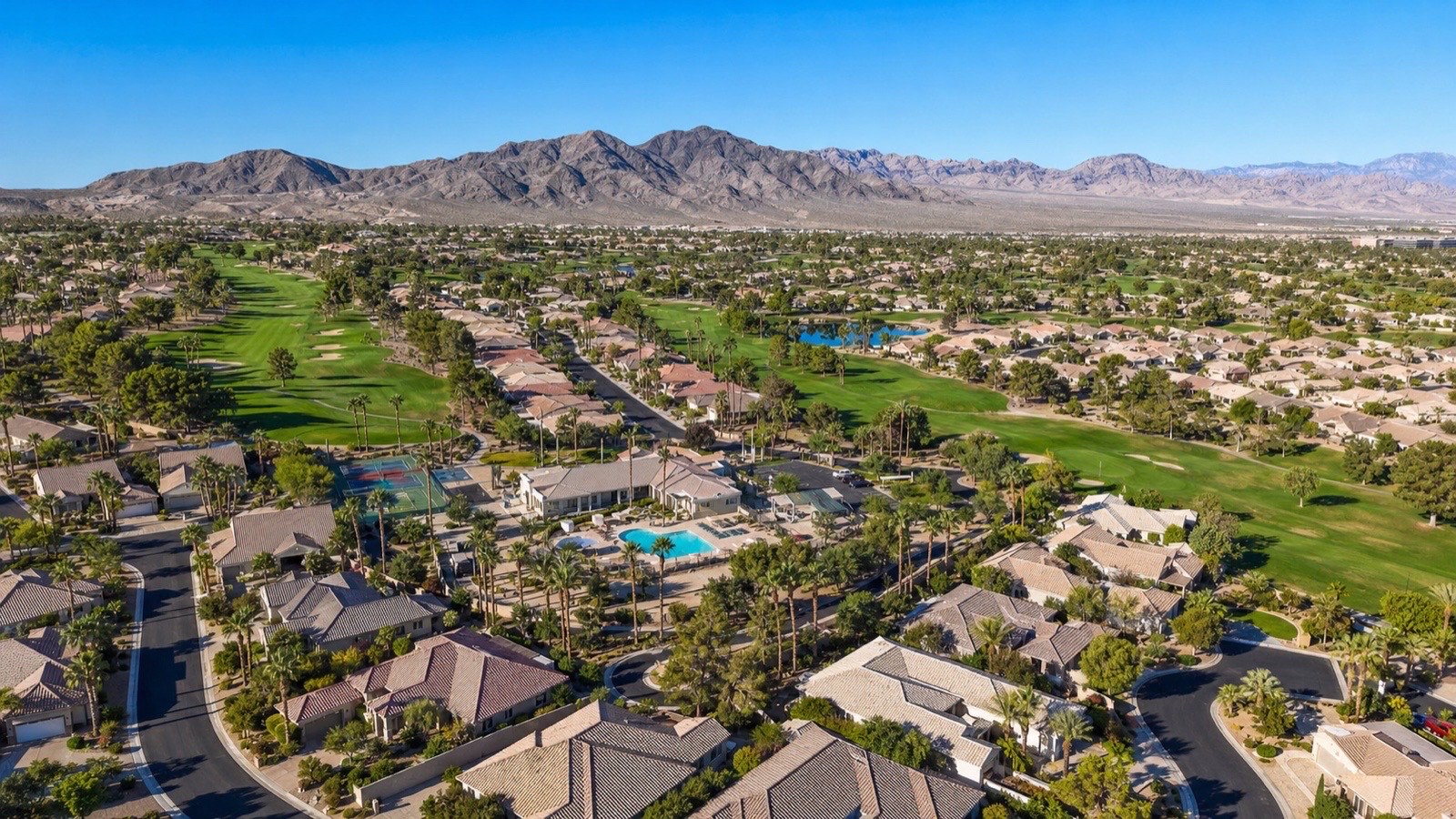
Which Las Vegas neighborhoods are best for first-time buyers?
First-time buyers shop on a tighter budget than the valley median, which concentrates the action in a handful of submarkets. These are the areas where our 150-agent team writes the most first-time-buyer offers, with live GLVAR pricing where the sample supports it.
North Las Vegas (Aliante, Tule Springs). The most affordable major submarket, with a live citywide median sold price near $390,000 and new construction from D.R. Horton, Lennar, KB Home, and Century Communities. Aliante blends golf-course amenities, parks, and fast I-15/215 access; ZIP 89031 closed a median of $400,050 across 92 recent sales. Explore North Las Vegas homes and current new construction incentives.
Cadence in Henderson. Henderson's most active new-construction master plan and a top nationally ranked community by RCLCO. The 89011 corridor closed a live median of $385,000 across 33 recent sales — genuinely entry-level for a city known for its safety record and CCSD school ratings. See Henderson homes for sale.
Southwest valley (Mountain's Edge, Rhodes Ranch, Enterprise). Newer homes with HOA amenities priced below Summerlin and central Henderson, with easy 215 Beltway access to the Strip and airport. Rhodes Ranch posted a live median near $419,900 on recent resales — a common first-timer landing spot.
Centennial Hills and Skye Canyon (northwest valley). Established family neighborhoods typically 10% to 15% below comparable Summerlin pricing, plus Skye Canyon's newer master-planned inventory for buyers who can stretch slightly. Both feed well-rated Clark County School District schools, and resale value tracks attendance area closely, so pull current ratings before you contract.
| Submarket | Typical Entry Band | Live GLVAR Signal | Strip Commute |
|---|---|---|---|
| North Las Vegas / Aliante | $360K–$450K | 89031 median $400,050 (92 sales) | 28 min |
| Cadence, Henderson | $360K–$500K | 89011 median $385,000 (33 sales) | 30 min |
| Southwest / Mountain's Edge | $400K–$500K | Rhodes Ranch median around $419,900 | 22 min |
| Centennial Hills | $400K–$500K | Northwest valley, sub-Summerlin | 25 min |
| Skye Canyon | $430K–$550K | Newer master plan, appreciation | 27 min |
How does mortgage pre-approval work and why does it matter?
A first-time buyer who shops without a pre-approval letter is shopping blind — and in the 2026 market, most listings request it before scheduling a second showing. Pre-approval is a written, underwriter-backed commitment estimating your maximum loan and confirming your rate range, and it is a different thing entirely from a casual prequalification based on numbers you recite over the phone.
The process typically takes three to seven days and requires two years of W-2s or tax returns, your 30 most recent days of pay stubs, two to three months of bank statements across all accounts, retirement and investment statements, a government ID, and — for VA — a Certificate of Eligibility. The hard credit inquiry dings your score about five points temporarily and disappears within a few months. Most pre-approval letters stay valid for 60 to 90 days, so do not start touring until you have one in hand.
One under-the-radar tip: ask your loan officer to model FHA, conventional, and VA side-by-side against your actual pulled credit rather than estimates. That single step heads off the vast majority of last-minute underwriting surprises. And once you are pre-approved, freeze your financial life — no new credit cards, no financed car, no job change until after closing. I have watched deals collapse three days before signing because a buyer financed new furniture before they owned the house.
What are the closing costs and ongoing expenses of owning in Las Vegas?
Closing costs in Nevada sit mid-range nationally, helped by the absence of a state income tax and a reasonable real-property-transfer-tax structure. For a $425,000 home, expect lender fees of $2,500 to $4,000, title and escrow of $1,800 to $2,400, an appraisal of $600 to $750, an inspection of $400 to $700, title insurance of roughly 0.5% to 0.8% of price, and prepaid property taxes plus first-year homeowner's insurance held in escrow. According to the U.S. Bureau of Labor Statistics, regional service costs like appraisals and inspections have risen modestly, so budget toward the top of those ranges.
On the ongoing side, Clark County's effective property tax rate averages roughly 0.55% to 0.65% of assessed value — one of the lowest big-county rates in the western U.S. According to the Clark County Assessor, that translates to about $2,300 to $2,750 per year on a $425,000 home. Homeowner's insurance runs about $1,400 to $1,900 annually, and HOA dues range from zero in older neighborhoods to $50 to $250 per month in master-planned communities. Do not forget summer utilities: air conditioning can push an electric bill past $300 a month from June through September, and a 1% annual maintenance reserve on a $425,000 home is roughly $4,250.
One long-term advantage many first-timers miss: Nevada caps annual property-tax increases at 3% for owner-occupied primary residences, regardless of how fast market value climbs. Per Nevada Revised Statutes Chapter 361, that cap is a meaningful benefit for anyone planning to hold five years or more.

Should first-time buyers choose new construction or resale?
Resale homes in 2026 generally offer better value per square foot, more mature neighborhoods, and more choice in school zoning. New construction counters with builder warranties, low maintenance for the first five to seven years, and aggressive 2026 incentives — 2-1 rate buydowns, closing-cost credits often worth $10,000 to $20,000, and free appliance or flooring upgrades. Several North Las Vegas and Cadence builders are buying rates into the mid-5% range, which can cut a monthly payment by $200 to $400 versus a resale at market rate.
For a first-time buyer, the right answer depends on your circumstances. A buyer with a stable five-year horizon who values predictable systems and low upkeep benefits from new construction, especially with builder concessions. A buyer who prioritizes location, lot size, mature landscaping, or a specific school often gets more for the money in resale. One critical tactic: builder pricing is rarely posted on signage, so visit two or three communities, request the same floor plan from each, and compare apples-to-apples. Incentive negotiations can swing the effective price 4% to 7%, especially in the final week of a builder's reporting quarter. Our deeper breakdown lives in the new construction versus resale guide.
How long does the buying process actually take in Las Vegas?
From first home tour to keys in hand, the typical Las Vegas first-time buyer takes 60 to 90 days. The rough breakdown: seven days of lender pre-approval, roughly 14 days of focused shopping, one to three days from offer to acceptance, and 30 to 35 days from acceptance to close, plus a buffer week for final loan conditions and the walk-through. According to Las Vegas REALTORS, the 2026 average contract-to-close cycle is about 35 days, but FHA files stretch to 40 to 45 because of additional appraisal review, and VA or USDA add roughly a week for agency processing.
The single biggest self-inflicted delay is starting the home search and the financing at the same time. Buyers who get pre-approved first and then shop routinely close a full month faster than those who chase both simultaneously, because lender document requests slow down the offer process. Start the financing today, select a serious agent on day one, and a summer start realistically lands you in a home before fall.
What mistakes do first-time buyers make most often?
Three errors surface repeatedly across our closings. First, shopping above your pre-approval limit — falling for a $475,000 home when you are approved for $410,000 ends in either an appraisal that kills the deal or weeks of frustration. Search 10% to 15% below your ceiling to leave room for negotiation and the inevitable "this house needs new flooring" moment.
Second, skipping the inspection on a good-looking resale. Las Vegas heat and hard water create HVAC, plumbing, and roof wear patterns a casual walkthrough misses. A $400 to $700 inspection routinely uncovers $5,000 to $15,000 in negotiable credits — and in our desert climate, pay special attention to AC age (a unit over 12 years old is near end-of-life, and replacement runs $8,000 to $15,000) and roof condition (under five years of remaining life is a $10,000 to $20,000 expense on the horizon). Never waive it, even on new construction.
Third, underestimating ongoing costs. Property tax, HOA, insurance, summer utilities, and desert landscaping add up fast. Build a true monthly budget — principal, interest, taxes, insurance, HOA, utilities, and a 1% maintenance reserve — rather than trusting the bare PITI number a calculator spits out. And guard your down payment against wire fraud: always verify wiring instructions by phone using a number you already have, never one emailed to you.

How do you find a good buyer's agent and what should you ask?
The biggest mistake in agent selection is choosing on personality without verifying production. A new agent doing four deals a year is not the same partner as an experienced agent doing twenty-five — especially in inspection negotiations and lender problem-solving. The Nevada Real Estate Division publishes a license lookup at red.nv.gov showing licensure status and any disciplinary history; check it before you sign anything.
Ask every candidate five questions: How many buyer transactions did you close in the last 12 months? What percentage of your business is first-time buyers? How do you structure offers to win? What is your average response time? And can you connect me with a lender who knows Nevada down payment assistance programs? Interview two or three agents, verify their numbers on independent platforms, and look for consistency over years, not a single good one. When you are ready, our team is reachable at (702) 637-1759 or through the contact page. You can search every active valley listing, start a free home valuation, browse buyer resources, or — when the day comes to move up — explore our seller services any time.
If a conventional purchase is beyond the budget, compare the Rebecca Place community land trust model, including its eligibility and resale restrictions, before treating the lower purchase price as equivalent to unrestricted ownership.
Frequently Asked Questions
What programs help first-time home buyers in Las Vegas?
Nevada offers several stackable programs: Home Is Possible (up to 4% of the loan amount for down payment and closing costs), Home First (up to $15,000), the Worker Advantage Program ($20,000 for healthcare, education, public safety, and construction workers), Middle-Income grants (up to $50,000, no repayment), Home Is Possible for Heroes (a reduced rate for first responders and military), and Home Is Possible for Teachers ($7,500 forgivable after five years). Most require a 640 credit score and a homebuyer education course. Call Nevada Real Estate Group at (702) 637-1759 to see what you qualify for.
How much do I need for a down payment on a house in Las Vegas?
As little as 0% with a VA loan (military and veterans) or USDA loan (rural-zoned areas), 3% with conventional financing, or 3.5% with an FHA loan and a 580 credit score. On the $418,500 live median, 3.5% FHA down is about $14,650. Layering Nevada down payment assistance can cover most or all of your out-of-pocket cash — the $20,000 Worker Advantage grant alone covers a 3.5% FHA down payment on homes well above the valley median.
What credit score do I need to buy a house in Las Vegas?
FHA requires a 580 minimum for 3.5% down (500 to 579 needs 10% down). Conventional loans generally need 620 to 640, and Nevada Housing Division programs require 640. VA loans have no official minimum, though most lenders prefer 620-plus. If your score is below 640, pay credit-card balances below 30% utilization and avoid new inquiries for three to six months before applying — it is the highest-return move available to you.
What is the FHA loan limit in Las Vegas for 2026?
The 2026 FHA loan limit for Clark County — covering Las Vegas, Henderson, and North Las Vegas — is $541,287 for a single-family home, meaning you can buy up to that price with as little as 3.5% down. The conventional conforming limit is $806,500. Because both sit well above the entry-level range, first-time buyers almost never need a jumbo loan.
What are the best neighborhoods for first-time buyers in Las Vegas?
North Las Vegas and Aliante (live median near $390,000), Cadence in Henderson (89011 median $385,000), the Southwest valley and Mountain's Edge ($400,000 to $500,000), Centennial Hills, and Skye Canyon. Builders in North Las Vegas and Cadence are currently offering rate buydowns into the mid-5% range plus closing-cost credits, which often make new construction competitive with — or cheaper than — resale.
How much should I save before buying my first Las Vegas home?
Plan for 5% to 8% of the purchase price in liquid cash: the down payment, 2% to 3% in closing costs, and a reserve cushion of about two months of payments. On a $425,000 home that is roughly $28,000 to $35,000 total — before any down payment assistance, which can cut it dramatically. Documented gift funds from immediate family are allowed on FHA, VA, and most conventional loans with a gift letter.
Should I buy or rent in Las Vegas in 2026?
The buy-versus-rent crossover in Southern Nevada in 2026 sits near four to five years of expected stay at current price-to-rent ratios. If you plan to stay at least that long and have stable income, ownership tends to outperform renting — especially with Nevada's 3% property-tax cap and no state income tax protecting your monthly carry. If you might relocate within two years, renting is usually the smarter financial move.
Which Sources Inform This First-Time Buyer Guide?
Market figures reflect live GLVAR (Las Vegas REALTORS) MLS data pulled via Repliers on July 13, 2026, cross-checked against public sources. Program and financing details are drawn from the authorities below; verify all rates, limits, and program terms with a licensed lender before you buy, because they change frequently.
- Las Vegas REALTORS — Market Statistics
- Nevada Housing Division — Home Is Possible
- U.S. Department of Housing and Urban Development (FHA)
- Federal Housing Finance Agency — Conforming Loan Limits
- U.S. Department of Veterans Affairs — Home Loans
- Freddie Mac — Primary Mortgage Market Survey
- Consumer Financial Protection Bureau — Owning a Home
- U.S. Census Bureau — Clark County QuickFacts
- Clark County Assessor
- Nevada Revised Statutes Chapter 361 — Property Tax
- National Association of Realtors — Research and Statistics
- U.S. Bureau of Labor Statistics
- Clark County School District
- Nevada Real Estate Division — License Lookup
Who Is Chris Nevada, and How Can the Team Help?
Chris Nevada is the founder of Nevada Real Estate Group, a 150-agent team serving Las Vegas, Henderson, Summerlin, North Las Vegas, and the greater Southern Nevada market. A 16-year United States Navy veteran, Chris works closely with veterans and first-time buyers throughout the home buying process and has built a team known for consistent results across Nevada.
Chris operates from the Las Vegas headquarters at 8945 W Russell Rd, Suite 170. Nevada Real Estate License S.181401. Phone: (702) 637-1759. Email: info@nevadagroup.com.
Nevada real estate license #S.181401 — verify at red.nv.gov
This article is general information for first-time home buyers in the Las Vegas area and is not financial, tax, or legal advice. Mortgage rates, programs, and market conditions change frequently — verify all numbers with a licensed lender or financial advisor before making a purchase decision.