

Moving to Las Vegas in 2026 is the right call for a specific buyer profile and the wrong call for a different one — and the brochure-style relocation guides that ignore the cons do every relocator a disservice. The wins are real (no state income tax, $473,875 median home vs $815,000+ in California coastal markets, 16-minute hospital-to-anywhere drive times, year-round outdoor lifestyle for 9 months), but so are the costs (110-degree summers from June through September, valley traffic that surprises Phoenix and Denver transplants, CCSD schools that average 5.4/10 outside the master plan zones). After 9,600+ NREG closings, I have a clear pattern of who thrives here and who regrets the move within 18 months.
This post is the honest pro-con list I walk every relocating buyer through before we tour. Pricing reflects April 2026 Las Vegas REALTORS data. Cost-of-living math uses Bureau of Labor Statistics regional data. The goal is one document where you can run the honest math on whether Las Vegas fits your household — and which neighborhood to start with if it does.
Moving to Las Vegas in 2026 wins on tax (zero state income tax saves a $200,000-income California household roughly $15,000-$18,000 annually), housing (median $473,875 vs $815,000-$1,100,000 in California coastal markets), and access (16-25 minute drives to airport, hospitals, and major employers).
- Nevada has zero state income tax — a $200,000 income California household saves roughly $15,000-$18,000 annually.
- The valley median single-family home is $473,875 vs $815,000-plus in coastal California, $625,000-plus in Phoenix, $710,000-plus in Denver.
- Nevada caps a primary home's yearly tax-bill increase at 3% once the owner claims it (NRS 361.4723).
- Summer cooling bills run $280-$485 monthly June through September — budget $1,500-$1,800 of extra annual utility cost vs Phoenix or LA.
Is Moving to Las Vegas a Good Idea in 2026?
The one-sentence honest take: Las Vegas in 2026 is the right move for tax-burdened California households earning $150,000+, snowbirds wanting a sunbelt second home, families willing to pay the master-plan premium for top CCSD schools, remote workers chasing housing arbitrage, and retirees seeking active-adult community density. It's the wrong move for households with no AC-cost cushion, families who can't or won't pay the master-plan premium and end up in 5.4/10 CCSD schools, and buyers who picked the move based on a December visit without ever experiencing July at 113 degrees.
Plenty of households make this move every year, but the results are selective — the relocators who thrive share specific income, lifestyle, and household priorities. Run three numbers before you decide: the state-income-tax savings, the summer cooling budget, and the mortgage payment at the current rate (Freddie Mac's 30-year fixed averaged 7.28% for the week of October 1, 2026). Our complete moving guide covers the relocator's full structural checklist; this post is the honest pro-con companion piece.
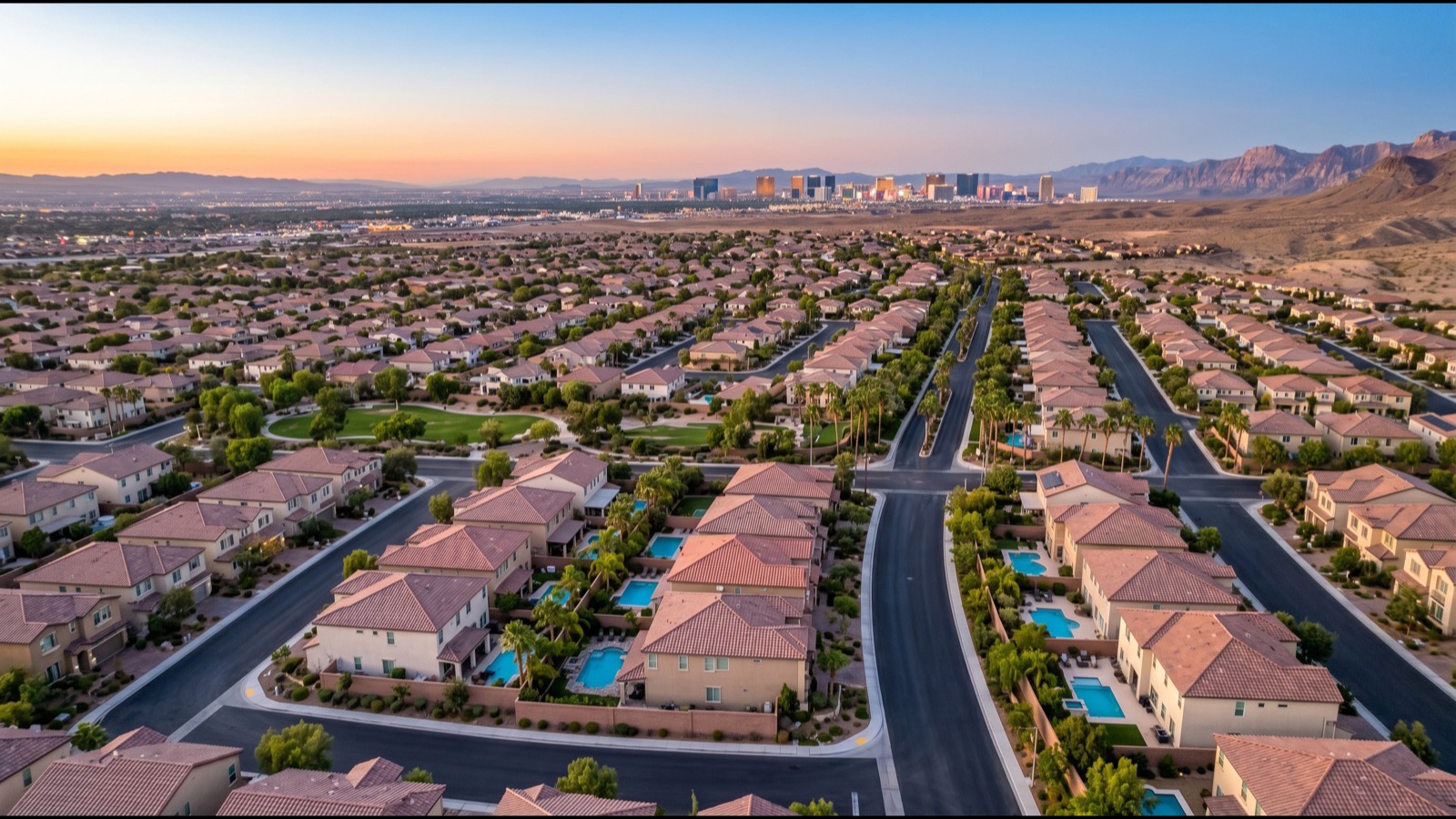
For the day-to-day lifestyle beyond housing and work, explore these things to do around Las Vegas and test the travel times from your shortlist.
Which Buyer Profiles Are Thriving in Las Vegas Right Now?
Across the 789 NREG closings in 2025, five buyer profiles consistently rated their move at 9 or 10 out of 10 at the 12-month post-close survey:
-
California migrants earning $200,000+ with primary tax burden in California state income tax. Average savings: $15,000-$30,000 annually. Typical landing spots: Summerlin (The Mesa, The Trails), Henderson (Green Valley Ranch, Anthem), MacDonald Highlands for higher earners.
-
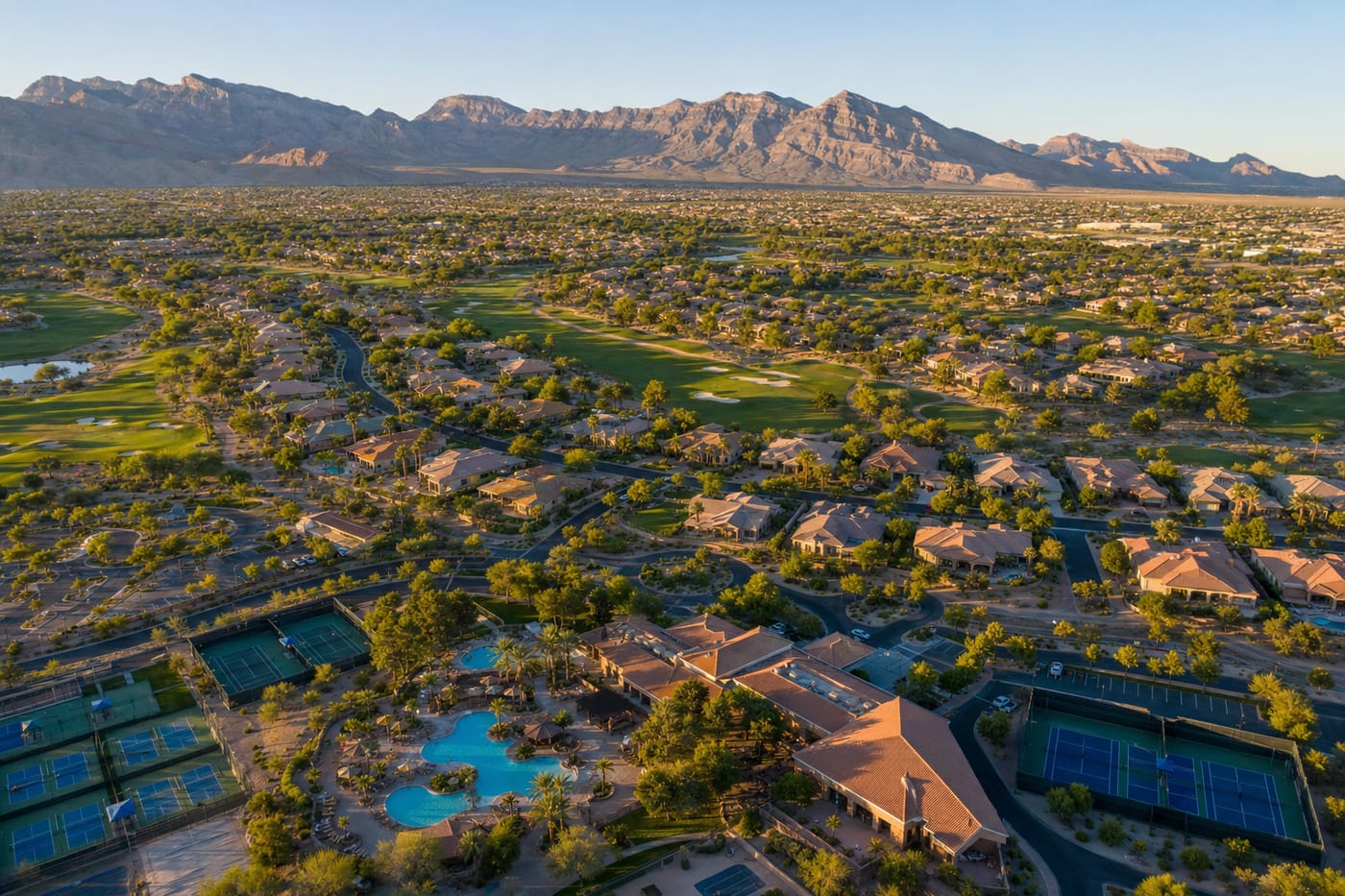
Snowbirds from cold-weather states (Minnesota, Wisconsin, Michigan, Pacific Northwest, Northeast). Average move: October arrival, April departure. Typical landing spots: Sun City Anthem, Sun City Summerlin, Del Webb at Lake Las Vegas, Heritage at Cadence.
-
Remote workers with stable income (tech, finance, consulting) chasing housing arbitrage. Average move: $500,000-$850,000 purchase replacing a $1.2M-$2M coastal market home. Typical landing spots: Henderson (Cadence, Inspirada), Summerlin (Stonebridge, Kestrel, Redpoint), Skye Canyon.
-
Active-adult 55+ retirees prioritizing community amenity over urban proximity. Average move: from northeast or midwest. Typical landing spots: ranked across our 55+ communities hub and the Henderson Sun City and Anthem corridors.
-
Hospitality and gaming professionals moving for career opportunity at the major resort operators (MGM Resorts, Caesars Entertainment, Wynn Resorts, Las Vegas Sands).
Which Buyer Profiles Tend to Regret the Move Within 18 Months?
Across the 9,600+ NREG career closings, three buyer profiles show the highest 18-month regret rate:
-
Households without an emergency fund who got stretched on the down payment and didn't budget for summer cooling costs, HOA dues, property tax in the first cycle, or appliance replacement. Average regret-cohort financial profile: less than 2 months of expenses saved after closing.
-
Families who didn't pay the master-plan school premium and landed in CCSD attendance zones rated 4/10 or below. This is the largest regret category. The valley CCSD average is 5.4/10, and the spread between top-tier zones (Faiss Middle at 9/10, Palo Verde High at 8/10) and bottom-tier zones (some Spring Valley and North Las Vegas sections at 3/10-4/10) is wider than most relocators expect.
-
Buyers who picked Las Vegas after a December visit without experiencing summer. The temperature gap between a December tour day (60-70 degrees, sunny) and an August reality day (110-115 degrees, dust storms, monsoons) is the single most underestimated relocator variable.
Is It Cheaper to Live in Las Vegas or California?
According to Las Vegas REALTORS April 2026 data and California Association of Realtors comparables, the valley single-family median was $473,875 in April 2026. Comparable coastal California medians: Los Angeles County $815,000, Orange County $1,250,000, San Diego County $935,000, Bay Area $1,485,000. The housing savings range from $341,000 (LA County) to $1,011,000 (Bay Area) on the median trade.
The savings extend beyond housing. According to Bureau of Labor Statistics Consumer Price Index regional comparisons, Las Vegas-Henderson-Paradise MSA cost-of-living index is 102.4 against California's 144.8 statewide and 162+ in coastal markets. State income tax saves $15,000-$30,000 annually for California households earning $200,000+ (Nevada has zero state income tax under Article 10 of the Nevada State Constitution). Gasoline runs roughly $1.20-$1.60 cheaper per gallon. Restaurant pricing runs 18%-25% lower for equivalent quality.
| Cost Factor | Las Vegas 2026 | LA County 2026 | Bay Area 2026 | Annual Savings vs LA |
|---|---|---|---|---|
| Median single-family home | $473,875 | $815,000 | $1,485,000 | $341,000 purchase |
| State income tax ($200K household) | $0 | $14,200 | $14,200 | $14,200/yr |
| Average gasoline per gallon | $3.80 | $5.10 | $5.40 | $470/yr (12K miles) |
| Auto insurance (full coverage) | $1,650/yr | $2,485/yr | $2,180/yr | $835/yr |
| Electricity per kWh (avg) | $0.142 | $0.314 | $0.351 | Significant |
| Restaurant dinner for 2 (mid) | $85 | $115 | $135 | $30/meal |
| Median Class A daycare | $1,485/mo | $2,150/mo | $2,485/mo | $7,980/yr |
The trade-offs: groceries are roughly comparable to California (the Las Vegas valley imports most produce), summer utility costs add $1,500-$1,800 annually vs California (cooling load), and homeowner insurance runs slightly higher due to wildfire exposure on the valley's edges. Our LV vs LA dollar breakdown maps the full cost comparison in deeper detail.
For a Mountain West relocation comparison, work through Las Vegas versus Denver living costs using your own household budget.
What Does the No-State-Income-Tax Advantage Save Annually?
Nevada has zero state income tax. According to Nevada Department of Taxation guidance, this includes zero tax on W-2 income, zero on investment income, zero on retirement distributions, zero on Social Security benefits, and zero on rental income. For households comparing against California's 9.3%-12.3% top marginal brackets, the savings are material.
Concrete examples: a single filer earning $150,000 in California pays approximately $8,800 in state income tax. The same earner in Nevada pays zero — a $733/month saving. A married-filing-jointly couple earning $300,000 in California pays approximately $19,400. In Nevada, zero — a $1,617/month saving. A retired couple drawing $120,000 in pension and investment income in California pays approximately $5,400. In Nevada, zero. According to the California Franchise Tax Board, high-income outflow to Nevada has been a recurring revenue concern documented in successive annual reports. Our California migration deep-dive covers the tax-arbitrage math at structural depth.
What's the Honest Truth About 110-Degree Summers?
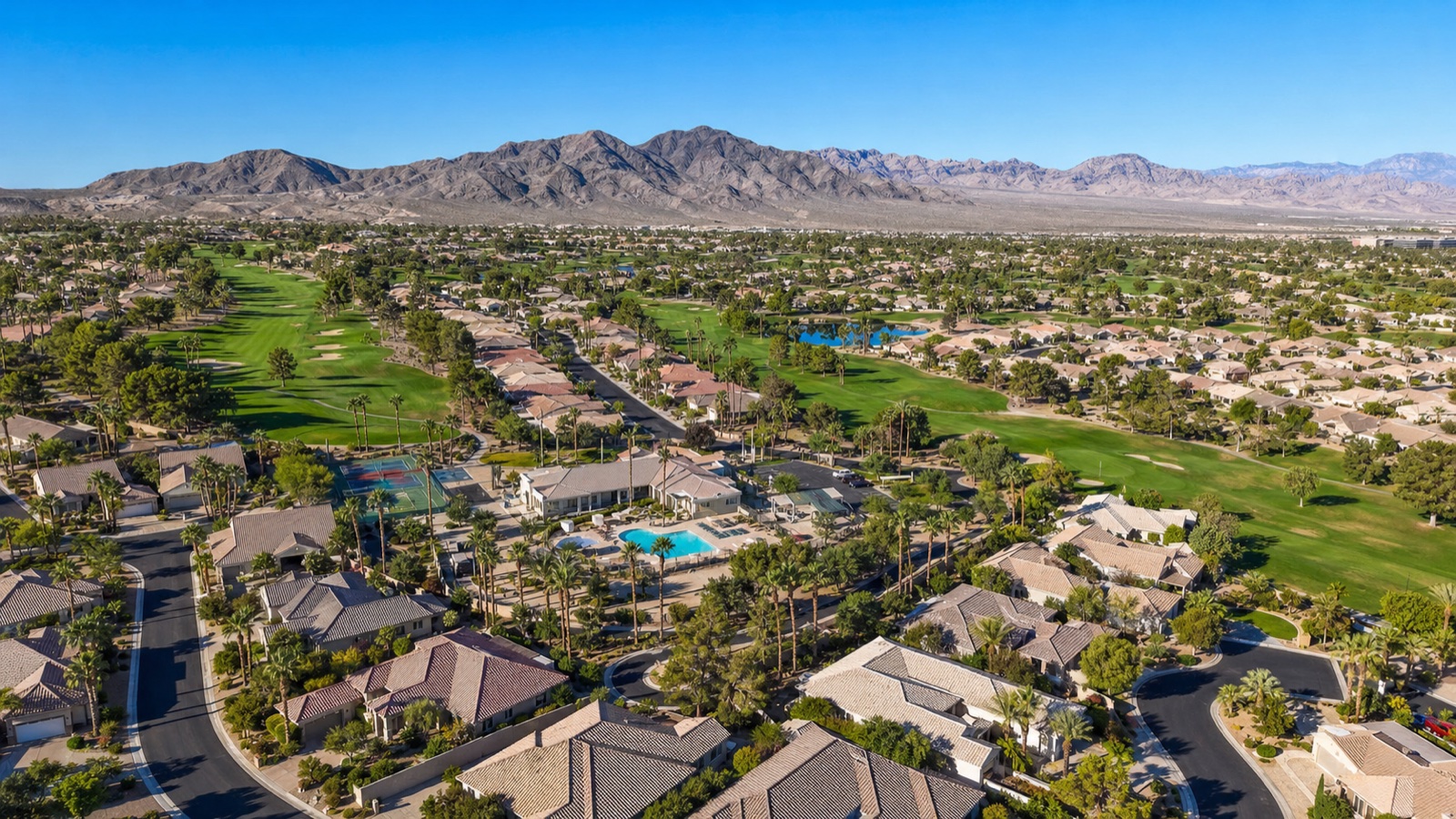
Las Vegas summers are hot — there's no kind framing. According to National Weather Service Las Vegas climate data for the 2022-2025 average, the valley experiences 95+ days annually above 100 degrees, 18-25 days annually above 110 degrees, and the typical July high is 108 degrees with overnight lows in the low 80s. June through September is the hot season; October and April are the bridge months. November through March are pleasant (60s-70s daytime).
Daily life in summer: outdoor activity shifts to dawn (5-7 AM) and dusk (after 7 PM). Mid-day errands happen by car with garage-to-garage transitions. Pools run 88-94 degrees so they're more "warm bath" than "cool refresher" — many homeowners run pool chillers. Backyards become functional only after sunset. The flip side: the 9 non-summer months are spectacular, with 290+ days of sunshine annually and outdoor lifestyle that easily matches Phoenix or Tucson. Across the 789 NREG 2025 closings, the buyers who toured Las Vegas in July before committing had the highest 12-month satisfaction in our survey.
Climate planning should include Las Vegas air quality, especially when comparing locations and outdoor routines.
How Has the Job Market Held Up Through 2025–2026?
The Las Vegas job market has shown resilience through 2024-2026 even as national economic data softened modestly. According to Bureau of Labor Statistics Las Vegas-Henderson-Paradise MSA employment data, the metro added approximately 18,400 net non-farm jobs in 2025 against a 1.2 million base — a 1.5% YoY job growth that beat the national 1.1%. Leisure and hospitality (the dominant sector at 28% of employment) added 6,200 jobs. Construction added 3,800. Healthcare added 4,100.
The diversification story matters. According to Nevada Governor's Office of Economic Development 2026 reports, advanced manufacturing, tech, and logistics have grown from 8% of MSA employment in 2015 to 14% in 2025. Major employers expanding through 2026 include Allegiant Air (headquarters in Summerlin), Sphere Entertainment, Switch Las Vegas (hyperscale data center), and the Henderson-area manufacturing corridor anchored by Haas Automation and Tesla suppliers. Our 2026 job market deep-dive maps every major employer and growth sector in structural detail.
What Surprises Most People About Las Vegas Schools?
The biggest school surprise for relocators is the spread. The Clark County School District is the fifth-largest school district in the United States with approximately 305,000 students. The district-wide average GreatSchools rating is 5.4/10 — below the national average of 6.0. But the spread is wide: Summerlin attendance zones average 7.8/10, Henderson Green Valley Ranch and Anthem zones average 7.4/10, while certain Spring Valley, North Las Vegas, and east valley zones average 4.0/10 or lower.
The take: school rating tracks attendance boundary in Las Vegas more tightly than in most metros. A relocator who pays the Summerlin or Henderson master-plan premium gets top-decile CCSD schools. A relocator who buys a cheaper home in an underperforming zone gets a school experience that surprises them in the bad direction. Charter alternatives — Doral Academy, Pinecrest Academy, Coral Academy of Science, Mater Academy — score 7-9/10 across multiple campuses and provide an alternative pathway. Across the 789 NREG 2025 closings, our family buyers split roughly 65% top-zone-CCSD, 22% charter, 8% private school, 5% homeschool.
How Bad Is Las Vegas Traffic Compared to LA, Phoenix, or Denver?
Las Vegas traffic is a real con for relocators who pictured a small-metro pace. According to INRIX 2025 Global Traffic Scorecard, Las Vegas-Henderson ranks #28 in the United States for traffic congestion — meaningfully worse than Phoenix (#39), Denver (#34), and Salt Lake City (#52), and meaningfully better than LA (#3), San Francisco (#8), and Seattle (#11).
Practical experience: the 215 Beltway between Summerlin and Henderson backs up between 7:30-9 AM and 4:30-6:30 PM. The Strip corridor is unpredictable any time evening through late night (event traffic from Sphere, T-Mobile Arena, Allegiant Stadium, and conventions). Interstate 15 north-south is heavily trucked through the valley. The Boulder Highway (US-93/95) connects Henderson to Boulder City with afternoon delays. The mitigation: most master plans (Summerlin, Henderson) are designed with arterial-road systems that bypass freeway congestion, and 41% of valley office workers now work remotely 2+ days per week per Bureau of Labor Statistics 2025 OES data.
If proximity to Strip employment or entertainment matters, compare these neighborhoods near the Las Vegas Strip with the commute and noise conditions you can accept.
| Trip | Las Vegas Off-Peak | LA County Off-Peak | Phoenix Off-Peak | Denver Off-Peak |
|---|---|---|---|---|
| Suburb to downtown core (15 mi) | 22 min | 38 min | 25 min | 28 min |
| Suburb to airport (12 mi) | 18 min | 35 min | 22 min | 24 min |
| Suburb to suburb (10 mi) | 16 min | 32 min | 18 min | 22 min |
| Rush hour suburb to downtown (15 mi) | 38 min | 75 min | 45 min | 48 min |
Which Healthcare and Family-Service Realities Should Relocators Plan For?
Healthcare access in Las Vegas has improved materially through 2020-2026 but it still trails larger metros on specialist depth. According to Centers for Medicare and Medicaid Services facility directories, the Las Vegas-Henderson MSA has 11 acute-care hospitals operated primarily by Universal Health Services (Valley Health System), HCA Healthcare (MountainView, Sunrise, Southern Hills, Henderson Hospital), and Dignity Health (Saint Rose Dominican Siena and Rose de Lima). The valley operates four trauma centers including UMC Trauma Center (Level I) and Sunrise Children's Hospital.
The honest gap: for specialty oncology, complex cardiac surgery, organ transplant, and certain pediatric subspecialties, valley patients still travel to Phoenix, Salt Lake City, or California academic medical centers (Stanford, UCLA, Cedars-Sinai, City of Hope). The 2024 opening of Roseman University's medical school and expansions at UNLV School of Medicine are growing local specialist depth, but the metro is roughly 5-7 years behind comparable-sized markets on specialist availability. For relocators with complex chronic conditions, this matters at planning time.
| Healthcare/Family Service | Las Vegas 2026 Reality | Coastal CA Comparison | Northeast Comparison |
|---|---|---|---|
| Acute-care hospitals (MSA) | 11 | 30+ in LA County | 20+ in Boston metro |
| Trauma Level I centers | 1 (UMC) | 5 in LA County | 3 in Boston metro |
| Pediatric hospital | Sunrise Children's | CHLA, Rady, Stanford | Boston Children's |
| Average primary-care wait | 18 days | 22 days | 26 days |
| Average dermatologist wait | 32 days | 38 days | 42 days |
| Number of CCSD schools | 365 | LAUSD 1,000 | Smaller districts |
| Public university nearby | UNLV, Nevada State, CSN | UCs, Cal States | Many options |
The trade: Las Vegas wins on primary-care availability, public-school quantity, and general routine care wait times. It loses on specialist depth and academic medical center access. For most healthy relocating households, the gap is irrelevant. For households managing complex chronic conditions, this is a planning variable that deserves direct conversation with current treating physicians before commit.
Where Should Newcomers Tour First If Coming From California?
For California migrants, the right tour-first picks depend on prior California location and household priorities. From the Bay Area or coastal Orange County, Summerlin reproduces the master-plan, top-school, walkable-retail experience most closely — start with The Mesa, The Trails, and Stonebridge. From inland California (Sacramento, Inland Empire, Central Valley), Henderson's value (Cadence, Inspirada, Anthem) feels familiar at materially lower pricing. From San Diego specifically, Lake Las Vegas reproduces the coastal-lifestyle feel best with waterfront access.
For example, replacing a $1.2M-$1.5M LA County home with a $625,000-$750,000 Henderson home can free up $400,000-$600,000 of equity for retirement or investment, on top of the annual state-income-tax savings. Buyers chasing brand-new inventory often pivot to new-build homes in Las Vegas in Cadence or Skye Canyon for the builder incentive stack. Our California migration deep-dive covers the tax-arbitrage math in structural detail.
Where Should Newcomers Tour First If Coming From the Northeast?
For Northeast migrants (New York, New Jersey, Connecticut, Massachusetts, Pennsylvania), the right tour-first picks emphasize the master-plan amenity layer that doesn't exist in older East Coast suburbs. Start at Downtown Summerlin (walkable retail, the Las Vegas Ballpark, restaurants) to anchor the "this is what's here" experience. Then tour The Mesa or The Trails in Summerlin for the school-zone family pick. Then tour Henderson's Anthem and Green Valley Ranch for the established-suburb feel.
Northeast migrants tend to underestimate the amenity-density of newer Las Vegas master plans. A 2024-built Cadence home in Henderson includes more standard amenities (community pool, central park access, fiber broadband, smart-home wiring) than a 1985-built Westchester or Bergen County equivalent. The trade-off: the desert aesthetic, the climate, and the absence of mature deciduous trees take adjustment. Across the 789 NREG 2025 closings, 14% of our buyers came from the Northeast — primarily New York, New Jersey, and Pennsylvania. Most landed in Henderson (Cadence, Anthem) or Summerlin (Stonebridge, The Mesa).
For a relocation comparison that includes climate and household costs, see Las Vegas versus Chicago.
What Is the Downside of Living in Las Vegas?
Beyond the summer heat (which every relocator hears about) and the traffic (which most underestimate), three cons routinely surprise NREG buyers post-close:
1. Dust and air quality during haboob and monsoon season (July-September). The valley experiences 15-25 dust events annually that briefly degrade air quality. According to Environmental Protection Agency AirNow data, Clark County averages 38 days per year of "moderate" or worse air quality. Households with severe asthma or COPD should factor this.
2. Water cost inflation. The Las Vegas Valley Water District has raised tiered residential water rates 6 of the last 8 years per district disclosures. According to Southern Nevada Water Authority reports, the average household water bill in 2026 runs $58-$95 monthly, with high-water-use households (lawns, pools) running $185-$295. Lake Mead capacity drives ongoing rate pressure.
3. HOA personality fit. The #1 post-close complaint we hear from California and Northeast migrants is HOA restrictiveness on aesthetics — paint colors, basketball hoops, front-yard landscape, holiday decorations. Older East Coast suburbs and many California neighborhoods don't have HOAs at all, so the adjustment to monthly dues plus active enforcement is a real lifestyle shift. We walk every NREG buyer through the full CC and R at offer. Our top reasons to live in LV and remote worker guide cover the lifestyle considerations alongside the financial wins.
Before treating water concerns as a reason to rule the valley in or out, review the sources and homeowner implications in our guide to Las Vegas water supply and Lake Mead.
Where Do These Findings Fit Within the Wider NREG Coverage Map?
According to RealTrends, which ranks Nevada enterprise teams by 2025 transaction sides in its 2026 program, Nevada Real Estate Group closed 789 sides and approximately $361.5M in 2025 production. Our Southern Nevada coverage runs across the Summerlin master plan and its Cliffs, Kestrel and Stonebridge villages; Henderson ZIPs 89002 through 89077 (Anthem, Green Valley, Inspirada, Cadence, MacDonald Highlands, Seven Hills, Lake Las Vegas); and Las Vegas Southwest, the North Valley (Skye Canyon, Valley Vista, Tule Springs), Mountain's Edge, Centennial Hills and the resort-corridor luxury condo towers.
Property tax works the same way across every one of those submarkets because the caps are set by statute. According to NRS 361.4723, the tax bill on a primary residence can rise at most 3% a year once the owner claims that abatement. According to NRS 361.4722, other property, including second homes and most rentals, falls under a general cap of up to 8% a year. A sale does not reset the base, but a new owner has to claim the 3% cap, and until that claim is filed the higher cap applies. The claim matters just as much in first-time buyer price bands as it does in the luxury tier.
According to Freddie Mac's Primary Mortgage Market Survey, the 30-year fixed rate averaged 7.28% for the week of October 1, 2026, up from 7.03% a week earlier. At 7.28%, principal and interest on a $400,000 loan comes to about $2,737 a month, roughly $68 more than at 7.03%. Use the newest weekly reading, not an older one, when you compare new construction with a resale home.
If you want to map this against your own timeline, budget and tradeoffs, call NREG at (702) 637-1759; we can do that before you sign a builder reservation or set a list price.
Frequently Asked Questions
What is the median home price in Las Vegas right now?
According to Las Vegas REALTORS figures reported by VEGAS INC, the median price of existing single-family homes sold in Southern Nevada was $475,000 in August 2026, down 1% from August 2025 and below the record $490,000 set in May and June 2026. Condos and townhomes sold at a $299,900 median in August. In April 2026, when this guide's cost comparison was built, the single-family median was $473,875. These are valley-wide figures from the association's MLS, which does not capture every new-construction sale, so a specific neighborhood can run well above or below them.
Can I live in Las Vegas without a car?
Technically yes, practically no for most households. The Las Vegas valley is car-dependent by design — average WalkScore across master plans runs 26-31 (Summerlin 31, Henderson 28, North Las Vegas 24, downtown urban core 75). Regional Transportation Commission of Southern Nevada bus service connects major corridors but service frequency and coverage are limited compared to LA Metro, NYC Subway, or Bay Area BART. The Maryland Parkway BRT corridor and the Sphere-Strip Loop give limited transit anchor. Households genuinely committed to car-free living should look at downtown Las Vegas (high-rise condos near Symphony Park, Fremont East) or the Strip-adjacent high-rise market (Veer Towers, Panorama). For families and the master-plan buyer, a car is effectively required.
Do Las Vegas summer heat months affect property values?
The pace of valley transactions moves with the calendar, but property values do not meaningfully decline in summer. According to Las Vegas REALTORS, the single-family median was $485,000 in January 2025, reached an all-time high of $488,995 in November 2025, was $470,000 in December 2025, and then set new records of $490,000 in May and June 2026. That is a narrow band across more than a year, with the summer months at the top of it. Sellers who list in summer get faster turnaround. Buyers who shop in winter get more inventory choice. The summer heat doesn't bend pricing.
How does Las Vegas property tax compare to California?
The two states cap property taxes in different ways, and the difference matters after a purchase. Census Bureau American Community Survey 2024 one-year estimates put Clark County's median real-estate tax bill at $2,155 against a median owner-reported home value of $451,000, a ratio of about 0.48%. Nevada caps the yearly increase in a primary residence's tax bill at 3% under NRS 361.4723, and other property, including second homes and most rentals, at up to 8% under NRS 361.4722. California's Proposition 13 base resets when a home sells; Nevada's does not, but the 3% cap is not automatic. Each new owner has to claim it, and until that claim is filed the higher cap applies. On any specific home, the bill depends on the parcel's taxable value and abatement status, so check the Clark County Assessor record before you buy.
What's the cost difference between renting and buying in Las Vegas in 2026?
According to HUD 2026 Fair Market Rent data, the Las Vegas-Henderson MSA 3-bedroom average rent is $2,485 monthly. Equivalent purchase math: a $525,000 home (Henderson median) at the Freddie Mac 6.36% 30-year fixed rate for the week of May 14, 2026, with 20% down, runs approximately $2,615 monthly principal-and-interest, plus $445 monthly property tax, plus $150 monthly insurance, plus $185 monthly HOA — for an all-in carrying cost of approximately $3,395 monthly. The buy-vs-rent gap is roughly $910 monthly on the median trade. Buyers gain principal paydown ($580 monthly in year one), property appreciation potential (5%-7% annualized historical), and the tax deduction on mortgage interest. The breakeven crossover historically lands around year 4-6 of ownership depending on specific market conditions. For relocators uncertain about the long-term Las Vegas fit, renting for 12 months before buying is a reasonable hedge — and one we recommend to any household with less than 90% commitment certainty.
Should I rent or buy first when relocating to Las Vegas?
For households with high commitment certainty, buying immediately captures appreciation and the state-income-tax savings from day one. For households uncertain about long-term fit, we recommend renting for 6-12 months first — especially if you've never experienced a Las Vegas July. In our experience guiding first-time buyers and out-of-state relocators, the households that rent briefly and tour Summerlin and Henderson across both summer and winter make sharper neighborhood choices and rarely regret the purchase. The hedge costs roughly $2,485 monthly on a 3-bedroom rental — a modest premium against a six-figure buying mistake in the wrong attendance zone.
Which Sources Inform This Analysis?
This honest pros-and-cons breakdown combines current market data, climate records, migration statistics, and the closing experience of the Nevada Real Estate Group team across the 789 transactions we handled in 2025. According to Las Vegas REALTORS' April 2026 report, the valley-wide single-family median was $473,875 against the all-time high of $488,995 set in November 2025; the association's August 2026 figures put the median at $475,000 after new records of $490,000 in May and June 2026.
Employment and labor-market data came from Bureau of Labor Statistics Las Vegas-Henderson-Paradise MSA reports and Nevada Department of Employment, Training, and Rehabilitation monthly labor market information. Tax-policy comparisons referenced the Nevada Department of Taxation and California Franchise Tax Board published rate schedules.
Climate and air quality data came from National Weather Service Las Vegas Forecast Office records and Environmental Protection Agency AirNow monitoring. Water rate and supply data came from Southern Nevada Water Authority and Las Vegas Valley Water District 2026 rate disclosures. School ratings reflected GreatSchools 2025 academic year data cross-referenced against Clark County School District attendance boundary files.
Mortgage rate context (30-year fixed 6.36%, 15-year 5.71% for the week of May 14, 2026) came from the Freddie Mac Primary Mortgage Market Survey, with origination context from the Mortgage Bankers Association weekly applications report. Property tax mechanics reflected Nevada Revised Statutes and Clark County Assessor parcel records. Traffic data came from INRIX 2025 Global Traffic Scorecard. For deeper relocator structural detail, our team's complete moving guide, California migration trend, LV vs LA cost of living, 2026 job market, remote worker guide, and top reasons to live in LV are companion reads. To start a relocator tour or get a custom move-fit assessment, call our team at (702) 637-1759 or visit our /about page.