
Every month, my team fields the same call: a Las Vegas renter or a California transplant has just seen what a Pahrump listing offers — a real house, on a real acre, with no HOA and a price that looks like a typo — and they want to know what the catch is. There is a catch. There are several, actually, and most relocation articles gloss right over them because they were written by people who have never driven Nevada State Route 160 in a January fog or priced out a new septic tank.
I sell homes on both sides of the Spring Mountains, so this guide is the honest version. As of July 12, 2026, Nevada Real Estate Group's live GLVAR feed shows 1,776 active listings in Pahrump — and once you strip out the vacant land parcels that dominate the valley, 536 active residential homes at a median list price of $369,900. Compare that with the roughly $471,000 median list price in Las Vegas on the same feed, and you understand instantly why U-Hauls keep rolling west over the hump. Whether that trade works for you depends on the cons as much as the pros, so let's take both seriously.
Pahrump trades big-city convenience for land and freedom: a median residential list price of $369,900 — well under Las Vegas's roughly $471,000 — with 66% of homes carrying zero HOA fee and acre-plus lots as the norm. The costs are a 60-plus-mile commute over Mountain Springs Summit, thinner healthcare and retail, and well-and-septic due diligence. If space and budget outrank drive time, start touring with Nevada Real Estate Group at (702) 637-1759.
- Median residential list price: $369,900 in Pahrump vs about $471,000 in Las Vegas (live GLVAR, July 12, 2026).
- 356 of 536 residential listings — 66% — charge zero HOA fee; 224 sit on an acre or more.
- The commute is real: about 62 miles and 60–75 minutes each way over the 5,500-foot Mountain Springs Summit.
- Most homes run private wells and septic; Basin 162 is over-appropriated — verify water before you offer.
- Right fit: space, horses, RV garages, budget. Wrong fit: daily Strip commuters and buyers who need specialist care close.
Is Pahrump a Good Place to Live in 2026?
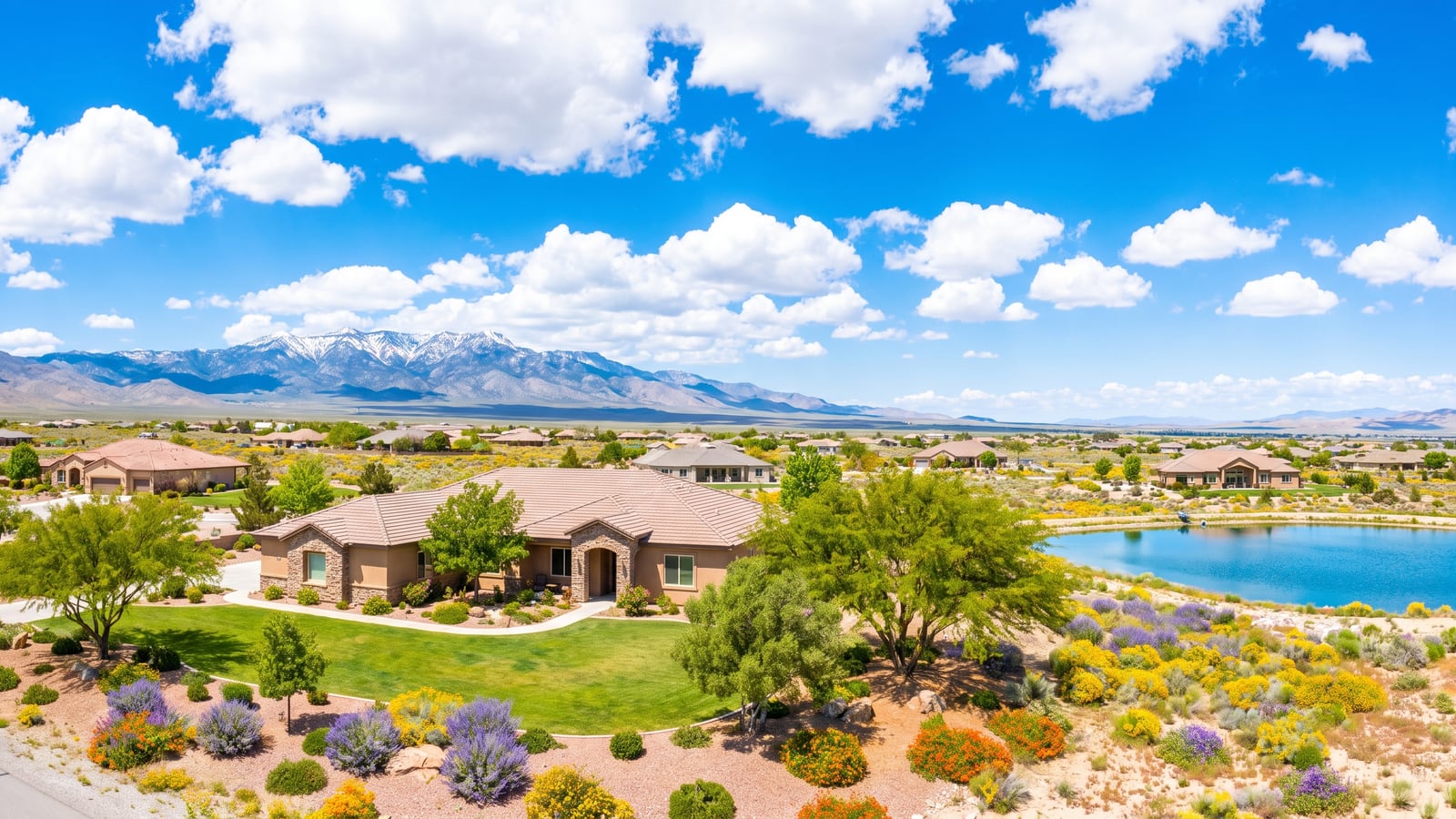
For the right buyer, genuinely yes — and for the wrong buyer, genuinely no. Pahrump is an unincorporated town of roughly 45,000 people in Nye County, sitting in a wide high-desert valley about 62 miles west of the Las Vegas Strip. According to the U.S. Census Bureau, it is one of the largest communities in America without a city government — Nye County and an advisory town board handle services — and that low-government DNA runs through everything from zoning to HOA culture to the way neighbors wave from quads.
What Pahrump is: affordable, spacious, quiet, dark-skied, and unapologetically rural. It is a place where a $369,900 house comes with land, where you can park a 40-foot fifth wheel next to your shop without a violation letter, and where horse corrals outnumber community pools. Nevada's zero state income tax applies here just as it does in Las Vegas, and Nye County property tax bills on a median-priced home run far below what the same monthly budget buys in Clark County — not because rates are dramatically different, but because the taxable values are.
What Pahrump is not: convenient. There is one grocery-anchored retail core, one small hospital, no Costco, no Trader Joe's, no commercial airport, and a single realistic road to the city. Across the 9,600+ closings our team has represented, the Pahrump buyers who thrive are the ones who did this math honestly before moving — and the ones who boomerang back to the valley floor within two years are almost always the ones who didn't. This guide exists so you land in the first group.
What Are the Real Pros of Moving to Pahrump?
The affordability headline is real, but it is only the first of six advantages I watch buyers actually enjoy after closing.
1. Price per square foot — and per acre. With a median residential list of $369,900 against Las Vegas's roughly $471,000, the same payment buys dramatically more house. In what your Pahrump budget actually buys, I break down real listings tier by tier — the short version is that $350,000–$450,000 in Pahrump routinely lands 2,000+ square feet on an acre, a figure that buys a 1990s townhome in many Vegas ZIP codes.
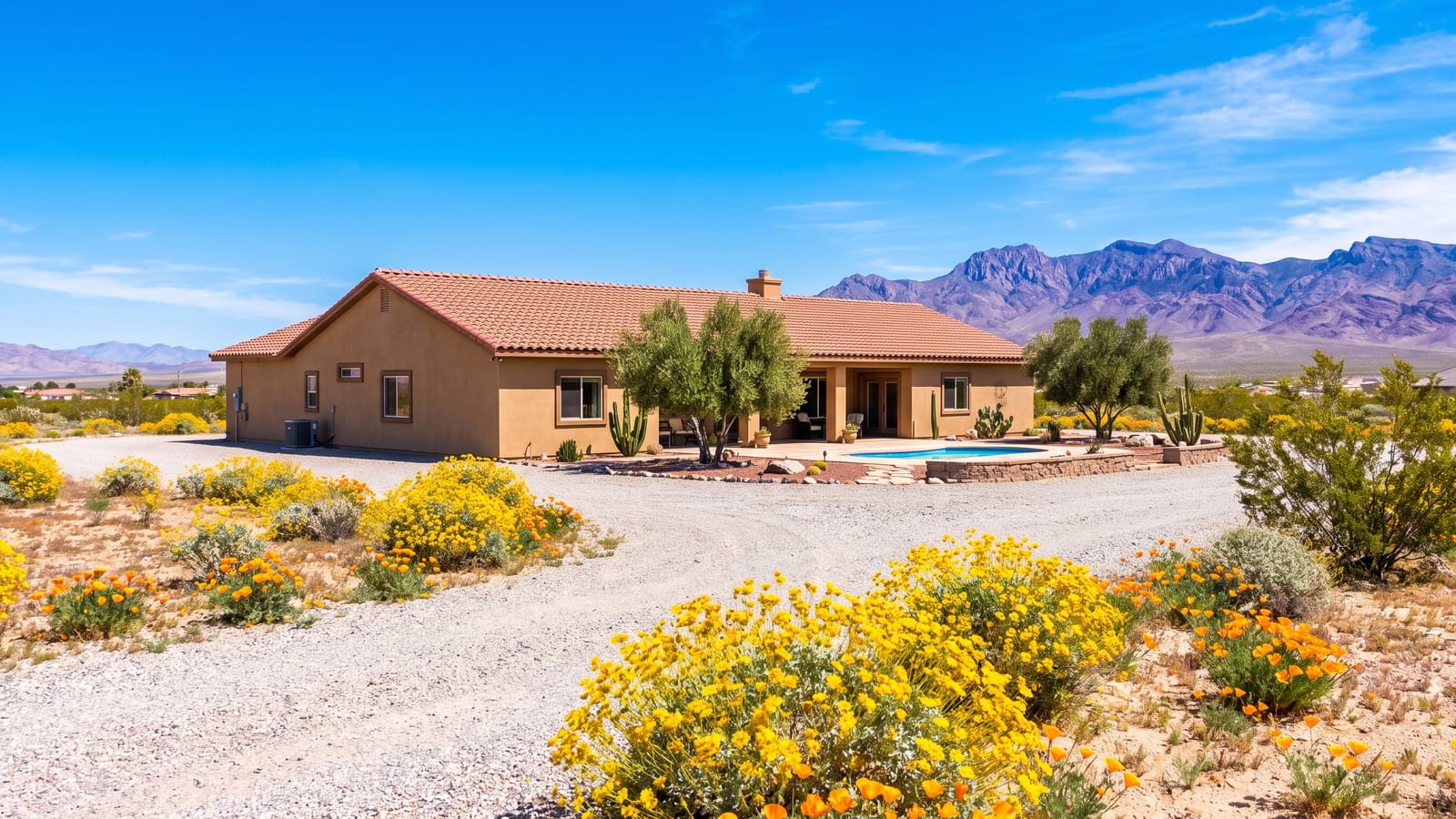
2. No-HOA freedom as the default. 356 of the 536 active residential listings — about 66% — carry a $0 HOA fee. Browse the live no-HOA inventory in Pahrump and you will see what that unlocks: RVs on pads, workshops, casitas, chickens, cargo trailers, boats. In Las Vegas, no-HOA product is a niche you hunt for; in Pahrump it is the water you swim in.
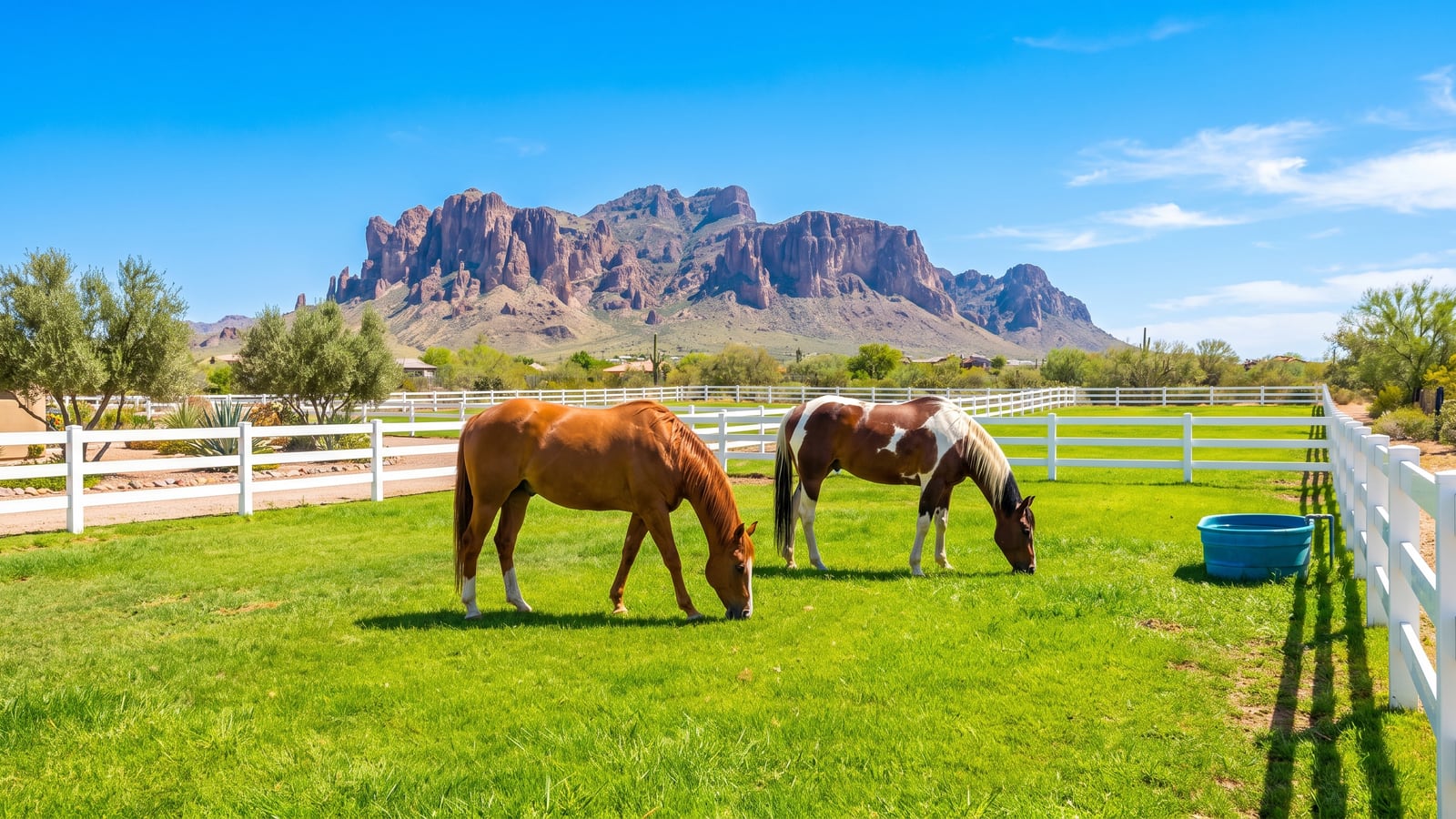
3. Acreage and animal rights. 224 current residential listings sit on an acre or more, and horse privileges are standard across most of the valley. The horse properties for sale in Pahrump page shows the live selection — 42 listings currently advertise horse amenities in their remarks, from simple corrals to full mare motels and roping arenas.
4. Real tax math. Nevada's statewide advantages — no state income tax, no estate tax — travel with you. According to the Nevada Department of Taxation, owner-occupied primary residences also enjoy the 3% annual property-tax abatement cap, so a $369,900 home's bill stays predictable.
5. Genuine dark skies and quiet. The valley sits far enough from the Vegas dome that the Milky Way is a nightly amenity. For stargazers, shooters, and anyone allergic to sirens, that is not a small thing.
6. Lifestyle oddities that grow on you. Pahrump Valley Winery pours estate-grown Nevada wine, Spring Mountain Motor Resort runs one of the longest road courses in North America, and Death Valley National Park is an hour west. It is a stranger, richer amenity set than people expect.
What Are the Honest Cons of Living in Pahrump?
Now the part most guides skip. In my experience, five cons end up mattering most, and every one of them is manageable if you price it in before you move rather than after.
1. The commute owns your schedule. It is about 62 miles from central Pahrump to the Strip corridor, over a 5,500-foot mountain pass. Call it 60–75 minutes on a clean day — longer with weekend traffic, wrecks, or winter ice at the summit. Do that ten times a week and you will feel it in fuel, tires, and family dinners. I dedicate a full section to the math below, because it is the number one reason relocations succeed or fail.
2. Healthcare is thin. Desert View Hospital is a 25-bed acute-care facility — a genuine asset for a town this size — but specialists, advanced cardiac care, oncology infusion schedules, and trauma care mostly live an hour east. Retirees managing chronic conditions need to plan around that reality, not hope it away.
3. Retail and dining are limited. You get the essentials — groceries, hardware, pharmacies, a Walmart, local restaurants and casinos like the Pahrump Nugget — and then the list ends. Big-box variety, specialty grocers, and date-night restaurants mean a drive over the hump.
4. Well, septic, and water-rights homework. Most Pahrump homes run on private domestic wells and septic systems, and the valley's groundwater basin is over-appropriated on paper. None of that is disqualifying — tens of thousands of households live on wells here happily — but skipping the inspections and the water-rights questions is how buyers get burned. Full section below, plus our statewide well and septic buyer's guide.
5. Summer is still the Mojave. At roughly 2,700 feet of elevation Pahrump runs a few degrees cooler than the Vegas valley floor, but July afternoons still sit at or above 105°F, and evaporative coolers on older homes struggle in monsoon humidity. Budget for real air conditioning and shade, and treat a pool from the homes with swimming pools inventory as climate equipment, not luxury.
There is also a cultural honesty point: Nye County permits legal licensed brothels outside town limits, gambling is woven into daily errands, and the politics run libertarian. Most residents consider all of that a feature. Know yourself.
What Do Homes Cost in Pahrump in 2026?
Here is the live picture, pulled July 12, 2026 from Nevada Real Estate Group's GLVAR feed — the same data that powers our Pahrump home search. Methodology: counts and medians across all active for-sale listings in the city of Pahrump; the residential-home scope counts listings with at least one bedroom, which filters out the valley's thousands of vacant-land parcels.
| Metric | Count / value | What it tells you |
|---|---|---|
| Total active listings (incl. land) | 1,776 | Vacant parcels dominate — land is cheap and everywhere |
| Active residential homes | 536 | Deep selection for a town of about 45,000 |
| Median residential list price | $369,900 | Versus about $471,000 in Las Vegas on the same feed |
| Residential closings, last 90 days | 168 | Median sold price $350,000 — the market clears near ask |
| Homes with zero HOA fee | 356 (66%) | No-HOA is the default, not the exception |
| Homes on an acre or more | 224 | Acreage is standard inventory, not trophy inventory |
| Listings advertising horse amenities | 42 | Real equestrian infrastructure, corrals to arenas |
| New construction (built 2024+) | 106 | Builders are active again on the valley floor |
A few translations. The 90-day sold median of $350,000 sitting below the active median is normal here — entry-level homes turn over fastest while acreage estates take longer. Buyers stepping up from $300,000 to $500,000 will find the widest selection in the valley's history of new construction, where 106 homes built since 2024 are currently listed, many with builder incentives that Las Vegas builders quietly stopped offering — the Southern Nevada new-construction hub shows how Pahrump's builder pricing stacks up metro-wide. And if you want the freshest inventory before it gets picked over, the just-listed feed updates straight from the MLS.
For sellers already in the valley reading this: that supply picture cuts both ways, and pricing against land-heavy comps is where listings die. Our Pahrump home-selling page explains how we comp acreage homes correctly — run the home value estimator for a starting number, then browse our statewide seller resources before you interview agents.
Why Is Pahrump So Much Cheaper Than Las Vegas?
Because the three inputs that drive Southern Nevada home prices — land scarcity, infrastructure, and commute-shed demand — all flip in Pahrump's favor, or against it, depending on which side of the closing table you sit.
Land is functionally unlimited. The Las Vegas valley is boxed in by federal land, which is why builders there pay premium prices per acre at auction. Pahrump's valley floor is privately held and vast — Nye County is the third-largest county by area in the contiguous United States — so the land component of a home's price collapses. That is also why 1,776 total listings include so many raw parcels.
Infrastructure is do-it-yourself. Municipal water and sewer stop where the utility districts stop; most of the valley runs wells and septic. That lowers purchase prices but shifts lifecycle costs (pump replacements, tank pumping, filtration) onto the owner — roughly $300–$600 for a septic pump-out every three to five years, $2,500–$6,000 for a well pump and pressure system when one fails, and $15,000–$30,000+ if a septic system ever needs full replacement.
The commute discount is priced in. Every mile from the employment core discounts a house. Pahrump is the far edge of the Vegas commute-shed, so it captures the steepest discount in Southern Nevada — which is precisely the arbitrage remote workers exploit. If your paycheck doesn't care where you live, you keep the discount and skip the cost that created it.
According to the Bureau of Labor Statistics, wages in rural Nevada also run below the Las Vegas metro, which caps what local incomes can bid for housing. When you combine cheaper land, self-supplied infrastructure, a commute discount, and lower local wages, a median around $369,900 next to Las Vegas's $471,000 stops looking like a typo and starts looking like arithmetic.
How Bad Is the Commute From Pahrump to Las Vegas, Really?
Honestly: it is the single biggest lifestyle cost of the move, and I would rather lose a sale than let a client hand-wave it. The route is Nevada State Route 160 over Mountain Springs Summit — about 5,500 feet at the top — dropping past Blue Diamond into the southwest valley near Red Rock. According to the Nevada Department of Transportation, SR-160 has been widened to four lanes across the pass, which transformed safety and passing behavior, but it is still a mountain road: winter ice and chain controls happen most years, summer monsoon cells park on the summit, and a single wreck can pin the whole town for hours because there is no practical alternate route.
Here is the money math on a Strip-corridor commute, using about 62 miles each way and 22 working days a month:
| Cost lens | Per day | Per month | Per year |
|---|---|---|---|
| Fuel only (25 mpg, $4.10/gal) | $20 | $447 | $5,368 |
| IRS full-cost mileage (70¢/mile) | $87 | $1,910 | $22,915 |
| Time at 65 minutes each way | 2.2 hours | 48 hours | 572 hours |
The IRS standard mileage rate is the honest lens because it captures depreciation and tires, not just gas — and at nearly $23,000 a year, a daily commute can quietly erase the entire mortgage savings of moving. That is why the buyers I see succeed fall into three groups: remote and hybrid workers (two trips a week changes everything), retirees, and people who work in Pahrump itself. If your job requires five days a week on the Strip, run this table twice before you sign anything, then call my team at (702) 637-1759 and we will pressure-test the plan together.
What Should You Know About Wells, Septic, and Water Rights?
This is the section to read twice, because it is the most Pahrump-specific homework on the list — and the least familiar to anyone arriving from a city.
The basin is over-appropriated. Pahrump sits on the Pahrump Artesian Basin (Basin 162). According to the Nevada Division of Water Resources, paper water rights and domestic wells in the basin add up to several times its estimated perennial yield of roughly 20,000 acre-feet per year. Aquifer levels have declined in parts of the valley over decades, and the State Engineer responded with Order 1293 and its successors, which generally require dedicating 2.0 acre-feet of existing water rights before drilling a new domestic well on many parcels. Buying an existing home with a producing well largely sidesteps that order — buying raw land to build does not. Know which transaction you are in.
Domestic wells have legal limits. Under NRS Chapter 534, a Nevada domestic well may draw up to 2.0 acre-feet per year — roughly 1,780 gallons per day — which is ample for a household and modest landscaping, but not for a hobby farm with heavy irrigation.
Inspect like it matters, because it does. On every well/septic purchase my team writes, we build the due-diligence period around four items: a well production and recovery test (flow rate over hours, not minutes), a water-quality lab panel (arsenic is a known regional issue in Nevada groundwater), a septic pump-and-inspect with a locate diagram, and confirmation of the well log with the state. Typical inspection cost runs $600–$1,200 all-in — the cheapest insurance in real estate. Some neighborhoods near the town core are served by utility water instead; your agent should confirm parcel by parcel, never assume.
I wrote a full statewide walkthrough — including the repair-cost tables and the exact contingency language we use — in the Nevada well and septic home buyer's guide. If you read only one companion piece before touring, make it that one.
Do Pahrump Homes Really Have No HOA?
Mostly, yes — and it is measurable. On today's feed, 356 of 536 active residential listings — 66% — report a $0 association fee, which makes Pahrump's no-HOA inventory one of the deepest in Nevada. The practical meaning: no design-review committee for your shop or solar, no parking enforcement against your work truck or toy hauler, no monthly fee compounding against your budget, and county code as the only rulebook.
The honest counterweights. First, no HOA cuts both ways — your neighbor's collection of non-running vehicles enjoys the same freedom your RV does, and street-level aesthetics vary lot by lot. Drive the specific street at different hours before you offer; I insist on it with my buyers. Second, Pahrump does have exceptions: a handful of planned communities carry associations, typically $50–$200 a month, in exchange for maintained common areas and stricter streetscapes. If you want that structure with a gate on top, the gated-community homes in Pahrump page tracks the current selection — small but real, and popular with seasonal residents who want lock-and-leave security.
The filter question I give clients is simple: do you want to be governed or be left alone? Pahrump is one of the few Southern Nevada markets where both answers have live inventory, and where the left-alone option is the majority position rather than a compromise.
What Is Life Like on an Acre — Horses, RVs, and Shops?
This is the chapter of Pahrump life that Las Vegas literally cannot offer at any comparable price, and it is why a large share of my Pahrump buyers are not bargain hunters at all — they are lifestyle refugees from lot lines.
Horses are infrastructure here. 42 active listings currently advertise horse amenities — corrals, tack rooms, arenas, mare motels — and the valley supports farriers, hay dealers, large-animal vets, and roping clubs the way suburbs support coffee shops. If you have been paying $500–$900 a month to board a horse in the Vegas valley, owning a Pahrump horse property often pencils out on the boarding savings alone: two horses at $700 each is $16,800 a year that becomes equity instead of rent.
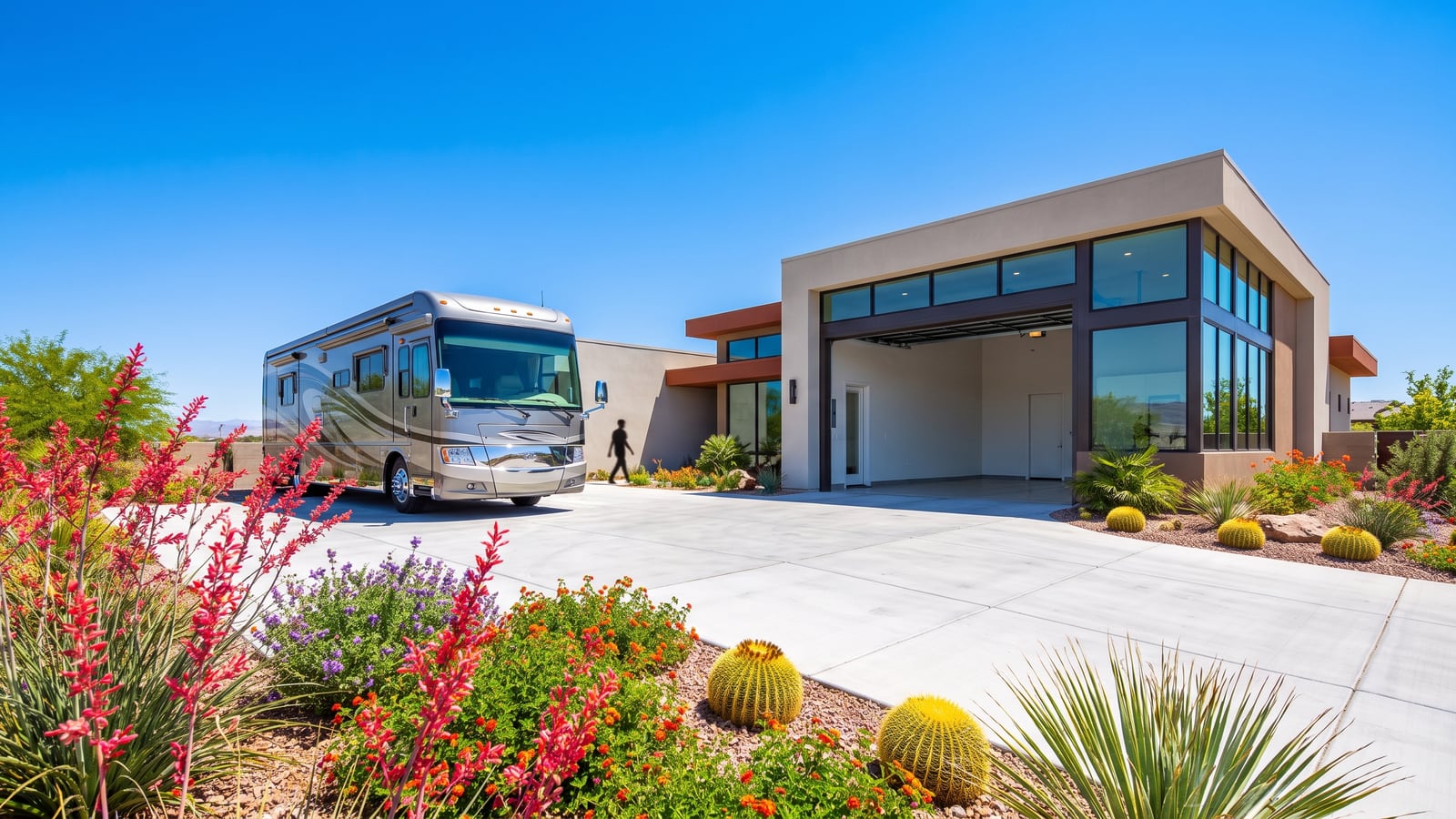
RV life is first-class. Between purpose-built RV garages, 50-amp hookup pads, and drive-through lots, RV-parking homes in Pahrump are a mainstream category, not a specialty. Snowbirds use Pahrump as a base camp — Death Valley an hour west, Utah's parks a morning's drive, and no HOA letter waiting when they return.
Shops and casitas pencil. Detached garages and workshops that would trigger six-figure lot premiums in Las Vegas get built here routinely, and Nye County's permitting posture is famously pragmatic. According to the Town of Pahrump, the town's advisory framework keeps most residential land-use decisions at the county level, which residents experience as breathing room.
What Is the Job Market Like in Pahrump?
Modest, local, and improving slowly — plan around it. The town's employment base is anchored by healthcare (Desert View Hospital and clinics), the Nye County School District, county government, grocery and hardware retail, construction trades, and the casino-hotel operators — the Pahrump Nugget, Saddle West, and Gold Town properties. Trades do genuinely well: a good electrician, well-pump tech, HVAC contractor, or fence builder in Pahrump has a waiting list, and several of my past clients have built six-figure service businesses on exactly that scarcity.
What Pahrump does not have is a deep white-collar market. Professional salaries mostly live over the mountain, which returns us to the commute table above — or to the remote-work answer. Since 2020, the single biggest change in who moves here is the fully-remote household, and the infrastructure kept up: Valley Electric Association, the local power co-op, seeded a valley fiber build-out, and according to Valley Electric Association, high-speed fiber now reaches a meaningful share of the valley, with satellite options covering the fringes. Verify service to the specific parcel during due diligence — my team calls the provider with the exact address on every remote-worker purchase, because "fiber in the area" and "fiber to your driveway" are different sentences.
Two more income notes worth knowing. Nellis and Creech Air Force Base personnel do commute from Pahrump for the housing value, though most settle closer in; and retirees — the valley's quiet economic engine — bring pensions and Social Security that don't care about local wages at all. If your income arrives by direct deposit from somewhere else, Pahrump's wage market is irrelevant to you, and the housing discount is pure gain. If you need a local paycheck, research your specific field before you commit, and talk to our team about timing the purchase around the job rather than the reverse.
What Are Pahrump's Schools and Healthcare Like?
Schools. Pahrump's public schools belong to the Nye County School District — the local lineup runs from several elementary schools through Rosemary Clarke Middle School to Pahrump Valley High School. Ratings on GreatSchools are mixed, as they are across most of rural Nevada; class sizes trend smaller than Clark County's, and the FFA/agriculture and trades programs are stronger than most urban parents expect. Families comparing districts should tour in person — the gap between a school's rating and a school's fit is wide in small towns, in both directions.
Healthcare. Desert View Hospital is a 25-bed acute-care hospital with a 24/7 emergency department — according to Desert View Hospital, it holds accreditations that a town of this size is fortunate to have, including primary stroke center designation. Around it sit primary-care and urgent-care clinics, dialysis, imaging, and dental. Veterans are notably well served: the VA operates a Pahrump community clinic under the VA Southern Nevada Healthcare System, and the veteran population here is proportionally one of Nevada's largest — as a 16-year Navy veteran myself, I will say Pahrump is one of the most comfortable places in the state to wear a ball cap with a ship's name on it.
The honest limits: complex specialty care — cardiology procedures, oncology, high-risk obstetrics, trauma — means Las Vegas. For a healthy 45-year-old remote worker that is a footnote. For a 75-year-old managing three specialists, it is a genuine quality-of-life factor that should weigh against the acreage, and I say that as someone who profits when you buy the acreage. Some retirees split the difference with a low-maintenance gated-community home here and a specialist schedule batched into one Vegas day per month.
How Hot Does Pahrump Get — and What About Utilities and Internet?
Pahrump is the Mojave with a slight altitude discount. At roughly 2,700 feet — about 700 feet higher than the Vegas valley floor — summer highs typically run 2–4 degrees cooler than the Strip, which still means weeks at 105°F+ in July and August, and winter nights that dip below freezing more often than newcomers expect. The valley's dryness makes both extremes more livable than the numbers suggest, and spring and fall are frankly spectacular: wildflower blooms, 75-degree afternoons, and the Spring Mountains catching snow on the eastern horizon — with Mount Charleston's cool pines a day-trip loop away when the valley floor bakes.
Utility structure differs from the city in ways that touch your budget:
- Power comes from Valley Electric Association, a member-owned cooperative — rates and rebate programs differ from NV Energy's, and summer cooling bills of $250–$450 a month for a larger home are common without solar.
- Solar pencils well. Abundant sun, co-op net-metering programs, and no HOA design review make Pahrump one of the easiest places in Nevada to go solar; a typical 8–10 kW system runs $18,000–$28,000 before the federal credit.
- Water and sewer are private well and septic for most parcels (see the water section above), or utility service near the town core — the utility-served parcels trade the independence for $60–$120 a month in combined bills and zero pump anxiety.
- Propane, not natural gas, serves most of the valley: a 500-gallon tank lease plus $2–$3.50 per gallon seasonally is the norm, and winter fills of $400–$700 surprise first-timers.
- Internet is the make-or-break utility for remote workers, and as covered above, the co-op fiber build-out plus satellite has largely solved it — parcel-level verification remains rule one.
Budget an honest $350–$600 a month for the full utility stack on an acre-lot home, and remember the offsetting zero: the $0 HOA line item that 66% of listings carry.
Who Should — and Should Not — Move to Pahrump?
After years of Pahrump closings, I can sort outcomes into two clean columns, and I would rather you find your column now than at your one-year anniversary.
| Decision dimension | Pahrump | Las Vegas |
|---|---|---|
| Median list price (live GLVAR, 7/12/26) | $369,900 residential | About $471,000 |
| Typical lot | One acre or more; 224 acre+ listings active | 4,000–8,000 sq ft; acreage is trophy inventory |
| HOA exposure | 66% of listings fee-free | Master-planned HOAs are the default |
| Commute to Strip jobs | 60–75 minutes over a mountain pass | 15–35 minutes, surface and freeway |
| Water / sewer | Mostly private well + septic; verify rights | Municipal water and sewer |
| Healthcare depth | 25-bed hospital + clinics; specialists in Vegas | Multiple hospital systems, full specialty care |
| Retail / dining | Essentials plus local spots | Everything, at every hour |
| Best-fit buyer | Remote workers, retirees, equestrians, RVers, trades | Commuters, nightlife-first households, specialist-dependent care |
Move to Pahrump if: your income is remote, pensioned, or locally earned in the trades or healthcare; you actively want land, animals, shops, or RV bays; a $369,900 median against a $471,000 median changes your family's math; and you are the kind of person who reads a well log with interest instead of dread.
Stay in the Vegas valley if: you or your spouse must be on the Strip corridor five days a week; you rely on frequent specialist care; walkable retail and dining are core to your happiness; or you want a newer home with urban services and zero rural learning curve — in which case my moving to Las Vegas pros and cons guide runs this same honest exercise for the big valley, and our moving to Las Vegas hub collects the full relocation toolkit. If you like small-town scale but want municipal water and city services, Boulder City is the other end of that spectrum.
And if you are genuinely torn, tour both in one day — we do it with clients regularly, morning in Pahrump, afternoon in the southwest valley — and the right answer usually announces itself somewhere on Highway 160. Our buyer's team sets those tours up at (702) 637-1759.
How Do You Actually Make the Move to Pahrump?
A clean Pahrump relocation runs in four phases, and the order matters more here than in the city.
Phase 1 — pressure-test the income plan (before touring). Remote workers: get the employer's blessing in writing and identify two internet providers serving your target parcels. Commuters: drive SR-160 at your real commute hour, both directions, once on a Friday. Local earners: line up the job or the business plan first.
Phase 2 — set the budget with rural line items. Alongside principal and interest, build in propane, higher vehicle costs, well/septic reserves ($50–$100 a month set aside is my standard advice), and solar if you want it. According to Freddie Mac, 30-year rates in 2026 have hovered in the mid-6-percent range; at 6.5% with 10% down, a $369,900 Pahrump home runs roughly $2,300–$2,500 a month all-in — versus $3,100–$3,400 for the Las Vegas median under identical terms once HOA dues join the stack. That monthly gap, about $800–$1,000, is the number to weigh against the commute table.
Phase 3 — tour with rural eyes. We look at wells, septic locates, easements, flood-wash exposure, road maintenance status (county-maintained versus private gravel), and cell coverage on-site — then the granite counters. Start from the full Pahrump inventory or the statewide search, and use our Pahrump community hub for neighborhood-level context.
Phase 4 — write with the right contingencies. Well production, water quality, septic inspection, and insurance quotes locked inside due diligence. In my experience, the Pahrump deals that go sideways were written like city deals; the ones that close clean were written like ranch deals — because that is what they are.
Nevada Real Estate Group closed 789 transactions across Nevada in 2025, and the rural files taught us more than the easy suburban ones ever did. Call or text (702) 637-1759 and we will put that experience on your side of the table.
Frequently Asked Questions
How far is Pahrump from Las Vegas, really?
About 62 miles from central Pahrump to the Strip corridor via Nevada State Route 160, crossing Mountain Springs Summit at roughly 5,500 feet. Plan on 60–75 minutes each way in normal conditions, and remember it is effectively the only route — a wreck or winter ice at the summit can stretch the drive to two hours or more. Full commute cost math, including the nearly $23,000-a-year IRS full-cost figure for daily commuters, is in the commute section above.
Why are Pahrump homes so much cheaper than Las Vegas?
Three structural reasons: privately held land is abundant (no federal-land squeeze like the Vegas valley), most infrastructure is owner-supplied (wells and septic instead of municipal hookups), and the town sits at the far edge of the Vegas commute-shed, which is the steepest location discount in Southern Nevada. On July 12, 2026, our live GLVAR feed showed a $369,900 median residential list price in Pahrump versus about $471,000 in Las Vegas — arithmetic, not anomaly.
Do all Pahrump homes come without an HOA?
Not all, but most: 356 of 536 active residential listings — about 66% — report a $0 association fee on today's feed. A handful of planned and gated communities carry HOAs of roughly $50–$200 a month for buyers who prefer maintained streetscapes and lock-and-leave security. Both flavors have live inventory, which is rare for a Nevada market.
What do I need to know about wells and septic before buying?
Four things: most parcels are private well and septic; the basin is over-appropriated, so buying an existing producing well is a very different transaction from buying land to drill new (State Engineer orders generally require dedicating 2.0 acre-feet of water rights for new domestic wells); domestic wells are capped at 2.0 acre-feet per year under NRS 534; and a $600–$1,200 inspection package — well production test, water lab panel, septic pump-and-inspect — is non-negotiable. Our Nevada well and septic buyer's guide covers the full checklist.
Is there work in Pahrump, or does everyone commute?
Both, in thirds roughly: local employment (healthcare, schools, county, retail, casinos, and strong trades demand), commuters over the mountain, and location-independent income — remote workers and retirees, the fastest-growing group. If you need a local white-collar salary, research your field before committing; if your income travels with you, Pahrump's housing discount is pure upside.
What is healthcare like in Pahrump?
Better than most towns its size — Desert View Hospital is a 25-bed acute-care facility with a 24/7 ER and primary stroke center designation, surrounded by primary care, urgent care, imaging, and dialysis, plus a VA community clinic for the town's large veteran population. The limit is specialty care: cardiology procedures, oncology, and trauma mean Las Vegas, which matters a great deal for some households and not at all for others.
Who is Pahrump right for — and who should skip it?
Right for: remote workers, retirees, veterans, equestrians, RVers, gearheads, and trades professionals who want land, no HOA, and a median price around $369,900. Wrong for: five-day-a-week Strip commuters, households dependent on frequent specialist care, and anyone whose happiness runs on walkable restaurants and big-box variety. The fit-test table above walks the comparison dimension by dimension — and a one-day, both-markets tour with our team usually settles it.
Which Sources Inform This Pahrump Relocation Guide?
Market counts and medians come from Nevada Real Estate Group's live GLVAR MLS feed, pulled July 12, 2026 (active and 90-day sold listings for the city of Pahrump; the residential-home scope counts listings with at least one bedroom, excluding vacant land). Public-agency and institutional sources below inform the tax, water, transportation, and community claims:
- U.S. Census Bureau — Pahrump CDP QuickFacts — population and housing baselines
- Nye County, Nevada — county government, assessor, and land-use framework
- Town of Pahrump — town services and advisory governance
- Nevada Division of Water Resources — Basin 162 groundwater data and State Engineer orders
- Nevada Revised Statutes, Chapter 534 — domestic well allowances
- Nevada Department of Taxation — property-tax abatement and state tax structure
- Nevada Department of Transportation — SR-160 corridor improvements
- Nye County School District — public schools serving Pahrump
- GreatSchools — school ratings context
- Desert View Hospital — local hospital services and accreditations
- VA Southern Nevada Healthcare System — veteran care access
- Valley Electric Association — cooperative power and fiber build-out
- U.S. Bureau of Labor Statistics — regional wage and employment context
- Freddie Mac Primary Mortgage Market Survey — mortgage-rate benchmarks
- IRS Standard Mileage Rates — commute cost methodology
- Las Vegas REALTORS — Southern Nevada market context
Ready for the honest tour — both the acre and the commute? Call or text Nevada Real Estate Group at (702) 637-1759, or start browsing Pahrump homes for sale right now.