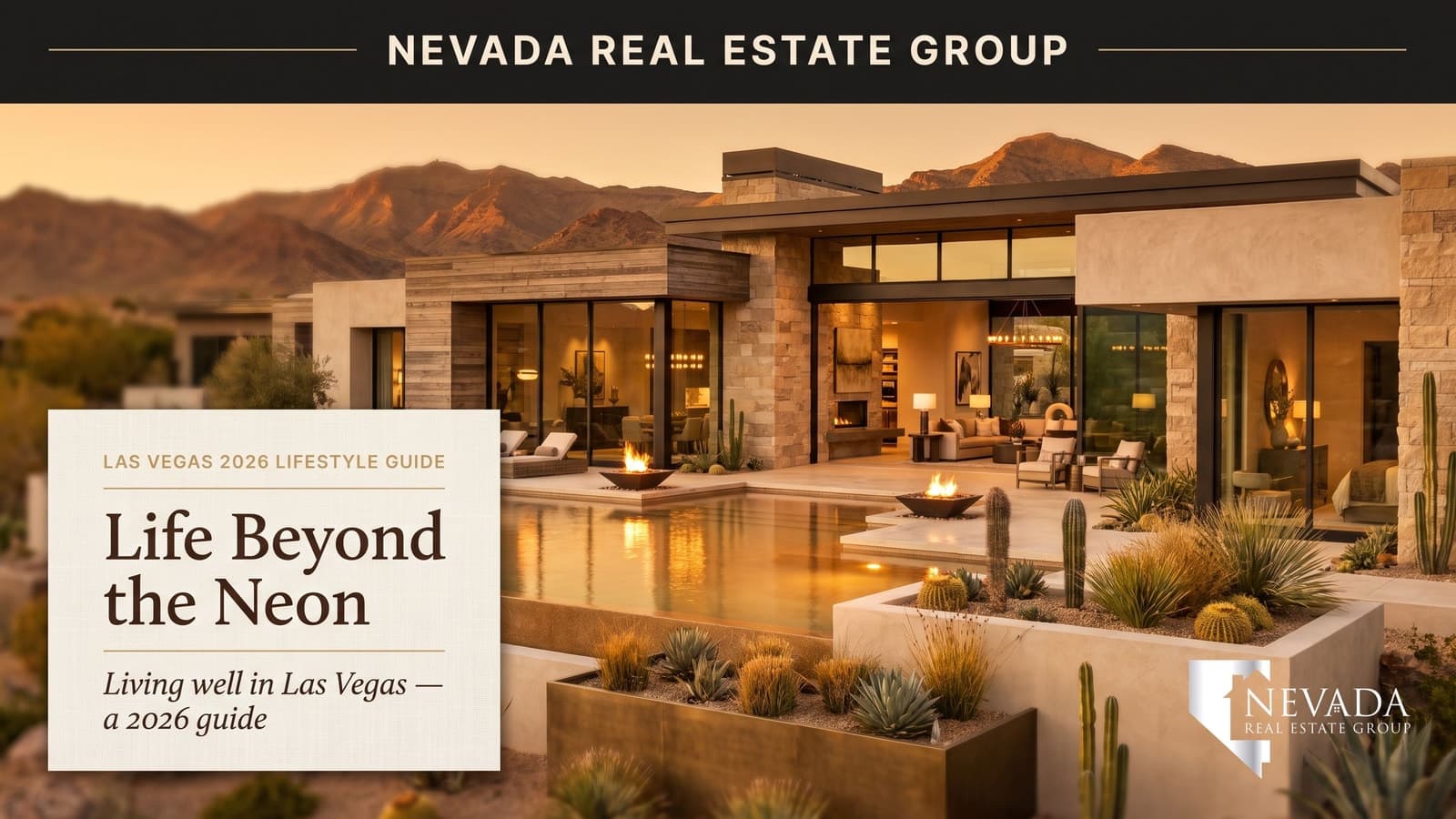

When most people hear "Las Vegas," they picture the Bellagio fountains and four miles of neon on the Strip. But if you are thinking about living in Las Vegas, you already sense the truth: the tourist corridor is a sliver of what makes this valley run. For the more than 2.3 million people who call Clark County home, life happens in the neighborhoods — Summerlin, Henderson, Centennial Hills, and the reinvented pockets of downtown — and it is built around canyons, a lake, an alpine peak, and a surprisingly deep bench of arts and pro sports.
This is the guide I wish someone had handed me when I started selling homes here. It answers the question every buyer eventually asks on a showing: what is life actually like once the vacation ends and this becomes home?
Living in Las Vegas means Red Rock Canyon, Lake Mead, and Mount Charleston are all inside a 45-minute drive, plus five major-league franchises, a top-tier performing-arts center, and walkable town centers in Summerlin and Henderson. In 2026 the median sold price runs about $440,745 valley-wide, so residents trade Strip prices for canyon trails, $12 minor-league baseball, and no state income tax.
- Red Rock Canyon, Mount Charleston, and Lake Mead all sit within 45 minutes of most Las Vegas neighborhoods.
- Summerlin's median sold price is about $565,000; Henderson runs near $499,990 — both anchor walkable town centers.
- Five pro franchises now call the valley home: Golden Knights, Raiders, Aces, plus the incoming Athletics and MLB expansion buzz.
- Locals skip the Strip for Chinatown, Downtown Summerlin, and Henderson's Water Street to dodge resort pricing and parking fees.
- October through April is the sweet spot for outdoor recreation before summer heat pushes everyone to Mount Charleston or the pool.
What Makes Living in Las Vegas Different From Visiting the Strip?
Tourists experience about four square miles. Residents experience a metro that stretches from Red Rock Canyon in the west to Lake Mead in the east, with the Spring Mountains rising nearly 12,000 feet to the north. The Strip is where we take out-of-town guests; it is not where we live, eat on a Tuesday, or spend a Saturday morning.
The economics reinforce that. Nevada charges no state income tax, and across the 9,600+ closings our team has represented, the recurring theme from relocating buyers is the same — they come for the tax math and the home prices, and they stay for the lifestyle. According to Las Vegas REALTORS, the valley's for-sale market remains deep and active, and the numbers below are pulled live from the Greater Las Vegas MLS.
NREG proprietary snapshot (GLVAR MLS, trailing 90 days as of July 2026): Across the valley, 3,377 homes sold at a median of $440,745 in a median of 27 days on market. Summerlin closed 608 sales at $565,000 (31 days); Henderson closed 1,005 at $499,990 (28 days); Boulder City closed 45 at $399,000 (43 days). Figures reflect NREG's read of live GLVAR data across the communities in this guide.
That single stat — a 27-day median time to sell — tells you the valley is not a sleepy retirement town. It is a fast, functional, growing city where lifestyle and real estate are tightly linked. When you are ready to see what your budget buys, our Las Vegas homes-for-sale search is the fastest way in.
What Outdoor Recreation Sits Within 45 Minutes of Las Vegas?
If you are shopping for the best neighborhoods in Las Vegas for outdoor lovers, you will be spoiled. Access to nature here is arguably the best of any major Southwest city, provided you time your adventures — October through April is the window before triple-digit heat arrives.
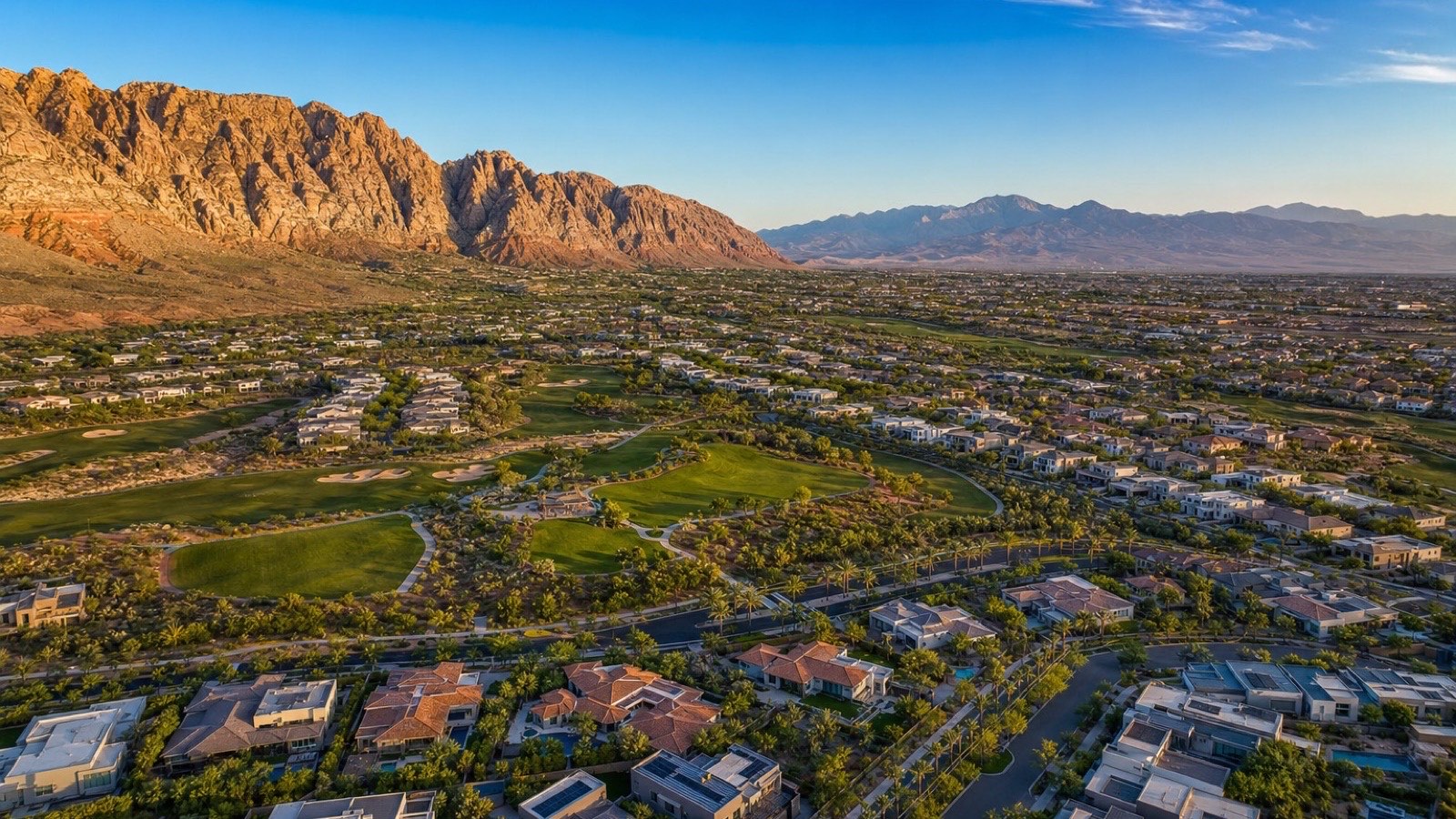
The crown jewel is Red Rock Canyon National Conservation Area, which sits 20 to 30 minutes from the western suburbs. According to the Bureau of Land Management, the conservation area protects nearly 200,000 acres of Mojave desert and its signature 13-mile scenic loop drive. Standard entry runs about $15 per vehicle for a seven-day pass, and during the busy season the timed-entry reservation (roughly $2) is required, so locals book ahead.
For a total change of climate, Mount Charleston is where residents escape. Summer temperatures on the mountain run about 20 degrees cooler than the valley floor, and Charleston Peak tops out at 11,916 feet. Come winter, Lee Canyon offers lift-served skiing and snowboarding roughly 45 minutes from most driveways. It is genuinely rare to golf in the morning and touch snow the same afternoon — but that is a normal winter weekend here.
Closer in, Springs Preserve is a 180-acre cultural and botanical campus I often describe as the "Central Park" of Las Vegas, with gardens, museums, and desert trails that show how people have lived here for thousands of years. General admission runs about $11 for adults with Nevada-resident discounts.
How Does Red Rock Canyon Work for Locals in 2026?
Because Red Rock is so close to Summerlin, it functions as an extension of the neighborhood rather than a destination. Locals treat the loop as a running and cycling route at dawn, then hit trailheads like Calico Tanks, Ice Box Canyon, and the Keystone Thrust for real hikes.
A few practical notes that separate residents from visitors: the timed-entry reservation applies October through May during peak hours, an America the Beautiful federal annual pass ($80) covers Red Rock plus Lake Mead and every national park for a year, and afternoon light on the sandstone escarpment is the payoff most people miss by going too early. The proximity is also why homes in Summerlin villages closest to the canyon carry a measurable premium — buyers pay for the view and the trail access, and the roughly $565,000 median sale price reflects it.
Where Do Residents Go to Escape the Summer Heat?
Summer is real, and pretending otherwise helps no one. From roughly late June through early September, valley highs regularly clear 105 degrees. Residents adapt in three ways, and understanding them tells you a lot about local life.
First, elevation: Mount Charleston and the Spring Mountains National Recreation Area become the weekend release valve, with pine forests, cool trails, and picnic spots 30 to 45 minutes away. Second, water: pools are near-universal in valley homes, and Lake Mead extends the season. Third, timing: locals shift outdoor life to early morning and after sunset — 6 a.m. hikes, evening ballgames, late patio dinners.
For families weighing a move, this rhythm matters more than the raw temperature. It is why so many buyers I work with prioritize a private pool and shade, and why our new-construction inventory increasingly emphasizes covered outdoor living and energy-efficient design.
What Water Recreation Does Lake Mead and Boulder City Offer?
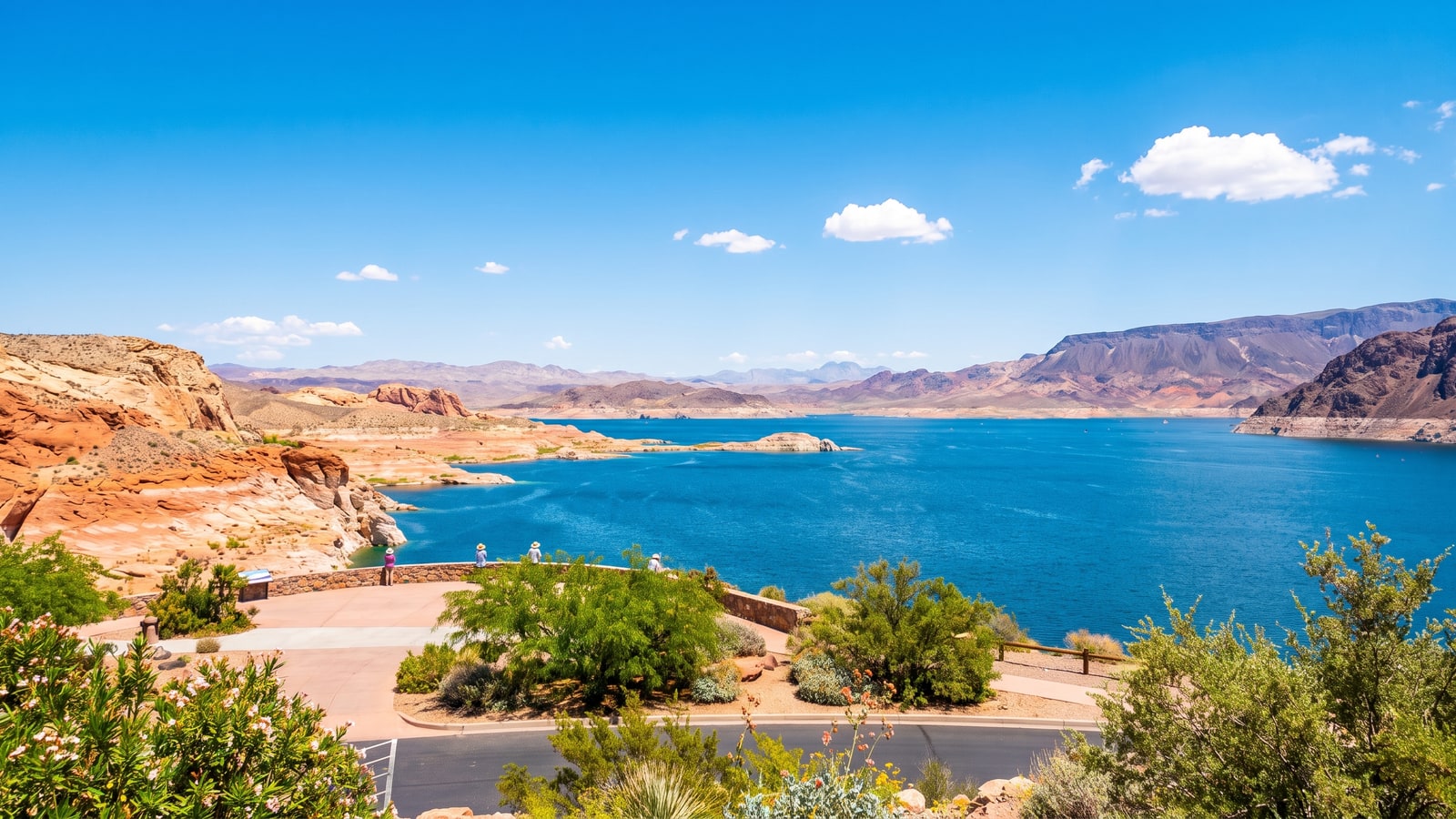
On the valley's eastern edge, Lake Mead National Recreation Area is the go-to for boaters, paddlers, and anglers. According to the National Park Service, Lake Mead is the largest reservoir in the United States by capacity, and its shoreline offers everything from Emerald Cove kayak tours to weekend boat rentals. Entry runs about $25 per vehicle for a seven-day pass, or $45 for an annual Lake Mead pass — a bargain for households that go often.
The gateway to all of it is Boulder City, one of only two Nevada municipalities that prohibits gambling. To be clear, Boulder City is not part of Las Vegas — it is a separate incorporated city about 26 miles southeast, with its own historic downtown, its own government, and a deliberately small-town feel. It sits next to the Hoover Dam and draws buyers who want lake access and a 1950s Main Street vibe. With only 138 active listings and a $432,500 median list price in mid-2026, it is a tight, character-driven market.
What Arts and Culture Does Las Vegas Have Beyond Casinos?
The biggest misconception about Vegas is that it has no "real" culture. That has not been true for a decade, and the center of gravity is the 18b Arts District just south of downtown. It is gritty and authentic — antique shops along Main Street, independent breweries, tattoo studios, and galleries. The monthly First Friday festival closes the streets for food trucks, live music, and local art vendors, drawing everyone from lifelong residents to brand-new arrivals.
For performing arts, The Smith Center in Symphony Park is the anchor. According to The Smith Center, the campus opened in 2012 and hosts Broadway touring companies, the Las Vegas Philharmonic, and jazz in an Art Deco hall inspired by Hoover Dam. Broadway tickets typically range from about $40 to $150 — a sophisticated night out with no casino floor to cross.
The valley's museums punch above their weight, too. The Neon Museum displays retired casino signs in an outdoor "boneyard" (general admission around $28), and the Mob Museum downtown offers a genuinely gripping look at organized crime and law enforcement (roughly $34 for adults). Both book out, so plan a week ahead.
Which Sports Teams Do Las Vegas Locals Actually Follow?
Pro sports transformed local identity faster than almost anything. In under a decade, Las Vegas went from zero major-league teams to a genuine sports town, and the community rallies around all of them.
The Vegas Golden Knights (NHL) play at T-Mobile Arena and won the Stanley Cup in 2023 — you will see Knights gear in every grocery store during the season. The Las Vegas Raiders (NFL) fill Allegiant Stadium, which opened in 2020 near the south Strip. The Las Vegas Aces (WNBA) delivered back-to-back championships in 2022 and 2023 at the Michelob Ultra Arena. And MLB's Athletics are building a ballpark on the former Tropicana site, with the team targeting a 2028 opening. According to the Las Vegas Convention and Visitors Authority, the project is expected to further cement the valley as a national sports destination.
For a relaxed, family-priced evening, the Las Vegas Aviators (Triple-A baseball) play at Las Vegas Ballpark in Downtown Summerlin. Tickets start around $12 to $15, there is a pool beyond the outfield wall, and it sits in the middle of a residential hub — the easiest weeknight outing in the valley.
| Team | League | Venue | Typical ticket entry |
|---|---|---|---|
| Golden Knights | NHL | T-Mobile Arena | from about $60 |
| Raiders | NFL | Allegiant Stadium | from about $90 |
| Aces | WNBA | Michelob Ultra Arena | from about $25 |
| Aviators | MiLB (AAA) | Las Vegas Ballpark, Summerlin | from about $12 |
| Athletics (2028) | MLB | Former Tropicana site | TBD |
Where Do Locals Shop, Dine, and Gather Off the Strip?
When it comes to a Tuesday dinner or back-to-school shopping, locals avoid the Strip's parking fees and resort pricing entirely. We stick to regional hubs, and each anchors a different part of the valley.
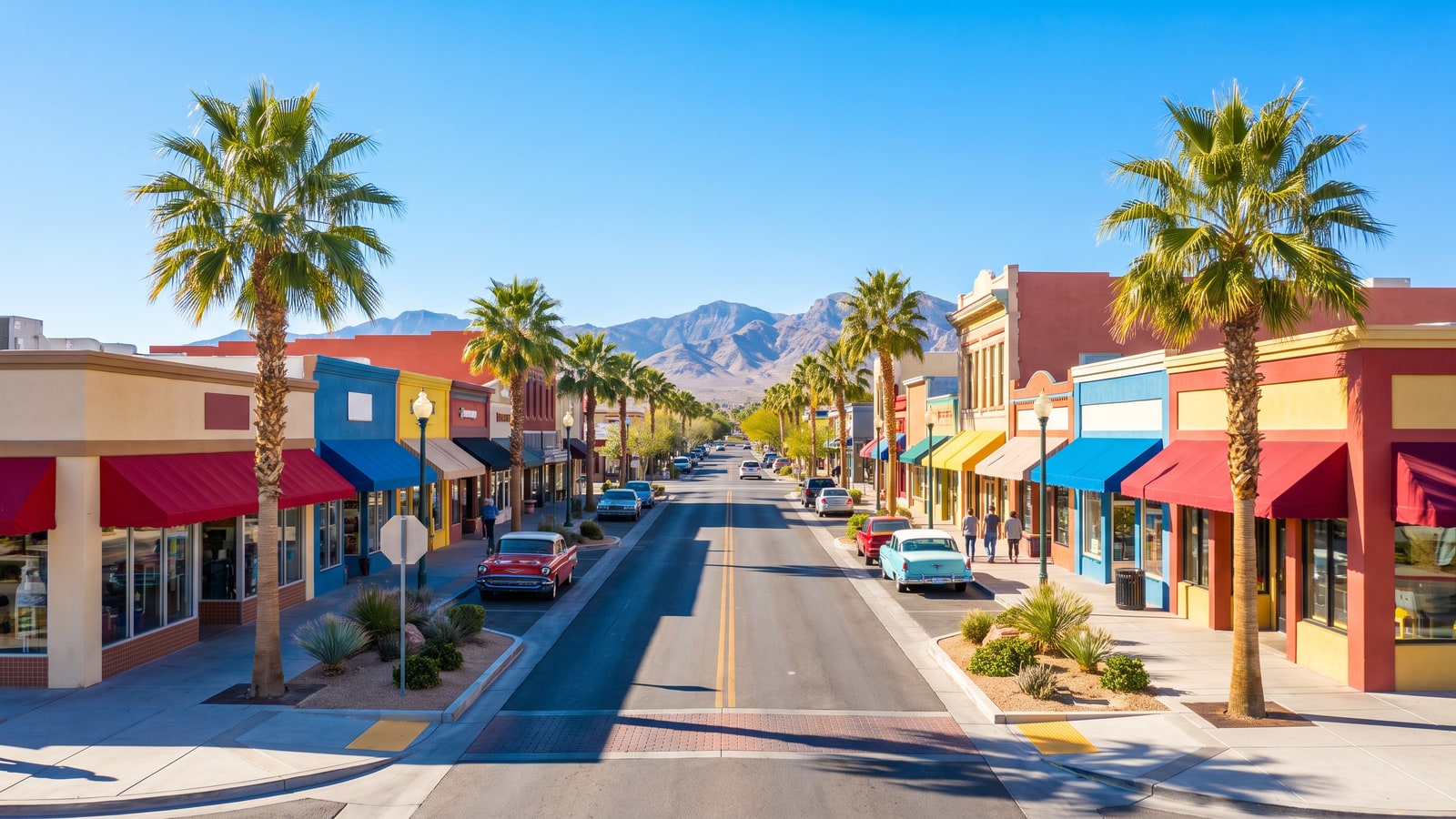
Chinatown along Spring Mountain Road is non-negotiable for food lovers. It spans more than three miles and holds some of the best Asian cuisine in North America — high-end sushi to hole-in-the-wall noodle counters, priced for residents. It is where Strip chefs eat after their shifts. For Summerlin residents, Downtown Summerlin is the de facto town center: an open-air retail and dining district with weekly farmers markets, holiday parades, and movie nights on the lawn. On the east side, Henderson's The District at Green Valley Ranch delivers cobblestone streets and patio brunch, while Town Square on the south end pairs a Whole Foods, a cinema, and a playground for one-stop family errands.
| Hub | Area | Best for | Signature draw |
|---|---|---|---|
| Chinatown (Spring Mountain Rd) | Central-west | Dining | 3+ miles of Asian cuisine |
| Downtown Summerlin | West | Shopping + events | Aviators ballpark, farmers market |
| The District at Green Valley Ranch | Henderson | Patio dining | Cobblestone walkable core |
| Henderson Water Street | Downtown Henderson | Small-business + nightlife | Craft breweries, festivals |
| Town Square | South valley | Family errands | Whole Foods, cinema, playground |
How Do Summerlin and Henderson Anchor Neighborhood Life?
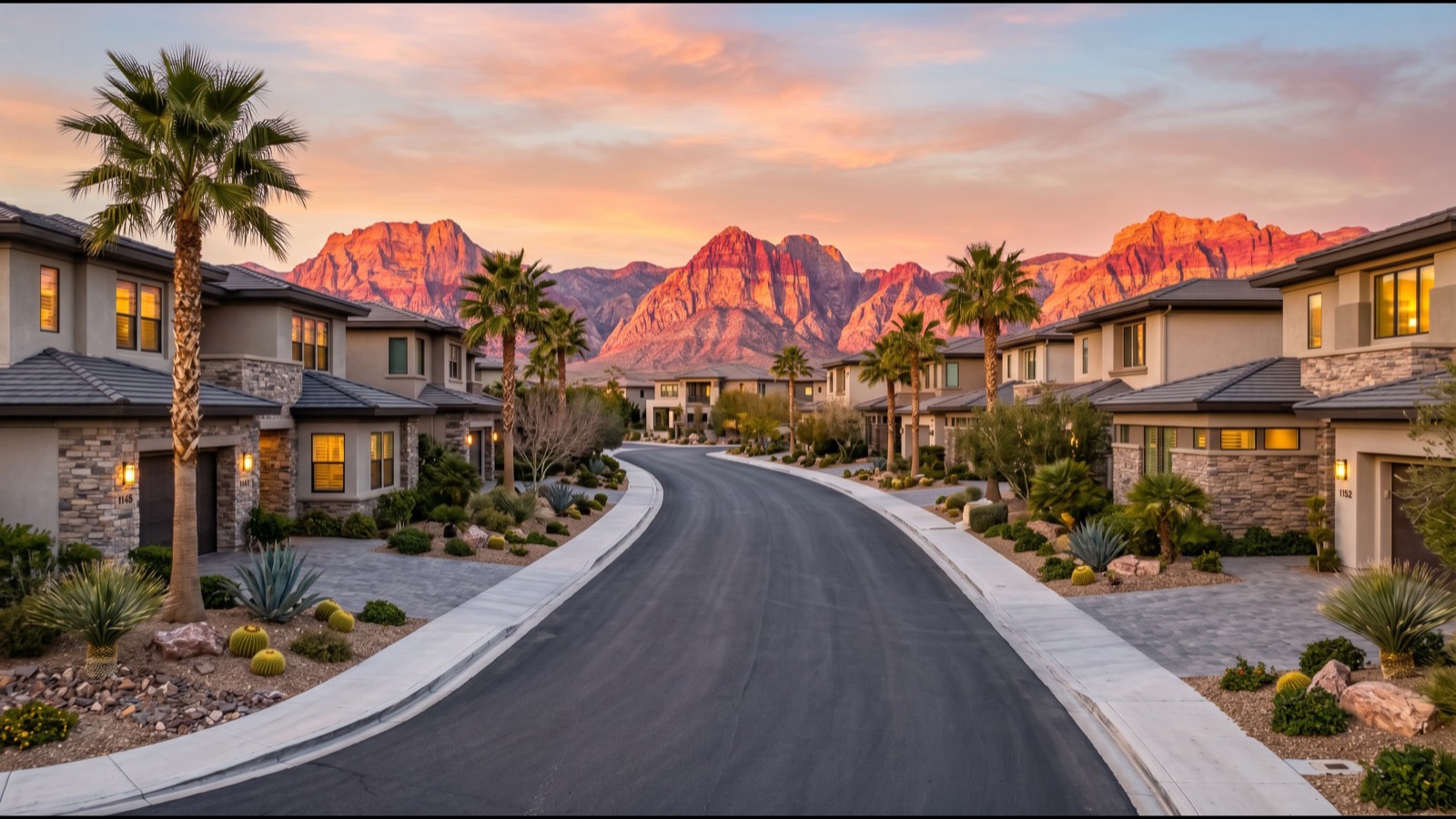
The two master-planned giants shape how most families experience the valley, and it helps to be precise about what they are. Summerlin is a Howard Hughes master plan on the western edge, wrapped around Red Rock Canyon and Downtown Summerlin. Henderson is a separate incorporated city southeast of Las Vegas — not a Las Vegas neighborhood — with its own downtown (Water Street), its own master plans like Green Valley and Cadence, and its own municipal government. People routinely conflate the two with "Las Vegas," but Henderson is Nevada's second-largest city in its own right.
That distinction matters for buyers because the markets behave differently. Summerlin's live median sale price sits around $565,000 with 31 days on market; Henderson's runs near $499,990 at 28 days; and North Las Vegas — the value play — shows a $425,000 median list price with the newest inventory. Each offers its own version of the neighborhood lifestyle: Summerlin leans trail-and-golf premium, Henderson leans master-planned family, North Las Vegas leans new-build affordability.
Having toured hundreds of homes across all three, I've closed enough deals in each to notice how the daily routine changes block to block. In Summerlin, a buyer's weekend usually orbits the trail system and Downtown Summerlin, and the villages nearest Red Rock — Reverence, The Cliffs, The Ridges — carry the steepest premiums for exactly that reason. In Henderson, the pull is the master-planned amenity stack: Cadence, Inspirada, and Green Valley each fold parks, splash pads, and event lawns into the neighborhood, so families rarely need to leave the community for a full Saturday. In North Las Vegas, the draw is square footage and newness — buyers routinely get a larger, brand-new floor plan for the same dollars that buy a smaller resale closer to the canyon. Golf lovers, meanwhile, gravitate to the fairway communities detailed in our golf living guide, which map neatly onto these same three markets. The lifestyle you want should drive the neighborhood, and the neighborhood drives the price — in that order.
What Family Activities Fill a Weekend in Las Vegas?
Off the Strip, the valley is genuinely family-friendly, which surprises newcomers. A typical resident weekend might mix a morning at Springs Preserve, an Aviators game, and a Downtown Summerlin farmers market.
Area15 is the modern anchor for older kids and adults — an immersive entertainment district housing Omega Mart (an interactive art "grocery store," roughly $55 to enter the experience), virtual-reality attractions, and zip lines. Walking into the district is free; individual attractions are ticketed. Beyond that, the valley is stacked with regional parks, splash pads, community rec centers, and the Discovery Children's Museum next to The Smith Center. For active families, the luxury communities and gated enclaves across the west and southeast typically bundle their own parks, trails, and pools into the HOA — so the "weekend" often starts inside your own neighborhood.
What Seasonal Events Shape the Local Calendar?
Las Vegas has a real events rhythm that locals plan around, and most of it has nothing to do with a convention. First Friday in the 18b Arts District runs monthly. The Life Is Beautiful festival takes over downtown each fall with music, art, and food. Fall through spring brings Golden Knights and (soon) baseball season, holiday parades and tree lightings at Downtown Summerlin and The District, and the Great Santa Run downtown. Spring adds farmers markets and outdoor festival season before summer pushes everything indoors or up the mountain.
The takeaway for a new resident: build your calendar around October through May, when the weather cooperates and the valley's outdoor social life is at full tilt. If you are relocating, our moving-to-Las-Vegas guide walks through timing a move around this rhythm.
What Day Trips Can You Take From Las Vegas?
One underrated perk of Southern Nevada is how easy it is to leave it. The valley is a launchpad for the entire Southwest.
Valley of Fire State Park sits about an hour northeast. According to Nevada State Parks, it is Nevada's oldest state park, dedicated in 1935, and its red sandstone and ancient petroglyphs feel Martian. Entry runs about $15 per vehicle for non-residents ($10 for Nevada residents). Boulder City and the Hoover Dam make a half-day trip. For a longer weekend, Zion National Park in Utah is roughly 2.5 to 3 hours away, close enough that many residents hold the $80 federal annual pass and go on a whim.
| Destination | Drive time | Highlight | Typical entry |
|---|---|---|---|
| Valley of Fire State Park | ~1 hour | Red sandstone, petroglyphs | $10–$15 per vehicle |
| Hoover Dam / Boulder City | ~40 min | Engineering marvel, small-town Main St. | Free–$30 tour |
| Mount Charleston / Lee Canyon | ~45 min | Alpine hiking, winter skiing | Free–$100 lift |
| Zion National Park (UT) | ~2.5–3 hours | Canyon hiking | $35 per vehicle |
| Lake Mead | ~30 min | Boating, kayaking | $25 per vehicle |
How Do Lifestyle and Neighborhood Choices Connect to Home Prices?
Here is where the lifestyle conversation becomes a real estate conversation. Where you choose to live in the valley directly maps to which of these amenities sits in your backyard — and that is priced into the market. The table below pulls live GLVAR figures for the four communities featured in this guide so you can see the trade-offs at a glance.
| Dimension | Summerlin | Henderson | North Las Vegas | Boulder City |
|---|---|---|---|---|
| Median sold price | $565,000 | $499,990 | $425,000 (list) | $399,000 |
| Median days on market | 31 | 28 | ~30 | 43 |
| Active listings | 1,488 | 2,488 | 1,075 | 138 |
| Signature lifestyle draw | Red Rock trails + golf | Master-planned family | New-build value | Lake Mead + small town |
| Best fit | Active + luxury buyers | Growing families | First-time + budget buyers | Retirees + boaters |
If a home near the canyon and Downtown Summerlin is the goal, expect to compete in that $565,000-median band. If lake access and small-town quiet win, Boulder City's thin 138-listing market rewards patience. And if new construction at a lower entry point matters most, North Las Vegas is the value story. When you are ready to match lifestyle to budget, our Henderson homes-for-sale search and the full buyers resources are built for exactly this.
What Should New Residents Know Before Committing to a Neighborhood?
In my experience, the single most common mistake buyers make is buying for the tour and not the routine. Visit your finalist neighborhoods on a weekday evening and a Saturday morning, not just on a broker's schedule. Drive your would-be commute at rush hour. Check whether the trailhead, the ballpark, or the grocery hub you love is actually 10 minutes away or 35.
Two other locals-only notes. First, HOAs vary widely — a Summerlin village or a guard-gated community may bundle parks, pools, and trails at a real monthly cost, so read the full fee stack before you fall for the amenity. Second, understand the summer rhythm before you commit; if your family lives outdoors, prioritize shade, a pool, and elevation access. When you want a straight read on any neighborhood, reach out to our team at (702) 637-1759 — this is the conversation we have every week.
Frequently Asked Questions
What is there to do in Las Vegas besides gambling?
A great deal that never touches a slot machine. Locals hike Red Rock Canyon, ski or camp at Mount Charleston, boat on Lake Mead, catch Golden Knights, Raiders, Aces, and Aviators games, explore the 18b Arts District and Neon Museum, and dine across Chinatown's three-mile restaurant corridor. The Strip is a small slice of a metro of more than 2.3 million people.
Where do locals hang out in Las Vegas?
Residents stick to regional hubs rather than the Strip. The most popular are Downtown Summerlin in the west, The District at Green Valley Ranch and Water Street in Henderson, Chinatown along Spring Mountain Road for food, and the breweries and galleries of the downtown Arts District. Each anchors a different part of the valley.
Are there outdoor activities near Las Vegas?
Yes — the valley is a premier outdoor destination. You get excellent rock climbing and hiking at Red Rock Canyon, alpine hiking and lift-served skiing at Mount Charleston and Lee Canyon, and boating and kayaking at Lake Mead, all within a 45-minute drive of most neighborhoods. October through April is the ideal window before summer heat.
Is Boulder City part of Las Vegas?
No. Boulder City is a separate incorporated city about 26 miles southeast of Las Vegas, with its own government and downtown. It is one of only two Nevada municipalities that prohibits gambling, and it serves as the gateway to Lake Mead and the Hoover Dam. Its mid-2026 median list price sits around $432,500 across only 138 active listings.
What sports teams play in Las Vegas?
The valley hosts the Vegas Golden Knights (NHL, 2023 Stanley Cup champions), the Las Vegas Raiders (NFL, at Allegiant Stadium), the Las Vegas Aces (WNBA, back-to-back champions in 2022 and 2023), and the Triple-A Las Vegas Aviators in Summerlin. MLB's Athletics are building a ballpark on the former Tropicana site with a targeted 2028 opening.
What is the best neighborhood in Las Vegas for an active outdoor lifestyle?
Summerlin is the standout for trail-and-golf lifestyle because it wraps directly around Red Rock Canyon, with a live median sale price near $565,000. Henderson's foothill communities like Anthem and MacDonald Highlands offer similar access with a family-oriented feel around $499,990. Both prioritize parks, trails, and outdoor amenities.
How hot does Las Vegas get in summer, and what do locals do?
Valley highs regularly clear 105 degrees from late June through early September. Locals adapt by heading up to Mount Charleston (about 20 degrees cooler), using near-universal home pools, and shifting outdoor life to early mornings and evenings — 6 a.m. hikes, night ballgames, and late patio dinners are the norm.
Which Sources Inform This Las Vegas Lifestyle Guide?
Market figures are pulled live from the Greater Las Vegas MLS (GLVAR) via NREG's Repliers feed, reflecting active inventory and trailing-90-day closed sales as of July 2026. Recreation, demographic, and civic facts are drawn from the authorities below.
- Las Vegas REALTORS (GLVAR) — local market data and monthly housing statistics
- U.S. Census Bureau — Clark County, Nevada — population and demographics
- Bureau of Land Management — Red Rock Canyon NCA — conservation area, fees, and timed entry
- National Park Service — Lake Mead NRA — reservoir, recreation, and entrance fees
- U.S. Forest Service — Spring Mountains NRA (Mount Charleston) — alpine recreation and elevation
- Nevada State Parks — Valley of Fire — Nevada's oldest state park, fees
- The Smith Center for the Performing Arts — venue history and programming
- Las Vegas Convention and Visitors Authority — venues, sports, and tourism infrastructure
- Nevada Department of Taxation — no state income tax
- Clark County, Nevada — municipal boundaries and regional parks
This guide is educational and reflects conditions as of July 2026; market figures change. For a current, personalized read on any Las Vegas-area neighborhood, contact Chris Nevada and the Nevada Real Estate Group team at (702) 637-1759.