
Published June 2, 2026 · Updated October 4, 2026 · By Chris Nevada, Nevada Real Estate Group · NV License S.181401
"Should I rent or buy?" is the question I hear most from people moving to Las Vegas and from renters who just opened a renewal letter. It is a math problem before it is a feelings problem, and the math turns on inputs anyone can look up: the mortgage rate this week, what a comparable house leases for, what it sells for, the carrying costs a landlord is paying on your behalf, and how long you will stay. When I first published this guide on June 2, 2026, the 30-year rate sat in the mid-6% range. It does not anymore, so I rebuilt every number.
At Nevada Real Estate Group we have represented 9,600+ closings over 16+ years across Summerlin, Henderson and the rest of the Las Vegas valley, and the honest version of this comparison is one where every input carries a name, a source and a date. That is what follows: a median-priced three-bedroom Las Vegas house bought with an FHA loan and with 20% down, set beside the median three-bedroom lease, with the five- and ten-year results shown under price-and-rent scenarios you choose. None of it is a forecast, and you can swap in your own numbers at every step.
At Freddie Mac's 7.28% weekly average for October 1, 2026, a median three-bedroom Las Vegas house ($431,000, July 2026 sales) costs about $3,450 a month to own with 3.5% down, before upkeep, against the $2,100 July 2026 median three-bedroom lease. In my five-year scenarios renting costs less unless you put 20% down and prices and rents rise 4% a year. Buy only if you'll stay long and can absorb that gap.
- Freddie Mac's 30-year rate averaged 7.28% for the week of October 1, 2026, up from 6.48% in June.
- July 2026's median three-bedroom was $431,000; owning costs about $3,450 monthly with FHA, versus a $2,100 July lease.
- HUD's three-bedroom Fair Market Rent for Clark County fell to $2,317 for the year starting October 1.
- Over five years, renting costs less in every scenario except 20% down with 4% yearly growth.
- A sale doesn't reset Nevada's taxable value to your price; claim the 3% cap under NRS 361.4723 after closing.
Whichever way you lean, getting pre-approved turns these medians into your own numbers, and our first-time buyer resources cover the programs that shrink the cash hurdle.
What Changed Since This Guide First Ran in June 2026?
Four inputs moved between June and October, and together they change the headline answer for a lot of households.
The rate. According to Freddie Mac's weekly survey archive, the 30-year fixed averaged 6.48% for the week of June 4, 2026, the first reading after this guide went live. According to the current Freddie Mac Primary Mortgage Market Survey, it averaged 7.28% as of October 1, 2026, up from 7.03% a week earlier. On the FHA example below, that 0.80-point move adds $226 a month to principal and interest alone, lifting it from $2,669 to $2,896.
The rent benchmark. HUD's Fair Market Rents for the Las Vegas-Henderson-North Las Vegas metro, effective October 1, 2026, came in lower than the year before: the three-bedroom figure fell from $2,413 to $2,317. The benchmark that renters and landlords both watch moved down, not up.
The price data. In June I quoted a rounded valley median. This update uses MLS sales carrying a July 2026 sale date, which for most records is the contract date rather than the closing date, from our September market reports, plus a fresh count of three-bedroom houses so the buy side and the rent side describe the same kind of home.
The method. I removed a third-party break-even estimate that rested on a forecast of home-price growth, and the old equity table that assumed 3% appreciation a year. We don't publish price forecasts, so the long-run comparison is now a scenario table where you pick the growth rate. I also corrected two tax claims: Nevada's lack of a state income tax helps renters exactly as much as owners, and a sale does not reset a Nevada tax bill to the purchase price.
The verdict that follows is different from June's. Back then this guide said buying usually wins after three to five years. Today's rate and rents don't support that rule of thumb for a median Las Vegas house unless prices and rents rise meaningfully, so read our June guides on renting versus buying in Nevada and rent versus buy in Summerlin with the rates of that month in mind.
What Does It Cost to Rent a House in Las Vegas Right Now?
The cleanest rent number is what houses actually leased for, not what landlords advertised. Our own pull of Las Vegas MLS lease data through Repliers on September 27, 2026, published in our Henderson rent guide, counted every lease that closed in July 2026 in the MLS city of Las Vegas: 1,462 leases at a $2,050 median across all property types, 932 single-family homes at $2,295, and 464 three-bedroom houses at $2,100. That last figure is the rent side of the worked example below, because it matches the three-bedroom sale data on the buy side. These are our own counts, not official Las Vegas REALTORS statistics.
According to HUD's FY2027 Fair Market Rent schedule, the benchmark rents for the Las Vegas-Henderson-North Las Vegas metro, which is Clark County, are $1,310 for a studio, $1,435 for one bedroom, $1,686 for two, $2,317 for three and $2,652 for four. According to HUD's Fair Market Rent program page, these are estimates of 40th-percentile gross rents for standard-quality units, and they take effect at the start of the federal fiscal year, October 1. A 40th-percentile benchmark sits below the middle of the market and blends apartments with houses, so treat it as a reference point rather than a lease quote.
| Unit size | FY2026 | FY2027 | Change |
|---|---|---|---|
| Studio | $1,333 | $1,310 | down $23 (1.7%) |
| One bedroom | $1,478 | $1,435 | down $43 (2.9%) |
| Two bedrooms | $1,735 | $1,686 | down $49 (2.8%) |
| Three bedrooms | $2,413 | $2,317 | down $96 (4.0%) |
| Four bedrooms | $2,764 | $2,652 | down $112 (4.1%) |
The year-over-year move matters for this decision. One benchmark is not a trend line, but a 4.0% drop in HUD's three-bedroom figure, per its FY2026 schedule as currently posted, is the opposite of the "rent only goes up" assumption that powered the June version of this guide. According to the U.S. Census Bureau's American Community Survey, median gross rent across every rented unit in the City of Las Vegas, apartments included, was $1,563 for 2020 to 2024. Our Las Vegas average rent guide breaks rents down by bedroom count and neighborhood.
Renting carries legal terms worth knowing too. Under NRS 118A.242, a Nevada landlord cannot demand a security deposit, last month's rent included, totaling more than three months' rent, and under NRS 118A.300 a landlord must give 60 days' written notice before raising rent (30 days for a periodic tenancy shorter than a month). Our guide on how much a Las Vegas landlord can raise rent covers renewals in detail. According to Triple-I's state premium table built on NAIC data, the average Nevada renters policy cost $174 a year in 2022, and I add that to the renter's side of every comparison below.

What Does a Comparable House Cost to Buy in Las Vegas?
Our September 2026 market reports count every sale carrying a July 2026 MLS sale date, which for most records is the contract date rather than the closing date. In the Las Vegas September report, 1,400 July sales in the MLS city of Las Vegas had posted by September 15, 2026, at a $430,000 median and $480,000 for single-family homes. The Henderson September report counted 476 July sales at $490,000 ($525,000 single-family), the North Las Vegas September report 249 at $415,000 ($425,000 single-family), and the Summerlin September report 322 at $527,500 ($580,000 single-family).
For the worked example I wanted a house that matches the lease data, so I ran our own pull of Las Vegas MLS data through Repliers on October 4, 2026, for single-family sales carrying a July 2026 MLS sale date in the city of Las Vegas. By then 1,070 had posted at a $479,985 median, essentially the $480,000 the September report found. Of those, 491 were three-bedroom houses at a $431,000 median and 366 were four-bedroom houses at $520,975. For most of these records the MLS sale date is the contract date, and most of them closed in August. About 12% closed in September or early October; excluding those, the three-bedroom median is $430,000 across 427 sales and the single-family median $480,000 across 939. On fees, 774 of the 1,070, or 72.3%, carried a homeowners association, and the median among those was $90 a month, using the MLS's own frequency-adjusted monthly total.
| Home | Median sale | Median lease | Price-to-annual-rent ratio |
|---|---|---|---|
| Las Vegas, three-bedroom house | $431,000 | $2,100 | 17.1 |
| Las Vegas, all single-family | $480,000 | $2,295 | 17.4 |
| Henderson, all single-family | $525,000 | $2,400 | 18.2 |
The ratio says a year of rent buys about one-seventeenth of the house. At a 7.28% rate that is a hard trade for an owner, because borrowing costs swallow most of the payment early on: in the first month of the FHA example below, interest alone is $2,567, more than the entire $2,100 rent on a comparable house. That single comparison explains most of what follows.
Buyers do have leverage, though. The same Las Vegas report counted 8,330 active listings on September 15, 2026, with 43.3% carrying at least one price cut at a $20,000 median reduction, and our September Las Vegas inventory report separates the supply you can shop today from the closings. A $20,000 reduction on the FHA example lowers the payment by about $143 a month.
How Much Does It Cost Each Month to Own That House at Today's Rate?
Here is the full monthly build for the $431,000 median three-bedroom, financed two ways at the October 1, 2026 rate. Every line names its source; the only assumption is the upkeep reserve, and I show the total with and without it.
| Line | FHA, 3.5% down | Conventional, 20% down | Source and date |
|---|---|---|---|
| Down payment | $15,085 | $86,200 | Median three-bedroom sale, July 2026 |
| Loan amount | $423,194 | $344,800 | FHA includes the 1.75% upfront premium of $7,279 |
| Principal and interest | $2,896 | $2,359 | 30-year fixed at 7.28% |
| Mortgage insurance | $191 | $0 | FHA annual premium of 0.55% |
| Property tax | $194 | $194 | Census 2024 median paid, $2,332 a year |
| Homeowners insurance | $79 | $79 | Nevada average, $948 a year (2022) |
| HOA | $90 | $90 | Median among July 2026 sales with an HOA |
| Monthly cost before upkeep | $3,450 | $2,722 | Sum of the lines above |
| Upkeep reserve | $359 | $359 | Assumption: 1% of price a year |
| Monthly cost with upkeep | $3,809 | $3,082 | Sum including upkeep |
| Renting the same house | $2,115 | $2,115 | $2,100 lease plus $14.50 renters insurance |
The financing lines come from primary sources. According to HUD Mortgagee Letter 2023-05, FHA charges an upfront premium of 1.75% of the base loan and, for a 30-year loan of $726,200 or less with more than 95% loan-to-value, an annual premium of 0.55% that lasts for the mortgage term; I hold it flat at its first-year level for simplicity, though it shrinks slightly as the balance falls. According to HUD's FHA answers page, the minimum required investment is 3.5% of the adjusted value. The $415,915 base loan sits well under Clark County's 2026 FHA one-unit limit of $541,287 in HUD's FHA mortgage limits lookup.
Property tax is the line people get wrong most often, so I used a real median rather than a formula. According to the Census Bureau's 2024 American Community Survey, the median real estate tax paid on mortgaged owner-occupied homes in the City of Las Vegas was $2,332 a year. Your actual figure is the parcel's current bill, which the next section explains. Insurance uses the most recent state average Triple-I publishes from NAIC data, $948 a year for 2022; premiums have risen since, so treat it as a floor and replace it with a quote.
The gap is the story. Before upkeep, owning with FHA costs $1,335 a month more than renting; with 20% down the gap is about $600. Not all of that is lost money: in month one, $328 of the FHA payment and $267 of the conventional payment pays down principal you keep. The rest, interest, mortgage insurance, tax, insurance, HOA and upkeep, is the owner's equivalent of rent. Compare loan types in our FHA versus conventional guide and our Las Vegas FHA loan guide.

How Much Cash Do You Need Up Front to Buy Versus Rent?
The monthly gap is one hurdle; the cash to get in the door is the other. A renter needs the first month plus a deposit that Nevada caps at three months' rent. A buyer needs the down payment plus closing costs, which cover lender charges, title, escrow, recording and prepaid taxes and insurance.
| Item | Renting | Buying, FHA 3.5% down | Buying, 20% down |
|---|---|---|---|
| First month's rent | $2,100 | none | none |
| Security deposit | up to $6,300 | none | none |
| Down payment | none | $15,085 | $86,200 |
| Closing costs | none | $10,775 | $10,775 |
| Total to start | up to $8,400 | $25,860 | $96,975 |
The 2.5% closing-cost figure is my assumption, the midpoint of the 2% to 3% range in our Nevada closing costs guide; your lender's numbers replace it. According to the Consumer Financial Protection Bureau's Loan Estimate explainer, the Loan Estimate shows your estimated closing costs and your Estimated Cash to Close, which is the number to compare against the renter's column. A renter's deposit also comes back at move-out, less amounts reasonably needed for unpaid rent, damage beyond normal wear and cleaning, under NRS 118A.242.
There are ways to shrink the buyer's column. FHA's minimum investment is 3.5% of the price, and your credit score decides whether a lender will approve you at that level. According to the VA's purchase loan page, an eligible veteran can buy with no down payment as long as the sales price isn't higher than the appraised value. Conventional loans with less than 20% down add private mortgage insurance priced on your credit, so get a quote rather than a rule of thumb. The Nevada Housing Division's programs can cover part of the cash to close; program terms change, so I point you to our Nevada down payment assistance guide, updated September 20, 2026, rather than restating them here. Seller and builder credits can also land on the closing statement; our builder closing cost credits guide shows how they work.
What Do the Five- and Ten-Year Numbers Look Like?
A single month flatters whichever side you want it to. The fair comparison adds up everything each household pays over the years it stays, then credits the owner with what they walk away with at the end.
Here is the method, so you can rerun it. The owner's net cost is the cash at closing, plus every monthly payment and the upkeep reserve, minus what they would net from selling: the sale price, less 6% for selling costs, less the remaining loan balance. The renter's cost is rent plus renters insurance. In each scenario, home value, rent, insurance, HOA and upkeep grow at the same yearly rate; property tax grows at that rate up to Nevada's 3% cap; principal, interest and mortgage insurance stay fixed. The 6% selling cost is my planning assumption for commissions, which are negotiable, plus title, escrow and the real property transfer tax, which in Clark County is $2.55 per $500 of value under NRS 375.020 and 375.023, or $2,198 on a $431,000 sale; our new Nevada real property transfer tax guide covers the tax in detail.
| Horizon and yearly change in prices and rents | Renter's total cost | Owner's net cost, FHA 3.5% down | Owner's net cost, 20% down |
|---|---|---|---|
| 5 years, 0% | $126,900 | $248,800 | $202,300 |
| 5 years, 2% | $132,000 | $208,400 | $161,900 |
| 5 years, 4% | $137,400 | $164,400 | $117,800 |
| 10 years, 0% | $253,700 | $443,300 | $359,400 |
| 10 years, 2% | $277,800 | $362,800 | $278,900 |
| 10 years, 4% | $304,600 | $264,800 | $181,000 |
Read the table by row, not by column. With flat prices and rents, renting is cheaper at both horizons by a wide margin, because the owner pays well over the rent each month and recovers little at sale. At 2% a year, 20% down roughly ties renting at ten years and FHA still trails by about $85,000. At 4% a year, buying wins at ten years on both loans and wins at five years only with 20% down.
Two things the table leaves out. It ignores what the buyer's upfront cash could have earned elsewhere, which the opportunity-cost section below adds back and which favors renting. It also ignores the federal mortgage-interest deduction, which favors buying for anyone who itemizes. The principal you pay down is already counted, because it shows up in the smaller loan balance at sale: $23,666 after five years on the FHA loan and $57,685 after ten.
How Long Would You Need to Stay for Buying to Win?
The break-even year is the first year in which the owner's net cost drops below the renter's total. Running the same model year by year gives these results:
- Prices and rents flat (0% a year): no break-even within 30 years on either loan, because the monthly gap never closes and nothing grows to offset it.
- 2% a year: about 11 years with 20% down, and about 21 years with FHA's 3.5% down.
- 4% a year: about 4 years with 20% down, and about 8 years with FHA.
Which row describes the next decade is not something I can tell you, and I won't pretend to. What I can show is where the recent record sits. According to the Federal Housing Finance Agency's House Price Index datasets, the all-transactions index for the Las Vegas-Henderson-North Las Vegas metro rose 2.8% from the second quarter of 2025 to the second quarter of 2026, and about 10.8% over the four years from the second quarter of 2022, roughly 2.6% a year. That 2022 starting point sits near the index's 2022 high of 351.08 in the third quarter; measured over ten years from the second quarter of 2016, a window that includes the 2020 to 2022 run-up, the index rose about 126%, roughly 8.5% a year. Meanwhile, HUD's three-bedroom rent benchmark fell 4.0% for the year starting October 1, 2026. Past movement is not a prediction, but it is a reason not to plug the boom years of 2020 and 2021 into your own spreadsheet.
The break-even shortens when any input improves. Buying below the median, negotiating a price cut or a seller-paid rate buydown, putting more down, or finding a house with no HOA all pull it in. So does a lower rate, if it arrives; refinancing costs money, so I would not count on it in the plan. The break-even lengthens with a higher-priced home, a large HOA, a solar lease, an older roof or a rate above today's. If you are within a couple of years of the break-even in the scenario you believe, buying is a reasonable bet on staying power; if you are a decade away, renting and saving is the stronger position for now.
How Do Nevada's Taxes Change the Rent-or-Buy Math?
Nevada's property tax works differently from most states, and the differences cut both ways for a buyer. Under NRS 361.225, property is assessed at 35% of its taxable value. Under NRS 361.227, taxable value is the land's full cash value plus the improvements' replacement cost less depreciation of 1.5% a year, up to 50 years, and it may not exceed the property's full cash value. Your purchase price is not an input.
According to the Clark County Treasurer's tax district rates, the fiscal 2026-2027 combined rate per $100 of assessed value is 3.2782 in Las Vegas City (district 200), 2.9613 in Henderson City, 2.9328 in the Spring Valley, Summerlin and Paradise town districts, and 2.5017 in the unincorporated county district. As a ceiling, if the $431,000 house's taxable value equaled its price, the Las Vegas City rate would produce $4,945 a year before any cap. The $2,332 Census median paid on mortgaged homes shows how far below that ceiling real bills usually run, which is why the example uses it; taxing the house at the ceiling instead would add about $218 a month.
The caps matter more than the rate. Under NRS 361.4723, the owner of a single-family primary residence is entitled to an abatement that limits the tax increase to 3% over the prior year's bill. According to the Clark County Assessor's tax abatement page, homes that are not owner-occupied get a cap of up to 8%, any recorded ownership document removes the owner-occupied 3% abatement until a new postcard is filed, and new construction gets no cap in its first fiscal year. A sale does not reset the bill to your price; it carries the parcel's history forward, and you must claim the 3% cap yourself. Our 3% versus 8% cap guide, the Las Vegas property taxes explainer and the Las Vegas property tax page walk through the parcel lookup.
Income tax is neutral in this decision. Article 10, Section 1 of the Nevada Constitution provides that no income tax shall be levied on the wages or personal income of natural persons. That leaves more of your paycheck for housing whether you rent or own, so it is a reason to live here, not a reason to buy rather than rent; our guide to Nevada's lack of a state income tax covers the details. The federal mortgage-interest deduction is the tax item that can favor owning, but according to IRS Publication 936, it only applies if you itemize deductions on Schedule A, and it covers interest on up to $750,000 of acquisition debt taken out after December 15, 2017. Compare your itemized total with the standard deduction before counting it.
What Is the Opportunity Cost of Your Down Payment?
A fair comparison has to ask what the buyer's cash would have done if it stayed invested. The five- and ten-year table credits the owner with principal paid and any price growth, but it does not charge them for the earnings their upfront cash gave up. Here is that number at a hypothetical 4% a year, a rate I chose for illustration and not a recommendation or a forecast of any investment.
On the FHA purchase, $25,860 at closing would have earned about $5,603 over five years and $12,419 over ten. On the 20% down purchase, $96,975 would have earned about $21,010 over five years and $46,572 over ten. Add those to the owner's column and the picture tightens further: the one five-year case where buying won, 20% down with 4% growth in prices and rents, goes from $117,800 to about $138,800 against the renter's $137,400, essentially a tie.
Two practical points keep this honest in both directions. First, the renter only captures that return if they actually invest the money rather than spend it; a mortgage is a forced savings plan, and the $23,666 of principal the FHA owner retires in five years happens whether they feel disciplined or not. Second, leverage cuts both ways: the FHA buyer controls a $431,000 house with $15,085 down, so a 2% change in its value is $8,620, more than half their down payment, in either direction. That magnified exposure is exactly why a short stay is the riskiest time to own.
When Does Renting Make More Sense in Las Vegas?
Renting is the better financial choice more often than agents like to admit, and at today's rate it is the default answer for a median house over a short horizon. Rent if any of these fit: you expect to be here under five years; your income is new, variable or tied to a single employer; buying would leave you without three to six months of reserves after closing; or you are new to the valley and still learning which commute, ZIP code and home type you actually want.
Renting also works as a deliberate strategy rather than a delay. A household that rents the three-bedroom for $2,115 a month, renters insurance included, and banks the difference from the $3,450 FHA payment saves $1,335 a month, enough to move from an FHA purchase toward a larger down payment within a few years and cut both the monthly gap and the mortgage insurance. The mistake is not renting; it is renting by default without rerunning the numbers when your stay lengthens or the inputs change.
Be careful with arrangements that blur the line. Lease-option and rent-to-own contracts can tie up money in option fees and above-market rent credits; our rent-to-own homes guide explains what to check before signing one. And if you are weighing a smaller first purchase to get in sooner, our new guide comparing a condo vs a house in Las Vegas weighs the two side by side. In July 2026 the Las Vegas condo and townhome median was $261,500, per the September report.

When Does Buying Clearly Win in Las Vegas?
Buying wins when the inputs line up in your favor rather than at the median. The clearest cases I see are a long expected stay, ten years or more; enough cash for 20% down while keeping reserves; a purchase price below the median for the home you want, which is realistic when 43.3% of Las Vegas listings had cut price as of September 15, 2026; and a rate concession from a seller or builder that lowers the payment for the first years. Each of those moves the five- and ten-year table toward the owner, so rerun it with your actual price, rate and down payment before deciding.
Ownership also buys things the table cannot price. You control the property: within your HOA's rules you can paint, landscape, add a pool or keep a pet without asking a landlord. Your principal and interest payment is fixed for 30 years while rent is renegotiated at every renewal. And you are not exposed to a landlord's decision to sell or to stop renewing. Those are real values; just price them honestly against the monthly gap rather than using them to wave the gap away.
If you already own a home here and are deciding what to do with it, the question flips; our guide on whether to sell or rent out your Las Vegas home runs that math. And if you buy, plan the exit too: if the home is in an HOA, see our new guide to selling a home with an HOA in Las Vegas for what the eventual sale involves. My advice is the same in any market: buy a home you can carry comfortably at the rate you actually get, keep reserves, and plan to stay.
How Does the Math Change by Neighborhood and Home Type?
The valley is not one market, and the answer shifts with the home you would actually occupy. The ratio of price to annual rent is a quick screen: the higher it is, the harder the buy case. On our July 2026 numbers, a Las Vegas three-bedroom runs about 17.1, all Las Vegas single-family homes 17.4 and Henderson single-family homes 18.2, so a comparable house in Henderson costs more to buy relative to its rent. In Summerlin and in Henderson master plans such as Green Valley Ranch and Anthem, higher prices and multi-layer HOAs usually push the break-even out further, which our June Summerlin rent-versus-buy breakdown shows at that month's rate.
New construction changes several inputs at once. New-build homes in Las Vegas often come with builder rate buydowns or closing-cost credits that cut the early payment, but a newly built home gets no property-tax cap in its first fiscal year, and many new communities carry special improvement district assessments on top of HOA dues; our guide to SID and LID taxes on new construction shows how to find them. First-time buyers watching every dollar of cash to close usually find the strongest case in lower-priced tiers paired with assistance, while buyers in luxury communities and guard-gated communities should weight time horizon heaviest, because 6% selling costs on a $1.2 million home are $72,000 before any loan payoff.
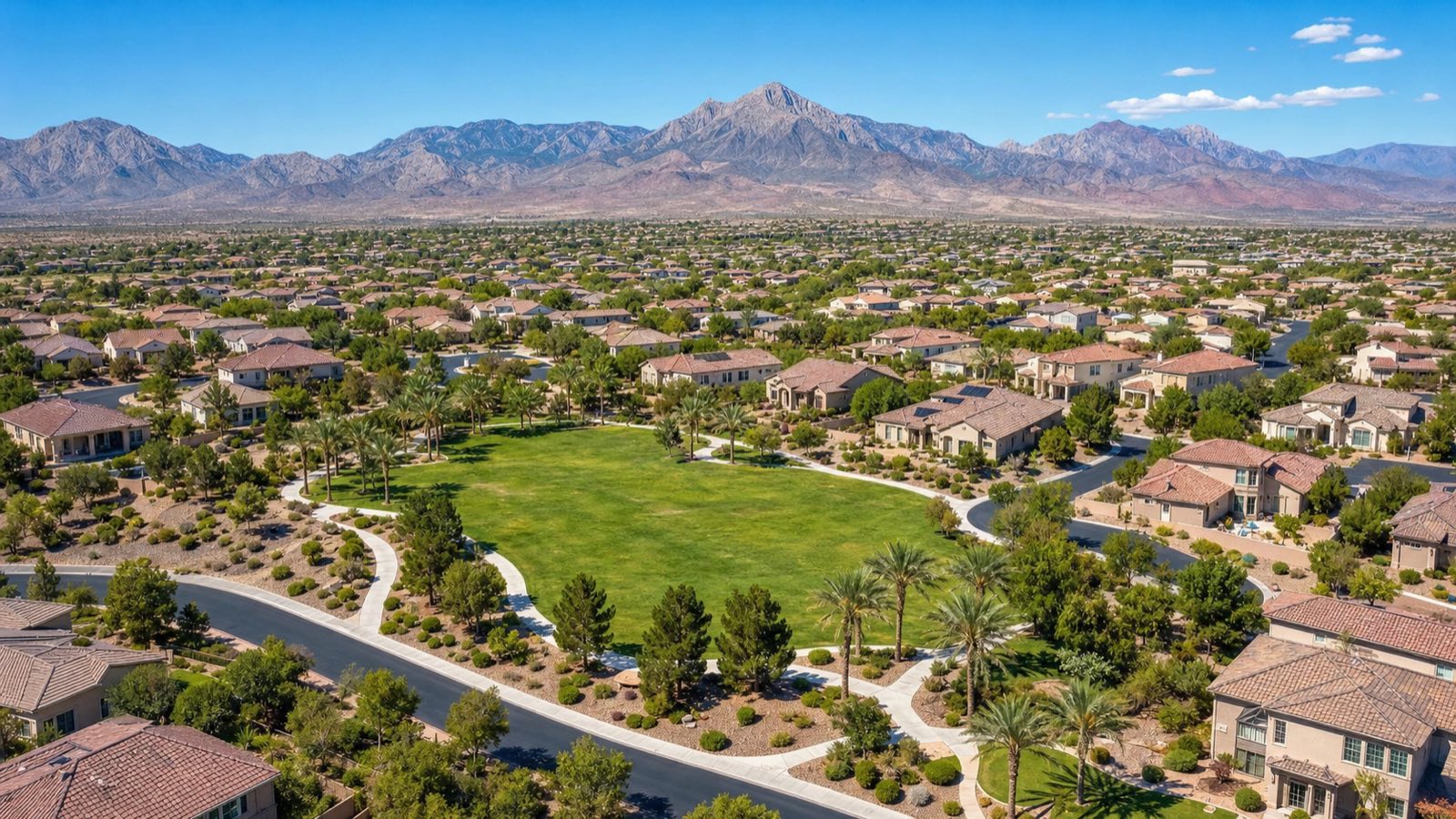
Relocating buyers benefit most from running the comparison street by street. Our moving to Las Vegas guide and the Las Vegas property tax page help newcomers calibrate the inputs, and a neighborhood's own July sale-to-list ratio in the September reports is a decent guide to how much negotiating room you will have. The principle is simple: stop comparing your current rent with a generic mortgage and compare the actual home you would occupy, in the actual district that sets its tax rate, at the rate you can actually lock.
What Mistakes Do Renters Make When Running the Numbers?
The most expensive mistakes are framing errors, not arithmetic, and I see the same handful repeatedly. The first is using a stale rate. A comparison run at June's 6.48% understates the FHA payment on a $431,000 house by $226 a month against October's 7.28%, which is $13,560 over five years.
The second is assuming rent only rises. It has risen over the long run, but HUD's three-bedroom benchmark for Clark County fell 4.0% for the year starting October 1, 2026, and a renter in a softening market can negotiate a renewal. Model rent growth as a scenario, the way the table above does, rather than as a certainty.
The third is leaving out upkeep. The 1% reserve in this guide is an assumption, but a water heater, an HVAC unit or a roof in the desert is not optional, and a comparison without any upkeep line overstates the case for owning by about $359 a month on this house. The fourth runs the other way: treating the down payment as money gone. It is not gone; it becomes equity, and the forced principal paydown is real savings.
The fifth is draining reserves to reach 20% down. A smaller down payment with mortgage insurance and three to six months of reserves is usually safer than a larger one with nothing left. The sixth is forgetting the tax mechanics: counting Nevada's lack of an income tax as an owner perk, or forgetting to file the Assessor's postcard to claim the 3% cap after closing. The last is renting indefinitely by default. Rerun your numbers once a year, and act when they cross. For the seller's side of the same transaction, our seller resources explain how exit costs work.
Frequently Asked Questions
Is it cheaper to rent or buy a house in Las Vegas right now?
Month to month, renting is cheaper for a median house at today's rate. A three-bedroom Las Vegas house leased at a $2,100 median in July 2026, while buying the $431,000 median three-bedroom with 3.5% down costs about $3,450 a month at the 7.28% weekly average Freddie Mac reported for October 1, 2026, before upkeep. Over five years renting also costs less in every scenario I ran except a 20% down purchase with prices and rents rising 4% a year.
How long do I need to stay in Las Vegas for buying to beat renting?
At a 7.28% rate on a $431,000 three-bedroom, it depends heavily on price and rent growth. With 4% a year, buying breaks even in about 4 years with 20% down and about 8 with FHA. With 2% a year, it takes about 11 years with 20% down and about 21 with FHA. With flat prices and rents, it never breaks even within 30 years. These are hypothetical scenarios, not forecasts, so rerun them with your own price, rate and rent.
How much cash do I need to buy a $431,000 house in Las Vegas?
With an FHA loan, about $25,860: a $15,085 down payment at 3.5% plus about $10,775 in closing costs if they run 2.5% of the price. With 20% down, about $96,975. An eligible veteran using a VA loan can put nothing down if the price doesn't exceed the appraised value. Renting the comparable house takes the $2,100 first month plus a deposit that Nevada caps at three months' rent, so up to $8,400 in total.
Do Nevada's taxes make buying a better deal than renting?
Not by themselves. Nevada has no personal income tax, but that benefits renters and owners equally. Property tax is the owner-specific cost, and Nevada's caps help: an owner-occupied primary residence's bill can rise no more than 3% a year once the owner claims it under NRS 361.4723. The federal mortgage-interest deduction favors owning only if you itemize, according to IRS Publication 936. In the worked example, property tax is $194 a month, based on the 2024 Census median paid in Las Vegas.
Will my property tax reset to the purchase price when I buy?
No. Nevada taxes 35% of a parcel's taxable value, which is land value plus depreciated replacement cost and can't exceed full cash value, so the price you pay is not the base. A sale carries the parcel's tax history forward. What changes is the cap: the Clark County Assessor removes the owner-occupied 3% abatement when a new ownership document records, so the new owner must return the postcard to claim it. Until then, a cap of up to 8% can apply.
Should I rent first when I move to Las Vegas?
Often, yes, for six to twelve months. Renting first lets you learn the valley's neighborhoods, confirm your commute and job, and save toward a larger down payment, which at today's rate shortens the break-even more than almost anything else. Nevada limits a security deposit to three months' rent, so the cash to start renting is modest. The mistake is renting indefinitely by default after your plans and savings have firmed up; rerun the comparison once you know you're staying.
How much can a Las Vegas landlord raise my rent?
Under NRS 118A.300, a Nevada landlord must give 60 days' written notice before raising rent on a tenancy of a month or longer, and 30 days for a periodic tenancy shorter than a month. That notice rule is the main statewide protection; our guide to how much a Las Vegas landlord can raise rent covers lease terms and renewals in detail. When you compare renting with buying, model rent as a scenario rather than a fixed figure: HUD's three-bedroom benchmark for Clark County fell 4.0% for the year starting October 1, 2026.
What Should You Do Next If You're Deciding Between Renting and Buying?
Start by replacing my medians with your numbers. The four inputs that move the answer most are the rate you can actually lock, the price of the specific home you want, the rent on a comparable home, and how long you realistically expect to stay. Get a pre-approval and a Loan Estimate so the rate, mortgage insurance and cash to close are real rather than averages; pull the current tax bill for the parcel rather than estimating it; and ask for an insurance quote on the actual house. Then run the five- and ten-year comparison above with the growth rate you personally believe, and check the version where prices and rents stay flat.
If the numbers say rent, rent with a plan: a savings target, a date to rerun the math, and a list of neighborhoods to learn. If they say buy, buy a home you can carry comfortably at the rate you actually get, keep reserves after closing, and claim your 3% tax cap with the Assessor right away.
Our team at Nevada Real Estate Group, brokered by LPT Realty, is ranked the #1 real estate team in Nevada and closed 789 homes and $361.5M+ in 2025. We'll pull current sales and leases for the exact areas you're considering, point you to licensed lenders for a real pre-approval, and lay renting and buying side by side with no pressure to do anything but understand your options. Call (702) 637-1759 or start with a mortgage pre-approval.
Which Sources Inform This Rent-vs-Buy Guide?
Mortgage rates come from the Freddie Mac Primary Mortgage Market Survey (7.28% as of October 1, 2026) and its weekly historical data file (6.48% for June 4, 2026). Rent benchmarks come from HUD's FY2027 Fair Market Rent schedule, HUD's FY2026 schedule and HUD's Fair Market Rent program page; Census figures from the American Community Survey median gross rent table and real estate taxes paid table for the City of Las Vegas. FHA terms come from HUD Mortgagee Letter 2023-05, HUD's FHA answers page and HUD's FHA mortgage limits lookup; VA terms from the VA purchase loan page; the Loan Estimate from the Consumer Financial Protection Bureau. Insurance averages are from Triple-I's homeowners and renters insurance statistics, based on NAIC data. Price history is from the FHFA House Price Index datasets. Property tax rules come from NRS chapter 361, the Clark County Treasurer's tax district rates and the Clark County Assessor's tax abatement page; landlord-tenant rules from NRS chapter 118A; transfer tax from NRS chapter 375; income tax from the Nevada Constitution; and the mortgage-interest deduction from IRS Publication 936. Market context for the association's own monthly releases is at Las Vegas REALTORS.
Sale and lease medians are our own pulls of Las Vegas MLS data through Repliers (sales on October 4, 2026, leases on September 27, 2026) and our September 2026 market reports; they are not official Las Vegas REALTORS statistics. Upkeep at 1% of price a year, closing costs at 2.5%, selling costs at 6% and the 0%, 2% and 4% growth scenarios are my stated assumptions, not forecasts. For deeper local detail, see our guides to FHA loans and Nevada's income-tax advantage, and our Henderson buying guide for the local first steps.
Information deemed reliable but not guaranteed. This article is educational and is not financial, tax or legal advice; the rent-versus-buy decision depends on your own finances, and no appreciation or rent change is guaranteed. Confirm current figures with a qualified professional before acting. Nevada Real Estate Group · (702) 637-1759 · NV License S.181401.