
Published June 28, 2026 · By Chris Nevada, Nevada Real Estate Group · NV License S.181401
"Should I rent or buy?" is the question underneath every other home-buying question, and in Nevada it has a particular flavor. The state's lack of an income tax, its steady population growth, and its wide spread of prices — from the mid-$400,000s in North Las Vegas to $750,000-plus in Summerlin — all shape the math in ways a generic national calculator misses. Rent is money you never get back; a mortgage builds equity. But buying carries real upfront and ongoing costs, and if you move too soon, those costs can outweigh the equity you build.
If ownership fits the household's plans, review the seasonal and personal-timing questions in our guide to when to buy a home in Nevada.
This guide runs the actual numbers for Nevada in 2026: the break-even point where buying overtakes renting, how the monthly costs really compare, the hidden costs on both sides, how the no-income-tax advantage tilts the math, and — honestly — when renting is the smarter choice. The goal is not to push you toward buying; it is to help you make the decision that fits your finances and your timeline.
We have helped thousands of Nevadans make exactly this call across more than 9,600 closings worth over $4.85 billion. If you want to run your own numbers with someone who knows the local market, call our Southern Nevada team at (702) 637-1759 or our Northern Nevada team at (775) 277-2120, or start with our buyer resources.
Whether to rent or buy in Nevada in 2026 comes down to how long you will stay. Buying typically beats renting once you stay about 3 to 5 years — long enough for equity and appreciation to offset the costs of buying and later selling. Renting wins for shorter stays or when you are not financially ready. Nevada's lack of a state income tax and steady growth tilt the long-term math toward buying for those staying put.
- Buying usually beats renting once you stay about 3 to 5 years — the break-even on transaction costs.
- Rent builds no equity; a mortgage converts a monthly payment into ownership over time.
- Buying has upfront costs — down payment plus 2% to 3% closing — and ongoing maintenance renters avoid.
- Nevada's no state income tax boosts your buying power and tilts the long-term math toward owning.
- Run your own numbers free: (702) 637-1759 in the south, (775) 277-2120 in the north.
- Estimate your timeline. Plan to stay 3 to 5 years for buying to typically pay off.
- Compare true monthly costs. Rent vs. full payment (principal, interest, taxes, insurance, HOA).
- Count the upfront and hidden costs. Down payment, closing, and maintenance versus rent hikes and no equity.
- Factor the tax angle. No state income tax and mortgage-interest deductions favor owning.
- Check your readiness. Stable income, credit, and savings decide more than the market does.
Should You Rent or Buy a House in Nevada in 2026?
The single most important factor is your time horizon. Buying a home has real fixed costs on both ends — you pay closing costs to buy and commissions plus closing costs to sell — and it takes time for equity and appreciation to outrun those costs. Stay long enough and buying wins decisively; sell too soon and renting would have been cheaper.
For most Nevada buyers, the break-even point lands around 3 to 5 years. If you are confident you will stay in the home at least that long, buying is usually the stronger financial move. If your plans are uncertain or short-term — a job that might relocate you, a life situation in flux — renting preserves your flexibility and avoids the transaction costs of a quick turnaround. According to the Consumer Financial Protection Bureau, the rent-versus-buy decision should weigh not just the monthly payment but the full cost of ownership and how long you plan to stay.
Nevada's specifics tilt the long-term math toward buying for those who stay. According to the U.S. Census Bureau, Nevada is one of the fastest-growing states, and that sustained demand has historically supported rising home values — which rewards owners with appreciation while renters face steady rent increases. Layer in no state income tax, and a Nevada household keeps more of each paycheck to put toward a mortgage. In our experience, the Nevadans who regret their decision are rarely the ones who bought and stayed; they are the ones who kept renting for a decade, paying down someone else's mortgage while prices climbed out of reach.

What's the Break-Even Point on Buying vs. Renting in Nevada?
The break-even point is the number of years you need to own before buying becomes cheaper than renting the same home. Before that point, the upfront costs of buying dominate; after it, equity and appreciation pull ahead.
Three costs push the break-even out: your closing costs to buy (2% to 3% of price, or $8,000 to $12,000 on a $400,000 home), the commission and closing costs to sell later (roughly 6% to 8%, or $24,000 to $32,000 on that home), and the opportunity cost of your down payment. Three forces pull it in: the equity you build with each mortgage payment, home appreciation, and the gap between your rent and your mortgage payment. The faster your home appreciates and the longer you stay, the sooner buying wins.
In Nevada in 2026, with steady appreciation and rents that keep climbing, the break-even for a typical purchase lands around 3 to 5 years — sometimes sooner in fast-appreciating submarkets, later in flat ones or at the luxury tier where transaction costs are larger. According to Freddie Mac, the mortgage rate also matters: a lower rate means more of each payment builds equity rather than covering interest, pulling the break-even closer. The practical test is simple — if you are confident you will stay past five years, buying almost always wins; if you might leave within two, renting is usually safer; and the three-to-five-year zone is where your specific numbers and the local market decide.
How Do the Monthly Costs of Renting and Buying Compare in Nevada?
On a month-to-month basis, renting and buying can look surprisingly close in Nevada — but the comparison is incomplete until you account for what each payment builds.
A renter's payment is simple: rent, plus renters insurance and utilities, with no equity and exposure to annual increases. A buyer's payment is the full PITI plus HOA — principal, interest, property taxes, homeowners insurance, and any HOA dues — of which the principal portion is forced savings that builds equity. The headline monthly numbers might be similar, but a chunk of the buyer's payment comes back to them as ownership.
| Line | Renting | Buying (5% down) |
|---|---|---|
| Monthly housing payment | $2,100 rent | $2,400 (PITI + HOA) |
| Builds equity? | No | Yes — principal portion |
| Upfront cost | $2,100 deposit | $20,000 down + $10,000 closing |
| Annual increase risk | Rent hikes 3%–8% | Fixed P&I; taxes capped |
| Maintenance | Landlord pays | 1% of value/year ($4,000) |
The figures above are illustrative — your actual numbers depend on price, rate, down payment, and the specific rent. But the pattern holds across Nevada: buying often costs a few hundred dollars more per month than renting the equivalent home, while converting part of that payment into equity and locking your principal-and-interest against future increases. Over five years, the renter's payment rises with the market while the buyer's stays fixed and builds ownership — which is why the gap widens in the buyer's favor the longer you stay.
What Are the Hidden Costs of Renting vs. Buying in Nevada?
Both choices carry costs that the headline monthly number hides, and weighing them honestly is the key to a good decision.
The hidden costs of renting are real even though they feel invisible. You build zero equity — every payment is gone for good. You face rent increases, commonly 3% to 8% a year in growing Nevada markets, so your housing cost rises over time while an owner's principal-and-interest stays fixed. You have no control: a landlord can sell, decline to renew, or change the terms. And you miss the appreciation and tax benefits of ownership entirely.
The hidden costs of buying are more visible but also more controllable. Beyond the down payment, you pay 2% to 3% in closing costs upfront, then ongoing property taxes, homeowners insurance, and maintenance — budget about 1% of the home's value per year, roughly $4,000 on a $400,000 home. HOA dues add $50 to $300-plus monthly in many Nevada master plans. And your money is less liquid than a renter's, tied up in the home until you sell or borrow against it.
| Cost | Renting | Buying |
|---|---|---|
| Equity | None — payment is gone | Builds with each payment |
| Annual cost change | Rent hikes 3%–8% | Fixed P&I; capped taxes |
| Maintenance | Landlord's expense | $4,000/yr on a $400K home |
| Upfront cash | 1 month deposit | Down payment + 2%–3% closing |
| Appreciation | Goes to landlord | Goes to you |
The honest comparison nets these against each other. Renting trades equity, appreciation, and cost stability for flexibility and lower upfront cash and maintenance. Buying trades upfront cash, maintenance, and reduced liquidity for equity, appreciation, fixed housing costs, and control. Which bundle wins depends on your timeline and finances — not on a one-size-fits-all rule.
How Does Nevada's No Income Tax Change the Rent-vs-Buy Math?
This is where Nevada tilts the scale, and it benefits buyers in particular. Because the state has no personal income tax, a Nevada household keeps more of every paycheck than a household earning the same salary in California or Oregon — money that can go toward a mortgage payment and the savings that owning requires.
According to the Nevada Department of Taxation, Nevada imposes no state income tax at all. For a household earning $120,000, that can mean several thousand dollars a year that would otherwise go to a state in a high-tax neighbor — funds that improve both the ability to qualify for a mortgage and the cushion to carry it comfortably. Nevada's property taxes are also relatively low and subject to a constitutional cap on annual increases for owner-occupied homes, which keeps the tax portion of an owner's payment stable and predictable over time — an advantage renters do not share, since rising property values eventually flow into higher rents.
There is a federal angle too. Homeowners who itemize may deduct mortgage interest and property taxes on their federal return, a benefit renters cannot claim, though whether it helps depends on your situation and the standard deduction — consult a tax professional. The net effect for a Nevada household planning to stay is that the after-tax cost of owning is often more favorable than the raw monthly comparison suggests. For relocating buyers especially, the no-income-tax advantage is a real, recurring boost to the case for buying. Our how much house can I afford in Nevada guide shows how that extra take-home pay translates into buying power.
When Does Renting Make More Sense in Nevada?
Buying is not always the right answer, and a good agent will tell you when renting is the smarter call. Renting wins in several real situations.
A short or uncertain timeline. If you might move within one to two years — a job that could relocate you, a life situation in flux — the transaction costs of buying and quickly selling usually outweigh the equity you would build. Renting preserves flexibility. Financial unreadiness. If your credit needs work, your savings are thin, or your income is unstable, renting while you prepare is the responsible choice — buying before you are ready risks overextending. Wanting maximum flexibility. Renting lets you relocate, upsize, or downsize quickly without selling. A local market where renting is genuinely cheaper. In some high-price segments, the monthly gap between rent and a full mortgage payment is wide enough that renting and investing the difference can pencil out — though Nevada's appreciation and tax profile narrow that gap.
In each case, the common thread is that flexibility or readiness matters more than building equity right now. Renting is not "throwing money away" when it is the right fit — it is paying for flexibility and time to prepare. According to the Consumer Financial Protection Bureau, the worst outcome is buying before you are financially ready and being forced to sell at a loss; renting avoids that risk entirely. The smart move is to rent without guilt while you get ready, then buy when your timeline and finances align.
When Does Buying Win in Nevada?
For Nevadans who are ready and planning to stay, buying usually wins — and the advantages compound over time.
You will stay 3 to 5 years or more. Past the break-even, equity and appreciation pull decisively ahead of renting. You have stable income and savings. A steady income, a credit score of 620-plus, and enough for the down payment (as little as 0% to 3.5% with the right loan) plus 2% to 3% closing make ownership sustainable. You want fixed, predictable housing costs. Your principal-and-interest is locked for the life of the loan while rents keep climbing — over a decade, that difference is enormous. You want to build wealth. For most American households, home equity is the largest single source of net worth, and each mortgage payment converts spending into savings.
Nevada amplifies all of this. The no-income-tax advantage frees up money to own, the property-tax cap keeps carrying costs stable, and steady population growth supports appreciation. According to the National Association of Realtors, homeowners build substantially more net worth over time than renters, largely through equity and appreciation. In our experience, the Nevadans who buy a home they can comfortably afford and stay put are the ones who, five and ten years later, are glad they stopped renting when they did. If you are ready, our how to buy a house in Nevada guide walks through the whole process, and down payment assistance can lower the cash barrier.
How Does the Rent-vs-Buy Math Differ by Nevada City?
The rent-versus-buy calculation shifts across Nevada because both rents and home prices vary by market. The principle is the same statewide; the numbers and the break-even differ.
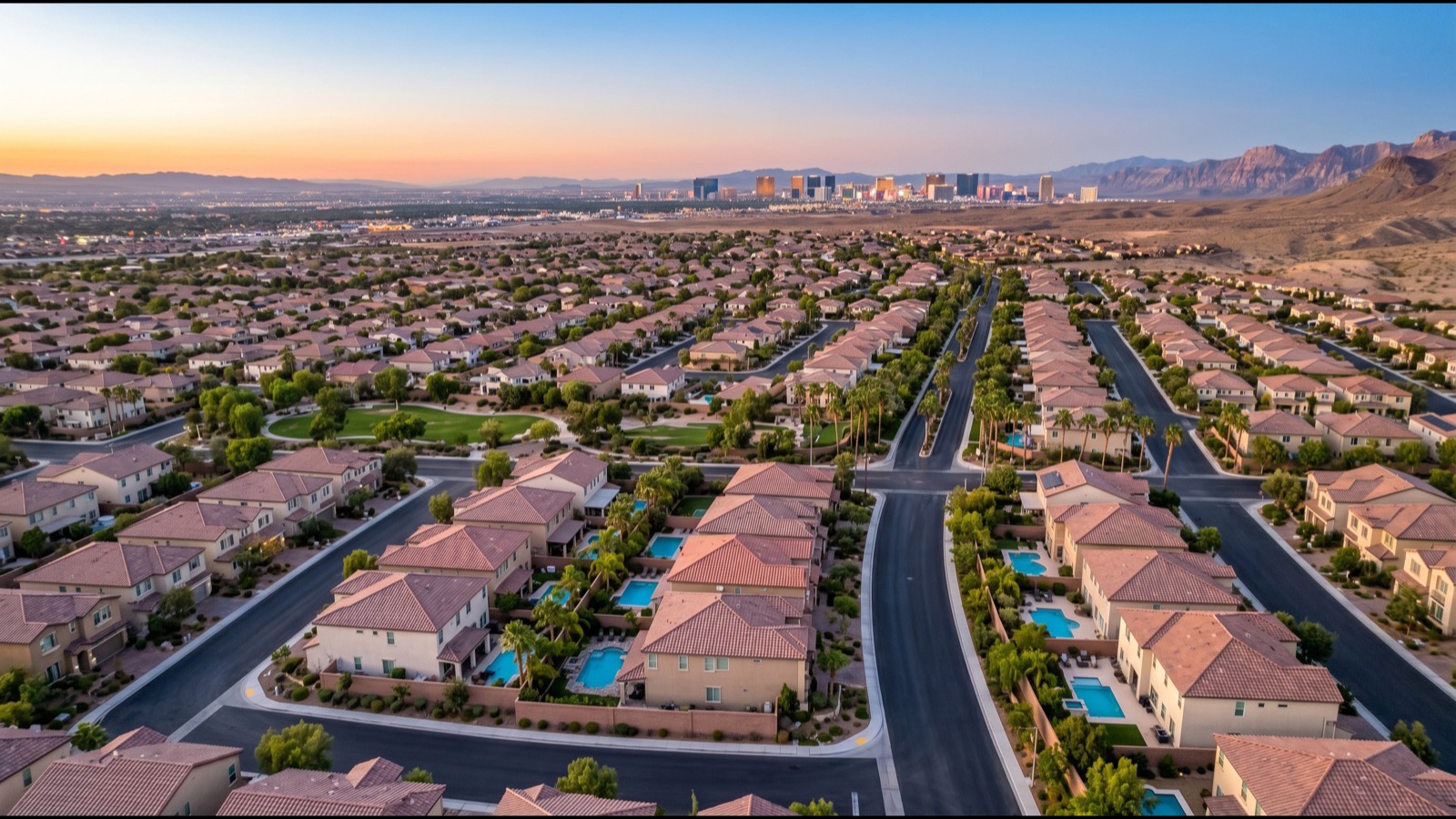
In the south, Las Vegas and North Las Vegas have the most accessible price points, where the gap between rent and a mortgage payment is narrow and buying pencils out quickly for stayers. Henderson and Summerlin carry higher prices and HOA dues, pushing the break-even out a bit, but strong demand supports appreciation. Boulder City's scarce inventory makes owning a long-term hold. In the north, Reno and Sparks have higher prices than southern entry markets, but tech-driven rent growth strengthens the case for buying among those staying. Carson City is more affordable, and rural Pahrump often has the smallest rent-to-own gap of all.
If a lease-option enters the discussion, read how Las Vegas rent-to-own agreements differ from an ordinary rental or purchase.
| Market | Typical Median Price | Buy Case |
|---|---|---|
| North Las Vegas | Low-to-mid $400,000s | Strong — narrow rent gap |
| Las Vegas | Mid-$400,000s | Strong for stayers |
| Henderson | $550,000–$700,000 | Good; longer break-even |
| Summerlin | $750,000-plus | Hold longer to win |
| Reno / Sparks | $500,000s–$600,000s | Good; rent growth helps |
| Carson City / Pahrump | $300,000–$550,000 | Strong — small rent gap |
Your local agent can run the real rent-versus-buy numbers for your specific neighborhood and price point, which beats any statewide average — the decision is always sharpest at the block level.
How Do You Know If You're Ready to Buy Instead of Rent in Nevada?
Since readiness decides more than the market does, here is how to tell you are ready to make the jump from renting to owning.
Stable, documented income — ideally two years in the same field, so a lender can verify it. A credit score of 620 or higher (580 opens FHA), which determines both eligibility and your rate. Savings for the down payment and closing costs — as little as 0% to 3.5% down plus 2% to 3% closing, with reserves left over, and Nevada down payment assistance can help bridge it. A manageable debt load that leaves room for a housing payment under the 28/36 guideline. A 3-to-5-year horizon, so you clear the break-even.
| Signal | Target |
|---|---|
| Credit score | 620+ (580 for FHA) |
| Down payment saved | $0–$14,000 on a $400,000 home |
| Closing-cost cash | $8,000–$12,000 (2%–3%) |
| Stay horizon | 3–5 years or more |
| Debt-to-income | Under the 28/36 guideline |
When those boxes are checked, the math and the timing both favor buying for most Nevadans. When they are not, renting while you close the gaps is the right move — not a failure, just a step. Getting pre-approved is the cleanest way to confirm where you stand; it turns the abstract rent-versus-buy debate into your actual numbers.

What Mistakes Do People Make in the Rent-vs-Buy Decision?
The rent-versus-buy choice has a few common traps that lead people to the wrong answer for their situation.
Comparing rent only to a mortgage payment. Buying adds taxes, insurance, HOA, and maintenance; renting adds nothing back as equity. Compare the full picture, not just two monthly numbers. Ignoring the timeline. Buying with a one-to-two-year horizon usually loses to renting once transaction costs are counted — be honest about how long you will stay. Believing renting is always "throwing money away." For short stays or the financially unready, renting is the smart, lower-risk choice. Waiting for the "perfect" time to buy. While you wait, rent rises and prices often climb; readiness matters more than timing. Underestimating ownership costs. Maintenance and HOA dues are real — budget for them so ownership stays comfortable. Overlooking Nevada's tax advantage. The no-income-tax boost to take-home pay genuinely strengthens the buy case for those who stay.
According to the Consumer Financial Protection Bureau, the best decision comes from comparing the full cost of each option over your realistic time horizon — not from a rule of thumb or a fear of "wasting" rent. In our experience, the households that get this right are the ones who run their actual numbers, weigh their real timeline, and decide with clear eyes rather than emotion. Rent when it fits; buy when you are ready and staying. You can always contact our team to run the numbers for your specific situation before you decide.
Frequently Asked Questions About Renting vs. Buying in Nevada
Is it better to rent or buy in Nevada in 2026?
It depends on your timeline. Buying typically beats renting once you stay about 3 to 5 years — long enough for equity and appreciation to offset the costs of buying and later selling. For shorter or uncertain stays, renting preserves flexibility. Nevada's no state income tax and steady growth tilt the long-term math toward buying for those who plan to stay put.
What is the break-even point for buying vs. renting in Nevada?
Around 3 to 5 years for a typical purchase. Before that, the upfront costs of buying (down payment plus 2% to 3% closing) and the eventual costs of selling (6% to 8%) outweigh the equity you build. After it, equity and appreciation pull ahead of renting. Fast-appreciating submarkets and lower rates shorten the break-even; the luxury tier lengthens it.
Is renting throwing money away in Nevada?
Not always. Rent builds no equity, but it buys flexibility and avoids the upfront and maintenance costs of owning. For a short or uncertain stay, or when you are not financially ready, renting is the smart, lower-risk choice. It is only "wasted" relative to buying when you would have stayed long enough — past the 3-to-5-year break-even — for ownership to pay off.
How much does it cost upfront to buy instead of rent in Nevada?
Renting needs roughly one month's deposit. Buying needs a down payment (as little as 0% to 3.5% with the right loan — $0 to $14,000 on a $400,000 home) plus 2% to 3% in closing costs ($8,000 to $12,000), with some reserves left over. Nevada down payment assistance programs can cover much of the down payment for eligible buyers, narrowing the upfront gap.
Does Nevada's no income tax make buying a better deal?
It helps. With no state income tax, a Nevada household keeps more of each paycheck than in California or Oregon — money that can go toward a mortgage and the savings owning requires. Combined with Nevada's relatively low, capped property taxes and federal mortgage-interest deductions for those who itemize, the after-tax cost of owning is often more favorable than the raw monthly comparison suggests.
How long should I plan to stay to make buying worth it in Nevada?
Generally 3 to 5 years or more. That is the typical window for equity and appreciation to offset the transaction costs of buying and later selling. If you might move within one to two years, renting is usually the safer math. A longer horizon also smooths out short-term market swings, making the exact purchase timing far less important.
Is buying cheaper than renting per month in Nevada?
Often the full buying payment runs a few hundred dollars more per month than renting an equivalent home — but a portion of that payment builds equity, and your principal-and-interest is fixed while rent rises 3% to 8% a year. Over several years, the buyer's stable, equity-building payment typically comes out ahead of the renter's rising, equity-free one.
Does the rent-vs-buy decision differ between Las Vegas and Reno?
The principle is identical, but the numbers differ. Las Vegas and North Las Vegas have lower price points and a narrow rent-to-mortgage gap, so buying pencils out quickly. Reno and Sparks cost more but have strong rent growth that strengthens the buy case for stayers. Henderson and Summerlin's higher prices and HOA dues push the break-even out somewhat. A local agent can run your exact numbers.
Ready to Decide Between Renting and Buying in Nevada?
The rent-versus-buy decision is not about a rule of thumb — it is about your timeline, your finances, and the real numbers for your market. Buy if you are ready and staying past the 3-to-5-year break-even; rent without guilt if your timeline is short or you need time to prepare. Nevada's no-income-tax advantage and steady growth strengthen the case for owning, but only your specific situation can settle it. The smartest move is to run your actual numbers before you decide.
Nevada Real Estate Group helps Nevadans make this call with real local data in all nine markets we serve, #1 in Nevada and #44 in the nation, backed by more than 9,600 closings and $4.85 billion-plus in volume. Whether you are weighing the decision in Las Vegas, Reno, or Henderson, we will run an honest rent-versus-buy comparison for your situation — and tell you if renting is the better call. Call our Southern Nevada team at (702) 637-1759 or our Northern Nevada team at (775) 277-2120, learn more on our about page, or contact our team. Then prepare with our how much house can I afford in Nevada guide and the full how to buy a house in Nevada walkthrough.
Which Sources Inform This Nevada Rent-vs-Buy Guide?
This guide draws on Nevada Real Estate Group's direct experience plus public data from government and industry authorities. Rents, prices, rates, and tax rules change — confirm current specifics with a licensed agent, lender, or tax professional before acting. This is general educational information, not financial or tax advice.
- Consumer Financial Protection Bureau — rent vs. buy guidance
- U.S. Census Bureau — Nevada QuickFacts and housing data
- Freddie Mac — Primary Mortgage Market Survey
- National Association of Realtors — homeownership and wealth research
- Nevada Department of Taxation — no state income tax
- Las Vegas REALTORS — Southern Nevada market data
- Reno/Sparks Association of REALTORS — Northern Nevada market data
- Nevada Housing Division — homebuyer and assistance programs
- U.S. Department of Housing and Urban Development — Nevada
- Nevada Real Estate Division — licensing and consumer resources