

Every rural Nevada listing says the same two words — "well/septic" — like they're features. They're neither features nor flaws; they're utilities you're about to own, with your name on every future repair. The buyers who thrive on acreage understand that from day one. The ones who skip the $800 of specialized inspections sometimes get to fund a $25,000 education instead.
This guide exists because rural Nevada is where the value lives — Pahrump's acre lots, Lyon County's ranchettes, the Washoe Valley spreads — and because well-and-septic diligence is the single biggest competence gap between city agents and the rural deals they occasionally touch. Across the 9,600+ closings Nevada Real Estate Group has represented statewide, our rural files run on a field checklist refined over years of flow tests, failed leach fields, and arsenic surprises. This is that checklist, in full, for both ends of the state.
Buying a Nevada home on well and septic takes three add-on inspections: a well test measuring flow, recovery, and equipment; a lab water panel covering bacteria, nitrates, and arsenic — a genuine Nevada issue; and a septic pump-and-inspect with a leach-field load test. Budget $700-1,200 total. FHA and VA add potability and separation rules; some basins — Pahrump especially — restrict wells. Stakes: $15,000-30,000 for a well, $10,000-25,000 for septic.
- Three add-on inspections — well flow, lab water panel, septic pump-and-inspect — cost $700-1,200 combined.
- Arsenic is a real Nevada groundwater issue; treatment systems run $2,000-6,000 when a panel flags it.
- Pahrump's over-appropriated basin carries special well rules — verify the parcel's water status before offering.
- FHA and VA require potable water tests and minimum well-to-septic separation distances.
- Replacement stakes: $15,000-30,000 for a new well, $10,000-25,000 for a septic system — inspect accordingly.
What Are You Actually Buying With a Well and Septic Home?
Two private utility systems, complete with their own equipment, lifespans, and failure modes. The well: a drilled and cased hole — anywhere from 100 to 800+ feet deep in Nevada's basins — with a submersible pump pushing water to a pressure tank that feeds the house. The septic system: a buried tank that settles and digests waste, draining to a leach field that percolates treated effluent into the soil. No monthly bill, no municipal backstop, no one to call but your own contractor.
The ownership math is honest and mostly favorable: you'll spend roughly $300-600 a year on average across time (electricity for the pump, periodic septic pumping, filter changes) against the $1,000-1,800 a year municipal water and sewer would run — but the spending arrives in lumps, not installments. A pump dies as $2,500-5,000 on a Tuesday; a leach field fails as $10,000-20,000 over a wet month. The entire discipline of buying these homes is converting unknown lumps into known conditions before you close — which is what the three inspections below do.
The other thing you're buying is water law. According to the Nevada Division of Water Resources, a domestic well serving a single household may draw up to 2 acre-feet per year without a permitted water right — generous for any household — but the well itself lives inside a groundwater basin with its own health, rules, and politics. In most basins that's a background fact. In a handful, it's the whole ballgame — next section.
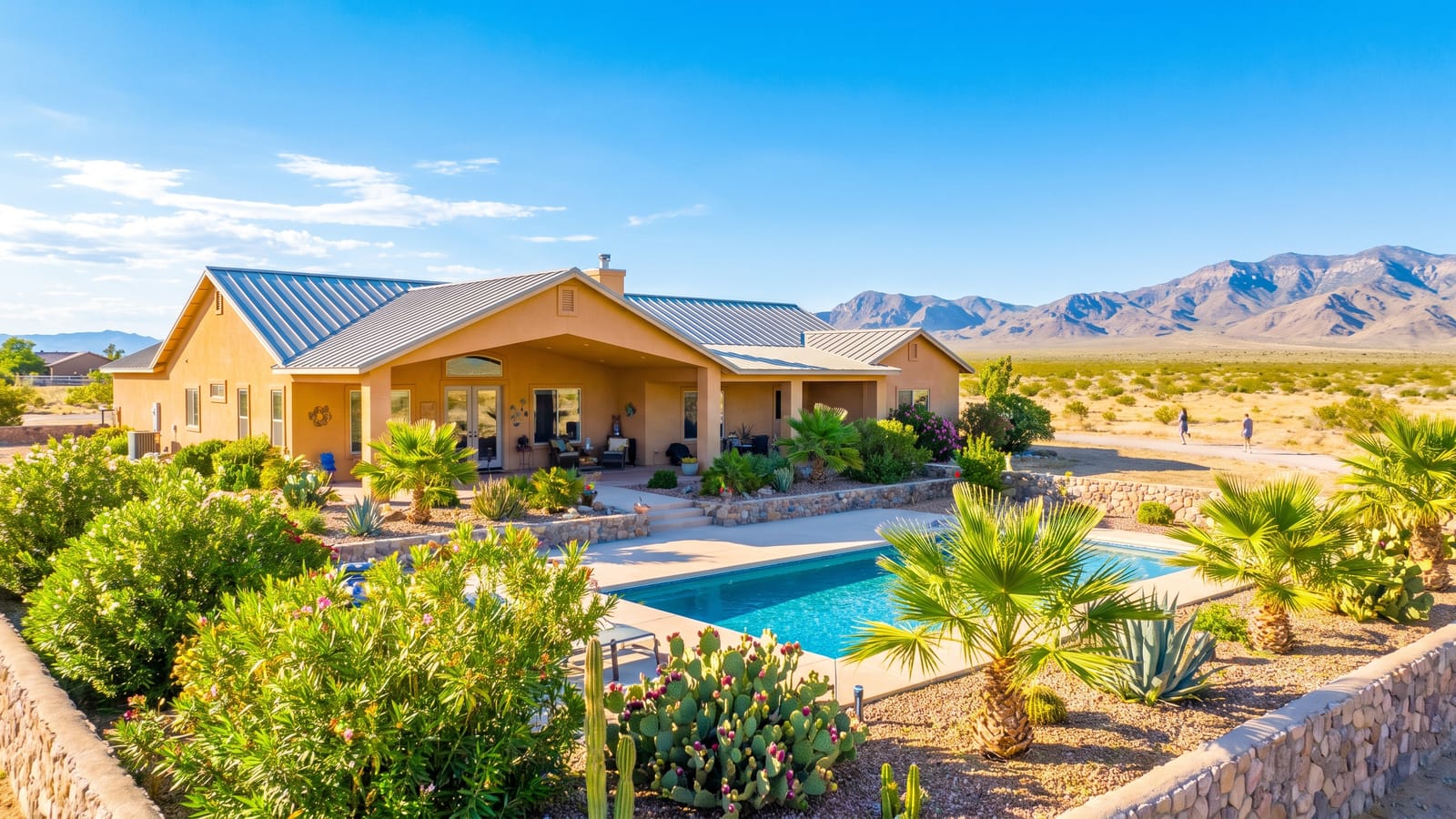
What's the Deal With Pahrump's Water — and Other Basin Restrictions?
Nevada allocates groundwater by basin, and some basins have promised more water on paper than nature recharges. Pahrump's Basin 162 is the famous case. According to the Nevada State Engineer's administrative record, decades of over-appropriation led to special rules on new domestic wells — including orders restricting new-well drilling on lots without dedicated water rights and metering requirements that don't exist elsewhere. The rules have evolved through litigation and administrative orders, which is exactly why the practical guidance isn't a summary of current law but a procedure: for any Pahrump-area parcel, verify the specific lot's water status — existing well, well log, water-right dedication, or municipal/utility service — before writing the offer. A Pahrump lot with a healthy existing well and a lot that needs a new one are different assets with different values.
Elsewhere in the state the temperature is lower but the homework is identical: parts of Diamond Valley, portions of the Carson and Walker basins, and various rural valleys carry curtailment histories or designations worth knowing. The tools are public — the state's well-log database lets you pull the drilling record for most existing wells (depth, static level, flow at completion, driller), and the basin's designation status is a phone call to the Division. Your agent should hand you both with the disclosures; it's two documents that tell you more about the property's future than any listing photo.
How Do You Inspect a Well Before Buying?
The well test is a specialized inspection ($300-600) that a general home inspector doesn't perform — hire a licensed well contractor or pump company. What a real one covers:
| Test component | What's measured | What good looks like | Red flags |
|---|---|---|---|
| Flow/yield test (1-4 hours) | Sustained gallons per minute under draw | 5+ GPM comfortable for a household; 3-5 workable with storage | Under 3 GPM, or yield falling during the test |
| Recovery/drawdown | How the water column rebounds after pumping | Quick recovery to static level | Slow recovery — a tired well or dropping aquifer |
| Pump and equipment | Pump age/amp draw, pressure tank, controls, wiring | Pump under 10-12 years, tank holding pressure | Original 1998 pump, waterlogged tank, jury-rigged controls |
| Wellhead and casing | Cap seal, casing condition, grading around head | Sealed cap, sound casing, ground sloping away | Open/cracked caps (contamination path), buried wellheads |
| Well log cross-check | The state drilling record vs today's performance | Performance consistent with completion data | Big yield decline vs the original log |
Translate results into negotiation, not panic. A strong well with a 14-year-old pump is a normal rural house with a predictable $3,500 line item coming — ask for a credit and budget it. A 2.5 GPM well is a different conversation: storage-tank systems ($3,000-6,000) make low-yield wells livable, but the well's condition should be priced into the deal, and on irrigated acreage it may not support your plans at all. And a dry-trending well in a declining basin is the walk-away read the inspection exists to give you — the $500 that saves the $30,000 redrill on someone else's problem.
What Should the Water Quality Panel Cover — and Why Arsenic?
Flow is quantity; the lab panel is quality, and in Nevada it's non-negotiable. The state's geology — volcanic rock, closed hydrologic basins, mineral-rich groundwater — makes naturally occurring arsenic a genuine, documented issue in many Nevada aquifers. According to the Nevada Division of Environmental Protection, private well owners bear their own testing responsibility — no utility monitors your tap. According to the U.S. Geological Survey's groundwater studies, the Great Basin carries some of the country's higher rates of arsenic exceedances in domestic wells, and according to the EPA's drinking-water standards, the health limit is 10 parts per billion — a threshold plenty of untreated Nevada wells exceed without any taste, smell, or visible sign.
The buyer's panel ($150-350 through a certified lab): total coliform and E. coli bacteria, nitrates, arsenic, plus the useful extras — total dissolved solids, hardness, iron/manganese, pH, and uranium in the basins where it's smart (another Great Basin geology gift). Sample it right: from a pre-treatment tap when possible, collected per lab instructions, during your inspection window.
Reading results like a rural buyer instead of a headline: bacteria is usually a fixable event (shock chlorination, $100-300, then retest — though repeat hits suggest a casing or septic-separation problem); nitrates near or over the limit point at septic proximity or agricultural history and deserve real scrutiny; arsenic over 10 ppb is common enough that the response is standardized — point-of-use reverse osmosis at the kitchen ($400-1,200) or whole-house treatment ($2,000-6,000), negotiated like any inspection finding. None of these should kill a purchase by reflex; all of them should be known and priced before closing, because the lab panel is the only way to know. Water tastes fine at three times the arsenic limit.

How Do You Inspect a Septic System?
The septic inspection ($400-700, including the pump-out) is the one buyers most often skip and most often regret. A real one — by a licensed septic contractor, not a checkbox on a general inspection — includes: locating and uncovering the tank (you'd be surprised how many owners can't say where it is), pumping it out to inspect the tank's baffles, walls, and liquid levels honestly, loading the leach field with water to verify it accepts and percolates, and checking for the classic failure signs — surfacing effluent, suspiciously lush green stripes in a desert yard, backing drains, odors.
The questions that frame the inspection: How old is the system (25-40 years is a normal lifespan; the disclosure and permit record date it)? Was it permitted and sized for the house (a 3-bedroom permit under a 5-bedroom addition is a capacity problem with a paper trail — health-district permit records are searchable)? When was it last pumped (every 3-5 years is the maintenance rhythm; "never" is a data point)? And where is it relative to the well — which brings in the lender rules below.
Failure economics, so the stakes are concrete: a tank repair or new baffles run $500-2,500; a failed leach field is $8,000-20,000 in most Nevada soils (more where space or soils force engineered systems); a complete new conventional system lands $10,000-25,000. In our experience the leach field is where sellers' optimism and buyers' inspections disagree most — "it's always worked fine" and "it accepts water under load" are different claims, and only one of them is evidence.
What Do FHA, VA, and USDA Loans Require on Well/Septic Homes?
Government-backed loans finance rural Nevada constantly — the USDA zero-down program practically lives on these properties — but they bring their own rulebook. According to HUD's FHA handbook, water quality and well-to-septic separation are appraisal-level requirements, not suggestions:
| Requirement | FHA | VA | USDA | Conventional |
|---|---|---|---|---|
| Water potability test | Required (bacteria, nitrates, and commonly lead) | Required — VA-specific panel | Required | Lender/appraiser discretion |
| Well-to-septic separation | Distance standards apply (commonly cited: 50 ft to tank, 100 ft to leach field) | Similar standards | Follows FHA-style guidance | Appraiser notes issues |
| Shared wells | Allowed with recorded agreement | Allowed with agreement + test | Case-by-case | Lender-dependent |
| Septic evaluation | If appraiser flags concerns | Often required in practice | Commonly required | Buyer's choice (always say yes) |
| Practical effect | Order tests early — government-loan escrows die on week-four water failures that week-one tests would have surfaced | |||
Two field notes. The separation distances are why the "where exactly is everything" question matters — a 1970s Pahrump parcel with a well 40 feet from the tank can fail an FHA appraisal regardless of how well both systems work, and the cure (a new well, a moved leach line) reprices the whole deal. And failed potability isn't automatically fatal: treatment-then-retest satisfies the requirement in most cases, becoming one more negotiated item — but only if the timeline allowed for it, which is why the rural escrow order of operations is always tests first, everything else second.
What Does Owning Well and Septic Actually Cost Per Year?
The honest operating ledger, averaged over a decade of ownership:
| Item | Frequency | Cost |
|---|---|---|
| Pump electricity | Monthly | $15-40 on the power bill |
| Septic pumping | Every 3-5 years | $350-600 |
| Water testing (annual bacteria/nitrate check) | Yearly | $50-150 |
| Filter/treatment media (if treating) | Yearly | $100-400 |
| Pressure tank replacement | Every 10-15 years | $600-1,500 |
| Pump replacement | Every 12-20 years | $2,500-5,000 |
| Leach field rejuvenation/repair reserve | System lifetime | $2,000-5,000 reserved |
| Ten-year realistic total | — | $8,000-15,000 (about $70-125/month) |
A worked ten-year picture makes the lumps concrete. Take a typical Pahrump acre purchased in 2026 with a 2008 well and a 2005 septic system, both passing inspection: over the next decade this owner realistically pumps the tank twice ($900), replaces the pressure tank once ($1,100), runs annual water tests ($1,000 cumulative), pays pump electricity ($3,000), and — around year seven — replaces the original pump ($3,800). Total: just under $10,000, or about $82 a month, for water and sewer service no utility can shut off or reprice. Set against the $1,000-1,800 a year municipal alternative, the systems roughly pay for themselves when maintained — the disasters cluster among owners who treated them as invisible. The three habits that prevent most of the ledger's ugly tail: pump the tank on schedule (and never let anyone tell you additives replace pumping), keep the household honest about what goes down drains (no grease, no wipes of any kind, gentle with the disposal), and test the water annually — the $100 habit that catches a casing failure or septic intrusion while it's a repair instead of a health event.
Where Are Nevada's Well and Septic Markets — North and South?
The map, briefly, because system norms differ by region. Southern Nevada: Pahrump is the volume market (most of the valley runs wells and septic, with the basin caveats above), joined by Sandy Valley, Amargosa, and the Moapa/Logandale farm belt — deeper basins, older systems on legacy parcels, arsenic screening always. Northern Nevada: Washoe Valley, Palomino Valley, and the county pockets around Reno mix wells with community systems; Lyon County — Dayton, Silver Springs, Stagecoach, Fernley's edges — is the workhorse well-and-septic commuter belt; and the Carson Valley around Minden and Gardnerville layers agricultural water rights alongside domestic wells, which is where the title-report notations earn their reading. Same physics everywhere; different basin politics, drilling depths, and price points — and in our experience the inspection stack is identical in all of them, because geology doesn't care which county line it sits under.
In our files the regional difference that actually moves deals is seller preparation: Northern ranchette sellers — often long-tenured — tend to have well logs and pump-out receipts organized; Southern acreage sellers more often inherited or invested remotely, and the records hunt adds a week. Buyers can compress it: the state's databases are public, and the well log request is a same-day pull your agent should make at offer time, not at inspection time.
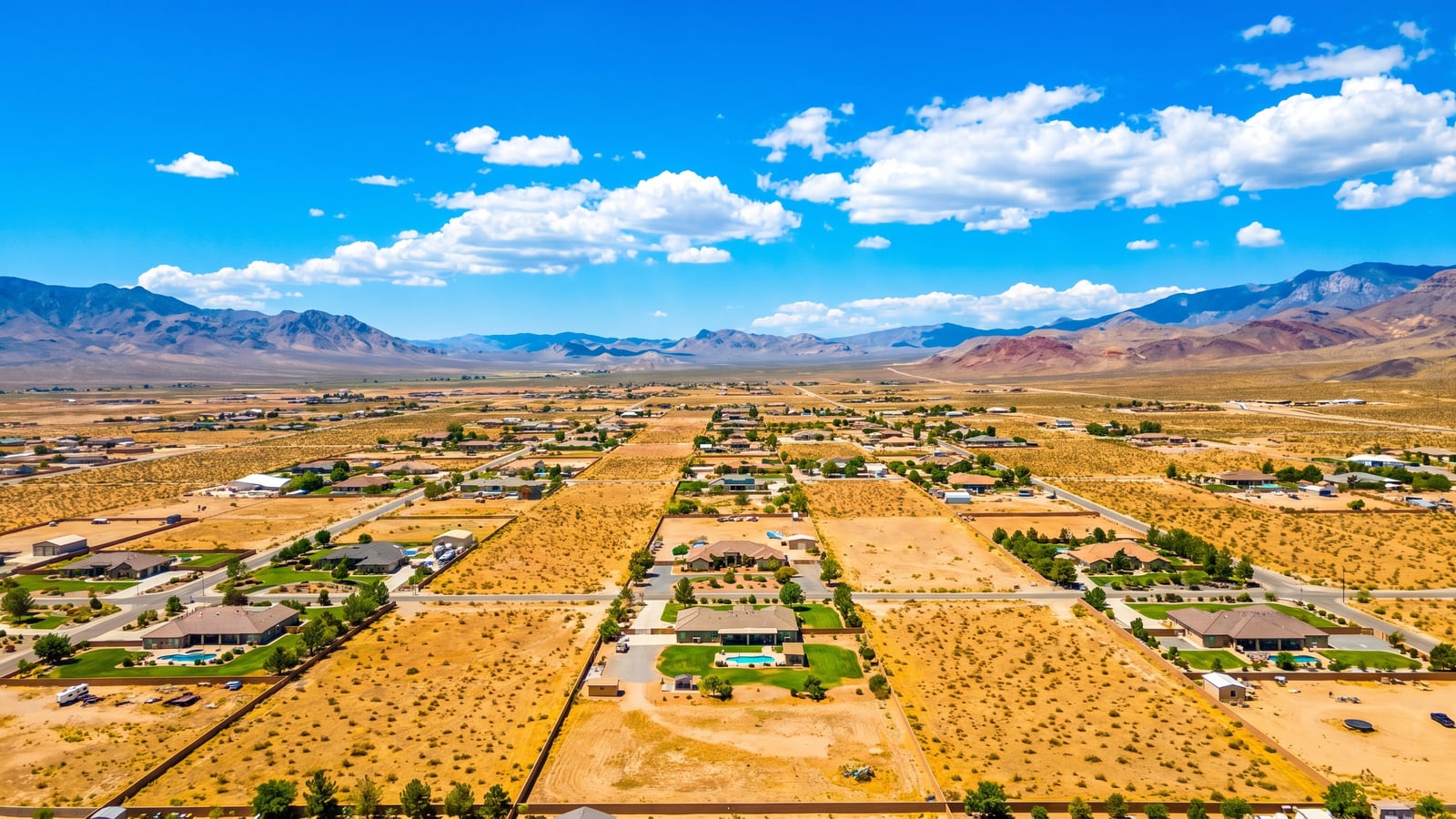
Which Northern Nevada Communities Run on Wells and Septic?
Pahrump dominates the Southern half of this map, but the Northern half is where most of the state's rural inventory actually trades — and buyers relocating to the Reno-Carson corridor hit it constantly, usually without expecting to. The concentration runs through Lyon County and the valleys east of Carson City:
- Silver Springs — one of the most well-and-septic-dependent communities in Northern Nevada. Larger parcels, older systems in the established sections, and a wide spread of well depths and ages within a short drive. Inspection discipline matters more here than almost anywhere in the north.
- Stagecoach — small-acreage and ranchette inventory where domestic wells and on-site septic are the norm rather than the exception. Buyers drawn by land-per-dollar frequently underestimate the system diligence.
- Dayton — a mix. Newer subdivisions closer to the highway corridor are commonly on community water and sewer, while the outlying and older sections run private systems. Never assume by town — confirm per parcel.
- Fernley — same split as Dayton, with municipal service inside the built-up core and private systems on the rural edges.
- Washoe Valley and the Carson Valley benches — the higher-value end of Northern well/septic inventory, where larger custom homes on acreage sit on private systems.
The single most expensive assumption in this market is inferring service type from the town name. Two homes ten minutes apart in Dayton or Fernley can be on completely different infrastructure, and the difference changes your inspection budget, your loan requirements, and your annual carrying cost. Verify the actual service for the actual address before you get emotionally committed to a property.
Two Northern-specific practicalities worth building into your timeline. First, schedule early. Rural inspection specialists — well-flow testers, septic pumpers who will scope a tank, water-quality labs — are a thinner bench up north than in the Reno metro, and a standard inspection contingency can get tight if you start calling on day five. Second, confirm the permitting record. Well and septic permitting runs through county environmental health alongside the Nevada Division of Environmental Protection, and water rights sit with the Nevada Division of Water Resources; an unpermitted or undocumented system is a materially different purchase than a permitted one with a clean record. Ask for the well log, the septic permit, and the most recent pump-out receipt in writing — the same three documents that matter in Pahrump, requested earlier.
For buyers moving up from the metro, our Reno relocation guide covers the broader Northern market context, and our team works these rural corridors regularly — call (775) 277-2120 for Northern Nevada questions or (702) 637-1759 in the south.
What Are the Biggest Well/Septic Buying Mistakes in Nevada?
- Skipping the specialized inspections because the general inspection "covered it." It didn't — flow tests, lab panels, and tank pump-outs are separate trades.
- Buying in Pahrump without verifying the parcel's water status. Basin 162's rules make the well situation part of the title-level diligence, not a utility detail.
- Trusting taste, clarity, or "we've drunk it for years." Arsenic and nitrates are invisible; only the lab knows.
- Ignoring the well log. The state's drilling record is free and tells you depth, original yield, and age — the well's birth certificate.
- Letting the FHA/VA water test happen in week four. Order everything in week one; treatment-and-retest needs runway.
- Assuming the leach field works because drains flow. Load testing under inspection conditions is the only honest answer a buyer can get.
- Forgetting the systems at resale. Sellers: a recent pump-out receipt, a current water test, and the well log in a folder is $200 of paperwork that de-risks your buyer's whole decision — the same logic as every pre-listing prep move, applied rurally.
How Do You Buy Rural Nevada With Confidence?
The compressed protocol: verify the water status and pull the well log before offering; write the offer with well, water-quality, and septic contingencies plus timeline room for retests; order all three inspections in week one ($700-1,200 total); negotiate findings as line items like any inspection response; and close knowing your systems' age, condition, and next decade of costs. It pairs with everything else rural — the USDA zero-down math, the manufactured-home title rules, the water-rights notations in your preliminary title report — which is why rural representation is a speciality and not a zip-code accident. Nevada Real Estate Group closes acreage from Pahrump to Dayton to Gardnerville — 150+ agents statewide, 9,061+ verified five-star client reviews. Southern Nevada: (702) 637-1759. Northern Nevada: (775) 277-2120. Or send us the listing and we'll pull the well log before you tour it — browse the acreage inventory anytime on our search.
Frequently Asked Questions
What inspections do you need when buying a house with a well and septic in Nevada?
Three, beyond the general home inspection: a well test by a licensed pump contractor (flow rate, recovery, equipment condition — $300-600), a certified lab water panel (bacteria, nitrates, arsenic at minimum — $150-350), and a septic pump-and-inspect with a leach-field load test ($400-700). Budget $700-1,200 total against five-figure replacement stakes.
Is well water safe to drink in Nevada?
Usually — once tested and, where needed, treated. Nevada's geology makes naturally occurring arsenic a genuine issue in many basins, and it's tasteless and invisible; nitrates and bacteria are the other standard screens. A $200 lab panel answers the question definitively, and common treatments (reverse osmosis at $400-1,200, whole-house systems at $2,000-6,000) resolve most findings.
How much water can a domestic well use in Nevada?
Up to 2 acre-feet per year for a single-household domestic well — roughly 650,000 gallons, generous for any home plus modest irrigation — without a permitted water right. The caveat is basin-level: over-appropriated basins like Pahrump's carry special restrictions on new wells and, in some cases, metering rules, so the parcel's specific water status is part of due diligence.
What does it cost to replace a well or septic system?
The stakes behind the inspections: a new well runs $15,000-30,000+ in Nevada depending on depth (drilling alone runs tens of dollars per foot, and basins run deep), a replacement pump $2,500-5,000, a failed leach field $8,000-20,000, and a complete new septic system $10,000-25,000. The $700-1,200 inspection stack exists to price these before they're yours.
Can you get an FHA or VA loan on a well and septic home?
Yes — government loans finance rural Nevada constantly. They add requirements: a potability test through a certified lab (bacteria, nitrates, commonly lead), minimum separation distances between the well and septic components, and recorded agreements for shared wells. Order the tests in week one of escrow; failed results can usually be cured by treatment and retest if the timeline allows.
How often should a septic tank be pumped?
Every 3-5 years for a typical household — about $350-600 — with the interval tightening for bigger households or garbage-disposal-heavy kitchens. Pumping is also the honest inspection moment: baffles, walls, and levels get seen. No additive replaces it, and "never pumped" on a 20-year-old system is a data point your offer should price.
What is a well log and how do I get one in Nevada?
The driller's official record filed with the state when the well was completed — depth, casing, static water level, and yield at completion. It's the well's birth certificate, it's free, and Nevada's Division of Water Resources maintains a searchable database. Pull it before you offer and hand it to your well inspector; performance drift versus the original log is one of the most useful signals in rural diligence.
Which Sources Inform This Well and Septic Guide?
Water law, domestic-well allowances, basin designations, and well logs are from the Nevada Division of Water Resources; drinking-water standards from the EPA's Safe Drinking Water Act resources; regional groundwater and arsenic occurrence from the U.S. Geological Survey. Septic permitting and standards run through the Nevada Division of Environmental Protection and county health authorities. Loan requirements reference HUD's FHA handbook, the VA lender handbook, and USDA Rural Development guidance. Cost figures reflect 2026 Nevada contractor pricing observed across NREG's rural transactions statewide, with market context from our Las Vegas and Reno data desks. Basin rules evolve through administrative orders — verify any parcel's current water status with the Division and the county before relying on a summary, including this one.