

Published June 14, 2026 · Updated June 14, 2026 · By Chris Nevada, Nevada Real Estate Group · NV License S.181401
Reno has quietly become one of the most-requested relocation destinations in the West, and the questions have changed with it. People used to ask whether Reno was a "real" place to live; now they ask how to do the move right — what it actually costs, whether the no-income-tax math holds up, which neighborhood fits their life, and what the brochures conveniently leave out. This is the honest version, written for someone deciding whether to pull the trigger.
Across the 9,600-plus closings Nevada Real Estate Group — the #1 real estate team in the state — has represented over 16-plus years, we've walked hundreds of out-of-state buyers through this exact move. Below is the straight talk: the genuine pros, the real cons, a numbers-first cost-of-living breakdown, and the practical things that decide whether Reno is right for you. For the full dollar-by-dollar budget, pair this with our companion Reno cost-of-living breakdown.
Reno is a strong place to live in 2026 for buyers who value no state income tax, four-season weather, and 45-minute access to Lake Tahoe — but it is no longer cheap. The cost of living runs about 18% above the U.S. average, driven mostly by housing, with a median home price near $560,000. The trade is real: lower taxes and outdoor access in exchange for prices higher than many movers expect.
- Reno's cost of living sits about 18% above the national average — housing is the main driver.
- Nevada has no state income tax, which can offset higher housing for movers from California.
- Median home prices run near $560,000; neighborhoods range from $400K starters to $2M+ estates.
- Lake Tahoe is about 45 minutes away — the single most-cited reason buyers choose Reno.
- The cons are real: winter snow, summer wildfire smoke, and prices that have climbed fast.
Shopping the area? Browse live Reno homes for sale — every active MLS listing with prices, photos, and instant filters.
Is Reno a Good Place to Live in 2026?
For the right buyer, yes — but "the right buyer" matters. Reno rewards people who want outdoor access, a no-income-tax tax base, and a mid-size city that still feels navigable, and it frustrates people expecting either big-city amenities or small-town prices. According to the U.S. Census Bureau, the city has grown steadily past 270,000 residents, with the broader Reno–Sparks metro well over 500,000, and that growth has reshaped both the upside and the downside.
The honest framing we give relocating clients: Reno in 2026 is a city in the middle of a transition from "affordable Tahoe gateway" to "established Western metro." The economy has diversified far beyond gaming, the housing stock has modernized, and the cultural amenities have caught up — but so have the prices. If you're moving for the lifestyle and the tax structure rather than for cheap real estate, Reno delivers. If you're chasing 2015 prices, that window has closed.
In our experience, the buyers happiest after the move are remote workers, California escapees doing the tax math, retirees who want four seasons without East Coast humidity, and outdoor-focused families. The ones who struggle are buyers who underestimated winter, or who expected a small town and found a growing metro with real traffic on the Reno–Sparks corridor.
What Are the Real Pros of Moving to Reno?
Start with the tax structure, because it's the headline. According to the Nevada Department of Taxation, Nevada levies no state income tax — no tax on wages, no tax on capital gains, no tax on retirement income. For a household relocating from California's top brackets, that single difference can be worth thousands of dollars a year, and it's the math that makes the higher housing palatable.
Then there's the location. Reno sits 45 minutes from Lake Tahoe, an hour from renowned skiing, and at the doorstep of high-desert trails, the Truckee River, and the eastern Sierra. According to the Reno-Sparks Convention and Visitors Authority, the region markets itself on exactly this access, and for most of our relocating buyers it's the deciding factor. Add roughly 250-plus sunny days a year, four genuine seasons, and an economy that's pulled in Tesla, Panasonic, Switch, and a growing tech and logistics base, and the upside is substantial.
| Pros | Cons |
|---|---|
| No state income tax | Cost of living 18% above U.S. average |
| 45 minutes to Lake Tahoe | Winter snow and icy commutes |
| Four seasons, 250+ sunny days | Summer wildfire smoke risk |
| Diversifying tech/logistics economy | Home prices up sharply since 2019 |
| Mid-size, still navigable city | Growing traffic on the I-580 corridor |
The economic story deserves emphasis. According to the Economic Development Authority of Western Nevada, the Reno–Sparks region has added tens of thousands of jobs over the past decade as advanced manufacturing, data centers, and logistics moved into the Tahoe-Reno Industrial Center east of town. That diversification is why Reno weathered recent cycles better than single-industry towns — and why job-seekers, not just retirees, increasingly land here.
What Are the Honest Cons of Living in Reno?
Now the part the relocation brochures skip. First, it costs more than people expect. According to cost-of-living research compiled by the Council for Community and Economic Research (C2ER) and similar indices, Reno runs roughly 18% above the national average overall, and the gap is widest in housing. The no-income-tax savings are real, but they don't make Reno "cheap" — they make a relatively expensive city's math work better.
Second, winter is a genuine adjustment for anyone coming from a warm climate. Reno sits at about 4,500 feet, so it gets real snow — typically manageable in town but enough to demand winter tires, a capable vehicle, and patience on the grades toward Tahoe. Third, summer brings wildfire-smoke risk; in bad fire years, the Sierra haze can settle into the Truckee Meadows for days. Neither is a dealbreaker, but both surprise transplants who pictured year-round sunshine.
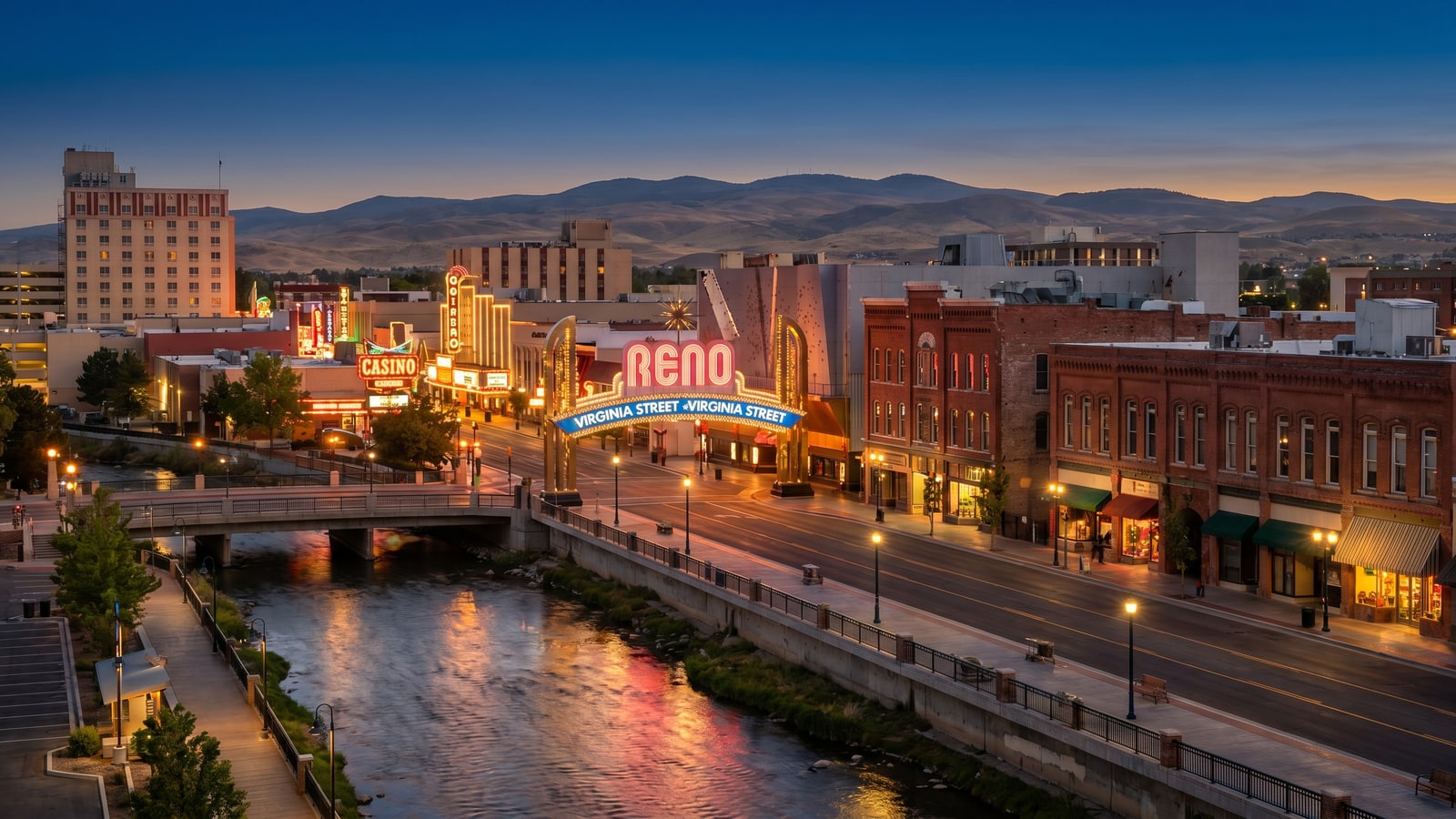
The fourth con is the one we watch most closely as agents: prices have climbed fast. A home that traded around $300,000 in 2015 can run well past $500,000 today. That's great for sellers and tough for first-time buyers, and it means the "affordable alternative to California" pitch is now relative rather than absolute. Going in clear-eyed about that is the difference between a happy move and buyer's remorse.
How Much Does It Cost to Live in Reno?
Budget for a cost of living roughly 18% above the U.S. average, with housing doing most of the lifting. A useful rule of thumb we give clients: take your current non-housing budget, add a modest premium for groceries and utilities, then build your housing number from current Reno prices — and credit yourself the income-tax savings on the other side of the ledger.
According to the U.S. Bureau of Labor Statistics, wages in the Reno area have risen alongside the cost base, but housing has outpaced incomes since 2019, which is the core affordability tension. Everyday costs — groceries, gas, dining — run modestly above the national line; the real divergence is the mortgage or rent line. For the full category-by-category numbers, see our dedicated Reno cost-of-living breakdown.
| Category | Typical Range | Notes |
|---|---|---|
| Housing (rent, 2BR) | $1,600–$2,200 | The largest line; varies by area |
| Mortgage (median home) | $3,200–$3,800 | On a about $560,000 home at current rates |
| Utilities (electric/gas/water) | $200–$350 | Higher in winter heating months |
| Groceries (household) | $500–$800 | Slightly above national average |
| Transportation/gas | $200–$400 | Car-dependent metro |
| State income tax | $0 | Nevada has none |
The takeaway: Reno's monthly nut is real, but the zero on the income-tax line is what tips the comparison for high-earning movers. A household that paid five figures a year in California income tax effectively redirects that money toward a Reno mortgage — which is exactly the trade many of our relocating clients make on purpose.
What Do Homes Cost in Reno in 2026?
The median home price in Reno hovers near $560,000 in 2026, though the number you'll actually pay depends heavily on neighborhood and home type. According to the Reno/Sparks Association of REALTORS, the market has shifted from the frenzied bidding of 2021 toward a more balanced footing, with longer market times and real negotiating room returning for buyers — a meaningfully better environment than the recent past.
Here's the practical spread we see: entry-level homes and townhomes start in the low-$400,000s in areas like Sparks and the North Valleys; established Reno neighborhoods run the mid-$500,000s to $800,000s; and the guard-gated and golf communities — Montreux, ArrowCreek, and the like — climb from $800,000 into the multiple millions. A first-time buyer and a luxury relocation are shopping in genuinely different Renos.
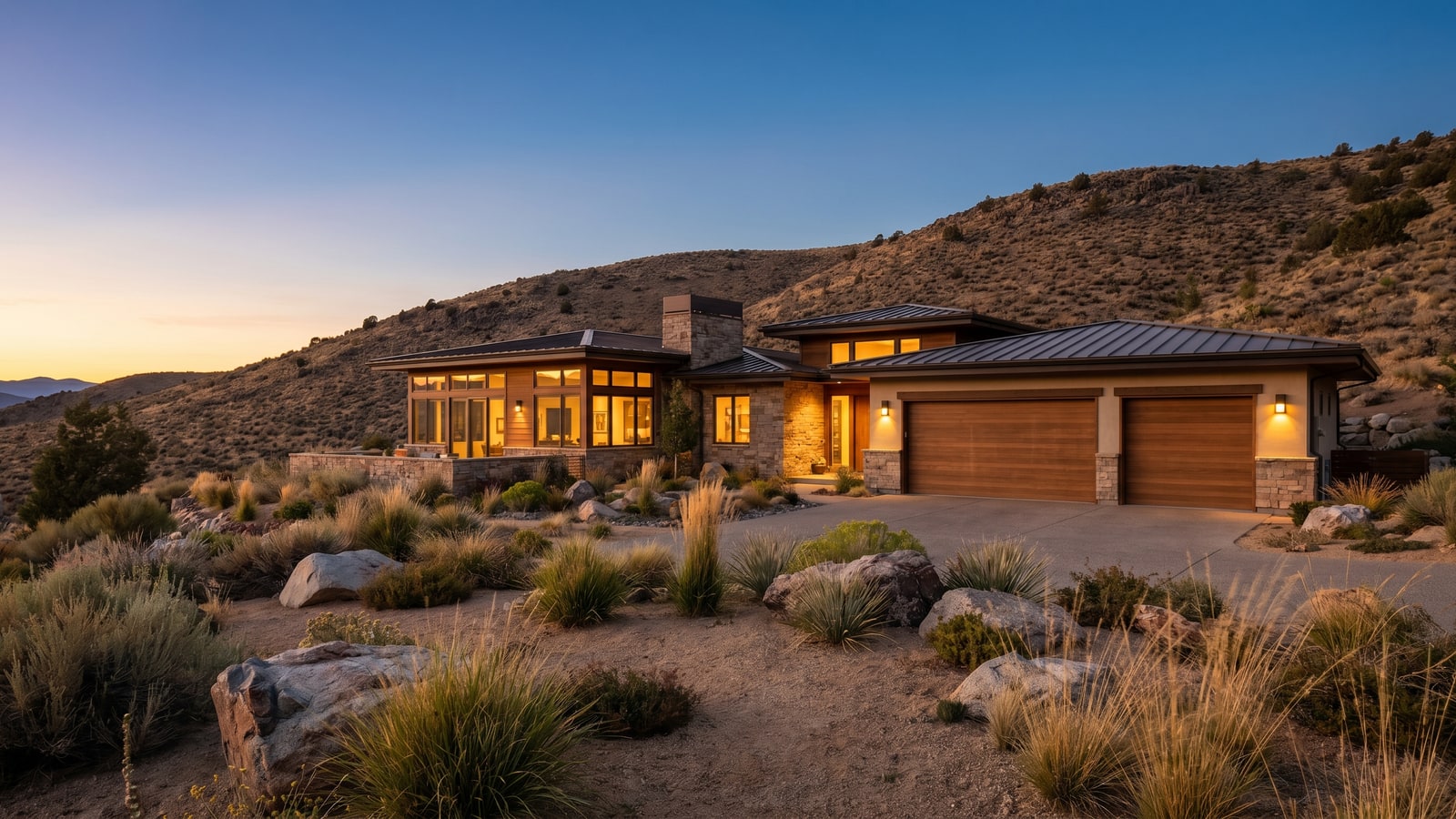
According to Freddie Mac mortgage-rate data, financing costs remain the swing factor in what buyers can afford, so the same $560,000 home feels very different depending on the rate environment when you lock. We run the real monthly numbers with clients before they fall for a house — because in this price band, a rate change moves the affordability line more than a $20,000 difference in list price.
How Do Reno Property Taxes and No Income Tax Work?
This is where Nevada's tax structure does real work for a household budget. According to the Nevada Department of Taxation, there is no state income tax of any kind, and property taxes are comparatively low — Washoe County's effective property tax rate runs well under 1% of value, far below high-tax states many transplants leave. The combination is the financial backbone of the Reno relocation case.
There's also Nevada's property tax abatement, which caps how fast an owner-occupied home's tax bill can rise each year — a protection that matters in an appreciating market. According to Nevada Revised Statutes, the cap holds annual increases on a qualifying primary residence to a low single-digit percentage, so a rising assessment doesn't translate into a runaway tax bill. New owners should confirm their primary-residence status with the Washoe County Assessor after closing.
For movers from California, the math is straightforward and powerful: no tax on income, no tax on capital gains, low property taxes, and a homestead protection on equity. We always recommend buyers read our explainer on Nevada's no-income-tax advantage and then talk to a tax professional, because establishing genuine Nevada residency — not just buying a home — is what unlocks the benefit.
Which Reno Neighborhoods Should Newcomers Consider?
Reno's neighborhoods vary as much as its prices, and matching the area to your life is the single highest-leverage decision in the move. Northwest Reno (Somersett, the McQueen corridor) draws families wanting newer homes and good schools; Southwest Reno (Caughlin Ranch, the historic Old Southwest) blends prestige and walkability; South Reno (Damonte Ranch, Double Diamond) offers volume and value along the growth corridor.
According to the U.S. Census Bureau, Washoe County's housing and demographic mix differs sharply by submarket, so a newcomer's "best" neighborhood depends on commute, budget, and whether schools or nightlife matter more. Luxury and outdoor-first buyers gravitate toward the South Reno foothills — Galena, ArrowCreek, Montreux — while urban-minded movers look at Midtown and Downtown.
| Priority | Areas to Consider | Typical Price Band |
|---|---|---|
| Newer homes + schools | Northwest Reno, Somersett, Sparks master plans | $450K–$750K |
| Prestige + walkability | Caughlin Ranch, Old Southwest Reno | $600K–$1.5M |
| Value + growth corridor | South Reno, Damonte Ranch, Double Diamond | $450K–$800K |
| Luxury + outdoors | Montreux, ArrowCreek, Galena foothills | $800K–$5M+ |
| Urban / first-time | Midtown, Downtown, Sparks | $350K–$700K |
For relocating families, school zoning frequently decides the neighborhood before the home does, which is why we map commute, budget, and school assignment together rather than in isolation. Buyers coming from a denser market are often surprised by how much the character shifts across a 15-minute drive in the Truckee Meadows — a foothill custom-home street and an in-town historic block can sit minutes apart at wildly different price points. New-construction shoppers should also weigh the trade-offs we cover in our new construction guidance, since several of Reno's growth-corridor neighborhoods are still actively building. Whether you are a first-time buyer or a move-up relocator, the right area is the one that fits your daily life, not just your budget.

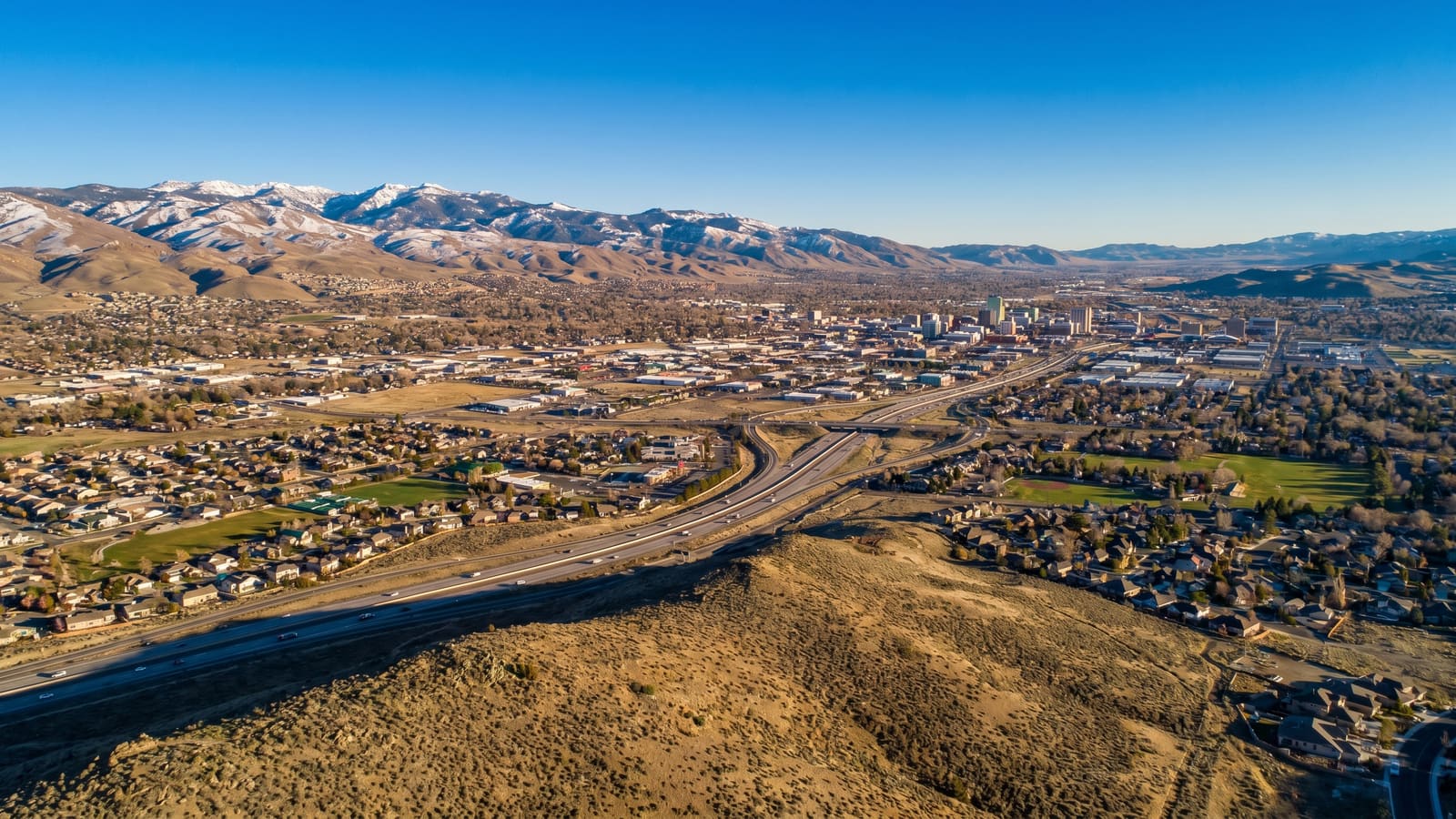
Don't overlook Sparks, Reno's neighbor to the east. It often delivers more home for the money, newer master-planned communities like Wingfield Springs, and a slightly easier entry point for first-time buyers — which is why we frequently steer budget-conscious relocators there. Our deep-dive on living in Reno vs Sparks walks through the trade-offs in detail. This post focuses on the honest pros, cons, and cost-of-living math; for the complete step-by-step relocation walkthrough — moving logistics, neighborhoods, schools, and budgeting in one place — start with our canonical Reno relocation guide.
What Is the Job Market and Economy Like in Reno?
Reno's economy is the quiet engine behind the relocation wave. According to the Economic Development Authority of Western Nevada, the region has spent a decade diversifying away from gaming and tourism into advanced manufacturing, data centers, e-commerce logistics, and a growing technology sector — anchored by the Tesla Gigafactory, Panasonic, Switch, and a wave of California companies relocating operations.
According to the U.S. Bureau of Labor Statistics, the Reno area's unemployment and job-growth figures have generally tracked better than the national average through recent cycles, reflecting that diversification. The University of Nevada, Reno adds a research-and-talent anchor, feeding the engineering and healthcare pipelines that newer employers need.
For remote workers — a large share of our relocating buyers — the calculus is different but just as favorable: Reno offers a lower tax base, real outdoor access, and a same-time-zone position relative to the West Coast, making it a natural landing spot for anyone keeping a California or Seattle job while shedding the California or Washington cost-and-tax structure.
How Is the Weather and Climate in Reno?
Reno's climate is high-desert four-season, and it's a genuine selling point with real caveats. Summers are warm and dry — daytime highs in the 90s but low humidity and cool evenings thanks to the elevation. Spring and fall are arguably the region's best months: mild, sunny, and ideal for the trails and the lake. According to the regional climate record, Reno averages well over 250 sunny days a year.
Winter is the adjustment. At roughly 4,500 feet, Reno gets real snow — usually a few inches at a time in the valley, more on the benches and far more on the Tahoe grades. It's nothing like a Midwest winter, but it's enough to require winter tires and a sensible vehicle, and the icy morning commute is a recurring complaint from warm-climate transplants. Factor it in honestly; it's the climate trade for the four seasons and the skiing.
The wildfire-smoke risk in late summer is the other climate caveat. In severe Sierra fire years, smoke can degrade air quality in the Truckee Meadows for stretches at a time. It varies year to year, but anyone with respiratory sensitivity should know it's part of the package before committing.
What Are Reno's Schools and Healthcare Like?
Public education across Reno and Sparks falls under the Washoe County School District, one of Nevada's largest, with a wide range of schools and several strong magnet and signature programs. As anywhere, quality varies by neighborhood, so families should research specific school assignments through resources like GreatSchools before locking in an area — school zoning often drives the neighborhood decision for relocating parents.
Healthcare is a genuine strength for a metro Reno's size. According to Renown Health, the region's largest health system anchors a network that includes a Level II trauma center, and the area is also served by Saint Mary's and the University of Nevada, Reno School of Medicine. That depth of care is a meaningful draw for retirees and families weighing Reno against smaller Western towns that lack it.
Higher education adds another layer: the University of Nevada, Reno and Truckee Meadows Community College give the region both a four-year research university and an accessible community-college pipeline — useful for families with college-bound kids and for the local talent base employers recruit from.
How Does Reno Compare to Other Western Cities?
Against its peers, Reno's pitch is "California access and outdoor lifestyle, without California taxes." Compared to Sacramento or the Bay Area, Reno trades some amenities and job density for no state income tax, lower property taxes, and closer mountain access. Compared to Boise or Salt Lake City — its most common relocation rivals — Reno offers the no-income-tax advantage and Tahoe proximity, while those markets counter with their own strengths.
According to the Nevada Department of Taxation, the tax differential is the cleanest point of comparison: a high earner moving from California can save enough in state income tax alone to materially change the housing equation. That's why we see so many Bay Area and Sacramento buyers specifically — the drive is manageable, the climate is familiar, and the tax math is compelling.
Where Reno still trails the biggest metros is in sheer amenity density — fewer direct flights than a major hub, a smaller (if fast-growing) dining and arts scene, and the cultural ceiling of a mid-size city. For many movers that's a feature, not a bug; for others it's the reason they ultimately choose a larger market. Knowing which camp you're in is the whole decision.
It's also worth weighing Reno against the rest of Northern Nevada before you commit. Nearby Carson City — the state capital, about 30 minutes south — offers a quieter, lower-cost alternative with the same no-income-tax structure and even closer access to the south shore of Lake Tahoe, and the Carson Valley towns of Minden and Gardnerville trade urban amenities for space and views. Some of our relocating buyers ultimately land in one of those smaller markets after touring them, having arrived set on Reno proper. And for households whose work or family pulls them toward Southern Nevada instead, it's worth comparing the math against moving to Las Vegas, where the housing base is different and the winters are far milder. The point is to shop the whole region with eyes open, not just the first city that caught your attention.
What Should You Know Before Moving to Reno?
Three practical things. First, establish Nevada residency properly — Nevada gives new residents a tight window to title and register a vehicle and get a Nevada license, and genuine residency (not just a home purchase) is what unlocks the tax benefits. Second, buy for the winter you'll actually have: a home with good heating, a manageable driveway grade, and a sensible commute beats a view that's treacherous in January.
Third, get the housing number right before you fall in love with a house. According to Freddie Mac, rate movements swing affordability more than modest price differences, so the disciplined move is to run real monthly numbers first. Across the relocations we've handled, the buyers who budget the mortgage honestly — and credit the income-tax savings — are the ones who feel good about the move a year later.
If you want a second set of eyes on the move, our team builds the whole relocation plan with clients — budget, neighborhoods, residency steps, and timeline. Call Nevada Real Estate Group's Northern Nevada team at (775) 277-2120, whether you're coming from California, the Pacific Northwest, or anywhere the four seasons and the tax math finally pencil out. You can also browse our community guides and compare against our Las Vegas and Henderson coverage if Southern Nevada is also on your list.
What Are the Most Common Questions About Moving to Reno?
Is Reno a good place to live in 2026?
For buyers who value no state income tax, four-season weather, and Lake Tahoe access, yes — but it is no longer a cheap market. The cost of living runs about 18% above the national average, so Reno rewards lifestyle-and-tax movers more than bargain hunters. Call (775) 277-2120 to talk through your specific situation.
How much does it cost to live in Reno?
Plan for a cost of living roughly 18% above the U.S. average, with housing the biggest driver — a median home near $560,000 or rent around $1,600 to $2,200 for a two-bedroom. Everyday costs run modestly above the national line, but Nevada's zero state income tax offsets a meaningful share for higher earners.
Does Reno have state income tax?
No. According to the Nevada Department of Taxation, Nevada has no state income tax on wages, capital gains, or retirement income, and property taxes are comparatively low. That tax structure is the central financial reason many households relocate to Reno from higher-tax states.
What is the median home price in Reno?
The median home price hovers near $560,000 in 2026, though it ranges from low-$400,000s starter homes in Sparks and the North Valleys to multi-million-dollar estates in the guard-gated South Reno foothills. The market has shifted toward more balance and buyer negotiating room versus the recent past.
What are the downsides of living in Reno?
The honest cons are a cost of living about 18% above average, real winter snow that demands winter tires, summer wildfire-smoke risk in bad fire years, and home prices that have climbed sharply since 2019. None are dealbreakers, but transplants expecting cheap, year-round sunshine are the ones most often surprised.
How far is Reno from Lake Tahoe?
About 45 minutes by car via the Mt. Rose Highway or I-580, making Lake Tahoe an easy day trip or weekend destination. That proximity — renowned skiing, beaches, and trails within an hour — is the single most-cited reason our relocating buyers choose Reno over comparable cities.
Is Reno or Sparks better for newcomers?
It depends on budget and lifestyle. Sparks often delivers more home for the money and newer master-planned communities, making it a strong first-time-buyer entry point, while Reno offers more established neighborhoods and urban amenities. Our living in Reno vs Sparks guide breaks down the trade-offs in detail.
Which Sources Inform This Reno Relocation Guide?
This guide draws on federal and Nevada-specific data plus our own transaction experience. Cost-of-living figures and home prices change — confirm current numbers and your own tax situation with the sources below and a qualified professional before acting.
- U.S. Census Bureau — Reno QuickFacts
- U.S. Census Bureau — Washoe County QuickFacts
- U.S. Bureau of Labor Statistics — Nevada
- Nevada Department of Taxation
- Nevada Revised Statutes (property tax abatement)
- Reno/Sparks Association of REALTORS
- Economic Development Authority of Western Nevada
- Council for Community and Economic Research (C2ER)
- Washoe County Assessor
- Washoe County School District
- University of Nevada, Reno
- Renown Health
- Freddie Mac — Primary Mortgage Market Survey
- Reno-Sparks Convention and Visitors Authority
This article is general information, not tax, legal, or financial advice. Cost-of-living, home-price, and tax figures are estimates that change over time and vary by household. Confirm current numbers and your own situation with the sources above and a qualified professional.