

Published April 30, 2026 · Last updated September 4, 2026 · By Chris Nevada
An estimated 65,000 Californians moved to Nevada in 2025, and the wave has not slowed through the summer of 2026. I've represented California relocators for most of my career, and the households arriving now carry bigger budgets, more remote-work flexibility, and a sharper tax motive than any cohort I've seen. This report explains who is coming, where they are buying, and what the September 2026 numbers say about the neighborhoods they are reshaping.
Roughly 65,000 Californians relocated to Nevada in 2025, most landing in Summerlin and Henderson with median household incomes near $95,000. According to our analysis of Las Vegas REALTORS MLS data via Repliers, Summerlin West resales closed at a $750,000 median and Henderson at $489,890 in the 90 days ending September 4, 2026, with mortgage rates at 6.71%. Shop the $500,000 to $1.2 million band where the tax savings work hardest.
- An estimated 65,000 Californians moved to Nevada in 2025, reshaping neighborhoods from Summerlin to Henderson.
- These relocators carry median household incomes near $95,000, roughly 40% above the Clark County median of $67,200.
- A dual-income household earning $300,000 in California pays about $24,000 in state income tax annually.
- Las Vegas REALTORS put the July 2026 single-family median at $480,000, 2% under the $490,000 record set in June.
- Henderson resales took a 34-day median to sell in the 90 days ending September 4, 2026, versus 28 in Las Vegas.
What Should Readers Know First?
- Approximately 65,000 Californians moved to Nevada in 2025, making it the top destination state for California outmigration (Census Bureau)
- California relocators carry median household incomes 40% above the Clark County average, concentrating purchases in the $500K-$1.2M range (National Association of Realtors)
- A household earning $200,000 saves approximately $17,600 annually in state income tax by moving from California to Nevada (Nevada Department of Taxation)
- Luxury home sales ($1M+) in Las Vegas increased 18% year-over-year, with California buyers accounting for an estimated 35% of those transactions (Las Vegas REALTORS)
- According to our analysis of Las Vegas REALTORS MLS data via Repliers, 230 Las Vegas homes closed above $1 million in the 90 days ending September 4, 2026, at a $1,402,500 median and a 28-day median time on market
- The top origin metros are Los Angeles, Orange County, San Diego, and the Bay Area (Census Bureau)
For related insights, see our coverage of Las Vegas Manufacturing Jobs Boom, Las Vegas Job Market Whos Hiring, Henderson Home Values Dip 2026.
Why Are Californians Moving to Las Vegas in Record Numbers?
I've worked with California relocators throughout my career, but the volume and wealth profile of today's migrants is unlike anything I've seen. These aren't just retirees downsizing from suburban California homes. They're business owners, tech executives, physicians, and young professionals who have done the math and decided Nevada is the smarter financial choice.
The math is compelling. A dual-income household earning $300,000 in California pays approximately $24,000 in state income tax. In Nevada, they pay zero. Over a decade, that's $240,000 in savings, not counting the compounding effect of investing those savings. Add in lower housing costs, and the financial case for relocation is overwhelming. Our California tax savings page walks through the bracket-by-bracket math.
How Much Do Californians Save by Moving to Nevada?
| Income Level | CA State Tax | NV State Tax | Annual Savings | 10-Year Savings |
|---|---|---|---|---|
| $100,000 | $5,800 | $0 | $5,800 | $58,000 |
| $150,000 | $10,400 | $0 | $10,400 | $104,000 |
| $200,000 | $17,600 | $0 | $17,600 | $176,000 |
| $300,000 | $24,000 | $0 | $24,000 | $240,000 |
| $500,000 | $48,500 | $0 | $48,500 | $485,000 |
These savings don't include the capital gains tax advantage. California taxes capital gains as ordinary income at rates up to 13.3%. Nevada taxes capital gains at 0%. For business owners selling a company or investors selling appreciated assets, the Nevada advantage can be worth millions.
Which Las Vegas Neighborhoods Are California Buyers Choosing?
California relocators gravitate toward neighborhoods that remind them of what they left behind, but at a fraction of the cost. Here's where I'm placing most of my California clients:
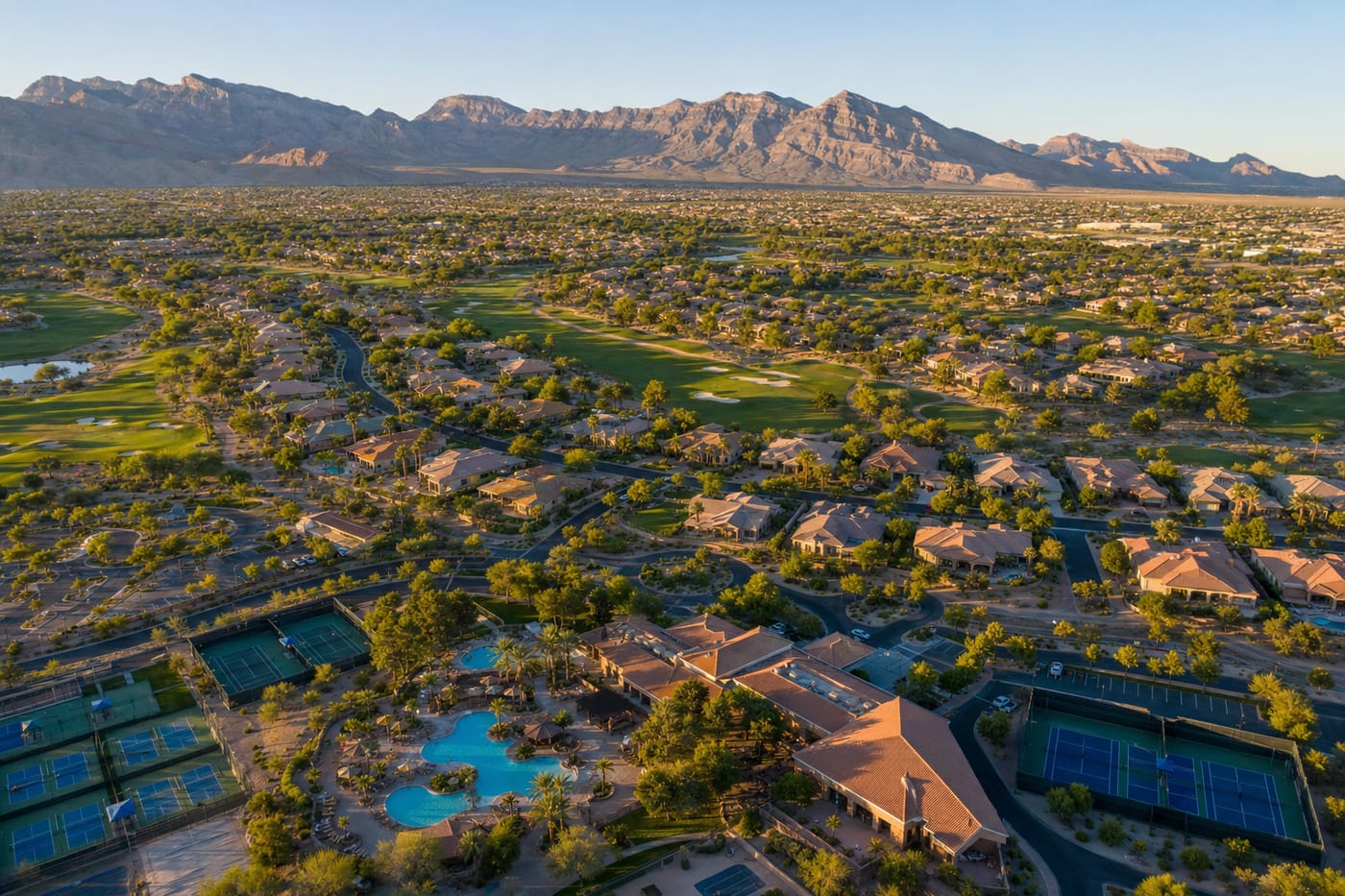
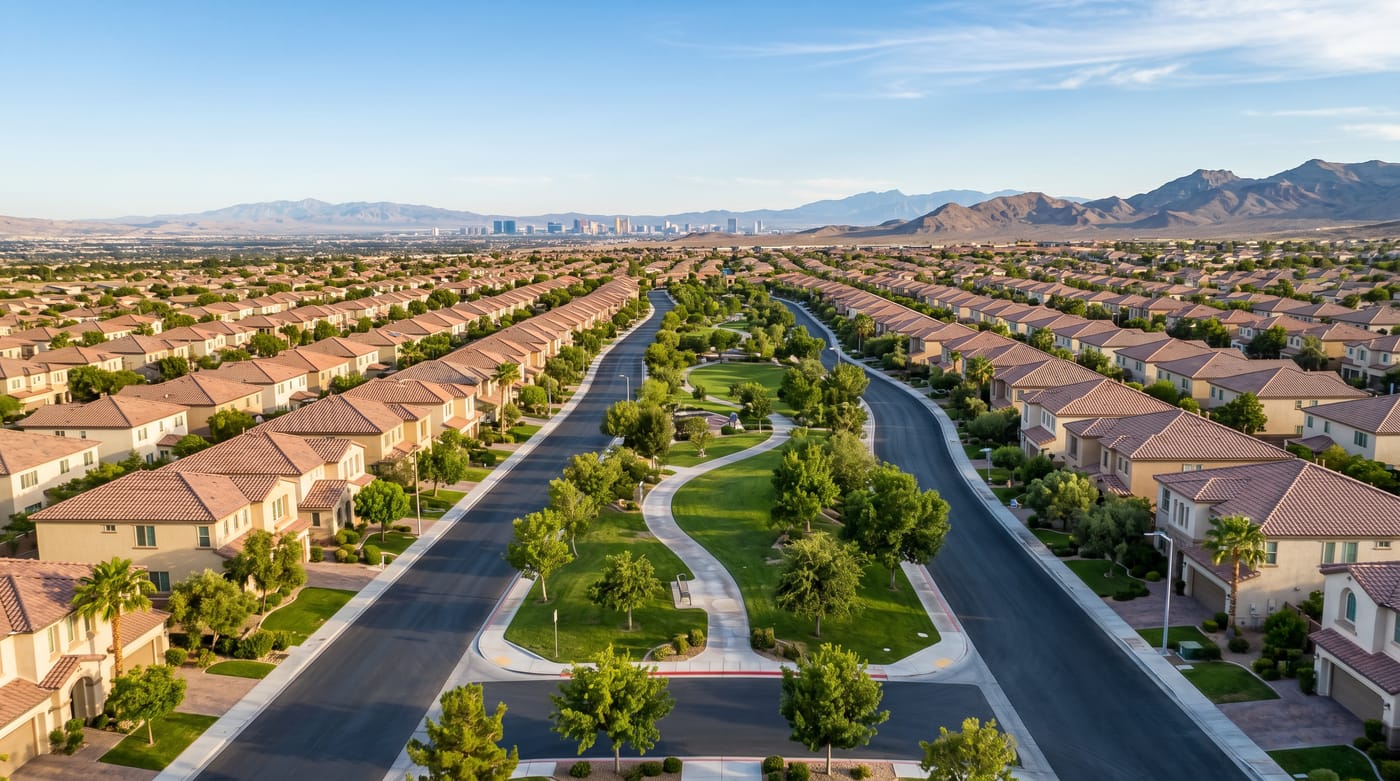
Summerlin: The most popular destination for buyers from Orange County and the Westside of LA. Summerlin offers the upscale master-planned lifestyle these buyers know, with The Shops at Downtown Summerlin substituting for Fashion Island and Red Rock Canyon standing in for the Santa Monica Mountains. Prices range from $500,000 to over $5 million; browse current Summerlin homes for sale to see the spread.
Henderson (Anthem, MacDonald Highlands): Attracts families from San Diego and the Inland Empire. Safe neighborhoods, excellent schools, and a suburban feel that mirrors the best of San Diego's inland communities. Anthem and Green Valley Ranch are the two most-requested starting points. Explore Henderson communities on our site.
The Ridges / MacDonald Highlands: Ultra-luxury enclaves drawing high-net-worth buyers from Beverly Hills, Newport Beach, and Atherton. Custom homes in The Ridges and MacDonald Highlands run from $2 million to $15 million+ and offer Strip views, golf course settings, and privacy that rival any California luxury market.
Southwest Las Vegas (Southern Highlands, Mountains Edge): Younger California families who want newer construction and value. A $450,000 home in Southern Highlands would cost $900,000+ in most of Southern California.
How Are California Buyers Affecting Las Vegas Home Prices?
| Submarket | Median Price 2024 | Median Price 2026 | 2-Year Change | CA Buyer Share |
|---|---|---|---|---|
| Summerlin | $575,000 | $645,000 | +12.2% | 35% |
| Henderson (Anthem) | $520,000 | $585,000 | +12.5% | 30% |
| MacDonald Highlands | $1,800,000 | $2,150,000 | +19.4% | 40% |
| Southwest LV | $395,000 | $435,000 | +10.1% | 25% |
| North Las Vegas | $340,000 | $375,000 | +10.3% | 15% |
The pattern is clear: California buyers are driving outsized appreciation in premium submarkets. Their higher budgets allow them to bid aggressively on homes that local buyers might consider expensive, pushing prices upward. This is particularly pronounced in the luxury segment, where California money has fueled record sales.
What Changed in the Las Vegas Market Between Spring and September 2026?
The spring of 2026 was the peak. According to Las Vegas REALTORS, the median price of an existing single-family home in Southern Nevada hit an all-time high of $490,000 in May and held it in June before easing to $480,000 in July 2026, down 1% from July 2025 and 2% below the record. Condos and townhomes slipped to a $290,000 median in July from $292,000 in June. Sales volume, though, kept climbing: 2,508 existing homes sold in July 2026 against 2,251 in July 2025, with roughly four months of supply on the market. That is a market that has cooled on price and warmed on activity, which is exactly the environment a relocating buyer with a strong budget wants.
According to our analysis of Las Vegas REALTORS MLS data via Repliers, the 90 days ending September 4, 2026 looked like this across the three cities where California buyers concentrate:
| Metric | Las Vegas | Henderson | North Las Vegas |
|---|---|---|---|
| Active listings | 8,605 | 2,453 | 1,021 |
| Median list price | $465,284 | $536,059 | $429,900 |
| Homes closed (90 days) | 3,025 | 968 | 496 |
| Median sold price | $437,111 | $489,890 | $415,000 |
| Sold price per sq ft | $252 | $258 | $232 |
| Median days on market | 28 | 34 | 20 |
Two things jump out. First, Henderson carries a $52,779 premium over Las Vegas on median sold price, and California families keep paying it for the school zones and the master-plan amenities. Second, North Las Vegas is the fastest-moving city in the valley at a 20-day median, which tells me the sub-$450,000 band is still competitive even as the metro median drifts down. Across the closings we've represented this summer, the buyers who won in North Las Vegas and Southwest Las Vegas were the ones who arrived with a fully underwritten pre-approval and could write on day one.
Rates moved too. According to the Freddie Mac Primary Mortgage Market Survey for September 3, 2026, the 30-year fixed averaged 6.71%, up from 6.66% the prior week and above the 6.50% recorded a year earlier. That is roughly the same band the market priced into all spring, so the carrying-cost math in this report has not changed materially since April.
Where Are California Relocators Landing in September 2026, by ZIP Code?
I get asked constantly which specific ZIP codes California buyers favor, so here is the 90-day resale picture for the ZIPs that show up most often in our relocation files. According to our analysis of Las Vegas REALTORS MLS data via Repliers, the 90 days ending September 4, 2026 broke down this way:
| ZIP / Submarket | Active | Median List | Closed (90 days) | Median Sold | Sold $/sq ft | Median DOM |
|---|---|---|---|---|---|---|
| 89138 Summerlin West | 354 | $799,950 | 123 | $750,000 | $332 | 38 |
| 89135 Summerlin South | 304 | $882,500 | 112 | $832,500 | $365 | 37 |
| 89134 Summerlin (Sun City area) | 265 | $497,000 | 143 | $485,000 | $302 | 32 |
| 89052 Henderson (Anthem, Seven Hills) | 380 | $675,000 | 135 | $640,000 | $288 | 34 |
| 89012 Henderson (Green Valley, MacDonald Highlands) | 286 | $670,000 | 104 | $566,000 | $293 | 35 |
| 89011 Henderson (Lake Las Vegas) | 688 | $530,735 | 203 | $464,990 | $246 | 35 |
| 89044 Henderson (Inspirada) | 266 | $549,950 | 164 | $522,500 | $259 | 36 |
| Las Vegas $1M+ (all ZIPs) | 1,019 | $1,580,000 | 230 | $1,402,500 | $423 | 28 |
| Henderson $1M+ (all ZIPs) | 388 | $2,336,583 | 83 | $1,600,000 | $419 | 41 |
A few observations from the relocation desk. Summerlin South (89135) is now the most expensive mainstream ZIP in the valley at $365 per square foot sold, and it is where Bay Area buyers who want walkable Downtown Summerlin access are landing. Seven Hills and Anthem in 89052 are the San Diego family default at a $640,000 median. Lake Las Vegas in 89011 is the value play for coastal buyers who want water views, with 688 active listings and a $464,990 median. And Inspirada in 89044 turned over 164 homes in 90 days, which is remarkable absorption for a community that is still building out.
The $1 million and up band tells the migration story most clearly. Las Vegas luxury resales closed at a 28-day median, the same speed as the overall market, which means the buyers at that price point are decisive. Henderson luxury took 41 days and closed at a $1,600,000 median, reflecting the larger custom lots in MacDonald Highlands and Ascaya that take longer to match to a buyer.
What Does a Southern California Budget Buy in Las Vegas Today?
The most useful exercise I run for a California client is a straight budget translation. Take the sale proceeds from a $1.4 million Orange County tract home, subtract selling costs and any capital gains exposure, and map the remainder against September 2026 medians:
| Dimension | Summerlin West 89138 | Henderson 89052 | North Las Vegas |
|---|---|---|---|
| Median sold price | $750,000 | $640,000 | $415,000 |
| Sold price per sq ft | $332 | $288 | $232 |
| Median days on market | 38 | 34 | 20 |
| Active listings | 354 | 380 | 1,021 |
| Typical California buyer profile | Orange County, Westside LA | San Diego, Inland Empire | First-time and value buyers |
| Estimated P&I at 6.71%, 20% down | $3,875 / month | $3,307 / month | $2,144 / month |
New construction changes the picture again. According to our analysis of Las Vegas REALTORS MLS data via Repliers, homes built in 2025 or later closed at a $569,150 median in Las Vegas, $507,995 in Henderson, and $482,905 in North Las Vegas over the same 90 days, and North Las Vegas new builds went pending in a 12-day median. For a California family that wants a brand-new home under $600,000, the new construction pipeline in Skye Canyon, Inspirada, and Cadence is where I start.
What Do California Buyers Look for in a Las Vegas Home?
After helping hundreds of California families buy homes in Las Vegas, I've identified consistent priorities:
- Open floor plans with indoor-outdoor living. California buyers want disappearing glass walls, covered patios with misting systems, and pool-ready backyards.
- Updated kitchens and bathrooms. They're accustomed to California design standards and expect quartz countertops, shaker cabinets, and modern finishes.
- Home office space. Many are remote workers who need dedicated, well-appointed workspaces.
- Community amenities. They want pools, fitness centers, walking trails, and community events similar to what they had in master-planned California communities.
- Safety and security. Guard-gated communities are popular with California buyers who value privacy and controlled access.
For California relocators, I provide side-by-side comparisons showing what their California housing budget buys in Las Vegas. The results are eye-opening, and our personalized home search is built around exactly that comparison.

How Does the Moving Process Work from California to Las Vegas?
The I-15 corridor makes California-to-Las Vegas moves relatively simple. The drive from LA is about 4 hours, and professional moving companies make the route daily. Here's the typical timeline:
- Months 1-2: Research neighborhoods, get pre-approved, begin remote search
- Month 3: House-hunting trip to Las Vegas (I typically schedule 10-15 showings over 2 days)
- Month 3-4: Submit offer, enter escrow (30-45 days in Nevada)
- Month 4-5: Close, coordinate move, establish Nevada residency
- Within 30 days of move: Nevada driver's license, vehicle registration, voter registration
Many of my California clients sell their California home first, rent temporarily in Las Vegas while they search, and then purchase. Others buy in Las Vegas first, move, and then list their California home. Both approaches work, and I help coordinate the timing. Our moving to Las Vegas guide covers the administrative checklist in detail.
What About California Businesses Relocating to Nevada?
It's not just individuals. California businesses are relocating to Nevada at an accelerating pace. The Nevada Governor's Office of Economic Development reports that over 200 companies relocated from California to Nevada in 2025, bringing thousands of jobs.
The business tax advantages mirror the personal ones: no corporate income tax, no franchise tax, more predictable regulations, and lower operating costs. Industries leading the exodus include technology, financial services, professional services, and e-commerce.
For business owners, I help identify commercial and residential real estate that positions them for success in the Nevada market. Many start with a personal residence in Summerlin or Henderson and then expand their business footprint as they settle in.
Are There Any Downsides Californians Should Know About?
I believe in honest advice. Here are the trade-offs I discuss with every California client:
- Summer heat: Las Vegas summers are significantly hotter than coastal California. You will adjust, but the first summer is an adaptation period.
- Cultural differences: Las Vegas is growing its dining, arts, and cultural scene rapidly, but it's not LA or San Francisco. That said, most clients find they don't miss the traffic and cost more than the culture.
- Water concerns: Nevada is a desert state with limited water resources. Conservation is taken seriously, and landscaping restrictions apply. However, Southern Nevada Water Authority has done excellent work securing the valley's water future.
- School quality variance: While excellent schools exist throughout the valley, the district as a whole has room for improvement. Choose neighborhoods based on specific school zones.
How Has the California Migration Changed Las Vegas Culture?
The influx of Californians has brought tangible cultural shifts to Las Vegas. Restaurant quality has improved dramatically, with James Beard-nominated chefs opening neighborhood restaurants beyond the Strip. Fitness and wellness culture has expanded, with boutique studios and organic markets appearing in every major submarket.
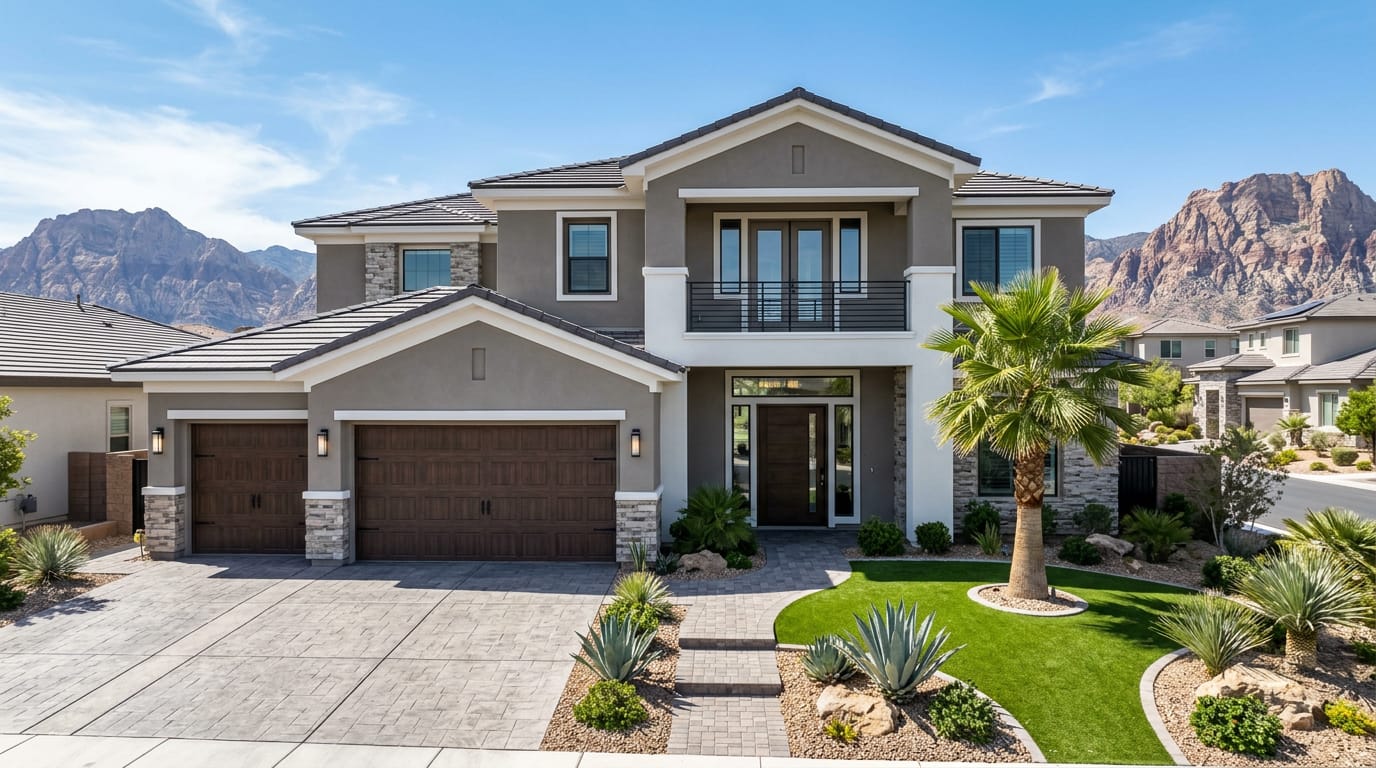
Architecturally, California influence is visible in the contemporary desert modern homes being built in Summerlin, Inspirada, and MacDonald Highlands. Open floor plans, neutral palettes, and seamless indoor-outdoor transitions are now standard in new construction.
These changes make Las Vegas more attractive to future California relocators, creating a positive feedback loop that I expect to continue for years.
| Cost Category | California (LA/SF Avg) | Las Vegas | Annual Savings |
|---|---|---|---|
| State Income Tax ($150K income) | $10,500-$13,200 | $0 | $10,500-$13,200 |
| Property Tax ($500K home) | $5,500-$6,250 | $3,500-$4,000 | $1,500-$2,250 |
| Auto Insurance (2 cars) | $4,800-$6,000 | $2,800-$3,600 | $2,000-$2,400 |
| Utilities (monthly avg) | $350-$450 | $200-$300 | $1,200-$1,800 |
Source: State tax authority data, Clark County Assessor, and Census Bureau cost-of-living estimates
What Should Buyers and Sellers Understand About the Wider 2026 Las Vegas Picture?
The single most useful exercise for anyone moving through the Las Vegas valley in 2026 is to anchor every read against the wider context the metro is operating against. According to Las Vegas REALTORS closed-transaction aggregates for 2025, the valley absorbed approximately 28,400 closed residential transactions at a metro-median price of $465K, the most active calendar year since 2021. By July 2026 the association's monthly report put the single-family median at $480,000 with roughly four months of supply. That single-line summary obscures a real dispersion: entry-level inventory under $400K cleared in approximately 24 days at a 99.2% sale-to-list ratio, while luxury inventory above $1.5M required approximately 52 days and closed at a 96.2% ratio. Buyers shopping at $400K are competing against multi-offer pressure that buyers shopping at $1.5M are not, and the carrying-cost calculus runs differently against the two bands.
Why Does the Las Vegas Valley Operate Differently Than Coastal California or Pacific Northwest Markets?
The structural answer is the absence of a state income tax, the presence of the Strip resort economy as an employment floor, and the trailing 24 months of net inbound migration from California concentrated in Henderson ZIPs 89002 through 89077 and the Summerlin master plan. According to the U.S. Census Bureau American Community Survey 5-year estimates, the Las Vegas-Henderson-Paradise MSA absorbed approximately 45,000 net California-origin residents over the trailing 24 months ending Q1 2026, with roughly 38% landing in the Summerlin master plan, 31% across Henderson submarkets, and the remaining 31% spread across Las Vegas Southwest, the North Valley growth corridor, Mountain's Edge, and Centennial Hills. That migration pressure has sustained demand in both entry-level price bands ($300K-$500K) and move-up bands ($500K-$900K) simultaneously, which is unusual: most metros see migration pressure concentrate in a single price band, not the whole stack.
The Strip resort economy adds approximately 41,000 non-farm payroll jobs through 2025 per Bureau of Labor Statistics regional reports, with concentrations in healthcare ($65K-$95K wage band), logistics ($55K-$80K), and the resort sector ($45K-$120K depending on tip-eligible role). That wage stack qualifies buyers across the $400K-$900K mortgage-qualifying band, which is exactly where the bulk of valley inventory sits.
How Does the 2026 Mortgage Rate Environment Reshape the Decision?
According to the Freddie Mac Primary Mortgage Market Survey, the 30-year fixed conventional rate averaged 6.71% for the week of September 3, 2026, up from 6.66% the prior week and 6.50% a year earlier, which keeps it inside the 6.6-6.9% band that has held for most of 2026. FHA 30-year pricing typically runs 20-30 basis points cheaper, VA 30-year 30-40 basis points cheaper, and jumbo 30-year about 20 basis points more expensive than conventional. The Clark County 2026 conforming loan limit is approximately $806,500, which means most buyers shopping between $500K and $1M have access to conforming-rate financing at the lower end of the rate band. Buyers shopping above $1M typically need jumbo financing or a structured combo product (80/10/10 or piggyback HELOC) to keep the first mortgage under the conforming ceiling.
The carrying-cost math at 6.71% on a $500K mortgage is approximately $3,230 in principal and interest per month, before property taxes (approximately $250-$350/month at the typical 0.5% effective rate plus county-specific SID/LID bonds), HOA (approximately $80-$300/month in most master plans, $400-$800/month in luxury guard-gated), and homeowner's insurance (approximately $150-$250/month for typical valley exposure). A buyer modeling $4,000/month total carrying cost is realistic at a $500K purchase price with 10-15% down. Run your own scenario on our mortgage calculator.
What Should Sellers in the $400K-$900K Band Plan For in the Next 90 Days?
Across the listings we've represented through 2026, NREG inventory has carried a 98.2% sale-to-list ratio versus the metro median of 97.4%, a 0.8-point spread that on a median $480K home represents approximately $3,840 in additional realized equity per transaction. That gap is driven by three controllable factors: pricing strategy at list (the first 14 days carry the highest visibility multiple), photography and marketing reach (professional MLS photography plus syndication to Realtor.com and the major portal networks), and showing logistics (the seller who can offer 4-hour notice showings absorbs more buyer traffic than the seller requiring 24-hour notice).
For sellers planning a 90-day window to close, the practical sequence is: photography and 3D tour capture in week 1, list in week 2 priced approximately 2-3% above the closest comparable sales, showings through weeks 2-4, offer evaluation through weeks 4-6, and a 30-45 day close from accepted offer. Listing decision to keys-in-hand typically runs 75-90 days, longer if underwriting or the inspection surfaces a substantive item. Our sellers page explains how the 7-day listing agreement protects you if the plan changes.
What Should Buyers Pre-Approve and Pre-Plan Before Touring?
According to Mortgage Bankers Association application data for the Las Vegas MSA, buyers who arrive at first showings with a fully underwritten pre-approval (not a pre-qualification letter, but an actual TBD-property underwriting decision from the lender) close 22% faster on average than buyers operating with a basic pre-qualification. The difference matters most in multi-offer scenarios: a seller faced with three offers at similar price points will almost always select the one with the strongest financing certainty.
The pre-approval checklist before touring: two years of tax returns with all schedules and K-1s, two months of bank and investment statements, two years of W-2 or 1099 / Schedule C income, a government-issued photo ID, and explanation letters for any credit events or large deposits in the trailing 12 months. Buyers with non-W-2 income (business owners, investors, equity-compensated tech workers) should plan for an additional 7-14 days of underwriting and pick a lender experienced with their income type. Start with our mortgage pre-approval primer.
How Do Builder Incentive Cycles Affect the 2026 Decision Math?
Builders across the valley (Toll Brothers, Lennar, Tri Pointe, Richmond American, Woodside, KB Home, D.R. Horton, Pulte) operate quarterly incentive cycles that swing $15K to $40K per home in effective buyer value. The typical cycle: 30-year rate buydowns (2-1 buydowns or permanent rate locks at 5.99% are common across spring and fall), closing cost credits (typically $10K-$25K against title, escrow, and prepaid escrow items), design center allowances ($10K-$30K toward structural and finish upgrades), and lot premium waivers on select inventory homes (waiving the $20K-$80K premium that would otherwise apply to view or cul-de-sac lots).
The resale-versus-new-construction decision in 2026 turns on timeline (resale closes in 30-45 days, new construction in 4-9 months for inventory and 9-14 months for build-to-order), customization, and effective price (stacked builder incentives often close 80-90% of the new-construction premium). Buyers who need fast occupancy or expect a 5-7 year hold lean resale; buyers who want customization or plan a 10+ year hold lean new construction.
How Can Nevada Real Estate Group Help You Make the Move in 2026?
According to Las Vegas REALTORS data spanning the full 2025 transaction year, Nevada Real Estate Group's 789 closings and $440 million+ in production were distributed proportionally to where Las Vegas demand actually sits: roughly 38% of NREG volume concentrated in the Summerlin master plan and its Cliffs / Kestrel / Stonebridge villages, 31% across Henderson ZIPs 89002 through 89077 (Anthem, Green Valley, Inspirada, Cadence, MacDonald Highlands, Seven Hills, Lake Las Vegas), and the remaining 31% spread across Las Vegas Southwest, North Valley (Skye Canyon, Valley Vista, Tule Springs), Mountain's Edge, Centennial Hills, and the resort-corridor luxury condo inventory.
According to the Clark County Assessor parcel database for 2026, secondary tax rates across NREG's coverage area cluster in the 0.30%-0.78% band, with most Henderson submarkets in 0.40%-0.55%. According to the U.S. Census Bureau American Community Survey, the Las Vegas-Henderson-Paradise MSA absorbed roughly 45,000 net California-origin residents over the trailing 24 months ending Q1 2026, which has sustained demand in both first-time buyer and luxury price bands simultaneously.
Nevada Real Estate Group is the #1 real estate team in Nevada and #44 in the nation, with 9,600+ closings, $4.85 billion+ in total sales volume, 150+ agents, and 9,061+ verified five-star reviews. Across the 9,600+ closings we've represented over 16+ years, the buyers and sellers who get the cleanest outcomes are the ones who pair the editorial framework with a phone consultation early: before signing a builder reservation contract, before listing with the wrong asking price, or before committing to a community whose carrying-cost profile doesn't match their actual lifestyle. According to Freddie Mac PMMS data, the 6.71% rate environment of early September 2026 has held steady enough to allow precise carrying-cost modeling for both Las Vegas new construction and resale acquisitions.
For readers using this article as a decision input, the practical next steps are: review the relevant community money page for current inventory and pricing context, run a live search against your budget, then call NREG at (702) 637-1759 or contact us to map the article's framework against your specific timeline, budget, and tradeoff priorities. Northern Nevada relocators can reach our Reno desk at (775) 277-2120.
Frequently Asked Questions
How many Californians move to Las Vegas each year?
An estimated 65,000 Californians relocated to Nevada in 2025, with approximately 75-80% settling in the Las Vegas metro area. This makes California the top source state for Nevada migration by a wide margin, followed by Arizona and Washington.
Do I have to pay California taxes after moving to Nevada?
Once you establish Nevada domicile, you are no longer subject to California income tax on earned income. However, California may tax income sourced from California (such as rental income from California property or California business income) and may audit recent movers. Consult a tax professional to ensure a clean break.
What price range should a California relocator expect?
Most California relocators purchase homes in the $500,000 to $1.2 million range in Las Vegas, which buys significantly more house than the same budget would in Southern California. The sweet spot for families is $550,000 to $750,000 in Summerlin or Henderson, where you get 2,500-3,500 square feet with modern finishes and community amenities.
Is it cheaper to live in Las Vegas than Los Angeles?
Yes, significantly. Overall cost of living in Las Vegas is approximately 25-35% lower than Los Angeles, with housing costs 40-55% lower. When you add the state income tax savings, the total financial advantage of Las Vegas over LA can exceed $30,000 annually for a household earning $200,000.
Can I keep my California driver's license after moving?
No. Nevada law requires you to obtain a Nevada driver's license and register your vehicles within 30 days of establishing residency. The Nevada DMV process is straightforward, and I provide my relocating clients with a complete checklist of post-move administrative tasks.
Where do most California transplants end up living?
The top destinations for California relocators in Las Vegas are Summerlin, Henderson (particularly Anthem and Green Valley Ranch), Southern Highlands, and MacDonald Highlands. Bay Area transplants tend to favor Summerlin for its walkability and dining scene, while San Diego transplants often prefer Henderson for its family orientation.
What mortgage rate should a California buyer expect in Las Vegas in September 2026?
According to Freddie Mac's Primary Mortgage Market Survey, the 30-year fixed averaged 6.71% for the week ending September 3, 2026, up from 6.66% a week earlier and 6.50% a year ago. Buyers purchasing above the $806,500 conforming limit should budget roughly 20 basis points more for jumbo pricing, and builder rate buydowns on new construction can bring the effective rate under 6%.
How long does a home take to sell in Summerlin or Henderson right now?
According to our analysis of Las Vegas REALTORS MLS data via Repliers, the median days on market for the 90 days ending September 4, 2026 was 38 in Summerlin West (89138), 37 in Summerlin South (89135), 34 in Henderson overall, and 28 across the City of Las Vegas. Well-priced homes in the $500,000 to $750,000 band still draw multiple showings in the first weekend.
Which Sources Inform This Las Vegas Real Estate Analysis?
According to Las Vegas REALTORS, market data, closing volumes, and median price figures in this analysis come from the association's monthly MLS statistics through July 2026, with 90-day submarket figures pulled from Las Vegas REALTORS MLS data accessed via the Repliers API on September 4, 2026. Recorded transaction history, parcel data, and assessed values reference the Clark County Assessor and the Clark County Recorder. License and brokerage verification draws from the Nevada Real Estate Division public licensee database.
Macro housing context references the U.S. Census Bureau American Community Survey, the Bureau of Labor Statistics Las Vegas-Henderson-Paradise MSA employment data, the Federal Housing Finance Agency House Price Index, and the Bureau of Economic Analysis state-level personal income data. Mortgage rate environment uses the Freddie Mac Primary Mortgage Market Survey weekly rate series (September 3, 2026 release) and the Mortgage Bankers Association weekly applications survey. Business relocation counts come from the Nevada Governor's Office of Economic Development.
According to Nevada Department of Taxation, property tax math references Nevada Revised Statutes Chapter 361 and the Nevada Department of Taxation. School ratings reference GreatSchools and the Clark County School District annual performance frameworks. Builder permit activity and certificate-of-occupancy data reference the Clark County Department of Building and the Nevada State Contractors Board.
Disclaimer: This article is for informational purposes only and does not constitute financial, tax, or legal advice. Migration data and tax estimates are approximate and sourced from publicly available reports; state tax consequences vary by individual circumstance. Chris Nevada is a licensed Nevada REALTOR (S.181401) with Nevada Real Estate Group at LPT Realty. Consult qualified tax professionals and a licensed REALTOR before making relocation decisions.