

A production builder does not think about a house the way a homeowner does. A homeowner sees equity. A builder sees a line item that is costing money every single day it sits — interest on the construction loan, property tax, insurance, landscaping, utilities to keep the air conditioning running so the drywall does not cook, and a sales office staffed to sell it. That cost does not pause for the holidays.
It also does not roll over. Public builders report to shareholders on a calendar that ends December 31, and closings that land on the wrong side of that date land in next year's numbers. A house that closes on December 29 counts. The same house closing on January 4 does not.
That single accounting fact is why the last three months of the year behave differently from the rest of it in Las Vegas new construction — and it shows up in the closing data, not just in sales-office folklore.
Las Vegas builders concede more in the fourth quarter because unsold homes cost them money daily and closings after December 31 land in next year's books. Across Las Vegas, North Las Vegas and Henderson MLS records, the share of new-construction closings settling below list rose from 42% to 49% between Q3 and Q4 of 2024, and from 44% to 51% in 2025. The concession usually arrives as a rate buydown or credit, not a lower price.
- Below-list closings on new builds rose about 7 points from Q3 to Q4 in both 2024 and 2025.
- Only 6% of new-construction sales closed above list in the last 90 days, against 19% of resales.
- 838 new-construction homes were listed across the Las Vegas metro, a median of 30 days on market.
- Builders defend base price and concede on financing — the credit is worth more than the sticker.
- Standing inventory that must close by December 31 is the strongest position a buyer gets all year.
What Does the Closing Data Actually Show About the Fourth Quarter?
I have heard the claim that builders "deal at year-end" repeated in every sales office in the valley, and almost never measured. So we measured it against the MLS record for Las Vegas, North Las Vegas and Henderson, counting single-family and townhouse closings on homes built in 2023 or later, quarter by quarter.
Two numbers matter in the table below. The first is how many homes closed. The second is what share of those closings settled below their list price — the cleanest available proxy for a builder conceding something, since a price reduction, a credit taken as a price adjustment, or a negotiated cut all end up recorded there.
| Quarter | Closings | Median sold price | Median days on market | Closed below list |
|---|---|---|---|---|
| 2024 Q3 | 770 | $487,970 | 32 | 42% |
| 2024 Q4 | 799 | $492,925 | 36 | 49% |
| 2025 Q1 | 920 | $508,597 | 35 | 46% |
| 2025 Q2 | 650 | $498,995 | 25 | 44% |
| 2025 Q3 | 533 | $490,000 | 38 | 44% |
| 2025 Q4 | 796 | $504,791 | 39 | 51% |
| 2026 Q1 | 1,034 | $515,000 | 39 | 49% |
| 2026 Q2 | 801 | $525,000 | 36 | 52% |
The Q3-to-Q4 move repeats. In 2024 the below-list share went from 42% to 49%. In 2025 it went from 44% to 51%. Both years, about seven points. In 2025 the closing count also jumped from 533 to 796 — a 49% increase in homes crossing the finish line in a single quarter, which is what a coordinated push to close before the calendar turns looks like in the record.
One honest caveat, because the table supports a narrower claim than it first appears to. The below-list share has been drifting upward across the whole period, from 42% to 52% over two years, as inventory has grown. Q4 is a bump on top of a rising trend, not a spike out of a flat line. The seasonal effect is real and it repeats; it is not the only thing moving.
Why Does a Builder's Calendar Change What They Will Accept?
Three pressures land at once in the fourth quarter, and they compound.
The first is carrying cost. A finished home that has not sold accrues interest, taxes, insurance and maintenance. On a $530,000 spec home those costs run into the thousands of dollars a month before anyone has lived in it.
The second is the fiscal year. Most of the national builders operating here — D.R. Horton, Lennar, KB Home, Pulte, Taylor Morrison, Richmond American, Tri Pointe, Century Communities and others — report quarterly to public shareholders. Division presidents carry annual closing targets. A house that slips into January is a house that did not count.
The third is the next phase. Builders release homes in phases, and a new phase priced above the last one is hard to justify while finished homes from the prior phase are still sitting on the street. Clearing standing inventory is what lets the next release price move up.
According to the National Association of Home Builders, builder use of sales incentives has stayed elevated through this cycle, with price reductions and mortgage-rate buydowns the two most commonly deployed tools. That is the national pattern, and it matches what the Las Vegas record shows.

What Is Standing Inventory and Why Does It Negotiate Differently?
"Standing inventory" is the industry term for a finished, unsold home. It goes by other names on the sales-office whiteboard — spec, quick move-in, QMI, inventory home — and the distinction from a to-be-built home is the entire negotiation.
A to-be-built home has not cost the builder much yet. They will happily wait for a buyer willing to pay the posted price, because the money has not been spent. A finished home is the opposite: the capital is fully deployed, the meter is running, and every week it sits is a week of pure loss.
Across the Las Vegas metro there were 838 new-construction homes actively listed at the time of this analysis, in late August 2026, at a median list price of $581,555 and a median 30 days on market. The full range ran from $294,888 to $21,000,000. That 838 sits against 8,681 resale listings — new construction is roughly 9% of what is available, but it is the 9% where the seller has a deadline.
The local picture matches the national one. According to the U.S. Census Bureau's New Residential Sales series, the count of completed new homes for sale nationally has been running at its highest level since the late 2000s through this cycle, which is the same carrying-cost problem multiplied across every builder in the country. Telling standing inventory apart from a to-be-built listing takes about thirty seconds on the MLS: a completed home carries an actual year built rather than a projected one, a days-on-market count that has been running since the certificate of occupancy, and photographs of the real house rather than the model. The longer that days-on-market number, the longer the meter has been running on the builder's side of the table, and the more the December 31 deadline is worth to them.
How Do New Builds and Resales Compare Right Now?
The two are not competing on the same terms, and the gap is worth seeing in one place before you decide which side of the market to shop.
| Measure | New construction | Resale |
|---|---|---|
| Active listings | 838 | 8,681 |
| Median list price | $581,555 | $502,050 |
| Closings, last 90 days | 434 | 3,488 |
| Median sold price | $531,500 | $452,899 |
| Median days on market | 33 | 26 |
| Closed below list | 52% | 57% |
| Closed above list | 6% | 19% |
The line that should change how you write an offer is the last one. Only 6% of new-construction closings settled above list price. On resale, 19% did.
New construction essentially does not get bid up. There is no highest-and-best deadline, no Sunday of competing offers, no seller emotionally attached to a number. The list price is a ceiling rather than a starting point, which is the reverse of how a resale in a desirable Henderson pocket behaves. That single difference means a buyer who has been losing resale bidding wars is walking into a completely different game.
New builds also carry a $78,601 higher median sold price — $531,500 against $452,899 — and take about a week longer to close. Some of that premium is genuinely newer house. Some of it is location, since the new-build supply sits where land is available rather than where the established neighborhoods are.
Which Concessions Are Worth More Than a Price Cut?
Here is the thing most buyers get backwards. Asking a builder to drop the price is asking for the one thing they are most structurally motivated to refuse.
The recorded sale price of every home in a community becomes the comparable that appraisers use for the next home in that community. Cut $25,000 off one house and the builder has just damaged the appraised value supporting the next twenty closings — and handed every remaining buyer a reason to ask for the same. Concessions that do not touch the recorded price do not have that consequence.
| Concession | How to price it in writing | How readily it moves |
|---|---|---|
| Rate buydown through preferred lender | Dollars paid to the lender, plus the rate with and without them | Most readily given |
| Closing-cost credit | Dollar amount in the addendum, capped at your actual closing costs | Readily given, often tied to the lender |
| Design-center allowance | Dollar allowance plus a priced selection sheet | Common on to-be-built |
| Included upgrades on a spec | Itemized list of installed options | Effectively free to the builder |
| Appliance or blinds package | Itemized package price | Easy, low cost to builder |
| Lot premium waiver | The premium on each lot you are considering | Harder; premium is margin |
| Base price reduction | Whatever is agreed | Most resisted |
I have left dollar ranges out of that table on purpose. Incentives vary by builder, by community and by week, and the only figure that counts is the one written into your purchase agreement, so ask for the offer in writing, in dollars, before you sign. The pattern is consistent. Anything paid through the lender or the design center is easier for a builder to give than anything that changes the number recorded at the county.
What Is a Rate Buydown Actually Worth in Dollars?
A buydown is the builder paying the lender, up front, to lower your interest rate for a period or for the life of the loan. It is quoted in points, and buyers routinely underestimate it because it does not look like money.
Take the $531,500 median new-construction sale price, with 10% down and a loan of roughly $478,350. On a 30-year fixed, moving the rate down by a full point changes the monthly principal-and-interest payment by roughly $300 to $330. Over a decade in the house, that is somewhere near $36,000 to $40,000 — for a concession the builder books as a lender cost rather than a discount.
A temporary buydown works differently and is worth understanding separately. In a 2-1 structure, the rate is two points lower in year one and one point lower in year two, then reverts. The builder funds an escrow that covers the difference. It is real money, but it stops. If you are relying on the year-one payment to afford the house, you are buying a payment you will not have in month 25 — and lenders qualify you at the full note rate for exactly that reason. Our Las Vegas 2-1 buydown breakdown works through the year-by-year math.
According to the Consumer Financial Protection Bureau, discount points paid up front lower the rate for the life of the loan, and according to Freddie Mac's Primary Mortgage Market Survey, the weekly average is the standard reference for where the market rate actually sits — the number you should be comparing any builder's quoted rate against.

Should You Take the Price Cut or the Buydown?
It depends on one question that has nothing to do with the sales office: how long will you own this house?
A price reduction lowers the loan permanently and improves your equity position from day one. A permanent buydown lowers the payment. A temporary buydown lowers it briefly.
If you expect to hold the home a long time and rates fall enough to refinance, the price cut wins — a refinance erases the value of a buydown you paid nothing for, but the lower purchase price stays with you forever. If you plan to sell or refinance within a few years, or if the monthly payment is what stands between you and qualifying, the buydown is usually worth more in the dollars you actually feel.
A $20,000 price reduction on a $531,500 home lowers the loan by $18,000 with 10% down, which cuts about $123 off the monthly principal-and-interest payment at the 7.28% Freddie Mac 30-year average for October 1, 2026. The same $20,000 spent as points buys about four points on a $478,350 loan, but how far each point lowers the rate depends on the specific lender, the kind of loan and the market, according to the Consumer Financial Protection Bureau's guide to points. Ask the lender to quote both payments in writing before you choose. In lifetime terms, if you refinance in three years, the buydown was worth far less.
There is a second-order effect worth naming. A concession structured as a closing-cost credit rather than a price cut keeps the recorded sale price high, which supports the appraised value of your own home for the next several years. In a community still delivering homes, that is not nothing.
What Do Builders Almost Never Give Up?
Knowing where the wall is saves you the credibility you will need for the asks that can actually land. I have watched buyers spend all of it on the one request a builder was never going to grant.
Lot premiums are margin, and premium lots on a corner, a greenbelt, or with a view are the ones the builder is least worried about selling. Structural options are gone once framing starts. The preferred-lender requirement attached to the largest incentives is rarely waived, because the mortgage arm is a profit center. And the builder's purchase agreement itself — arbitration clauses, warranty terms, the right to substitute materials — is close to immovable at the sales-office level, though not always at the division level.
Two more items belong on the immovable list. The warranty is a form, not a negotiation: most production builders issue a written limited warranty on a one-year workmanship, two-year systems, ten-year structural structure, and no amount of December leverage extends it. And the closing date on a builder contract is generally the builder's to set within a window, not yours — which matters in the fourth quarter, because a builder that needs the closing in December will push for it, and a buyer whose financing is not ready to fund by then hands the leverage straight back. The earnest deposit, usually larger than on a resale, is typically non-refundable once the rescission period passes, so the contingencies you negotiate before signing are the only ones you get.
According to the Nevada State Contractors Board, which licenses residential builders in the state, complaint and disciplinary history is published and searchable, which is worth checking before you sign anything, whatever the incentive.
How Should You Time an Offer, and What Should You Ask the Sales Agent?
Work backwards from December 31.
A conventional loan on a finished home realistically needs 30 to 45 days from contract to funding. For a home to close by December 31, the contract generally needs to be written by mid-November at the latest. That makes late October through mid-November the window where your offer solves a builder's problem instead of merely arriving.
Earlier than that and the urgency is not there yet. Later and the math stops working — a builder cannot bank a January closing in December no matter what you offer, so the leverage evaporates the moment the deadline becomes unreachable.
Ask the sales agent directly which homes must close this year. That question is not rude and it is not a secret; they are usually tracking it on a whiteboard. The homes on that list are where the fourth-quarter advantage actually lives.
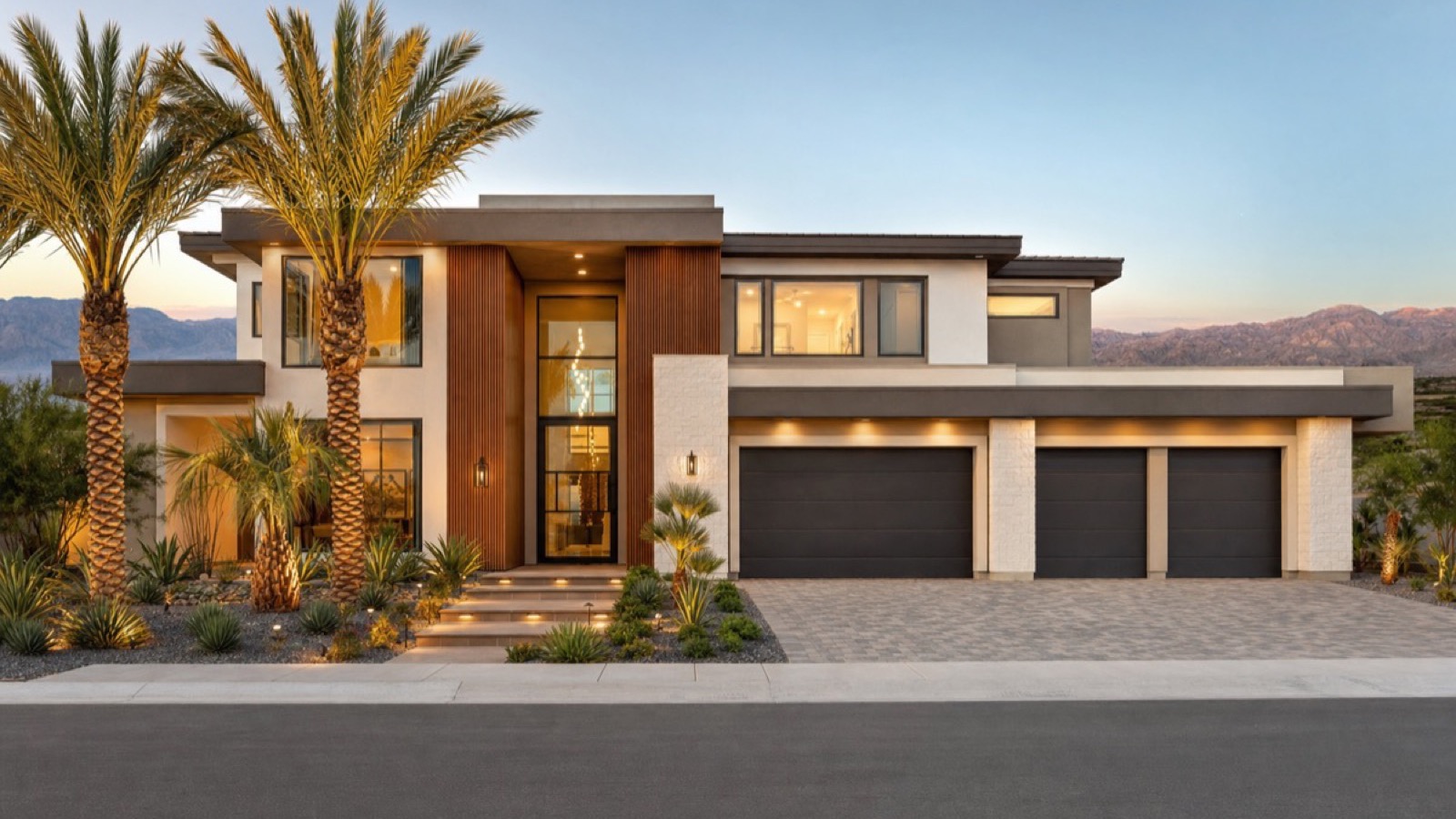
Once you are in the window, six questions, in this order, get you further than any amount of negotiating posture.
Which homes in this community must close by December 31? How long has this specific home been finished? What is the total incentive on this home in dollars, and what does it drop to if I use my own lender? What is the buydown worth expressed as dollars paid to the lender, not as a rate? Which upgrades are already installed in this home that I would otherwise pay for? And what did the last three homes in this phase actually close at?
That last question matters more than it looks. Builders publish base prices, but the recorded closings are public and they include what was actually paid after concessions. According to the Clark County Assessor, every recorded sale is searchable by parcel or address, so you can check the sales agent's answer against the county record before your second visit. The gap between the posted price and the recorded closings tells you how much room exists before you have said a word about your own offer.
Which Builders and Which Parts of the Valley Move Most on Year-End Inventory?
In our experience the pattern is less about brand than about business model, and it holds fairly reliably.
Volume builders — D.R. Horton, Lennar, KB Home, Century Communities, LGI Homes — build to a production schedule and carry the most standing inventory by design. They tend to move first and furthest on finished homes, because their model depends on turning inventory rather than holding for price.
Move-up and semi-custom builders — Toll Brothers, Tri Pointe, Shea, Woodside, Beazer, Richmond American, Taylor Morrison — build more to order and carry fewer finished specs. Their concessions skew toward design-center allowances and financing rather than price.
Luxury and custom builders — Blue Heron, Christopher Homes — operate on entirely different volume and timing. Year-end pressure is a much weaker force when a builder delivers a handful of homes annually.
Local builders such as Harmony Homes, StoryBook Homes and Touchstone Living sit somewhere in between and are often the most flexible on terms, because decisions are made by people you can actually reach.
Geography matters as much as business model, and the two overlap. The fourth-quarter effect is strongest where new supply is heaviest, which in this cycle means the northwest, the far southwest of Las Vegas, and North Las Vegas — where land has been available and builders have been delivering at volume.
It is weakest in Summerlin and the other master-planned communities where the builder is not carrying much finished inventory and demand is steady enough to absorb it. The same is true across much of Henderson, where established neighborhoods leave less room for new phases. A community that sells out its releases does not accumulate the standing inventory that creates the pressure in the first place. Our ranking of the valley's master-planned communities covers where that supply is concentrated.
If you are shopping North Las Vegas new construction, you are shopping the part of the metro where builders have been most active — and where standing inventory is most likely to exist in December.
What Are the Risks of Buying a Year-End Spec Home?
The deadline that helps you also creates pressure to move fast, and fast is where mistakes live.
A finished spec home was designed for an imaginary buyer. The floor plan, the lot, the finishes and the orientation were all chosen by the builder — and in the desert, orientation is not cosmetic. A west-facing wall of glass is a cooling bill for the life of the house.
Rushing the inspection is the more expensive mistake. A new home is not an inspected home. According to NRS Chapter 40, Nevada builders carry statutory construction-defect obligations, and Clark County inspects to code — but code is a floor, not a standard of care, and county inspection is not a substitute for your own inspector. Independent inspections on brand-new homes routinely find items worth thousands to correct. According to the Clark County Department of Building and Fire Prevention, permitting and inspection records are public and worth pulling before you close.
Then there is the assessment that is not in the payment quote. Many newer Las Vegas subdivisions carry a Special Improvement District or Local Improvement District balance attached to the parcel, funding the infrastructure that made the development possible. It is a real obligation, it can run tens of thousands of dollars, and it is not always volunteered at the sales table. Ask for the SID or LID balance in writing before you sign.
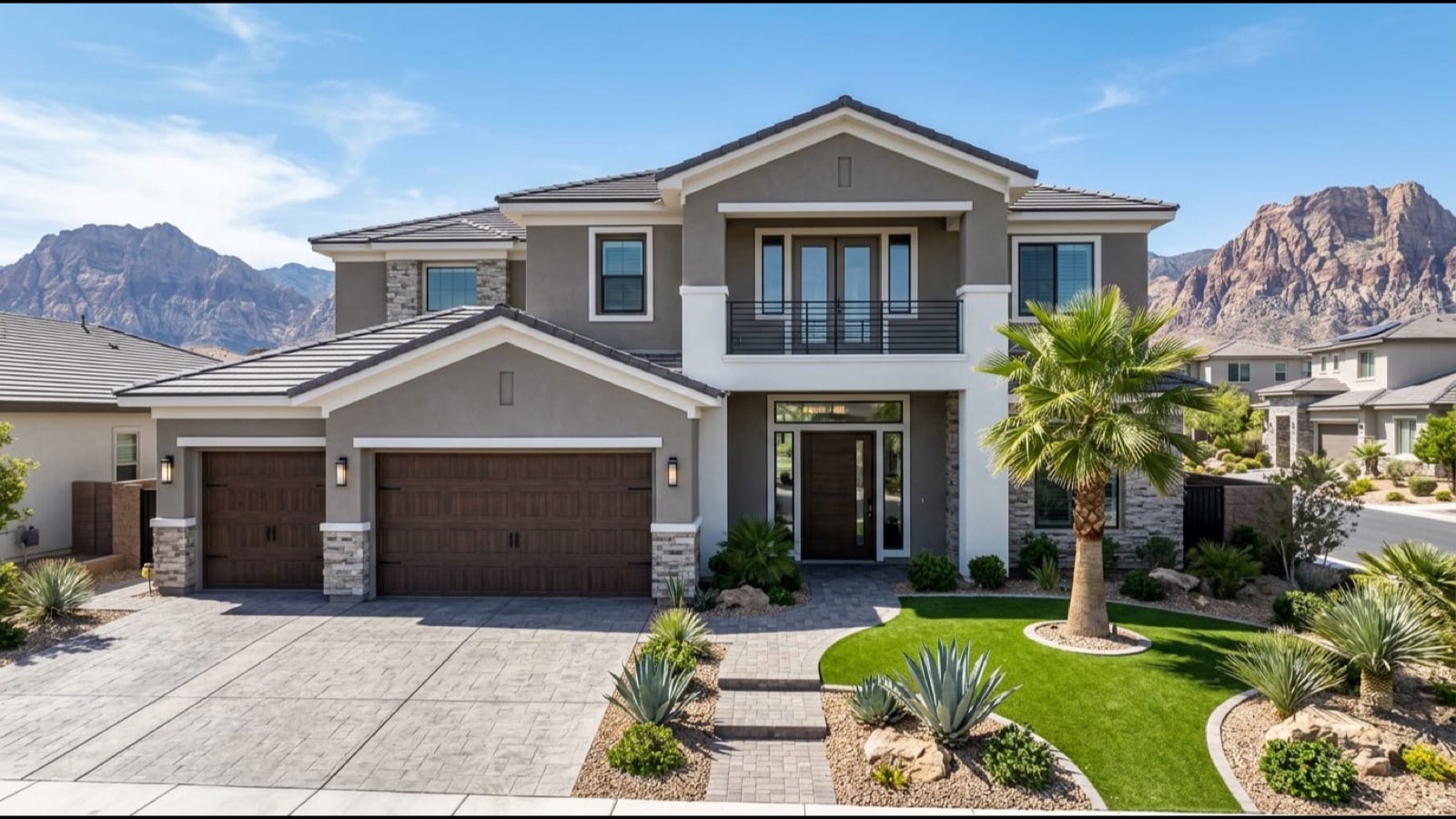
How Do You Make Sure the Incentive Survives to Closing?
Get it in the addendum. All of it, in dollars.
The builder's purchase agreement is the contract. A sales agent's verbal commitment is not, and sales agents change jobs between October and December. If the incentive is a $22,000 closing-cost credit contingent on using the preferred lender, that sentence — with the number and the condition — belongs in writing before you sign.
To separate a financing promotion from a reduction in the home price, compare builder price cuts on quick-move-in homes using the full purchase budget.
Watch for the substitution clause too. Some builder agreements reserve the right to swap materials and finishes for equivalents. On a finished spec that risk is small, since you can see what is installed. On a to-be-built home it is worth reading closely.
And confirm how the credit is applied. A closing-cost credit that exceeds your actual closing costs does not become cash back at the table — lenders cap credits at actual costs, and the excess simply evaporates. If your credit is larger than your costs, redirect the difference into a permanent buydown where it retains value rather than losing it.
Across the 789 transactions our team closed in 2025, the builder contracts that went smoothest were uniformly the ones where the incentive was written as a dollar figure with a named condition, rather than described as a package.
What Should a Buyer Do Between Now and December?
If this is your first purchase, our buyer guidance covers the steps that come before a sales office. Get your financing settled first, because a builder's willingness to concede is proportional to how certain your closing looks. A fully underwritten pre-approval is worth more at a sales office in November than any negotiating tactic, since the builder's entire concern is whether you will actually close before the deadline.
Then line up your representation before you walk into a model home, in the one transaction where the other side has a full-time professional and a legal department. Some builders tie their broker co-op to the first visit: KB Home's broker terms require the agent to accompany the client at the first visit, and Toll Brothers' agent FAQ requires the agent to register the client at the first visit to a community. Ask each builder in writing, before you go, whether it pays a cooperating broker and how much.
If you want to see what is currently standing across the valley, our new construction hub tracks active builder inventory, and the Henderson new construction and Las Vegas homes for sale pages break it down by area. When you are ready to talk through a specific community or a specific spec home, call our team at (702) 637-1759. Since August 17, 2024, according to the National Association of REALTORS settlement FAQ, your agent's compensation is set in a written buyer agreement you sign before touring, and any builder payment toward it is a term to confirm with the builder in writing.
Frequently Asked Questions
Do Las Vegas builders really discount more in December?
The MLS record says the fourth quarter is measurably different. In 2024 the share of new-construction closings settling below list rose from 42% in Q3 to 49% in Q4, and in 2025 from 44% to 51%. That said, the below-list share has been trending upward all cycle, so Q4 is a repeatable bump on a rising line rather than a sudden December sale.
Is the builder's incentive worth using their preferred lender?
Usually yes, but verify it. Builders attach their largest incentives to their mortgage arm, and the credit frequently exceeds what a slightly better rate elsewhere would save. Get a written quote from an outside lender and compare total cost over the years you expect to own the home, not just the rate.
Can I negotiate the base price on a new build in Las Vegas?
Rarely, and it is the wrong thing to push for. The recorded price sets the comparable for every remaining home in the community, so builders defend it hard. Concessions routed through the lender or the design center cost the builder the same money without damaging the comps, which is why they are far easier to obtain.
What is standing inventory and why does it matter?
A finished, unsold home the builder is already carrying — also called a spec or quick move-in. The capital is spent and the carrying costs are running, so the builder's position is materially weaker than on a home that has not been started. Standing inventory that must close by December 31 is the strongest buyer position available all year.
Do I need my own agent to buy new construction?
You do not need one, but the builder's sales agent represents the builder, not you. Whether the builder pays your agent depends on the builder, so ask the sales office in writing, before your first visit, whether it pays a cooperating broker and how much. Your agent's fee is set in a written buyer agreement you sign before touring, and builders such as KB Home and Toll Brothers tie their co-op to registration at the first visit.
How late can I write a contract and still close by December 31?
Mid-November is the practical outside edge for a finished home on conventional financing, which needs roughly 30 to 45 days to fund. Later than that and the year-end leverage disappears, because the builder can no longer count the closing in the current year regardless of what you offer.
Are new-construction homes in Las Vegas overpriced compared to resale?
They carry a real premium — a $531,500 median sold price against $452,899 for resale over the trailing 90 days. Part of that is a newer home with a warranty and current building code; part is location, since new supply sits where land is available. The offsetting fact is that new construction almost never sells above list, closing above asking just 6% of the time against 19% for resale.
Which Sources Inform This Builder Incentive Guide?
Closing counts, median sold prices, days on market and above- or below-list shares were pulled from MLS records covering Las Vegas, North Las Vegas and Henderson, filtered to single-family and townhouse sales on homes built in 2023 or later, and grouped by calendar quarter. Active inventory figures reflect current listings on homes built in 2025 or later. The below-list share is reported by the MLS as a percentage of closings; we cross-checked it for internal consistency against the median sold and median list prices, which move in the same direction.
The limitation worth stating: a below-list closing is a proxy for a concession, not a direct measurement of one. Incentives paid as lender credits often leave the recorded price untouched, which means this method understates rather than overstates how much builders actually give. Quarterly closing volume also reflects contracts signed one to two months earlier, so a December closing is generally an October or November decision.
- Las Vegas REALTORS — local market statistics
- National Association of Home Builders — builder incentive and sentiment data
- U.S. Census Bureau New Residential Sales — national new-home sales and inventory
- Freddie Mac Primary Mortgage Market Survey — weekly mortgage rate benchmark
- Consumer Financial Protection Bureau — discount points and loan options
- Nevada State Contractors Board — builder licensing and disciplinary history
- Nevada Revised Statutes Chapter 40 — construction defect obligations
- Clark County Department of Building and Fire Prevention — permits and inspection records
- Clark County Assessor — parcel and assessment records
- Nevada Department of Taxation — property tax administration
- U.S. Bureau of Labor Statistics — Las Vegas metro employment
- Federal Housing Finance Agency — house price index