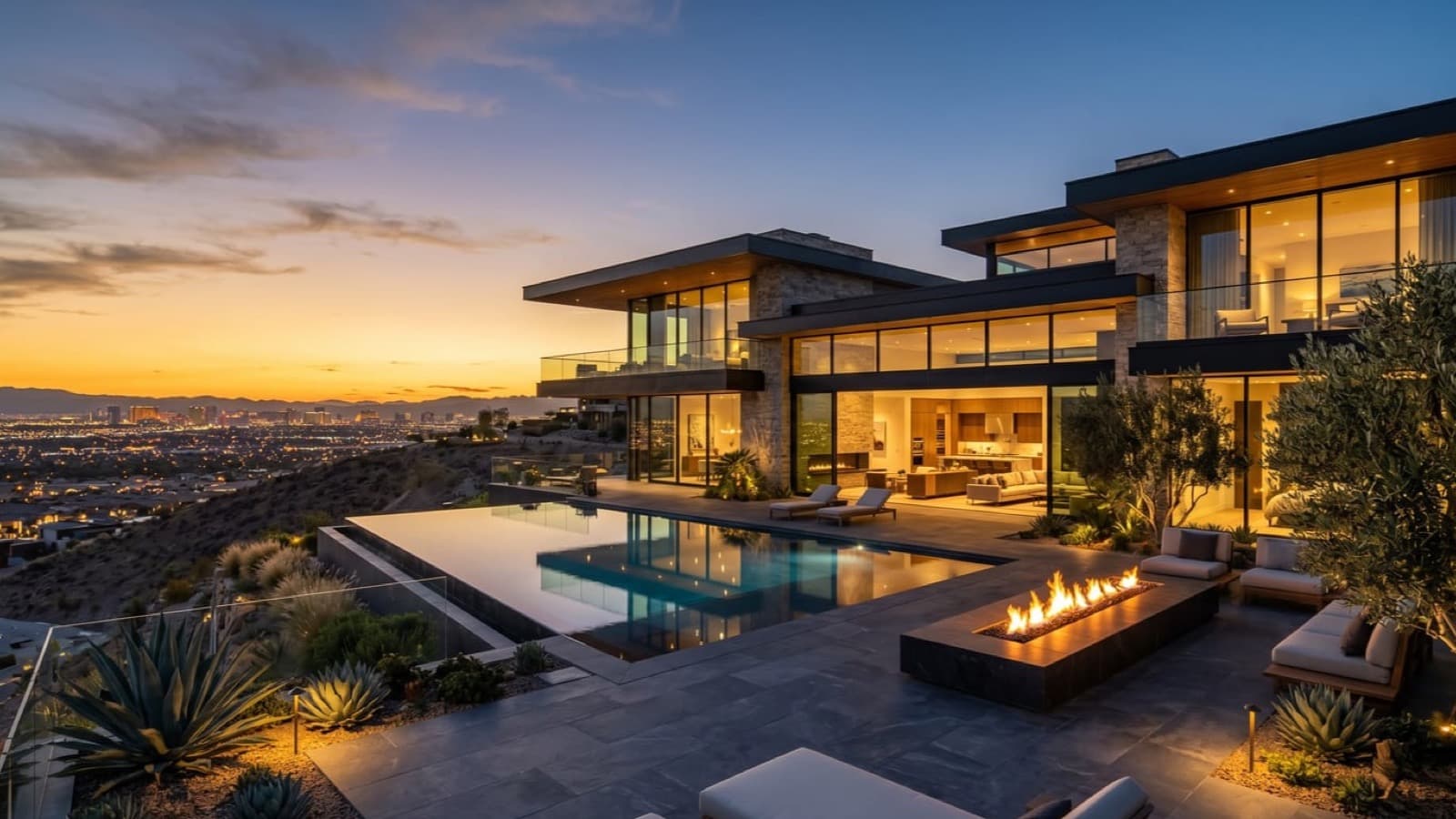
There is a moment on every custom-home walkthrough where the finishes stop mattering and the arithmetic starts. At Lot 4 in Torino Estates it arrives in the primary suite, somewhere between the wet bar and the second toilet room, when you stop counting features and start asking the only question that survives the tour: who else is going to want this, and what will they pay?
Lot 4 at Torino Estates asks roughly $3.5 million for about 5,000 square feet, five bedrooms, seven baths, an air-conditioned RV garage and a detached casita — with no HOA, no SID and no LID. That is near $700 per square foot in a ZIP whose median list price is $568,940. The features are real. The open question is whether the next buyer values a custom build the way the first one did.
- About $3.5M for roughly 5,000 square feet — near $700 per foot before the casita.
- No HOA, SID or LID. In Las Vegas that combination is genuinely uncommon.
- 231 homes are listed above $3M in Las Vegas against 177 sales in twelve months.
- That is roughly 15.7 months of supply up here, versus 5.0 valley-wide.
- Custom builders discount differently than production builders. Ask before you assume.
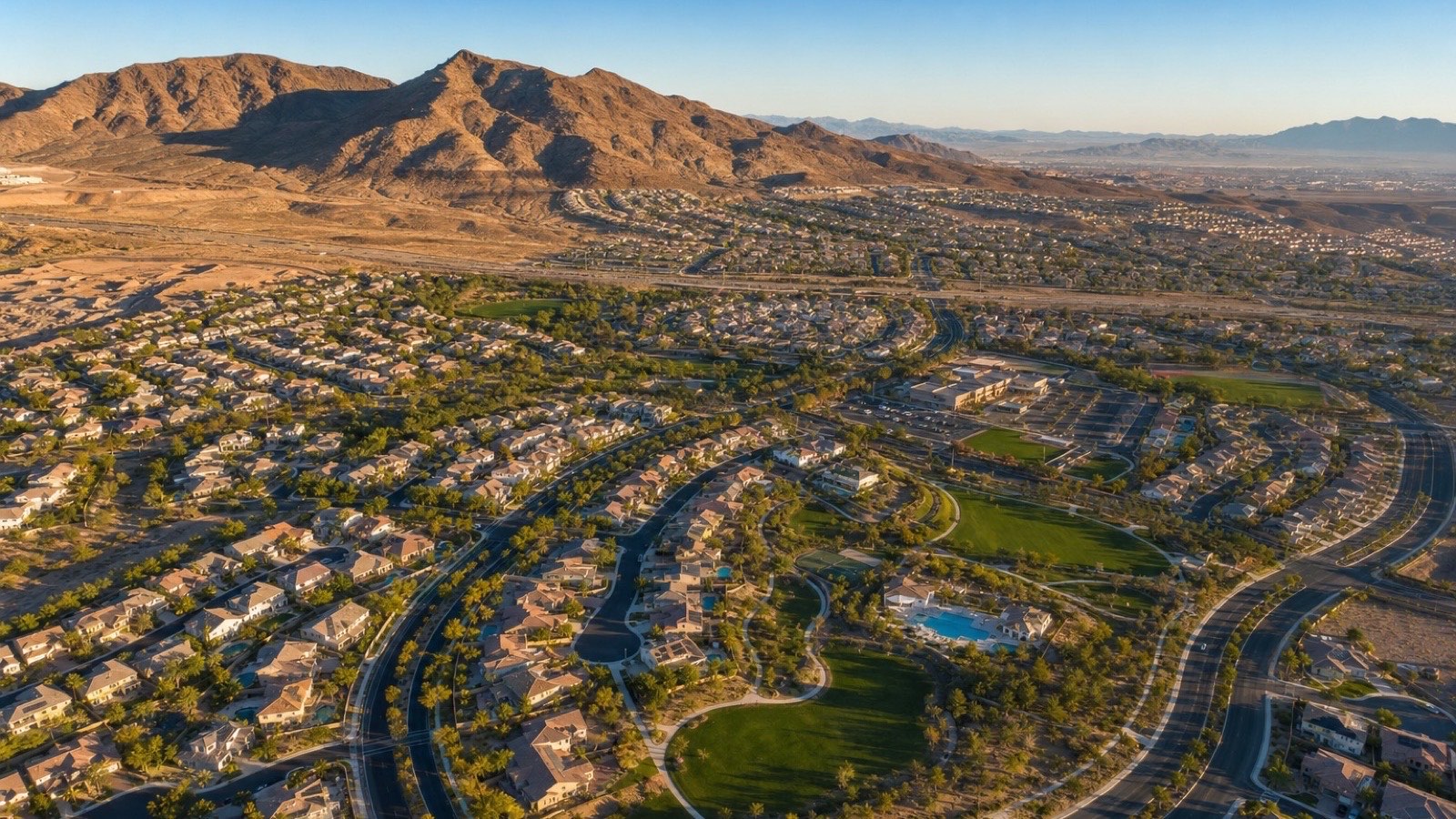
Torino Estates sits in Enterprise, the unincorporated township that most people simply call southwest Las Vegas, inside ZIP 89113. It is a small pocket of custom lots rather than a master plan, which is the single most important fact about it and the one that shapes everything below — the pricing, the incentives, the fees you do not pay, and the resale case you will eventually have to make.
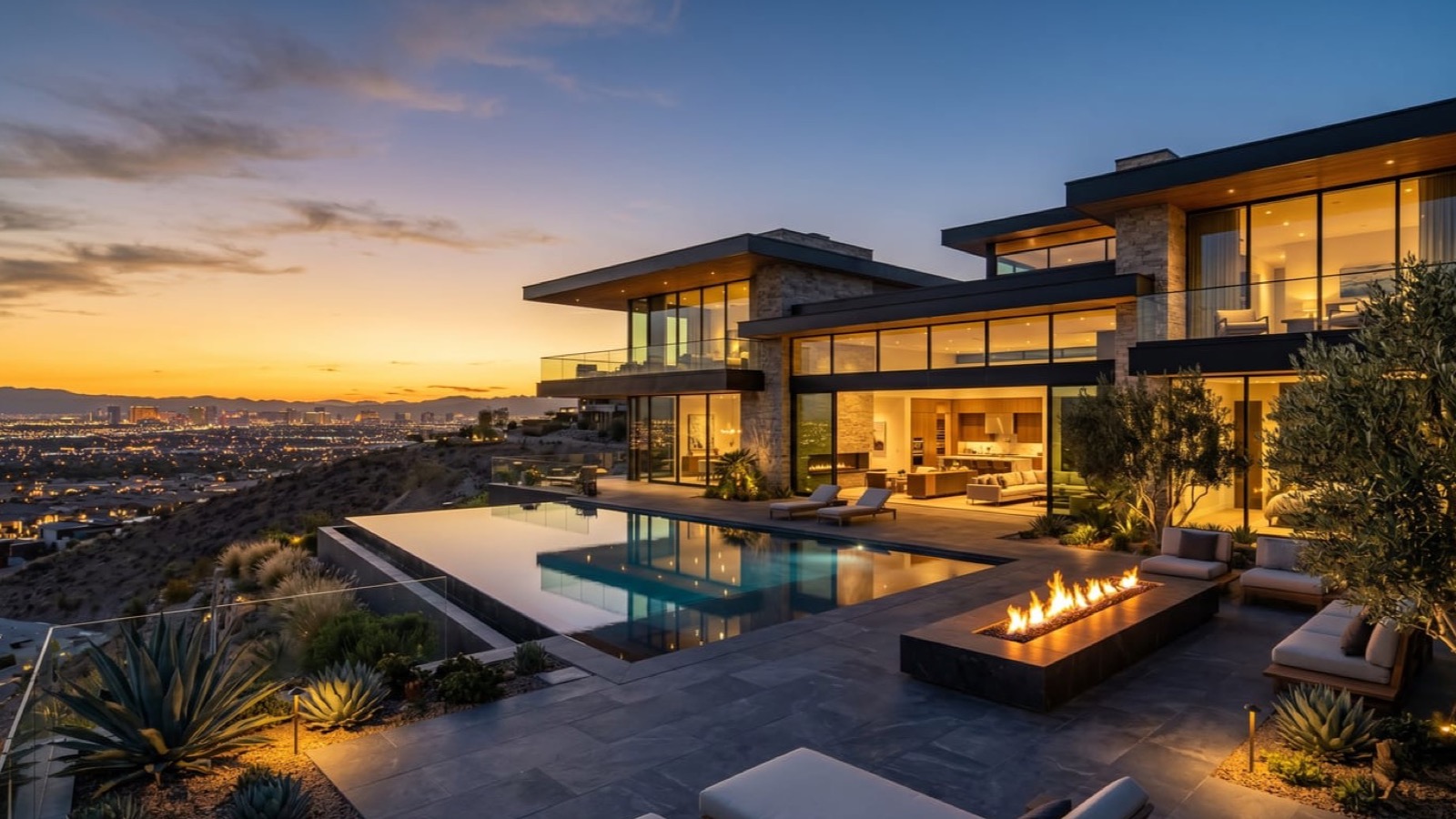
What Does $3.5 Million Actually Buy at Torino Estates?
The headline specification is five bedrooms, seven bathrooms and approximately 5,000 square feet in the main home, plus a three-car garage, a separate air-conditioned RV garage, and a detached casita of about 500 square feet.
Run the division before you run the tour. At $3,500,000 across 5,000 square feet, the main house prices at roughly $700 per square foot. Count the casita and you are at about 5,500 square feet and roughly $636 per foot. Neither number is unusual for a genuine custom build in Las Vegas, and both are well above what production luxury runs in the same corridor — which is the point of the exercise, not an objection to it.
For context from our own GLVAR pull on August 26, 2026: the median list price across all active listings in 89113 is $568,940. This home asks about six times that. That is not automatically a problem — custom enclaves sit above their surrounding ZIP by design — but it does define who the buyer pool is, and it is a smaller pool than the one shopping at $600,000.
| Measure | Main home only | Including the casita |
|---|---|---|
| Approximate size | 5,000 sq ft | 5,500 sq ft |
| Approximate price | $3,500,000 | $3,500,000 |
| Price per square foot | about $700 | about $636 |
| Bedrooms / baths | 5 / 7 | 6 sleeping areas |
| Garage | 3-car | 3-car plus RV garage |
Why Does No HOA, No SID and No LID Matter So Much Here?
Most Las Vegas buyers have been trained to look at one fee line. There are three, and in this corridor they can stack.
An HOA assessment funds a community association. A Special Improvement District (SID) and a Local Improvement District (LID) are something else entirely: assessments levied to repay bonds that financed the streets, sewers and utilities serving a development. According to Clark County, special improvement districts are repaid by the benefited parcels over a fixed term — which means they show up on your tax bill, not your HOA statement, and buyers routinely miss them.
Lot 4 carries none of the three. Over a long hold, that absence compounds. A $250 monthly HOA is $3,000 a year and $90,000 across thirty years before any increase. A SID or LID obligation on a newly developed luxury parcel can run into five figures in total. None of that money is being asked for here.
The trade is real, though, and worth stating plainly: no association also means no shared gate, no common-area landscaping budget, no design review keeping your neighbour's paint choices in check, and no amenity package. In a master plan such as Summerlin or the guard-gated enclaves covered in our luxury communities directory, those dues buy something. Here you are buying land and autonomy instead.
How Does the Custom Kitchen Compare With Production Luxury?
The kitchen is where a custom build usually justifies itself, and this one is specified the way you would expect at the price: Viking appliances, quartzite countertops, a waterfall island, a wine chiller and a dedicated coffee bar.
Quartzite is the detail worth pausing on, because it is routinely confused with quartz and they are not the same material. Quartz is engineered — ground stone bound with resin, consistent, non-porous. Quartzite is natural stone, harder than granite, and requires sealing. It costs more, it looks like nothing else, and it demands slightly more of its owner. A production builder will almost never put it in a base package.
The 16-foot ceilings are the other genuinely custom element. Production plans in southwest Las Vegas typically top out at nine or ten feet on the first floor, with two-story entries as the exception. Sixteen feet changes the structural design, the HVAC load and the window schedule all at once, which is precisely why it is rare and precisely why it costs.
The bedroom count belongs in the same conversation. Five bedrooms and seven baths means every bedroom has its own bath, with two left over. That configuration is a genuine luxury feature and a genuine resale asset — multi-generational buyers and anyone hosting regularly will pay for it. It also carries a cost most buyers never price: plumbing fixtures, water heating capacity and, in Nevada, water. According to the Southern Nevada Water Authority, indoor water use in Southern Nevada is returned to Lake Mead and largely credited back, so the indoor cost is more about utility billing than allocation. Outdoor use is the constrained one, which is why the backyard conversation below matters more than the bathroom count.
What all three elements have in common is that they were decided at framing, not at a design centre. A production buyer can upgrade a countertop; a production buyer cannot buy a 16-foot plate, a seventh bath or a natural-stone waterfall edge that the plan was never drawn for. That is the honest content of the $700-per-foot number: you are paying for decisions that were made once, early, and cannot be made later. Whether the next buyer values the same decisions is the resale question, and it is the reason a custom kitchen is both the strongest and the riskiest part of the purchase.
Why Are Builder Incentives Different on a Custom Home?
This is the single most commonly misunderstood thing about buying custom in Las Vegas, and it is worth being direct about.
A production builder — the Lennar, KB Home or D.R. Horton model you toured last weekend — sells many copies of the same plan and manages absorption across a whole community. That builder can afford aggressive rate buydowns and closing-cost credits because the incentive is a marketing expense spread across dozens of homes, and because holding a finished spec is expensive.
A custom builder on a handful of lots has no such spread. The margin sits in one house. That has two consequences buyers should expect rather than resent:
- Rate buydowns are usually smaller or absent. The multi-year structures common on production inventory — the kind we break down in our 2-1 buydown guide — rarely appear on a one-off custom home.
- The negotiation moves to scope, not price. What you can often get is inclusion: the backyard finished, the appliance package upgraded, the casita specified further. Ask for work, not discounts.
| Lever | Production builder | Custom builder |
|---|---|---|
| Rate buydown | Common, often multi-year | Rare or small |
| Closing-cost credit | $6,000-$20,000 typical | Negotiated case by case |
| Preferred-lender requirement | Usually yes | Often none |
| Where the flex actually is | Financing | Scope and finishes |
| Comparable pricing pressure | High — neighbours are identical | Low — no direct comp |
What Is the Backyard Mistake Custom Buyers Keep Making?
A finished backyard is not assumed at this price point, and buyers assume it constantly.
On a custom build the rear yard is frequently delivered as graded dirt. Landscaping, hardscape, a pool, shade structures and outdoor kitchens are separate scopes with separate contracts, and in the $3M tier they are not small numbers. A pool and modest hardscape on a lot this size commonly runs well into six figures once you include equipment, decking, fencing and the permit path through Clark County Building.
Ask the question in writing before you sign: is the backyard included, to what specification, and on what timeline? A house that appraises beautifully and sits behind bare dirt for eight months is a very different living experience from the one in the photographs.
The absence of an association changes the rules here in both directions. There is no HOA landscape deadline and no design-review committee to approve a pool or a pergola, which removes the clock that a production buyer lives under. What remains is the county: the pool, the outdoor kitchen's gas line, any detached shade structure and the perimeter walls all go through Clark County permitting and inspection, and on a lot with a casita and an RV garage already on it, setbacks and lot coverage are real constraints on where anything else can go. The water rules remain too. According to the Southern Nevada Water Authority, irrigated grass has been prohibited since 2021 in the front and back yards of new residential development, individual custom homes included, and development codes had already barred grass from new single-family front yards since 2004, so the estate lawn some relocating buyers picture is not available at any price; the design has to be desert-adapted, and on a lot this size the irrigated planting is the number that will show up on the water bill for thirty years.
The same applies to appliances people assume convey. Washers and dryers are routinely excluded from custom contracts. It is a trivial sum against $3.5 million and a genuinely irritating discovery on move-in day. Get the appliance schedule and the backyard scope in the same written addendum, and have both reviewed before the earnest money goes hard.
What Does the Detached Casita Add, and What Does It Cost?
The casita runs about 500 square feet with its own entrance. In the Las Vegas market a true detached casita does three things: it houses family without housing them inside your home, it creates a home-office or studio that is genuinely separate, and it broadens your eventual buyer pool.
What it is not, by default, is a rental. Nevada's 2025 legislature broadened accessory-dwelling rules statewide, and Clark County has its own short-term-rental licensing regime that is far more restrictive than most buyers expect. If income is part of your thesis, confirm the specific permissions for this parcel before you buy, not after — our guides to Las Vegas short-term rental rules and the casita and ADU landscape both start from that warning.
The RV garage is the casita's companion feature and deserves the same honest framing. An RV garage is a Las Vegas signature, and an air-conditioned one is a step beyond that. Southern Nevada summers are punishing on vehicle interiors, seals and stored equipment, and the valley's proximity to Zion, Death Valley and the Colorado River makes recreational vehicles genuinely practical here rather than aspirational. The buyers who want one already know what offsite storage costs and have decided they would rather own the space than rent it.
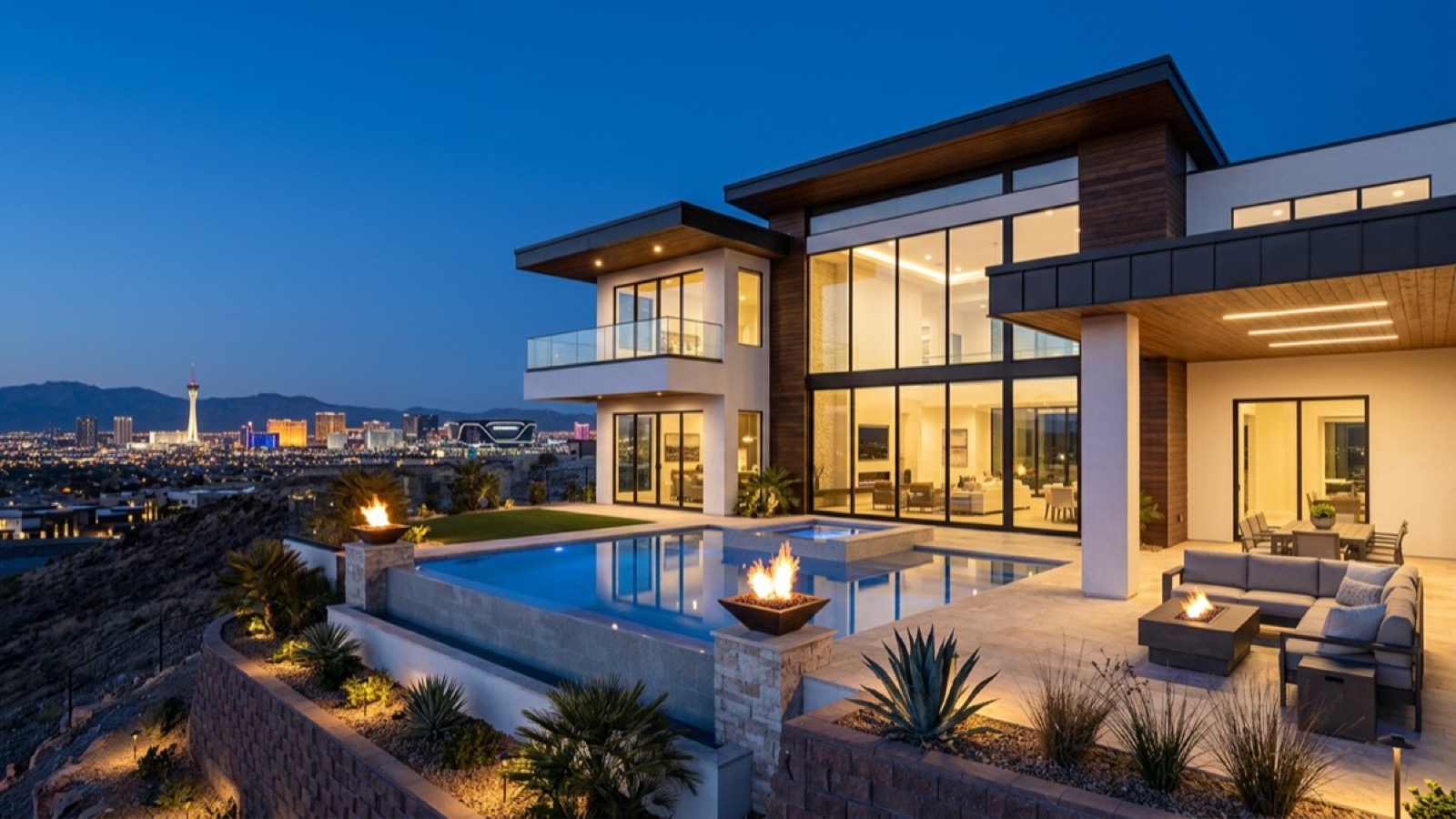
Both features narrow and deepen the buyer pool at the same time. Fewer buyers need a casita; fewer still need an RV garage; the ones who need both will not seriously consider a house without them, and they will pay for them. In our experience across the Las Vegas luxury tier, that trade is usually favourable on a custom lot — where the alternative buyer pool was never large to begin with — and less favourable in a production community where the same money could have bought square footage. On a lot with no association, there is one more thing the casita and the garage do: they are the only structures on the parcel whose permitted use, separate metering and HVAC you will have to document yourself at resale, because there is no association file to hand the next buyer. Keep the permits.
How Liquid Is the $3 Million-Plus Las Vegas Market Right Now?
This is the number that should shape your offer, and almost nobody quotes it.
Our GLVAR pull on August 26, 2026 found 231 active listings priced above $3 million across Las Vegas, with a median list price of $4,500,000. In the twelve months ending July 31, 2026, 177 homes above $3 million closed, at a median sold price of $3,802,725 and a median 47 days on market.
Do the division. Roughly 15 sales a month against 231 listings is about 15.7 months of supply in the $3M-plus tier. The valley overall is at 5.0 months. The luxury tier is three times slower, and it always has been — this is a structural feature of thin markets, not a warning sign.
| Measure | $3M and above | Valley overall (single-family) |
|---|---|---|
| Active listings | 231 | 8,192 |
| Closings, trailing period | 177 in 12 months | 1,654 per month |
| Months of supply | about 15.7 | 5.0 |
| Median days on market | 47 | 27 |
| Direct competition, $3M-$4M | 94 active | — |
Ninety-four homes are currently listed between $3 million and $4 million. That is the shelf this house shares. It is a real number of alternatives, and it is the strongest argument a buyer has at the table.
What does 47 days on market really tell a buyer? A 47-day median at $3M-plus, against 27 valley-wide, is not a sign of distress. It reflects a smaller, more deliberate buyer pool — often relocating, often paying cash, often flying in. According to the National Association of REALTORS, cash purchases make up a materially higher share of transactions at the top of the price distribution than in the market overall, which changes the negotiation. A cash buyer with no appraisal contingency and a flexible close has leverage that a $600,000 financed buyer does not, and in a tier with 15 months of supply that leverage is worth using.
The home's own ZIP tells the other half of the story. ZIP 89113 carried 325 active listings at a $560,000 median as of September 6, 2026, and 89 closings in the 90 days ending that date at a $499,900 median and 37 median days on market, according to our analysis of Las Vegas REALTORS MLS data via Repliers. Those figures cover every property type and price, and they are the market Lot 4 is physically surrounded by — a liquid, mid-priced ZIP where a correctly priced home is under contract in five weeks. The $3.5 million buyer is not shopping that market, and the $500,000 buyer is not shopping this house; the appraiser, however, has to reconcile the two, and the distance between them is exactly why a custom home in a production ZIP is a harder appraisal than the same house inside Ascaya or The Ridges, where the neighbours are comps.
How Do Property Taxes Work on a $3.5 Million Nevada Home?
Nevada's tax treatment is a significant part of the luxury case, and it improves as the price rises.
According to the Nevada Department of Taxation, the state levies no personal income tax at all. And according to the Clark County Assessor, Nevada assesses property at 35% of taxable value with a statutory abatement capping annual increases on an owner-occupied primary residence at 3%.
That cap is the underrated part. On a $3.5 million home the base bill is substantial, but the 3% ceiling on annual increases means a long-term owner's exposure grows slowly and predictably — a materially different outcome than in California, where a comparable purchase resets the basis at the sale price, or in states with uncapped reassessment.
Two things to know about how the cap behaves on a new custom build specifically. First, the abatement limits qualifying tax-bill growth on existing property; it does not smooth the step between the year the parcel was assessed as land and the year it is assessed as a finished 5,500-square-foot estate. A buyer closing on a newly completed custom home should treat the first-year tax figure on the closing statement as temporary and ask the assessor's office, or a comparable finished home nearby, what the completed house will actually be assessed at. Second, the 3% cap applies to a primary residence; a second home or an investment property falls under the higher 8% general cap, which matters for the relocating buyer who intends to keep a California residence for a year before making the move permanent. For a buyer leaving a state with income tax, the absence of a Nevada income tax is usually the larger number — but the property-tax cap is what makes the carrying cost predictable for the decade after, and predictability is precisely what a thin resale market does not otherwise offer.
Which Southwest Las Vegas Location Factors Actually Matter Here?
Enterprise has quietly become one of the valley's better-positioned townships. The Durango Casino and Resort opened nearby and materially changed the dining and entertainment picture in the southwest. Access to the 215 Beltway puts Harry Reid International Airport within a straightforward drive, which matters disproportionately to the fly-in luxury buyer.
For a wider view of the corridor and how the custom pockets sit against the master plans, our southwest Las Vegas guide covers the township at neighbourhood level, the Enterprise page carries the township's own inventory, and the Las Vegas hub carries live inventory across every price tier.
Three location factors matter more on a custom lot than on a production one, and they are worth walking before you fall for the interior. The first is what surrounds the enclave. A small pocket of custom lots inside a fast-building township is only as private as the parcels around it, and a buyer paying for separation should pull the surrounding zoning and any pending entitlements from the county rather than assume the vacant land next door will stay vacant. The second is the drive, in both directions. The Durango corridor and the 215 make this one of the more convenient luxury addresses in the valley; they also mean the arterial roads carry real traffic, and a custom home that fronts or backs one of them is a different property from one that does not. The third is the buyer who will come after you. According to the U.S. Census Bureau, Clark County has added hundreds of thousands of residents since 2010, and a meaningful share of the luxury demand in the southwest is relocation demand — buyers who know Ascaya and The Ridges by name and are learning Enterprise for the first time. A location that is easy to explain to that buyer is worth more at resale than one that needs a map.
What Does the Primary Suite Tell You About the Build?
I have walked a lot of Las Vegas primary suites, and the ones that stay with me are rarely the biggest. This one is worth describing because it demonstrates what custom money actually buys, which is not square footage but sequencing.
The suite carries its own wet bar, a bonus sitting area, an oversized bathroom with two separate toilet rooms, dual walk-in closets and direct access to laundry. Read that list again and notice that four of the six items are about circulation rather than size. Two toilet rooms means two people get ready simultaneously without negotiation. Laundry access off the closet means clothes travel three feet instead of across a 5,000-square-foot house.
Production plans almost never do this, and the reason is economic rather than aesthetic. Moving laundry adjacent to a primary closet requires plumbing and venting decisions made at framing, not at the design centre. When I walk buyers through production inventory, this is the single most common thing they wish they could change and cannot.
The wet bar is the one item I would push back on. It is genuinely useful to some households and dead space to others, and it consumes floor area that a future buyer may want back. If you are specifying a custom build rather than buying one already finished, that is a conversation worth having before framing.
How Do You Finance a $3.5 Million Custom Home in Nevada?
Financing changes character above roughly $1.1 million, and buyers routinely arrive unprepared for it.
A loan at this size is a jumbo loan — above the conforming limit that Freddie Mac and Fannie Mae will purchase — which means it stays on a lender's balance sheet and is underwritten to that lender's appetite rather than to agency guidelines. According to the Federal Housing Finance Agency, conforming limits are set annually by county, and a $3.5 million purchase sits far above Clark County's line at any plausible down payment. In practice that means larger down payments, deeper reserve requirements, and considerably more documentation of income and assets than a $600,000 purchase demands.
Two things specific to a custom build compound it. First, if the home is not yet complete, you may be looking at a construction loan that converts to permanent financing rather than a straightforward purchase mortgage — a different product with different draw schedules and inspection requirements. Second, appraisal is genuinely harder here. An appraiser needs comparable sales, and a one-off custom home in a small enclave has fewer of them than a production plan with forty neighbours.
That last point is worth sitting with, because it is where custom deals most often wobble. In our experience across the Las Vegas luxury tier, the appraisal on a distinctive custom property is the single most common cause of a delayed close — not financing approval, not inspection. Build appraisal time into your contract, and go in with a lender who has actually closed custom product in Clark County rather than one who is willing to try.
Cash changes all of it. Given the 47-day median days on market above $3 million and the 94 competing listings between $3 million and $4 million, a buyer who can waive appraisal and close on the seller's timeline is negotiating from a materially stronger position than the numbers alone suggest.
How Does This Compare With Buying Guard-Gated Instead?
The genuine alternative at $3.5 million is a guard-gated home in MacDonald Highlands, Ascaya, The Ridges or Southern Highlands. That comparison comes down to what you want the money to do.
Guard-gated buys security infrastructure, a managed aesthetic, amenities and — importantly for resale — an address with brand recognition that carries across state lines. It costs monthly dues and design restrictions.
A custom lot in Enterprise buys autonomy, no recurring fees, and a house built to one household's specification. It costs the amenity package and, honestly, some resale legibility. The out-of-state buyer searching "Las Vegas luxury" recognises Ascaya. They do not yet recognise Torino Estates.
Neither is the right answer universally. If you intend to hold ten years and value control, the custom case is strong. If you may move in three and want the broadest possible exit, the guard-gated address is the more liquid asset.
The arithmetic of the comparison is worth doing rather than feeling. A guard-gated enclave at this tier can carry association dues that run to several hundred dollars a month plus a SID or LID on the parcel, which over a ten-year hold is a six-figure difference in carrying cost against a parcel with none of the three. Against that, the guard-gated home sells into a buyer pool that arrives already knowing the address, and in a tier moving at 47 median days with 15.7 months of supply, the difference between a home that needs explaining and one that does not can be worth more than the dues. The honest summary: the custom lot wins on carrying cost and control, the guard-gated address wins on exit, and the buyer's horizon decides which of those matters more. Our guard-gated communities directory covers the alternatives by enclave.
What Should You Verify Before Signing a Custom Build Contract?
Custom contracts are not production contracts, and the protections differ. Before signing, get written answers on all of the following:
- Backyard scope. Included or excluded, to what specification, on what timeline.
- Appliance schedule. Specifically whether washer and dryer convey.
- Casita specification. Kitchenette, full bath, separate HVAC, separate meter.
- RV garage dimensions. Interior length, door height, and whether the air conditioning is a dedicated system.
- Fee confirmation. Written confirmation of no HOA, no SID and no LID on this parcel, checked against the assessor record rather than the listing.
- Warranty terms. Custom builders' warranties vary far more than production builders'. Expect at least the industry's common one-year workmanship, two-year systems and ten-year structural shape, and get the structural coverage in writing.
- Completion and delay remedies. What happens if the delivery date moves.
According to the Nevada State Contractors Board, verifying a contractor's licence, classification and bond status before contracting is the buyer's most reliable protection — and it takes about two minutes on their public lookup. Do it for the builder, and do it again for the pool contractor and the landscaper you hire afterward.
Two protections a production buyer has that you do not have here, and one you should build in yourself. Because there is no association, there is no public offering statement and no five-day cancellation right under Nevada's common-interest community statute — the exit a Summerlin or Cadence buyer gets automatically does not exist on a parcel with no HOA, so your inspection and appraisal contingencies are the only exits you will have, and their deadlines should be negotiated rather than accepted. Because the neighbours are not comps, the appraisal gap is yours to plan for: know before you write how much cash you could bring if the value comes in under $3.5 million, and if the answer is none, structure the offer so the contingency protects the deposit. And whether the home is finished or still framing, hire an independent inspector — at pre-drywall if you can, and top to bottom before closing regardless — because a 16-foot ceiling, a dedicated RV-bay HVAC system and a separately metered casita are exactly the kind of one-off systems that a production-trained inspector has not seen before and a warranty may not fully cover.
If a custom build in the southwest valley is on your list, the useful next step is not another walkthrough — it is a conversation about which of the 94 homes currently listed between $3 million and $4 million actually fit what you want, and what each one is likely to accept. Browse live Las Vegas luxury homes, filter the whole valley on Las Vegas homes for sale, or contact us and we will pull the comparable set for you. Call Nevada Real Estate Group at (702) 637-1759. We have represented more than 9,600 closings across the valley, and in this tier the difference between the asking price and the closing price is usually a matter of knowing what the other 93 sellers are doing.
Frequently Asked Questions
How much is the home at Torino Estates Lot 4?
Approximately $3.5 million at the time of our August 2026 walkthrough, for roughly 5,000 square feet in the main home plus a 500-square-foot casita. That is about $700 per square foot on the main house. Custom pricing moves with scope, lot and contract, so confirm the current figure directly.
Does Torino Estates have an HOA?
No. The home carries no HOA, no SID and no LID. Because SID and LID assessments appear on the property tax bill rather than an association statement, get that confirmed in writing for the specific parcel before you rely on it.
Is the backyard included at this price?
Not assumed. On custom builds the rear yard is frequently delivered as graded dirt, with landscaping, hardscape and pool as separate contracts. A pool and hardscape on a lot this size commonly runs well into six figures. Ask for the scope in writing.
Can I rent out the casita?
Not by default. Clark County's short-term rental licensing regime is more restrictive than most buyers expect, and long-term rental of an accessory unit has its own rules. Confirm the specific permissions for the parcel before making rental income part of your purchase math.
Why don't custom builders offer big rate buydowns?
Because the margin sits in one house rather than being spread across dozens. A production builder treats an incentive as a marketing cost across a whole community; a custom builder cannot. The flexibility on a custom home is usually in scope and finishes rather than financing.
How long do $3 million homes take to sell in Las Vegas?
The median was 47 days for homes above $3 million that closed in the twelve months ending July 31, 2026, versus 27 days valley-wide. With 231 active listings against 177 annual sales, the luxury tier is carrying roughly 15.7 months of supply against 5.0 for the valley overall.
Is an RV garage a good investment in Las Vegas?
It narrows and deepens the buyer pool simultaneously. Fewer buyers need one; those who do will not consider a house without one. On a custom lot — where the buyer pool was never broad — that trade usually works out. In a production community the same money often buys more usable square footage.
Which Sources Inform This Torino Estates Analysis?
Market figures are our own live GLVAR pull on August 26, 2026: 231 active listings above $3 million with a $4,500,000 median list; 177 closings above $3 million in the twelve months ending July 31, 2026 at a $3,802,725 median and 47-day median days on market; 94 active listings between $3 million and $4 million; 8,192 active single-family listings valley-wide against a trailing three-month pace of 1,654 closings a month; and a $568,940 median list price across ZIP 89113. The follow-up ZIP 89113 figures — 325 active listings at a $560,000 median as of September 6, 2026, and 89 closings in the 90 days ending September 6, 2026 at a $499,900 median and 37 median days on market — come from our analysis of Las Vegas REALTORS MLS data via Repliers, all property types and prices. Property specifications come from our August 17, 2026 walkthrough of Lot 4 and are approximate.
- Clark County — special and local improvement districts
- Clark County Assessor — assessment ratio and the 3% abatement
- Clark County Building and Fire Prevention — pool and hardscape permitting
- Nevada Department of Taxation — no state personal income tax
- Nevada State Contractors Board — licence, classification and bond verification
- Southern Nevada Water Authority — conservation initiatives and laws and ordinances — indoor versus outdoor water use and the grass prohibition for new homes
- Las Vegas REALTORS — market context, months-of-supply convention and the MLS data behind the ZIP figures
- National Association of REALTORS — cash-share research by price tier
- Federal Housing Finance Agency — conforming loan limits by county
- U.S. Census Bureau — Enterprise and Clark County demographics
- Durango Casino and Resort — southwest valley amenity context
- Freddie Mac — weekly mortgage rate survey