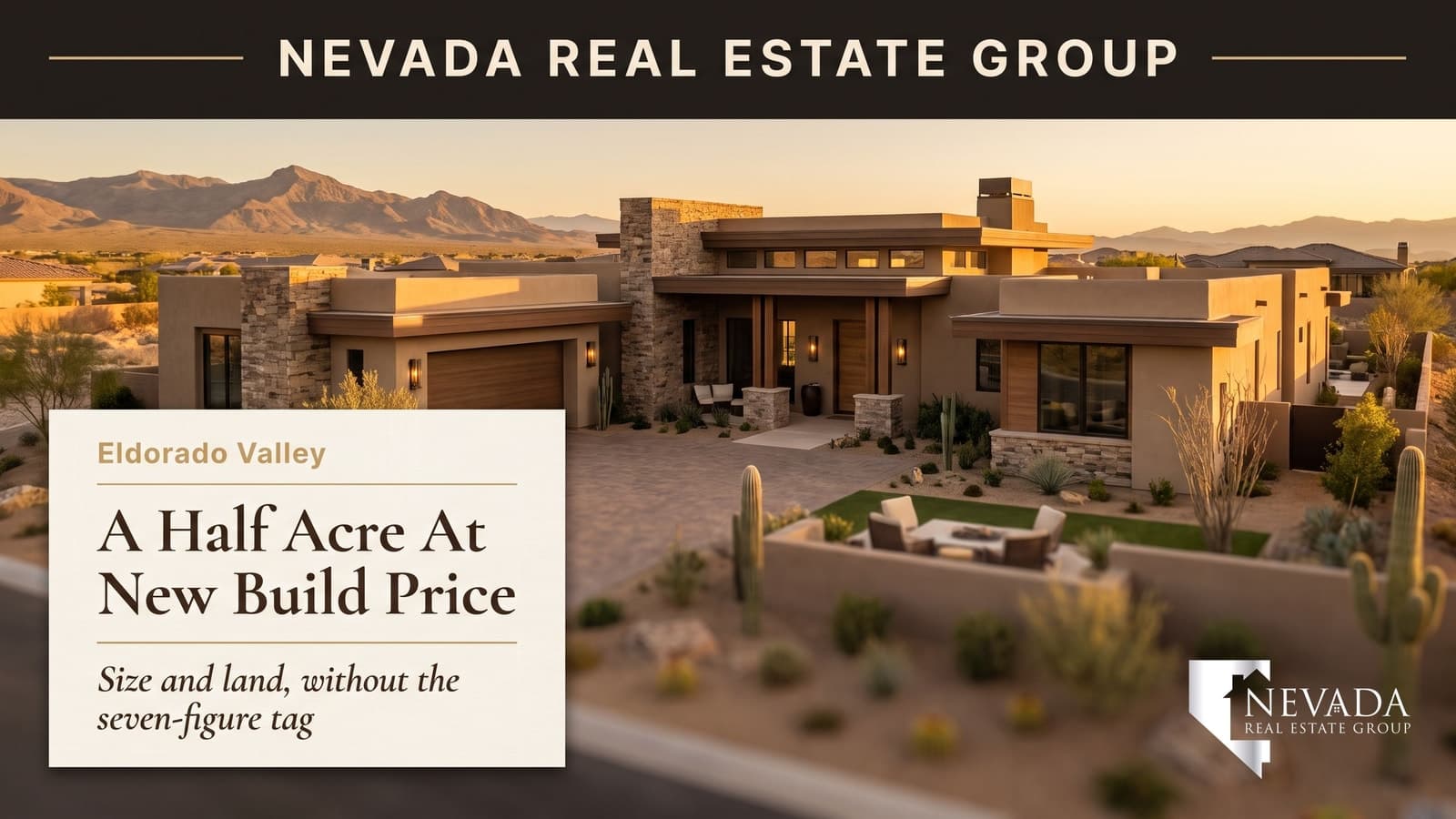
Square footage is the number every builder advertises. Land is the number that is actually scarce here, and almost nobody puts it on the sign.
I measured it before writing this. Across 942 active southwest Las Vegas listings with a recorded lot size, the median sits on 0.10 acres — about 4,356 square feet, which is roughly the footprint of the house plus a side yard you walk through sideways. That is the normal Las Vegas condition, and buyers moving here from almost anywhere else are consistently surprised by it.
Which is what makes the Robert at Galway Grove worth a closer look than the usual model tour. It is a production home on a half-acre homesite, and that combination is genuinely uncommon.
Of 942 active southwest Las Vegas listings measured on 2026-08-30, only 51 — 5.4% — sit on a half acre or more, against a 0.10-acre median. Those larger-lot homes carry a $1,398,000 median versus $509,500 for homes under a quarter acre. A production builder offering a half acre is unusual, but the unfinished backyard on that lot is a far larger number than on a standard one.
- The median southwest Las Vegas listing sits on 0.10 acres, roughly 4,356 square feet of land.
- Only 51 of 942 measured listings — 5.4% — sit on a half acre or more.
- Half-acre-plus homes carry a $1,398,000 median against $509,500 for sub-quarter-acre homes.
- Just 12 of 942 southwest listings, 1.3%, sit on a full acre or larger.
- Landscaping a half-acre yard is a multiple of the $10,000 to $25,000 standard-lot budget.
What Is the Robert at Galway Grove?
The Robert is a Richmond American plan at Galway Grove in southwest Las Vegas. The home in the tour runs over 4,000 square feet with five bedrooms, four and a half bathrooms, a three-car garage — and the half-acre homesite that makes it worth discussing.
According to Richmond American's plan sheet for the Robert, it is a single-story ranch plan of approximately 4,010 square feet with four to five bedrooms, and Galway Grove sits at Wigwam Road and Cimarron Avenue in ZIP 89113. The one-level layout is the detail I would underline, because a 4,000-square-foot single story needs a footprint that a standard Las Vegas lot cannot hold. The half acre is not decoration on this plan; it is what makes the plan possible.
The layout opens through a private courtyard entry into a study and a formal dining room, then into an open kitchen, nook and great room. The plan sheet also shows a game room, a butler's pantry, a mud room off the garage, a Jack-and-Jill bath between two of the secondary bedrooms, and a covered patio with an extended-patio option. Optional configurations include a second owner's suite and a separate guest suite, which is how the plan reaches five bedrooms. The model we walked carried a wet bar, a walk-in pantry, quartz countertops, Monogram appliances and soft-close cabinetry; several of those are options rather than base specification, and I come back to that below.
At the time of the tour, late August 2026, the builder was advertising a 3.99% interest rate, an $88 monthly HOA, no SIDs, no LIDs and no master plan fee. The backyard is unfinished.
At this size the question stops being "will it fit" and becomes "will you use it." Over 4,000 square feet with five bedrooms and a three-car garage is genuinely large for a production home. The courtyard entry, the separate study and the formal dining room are the tells that this plan was drawn for a household that entertains and that works from home — not for maximum bedroom count in minimum footprint. The wet bar belongs in that same reading. A wet bar is not a practical necessity; it is a signal about how the living space is meant to be used.
What I would weigh honestly: 4,000 square feet costs more than the mortgage. It costs more to cool through a Las Vegas summer, more to furnish, more to maintain, and more to clean. The plan sheet lists a projected HERS index of 54 for the Robert, against 100 for a standard new home and 130 for a typical resale on the RESNET scale — a projected rating, not a field-confirmed one, but a meaningful head start against a 1990s resale of similar size. In our experience the households who are happiest in this size are the ones who genuinely needed the rooms, not the ones who bought the number.
Buyers comparing across the valley usually start from Las Vegas homes for sale before narrowing to a single community.
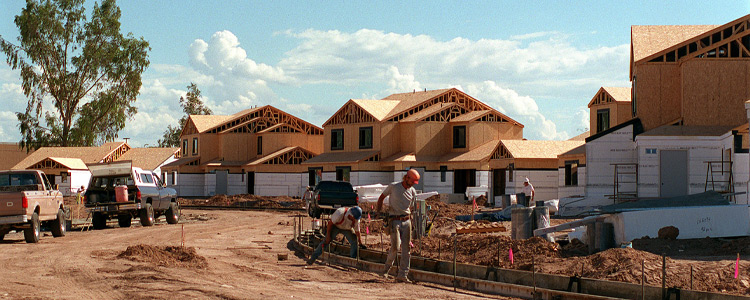
How Rare Is a Half-Acre Lot in Southwest Las Vegas?
Rare enough to be the headline.
I sampled 1,000 active southwest listings on 2026-08-30; 942 carried a usable lot size. The distribution is stark:
| Lot size | Listings | Share of market |
|---|---|---|
| Median lot overall | 0.10 acres (4,356 sq ft) | — |
| A quarter acre or more | 113 | 12.0% |
| 0.4 acres or more | 76 | 8.1% |
| A half acre or more | 51 | 5.4% |
| A full acre or more | 12 | 1.3% |
Roughly nineteen out of twenty homes for sale in the southwest sit on less than half an acre. Eighty-eight percent sit on less than a quarter acre. That is the context a buyer needs before evaluating this home, because it reframes what is being sold. The plan is a nice plan. The land is the asset.
Why are the lots so small in the first place? Because the valley cannot simply expand, and the arithmetic of that constraint runs through every lot line. Clark County is surrounded by federally managed land. According to the Bureau of Land Management, the federal government administers the large majority of land in Nevada, and developable acreage around Las Vegas enters private hands largely through the Southern Nevada Public Land Management Act disposal process rather than by open expansion.
When the supply of developable land is administratively constrained and demand keeps arriving, the rational response for a builder is to put more homes on each parcel. Smaller lots are not a design preference. They are the arithmetic of scarce, expensive dirt. According to the U.S. Census Bureau, Clark County has added hundreds of thousands of residents since 2010 while that land pipeline moved at its own pace. The result is a market where the house got bigger and the yard got smaller for two decades straight — and a small enclave of half-acre lots inside a production community is the exception that the whole trend explains.
What Does a Half Acre Normally Cost Here?
This is where the numbers get interesting, and where I need to be careful not to oversell them.
Among the 942 listings I measured, the 51 sitting on a half acre or more carried a median list price of $1,398,000. The 829 sitting on under a quarter acre carried a median of $509,500.
That is a 2.7× spread, and it is tempting to present it as "the land premium." It is not, and I want to say so plainly: that comparison is not apples to apples. Large-lot inventory in this valley skews heavily toward custom and semi-custom estates — bigger houses, higher finish levels, and often gated enclaves. The $1,398,000 median reflects the whole package, not the dirt alone.
| Dimension | Half acre or more | Under a quarter acre |
|---|---|---|
| Listings in sample | 51 | 829 |
| Share of market | 5.4% | 88% |
| Median list price | $1,398,000 | $509,500 |
| Typical product | Custom and semi-custom estates | Production homes |
| What the gap measures | House, finish level and land together — not a clean land premium |
What the data does support is narrower and still useful: if you want a half acre in the southwest, the resale market will overwhelmingly route you into a price tier well above the production range. A builder offering that lot size inside a production community is selling access to a scarce attribute through a cheaper door.
The ZIP the community sits in makes the same point from the other direction. In the 90 days ending September 6, 2026, 89 listings closed in ZIP 89113 at a $499,900 median and 37 median days on market, and 325 were active at a $560,000 median as of September 6, according to our analysis of Las Vegas REALTORS MLS data via Repliers. Those are all property types at all prices, so read them as the neighborhood's center of gravity rather than as comps for this house. The point is that the Robert is priced well above what its own ZIP typically trades at, and the land is the reason. When a buyer asks me whether a large-lot production home will appraise, that is the conversation: the appraiser will be looking for half-acre sales, not for the $499,900 median, and there are very few of the former.
Why Does the Unfinished Backyard Matter More on a Half Acre?
This is the most important practical point in the article, and it is the one the lot size makes dramatically different.
On a standard Las Vegas lot, a bare-dirt backyard is a $10,000 to $25,000 problem for basic desert landscaping, with pavers adding $4,500 to $12,000. Those are the figures I quote constantly, and they assume a rear yard of a few thousand square feet.
A half acre is 21,780 square feet. Even after the house footprint, the driveway and the setbacks, you may be looking at a rear and side yard several times larger than a standard lot's entire parcel. The same per-square-foot rates that produce a $15,000 yard on a tenth of an acre do not produce a $15,000 yard here.
| Lot | Total land | What the standard budget assumes |
|---|---|---|
| Median southwest lot | 0.10 acres (4,356 sq ft) | $10,000 to $25,000 basic desert install |
| Quarter acre | 10,890 sq ft | Roughly 2.5× the median lot's open ground |
| Half acre | 21,780 sq ft | Roughly 5× — the standard budget does not apply |
Most associations require completion within 30 to 180 days of closing, and fines typically start at $50 to $200 a month past the deadline. On a half acre that clock is running against a much larger project. The deadline mechanics are in our HOA landscape requirements guide, but the instruction specific to this home is simpler: get a landscape bid on this actual lot before you sign, not a rule of thumb from a standard one.
The front yard is usually the builder's, and that matters here too. Las Vegas production builders typically deliver front-yard landscaping because the association requires a finished streetscape, and the plan sheet's renderings show exactly that: desert planting, rock and a paver walk. What you are buying is the back and the sides, and on a single-story plan with a courtyard entry and a covered patio, the rear yard is the whole outdoor life of the house.
Two rules shape what you can put there. First, the water rules. According to the Southern Nevada Water Authority, desert landscaping substantially reduces outdoor water use compared with turf, development codes have prohibited grass in new single-family front yards since 2004, and since 2021 irrigated grass has been prohibited in all new developments, back yards included — so the sprawling lawn a relocating buyer pictures on a half acre is not an option, and the design has to be desert-adapted from the start. Conversion rebates have historically been available; confirm current terms before you design a yard this size rather than after. Second, the association's design review. Most CC&Rs require architectural approval before you install a pool, a shade structure, a shop or an RV pad, and on a half acre those are the items buyers actually want. Get the design guidelines with the HOA documents and read them before you fall for the lot.
What Are the HOA, SID and LID on This Home?
The tour reports an $88 monthly HOA, no SIDs, no LIDs and no master plan fee — and that combination is worth understanding rather than skimming.
An HOA fee is the association's budget divided across the homes. A special or limited improvement district is something else entirely: under Nevada Revised Statutes Chapter 271, local governments finance new infrastructure by bonding against benefiting parcels, and the owner repays that bond through an assessment attached to the property. Across Las Vegas communities where these exist they commonly add $1,200 to $3,600 a year, with lifetime totals from about $7,000 to well past $50,000.
A master plan fee is a third thing again — a separate assessment some large master-planned communities levy on top of the sub-association.
A home carrying none of the latter three has a materially lower true carrying cost than a home with the same HOA and a bond on the parcel. That is a real advantage, and it is exactly the kind of thing that never appears in a monthly-payment estimate. On a thirty-year hold, the difference between an $88 association with no bond and a $150 association with a $2,400-a-year SID is more than $90,000 in payments not made, before a single dues increase.
Verify it against the parcel record rather than a verbal answer. According to the Clark County Assessor, parcel-level tax and assessment detail is publicly searchable, which makes this a ten-minute check. And ask what the $88 actually funds. A small enclave has very little common area, so a small budget is plausible — but a small association also has a small reserve, and the reserve study is the document that tells you whether the number is stable or simply young. According to Nevada Revised Statutes Chapter 116, the association's governing documents, budget and reserve information are part of what a buyer is entitled to receive, and on a new community the public offering statement is where they live.
How Does the 3.99% Rate Offer Work, and What Is Not Included?
The same three questions apply to every builder rate offer, and they are the difference between a genuine saving and a repackaged cost.
Is the rate fixed for the full term, or fixed for an initial period on an adjustable loan? If it adjusts, what are the index, the margin and the caps? And is the rate conditional on using the builder's affiliated lender?
Builder-affiliated lenders across Las Vegas commonly quote 0.25% to 0.625% above the best outside rate on an unsubsidized loan, which is how a headline concession quietly returns through the note. On a heavily bought-down rate the builder program often still wins outright — but you only know by pricing an outside lender first and comparing total cost over the years you will actually own the home.
There is one wrinkle specific to a home at this price. If the purchase price puts the loan above the conforming limit for Clark County, it becomes a jumbo product underwritten to the lender's own appetite rather than to agency guidelines — larger down payment, deeper reserves, and a rate that is quoted differently from the conforming rate on the sign at the entry-level community down the road. Ask the builder's lender whether the 3.99% applies to the jumbo product at all, or only to a conforming loan that would require a very large down payment on this house. According to the Federal Housing Finance Agency, conforming loan limits are set annually by county, and that page is where to check the current line.
We worked the full arithmetic of a comparable structure in our ARM financing breakdown. According to the Consumer Financial Protection Bureau, the loan estimate is the document that makes lender quotes comparable — read that page, not the sign in the sales office.
The other thing the sign does not say is what conveys. Monogram appliances in a model do not guarantee Monogram appliances in your contract. On many Las Vegas builds the refrigerator, washer, dryer and sometimes the microwave are excluded, and window coverings frequently are as well. The plan sheet itself marks the professional kitchen, the beamed or grid-soffit ceilings, the multi-slide door at the great room, the fireplaces and the extended covered patio as options — which means the model's most photographed features are line items, not base specification. Across a home this size, blinds alone are a serious number, and a 4,000-square-foot single story has a lot of glass. Ask for the inclusion list in writing, item by item, and check it against what you walked. What is installed in a decorated home is a marketing decision, not a contractual one.
Is a Bigger Lot Always Better?
No, and I would be doing you a disservice to pretend otherwise.
A half acre is more yard to landscape, more to irrigate, more to maintain, and more to keep looking like something on a lot that is visible from the street on three sides. It raises your water bill and your maintenance burden permanently, not just at move-in.
It also concentrates your buyer pool at resale. The set of buyers who actively want and will pay for a half acre is smaller than the set who want a normal yard — that is the flip side of 5.4% scarcity. Scarcity cuts both ways: fewer competitors when you buy, fewer buyers when you sell.
Where the large lot genuinely earns its keep is when you have a specific use for it: RV or boat parking, a shop or detached structure, a pool plus real open space, animals where zoning permits, or simply enough separation that your neighbor's second story does not look into your yard. If you have that use, the premium is buying you something. If you do not, you are buying maintenance.
Land does hold value in a way that finishes do not, and that is the strongest long-term argument here. A kitchen dates. A lot does not. In a valley where developable land is administratively constrained and lot sizes have trended down for two decades, the parcel is the part of the purchase least exposed to changing taste. Across the 9,600-plus transactions Nevada Real Estate Group has closed statewide, the attributes that hold up best over a long hold are consistently the ones that cannot be renovated in later — location, view, and land.
The counterweight, again honestly: your resale buyer pool is 5.4% of the market rather than 88% of it. That usually means a longer marketing period, not a lower price. It also means the appraisal question I raised above comes back when you sell: the next buyer's lender will need half-acre comparables too, and a single-story plan on a half acre in a ZIP whose closings run near $500,000 will be compared against custom homes rather than against the neighbors. Price it right and the scarcity works for you; price it on emotion and a thin buyer pool will find you out.
What Does Southwest Las Vegas Inventory Look Like Right Now?
Deep at the standard-lot end, thin at the top.
The southwest carried 1,682 active listings at a $520,000 median when I pulled it on 2026-08-30. Of the 942 with recorded lot sizes, 829 sat under a quarter acre and just 51 at a half acre or more.
So a buyer with a normal lot requirement has well over a thousand choices. A buyer who specifically wants a half acre has roughly fifty across the entire southwest, most of them in a much higher price tier. That asymmetry is the entire argument for taking a production half-acre offering seriously when one appears.
Narrow the lens to the community's own ZIP and the picture holds. ZIP 89113 carried 325 active listings at a $560,000 median as of September 6, 2026, and 89 closings in the 90 days ending that date at a $499,900 median and 37 median days on market, according to our analysis of Las Vegas REALTORS MLS data via Repliers. That is a liquid, mid-priced ZIP with a lot of production product moving in five to six weeks — and almost none of it on a half acre. A buyer who wants this lot size is not choosing among the 325; they are choosing among a handful.
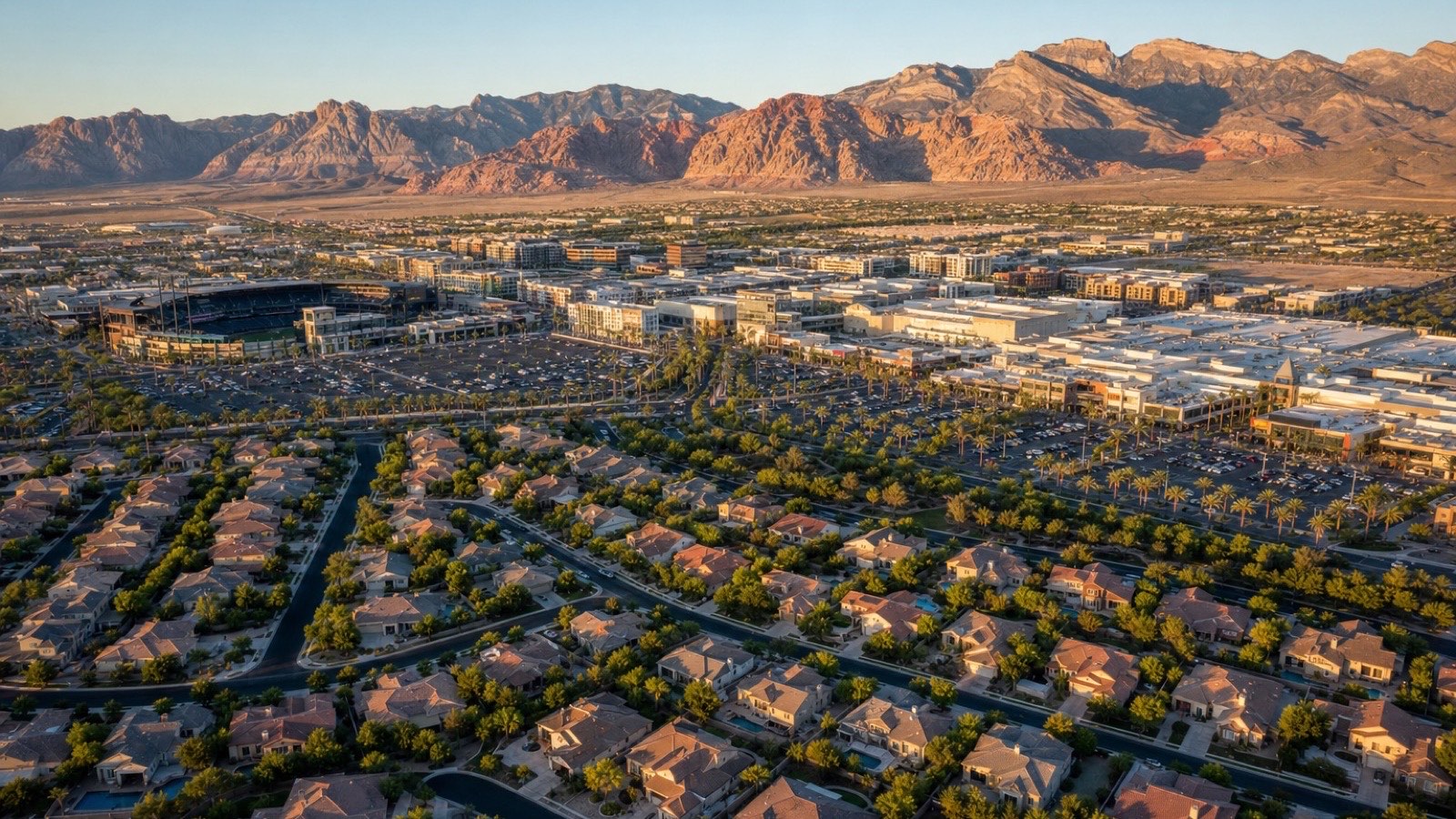
Where the community sits helps explain the demand. Galway Grove is in the Enterprise township that most people simply call southwest Las Vegas, at Wigwam Road and Cimarron Avenue, a short drive from the 215 Beltway and the dining and entertainment that arrived with the Durango Casino and Resort. The corridor has been the valley's fastest-building quadrant for a decade, which is exactly why standard lots there are small and why a half acre inside it is unusual rather than remote. Buyers who want acreage without the drive to the outlying valley have very few addresses to choose from, and that is the whole reason a small enclave gets its own article.
It is also the argument for moving deliberately rather than quickly — fifty options is few, but it is not one, and the property search is the right place to see the alternatives side by side before you commit.
What Do Buyers Actually Do With the Extra Land?
Worth answering concretely, because "big yard" is where most of these conversations stop and it is not a use case.
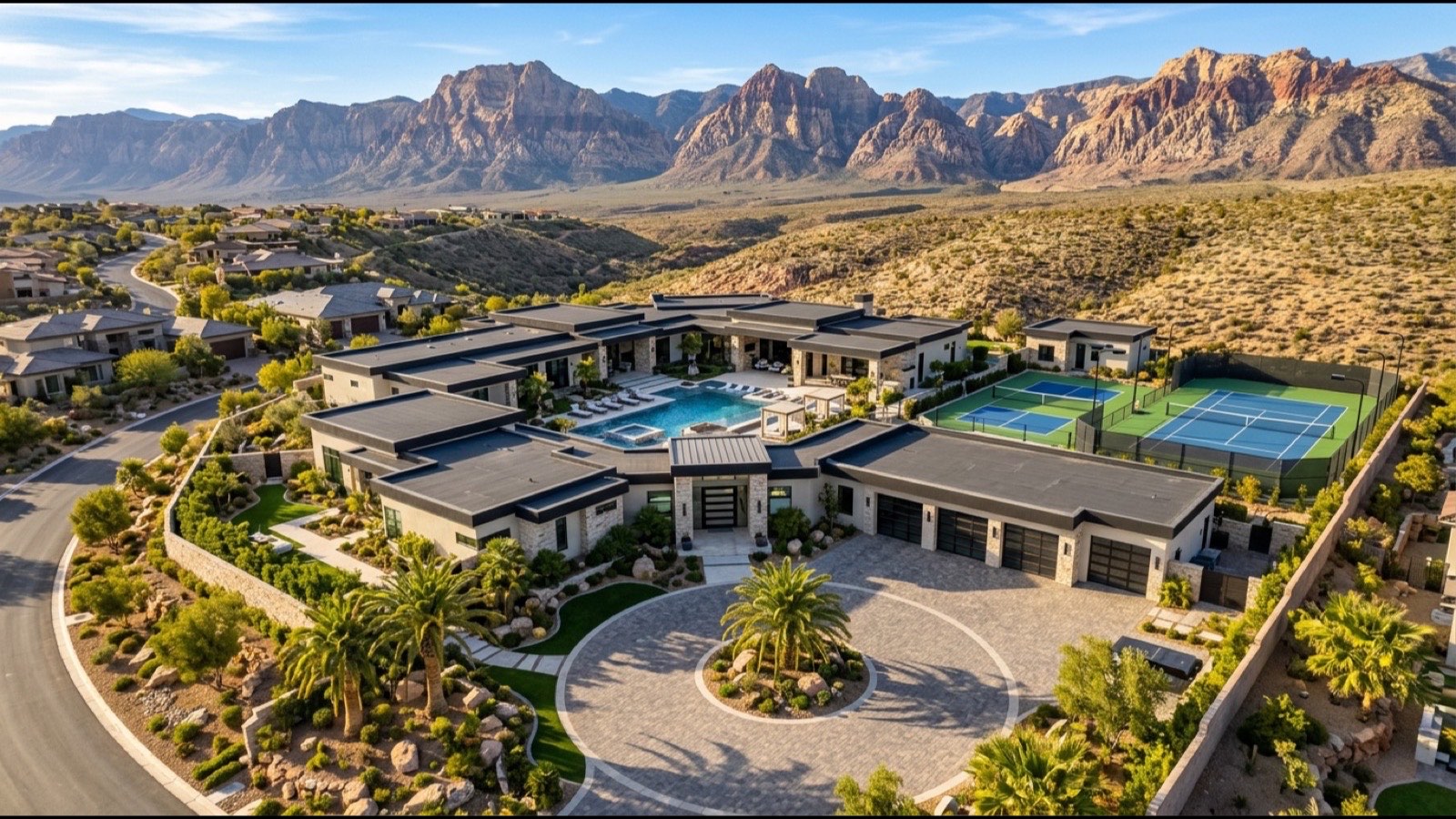
RV, boat and trailer storage is the one we hear most. Across our 789 closings in 2025 the buyers who insisted on a quarter acre or more almost always had a specific vehicle in mind, and they had usually already priced offsite storage at $150 to $400 a month and decided they would rather own the space than rent it. Confirm the CC&Rs permit it before you assume — a large lot in an association that bans visible RV parking solves nothing.
A pool that still leaves a yard. On a tenth of an acre a pool tends to consume the usable outdoor space entirely. On a half acre you can have both, which is the difference between a water feature and a backyard.
A detached structure. Shops, casitas, studios and garages benefit from setback room that a standard lot does not have. That is a permitted-construction conversation, not a landscaping one — according to the Clark County Department of Building and Fire Prevention, detached structures require their own permits and inspections, and setback rules govern what is buildable where.
Separation. Some buyers simply do not want a neighbor's second-story window looking into their yard, and on a standard Las Vegas lot that is difficult to avoid. Distance is the only reliable fix and land is the only way to buy it. A single-story enclave compounds the benefit: when every home on the street is one level, nobody is looking down into anyone's yard.
Animals, where zoning allows it. Portions of the southwest and the outlying valley carry zoning that permits horses or other livestock. That is parcel-specific and worth verifying at the address rather than the neighborhood level.
In our experience the buyers who are happiest a year later are the ones who could name the use before they bought. The ones who bought "more land" as a general good tend to discover the maintenance first and the benefit later. If you are still comparing what your budget buys across the valley, our communities overview and the buyer guide are a better starting point than a single sales office.
Who Is the Robert Actually Built For?
The household that needs the land and can fund it.
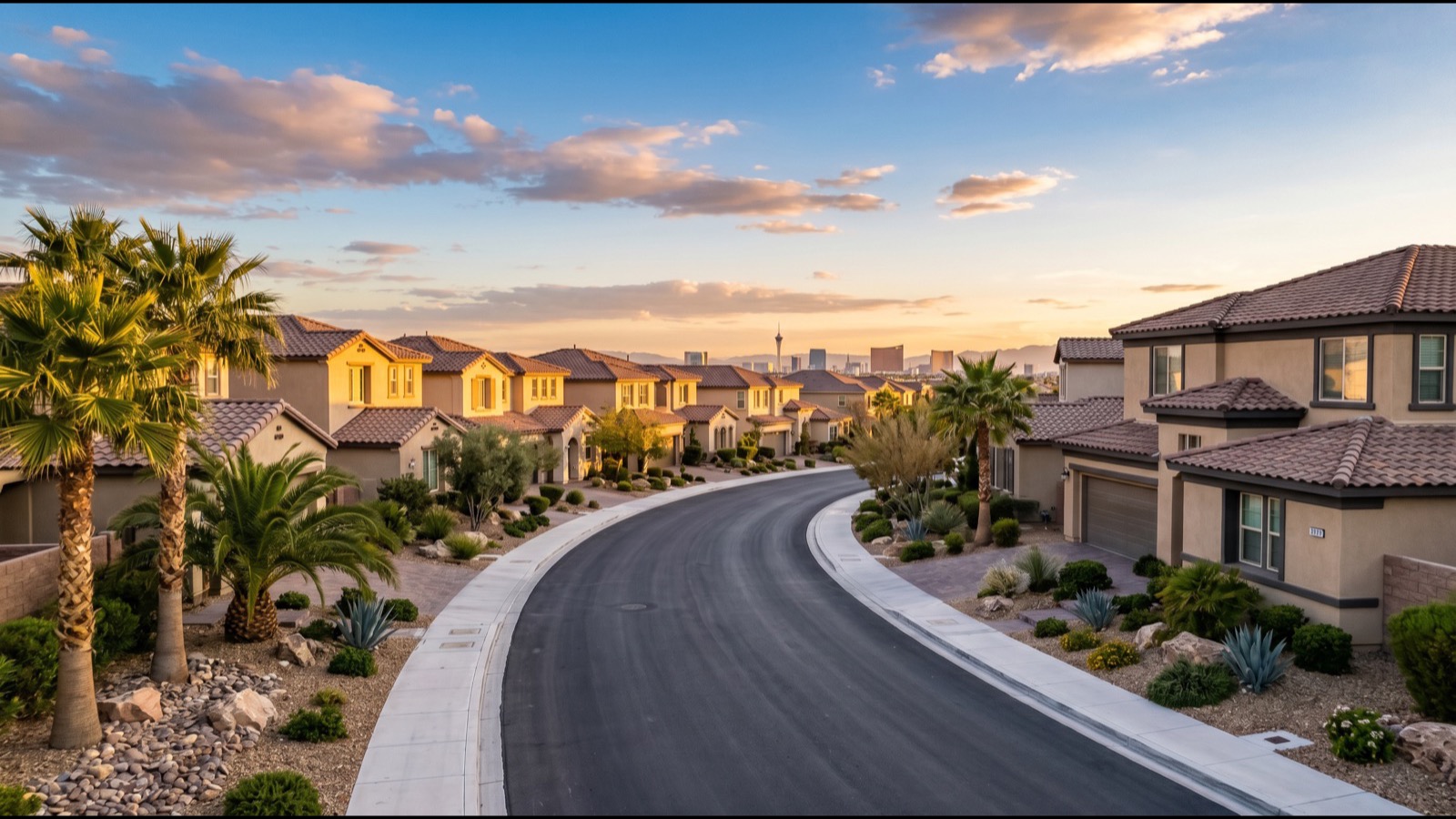
That is a real group in this valley: families with RVs, boats or trailers that have nowhere to go on a tenth of an acre; buyers who want a pool and still want a yard afterward; multigenerational households that want separation between wings; people relocating from states where a half acre was unremarkable and who are unwilling to give it up.
The single-story plan sharpens that list. The optional second owner's suite and the guest suite on the plan sheet are the multigenerational configuration — two households under one roof with no stairs between them, which is the arrangement an aging parent can actually live in. And a buyer who intends to stay twenty years is buying a house that will not need a stair lift, on a lot that will not need to be traded up from. In our experience walking single-level product with buyers, that combination is what the relocating retiree with California equity is actually shopping for, and it is nearly impossible to find in production form in the southwest.
It also suits a buyer who cares more about permanence than about finishes. You can change every surface in this house over time. You cannot add land later.
Who it is not for: a buyer whose budget stops at the purchase price. Between an unfinished half-acre yard, excluded appliances and window coverings across 4,000 square feet, and a jumbo loan that prices differently from the conforming rate on the sign, the post-closing number here is materially larger than on a standard production home. It is also not for the buyer who wants the amenity package — there is no pool, no clubhouse and no gate behind an $88 association, and the buyers who want those should price Summerlin or Henderson honestly rather than resent their absence here. That is not a reason to avoid it — it is a reason to underwrite it honestly before you sign.
What Should You Ask Before You Sign?
Six questions, each attaching a number to something otherwise vague:
What is the exact recorded lot size and the plat for this specific homesite? What is the lot premium on it, and what is it on the adjacent lots? What is a real landscape bid for this yard, from a contractor who has walked it? Which appliances and window coverings convey, in writing? Is the 3.99% a full-term fixed rate or an initial period, and is it tied to the affiliated lender? And is there genuinely no SID, LID or master plan fee on this parcel, confirmed against the assessor record?
Then the contract items that separate a builder purchase from a resale. The deposit. Builder earnest money is typically a percentage of the price rather than the flat few thousand dollars a resale seller accepts, and builder contracts are far less forgiving about returning it — read the default language before you write the check. The appraisal gap. On a large-lot production home the appraiser will be searching for half-acre sales, and if the value comes in under the contract price the contract will usually make that your problem, not the builder's; know in advance how much cash you could bring. The five-day window. Under NRS 116.4108 a buyer in a new common-interest community who has not personally inspected the unit may cancel by written notice until midnight of the fifth calendar day after signing — the one statutory exit, so use those days to read the CC&Rs and the design guidelines. The inspection. Hire an independent inspector for the pre-drywall walk; on a single-story plan the entire mechanical system sits in one ceiling plane and it is the only time you will see it. According to the Nevada State Contractors Board, any contractor's license, classification and bond status can be verified on its public lookup — the plan sheet lists Richmond American of Nevada under license 0026417, and the same check works for your landscaper and your inspector. The warranty. Ask for the written terms, and expect the industry's common one-year workmanship, two-year systems, ten-year structural shape; the structural coverage is what matters on a slab this large.
For a specific half-acre floor plan to compare, see our walkthrough of Richmond American's Rocco at Eldorado Valley.
If you want those answers checked against what is actually closing nearby before you sit down with a sales agent, call our team at (702) 637-1759 or reach out directly. If a current home has to sell to fund the move, the sellers side of the timing is worth planning in parallel — and if you are still comparing submarkets, Henderson and Summerlin price land very differently again.
Frequently Asked Questions
How rare are half-acre lots in Las Vegas?
Very. Of 942 active southwest Las Vegas listings measured on 2026-08-30, only 51 — 5.4% — sat on a half acre or more, against a 0.10-acre median for the market overall. Just 12, or 1.3%, sat on a full acre or larger.
What is the average lot size in southwest Las Vegas?
The median measured lot was 0.10 acres, roughly 4,356 square feet. About 88% of listings in the sample sat on under a quarter acre, which is why buyers relocating from other states are so often surprised by yard sizes here.
Do half-acre homes cost more in Las Vegas?
In the sample, half-acre-plus homes carried a $1,398,000 median against $509,500 for homes under a quarter acre. That gap is not a clean land premium — large-lot inventory skews toward custom and semi-custom estates, so the figure reflects house, finish level and land together.
How much does it cost to landscape a half-acre backyard?
Substantially more than the $10,000 to $25,000 standard-lot budget, because a half acre is 21,780 square feet against a 4,356-square-foot median lot. Get a bid from a contractor who has walked the actual parcel rather than applying a rule of thumb.
Does this home have a SID or LID?
The tour reports no SIDs, no LIDs and no master plan fee, with an $88 monthly HOA. Verify that against the parcel record with the Clark County Assessor before relying on it, since an assessment under NRS Chapter 271 would not appear on the HOA disclosure.
Is a bigger lot better for resale?
It holds value well, because land cannot be renovated the way finishes can. The tradeoff is a smaller buyer pool — the same 5.4% scarcity that helps you buying works against you selling, which usually shows up as a longer marketing period rather than a lower price.
What does the 3.99% builder rate actually mean?
It depends on whether the rate is fixed for the full term or only for an initial period on an adjustable loan, and whether it requires the builder's affiliated lender. Ask for the index, margin and caps in writing, and price an outside lender before comparing.
Which Sources Inform This Guide?
Lot-size and price figures come from a sample of 1,000 active listings across the southwest Las Vegas ZIP codes pulled from the GLVAR feed on 2026-08-30, of which 942 carried a usable recorded lot size: a 0.10-acre median lot, 113 listings at a quarter acre or more (12.0%), 76 at 0.4 acres or more (8.1%), 51 at a half acre or more (5.4%), and 12 at a full acre or more (1.3%). Median list price was $1,398,000 across the 51 half-acre-plus listings and $509,500 across the 829 under a quarter acre; that comparison reflects house, finish level and land together rather than an isolated land premium, and is presented as such. Market context: 1,682 southwest actives at a $520,000 median. ZIP 89113 context — 325 active listings at a $560,000 median as of September 6, 2026, and 89 closings in the 90 days ending September 6, 2026 at a $499,900 median and 37 median days on market — comes from our analysis of Las Vegas REALTORS MLS data via Repliers, all property types and prices. Plan facts — approximately 4,010 square feet, single story, four to five bedrooms, three-car garage, game room, butler's pantry, the optional second owner's suite and guest suite, the projected HERS index of 54, the community location at Wigwam Road and Cimarron Avenue in ZIP 89113, and Nevada contractor license 0026417 — come from Richmond American's published plan sheet for the Robert. Home details — the five-bedroom, four-and-a-half-bath configuration as toured, the kitchen and wet bar specification, the half-acre homesite, the $88 HOA, the absence of SID, LID and master plan fees, and the advertised 3.99% rate — come from touring the Robert at Galway Grove in late August 2026 and are represented as of the tour date. Pricing, incentives, rates, availability, upgrades, included features and lot premiums change by builder terms, buyer qualification and timing.
- Richmond American Homes — the Robert at Galway Grove plan sheet — plan specification, options, projected HERS index and community location
- Nevada Revised Statutes Chapter 271 — special improvement district authority and assessments
- Nevada Revised Statutes Chapter 116 — common-interest community governance, public offering statement and the five-day cancellation right
- Clark County Assessor — parcel records, lot detail and assessments
- Bureau of Land Management, Nevada — federal land administration and disposal
- U.S. Census Bureau — Clark County population growth
- Southern Nevada Water Authority — laws and ordinances — the 2021 prohibition on grass in new residential front and back yards, and conversion rebates
- Clark County Department of Building and Fire Prevention — permitting and inspection
- Las Vegas REALTORS — valley market conditions and the MLS data behind the ZIP figures
- Consumer Financial Protection Bureau — loan estimate and adjustable-rate disclosures
- Federal Housing Finance Agency — conforming loan limits by county
- Freddie Mac Primary Mortgage Market Survey — weekly national rate benchmark
- Nevada State Contractors Board — contractor licensing verification
- Durango Casino and Resort — southwest valley amenity context
- Nevada Department of Taxation — Nevada's zero state income tax status