

"Can I just buy a house here and Airbnb it?" is one of the most common questions investors ask us — and the honest answer is: it depends entirely on which jurisdiction the house sits in, and in some of them the door is currently closed. Since Nevada's 2021 short-term rental law, the Las Vegas valley has become a patchwork of four very different rule sets, with caps, distance rules, owner-occupancy requirements, a condo-and-HOA rule that applies everywhere, and a county enforcement program that a federal judge froze in December 2025 and that a Ninth Circuit panel heard argument on in September 2026. Buying the wrong property for an STR plan is an expensive mistake we help investors avoid.
This guide is the verified September 28, 2026 breakdown — the rules in each jurisdiction, what each allows in a condo or HOA community, room tax, penalties, the litigation, and what to confirm before you buy. It is educational, not legal advice; STR law here is actively litigated and changes often, so verify with the jurisdiction and an attorney before buying or operating.
As of September 28, 2026, short-term rentals are legal in the Las Vegas valley, but jurisdiction decides everything. Unincorporated Clark County's application window closed August 21, 2023, and a December 17, 2025 preliminary injunction, now on appeal, blocks county license enforcement while the lawsuit proceeds. The City of Las Vegas licenses only owner-occupied homes ($500 a year); Henderson ($848) and North Las Vegas ($900) license investors. Condo and HOA units need documents expressly allowing transient lodging.
- Four rule books apply: unincorporated Clark County, City of Las Vegas, Henderson and North Las Vegas all differ.
- Clark County's window closed August 21, 2023; a December 17, 2025 injunction, now on appeal, halts county fines.
- The City of Las Vegas licenses owner-occupied homes only, capped at three bedrooms, for $500 a year.
- Every valley jurisdiction bars STRs in HOA and condo communities unless governing documents expressly allow transient lodging.
- Room tax is 13% in Henderson and North Las Vegas, and up to 13.38% near the Strip.
Are Short-Term Rentals Legal in Las Vegas, and Why Do the Rules Depend on the City?
Yes — but legality came with heavy regulation. According to the Nevada Independent's explainer, Nevada's 2021 law Assembly Bill 363 applies to Clark County (population over 700,000) and its cities of more than 25,000 people — Las Vegas, Henderson, and North Las Vegas — and required each to license and regulate short-term rentals and platforms like Airbnb and Vrbo. Before AB363, STRs were banned outright in unincorporated Clark County — the county had prohibited rentals of under 31 days since 1998, according to a February 11, 2026 analysis by the Nevada Policy Research Institute — so the law actually created a legal pathway where none existed, with a July 1, 2022 deadline for the county to stand one up.
The catch is that AB363 left most of the details to each local government, and they wrote very different rules. According to the Clark County intergovernmental relations page, the county's ordinance was approved June 21, 2022 after a six-month engagement process that included a public survey; the cities adopted their own frameworks on their own timelines. Which government controls a property determines whether an STR is even possible, whether you must live in the home, and whether the license you are counting on can be issued at all.
Much of what people call "Las Vegas" — including the Strip itself, which sits in the unincorporated towns of Paradise and Winchester — is actually unincorporated Clark County, not the City of Las Vegas. Henderson and North Las Vegas are separate cities with their own codes, so homes ten minutes apart, or on opposite sides of a street where a city boundary runs down the centerline, can fall under different STR rule books.
The reliable way to tell which rule book applies is an address lookup, not the mailing address. Clark County's regional business-license jurisdiction lookup takes a street address and tells you whether the location is in unincorporated Clark County, Boulder City, Henderson, Las Vegas, Mesquite or North Las Vegas — a "Las Vegas, NV" address on a listing means nothing more than the post office's routing. Run that check before any STR-motivated purchase, before you look at nightly rates.
Here's the high-level comparison before we go jurisdiction by jurisdiction:
| Jurisdiction | Owner-occupied? | Separation | Annual license fee | License status |
|---|---|---|---|---|
| Unincorporated Clark County | Not required | 1,000 ft from licensed STRs; 2,500 ft from resort hotels | $750 (three or fewer bedrooms); $1,500 (more than three) | Window closed since Aug. 21, 2023; license requirement and fines blocked by a Dec. 17, 2025 preliminary injunction, now on appeal |
| City of Las Vegas | Yes — the owner's primary residence, occupied during every rental | 660 ft from licensed STRs; 2,500 ft from resort hotels | $500 | Open via CUV, inspection and license |
| Henderson | Not required | 1,000 ft from registered STRs; 2,500 ft from resort hotels | $848 | Open: annual registration plus certification class |
| North Las Vegas | Not required | 660 ft from other STRs; 2,500 ft from resort hotels | $900 | Open: Conditional Use Permit, then business license |
A strategy that works in Henderson may be impossible across the line in the City of Las Vegas, and legally uncertain in unincorporated Clark County.
What Are Clark County's Short-Term Rental Rules?
Unincorporated Clark County has the strictest and most supply-constrained regime — and it's where the Strip and many tourist-adjacent neighborhoods actually sit. According to Clark County, the Board of County Commissioners passed its ordinance on June 21, 2022 under AB363, and it is codified as Chapter 7.100 of the county code. The current text of Chapter 7.100 includes:
- A cap of 1% of the housing units in each unincorporated area on the number of licenses (Section 7.100.050) — a hard ceiling that keeps supply tight.
- At least 1,000 feet between licensed short-term rentals, measured property line to property line, and no STR within 2,500 feet of a resort hotel (Section 7.100.080), which excludes much of the resort corridor.
- One license per owner: no owner may hold more than one license, or an interest in more than one STR unit, in the unincorporated areas (Section 7.100.070).
- An annual fee of $750 for three or fewer bedrooms and $1,500 for more (Section 7.100.120), and a license that "is not transferable for any reason to any other person" or to another address (Section 7.100.140).
- Applications processed in lottery order — and critically, the application window closed August 21, 2023 and has not reopened. The county page still reads, as of September 28, 2026, "The application period for Short-Term Rental Units is now closed."
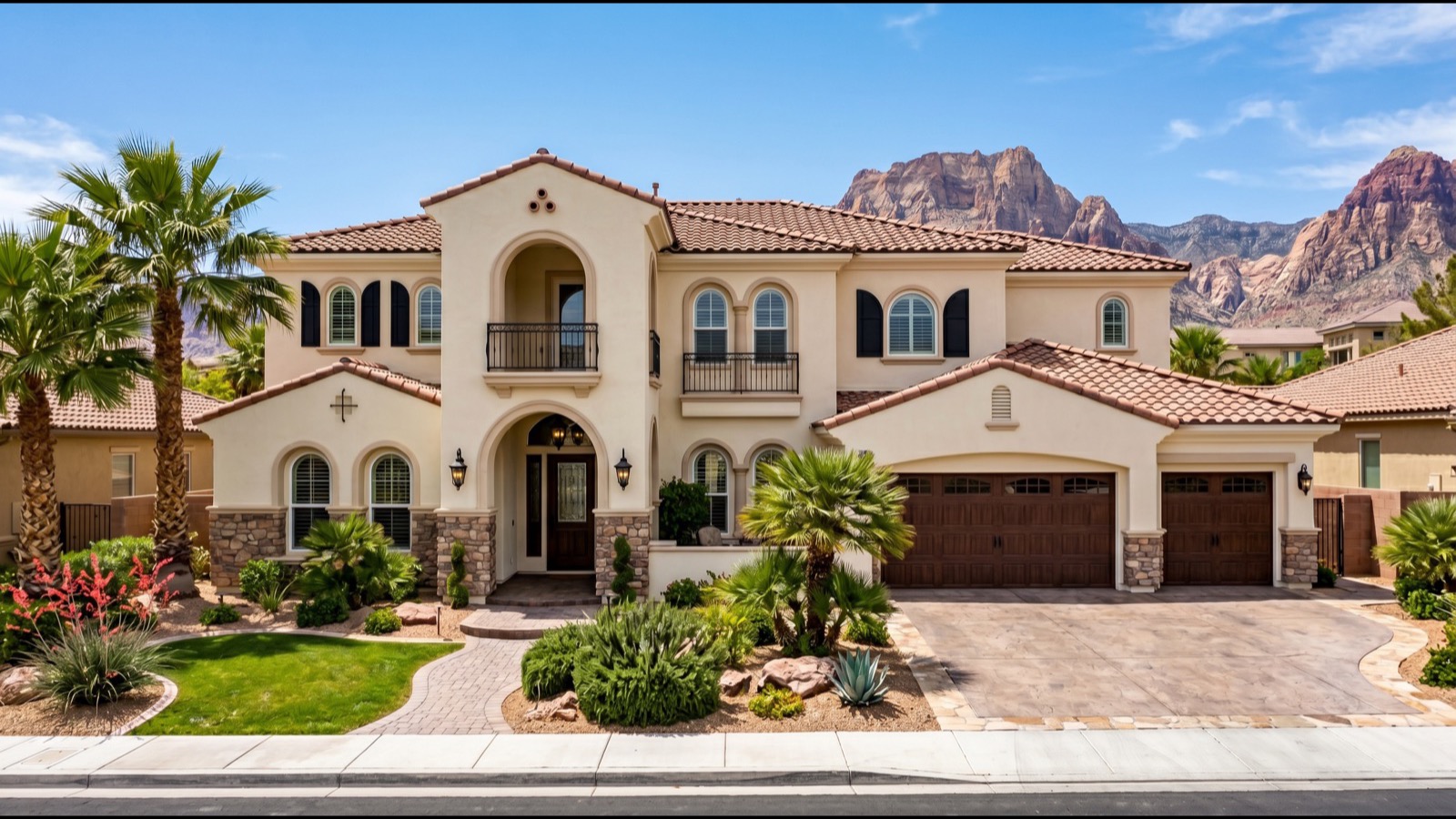
That last point is the one investors miss: as of September 2026 you cannot apply for a new unincorporated Clark County STR license, and a seller's license does not come with the house. The enforcement side is in federal court — the timeline is in the next section — so buying an unincorporated-county home to launch a new STR is a bet on litigation, not a licensing plan.
What Is Clark County Actually Enforcing in September 2026?
The short answer: its platform rules, not its host licenses. The program has spent 2025 and 2026 in federal court. According to the county's own notice of random-number results, every timely pre-application was run through a random-number sequence on March 29, 2023, which ranked 1,306 of them for processing. According to a February 11, 2026 report by the Nevada Policy Research Institute, its count from the county's business-license search showed 209 licenses approved, nearly 300 denied and 276 pending in February 2026 — against more than 11,000 short-term rental listings; the county's own figure in court on September 14, 2026 was 175 granted, 141 denied and about 500 undecided, according to Courthouse News Service. According to Fox5 Vegas reporting on December 29, 2025, county officials had put the average processing rate at six applications a week in spring 2025, and one homeowner told the station a lien on his property had grown from $58,000 to $104,000.
The Greater Las Vegas Short-Term Rental Association sued. According to Rent Responsibly's September 8, 2025 summary, U.S. District Judge Miranda Du first enjoined the ordinance's "platform provisions" on August 28, 2025, finding that forcing Airbnb and Vrbo to verify licenses and remove listings was likely preempted by Section 230 of the Communications Decency Act. Then, according to Rent Responsibly's January 2026 update, Judge Du issued a broader preliminary injunction on December 17, 2025 that bars the county from enforcing its licensing requirement and related penalties, including declaring properties public nuisances, issuing daily fines and recording liens, and the Board of County Commissioners voted unanimously on January 6, 2026 to appeal.
The county then changed tactics. According to the Las Vegas Sun, commissioners voted 5-0 on August 18, 2026 for a new ordinance aimed at the booking platforms rather than hosts, with a civil penalty, assessed for each day the violation continues, of $500 for a first violation and $1,000 for each one after. According to Fox5 Vegas, platforms must verify a county license through an electronic system and display license details on the listing, and they can't collect payment for a stay at an unlicensed property, though they may still advertise it. News 3 Las Vegas reported that the ordinance took effect September 2, 2026. Finally, according to Courthouse News Service and KTNV, a Ninth Circuit panel of Judges Ryan Nelson and Roopali Desai and District Judge Karen Schreier heard the county's appeal on Monday, September 14, 2026. The county's lawyer told the panel it had granted 175 licenses, denied 141 and had about 500 without a decision; Judge Nelson replied that the county had "made even less progress than I would've thought," while Judge Desai called the injunction too broad, saying "I don't think that the county can be permanently enjoined from enforcing its licensing requirements." As of September 28, 2026 we found no ruling from the panel, so the December 2025 injunction still governs.
| Date | What happened |
|---|---|
| 1998 | Unincorporated Clark County bans rentals of under 31 days |
| 2021 | Nevada passes AB363, requiring the county and its large cities to license STRs by July 1, 2022 |
| June 21, 2022 | County adopts Chapter 7.100: 1% cap, 1,000-foot separation, 2,500-foot resort buffer, lottery |
| Mar. 29, 2023 | Random-number sequence ranks 1,306 pre-applications for processing |
| Aug. 21, 2023 | Deadline for complete applications; the window has not reopened |
| Aug. 28, 2025 | Judge Du enjoins the platform-verification provisions under Section 230 |
| Dec. 17, 2025 | Preliminary injunction halts county licensing requirement, daily fines, nuisance declarations and liens |
| Jan. 6, 2026 | Commissioners vote unanimously to appeal to the Ninth Circuit |
| Aug. 18, 2026 | Commission votes 5-0 for a platform ordinance blocking payments for unlicensed stays; $500 then $1,000 per violation, assessed for each day the violation continues |
| Sept. 2, 2026 | Platform ordinance takes effect |
| Sept. 14, 2026 | Ninth Circuit hears argument; county reports 175 licenses granted, 141 denied, about 500 undecided; no ruling as of Sept. 28 |
What Are the City of Las Vegas Rules?
The City of Las Vegas — a distinct jurisdiction from the county — allows short-term rentals with one defining restriction. Under Las Vegas Municipal Code Chapter 6.75, a license goes only to an owner who occupies the unit as his or her primary residence, and a unit counts as owner-occupied during a rental only if the owner keeps living there throughout the rental period, with absences limited to work and ordinary errands. That single rule rules out the classic absentee-investor model — you can't buy a city home purely to operate it as a hands-off Airbnb. The city's short-term rental page adds that weddings, birthday parties, bachelor and bachelorette parties and other special events aren't allowed, and it runs a 24-hour complaint hotline.
The city's own Short-Term Residential Rental General Information sheet (form CD-9016) lays out the rest of the requirements:
- No more than three bedrooms, including the owner's bedroom, and an inspector will verify the count.
- At least 660 feet from any other short-term residential rental and 2,500 feet from a resort hotel, in a zoning district that allows the use, with written HOA permission if there is an HOA.
- A three-step approval: a Conditional Use Verification (CUV) through the city's Citizen Portal (no fee) with a justification letter, site plan showing two parking spaces, and a floor plan marking the owner's bedroom; a Code Enforcement home inspection; and a business license review.
- A $500 annual license fee (set by LVMC 6.75.030), liability insurance of at least $500,000, a 24-hour local contact, a list of hosting platforms, and a Nevada ID whose address matches the rental.
- The CUV is not an entitlement: the location can become ineligible at any point before the license issues if another STR is licensed within 660 feet.
According to the same city document, short-term rentals are prohibited in several master-planned areas regardless of the rules above: Summerlin, Sun City Summerlin, Town Center, Skye Canyon, Cliff's Edge, Symphony Park, Grand Canyon Village and any property subject to the Form-Based Code. The governing codes are LVMC 6.75 and Unified Development Code 19.12.070; the council last amended Chapter 6.75 with Ordinance 6929 on November 19, 2025. For owner-occupants the city path works and is comparatively cheap; for pure investors it generally doesn't.
What Are Henderson's Short-Term Rental Rules?
Henderson runs its own program, and it is the valley's main registration path for owners who won't live in the home. According to the City of Henderson's short-term vacation rental page, as read on September 28, 2026, the registration fee is $848 per property, paid every year from the date the city approves the registration and non-refundable once submitted, and both the owner and the registered local contact must complete the city's certification class (a local contact licensed under NRS 645 is exempt). The rules themselves sit in Henderson Development Code HMC 19.9.4.F, last amended by Ordinance 4171 effective August 21, 2026:
- An annual city registration plus a State of Nevada business license in the owner's name, with no more than five registrations per state business license.
- At least 1,000 feet from another registered short-term rental and 2,500 feet from a resort hotel, measured property line to property line.
- A two-night minimum per booking, or one night if the rental is owner-occupied.
- General liability coverage of at least $1 million, the same $1,000,000 minimum the city's page lists.
- No short-term rental in a common-interest community unless its governing documents expressly authorize transient lodging, and a change in record ownership for any reason terminates the registration.
- A monthly transient lodging tax return under HMC Chapter 4.48 at a combined 13%, filed even in months with no revenue; the city page says the owner is liable for the tax "whether or not such taxes are actually collected from the guest."
Henderson doesn't impose the City of Las Vegas's owner-occupancy mandate, which is why a lot of investor interest concentrates in Henderson. The constraint is the HOA rule: since February 18, 2022, the code has barred STRs in any common-interest community unless the documents expressly allow transient lodging, which rules out most homes in Green Valley Ranch, Inspirada, Anthem and Cadence unless a parcel's documents say yes in writing. And the registration belongs to the owner, not the parcel — it ends when the sale records, and the buyer registers fresh under that day's rules. Our dedicated Henderson short-term rental rules and permits guide quantifies how small the realistic pool is: as of July 12, 2026 only 289 of 2,482 active Henderson listings — about 11.6% — carried no HOA, at a median list price of $465,000. That thin no-HOA slice is where nearly every viable Henderson STR play lives, and our guide to Henderson homes with no HOA maps where it sits.

What Are North Las Vegas's Short-Term Rental Rules?
North Las Vegas licenses STRs through a land-use approval first. According to the City of North Las Vegas, the city adopted Ordinance 3127 in June 2022 to allow short-term rentals with a Conditional Use Permit, which must be approved before you can apply for a business license. The CUP package requires proof of ownership, a site plan showing the noise-monitoring equipment, a 660-foot separation from other existing or proposed short-term rentals, a 2,500-foot separation from resort hotels, a security plan, and a notarized letter on letterhead from the homeowners association authorizing the rental.
The license itself is set by North Las Vegas Municipal Code 5.02.270: $900 a year for each short-term rental, a state business license ("Only one City business license shall be issued per State business license"), a notarized self-inspection checklist, general liability coverage of at least $500,000, and a notarized affidavit that the city's Good Neighbor Brochure went to every property owner within 200 feet and to any associated HOA. Occupancy is capped at two people per bedroom, excluding children under 12, and 10 per unit, and the minimum stay is two nights for a non-owner-occupied rental and one night for an owner-occupied one. The zoning standards in NLVMC 17.20.030.F.16 add that STRs are allowed in multi-family zoning only if the units are individually mapped, that they are prohibited in apartment buildings, and that parties, weddings and sales events are off-limits.
The gate is the CUP, a discretionary land-use approval rather than a ministerial checkbox. Approval isn't automatic, but a CUP, once granted, is a documented land-use decision on that parcel — firmer footing than a county license a federal court has frozen. The code also allows an administrative waiver of the 660-foot rule when an "adequate barrier" separates two rentals, such as Interstate 15, the 215 Beltway, a roadway at least 120 feet wide, a commercial center or a public park of at least ten acres. Many newer North Las Vegas subdivisions carry HOAs, and the city won't take a CUP application without the association's notarized authorization, so the same three-layer check applies: jurisdiction, CUP feasibility, and the recorded covenants. Budget the application time into your acquisition timeline rather than assuming income from month one.
Can You Run a Short-Term Rental in a Las Vegas Condo or HOA Community?
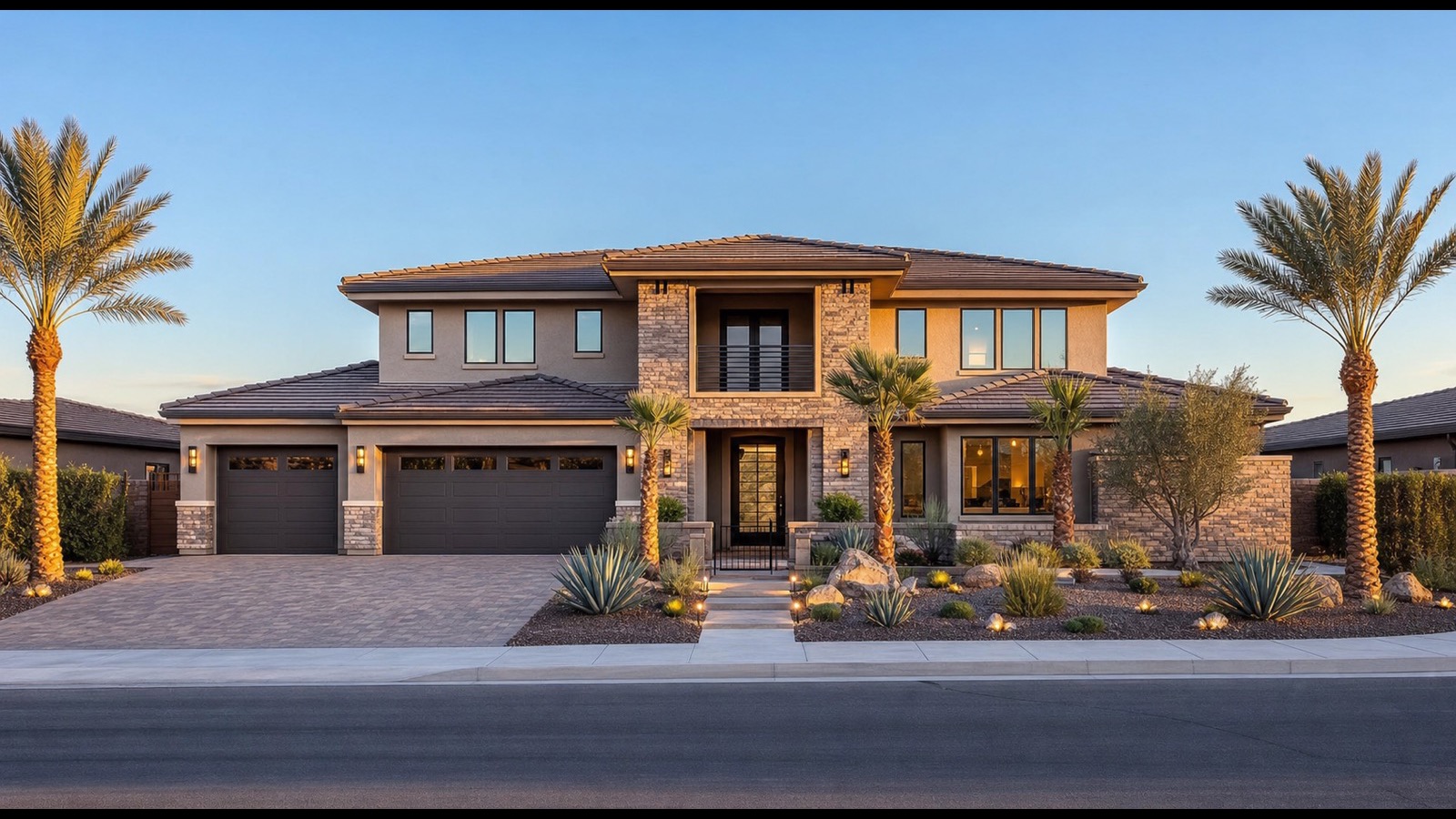
Only if the community's governing documents expressly allow it, and that rule is written into state law rather than left to each association. When the Legislature passed AB363, it told Clark County and its large cities what their ordinances must forbid. NRS 244.353545 for the county and NRS 268.09795 for the cities require the local ordinance to prohibit an STR authorization if it would put more than 10% of the units in a multifamily dwelling into transient lodging or break a ban or stricter limit set by the building's owner, and to prohibit one for any unit in a common-interest community "unless the governing documents of the community expressly authorize the rental of a residential unit or a room within a residential unit for the purposes of transient lodging." The same sections require a ban on STRs in apartment buildings. A condo counts: both chapters define a residential unit to include "a condominium, townhouse, duplex or other multifamily dwelling." Here is how each jurisdiction wrote that floor into its own code:
| Jurisdiction | Condos and multi-unit buildings | HOA and common-interest communities |
|---|---|---|
| Unincorporated Clark County | No apartment buildings; no license that would put more than 10% of a multifamily dwelling's units into STR use; a unit wholly inside a multifamily building isn't disqualified by the 1,000-foot rule (CCC 7.100.080) | Barred unless governing documents expressly authorize transient lodging; the application must include that evidence |
| City of Las Vegas | A condo can qualify, but the owner-occupancy rule still applies; 10% cap per multifamily dwelling; no apartments (LVMC 6.75.020) | Barred unless governing documents expressly authorize it; the application needs the association's letter documenting that (LVMC 6.75.040) |
| Henderson | Only units mapped for individual ownership; no more than 10% of a multi-unit or mixed-use building (HMC 19.9.4.F) | Barred unless governing documents expressly authorize it; the owner files a notarized statement attaching the authorizing language |
| North Las Vegas | Multi-family zoning only if units are individually mapped; no apartments (NLVMC 17.20.030.F.16) | Notarized letter on letterhead from the HOA authorizing the rental at the CUP application |
Two things follow. First, silence is a no: CC&Rs that never mention short-term rentals don't authorize them, and the City of Las Vegas code says "the burden of demonstrating that the rental of a unit is expressly authorized by the community is on the applicant." Second, the local codes sit on top of Nevada's HOA statute. Under NRS 116.340, an owner in a planned community (an HOA that is not a condominium or cooperative) may make "transient commercial use" of a unit — a vacation rental or other transient lodging for less than 30 consecutive days — only if the association's and any master association's documents don't prohibit it, the executive boards approve it (unless a master association also governs one or more hotels and its documents don't prohibit the use), and the unit is properly zoned and licensed. And NRS 116.335, last amended in 2025, states that nothing in it stops an association from enforcing "any restriction on the rental of units as transient lodging" under the county and city STR statutes.
In our experience, high-rise towers are where buyers most often assume nightly rentals are fine, and a tower's own documents are where to check. Veer Towers at CityCenter is a published example: its association's Resident Policy and Procedural Guide states that "No Unit may be leased for less than six (6) months or more than twice a year," and its 2022 lease package says every lease must be approved by the board. Our Veer Towers page and the other Las Vegas high-rise condo pages carry live listings, but the documents decide the leasing math. A condo-hotel is a different product: the state STR sections and Clark County's Chapter 7.100 don't apply to a unit in a building on land not zoned exclusively for residential use that is owned or operated by a nonrestricted gaming licensee or its affiliate, so a casino-operated condo-hotel works under its own rental-program terms. Our condo-hotel guide explains how those programs split revenue.
The practical step is the same for a tower, a townhome or a single-family home in an HOA: get the declaration, bylaws, rules and leasing policy before your due-diligence period ends, and search them for "transient," "short-term," "lease term" and "hotel." Our guide to buying a Las Vegas condo, warrantability and HOAs covers the resale package, and our explainer on Nevada HOA fines under NRS 116 covers what an association can do when an owner ignores its rules.
How Much Tax Does a Las Vegas Short-Term Rental Owe, and Does It Still Pencil?
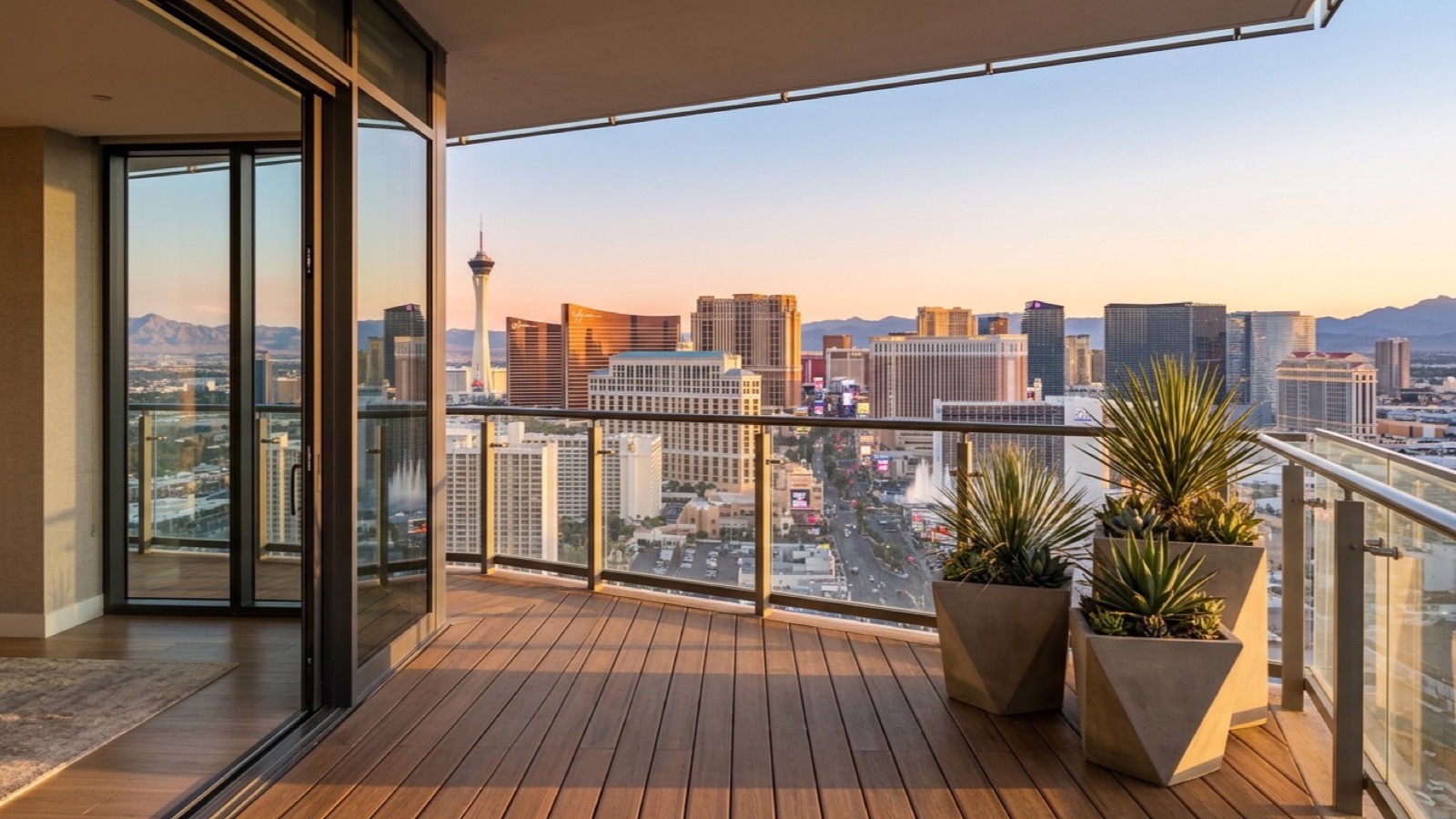
Short-term rentals are taxed like hotels, not like long-term rentals. According to the Nevada Department of Taxation, the lodging tax is imposed and collected locally, and rates are set at the city or county level, so the rate depends on where the parcel sits:
| Jurisdiction | Combined rate | Collected by |
|---|---|---|
| Unincorporated Clark County | 13% inside the stadium district (within 25 miles of the county commission's meeting place) but outside the Primary Gaming Corridor; 13.38% inside the corridor; 12.5% within 35 miles of the convention center but outside the district; 10.5% farther out | Clark County Department of Business License (CCC 4.08.010) |
| City of Las Vegas | 13.00%; 13.38% inside the Primary Gaming Corridor | City of Las Vegas Business License Division |
| Henderson | 13% of monthly rental revenue | City of Henderson (HMC Chapter 4.48) |
| North Las Vegas | 13% of monthly rental revenue | City of North Las Vegas (NLVMC 5.22.010) |
Those rates come from Clark County Code 4.08.010, the City of Las Vegas room tax instructions (revised March 2026), Henderson's STR page and North Las Vegas's transient lodging tax page. Collection is where owners get caught. The City of Las Vegas instructions say a licensed host must still file the monthly report when a hosting platform collects and remits the tax, and that paying after the 15th forfeits the 2% collection discount and adds a 10% penalty plus 1.5% interest per month. In unincorporated Clark County, a December 1, 2025 county notice says a platform's county license covers reporting and remitting the tax only for licensed STR units, so an unlicensed owner must remit transient tax each month even when the booking came through a licensed platform, and the county has no voluntary collection agreement with any platform. Every operator also needs a Nevada state business license under NRS 76.130 — $200 a year for most owners, $500 for a corporation — plus the local license or registration.
The arithmetic is unforgiving: at 13%, every $10,000 of room revenue carries $1,300 of tax, a line item long-term-rental investors never see. Demand moves, too. According to the Las Vegas Convention and Visitors Authority's historical visitation statistics, Las Vegas drew 38,545,700 visitors in 2025, down from 41,676,300 in 2024. Stack the room tax, the license fee, the liability coverage each city requires ($500,000 in the City of Las Vegas and North Las Vegas, $1 million in Henderson), furnishing, cleaning and management, and an STR's net can land closer to a well-run long-term lease than the nightly rate suggests. Run both scenarios on the same parcel — our guide to cash-flowing rental properties walks through the long-term math.
Income tax is the other half. Nevada has no state income tax, but STR income is reportable federally. According to the IRS's Topic 415 on renting residential and vacation property, a home you use as a residence and rent for fewer than 15 days in a year is not reported as rental income at all — a real break for a City of Las Vegas owner-occupant who hosts during a few convention weeks — while longer rentals report the income and deduct expenses, with deductions limited when personal use exceeds the greater of 14 days or 10% of the days rented at a fair price. Our Las Vegas rental market guide for investors covers the operating trade-off.
What Happens If You Operate Without a License?
The answer now depends on which jurisdiction you are in, and in unincorporated Clark County it changed in December 2025. Under Clark County Code 7.100.230, operating without a license carries a fine of $1,000 to $10,000 for each day the violation continues, set after weighing severity, good faith and prior violations; other violations cost the nightly rental value or $500 for a first violation and $1,000 for each one after, whichever is greater. Those amounts stay within the limits NRS 244.353545 sets — no more than $1,000 or the nightly rental value per violation for a license holder, and $1,000 to $10,000 per violation for operating without one — and unpaid fines can become liens, like the one a homeowner told Fox5 had grown to $104,000. The December 17, 2025 injunction bars the county from issuing those daily fines or recording liens while the case proceeds. That is a reprieve, not a repeal: if the Ninth Circuit narrows or vacates it, the county's enforcement machinery comes back.
The injunction binds Clark County, not the City of Las Vegas, Henderson or North Las Vegas, whose code enforcement continues. Henderson's HMC 19.35.5.C sets a fine of $1,000 to $2,500 a day for operating without a registration, and North Las Vegas's license section says anyone who offers a short-term rental without a license faces the civil penalties in Title 8 of its code. And the injunction does nothing about room tax: each collector's late penalties, interest and liens still apply, and unpaid tax follows the owner, not the platform.
| Item | Amount |
|---|---|
| Nevada state business license | $200/year ($500 for a corporation) |
| Late room tax, City of Las Vegas | 10% penalty plus 1.5% interest per month |
| Clark County unlicensed-operation fines | $1,000 to $10,000 per day — enjoined since Dec. 17, 2025 |
| Henderson unregistered-operation fines | $1,000 to $2,500 per day |
| Clark County platform penalties (since Sept. 2, 2026) | $500 first violation, $1,000 each thereafter, assessed for each day the violation continues |
The county's September 2, 2026 platform ordinance is designed to cut off payment to unlicensed listings at the source. Between fines that may return, back taxes that never left, and a booking channel that can be switched off, the downside of cutting corners dwarfs the licensing cost. If a deal only pencils by operating without a license, it doesn't pencil.
Can You Still Get an STR License in 2026?
This is the question that reshapes most investor plans, and the honest answer has three parts. In unincorporated Clark County, the answer is no for new licenses: the application window closed August 21, 2023, the program is capped at 1% of housing units in each unincorporated area, and county counsel told the Ninth Circuit on September 14, 2026 that 175 licenses had been granted, against more than 11,000 listings counted by Nevada Policy in February 2026. The injunction means the county cannot currently require a license, but no court has ordered it to issue one. Buying a licensed home doesn't solve it either: Chapter 7.100 makes a license non-transferable "for any reason" and prohibits a change in ownership of a licensed unit, with narrow exceptions for marriage, divorce and inheritance.
In the City of Las Vegas, licenses are available but only for owner-occupied homes with three bedrooms or fewer, outside the prohibited master plans, at $500 a year. In Henderson and North Las Vegas, licensing remains open to investors through registration or a CUP, subject to the distance rules and approvals — and, in any HOA or condo community, the governing documents' express authorization.
The practical map for a 2026 investor: Henderson and North Las Vegas are where most non-owner-occupant STR strategies are still viable, the City of Las Vegas works for owner-occupants, and unincorporated Clark County is a litigation position rather than a business plan. Underwrite every purchase so it still works as a long-term rental if the door closes.
What Should You Verify Before Buying an STR Property?
Before you buy a home for short-term rental, confirm every item on this list — ideally in writing:
| Verify | Why it matters |
|---|---|
| Which jurisdiction governs the address | County vs city determines the entire rule set; use the county's jurisdiction lookup, not the mailing address |
| License availability or transferability | Clark County's window is closed and its licenses can't be transferred; Henderson registrations end when the sale records |
| Distance to resorts and other STRs | 2,500-ft resort buffer everywhere; 660-ft (City of Las Vegas, North Las Vegas) or 1,000-ft (county, Henderson) separation can disqualify |
| Owner-occupancy requirement | City of Las Vegas requires it; investors can't operate hands-off there |
| HOA and condo documents | Every jurisdiction requires the governing documents to expressly authorize transient lodging; silence is a no |
| Multi-unit building limits | 10% cap per multifamily building; apartments barred; Henderson and North Las Vegas require individually mapped units |
| Zoning and bedroom limits | City of Las Vegas caps at three bedrooms; CUPs aren't guaranteed |
| Litigation exposure | County enforcement is frozen by a December 2025 injunction that the Ninth Circuit may narrow at any time |
The HOA line deserves emphasis: even where a city allows STRs, the state-mandated rule means a home in an association qualifies only if its documents expressly say so, and many of the valley's most desirable master plans never did — including Summerlin, where the City of Las Vegas bans the use outright, and the guard-gated communities where investors are often most tempted to buy. Check the jurisdiction, the license status and the governing documents together before you commit; any one of them can kill an STR plan after closing.
Which Areas, ZIP Codes and Neighborhoods Allow Short-Term Rentals?
There's no simple "STR-allowed" map, because eligibility depends on the overlapping layers of jurisdiction, distance buffers, license availability, and HOA documents. But some patterns hold as of September 2026. The resort corridor and Strip-adjacent areas are largely excluded by the 2,500-foot buffer that every jurisdiction applies. Inside the City of Las Vegas, the city's own instruction sheet names Summerlin, Sun City Summerlin, Town Center, Skye Canyon, Cliff's Edge, Symphony Park and Grand Canyon Village as areas where short-term rentals are prohibited outright, before you even reach the owner-occupancy test. In Henderson, the city's HOA rule closes most of the big master plans unless their documents say otherwise, leaving mostly the roughly 11.6% no-HOA slice measured in July 2026. And in unincorporated Clark County, the 1,000-foot separation plus the 1% cap means that even if licensing resumes, the eligible parcels will be spaced out by design.

A ZIP code does not decide whether you can run a short-term rental; the governing jurisdiction does, and ZIP codes routinely straddle jurisdiction lines. One Las Vegas-area ZIP can hold parcels inside the City of Las Vegas and parcels in unincorporated Clark County, so a "these ZIP codes allow Airbnb" list is misleading by design. For single-family homes, the City of Las Vegas licenses only an owner-occupied home; Henderson and North Las Vegas will license a non-owner-occupied home that clears the distance buffers and, in an HOA, has documents that expressly allow STRs; and unincorporated Clark County is closed to new licenses while the Ninth Circuit decides the enforcement question.
The reliable test for a specific address is a four-layer check, in order: (1) confirm the governing jurisdiction with the county's jurisdiction lookup, not the ZIP or mailing city; (2) apply that jurisdiction's rules; (3) measure the 2,500-foot resort buffer and the 660-to-1,000-foot separation from other STRs; and (4) read the HOA or condo documents. Any one layer can disqualify a home that looks perfect on paper. If you're shopping the Las Vegas market or browsing communities for an STR, start with the address rather than a pro-forma, and treat a listing's "great Airbnb potential" line as something to verify, not a fact. Our roundup of the best areas for short-term rentals in Las Vegas is a starting list, not a substitute for the parcel check.
What Have We Learned Representing STR Investors in the Valley?
In our experience advising investors across the Las Vegas metro, the most expensive mistake is treating an STR pro-forma as the reason to buy rather than the last thing to confirm. We've toured homes that looked like obvious Airbnb plays on paper — strong nightly comps, a pool, a short drive to the Strip — only to find the address sat inside the 2,500-foot resort buffer, or inside a master plan whose documents never authorized transient lodging. The buyers who do well treat the four-layer diligence as a go/no-go gate before they fall in love with a property, not a formality after.
A second pattern: investors anchor on gross nightly rate and underweight the operating drag. When we run the long-term-rental scenario beside the STR scenario on the same parcel, the gap narrows far more often than the seller's agent implied, and on many properties the steadier lease wins once the 13% room tax, management, furnishing and STR-grade insurance are honest line items. That is an argument for underwriting STRs like the hospitality businesses they are. Many of the investors we work with started as first-time buyers — our first-time buyer guide covers the financing groundwork.
The third thing, and the one that surprises out-of-state buyers most, is how fast the rules move. The county passed a new platform ordinance on August 18, 2026 while its 2022 licensing regime sat frozen in federal court, and Henderson's omnibus Development Code Update (Ord. 4171), which touched the residential-use section that holds its STR rules, took effect August 21, 2026. We tell relocating clients — many of whom find us through our moving-to-Las Vegas guide — to assume the rules tighten, not loosen, and to make sure the property still works as a luxury or long-term hold if the STR door closes. When it is time to exit, our sellers resource covers positioning an STR-capable home, and our guide to selling or buying an operating Airbnb covers the hand-off.
Ready to Underwrite a Las Vegas STR With Nevada Real Estate Group?
The most valuable hour in an STR purchase is the one before you write an offer. Across the 9,600+ closings we have represented, the investor purchases that went sideways almost never failed on the property — they failed on a rule nobody checked. So we start with the parcel, not the pro-forma: which jurisdiction, which HOA or condo association, and which of the four rule books applies. Then we measure the buffers, pull the governing documents and look for the express transient-lodging authorization every jurisdiction now requires, and — for Henderson and North Las Vegas — map the registration or CUP timeline against your closing date. If you are buying specifically to operate a licensed rental, our guide to hiring a short-term-rental specialist agent in Las Vegas explains what to ask before you sign.
Run both scenarios on any STR candidate: the short-term model with that address's room tax, management, furnishing and licensing as real line items, and the long-term lease the same home would command. If the property only works one way, you want to know before closing.
Whether you are an owner-occupant considering the City of Las Vegas path, an investor targeting Henderson's no-HOA pockets, a condo buyer weighing a tower's leasing rules, or an out-of-state buyer trying to make sense of the county litigation, call Nevada Real Estate Group at (702) 637-1759. We will pull the parcel, check all four layers for the specific address, and tell you plainly whether the STR plan is a business or a bet.
Frequently Asked Questions
Is Airbnb legal in Las Vegas in 2026?
Yes, but heavily regulated and jurisdiction-specific. Nevada's 2021 law, AB363, required Clark County and its large cities to license short-term rentals. Unincorporated Clark County closed its application window on August 21, 2023, and its enforcement is frozen by a December 17, 2025 federal injunction; the City of Las Vegas licenses owner-occupied homes only; Henderson and North Las Vegas license investors. Distance rules apply everywhere, and in any HOA or condo community the documents must expressly allow transient lodging. Confirm the rules for the specific address.
Can I get a new short-term rental license in unincorporated Clark County?
Not as of September 28, 2026. The county's only application window closed August 21, 2023, licenses are capped at 1% of housing units in each unincorporated area, and county counsel told the Ninth Circuit on September 14, 2026 that 175 licenses had been granted with about 500 applications undecided. The preliminary injunction, now on appeal, bars the county from requiring a license while the lawsuit proceeds unless the Ninth Circuit narrows it, but no court has ordered it to issue new ones, and Chapter 7.100 says a license is not transferable for any reason.
How much tax do I pay on a Las Vegas short-term rental?
Room tax is 13% of rental revenue in Henderson and North Las Vegas, 13.00% in most of the City of Las Vegas and 13.38% inside the Primary Gaming Corridor, and 10.5% to 13.38% in unincorporated Clark County depending on location. Add a Nevada state business license ($200 a year for most owners) and the local fee: $500 in the City of Las Vegas, $848 in Henderson, $900 in North Las Vegas. Owners stay responsible for the tax even when a platform handles bookings. Nevada has no state income tax, but federal rules under IRS Topic 415 apply.
Does the City of Las Vegas allow investor-owned Airbnbs?
No. The City of Las Vegas licenses a short-term rental only when the home is the owner's primary residence and the owner keeps living there throughout each rental. It also caps the rental at three bedrooms, requires 660 feet from other licensed STRs and 2,500 feet from resort hotels, and prohibits the use in Summerlin, Sun City Summerlin, Town Center, Skye Canyon, Cliff's Edge, Symphony Park, Grand Canyon Village and Form-Based Code areas. Pure investors typically look to Henderson or North Las Vegas instead.
What are the penalties for operating an illegal STR in Las Vegas?
In unincorporated Clark County, Chapter 7.100 sets a fine of $1,000 to $10,000 a day for operating without a license, and unpaid fines can become liens, but the December 17, 2025 preliminary injunction, now on appeal, bars the county from issuing those fines while the lawsuit proceeds unless the Ninth Circuit narrows it. The injunction doesn't bind the cities: Henderson fines unregistered operation $1,000 to $2,500 a day. Late room tax carries penalties and interest in each city, and since September 2, 2026 the county can fine platforms $500, then $1,000, for each day a violation on an unlicensed listing continues.
Can I run an Airbnb in a Las Vegas condo or HOA community?
Only if the community's governing documents expressly authorize transient lodging. State law, NRS 244.353545 and 268.09795, requires the county and the cities to refuse an STR license in a common-interest community without that authorization, to cap STRs at 10% of a multifamily building's units, and to bar them in apartment buildings. Silence in the CC&Rs is a no. Tower documents can also set long minimum lease terms; Veer Towers' published guide says no unit may be leased for less than six months.
Are there specific ZIP codes or neighborhoods where short-term rentals are always allowed?
No. STR eligibility isn't set by ZIP code. The jurisdiction a parcel sits in determines the rules, and ZIP codes routinely straddle city and county boundaries, so two homes in the same ZIP can have opposite eligibility. For a single-family investor rental, Henderson and North Las Vegas homes with no HOA, or with documents that expressly allow STRs, are the most viable today, subject to the distance buffers and license rules for the exact address.
Is a short-term rental a better investment than a long-term rental in Las Vegas?
Not always. After room tax of 13% or more, licensing, higher insurance, furnishing, cleaning and management, an STR's net can land near a well-run long-term rental's, sometimes below it. Demand also moves: LVCVA counted 38,545,700 visitors in 2025, down from 41,676,300 in 2024. Add the regulatory volatility, including a county program frozen in federal court and a platform ordinance effective September 2, 2026, and run both sets of numbers on the same property.
Which Sources Inform This Las Vegas STR Guide?
This guide draws on primary government sources, court reporting, and Nevada Real Estate Group's experience across 9,600+ Las Vegas-metro closings, re-checked on September 28, 2026. It is educational, not legal, tax, or investment advice.
- State law: AB363 (2021) and the Nevada Independent's explainer; NRS 244.353545; NRS 268.09795; NRS 116.340; NRS 116.335; NRS 76.130.
- Clark County: STR licensing page, intergovernmental relations summary, Code Chapter 7.100, Code Chapter 4.08, lottery results, transient tax notice, jurisdiction lookup.
- City of Las Vegas: LVMC 6.75, STR page, CD-9016 sheet, room tax instructions.
- Henderson: STR page, HMC 19.9.4.F, HMC 19.35.5.C.
- North Las Vegas: STR page, transient lodging tax page, NLVMC 5.02.270, NLVMC 17.20.
- Condo documents: Veer Towers' resident guide and lease package.
- Tax and demand: Nevada Department of Taxation, IRS Topic 415, LVCVA visitation statistics.
- Litigation and enforcement: Rent Responsibly on the 2025 platform ruling and the injunction appeal, Fox5 on liens, Nevada Policy Research Institute, Las Vegas Sun, Fox5 on the platform ordinance, News 3, Courthouse News Service, KTNV.
Information deemed reliable but not guaranteed. This article is educational and is not legal, tax, or investment advice. Short-term rental rules in the Las Vegas valley vary by jurisdiction, change frequently, and are subject to ongoing litigation; HOA restrictions may also apply. Confirm current requirements with the governing city or county and consult a qualified attorney and CPA before purchasing or operating a short-term rental. Nevada Real Estate Group · (702) 637-1759 · NV License S.181401.