
Published February 9, 2026 · Last updated July 12, 2026 · By Chris Nevada
If you are shopping the valley right now, you have probably noticed how differently two neighborhoods can be marketed even when they sit inside the same city. On one side you have the classic central Las Vegas appeal — close to the Strip, downtown, the Arts District, and 24-hour convenience. On the other side you have Centennial Hills in the far northwest, which feels like a different town entirely: wider streets, mountain views, newer homes, and a slower pace.
Here is the fact that surprises most buyers, and it matters for taxes, zoning, and services: Centennial Hills is not a separate city. It is a master-planned residential district inside the City of Las Vegas, tucked into the northwest corner across ZIP codes 89131, 89149, and 89166. Ask any local and they will tell you it feels like its own small town, but on paper it is city of Las Vegas, same municipal government, same police department, same property-tax structure as the rest of the corporate city.
As we move through the back half of 2026, the choice usually comes down to what you value more: the energy and value of the central core, or the room-to-breathe newness of the northwest. Inventory has climbed valley-wide this year, so buyers in both areas finally have more options — and more negotiating room — than they did during the frenzy years.
Central Las Vegas and Centennial Hills sit in the same city but trade at very different prices. As of July 2026, the valley-wide Las Vegas median sale price is $440,000, while the Centennial Hills corridor (89131/89149/89166) runs near $522,500 — an $82,000 premium for newer, larger homes. Central Las Vegas offers character homes, walkability, and lower entry prices; Centennial Hills offers new construction, top parks, and a quieter lifestyle 15–20 miles from the Strip.
- Centennial Hills is part of the City of Las Vegas (ZIPs 89131/89149/89166), not a separate municipality.
- Northwest corridor median sale price is about $522,500 vs the $440,000 valley-wide Las Vegas median — an $82,000 gap.
- Homes here sell in roughly 28 days; about 18% of active listings are new construction built 2023 or later.
- Most Centennial Hills tracts carry an HOA (median near $86/month) plus possible SID bond assessments — verify per address.
- Choose Centennial Hills for newness, parks, and space; choose central Las Vegas for value, character, and a shorter Strip commute.
Shopping the area? Browse live Las Vegas homes for sale — every active MLS listing with prices, photos, and instant filters — or contact our team to tour the northwest corridor.
What Should Buyers Know First About Las Vegas vs Centennial Hills?
Before we go deep, here are the headline facts, each grounded in live Greater Las Vegas Association of REALTORS (GLVAR) data pulled in July 2026:
- The valley-wide Las Vegas median sale price is roughly $440,000, with about 8,750 active listings and a 26-day median time on market, according to Las Vegas REALTORS.
- The Centennial Hills corridor (89131 + 89149 + 89166) carries a median sale price near $522,500 across roughly 838 active listings and a 28-day median time on market.
- The single richest ZIP, 89131, posts a $654,900 median list price and a $535,000 median sale price — the priciest slice of the northwest.
- Roughly 150 of the corridor's active homes were built in 2023 or later, meaning about 18% of the for-sale inventory is effectively new construction.
- Across the 9,600+ closings Nevada Real Estate Group has represented statewide, buyers trading a central-valley home for Centennial Hills typically pay an $82,000 premium (the $522,500 corridor median minus the $440,336 valley-wide median) — but they get newer construction, larger lots, and lower average days on market in return.
For related deep dives, see our Centennial Hills northwest family guide, our Summerlin vs Centennial Hills comparison, and our roundup of North Las Vegas best neighborhoods.
Is Centennial Hills Part of Las Vegas or a Separate City?
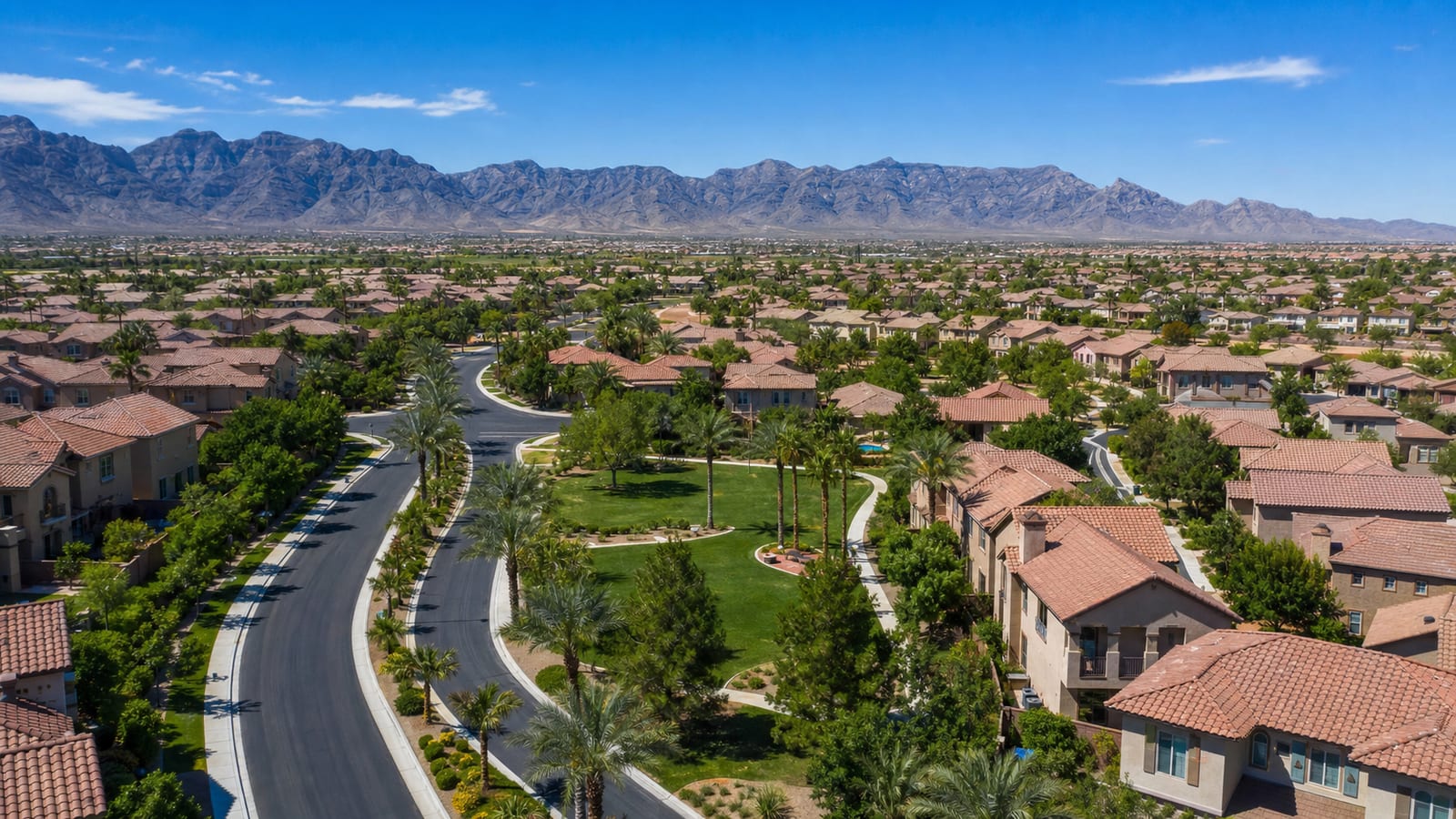
This is the single most common point of confusion, so let's settle it clearly. Centennial Hills is part of the City of Las Vegas. It is not an independent municipality like Henderson or North Las Vegas, both of which have their own city councils, police departments, and tax rolls. Centennial Hills is a named master-planned district in the northwest quadrant of the corporate city, roughly bounded by the US-95 and CC-215 Beltway, and it falls under the same City of Las Vegas government, according to the City of Las Vegas.
Practically, that means a Centennial Hills homeowner pays City of Las Vegas property taxes, votes in city elections, is served by the Las Vegas Metropolitan Police Department, and receives city services — the same framework as a homeowner in the central Charleston corridor. The "it feels like a different town" impression is about distance and design, not jurisdiction. The district sits about 15–20 miles northwest of the Strip, so the drive, the elevation, and the newness all make it feel separate even though the mailing address still says Las Vegas, NV.
Why does this matter for buyers? Because it shapes expectations. You are not moving to a different city with different rules; you are choosing a different neighborhood within Las Vegas. Your kids attend Clark County School District schools either way. Your property is assessed by the Clark County Assessor either way. What changes is the age of the housing stock, the lot sizes, the commute, and the price — not the government.
How Do Home Prices Compare Across the Two Areas?
Price is where the two areas separate most sharply. Central Las Vegas is a wildly mixed market — you can buy an older condo in the low $200,000s or a multimillion-dollar high-rise unit on the same search — which drags the "median" toward the middle. Centennial Hills is more uniform: newer single-family product priced from the mid-$400,000s into the $700,000s, with a higher median as a result.
According to Las Vegas REALTORS, here is the live 2026 comparison:
| Metric | Las Vegas (valley-wide) | Centennial Hills corridor |
|---|---|---|
| Median sale price | $440,336 | $522,500 |
| Median active list price | $471,286 | $579,000 |
| Active listings | ~8,750 | ~838 |
| Closed sales (last 90 days) | ~3,424 | ~350 |
| Median days on market | 26 | 28 |
| Newer-build character | Mostly 1960s–1990s | ~18% built 2023+ |
The $82,000 median gap ($522,500 vs $440,336) is the "newness premium." You are paying more per home in Centennial Hills, but you are generally buying a larger, newer house on a bigger lot. The average sale price in the corridor is actually lower than the valley-wide average ($489,845 vs $561,039) — that is because central Las Vegas contains the ultra-luxury high-rise and hillside estate inventory that stretches the top of its range, while Centennial Hills is more tightly clustered around move-up family product.
What Does Your Money Buy in Each Area?
Numbers only tell part of the story. What actually lands in your driveway is different. In central Las Vegas, a $440,000 budget frequently buys a 1,600–2,000 square-foot home built in the 1970s or 1980s on a compact lot, often with no HOA and room to park an RV. In Centennial Hills, that same budget is entry-level, and the median 89131 home is a 2,444 square-foot house that could be anywhere from 1978 to 2024 in vintage — though the newer, larger builds pull the median size up.
Here is how the practical "what you get" picture breaks down by northwest ZIP, using live GLVAR figures:
| ZIP | Median list price | Median sale price | Median days on market | Character |
|---|---|---|---|---|
| 89131 | $654,900 | $535,000 | 26 | Larger lots, Providence, Iron Mountain Ranch |
| 89149 | $565,000 | $502,500 | 24 | Established family tracts, fast-moving |
| 89166 | $540,000 | $508,500 | 32 | Skye Canyon adjacency, newest construction |
If you want brand-new construction, the northwest is where builders are still delivering at scale — see our new construction hub for active builder communities. If your budget can stretch into the guard-gated tier, Iron Mountain Ranch and other northwest enclaves sit alongside the valley's broader inventory of guard-gated communities and luxury communities. Central Las Vegas, by contrast, is where you find the character bargains: mid-century ranch homes, no-HOA streets, and the occasional flip opportunity that simply does not exist in a master-planned district.
How Do HOA Fees and SID Assessments Differ?
This is where buyers get tripped up, and it deserves an honest, itemized answer rather than a single median. Central Las Vegas and Centennial Hills are structured very differently on carrying costs.
In central Las Vegas — the older "vintage Vegas" streets — a large share of homes carry no HOA at all. That is a genuine cost advantage and a lifestyle one: you can park an RV or boat in the driveway, paint your door any color, and skip the monthly dues. The trade-off is aging infrastructure and less predictable neighborhood upkeep.
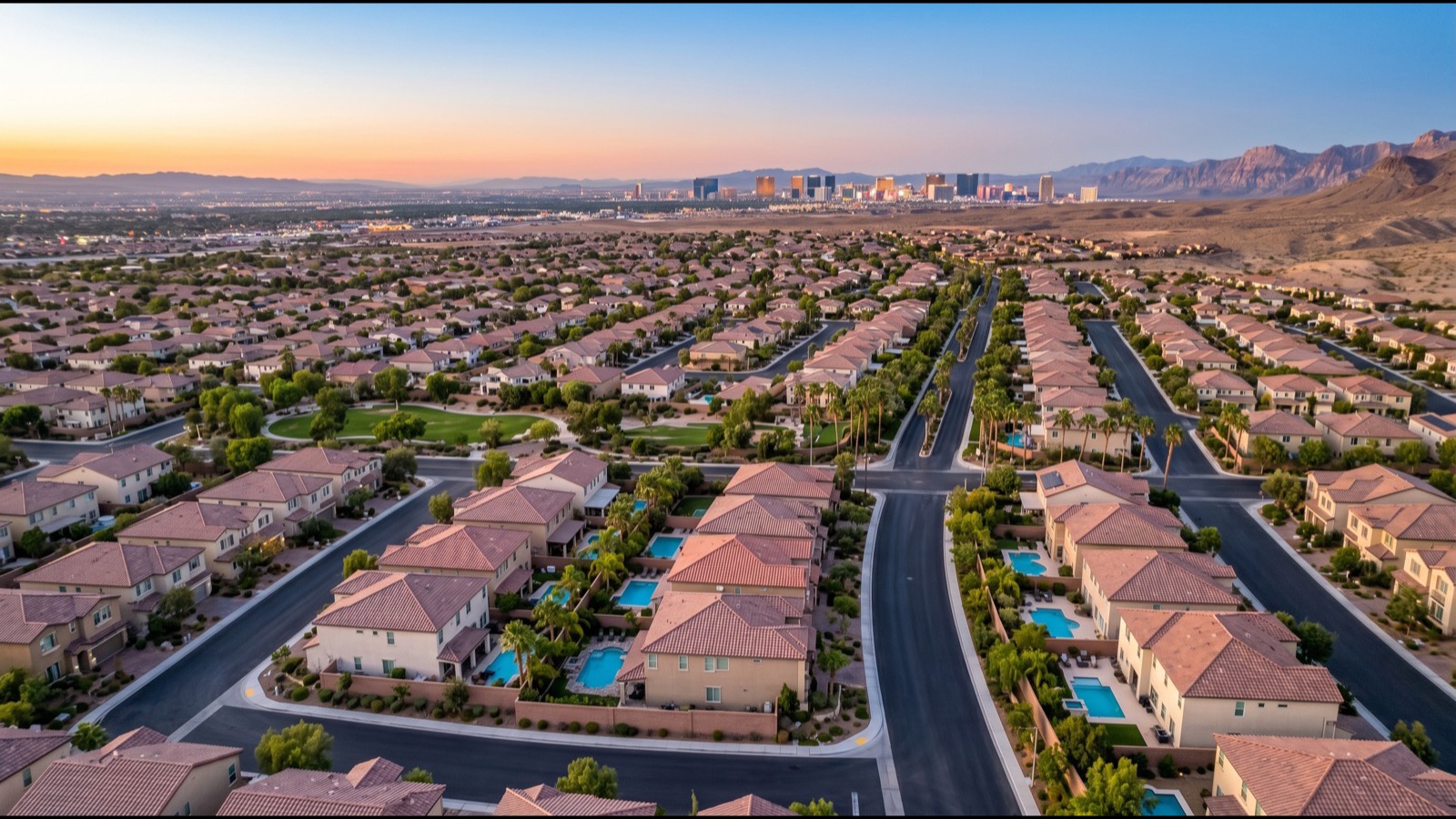
Centennial Hills is the opposite. Most tracts sit inside at least one homeowners association, and the fee stack can have multiple layers:
- Master-plan or community HOA — in planned communities like Providence, a master association funds shared parks, trails, and common-area maintenance. In our 89131 sample, monthly HOA dues clustered around a $86 median, ranging from $0 on a handful of older tracts up to about $585/month in amenity-rich or gated pods.
- Sub-association dues — a gated enclave or condo/townhome pocket inside the master plan can add a second, separate HOA fee on top of the master dues. This is common in the district's newer gated sections.
- SID/LID bond assessments — many newer northwest tracts were built with a Special Improvement District (SID) or Local Improvement District bond that financed streets, sewers, and utilities. That assessment appears on the Clark County tax bill, not the HOA statement, and can run several hundred to a couple thousand dollars a year until the bond is retired. Because it is tied to the parcel, it is easy to miss.
Because these layers stack and vary block by block, there is no single "Centennial Hills HOA number." Always verify the full carrying cost per address — master HOA, any sub-association, and any active SID/LID bond — before you write an offer. Our buyers team pulls the complete assessment picture on every northwest tour so nothing surprises you at closing.
| Cost layer | Central Las Vegas | Centennial Hills |
|---|---|---|
| HOA (master) | Often $0 on older streets | about $86/mo median (range $0–$585) |
| Sub-association | Rare | Common in gated pods |
| SID/LID bond | Mostly retired or none | Possible on 2000s+ tracts — check tax bill |
| Median annual property tax | Varies widely | about $3,471 (89131 sample) |
Which Area Feels Safer Day to Day?
Safety is almost always the first question relocating clients ask me, and in this matchup the northwest generally comes out ahead — largely because of how the district was designed rather than any single statistic. Centennial Hills is a newer master-planned area with controlled traffic flow, consistent lighting, and very little transient foot traffic, which tends to lower property-crime opportunity compared with the dense urban core.
Central Las Vegas, as the urban center, carries the density issues that come with any downtown: more foot traffic, more nightlife, and a wider spread between very safe pocket neighborhoods and higher-incident corridors. There are excellent, quiet streets in central Las Vegas — and gated luxury communities with private security — but the "open" newness of the northwest gives many families a different baseline sense of calm.
A caution on crime data: valley-wide statistics from the U.S. Census Bureau and local reporting are averages, and they mask enormous block-by-block variation. According to the Federal Bureau of Investigation crime-data program, comparing whole districts rather than specific neighborhoods can be misleading. The honest move is to evaluate the exact street you are considering — recent incident history, lighting, and how the community is designed — not a district-wide letter grade. That is analysis we do address by address, not from a map.
How Does the Commute From Centennial Hills Compare?
Here is the reality check: Centennial Hills is far from the Strip. If you work at a resort, downtown, or on the east side, expect a 25–35 minute drive covering roughly 15–20 miles, and longer during peak periods. Central Las Vegas obviously wins on proximity — many central neighborhoods put you within a 10–15 minute drive of the Strip or downtown employment.
The northwest's saving grace is freeway access. The US-95 and the CC-215 Beltway act as major arteries, and it is genuinely easier to hop on a freeway from Centennial Hills than to fight the stop-and-go surface streets of the central valley. The bottleneck to watch is the "Spaghetti Bowl," where I-15 meets US-95 — a notorious chokepoint for downtown-bound commuters.
Public transit is not a realistic option in the northwest. A bus trip from Centennial Hills to the Strip can exceed 90 minutes, so car ownership is effectively mandatory. Central Las Vegas has far better transit coverage and walkability. According to the Bureau of Labor Statistics, commuting cost and time are meaningful components of household budgets, so factor gas and vehicle wear into the "newness premium" if you will be driving to a central-valley job five days a week.
What Amenities and Recreation Set Each Area Apart?
This is where the lifestyle split becomes obvious. Central Las Vegas is built around entertainment — concerts, casinos, museums, the Arts District, and an endless rotation of new restaurants. If your ideal Saturday involves a chef-driven dinner or a gallery opening, the central corridor delivers it within minutes.
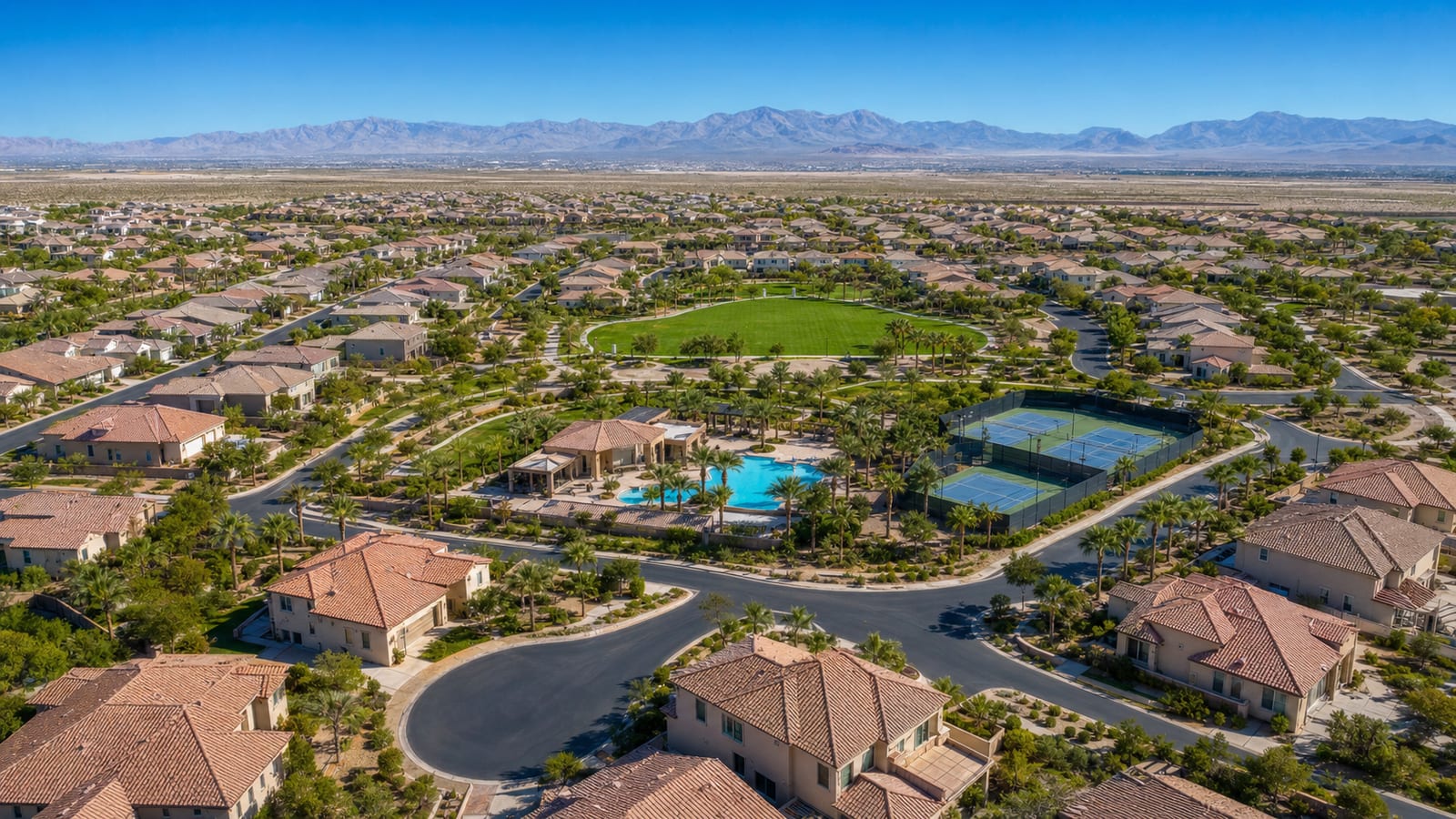
Centennial Hills is built around the outdoors. It is home to some of the valley's best parks, including the massive Centennial Hills Park and the historic Floyd Lamb Park at Tule Springs, with its ponds, walking loops, and preserved ranch grounds. The district is also the gateway to Mount Charleston: living up here shaves roughly 15–20 minutes off the drive, so you can be hiking in alpine forest — where summer temperatures run 20–30 degrees cooler than the valley floor — in under half an hour.
For everyday errands, the Centennial Center hub packs the big-box retail (Target, Home Depot, Costco) into one area, so residents rarely have to leave the "bubble." And there is a genuine climate perk: Centennial Hills sits at a higher elevation than the central valley, which typically makes it 3–5 degrees cooler. When it is 110°F on the Strip, that difference is real on your evening walk and, over a summer, on your cooling bill.
How Do Schools Compare in the Northwest?
If education drives your search, the northwest is a strong contender. Because the neighborhoods are newer, Centennial Hills schools generally occupy newer facilities than the aging buildings in central Las Vegas. Both areas are served by the Clark County School District, so the difference is less about district and more about specific campus age, ratings, and boundaries.
Summerlin often grabs the headlines for top-tier schools, and it deserves that reputation — but Centennial Hills competes closely, frequently offering comparable campus quality without the premium Summerlin price tag. There is a solid mix of public, charter, magnet, and private options across the northwest, which is a big reason families relocating for stability gravitate here. As always, verify the exact attendance-zone campus for any address before you commit — boundaries shift, and two homes a mile apart can feed different schools.
Who Should Choose Centennial Hills Over Central Las Vegas?
Deciding between these two really comes down to what season of life you are in and what you are optimizing for. There is no universally "better" choice — there is a better fit for your priorities.
Choose Centennial Hills if you want a newer home in a quiet, master-planned environment; you value parks, mountains, and space; you are fine with a 25–35 minute drive to the "big city" action; and you would rather have a predictable HOA-managed neighborhood than an older no-rules street. It is a natural fit for growing families, remote workers, and move-up buyers.
Choose central Las Vegas if you want to be in the middle of the energy; you prefer older homes with character (and often no HOA); you want to minimize your commute to the Strip or downtown; or you prioritize walkability and nightlife over quiet cul-de-sacs. It is a natural fit for professionals working central jobs, condo and high-rise buyers, and value hunters willing to renovate.
If you are still weighing the broader metro, our comparisons of North Las Vegas and Henderson round out the picture — each city offers a different blend of price, newness, and commute.
What Are the Risks and Trade-offs to Weigh?
No area is perfect, so here is the honest downside ledger for each. In Centennial Hills, the trade-offs are: the commute (real, and worse if the Spaghetti Bowl is your daily route), the layered HOA and possible SID bond costs, near-total car dependence, and a higher entry price than central Las Vegas. New construction also means you are sometimes buying into a still-developing area, with construction traffic and unfinished amenities in the newest tracts.
In central Las Vegas, the trade-offs are: older housing stock with deferred-maintenance risk (roofs, HVAC, plumbing, and dated electrical), smaller lots, wider block-by-block variation in upkeep and safety, and less predictable neighborhood governance without an HOA. The value is real, but so is the renovation budget you may need.
According to Freddie Mac mortgage-rate data, financing costs remain a central factor in 2026 affordability, so run both the price and the monthly carrying cost — mortgage, HOA, SID, taxes, and insurance — before deciding. A slightly cheaper central-valley home can carry more than a Centennial Hills home once a big renovation or a high-rate loan is in the mix. Our sellers and buyers teams model the true all-in monthly for both scenarios so the decision is based on real money, not sticker price.
How Does Centennial Hills Compare to Summerlin and North Las Vegas?
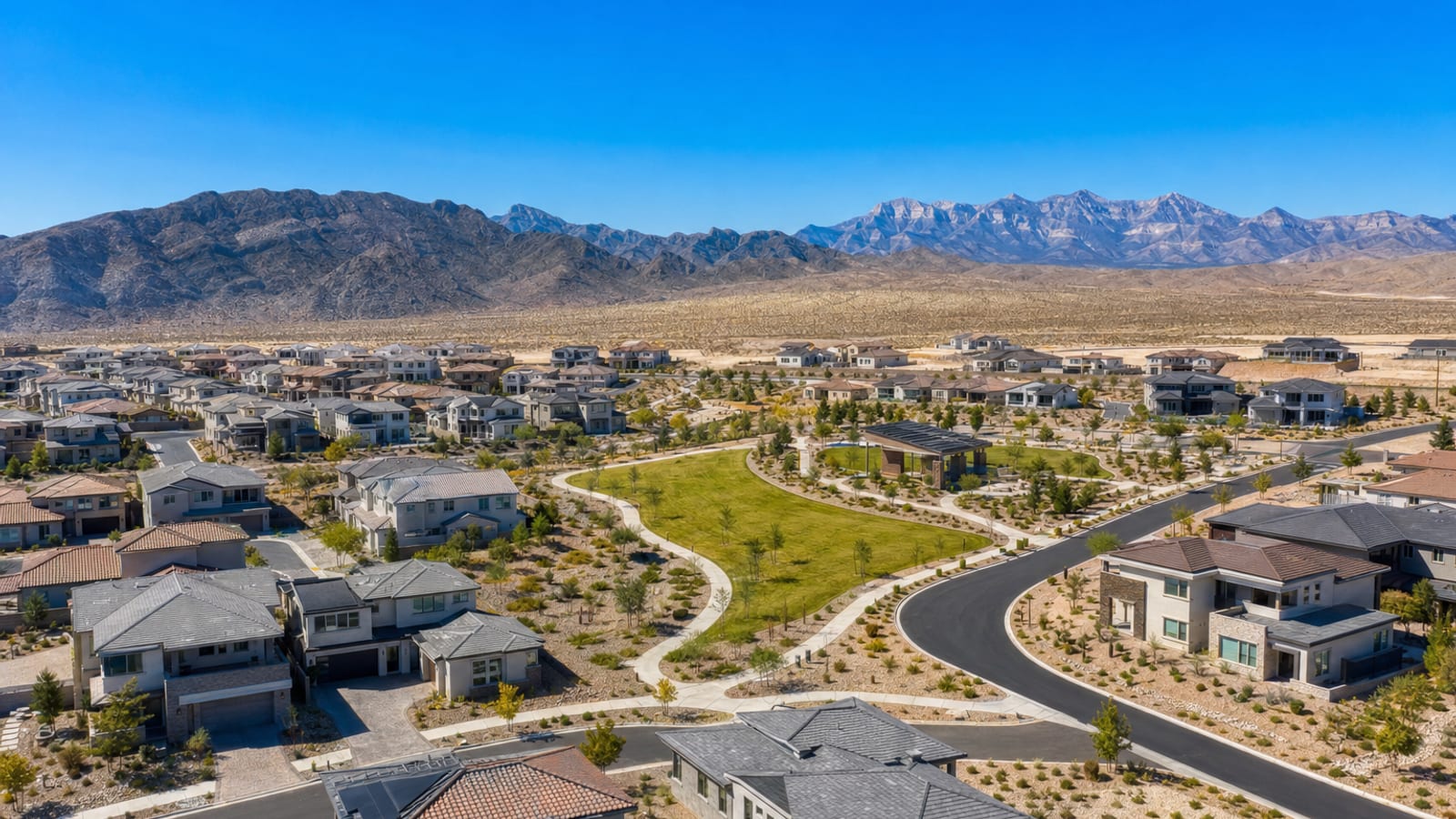
Centennial Hills does not exist in a vacuum — it competes directly with two neighbors that buyers often shortlist alongside it. Summerlin, immediately south, is the valley's premier master plan and prices well above Centennial Hills; you pay a meaningful premium for the brand, the amenities, and the school reputation. Centennial Hills offers much of the same newness and family feel for less money, which is why we frequently steer value-conscious move-up buyers north.
North Las Vegas, to the east, is a separate incorporated city and generally the valley's best entry-price play — its median runs below both Centennial Hills and Summerlin. If the northwest's $522,500 median stretches your budget, North Las Vegas master plans like Aliante and Valley Vista deliver newer construction at a lower entry point, with the trade-off of a different school picture and a slightly longer commute to the westside.
Here is the quick tiering, so you can see where Centennial Hills lands in the northwest hierarchy:
| Dimension | Summerlin | Centennial Hills | North Las Vegas |
|---|---|---|---|
| Relative price tier | Highest | Mid-high (about $522,500) | Entry (below $450k) |
| Municipality | City of Las Vegas / unincorporated | City of Las Vegas | Separate city |
| New construction | Ongoing, premium | ~18% of inventory | Extensive, value-priced |
| Best for | Amenity + school buyers | Value move-up families | First-time + investor value |
What Do the 2026 Market Numbers Say About Timing?
The 2026 numbers favor prepared buyers in both areas. Valley-wide, inventory has climbed to roughly 8,750 active listings — a healthier cushion than the frenzy years — and the 26-day median time on market means well-priced homes still move, but buyers finally have room to negotiate inspection repairs and closing-cost credits. In the Centennial Hills corridor, the 28-day median and ~838 active listings tell a similar story: it is no longer a bidding-war market, and the presence of ~18% new construction means builder incentives (rate buydowns, upgrade credits) are on the table alongside resale.
According to Las Vegas REALTORS, price growth has moderated from the double-digit surges of prior cycles into a more sustainable single-digit pace, which rewards buyers who move deliberately rather than panic-buy. If you are selling a central-valley home to move up to the northwest, the tight 26-day valley-wide market works in your favor on the sale side even as the extra northwest inventory gives you choice on the buy side. That two-sided dynamic — quick sale, patient purchase — is the sweet spot our team helps move-up clients time. Start with a live look at active Las Vegas homes for sale or run a search on our search tools to see the current corridor inventory yourself.
Frequently Asked Questions
Is Centennial Hills part of Las Vegas or its own city?
Centennial Hills is part of the City of Las Vegas — a master-planned district in the northwest corner of the corporate city, spanning ZIP codes 89131, 89149, and 89166. It is not a separate municipality like Henderson or North Las Vegas. Residents pay City of Las Vegas taxes, are served by the Las Vegas Metropolitan Police Department, and attend Clark County School District schools. It feels like its own town because of its distance from the Strip and its newer design, but on paper it is Las Vegas, NV.
How much more expensive is Centennial Hills than central Las Vegas?
As of July 2026, the Centennial Hills corridor (89131/89149/89166) carries a median sale price near $522,500, versus about $440,000 valley-wide for Las Vegas — roughly an $82,000 premium. You pay more per home, but the northwest median buys newer construction (about 18% of listings were built in 2023 or later), larger square footage, and bigger lots than a comparable central-valley home.
Do all homes in Centennial Hills have an HOA?
Most do, but not all. In our 89131 sample, monthly HOA dues clustered around an $86 median, ranging from $0 on a few older tracts up to about $585 in amenity-rich or gated pods. Many newer tracts also carry a Special Improvement District (SID) bond assessment on the Clark County tax bill, separate from the HOA. Always verify the full carrying cost — master HOA, any sub-association, and any active SID/LID bond — per address before making an offer.
How far is Centennial Hills from the Las Vegas Strip?
It is approximately 15 to 20 miles, which usually translates to a 25 to 35 minute drive via the US-95 or CC-215 Beltway. During rush hour, congestion near the "Spaghetti Bowl" interchange can push that commute to 45 minutes or more. Public transit is impractical — a bus trip can exceed 90 minutes — so plan on car ownership if you live in the northwest.
Is Centennial Hills cooler than central Las Vegas?
Yes, modestly. Because Centennial Hills sits at a higher elevation than the central valley floor, it typically runs 3 to 5 degrees cooler, and the elevation improves evening airflow. The district's proximity to Mount Charleston — where summer temperatures can be 20 to 30 degrees below the valley — is a bonus for residents who want quick access to cooler alpine air.
Is Centennial Hills a good place to buy a home in 2026?
Yes, it remains a strong value within the northwest. With a corridor median near $522,500, it offers more newness and space per dollar than Summerlin while sitting above North Las Vegas on price. With roughly 838 active listings and a 28-day median time on market, buyers have negotiating room and builder incentives that were not available during the frenzy years — but confirm the full HOA and SID cost per address first.
Should I choose central Las Vegas or Centennial Hills for my family?
If schools, parks, newer homes, and a quiet environment top your list, Centennial Hills is usually the better family fit despite the longer commute and higher price. If you prioritize a short Strip or downtown commute, walkability, character homes, or a lower entry price with no HOA, central Las Vegas wins. The right answer depends on your commute, budget, and lifestyle — our team walks families through both on a single tour.
Which Sources Inform This Las Vegas vs Centennial Hills Guide?
Market figures in this guide were pulled from live Greater Las Vegas Association of REALTORS (GLVAR) MLS data in July 2026, cross-referenced with public authorities. Verify any address-specific figure (HOA, SID bond, school zone, tax) before making an offer.
- Las Vegas REALTORS (GLVAR) — median prices, inventory, days on market
- U.S. Census Bureau — population, housing, and demographic data
- City of Las Vegas — municipal boundaries and services
- Clark County Assessor — property assessment and tax records
- Clark County, Nevada — SID/LID bond and county services
- Clark County School District — school attendance zones
- Nevada Revised Statutes — HOA (NRS 116) and disclosure law
- Federal Bureau of Investigation — crime-data program context
- Bureau of Labor Statistics — commuting cost and employment data
- Freddie Mac PMMS — weekly mortgage-rate benchmark
- U.S. Department of Housing and Urban Development — housing affordability guidance
Nevada Real Estate Group is brokered by LPT Realty (License S.181401). For a personalized comparison of central Las Vegas and Centennial Hills homes, call (702) 637-1759 or contact our team.