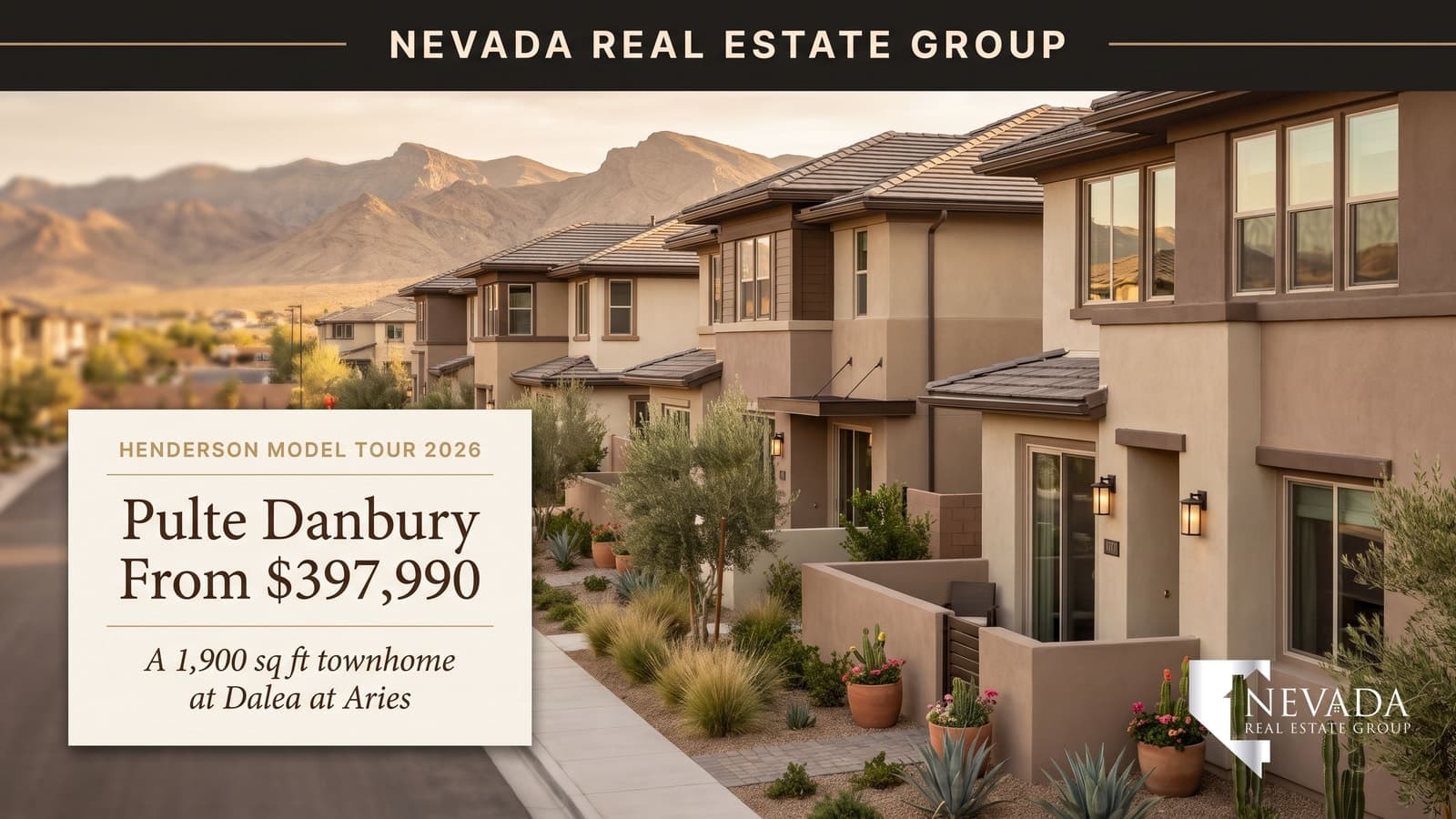
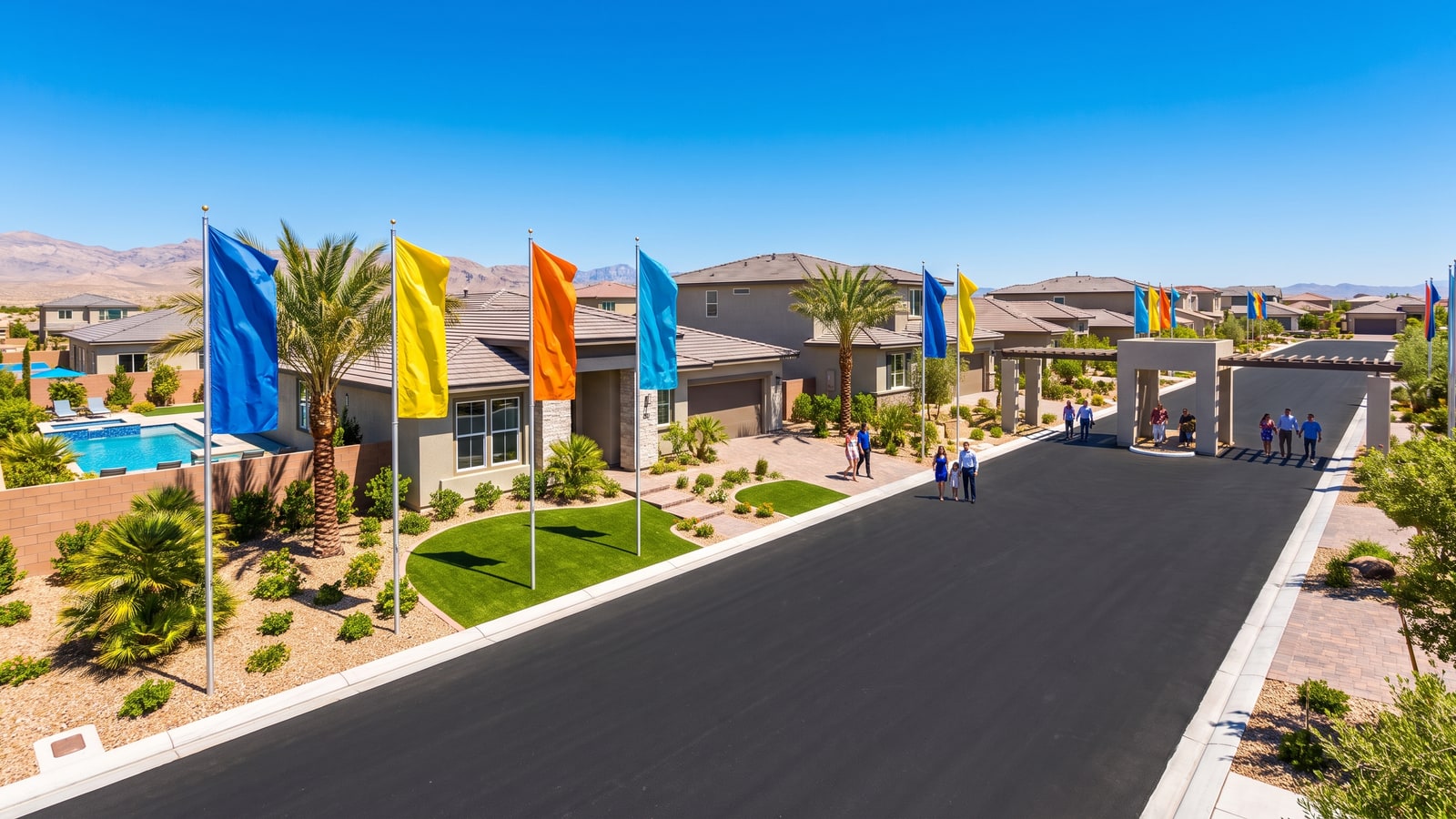
A builder rate on a sign is the most effective marketing in real estate, and the least examined number in the transaction.
At Carlton in Cadence, the sign says 3.99%. It is a 7/6 ARM, the homes start around the $429,000s, and the Bennett plan gives you three bedrooms and two baths in roughly 1,200 square feet on a single level. I walked it on camera so you can see exactly what that buys before anyone talks you through a payment sheet.
The rate is genuinely good. It is also an adjustable-rate mortgage, which means the interesting question is not what you pay next month — it is what happens in year seven, and whether you will still own the house by then.
Carlton at Cadence was advertising a 7/6 ARM starting at 3.99% on homes from the $429,000s. The rate is fixed for seven years, then adjusts every six months. On a $429,000 purchase that is a real monthly saving against a market fixed rate — often several hundred dollars. It is a strong fit if you expect to sell or refinance inside seven years, and a genuine risk if you do not. HOA runs about $51 a month.
- 7/6 ARM at 3.99% — fixed seven years, then adjusts every six months.
- Bennett plan: 3 bed, 2 bath, 1-car garage, single level, roughly 1,200 sq ft.
- Homes from the $429,000s; HOA about $51 a month, possibly including internet.
- Ask what the rate caps are — the ceiling matters more than the teaser.
- Bring your own agent to the first visit, not the third.
What Is the Bennett Plan at Carlton in Cadence?
It is a small single-level home, and the word "small" is doing useful work rather than apologetic work.
Roughly 1,200 square feet, three bedrooms, two bathrooms, a one-car garage. According to Lennar's Carlton at Cadence page, Carlton is a collection of single-family homes inside the Cadence master plan in Henderson, with the sales office on Caleb Chase Avenue in ZIP 89011, and the builder lists the Bennett at 1,248 square feet. The primary suite sits near the entry, separated from the secondary bedrooms — which is the layout choice that makes a home this size livable rather than cramped. The kitchen, dining and family room run together as one open space.
Quartz kitchen countertops and kitchen appliances are included at this level, and there is a functional backyard rather than a token strip. For a buyer who wants a low-maintenance Henderson home without inheriting 2,600 square feet of rooms they will not use, that is a coherent product.
| Feature | Detail |
|---|---|
| Bedrooms / baths | 3 bed, 2 bath |
| Approximate size | About 1,200 sq ft |
| Levels | Single story |
| Garage | One car |
| Layout | Primary suite near entry, separated secondary bedrooms |
| Kitchen | Quartz counters, appliances included |
| Starting price | From the $429,000s |
| HOA | About $51 per month, may include high-speed internet |
| Advertised financing | 7/6 ARM starting at 3.99% |
Everything above was accurate at the time of the tour, in August 2026. Builder pricing, incentives, rates, availability, included features and lot premiums change constantly, and model homes are often shown with upgrades. Confirm every line for the specific home you are buying.
What is included versus what is an upgrade is where new-build budgets go wrong, and it is the single most useful thing in the tour. At the Bennett level, quartz kitchen counters and kitchen appliances were included. What consistently is not, across builders generally: the washer and dryer, backyard landscaping beyond a basic condition, window coverings, and most of what makes a model home photograph well. Lennar's everything-included model means the list of options is shorter than at a builder with a large design center, which is a genuine advantage on a plan this size — but shorter is not the same as empty, and the refrigerator, the blinds and the yard are the three items to confirm in writing. Ask for the standard features list and walk it line by line against what you saw in the model. A model is a showroom. Every builder is entitled to show its best version; you are entitled to know which parts of it cost extra.

What Does a 7/6 ARM at 3.99% Actually Mean?
The two numbers describe time, not money.
The 7 is how many years the rate stays fixed. The 6 is how often it can change after that — every six months, not annually. So you get seven years of certainty followed by a rate that can move twice a year for the remaining twenty-three years of a thirty-year loan.
Compare that with the older 5/1 structure and you get two more years of certainty up front, but adjustments arrive twice as often once they start. Neither is better in the abstract. They are different bets on how long you will hold the loan.
According to the Consumer Financial Protection Bureau, the questions that decide whether an ARM is safe are the caps: how much the rate can rise at the first adjustment, how much at each one after, and the lifetime ceiling. Those three numbers are what you are actually buying, and none of them appears on the sign.
What happens when the fixed period ends is one of three things, and you should have a plan for each. You sell. For a buyer who expects to move within seven years, this is the cleanest outcome and the reason ARMs exist. You refinance. Reasonable, but it depends on rates, on your equity, and on your credit at the time. Refinancing is a plan, not a guarantee — the last several years should have taught everyone that rates do not owe us anything. You keep it and absorb the adjustment. Survivable if the caps are moderate and your income has grown. Painful if neither is true.
In my experience the buyers who do well with an ARM are the ones who could still afford the payment at the lifetime cap. If the only version of the budget that works is the 3.99% version, that is not a financing choice, it is a hope.
How Much Does the Rate Difference Save Each Month?
Enough to matter, which is exactly why it deserves scrutiny rather than gratitude.
Principal and interest on a thirty-year loan, before taxes, insurance and HOA, across a range of rates on a $429,000 purchase with 10% down (a $386,100 loan):
| Rate | Monthly principal and interest | Versus 3.99% |
|---|---|---|
| 3.99% | $1,841 | — |
| 5.00% | $2,073 | +$232 |
| 5.50% | $2,192 | +$351 |
| 6.00% | $2,315 | +$474 |
| 6.50% | $2,441 | +$600 |
| 7.00% | $2,569 | +$728 |
Against a fixed rate in the sixes, the ARM is saving roughly $475 to $600 a month at the start. Over seven years that is somewhere near $40,000 to $50,000 of payments not made — real money, and the honest case for taking it.
Now hold the same loan past year seven. If the rate resets toward 7%, that $1,841 becomes about $2,569 — a jump of over $700 a month on a household that budgeted for the lower figure. That is the scenario to plan for, not the one to hope against.
The table also shows why the incentive is worth more to some buyers than others. The saving is a function of the spread between 3.99% and the fixed rate you would otherwise get, and that spread is not the same for every borrower: a buyer with strong credit and a large down payment would be quoted a lower fixed rate than a buyer at the edge of qualifying, so the ARM saves the second buyer more each month while exposing them to the same reset. According to the Freddie Mac Primary Mortgage Market Survey, the weekly national fixed-rate average is the free benchmark for that spread, and the honest comparison is your own fixed quote against 3.99%, not the survey average against it.
What Does the Year-Seven Reset Look Like Month by Month?
Worth walking through concretely, because "it adjusts" is an abstraction and a payment is not.
Say you close at 3.99% on the $386,100 loan and pay $1,841 a month in principal and interest. Seven years in you have paid the balance down to roughly $330,000, which helps — the reset applies to a smaller loan than you started with, and that is the quiet advantage nobody mentions.
If rates at that point sit where the fixed market has spent much of the last few years, your new payment lands somewhere in the low-to-mid $2,000s rather than jumping to a catastrophe. If they sit higher, and the lifetime cap allows it, the number can be worse. The spread between those outcomes is exactly what the caps define, which is why I keep returning to them.
The adjustment also does not arrive all at once in most loan structures. A first-adjustment cap limits how far the rate can move at the initial reset, and a periodic cap limits each subsequent move. A loan with a 2% first-adjustment cap cannot go from 3.99% to 8% in one step no matter what the market does. A loan without that protection can behave very differently. Two ARMs advertised at the same headline rate can carry meaningfully different risk, and the sign will not distinguish them.
The practical exercise before you sign: ask the loan officer to run the payment at the lifetime cap, on paper, and look at that number as though it were the real one. If your household can carry it — with the property taxes, the insurance and the $51 HOA on top — you are making an informed trade. If it makes you flinch, you have learned something important while it is still free to learn.
What Should You Ask the Builder's Lender Before You Commit?
Six questions, and none of them are confrontational — a good loan officer will have the answers ready.
What is the index the rate adjusts against, and what is the margin added to it? The margin is permanent and it is where a lot of the long-run cost hides. What are the three caps? Is there a floor below which the rate cannot fall, which matters if rates drop and you were counting on the adjustment cutting both ways?
Is there a prepayment penalty, and does refinancing inside a set window forfeit any of the incentive you were given? Some builder incentives include a clawback if you refinance too quickly, and that directly undermines the "I will just refinance" plan.
What exactly is conditioned on using this lender — the rate, the closing-cost credit, both? And finally: what does the same loan look like as a thirty-year fixed with this builder's incentive applied a different way? A builder will often let you take the benefit as a price reduction instead of a rate subsidy, and depending on how long you plan to stay, that can be worth more.
Get every one of those answers on the loan estimate rather than in conversation. The loan estimate is the standardized three-page disclosure every lender has to issue, its adjustable-rate table shows the index, margin, caps and the maximum payment in one place, and it is the only document that makes the builder's lender comparable to the outside quote you should also be collecting.
Who Is an ARM Actually Right For?
Three profiles, consistently.
Buyers with a known horizon — a job that relocates, a family plan that means outgrowing 1,200 square feet, a stated intention to trade up inside five years. Buyers with rising income who can absorb a reset. And buyers who are genuinely rate-sensitive today and would otherwise be priced out of the market entirely, provided they understand the trade.
It is a poor fit for someone buying their forever home on a fixed income, and for anyone who cannot say what the caps are.
| Dimension | 7/6 ARM at 3.99% | 30-year fixed | 2-1 buydown |
|---|---|---|---|
| How long the low rate lasts | Seven years | Thirty years | Two years |
| Certainty after that | Adjusts every six months | Never changes | Reverts to the note rate |
| Best for | A known exit inside seven years | Staying put | Short-term cash-flow relief |
| Main risk | The year-seven reset | Paying more from day one | Year-three payment shock |
| Question to ask | What are the caps? | What are the points? | What is the note rate underneath? |
Our breakdown of 2-1 buydowns on Las Vegas new construction covers that third column in depth, and the question of rate buydown versus rate lock is worth settling before you commit to either.
How Does a $51 HOA Compare Across Henderson?
Favourably, and it is one of the quieter selling points here.
Roughly $51 a month is modest for a Henderson master plan, and at Cadence it may include high-speed internet — which, if accurate for your specific home, quietly offsets a chunk of the dues against a bill you would pay anyway. Confirm what is included in writing rather than taking it from a brochure.
For context on how association costs stack up across the valley, and what a master plan's amenities actually buy, our Henderson community pages break it down by neighbourhood, and the Cadence page covers the master plan itself.
Two things to check behind the $51. The first is whether it is the whole number. Master plans commonly layer a master association over a neighbourhood sub-association, and the sales office will often quote whichever is smaller; ask for the total across every association and what each one funds. According to Lennar's Carlton page, the master plan's amenities include a private pool, a playground, a splash park and a barbecue area, and those are the kinds of shared facilities a master association budget carries. The second is the assessment that is not an HOA at all. Cadence, like most newer Henderson master plans, financed its infrastructure through special improvement districts, and the balance attaches to the parcel rather than the owner — commonly $8,000 to $30,000 on newer valley parcels, repaid as an annual installment on the tax bill, and invisible on the association disclosure. Ask for the SID balance on your specific lot in writing, and check it against the assessor record. According to Nevada Revised Statutes Chapter 116, a buyer in a new common-interest community receives a public offering statement with the declaration, budget and reserve information, and may cancel by written notice until midnight of the fifth calendar day after signing, or after receiving the statement if it arrives later — that is the window in which to read what the $51 funds and what the parcel owes.
What Should You Confirm Before Signing a Builder Contract?
The tour covers this and it deserves repeating in text, because these are the items that generate the calls afterwards.
| Item | Why it matters |
|---|---|
| Rate caps on the ARM | First adjustment, periodic, and lifetime ceiling — the numbers that decide your worst case |
| Whether the rate requires the builder's lender | Incentives are usually tied to it; price the alternative anyway |
| Appliances, washer and dryer | Frequently excluded and frequently negotiable |
| Backyard landscaping | Often a bare lot at closing; budget it or negotiate it |
| Contract deadlines and extensions | Who pays if the build runs late, and what your options are |
| Warranty terms | What is covered, for how long, and by whom |
| Fees at closing | Builder fees vary and are not always obvious on the worksheet |
| Lot premium | What you are paying for the specific parcel, separate from the plan |
Four of those rows deserve a number. The deposit. A builder deposit is typically a percentage of the price rather than the flat few thousand dollars a resale seller accepts, and builder contracts are far less forgiving about returning it — read the default language before you write the check. The backyard. Even the Bennett's functional yard is usually delivered as a basic condition, and most Henderson associations require completion within a set period after closing; according to the Southern Nevada Water Authority, the valley's development codes have prohibited front-yard turf on new homes for two decades and cap how much grass a rear yard can carry, so budget a desert-adapted design and price it before you sign. The inspection. Hire an independent inspector for the pre-drywall walk, when everything inside the wall is visible. According to the Nevada State Contractors Board, any contractor's or inspector's license, classification and bond status can be verified on its public lookup. The warranty. Expect the industry's common one-year workmanship, two-year systems, ten-year structural shape, and get the written terms with the start date at your closing. And on a rate-driven purchase, one more: the rate lock has to survive the build, so if you are buying a dirt start rather than a completed home, ask how long the 3.99% is locked for and what an extension costs.
Why Does Representation Matter When You Walk Into a Builder's Office?
Because the person at the desk is excellent at their job, and their job is not representing you.
A builder's sales agent works for the builder. That is not a criticism — it is the arrangement, and a good one will be helpful, straight, and knowledgeable. But when the question is whether a lot premium is worth it, or whether the incentive is better taken as rate or as price, you want someone whose duty runs to you.
The practical detail people get wrong: register your agent on the first visit. Most builders require it, and showing up alone the first time and bringing an agent later can disqualify representation entirely on that home. It costs you nothing to bring them; it can cost you the option to have one if you do not.
Under Nevada's brokerage agreement rules, that relationship now has to be in writing to exist at all — we covered that statute change here. Expect a signed buyer-brokerage agreement before the first model visit, and expect it to say who pays: on a new build the builder typically pays the buyer-agent commission from its marketing budget, which is why representation does not raise your price. The value is concentrated at three moments — the contract review before you sign, the loan-estimate comparison between the builder's lender and an outside one, and the pre-drywall walk with an inspector — and an agent who is present for those three has delivered most of the benefit.
Where Does Carlton Sit Inside Cadence?
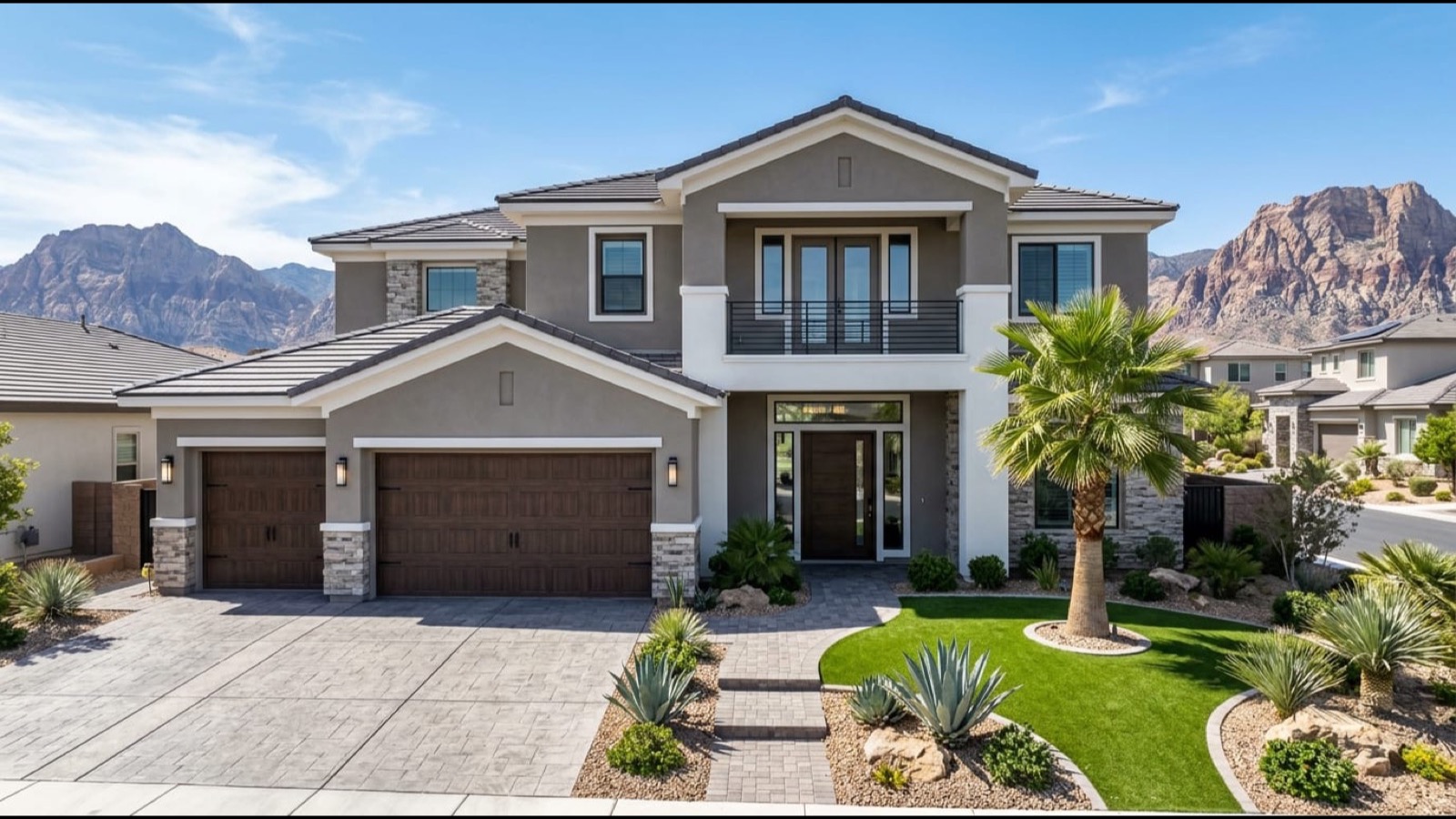
Cadence is one of the largest active master plans in Henderson, and Carlton is one of its current neighbourhoods.
The value of buying inside a still-building master plan is that the amenities keep arriving after you close. The cost is living beside construction for a while and accepting that the community you bought into is not the community you will have in five years — usually for the better, occasionally not.
For where the whole plan stands today and what is still to come, our Cadence buildout status guide is the deeper read.
The ZIP's market gives the plan its context. ZIP 89011 carried 714 active listings at a $530,735 median as of September 6, 2026, and 201 closings in the 90 days ending that date at a $460,000 median and 36 median days on market, according to our analysis of Las Vegas REALTORS MLS data via Repliers. Those figures cover every property type and price across a ZIP that also includes Lake Las Vegas, so they describe the neighbourhood's range rather than this plan's comps — but a Bennett from the $429,000s sits below the ZIP's closing median, in a market where a correctly priced home is under contract in about five weeks and where 714 active listings mean a buyer has real choice. That depth is the point for an ARM buyer: the seven-year plan depends on being able to sell into a liquid market, and 89011 is one.
One more thing about buying early in a neighbourhood that is still selling. You are competing with the builder for the next buyer, not just with other homeowners. If you need to sell in year two or three while the builder is still releasing new phases across the street, you are the resale option next to a brand-new one with incentives attached — and that is a genuinely harder sale than the same house five years later when the community has finished and the only inventory is other owners.
That is not a reason to avoid a building master plan. It is a reason to be honest about your horizon before you rely on an ARM's seven-year window. The financing assumes flexibility; the early-phase resale picture is the thing most likely to take that flexibility away. If your plan is "sell in three years and move up," ask specifically how many more phases are scheduled at Carlton and what the builder expects to be selling then. Sales offices will usually tell you if you ask directly, and the answer costs nothing to obtain.
Is a Smaller Single-Level Home a Good Resale Bet in Henderson?
I think so, for two reasons that have nothing to do with this builder.
Single-level homes have a structural demand advantage in this valley. Buyers downsizing out of two-storey homes, buyers with mobility considerations, and buyers who simply do not want stairs in a place where the summer makes an upstairs bedroom expensive to cool — all of them are competing for a limited supply of single-storey inventory.
And smaller homes in an expensive metro have a floor under them. According to Las Vegas REALTORS, the Southern Nevada median has climbed well past what many households can carry; a well-built three-bedroom under $450,000 speaks to a large and persistent slice of the market.
Across the 9,600-plus transactions our team has closed in Nevada — 789 of them during 2025, representing more than $361.5 million in volume — the entry-level single-storey product is consistently among the fastest to move when priced correctly.
The one honest caveat is the one-car garage. In a valley where a second vehicle is close to universal and summer makes an uncovered car a real cost, a single garage bay narrows the buyer pool slightly at resale, and the driveway and street parking rules in the CC&Rs are worth reading for that reason. Against a $429,000 entry price and a single-level plan in a master plan that is still adding amenities, it is a small deduction from a strong position — but it is the item I would expect a future buyer's agent to raise, so it is the item to price now.

How Does This Compare With Buying Elsewhere in the Valley?
Worth asking, because a builder rate is only a bargain if the location holds up.
According to the U.S. Census Bureau, Henderson has grown steadily and skews toward higher household incomes and owner-occupancy than the valley average — the demographic backdrop that has kept its resale market resilient through several rate cycles. That is the argument for paying Henderson prices rather than reaching for square footage further out.
The honest comparison inside the valley looks like this. In Summerlin you are generally paying a premium per square foot for the master plan and the Red Rock proximity, and there is very little new product at this price. Across Las Vegas proper you can find more house per dollar in established neighbourhoods, but you are buying resale — an older roof, an older HVAC, and no builder warranty. In North Las Vegas the new-construction value is real and the commute maths change depending on where you work.
Cadence sits in a specific niche: new construction, Henderson address, entry-level pricing, and a master plan still adding amenities. Few communities in the valley hit all four at once, and that combination is most of the reason a plan this size is worth a serious look rather than a polite one.
According to the Bureau of Labor Statistics, Las Vegas metro wage growth has not kept pace with the run-up in home prices since 2020, which is the structural reason entry-level product keeps outperforming: the buyer pool at $429,000 is far deeper than the pool at $700,000, and that depth is what protects you on the way out.
One caution on the financing that applies wherever you buy. The thirty-year fixed has moved through a wide range over the last several years — which is precisely why a seven-year bet is a bet rather than a certainty. Nobody predicted the last cycle. Plan for the cap, not the forecast.
What Would I Tell a Buyer Standing in This Model?
Take the tour seriously and take the rate sheet more seriously.
The Bennett is a sensible, well-configured small home at a price that makes sense for Henderson, and 3.99% money is genuinely cheaper than the market. If your horizon is under seven years, or you can comfortably carry the payment at the lifetime cap, this is a strong buy.
If neither of those is true, the right move is not to walk away — it is to price the fixed-rate version and compare honestly. Sometimes the answer is still the ARM. Sometimes it is a slightly smaller loan at a rate that never surprises you.
The order of operations matters more than the decision. Collect the builder's loan estimate and an outside lender's loan estimate on the same loan amount before you fall for the model, run the payment at the lifetime cap, confirm the total HOA and the SID balance on the specific lot, and read the public offering statement inside the five-day window. Do those four things and the ARM is a choice you made with the numbers in front of you. Skip them and it is a sign you trusted.
Pricing, incentives, interest rates, availability, upgrades, lot premiums, included features, HOA details, financing terms and buyer qualifications can change at any time, and model home features may be representational only. Everything here reflects what was advertised at the time of the tour in August 2026. This is not lending advice — confirm terms with a licensed loan officer.
Frequently Asked Questions
What does 7/6 mean on an ARM?
The rate is fixed for the first seven years, then adjusts every six months for the rest of the loan term. It is not a seven-year loan — it is a thirty-year loan with seven years of certainty at the front.
Is 3.99% a real rate or a teaser?
It is a real starting rate for the fixed period, not a one-month gimmick. What it does not tell you is the ceiling. Ask for the first-adjustment cap, the periodic cap and the lifetime cap before you treat 3.99% as your rate.
Do I have to use the builder's lender to get it?
Builder incentives are usually conditioned on financing through their affiliated lender. That is legal and common. Price an outside lender anyway — occasionally the better rate elsewhere beats the incentive, and you cannot know without comparing.
What is the HOA at Carlton in Cadence?
Approximately $51 per month at the time of the tour, and it may include high-speed internet. Confirm the current figure and exactly what it covers for your specific home before you rely on it.
Does the Bennett come with a washer and dryer?
Kitchen appliances were included at this level; laundry appliances typically are not, across builders generally. It is one of the most commonly negotiated items on a new build — ask.
Do I need my own agent for new construction?
You do not need one, but you want one, and you must bring them on your FIRST visit. Most builders require agent registration at first contact, and arriving alone then returning with representation can forfeit it on that home. Representation costs the buyer nothing on a new build in almost every case.
Is a 1,200-square-foot home too small to resell well in Henderson?
Not in this market. Single-storey homes under $450,000 serve downsizers, first-time buyers and anyone avoiding stairs — three durable sources of demand competing for limited supply.
Which Sources Inform This Henderson New-Construction Guide?
The plan details, pricing, HOA figure and advertised financing here come from our own on-site walkthrough of the Bennett model at Carlton in Cadence, filmed August 12, 2026 — the video embedded above is the primary source for everything specific to the home. The community location, the plan's listed square footage and the master plan amenity list come from Lennar's published community and plan pages. ZIP 89011 figures — 714 active listings at a $530,735 median as of September 6, 2026, and 201 closings in the 90 days ending September 6, 2026 at a $460,000 median and 36 median days on market — come from our analysis of Las Vegas REALTORS MLS data via Repliers, all property types and prices.
- Lennar — Carlton at Cadence — community location, plan size and master plan amenities
- Consumer Financial Protection Bureau — adjustable-rate mortgage caps, disclosures and the questions to ask a lender
- Freddie Mac Primary Mortgage Market Survey — the national fixed-rate series the ARM is measured against
- Las Vegas REALTORS — Southern Nevada median price, closed sales and the MLS data behind the ZIP figures
- U.S. Department of Housing and Urban Development — homebuyer guidance and loan program rules
- Nevada Real Estate Division — licensing and brokerage regulation
- Nevada Revised Statutes Chapter 645 — brokerage agreement requirements for representation
- Nevada Revised Statutes Chapter 116 — common-interest community disclosure and the five-day cancellation right
- Clark County Assessor — parcel records, SID balances and property tax status
- Nevada State Contractors Board — builder licensing and complaint history
- Southern Nevada Water Authority — turf limits and desert landscaping rules
- U.S. Census Bureau — Henderson household and housing data
- Bureau of Labor Statistics — Las Vegas metro wage and cost data
- Nevada Department of Taxation — property tax framework
Methodology note: payment figures are standard amortisation arithmetic on a $386,100 loan (a $429,000 purchase at 10% down) across a range of rates, shown so a buyer can locate their own quote — they are not offers, and they exclude taxes, insurance and HOA. NREG production figures (9,600-plus career closings; 789 closings and more than $361.5 million in volume during 2025) are our own transaction records.
Thinking about a new build at Cadence or anywhere in Henderson? Call me at (702) 637-1759 or reach the team — and call before your first model-home visit, not after. That order matters more than almost anything else in this article.