

Published July 5, 2026 · By Chris Nevada, Nevada Real Estate Group · NV License S.181401
One of the most underserved questions in Nevada real estate gets asked quietly, usually at the end of a conversation about something else: can I buy a home if I don't have a Social Security number? The answer is yes — and it has been yes for years, through ITIN lending, a legal, established financing path that thousands of taxpaying Nevada workers and business owners qualify for without ever hearing about it. Across our 789 closings in 2025, ITIN files were a steady, growing thread, and the pattern is always the same: a family that has rented for a decade, filed taxes faithfully, and assumed the door was closed because nobody told them where the door was.
This is the door. Statewide — from Las Vegas hospitality and construction to Reno logistics — here is how ITIN home loans actually work in 2026: the real terms, the real trade-offs, the documents, and the math.
Yes — you can buy a Nevada home without a Social Security number using an ITIN loan: a portfolio mortgage underwritten around your IRS Individual Taxpayer Identification Number. Expect 15-25% down, rates roughly 1.5-3 points above conventional, two years of ITIN tax returns, and alternative credit like rent and utility history. FHA, VA, and standard conventional programs are off the table, but the ITIN path closes every week here — and refinancing later is always an option.
- ITIN loans require no Social Security number — the IRS-issued taxpayer number plus two years of returns carries the file.
- Plan for 15-25% down and rates commonly 1.5-3 points above conventional — portfolio pricing for portfolio risk.
- FHA, VA, Fannie, and Freddie programs require an SSN; ITIN lending lives with non-QM and portfolio lenders.
- Roughly one in five Clark County residents is foreign-born — a mainstream financing need.
- At North Las Vegas's $385,000 median with 20% down, an ITIN payment typically runs $2,600-$2,900 monthly all-in.
What Is an ITIN Loan and Who Qualifies for One?
An ITIN loan is a mortgage underwritten around the Individual Taxpayer Identification Number — the nine-digit number the IRS issues to people who have U.S. tax-filing obligations but aren't eligible for a Social Security number. According to Internal Revenue Service guidance, ITINs exist precisely so that workers without SSNs can file and pay federal taxes — millions do — and ITIN mortgages extend that same logic to homeownership: if you earn, file, and pay like any other borrower, portfolio lenders will underwrite you like one.
Who fits the profile: workers and self-employed business owners who file federal returns under an ITIN, typically with two or more years of filing history, steady documentable income, and savings for a meaningful down payment. Mixed-status households fit too — an ITIN borrower can often pair with a co-borrower who has an SSN, and lenders price the file on its combined strength. What the loan does not require: citizenship, permanent residency, or an SSN of any kind. And to say the quiet part plainly, because buyers ask: ITIN lending is legal, established, and protected. According to Consumer Financial Protection Bureau fair-lending rules under ECOA, creditors cannot discriminate based on national origin, and the ITIN segment is a recognized, regulated corner of the non-QM market, not a gray one.
The context that makes this a mainstream Nevada topic rather than a footnote. According to U.S. Census Bureau data, roughly one in five Clark County residents is foreign-born, and the hospitality, construction, and logistics sectors that run this state employ ITIN filers at scale. The demand is enormous; the information supply is what's thin — which is the gap this guide exists to close.
How Do ITIN Loan Terms Compare to Conventional and FHA?
The honest comparison, because the trade-offs are real and knowable:
| Factor | ITIN Loan | Conventional | FHA |
|---|---|---|---|
| SSN required | No — ITIN carries the file | Yes | Yes |
| Typical minimum down | 15-25% | 3-5% | 3.5% |
| Rate vs. conventional baseline | +1.5 to +3 points | Baseline (6.6-6.9% band) | Near baseline + MIP |
| Credit evaluation | Traditional score or alternative trade lines | Score-driven | Score-driven, 580+ typical |
| Income documentation | 2 years ITIN tax returns; bank statements for self-employed | W-2s/returns | W-2s/returns |
| Who holds the loan | Portfolio / non-QM lenders | Fannie/Freddie market | HUD-insured |
Two rows deserve expansion. The rate premium is the price of portfolio lending. According to Freddie Mac survey data, conventional 30-year money has held a 6.6-6.9% band through mid-2026, which puts typical ITIN pricing in the 8-9.5% neighborhood depending on down payment, credit depth, and lender appetite. That stings — and it is also not a life sentence, as the refinance section below explains. The program exclusions are structural, not discretionary. According to U.S. Department of Housing and Urban Development requirements, FHA borrowers must have valid SSNs, and the government-sponsored conventional market follows the same line — which is exactly why the ITIN market grew up outside it, funded by lenders who keep these loans on their own books.
What Documents Does an ITIN Mortgage Actually Require?
The file is heavier than a W-2 conventional loan, and organized borrowers close dramatically faster. The standing checklist we hand ITIN clients: the ITIN card or IRS assignment letter (and if yours has lapsed — ITINs expire with non-use — renew via the IRS W-7 process before house hunting, not during escrow); two years of federal tax returns filed under the ITIN, with all schedules; proof of income — recent pay stubs and an employment letter for W-2-style workers, or 12-24 months of bank statements plus business documentation for the self-employed, which describes a large share of ITIN files; a government-issued photo ID, commonly a passport or consular identification; twelve months of housing-payment history — rent receipts, canceled checks, or a landlord letter, because your rent record substitutes for thin credit; alternative credit trade lines where traditional scores are shallow — utilities, phone, insurance, remittance patterns; and sourced down-payment funds, with gift money documented per each lender's rules.
Two Nevada-practical notes. First, self-employment dominates this segment — the drywall contractor, the food-truck owner, the cleaning-business operator — and the bank-statement path exists for exactly that profile; clean business banking for a year before applying is worth more than any credit-repair trick. Second, the closing itself runs through the same machinery as every Nevada purchase — the escrow process our Nevada escrow guide walks step by step, with the same wire-fraud protocol and the same recording-day mechanics. ITIN files differ at underwriting; at the closing table they look like everyone else's.
What Does the Real Math Look Like at Nevada Prices?
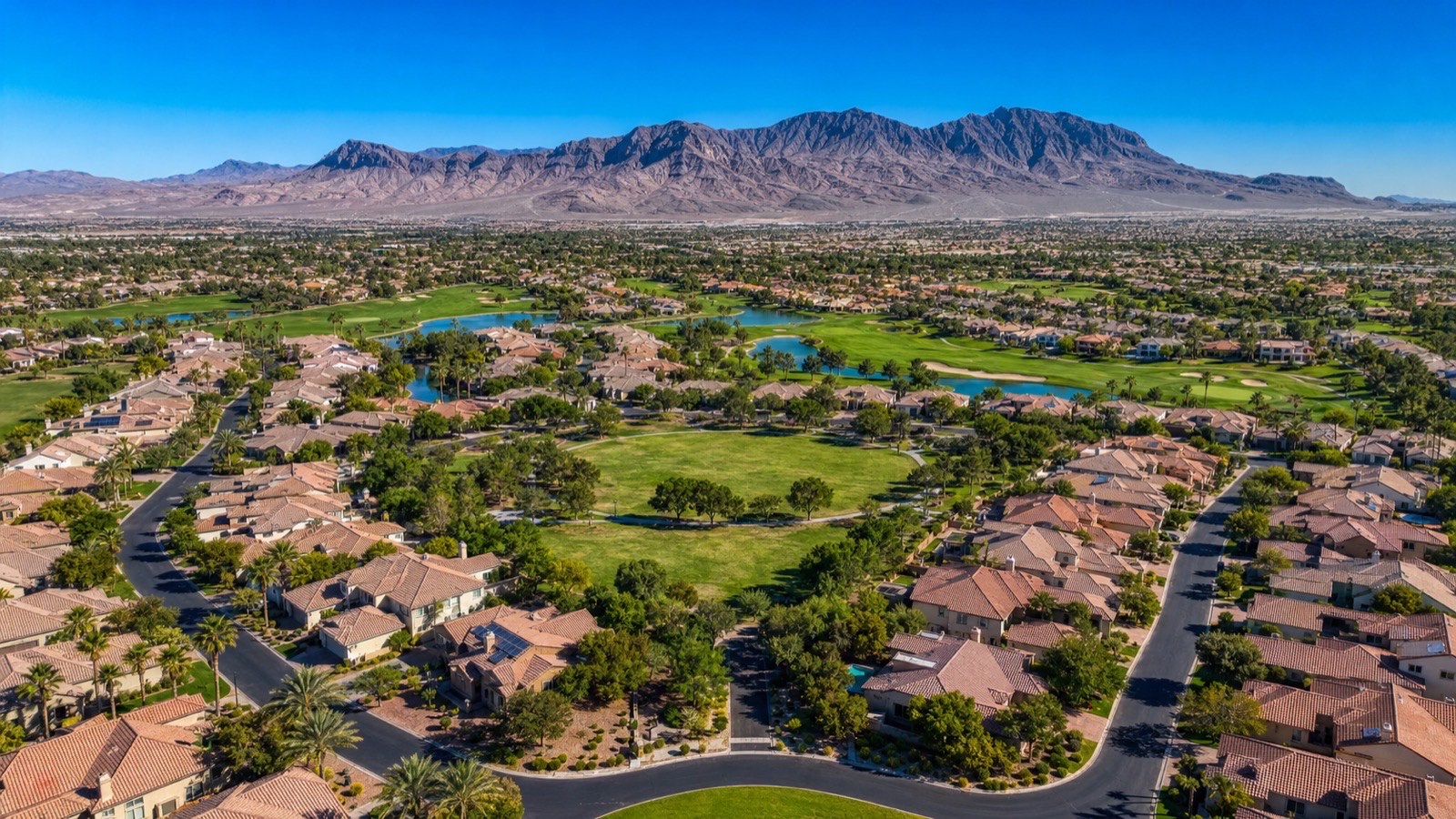
Run the worked example at the price point where most ITIN purchases land — North Las Vegas, the valley's value engine at a $385,000 median:
| Line | Amount | Notes |
|---|---|---|
| Purchase price | $385,000 | NLV median, June 2026 |
| Down payment (20%) | $77,000 | Some lenders accept 15%; pricing improves at 25% |
| Loan amount | $308,000 | Portfolio 30-year fixed |
| Principal and interest (illustrative 8.75%) | About $2,423/mo | Within the typical 8-9.5% ITIN band |
| Taxes, insurance, HOA | $350-$500/mo | NV property taxes ~0.5-0.75% effective |
| All-in monthly | $2,600-$2,900 | Vs. typical 3-bed rent of $2,475 |
Read the bottom two rows together and the ITIN decision sharpens: the all-in ownership payment runs a few hundred dollars above the valley's typical 3-bedroom rent — except the ownership version builds equity, locks the housing cost against a rising-rent market, and starts the appreciation clock in a metro that added value at 3.7% over the past year per Las Vegas REALTORS data. For the family that has paid $2,200-$2,500 in rent for a decade, the premium is not the obstacle it appears; the $77,000 down payment is the real gate, which is why the disciplined-savings conversation usually starts a year or two before the purchase conversation.
And the rate premium has an expiration path: ITIN loans can be refinanced. Borrowers who later obtain SSNs refinance into conventional pricing directly; borrowers who don't can still refinance within the ITIN market when rates move or equity deepens. We frame every ITIN purchase the same way — the portfolio rate is the price of admission, not the price forever.
How Do You Find Legitimate ITIN Lenders — and Avoid the Predators?
The segment's information vacuum attracts two bad actors worth naming. Seller-financing predators — the "no bank needed, low down, easy monthly" sellers who structure contracts-for-deed and rent-to-own arrangements where one missed payment forfeits everything paid; these prey specifically on buyers who believe institutional lending is closed to them, and the entire pitch collapses once you know ITIN lending exists. Fee harvesters — "consultants" charging $2,000-$5,000 upfront to "package" ITIN applications that legitimate lenders process for normal costs. The defenses mirror our fraud protection guide: work with licensed lenders (verify through the NMLS consumer-access registry), never pay large upfront application fees, and treat "no documents needed" as the red flag it is — real ITIN lending requires more documentation, not less.
What a legitimate ITIN lender relationship looks like: licensed non-QM or portfolio operations (several actively lend across Nevada), transparent rate sheets that price your down payment and credit depth, standard third-party costs — appraisal ($550-$700), title, escrow — identical to any purchase, and pre-qualification before house-hunting exactly like conventional buyers get. Our team maintains active ITIN lender relationships on both ends of the state and walks clients through the lender comparison the same way we would any buyer file: two quotes minimum, full Loan Estimates side by side, no exceptions for any segment.

Where Do ITIN Buyers Get the Most House in Nevada?
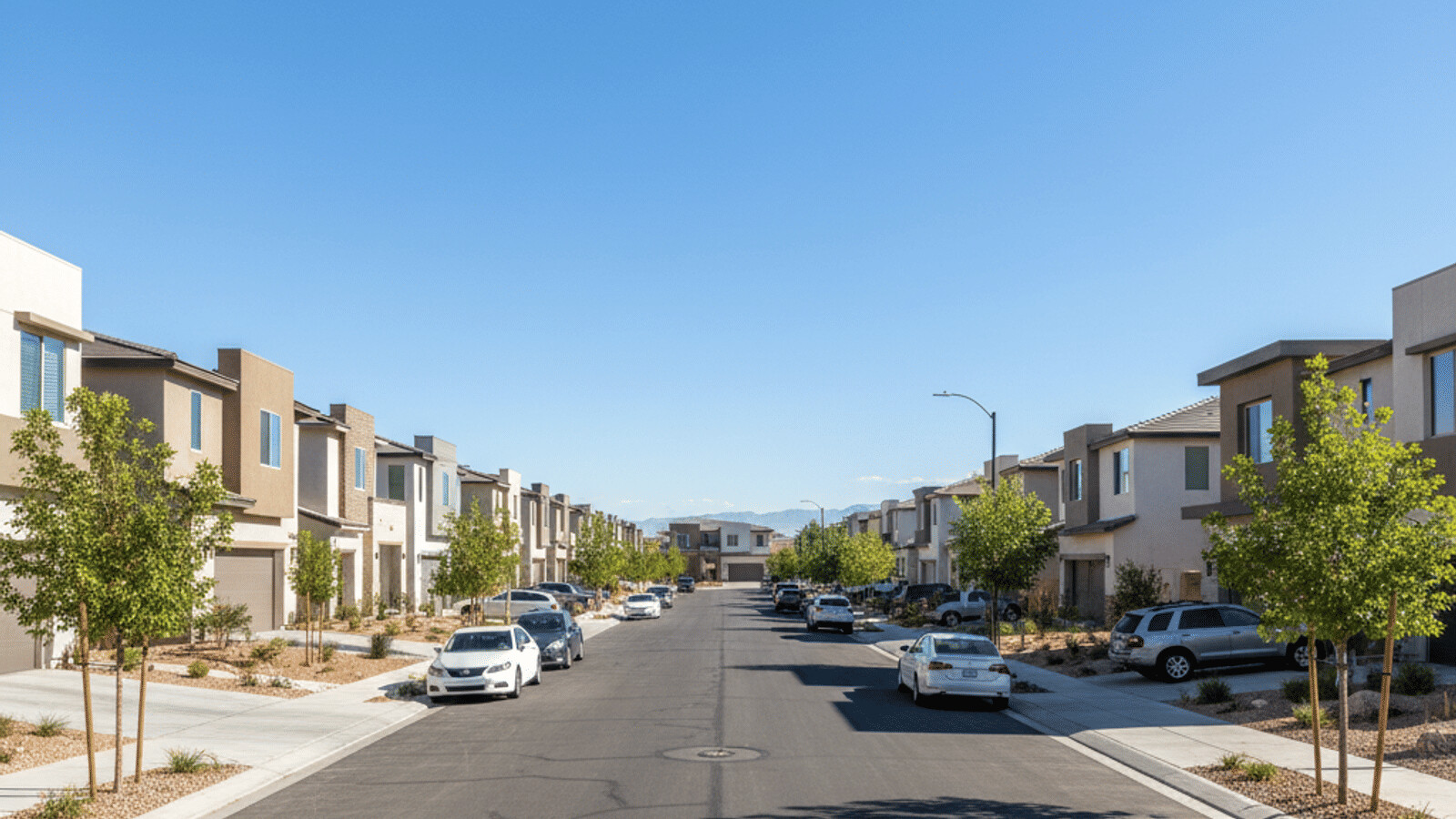
The 15-25% down requirement concentrates ITIN purchasing power in the value corridors, and the map matters. In Southern Nevada, North Las Vegas leads on every metric that matters to this buyer — the $385,000 median, the valley's strongest recent appreciation at +6% on single-family product, and neighborhoods like the Eldorado corridor where solid three-bedroom homes still trade in the $350,000s. East Las Vegas ZIP codes offer the metro's lowest entries with 1970s-era space; Henderson's older core trades a modest premium for its school and services reputation. In Northern Nevada, Sparks plays the North Las Vegas role against Reno's pricier core, and the logistics-corridor towns along I-80 — Fernley especially — put detached homes under $400,000 within commuting range of the distribution economy that employs so many ITIN households.
Strategy notes that recur across our ITIN files: target list-price bands 10% under maximum qualification — the heavier down payment makes every seller take the offer seriously, and the cushion absorbs rate movement between pre-qual and contract; new construction works — builders accept ITIN financing routinely, though the preferred-lender incentives usually don't apply, so run the math both ways; and the multigenerational play is natural here — the same households driving the co-buying and casita demand across the valley often pair ITIN and SSN incomes on one file, which both strengthens qualification and matches how the household actually lives.
How Long Does an ITIN Purchase Take From First Call to Keys?
Longer at the front, identical at the back — plan the calendar accordingly:
| Phase | Typical Duration | What Happens |
|---|---|---|
| Document assembly | 2-6 weeks | Returns gathered, ITIN renewed if lapsed, rent history documented, bank statements cleaned |
| Pre-qualification | 3-10 days | Lender reviews the file, sets the real budget |
| House hunting | 2-8 weeks | Standard search — offers carry the same weight as any pre-qualified buyer |
| Underwriting | 3-5 weeks | Deeper manual review than conventional — expect document requests, answer fast |
| Escrow to recording | Standard 30-45 days total | Same appraisal, title, and closing machinery as every Nevada purchase |
The phase that stretches is the first one, and it is entirely front-loadable: a family that spends this quarter organizing returns, renewing a lapsed ITIN through the IRS W-7 process, and building the twelve-month rent file enters next quarter's market moving at conventional speed. The phase that surprises is underwriting's manual depth — portfolio lenders read ITIN files by hand, and the buyers who respond to document requests in hours instead of weeks routinely close on schedule while slower files drift. Nothing about the timeline is a barrier; all of it is a checklist with dates.
What Mistakes Derail ITIN Files — and How Do You Avoid Them?
Five patterns account for most of the ITIN heartbreak we see, and every one is preventable. Cash income that never touched a bank — the file's income is what the returns and statements prove, not what the household actually earns; the fix is twelve months of depositing everything before applying, because undocumented cash might as well not exist to an underwriter. The lapsed ITIN discovered mid-escrow — ITINs expire after three consecutive unused years, renewal takes weeks, and finding out during underwriting can cost the house; verify status the same week you start saving. Co-mingled business and personal banking — the self-employed majority of this segment lives or dies on statement clarity, and a $40 monthly business account is the cheapest underwriting insurance available. Rent paid in untraceable cash — the strongest credit substitute in the file evaporates without proof; pay by check or transfer starting now, or get the landlord letter template from us before you need it. Chasing advertised teaser terms — the ITIN market's pricing spread between lenders is wider than conventional's, which cuts both ways: shopping two or three legitimate quotes matters more here than anywhere, and the "3% down ITIN special" that appears in social-media ads is either a bait-and-switch or one of the predators from the section above. In my experience, the ITIN families who close smoothly all share one habit — they treated the eighteen months before the purchase as part of the purchase. The loan is won in the preparation years, not the application week.
What Rights and Protections Do ITIN Homeowners Have in Nevada?
Full ones — this deserves its own section because misinformation keeps families renting. An ITIN homeowner in Nevada holds title exactly like any other owner: recorded deed, full legal ownership, the right to sell, refinance, rent, or bequeath. The homestead exemption protecting up to $605,000 of equity applies — record the declaration like every owner should. Property-tax treatment is identical, including the 3% primary-residence cap, per the Nevada Department of Taxation. The transaction protections are identical: the same escrow neutrality, the same title insurance, the same NRS disclosure rights on the buying side. And the fair-housing and fair-lending frameworks — federal ECOA and Fair Housing Act, Nevada's own statutes — protect ITIN buyers explicitly; a seller or lender who treats an ITIN offer as lesser on national-origin grounds is violating the law, not exercising judgment.
Estate planning matters more, not less, for mixed-status families: the transfer-on-death deed and trust tools in our title guide work for ITIN owners, and titling decisions should anticipate the household's long arc. In my experience, the ITIN closing is among the most meaningful we attend — a decade of rent receipts converting into a recorded deed — and the families who thrive afterward are the ones who finish the job: homestead recorded, beneficiary deed considered, and the equity treated as the generational asset it is.

Frequently Asked Questions
Can you buy a house in Nevada without a Social Security number?
Yes — through an ITIN loan, a portfolio mortgage underwritten around your IRS Individual Taxpayer Identification Number. You'll need roughly 15-25% down, two years of ITIN tax returns, documentable income, and housing-payment history. FHA, VA, and standard conventional programs require an SSN, but the ITIN path closes purchases across Nevada every week.
What down payment do ITIN loans require?
Typically 15-25%, with pricing improving as the down payment deepens — 20% is the practical planning number, and 25% often buys a meaningfully better rate. On North Las Vegas's $385,000 median, that means $57,750-$96,250 down. The down payment is usually the binding constraint, which makes the savings plan the real first step.
What interest rate do ITIN mortgages charge in 2026?
Commonly 1.5 to 3 points above conventional — with the conventional 30-year holding a 6.6-6.9% band, expect ITIN pricing in the 8-9.5% neighborhood depending on down payment, credit depth, and lender. The premium reflects portfolio lending, and it's refinanceable later — into conventional pricing if you obtain an SSN, or within the ITIN market as equity and rates allow.
Can an ITIN borrower use FHA or VA financing?
No — federal programs require valid Social Security numbers, and the Fannie/Freddie conventional market follows the same requirement. ITIN lending lives with non-QM and portfolio lenders who hold the loans on their own books. That structural exclusion is why the terms differ, and why finding the right lender matters more than in any mainstream segment.
Do I need good credit for an ITIN loan?
You need demonstrable payment history, which is broader than a traditional score. Lenders in this segment routinely accept alternative trade lines — twelve months of rent history, utilities, phone, insurance — alongside or instead of thin bureau files. A clean rent record is the single most powerful document in most ITIN files; start collecting proof of it now.
Can ITIN and SSN borrowers buy together?
Yes, and mixed-status co-borrowing is common — spouses, siblings, parents and adult children pairing an ITIN filer's income with an SSN holder's credit profile on one file. Lenders underwrite the combined strength. Titling and vesting choices matter for these households; Nevada's community-property and survivorship options apply to ITIN owners identically.
Is ITIN lending legal and safe?
Fully legal and federally protected — ECOA's fair-lending rules bar discrimination by national origin, and ITIN lending is an established, regulated corner of the non-QM market. The danger in this segment isn't the legitimate lenders; it's the predators exploiting the information gap — contract-for-deed sellers and upfront-fee "consultants." Verify any lender through NMLS and never pay large fees before underwriting.
Do ITIN homeowners get the same ownership rights in Nevada?
Identical ones: recorded deed, full title, the right to sell, refinance, rent, and bequeath, the $605,000 homestead exemption when recorded, the 3% primary-residence property-tax cap, and every escrow and title protection in a Nevada transaction. An ITIN on the loan changes the underwriting — it changes nothing about the ownership.
Ready to Find Out What Your ITIN File Qualifies For?
Bring two years of returns and your rent history, and we'll connect you with licensed ITIN lenders on either end of the state, run the qualification honestly, and build the search — Las Vegas to Reno — around the real number. Call (702) 637-1759 in Southern Nevada or (775) 277-2120 in Northern Nevada, browse the live market, or email info@nevadagroup.com. Consultations run in English and Spanish.
Nevada Real Estate Group · 8945 W Russell Rd, Suite 170 · Las Vegas, NV 89148 · (702) 637-1759 · NV License S.181401
Which Sources Inform This ITIN Lending Guide?
ITIN issuance and renewal reference Internal Revenue Service guidance on Individual Taxpayer Identification Numbers. Fair-lending protections reference Consumer Financial Protection Bureau ECOA rules, and program SSN requirements the U.S. Department of Housing and Urban Development. Demographic context references U.S. Census Bureau foreign-born population data for Clark County.
Rate baselines reference the Freddie Mac Primary Mortgage Market Survey, with market medians and appreciation from Las Vegas REALTORS MLS statistics and Nevada Real Estate Group's transaction files. Property-tax treatment references the Nevada Department of Taxation, and licensee verification the Nevada Real Estate Division. Related playbooks: our Nevada escrow guide, fraud protection guide, and title and homestead guide. Loan terms vary by lender and change with markets — get current quotes from licensed lenders before planning around any figure here.