

Published April 30, 2026 · Last updated July 14, 2026 · By Chris Nevada, Nevada Real Estate Group · NV License S.181401
The Las Vegas metro added roughly 28,400 jobs over the past year, holding unemployment near 5.1% while healthcare, technology, and logistics push non-gaming sectors past 22% of employment. Median household income has climbed to about $67,200 and the median home price to $465,000. That diversified hiring is the engine driving steady housing demand across Henderson, Summerlin, and North Las Vegas — especially in the $350,000 to $650,000 band.
- Las Vegas added ~28,400 jobs year-over-year (2.6% growth vs. 1.4% nationally), per BLS.
- Healthcare, technology, and logistics now drive hiring; gaming's share fell below 22%.
- Nevada's zero state income tax adds $5,000–$15,000 a year to a relocated salary.
- The A's ballpark, Allegiant Stadium district, and Apex logistics parks are new job anchors.
- Job growth concentrates demand at $350K–$650K — where most valley inventory sits.
Why Is the Las Vegas Job Market Growing So Fast in 2026?
I've sold real estate across the Las Vegas valley for more than 16 years as the founding broker of Nevada Real Estate Group, and the employment landscape today looks nothing like the one-industry town outsiders still picture. Two decades ago, roughly 30% of every job in the valley traced back to gaming and hospitality. Today that number sits below 22%, and the slack has been absorbed by sectors that pay higher wages and ride out downturns better.
Across the 789 homes our team closed in 2025 — part of the 9,600+ transactions and $4.85B+ in cumulative volume we've represented — relocation buyers arriving for a specific job offer made up the single largest segment of our purchase pipeline, and healthcare workers, software engineers, and supply-chain managers have steadily replaced the California remote-worker profile that dominated in 2021. That shift on the ground mirrors the data.
According to the Bureau of Labor Statistics, the Las Vegas-Henderson-Paradise metro added approximately 28,400 nonfarm jobs between March 2025 and March 2026 — a 2.6% growth rate that outpaced the 1.4% national average. What makes this cycle different from every prior Las Vegas boom is where the jobs are coming from. Gaming revenue is not the story anymore; hospitals, warehouses, data centers, and a pro-sports economy are.

Which Industries Are Driving Las Vegas Employment Growth?
The valley now runs on a hierarchy of industries with gaming at the top and a rapidly widening base beneath it. According to Nevada DETR labor market information, non-gaming private-sector employment has grown for six consecutive years, and the fastest gains are in healthcare, professional services, and technology.
| Industry Sector | Jobs Added (YoY) | Growth Rate | Avg Annual Salary |
|---|---|---|---|
| Healthcare & Social Assistance | 7,200 | 6.8% | $62,400 |
| Professional & Business Services | 5,800 | 4.2% | $71,500 |
| Transportation & Warehousing | 4,100 | 5.5% | $52,800 |
| Construction | 3,900 | 4.0% | $58,200 |
| Leisure & Hospitality | 3,400 | 1.2% | $38,600 |
| Information & Technology | 2,100 | 7.1% | $89,300 |
| Government | 1,900 | 2.8% | $55,700 |
Healthcare has been the standout performer. New hospital campuses from HCA Healthcare, Intermountain Health, and the Valley Health System, plus the VA Medical Center expansion and the UNLV School of Medicine pipeline, have created thousands of clinical and administrative roles paying $50,000 to $120,000 a year. Every one of those workers needs housing, and most of them buy rather than rent. Technology posts the fastest percentage growth at 7.1%, with average pay near $89,300 — the highest of any major sector in the valley.
Who Are the Largest Employers Hiring in Las Vegas?
Knowing the biggest names helps relocating professionals map a job search — and helps buyers pick a community relative to where they'll actually commute. The top employers span gaming giants, healthcare systems, public-sector anchors, and a growing roster of industrial and tech players.
| Employer | Industry | Est. Employees | Avg Starting Wage |
|---|---|---|---|
| MGM Resorts International | Gaming / Hospitality | 35,000+ | $18–$24/hr |
| Clark County School District | Education / Government | 40,000+ | $42,000/yr (teachers) |
| Caesars Entertainment | Gaming / Hospitality | 28,000+ | $17–$22/hr |
| Station Casinos | Gaming / Locals Market | 15,000+ | $16–$21/hr |
| Clark County Government | Government | 12,000+ | $20–$28/hr |
| Valley Health / Dignity Health | Healthcare | 7,000+ | $22–$35/hr (clinical) |
| Amazon (fulfillment) | Logistics / E-commerce | 5,000+ | $19–$23/hr |
| Switch (data centers) | Technology / Infrastructure | 1,500+ | $28–$45/hr |
The Clark County School District is consistently overlooked as an employer despite being one of the five largest districts in the country, with more than 40,000 staff serving over 320,000 students. Teachers, counselors, and administrators frequently choose Henderson or North Las Vegas for the balance of commute distance and affordable prices relative to Summerlin. Switch, meanwhile, matters less for its own headcount than for the cloud-infrastructure, cybersecurity, and network-engineering ecosystem it has seeded across the southwest valley.
What Is the Las Vegas Unemployment Rate in 2026?
According to the Bureau of Labor Statistics, the Las Vegas MSA unemployment rate sits near 5.1% in early 2026, down from roughly 5.6% a year earlier and modestly above the national rate of about 4.0%. That persistent premium is structural, not a distress signal, and three factors explain it.
First, workforce transience: Las Vegas has one of the highest in-migration rates of any major metro, and people frequently arrive before jobs formally open, temporarily inflating the headline number. Second, tourism seasonality: hospitality employment contracts each August and again between Thanksgiving and New Year's, rippling through the rate in ways a fully diversified economy would absorb. Third, gaming's shift from labor-intensive table games to automated platforms steadily trims floor headcount even as revenue grows.
The trajectory matters more than the snapshot. The rate has fallen from a pandemic peak near 33% in April 2020 to the current 5.1% — the fastest post-recession employment rebound in the city's history. According to the U.S. Census Bureau, Clark County has added roughly 40,000 to 50,000 residents a year through 2024 and 2025, and a rising labor-force participation rate signals genuine confidence that work is available.

What Are Average Wages in Las Vegas by Sector?
Wage data is where Las Vegas surprises relocating professionals. Raw numbers look lower than coastal markets, but once you apply the zero state income tax offset and lower housing costs, the net position for most workers is stronger here than in California, Oregon, or Washington. According to the Bureau of Economic Analysis, Nevada's per-capita personal income has grown at an above-average pace, led by healthcare and technology.
| Sector | Entry-Level | Mid-Career | Senior / Management |
|---|---|---|---|
| Gaming & Hospitality | $35,000–$45,000 | $50,000–$70,000 | $85,000–$140,000 |
| Healthcare (Clinical) | $50,000–$65,000 | $75,000–$95,000 | $110,000–$180,000 |
| Technology / Software | $65,000–$85,000 | $95,000–$130,000 | $140,000–$220,000 |
| Logistics / Warehousing | $37,000–$48,000 | $52,000–$70,000 | $80,000–$115,000 |
| Construction Trades | $45,000–$58,000 | $65,000–$85,000 | $90,000–$140,000 |
| Finance & Insurance | $48,000–$62,000 | $72,000–$98,000 | $110,000–$185,000 |
The technology premium is striking. Mid-career software engineers in Las Vegas earn $95,000 to $130,000 — roughly 25% to 30% below the San Francisco Bay Area median, but with housing costs about 60% lower and no state income tax. The net take-home outcome frequently beats a California tech career. Healthcare deserves equal attention: registered nurses average $75,000 to $95,000, with ICU and specialty nurses clearing $100,000, and signing bonuses of $10,000 to $25,000 are common given the valley's clinical shortage. I've represented nurses who took a $10,000 base-pay cut leaving the Bay Area and still netted roughly $18,000 more per year after tax savings and cheaper housing — the math on cost of living in Las Vegas clicks the moment they see a Nevada paycheck.
How Do the A's Ballpark and Stadium District Drive Employment?
Allegiant Stadium was only the beginning. According to the Las Vegas Global Economic Alliance, the sports-and-entertainment district around the stadium has generated an estimated 8,500 permanent jobs since 2020 across hotels, venues, restaurants, broadcast operations, and event services. None of those are traditional card-table jobs; many require credentials that transfer to other sectors.
The Oakland Athletics' new $1.5 billion ballpark, rising on the former Tropicana site, adds an entirely new ecosystem — sports medicine, analytics, broadcasting, grounds and facilities, and game-day operations that the valley has never hosted at scale. Workers at these venues need housing, and many search in North Las Vegas and the southwest valley where prices start in the low $300,000s. That demand floor helps explain why entry-level homes keep appreciating even as higher-end segments cool. Brightline West, the high-speed rail line to Southern California, and the expanded Las Vegas Convention Center layer thousands more construction and year-round operations jobs on top.
How Is Healthcare Growth Affecting Henderson Real Estate?
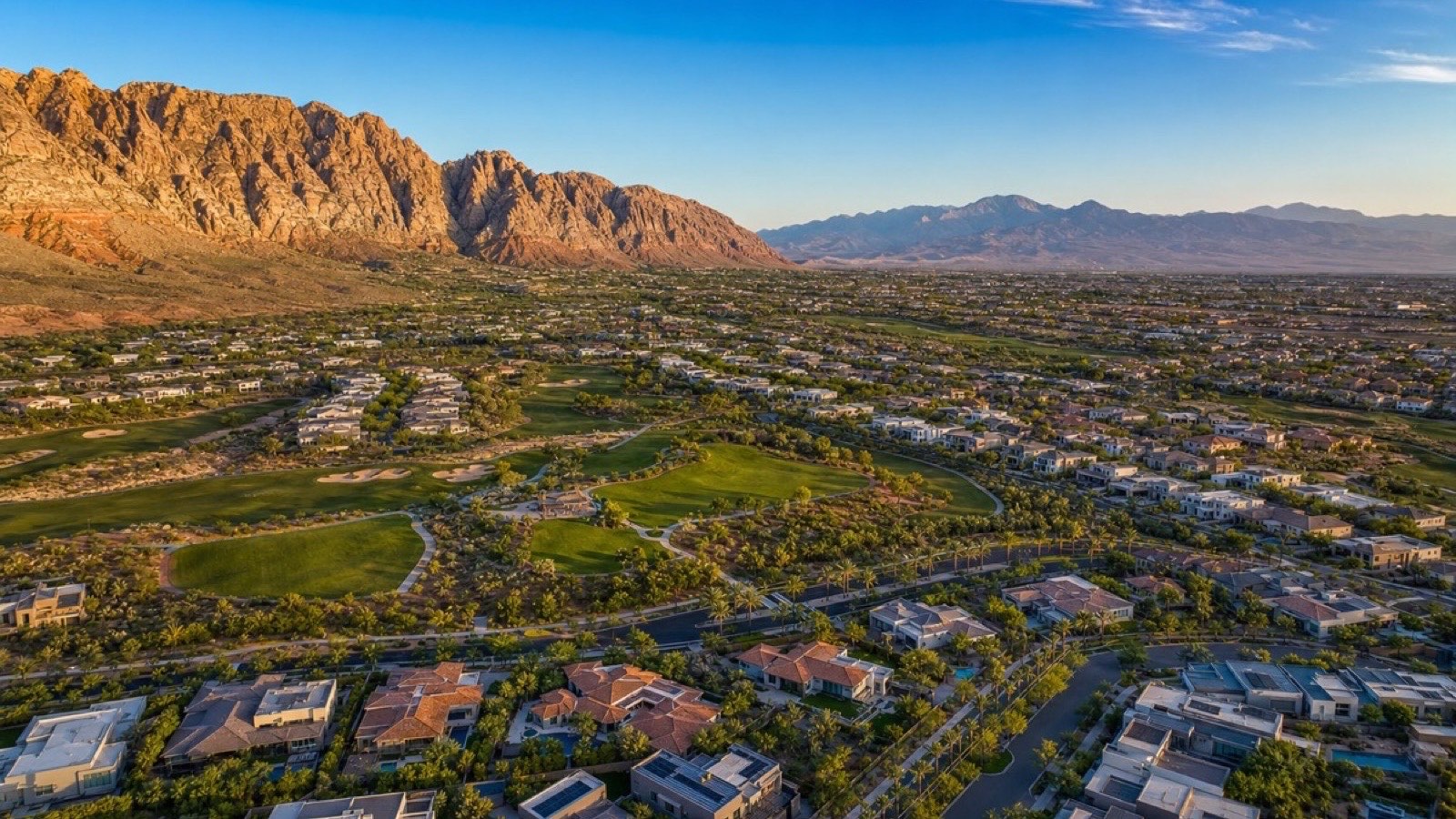
Henderson has become the healthcare hub of Southern Nevada. Its proximity to major hospital systems, medical office parks, and the planned UNLV medical education campus has created a cluster effect: clinical workers want to live near where they work, and Henderson delivers with strong schools, safe neighborhoods, and newer construction. According to the Bureau of Labor Statistics occupational data, Las Vegas has one of the lowest physician-to-population ratios of any large metro — about 185 per 100,000 versus a national average near 260 — a structural shortage that guarantees a decade-plus of clinical hiring.
In our experience working with healthcare professionals, the sweet spot in Henderson is the $400,000 to $550,000 range. Communities like Cadence, Inspirada, Green Valley, and Anthem offer the amenities these buyers want, and St. Rose Dominican's campuses keep drawing nurses and physicians into the submarket. Buyers weighing brand-new versus resale should compare inventory on the Henderson new construction map before touring, because builder incentives in this corridor routinely swing $15,000 to $40,000 per home.
What Logistics and Warehouse Jobs Are Coming to Apex and North Las Vegas?
Las Vegas's role as a Southwest distribution hub is one of the most underreported economic stories in the region. Freeway access — I-15 to Los Angeles and Salt Lake City, US-95 to Phoenix — plus affordable industrial land and no state income tax have made the valley one of the fastest-growing logistics markets in the country. According to Clark County economic development data, more than 55,000 workers are employed in transportation, warehousing, and logistics metro-wide, and that base has grown faster than total employment in seven of the past ten years.
The Apex Industrial Park in far North Las Vegas is the frontier. Its thousands of zoned acres have drawn manufacturing, cold storage, and third-party logistics tenants, while Amazon operates multiple fulfillment centers in the North Las Vegas and Henderson corridors employing more than 5,000 valley-wide at $19 to $23 an hour. Walmart, Lowe's, and specialized freight operators run large distribution centers here too. Starting warehouse wages of $18 to $24 an hour — with supervisory roles at $55,000 to $80,000 — qualify buyers for the $300,000 to $420,000 homes that dominate the North Las Vegas resale market and the homes for sale across Las Vegas at the entry tier.
What Tech and Data-Center Jobs Are Arriving in Las Vegas?
The technology sector has crossed from "emerging" to "established" in 2026. According to the Las Vegas Global Economic Alliance, Clark County technology employment has grown at double-digit annual rates for five straight years, and data-center investment across the valley now exceeds $10 billion from operators including Switch, Google, and Meta. These facilities concentrate in Henderson and North Las Vegas, each bringing hundreds of permanent high-wage jobs plus thousands of construction positions.
The AI and cloud wave is arriving with real money behind it. TensorWave's announced AI cloud-computing campus signaled to other infrastructure companies that Las Vegas offers the land, power, and favorable regulation that data-heavy workloads require. Haas Automation's machine-tool facility near the Las Vegas Motor Speedway anchors a precision-manufacturing pipeline, and fintech and sports-tech firms are clustering here to exploit Nevada's gaming and wagering regulatory expertise. I'm seeing the housing impact firsthand in Summerlin and Henderson, where tech and remote professionals routinely buy in the $500,000 to $800,000 range — and where the guard-gated communities that match their California expectations stay in tight demand.
How Does the Las Vegas Job Market Drive Housing Demand?
The connection between hiring and housing is direct and measurable. According to Las Vegas REALTORS market reports, each 10,000 net new jobs generates demand for roughly 4,000 to 5,000 additional housing units once household formation and the rent-versus-buy split are accounted for. Clark County adds 40,000 to 50,000 residents a year, creating organic demand for 15,000 to 20,000 units — while builders deliver about 12,000, leaving a persistent gap that supports prices.
| Sector | Typical Household Income | Realistic Purchase Range | Preferred Submarkets |
|---|---|---|---|
| Technology / Data | $120,000–$180,000 | $500,000–$800,000 | Summerlin, Henderson |
| Healthcare (Clinical) | $85,000–$160,000 | $450,000–$700,000 | Henderson, southwest valley |
| Corporate Relocation | $80,000–$130,000 | $420,000–$650,000 | Henderson, Summerlin |
| Logistics / Trades | $45,000–$70,000 | $300,000–$420,000 | North Las Vegas, east valley |
| Gaming / Hospitality | $38,000–$65,000 | $250,000–$360,000 | Sunrise Manor, North Las Vegas |
Healthcare demand is especially significant because clinical workers are higher-income, stable earners who buy rather than rent, and they cluster around hospital corridors — Summerlin near Summerlin Hospital, Henderson near the St. Rose campuses, the northwest near Spring Valley Hospital. Each micro-market has posted above-average appreciation partly on that demand. The broader effect of diversification is stabilizing: healthcare is recession-resistant, logistics grows during downturns as consumers shift to e-commerce, and remote workers keep their income when Strip revenue dips. That counter-cyclical mix smooths the boom-bust cycles that defined pre-2008 Las Vegas.
Which Areas of Las Vegas Benefit Most From Job Growth?
Different employment centers drive demand in different parts of the valley, and matching a buyer's budget and commute to the right submarket is the core of what our agents do every week.
- Henderson: Healthcare, tech, and professional services anchor demand in the $400,000–$700,000 range, with the medical district pulling clinical buyers.
- Summerlin: Financial services, executives, and remote tech workers keep the $500,000–$1M+ band active, supported by the strongest school ratings in the valley.
- North Las Vegas: Logistics, manufacturing, and data centers fuel a growth market at $300,000–$450,000, with Aliante and Skye Canyon leading.
- Southwest Las Vegas: Hospitality workers, construction trades, and first-time buyers concentrate at $350,000–$500,000, near Mountain's Edge and the 215 Beltway employment nodes.
- Northwest / Centennial: Healthcare and trades demand spreads into Centennial Hills and the North Valley growth corridor at $380,000–$520,000.
According to the U.S. Census Bureau American Community Survey, the Las Vegas-Henderson-Paradise MSA absorbed roughly 45,000 net California-origin residents over the trailing 24 months ending Q1 2026 — pressure that has sustained both entry-level ($300K–$500K) and move-up ($500K–$900K) bands simultaneously, which is unusual. Most metros see migration concentrate in a single band; Las Vegas is absorbing it across the whole stack.
How Does Remote Work Affect Las Vegas Housing Demand?
Remote work has been a structural tailwind for the valley. According to the U.S. Census Bureau, an estimated 18% of Clark County workers now work remotely at least part-time, up from about 5% before the pandemic. These workers earn national-market salaries while paying Nevada's zero income tax and living on a lower cost base.
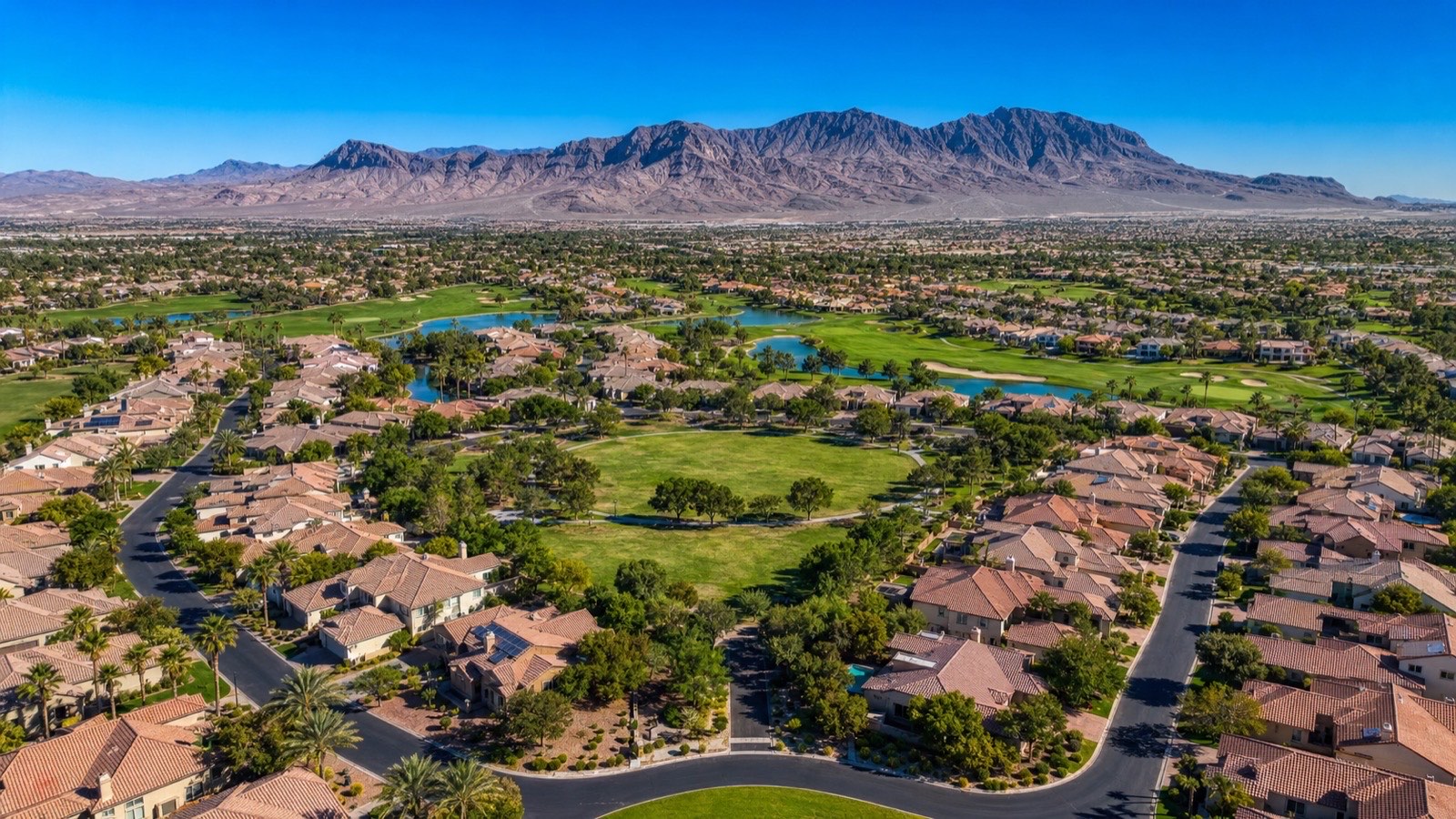
I've worked with dozens of remote professionals who relocated from California specifically for that arithmetic. A software engineer earning $180,000 in San Francisco pays roughly $14,000 a year in California state income tax; in Nevada that's zero, and combined with lower housing costs the net savings can top $3,000 a month. These buyers tend to purchase rather than rent, at higher price points, and settle in Summerlin, Henderson, and the southwest valley rather than near the Strip — which actually eases rental competition by absorbing for-sale inventory. Communities with dedicated office space, fast fiber, and resort-style amenities, including the valley's luxury communities, see the strongest pull from this segment.
What Should Homebuyers Know About the Las Vegas Economy?
When I advise buyers weighing a Las Vegas purchase, I anchor the conversation on three economic fundamentals. First, diversification is real — the 2008 crash hit so hard partly because the economy leaned almost entirely on gaming and construction, and today's multi-pillar base provides genuine ballast. Second, population growth underwrites demand — 40,000 to 50,000 new residents a year against a persistent construction shortfall keeps a floor under prices. Third, tax advantages compound — no state income tax, plus the Nevada Revised Statutes Chapter 361 3% annual cap on primary-residence tax increases, creates long-run savings versus nearly every competitor market.
There is a fair counterpoint: the valley still carries above-average exposure to national leisure spending, and a sharp travel-spending downturn would push unemployment up faster than the national average, as it did in 2009 and briefly in 2020. What has changed is the buffer — healthcare, logistics, and remote income don't evaporate in a recession. Informed buyers should price that residual cyclical risk in, not ignore it and not overweight it. For a full affordability walkthrough, our guide to the Las Vegas housing market pairs well with a conversation about your specific numbers. When you're ready, contact Nevada Real Estate Group or search active listings across every submarket, and consider our first-time buyer resources if this is your first purchase.
If you'd rather start with the right agent, our breakdown of who the best real estate agent in Las Vegas is explains what separates a data-driven team from a sign in the yard. Sellers timing a move to a job change can start on our sellers page. Across the 9,600+ closings we've represented, the buyers and sellers who get the cleanest outcomes are the ones who pair an economic framework like this with a live consultation early — before the offer is written, the listing is priced, or the builder reservation is signed. Call (702) 637-1759 to put this against your specific transaction.
Frequently Asked Questions
What is the current unemployment rate in Las Vegas in 2026?
As of early 2026, the Las Vegas MSA unemployment rate is approximately 5.1%, down from about 5.6% a year earlier, per Bureau of Labor Statistics data. That is modestly above the national average near 4.0%, reflecting workforce churn from heavy in-migration and seasonal hospitality patterns rather than economic distress. Rising labor-force participation signals genuine employment confidence.
Which industries are hiring the most in Las Vegas right now?
Healthcare is the fastest-growing sector in 2026, followed by technology, logistics and warehousing, and construction. Gaming and hospitality remain the largest employers by headcount but grow more slowly. According to Nevada DETR projections, healthcare will add more net new jobs over the next decade than any other single industry in Clark County — roughly 8,000 to 12,000 clinical positions through 2030.
What is the largest employer in Las Vegas?
MGM Resorts International is the largest single private employer at roughly 35,000 Nevada workers, followed by the Clark County School District with more than 40,000 staff. Collectively, however, the healthcare sector employs more people than any single company once hospitals, clinics, and medical offices are combined, which is why clinical hiring drives so much housing demand.
Does Nevada's no-state-income-tax advantage really matter for workers?
Yes, significantly. According to the Nevada Department of Taxation, Nevada levies no personal state income tax, no corporate income tax, and no estate tax. For a household earning $100,000 relocating from California, that adds roughly $6,500 to $9,000 in annual take-home pay; at $150,000 the advantage grows to $11,000 to $15,000 a year — real money toward a mortgage.
What salary do I need to buy a home in Las Vegas in 2026?
At the current median price near $465,000 and mortgage rates around 6.6% to 6.9%, a buyer typically needs gross household income of roughly $100,000 to $115,000 to qualify comfortably with 10% down at a standard debt-to-income ratio. Households at $130,000 to $180,000 reach the $550,000 to $750,000 band covering most mid-tier Summerlin and Henderson inventory. Veterans can qualify at lower thresholds through zero-down VA loans.
Which Las Vegas neighborhoods are best for tech workers?
Tech workers gravitate toward Summerlin, Henderson, and the southwest valley along the 215 Beltway. These areas offer newer construction, reliable fiber internet, proximity to the Switch data-center corridor, and the school ratings that matter to families relocating from Silicon Valley or Seattle. Summerlin in particular draws Bay Area transplants who view a $600,000 home as a bargain.
How does job growth affect home prices in specific Las Vegas neighborhoods?
Job growth in defined corridors — Henderson's medical district, the North Las Vegas and Apex logistics parks, and the 215 Beltway tech belt — pulls qualified buyers into those submarkets and compresses days-on-market. In areas adjacent to a major employer expansion, we typically see increased buyer competition within 12 to 18 months of the hiring announcement, which is why watching employer news is one of the sharpest tools a buyer has.
Which Sources Inform This Las Vegas Job Market Guide?
Employment, wage, and unemployment figures in this analysis come from the U.S. Bureau of Labor Statistics Las Vegas-Henderson-Paradise MSA reports and the BLS Occupational Employment and Wage Statistics. Sector projections and labor-market detail reference Nevada DETR and the Las Vegas Global Economic Alliance workforce data. Personal income context draws on the Bureau of Economic Analysis.
Housing and migration context references the U.S. Census Bureau American Community Survey and QuickFacts, Las Vegas REALTORS monthly market reports, and the Federal Housing Finance Agency House Price Index. Mortgage-rate context uses the Freddie Mac Primary Mortgage Market Survey and the Mortgage Bankers Association applications survey.
Tax and parcel references include Nevada Revised Statutes Chapter 361, the Nevada Department of Taxation, and the Clark County Assessor. School context references GreatSchools and the Clark County School District, and physician-training context references the UNLV School of Medicine.
Data reflects 2025–2026 federal and state statistics; wage ranges vary by employer, experience, and collective bargaining. Market conditions change. This article is for informational purposes only and is not legal, financial, or tax advice — always consult a licensed Realtor and your CPA before a real estate decision. Chris Nevada is a licensed Nevada Realtor (S.181401) with Nevada Real Estate Group.
Nevada Real Estate Group | LPT Realty Phone: (702) 637-1759 License: S.181401 8945 W Russell Rd #170, Las Vegas, NV 89148 nevadarealestategroup.com