

Published July 3, 2026 · Updated September 24, 2026 · By Chris Nevada, Nevada Real Estate Group · NV License S.181401
Nevada is an escrow state. Unlike the attorney-closing states back east, every residential sale here, from a North Las Vegas starter to a Lake Tahoe estate, closes through a neutral escrow holder who collects the money, clears the title, prorates the taxes, records the deed, and disburses the proceeds. Across the 9,600+ closings Nevada Real Estate Group has represented statewide, the pattern is consistent: clients who understand the escrow sequence negotiate better, panic less, and close on time.
This refresh fixes something the first version got wrong, and that most Nevada escrow explainers still get wrong: who actually holds your money and which state agency watches them. It then walks the whole machine, north and south: the players, the timeline, how the Las Vegas and Reno-Sparks purchase agreements set different clocks, what escrow and title cost in 2026, the federal Closing Disclosure rule, what recording does at the Clark County and Washoe County recorders, and the protocol that protects the largest wire most people ever send. One disclosure up front: we are a brokerage, not a title company or a law firm, and nothing here is legal advice.
Escrow in Nevada is the neutral closing process: a licensed escrow officer holds the buyer's money and the deed, clears title, prorates taxes, and records at the county. Most residential escrows are held by title agents licensed under NRS 692A and regulated by the Nevada Division of Insurance; independent escrow agencies under NRS 645A answer to the Division of Mortgage Lending. Financed deals run 30 to 45 days, and you own the home at recording, not signing.
- Title agents and escrow officers licensed under NRS 692A hold most Nevada escrows and answer to the Insurance Commissioner.
- Independent escrow agencies under NRS 645A are examined yearly by the Division of Mortgage Lending, a different regulator.
- Your Closing Disclosure must reach you three business days before consummation under the CFPB's TRID rule.
- Real-estate wire fraud cost victims $275 million in 2025 per FBI IC3; verify instructions by phone every time.
- Ownership transfers at recording, not signing: the Washoe or Clark recorder's timestamp is your moment of ownership.
What Does "Escrow" Mean in a Nevada Home Sale, and Who Are the Players?
Escrow is a neutral holding arrangement, and Nevada defines it in each of the two chapters that govern the people who run it. According to NRS 692A.024, escrow is any transaction in which one person, to effect a sale, delivers a written instrument, money, evidence of title, or other thing of value to a third person, to be held until a specified event happens or a prescribed condition is performed, and then delivered per the instructions. NRS 645A.010 says nearly the same thing. Neither side has to trust the other; both trust a holder legally bound to follow the signed instructions and nothing else.
Seven parties touch a standard Nevada closing. The escrow officer runs the file: receipts the earnest money, collects lender documents, prepares the settlement statement, and controls release of the deed. The title officer searches the recorded chain of title and underwrites the policies. The lender issues the federally required disclosures and funds the loan. The buyer's and listing agents negotiate the contract that escrow executes and keep the contingency calendar. The county recorder, Clark County in the south and Washoe County in the north, makes the transfer official. The homeowners' association produces the resale package the buyer must receive and approve. And the notary, increasingly a mobile or electronic one, witnesses the signatures that make the deed and the deed of trust recordable.
Two things the escrow officer is not. The officer is not "your" closer or the seller's closer; neutrality is the license condition. And the officer cannot give legal advice, which is also why we cannot: when the preliminary title report shows something you do not understand, ask the escrow officer what the document says, then ask Nevada counsel what it means if it matters enough. When people say "we're in escrow," they mean this machine is running.
Who Actually Holds Your Money in a Nevada Escrow, and Who Regulates Them?
Here is the correction. The original version of this guide, like most Nevada explainers, said escrow holders are "licensed under NRS Chapter 645A." That is true of one kind of holder and false of the kind that closes most of our files. Nevada has two licensing regimes with two regulators, plus a third arrangement behind them.
The first regime is Chapter 645A, which governs independent escrow agencies and agents. According to NRS 645A.010, the "Commissioner" in that chapter is the Commissioner of Mortgage Lending. NRS 645A.050 requires an annual examination of each licensed agency, NRS 645A.160 requires escrow money to sit in a separate, federally insured account designated as trust funds, and NRS 645A.170 makes it "not subject to execution or attachment on any claim against the escrow agent or agency."
The second regime is the one that matters most. According to NRS 645A.015, Chapter 645A's licensing requirements "do not apply to" several classes of people, and subsection 2(b) names "any person licensed pursuant to chapter 692A of NRS," the title insurance chapter. NRS 692A.028 defines an escrow officer as "a person employed by a title insurer or title agent to handle escrows, settlements and closings," and NRS 692A.100 tells the Commissioner of Insurance to license title agents, direct writing title insurers, and escrow officers. In our experience the holder on a Nevada resale is nearly always a title company's escrow department, so the person holding your deposit is a 692A escrow officer, exempt from 645A entirely and supervised by the Nevada Division of Insurance. According to the Nevada Division of Insurance, a person working for a title agent or insurer is licensed as an escrow officer, while a person not working for one is licensed as an escrow agent or agency, the 645A path.
The 692A protections mirror 645A. NRS 692A.250 requires the same separate, federally insured trust account shielded from the title company's creditors; NRS 692A.100(4) requires an annual examination of every escrow account; NRS 692A.1041 requires a surety bond, or substitute security sized to the average escrow balance, naming every escrow officer the company employs; and NRS 692A.105 lets the Commissioner suspend or revoke a license and fine a licensee for failing to deliver settlement statements or escrowed money per the instructions, commingling, or closing without written instructions.
The third arrangement is the broker trust account. According to NRS 645.310, a broker who receives money belonging to others must promptly deposit it in a separate Nevada trust account, must not commingle it, is personally liable for it at all times, and must reconcile monthly and report annually to the Real Estate Division. The Las Vegas purchase agreement lets the deposit go there instead of escrow; check that box and Chapter 645 is your regulator.
| Dimension | Title agent or escrow officer (NRS 692A) | Independent escrow agency (NRS 645A) | Broker trust account (NRS 645.310) |
|---|---|---|---|
| Who they are | Escrow department of a title company | Stand-alone escrow company outside the title business | Real estate broker holding a client's deposit |
| Regulator | Commissioner of Insurance | Commissioner of Mortgage Lending | Nevada Real Estate Division |
| Trust-fund rule | NRS 692A.250 | NRS 645A.160 | NRS 645.310 |
| Examination | Annual, including escrow accounts | Annual, each agency | Monthly balancing; Division audit |
| Bond or security | Surety bond naming all escrow officers | Bond or security scaled to trust balance | Broker personally liable |
| Where to complain | Division of Insurance online form | Division of Mortgage Lending Compliance Investigation Unit | Nevada Real Estate Division |
Where you complain follows the license. According to the Nevada Division of Insurance, consumers file online or by mailed form, and the Division does not give legal advice. According to the Nevada Division of Mortgage Lending, its Compliance Investigation Unit takes complaints against escrow agencies and agents online, by email, or by mail to its Las Vegas office. Before filing anywhere, look the company up in the Division of Insurance licensee search.
What Is the Nevada Escrow Timeline From Contract to Keys?
The sequence below is the spine of every Nevada file. The deadlines come from the two purchase agreements Nevada agents actually use, the Las Vegas REALTORS Residential Purchase Agreement (Rev. 10/24) and the Sierra Nevada REALTORS Residential Offer and Acceptance Agreement (SNR 01/23), and from statute where statute controls. In our experience a clean financed escrow records 30 to 45 days after acceptance; a cash purchase with clean title can record inside two weeks, limited by title work and the resale package.
| Stage | Deadline | Who drives it |
|---|---|---|
| Opening of escrow | LVR: by the end of 1 business day | Agents and escrow officer |
| Earnest money deposited | LVR: 1 business day; SNR: 2 business days or a written-in number | Buyer |
| Seller's disclosure form | SNR: at acceptance; LVR: within 5 calendar days; NRS 113.130: at least 10 days before conveyance | Seller |
| Resale package ordered | LVR: within 2 business days; SNR: within 5 days | Seller |
| Loan application | SNR: within 5 business days; LVR: written-in business days | Buyer and lender |
| Preliminary title report | LVR: delivered within 10 business days of opening, objections within 5 business days; SNR: ordered within 2 business days, objections within 5 days | Title officer |
| Due diligence, appraisal, loan contingencies | Written-in deadlines on both forms; unremoved contingencies are waived | Buyer and lender |
| Closing Disclosure | Received at least 3 business days before consummation (12 CFR 1026.19(f)) | Lender |
| Funding, recording, disbursement | Close of escrow is recordation of the deed in the buyer's name (LVR Section 24) | Lender, escrow, recorder |
Two Nevada-specific notes. First, the seller's disclosure obligation is statutory. According to NRS 113.130, at least 10 days before residential property is conveyed the seller must complete the disclosure form and serve it on the purchaser, and a defect discovered after service must be disclosed in writing before conveyance. Second, "close of escrow" in Nevada means recording. The Las Vegas form defines it as "the time of recordation of the deed in Buyer's name," and the Reno form counts everything to "COE." You do not own the home when you sign; you own it when the recorder stamps the deed, which is why keys follow recording confirmation. Our cash offer program runs on the compressed version of this rail.
How Do the GLVAR and Sierra Nevada REALTORS Purchase Agreements Set Escrow Deadlines?
Reno buyers search for "the NNRMLS contract," and the search is slightly misnamed. The Northern Nevada Regional MLS is the listing database; the contract is the Residential Offer and Acceptance Agreement published by Sierra Nevada REALTORS, successor to the Reno/Sparks Association of REALTORS, whose footer reads "created by members of RSAR and SNR." Southern Nevada uses the Residential Purchase Agreement of the Greater Las Vegas Association of REALTORS, now Las Vegas REALTORS, at revision 10/24. We read both forms line by line for this update.
Start with the deposit. According to the Las Vegas REALTORS Residential Purchase Agreement, Section 1(A), earnest money is "to be deposited within one (1) business day from acceptance of offer," or a written-in number of business days if wired, and may go to the escrow holder or either broker's trust account. According to the Sierra Nevada REALTORS Residential Offer and Acceptance Agreement, the deposit is "then deposited within two (2) OR _____ business days of Acceptance," and the form adds a line the southern contract lacks: "Authorized escrow holder to be selected by BUYER or SELLER." The 04/20 revision said one business day, so the current northern default is a day longer than Las Vegas.
The definitions differ too. The Las Vegas form says "Business Day" excludes Saturdays, Sundays, and legal holidays, and labels every deadline business or calendar. The northern form says "DAYS means calendar days unless otherwise specified," excludes the day of the triggering event, and includes the last day, so the five days to review the resale package and the five days to object to the title report are calendar days. The northern form also fixes the loan-application deadline at five business days; the southern form leaves that number blank.
| Clause | Las Vegas REALTORS RPA (Rev. 10/24) | Sierra Nevada REALTORS ROA (SNR 01/23) |
|---|---|---|
| Earnest money deadline | 1 business day (written-in days if wired) | 2 business days, or a written-in number |
| "Days" default | Each deadline labeled business or calendar | Calendar days unless specified |
| Preliminary title report | 10 business days from opening; 5 business days to object; 5 to cure | Ordered within 2 business days; objections within 5 days of receipt |
| Resale package | Requested within 2 business days; cancel by midnight of the 5th calendar day after receipt | Ordered within 5 days; 5 days from receipt to cancel |
| Close of escrow | Recordation of the deed; a weekend date rolls to the next business day | Fixed date that "shall not change" without written agreement |
| Buyer default | Seller retains the EMD as sole legal recourse | Buyer initials liquidated damages or actual damages |
| Wire fraud advisory | Not among the RPA's acknowledged forms | Listed among documents the buyer acknowledges receiving |
The default clause is the one relocating buyers most often miss. On the Las Vegas form a defaulting buyer loses the earnest money and nothing more; Section 19(C) makes the deposit the seller's "sole legal recourse." On the northern form the buyer initials one of two boxes, and a buyer who initials the second has agreed the seller may pursue "all of SELLER's actual damages" plus any remedy at law or equity. Do not assume your last contract's rules travel with you; our buyer resources explain the rest of each form.
How Does Earnest Money Work in a Nevada Escrow?
Earnest money is the deposit that makes an offer credible, and Nevada law does not set its amount. What the law regulates is speed and custody. According to NAC 645.657, a licensee who receives a deposit must pay it over to the broker or "to the escrow business or company designated in the contract, within 1 business day after receiving a fully executed contract." Both purchase agreements track that regulation, the Las Vegas form at one business day and the Reno form at two. Once the money reaches the holder it sits in the trust account described above and credits toward your down payment at closing.
How much is typical depends on the market. Using MLS data our team pulled through Repliers on September 21, 2026 for the 90 days ending September 20, 2026, the median closed price was $432,250 in Las Vegas, $490,000 in Henderson, $415,000 in North Las Vegas, $590,000 in Reno, and $543,850 in Sparks. A one percent deposit on those medians runs from $4,150 to $5,900; competitive situations push toward two or three percent. Our Nevada earnest money guide covers the amount question in depth.
The question that matters is when the deposit comes back. Both forms tie refundability to contingency deadlines and treat silence as waiver: the Las Vegas form says a buyer who neither cancels nor resolves objections in writing by the due diligence deadline "shall be deemed to have waived the Due Diligence Condition," and the northern form says simply, "If a contingency expires, it is waived." Cancel inside a live contingency and the deposit returns; cancel after every contingency has expired and the seller has a contractual claim to it.
When a deal dies, statute forces the paperwork. According to NRS 645A.175, on the close of escrow, or the scheduled closing date if it did not close, each party must sign the release documents and may refuse only if a good-faith dispute exists. Refuse for 30 days after the holder's written request and the injured party can collect actual damages of at least $100 and up to one percent of the purchase price, plus the undisputed money and a reasonable attorney's fee; on the $590,000 Reno median that ceiling is $5,900 on top of the deposit. If the standoff continues, NRS 645A.177 lets the holder deposit the money with the court or file an interpleader, with the costs coming out of the pot.
How Much Does Escrow Cost in Nevada, and Who Pays What in Each Region?
Escrow and title are separate line items that travel together, plus the county's cut. Nevada title premiums and escrow fees are filed schedules, not quotes, so the cleanest way to see a real closing is to run one price through them. Our Reno buyer closing-costs guide did that at the $585,000 Reno median for the 12 months ending September 18, 2026, using a First American title rate schedule filed with the Nevada Division of Insurance effective May 10, 2026 and the same company's escrow fee schedule effective September 20, 2025. The Clark County column changes only where statute or the recorder's schedule changes it.
| Line item | Washoe County (Reno-Sparks) | Clark County (Las Vegas-Henderson) | Who customarily pays |
|---|---|---|---|
| Real property transfer tax | $2,398.50 ($2.05 per $500) | $2,983.50 ($2.55 per $500) | Seller by custom; both jointly liable under NRS 375.030 |
| Recording, deed plus deed of trust | $86 ($43 per document) | $84 ($42 per document) | Buyer for the deed of trust; deed varies |
| Escrow fee | $1,464 per transaction (Area B, $500,001 to $650,000 tier) | Separate Area A schedule; ask for the filed tier | Commonly split; the contract decides |
| Owner's title policy (standard) | About $2,166 from the filed rate ladder | Filed rate; request the quote through escrow | Seller by custom; a checkbox on the northern form |
The transfer-tax math is set by statute. According to NRS 375.020, the base tax is $1.25 per $500 of value in a county of 700,000 or more people and 65 cents per $500 in smaller counties; NRS 375.023 adds $1.30 per $500 statewide; NRS 375.026 lets a county under 700,000 add a small optional levy. Clark County therefore totals $2.55 per $500, the figure on the Clark County Recorder's posted fee schedule; Washoe County collects $2.05 per $500 according to the Washoe County Recorder's schedule of fees. NRS 375.030 makes buyer and seller jointly and severally liable, exempts the escrow holder, and lets the parties allocate the tax by contract; NRS 375.060 requires a Declaration of Value with every deed.
Who pays is custom and contract, not statute. According to the Nevada Division of Insurance, "in Nevada, the buyer will traditionally purchase the insurance for the lender, and the seller will purchase the insurance for the buyer, but this can be negotiated." In Summerlin, Henderson, and the rest of Southern Nevada the seller-pays-owner's-policy custom is close to universal in our files, with the escrow fee split. In Northern Nevada the same defaults are common but less automatic; the Sierra Nevada REALTORS form prints "BUYER, SELLER, split equally, other" checkboxes next to the owner's policy, the escrow fee, and each association charge, and a blank invites a counter. Put every allocation in the contract and read the estimated settlement statement the week escrow opens. Our statewide Nevada closing costs guide covers the lender and prepaid side.

What Does the Title Company Actually Do During Escrow?
Title work answers one question: can the seller deliver ownership clean enough to insure? The title officer searches the recorded chain of title and produces a preliminary title report, and that document deserves a real read. It lists every recorded lien, easement, covenant reference, and cloud on the parcel: the solar financing statement the seller forgot, the pool contractor's mechanic's lien, the judgment against a prior owner with a similar name, the utility easement running exactly where the buyer imagined a casita. Under the Las Vegas form the title company has ten business days from opening of escrow to deliver the report and the buyer has five business days to object, after which the report is "deemed accepted" and every listed item becomes a permitted exception you take title subject to. Under the northern form the seller orders the report within two business days of acceptance and objections are due within five days of receipt.
Escrow then clears what must be cleared: mortgage payoffs ordered and verified, liens released, judgments resolved. At closing the buyer receives an owner's policy insuring against covered defects that predate the purchase and the lender receives its own policy. Two Nevada facts about the premium. First, it is a filed rate: every insurer files its schedule with the Division of Insurance, which publishes a rate comparison tool, so the negotiation is about which company and which side pays, not the number. Second, according to NRS 692A.041, "premium" covers assuming the risk and the search and examination, and expressly does not include charges for escrow, settlement, or closing, which is why the escrow fee and the title premium are separate lines even when one company performs both.
A buyer's practical checklist on the preliminary report: confirm the vested owner matches the seller on your contract, read every numbered exception, ask the escrow officer to explain anything unfamiliar, and deliver written objections inside the window. Objections delivered on day six are conversation, not contract. Our title insurance guide on this site covers what the policy itself insures; here the point is timing, because the title window closes earlier than most buyers expect.
What Is the Closing Disclosure, and When Must It Arrive?
If your purchase is financed, federal law inserts a mandatory pause into the Nevada escrow calendar. According to the Consumer Financial Protection Bureau, the Closing Disclosure is a five-page form with the final loan terms, projected monthly payments, and every fee and cost, and "the lender is required to give you the Closing Disclosure at least three business days before you close on the mortgage loan." The regulation behind that sentence is 12 CFR 1026.19(f), and the escrow officer cannot record until the waiting period has run, whatever the contract says.
Three details decide whether a Friday closing survives. First, the clock uses the rule's own definition of business day. According to 12 CFR 1026.2(a)(6), for the Closing Disclosure timing rule a business day means "all calendar days except Sundays and the legal public holidays," so Saturdays count. Second, delivery is presumed slow unless proven fast: according to 12 CFR 1026.19(f)(1)(iii), unless the disclosure is handed to you or acknowledged electronically you are "considered to have received the disclosures three business days after they are delivered or placed in the mail," which is why lenders push for e-sign acknowledgment the day it goes out. Third, certain changes restart the clock. Under 1026.19(f)(2)(ii), a new three-business-day period is required if the annual percentage rate becomes inaccurate, the loan product changes, or a prepayment penalty is added. Every other change requires only a corrected disclosure at or before consummation. A consumer may waive the wait only for a bona fide personal financial emergency, and lenders rarely accept one.
What the Closing Disclosure is not: it is not the escrow settlement statement. The lender prepares the disclosure from the escrow officer's numbers; the escrow officer prepares the settlement statement that accounts for every dollar through the trust account, and NRS 692A.105 makes failing to furnish it after closing a disciplinary ground. Compare the disclosure to your Loan Estimate, then to the settlement statement; prorations of property taxes and association dues are the lines that most often carry a mistake, and a mistake caught early is a phone call rather than a delay.
What Can Delay a Nevada Escrow, and How Do Holdbacks Keep It on Track?
Five delays cause most blown closing dates, and every one is preventable with week-one discipline.
| Factor | Lender and underwriting | Association resale package | Title surprises | Repair disputes | Buyer funds late |
|---|---|---|---|---|---|
| Typical delay | 3 to 10 days | 5 to 10 days | 7 to 30 days | 2 to 7 days | 1 to 3 days |
| Root cause | Documents requested late; disclosure reissued | Ordered late; multi-association master plans | Unreleased liens; estate and divorce vesting | Vague repair language | Wire cutoffs missed |
| Prevention | Full pre-underwriting; e-sign the disclosure the day it arrives | Order the package the day escrow opens | Read the preliminary report in week one and object in writing | Itemized addenda with completion evidence | Wire a day early; confirm the cutoff |
The association package is Nevada's signature delay and it is governed by statute. According to NRS 116.4109, the seller must furnish the resale package at the seller's expense, the buyer may cancel by written notice "until midnight of the fifth calendar day following the date of receipt," and the association has ten calendar days after a written request to furnish the documents. In master-planned markets like Henderson and Summerlin, where a home can sit under a master association and a sub-association, two packages are needed and one late order can consume both the due diligence window and the closing date. Order it the day escrow opens, on either form.
A holdback is escrow's pressure valve for everything else. Instead of delaying recording for an unfinished item, the parties close on time and instruct escrow to withhold money from the seller's proceeds until a specific obligation is completed: an unfinished repair, a solar buyout that processes after recording, a builder's punch list, or a seller rent-back. Escrow can only follow instructions, not interpret intent, so a workable holdback names the amount, the completion evidence, the deadline, and where the money goes in every scenario; the ones that go sideways share a round number, no deadline, and no agreed proof of completion. Written with specificity, a $6,000 holdback against a $3,800 bid saves a closing that a vague promise would sink. Across our 789 closings in 2025, the escrows that recorded on time were the ones where the package, the title report, and the loan conditions were handled in week one.
How Do You Keep Your Money Safe From Wire Fraud During Escrow?
Escrow is where the largest wire of your life happens, and criminals know the calendar as well as you do. According to the FBI Internet Crime Complaint Center's 2025 Annual Report, IC3 received 1,008,597 complaints in 2025 with $20.877 billion in reported losses, a 26 percent increase over 2024. Business email compromise, the scam family that includes diverted closing funds, produced 24,768 complaints and $3,046,598,558 in losses, and the report's separate "Real Estate" category grew from 9,359 complaints and $173,586,820 in 2024 to 12,368 complaints and $275,110,419 in 2025. Nevada is disproportionately exposed: the same report ranks the state third in the nation in both complaints per 100,000 residents, at 407.2, and losses per 100,000 residents, at $9,208,347, on 13,366 complaints and $302,235,247 in losses.
The playbook is always the same. An agent's, lender's, or title company's email account is compromised or spoofed, and days before closing the buyer receives "updated wire instructions" that look perfectly legitimate. According to the Consumer Financial Protection Bureau, the defense is a protocol: identify two trusted individuals early and confirm the closing and payment process with them in person or by phone; before wiring, always confirm instructions with those representatives using numbers you already have; never email financial information; and never use a phone number or link that arrived in an email. Wire instructions come once, early, and never change; treat any revision as fraud until a live person at the escrow office, reached at a number you confirmed independently, says otherwise. Sellers are targets too.
If it happens anyway, speed is the only variable you control. The FBI's Recovery Asset Team runs a Financial Fraud Kill Chain with the banks: in 2025 it initiated 3,900 incidents involving $1,163,919,846 in attempted theft and froze $679,013,183, a 58 percent success rate. The report's own example is an August 2025 home closing where a couple wired over $449,000 to an account controlled by someone impersonating their attorneys; the team requested a freeze and the full amount was still on hold. Call your bank for a recall the moment you suspect a problem, then file at ic3.gov with the full transaction details. The northern purchase agreement lists a Wire Fraud Advisory among the documents a buyer acknowledges receiving; whichever form you sign, read that page twice. Our Las Vegas real estate fraud guide covers wire, rental, and deed scams and the first 48 hours after a loss.
What Happens on Closing Day, and What Does Recording Actually Mean?
Nevada closing day is quieter than the movies. Buyers typically sign loan and escrow documents one to three days before the closing date, at the escrow office or with a mobile notary, and wire their remaining funds after the final phone verification. Sellers sign separately; the two sides rarely sit at one table here. Then the sequence: the lender reviews the signed package and funds; escrow confirms every dollar is in; the title company releases the deed to record; recording numbers come back; and escrow disburses payoffs, commissions, and seller proceeds.
Two statutes govern the money on that last day. According to NRS 692A.255, a title agent or escrow officer may not disburse from an escrow account unless deposits at least equal to the disbursement have been received, and may not disburse on the same business day the money arrived unless it came as cash, an interbank electronic transfer available for immediate withdrawal, a cashier's or certified check, or another same-day-convertible form. NRS 645A.171 imposes the identical "good funds" rule on escrow agencies, and the Las Vegas form defines "Good Funds" by reference to it. That is why a personal check for your closing balance is not accepted and why a wire sent after the bank's cutoff can push recording to the next day.
Recording is the moment that matters. According to NRS 247.110, the county recorder must endorse on each document "the year, month, day, hour and minute of its reception" and record documents "in the order in which the papers are received." That timestamp is your priority. According to NRS 111.325, an unrecorded conveyance is void as against a later good-faith purchaser for value who records first, and NRS 111.320 makes a recorded instrument notice to all persons from the time it is filed. Between the parties a signed deed binds even unrecorded, NRS 111.315 says, but against the world, and against the lender whose deed of trust records seconds after the deed, the recorder's stamp is what makes the house yours.
The last document worth your attention is the final settlement statement. Check the prorations, which the Las Vegas form sets "as of the date of the recordation of the deed," confirm your credits match the contract, and keep the statement with your tax records. Sellers should give the payoff section the same scrutiny; a stale payoff quote is refundable only if you catch it and ask.
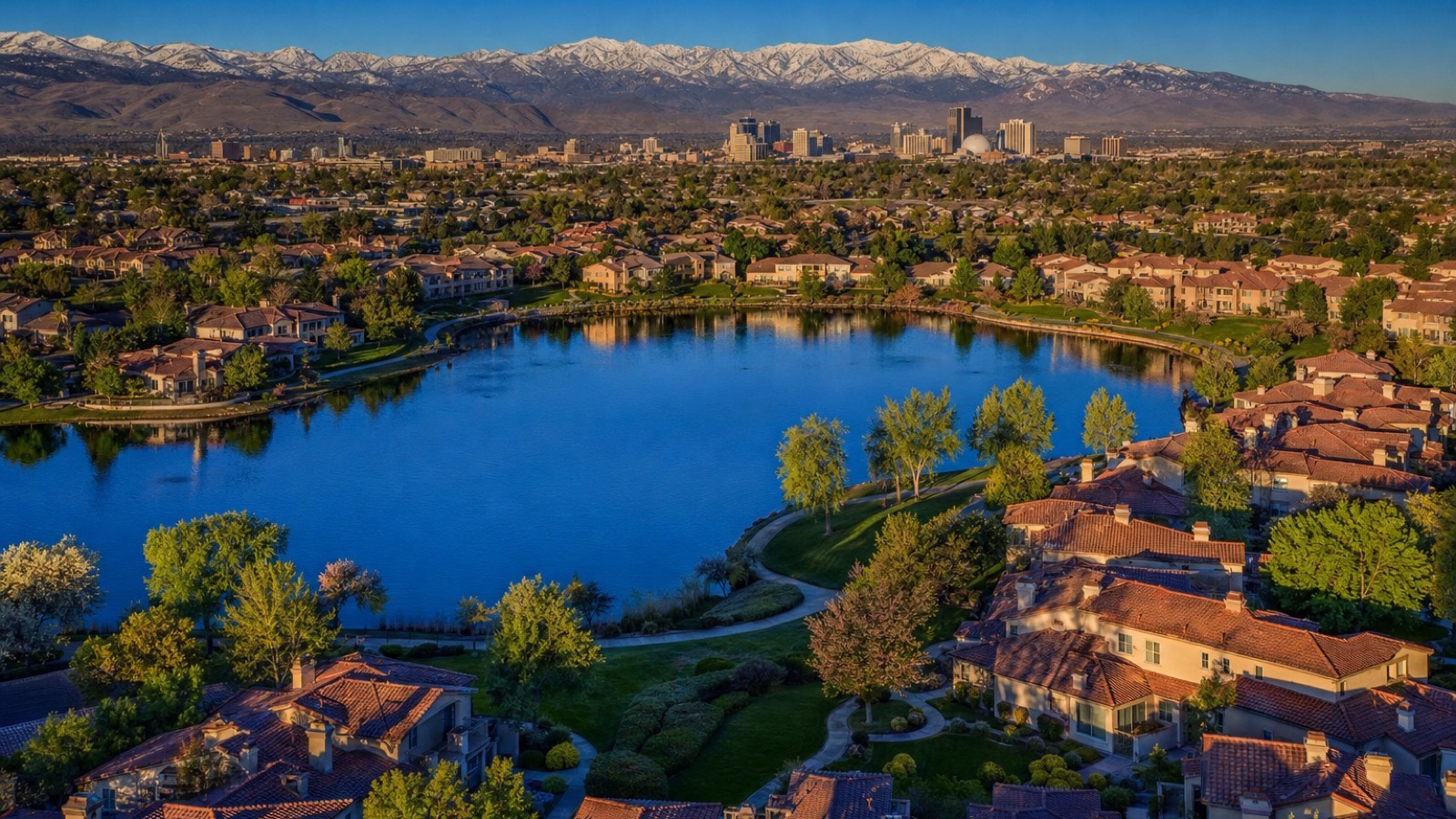
What Should Reno and Sparks Buyers Know About Washoe County Escrow?
Northern Nevada closes on the same statutes with a different form, recorder, and roster of title companies. According to the Washoe County Recorder, Recorder Kalie M. Work's office at 1001 E. Ninth Street, Building A, in Reno is open Monday through Friday from 8 a.m. to 5 p.m. and answers at (775) 328-3660. Its posted schedule charges $43 per document to record a deed or deed of trust and collects the transfer tax at $2.05 per $500. According to the Washoe County Recorder's electronic recording page, "nearly 90% of the documents in this office are recorded electronically," improving turnaround "from days and weeks to minutes," through submitters including Simplifile, CSC, eRecording Partners Network, Deeds.com, and Hopdox. In practice your escrow officer e-records from the office, and the confirmation that releases your keys can arrive the morning the lender funds.
For comparison, the Clark County Recorder, Debbie Conway, operates from 500 S. Grand Central Parkway in Las Vegas, is open Monday through Thursday from 7:30 a.m. to 5:30 p.m. and closed Fridays, records at $42 per document under a schedule effective January 1, 2020, and offers a free Recording Notification Service that alerts an owner when a document records against their name. A Friday closing in Clark County therefore needs an e-recording plan.
The title companies. We do not rank Reno-Sparks title companies by market share, because no public source reports it, but the holders you will see most often on Northern Nevada contracts are the ones with multiple local offices, and their own websites, read on September 24, 2026, confirm the footprint. According to Ticor Title Northern Nevada, a Fidelity National Financial company, it operates Reno Main, Reno Midtown, Damonte, Carson City, Fernley, Gardnerville, Incline Village, Zephyr Cove, and by-appointment Lakeside and Sparks locations. According to Stewart Title Northern Nevada, its Reno Main Branch is at 5390 Kietzke Lane, Suite 101. First American Title's Nevada locator lists a Reno Main office on Kietzke Lane, and First Centennial Title of Nevada is Reno-based with offices in Reno and Carson City. All hold your money under NRS 692A, and the northern form lets the buyer or the seller pick which one by checkbox.
Prices drive the numbers. On the $590,000 Reno and $543,850 Sparks medians for the 90 days ending September 20, 2026, the Washoe transfer tax is $2,419 and $2,234.50, and the filed First American escrow tier for $500,001 to $650,000 is $1,464 per transaction, commonly split. Browse inventory on our Reno homes for sale page, then ask your escrow officer for the filed tier on your price.
What Should Out-of-State Buyers Know About Nevada Escrow?
Half our relocation clients close their Nevada purchase without setting foot in the state that week, and escrow accommodates it cleanly. Nevada authorizes electronic notarization: according to NRS 240.181 to 240.206, an electronic notary public registered with the Secretary of State may perform notarial acts by audio-video communication, defined as technology through which the notary can see, hear, and communicate with the signer in real time. Mobile notaries cover the rest, wires move the funds, and your agent walks the final inspection on video. What surprises transplants most: no attorneys at the table, recording-equals-ownership, the resale-package rhythm, and how fast a cash close moves when title is clean.
The mechanics reward a little planning. Lenders will not fund until they hold the signed package, so an out-of-state signing scheduled for the closing date itself almost always slips a day; sign three days out. Wire from a bank you can reach by phone during Pacific business hours, because the good-funds rule means a wire that lands after the escrow bank's cutoff records tomorrow. And confirm which purchase agreement you are signing: a Bay Area buyer moving to Reno signs the Sierra Nevada REALTORS form with its calendar-day defaults and its choose-your-remedy default clause, while a buyer heading to Las Vegas signs the Las Vegas REALTORS form with labeled business and calendar days.
According to the U.S. Census Bureau, Nevada continues to gain population through net domestic migration, and according to Las Vegas REALTORS, out-of-area buyers remain a structural share of valley demand, which is why every escrow office in the state is fluent in remote closings. If you are planning a move, our moving to Las Vegas guide covers the relocation sequence around the escrow, our first-time buyer resources cover financing from out of state, and our new construction pages explain how builder escrows, which typically run through the builder's affiliated title company on the builder's own contract, differ from everything above.
Frequently Asked Questions
Who regulates escrow companies in Nevada?
It depends on the license. Title companies and their escrow officers are licensed under NRS Chapter 692A and regulated by the Commissioner of Insurance, who examines their escrow accounts annually. Independent escrow agencies are licensed under NRS Chapter 645A and regulated by the Commissioner of Mortgage Lending, and NRS 645A.015(2)(b) expressly exempts 692A licensees from that chapter. Brokers holding deposits in trust accounts answer to the Nevada Real Estate Division under NRS 645.310. Because the holder on a resale is nearly always a title company, the Division of Insurance is usually the right door.
How long does escrow take in Nevada?
In our experience a financed purchase records 30 to 45 days after acceptance, driven by underwriting, the appraisal, and the three-business-day Closing Disclosure wait. A cash purchase with clean title can record inside two weeks, limited by the title report and the resale package. The contract date controls: the Las Vegas form rolls a weekend date to the next business day, while the Reno form says the date shall not change without written agreement. Week-one discipline protects the date.
When does my earnest money have to be deposited in Nevada?
Fast. NAC 645.657 requires a licensee who receives a deposit to pay it over to the broker or the escrow company named in the contract within one business day after receiving a fully executed contract. The Las Vegas REALTORS form matches that at one business day from acceptance; the Sierra Nevada REALTORS form used in Reno-Sparks defaults to two business days. The money then sits in the holder's federally insured trust account under NRS 692A.250 or 645A.160, shielded from the holder's creditors, and credits toward your down payment at recording.
What is the Closing Disclosure three-day rule?
Under 12 CFR 1026.19(f), your lender must ensure you receive the five-page Closing Disclosure at least three business days before consummation, counting every calendar day except Sundays and federal legal holidays. A mailed disclosure is presumed received three business days after mailing. Three changes restart the clock: the APR becoming inaccurate, a change in loan product, or a prepayment penalty being added. Other changes need only a corrected disclosure at or before consummation. Waiver is allowed only for a bona fide personal financial emergency, and lenders rarely accept one.
How much is the real property transfer tax in Nevada?
Clark County collects $2.55 per $500 of value: the $1.25 base for a county of 700,000 or more under NRS 375.020 plus the $1.30 statewide tax under NRS 375.023. That is $2,550 on a $500,000 sale and $5,100 on $1,000,000. Washoe County collects $2.05 per $500 according to its Recorder's schedule of fees, or $2,050 on $500,000. NRS 375.030 makes buyer and seller jointly liable, exempts the escrow holder, and lets the contract allocate the tax; custom across Nevada puts it on the seller.
When do I actually own the home in a Nevada purchase?
At recording, not at signing. Both purchase agreements treat close of escrow as recordation of the deed, and NRS 247.110 requires the recorder to endorse the year, month, day, hour, and minute the deed was received. Under NRS 111.320 a recorded deed is notice to everyone, and under NRS 111.325 an unrecorded deed is void against a later good-faith buyer who records first. Possession customarily follows recording confirmation the same day; in Washoe County, where nearly 90 percent of documents record electronically, that can be minutes after funding.
What is an association resale package and why does it matter in escrow?
It is the disclosure bundle NRS 116.4109 requires the seller to furnish at the seller's expense: the declaration and bylaws, the statement of assessments and amounts due, the budget and reserve summary, pending litigation, transfer fees, and proof of insurance. The buyer may cancel by written notice until midnight of the fifth calendar day after receiving it, without penalty, and the association has ten calendar days to furnish it after a written request. Ordering it late is the most common reason a clean Nevada escrow slips a week.
How do I protect my down payment from wire fraud in escrow?
Follow the CFPB protocol: identify two trusted people at the start of escrow, confirm the payment process with them by phone, and before every wire call the escrow office at a number you already had, never one from an email. Treat any "updated instructions" as fraud until a live person confirms otherwise, and never email account details. FBI IC3 counted 12,368 real-estate complaints and $275 million in losses in 2025, and Nevada ranks third per capita. If money moves anyway, call your bank for a recall immediately and file at ic3.gov.
Ready to Open Escrow With a Team That Closes Statewide?
Escrow rewards preparation, and preparation is a team sport. On every file we represent, north or south, our agents open escrow the day of acceptance, order the resale package the same afternoon, calendar every contingency in both business and calendar days, push the preliminary title report to the client with the exceptions flagged, and confirm the wire protocol with the escrow officer before a dollar moves. That is the unglamorous work behind 9,600+ closings, $4.85 billion in sales volume, and 9,061+ verified five-star reviews.
We are a brokerage. We do not hold your money, issue your title policy, or interpret your deed, and when a file needs a Nevada attorney we say so early. What we do is run the calendar and negotiate the allocations. Whether you are buying through our search, selling with the listing team, or comparing a Las Vegas purchase against a Carson City one, we manage the escrow sequence on both sides of the Sierra.
Southern Nevada clients can reach the team at (702) 637-1759, and Northern Nevada clients at (775) 277-2120. You can also email info@nevadagroup.com or send us the address you are considering, and we will walk the specific allocation, contract form, and timeline before you write the offer. Bring your questions about the regulator, the deposit, the disclosure clock, or the recorder; answered early, those are the questions that keep an escrow boring, and boring is exactly what a closing should be.
Nevada Real Estate Group · 8945 W Russell Rd, Suite 170 · Las Vegas, NV 89148 · (702) 637-1759 · Northern Nevada (775) 277-2120 · NV License S.181401
Which Sources Inform This Nevada Escrow Guide?
Escrow-agency licensing and the 692A exemption reference NRS Chapter 645A; title agent and escrow officer licensing, trust accounts, bonding, and discipline reference NRS Chapter 692A; broker trust accounts reference NRS 645.310 and NAC 645.657. Regulators and complaint paths reference the Nevada Division of Insurance title and escrow licensing page, its title insurance consumer page, its complaint page, and the Nevada Division of Mortgage Lending complaint page.
Transfer-tax rates reference NRS Chapter 375; seller disclosure timing NRS 113.130; resale packages NRS 116.4109; recording effect NRS 111.315 to 111.325 and NRS 247.110; electronic notarization NRS 240.181 to 240.206. County fees, hours, and e-recording reference the Washoe County Recorder, its schedule of fees, its electronic recording page, the Clark County Recorder, and the Clark County Recorder's fee schedule effective January 1, 2020.
Contract clocks were read from the Las Vegas REALTORS Residential Purchase Agreement, Rev. 10/24 and a sample Sierra Nevada REALTORS Residential Offer and Acceptance Agreement, SNR 01/23, compared against a completed 04/20 revision in the Washoe County public record. The Closing Disclosure rule references the CFPB's explainer, 12 CFR 1026.19, and 12 CFR 1026.2. Wire-fraud figures reference the FBI IC3 2025 Annual Report and consumer steps the CFPB's mortgage closing scams guidance. Northern Nevada title company footprints reference Ticor Title Northern Nevada and Stewart Title Northern Nevada. Medians are MLS data pulled through Repliers on September 21, 2026 for the 90 days ending September 20, 2026; the worked closing-cost example is from our Reno buyer closing-costs guide. Migration context references the U.S. Census Bureau and Las Vegas REALTORS; licensee verification runs through the Nevada Real Estate Division. Nothing here is legal advice.