
Boulder City is the one Southern Nevada housing market you cannot read with valley logic. While Las Vegas carries thousands of active listings and Henderson turns over homes by the tens of thousands, Boulder City — the town that built Hoover Dam and then voted, deliberately, to never become a boomtown — trades a few hundred homes a year against a supply ceiling written into municipal law. That single fact, a 1979 growth-control ordinance capping residential building permits, rewrites how every price, every days-on-market figure, and every "is it a good time to buy" question should be answered here.
This is the evergreen guide to how the Boulder City market actually works — not a single-month snapshot, but the durable mechanics: why inventory stays scarce, why the housing stock is old, what the small-town premium costs, how Lake Mead and the no-gaming ordinance shape demand, who is buying, and where prices are heading in 2026. Every number is pulled from the same Las Vegas REALTORS MLS feed our team works in daily. Across the 9,600+ closings Nevada Real Estate Group has represented statewide, the smallest markets are where reading the data wrong costs buyers and sellers the most — and Boulder City is the smallest market that matters in Clark County.
Boulder City's 2026 market runs on structural scarcity: a 1979 growth-control ordinance caps new residential permits, so supply barely grows while demand from retirees and Lake Mead buyers stays steady. Expect a median house list price near $455,000, roughly $282 per square foot, and only 200–240 homes closing in a full year. Inventory climbed past 130 active listings, giving 2026 buyers real choice, but the supply cap keeps long-term values firm.
- A 1979 growth-control ordinance caps residential permits — supply is fixed by law, not by builders.
- Median list price runs about $430,000 all-in and $455,000 for houses, at roughly $282 per square foot.
- Only 200–240 homes close in a full year — the entire annual turnover of one Summerlin village.
- Active inventory climbed from single digits to 130+ listings, handing 2026 buyers rare negotiating room.
- Boulder City bans gaming and sits minutes from Lake Mead — demand is lifestyle-driven, not Strip-driven.
See what's on the market: Boulder City homes for sale shows every active MLS listing with current prices and photos, and our Boulder City community hub covers schools, HOAs, and neighborhoods.
What Makes the Boulder City Housing Market Different From the Rest of Southern Nevada?
Everything downstream of one policy. Boulder City is the only master-planned town in the Las Vegas metro whose growth is not set by developers and demand but by a voter-approved cap on building. According to the City of Boulder City, the town's controlled-growth ordinance — on the books since 1979 — limits the number of new residential building permits issued each year to a small annual allotment and requires a public vote before the city sells significant land. The result is a housing market that behaves like a fixed-supply asset instead of an elastic suburb.
To move from the market overview to a location shortlist, compare these Boulder City neighborhoods.
That distinction shows up in every metric. The median active listing in town was built decades before the typical Henderson or North Las Vegas listing, because the ordinance froze the composition of the housing stock. Per-square-foot pricing runs a premium over larger valley markets, because steady demand meets a pipe of supply that municipal law will not widen. And annual sales volume — roughly 215 homes closed in 2025 versus 447 at the 2021 peak, per Las Vegas REALTORS MLS data — is a rounding error next to the valley's tens of thousands. When you evaluate Boulder City, you are not shopping a neighborhood; you are shopping a supply-constrained town of about 15,000 people that has chosen scarcity on purpose.
How Much Does a Home in Boulder City Cost in 2026?
The honest answer is a band, not a single figure. Across all active sale listings, the median asking price sits near $430,000, with the average pulled up toward $600,000 by a handful of luxury and acreage properties that top out near $4.99M. Filter to houses only and the median list rises to about $455,000 with an average near $643,000 — the raw all-in median is dragged down by 22 active land parcels (some listing from $145,000) that the ordinance keeps buildable only within the permit cap.
Recent closings tell you where contracts actually settle. Over the trailing twelve months, the median sold price ran about $447,500 at roughly $282 per square foot, according to Las Vegas REALTORS MLS transaction data. That gap between the $430,000–$455,000 asking medians and the roughly $447,500 sold median is normal for a small market: sellers anchor high, and buyers — armed with weeks of negotiating room — pull contracts toward the comps.
| Metric | 2026 Reading |
|---|---|
| Active sale listings (all types) | about 139 |
| Active residential listings | about 117 |
| Median list price (all types) | about $430,000 |
| Median list price (houses) | about $455,000 |
| Average list price (houses) | about $643,000 |
| Median sold price (trailing 12 months) | about $447,500 |
| Price per square foot (recent sales) | about $282 |
| Median days on market (recent sales) | about 38 days |
| Homes closed (trailing 12 months) | about 234 |
| Active listing price range | $145,000 to $4,995,000 |
For context against the bigger valley markets, Boulder City's approximately $455,000 house median lands between Las Vegas proper (near $476,000) and Henderson (near $548,000). At $282 per square foot, it prices right alongside — and often above — Las Vegas-proper and Henderson on a per-foot basis. You are paying a per-square-foot premium for small-town scarcity, walkable historic blocks, and the absence of new supply, and getting older square footage in exchange. A $500,000 budget typically buys a 1,700–1,900 square foot mid-century home in Boulder City versus a 2,100+ square foot 2000s build in the Henderson suburbs.
| Dimension | Boulder City | Henderson | Las Vegas |
|---|---|---|---|
| Median house list price | about $455,000 | about $548,000 | about $476,000 |
| Price per square foot | about $282 | about $274 | about $276 |
| Median days on market | about 38 | about 22 | about 20 |
| Annual closed sales | about 215 | tens of thousands | tens of thousands |
| New construction | Capped by ordinance | Active builder pipeline | Active builder pipeline |
| Gaming allowed | No (prohibited) | Yes | Yes |
That comparison is the whole thesis in one grid: Boulder City charges a per-foot premium, sells more slowly, and turns over a tiny fraction of the volume — all because the ordinance caps the one thing Henderson and Las Vegas have in abundance, new supply.
Why Is Boulder City's Housing Inventory So Low?
Because a law caps it. This is the crux of the entire market, so it is worth being precise. According to the City of Boulder City municipal code, the controlled-growth ordinance restricts how many new residential building permits the city issues in a given period, and a 1995 charter amendment requires voter approval before the city can sell land above a threshold acreage. Boulder City also happens to own a large share of the surrounding land, much of it federal or protected as Lake Mead National Recreation Area, which means there is very little raw dirt a builder could develop even if permits were freely available.
Stack those constraints and you get a market where new construction is a trickle. While Clark County added hundreds of thousands of rooftops over four decades, Boulder City added a comparative handful. According to the U.S. Census Bureau, the town's population has hovered around 14,000–15,000 for years while the metro exploded past 2.3 million — the clearest possible signal of a place holding its size by design.
That is why "low inventory" means something structurally different here than in the valley. When Las Vegas inventory tightens, builders eventually respond and loosen it. In Boulder City, the ceiling on supply is municipal policy, and the only variable each season is how many existing owners choose to list. Active counts have climbed meaningfully in 2026 — from single digits a couple of years ago to well over 130 listings — but 139 homes against a fixed-supply town is still scarcity by any national measure.
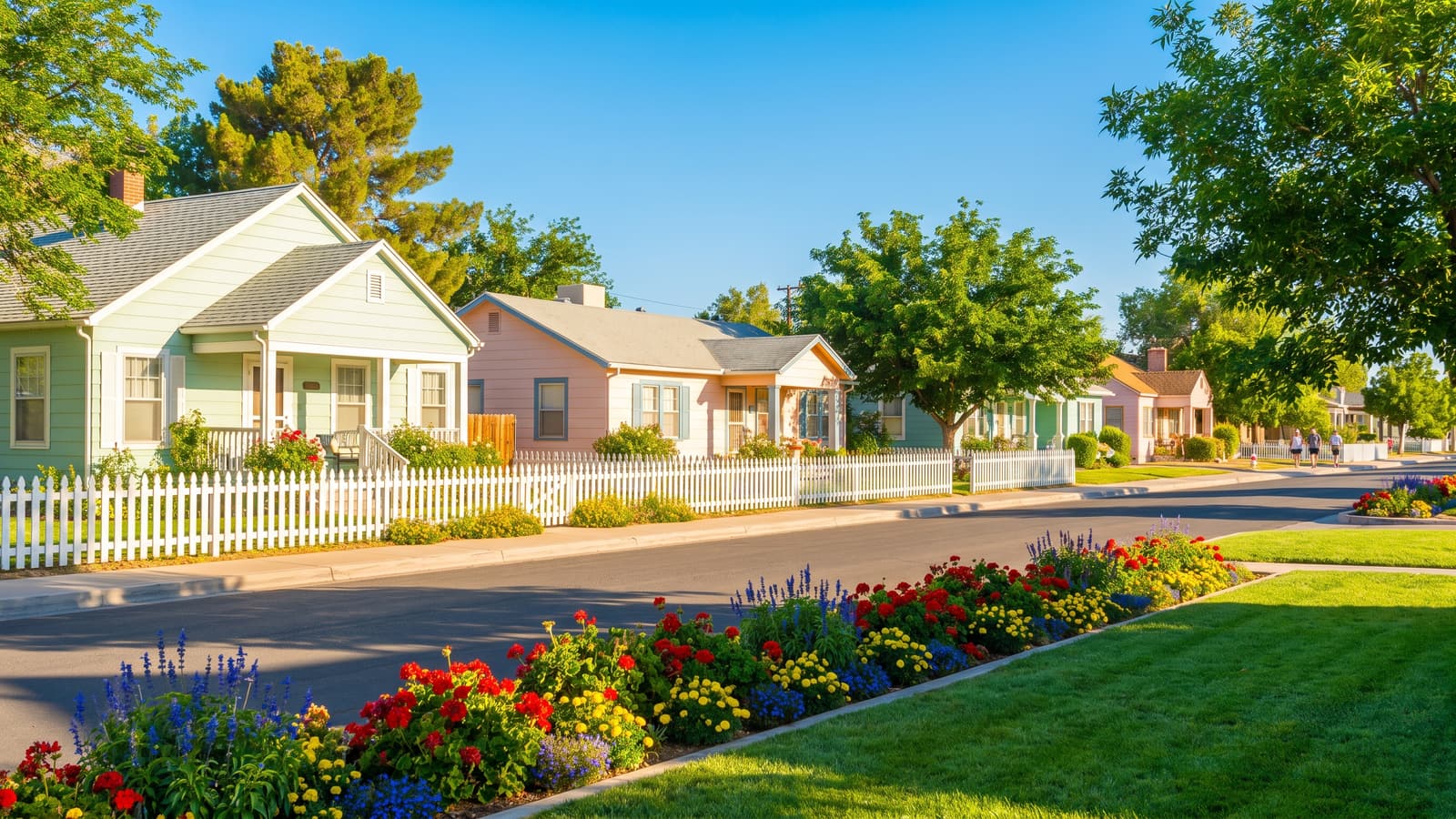
How Does the Growth-Control Ordinance Shape Prices and Values?
Directly, and in the buyer's long-term favor. When supply cannot expand to meet demand, price is the only release valve. That is the textbook mechanism behind Boulder City's per-square-foot premium: a steady stream of retirees, remote workers, dam and federal employees, and Lake Mead recreation buyers competes for a housing pool that municipal law will not grow. According to the Federal Housing Finance Agency house-price index, Nevada values broadly cooled from the 2021–2022 frenzy into a more balanced 2024–2026, and Boulder City participated in that normalization — but its supply cap puts a firmer floor under values than an elastic suburb enjoys.
For buyers, the ordinance is the core bull case. You are buying into a supply ceiling that is written into law, not a market cycle that a builder can reverse next quarter. Over long horizons, fixed-supply, high-demand markets tend to protect value through downturns better than tract markets that can be overbuilt. For sellers, the ordinance is the patience case: your buyer exists and scarcity protects your price, but there are fewer qualified buyers per month than a Henderson seller sees, and no ordinance can make a mispriced 1968 ranch worth 2022 money.
It also explains the age of the stock. Because so few permits are issued, the median listing is a mid-century or 1970s home rather than a recent build. That drives real transactional differences: older galvanized plumbing, original electrical panels, and pre-1980 construction take longer to inspect, appraise, and insure. Across the NREG closings we've represented in the southeast valley, Boulder City escrows routinely run longer than valley escrows, and the deals that survive are the ones written with that expectation from day one.
How Fast Do Homes Sell in Boulder City?
Slowly by valley standards, and that is normal here — not a red flag. The median market time on recent Boulder City closings runs about 38 days, against roughly 20 days for the Las Vegas valley as a whole. Two forces stretch the timeline. First, the buyer pool is narrow and intentional: people shop Boulder City on purpose, not as a fallback from a Henderson search, so the right buyer for a specific home simply appears less often. Second, the older housing stock demands patience through inspection and financing.
The negotiation data backs this up. Over the trailing twelve months, roughly three-quarters of closed sales settled at or below the last list price and only a small fraction closed above it, according to Las Vegas REALTORS MLS data. That is the mirror image of a bidding-war market. For buyers, a 38-day median means you can tour twice, sleep on it, and still write a competitive offer — and any listing sitting well past 38 days is a legitimate candidate for a price-reduction or repair-credit conversation. For sellers, the first two weekends still capture the most motivated buyers, so pricing to the comps rather than the dream is what keeps a listing off the stale pile.
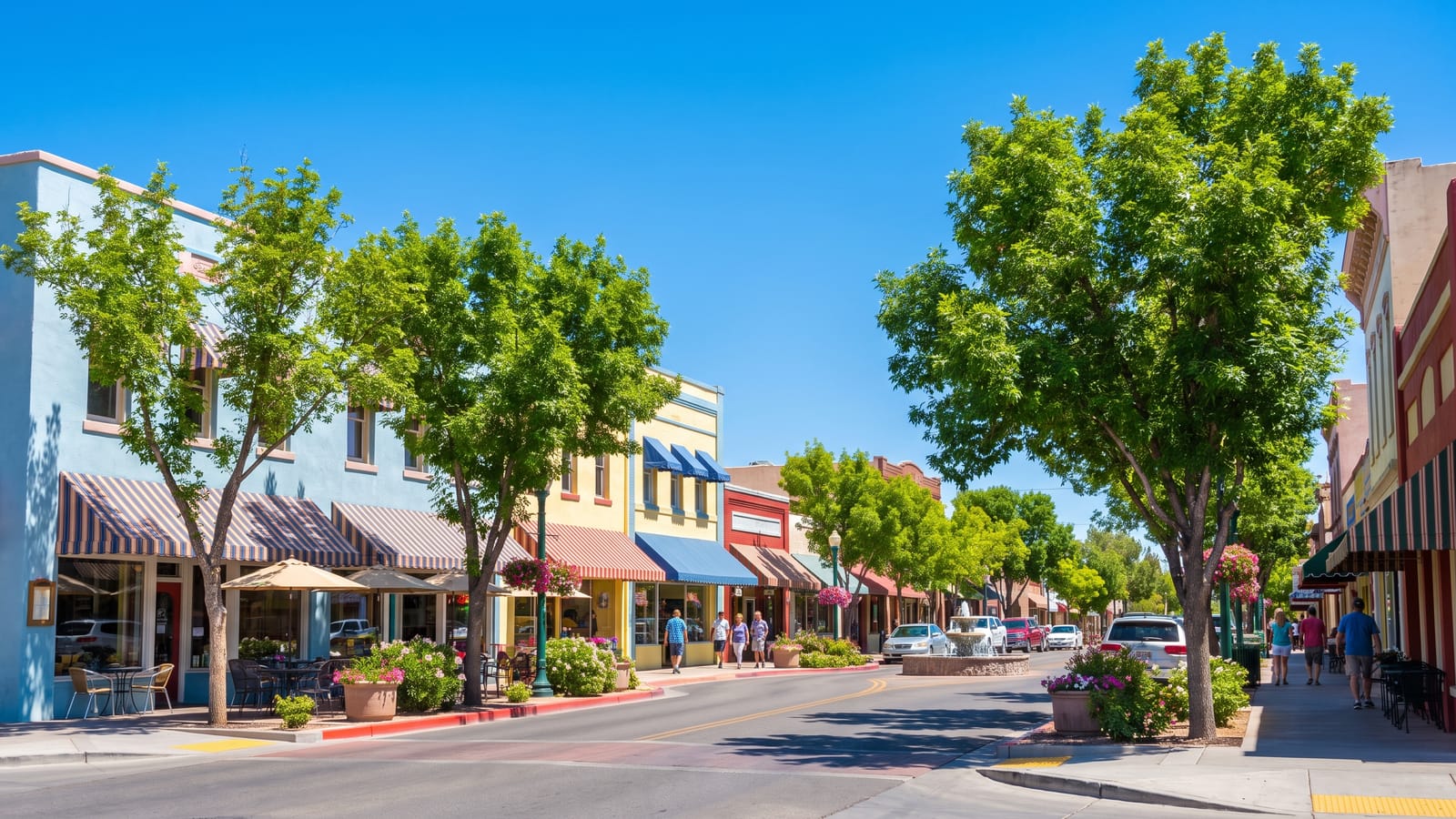
How Have Boulder City Home Sales Trended Over Time?
The volume trend tells the scarcity story better than any price chart. Annual closed-sale counts have fallen from a 2021 peak as the market normalized and fewer owners listed, and each year's total is a fraction of a single valley ZIP code's turnover.
| Year | Closed Sales | Note |
|---|---|---|
| 2019 | 343 | Pre-pandemic baseline |
| 2020 | 353 | Low-rate demand builds |
| 2021 | 447 | Cycle peak volume |
| 2022 | 337 | Rates rise, volume cools |
| 2023 | 267 | Normalization continues |
| 2024 | 242 | Thin, scarcity-driven year |
| 2025 | 215 | Lowest full-year turnover |
| 2026 (partial) | 138+ | Tracking near 2025 pace |
Two patterns matter. First, even at the 2021 peak, Boulder City closed 447 homes — a number many single Summerlin villages exceed. Second, the drift from 447 down to roughly 215 is not distress; it is the ordinance doing its job, with fewer owners choosing to sell into a normalizing market. When volume is this thin, individual monthly medians swing wildly on five-to-fifteen sales, so trend discipline matters: the durable read is a market holding value in the high-$400Ks with slow, steady turnover — not a boom and not a bust.
Why Does No Gaming and Lake Mead Access Shape Boulder City Demand?
Because they define who wants to live here. Boulder City is one of only two places in Nevada that prohibit gaming — the town never allowed casinos, a legacy of its origins as the federal government's controlled construction camp for Hoover Dam. That single ordinance filters the buyer pool toward families, retirees, and lifestyle buyers who want a quiet, casino-free small town rather than Strip-adjacent energy. It is a feature, not a bug, for the exact demographic that drives demand here.
Lake Mead is the other magnet. Boulder City sits at the gateway to Lake Mead National Recreation Area, and boating, paddling, and lakeside recreation are woven into daily life. Add the Hoover Dam, the Historic Railroad Trail, a walkable historic downtown, and an art and events scene, and you get demand that is lifestyle-driven and largely insulated from Strip employment cycles. That is why Boulder City demand held up even as the ordinance kept supply flat: the people who want this town want it for reasons the valley cannot replicate.
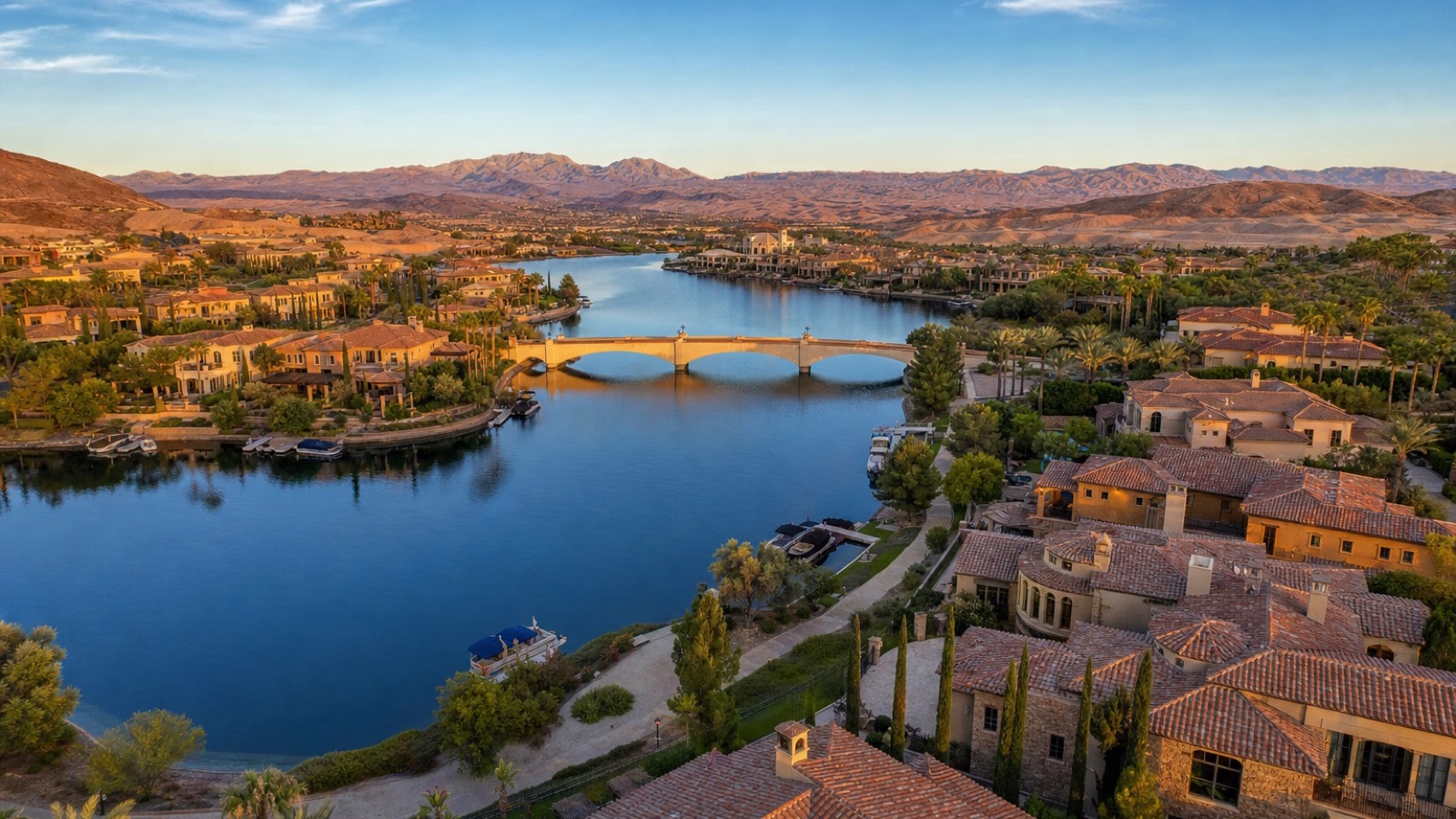
Who Is Buying Homes in Boulder City in 2026?
A narrow, motivated set of buyers — which is exactly why the market moves the way it does. Based on the Boulder City transactions Nevada Real Estate Group has represented and the demographic data behind them, four buyer types dominate. Retirees and near-retirees come first: according to the U.S. Census Bureau, Boulder City's median age runs well above the Las Vegas metro, and the town's quiet, walkable, no-gaming character is purpose-built for that stage of life. Remote workers and telecommuters are second, drawn by small-town calm within a 30-minute drive of the airport and the Henderson job corridors.
Third are Lake Mead lifestyle and second-home buyers who want boating and recreation at the door. Fourth are dam, National Park Service, and federal employees whose jobs are physically anchored here. What every group shares: they are buying Boulder City on purpose, at a deliberate pace, often paying cash or with strong down payments. That buyer profile is why days-on-market runs longer than the valley yet prices stay firm — these are not desperate buyers, but they are committed ones, and they do not chase homes that are overpriced against the comps.
| Budget | Typical Home | What to Expect |
|---|---|---|
| Under $350,000 | Older condo, townhome, or small cottage | Entry point; limited supply, often needs updates |
| $350,000–$475,000 | 1,300–1,800 sq ft mid-century house | The heart of the market near the $455,000 median |
| $475,000–$650,000 | 1,800–2,400 sq ft updated or larger lot | Renovated historic or roomier newer home |
| $650,000–$1,000,000 | Custom home, view lot, or acreage | Hillside, Lake Mead glimpses, larger parcels |
| $1,000,000+ | Luxury estate or multi-acre property | Top of a thin tier — active listings reach $4.99M |
What Is the 2026 Outlook for the Boulder City Housing Market?
Stable, with more buyer choice than the town has offered in years. The defining 2026 development is the inventory build — active listings have climbed from single digits to well over 130 — which hands buyers negotiating leverage that was scarce during 2021–2022. But the ordinance guarantees this is not the start of a supply glut: 139 homes in a fixed-supply town is still tight by national standards, and there is no new-construction builder pipeline waiting to flood the market the way there is across the valley.
According to Freddie Mac mortgage-rate data, the rate environment through 2026 has steadied off its peak, which supports the affordability of Boulder City's higher per-foot pricing for the cash-and-strong-down-payment buyers who dominate here. The durable forecast: median values holding in the high-$400Ks to low-$500Ks for houses, market times staying in the 30–45 day band, annual volume near the 215–240 range, and the supply cap continuing to protect long-run values. For 2026 buyers, the takeaway is opportunity with patience; for sellers, it is scarcity with discipline — price to the comps and your buyer will come.
What Should Boulder City Buyers and Sellers Do About It?
Play the market that actually exists, not the valley you came from. For buyers — including first-time buyers new to a supply-capped market — use the 38-day median and the below-list closing pattern as leverage: tour deliberately, get pre-approved so you can move when the right scarce home appears, and negotiate hard on anything sitting past the median — especially older homes where inspection findings justify credits. Budget realistically for a mid-century home's systems, and treat the supply cap as your long-term appreciation ally.
For sellers, respect the small pool. Price to the trailing-twelve-month comps — start with a home value estimate and refine it with local sold data — not to a neighbor's aspirational 2022 number, because the ordinance protects your value but cannot rescue an overpriced listing from sitting. Prep the home to survive a thorough inspection, and expect a longer but durable escrow. Whether you are buying or selling, the smallest markets reward local expertise most — start with a conversation about your specific block, price band, and timeline. Call Nevada Real Estate Group at (702) 637-1759 or reach us through our contact page, and if you are weighing representation, our guide to choosing the best Las Vegas real estate agent walks through what to look for.
Frequently Asked Questions
What is Boulder City's growth-control ordinance and how does it affect home prices?
Boulder City's controlled-growth ordinance, on the books since 1979, caps the number of new residential building permits the city issues and — under a 1995 charter amendment — requires voter approval before the city sells significant land. Because supply cannot expand freely to meet demand, price becomes the release valve, which is why Boulder City carries a per-square-foot premium (around $282 on recent sales) over larger valley markets. For buyers, the cap is a long-term value protector; for sellers, it means scarcity supports price but does not excuse overpricing.
How much does a house cost in Boulder City, Nevada in 2026?
The median list price for houses runs about $455,000 (roughly $430,000 across all property types including land), with recent closings settling near a $447,500 median at about $282 per square foot, per Las Vegas REALTORS MLS data. The active listing range spans from about $145,000 for land parcels up to $4,995,000 for luxury and acreage estates. A $500,000 budget typically buys a 1,700–1,900 square foot mid-century home in Boulder City.
Why is there so little inventory in Boulder City?
The growth-control ordinance caps new residential permits, and Boulder City owns much of the surrounding land — a lot of it federal or protected as Lake Mead National Recreation Area — so very little developable dirt exists even if permits were freely issued. The result is a fixed-supply market. Active inventory has climbed in 2026 to well over 130 listings from single digits a couple of years ago, but that is still scarcity by national standards, not a glut.
How long do homes take to sell in Boulder City?
Recent closings show a median market time around 38 days, versus roughly 20 days for the Las Vegas valley overall. The slower pace reflects a narrow, intentional buyer pool and an older housing stock that takes longer to inspect and insure. Over the trailing twelve months, about three-quarters of sales closed at or below list price, so buyers generally have negotiating room — especially on listings sitting past the 38-day median.
Does Boulder City allow casinos or gaming?
No. Boulder City is one of only two places in Nevada that prohibit gaming, a legacy of its founding as the federal construction camp for Hoover Dam. The no-gaming ordinance filters demand toward families, retirees, and lifestyle buyers who want a quiet, casino-free small town, which is a core reason the town's housing demand is insulated from Strip employment cycles.
Is Boulder City a good place to buy for retirement or a second home?
For many buyers, yes. According to the U.S. Census Bureau, Boulder City's median age runs well above the Las Vegas metro, and the town's walkability, no-gaming character, and Lake Mead recreation access are purpose-built for retirees and lifestyle buyers. Prices are firm and turnover is slow, so buyers should be patient and pre-approved, and budget for a mid-century home's systems. Our Boulder City community hub covers schools, HOAs, and neighborhood detail.
What schools serve Boulder City students?
Boulder City students are served by the Clark County School District (CCSD), the same district covering the greater Las Vegas valley. The town has neighborhood elementary and secondary schools within its compact footprint. Families evaluating a move should verify current attendance-zone boundaries and school ratings for their specific address, since a small town's zoning can shift with enrollment.
Will Boulder City home values hold up in a downturn?
Historically, fixed-supply, high-demand markets tend to protect value through downturns better than tract markets that can be overbuilt, and Boulder City's ordinance-enforced supply cap is exactly that kind of protection. Values cooled from the 2021–2022 peak into a balanced 2024–2026 alongside the rest of Nevada, per FHFA data, but the supply ceiling puts a firmer floor under prices than an elastic suburb enjoys. No market is downturn-proof, but scarcity is a durable tailwind here.
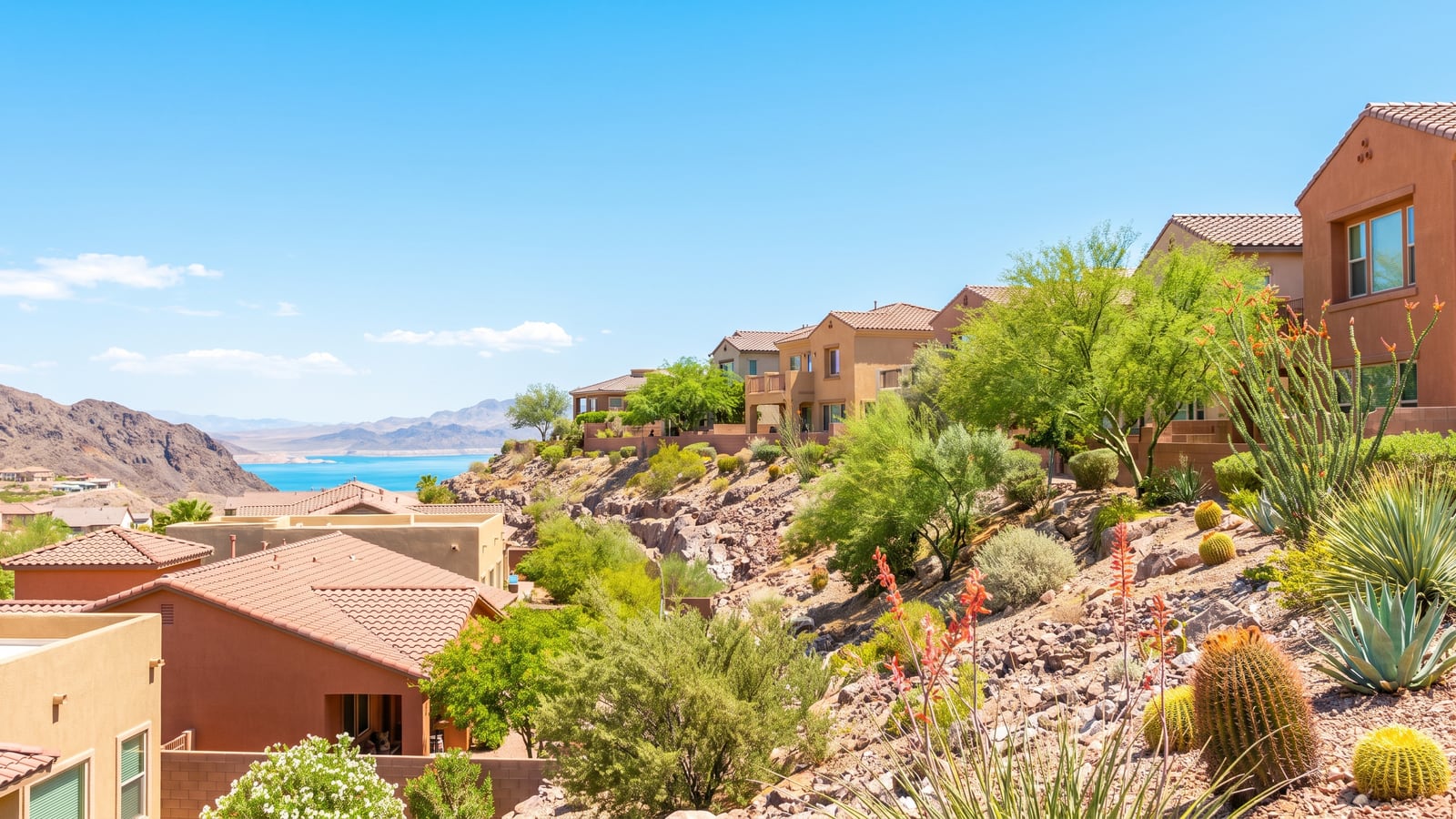
Which Sources Inform This Boulder City Housing Market Guide?
The market figures in this guide come from live Las Vegas REALTORS (GLVAR) MLS data pulled through Repliers IDX for Boulder City, cross-checked against the following authorities. Median prices, days-on-market, and closed-sale counts reflect trailing-twelve-month and active-listing snapshots and will move with the market; verify current numbers before making a decision, and reach Nevada Real Estate Group at (702) 637-1759 for an address-specific read.
- Las Vegas REALTORS (GLVAR) market statistics — MLS medians, inventory, and days-on-market
- City of Boulder City — controlled-growth ordinance, permits, and municipal code
- U.S. Census Bureau QuickFacts: Boulder City — population, median age, and housing characteristics
- Clark County Assessor — parcel and assessed-value records
- Nevada Department of Taxation — property-tax framework
- Federal Housing Finance Agency House Price Index — regional home-value trends
- Freddie Mac Primary Mortgage Market Survey — mortgage-rate environment
- U.S. Bureau of Labor Statistics — Nevada employment and wage context
- Lake Mead National Recreation Area (National Park Service) — recreation and public-land context
- Clark County School District — school-district information for Boulder City
- Nevada Revised Statutes — real estate and disclosure law
Nevada Real Estate Group is Nevada's #1 real estate team (RealTrends) and #44 nationally, with $4.85B+ in career sales volume, 9,600+ closings, 150+ agents, and 9,146+ verified five-star reviews at 4.9 stars. License S.181401. This guide is educational and not a substitute for personalized real estate, legal, or tax advice.