

Published June 27, 2026 · By Chris Nevada, Nevada Real Estate Group · NV License S.181401
"When is the best time to buy a house in Nevada?" is one of the most common questions we hear — and the honest answer has two layers. There is a market-timing answer, built on the seasonal rhythms of inventory, competition, and price that repeat year after year across Las Vegas and Reno. And there is a personal-timing answer, which almost always matters more: the best time to buy is when your finances are ready and you plan to stay put long enough to build equity. Get the personal side right and the seasonal side becomes a useful tiebreaker rather than a reason to wait.
This guide covers both. We will walk through Nevada's seasonal patterns month by month, when competition is thinnest and sellers are most motivated, how mortgage rates factor in, the best time of month to actually close, and how the timing shifts across the nine markets we serve. Then we will be straight with you about when trying to time the market helps and when it just costs you rent and missed appreciation.
We have guided buyers through more than 9,600 Nevada closings worth over $4.85 billion in every season and rate environment. If you want to talk through your timing, call our Southern Nevada team at (702) 637-1759 or our Northern Nevada team at (775) 277-2120, or start with our buyer resources.
The best time to buy a house in Nevada for the least competition and most negotiating room is November through January, when inventory thins and sellers are motivated. Spring and summer bring the most listings but the most competition and highest prices. That said, for most buyers the best time is when they are financially ready and plan to stay 3 to 5 years — personal readiness and a good rate matter more than the season.
- November through January offers the least competition and most motivated sellers — the best window for negotiating room.
- Spring and summer bring the most inventory and choice, but also the most competition and highest prices.
- Mortgage rates affect affordability more than the season — a half-point swing moves a $400,000 loan about $130/month.
- Personal readiness — stable income, savings, a 3-to-5-year horizon — matters more than timing the market.
- Talk through your timing free: (702) 637-1759 in the south, (775) 277-2120 in the north.
- Check your readiness first. Stable income, credit, and savings beat any season — start here.
- Match the season to your goal. Winter for negotiating room; spring/summer for the most choice.
- Watch the rate, not just the calendar. Rates move affordability more than the month you buy.
- Get pre-approved before you shop. Timing only helps if you can act when the right home appears.
- Close near month-end. It trims the prepaid interest you owe at the closing table.
When Is the Best Time to Buy a House in Nevada?
If your only goal is the best price and the least competition, the answer is the colder months — roughly November through January. During this window, new listings slow down, casual buyers drop out of the market for the holidays, and the sellers who remain are usually motivated by a real reason to move. Less competition means more negotiating room, a better chance at seller concessions, and fewer bidding wars.
The trade-off is selection. Winter has the thinnest inventory of the year, so you have fewer homes to choose from. If finding the perfect home matters more to you than squeezing the last few thousand dollars out of the price, the spring and summer months — when listings peak — may serve you better despite the added competition. According to Las Vegas REALTORS and the Reno/Sparks Association of REALTORS, Nevada's listing activity follows this seasonal curve reliably year after year, peaking from spring into early summer and tapering through the holidays.
But here is the part most timing articles skip: for the typical buyer, the seasonal difference is smaller than the personal-readiness difference. A buyer who waits for "the perfect season" but is not financially ready will lose to a prepared buyer in any month. And a buyer who rushes in before they are ready, just to catch a season, can overpay or overextend. In our experience, the season is a tiebreaker, not the decision. Get your finances and pre-approval in order first; then use the calendar to your advantage.

What Are the Seasonal Patterns in Nevada's Housing Market?
Nevada's housing market breathes in a predictable annual rhythm, and understanding it helps you choose the season that fits your priorities.
Spring (March–May) is the busiest season. Inventory surges as sellers list to catch the peak buying season, giving you the most homes to choose from — but competition is fierce, multiple offers are common on well-priced homes, and prices firm up. Summer (June–August) stays active, especially early on, though the brutal Las Vegas heat slows showings somewhat by midsummer; families racing to close before the school year keep demand strong. Fall (September–November) is the sweet spot for many buyers: inventory is still reasonable, competition eases as families settle in, and sellers who did not sell over summer grow more flexible. Winter (December–February) has the least inventory but the most motivated sellers and the least competition — the best negotiating leverage of the year.
| Season | Inventory | Competition | Best For |
|---|---|---|---|
| Spring (Mar–May) | Highest | Highest | Most selection |
| Summer (Jun–Aug) | High | High | Families on a school clock |
| Fall (Sep–Nov) | Moderate | Easing | Balance of choice and value |
| Winter (Dec–Feb) | Lowest | Lowest | Best price and negotiating room |
The right season depends on what you are optimizing for. Want the widest selection and will compete for it? Shop spring. Want the best deal and will accept a smaller pool? Shop winter. Want a balance? Fall is often the quiet winner. None of these seasons is "wrong" — they simply favor different priorities.
Is It Better to Buy in Winter in Nevada?
For price-focused buyers, winter is often the smartest time to buy in Nevada — and the reasons go beyond just thin competition.
Sellers who list in December and January usually are not testing the market on a whim; they have a real reason to move — a job relocation, a life change, a property they need off their books before year-end. Motivated sellers negotiate. With fewer buyers circling, you are less likely to face a bidding war, more likely to get inspection repairs or credits, and better positioned to ask for seller concessions toward your closing costs. On a $450,000 home, the negotiating leverage of a quiet January can mean $10,000 to $20,000 in price or concessions that a competitive spring offer would never capture.
There are also fewer transactions competing for lenders, appraisers, and title companies in winter, which can mean smoother, faster service. According to the Consumer Financial Protection Bureau, buyers who can move decisively — pre-approved and ready — are best positioned to capitalize on a motivated seller, and winter is when motivated sellers cluster.
The catch, again, is selection. You may tour fewer homes and wait longer for the right one to appear. And in Nevada's milder southern markets, winter does not slow the market as dramatically as it does in snowier northern regions, so the leverage is real but not unlimited. If your priority is value and you have the patience to wait for the right listing, winter rewards you. If you need a specific home in a specific neighborhood and selection matters most, the trade-off may not be worth it.
How Do Mortgage Rates Affect the Best Time to Buy?
Here is the timing factor that often outweighs the season entirely: mortgage rates. The month you buy affects competition and price at the margins, but the rate you lock affects your monthly payment for up to 30 years.
According to Freddie Mac, even a half-percentage-point change in rates shifts the monthly payment on a $400,000 loan by roughly $130 — which translates to about $20,000 to $30,000 in buying power at the same monthly budget. That swing dwarfs the few-thousand-dollar seasonal price difference. A buyer who waits for winter's better prices but buys into a higher-rate environment can easily come out behind a buyer who paid a bit more in spring at a lower rate.
The problem is that rates are far harder to predict than seasons. Seasonal inventory patterns repeat reliably; rate movements do not. This is why we counsel buyers against trying to time the rate market. The practical wisdom holds: marry the house, date the rate. If a home fits your budget at today's rate, buy it — you can refinance later if rates fall, but you cannot un-miss the right house, and you cannot get back the rent and appreciation lost while waiting for a rate that may never come. Lock when the home and the payment work for you. Our how much house can I afford in Nevada guide shows exactly how rate and payment interact.
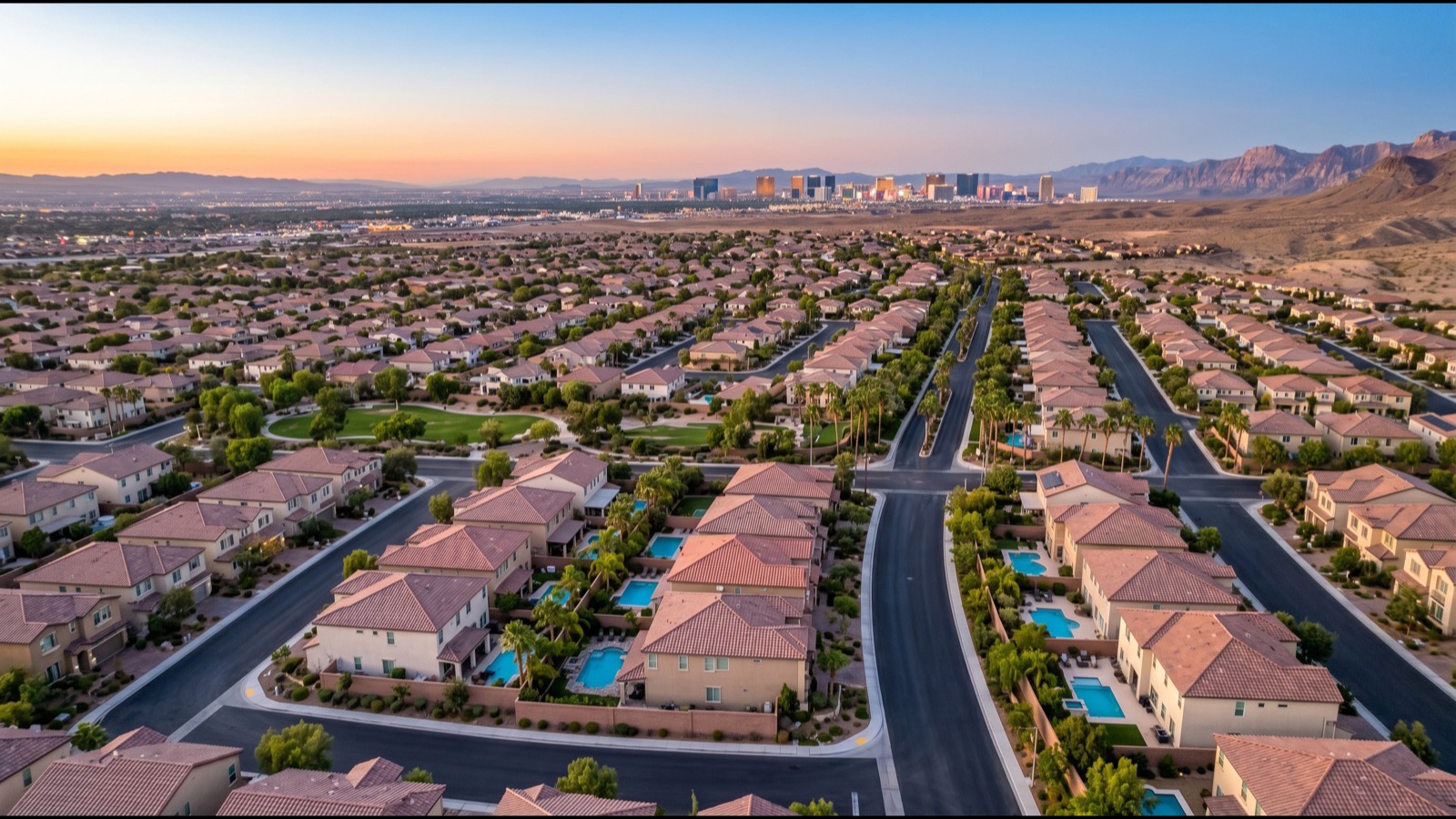
When Is the Best Time to Buy in Each Nevada City?
The seasonal pattern holds statewide, but it is more pronounced in some markets than others, mostly because of climate and buyer mix.
In the south, Las Vegas, Henderson, and North Las Vegas stay active year-round thanks to mild winters and constant in-migration, so the winter slowdown is gentle — the leverage is real but the market never truly hibernates. Summerlin's luxury tier moves more slowly overall, giving more negotiating room outside spring. Boulder City's thin inventory means timing matters less than simply waiting for the right home to appear.
In the north, the seasonal swing is sharper. Reno and Sparks see a more pronounced winter slowdown because real snow and cold genuinely reduce showings and listings, which concentrates leverage for winter buyers. Carson City follows the same northern rhythm. And rural Pahrump is thinner and more buyer-favored most of the year, so seasonal timing is secondary to finding the right property.
| Market | Winter Slowdown | Timing Note |
|---|---|---|
| Las Vegas / Henderson | Gentle | Active year-round; modest winter edge |
| North Las Vegas | Gentle | Fast at entry tier any season |
| Summerlin | Moderate | Luxury tier negotiable off-peak |
| Reno / Sparks | Pronounced | Strong winter leverage |
| Carson City | Pronounced | Northern winter rhythm |
| Pahrump | Mild | Buyer-favored most of the year |
Your local agent's read of the specific submarket beats any statewide rule. The same week in January means something different in snowy Reno than in sunny Henderson.
Should You Time the Market or Buy When You're Ready?
This is the question that matters most, and the honest answer is that personal readiness almost always beats market timing. The buyers who do best are not the ones who caught the perfect season or rate — they are the ones who bought a home they could comfortably afford and stayed long enough to build equity.
Trying to time the market has real costs. While you wait for a better season or rate, you keep paying rent — money you never get back — and you miss any appreciation the home would have earned. According to the U.S. Census Bureau, Nevada remains one of the fastest-growing states, and that demand has historically pushed home values up over time. A buyer who waits a year to save $10,000 on price can easily lose more than that in rent paid and appreciation missed — and end up buying a more expensive home anyway.
The exception is genuine financial unreadiness. If your credit needs work, your savings are thin, your income is unstable, or you might move within a year or two, waiting is the right call — not to time the market, but to get ready. The break-even on buying versus renting in Nevada typically lands around 3 to 5 years; if you will not stay that long, renting may be the better math regardless of season. The framework is simple: fix readiness first, then let the season and rate be tiebreakers. Do not let a calendar talk you out of a home you are ready for, and do not let a good season talk you into one you are not.
Before choosing a purchase month, compare renting versus buying in Nevada against your expected holding period and budget.
What Time of Month Is Best to Close in Nevada?
Beyond the season, the day of the month you close has a small but real effect on your costs — and it is one of the few timing levers fully in your control.
When you close, you prepay the mortgage interest for the remaining days of that month. Close on the 3rd and you prepay nearly a full month of interest at the table; close on the 28th and you prepay only a few days. On a $400,000 loan at roughly 6.5%, daily interest runs about $71 — so closing on the 28th instead of the 3rd can save you around $1,500 in upfront cash, versus only about $200 if you close late. Closing later in the month reduces the prepaid interest portion of your cash to close — a simple way to keep more money in your pocket at signing.
That said, do not let the date drive the deal. The most important timing in a closing is hitting your contract deadlines and being ready when your loan clears, not optimizing for the calendar. A few hundred dollars in prepaid interest is not worth risking your rate lock or rushing your final walkthrough. According to the Consumer Financial Protection Bureau, your Closing Disclosure spells out exactly what you owe and when, so you can see the prepaid-interest line and plan accordingly. Treat the end-of-month close as a minor optimization once everything else is in order — a nice bonus, not a goal. Our closing costs in Nevada guide breaks down every line you will see at the table.
How Do You Know When You're Ready to Buy a House in Nevada?
Since readiness beats timing, the real question is how to tell when you are ready. A few clear signals tell you the season matters less than your own situation.
Stable income. A steady, documented income that lenders can verify — ideally two years in the same field — is the foundation. Healthy credit. A score of 620-plus opens most loans, and higher scores earn better rates; the time to improve it is before you shop. Savings for down payment and costs. You need the down payment (as little as 0% to 3.5% with the right loan — $0 to $14,000 on a $400,000 home) plus 2% to 3% for closing costs ($8,000 to $12,000 on that home), with some reserves left over — and Nevada down payment assistance can bridge the gap. A manageable debt load. Your total monthly debts should leave room for a housing payment under the 28/36 guideline. A 3-to-5-year horizon. Plan to stay long enough to clear the buy-versus-rent break-even and absorb transaction costs.
| Signal | Target | Why It Matters |
|---|---|---|
| Credit score | 620+ (580 for FHA) | Loan eligibility and your rate |
| Down payment | $0–$14,000 on a $400,000 home | Cash to get in the door |
| Closing costs | $8,000–$12,000 (2%–3%) | Due at the table |
| Cash reserves | 2–6 months of payments | Lender comfort and a cushion |
| Time horizon | 3–5 years | Clears the buy-vs-rent break-even |
When those boxes are checked, you are ready — and the season becomes a tool to use rather than a gate to wait behind. When they are not, no season or rate makes buying the right move yet; the productive use of that time is fixing the gaps. In our experience, the buyers who feel best about their purchase years later are the ones who bought when they were genuinely ready, in whatever month that happened to be, rather than the ones who chased a perfect market window. Get pre-approved to confirm your readiness, and you can act the moment the right home appears in any season.

What Mistakes Do Buyers Make Trying to Time the Nevada Market?
Trying to time the market creates its own set of costly mistakes. Here are the ones to avoid.
Waiting for the "perfect" season or rate. The perfect moment rarely arrives, and waiting costs rent and appreciation. A home you can afford today usually beats a hypothetical better deal next year. Shopping before you are pre-approved. Timing is useless if you cannot act — by the time you get approved, the window or the home is gone. Over-weighting the season. The seasonal price difference is real but modest; do not let it override a home that fits your life. Ignoring the rate. Conversely, the rate matters more than the month — do not obsess over the calendar while ignoring affordability. Trying to call the bottom. No one reliably times the market bottom; buyers who wait for prices to fall often watch them rise instead. Letting timing override fit. The right home in the wrong season beats the wrong home in the right season every time.
According to the National Association of Realtors, the buyers who fare best are those who buy when personally ready and hold for the long term, not those who try to outguess the market. The smartest timing strategy is to get ready, get pre-approved, and then buy the right home when you find it — using the season and rate as helpful tailwinds, not as reasons to wait on the sidelines paying someone else's mortgage.

Frequently Asked Questions About Timing a Nevada Home Purchase
What is the best month to buy a house in Nevada?
For the best price and least competition, December and January are typically the best months — inventory is thin but sellers are motivated and bidding wars are rare. For the most selection, April and May offer the highest inventory but the most competition. The "best" month depends on whether you are optimizing for value (winter) or choice (spring).
Is it cheaper to buy a house in winter in Nevada?
Often, yes. Winter brings the least competition and the most motivated sellers, which means more negotiating room, a better shot at seller concessions, and fewer bidding wars. On a $450,000 home, that leverage can mean $10,000 to $20,000 in price or concessions. The trade-off is the thinnest inventory of the year, so you have fewer homes to choose from.
Should I wait for mortgage rates to drop before buying in Nevada?
Usually not. Rates are far harder to predict than seasons, and waiting costs rent and missed appreciation. The wiser approach is "marry the house, date the rate" — if a home fits your budget at today's rate, buy it and refinance later if rates fall. A half-point rate change moves a $400,000 loan payment about $130 a month, so rates matter, but timing them rarely works.
Does the best time to buy differ between Las Vegas and Reno?
Yes. Las Vegas and the southern markets stay active year-round thanks to mild winters, so the off-season buying edge is gentle. Reno, Sparks, and Carson City have real winters that meaningfully slow showings and listings, concentrating the best negotiating leverage into the cold months. Northern Nevada rewards patient winter buyers more than the south does.
Is it better to time the market or buy when I'm ready in Nevada?
Buy when you're ready. Personal readiness — stable income, good credit, savings, and a 3-to-5-year horizon — matters far more than the season or rate. Waiting to time the market usually costs more in rent and missed appreciation than it saves. Use the season and rate as tiebreakers once your finances and pre-approval are in order, not as reasons to delay.
What time of the month is best to close on a Nevada home?
Closing later in the month reduces the prepaid mortgage interest you owe at the table — close on the 28th instead of the 3rd and you prepay only a few days instead of nearly a full month, saving several hundred to over a thousand dollars upfront on a typical loan. But never risk your deadlines or rate lock to chase the date; treat it as a minor bonus once everything else is set.
How long should I plan to stay in a Nevada home to make buying worth it?
Generally 3 to 5 years. That is the typical break-even point where appreciation and equity offset the transaction costs of buying and later selling. If you might move within a year or two, renting may be the better math regardless of season. A longer horizon also smooths out short-term market swings, making the exact timing of your purchase far less important.
Is 2026 a good time to buy a house in Nevada?
For ready buyers, yes. The 2026 market is more balanced than the frenzy of 2021–2022, with recovered inventory giving buyers more choice and negotiating room, while stable rates have brought qualified buyers back. Nevada's no-income-tax advantage and steady population growth support long-term value. As always, the best time is when you are financially ready and plan to stay several years.
Ready to Buy at the Right Time in Nevada?
The best time to buy a house in Nevada is a blend of three things: the season (winter for value, spring for selection), the rate (lock when the payment works rather than guessing the bottom), and — most importantly — your own readiness. Nail the readiness, get pre-approved, and the calendar becomes a tool you use rather than a gate you wait behind. The buyers who win are not the ones who timed it perfectly; they are the ones who were ready and acted when the right home appeared.
Nevada Real Estate Group helps buyers time and win the right home in all nine markets we serve, #1 in Nevada and #44 in the nation, backed by more than 9,600 closings and $4.85 billion-plus in volume. Whether you are buying in Las Vegas, Reno, or Henderson, we will read your specific submarket and help you decide when to move. Call our Southern Nevada team at (702) 637-1759 or our Northern Nevada team at (775) 277-2120, learn more on our about page, or contact our team. Then prepare with our how to buy a house in Nevada guide and the how much house can I afford in Nevada breakdown, and browse listings on our home search.
Which Sources Inform This Nevada Home-Buying Timing Guide?
This guide draws on Nevada Real Estate Group's direct buyer experience plus public data from industry and government authorities. Seasonal patterns, rates, and market conditions change — confirm current specifics with a licensed agent or lender before acting. This is general educational information, not financial advice.
- Las Vegas REALTORS — Southern Nevada seasonal market data
- Reno/Sparks Association of REALTORS — Northern Nevada market data
- Freddie Mac — Primary Mortgage Market Survey
- Consumer Financial Protection Bureau — buyer and closing guidance
- National Association of Realtors — buyer timing research
- U.S. Census Bureau — Nevada QuickFacts
- Nevada Housing Division — homebuyer programs
- Nevada Real Estate Division — licensing and consumer resources
- U.S. Department of Housing and Urban Development — Nevada
- Nevada Department of Taxation — no state income tax