
Published June 27, 2026 · By Chris Nevada, Nevada Real Estate Group · NV License S.181401
Nevada is one of the most active home-buying markets in the country, and for good reason: no state income tax, a steady stream of relocating households from California and other high-cost states, and two distinct metro economies — the Las Vegas Valley in the south and the Reno-Sparks "Truckee Meadows" in the north — each pulling buyers for different reasons. Whether you are a first-time buyer in North Las Vegas, a move-up family targeting Henderson, or a remote worker chasing Sierra Nevada views in Reno, the mechanics of buying a house in Nevada follow the same path.
The challenge is that most online buying guides are written for a national audience. They tell you what a down payment is, but not that Clark County and Washoe County charge different real estate transfer taxes, that Pahrump buyers should check water rights before they fall in love with a property, or that a Reno purchase runs through a completely different MLS than a Las Vegas one. This guide fixes that — it walks through the entire Nevada home-buying process step by step, then breaks down what changes city by city across all nine markets Nevada Real Estate Group serves.
We have closed more than 9,600 transactions and over $4.85 billion in volume across the state, so this is written from inside the process, not from a national template. If you want to talk through your specific situation, call our Southern Nevada team at (702) 637-1759 or our Northern Nevada team at (775) 277-2120.
Buying a house in Nevada in 2026 takes about 45 to 60 days from accepted offer to closing once you are pre-approved. You will need 3% to 20% down depending on loan type, a credit score of 620 or higher (580 for FHA), and roughly 2% to 3% of the price for closing costs. The process is identical statewide, but prices, inventory, and competition differ sharply between Las Vegas, Reno, and the smaller Nevada markets.
- Get pre-approved before you tour — a Nevada credit score of 620-plus opens conventional loans; 580 opens FHA at 3.5% down.
- Budget 2% to 3% of price for closing costs, plus the county transfer tax the seller usually pays.
- Median prices range from the mid-$400,000s in North Las Vegas to $750,000-plus in Summerlin and Reno.
- A buyer-broker agreement is now required before touring homes — a 2024 NAR settlement change.
- Call (702) 637-1759 in Southern Nevada or (775) 277-2120 in Northern Nevada for a no-obligation buyer consultation.
- Get pre-approved. Verify income, credit (620-plus for most loans), and a 3% to 20% down payment before you start house hunting.
- Hire a Nevada-licensed Realtor. Verify the license at red.nv.gov and confirm city-specific expertise — Las Vegas and Reno run on different MLS systems.
- Search and tour. Narrow by city, neighborhood, and HOA before writing offers; the typical Nevada buyer tours 8 to 15 homes.
- Make the offer and negotiate. Earnest money in Nevada is typically 1% of the purchase price, held in escrow.
- Inspect, appraise, and close. Plan on 30 to 45 days of contingencies, then sign at the title company and get your keys.
Is Now a Good Time to Buy a House in Nevada?
The honest answer is that timing the market matters far less than buying the right home at a price you can carry. That said, the 2026 Nevada backdrop is meaningfully more buyer-friendly than the frenzy of 2021 and 2022.
According to Las Vegas REALTORS, the Las Vegas Valley median single-family price sits in the mid-$400,000s to roughly $480,000, with inventory recovering to a more balanced level than the desperate sub-one-month supply of the pandemic peak. In the north, according to the Reno/Sparks Association of REALTORS, the Reno-Sparks median runs higher — generally in the $600,000s — reflecting tighter Sierra-constrained supply and the wave of technology jobs anchored by Tesla's Gigafactory complex in nearby Storey County.
Mortgage rates are the other half of the equation. According to the Freddie Mac Primary Mortgage Market Survey, 30-year fixed rates through 2026 have hovered in a range that, while above the historic lows of 2021, has stabilized enough for buyers to plan with confidence rather than chase a moving target. The practical takeaway we share with clients: marry the house, date the rate. If a home fits your budget at today's rate, you can refinance later if rates fall — but you cannot un-miss the right house.
Two structural forces keep Nevada demand durable. In the south, population growth continues at one of the fastest paces in the country, and Clark County's diversifying economy — sports franchises, the expanding convention corridor, and the planned Brightline West high-speed rail to Southern California — supports long-run housing demand. In the north, the Tahoe-Reno Industrial Center and a steady migration of California households keep pressure on a limited supply of homes. For most buyers with a 3-to-5-year horizon, waiting for a "perfect" moment costs more in rent and missed equity than it saves.
What Credit Score Do You Need to Buy a House in Nevada?
Your credit score determines which loans you qualify for and the interest rate you pay — which, over 30 years, is often worth tens of thousands of dollars. The minimums are set by loan program, not by Nevada, but they apply to every Nevada purchase.
For a conventional loan, you generally need a credit score of 620 or higher. FHA loans, which are heavily used by first-time buyers in North Las Vegas, Sparks, and Pahrump, allow scores as low as 580 with a 3.5% down payment (or 500-579 with 10% down, though few lenders go there). VA loans for veterans and active-duty service members — common near Nellis Air Force Base in the south and the Naval facilities in the north — carry no statutory minimum, but most lenders look for 620. USDA loans, available in rural areas like Pahrump and parts of Carson Valley, typically want 640.
According to the Consumer Financial Protection Bureau, the difference between a "good" and "excellent" credit tier can move your rate by half a percentage point or more — on a $450,000 loan, that is roughly $130 per month, or about $47,000 over the life of the loan. That is why we tell buyers to pull their credit early and fix what they can before applying.
| Loan Type | Typical Minimum Score | Min Down | Nevada Notes |
|---|---|---|---|
| Conventional | 620 | 3%–5% | Most common for Las Vegas and Reno move-up buyers |
| FHA | 580 | 3.5% | Heavy use in North Las Vegas, Sparks, Pahrump |
| VA | 620 (no statutory min) | 0% | Common near Nellis AFB and Northern Nevada bases |
| USDA | 640 | 0% | Rural-eligible: Pahrump, Carson Valley, rural Washoe/Lyon |
| Jumbo | 700+ | 10%–20% | Loans above the 2026 conforming limit — luxury Vegas, Lake Tahoe, ArrowCreek |
If your score needs work, the fastest levers are paying revolving balances below 30% of their limits, disputing errors on your report, and not opening or closing accounts in the 90 days before you apply. Many of our buyers move from the high 500s to the mid 600s in a single quarter with a disciplined plan — and that jump alone can change which homes are realistically in reach.
How Much Down Payment Do You Need in Nevada?
The biggest myth in home buying is that you need 20% down. You do not. Most Nevada buyers put down far less, and several programs allow zero down for those who qualify.
The right down payment depends on your loan type, your cash position, and how competitive your target market is. In a fast-moving segment like Summerlin or a sought-after Henderson guard-gated community, a larger down payment can strengthen your offer. In a more balanced market, putting less down and keeping cash in reserve is often the smarter play.
| Loan Type | Minimum Down | Best For | Nevada Notes |
|---|---|---|---|
| Conventional | 3%–5% | Strong credit; drop PMI at 20% equity | Common for Las Vegas and Reno move-up buyers |
| FHA | 3.5% | First-time buyers, credit 580-plus | Popular in North Las Vegas, Sparks, Pahrump |
| VA | 0% | Veterans and active duty | Major use near Nellis AFB and Northern Nevada bases |
| USDA | 0% | Rural-eligible buyers | Pahrump, parts of Carson Valley, rural Washoe |
| Conventional 20% | 20% | Avoiding PMI, strongest offers | Common in Henderson, Summerlin, Caughlin Ranch |
| Jumbo | 10%–20% | Loans above the conforming limit | Las Vegas luxury, Lake Tahoe, ArrowCreek estates |
For 2026, the conforming loan limit in most of Nevada is roughly $806,500 for a single-family home; loans above that are "jumbo" and carry stricter requirements. On a $500,000 Henderson home, a 5% conventional down payment is $25,000, while 20% is $100,000 — a large gap that down payment assistance can help bridge.
Nevada also runs real down payment assistance programs. According to the Nevada Housing Division, the Home Is Possible program offers grants of up to several percent of the loan amount toward your down payment and closing costs, and the Home At Last program through Nevada Rural Housing serves the smaller markets. These stack with FHA, VA, and USDA loans, and they are widely underused simply because buyers do not know they exist. We screen every first-time buyer for eligibility before they write an offer.
What Are the Steps to Buy a House in Nevada?
Here is the full process, start to finish. It is the same eight-step path whether you are buying in Las Vegas or Carson City — only the local players and timelines shift slightly.
1. Get pre-approved (1 to 3 days). A lender verifies your income, assets, and credit and issues a pre-approval letter stating how much you can borrow. This is different from a quick online "pre-qualification" — sellers in Nevada take a verified pre-approval seriously and often will not accept showings without one.
2. Hire a Nevada Realtor and sign a buyer-broker agreement. Since the 2024 National Association of Realtors settlement, a signed buyer-representation agreement is required before your agent tours homes with you. This puts the terms of your representation — and who pays your agent — in writing up front.
3. Define your city, price range, and must-haves. This is where statewide expertise matters. Your budget buys very different homes in Pahrump versus Summerlin, and the right neighborhood depends on schools, commute, and HOA tolerance.
4. Search and tour homes. The typical Nevada buyer tours 8 to 15 homes before writing an offer. You can set up saved searches and alerts on our home search to track new listings the moment they hit the market.
5. Write the offer. Nevada uses standardized residential purchase agreements — the GLVAR form in the south, the NNRMLS form in the north. Your agent structures price, contingencies, closing date, and any seller concessions.
6. Open escrow with earnest money. Earnest money in Nevada is typically about 1% of the purchase price — roughly $5,000 on a $500,000 home — deposited into a neutral escrow account to show good faith.
7. Inspections, appraisal, and underwriting (30 to 45 days). This is the contingency period. You inspect the home, your lender orders an appraisal, and underwriting finalizes your loan. Issues found here are renegotiated, credited, or — in rare cases — grounds to cancel and recover your earnest money.
8. Final walkthrough and closing. You do a last walkthrough, then sign at the title company. Once the deed records with the county recorder, the home is yours and you get the keys.
How Do Closing Costs Work When Buying in Nevada?
Closing costs are the fees due at the finish line, on top of your down payment. For Nevada buyers, plan on roughly 2% to 3% of the purchase price — about $10,000 to $15,000 on a $500,000 home.
Those costs break into lender fees (origination, underwriting, points), third-party fees (appraisal, credit report), title insurance and escrow fees, recording fees, prepaid items (homeowners insurance, property tax reserves), and the Nevada real estate transfer tax. The transfer tax is where county matters: according to the Clark County Recorder, the rate in the Las Vegas area is $1.95 per $500 of value, while the Washoe County Recorder charges $2.55 per $500 in the Reno area. By Nevada custom the seller usually pays the transfer tax, but everything is negotiable in the contract.
| Cost Item | Typical Range | Notes |
|---|---|---|
| Loan origination + underwriting | $2,500–$5,000 | Varies by lender; shop at least three |
| Appraisal | $600–$900 | Lender-ordered |
| Title insurance + escrow | $2,000–$3,500 | Protects buyer and lender |
| Recording + county fees | $150–$400 | Paid to the county recorder |
| Prepaid taxes + insurance | $2,500–$4,500 | Reserves set up at closing |
| Total (buyer side) | About $10,000–$15,000 | Roughly 2%–3% of purchase price |
A skilled agent often negotiates seller concessions to offset part of these costs, especially in a balanced market. We routinely structure offers that ask the seller to credit a percentage of the price toward the buyer's closing costs — money that goes straight back into your pocket at the table.
Where Should You Buy in Nevada? A City-by-City Breakdown
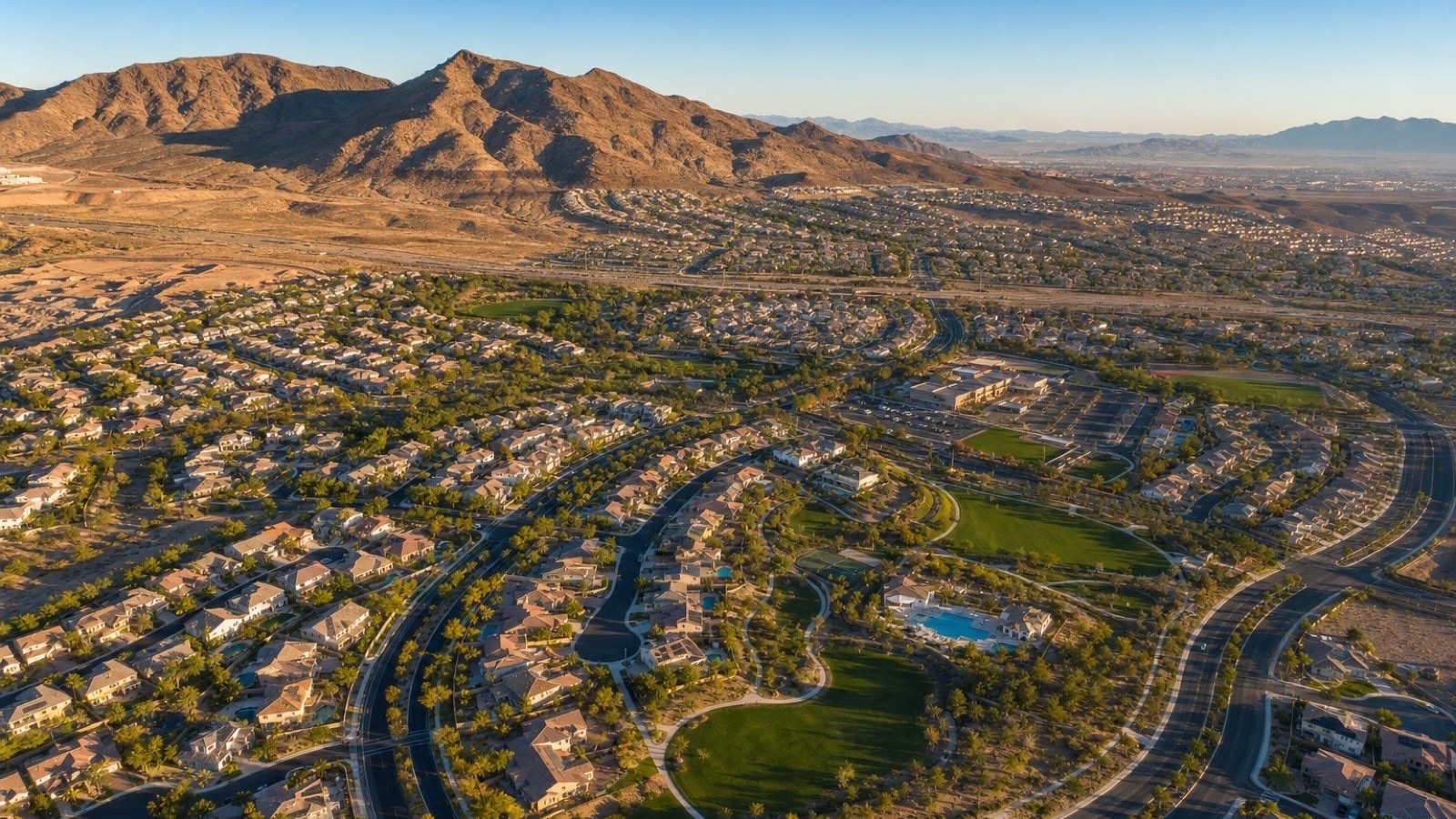
This is where statewide coverage becomes a real advantage. Nevada Real Estate Group serves nine distinct markets, each with its own price tier, buyer profile, and local "gotcha." Here is the honest snapshot.
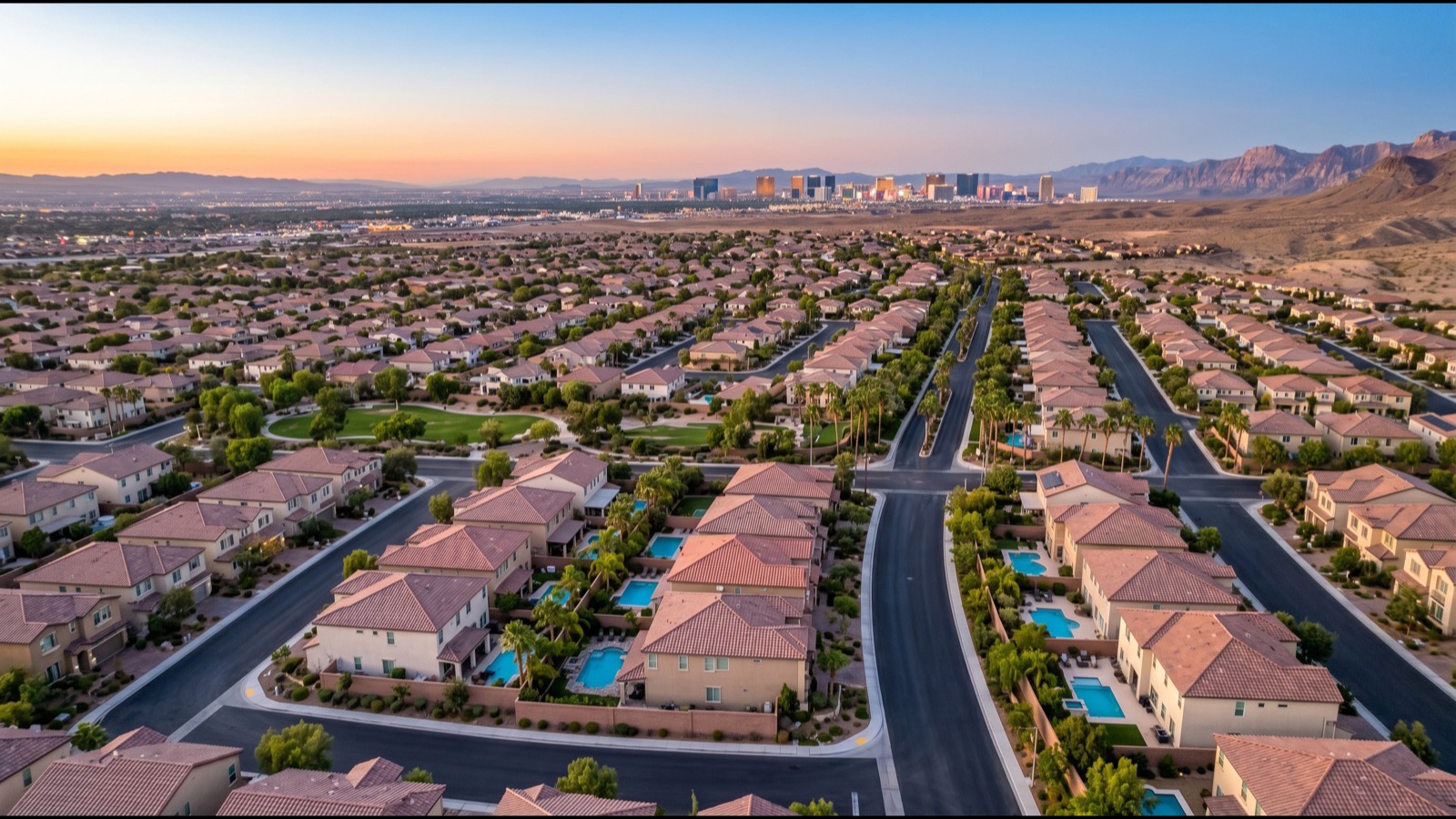
Las Vegas — The state's largest market, with a median in the mid-$400,000s and the broadest inventory. Popular areas include Spring Valley, Centennial Hills, and Mountain's Edge. The gotcha: HOA density is high, and homes near the Strip or flight paths trade at a discount for noise.
Henderson — Affluent, family-driven, and home to some of Nevada's top-rated schools. Look at Green Valley, Anthem, Inspirada, and the guard-gated MacDonald Highlands. The gotcha: heavy HOA and CC&R restrictions — read the resale package carefully before you commit.
Summerlin — A master-planned community on the western edge of the valley with a $750,000-plus median, golf, and Red Rock Canyon access. The Ridges, The Mesa, and Stonebridge are signature villages. The gotcha: you pay a premium for the brand and amenities you may not use.
North Las Vegas — The most affordable corner of the Vegas Valley and one of the fastest-growing, with master plans like Aliante and Eldorado. A genuine first-time-buyer haven. The gotcha: commute times to the south valley can be long.
Boulder City — A small town with no Strip noise, hydropower-discounted electricity, and a retirement-friendly pace near Lake Mead. The gotcha: limited inventory and slower-growth zoning by design — homes are scarce and hold value.
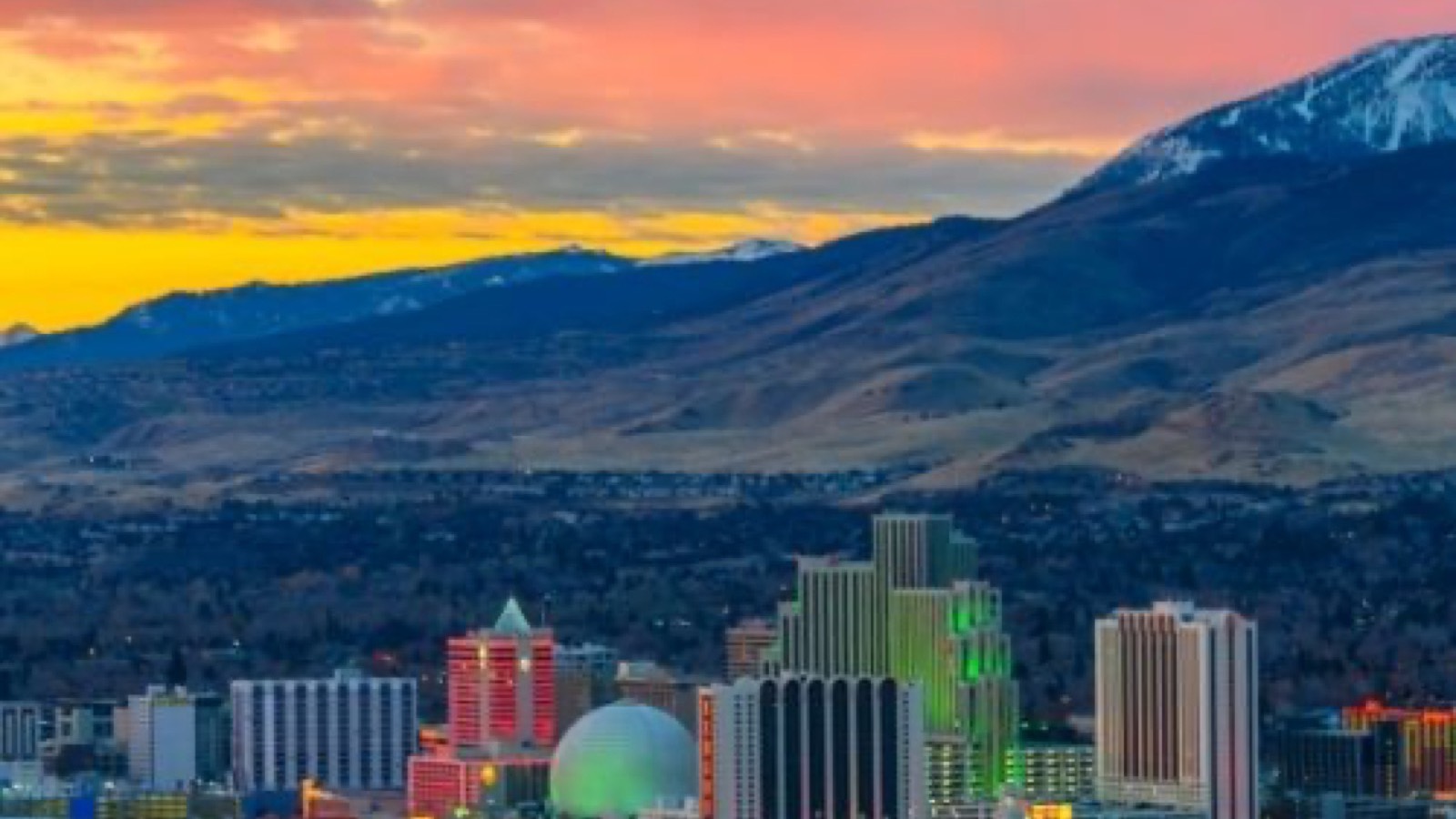
Reno — Northern Nevada's tech-driven hub, lifted by the Tesla ripple and Sierra Nevada views. Old Southwest, Caughlin Ranch, Somersett, Damonte Ranch, and ArrowCreek anchor the market. The gotcha: prices run higher than Las Vegas, and winters bring real snow at elevation.
Sparks — Reno's more affordable sibling to the east, with strong growth in Spanish Springs and steady demand from Tesla and warehouse-corridor workers. The gotcha: some newer master plans sit far from the Reno core.
Carson City — The state capital, retirement-friendly and lower-cost than Reno, about 30 minutes south. The gotcha: a smaller job market and thinner luxury inventory.
Pahrump — Rural, USDA-eligible, and popular for retirement and second homes about an hour west of Las Vegas. The gotcha: water rights and well/septic considerations are real — always verify before buying rural land.
| City | Typical Median | Best-Fit Buyer | Region |
|---|---|---|---|
| Las Vegas | Mid-$400,000s | Broad — first-time to luxury | Southern |
| Henderson | $550,000–$700,000 | Families, schools, move-up | Southern |
| Summerlin | $750,000-plus | Luxury, master-plan lifestyle | Southern |
| North Las Vegas | Low-to-mid $400,000s | First-time, value buyers | Southern |
| Boulder City | $450,000–$650,000 | Retirees, quiet-living | Southern |
| Reno | $600,000s | Tech workers, relocators | Northern |
| Sparks | $500,000s | Value buyers, families | Northern |
| Carson City | $450,000–$550,000 | Retirees, state employees | Northern |
| Pahrump | $300,000–$400,000 | Rural, retirement, second home | Southern |
Are There First-Time Home Buyer Programs in Nevada?
Yes — and they are more generous than most buyers realize. According to the Nevada Housing Division, the state runs several programs designed specifically to lower the cash barrier to a first home.
The flagship is Home Is Possible, which provides down payment and closing-cost assistance as a percentage of the loan, paired with a competitive 30-year fixed mortgage. For the smaller and rural markets, Home At Last through Nevada Rural Housing offers similar assistance. Both can be combined with FHA, VA, or USDA financing. There is also the Mortgage Credit Certificate (MCC), which converts a portion of your annual mortgage interest into a dollar-for-dollar federal tax credit — real money back every year you own the home.
| Program | What It Offers | Best For |
|---|---|---|
| Home Is Possible | Down payment + closing-cost assistance | Statewide first-time and repeat buyers |
| Home At Last | Down payment + closing-cost help | Rural and smaller-market buyers |
| Mortgage Credit Certificate | Annual federal tax credit | Buyers who want ongoing tax savings |
| FHA / VA / USDA | Low- or zero-down federal loans | Stacks with state programs |
Each program has income caps that vary by county, and according to HUD's Nevada office, eligibility and funding cycles change through the year. The practical move is to get screened early — we check every first-time buyer against current program rules before they shop, because qualifying can change which neighborhoods are realistic. First-time buyers can start with our first-time buyer resources for a full overview.
How Do You Find the Right Nevada Realtor?
The single most important decision you make as a buyer is who represents you. A strong agent protects your earnest money, negotiates thousands off the price, and catches the problems that cost buyers dearly later.
Start by verifying the license. The Nevada Real Estate Division maintains a public lookup at red.nv.gov where you can confirm any agent's status, brokerage, and disciplinary history in two minutes. Then confirm city-specific expertise — and this matters more in Nevada than almost anywhere, because Las Vegas and Reno run on entirely different MLS systems (GLVAR in the south, NNRMLS in the north). An agent who closes constantly in Henderson may have never written an offer in Sparks, and vice versa.
Interview at least three agents and ask each the same questions: their closed-transaction count in your target city, their list-to-sale ratio, and how they handle a low appraisal. For a deeper framework, read our companion guides on how to choose a Realtor in Reno and how to choose a real estate agent in Las Vegas. Because Nevada Real Estate Group operates a 150-plus-agent team across both regions, we can match you with an agent who lives and works in your specific market — Southern buyers reach us at (702) 637-1759, Northern buyers at (775) 277-2120.
What Buyer Mistakes Should You Avoid in Nevada?
Across thousands of Nevada closings, the same avoidable mistakes show up again and again. Here are the ones that cost buyers the most.
Skipping pre-approval before touring. You fall in love with a home, then discover you cannot move fast enough to compete. Get the letter first.
Ignoring the HOA documents. Henderson, Summerlin, Anthem, and ArrowCreek are heavily governed by CC&Rs that can ban work vehicles, short-term rentals, RV parking, or exterior changes. Always read the resale package before you remove contingencies.
Not checking water rights in rural areas. In Pahrump and parts of Carson Valley, the well and water rights can matter more than the house itself. Verify before you buy.
Skipping inspection on new construction. Builders make mistakes too. A third-party inspection on a brand-new home routinely finds items the builder will fix for free before closing.
Using the builder's preferred lender without comparison shopping. Builder incentives can be real, but so can above-market rates. Always get a competing quote — a 0.5% rate difference is worth tens of thousands over the loan.
Trusting an automated online price estimate over a real CMA. Automated valuation models miss condition, location nuance, and recent comparable sales. A Realtor's comparative market analysis is what actually prices a Nevada home — lean on it, not an algorithm.
What Do Nevada Home Buyers Actually Say About the Process?
The illustrations below are composites — drawn from situations Nevada buyers describe regularly, not verbatim quotes from named clients — but each reflects a real decision point we see across Las Vegas, Henderson, and Reno transactions.
A family relocating from Sacramento to Henderson: "We were so focused on the house we almost skipped the HOA docs. The CC&Rs banned the work van my husband needs for his business. Our agent caught it during the resale-package review before we were locked in."
A first-time buyer in North Las Vegas: "Three lenders quoted me three different rates on the same day — same credit score, same down payment. The spread was about 0.6%, which worked out to roughly $84 a month for thirty years. Shopping lenders was the best hour I spent."
A retiree moving to Boulder City: "I assumed 'Vegas Valley' meant Vegas. Boulder City is its own world — no Strip noise, discounted power, friendlier zoning. My agent showed me a few quiet areas and this one won easily."
A relocating remote worker headed to Caughlin Ranch: "I needed someone who knew both the Reno MLS and the Lake Tahoe MLS for a possible second home. Only one of the three agents I interviewed actually worked both."
A military buyer transferring to Sparks: "A VA loan plus a new-employer income overlay confused my first lender. NREG's agent referred me to a lender who understood it and closed in 22 days."
The common thread: the buyers who came out ahead leaned on an agent who flagged the problem before it became expensive. According to the Consumer Financial Protection Bureau, comparison shopping and reading disclosures carefully are the two habits most correlated with buyer satisfaction — and both are exactly what a good agent forces you to do.
What Do NREG's Nevada Transaction Numbers Show?
The clearest case for working with a high-volume statewide team is what the production record shows. Nevada Real Estate Group is the #1 real estate team in Nevada and #44 in the nation, with more than 9,600 career closings and over $4.85 billion in total sales volume. In 2025 alone, the team closed 789 homes representing more than $440 million. Those are verifiable team numbers, not estimates.
What they reveal lines up with independent research. According to the National Association of Realtors, the typical buyer tours roughly 8 to 15 homes and the median first-time buyer puts down well under 20% — closer to single digits — which is exactly why the down-payment myth costs people years of waiting. And per the Nevada Real Estate Division, the state has roughly 35,000 licensed agents, but only a small fraction close enough transactions each year to develop the process muscle memory that protects a buyer in a tough deal.
| Factor | Low-Volume Agent | High-Volume Statewide Team (NREG) |
|---|---|---|
| Appraisal-gap experience | Rare | Hundreds resolved across 9,600-plus closings |
| Multi-market coverage | One city, one MLS | Both GLVAR and NNRMLS, all 9 cities |
| Lender + vendor network | Limited | Statewide, including VA and program specialists |
| Negotiation leverage | Low | High — reputation precedes the offer |
Source: Nevada Real Estate Group team production records, contextualized with published research from the National Association of Realtors and licensing data from the Nevada Real Estate Division. Ranges describe typical patterns, not a guarantee of individual results.
How Has Buying a House in Nevada Changed in 2026?
The Nevada buying process looks different than it did even two years ago, and the changes favor informed buyers.
The biggest shift is the 2024 NAR settlement, which made the buyer-broker agreement a required, written, negotiated document before touring — so the question of who represents you and who pays your agent is now settled up front instead of buried in the fine print. Lender pre-approval has also become faster and more automated, which helps buyers compete, but it makes comparison shopping more important than ever, because the easiest quote is rarely the cheapest.
On the market side, inventory in the Las Vegas Valley has recovered from the pandemic lows toward a more balanced footing, giving buyers room to negotiate inspection items and seller concessions again. In the north, the technology and logistics boom — Tesla, lithium projects, and the broader Tahoe-Reno Industrial Center — keeps Reno and Sparks demand firm even as the broader market normalizes. And the long wave of relocation from California has settled into a steady, durable trend rather than the frenzy of 2021. For buyers, the net effect is a healthier, more rational market in which preparation and good representation matter more than speed alone. When you are ready, you can contact our team or browse active listings on our home search.
Frequently Asked Questions About Buying a House in Nevada
How much do I need for a down payment to buy a house in Nevada?
It depends on your loan. Conventional loans start at 3% to 5% down, FHA at 3.5%, and VA and USDA loans allow zero down for those who qualify. On a $450,000 Nevada home, that ranges from $0 to roughly $22,500 for a 5% conventional loan. State programs like Home Is Possible can cover much of the down payment for eligible first-time buyers, so do not assume you need 20%.
What credit score do I need to buy a house in Nevada?
Most conventional loans require a 620 credit score. FHA loans go down to 580 with 3.5% down, VA loans typically want 620 (no statutory minimum), and USDA loans look for about 640. A higher score earns a lower rate — often worth tens of thousands over the life of the loan — so it pays to improve your score before applying if you have time.
How long does it take to buy a house in Nevada?
Plan on about 45 to 60 days from accepted offer to closing once you are pre-approved, with roughly 30 to 45 of those days spent on inspections, the appraisal, and loan underwriting. Cash purchases can close faster — sometimes in two to three weeks — because they skip the financing timeline.
What are closing costs on a Nevada home purchase?
Buyer closing costs in Nevada typically run 2% to 3% of the purchase price — about $10,000 to $15,000 on a $500,000 home. They include lender fees, title insurance, escrow, recording, and prepaid taxes and insurance. The Nevada transfer tax ($1.95 per $500 in Clark County, $2.55 per $500 in Washoe County) is customarily paid by the seller, but it is negotiable.
Do first-time home buyers get special programs in Nevada?
Yes. The Nevada Housing Division runs Home Is Possible and Home At Last, which provide down payment and closing-cost assistance, plus a Mortgage Credit Certificate that gives an annual federal tax credit. These stack with FHA, VA, and USDA loans. Income caps apply by county, so get screened early to confirm eligibility before you shop.
Should I buy a house in Las Vegas or Reno in 2026?
It comes down to lifestyle and budget. Las Vegas offers a lower median price (mid-$400,000s), warm year-round weather, and the broadest inventory. Reno runs higher (in the $600,000s) but delivers four seasons, Sierra Nevada and Lake Tahoe access, and a fast-growing tech economy. Both share Nevada's no-income-tax advantage. We help buyers compare both honestly because we work statewide.
Can I buy a Nevada house remotely from out of state?
Absolutely — a large share of Nevada buyers relocate from California and other states and buy before they move. With video tours, electronic signatures, and remote notarization, you can complete most of the process without being here. Your agent acts as your eyes on the ground for showings, inspections, and the final walkthrough.
What's the difference between buying new construction and resale in Nevada?
New construction lets you customize and comes with builder warranties, but base prices often exclude upgrades, lot premiums, and landscaping, and timelines can slip. Resale homes are move-in ready, usually have mature landscaping, and let you negotiate on price and repairs. Either way, get an independent inspection — even on a brand-new home — and compare the builder's lender against outside quotes before committing.
Ready to Buy a House in Nevada?
Buying a house in Nevada is a major financial decision, and the right preparation and representation change your outcome by thousands of dollars. Get pre-approved, verify your agent's license and local expertise, read every HOA and disclosure document, and lean on a comparative market analysis rather than an online estimate. The process is the same statewide — but the prices, programs, and pitfalls differ city by city, which is exactly why local, full-time representation matters.
Nevada Real Estate Group serves all nine markets in this guide with a 150-plus-agent team, #1 in Nevada and #44 in the nation, backed by more than 9,600 closings and $4.85 billion-plus in volume. Whether you are buying your first home in North Las Vegas, moving up in Henderson, or relocating to Reno, an early conversation costs nothing and can save you thousands. Call our Southern Nevada team at (702) 637-1759 or our Northern Nevada team at (775) 277-2120, learn more on our about page, or explore options with our buyer resources.
Which Sources Inform This Nevada Home-Buying Guide?
This guide draws on Nevada Real Estate Group's direct transaction experience across the state plus public data from regulatory and industry authorities. Prices, rates, programs, and rules change — confirm specifics with the relevant authority or a qualified professional before acting. This is general educational information, not legal, financial, or tax advice.
- Las Vegas REALTORS — Southern Nevada market data
- Reno/Sparks Association of REALTORS — Northern Nevada market data
- Nevada Real Estate Division — license lookup and agency rules
- Nevada Revised Statutes Chapter 645 — Real Estate Broker and Salesperson Act
- Nevada Housing Division — Home Is Possible and assistance programs
- HUD Nevada — federal housing programs
- Freddie Mac — Primary Mortgage Market Survey
- National Association of Realtors — buyer research and settlement FAQs
- Consumer Financial Protection Bureau — mortgage and buyer guidance
- Clark County Recorder — transfer tax and recording
- Washoe County Recorder — transfer tax and recording
- Nevada Department of Taxation — no state income tax
- U.S. Census Bureau — Nevada QuickFacts