

Palm Springs and Las Vegas are the two desert cities where American retirees have gone to find sun since the 1950s, and every winter our office fields calls from households comparing them. The comparison is real: both are dry, both have a golf course for every taste, both are an easy flight from anywhere, and both have deep 55+ housing markets. The differences are just as real, and most of them are on a bill. A detached home in Palm Springs cost $1.17 million at the median this summer against $475,000 in Las Vegas; California taxes pension and IRA withdrawals and Nevada does not; and the electricity that runs the air conditioning both cities depend on costs 2.6 times as much in Palm Springs.
To widen the search beyond these two desert markets, compare the housing and climate trade-offs among warm-weather retirement cities.
I have helped many households make this move in both directions, and the honest summary is that Palm Springs wins the winter and the small-town charm, and Las Vegas wins almost every number. This guide runs housing, taxes, climate, healthcare, transportation and daily life side by side with 2026 data, and then tells you who should pick which.
Las Vegas is the cheaper retirement by a wide margin: the median existing single-family home sold for $475,000 in August 2026 against $1.17 million for a detached Palm Springs home, Nevada has no income tax while California taxes pensions and IRA withdrawals at up to 13.3%, and Nevada's residential electricity averaged 13.11 cents per kilowatt-hour against California's 34.74. Palm Springs wins winter comfort, with a 70.5-degree January high against 58.5, and a slower resort-town pace.
- Housing: Las Vegas single-family median $475,000 in August 2026; Palm Springs detached $1.17 million, attached $434,000.
- Taxes: Nevada has no income tax; California taxes pensions and IRA withdrawals, with a top rate of 13.3%.
- Electricity: Nevada 13.11 cents per kilowatt-hour in June 2026 versus California's 34.74, per the EIA.
- Climate: Palm Springs averages 115 days at or above 100 degrees and a 70.5-degree January high; Las Vegas 78 and 58.5.
- Airports: Harry Reid served nearly 55 million passengers in 2025; Palm Springs a record 3.3 million.
What Does a Retirement Home Cost in Las Vegas Versus Palm Springs?
Start with the biggest line. According to Las Vegas REALTORS, the median price of an existing single-family home sold in Southern Nevada was $475,000 in August 2026, down 1% from a year earlier and off the $490,000 record set in May and June, while the median condo or townhome sold for $299,900. The National Association of REALTORS put the Las Vegas-Henderson metro's second-quarter 2026 single-family median at $486,300, up 0.2% from a year earlier. Inventory is the deepest since 2020, with roughly 7,590 single-family homes and 2,714 condos listed without offers at the end of August, which means a retiree shopping this fall has choice and leverage.
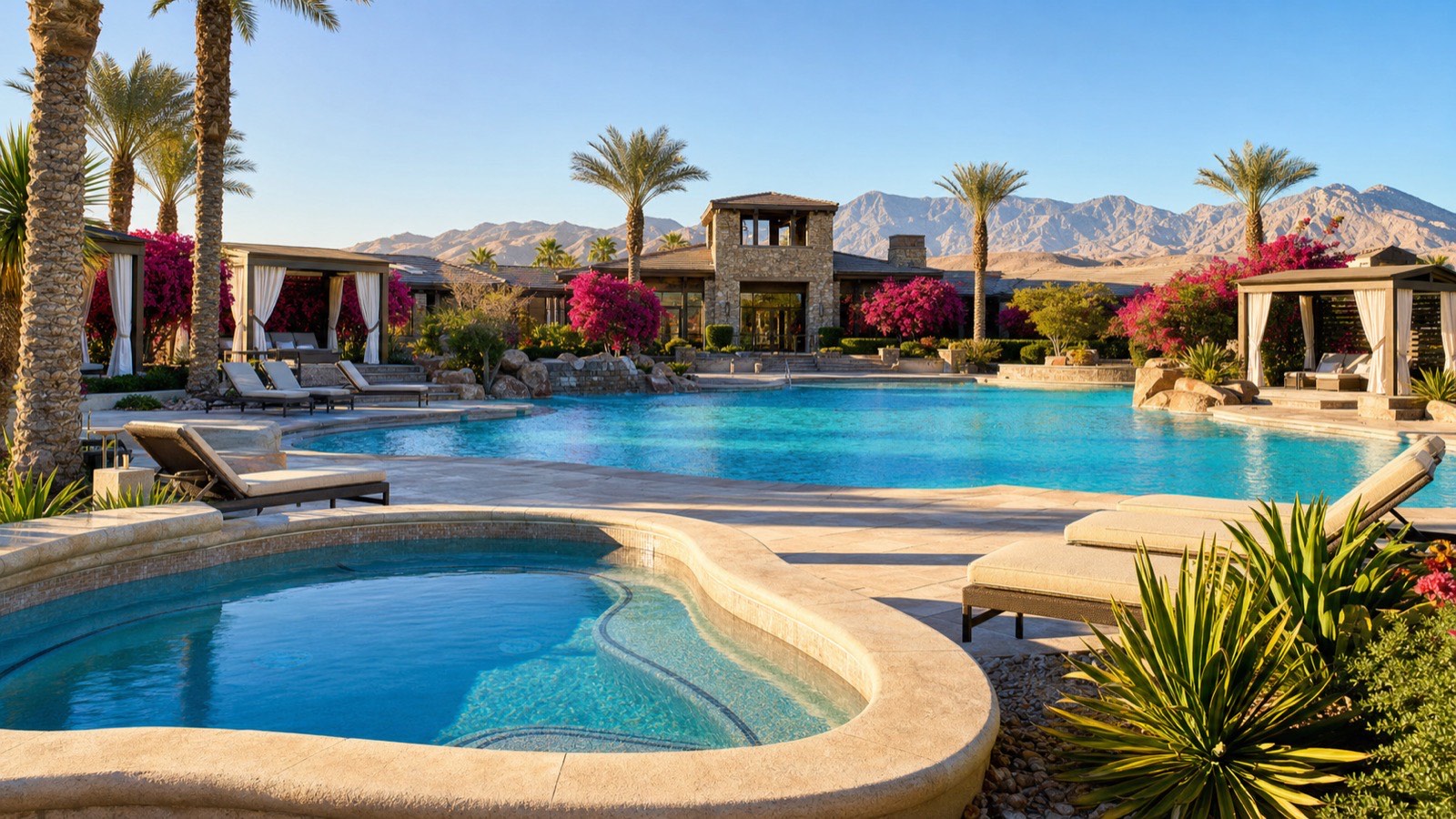
Palm Springs is a different price universe. According to The Palm Springs Post, reporting the Greater Palm Springs REALTORS' Desert Housing Report for the three months ending June 2026, the median price of a detached home in the city of Palm Springs fell 6% from a year earlier to $1.17 million, attached homes fell 4% to $434,000, and the city had 638 homes on the market at the start of the month, down 116 from a year earlier. Across the whole Coachella Valley, which includes Palm Desert, La Quinta, Rancho Mirage, Indio and Cathedral City, the detached median was $654,000 and the attached median $455,000, with valley-wide inventory down about 11% to 2,965 units. Riverside County as a whole, per the California Association of REALTORS' July report, ran $649,000.
The Census Bureau's longer view says the same thing. According to the U.S. Census Bureau, the median owner-occupied home in the city of Las Vegas was valued at $427,900 in the 2020 to 2024 survey, against $604,000 in the city of Palm Springs, $542,000 in Palm Desert and $661,600 in La Quinta. The Palm Springs figure is lower than the current sale median because the survey counts every home, including the condos that make up much of the city's stock, and because prices rose after the survey period. Either way, a retiree selling a $700,000 house elsewhere can buy the Las Vegas median and bank $225,000, or buy the Palm Springs detached median and add $470,000.
| Measure | Las Vegas | Palm Springs (city) | Coachella Valley |
|---|---|---|---|
| Detached median sale price | $475,000 (August 2026, LVR) | $1,170,000 (3 months ending June 2026, GPSR) | $654,000 (same period, GPSR) |
| Attached or condo median | $299,900 (August 2026, LVR) | $434,000 | $455,000 |
| Metro single-family median, Q2 2026 (NAR) | $486,300 (Las Vegas-Henderson) | $605,000 (Riverside-San Bernardino) | |
| Year-over-year, detached | down 1% | down 6% | down 5.2% |
| Homes listed without offers or on market | 7,590 single-family, 2,714 condo | 638 | 2,965 |
| Census median home value, 2020 to 2024 | $427,900 | $604,000 | Palm Desert $542,000, La Quinta $661,600 |
| Median gross rent, 2020 to 2024 | $1,563 | $1,562 | Palm Desert $1,778 |
How Do Nevada and California Taxes Compare for a Retiree?
This is the line that decides the move for many households. According to the Tax Foundation, Nevada levies no individual income tax, while California's top marginal rate is 13.3% on income above $1 million and its brackets start at 1%. What matters for a retiree is what California taxes: according to the California Franchise Tax Board, Social Security benefits are exempt from state tax, but pensions, traditional IRA and 401(k) withdrawals and most other retirement income are taxed as ordinary income with no retirement exclusion. A married couple drawing $100,000 a year from IRAs and pensions pays roughly $2,500 in California income tax under the 2025 brackets after the standard deduction, and a single filer with the same income roughly $5,300; in Nevada both pay nothing.
Sales tax runs the other way but by less. According to the Tax Foundation's midyear 2026 sales tax report, Nevada's combined state and average local rate is 8.24% and California's 9.03%; in Clark County the combined rate is 8.375%, and according to the City of Palm Springs, the city's combined rate is 9.25%. On $40,000 a year of taxable purchases that is a $350 difference, small against the income-tax line.
Property tax favors Nevada as well. According to the U.S. Census Bureau's 2020 to 2024 survey, the median Clark County owner paid $2,057 in real estate taxes on a $431,000 median home, an effective rate of about 0.48%, and the median Riverside County owner paid $4,348 on a $557,300 home, about 0.78%. California's Proposition 13 caps the base rate at 1% of purchase price plus voter-approved additions, and Palm Springs-area brokers quote total rates of 1.2% to 1.3%, which on a $1.17 million home is $14,000 to $15,000 a year; Nevada assesses at 35% of taxable value against a local rate, and its 3% cap on annual increases for owner-occupied homes under NRS 361.4723 keeps the bill predictable after purchase. Neither state has an estate or inheritance tax, so that line is a wash.
| Tax | Nevada (Las Vegas) | California (Palm Springs) |
|---|---|---|
| State income tax | None | 1% to 13.3%; pensions and IRA or 401(k) withdrawals taxed, Social Security exempt |
| Income tax on $100,000 of pension and IRA income (2025 brackets, estimate) | $0 | about $2,500 married, $5,300 single |
| Combined sales tax | 8.375% in Clark County (8.24% state average) | 9.25% in Palm Springs (9.03% state average) |
| Effective property tax (Census, 2020 to 2024) | about 0.48% in Clark County, 3% annual cap | about 0.78% in Riverside County; 1.2% to 1.3% quoted locally |
| Property tax on the detached median | about $2,300 on $475,000 | about $14,000 to $15,000 on $1.17 million |
| Estate or inheritance tax | None | None |
How Do the Climates Actually Compare, Month by Month?
Both are hot deserts, and the honest comparison is that Palm Springs is warmer in every month. According to NOAA's 1991 to 2020 climate normals for the Palm Springs Regional Airport and Harry Reid International Airport, Palm Springs' average January high is 70.5 degrees with a 47.6-degree low, against 58.5 and 40.5 in Las Vegas; in April it is 86.7 against 78.5; in July it is 108.6 against 104.5; and in October it is 91.1 against 81.2. Palm Springs averages 115 days a year at or above 100 degrees and 177 days at or above 90; Las Vegas averages 78 and 137. Las Vegas averages about 10 nights a year at or below freezing; Palm Springs averages fewer than one. Annual rainfall is nearly identical, 4.18 inches in Las Vegas and 4.61 in Palm Springs.
What that means in practice is a trade. Palm Springs' winter is the retirement winter people picture: 70-degree afternoons in January, pool weather by March, and a social season that runs from Thanksgiving through Modernism Week and the tennis in Indian Wells to Coachella in April. Las Vegas' winter is cooler, with January afternoons in the high 50s and a few frosty mornings, which is sweater weather rather than swimsuit weather, though the sun is out nearly every day. The summers reverse the favor: Las Vegas is brutally hot from June through September, and Palm Springs is hotter for longer, with a 108.6-degree July high and a season that runs from May into October. Many Palm Springs residents leave for the summer, which is why the city has so many second homes and why its summer rental market is thin.
Elevation and geography matter too. Las Vegas sits at about 2,000 feet with the Spring Mountains to the west, where Mount Charleston offers 30-degree relief and winter snow 45 minutes from the Strip; Palm Springs sits at about 480 feet at the base of the San Jacinto Mountains, and the aerial tramway lifts residents to 8,500 feet and pine forest in ten minutes. Both cities have wind: Las Vegas' spring winds and Palm Springs' San Gorgonio Pass winds, which power the turbine fields on the way into town and can close a patio afternoon.
What Does Electricity and Air Conditioning Cost in Each?
Both cities run on air conditioning for five months a year, so the electricity rate is a real retirement expense. According to the U.S. Energy Information Administration, the average residential price of electricity in June 2026 was 13.11 cents per kilowatt-hour in Nevada and 34.74 cents in California, against a national average of 18.34; California's rate was the highest in the continental United States and Nevada's among the lowest in the West. A Las Vegas home served by NV Energy that uses 2,000 kilowatt-hours in a July billing cycle pays roughly $260 for the energy; the same usage in a Palm Springs home served by Southern California Edison costs roughly $695.
Over a year, the gap is a mortgage payment. A retiree household using 15,000 kilowatt-hours a year, which is typical for a 2,000-square-foot desert home with a pool pump, pays about $1,970 in Nevada and about $5,210 in California at those rates, a difference of about $3,240. Palm Springs partly compensates with rooftop solar, which its sun and its rates make attractive, and many homes come with systems installed; Las Vegas homes increasingly have solar too, and NV Energy's net-metering rules apply. Water is the other utility to check: both cities are in the driest part of the country, Las Vegas draws on the Colorado River through Lake Mead under one of the strictest conservation regimes in the West, and the Coachella Valley draws on an aquifer recharged with Colorado River water; both have tiered rates that punish a big lawn.
One Palm Springs-specific cost deserves a paragraph. A meaningful share of Palm Springs homes sit on Agua Caliente tribal allotted land under long-term land leases rather than on fee-simple lots; the buyer owns the house and leases the ground, pays an annual lease fee that can run into the thousands, and faces a lease term that eventually expires. Fee-simple homes in Palm Springs typically cost more than leased-land homes for that reason, and a buyer who has never seen a land lease needs an agent and an attorney who have. Las Vegas has no equivalent; every home in this guide's Nevada communities is fee simple.
How Do Healthcare and Hospitals Compare?
Las Vegas is a metro of about 2.3 million people with the hospital system to match. University Medical Center is the state's Level I trauma center and a teaching hospital for the UNLV Kirk Kerkorian School of Medicine; Sunrise Hospital, the HCA network's MountainView and Southern Hills hospitals, the Dignity Health St. Rose Dominican campuses, Henderson Hospital, Summerlin Hospital and Centennial Hills Hospital cover every part of the valley; the Cleveland Clinic Lou Ruvo Center for Brain Health downtown specializes in the neurological conditions of aging; and the VA Southern Nevada Healthcare System's medical center in North Las Vegas serves the valley's large veteran population. The medical corridors along West Charleston in Summerlin and Eastern Avenue in Henderson are dense with specialists, and the city's growth has drawn national systems that keep adding capacity.
Palm Springs is a resort city of about 45,000 in a valley of about 500,000, and its healthcare is good for its size. Desert Regional Medical Center in Palm Springs is the valley's trauma center, and Eisenhower Health in Rancho Mirage is a respected nonprofit system with a large medical campus and specialty centers that draw patients from across the desert; between them the Coachella Valley is well served for a retiree's routine and cardiac needs. The trade-off is depth: for tertiary care, transplant, complex oncology or academic medicine, Coachella Valley residents drive two hours to Loma Linda, Los Angeles or San Diego, while Las Vegas residents have most of it in the valley and Los Angeles an hour's flight away.
Medicare works the same in both states, and Medicare Advantage networks are dense in both metros. What differs is Medigap pricing and long-term care costs, which run higher in California; the CareScout 2025 Cost of Care Survey put the national median for assisted living at $6,200 a month, and Las Vegas providers' starting rates run below that while Palm Springs' run at or above it. Our guide to 55+ communities versus independent and assisted living in Las Vegas covers the Nevada side of that math.
How Do Airports, Family Access and Getting Around Compare?
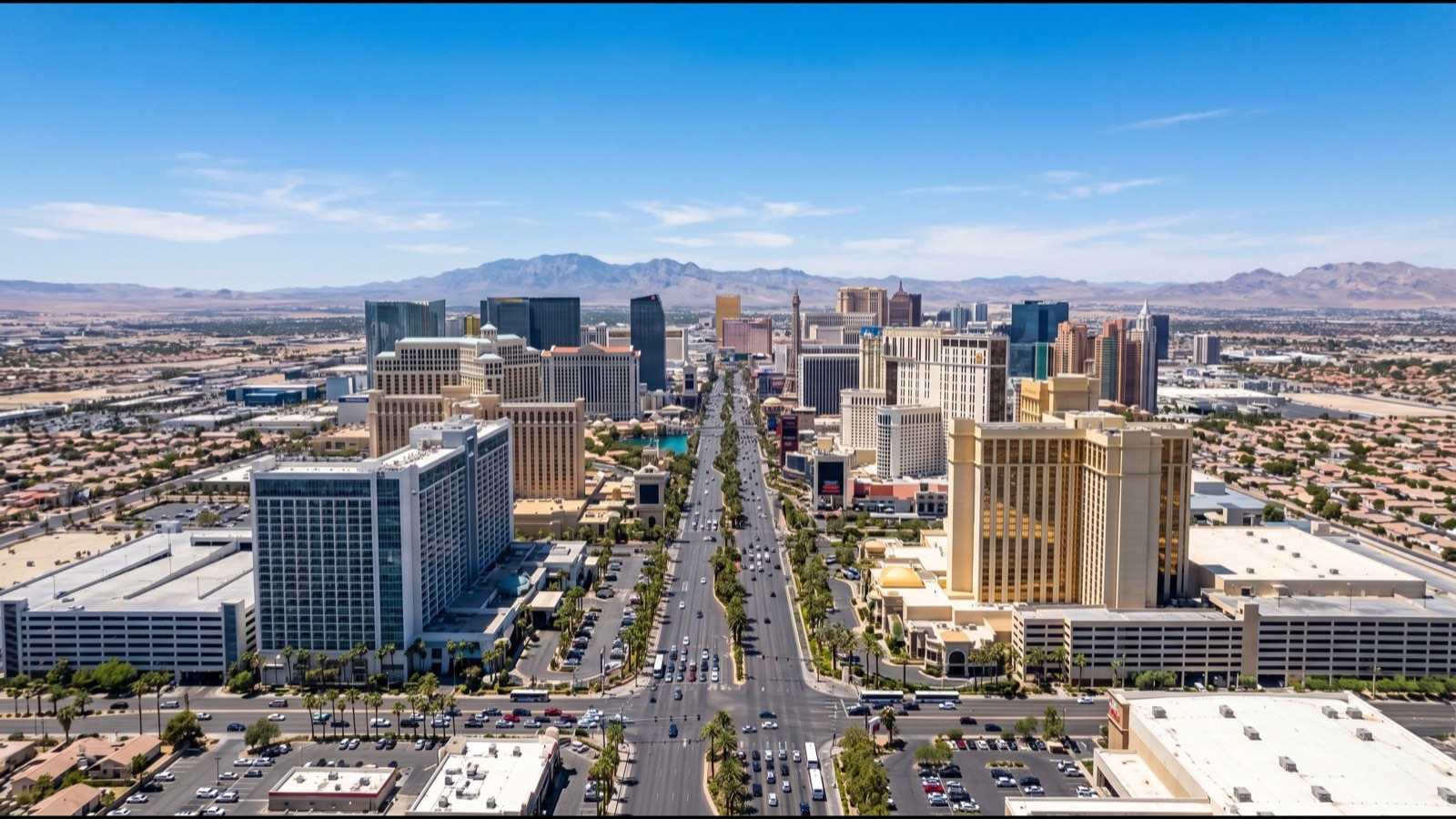
The airport is a retirement amenity, because the children visit and the grandparents travel. According to Harry Reid International Airport, the Las Vegas airport served nearly 55 million passengers in 2025, its third-highest total ever, with nonstop service to essentially every major city in North America and a growing list abroad, and it sits ten minutes from the Strip and 20 to 30 from most of the valley's 55+ communities. According to Palm Springs International Airport, it handled a record 3.3 million passengers in 2025, up about 2.4%, with strong seasonal service in winter and thinner schedules in summer; for many routes, Palm Springs residents drive two hours to Ontario, Los Angeles or San Diego.
Getting around is a car in both cities. Las Vegas has a freeway system that moves 2.3 million people and 40 million visitors, the 215 Beltway rings the valley, and the Regional Transportation Commission runs a bus network that most retirees do not use; the Monorail and the Deuce serve the Strip. Palm Springs is smaller and slower, with Highway 111 as its spine, the I-10 for the valley's length, and the SunLine bus system; traffic in season is real but nothing like Las Vegas', and downtown Palm Springs is genuinely walkable in a way no part of Las Vegas outside the Strip is. Distances to family depend on where the family is: Palm Springs is two hours from Los Angeles and San Diego by car; Las Vegas is four hours from Los Angeles and an hour by air from almost everywhere in the West.
Our moving to Las Vegas hub covers the practical side of a Nevada relocation, from establishing residency to registering a car, and it is the single most-read page on this site for a reason: the tax savings only apply once you are a Nevada resident, and California's Franchise Tax Board audits the move.
What Is Everyday Life Like in Each City for a Retiree?
Palm Springs is a resort town with a personality: mid-century architecture, a walkable downtown with galleries and restaurants, Thursday night VillageFest, Modernism Week in February, the tennis at Indian Wells in March, Coachella and Stagecoach in April, a large and visible LGBTQ community, and a social calendar that runs from November to May and then goes quiet as half the town leaves for the summer. Golf is everywhere, with well over a hundred courses across the Coachella Valley, and country-club living is the dominant housing form in Palm Desert, Rancho Mirage, Indian Wells and La Quinta. The pace is slow, the scenery is spectacular, and the median age of the city, according to the Census Bureau, is 58.5, with 35.3% of residents aged 65 and over.
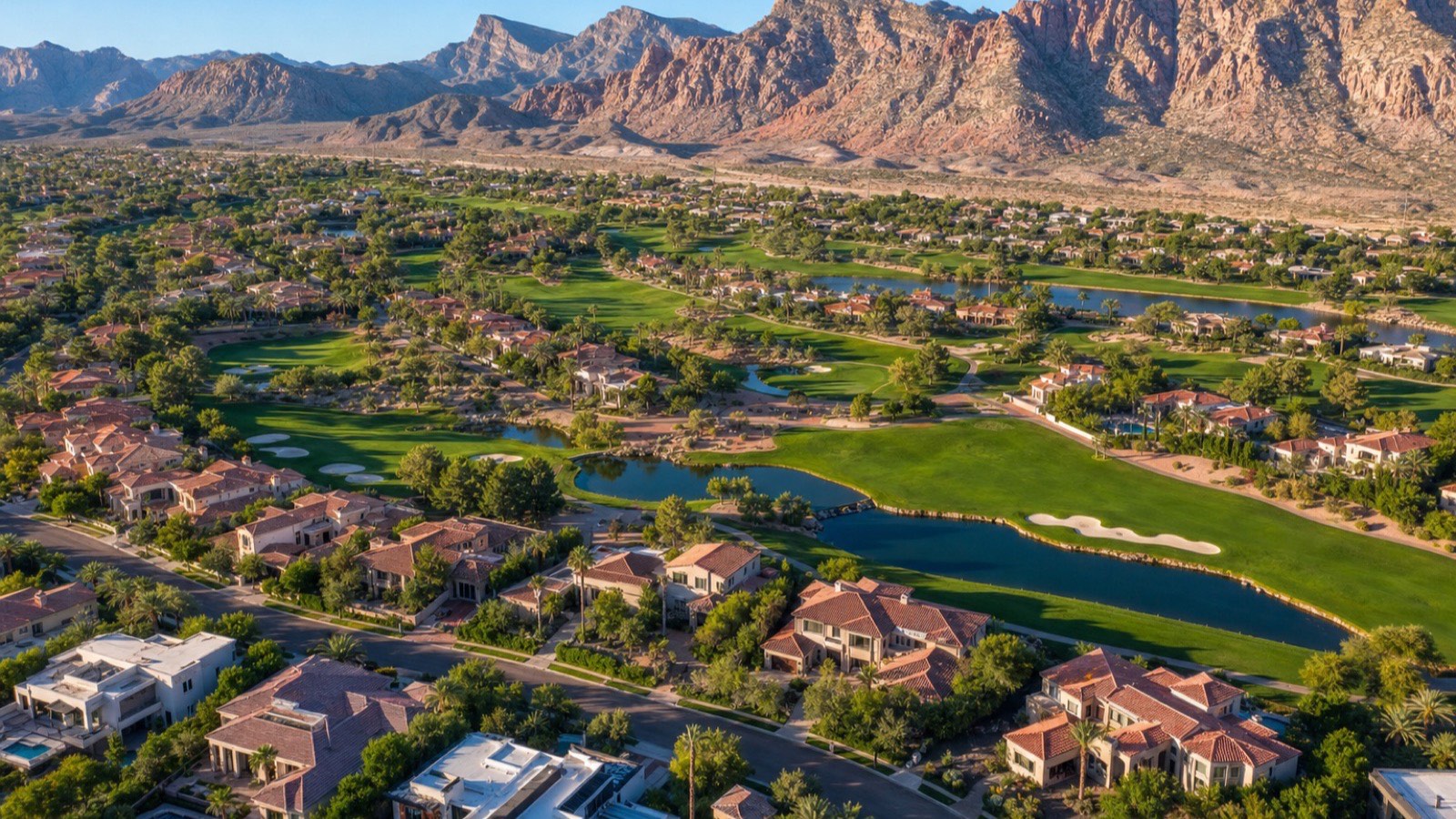
Las Vegas is a city of 2.3 million with a resort corridor in the middle. Everyday life for a retiree happens in the master plans, Summerlin, Henderson, Green Valley, Aliante, and inside the 55+ communities, where the recreation centers and club calendars rival anything in the desert; the Strip is for shows, dining and visiting grandchildren, and most residents go a few times a year. Red Rock Canyon, Lake Mead, Mount Charleston and Valley of Fire are within an hour; the Smith Center and the Sphere anchor the arts and entertainment; and the city's restaurants, from celebrity kitchens on the Strip to the Chinatown corridor on Spring Mountain Road, are better than any city its size. The median age of Las Vegas is 38.6 with 16% aged 65 and over, and Henderson's is 42.8 with 20.8%, which means a Las Vegas retiree lives in a young, growing city and chooses an age-restricted enclave inside it, while a Palm Springs retiree lives in a town that is retirement-aged by default.
Both cities have a version of the same warning. Palm Springs residents complain about summer, seasonal crowds and the cost of everything; Las Vegas residents complain about summer, traffic and the tourists. The retirees who thrive in Palm Springs want a small, beautiful, social town and can afford it; the retirees who thrive in Las Vegas want a big city's options and a small community's neighbors, at a price that leaves money for travel.
What Does the Monthly Budget Look Like for the Same Retiree in Each City?
Put the lines together for a retired couple with $100,000 a year of pension and IRA income, buying the local median with 20% down at the 6.71% rate Freddie Mac reported for the first week of September 2026. In Las Vegas, the $475,000 single-family median at 20% down leaves a $380,000 loan and a $2,455 principal-and-interest payment; property tax at 0.48% adds about $190 a month, insurance about $100, and there is no state income tax, so the housing-plus-income-tax line is about $2,745 a month. In Palm Springs, the $1.17 million detached median leaves a $936,000 jumbo loan and a $6,046 payment; property tax at 1.25% adds about $1,220 a month, insurance about $200, and California income tax on the couple's $100,000 adds about $210 a month, for a line of about $7,675.
The attached-home comparison narrows the gap without closing it. A $434,000 Palm Springs attached home at 20% down carries a $2,243 payment, about $450 in property tax, a $400 HOA fee and $60 in insurance, plus the same $210 of income tax, for about $3,365 a month; a $299,900 Las Vegas condo carries a $1,550 payment, $120 in tax, a $300 HOA fee and $50 in insurance for about $2,020. The Coachella Valley's $654,000 detached median, in Palm Desert or La Quinta rather than Palm Springs proper, carries a $3,380 payment, $680 in tax and $150 in insurance, about $4,420 with the income tax. Add electricity, about $165 a month in Nevada and $435 in California at the annual figures above, and the Las Vegas retiree at the detached median is spending roughly $2,900 a month on housing, taxes and power where the Palm Springs retiree is spending roughly $8,100.
| Line item | Las Vegas detached ($475,000) | Palm Springs detached ($1,170,000) | Coachella Valley detached ($654,000) | Las Vegas condo ($299,900) | Palm Springs attached ($434,000) |
|---|---|---|---|---|---|
| Principal and interest | $2,455 | $6,046 | $3,380 | $1,550 | $2,243 |
| Property tax | $190 | $1,220 | $680 | $120 | $450 |
| HOA dues | $0 | $0 | $0 | $300 | $400 |
| Insurance | $100 | $200 | $150 | $50 | $60 |
| State income tax on $100,000 (married) | $0 | $210 | $210 | $0 | $210 |
| Electricity (annual average) | $165 | $435 | $435 | $110 | $290 |
| Total monthly | about $2,910 | about $8,110 | about $4,855 | about $2,130 | about $3,655 |
Which 55+ Communities Compare Between the Two?
Both regions were built up by Del Webb. Sun City Palm Desert, with roughly 5,000 homes, is the Coachella Valley's flagship active-adult community, and Trilogy at La Quinta, Four Seasons at Palm Springs and a long list of country clubs round out the field; prices track the valley, with Sun City Palm Desert resales typically well above the Las Vegas Sun Cities. In Las Vegas, Sun City Summerlin closed 94 resales this summer at a $445,000 median with three golf courses and four recreation centers for about $230 a month in dues, Sun City Anthem in Henderson closed 67 at $570,000, Sun City Aliante in North Las Vegas closed 14 at $355,500, and the newer gated communities, Trilogy at Summerlin, Regency at Summerlin and Del Webb at Lake Las Vegas, run from $557,500 to $1.15 million.
The Las Vegas 55+ market has one structural advantage: choice at every price. A retiree can buy a 1990s Sun City home under $350,000, a 2020s gated home near $600,000 or a Toll Brothers home over $1 million, all within 30 minutes of the same airport and hospitals, and the Henderson and North Las Vegas hubs list a dozen options between them. The Coachella Valley's market is deeper in country clubs and thinner under $500,000, and its leased-land wrinkle applies to some of the communities in Palm Springs proper.
For buyers who want the Palm Springs feel at Las Vegas prices, the closest match is Lake Las Vegas in Henderson, a Mediterranean-styled resort community on a private lake with golf, a village and gated neighborhoods, or the country-club communities of Summerlin and Henderson. For buyers who want quiet, Boulder City and Mesquite are Nevada's small-town retirement alternatives, and Mesquite's median age of 63.4, with 46.8% of residents 65 and over per the Census Bureau, makes it the closest demographic match to Palm Springs in the state.
Who Should Pick Palm Springs, and Who Should Pick Las Vegas?
Pick Palm Springs if winter comfort is the point and the budget is not. If a 70-degree January afternoon by the pool is the retirement you have worked for, if you want a small, beautiful, walkable town with a social season and a design culture, if your family is in Southern California and two hours by car matters more than one hour by air, and if $1.17 million for a detached home or $434,000 for an attached one plus California's income tax fits your plan, Palm Springs delivers a life that no Nevada city replicates. Pick it, too, if you will leave for the summer and want a winter home in the West's most established resort town.
Pick Las Vegas if the numbers are the point. If you want to keep your pension and IRA withdrawals whole, pay a third as much for electricity, buy a detached home for $475,000 or a 55+ home for $355,500 to $570,000, fly nonstop to your grandchildren from an airport that goes everywhere, and have a Level I trauma center and a Cleveland Clinic campus in town, Las Vegas is the stronger retirement on every line except January. Pick it if you want a big city's restaurants, shows and medicine wrapped around an age-restricted enclave, and if you can live with a cooler winter and a summer that is hot but shorter than Palm Springs'.
The honest middle path, which many of our clients take, is Las Vegas as the primary residence for the tax and cost reasons and a week in Palm Springs each February. Our guides to retiring in Las Vegas and to the high-tax states retirees are leaving for Las Vegas cover the residency rules that make that plan work, and the Las Vegas homes for sale board shows what $475,000 buys this month.
How Do You Make the Move to Nevada Correctly?
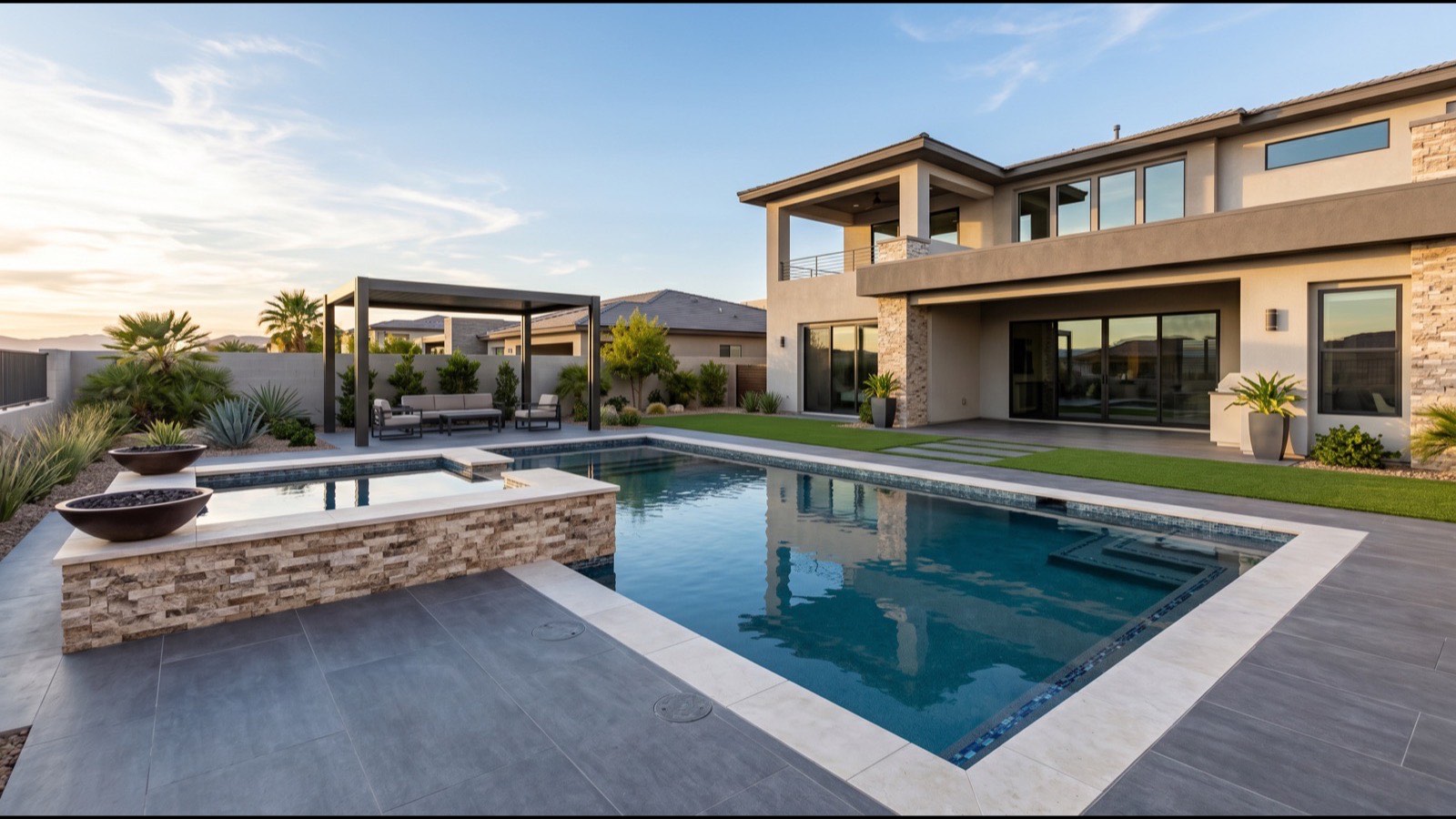
The tax savings depend on becoming a Nevada resident in a way California will accept. That means a Nevada driver's license and voter registration, a Nevada home that is your principal residence, more days in Nevada than in California each year, and moving the anchors of your life, from your doctors and your church to your safe-deposit box, to Nevada. California's Franchise Tax Board audits high-income households that leave, and a household that keeps a California home, a California business or a California social life can be taxed as a California resident regardless of where the mail goes. An accountant who has handled California exits is worth the fee in the year you move.
The housing side is simpler. Sell the California home with a plan for the capital gain, which the federal $500,000 married exclusion covers for many households and does not for households that bought decades ago; buy the Nevada home with the proceeds or with a mortgage that a retiree's income can support, because lenders qualify retirees on pension, Social Security and asset-depletion income; and get the resale package on any 55+ community under NRS 116.4109, which gives you five days to cancel after reading the association's finances and rules. Time the move to avoid a Las Vegas July if you can; October through April is when the valley shows well.
Our team relocates households from California every month, and the two conversations we have first are the residency plan and the community shortlist. Call (702) 637-1759 or visit us at 8945 W Russell Rd, Suite 170, and we will run your numbers against both cities honestly, including the ones that favor Palm Springs.
Frequently Asked Questions
Is Las Vegas or Palm Springs cheaper for retirees?
Las Vegas, by a wide margin. The median existing single-family home sold for $475,000 in August 2026 against $1.17 million for a detached Palm Springs home this summer; Nevada has no income tax while California taxes pensions and IRA withdrawals; and Nevada's residential electricity averaged 13.11 cents per kilowatt-hour against California's 34.74 in June 2026.
Which city has better winter weather?
Palm Springs. Its average January high is 70.5 degrees against 58.5 in Las Vegas, and it averages fewer than one freezing night a year against about 10 in Las Vegas, per NOAA's 1991 to 2020 normals. Palm Springs is also hotter in summer, with 115 days at or above 100 degrees against 78.
Does California tax Social Security or pensions?
California exempts Social Security benefits but taxes pensions, traditional IRA and 401(k) withdrawals and most other retirement income as ordinary income, at rates from 1% to 13.3%. Nevada taxes none of it.
How do property taxes compare?
The median Clark County owner paid about 0.48% of home value in real estate taxes in the Census Bureau's 2020 to 2024 survey, against about 0.78% in Riverside County, and Palm Springs brokers quote 1.2% to 1.3% on new purchases under Proposition 13 plus local additions. Nevada also caps annual increases on owner-occupied homes at 3%.
Which has better healthcare?
Las Vegas has more depth: a Level I trauma center, a medical school, the Cleveland Clinic Lou Ruvo Center and a dozen hospitals across the valley. Palm Springs has Desert Regional Medical Center and Eisenhower Health, both well regarded, with tertiary care two hours away in Los Angeles, Loma Linda or San Diego.
What is the leased-land issue in Palm Springs?
A share of Palm Springs homes sit on Agua Caliente tribal allotted land under long-term land leases; the owner holds the house and leases the ground, pays an annual lease fee and faces an expiration date. Fee-simple homes cost more for that reason. Every Nevada community in this guide is fee simple.
Which airport is better for visiting family?
Harry Reid International Airport served nearly 55 million passengers in 2025 with nonstop flights to nearly every major North American city. Palm Springs International Airport served a record 3.3 million with seasonal winter service; for many routes residents drive two hours to Los Angeles, Ontario or San Diego.
Which Sources Inform This Las Vegas vs Palm Springs Retirement Guide?
- Las Vegas REALTORS market statistics (August 2026 report)
- The Palm Springs Post, reporting the Greater Palm Springs REALTORS Desert Housing Report (three months ending June 2026)
- National Association of REALTORS, metropolitan median prices, second quarter 2026
- U.S. Census Bureau, American Community Survey 2020 to 2024 (Las Vegas, Palm Springs, Palm Desert, La Quinta, Henderson, Mesquite; Clark and Riverside counties)
- Tax Foundation, 2026 state individual income tax rates and 2026 sales tax rates, midyear
- California Franchise Tax Board and City of Palm Springs, sales tax
- NRS Chapter 361, property tax abatement caps and NRS Chapter 116, resale package
- NOAA National Centers for Environmental Information, 1991 to 2020 U.S. climate normals (Las Vegas McCarran and Palm Springs Regional stations)
- U.S. Energy Information Administration, Electric Power Monthly, Table 5.6.A (June 2026)
- Harry Reid International Airport, 2025 passengers and Palm Springs International Airport, 2025 passengers
- Freddie Mac Primary Mortgage Market Survey
- CareScout, 2025 Cost of Care Survey
- Related reading: our guide to why Las Vegas ranks as a top retirement destination, elsewhere on this blog
Methodology: monthly budgets assume 20% down, a 6.71% 30-year fixed rate, effective property tax rates from the Census Bureau for Clark County and locally quoted rates for Palm Springs, estimated insurance and dues, California income tax under 2025 brackets after the standard deduction, and electricity at each state's June 2026 average rate applied to 15,000 kilowatt-hours a year. They are planning figures, not quotes, and the Palm Springs figures are for the city of Palm Springs unless the Coachella Valley is named.
To compare a specific Las Vegas community with a Palm Springs alternative on one sheet, call (702) 637-1759 or visit us at 8945 W Russell Rd, Suite 170.