

Posted May 15, 2026 · Last reviewed July 14, 2026 · By Chris Nevada
For most first-time buyers in Las Vegas, the FHA loan is the single most important financing tool on the table. It is the reason a household earning the Clark County median income can still buy in a market where conventional 20%-down math prices them out. And in 2026, the program fits more of the valley than most buyers assume: when I pulled live GLVAR inventory through our Repliers feed on July 14, 2026, 8,160 of the 11,566 active Las Vegas listings — roughly 70% — were priced at or under the $541,287 Clark County FHA limit. FHA is not a niche product here. It is the mainstream path.
This guide walks through how FHA actually works for a southern Nevada buyer: the 2026 loan limits, the real credit floor, the cash you need to close, the mortgage-insurance math, how FHA stacks against conventional, appraisal gotchas unique to Las Vegas homes, condo approval, 2-to-4-unit house-hacking, the 203(k) renovation option, and how to stack FHA with the Nevada Housing Division "Home Is Possible" down payment assistance for the lowest realistic cash-to-close in the market.
An FHA loan lets Las Vegas buyers buy a primary residence with 3.5% down at a 580 credit score. The 2026 Clark County FHA single-family limit is $541,287, and live GLVAR inventory shows near 70% of Las Vegas listings priced under that cap. Buyers pay a 1.75% upfront plus 0.55% annual mortgage-insurance premium, and sellers can credit up to 6% toward closing costs — making FHA southern Nevada's dominant first-time-buyer path.
- The 2026 Clark County FHA single-family limit is $541,287, rising to roughly $1.04M on a fourplex.
- 3.5% down at 580+ FICO is about $16,730 on a $478,000 home, and 100% can be a family gift.
- Live GLVAR data (July 2026) shows near 70% of active Las Vegas listings sit under the FHA limit.
- Annual MIP runs for the life of a 3.5%-down loan; refinance to conventional near 20% equity to drop it.
- Stacking Nevada "Home Is Possible" with a 6% seller credit can push cash-to-close under $5,000.
How Do FHA Loans Actually Work For Las Vegas Buyers?
An FHA loan is a residential mortgage insured by the Federal Housing Administration, a unit of the U.S. Department of Housing and Urban Development (HUD). HUD does not lend the money. The loan is originated by a HUD-approved private lender — a bank, credit union, mortgage banker, or licensed broker — and the federal insurance backstops a portion of the lender's risk. That guarantee is what lets lenders offer lower down payments, more forgiving credit rules, and higher debt-to-income ratios than a conventional mortgage backed only by private capital.
Mechanically, an FHA loan closes the same way any Las Vegas purchase does: the buyer applies, submits income, asset, and credit documentation, the lender underwrites and issues a commitment, the property is appraised, and at closing the lender funds the loan against a deed of trust. What differs is the underwriting (more permissive) and the mortgage-insurance structure (FHA-specific premiums instead of conventional PMI). According to the HUD Single Family Housing program office, more than 7.8 million U.S. buyers used FHA financing between 2020 and 2024.
The math is why FHA matters so much in southern Nevada. Clark County's median household income runs about $76,800 per U.S. Census Bureau estimates. A conventional 20% down payment on a $478,000 home is $95,600 in cash. FHA's 3.5% down is $16,730 on the same home — a threshold a working household can actually reach. FHA is not a subsidy; the borrower pays for the insurance. But that insurance is the trade that unlocks the door for the first-time buyer, and it is fully removable later through a refinance.
FHA is the backbone of our buyer program, and it is a primary-residence program only. You cannot buy a pure investment property or a second home with it, and you must occupy the home within 60 days of closing per HUD Handbook 4000.1. The one nuance that surprises people: FHA does allow a 2-to-4-unit purchase as long as you live in one of the units — the house-hacking structure covered later in this guide.
What Are The 2026 FHA Loan Limits In Clark County?
The 2026 FHA single-family loan limit for Clark County, Nevada is $541,287. HUD resets the county figure every year, calibrating it to roughly 115% of the local median home price within a national floor and ceiling. According to HUD's county loan-limit lookup tool, the multi-unit limits scale up from there. The exact multi-unit figures should always be confirmed in HUD's lookup, but they land in the ranges shown below.
| Unit type | 2026 Clark County FHA limit | Practical note |
|---|---|---|
| Single-family (1 unit) | $541,287 | Covers about 70% of active Las Vegas inventory (live GLVAR, July 2026) |
| Duplex (2 units) | approximately $693,000 | Owner-occupied house-hack with one rental unit |
| Triplex (3 units) | approximately $837,000 | Owner-occupied; two rental units |
| Fourplex (4 units) | approximately $1,040,000 | Owner-occupied; three rental units |
The limit applies to the loan amount, not the purchase price. A buyer purchasing a $561,287 home with $20,000 down sits right at the $541,287 FHA ceiling and can still proceed under FHA. Above that, buyers either bring extra cash to keep the loan at or under the limit, or move to conventional or jumbo financing. For comparison, according to the Federal Housing Finance Agency, the parallel conventional conforming limit for Clark County sits near $806,500 — so the band between the FHA cap and the conforming cap is conventional territory.
What this means on the ground: at $541,287, FHA covers the entire entry tier and most of the mid-tier across Las Vegas, Henderson, and North Las Vegas. Where it stops is the upper tier — most established Summerlin villages above the limit, all of The Ridges and Red Rock Country Club, and the entire luxury and guard-gated segment above $1M, which require conventional or jumbo money.
What Credit Score Does A Las Vegas Buyer Need For An FHA Loan?
HUD guidelines allow FHA loans down to a 500 FICO, with scores between 500 and 579 requiring 10% down. Scores of 580 or higher qualify for the 3.5% minimum. In practice, most HUD-approved lenders layer on "overlays" — credit policies stricter than the HUD baseline — so the real-world floor in Las Vegas is usually 600 to 620 even for the 3.5%-down tier.
According to the Consumer Financial Protection Bureau, average approved FHA borrower credit trended around 670 in recent years. A 580 FHA loan is technically possible but practically harder: pricing runs materially higher, and lender selection is narrow. The table below shows the gap between the published rule and the pricing reality.
| Credit tier | HUD published rule | Typical Las Vegas lender reality | Approx. rate vs top tier |
|---|---|---|---|
| 500 to 579 | 10% down allowed | Most lenders decline; specialty lenders only | plus 1.00 to 1.50 points |
| 580 to 619 | 3.5% down allowed | Limited lenders; high rate tier | plus 0.50 to 0.875 points |
| 620 to 659 | 3.5% down allowed | Most Las Vegas FHA lenders accept | plus 0.25 to 0.50 points |
| 660 to 719 | 3.5% down allowed | Standard pricing tier | plus 0.10 to 0.25 points |
| 720 and up | 3.5% down allowed | Best FHA pricing | Baseline |
For a buyer with a 590 score, the premium over a 720-plus score on the same FHA loan typically runs 0.50 to 0.875 percentage points. On a $478,000 mortgage, that is roughly $150 to $280 more per month — tens of thousands of dollars over 30 years. The math almost always favors spending 60 to 90 days raising a borderline score 30 to 50 points before applying. A broker adds value in the 580-to-619 band because they can shop multiple investor overlays at once; across our closings, we route lower-credit buyers to the handful of Nevada FHA lenders with the most accommodating underwriting. The CFPB "Owning a Home" loan-options guide is a solid neutral resource for comparing loan estimates.
How Much Cash Does A Las Vegas FHA Buyer Need To Close?
Total cash to close on an FHA purchase typically runs 5% to 9% of the price before any seller concessions. The pieces are the 3.5% down payment, 2% to 4% in closing costs (origination, title, escrow, appraisal, recording, prepaid interest, hazard insurance, and tax reserves), and a small earnest-money deposit — usually about 1% — that applies toward the down payment at close.
On a $478,000 Las Vegas home, the math runs:
- Down payment (3.5%): $16,730
- Closing costs (about 3%): $14,340
- Total cash needed: roughly $31,070 before seller concessions
The lever that changes everything for FHA buyers: sellers can credit up to 6% of the purchase price toward buyer closing costs under FHA rules. On that same $478,000 home, a 6% credit is $28,680 — more than enough to cover closing costs, prepaid taxes, and a small rate buydown. In the moderating 2026 market, with median days on market around 26 per live GLVAR data, motivated sellers regularly agree to 3% to 6% concessions to close.
Negotiation strategy matters. Ask for the concession in the offer itself rather than during inspection renegotiation. A full-asking offer with a 5% seller credit often nets the seller more than a $25,000-under-asking offer with no credit, because the credit rolls into the loan at the slightly higher contract price. According to HUD Handbook 4000.1, the concession can cover any closing cost the buyer would otherwise pay, including discount points and prepaid items. For buyers just starting the numbers, our first-time buyer guide and mortgage pre-approval guide map the full cash picture.
What Is FHA Mortgage Insurance, And How Much Does It Cost?
FHA mortgage insurance comes in two pieces. First, an upfront premium (UFMIP) of 1.75% of the loan amount, paid at closing and usually financed into the loan. Second, an annual premium (MIP) that varies by term, loan amount, and loan-to-value ratio and is paid monthly. According to HUD's mortgagee guidelines, for a standard 30-year Las Vegas FHA purchase above 95% LTV, the annual MIP is 0.55%.
On a $478,000 home with 3.5% down ($16,730), the base loan is $461,270. UFMIP of 1.75% is $8,072, typically financed so the loan becomes about $469,342. Annual MIP at 0.55% of $469,342 is roughly $2,581 a year, or about $215 a month added to the payment.
Here is the piece buyers most often miss: for any loan originated above 90% LTV — which is every 3.5%-down FHA purchase — the annual MIP runs for the life of the loan. The MIP does not fall off automatically the way conventional PMI does at 20% equity. The standard exit is refinancing into a conventional loan once you reach roughly 20% equity, which drops the FHA insurance entirely. On a 3.5%-down purchase in an appreciating market, that point commonly arrives in four to seven years. The CFPB mortgage-insurance explainer walks through the calculation. Over a typical seven-year Las Vegas hold, total MIP on that $478,000 example runs about $8,072 upfront plus roughly $18,000 in annual premiums — near $26,000, the real, calculable "FHA tax" you weigh against conventional PMI.
How Does An FHA Loan Compare To A Conventional Loan In Las Vegas?
The right answer turns on three variables: credit score, down payment, and how long you plan to stay. For credit under about 680 with less than 10% down, FHA is usually cheaper monthly even after MIP. For credit above 720 with 5% or more down, conventional with removable PMI usually wins over a long hold. The breakeven shifts each rate cycle, so model it before you commit.
| Dimension | FHA loan | Conventional loan |
|---|---|---|
| Minimum credit | 500 (10% down) / 580 (3.5% down) | 620 typical / 660+ for best rate |
| Minimum down payment | 3.5% | 3% first-time / 5% standard |
| Clark County loan limit | $541,287 | approximately $806,500 conforming |
| Upfront insurance | 1.75% UFMIP ($8,072 on $461K) | None |
| Annual insurance | 0.55% for the life of the loan above 90% LTV | PMI 0.2% to 1.5%, drops at 20% equity |
| Max seller concession | Up to 6% of price | 3% (over 90% LTV) up to 9% |
| Gift funds | 100% of down payment | 100% with documentation |
| Property condition rules | Strict FHA appraisal (paint, handrails, safety) | Less restrictive; value-focused |
| Best fit | First-time, 580 to 700 credit, low down | Higher credit, larger down, equity-rich |
The seller-concession asymmetry is the biggest tactical edge for FHA buyers in a Las Vegas bidding situation. Where a conventional buyer on a 5%-down loan is capped at 3%, the FHA buyer can secure 6%. When a seller is comparing net proceeds across competing offers, that gap is often the deciding factor. The rule of thumb for southern Nevada: FHA wins for scores below 680 with under 10% down and for growing-family buyers who need maximum flexibility; conventional wins for 720-plus credit with 10%-plus down and equity-rich relocators who plan to refinance the insurance off within a few years.
What Are The FHA Appraisal Requirements For A Las Vegas Home?
FHA appraisals are stricter than conventional in ways that matter locally. Per HUD Handbook 4000.1, the FHA appraiser is both a value reviewer and a condition reviewer, confirming minimum property standards: working heat and electrical, no peeling paint on pre-1978 homes (lead risk), functional plumbing, no major roof defects, safe stairs and handrails, and a lot that drains away from the foundation.
In Las Vegas, the most common flags are predictable. HVAC condition tops the list — valley summers stress systems hard, and a failing unit gets cited. Then missing handrails on exterior steps or porches, peeling exterior paint on older homes, and improper yard grading that drains toward the slab. None of these are deal-killers, but each typically needs a repair before close, usually $300 to $2,800.
The repair flow decides the timeline: the seller fixes it before close (most common in a balanced market), the buyer fixes it with seller permission (less common), or the deal unwinds. Across the homes we represent, pre-screening a listing for likely FHA flags before writing the offer compresses the repair-renegotiation phase meaningfully versus discovering issues after the appraisal lands. This is exactly where an agent who closes FHA volume routinely earns their keep.
Which Las Vegas Submarkets Work Best For FHA Buyers In 2026?
FHA buyers are best served by submarkets whose median sits at or below the $541,287 limit — which, per the live GLVAR pull, is most of the valley. The cleanest matches on price are North Las Vegas, where the active median list price ran about $399,800 in July 2026, and central and east Las Vegas neighborhoods well under the cap. Outlying markets like Boulder City also sit comfortably inside FHA range for buyers who want a small-town feel. Henderson's active median of roughly $481,049 still fits FHA in most zip codes, though newer Inspirada and Cadence phases sometimes push just over the limit.
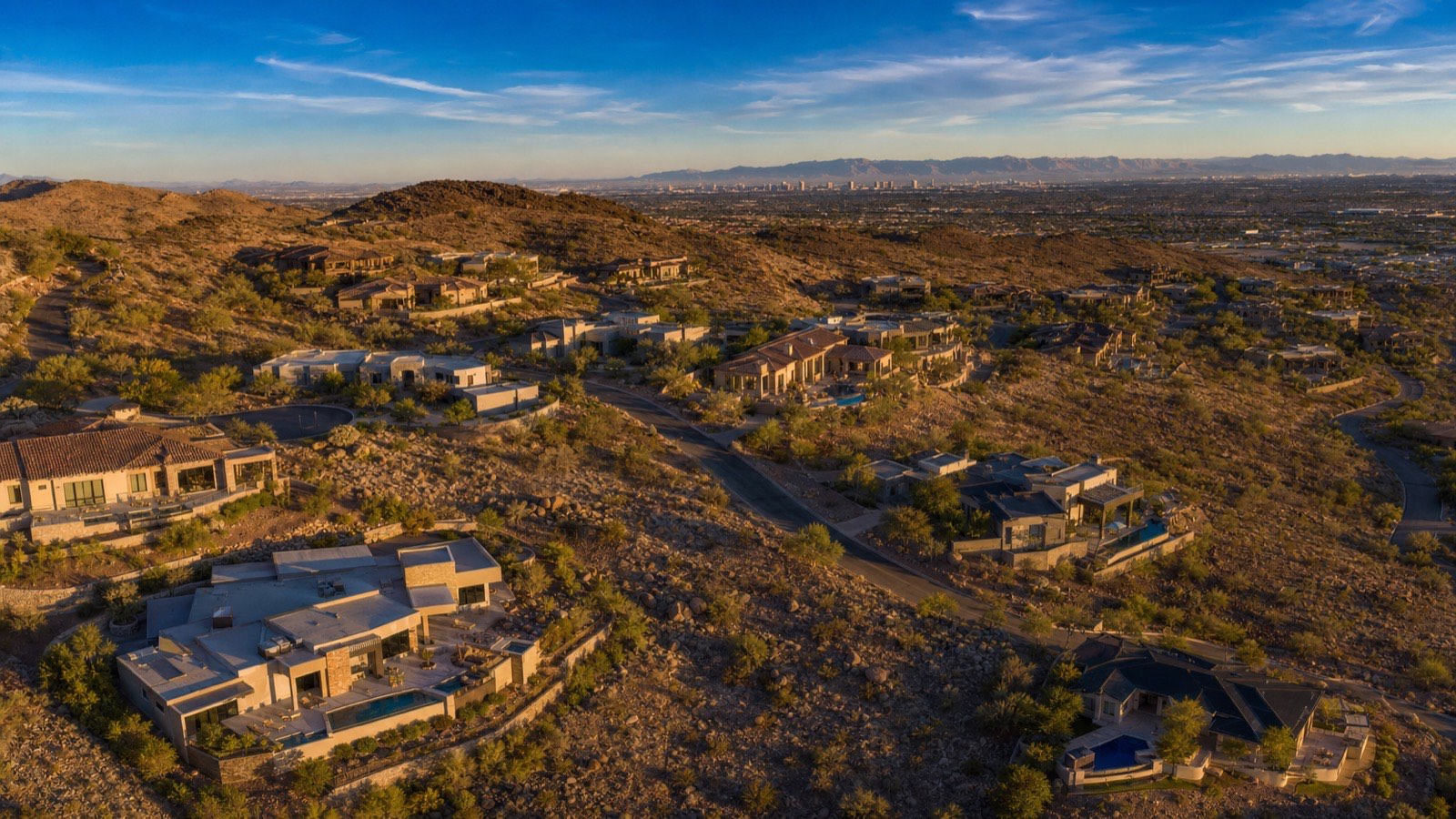
Where FHA gets hard is the upper tier. Most of established Summerlin trades above $541,287, so FHA buyers there are hunting townhomes, condos, or older single-family on smaller lots, and competition is intense. The broader point holds: with about 70% of active Las Vegas listings under the FHA ceiling, the program is not a fallback for southern Nevada buyers — it is the default. If you want to see exactly what fits your number today, our Las Vegas homes-for-sale search filters live GLVAR inventory to your price and criteria.
Can You Use An FHA Loan For A Las Vegas Condo?
Yes, with a caveat: the specific condominium project must be FHA-approved. HUD maintains a public list at the FHA-approved condominium lookup, and a lender can verify in seconds. Project approval requires the HOA to meet FHA standards — adequate reserves, at least 50% owner-occupancy, no single owner holding more than 10% of units, no pending major litigation, and dues delinquency under 15% of units.
If a project is not approved, a buyer can request a single-unit approval, which takes about four to eight weeks and adds cost. Most FHA buyers simply shop the existing approved list instead. One important distinction: townhomes attached on common walls but with individual lot ownership are not condos under FHA rules — they qualify as single-family. Many Henderson and Summerlin communities marketed as "townhomes" underwrite as single-family for FHA, which quietly expands the inventory an FHA buyer can reach.
How Do FHA Gift Funds And Non-Occupant Co-Borrowers Work?
FHA permits 100% of the down payment to come from an approved gift — typically an immediate family member, fiance, domestic partner, or a close friend with a documented long-term relationship. The gift must be a true gift with no repayment expected, documented with a signed gift letter, and traceable from the donor's account into escrow. Documentation includes the gift letter stating amount and relationship, the donor's bank statement, and the transfer record. According to the CFPB gift-fund guidance, the paper trail must be clean on both sides.
Avoid commingling. Money received as a gift should not be deposited, withdrawn as cash, then re-deposited — lenders flag that as "cash of unknown source," which can derail underwriting at the worst moment.
FHA also allows a non-occupant co-borrower — usually a parent or sibling — to help a buyer qualify on income or credit. The co-borrower's income, assets, and credit pool with the occupant's for DTI, and they sign the note, taking full repayment liability. The co-borrower must be related by blood, marriage, or law. In the most common Las Vegas case, a young first-time buyer's parents add income to bridge a DTI gap, preserving the 3.5%-down structure while expanding qualifying income substantially. The trade is that the two credit profiles become entangled — a late payment by the occupant hits the co-borrower's credit — so the money-discipline conversation belongs before the documents are signed.
Can You Buy A 2-To-4-Unit Property With FHA In Las Vegas?
This is FHA's most underused feature in southern Nevada. Because FHA is owner-occupancy based, a buyer can purchase a 2-to-4-unit property, live in one unit, and rent the others — the classic "house-hack." The multi-unit limits (roughly $693,000 for a duplex up to about $1,040,000 for a fourplex) sit well above the single-family cap, and per HUD Handbook 4000.1, expected rental income from the non-occupied units can be counted toward DTI qualification.
That last point is the lever. A buyer who could only qualify for a $460,000 single-family home on their own income can often qualify for a larger multi-unit purchase once projected rents are credited — while still putting just 3.5% down. The rental income also offsets the mortgage payment, so the effective housing cost can drop below what the same buyer would pay to rent a comparable unit. Multi-unit inventory is thinner in Las Vegas than single-family, and FHA's appraisal and self-sufficiency rules on fourplexes are stricter, but for the right buyer it is the fastest legitimate path from renter to owner-plus-landlord. Pair it with a lender who closes multi-unit FHA regularly, not one doing their first in months.
How Does An FHA Loan Work With New Construction In Las Vegas?
FHA works well with Las Vegas new construction, with a few procedural differences from resale. Per HUD Handbook 4000.1, the builder must be HUD-approved (or the spec home must meet FHA's existing-construction rules). Most major Las Vegas builders — Toll Brothers, Lennar, KB Home, Pulte, D.R. Horton, Taylor Morrison, Richmond American, Tri Pointe, Pardee, and Beazer — are approved and build to current code, so their homes generally pass FHA appraisal cleanly.
New-construction FHA requires the builder to provide a 10-year structural warranty meeting HUD standards, which aligns with the 1/2/10 warranty most Las Vegas builders already offer. It also uses a three-stage inspection — pre-foundation, framing, and final — that typically coincides with municipal building inspections, so there is no extra scheduling burden. On incentives, builder contributions of up to 6% of price can cover buyer closing costs, rate buydowns, or design-center upgrades, fully compatible with FHA. Across the 9,600+ Nevada Real Estate Group closings we've represented, the typical FHA new-construction buyer in 2026 captures $20,000 to $35,000 in builder incentives that meaningfully lower the net cost of ownership.
What Are The FHA 203(k) Renovation Loan Options?
FHA offers two structured renovation paths that wrap the purchase price and the repair budget into one mortgage with one closing and one payment. The 203(k) Standard covers renovations over $35,000 or any structural work and requires a HUD-approved 203(k) consultant. The 203(k) Limited (formerly Streamline) covers non-structural repairs up to $35,000 with a simpler process.
For Las Vegas buyers, the 203(k) shines in older central and east-valley neighborhoods where mid-century homes often need kitchen, bath, roof, or HVAC updates that a standard FHA appraisal would otherwise flag as repair-required. Instead of the seller fixing everything or the deal collapsing, the buyer rolls $25,000 to $100,000 of renovation into the mortgage at FHA rates — far cheaper than a personal loan for the same work. According to HUD's 203(k) program page, the program funds tens of thousands of transactions nationally each year. The trade: a 203(k) takes 8 to 12 weeks to close versus 6 to 7 for a standard FHA, and not every FHA lender handles them — so pre-interview a 203(k)-experienced lender before writing the offer.
How Do You Stack FHA With Nevada Down Payment Assistance?
This is the structure that gets most first-time Las Vegas buyers to the closing table. According to the Nevada Housing Division, the "Home Is Possible" program provides up to 5% of the loan amount as down payment assistance — a grant or a forgivable/low-interest second mortgage depending on terms — and it stacks directly with FHA financing. Eligibility ties to income limits (commonly up to 80% to 120% of area median income depending on the program tier), completion of an approved homebuyer-education course, and primary-residence use.
Here is a realistic stack for a first-time Las Vegas FHA buyer:
- Home price: $475,000
- FHA loan after 3.5% down ($16,625): $458,375
- Home Is Possible assistance (about 5% of loan): roughly $22,900
- Seller credit toward closing costs (up to 6%): up to $28,500
- Net cash at closing: often under $5,000
That combination — 3.5% down covered largely by DPA, closing costs covered by a seller credit — is why FHA-plus-Nevada-DPA is the dominant financing path for buyers earning roughly $60,000 to $110,000 in household income. It does add 5 to 10 days to close for dual-program coordination, so the underwriting has to be set up correctly from day one. Ask any prospective lender directly how many Home Is Possible plus FHA closings they funded last year; a confident DPA lender is doing 15 to 20 or more annually. Veterans should also run a VA-versus-FHA comparison — a VA loan offers 0% down and no monthly insurance and often beats FHA outright for eligible service members.
What Are The Most Common FHA Mistakes Las Vegas Buyers Make?
Four patterns cost FHA buyers money or contracts, repeatedly.
Taking on new credit during the loan window. Opening an auto loan, a store card, or furniture financing in the 90 days before close can re-trigger underwriting and delay or kill the deal. Lenders re-pull credit days before close in 2026, and any new account is flagged.
Moving large sums without documentation. A buyer who transfers $15,000 between accounts "to be ready for closing" must document that transfer on both sides. According to HUD Handbook 4000.1, any deposit over 50% of monthly income needs sourcing. Freeze account activity 60 days out where possible and keep deposits to payroll only.
Underestimating MIP in the affordability math. Buyers calculate on principal and interest and forget MIP adds roughly $215 a month on a typical loan — enough to push a borderline DTI file from approvable to declined.
Choosing FHA when conventional costs less. For 720-plus credit with 10%-plus down, conventional's removable PMI usually beats FHA's lifetime MIP over a 7-to-10-year hold. The breakeven is specific to your credit, down payment, and expected hold — model it, don't assume. And skipping full pre-approval is the meta-mistake behind all of these: a fully pre-approved offer beats a pre-qualified one every time a seller compares.
How Does A Las Vegas FHA Purchase Compare To The Wider Market?
The FHA-eligible corner of the market sits inside a broader Las Vegas picture. The table below frames the price bands FHA buyers compete in against the rest of the valley, using the live inventory environment as of mid-2026.
| Price band | Approx. share of active inventory | FHA fit at $541,287 limit |
|---|---|---|
| Under $400K (entry-level) | About 30% | Full FHA range |
| $400K to $541K (core move-up) | About 40% | Full FHA range |
| $541K to $806K (upper-mid) | About 18% | Conventional (over FHA cap) |
| $806K to $1.5M (luxury entry) | About 8% | Jumbo / conventional |
| $1.5M+ (luxury / custom) | About 4% | Jumbo |
The takeaway is the same one the data opened with: roughly 70% of active Las Vegas listings — the under-$541,287 world — is FHA-eligible territory. That is the concrete reason FHA is the workhorse financing tool for southern Nevada's first-time and move-up buyers, not a specialty product. When you are ready to see your monthly number against real listings, start with a pre-approval, check equity with our home-value estimator if you are also selling, and contact our team to line up the right FHA lender. Choosing the agent matters too — our guide to who the best real estate agent in Las Vegas is explains what to look for, and out-of-area buyers should read the Henderson buying guide and our first-time buyer walkthrough.
Frequently Asked Questions
What is the FHA loan limit in Las Vegas for 2026?
The Clark County single-family FHA loan limit for 2026 is $541,287 per HUD's county loan-limit lookup. Multi-unit limits scale up from there — roughly $693,000 for a duplex, about $837,000 for a triplex, and near $1,040,000 for a fourplex. These cover the entry and mid-tier across Las Vegas, Henderson, and North Las Vegas but stop short of most Summerlin upper-tier and all luxury or guard-gated inventory. Always confirm the exact figure in HUD's lookup before relying on it.
Can I get an FHA loan with a 580 credit score in Nevada?
Yes, technically — HUD allows 3.5% down at 580 or higher. Practically, most Las Vegas FHA lenders impose overlays at 620 or above, and specialty lenders who accept 580 to 619 price the loan 0.50 to 0.875 percentage points higher. On a $478,000 mortgage, that premium is roughly $150 to $280 a month. For a borderline buyer, spending 60 to 90 days raising the score past 620 usually saves tens of thousands in lifetime interest.
Is FHA mortgage insurance permanent, or does it go away?
For any FHA loan originated above 90% LTV — which includes every 3.5%-down purchase — the annual MIP runs for the life of the loan and does not fall off automatically. The only way to remove it is to refinance into a conventional loan once you reach about 20% equity. For a typical Las Vegas buyer in an appreciating market, that point commonly arrives in four to seven years through appreciation and principal reduction.
How much cash do I really need to close on an FHA home in Las Vegas?
Before concessions, plan on 5% to 9% of the price — the 3.5% down payment plus 2% to 4% in closing costs. On a $478,000 home that is roughly $31,000. But sellers can credit up to 6% toward your closing costs, and Nevada "Home Is Possible" assistance can cover much of the down payment, so a qualified buyer stacking both often closes with under $5,000 out of pocket.
Does FHA work for new construction in Las Vegas?
Yes. FHA works with new construction from HUD-approved builders — including Toll Brothers, Lennar, KB Home, Pulte, D.R. Horton, Taylor Morrison, Richmond American, Tri Pointe, Pardee, and Beazer. The process adds a three-stage inspection (pre-foundation, framing, final) and requires a 10-year structural warranty. Builder incentives of up to 6% of price can go toward closing costs or a rate buydown, fully compatible with FHA.
Can I combine FHA with Nevada down payment assistance?
Yes — and it is the primary structure for most first-time Las Vegas FHA buyers. The Nevada Housing Division "Home Is Possible" program provides up to 5% of the loan amount in assistance (commonly $15,000 to $25,000 on valley prices) and stacks directly with FHA. Combined with a seller credit toward closing costs, qualified buyers frequently close on a $400,000 to $550,000 home with under $5,000 in total cash.
Can I buy a duplex or fourplex with an FHA loan in Las Vegas?
Yes, as long as you occupy one unit. FHA's multi-unit limits reach roughly $1,040,000 for a fourplex in Clark County, and projected rental income from the other units can count toward your DTI qualification per HUD Handbook 4000.1. That lets a buyer qualify for more home than they could on a single-family basis while still putting just 3.5% down and offsetting the payment with rent.
Which Sources Inform This Las Vegas FHA Guide?
Loan limits, eligibility rules, market figures, and program data in this guide draw on the following authoritative sources, plus live GLVAR inventory pulled via Repliers on July 14, 2026:
- HUD (U.S. Department of Housing and Urban Development) — federal agency administering FHA mortgage insurance
- HUD Handbook 4000.1 — Single Family Housing Policy Handbook governing FHA underwriting, appraisal, and program standards
- HUD county loan-limit lookup — annual county-level FHA loan limits for 2026
- HUD FHA condo lookup — FHA-approved condominium project lookup
- HUD mortgagee guidelines / MIP schedule — annual MIP rates by LTV, term, and loan amount
- HUD 203(k) program — renovation loan program rules and data
- Las Vegas REALTORS (GLVAR) — Greater Las Vegas MLS median-price and inventory data
- Nevada Housing Division — state down payment assistance including Home Is Possible
- Consumer Financial Protection Bureau — mortgage lending standards and consumer-protection framework
- Freddie Mac Primary Mortgage Market Survey — weekly mortgage-rate survey covering FHA and conventional spreads
- Federal Housing Finance Agency — annual conforming loan-limit schedule for comparison with FHA limits
- U.S. Census Bureau — Clark County QuickFacts — Clark County income and demographic data
- U.S. Department of Veterans Affairs — VA Home Loans — VA loan program for the FHA-versus-VA comparison
How Do You Start Your Las Vegas FHA Home Search?
FHA is the single best financing structure for most first-time and growing-family Las Vegas buyers: 3.5% down, flexible credit underwriting, a 6% seller-credit allowance, and a clean stack with Nevada down payment assistance that can drop cash-to-close under $5,000. The structural limits — the $541,287 county cap and lifetime MIP — mean it is not right for everyone, but with about 70% of active valley inventory under that cap, FHA covers most of the market that first-time buyers actually shop.
At Nevada Real Estate Group, our 150-plus Nevada-licensed agents include specialists for first-time FHA buyers, relocating households, and growing families across every major Las Vegas submarket. We maintain direct relationships with the top FHA lenders in southern Nevada — including those active in Nevada Housing Division programs — so we can match you to the lender best suited to your credit, income, and timing. We coordinate the home search alongside pre-approval, school-district analysis, and Nevada-specific residency guidance, and our buyer representation is at no cost to qualified buyers in nearly every Nevada transaction. Sellers weighing a move can start with our sellers hub or a live property search.
To start an FHA-qualified Las Vegas home search, call (702) 637-1759 or email info@nevadagroup.com. We respond to qualified inquiries within 15 minutes during business hours (8 AM to 8 PM Pacific, seven days a week).
This article reflects 2026 FHA program rules and Clark County market conditions as of July 2026 and Nevada Real Estate Group internal data. FHA loan limits, MIP rates, credit guidelines, and lender overlays change periodically — verify current limits with HUD and current pricing with your lender before relying on any specific number. Nevada Real Estate Group is a licensed Nevada brokerage. Chris Nevada — Nevada Real Estate License S.181401 — verify at red.nv.gov. This content is informational, not financial, tax, or legal advice. Consult a HUD-approved housing counselor, your lender, and a licensed Nevada real estate professional before applying for any mortgage.
About Chris Nevada
Chris Nevada leads Nevada Real Estate Group, a 150-agent team headquartered in Las Vegas and serving Las Vegas, Henderson, Summerlin, North Las Vegas, and Reno. Chris served 16 years in the U.S. Navy before transitioning to real estate, where he applied military operating discipline to brokerage operations. Reach Chris and the team at (702) 637-1759 or info@nevadagroup.com. Office: 8945 W Russell Rd, Suite 170, Las Vegas, NV 89148.
Chris Nevada — Nevada Real Estate License S.181401 — verify at red.nv.gov