

Before buying or selling a Nevada home with suspected Kitec plumbing, resolve 3 questions: what system is present, what work has already been completed, and what your lender and insurer require. Obtain a licensed plumber's written findings and property-specific bids. A seller's statement that the home was repiped needs supporting records; an old settlement notice does not establish today's condition or available compensation.
- Confirm the material and scope; pipe color or a home's age alone is not a diagnosis.
- Separate complete replacement, partial repairs, and undocumented claims.
- Compare written bids covering permits, access, restoration, and final documentation.
- Confirm financing and insurance before agreeing to a credit instead of repairs.
- Historical settlement deadlines and Clark County exclusions require careful reading.
Published October 18, 2026. This is a transaction and records guide, not a plumbing inspection. The checklists and comparison tables are original editorial tools. They do not report a local failure rate, replacement-cost survey, or completed client transaction.
A plumbing concern becomes manageable when a vague description turns into a documented decision. This guide helps a buyer, seller, agent, plumber, lender, and insurance representative work from the same information. It applies statewide, with an important Clark County settlement distinction explained below. It does not assume that every Nevada neighborhood contains this system or that every home requires the same work.
What Should You Establish When Someone Mentions Kitec?
Begin with the exact statement and its source. Did an inspector observe a manufacturer marking, did a seller provide an installation invoice, or did someone simply recognize a color? Keep those observations separate. A photograph can help a professional identify a component, but a photograph of one accessible pipe cannot establish the material throughout an entire home. Record the address, inspection date, accessible locations, and any limitations on access.
According to the Kitec settlement administrator's historical FAQ, the settlement covers specified IPEX systems sold under several names, including Kitec. Its identification guidance includes Kitec or KTC fitting markings. The administrator's component photographs show brass fittings and commonly orange hot-water and blue cold-water pipe, while also noting other colors. Use those clues to request professional identification, not to diagnose the entire home yourself. The historical FAQ describes residue on fittings and darkening or bulging of pipe as warning signs for professional investigation; absence of those visible signs does not establish the condition of concealed plumbing.
Ask the professional to distinguish the system's identity from its observed condition. Those are different findings. A report might identify a material but be unable to inspect concealed portions. It might also document a leak without establishing the material in every branch. Have the written report say what was examined, what was found, and what remains uncertain. Do not turn an inspection limitation into either a clean bill of health or proof of failure.
Create a simple evidence folder before negotiating. Include the original inspection report, labeled photographs, seller disclosures, past invoices, and correspondence about the concern. Keep earlier versions when a report is amended so everyone can follow the change. A concise factual record is more useful than a long email chain repeating an unverified diagnosis. Our Las Vegas home-inspection checklist can help organize the broader conversation while this guide addresses the plumbing-specific decision.
How Is Kitec Different From Polybutylene or a Generic PEX Description?
Do not use plumbing product names interchangeably. A listing note saying “PEX,” an older inspection mentioning “polybutylene,” and a settlement letter naming “Kitec” are different pieces of information. A buyer needs the actual system identified at the property. Copying the repair recommendation from another house can produce the wrong scope, the wrong questions, and an inaccurate statement in the sale file.
Our existing polybutylene plumbing guide addresses a separate material concern. The practical overlap is the need for identification, records, and professional assessment. The two guides should not be read as proof that a house contains both materials or that the same inspection conclusion applies to both. Ask the plumber to use the manufacturer's name and the observed product description rather than an informal nickname.
For a home with multiple renovations, ask whether different sections contain different materials. The main service, interior distribution, a remodeled bathroom, and any heating-related piping may have different histories. Your task as a buyer is to understand the scope the professional examined, not to make a technical classification yourself. The seller can help by providing dates and records for each project rather than describing all work as one complete upgrade.
If two reports disagree, send both to the professionals and request a written reconciliation. Identify the location each report describes and whether the disagreement concerns identity, condition, or extent. A correction should explain the evidence behind it. That prevents a shorthand label from becoming an unsupported contractual promise and gives the next decision-maker a reliable starting point instead of another ambiguous term to interpret.
Which Records Show Whether a Home Was Completely Repiped?
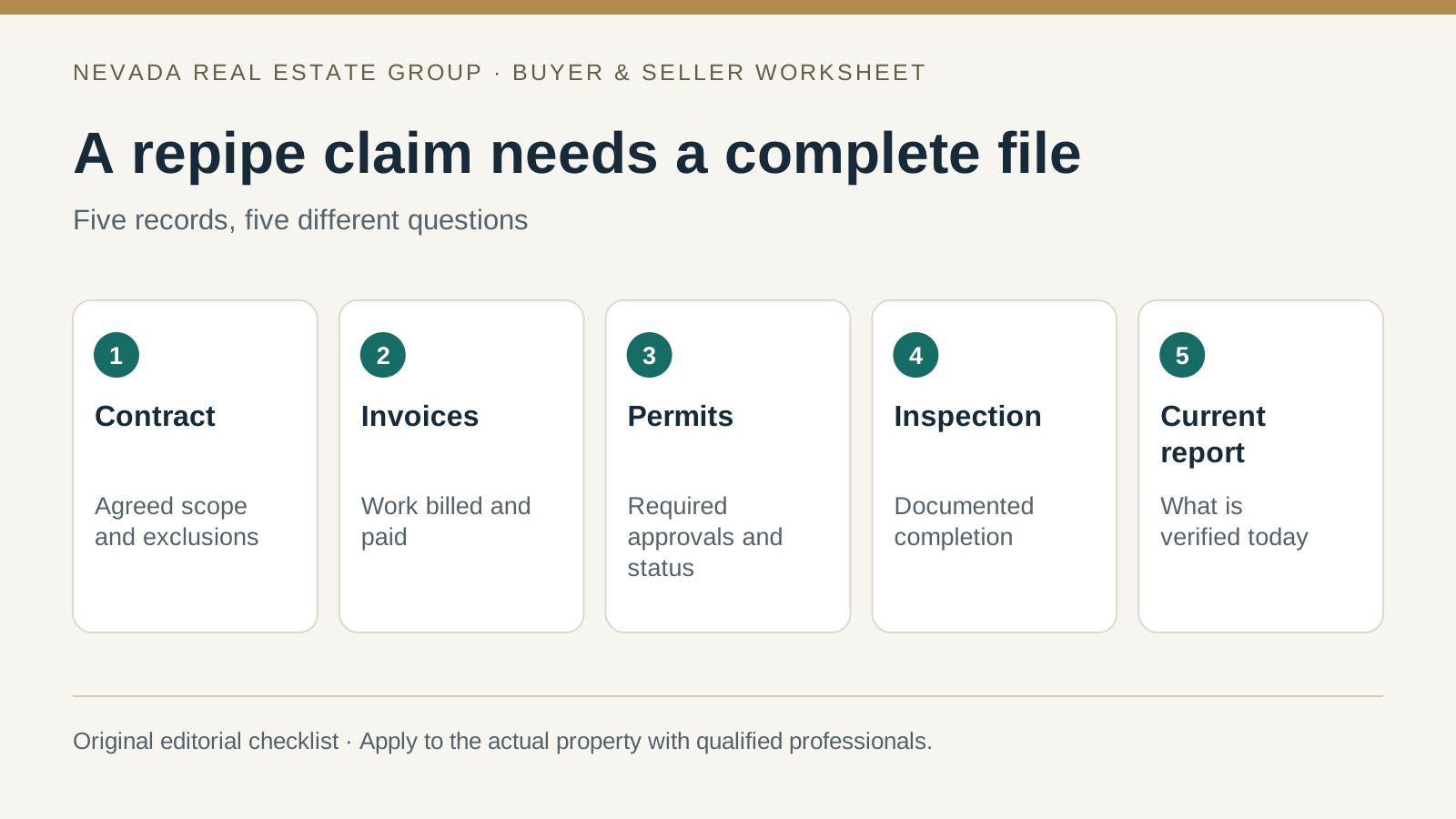
Treat “repiped” as a claim requiring a defined scope. Request the signed contract, itemized scope, change orders, dated invoices, permit information when required, inspection results, and warranty terms. Match the documents to the address and the actual work. A receipt showing a water-heater replacement does not, by itself, document replacement of the home's distribution plumbing. A paid invoice also does not describe any excluded or inaccessible work unless the contractor wrote that down.
According to the Nevada State Contractors Board's home-improvement guidance, homeowners should keep project records, including the contract, changes, and payment documentation. For a resale, those records help a buyer understand what the seller commissioned and what the contractor agreed to deliver. They should be read together rather than treating one document as conclusive evidence of everything.
Use the following checklist to identify missing information. It is a document comparison, not a certification that a particular installation complies with code. Ask the applicable building department and the contractor to explain permit status and closeout requirements. The jurisdiction is determined by the property and work, not simply the city name used in its mailing address.
| Record | Question it answers | What still needs checking |
|---|---|---|
| Contract and scope | What work was agreed? | Exclusions and later changes |
| Invoice and payment record | What was billed and paid? | Whether every agreed item was completed |
| Permit and inspection record | What approval and inspections are documented? | Address, scope, final status, and unresolved corrections |
| Warranty | What coverage was promised? | Transfer conditions, exclusions, and provider |
| Current plumber's report | What can be verified today? | Concealed areas and inspection limitations |
For a hypothetical file review, suppose a seller supplies a paid invoice for two bathroom supply lines and describes the home as completely repiped. The supported conclusion is narrower: the invoice documents the named work. Request the scope for the remaining distribution lines, any change orders, and applicable permit closeout. If those records cannot be found, mark the remaining scope unverified and obtain a current assessment. This invented example does not describe a client or prove defective work; it shows why a document should be matched to the claim it actually supports.
What Should a Licensed Plumber's Written Assessment Address?
Request a report that answers the transaction's actual questions. It should identify the areas inspected, the observed materials, any observed condition concerns, the limitations of access, and the recommended next steps. Ask what additional investigation would be needed before the plumber could quote a complete scope. Avoid asking the professional to guarantee concealed conditions that were not inspected or to sign a statement broader than the work performed.
Separate the immediate condition assessment from a proposed project. A professional may recommend further investigation, a targeted repair, or a broader replacement scope depending on the findings. The written recommendation should explain why. If work is proposed, identify whether it addresses only an observed problem or a wider system concern. The seller and buyer should understand that distinction before describing the matter as resolved.
Coordinate access in advance. Ask which rooms, cabinets, utility areas, or owner records the plumber needs, and obtain permission for any work beyond a normal visual inspection. Do not remove finishes or disturb piping as a do-it-yourself identification exercise. If an active leak or immediate hazard exists, the owner should contact the appropriate professional promptly rather than waiting for a routine negotiation meeting.
Share the same report with the parties who need it, subject to the transaction's instructions and privacy requirements. A lender or insurer may ask for additional documentation; the plumber should not be expected to determine their underwriting decisions. For buyers in Reno and Sparks, our Northern Nevada inspection guide places specialist findings in the larger inspection process. Keep the plumbing assessment and the broader home inspection distinct so neither is assumed to cover work the other did not perform.
How Do You Compare Replacement Bids Without Inventing a Nevada Price?
There is no local replacement-cost survey behind this guide. A number copied from a different property would not establish the cost for your house. Obtain written bids based on the same identified scope and access conditions. Compare what each contractor will do, what they exclude, the expected schedule, and how changes will be authorized. The useful comparison is between equivalent deliverables, not simply the totals at the bottom of two pages.
According to the Nevada State Contractors Board's contractor-selection guidance, homeowners should obtain multiple written bids and verify the contractor's license. Check that the license and contracting scope fit the proposed work. Ask the building department about required permits, and have the contract identify who obtains them and supplies the completed inspection documentation.
Include access and restoration in the comparison. Who opens walls? Who repairs drywall, texture, paint, cabinets, or tile if affected? Which items are allowances, and which are fixed parts of the price? Ask how water-service interruptions and household access will be handled. These practical questions can explain a price difference without assuming that the cheapest or most expensive bid is the best one.
| Compare this item | Bid A | Bid B | Bid C |
|---|---|---|---|
| Exact system and areas included | Enter scope | Enter scope | Enter scope |
| Permits and final inspections | Enter responsibility | Enter responsibility | Enter responsibility |
| Access and finish restoration | Included or excluded? | Included or excluded? | Included or excluded? |
| Change-order process | Enter terms | Enter terms | Enter terms |
| Schedule and warranty | Enter terms | Enter terms | Enter terms |
Keep the original bids and a written explanation of any negotiated scope changes. If a contractor cannot price an inaccessible area until work begins, make that uncertainty visible in the comparison. The buyer's reserve and the seller's negotiation should reflect actual unresolved scope, not a fabricated percentage added for reassurance.
What Should a Nevada Seller Disclose About Known Plumbing Conditions?
Use the applicable disclosure process and answer from the seller's actual knowledge. Provide the reports and repair records that explain a known condition. A phrase such as “sold as-is” does not itself explain what the seller knows about a plumbing issue. Likewise, a statement that a contractor once visited the property is not a substitute for identifying what that contractor found and what work followed.
According to Nevada Revised Statutes 113.130, the residential disclosure rules include service timing, exceptions, and written notice of newly discovered or worsening defects. Have the agent and, where needed, a Nevada real estate attorney apply those provisions to the actual transaction. This article does not decide whether a particular transfer is exempt or whether a particular observation legally qualifies as a defect.
When describing past work, use the contractor's documented scope. “The kitchen supply line was replaced in the attached invoice” is more precise than “all plumbing is new” when the file supports only the former. If a seller lacks records, state that limitation and seek clarification. Avoid converting an uncertain memory into a broad representation merely because a prospective buyer wants a simple answer.
Our Nevada home-sale document checklist helps organize the transaction file. Owners in Washoe County can also use the Reno and Washoe seller-disclosure guide for local records issues. Keep the disclosure and any supplemental documents current as new information arrives. A late report should reach the people responsible for the transaction promptly, with its delivery documented, rather than remaining in a contractor's inbox until the final walk-through.
Can a Buyer Rely on a Disclosure Form Instead of an Inspection?
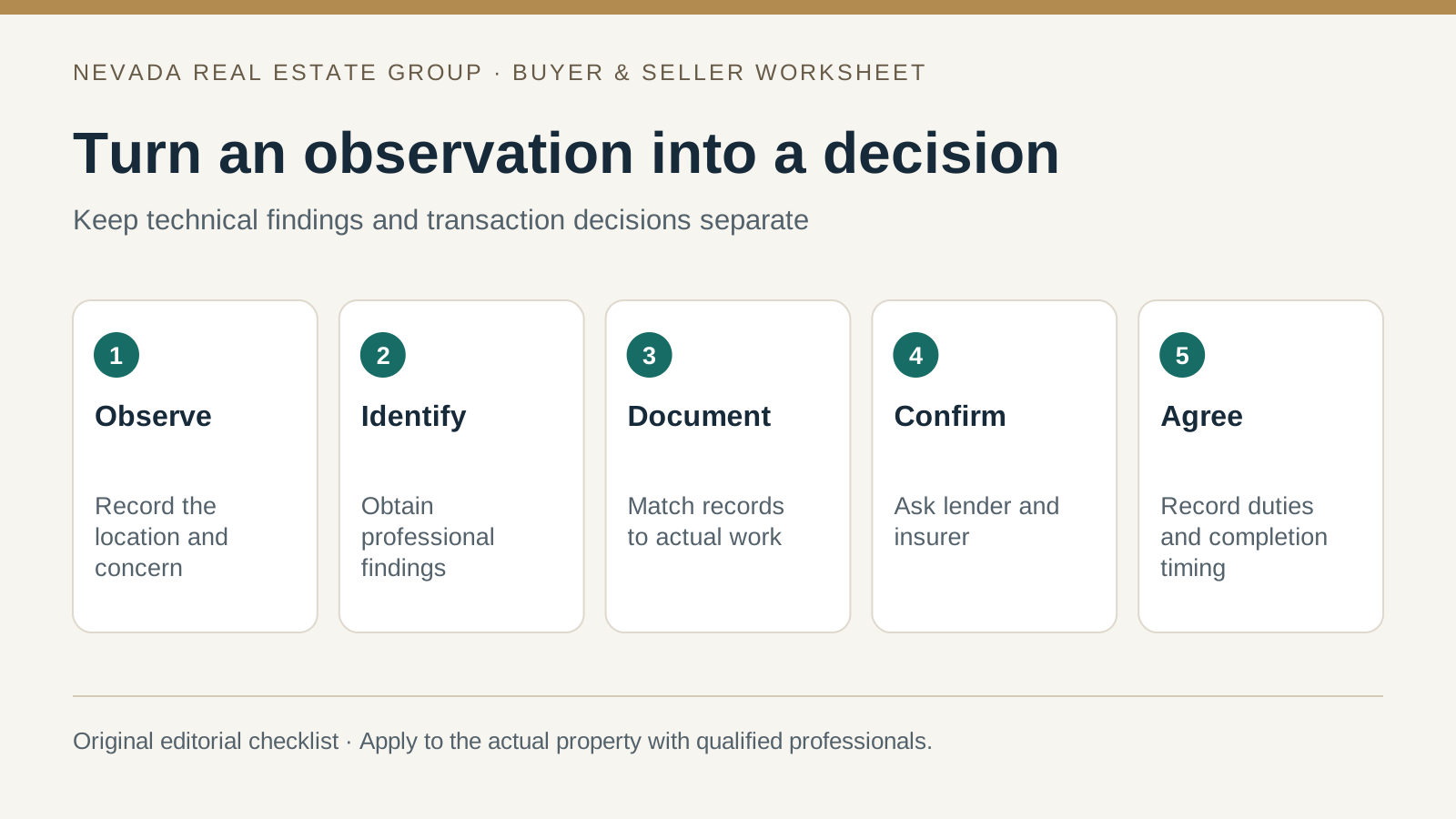
A disclosure and an inspection answer different questions. The disclosure communicates information within the seller's knowledge and the applicable legal framework. The inspection documents what the professional examined and observed under the agreed scope. Neither should be expanded into a guarantee about every concealed component. A buyer should read both and investigate any material inconsistency before the relevant contractual deadline.
According to NRS 113.140, the completed disclosure is not an express or implied warranty, and buyers retain a duty to exercise reasonable care. That is why “nothing was checked on the form” should not end the investigation when a plumber or inspector identifies a concern. Ask the seller for clarification through the transaction professionals and retain the response.
Make the next step specific. Instead of requesting that the seller “prove the plumbing is fine,” identify the missing report, inaccessible area, invoice, or permit status. If the issue needs a specialist, ask for sufficient time and authorized access to obtain that assessment. Discuss any necessary extension before the existing deadline; do not assume that requesting records automatically extends a contingency.
Keep decisions proportionate to the evidence. An incomplete record may justify a further question or inspection, while a documented concern may require a repair scope or a different transaction decision. The agent can coordinate the process, but a technical conclusion belongs with the appropriate professional. For Las Vegas buyers, the desert home-inspection guide provides context for other systems that deserve separate attention rather than allowing one plumbing concern to consume the entire inspection period.
How Should You Check Insurance and Financing Before Accepting a Credit?
Send the actual findings to the insurance representative and lender involved in your purchase. Ask whether they need additional information, completed work, or a specific type of documentation before the transaction can proceed. Obtain a written response that describes any conditions. A general online statement about a plumbing product does not establish what a particular insurer will cover or what a particular loan will require.
Avoid universal claims. This guide does not establish that every insurer declines a home with Kitec or that every lender demands replacement. It also does not promise that a home with no observed leak will satisfy underwriting. The relevant decision is property- and transaction-specific. If the response is provisional, identify what remains outstanding and who will provide it before treating the issue as cleared.
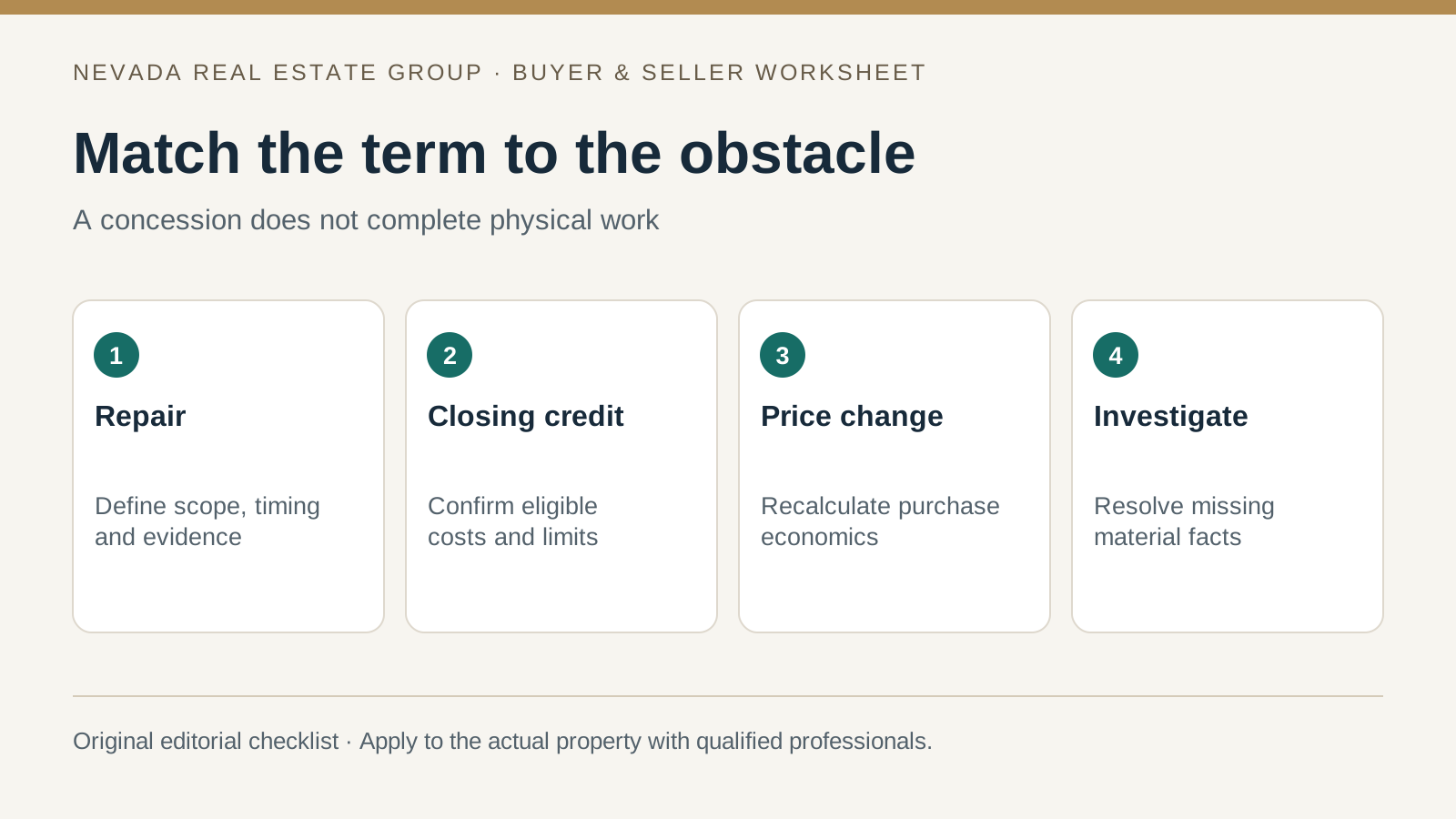
A seller credit can change who pays an expense, but it does not complete the work. Ask whether closing with that work still outstanding is acceptable under the proposed financing and insurance arrangements. If not, negotiating a larger credit may leave the same closing obstacle in place. Bring the transaction professionals together early enough to compare repair timing, documentation, and other available terms.
Document the difference between an estimate and a firm commitment. An insurance quote may have conditions; a lender's preliminary discussion may require underwriting review. Confirm the status with the provider and retain the current version. Your decision worksheet should show an open item until the responsible party has supplied the required confirmation. That habit keeps an attractive concession from being mistaken for a complete solution and helps the household understand the obligations it would accept after closing.
When Does a Repair, Seller Credit, or Price Adjustment Fit the Problem?
Start with the obstacle you need to resolve. If completed work is required before closing, the negotiation must address completion and evidence. If work can occur later, the buyer still needs a credible scope, schedule, budget, and ability to manage it. A price adjustment can change the purchase economics while leaving the same physical condition and project responsibilities in place. None of these options substitutes for accurate information.
According to the CFPB's Closing Disclosure guide, the seller-credit entry should reflect the agreement. Have the lender confirm how a proposed credit can be used and the closing professional confirm how it will appear. Do not assume that a negotiated amount becomes unrestricted cash available to fund a post-closing construction project.
| Option | What it can address | What remains to resolve |
|---|---|---|
| Work before closing | Completion of an agreed scope | Contractor, permits, timing, inspection, and proof |
| Permitted seller credit | Approved buyer closing expenses | Loan limits and funding for any later project |
| Price adjustment | Purchase-price negotiation | Condition, cash needs, and underwriting |
| Further investigation | Unresolved material facts | Access, professional scope, and contract timing |
For a Southern Nevada sale, the Las Vegas seller-pricing worksheet compares concessions without confusing price with net proceeds. Apply the same discipline here: write down what changes, who is responsible, what proof is due, and what happens if the agreed condition is not met. Have the agent or attorney prepare suitable contract language rather than relying on this checklist as an amendment. The best-looking headline concession can still be unsuitable if it leaves a financing condition or an unfunded project unresolved.
What Does the Historical Settlement Mean for a Purchase Today?
Read the date and jurisdiction before relying on settlement information. According to the administrator's case-status notice dated October 20, 2020, the national action's claim deadline was January 9, 2020. The historical FAQ also excludes the Clark County class from the national U.S. class. Do not assume a Clark County property follows that national process, or budget a new purchase around an unverified recovery.
The historical website contains old instructions about claims. Those instructions are not a current invitation to submit a new claim, and this guide has not verified the present disposition of any particular person's claim. If a seller has settlement records, ask for the documents and have qualified counsel explain their relevance to the property, any release, and the transaction. Do not infer eligibility from the fact that an old online form remains accessible.
Separate financial history from physical work. A payment, notice, or release is not the same as an invoice for completed replacement. Conversely, a documented replacement project may have been undertaken without settlement funding. The property file should identify both histories independently so a buyer does not mistake one kind of record for the other.
In practical terms, negotiate from the current condition and verified documents. If possible compensation is mentioned, identify who has confirmed it, to whom it would belong, and what written evidence supports the statement. Leave unverified proceeds out of the working budget. This avoids turning a historical legal process into an assumed source of repair money or a substitute for the inspection and records work needed for the home being purchased now.
What Changes When the Property Is a Condo or Has Shared Plumbing?
A condominium or other shared-property arrangement adds a responsibility question: which components belong to the owner, and which are governed by association obligations or shared agreements? Do not assume the answer from the location of a pipe inside a wall. Request the relevant governing documents and written clarification from the association or its manager, then have the appropriate professionals interpret the responsibility for the proposed work.
Ask for records of any association plumbing project that affects the unit. Identify the project's scope, completion status, contractor, inspection records, and whether the unit's private components were included. A building-wide project description may leave individual owners responsible for some work. The reverse can also occur: a unit owner's invoice may say nothing about the shared system serving the building. Record these boundaries before combining costs.
Check access and scheduling constraints. A proposed project may require coordination with neighboring units, common areas, or association-approved contractors. Ask what approvals and notices are required under the governing documents and what information the contractor needs to quote the work. Do not promise a completion date based only on the seller's preferred calendar if other parties control essential access.
Review any disclosed assessment or funding information with the transaction professionals. Distinguish an approved obligation from a possible future project and a rumor. This guide does not determine association responsibility or predict future assessments. It gives you a way to identify the questions that must be answered for a specific unit. Keep the association's written response alongside the plumber's findings so the buyer can see both the physical issue and the documented allocation of responsibility before accepting the purchase terms.
How Can a Seller Prepare Before Listing the Home?
Begin with a records inventory rather than a marketing claim. Find the original disclosure from your purchase, inspection reports, contractor invoices, permits, insurance correspondence relevant to the condition, and any settlement documents. Make a list of what each record establishes and what it does not. If the file contains conflicting descriptions, obtain clarification before the listing repeats a statement that cannot be supported.
Consider whether a specialist assessment would help resolve a known question before marketing. The scope should fit the concern; a pre-listing inspection is not automatically a complete plumbing evaluation. Our Las Vegas pre-listing inspection guide explains the larger preparation decision. A seller in another Nevada market can use the same records-first approach while working with professionals familiar with the property's jurisdiction.
If you choose to undertake work, allow time for the contractor's actual schedule, required inspections, and restoration. Ask what documents will be delivered at completion and keep them in a shareable file. Do not advertise a project as complete while a final item or inspection remains open. If you choose to sell without completing work, have the agent and attorney, where appropriate, help document the known condition and agreed terms accurately.
Prepare a short response for buyer questions using verified facts: what was identified, when it was examined, what work occurred, and which records are available. Avoid predictions about insurance acceptance or the future performance of the system. A clear file helps a buyer investigate efficiently and allows the asking-price discussion to focus on the actual property and obligations. It also reduces repeated requests caused by distributing different fragments of the story to different people.
What Should Be Checked Before the Final Walk-Through and Closing?
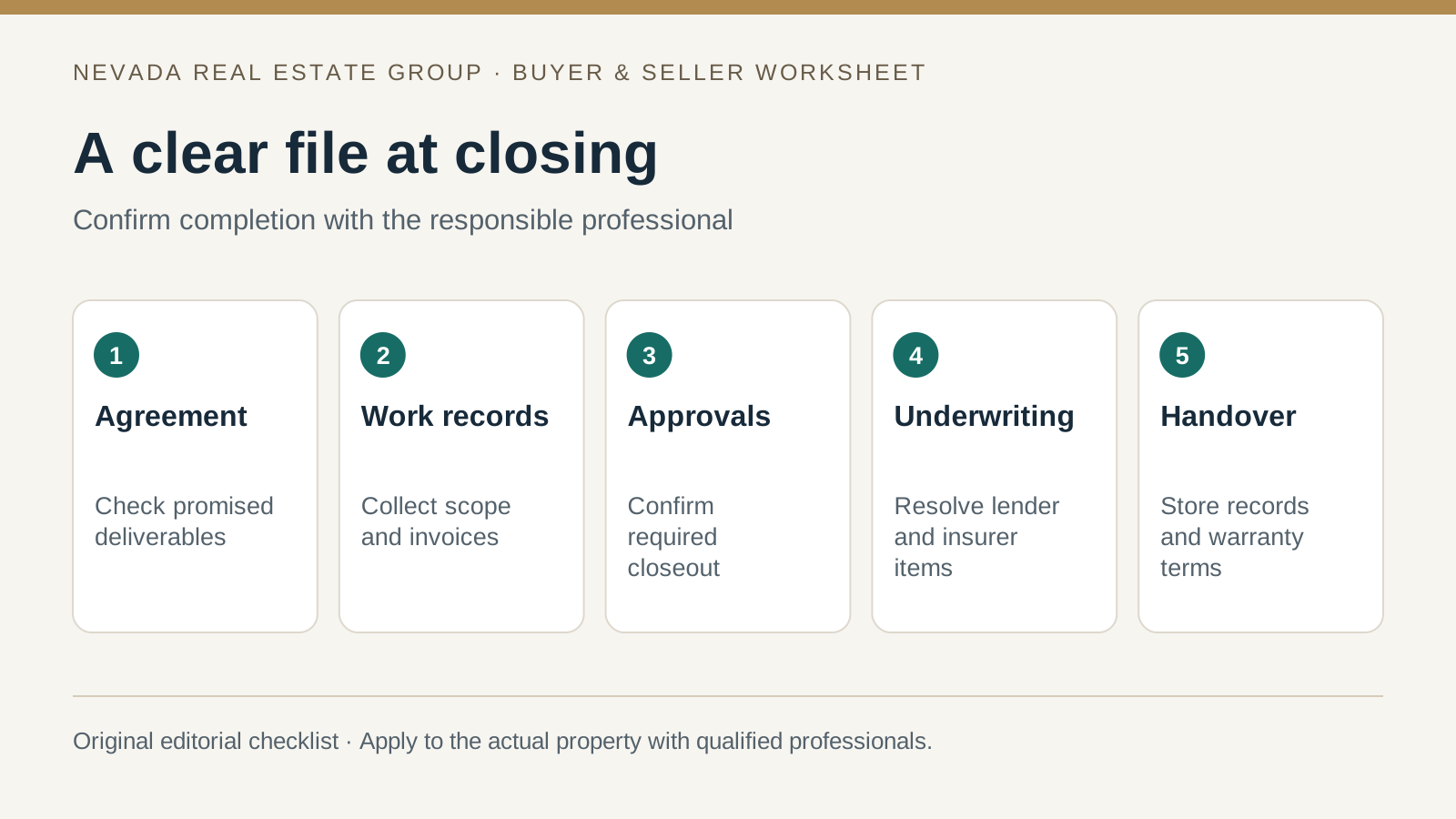
Review the written agreement against the actual deliverables. If work was required, confirm the specified scope, completion documents, permit and inspection status where applicable, and any warranty information due to the buyer. Identify unresolved items before the final appointment. A walk-through can help check visible completion, but it should not be described as a substitute for a specialist's assessment or the required regulatory inspection.
Confirm that the lender and insurer received the documents they requested and that any related conditions have been addressed. Ask the responsible provider directly rather than assuming that sending an email means approval. If a credit or price change was negotiated, compare the closing paperwork with the signed terms. Resolve discrepancies with the transaction professionals before signing rather than relying on a promise to sort them out afterward.
Build a handover folder for the buyer. Include the reports, invoices, permits, inspection results, contractor contact details, and warranty terms that belong with the property. Note any maintenance or follow-up instruction actually provided by the professional. Do not invent a service schedule or claim a transferable warranty when the written terms do not support it.
Our buyer resources and seller resources explain the broader process. For a property-specific discussion, contact Nevada Real Estate Group with the address and available records. The useful next step is a coordinated plan with the right professionals, not a universal answer about every home containing a particular material. A buyer should leave the closing process knowing what was verified, which responsibilities were accepted, and where the supporting documents are stored.
Frequently Asked Questions
Does orange or blue piping prove a Nevada home has Kitec?
No. Treat a visual clue as a reason to obtain professional identification, not a diagnosis of the whole house. Ask a licensed plumber to document observed markings, locations, and inspection limitations. Photographs of one accessible area do not establish what is concealed elsewhere or whether a previous project replaced the entire system.
Is Kitec the same issue as polybutylene plumbing?
No. Do not substitute one product name for the other or apply another home's repair plan without identification. Ask the plumber to describe the actual system observed at the property. The records and negotiation process may be similar, but the technical findings and proposed work must fit the system being evaluated.
How much does a Kitec replacement cost in Nevada?
This guide has no verified local cost survey and does not offer a statewide price estimate. Obtain comparable written bids for the actual property, including access, permits, inspections, finish restoration, exclusions, and changes. A low total with major excluded work is not directly comparable to a more complete scope.
Can I assume a seller's repipe invoice proves every pipe was replaced?
No. Read the scope, address, exclusions, and change orders, then match them to permit and inspection records where applicable. Ask a current professional what can be verified. A partial repair or a water-heater replacement should not be described as a complete repipe unless the documentation supports that broader statement.
Will a seller credit solve the financing or insurance issue?
Only the actual lender and insurer can confirm what they require for the transaction. A credit does not complete physical work and may have limits on its permitted use. Obtain their written conditions before assuming that a concession allows the purchase to close with an unresolved plumbing concern.
Does the old settlement website mean I can file a new claim now?
No. The notice cited in this guide is historical and says its deadline passed. Clark County also has a distinct class issue. Obtain qualified advice about any existing claim or release and verify its status directly. Do not include unconfirmed settlement proceeds in a purchase or replacement budget.
Should a buyer automatically walk away from a home with suspected Kitec?
A suspicion alone is not a complete property assessment. Obtain professional findings, a defined work scope if needed, reliable bids, and the lender's and insurer's conditions. Then evaluate the terms, timing, and responsibilities you would accept. The decision should follow the evidence and your circumstances, with contractual advice where needed.
Which Sources and Methods Support This Guide?
Primary references were checked in October 2026. Settlement pages are historical documents, not current claim-status confirmations. The record checklist, bid comparison, negotiation matrix, and handover sequence are original editorial tools. No plumbing contractor inspected a property for this article, and no local cost, prevalence, failure-rate, or insurance-acceptance dataset was collected. A licensed plumber supplies the technical assessment for an actual home; transaction professionals apply the findings to the purchase or sale.
- Kitec settlement administrator: system and component photographs
- Kitec settlement administrator: historical FAQ and class definitions
- Kitec settlement administrator: case-status notice dated October 20, 2020
- Nevada State Contractors Board: working with contractors
- Nevada State Contractors Board: home-improvement bill of rights
- Nevada Legislature: residential property disclosures, NRS 113
- Consumer Financial Protection Bureau: Closing Disclosure guide
Chris Nevada · Nevada Real Estate License S.181401 · Nevada Real Estate Group · LPT Realty. This educational guide does not replace a licensed plumber's inspection, individualized underwriting, or legal advice about a particular transaction.