

A home inspection in Northern Nevada looks deceptively similar to one in any market — the inspector still walks the structure, climbs to the roof, tests the electrical, runs the plumbing, and cycles the heating and cooling. But the questions that actually protect a buyer here are the ones a desert-valley inspection guide never raises. Northern Nevada is a real-winter, wildfire-exposed, seismically active region with a lot of rural well-and-septic housing, and every one of those facts changes what you should inspect and what you should budget. This is the honest 2026 guide to inspecting a home anywhere in Northern Nevada — Reno, Sparks, Carson City, Minden, Gardnerville, Dayton, Fernley, Incline Village, and the Lake Tahoe basin — with the region-specific issues front and center.
A Northern Nevada home inspection covers the same core systems as anywhere — structure, roof, electrical, plumbing, and HVAC — and typically costs about $400 to $600. What sets this region apart is what you add: snow-load roof checks, wildfire and defensible-space review, a radon test in the Carson Valley, and well and septic inspections on rural Minden, Gardnerville, and Dayton properties. Budget for those regional add-ons before you waive any contingencies.
- A standard Northern Nevada inspection runs about $400 to $600; regional add-ons stack on top of that base.
- Snow load and roofing matter most at Lake Tahoe and Incline Village, where winters are heaviest.
- Radon is elevated in the Carson Valley — Minden and Gardnerville — so add a $150 to $250 test.
- Rural homes in Douglas and Lyon counties usually need separate well and septic inspections.
- Verify wildfire insurability before removing contingencies; coverage is harder to place in the interface.
What Does a Standard Home Inspection Include in Northern Nevada?
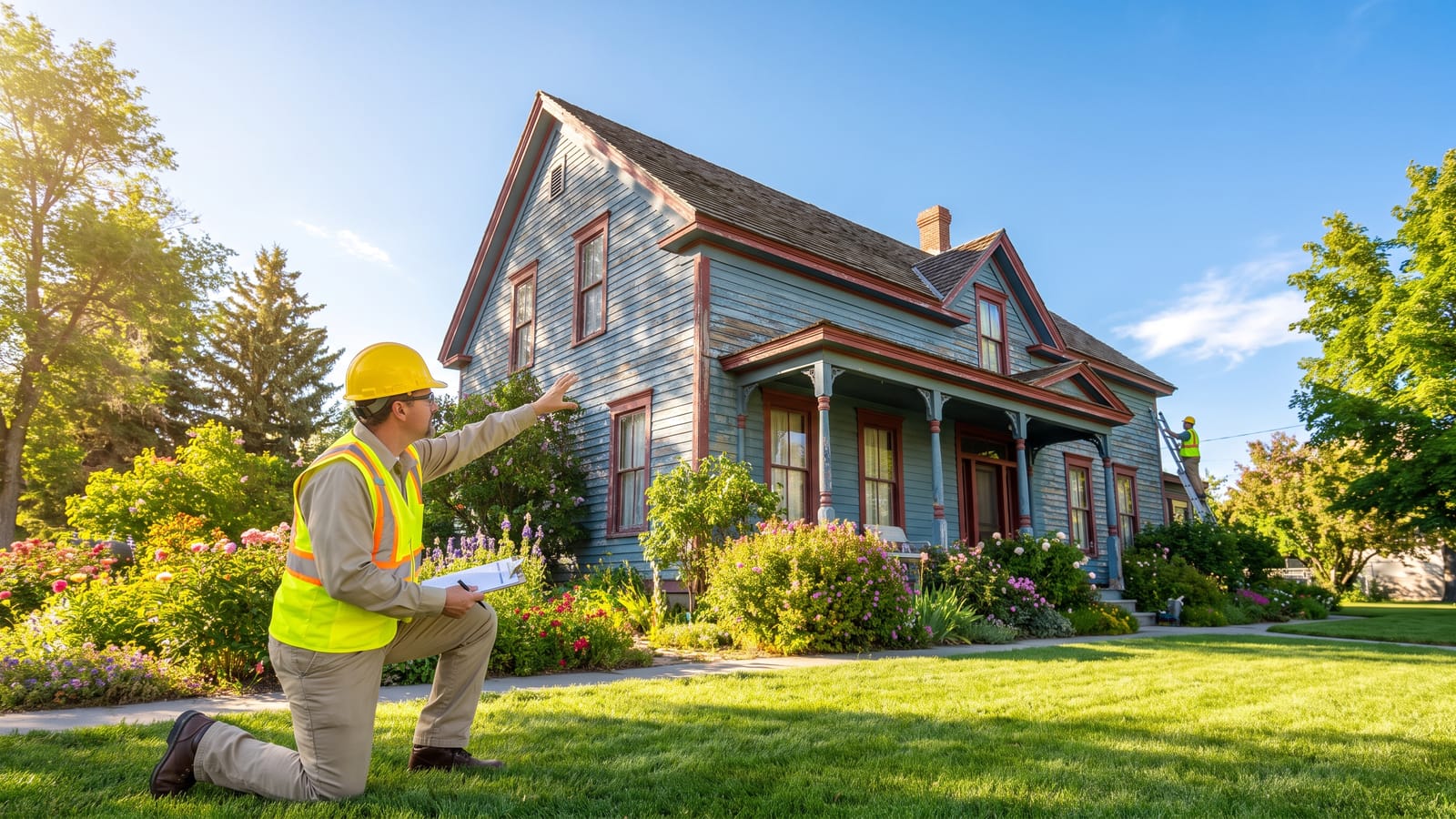
Before the regional specifics, it helps to be clear on what every competent inspection covers, because the baseline is the same whether the house sits in Sparks or Stateline. A standard single-family inspection is a visual, non-invasive evaluation of the home's major systems: the foundation and structure, the roof and attic, the exterior envelope, the electrical panel and visible wiring, the plumbing supply and drains, the water heater, and the heating and cooling equipment. The inspector documents defects, safety concerns, and end-of-life systems, then delivers a written report — usually with photos — that a buyer uses to decide whether to proceed, renegotiate, or walk.
According to the International Association of Certified Home Inspectors, a home inspection is not a pass-or-fail test and it is not an appraisal; it is a snapshot of condition on the day of the visit, meant to surface material issues before a buyer commits. According to the American Society of Home Inspectors, a general inspection also has defined limits — it does not open walls, dig up buried lines, or guarantee future performance — which is exactly why specialized add-ons matter so much in a region like ours. In our experience, the buyers who get the most value from an inspection treat the base report as the starting map and then commission the two or three regional add-ons the specific property actually warrants, rather than assuming the general inspection caught everything.
How Much Does a Home Inspection Cost in Northern Nevada?
Cost is usually the first question, and the answer is refreshingly predictable. A standard single-family home inspection in Northern Nevada typically runs about $400 to $600, scaling with the home's size, age, and complexity — a compact Sparks tract home lands near the bottom of that band, while a large Incline Village mountain house with multiple systems lands at the top or beyond. That base fee buys the general systems inspection and the written report; it does not include the specialized tests that this region so often needs.
The regional add-ons are where a Northern Nevada budget diverges from a desert-valley one. A radon test typically runs about $150 to $250. A well inspection with a flow-rate and water-quality test runs about $300 to $500. A septic inspection runs about $300 to $600 depending on whether the tank is pumped and scoped. A sewer scope — worthwhile on older in-town homes with mature trees over the lateral — runs about $150 to $250. Stack the right add-ons onto the base fee and a rural Carson Valley inspection can reasonably total $900 to $1,500, versus $400 to $600 for a straightforward in-town house on municipal utilities. Here is the honest breakdown so you can plan before you write the offer.
| Inspection type | Typical 2026 cost | When you need it |
|---|---|---|
| Standard single-family inspection | $400 – $600 | Every purchase — the base evaluation |
| Radon test | $150 – $250 | Carson Valley and much of Washoe — elevated levels |
| Well inspection (flow + water quality) | $300 – $500 | Rural properties on a private well |
| Septic inspection | $300 – $600 | Rural properties on septic, not sewer |
| Sewer scope | $150 – $250 | Older in-town homes, mature trees over the line |
Across the 9,600 closings Nevada Real Estate Group has handled statewide since 2011, the pattern is consistent: buyers who budget the add-ons up front never feel nickel-and-dimed at inspection time, while buyers who assume a flat $500 covers everything get an unwelcome surprise when a rural well and septic property needs another $600 to $1,100 of testing. Call our Northern Nevada team at (775) 277-2120 to figure out which add-ons a specific address actually needs, and browse live inventory anytime through Reno homes for sale.
Why Do Snow Load and Roofing Matter More Here Than in the Desert?
The single biggest difference between a Northern Nevada inspection and a Las Vegas one is winter. This region gets real snow — light and occasional on the Reno-Sparks and Carson City valley floors, and genuinely heavy up in the Sierra at Lake Tahoe and Incline Village. Snow that piles on a roof for weeks is a structural load a desert roof never carries, and it stresses everything above the ceiling: the framing, the decking, the roof covering, the flashing, and the drainage. A good Northern Nevada inspector reads a roof with that load in mind rather than treating it as a sun-baked desert covering that only has to shed the occasional rain.
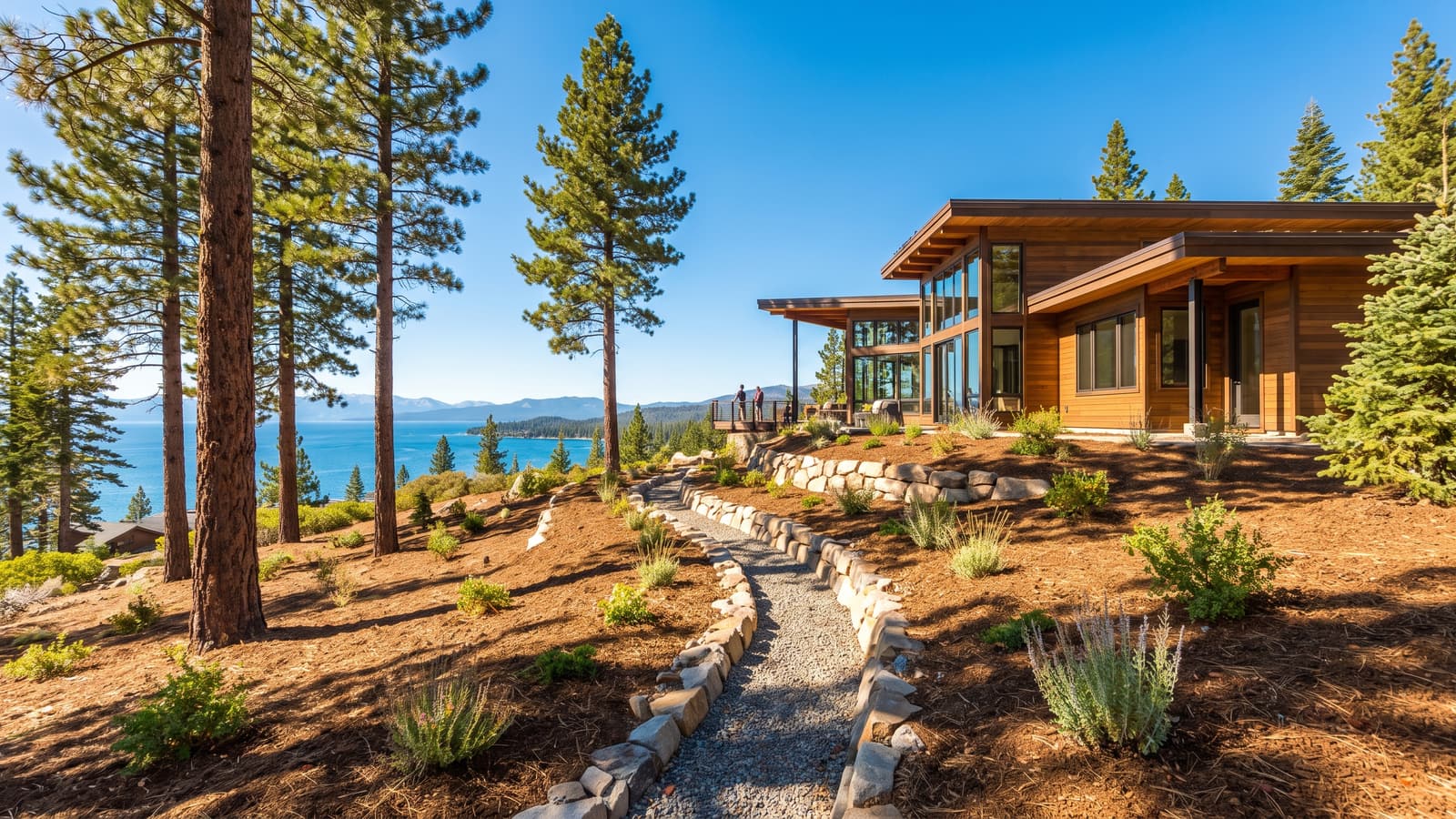
The specific things to watch change with elevation. On the valley floor, the inspector should flag aging or brittle roofing, poor attic ventilation, and any signs of past ice-damming at the eaves. Up at Tahoe and Incline Village, the stakes climb: snow-rated roofing, robust framing, proper attic ventilation to keep the roof deck cold, and features like snow guards or heat tape all become material. According to Washoe County, building standards in the higher-elevation parts of the county reflect a heavier snow-load design basis than the valley floor, which is exactly why a mountain roof and a Sparks roof are not the same inspection. Ice dams — where snow melts, refreezes at the cold eave, and forces water back under the shingles — are a Northern-Nevada failure mode a desert buyer has never had to think about, and the water damage they cause often hides in the attic until an inspector goes looking. In my experience, roof and attic findings are the most commonly underestimated line on a mountain-country inspection, because the house shows beautifully in July and the winter evidence is only visible to someone who knows where to look.
How Should Buyers Handle Wildfire and Defensible Space During Inspection?
Much of Northern Nevada sits in the wildland-urban interface — the zone where homes back directly onto forest, foothill brush, or the Tahoe basin's timber. That includes the foothills around Reno, the pinyon-juniper slopes above Carson City, the forested Tahoe shore, and stretches of the Carson Valley that run up against wild land. Wildfire exposure is not a fringe concern here; it is a core part of due diligence, and it touches two things at once — the physical condition of the home and, just as importantly, your ability to insure it.
On the physical side, an inspection in an interface area should note the roof class, the vents, and the immediate defensible space. According to the Nevada Division of Forestry, defensible space — the maintained, thinned buffer around a structure — is one of the most effective ways to help a home survive a wildfire, and the presence or absence of it is something a buyer wants to understand before closing. Class-A fire-rated roofing and ember-resistant vents are the hardening features that matter most, because wind-driven embers, not the flame front itself, destroy most interface homes. On the insurance side, the picture has tightened sharply. According to the Nevada Division of Insurance, carriers across the West have been reassessing exposure in high-risk fire zones, and coverage in the interface can be harder to place and more expensive than in a low-risk valley subdivision. The practical rule we give every buyer in these zones: verify insurability before you remove your contingencies. Getting a firm insurance quote on a forested Incline Village or foothill Reno property during due diligence is far cheaper than discovering after closing that the coverage you assumed is unavailable or unaffordable.
Before the inspection contingency ends, review the coverage questions in our guide to Northern Nevada wildfire insurance and obtain a property-specific quote.
Should Northern Nevada Buyers Add a Radon Test?
Radon is the classic Northern-Nevada add-on that a desert-valley buyer almost never considers, and skipping it is a genuine mistake in the wrong ZIP code. Radon is a colorless, odorless radioactive gas that seeps up from soil and rock and accumulates inside homes; long-term exposure is a recognized health risk. The catch is that radon is entirely geology-driven, and Northern Nevada's geology produces elevated indoor levels in specific areas — most notably the Carson Valley in Douglas County, home to Minden and Gardnerville, along with parts of Washoe County.
According to the Nevada Radon Education Program run by University of Nevada, Reno Extension, testing is recommended across much of the region, and a meaningful share of tested homes in the higher-risk zones come back above the action threshold. That is why a radon test — about $150 to $250 as an inspection add-on — belongs on the list for any Carson Valley purchase and is worth serious consideration in Washoe County. The test itself is simple: a monitor sits in the lowest livable level of the home for a set period and reports the average concentration. If a home tests high, the fix is usually a radon mitigation system that vents soil gas away from the house, a solvable problem that is far better to price and negotiate during escrow than to discover after you own it. According to Douglas County, the Carson Valley's geology is precisely why radon awareness runs higher here than in the Southern Nevada valleys, and it is one of the clearest examples of a regional issue a generic inspection checklist misses.
For a closer look at one environmental inspection question, review radon testing in Northern Nevada and discuss the testing scope before deadlines pass.
Do You Need a Well and Septic Inspection on Rural Properties?
Step outside the incorporated cores of Reno, Sparks, and Carson City and a large share of Northern Nevada housing sits on private wells and septic systems rather than municipal water and sewer. That is common in Douglas County around Minden and Gardnerville, in Lyon County around Dayton and Fernley, and in the outlying reaches of Washoe County. When a home is on well and septic, the standard inspection does not cover those systems — they each need their own specialist, and they are two of the most consequential inspections a rural buyer can order.
A well inspection evaluates the pump and pressure system, measures the flow rate to confirm the well produces enough water for the household, and tests water quality for contaminants and bacteria. Budget about $300 to $500. According to the Nevada Division of Water Resources, which administers the state's water rights and well program, a private well is the homeowner's own infrastructure — there is no utility to call when it underperforms — so confirming both quantity and quality before closing is essential. A septic inspection evaluates the tank and, ideally, has it pumped and scoped so the inspector can assess the tank, baffles, and drain field; budget about $300 to $600. According to the Nevada Division of Environmental Protection, septic systems are regulated on-site wastewater infrastructure that can be expensive to repair or replace, which makes the inspection cheap insurance against a five-figure surprise. In my experience, well and septic findings are where rural Northern Nevada deals most often get renegotiated — not because the systems are usually bad, but because when they do have problems, the repair numbers are large enough that a buyer wants them priced and resolved before the contingency period ends.
What Freeze and Plumbing Issues Are Unique to a Real-Winter Climate?
A real winter does things to plumbing that a desert never threatens, and a Northern Nevada inspection should look for the protections that keep pipes from bursting. When temperatures sit below freezing for days at a time — routine at Tahoe, common on the valley floors during cold snaps — any pipe in an unconditioned space is at risk. The inspector should note whether supply lines in crawlspaces, attics, garages, and exterior walls are insulated, whether exterior faucets are frost-free or protected, and whether the home has the kind of vacant-house vulnerability that turns a cold week into a flooded living room.
The irrigation system is its own Northern-Nevada wrinkle. Sprinkler and drip systems here have to be blown out and shut down each fall, and a system left charged through a hard freeze can crack backflow devices and valves — repairs that run anywhere from about $100 for a simple part to several hundred dollars for a damaged backflow assembly. In our experience across Reno-area closings, freeze-related plumbing damage is a seasonal reality here that shapes how homes are winterized and inspected. We've seen vacant listings where a failed heat source over a cold weekend led to a burst pipe and thousands of dollars of water damage — exactly the scenario a careful inspection and a simple winterization protocol are meant to prevent. For any purchase closing in the cold months, ask specifically about freeze protection and whether the irrigation was properly blown out, because it is one of the easiest categories to overlook on a warm-weather showing.
Why Does Seismic and Foundation Condition Deserve Attention Near Reno?
Northern Nevada is seismically active — the Reno area in particular sits amid mapped faults, and the wider region has a long history of earthquakes. That does not mean buyers should be alarmed; it means foundation and soil condition deserve genuine attention on an inspection here in a way they might not in a geologically quiet area. An inspector evaluating a Northern Nevada home should read the foundation carefully: cracking patterns, evidence of differential settlement, the condition of any retaining walls, and signs that expansive or unstable soils have moved the structure over time.
Older homes and hillside lots warrant the closest look. Cracks in a foundation are common and most are cosmetic, but the inspector's job is to distinguish routine shrinkage cracks from the diagonal, stair-step, or widening patterns that suggest movement. According to Washoe County, the region's geology and fault mapping are part of why local building standards address seismic design, and a buyer benefits from understanding how a specific home sits on its ground. If a general inspection flags foundation concerns, the right next step is a structural engineer — a targeted evaluation that typically runs several hundred dollars and can save many thousands. In our experience, the buyers who handle this well are the ones who treat a foundation flag as a reason to investigate further rather than a reason to panic or a detail to ignore; most concerns resolve into a manageable answer once a specialist weighs in.
What Heating Systems Should an Inspector Check in Northern Nevada?
A desert inspection guide fixates on air conditioning; a Northern Nevada guide has to flip the emphasis to heat. Here, the heating system is the system that gets used hardest for the most months, and a heating failure in January is a genuine emergency, not an inconvenience. The inspector should test whatever the home relies on — a forced-air furnace, a boiler with baseboard or radiant heat, a heat pump, or some combination — checking age, function, safety, and any signs of end-of-life. A furnace or boiler nearing the end of its service life is a meaningful negotiating point, since replacement can run several thousand dollars.
Wood stoves and fireplaces deserve special mention because they are far more common in Northern Nevada — especially in mountain and rural homes — than in the Southern Nevada valleys, where they are a rarity. A wood-burning stove or insert is a real heat source here, and where one is present, a chimney and wood-stove inspection is a worthwhile add-on: it checks the flue, the clearances, and the condition of the appliance for safe operation. According to Nevada REALTORS, heating and wood-burning appliances are a routine part of Northern Nevada home condition that Southern Nevada transactions rarely involve. Cooling still matters — plenty of Reno, Sparks, and Carson City homes have central air, and the inspector should confirm it works — but a buyer who inspects a Northern Nevada home the way they would a Las Vegas one, leading with the AC and treating the furnace as an afterthought, has the priorities exactly backward. We've toured homes here where a picture-perfect kitchen distracted buyers from a furnace on borrowed time; the inspection is what keeps that from becoming a first-winter crisis.
How Do Older and Rural Housing Stock Change What You Inspect?
Not every Northern Nevada home is a new build, and the region's older and rural housing carries condition issues a checklist built for modern tract homes will underweight. Carson City's historic west side, the older neighborhoods of central Reno, and the farmhouses and ranch properties scattered through the Carson Valley and Lyon County can all carry systems that predate current standards. That is not a reason to avoid them — older homes are often the most characterful and well-located in the region — but it is a reason to inspect them with the right expectations.
The classic older-home findings show up here: galvanized steel supply plumbing that corrodes and restricts flow from the inside, knob-and-tube or otherwise dated electrical wiring, undersized or obsolete electrical panels, and heat sources that have been patched rather than replaced. According to the American Society of Home Inspectors, these age-driven issues are exactly what a thorough general inspection is designed to surface, and an experienced local inspector knows to look for them in the housing eras where they cluster. Rural properties add their own layer — outbuildings, older well and septic systems, propane tanks, and irrigation infrastructure that a city inspection never touches. According to the U.S. Census Bureau, Nevada's housing stock spans a wide range of ages, and Northern Nevada's older and rural inventory means a buyer should never assume a home was built to today's standards. The inspection is how you find out what you are actually buying, and where older housing is concerned, it is the best money in the transaction.
How Do Inspection Needs Differ Across Northern Nevada Cities?
Northern Nevada is not one market, and the inspection priorities shift as you move across it. A condo in central Reno, a foothill home in Sparks, a historic house in Carson City, a ranch property in Gardnerville, a starter home in Fernley, and a mountain estate in Incline Village each lead with a different set of concerns. The core inspection is the same everywhere; the add-ons and the emphasis are what change. Understanding where each regional issue concentrates helps a buyer commission the right tests rather than paying for ones a specific property does not need.
Snow load and roofing concentrate up the mountain at Lake Tahoe and Incline Village and taper off on the valley floor. Radon and well-and-septic concentrate in the Carson Valley — Minden and Gardnerville — and in rural Lyon County around Dayton and Fernley. Seismic and foundation attention runs region-wide but earns extra weight near Reno's mapped faults and on hillside lots. Wildfire touches every interface pocket, from the Reno foothills to the Tahoe basin. Here is how the priorities line up across the region's main areas so you can see which issues to lead with where.
| Issue | Reno / Sparks | Carson City / Carson Valley | Tahoe / Incline Village |
|---|---|---|---|
| Snow load / roofing | Moderate (valley floor) | Moderate | Critical (heavy Sierra snow) |
| Wildfire / defensible space | High in foothills | High on brush slopes | Critical (forested basin) |
| Radon | Test recommended | Elevated — always test | Test recommended |
| Well / septic | Outlying areas only | Common on rural lots | Some forested parcels |
| Seismic / foundation | Extra weight (faults) | Region-wide attention | Hillside-lot focus |
If you are still deciding where in the region to land, our Reno, Sparks, Minden, Dayton, and Fernley pages map the housing character of each — and each area's typical age and setting tells you which inspection add-ons to plan for.
What Add-On Inspections Should Northern Nevada Buyers Budget For?
Beyond the standard inspection, a Northern Nevada buyer should think of the add-ons as a menu and order from it based on the specific property. Not every home needs every test — an in-town condo on municipal utilities may need nothing beyond the base inspection, while a rural Gardnerville ranch might need four add-ons. The skill is matching the tests to the house, and that is where a local agent earns their keep, because the right add-on list changes property to property.
According to the Nevada Radon Education Program, radon testing is the add-on most often skipped and most worth adding in the Carson Valley. Well and septic testing is non-negotiable on any rural well-and-septic property. A sewer scope is smart on older in-town homes with mature trees whose roots invade the lateral. A chimney and wood-stove inspection matters wherever a wood-burning appliance is present. And a structural engineer's review is the right escalation whenever the general inspection flags a foundation concern. Here is how the add-ons map to the properties that need them.
| Add-on | Typical cost | Property that needs it |
|---|---|---|
| Radon test | $150 – $250 | Carson Valley; recommended region-wide |
| Well inspection | $300 – $500 | Any home on a private well |
| Septic inspection | $300 – $600 | Any home on septic, not sewer |
| Sewer scope | $150 – $250 | Older in-town homes with mature trees |
| Chimney / wood stove | $100 – $300 | Homes with a wood-burning appliance |
| Structural engineer review | $400 – $800 | When the inspection flags the foundation |
Add it up and a buyer can see how a rural inspection budget of $900 to $1,500 comes together — a $500 base plus a $200 radon test plus $400 for a well and $500 for a septic — versus a $400 to $600 in-town inspection with no add-ons. That range is small money against a home that costs hundreds of thousands of dollars, and it is the cheapest risk reduction in the entire purchase.
When Does the Inspection Fit Into the Nevada Purchase Timeline?
Timing is where the inspection becomes strategic rather than just informational. In a typical Nevada purchase, the inspection happens during the contractual due-diligence window — the period after the offer is accepted when a buyer investigates the property and retains the right to renegotiate or cancel based on what they find. That window is finite, and every add-on you might want has to be scheduled and completed inside it, which is why the well-and-septic and radon tests need to be lined up early rather than treated as afterthoughts.
According to Nevada REALTORS, the purchase contract governs the buyer's inspection and due-diligence rights, and the exact timeline and contingency terms are things a buyer should work through with their agent rather than assume — every transaction is a little different, and the specifics of your contract control. I will not put a day-count in a blog post as legal advice, and no buyer should rely on one; the right move is to have your agent walk you through the contingency period on your specific contract and build a testing schedule that fits inside it. What I will say plainly is that the sequence matters: order the general inspection first, and if it surfaces something — a foundation flag, a suspect roof, an aging furnace — trigger the specialist add-on quickly so the follow-up still lands inside the window. In our experience, deals get into trouble not because the inspections found something, but because a buyer waited too long to schedule them and ran out of time to act on the findings. Line the testing up early, and the due-diligence period does exactly what it is designed to do.

What Should Buyers Do Next?
Start by matching the inspection plan to the property. A municipal-utility condo in Reno needs the standard inspection and little else; a rural Gardnerville ranch on well and septic needs the base inspection plus radon, well, and septic testing; a forested Incline Village home needs the base inspection plus a serious look at the roof, the defensible space, and — critically — an insurance quote before contingencies come off. Get a written report every time, read it fully, and treat the flagged items as a negotiation and investigation list, not a reason to walk from a good house over normal wear.
Then lean on local knowledge, because the inspection is only as good as the questions it is built to answer. A Northern Nevada agent who knows which foothill pockets insure easily, which Carson Valley ZIP codes run high on radon, which older Carson City systems tend to fail, and how a specific home handles winter is the difference between a clean transaction and an expensive surprise. When you are ready to buy anywhere in the region, contact Nevada Real Estate Group's Northern Nevada office at (775) 277-2120 for a property-specific inspection plan and the honest read on any home. You can also reach us through our contact page, start with our buyers resources, or — if you are selling and want to inspect ahead of listing — our sellers guidance. Relocating from out of state? Our Reno relocation guide covers the wider move, and Lake Tahoe inventory rounds out the region's high end.
Frequently Asked Questions
How much does a home inspection cost in Northern Nevada in 2026?
A standard single-family home inspection in Northern Nevada typically runs about $400 to $600, scaling with the home's size, age, and complexity. That base fee covers the general systems evaluation and the written report. Regional add-ons stack on top: a radon test runs about $150 to $250, a well inspection about $300 to $500, a septic inspection about $300 to $600, and a sewer scope about $150 to $250. A rural well-and-septic property can reasonably total $900 to $1,500 all in.
Do I need a radon test when buying in Reno or the Carson Valley?
In the Carson Valley — Minden and Gardnerville in Douglas County — a radon test belongs on every purchase, because the area's geology produces elevated indoor radon. According to the Nevada Radon Education Program at University of Nevada, Reno Extension, testing is recommended across much of the region, including parts of Washoe County around Reno. The test runs about $150 to $250 as an inspection add-on, and if a home tests high, a mitigation system solves it — far better to price and negotiate during escrow than to discover after you own the home.
What should an inspection check on a Lake Tahoe or Incline Village mountain home?
Snow country changes the emphasis. Beyond the standard systems, a mountain inspection should focus hard on the roof and attic — snow-rated roofing, robust framing, proper ventilation to keep the deck cold, and any signs of past ice-damming — because heavy Sierra snow loads stress everything above the ceiling. Wildfire is the other priority: defensible space, Class-A roofing, and ember-resistant vents, plus an insurance quote before contingencies come off, since coverage in the forested basin can be harder to place and more expensive.
Do rural Northern Nevada homes need a separate well and septic inspection?
Yes. A standard home inspection does not cover private wells or septic systems, and much of the rural housing in Douglas County (Minden, Gardnerville), Lyon County (Dayton, Fernley), and outlying Washoe County runs on both. A well inspection tests the pump, flow rate, and water quality — about $300 to $500. A septic inspection evaluates the tank and drain field, ideally with a pump and scope — about $300 to $600. When these systems have problems, the repair numbers are large, so the inspections are cheap insurance.
Does wildfire risk affect my ability to buy a Northern Nevada home?
It can, primarily through insurance. Homes in the wildland-urban interface — Reno's foothills, the Tahoe basin, brush slopes above Carson City — face tighter, costlier homeowners coverage. According to the Nevada Division of Insurance, carriers have been reassessing exposure in high-risk fire zones, so coverage can be harder to place. The physical home matters too: defensible space, Class-A roofing, and ember-resistant vents help. The practical rule is to verify insurability with a firm quote before you remove your contingencies, not after closing.
How does the inspection fit into the Nevada purchase contract timeline?
The inspection happens during the contract's due-diligence window, the finite period after an accepted offer when a buyer investigates and retains the right to renegotiate or cancel. Every add-on you want — radon, well, septic, a structural review — has to be scheduled and completed inside that window, so line them up early. The exact contingency terms and timeline vary by contract, so work them through with your agent rather than relying on a fixed day-count. Order the general inspection first, then trigger any specialist follow-ups quickly.
Should I still inspect a newer Northern Nevada home?
Yes. Even a newer home can have installation defects, an underperforming furnace, drainage or grading issues, or a roof detail that will not handle snow well, and an inspection is how you find out before you own it. Newer homes typically need fewer add-ons — often just the base inspection and a radon test where the geology warrants — but the standard inspection still earns its cost. Skipping it to win a bid is a gamble that rarely pays off; the report is leverage and peace of mind for a few hundred dollars.
Which Sources Inform This Northern Nevada Inspection Guide?
This guide draws on state agency guidance, professional inspection standards, regional REALTOR market data, county building and geology information, and federal population figures. According to the sources below, every cost cited is directional as of mid-2026; confirm current pricing, radon and wildfire conditions, and your contract's contingency terms before any transaction.
- Nevada REALTORS — purchase contract and statewide market context
- Sierra Nevada REALTORS — monthly Northern Nevada market reports (county-level NNRMLS data)
- Nevada Radon Education Program — University of Nevada, Reno Extension
- Nevada Division of Insurance — wildfire coverage and availability
- Nevada Division of Forestry — defensible space and wildfire mitigation
- Nevada Division of Water Resources — private wells and water rights
- Nevada Division of Environmental Protection — septic and on-site wastewater
- International Association of Certified Home Inspectors (InterNACHI)
- American Society of Home Inspectors (ASHI)
- Washoe County — building standards and geology
- Douglas County — Carson Valley property and radon context
- U.S. Census Bureau — Nevada QuickFacts