

Foreclosure hunting is the most requested "secret" in Las Vegas real estate — every month someone asks us where the bank-owned bargains are hiding. The honest answer starts with a number almost no one publishes: as of this writing, our live GLVAR feed shows roughly 100 distressed-marketed listings out of about 7,200 actives — a hair over 1% of the market. The 2010-era foreclosure supermarket, when a third of the valley's inventory was bank-owned, is fifteen years gone. What remains is a thin, specialized aisle where prepared buyers still find real discounts and unprepared ones lose earnest money learning the rules.
This is the playbook we actually run — the four distinct paths (trustee auction, REO, HUD, short sale), what each genuinely discounts, where the traps live under Nevada law, and the uncomfortable truth the foreclosure blogs skip: in today's market, a well-negotiated ordinary listing frequently beats a mediocre "deal" with foreclosure risk attached. Across 9,600+ NREG closings, we've represented buyers on every one of these paths; here's what the files say.
Buying a foreclosure in Las Vegas in 2026 means choosing among four paths: trustee auctions (deepest discounts, cash-only, as-is with title risk), bank-owned REO listings (financeable, lightly discounted, sold as-is), HUD homes (FHA-foreclosed, owner-occupant priority bidding), and short sales (pre-foreclosure, slow but financeable). Distressed inventory is scarce — roughly 1% of active listings — so set alerts, bring inspection discipline, and compare every "deal" against ordinary listings before paying foreclosure prices for foreclosure risk.
- Scarcity is the story: roughly 100 distressed-marketed actives out of ~7,200 Las Vegas listings — about 1%.
- Trustee auctions demand cash within hours and sell with no inspections, no title insurance, and possible occupants.
- REO (bank-owned) is the practical lane: financeable, on the MLS, typically 3–8% under comparable retail.
- HUD homes give owner-occupants a 30-day priority window before investors can bid at hudhomestore.gov.
- Nevada forecloses without a court, but Q2 2026 foreclosures averaged 1,507 days, so track postponements.
How Scarce Are Las Vegas Foreclosures Really in 2026?
Start with the data, because expectations are where foreclosure hunts die. Pulling our live GLVAR feed for distress markers today: listings marketed with foreclosure language, single digits; REO/bank-owned phrasing, a few dozen; short-sale flagged, about forty. Call the honest total ~100 doors against roughly 7,200 actives — about 1.4% of the market. According to ATTOM's mid-year 2026 foreclosure market report, Nevada does run above the national average: 0.22 percent of Nevada housing units had a foreclosure filing in the first half of 2026, against 0.16 percent nationwide. But filings get cured, sold before listing, or absorbed at auction long before they become the MLS bargain aisle people imagine.
Why so thin? Three structural reasons. Equity: after years of appreciation, the median Las Vegas owner in default has positive equity — according to Las Vegas REALTORS pricing data the valley median has doubled since the mid-2010s — so distressed owners sell normally and keep the difference rather than surrendering it to a trustee sale. Lending quality: post-2010 loans simply default less. Professional competition: the wholesale and institutional layer works the pre-foreclosure list daily, intercepting inventory before it ever reaches public marketing. None of this means the hunt is pointless — it means the hunt is a process discipline, not a browsing habit.

How Does Nevada's Foreclosure Process Actually Work?
Nevada is a non-judicial foreclosure state — lenders foreclose through a trustee under the deed of trust without a courtroom. The sequence, per Nevada Revised Statutes Chapter 107: the lender records a Notice of Default (NOD) with the county after serious delinquency; the borrower gets a reinstatement window (and Nevada's Foreclosure Mediation Program can pause things for owner-occupants); then, no sooner than three months after the NOD is recorded, the trustee can give a Notice of Trustee's Sale, which must be posted for 20 days and published for three weeks before the auction. That is the statutory minimum, not the typical pace. According to ATTOM's mid-year 2026 foreclosure market report, homes foreclosed in Q2 2026 had spent an average of 1,507 days in the process in Nevada, the fifth-longest state average, against 563 days nationally. For a buyer, that means a property you are tracking can sit in pre-foreclosure or be postponed for a long time before it ever reaches the auction steps.
Why buyers should care about the mechanics: each stage is a different buying opportunity. Between NOD and sale, the owner can still sell voluntarily — that's the pre-foreclosure window where short sales and equity sales happen, and where courteous direct outreach (or an agent's) sometimes finds a motivated seller before the market does. At the trustee sale the property auctions publicly. If nobody bids above the lender's credit bid, it becomes REO — real estate owned by the bank — and typically surfaces on the MLS weeks later, cleaned of occupants and (usually) title clouds. The NOD and sale notices are public records at the Clark County Recorder, which is exactly where the professional hunters point their software.
Should You Buy at a Trustee Auction?
The auction steps of the courthouse are where the real discounts live — and where every horror story starts. The honest scorecard:
| Factor | Trustee auction | REO / HUD / short sale |
|---|---|---|
| Typical discount vs retail | 10–25% when it goes right | 3–10% |
| Payment | Cash or cashier's checks, generally same day | Normal financing works |
| Inspection | None — drive-by and public records only | Full inspection period (REO/HUD) |
| Title insurance | Not at sale — you inherit junior-lien research | Standard title insurance |
| Occupancy | Possibly occupied; you handle post-sale eviction | Usually vacant (REO/HUD) |
| Competition | Professional flippers with pre-run title work | Ordinary buyers |
If you still want the auction lane, the discipline that separates buyers from casualties: research title on every target before sale day (a $150 title report beats buying a second-position lien that evaporates at confirmation — the classic catastrophic mistake is winning what turns out to be an HOA or junior-lien sale, not the first deed of trust); drive the property and read every permit; set a maximum bid from repaired value minus repairs, carry, and margin — then stop; and expect postponements, because Las Vegas trustee sales postpone constantly. First-timers should watch three auction cycles before raising a hand. For most buyers reading this, the honest advice is simpler: the auction is a professional's venue, and the next two lanes deliver most of the benefit with a fraction of the risk.
How Do You Buy an REO (Bank-Owned) Home?
REO is the foreclosure lane built for normal humans. The bank has taken the property back, cleared occupants, usually cured title, and listed it on the regular MLS through a local listing agent — you can finance it, inspect it, and insure it like any purchase. Our buyers' REO closings typically land 3–8% under comparable retail, occasionally more on rough-condition homes, in exchange for three consistent trade-offs: strictly as-is condition (banks price for it and rarely repair — though they do sometimes credit for lender-required items), addenda that favor the seller (per-diem penalties for missed closing dates, arbitration clauses — read them, they're negotiable less often than their deadlines are), and institutional pace (offer responses in days, not hours; but also no emotional seller games).
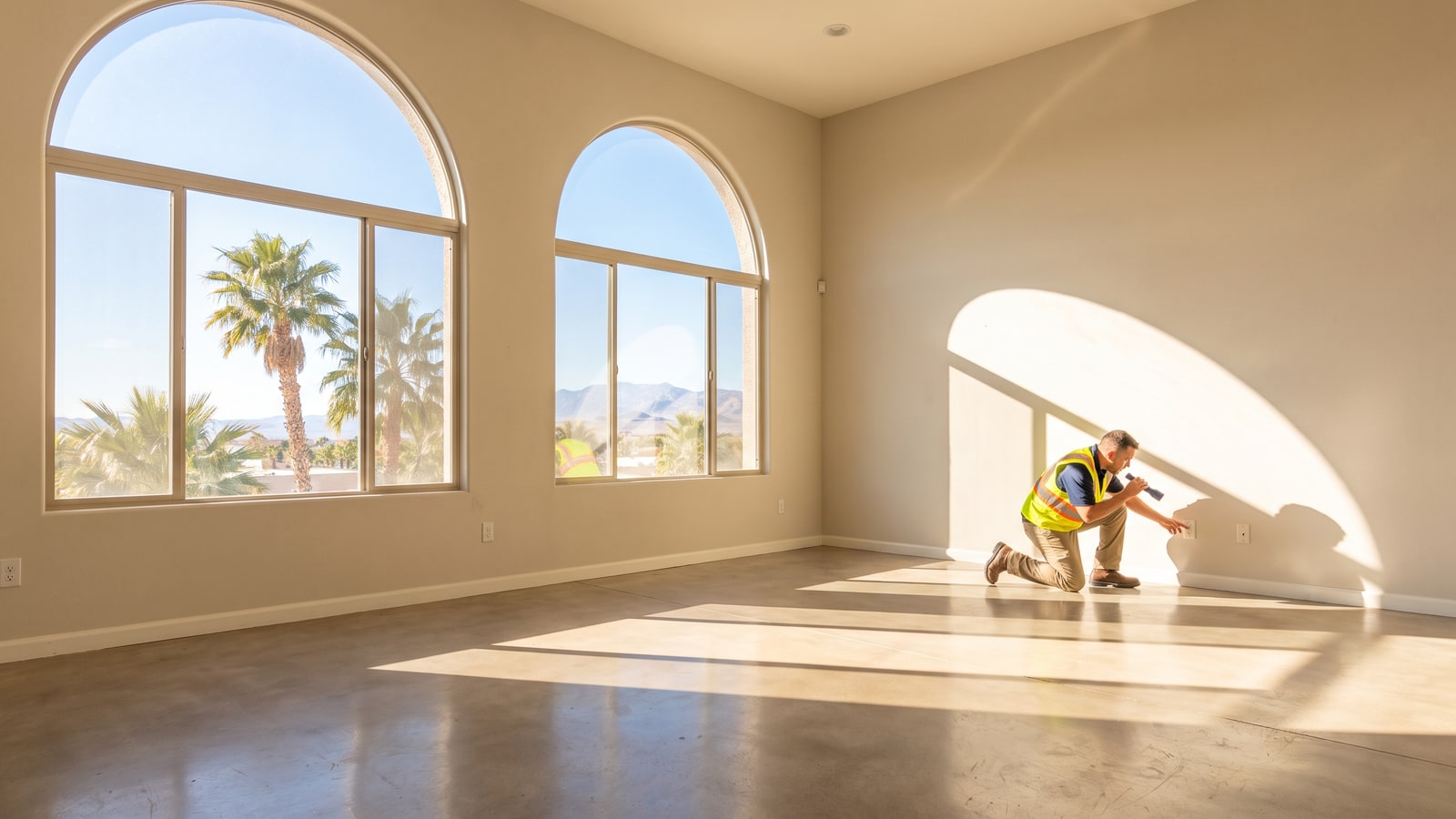
Winning REO in a thin market is mostly alert speed and clean terms: same-day showings when one hits, financing fully underwritten in advance (or cash), inspection periods kept tight, and offers priced off your repair-adjusted comp math rather than the list price's anchor. FHA 203(k) and conventional renovation loans work on REO condition-issues that would kill standard financing — the full financing playbook is in our fixer-upper guide, and rough REO inventory overlaps heavily with the fixer-upper listings we track live. One warning shared across every REO file: budget the utilities-off problem — a house winterized or power-cut for months hides plumbing, HVAC, and pool conditions that inspection day must specifically chase (we require utilities on before inspection, and the bank's asset manager almost always complies when asked early).
What About HUD Homes and Short Sales?
HUD homes are FHA-insured loans that foreclosed; HUD resells them through hudhomestore.gov via registered brokers (we are one — the bidding happens through your agent). Their killer feature is the owner-occupant priority window: for roughly the first 30 days, only buyers who'll live in the home (plus nonprofits/government) may bid, walling out the flipper competition entirely. HUD publishes the appraisal-based list price, accepts bids net of its costs, and sells strictly as-is with a standard inspection window (FHA-financeable when the property meets minimums; 203(k) when it doesn't). In a market where owner-occupants keep losing rough-condition homes to cash investors, the HUD window is the quiet structural advantage almost nobody uses — inventory is a trickle, but every drop of it favors you for a month.
Short sales are pre-foreclosure sales where the lender accepts less than the loan balance. For buyers they mean ordinary showings and financing with one giant asterisk: lender approval, which takes 60–120+ days, can come back with a counter, and dies entirely if a second lienholder balks. Price-wise, 2026 short sales in Las Vegas settle near market — the lender orders its own valuation, so the fantasy discount isn't there — but they suit patient buyers targeting specific homes, and they're kinder purchases than auctions for everyone involved, including the seller whose credit takes a lighter hit. Roughly forty are active on the MLS as of this writing; our alert setup flags each one the hour it lists.
How Do the Four Foreclosure Paths Compare Side by Side?
The decision grid we draw for every foreclosure-curious client:
| Dimension | Trustee auction | REO (bank-owned) | HUD home | Short sale |
|---|---|---|---|---|
| Typical discount | 10–25% | 3–8% | Appraisal-based, modest | Near market |
| Financing | Cash only | All loan types | FHA/conventional, 203(k) | All loan types |
| Inspection | None | Full period | Full period | Full period |
| Timeline to keys | Days (then eviction risk) | 30–45 days | 45–60 days | 90–150 days |
| Title insurance | No — your research | Yes | Yes | Yes |
| Best for | Pros with cash + title skills | Most buyers and investors | Owner-occupants (30-day window) | Patient buyers, no deadline |
In our experience the grid resolves most decisions in one conversation: owner-occupants with FHA-compatible plans watch the HUD trickle and hunt REO; investors with cash and rehab crews earn their discount at auction or on rough REO; and everyone else discovers the "soft-distress" ordinary-listing lane covered below. What nobody should do is wander all four lanes casually — each has its own alert setup, paperwork rhythm, and risk homework, and shallow effort across four lanes loses to focused effort in one.
What Does a Real Foreclosure Deal Look Like in Numbers?
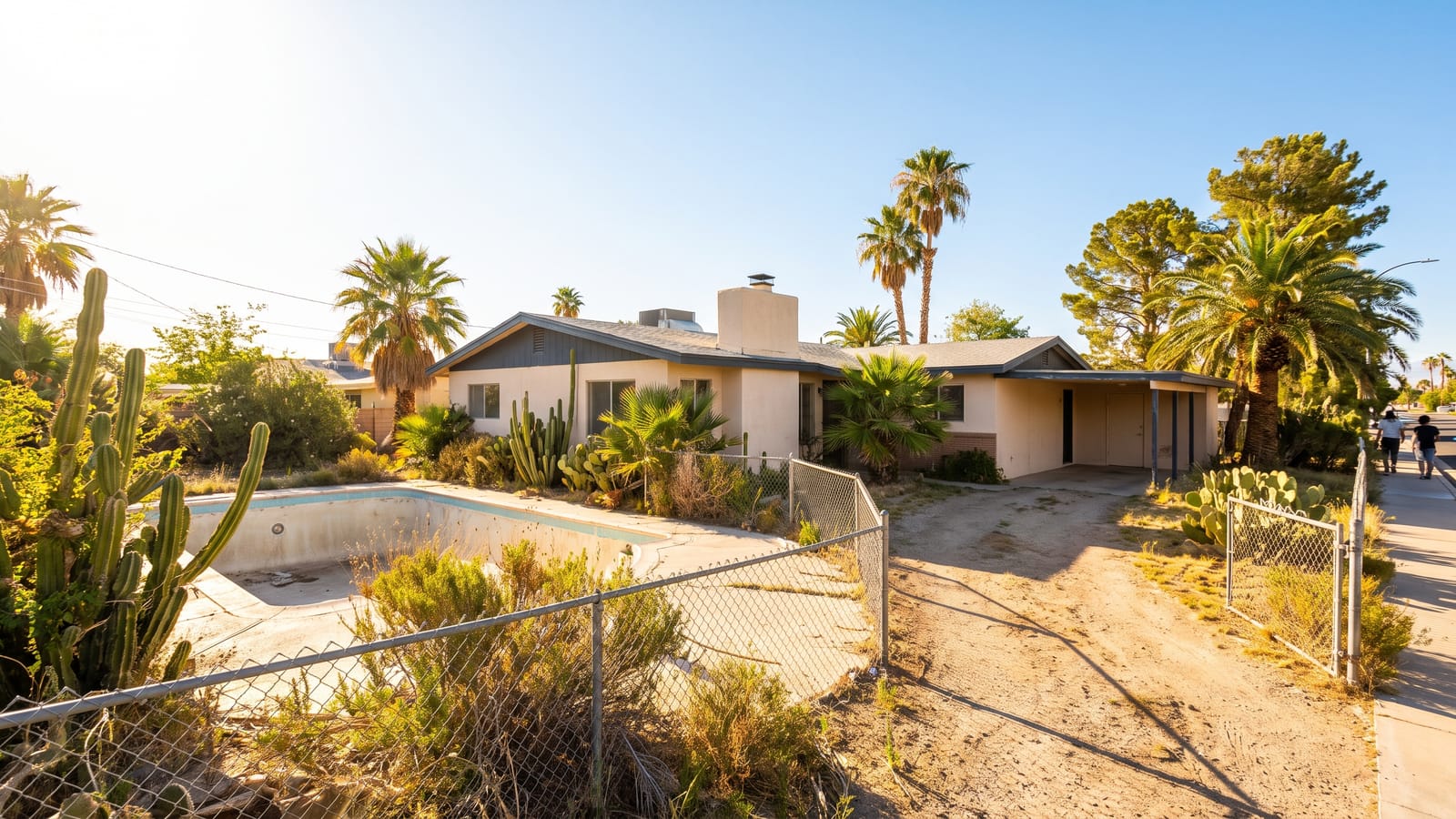
Two worked examples from the pattern our closed files repeat. The REO buy (owner-occupant): a bank-owned single-story in North Las Vegas lists at $389,900 against fixed-up neighborhood comps of $445,000. Inspection (utilities energized on request) prices the real work: $9,500 of HVAC, $6,000 of flooring, $4,500 of paint and landscaping — call it $20,000 plus a $5,000 contingency. All-in near $415,000 on a $445,000 house is roughly 7% of built-in margin — real, but note how much smaller than the internet's foreclosure fantasy, and earned through repair pricing, not luck. Financed FHA with 3.5% down (about $13,650), the buyer's cash need stays under $40,000 including closing costs and reserves.
The auction flip (professional): a trustee sale clears at $310,000 on a house with a $460,000 repaired value. The pro's ledger: $52,000 renovation, $14,000 carry and utilities over five months, $27,000 selling costs at exit (commission, closing, staging), $8,000 title/legal/eviction reserve — total basis about $411,000 against $460,000, a roughly $49,000 gross margin that one title surprise or a $15,000 market drift can halve. That 12%-ish gross on deep risk is why we tell would-be flippers to read our flipping guide before their first auction morning — and why the 2-1 buydown math on new construction sometimes beats the whole adventure for buyers who just wanted value.
How Do You Set Up the Foreclosure Hunt?
The working rhythm that actually surfaces the ~100-door aisle before someone else clears it. Alerts first: an MLS feed keyed to the distress markers (REO/bank-owned/short-sale phrasing, plus "as-is," estate, and vacancy language) firing same-hour — this is the feed we build for clients, and it's the single highest-leverage piece. According to HUD's own sales data, priority-window homes routinely go under contract within days of listing; speed is not optional in any lane. Records second: the weekly Notice-of-Default and trustee-calendar pull from the county — that's the pre-foreclosure horizon, three to nine months ahead of the auction, where patient buyers and respectful direct-mail investors work. Comps discipline third: a repaired-value model per target neighborhood, refreshed monthly, so every candidate gets the same 60-second math — repaired value, minus repairs at honest local costs ($35–$65 per square foot for cosmetic-to-moderate scopes in 2026), minus your margin and carry, equals your ceiling.
Then the weekly cadence: new distress listings toured within 48 hours, auction calendar scanned Mondays, HUD store checked twice weekly during the owner-occupant window, and — the piece hunters skip — the soft-distress sweep of ordinary listings with 60+ days on market or back-to-back price cuts in Henderson, Summerlin, and the value corridors, because that pool is thirty times larger than the labeled-distress pool and negotiates nearly as hard. According to Freddie Mac's rate data, every half-point of mortgage-rate relief also reshapes this hunt — payment-focused sellers concede less when buyer demand returns, so the 2026 window of buyer leverage is a reason to run the process now rather than someday.
What Do Foreclosures Cost Beyond the Purchase Price?
The label says discount; the ledger says fees. Budget these lines before any lane, because they're where "cheap" purchases converge back toward market:
| Line item | Typical cost | Applies to |
|---|---|---|
| Pre-auction title report(s) | $125–$250 per target | Auction — and you'll run several per win |
| Post-auction eviction/cash-for-keys | $1,500–$6,000 | Auction homes bought occupied |
| HOA super-lien payoff/estoppel | $500–$6,000+ | Any lane — Nevada HOA liens carry real priority teeth |
| Utilities restoration + deposits | $300–$900 | REO/HUD homes sitting dark |
| Re-key, trash-out, first clean | $400–$1,500 | Everything vacant |
| Dormancy repairs (dried seals, dead pool) | $1,000–$8,000 | Anything vacant over a summer |
| Real property transfer tax | $0.51 per $100 of value in Clark County | All purchases |
| Carry costs while renovating | $2,200–$3,500/mo all-in | Any home not immediately livable |
Two of these deserve emphasis. According to Home Means Nevada, Nevada's Foreclosure Mediation Program still exists, and the Nevada Supreme Court has transferred its duties under the program to the district courts and Home Means Nevada. Under NRS 107.086, once an owner-occupant qualifies for mediation, no further action may be taken toward the sale until it is complete — which for auction buyers means postponements that stretch your research across months, a real if invisible cost. And the HOA super-lien is Nevada-famous: a homeowners association's lien for up to nine months of assessments holds super-priority over even the first mortgage, which is why every distressed purchase here gets an HOA estoppel letter ordered on day one. The buyers who thrive are the ones who priced this table before bidding, not after.

When Does a Regular Listing Beat a Foreclosure?
More often than the foreclosure blogs admit, and it's the most valuable section of this guide. Run the same math we run: an REO at 5% under retail, needing $30,000 of work priced blind, carrying as-is risk and a rigid addendum — against an ordinary listing where a motivated seller in a buyer-leaning 2026 market accepts 3% under ask plus a $12,000 credit after a real inspection, with repairs you actually negotiated. The all-in numbers converge stunningly often, and the ordinary purchase carries title insurance, disclosures (Nevada's SRPD — foreclosure sellers are exempt from it), and a seller who has lived in the house and must tell you what's wrong with it.
The disciplined move is to hunt both aisles at once: alerts on the distressed markers AND on ordinary listings with high days-on-market, price cuts, vacancy, or estate language — the "soft distress" inventory that behaves like a foreclosure negotiation without the foreclosure paperwork. That combined feed is what we actually build for foreclosure-curious clients, because the goal was never "buy a foreclosure" — it was buy under market with eyes open.
One more honest comparison belongs here: the seller's side of soft distress. Estates, divorces, relocations, and landlords exiting the business produce motivated ordinary sales every week in this valley, and those sellers can negotiate — credits, rate buydowns, repairs, flexible closings — in ways a bank's asset manager structurally cannot. A $470,000 estate sale that takes $448,000 with a $10,000 credit and a clean inspection story is a better file than a $455,000 REO needing blind repairs, and it comes with a disclosure packet the REO legally omits. The 2026 buyer-leaning market has widened exactly this lane: days-on-market are up, price cuts are common, and patient buyers with pre-underwritten financing are collecting concessions that would have been laughed at during the frenzy years. Foreclosure hunting sharpened your process; point the same process at the whole market and the deal pool grows thirty-fold. Nevada Real Estate Group (150+ agents, 9,061+ verified five-star reviews) runs these hunts weekly, HUD registration included. Start with the current fixer inventory, browse the full market, set a distress-marker search, call (702) 637-1759, or tell us your cash/financing posture — it determines which of the four lanes you can actually win.
What Are the Mistakes That Cost Foreclosure Buyers Real Money?
- Bidding at auction on unresearched title. Winning a junior lien's sale is how buyers lose six figures in an afternoon. Title report first, always.
- Pricing the discount against list, not condition. An REO listed 10% "under market" that needs 12% of repairs is above market. Comp the repaired value, subtract honestly.
- Skipping utilities-on inspections. Dormant houses hide dead HVAC, slab leaks, and green pools. Make the asset manager energize the house.
- Missing the HUD owner-occupant window — the single best structural edge for a live-in buyer, wasted by not knowing it exists.
- Chasing short sales on a deadline. If you must move in 60 days, the 90-120-day approval lane is not your lane.
- Ignoring redemption-adjacent claims and HOA super-liens. Nevada HOA liens carry unusual priority power; unpaid assessments on a distressed home are your problem research, pre-offer.
- Forgetting the after-purchase file: as-is purchases still deserve the home-warranty analysis and an insurance quote gathered during diligence — dormant-home roofs and plumbing are exactly what carriers surcharge.
Frequently Asked Questions
Are there a lot of foreclosures in Las Vegas right now?
No — and that's the most important fact in the hunt. Live MLS data shows roughly 100 distressed-marketed listings against about 7,200 actives, near 1% of inventory. Nevada posts above-average foreclosure starts, but equity-rich owners mostly sell normally before auction, so the bargain aisle stays thin.
Can I buy a Las Vegas foreclosure with a normal mortgage?
In the REO, HUD, and short-sale lanes, yes — conventional, FHA, and VA all work when the property's condition passes the appraisal, and 203(k)/renovation loans cover the ones that don't. Trustee auctions are the exception: cash or cashier's checks, effectively same-day.
How much below market do Las Vegas foreclosures sell for?
Trustee auctions can clear 10–25% under repaired value when title and condition break right; REO typically lands 3–8% under comparable retail; HUD prices from its own appraisal; short sales settle near market because the lender orders a valuation. Every discount is compensation for risk you're absorbing — price the risk, not the label.
What is the biggest risk of buying at a foreclosure auction?
Title. Auction sales carry no title insurance at the gavel, and buyers who don't research the deed chain can win a junior lien's sale — paying real money for a position that a senior foreclosure wipes out. A pre-auction title report and a maximum-bid discipline are non-negotiable.
What is a HUD home and who can bid?
A HUD home is an FHA-insured foreclosure resold by the government at hudhomestore.gov through registered brokers. For roughly the first 30 days, bidding is restricted to owner-occupants (plus nonprofits and government buyers) — a genuine priority window before investors enter — and purchases run with normal inspections and FHA-compatible financing.
How long does a short sale take in Las Vegas?
Plan on 60–120+ days from accepted offer to lender approval, sometimes longer with two lienholders, and build the possibility of a lender counter into your expectations. Short sales fit patient buyers targeting a specific home — not anyone on a moving deadline.
Is 2026 a good year to hunt foreclosures in Las Vegas?
It's a good year to hunt under-market purchases — the buyer-leaning market means ordinary sellers negotiate credits and price cuts that rival thin foreclosure discounts without the as-is risk. Run both aisles: distress-marker alerts plus high-days-on-market ordinary listings, and let the math pick the winner.
Which Sources Inform This Foreclosure Guide?
Process law from Nevada Revised Statutes Chapter 107 (deeds of trust and trustee sales) and Chapter 113 (disclosure exemptions); notice records via the Clark County Recorder; mediation-program status from Home Means Nevada and NRS 107.086; HUD sales mechanics from HUD Home Store and HUD.gov; foreclosure-timeline context from ATTOM's mid-year 2026 foreclosure market report; market pricing from Las Vegas REALTORS; FHA renovation-loan rules from the FHA and Freddie Mac. Distressed-inventory counts (≈100 of ~7,200 actives) are point-in-time queries from NREG's live GLVAR feed on the publication date; discount ranges reflect our closed-file experience across 9,600+ transactions. Verify current inventory and process timelines with us directly — this is education, not legal advice.