

The strongest first move in real estate is often not a starter home but a starter building. Buy a duplex with an owner-occupant loan, live in one unit, rent the other, and the tenant's rent helps you qualify for the loan and then helps you pay it. Investors call it house-hacking. Lenders call it an owner-occupied two-to-four-unit property, and they lend on it with the same small down payments they offer on a single house.
The Las Vegas catch is supply, not the strategy. On September 27, 2026 I pulled every duplex, triplex and fourplex in the MLS for the city of Las Vegas: 122 were available to buy, and only 16 of them were duplexes. The live board is on our Las Vegas duplex and multifamily listings page, which runs the same search this guide is built on. Below are the closed prices by unit count, the 2026 loan limits and rent rules checked at HUD, Fannie Mae and the VA, the worked payment math on a median duplex, and the one test that knocks most fourplexes out of FHA financing.
To house-hack a Las Vegas duplex, buy it with an owner-occupant loan (FHA at 3.5% down, VA at zero down, or conventional at 5%), live in one unit and rent the other. In the 12 months ending July 2026, 21 duplexes closed at a $415,000 median, under Clark County's $693,050 FHA two-unit limit. Price is rarely the barrier. Inventory is, so have financing ready before a listing appears.
- 146 duplexes, triplexes and fourplexes closed in MLS city Las Vegas in the 12 months ending July 2026.
- Clark County's 2026 FHA limits are $693,050 for two units and $1,041,125 for four.
- FHA's self-sufficiency test applies only to three- and four-unit buildings, so duplexes are the easiest to qualify.
- At median unit rents and a 7.03% rate, a median $625,000 fourplex fails that FHA test.
- Sixteen of the 21 duplexes sold were built before 1978, so lead-paint disclosure rules apply.
Why Is a Duplex House-Hack Still the Strongest First Move in Las Vegas?
Because it combines four advantages that no other first purchase offers together. The first is owner-occupant financing on an income property. According to Fannie Mae's Eligibility Matrix, dated August 5, 2026, a two-to-four-unit principal residence purchase can be financed to 95% loan-to-value, while the same building bought as an investment tops out at 75%. On the $415,000 median duplex, that is roughly $20,750 down as an owner-occupant against about $103,750 as an investor.
The second is that the tenant helps you qualify. Every major loan program counts a share of the other unit's rent as income, under rules covered below. The third is landlording with training wheels: your first tenant lives one wall away, on a building you see every day, which is the gentlest possible way to learn the job described in our guide to renting out a Las Vegas home.
The fourth is the graduation path. Once the occupancy requirement is met, you can move out, rent both units and buy the next home with another owner-occupant loan. One limit matters here: according to HUD Handbook 4000.1, section II.A.1.b.iii(A)(2)(c), FHA will insure a second principal-residence loan while you keep the first only in listed exceptions, such as an employment relocation of more than 100 miles, a larger family with the current loan paid to 75% loan-to-value or less, or vacating a home a co-borrower keeps. So the next purchase is usually conventional or VA. That is how most small portfolios I have watched get built: one owner-occupied purchase at a time rather than one large investor down payment.
The honest counterweight is that you are living beside your tenant, in older buildings, in neighborhoods chosen by mid-century zoning rather than by your own preferences. House-hacking trades comfort for leverage. It is the right trade for some buyers and the wrong one for others, and the rest of this guide is about knowing which one you are before you write an offer.
How Many Duplexes, Triplexes and Fourplexes Sell in Las Vegas?
Fewer than most buyers expect, and the mix leans heavily toward fourplexes. My September 27, 2026 pull covered every closed and active listing filed in the MLS under the Duplex, Triplex and Multi Family styles for the city of Las Vegas. The Las Vegas board files four-unit buildings under Multi Family (110 of the 118 Multi Family sales carry the board's Fourplex architectural style), and most larger apartment buildings are commercial property outside this residential feed. A few larger buildings do slip into the Multi Family style: one 10-unit sale and two available 5- and 6-unit listings sit in the four-unit rows below. Removing them leaves the four-unit median sale unchanged at $625,000.
| Building | Closings, Aug 2025 to Jul 2026 | Median sale price | Price per door | Median days on market | Median sale-to-list | Prior 12 months: median (closings) | Available Sept 27, 2026 (median list) |
|---|---|---|---|---|---|---|---|
| Duplex (2 units) | 21 | $415,000 | $207,500 | 23 | 100.0% | $369,000 (23) | 16 ($405,000) |
| Triplex (3 units, small sample) | 7 | $545,000 | $181,667 | 53 | 98.3% | $460,000 (17) | 6 ($627,450) |
| Fourplex (4 units) | 118 | $625,000 | $156,250 | 32 | 98.4% | $631,000 (136) | 100 ($649,950) |
| All 2 to 4 units | 146 | $605,000 | Varies by unit count | 32 | 98.4% | $605,625 (176) | 122 |
Three readings matter. First, the duplex is the scarce one: 21 closings in a year, against 118 fourplexes. Second, price per door falls as units rise, from $207,500 on a duplex to $156,250 on a fourplex, which is why investors chase the four-unit buildings and why owner-occupants who can qualify for them often do.
Third, be careful with the counts. The Las Vegas MLS feed under-reports closings recorded between late August and late September 2025 (it shows one September 2025 closing), so the 146 figure understates the true year. Comparing like-for-like October-to-July windows, 136 buildings closed against 148 a year earlier, a decline of about 8%. Medians are usable across the full windows; the count comparison is only fair on those matching months. January 2026 also reads high in this feed (24 closings, against 19 in December and 12 in February). If January were in line with its neighbors, the October-to-July count would be about 128, the decline closer to 14%, and the supply figure below nearer 9.6 months.
Supply is thin but not frozen. At the October-to-July sales pace of 13.6 buildings a month (136 closings over 10 months), the 122 available listings represent about 9.0 months of inventory, while the valley's overall housing supply, according to Las Vegas REALTORS' August 2026 figures reported by Vegas Inc, ran just over four and a half months. For month-by-month context on the wider market, our Las Vegas market report for September 2026 carries the settled July numbers.
Where Do Las Vegas Duplexes and Fourplexes Actually Sit?
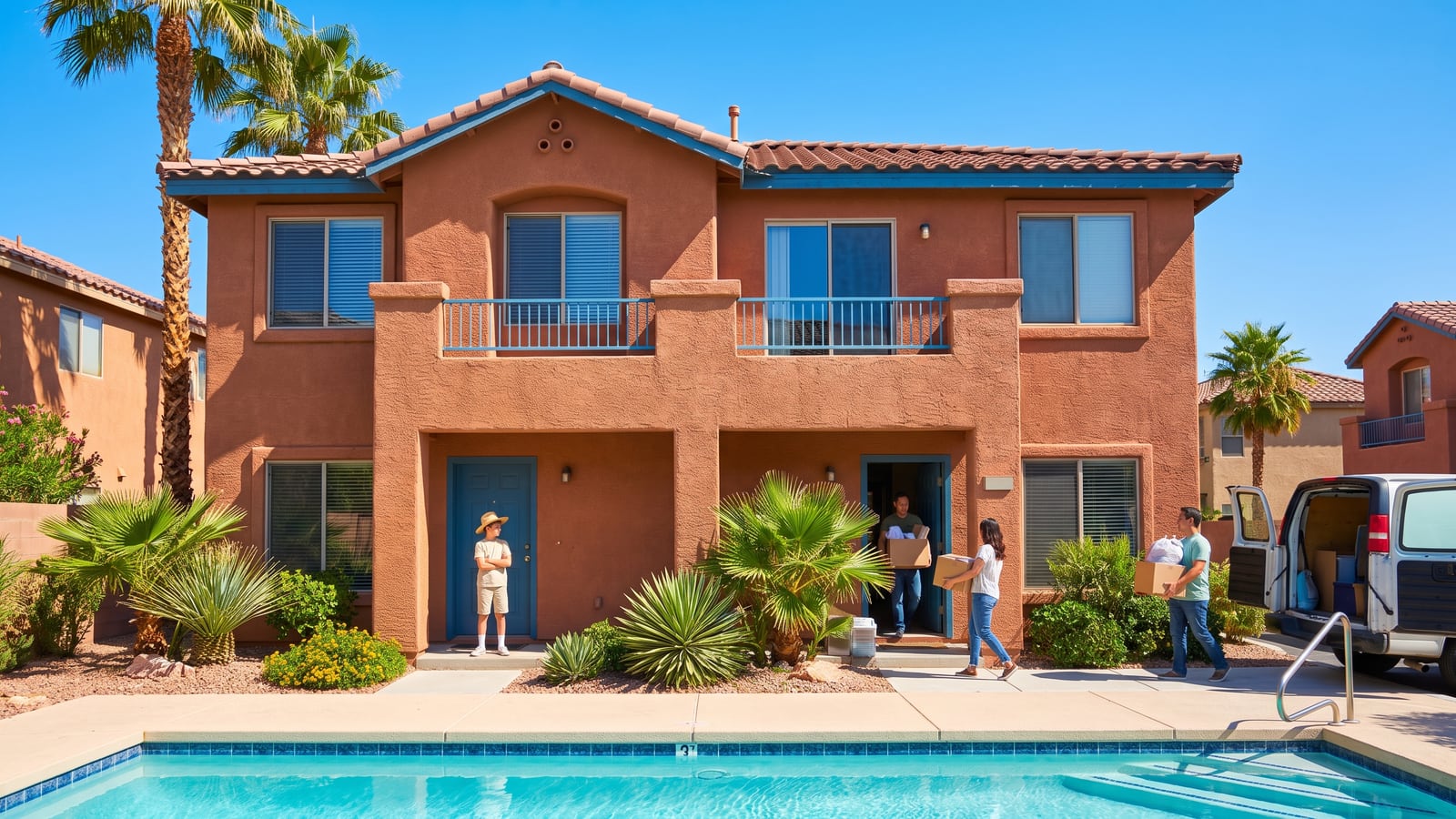
In a handful of older ZIP codes, and the two building types live in different places. The 21 duplex closings in the 12 months ending July 2026 clustered in 89104 (nine closings), 89101 (seven) and 89106 (three). Those are the neighborhoods around downtown: Huntridge, the John S. Park neighborhood and the blocks east and west of Downtown Las Vegas. The 16 active duplexes on September 27, 2026 sit in the same pattern, with seven in 89104 and four in 89101.
Fourplexes spread wider. The 118 four-unit closings came mostly from 89121 (19), 89101 (18), 89108 (14), 89119 (14), 89156 (10) and 89115 (10), reaching into the older east side, from east Las Vegas to the blocks east of the Strip. A Las Vegas mailing address does not mean city limits. I ran every sale address through the U.S. Census Bureau's geocoder on September 27, 2026 (one downtown address did not match): 80 of the 146 closings, including 74 of the 118 fourplexes, sit outside the City of Las Vegas, mostly in unincorporated Sunrise Manor (43 sales, 39 of them fourplexes) and Paradise (25). All 14 fourplex sales in 89119 are in Paradise, and 89121's 19 split 15 Sunrise Manor, three Winchester and one Paradise. That matters for taxes and short-term rental rules, both of which depend on the parcel's jurisdiction rather than the address on the envelope.
The age profile explains the geography. The median duplex that sold was built in 1954, and 16 of the 21 predate 1978. The median fourplex was built in 1979, a later wave of small apartment buildings, and 50 of the 118 predate 1978. The median fourplex covered about 3,536 square feet across its four units, so these are mostly compact one- and two-bedroom apartments rather than house-sized units.
What the master-planned era did not build is small multifamily. None of the 146 closings was in Summerlin's core ZIP codes (89134, 89135, 89138 and 89144); in this MLS data the planned west side simply does not have two-to-four-unit buildings for sale. Buyers who want newer construction and a second income unit usually end up weighing a detached house with a casita instead, which our guide to building an ADU or casita in Clark County covers in detail.
Which Loans Finance a Las Vegas Duplex in 2026?
Three owner-occupant programs do almost all of the work, and each treats a two-to-four-unit building a little differently. I checked every line in the table below against the agency's own document in September 2026.
| Dimension | FHA | VA | Conventional (Fannie Mae, DU) |
|---|---|---|---|
| Minimum down payment | 3.5% of adjusted value | None if the price does not exceed appraised value | 5% (95% maximum LTV on a 2-4 unit principal residence) |
| Occupancy | Move in within 60 days, intend to stay at least one year | Veteran must occupy one unit | Principal residence |
| Rent counted from the other units | 75% of the lesser of appraised market rent or the lease | 75% of the lease, with landlord aptitude and 6 months of PITI in reserves | 75% of gross rent minus the property's PITIA |
| Self-sufficiency test | Yes, for 3 and 4 units only | No equivalent test | No equivalent test in the rental-income rules |
| Mortgage insurance | 1.75% upfront plus 0.55% a year for the life of the loan at 3.5% down | No monthly mortgage insurance; a one-time funding fee may apply | Private mortgage insurance required above 80% LTV |
| 2026 loan-size ceiling, 2 units / 4 units | $693,050 / $1,041,125 in Clark County | No VA loan limit with full entitlement; with reduced entitlement, zero-down is keyed to the one-unit limit ($832,750) | $1,066,250 / $1,601,750 baseline conforming |
The FHA rows come from HUD Handbook 4000.1. According to the handbook, the minimum required investment is at least 3.5% of the adjusted value (section II.A.2), at least one borrower must occupy the property within 60 days of signing and intend to stay for at least one year (section II.A.1.b.iii), a minimum decision credit score of 580 or higher is needed for maximum financing, with scores from 500 to 579 limited to 90% loan-to-value (section II.A.2.b.i), and the premium chart in Appendix 1.0 sets a 1.75% upfront premium and a 0.55% annual premium for the life of the loan when the base loan is $726,200 or less and the loan-to-value is above 95%.
According to the VA's purchase loan page, a VA-backed loan can buy a home of up to four units that the veteran lives in, with no down payment as long as the price is not above the appraised value and no private mortgage insurance, though the funding fee may apply. The VA's loan limits page says a veteran with full entitlement has no loan limit, while one with reduced entitlement works from the county's one-unit limit even on a multi-unit property. For eligible buyers that is the strongest structure available, and our VA loan guide for Las Vegas buyers covers entitlement and the funding fee.
The conventional route is the strong-credit option. Fannie Mae's matrix allows 95% financing on two-to-four-unit principal residences, and according to Fannie Mae's Selling Guide section B7-1-01 the loan needs private mortgage insurance only because its loan-to-value is above 80%, rather than FHA's life-of-loan premium. Which one wins depends on your credit score, the building and the quotes, which is why I have buyers run both; our comparison of FHA and conventional loans in Las Vegas walks through that decision. A pre-approval that already models the rental income is the single biggest advantage in a market this thin, and our mortgage pre-approval page explains what to bring.
How Do Lenders Count the Rent From the Other Unit?
Each program uses 75% of the rent, but what it does with that 75% differs, and the difference can decide whether you qualify.
FHA. According to HUD Handbook 4000.1, section II.A.4.c.xii(I), a borrower with no rental history on the property is credited with 75% of the lesser of the appraiser's fair market rent or the rent in the lease, documented on the small residential income property appraisal report (Fannie Mae Form 1025). That amount is added to your income; HUD says the lender may not instead subtract it from your mortgage payment.
Conventional. According to Fannie Mae Selling Guide section B3-3.8-02, updated September 2, 2026, the lender multiplies gross monthly rent by 75% and subtracts the property's full payment (principal, interest, taxes, insurance and association dues) to reach adjusted net rental income. The detail that catches first-time house-hackers is experience: with at least 12 months of rental management experience, positive income can be used in full; with less, the rent can only offset the property's payment. The lender must also document your current housing payment.
VA. According to the VA Lenders Handbook, Chapter 4, updated August 26, 2026, prospective rent on a multi-unit property the veteran occupies counts only if the borrower has a reasonable likelihood of success as a landlord and cash reserves of at least six months of mortgage payments. Those reserves must be the borrower's own money, not a gift and not home equity. The amount credited is 75% of the lease or rental agreement.
What should a buyer assume for rent? Use real leases, not listing optimism. Across February to July 2026, 214 units in Las Vegas duplex, triplex and fourplex buildings leased through the MLS at a median of $1,088 a month, and the 139 two-bedroom units among them at a median of $1,100, with a median of about 40 days on the market. On a duplex, 75% of an $1,100 rent is an $825 monthly income credit.
What Are Clark County's 2026 FHA Loan Limits for Two to Four Units?
High enough that the limit almost never blocks a Las Vegas small-multifamily purchase. According to HUD's FHA mortgage limits lookup for calendar year 2026, Clark County (the Las Vegas-Henderson-North Las Vegas metro area) sits at $541,287 for one unit, $693,050 for two, $837,700 for three and $1,041,125 for four. The same HUD page lists the 2026 baseline Fannie Mae and Freddie Mac limits used for conforming conventional loans.
| Units | 2026 FHA limit, Clark County | 2026 baseline conforming limit | Closings, Aug 2025 to Jul 2026 | Sold at or below the FHA limit |
|---|---|---|---|---|
| One unit | $541,287 | $832,750 | Not in this data set | Not applicable |
| Two units | $693,050 | $1,066,250 | 21 | 21 of 21 (100%) |
| Three units | $837,700 | $1,288,800 | 7 | 7 of 7 (100%) |
| Four units | $1,041,125 | $1,601,750 | 118 | 113 of 118 (95.8%); 112 of 117 without the 10-unit sale |
The comparison is deliberately conservative: it measures the full sale price against the limit, even though the limit caps the loan, not the price. Every duplex and triplex that closed in the 12 months ending July 2026 sold for less than its unit-count limit, and 113 of the 118 four-unit-style sales did too (112 of 117 once the one 10-unit building, which FHA would not insure, is set aside). The highest duplex sale was $550,000, about $143,000 under the two-unit limit.
So the loan limit is not the constraint for an FHA buyer in Las Vegas. The constraints are the scarcity of duplexes, your own qualifying income, and for three- and four-unit buildings, the rent test in the next section. For buyers comparing across the state, our Reno and Sparks duplex and fourplex guide applies the same FHA and VA rules to a market with far fewer buildings.
What Is FHA's Self-Sufficiency Test, and Can a Las Vegas Fourplex Pass It?
It is the rule that makes FHA fourplexes hard, and at September 2026 rates most Las Vegas fourplexes fail it. According to HUD Handbook 4000.1, section II.A.1.b.iv(B)(3)(c), a three- or four-unit property must show net self-sufficiency rental income at least equal to the full monthly payment of principal, interest, taxes and insurance. HUD calculates that income from the appraiser's fair market rent for all units, including the one you will live in, minus the greater of the appraiser's vacancy and maintenance estimate or 25%.
Run it on the median fourplex. Take the $625,000 median sale with 3.5% down: a $603,125 base loan plus the financed 1.75% upfront premium is about $613,680. According to Freddie Mac's Primary Mortgage Market Survey, the 30-year fixed averaged 7.03% in the week ending September 24, 2026, up from 6.76% on September 10 and 6.30% a year earlier. I use that average as a stand-in, since FHA quotes differ from the survey. Principal and interest alone come to about $4,095 a month. The 0.55% annual premium adds about $276, and the median property-tax figure in the MLS for these fourplexes ($1,983 a year; the MLS tax field does not state which tax year) adds about $165, for roughly $4,537 before insurance.
Now the rent side. Four units at the $1,088 median unit lease produce $4,352 a month, and 75% of that is $3,264. Principal and interest alone are already above that, and with the premium and taxes counted the gap is about $1,273 a month before insurance, so the median fourplex fails. To pass on those terms, the four units would need to average roughly $1,500 each before insurance. Working the other direction, at $1,088 rents only a fourplex priced under about $445,000 would pass once the premium and taxes are counted, and the cheapest of the 118 fourplex closings was $435,000.
FHA also asks more of the buyer's bank account on these buildings: according to the handbook, section II.A.4.d.i(C)(2), the lender must verify reserves equal to three months of the full payment after closing on a three- or four-unit property.
This is an illustration, not an underwriting decision. The appraiser's rent schedule sets the rent, a renovated two-bedroom can appraise well above the MLS median, and a larger down payment shrinks the payment. But the math explains why so many fourplex house-hackers end up with conventional financing, which has no equivalent test, or VA financing. It also explains why the duplex, which sits outside the test entirely, remains the easiest FHA purchase.

What Does the House-Hack Math Look Like on a Median Las Vegas Duplex?
Here is the payment on the $415,000 median duplex bought with FHA financing, using sourced inputs where they exist and leaving out what only a quote can supply.
| Line | Amount | Where the number comes from |
|---|---|---|
| Down payment (3.5%) | $14,525 one time | HUD minimum required investment |
| Base loan plus 1.75% upfront premium | $407,483 | HUD Handbook 4000.1, Appendix 1.0 |
| Principal and interest | $2,719 | 30 years at 7.03%, Freddie Mac average for the week ending September 24, 2026 |
| Annual FHA premium (0.55%) | $184 | HUD Handbook 4000.1, Appendix 1.0 |
| Property tax | $69 | Median MLS tax figure on the 21 duplex sales ($828 a year; tax year not stated in the MLS field) |
| Payment before insurance | $2,972 | Sum of the lines above |
| Tenant's rent | minus $1,100 | Median two-bedroom lease in a 2-to-4-unit Las Vegas building, February to July 2026 |
| Net housing cost before insurance and repairs | $1,872 | Payment minus rent |
| Qualifying income credit | $825 | 75% of the $1,100 rent, per FHA rules |
| Principal repaid in year one | About $4,115 | Amortization at 7.03% |
Read it honestly. At 7.03% the house-hack does not make housing free. After the tenant's rent, this buyer carries about $1,872 a month before insurance, vacancy and repairs. For comparison, the 932 single-family homes that leased through the Las Vegas MLS in July 2026 did so at a median of $2,295 a month. So the owner lives for roughly the price of renting a house, builds about $4,115 of equity through principal in the first year (about $23,790 over five years at this rate), learns to be a landlord on a small scale, and keeps a two-unit building that can become a full rental later.
A conventional buyer with 5% down would borrow about $394,250, for principal and interest near $2,631 before private mortgage insurance. Whether that beats FHA depends on the mortgage insurance quote for your credit profile, which is exactly the comparison a good loan officer should hand you in writing.
Three cautions. The tax line is the seller's current bill, and it can rise under the cap rules in the next section. Insurance on a 1950s two-unit building has to be quoted on that building. And the rent is a median: a dated unit may lease for less, and a renovated one for more. If you plan to rent furnished by the night instead, note that according to the City of Las Vegas short-term rental instructions for 2026, a city license requires the owner to reside on the property while renting it, a 660-foot separation from other short-term rentals and 2,500 feet from resort hotels, and a $500 annual license fee. Our Las Vegas short-term rental rules guide covers the county's separate and very different rules.
How Do Property Taxes Work on a Duplex You Live In?
Differently from a single house, and most buyers learn this after closing. According to Clark County's tax abatement page, the 3% cap on annual tax-bill increases applies to an owner's primary residence, described as a single-family house, townhouse, condominium or manufactured home, while a cap of up to 8% applies to residences that are not owner-occupied. The county sends rental affidavit letters every spring to owners of duplexes, triplexes, fourplexes and apartments, and publishes the maximum rents that qualify a rental for the 3% cap: for the 2026/27 tax year, $1,270 for a one-bedroom and $1,504 for a two-bedroom.
A house-hacked duplex can end up with both caps on one parcel. NRS 361.4723, subsection 4, directs the Nevada Tax Commission to set a method for a parcel only part of which is the owner's primary residence, and NAC 361.6065, subsection 2, lets the Assessor split such a parcel and apply the matching abatement to each portion. So the unit you live in can take the 3% cap. The rented unit can take it too under NRS 361.4724, which gives the 3% cap to a rental when every tenant's rent is at or below the county maximum; the $1,100 median two-bedroom lease in these buildings is under Clark County's $1,504 two-bedroom limit. A unit rented above the limit falls under the general cap of up to 8% (NRS 361.4722). Confirm the parcel's treatment with the Assessor and file the rental affidavit each year. Clark County's abatement page also warns that any recorded ownership document removes the owner-occupied 3% abatement until the new owner claims it, so a sale does not wipe out the cap history; it changes which cap applies. Our 3% versus 8% tax cap guide walks through the claim.
The rate depends on the district, not the mailing address. According to the Clark County Treasurer's tax rates by district, the fiscal 2026-27 rate is 3.2782 per $100 of assessed value inside the City of Las Vegas (district 200), 2.9328 in unincorporated Paradise (district 470) and 2.5017 in the base unincorporated county district (district 100). Because Nevada assesses property at 35% of taxable value under NRS 361.225, each $100,000 of taxable value costs about $1,147 a year in the city and about $1,026 in Paradise. The MLS tax field in this data set shows how low the bills on older buildings can be: a median of $828 a year on the duplexes that sold and $1,983 on the fourplexes, though the field does not say which tax year it reflects. Sunrise Manor, Winchester and Spring Valley carry the same 2.9328 rate as Paradise.
What Should You Inspect on a Pre-1978 Duplex?
The building's age is the strategy's tax, and the inspection is where you either pay it or price it. Sixteen of the 21 duplexes that sold in the 12 months ending July 2026 were built before 1978, and so were 50 of the 118 fourplexes. According to the EPA's real estate lead disclosure rules, sellers and landlords of most pre-1978 housing must disclose known lead-based paint and hazards, provide available reports and the EPA pamphlet, and give buyers a 10-day period to conduct a lead inspection or risk assessment, which the parties can change by written agreement or the buyer can waive. If you plan to renovate between tenants, that disclosure is a starting point rather than a formality.
Beyond the standard inspection that our Las Vegas desert home inspection guide covers, a two-unit building adds its own list.
- Shared systems. One roof, and sometimes one water heater, one water meter or one electrical service. Know exactly what is separate and what is shared, because it decides both repair bills and who pays the utilities.
- Sewer line. A camera scope of the main line is the cheapest insurance on 1950s stock, where original piping is common.
- Electrical panel and wiring. Older panels affect safety, insurability and the cost of adding air conditioning or laundry to a unit.
- Legal unit count. Two kitchens do not make two legal units. Confirm with the city or county records that the parcel is permitted for the number of units being sold, because an unpermitted unit cannot be counted on the appraisal and may not be legally rentable.
- Occupied-unit condition. Tenants in place limit access. Write inspection access for every unit into the contract.
Plan reserves before closing. The VA's six-month reserve requirement is a useful yardstick even on an FHA or conventional loan: an older building with an inherited tenant tends to introduce itself in the first year, and the introduction is rarely free.
How Do You Manage a Tenant Who Shares Your Wall?
The proximity is both the feature and the friction. In our experience, the shared-wall tenancies that go well share four habits. The first is professional framing from day one: a written lease, market rent, documented screening criteria and rent paid through a set channel, even when the tenant becomes a friend. The second is boundaries: maintenance requests go through the same channel a remote landlord would use, not a knock at dinner. The third is screening: you will never screen more carefully than for the person twenty feet away, so use a consistent written process and apply it to everyone. The fourth is knowing the law before you need it.
Nevada's landlord-tenant chapter is specific. According to NRS Chapter 118A, section 118A.242 caps a security deposit, including any last month's rent, at three months of periodic rent, and section 118A.300 requires written notice of a rent increase at least 60 days before the first increased payment, or 30 days on a tenancy shorter than a month. There is no cap on the size of an increase in that section, only on the notice. Our guide to how much a Las Vegas landlord can raise rent covers the notice rules in full.
If you buy with a tenant in place, you inherit the lease, the deposit and the rent level. Get the lease and a signed estoppel statement from the tenant confirming rent, deposit and term during due diligence, because the deposit transfers to you at closing along with every promise the seller made. If you already know you avoid money conversations, budget a property manager from the start or pick a different first investment; turnover costs more than self-knowledge.
What Does the Offer and Escrow Look Like on a Small Multifamily Purchase?
It runs a few degrees off the single-family script. Start with speed and cleanliness. Duplexes that closed in the 12 months ending July 2026 spent a median of 23 days on the market, and the 16 available duplexes had been listed a median of about 87 days (by list date) as of September 27, 2026, so a well-priced new listing stands out. Sellers of scarce buildings reward buyers who arrive with financing already built around the rental income, and they are far less patient with buyers who need weeks to organize.
Pricing still leaves room. Ten of the 21 duplexes closed below their final list price and three above; among fourplexes, 74 of 118 closed below list and 10 above. The median fourplex that sold in the 12 months ending July 2026 closed at 98.4% of list after 32 days, so a documented offer below asking is normal, especially on a listing priced on pro forma rents rather than the leases in place.
The appraisal is different too. Two-to-four-unit loans use the small residential income property appraisal report (Form 1025), which includes the appraiser's rent estimate that your lender uses for the 75% credit, so build extra time into the appraisal window. Fannie Mae's rental income section also requires a copy of any lease being transferred to you, which means the leases belong in your due-diligence demands early rather than in closing week. Our Las Vegas home appraisal guide explains how to prepare for a low value.
Finally, the lead-paint period. On a pre-1978 building the EPA's 10-day inspection opportunity runs alongside your other contingencies unless you agree otherwise in writing. Put it on the calendar the day your offer is accepted.
Is a Duplex Better Than a Single-Family Rental or an ADU?
For a hands-on first-time investor with patience, usually yes; for a family that needs space this year, often not. The duplex's advantage is leverage: 3.5% to 5% down on an income property, with the tenant's rent counted toward qualifying. Its disadvantages are the ones this guide keeps returning to: 16 active duplexes on September 27, 2026, buildings with a median age of more than 70 years, and a shared wall.
The single-family rental is the opposite trade. Inventory is deep, construction is newer and the tenant pool is wide, but an investor loan on one unit starts at 15% down under Fannie Mae's matrix, and a house you live in with roommates does not count their rent the way a legal second unit does. The casita or ADU path buys a newer detached house now and adds the second unit later, which suits families who want the income unit on their own schedule; it costs more capital up front and depends on zoning and association rules.
Investors weighing Las Vegas against Henderson for a straight rental should read our Henderson rental property investment guide, which compares the two cities' rents, prices and gross yields from the same July 2026 data. And investors who already own and want to trade up into a larger building should look at the Nevada 1031 exchange guide, because owner-occupant loans are a first-rung tool.
Statewide, the comparison with Reno is instructive. Our Reno and Sparks guide counted 33 income listings there on September 12, 2026, with eight duplex closings from March to August at a $594,300 median. The Las Vegas duplex is cheaper at $415,000 but just as scarce. The loan rules are identical in both cities because they are federal and agency rules, not local ones; only the limits, rents and tax districts change.
Frequently Asked Questions
Can you buy a duplex with an FHA loan in Las Vegas?
Yes. FHA insures owner-occupied properties of one to four units with a minimum investment of 3.5% of the adjusted value, provided at least one borrower moves in within 60 days of signing and intends to stay at least a year. A duplex is the friendliest multi-unit FHA purchase because HUD's self-sufficiency rent test applies only to three- and four-unit buildings. Clark County's 2026 FHA limit for two units is $693,050, and all 21 Las Vegas duplexes that sold in the 12 months ending July 2026 closed below it.
How much does a duplex cost in Las Vegas in 2026?
In the 12 months ending July 2026, 21 duplexes closed in MLS city Las Vegas at a median of $415,000, or $207,500 per unit, with a median of 23 days on the market. The prior 12 months ran a $369,000 median on 23 closings. On September 27, 2026 there were 16 duplexes for sale at a median list price of $405,000, most of them in ZIP codes 89104 and 89101 around downtown. Fourplexes cost more in total but less per unit, at a $625,000 median, or $156,250 per door.
What is the FHA loan limit for a duplex in Clark County in 2026?
According to HUD's lookup for calendar year 2026, the FHA limit in Clark County is $693,050 for two units, $837,700 for three units and $1,041,125 for four units, against $541,287 for a single unit. Those limits cap the loan amount rather than the price. In the 12 months ending July 2026, every Las Vegas duplex and triplex sold below its limit and 113 of 118 fourplexes (95.8%) did, so for most buyers the limit is not the constraint; qualifying income and inventory are.
Does rental income help you qualify for a duplex loan?
Yes, with conditions that differ by program. FHA adds 75% of the lesser of the appraiser's market rent or the lease to your income. Fannie Mae multiplies gross rent by 75% and subtracts the property's payment, and if you have less than 12 months of landlord experience, the rent can only offset that payment. The VA counts 75% of the lease only if you show a reasonable likelihood of success as a landlord and six months of payments in reserves. On a $1,100 unit, the FHA income credit is $825 a month.
Can a Las Vegas fourplex pass FHA's self-sufficiency test?
Many cannot at September 2026 rates. HUD requires 75% of the appraiser's rent for all four units to cover the full monthly payment. On the $625,000 median fourplex with 3.5% down at 7.03%, the payment before insurance is about $4,537, while four units at the $1,088 median lease (units in Las Vegas 2-to-4-unit buildings, February to July 2026) yield $3,264 after the 25% deduction. The units would need to average roughly $1,500 each to pass before insurance. A renovated building, a larger down payment or conventional financing are the usual ways around it.
Can I use a VA loan on a Las Vegas fourplex?
Yes, if you are eligible and will live in one of the units. The VA's purchase loan page says a VA-backed loan can buy a home of up to four units with no down payment when the price does not exceed the appraised value, and without private mortgage insurance, though a funding fee may apply. To count the other units' rent, the VA handbook requires a reasonable likelihood of success as a landlord and cash reserves of six months of payments from your own funds, and it credits 75% of the lease.
Can I move out of my duplex after a year and rent both units?
Generally, yes. FHA's occupancy rule asks you to move in within 60 days and intend to live there at least one year, and after a genuine year of occupancy converting the whole building to a rental is a common next step. Plan three changes when you do: switch to a landlord insurance policy, expect your unit to lose the owner-occupied 3% cap (rented units keep 3% only if every rent is at or under the county's maximums and you file the annual rental affidavit; otherwise up to 8%), and give each tenant the notices Nevada's NRS 118A requires. Never sign an owner-occupancy statement you do not intend to honor.
How Do You Start a Las Vegas Duplex Search With Our Team?
Start with the financing, then the search, then the speed. The financing comes first because every duplex in this market is contested by buyers who are ready: get a pre-approval that already models the rental income under the program you will use, and ask your lender to show FHA and conventional side by side with the mortgage insurance priced in. If you are a veteran, get your certificate of eligibility and document the six months of reserves the VA wants before you count on the rent.
The search comes second. Our Las Vegas duplex and multifamily listings page shows every two-to-four-unit building for sale in the city from the same MLS search behind this guide, and you can set an alert there or on our home search so a new duplex reaches you the day it lists. If you are open to a single-family house with a casita instead, widen the search on our Las Vegas homes for sale page. For wider context, our market report hub and Las Vegas market data desk carry the monthly numbers.
Speed is third. With a median of 23 days on the market for the duplexes that sold, the buyer who can see a building the day it lists, read the leases that night and write a documented offer the next morning is the buyer who gets it.
Nevada Real Estate Group is the #1 real estate team in Nevada, with 9,600+ closed transactions, 150+ agents and 9,061+ verified five-star reviews. Call (702) 637-1759, or tell us your down payment and timeline, and we will tell you honestly whether the duplex hunt, a fourplex or a house-plus-casita fits your next twelve months.
Which Sources Inform This Duplex House-Hack Guide?
Market figures are MLS data pulled through Repliers on September 27, 2026: every Duplex, Triplex and Multi Family (fourplex) listing in the Las Vegas board's feed for MLS city Las Vegas, with closings from August 1, 2025 to July 31, 2026, the prior 12 months for comparison and listings available as of September 27, 2026 (122 of them, excluding five already under contract). Unit rents are MLS leases of units in those building styles from February through July 2026, and the single-family rent comparison is July 2026 MLS leases. These are our own counts, not official Las Vegas REALTORS statistics; the live versions are on our market report. The feed under-reports closings from late August to late September 2025, so counts are compared on October-to-July windows.
- HUD FHA mortgage limits lookup, calendar year 2026, Clark County: FHA limits by unit count and the 2026 baseline conforming limits
- HUD Handbook 4000.1: minimum investment, occupancy, rental income (II.A.4.c.xii(I)), self-sufficiency (II.A.1.b.iv(B)(3)(c)) and the premium chart in Appendix 1.0
- Fannie Mae Eligibility Matrix, August 5, 2026: 95% LTV on 2-4 unit principal residences, 75% on 2-4 unit investment purchases, 85% on one-unit investment purchases
- Fannie Mae Selling Guide B3-3.8-02: rental income from the subject property, September 2, 2026
- VA Lenders Handbook, Chapter 4: multi-unit rental income and reserves
- VA purchase loan page: up to four units, no down payment, funding fee
- Freddie Mac Primary Mortgage Market Survey: 7.03% for the week ending September 24, 2026
- Clark County tax abatement information: 3% and up-to-8% caps, rental affidavits
- Clark County Treasurer tax rates by district: fiscal 2026-27 rates
- NRS Chapter 361: the 35% assessment ratio (361.225) and the abatement caps (361.4722, 361.4723 and 361.4724)
- NRS Chapter 118A: security deposits (118A.242) and rent-increase notice (118A.300)
- U.S. Census Bureau geocoder: city-limits versus unincorporated place for each sale address
- NAC Chapter 361: split abatements on a partly owner-occupied parcel (361.6065)
- VA home loan limits: full versus reduced entitlement
- EPA lead disclosure rules for real estate: pre-1978 disclosure and the 10-day inspection period
- City of Las Vegas short-term rental instructions, 2026: owner occupancy, separation and fee
- Las Vegas REALTORS' August 2026 report, via Vegas Inc: valley-wide months of housing supply
The worked payment examples use the sourced inputs shown in each table and leave out insurance, which has to be quoted on the specific building. Underwrite your own building with its actual leases, tax bill and quotes before you write an offer.