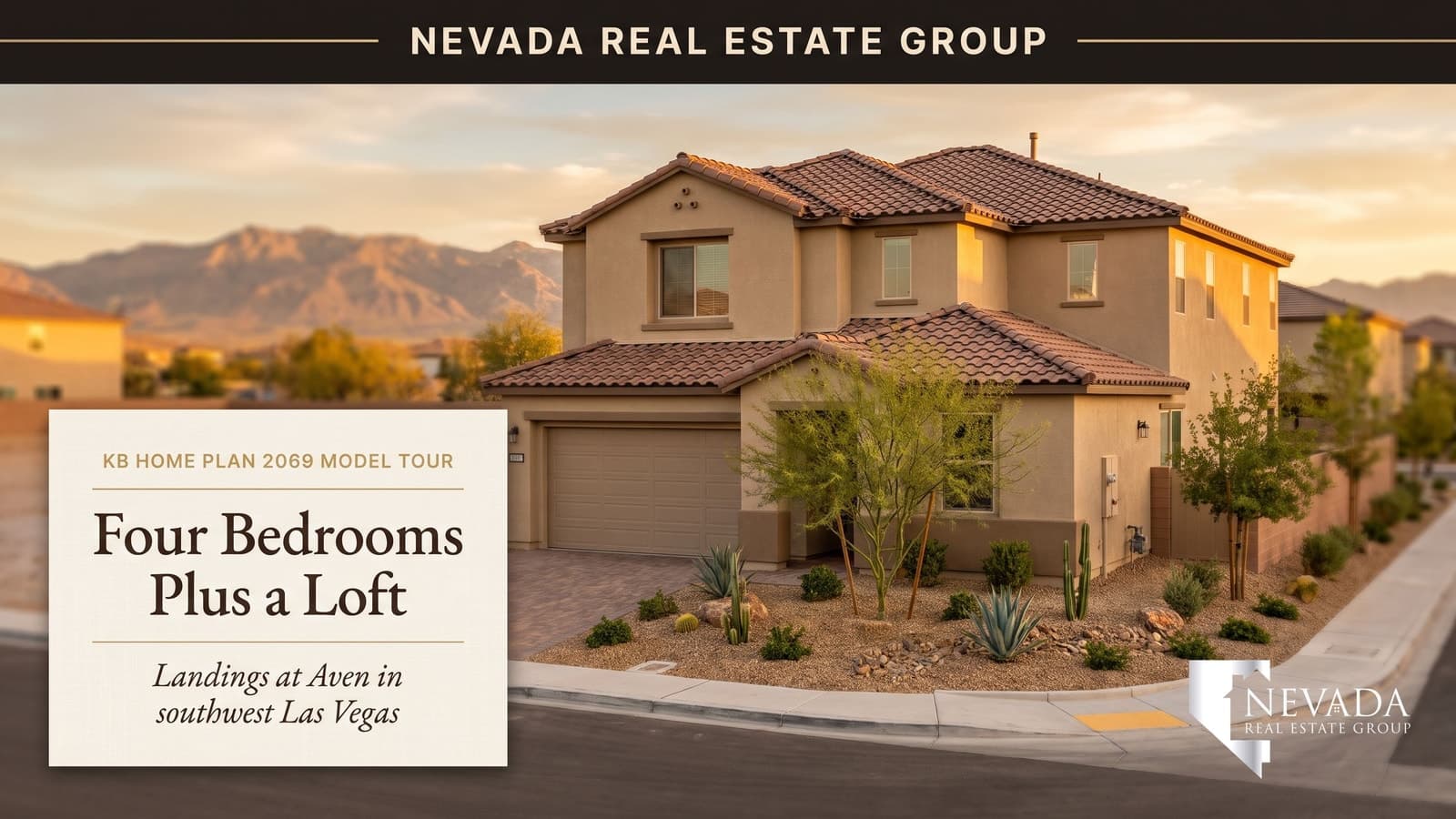
I have walked models where the HOA disclosure is the part nobody wants to read out loud. At Hinson Hills it is the headline.
The Lennar Marcia opened near $559,990 for roughly 2,400 square feet — and the community's estimated association dues came in around $13 a month. That number is not a typo and it is not a promotional rate. It is a genuine reflection of what the association does and does not do, and it deserves more attention than it usually gets, because it tells you something specific about what this community is and is not.
The Lennar Marcia at Hinson Hills opened near $559,990 for roughly 2,400 square feet, four bedrooms and a two-car garage, with an estimated HOA around $13 a month. That figure is real, and it reflects a community with almost nothing communal to maintain. Southwest Las Vegas held 69 active listings in ZIP 89139 between $500,000 and $650,000 at a $564,900 median when this was written.
- The Marcia opened around $559,990 for roughly 2,400 square feet with four bedrooms and four bathrooms.
- An estimated $13 monthly HOA is a fraction of the $100 to $200 typical of gated Las Vegas neighborhoods.
- ZIP 89139 held 69 active listings between $500,000 and $650,000 at a $564,900 median.
- Builder incentives included a 3.99% rate for seven years plus $10,000 toward closing costs.
- Backyard landscaping is not in the base price and commonly runs $10,000 to $25,000 after closing.
What Is the Marcia at Hinson Hills?
The Marcia is a two-story Lennar plan at Hinson Hills, a community in southwest Las Vegas positioned near South Point and the Silverton, with the dining and retail along that corridor a short drive away. According to Lennar's Hinson Hills page, the community is located on Richmar Butte Avenue in ZIP 89139, which is the ZIP the inventory figures below are drawn from.
The layout runs four bedrooms and four bathrooms across roughly 2,400 square feet with a two-car garage. Nine-foot ceilings on the main level open the living and dining space into a single volume, which is the reason the house reads larger than its square footage — the video's title is not marketing, it is an accurate description of what the ceiling height does to the room.
The kitchen carries 42-inch cabinets, quartz countertops and stainless appliances. There is a bedroom downstairs, a loft upstairs, secondary bedrooms, a dedicated laundry room, and a primary suite with dual sinks, a separate shower and tub, and a large walk-in closet.
At the time of filming, late August 2026, pricing started around $559,990. What that base price buys is a finished, permitted, warrantied house on a finished lot with a front yard. That includes the structure, the nine-foot ceilings, the 42-inch cabinets, the quartz counters and the stainless appliance package as specified — Lennar's model is to include more in the base than most competitors and offer fewer options, which is a genuinely different buying experience from a builder with a large design center. What it does not include is the backyard, and in Las Vegas that gap surprises people; I price it below.
Why the downstairs bedroom matters more than the loft: because it solves a problem that recurs, and the loft solves one that shifts. A ground-floor bedroom with a full bath near it is the single most requested feature I hear from families buying in this price band. It absorbs a visiting parent, an aging relative, a returning adult child, or a household member who cannot manage stairs comfortably. Those needs arrive without much warning and they do not go away. A loft is flexible in a different way — it becomes a playroom, then a homework space, then a den, then whatever the next stage requires. That is genuinely useful, but it is a nice-to-have that adapts rather than a requirement that gets met.
If you are weighing this plan against a competitor that offers more total square footage without a downstairs bedroom, that trade is usually worth taking. Of the 789 closings Nevada Real Estate Group handled in 2025, the requests that came in with a specific room requirement attached were overwhelmingly about a ground-floor suite, not about a bonus space upstairs. According to the U.S. Census Bureau, multigenerational households have grown as a share of American households over the past two decades, and Las Vegas indexes high on that pattern because so many families relocate here together.
For context on where that lands, buyers comparing across the valley usually start from Las Vegas homes for sale before narrowing to a single builder community.

How Can the HOA Really Be $13 a Month?
Because there is almost nothing for the association to maintain.
An HOA fee is not a fixed cost of homeownership. It is a budget divided by doors. When a community has a guarded entry, a clubhouse, a pool, a fitness center and acres of irrigated common area, that budget is large and the per-door number follows. When a community has a name, some entry landscaping and a set of recorded covenants, the budget is small and so is the fee.
A thirteen-dollar association is the second kind. It exists to enforce the CC&Rs and maintain a minimal common area. It is not funding a lifestyle.
That is not a criticism. It is a choice, and for a large share of buyers it is the right one. According to Nevada Revised Statutes Chapter 116, which governs common-interest communities statewide, an association's authority and its obligations both flow from its governing documents — so a small association with a small mandate is operating exactly as designed.
Across Clark County, more than 60% of homes fall under some form of HOA jurisdiction, and the range within that is enormous. A buyer who assumes "HOA" means one number is comparing two communities on a figure that can differ by a factor of forty.
What Does a Low HOA Actually Buy You — and Cost You?
Both sides of this deserve honesty.
What it buys: roughly $1,164 to $2,244 a year that stays in your pocket versus a typical gated Las Vegas community, and a meaningfully smaller fixed obligation in your debt-to-income calculation when you qualify. On a thirty-year hold, the difference between $13 and $150 a month is more than $49,000 in payments not made.
What it costs: the amenities those dues would have funded. No community pool. No guarded gate. No clubhouse, fitness room or staffed lifestyle programming. If those things matter to your household, a low HOA is not a bargain — it is the absence of something you wanted.
| Dimension | Minimal association | Gated suburban | Amenity or 55-plus |
|---|---|---|---|
| Typical monthly | Roughly $13 to $50 | $100 to $200 | $500 to $750 |
| Guarded entry | No | Sometimes | Usually |
| Pool and clubhouse | No | Often | Yes |
| Common-area irrigation | Minimal | Moderate | Extensive |
| What you are paying for | Covenant enforcement | Shared amenities | A managed lifestyle |
The other thing worth checking is whether a low HOA is being offset elsewhere. In many newer Las Vegas communities the infrastructure is financed through a special improvement district instead — an assessment attached to the parcel under NRS Chapter 271 that commonly adds $1,200 to $3,600 a year. An SID is not an HOA fee and it will not appear on the association disclosure. Ask for it separately, by name.
What Is Not Included in the Base Price?
The backyard is the big one, and it operates on a deadline.
Las Vegas new construction is routinely delivered with bare dirt behind the house, and most associations require completion within 30 to 180 days of close. Basic xeriscape installation across the valley commonly runs $10,000 to $25,000. Pavers add $4,500 to $12,000 depending on size and pattern. A pool is a separate five-figure decision entirely.
| Item | Typical range | Timing |
|---|---|---|
| Backyard xeriscape | $10,000 to $25,000 | After close, HOA clock |
| Pavers and hardscape | $4,500 to $12,000 | After close |
| Window coverings | Frequently excluded | Before move-in |
| Refrigerator and washer or dryer | Check the inclusion list | Before move-in |
| Lot premium | $5,000 and up valley-wide | At lot reservation |
I walk through the deadline mechanics and the fine structure in our HOA landscape requirements guide, because the fines start at $50 to $200 a month past the deadline and escalate from there. Budget the yard as part of the purchase, not as a project for next spring.
The reason to price it before you sign rather than after is that it changes the qualifying picture. A buyer stretching to $559,990 with nothing left over will discover the yard requirement 45 days after closing, on an association deadline, with fines accruing. That is a genuinely avoidable problem and it is one of the most common ones I see in new construction. Plan on $10,000 to $25,000 for a basic desert install, more if you want pavers, a covered patio or a pool.
The front yard comes with the house, because the association requires a finished streetscape and the builder needs one for the photographs; what you are buying is the back and the sides. Two rules shape what goes there. According to the Southern Nevada Water Authority, desert landscaping substantially reduces outdoor water use compared with turf, development codes have barred grass from new single-family front yards since 2004, irrigated grass has been prohibited in all new development, back yards included, since 2021, and rebate programs have historically been available for conversions — worth checking current terms before you design the yard rather than after it is installed. And even a thirteen-dollar association has design review: the CC&Rs will want to approve a pool, a shade structure or a wall change before it goes in, and a minimal association enforces its covenants precisely because that is the only thing it does. Get the design guidelines with the HOA documents and read them before you fall for the lot.
How Does the 3.99% Rate Offer Actually Work?
At the time of the tour, the incentive included a 3.99% rate for the first seven years plus $10,000 toward closing costs.
A rate fixed for seven years and then adjusting is an adjustable-rate mortgage, not a thirty-year fixed loan at 3.99%. That distinction is the entire risk profile. For years one through seven the payment is genuinely lower — meaningfully lower than a market fixed rate — and at the end of that window the loan adjusts on whatever index and margin the note specifies, subject to its caps.
Whether that is a good trade depends almost entirely on one question: how long will you own this house? A buyer who is confident about a five-to-seven-year horizon is capturing real savings during the years they will actually live there. A buyer who intends to hold for thirty years is accepting an unknown in year eight to lower the payment in year one.
I wrote the full arithmetic of this structure against a similar Lennar offer in our ARM financing breakdown, and the conclusion holds here: read the caps, the index and the margin before you read the headline rate. According to Freddie Mac's Primary Mortgage Market Survey, the weekly national fixed-rate average is published every Thursday, which gives you a free benchmark for what you are giving up in exchange. According to the Consumer Financial Protection Bureau, an adjustable-rate loan must disclose its index, margin and caps in the loan estimate, and that is the page to read rather than the sign.
Is the $10,000 closing credit worth the preferred lender? Usually yes at this price point — but verify rather than assume. Builder credits almost always require the builder's affiliated lender, and across Las Vegas those lenders commonly quote 0.25% to 0.625% above the best outside rate. On a smaller loan that spread can quietly consume the credit; on a heavily subsidized rate offer like a 3.99% seven-year fixed period, the builder is buying the rate down far enough that the comparison usually favors taking it. The way to know is to price an outside lender first, then compare total cost against total cost over your actual expected hold. Not the headline credit against nothing.
| Step | What to collect |
|---|---|
| 1. Outside quote | Rate, points, and lender fees from a non-affiliated lender |
| 2. Builder quote | Rate, the fixed period, caps, index and margin after adjustment |
| 3. Credit value | What the $10,000 actually offsets, line by line |
| 4. Hold horizon | Total cost over the years you will really own it |
What Does Southwest Las Vegas Inventory Look Like Right Now?
Deep, and moving quickly.
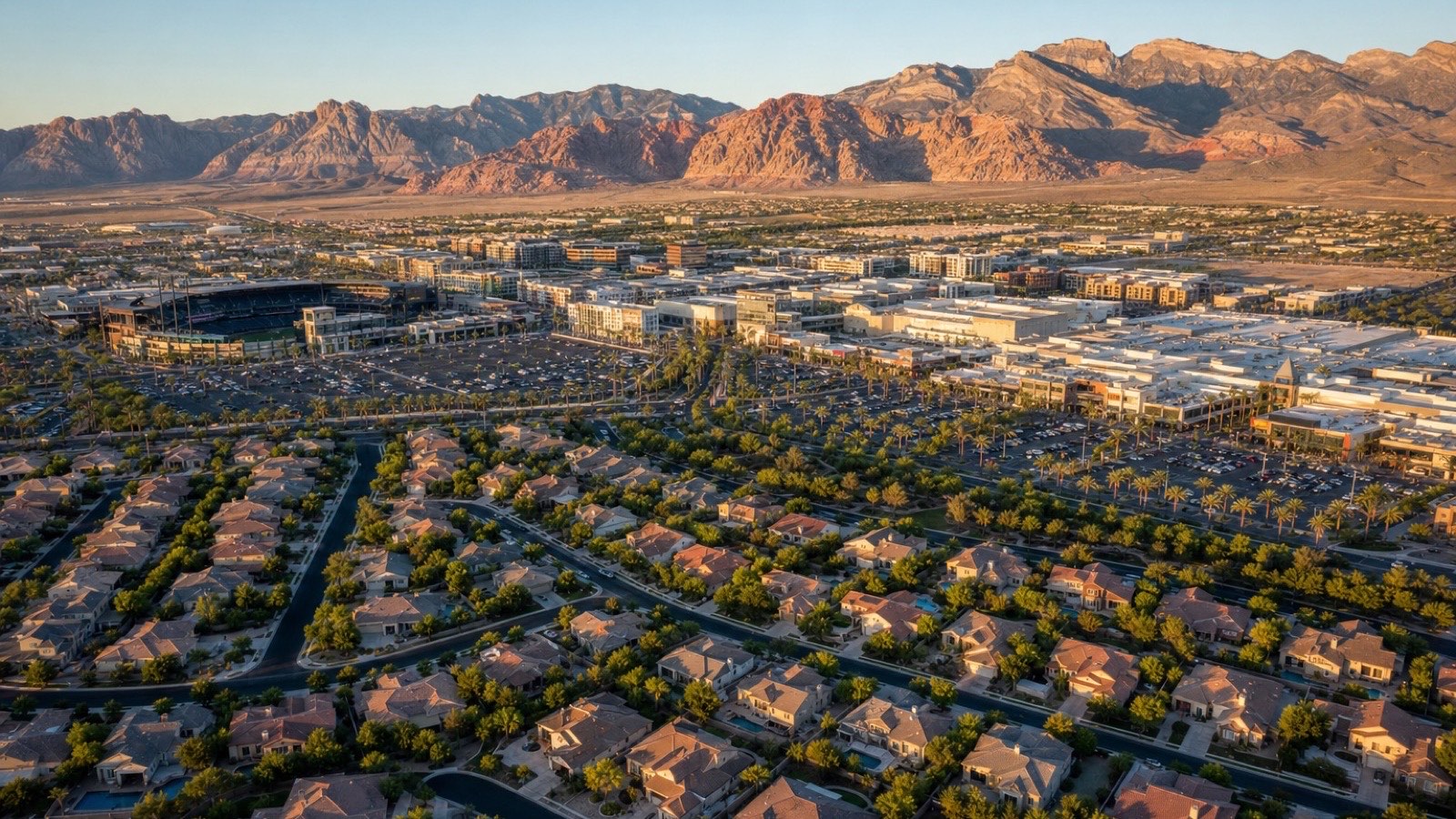
I pulled the surrounding ZIP codes on 2026-08-30. ZIP 89139 carried 297 active listings at a $485,000 median across all price points, with 69 homes in the $500,000 to $650,000 band at a $564,900 median. Neighboring 89183 showed 211 actives at a $420,000 median. To the west, 89141 carried 301 actives at a $600,000 median and 89178 carried 234 at $509,000.
On the closed side, 207 homes between $400,000 and $700,000 sold across 89139 and 89183 over the trailing 180 days at a $490,000 median and 21 median days on market.
| ZIP | Active, all prices | Median list | Active $500K to $650K |
|---|---|---|---|
| 89139 | 297 | $485,000 | 69 at $564,900 |
| 89183 | 211 | $420,000 | 27 at $595,000 |
| 89141 | 301 | $600,000 | 83 at $549,995 |
| 89178 | 234 | $509,000 | 69 at $560,000 |
A 21-day median in a band with this much supply tells you correctly priced homes are not sitting. It also tells you the Marcia at $559,990 is priced into the middle of a real competitive set rather than above it.
A second look a week later says the same thing from the closed side. In the 90 days ending September 6, 2026, 81 listings closed in ZIP 89139 at a $500,000 median and 37 median days on market, and 310 were active at a $476,498 median as of September 6, according to our analysis of Las Vegas REALTORS MLS data via Repliers. Those figures cover every property type and price, so they are the ZIP's center of gravity rather than comps for this plan — but a $559,990 four-bedroom new build sits just above the ZIP's closing median, in a market where a correctly priced home is under contract in five to six weeks. That is a liquid neighborhood, and for a buyer taking a seven-year ARM it is the more important number: the exit has to be liquid for the financing to be safe.
How does Hinson Hills compare to the other southwest neighborhoods? The southwest is not one market. It is several, separated mostly by how far west you go and what you are willing to pay for newness. Closer in toward the South Point corridor, prices run lower and the housing stock is more mixed in age. Further west and north into 89141 and 89178, medians climb and the communities skew newer and more amenitized — which also means higher association dues. That is the real trade Hinson Hills is making. It is choosing proximity to established retail and entertainment over a resort amenity package, and it is passing the savings through as a thirteen-dollar association rather than a two-hundred-dollar one. Buyers who want the amenity version have Henderson and the newer Summerlin villages, and they will pay for it in both price per foot and monthly dues. The hub page for the southwest Las Vegas corridor carries the rest of the community-by-community picture.

What Will the Total Monthly Actually Be?
The thirteen-dollar HOA is the smallest number in the payment, and buyers who anchor on it sometimes forget to build the rest.
On a $559,990 purchase, the pieces are the loan payment, property tax, homeowners insurance, the association, and — if one exists on the parcel — the special improvement district assessment. The mortgage is the obvious one and the only one most buyers price before shopping.
Property tax in Clark County is the piece that gets misread most often. According to the Clark County Assessor, Nevada's tax abatement caps the annual increase at 3% on an owner-occupied primary residence and 8% on other property. That cap is genuinely one of the strongest homeowner protections in the country, and it is also the source of a specific new-construction surprise: the cap limits the percentage increase, not the base, and it does not smooth the jump between a builder's dirt-only assessment in year one and the finished home's assessment in year two.
That reassessment is not a Hinson Hills issue, it is a Las Vegas new-construction issue. Buyers across the valley routinely see a first-year bill built on land value alone and a second-year bill built on the completed house, and the closing disclosure estimate reflects the first one. Treat the year-one tax figure on your closing paperwork as temporary rather than as your real payment, and ask the sales office what a comparable finished home in the community is actually assessed at.
Insurance is the piece that has moved most in the last several years. Newer construction generally prices better than older stock — a 2026 build carries current wiring, current roofing and current code compliance, all of which carriers price favorably — but the only way to know your number is to get a quote on the specific address before you remove your financing contingency, not after.
Stack those honestly and the picture is straightforward: a low-HOA community shifts more of your monthly obligation into the parts you can shop. You cannot negotiate association dues, but you can shop insurance, you can shop the loan, and you can appeal an assessment. That is a structural advantage of the thirteen-dollar model that rarely gets named.
How Long Will the Build Actually Take?
Longer than the sales office says, if you are buying dirt rather than standing inventory.
Across Las Vegas production builds, the realistic contract-to-close window runs nine to eleven months against a commonly quoted six, with five to seven months of that being active construction on a home in this size range. New construction accounts for roughly 25% to 30% of metro home sales, so this is a well-worn path — but the timeline in the brochure is the optimistic one.
If the community has completed inventory, that changes everything: a finished home can close in the normal 30-to-45-day financing window. Ask which you are buying before you assume a move-in date.
The money moves on that schedule too, and the sequence is not the resale sequence. The deposit comes first, and a builder deposit is typically a percentage of the price rather than the flat few thousand dollars a resale seller accepts, with contract language that is far less forgiving about returning it. The design appointment comes early and is usually a hard deadline — Lennar's fewer-options model makes it a short one, which is a real advantage. The rate lock has to survive the build: a 3.99% seven-year rate that is locked for 90 days on a home that closes in month ten is a rate that has to be extended, at a cost, or re-set, and that question belongs in the contract conversation rather than in month eight.
The pre-drywall walk is the appointment to protect. It is the only time everything inside the wall is visible — the framing, the electrical runs, the plumbing rough-in and the ductwork — and an independent inspector at that stage is the cheapest insurance in the whole purchase. According to the Nevada State Contractors Board, every contractor on the project must hold an active license, and verifying that takes about five minutes on their public lookup; the same check works for the landscaper who lands the yard, while the inspector you hire is certified by the Real Estate Division under NRS 645D. Then the final walk, the punch list, the closing, and a warranty that on most production homes runs one year on workmanship, two on systems and ten on structure — get the written terms and confirm the start date is your closing.
Who Is the Marcia Actually Built For?
The buyer who wants square footage and a functional layout more than a clubhouse.
That is a large group in Las Vegas, and it is underserved by the way builders market. Four bedrooms, four bathrooms, a downstairs suite and a loft at roughly 2,400 square feet is a genuinely practical family footprint, and a thirteen-dollar association means the monthly obligation is the mortgage, the taxes and the insurance — close to nothing else.
It is also a reasonable fit for a first-time buyer stepping up from a condo, where the contrast in dues is dramatic. Condo and townhome associations in the valley routinely run several hundred dollars a month because they maintain roofs, exteriors and shared systems. And it fits the buyer with a genuine five-to-seven-year horizon — a relocation with a known end, a household that will outgrow 2,400 square feet on a schedule — for whom the seven-year rate is capturing savings during exactly the years they will be here.
Who it is not for: a household that wants a pool without building one, a guarded entry, or programmed community life. Those buyers should look at guard-gated communities and price the dues honestly rather than treating them as a surprise. It is also not for the buyer who intends to hold thirty years on the 3.99% payment and has not run the number at the lifetime cap; that buyer should price the fixed-rate version before deciding.
Across the 9,600-plus transactions Nevada Real Estate Group has closed statewide, the buyers who regret an HOA decision almost always regret it in one direction: they bought the amenity package and never used it.
What Should You Ask Before You Sign?
Six questions, all answerable in one visit:
What is the actual recorded HOA amount and what does the budget fund? Is there a special improvement district on this parcel, and what is the current balance and annual assessment? What is the lot premium on this specific lot? Is the refrigerator, washer, dryer and window covering package included? Is the 3.99% rate a fixed period on an adjustable loan, and what are the caps, index and margin after it ends? Is this a dirt start or standing inventory, and what is the realistic close date?
Then the contract items that separate a builder purchase from a resale. The five-day window. Under NRS 116.4108 a buyer in a new common-interest community may cancel by written notice until midnight of the fifth calendar day after signing, unless the buyer has personally inspected the unit — the one statutory exit, so use those days to read the CC&Rs, the budget behind the $13, and the design guidelines. The appraisal gap. The Marcia is priced into the middle of its band, which is the best protection against a short appraisal, but the builder's contract will usually make any gap your problem rather than theirs; know in advance how much cash you could bring. The SID confirmation. Get it in writing for the parcel, and check it against the assessor record rather than the sales sheet. The warranty and the inspection. Written terms, and an independent inspector at pre-drywall.
If you want those answers checked against what is actually closing nearby before you sit down with a sales agent, call our team at (702) 637-1759, contact us directly, or start from the live southwest Las Vegas search. If you are selling an existing home to fund the move, the sellers side of that timing is worth planning in parallel.
Frequently Asked Questions
Is a $13 monthly HOA really possible in Las Vegas?
Yes, and it reflects a community with minimal common area to maintain rather than a promotional rate. Association dues are a budget divided by the number of homes, so a community without a pool, gate or clubhouse has very little to fund. Confirm the recorded amount and the association budget before relying on any estimate.
Does a low HOA mean there are hidden fees somewhere else?
Not necessarily, but check for a special improvement district. Many newer Las Vegas communities finance infrastructure through an SID assessment attached to the parcel under NRS Chapter 271, commonly adding $1,200 to $3,600 per year. That assessment is separate from HOA dues and will not appear on the association disclosure.
How much is the Lennar Marcia at Hinson Hills?
Pricing started around $559,990 at the time of the tour for roughly 2,400 square feet with four bedrooms, four bathrooms and a two-car garage. Builder pricing, incentives and availability change by release and by lot, so confirm the current price sheet directly.
What does the 3.99% builder rate actually mean?
It was offered as a 3.99% rate for the first seven years, which describes the fixed period of an adjustable-rate mortgage rather than a thirty-year fixed loan. The payment is genuinely lower during those years, and the loan adjusts afterward based on its index, margin and caps. Read those three terms before comparing it to a fixed quote.
Is the backyard included in the price?
Almost never on a Las Vegas production build. Homes are typically delivered with bare dirt in the back and most associations require completion within 30 to 180 days of closing. Basic xeriscape commonly runs $10,000 to $25,000, with pavers adding $4,500 to $12,000.
Should I use the builder's preferred lender to get the $10,000 credit?
Price an outside lender first, then compare total cost over your expected hold. Preferred lenders commonly quote 0.25% to 0.625% above the best outside rate, though on a heavily subsidized rate offer the builder program often still wins. The comparison is the point, not the assumption.
How long will the home take to build?
If you are starting from dirt, plan on nine to eleven months from contract to close rather than the six commonly quoted, with five to seven months of active construction. Standing inventory closes in a normal 30-to-45-day financing window, so ask which you are buying.
Which Sources Inform This Southwest Las Vegas Guide?
Inventory and closed-sale figures were pulled on 2026-08-30 from the GLVAR feed: 297 active listings in ZIP 89139 at a $485,000 median with 69 between $500,000 and $650,000 at $564,900; 211 actives in 89183 at $420,000; 301 in 89141 at $600,000; 234 in 89178 at $509,000; and 207 closings between $400,000 and $700,000 across 89139 and 89183 over the trailing 180 days at a $490,000 median and 21 median days on market. The follow-up ZIP 89139 figures — 310 active listings at a $476,498 median as of September 6, 2026, and 81 closings in the 90 days ending September 6, 2026 at a $500,000 median and 37 median days on market — come from our analysis of Las Vegas REALTORS MLS data via Repliers, all property types and prices. The community location comes from Lennar's published community page. Plan details — square footage, bedroom and bathroom count, ceiling height, cabinet and countertop specification, downstairs bedroom, loft and primary suite configuration — come from walking the Marcia model at Hinson Hills in late August 2026 and are represented as of the tour date. Pricing, incentives, rates, upgrades, backyard costs, HOA amounts, SID assessments and availability change by builder, lot, release and contract terms, and model home features may be representational only.
- Lennar — Hinson Hills — community location
- Nevada Revised Statutes Chapter 116 — common-interest community governance, public offering statement and the five-day cancellation right
- Nevada Revised Statutes Chapter 271 — special improvement district authority and assessments
- Clark County Assessor — parcel records and property tax abatement
- Las Vegas REALTORS — valley market conditions and the MLS data behind the ZIP figures
- Freddie Mac Primary Mortgage Market Survey — weekly national mortgage rate benchmark
- Consumer Financial Protection Bureau — adjustable-rate mortgage disclosures and caps
- Federal Housing Finance Agency — conforming loan limits and house price index
- Nevada State Contractors Board — contractor licensing verification
- Southern Nevada Water Authority — desert landscaping requirements, the grass prohibition in new development and conversion rebates
- Clark County Department of Building and Fire Prevention — permitting and inspection
- U.S. Census Bureau — multigenerational household and Clark County growth data
- Nevada Department of Taxation — Nevada's zero state income tax status