

Every week someone calls our office and asks a version of the same question: is 2026 a year to buy in Henderson, or a year to sell? People want a single word back. Buy. Sell. Wait.
I have never been able to give that single word honestly, and this year less than ever. Henderson is not one housing market. It is a cluster of at least four markets stacked on top of each other — the entry-level resale ring around Green Valley and Whitney Ranch, the master-planned middle at Inspirada and Cadence, the established move-up belt in Anthem and Seven Hills, and the guard-gated luxury tier at MacDonald Highlands, Ascaya, Lake Las Vegas and Anthem Country Club. In August 2026 those four markets are not moving in the same direction, and in two of them the leverage has actually flipped since last spring.
So this guide does something different from a headline. It walks the math for both sides — what a Henderson seller actually nets after every line item, what a Henderson buyer actually pays per month at each rate, and where the break-even sits if you wait a year. Then it tells you which price bands currently favor which party. Bring your own numbers. If you want ours applied to your specific address, call (702) 637-1759.
Henderson in 2026 rewards sellers of well-priced, move-in-ready homes under about $700,000 and rewards buyers above roughly $1 million, where inventory sits longest. On a $650,000 sale, expect roughly $44,000 in total closing costs before loan payoff. A buyer at $550,000 with 20% down pays about $2,781 in principal and interest at 6.5%. Your answer depends on which side of that price line you sit.
- Henderson's sub-$700,000 resale tier still moves fast; the luxury tier above $1.5 million negotiates hard.
- Total seller costs on a $650,000 Henderson sale run roughly $44,000, or about 6.8% of price.
- A half-point rate change on a $440,000 loan swings the payment about $143 per month.
- Builder incentives at Cadence and Inspirada compete directly with resale sellers in the $450,000 to $650,000 band.
- Nevada's 3% annual tax cap on primary residences protects long-tenured Henderson owners from the full assessment.
What Is Actually Happening in the Henderson Market Right Now?
The honest summary is that Henderson has normalized rather than corrected. Our own Henderson market report from June 2026 put the local median around $480,000 — a figure that has drifted within a narrow band for several quarters rather than lurching in either direction. That is the single most important fact for anyone trying to time this market: the drama left in 2022, and what replaced it is a slow, grinding, inventory-driven market where individual pricing decisions matter far more than macro trends.
According to Las Vegas REALTORS, the association publishes monthly statistics for Southern Nevada covering median prices, closed units and available inventory, and the shape of that data over the last two years has been remarkably flat on price and steadily rising on supply. More listings, roughly stable prices, longer days on market. That combination does not produce a crash. It produces negotiation.
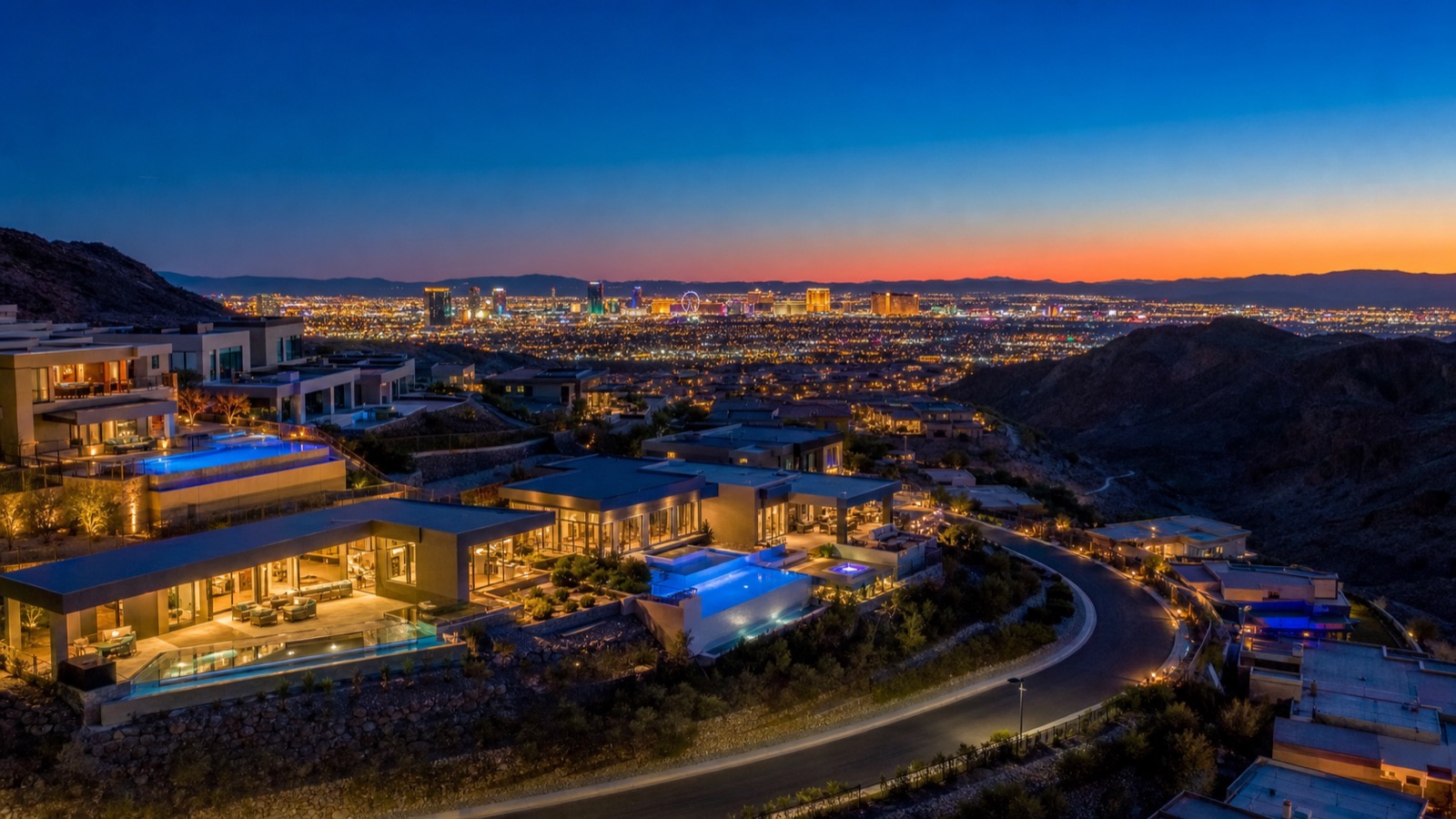
What has genuinely changed in Henderson specifically is the spread between price tiers. A clean three-bedroom in Green Valley Ranch priced correctly can still draw multiple showings in the first weekend. A 5,800-square-foot custom home on a hillside lot in MacDonald Highlands can sit for six months and then trade with a six-figure concession. Both of those things are true in the same city, in the same month, and any article that averages them together produces a number that describes nobody's house.
For sellers, that means the question is not "is it a good market" but "is it a good market for my price band, my condition and my competition." For buyers, the same logic applies in reverse.
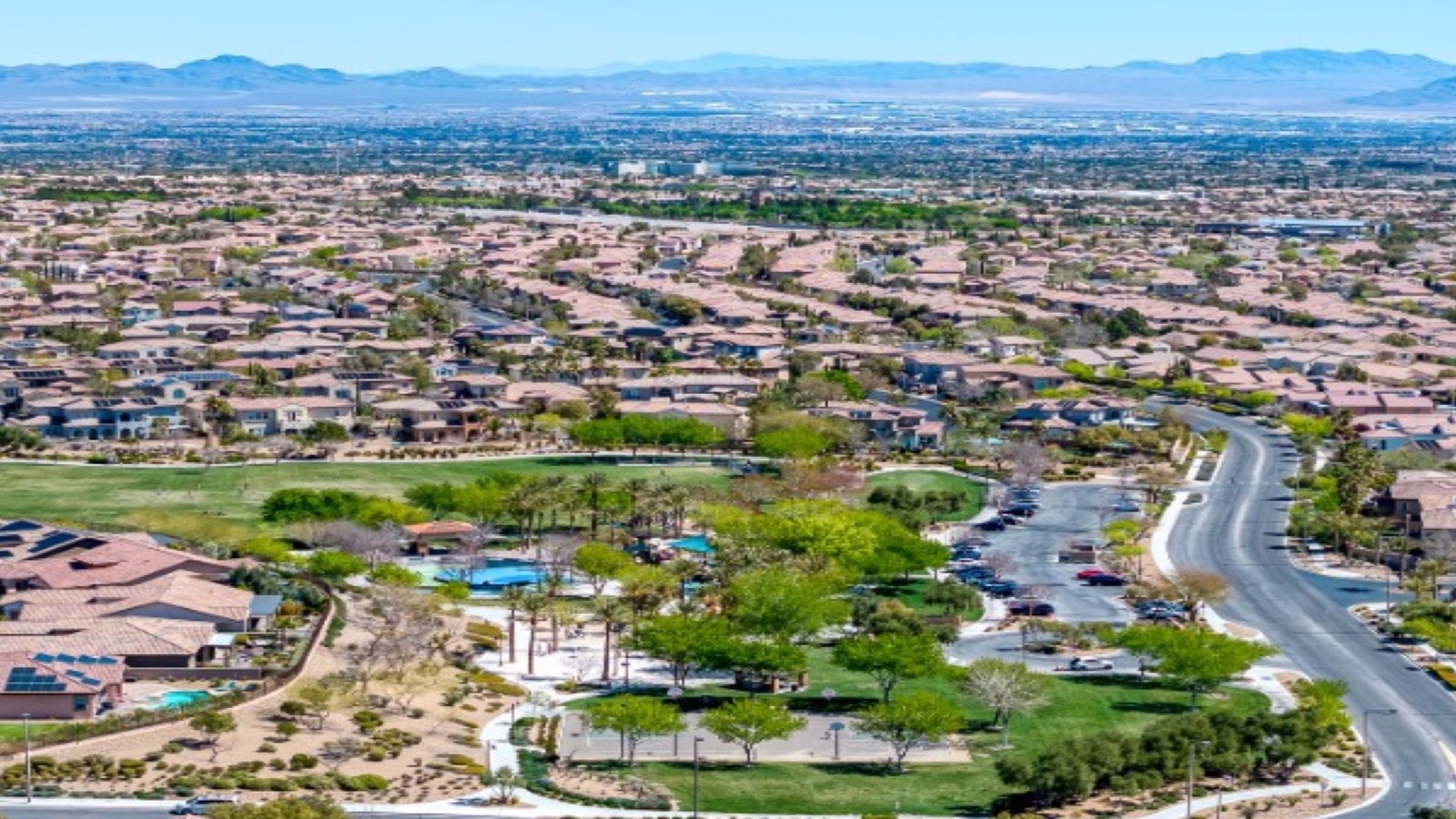
Why Does the Buy-or-Sell Question Have Two Different Answers in Henderson?
Because the two sides of the transaction are exposed to completely different risks.
A seller's outcome is determined mostly by things that resolve within 90 days: how many comparable homes are listed within a mile, how your condition stacks up against them, and whether your list price sits inside the search band where buyers are actually looking. Those variables are knowable today. You can count the competing listings this afternoon.
A buyer's outcome is determined mostly by things that resolve over 60 to 120 months: whether rates fall enough to refinance, whether Henderson's population and employment base keeps expanding, whether the specific submarket you chose appreciates faster than the one across Horizon Ridge. Those variables are not knowable. They are forecasts.
Of the 789 homes we closed in 2025, the pattern held in both directions: the sales that went smoothest were priced against the competing listings on the street, and the purchases that aged best were the ones where the payment worked on day one rather than the ones timed to a forecast. That asymmetry is why I tell people that selling is a tactical decision and buying is a strategic one. If you are only selling — settling an estate, relocating out of state, downsizing into a rental — you are playing a 90-day game and you should optimize ruthlessly for pricing and presentation. If you are only buying, you are playing a decade-long game and the entry month matters far less than most people think, provided the payment is genuinely affordable on day one.
The people who get hurt are the ones who apply the buyer's mindset to a sale ("I'll just wait for a better market") or the seller's mindset to a purchase ("I need to time the bottom"). Start your search on our Henderson listing search with a payment number, not a price number, and the strategic framing takes care of itself.
How Do Henderson Prices Compare Across Its Main Submarkets?
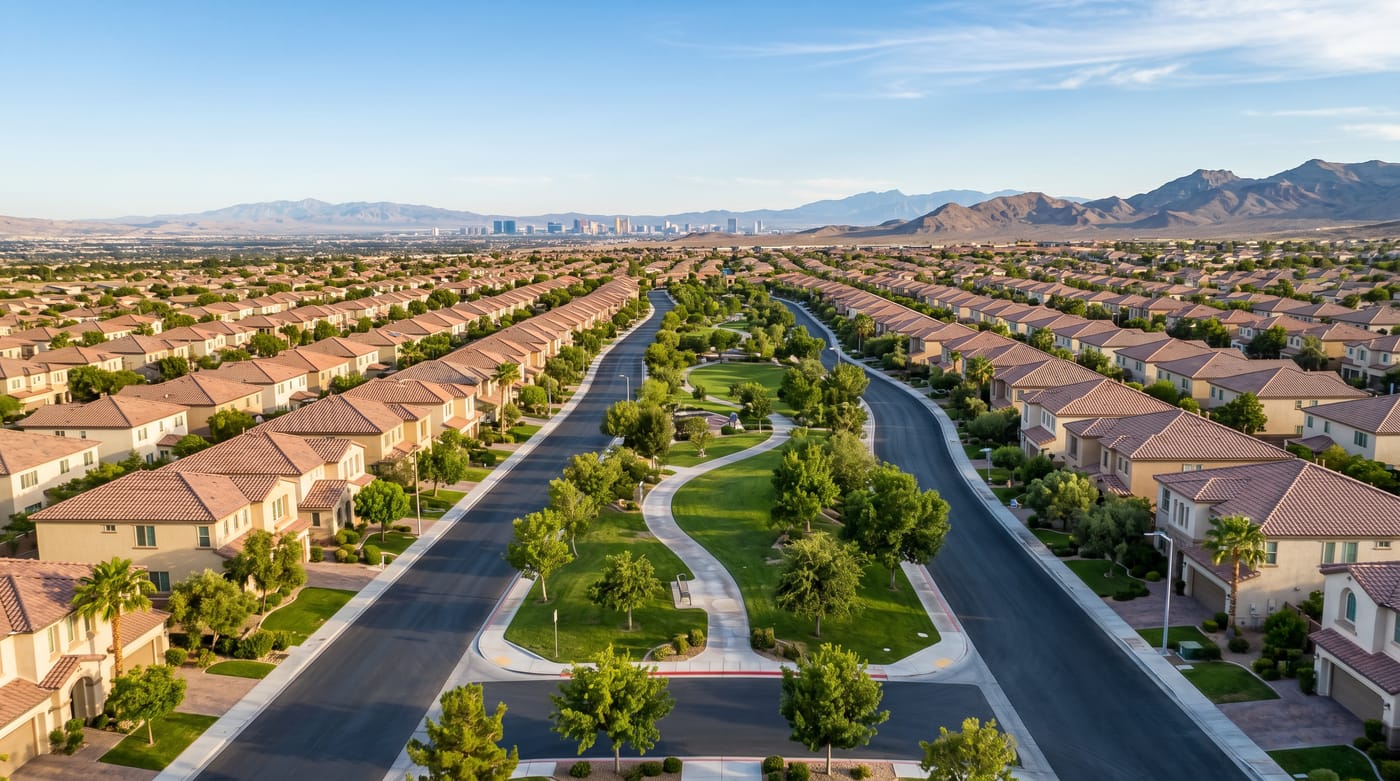
Henderson spans roughly 108 square miles and, according to the U.S. Census Bureau, it is Nevada's second-largest city with a population well above 300,000. That scale is why the submarket spread is so wide. A buyer with $600,000 has genuine choices in five or six distinct communities, and those communities behave differently.
The table below reflects the working price bands we use internally when advising clients — the ranges where most non-distressed inventory in each area has been trading. Treat them as planning brackets, not appraisals, and confirm any specific address before acting.
| Submarket | Typical Band | Who Currently Has Leverage |
|---|---|---|
| Whitney Ranch / Paradise Hills | $340,000 – $470,000 | Seller, if condition is clean |
| Green Valley / Green Valley Ranch | $450,000 – $800,000 | Balanced, tilts seller under $600,000 |
| Cadence | $400,000 – $650,000 | Buyer, due to builder competition |
| Inspirada | $470,000 – $750,000 | Buyer, due to builder competition |
| Anthem / Sun City Anthem | $480,000 – $950,000 | Balanced |
| Seven Hills | $650,000 – $1,400,000 | Balanced, tilts buyer above $1,000,000 |
| Lake Las Vegas | $550,000 – $3,500,000 | Buyer |
| Anthem Country Club | $900,000 – $3,000,000 | Buyer |
| MacDonald Highlands / Ascaya | $1,600,000 – $12,000,000+ | Buyer, strongly |
Compare that against the broader Las Vegas market and against Summerlin on the west side, and you will notice Henderson's middle is deeper. Summerlin's luxury tier is larger and its entry tier is thinner. Henderson gives a $500,000 buyer more genuine options — which is exactly why sellers in that band still do well. If you are shopping the top end, our luxury communities overview covers the guard-gated inventory in more detail.
What Does the Math Look Like for a Henderson Buyer in 2026?
Let's stop talking in adjectives. Here is a real payment table for a $550,000 Henderson purchase with 20% down — a $440,000 loan on a 30-year fixed.
| Rate | Monthly P&I | Difference vs 6.5% | Annual Difference |
|---|---|---|---|
| 5.50% | $2,498 | −$283 | −$3,396 |
| 6.00% | $2,638 | −$143 | −$1,716 |
| 6.50% | $2,781 | — | — |
| 7.00% | $2,927 | +$146 | +$1,752 |
Principal and interest is not the whole payment. Add Henderson property taxes, homeowners insurance, and HOA dues that in most master plans run somewhere between $50 and $200 per month, with guard-gated communities and Lake Las Vegas sub-associations climbing well past that. A realistic all-in monthly figure for that $550,000 purchase lands closer to $3,400 to $3,700 depending on the community.
According to Freddie Mac, the Primary Mortgage Market Survey publishes the national average 30-year fixed rate weekly, and the survey has kept that average in the 6% range for the bulk of the last two years. Plan your budget on the rate you can get today, not the rate you hope for. If rates fall, a refinance is a $3,000 to $6,000 decision you can make later. If they rise, a locked payment protects you.
One more buyer number worth internalizing: at 6.5% on a $440,000 loan, roughly $2,383 of that first month's $2,781 payment is interest. Principal reduction in year one is modest — around $4,800. Buying is not a short-term wealth strategy in a flat-price market. It is a housing decision with a long tail.
What Does a Henderson Seller Actually Net at Closing?
This is the number most sellers guess wrong, usually by $15,000 or more. Sale price is not proceeds. Here is a full line-item model on a $650,000 Henderson sale.
| Line Item | Amount | Notes |
|---|---|---|
| Sale price | $650,000 | Contract price |
| Listing brokerage fee | $16,250 | Modeled at 2.5%, fully negotiable |
| Buyer agent compensation | $16,250 | Negotiated per contract, not automatic |
| Real property transfer tax | $3,315 | Modeled at $2.55 per $500 of value |
| Escrow and settlement fees | $1,800 | Varies by title company |
| Owner's title policy | $2,200 | Customarily negotiated in Clark County |
| HOA demand, transfer and resale package | $700 | $400 to $900 typical |
| Repairs and buyer credits | $3,500 | Highly variable; $0 to $15,000 |
| Total costs | $44,015 | About 6.8% of sale price |
| Net before payoff | $605,985 | Subtract loan balance for cash to seller |
Two notes on accuracy. First, brokerage compensation is negotiable and has been openly negotiated on both sides of the transaction since the 2024 industry practice changes — the 2.5% figures above are a modeling convention, not a rate card. Second, Clark County's real property transfer tax is commonly quoted at $2.55 per $500 of value, but you should confirm the current rate directly with Clark County before you build a budget on it, because that is exactly the kind of number nobody should take from a blog post.
Across the 9,600+ transactions Nevada Real Estate Group has closed, the sellers who net the most are almost never the ones who listed highest. They are the ones who spent $4,000 to $9,000 on paint, flooring transitions, landscaping cleanup and a pre-listing inspection, then priced at the number the comparable sales actually supported. Our seller resources walk through that prep sequence in order.
Should You Sell First or Buy First When You Are Doing Both?
Most Henderson clients are not pure buyers or pure sellers. They are both — moving from Green Valley to Anthem, from Seven Hills to Lake Las Vegas, from a two-story in Inspirada to a single-story in Sun City Anthem. In a flat market, the sequencing decision is worth more money than the negotiation.
Here is the framework I use. If your equity position is strong and your income comfortably supports both payments for 90 days, buy first. You will shop calmly, negotiate from strength, and move once instead of twice. If your down payment is locked inside your current home's equity, sell first with a rent-back — 30 to 60 days of seller occupancy after closing is routinely accepted in Southern Nevada and costs far less than a double move plus storage.
The middle path is a contingent offer, and I want to be direct about it: in Henderson's sub-$700,000 tier, a home-sale contingency materially weakens you against a competing non-contingent offer. In the luxury tier above $1.5 million, where a well-qualified buyer is genuinely scarce, sellers will often accept one. Same city, opposite answer, driven entirely by how many other buyers exist at that price.
| Strategy | Typical Extra Cost | Main Risk | Best For |
|---|---|---|---|
| Buy first, sell after | $8,000 – $20,000 in carry | Two payments if sale lags | Strong income, high equity |
| Sell first with rent-back | $0 – $4,500 in rent | Purchase falls through, short-term housing | Equity-dependent down payments |
| Sell first, rent 6–12 months | $18,000 – $36,000 in rent plus double move | Re-entry at higher prices | Relocations and major downsizes |
| Contingent purchase offer | $0 direct | Rejected in competitive bands | Luxury tier buyers above $1.5M |
| Bridge or HELOC-funded purchase | $5,000 – $14,000 in fees and interest | Rate and qualification exposure | Buyers who must move once |
If you are trying to price both sides of that trade at once, that is exactly the conversation to have on the phone. Call (702) 637-1759 or reach us through our contact page and we will model the sequencing against your actual equity.
How Much Does Mortgage Rate Movement Change the Decision?
Less than people assume for buyers, and more than people assume for sellers.
For a buyer, a half-point move on a $440,000 loan is about $143 per month. That is real money, but it is not usually the difference between buying and not buying. It is the difference between a 3,000-square-foot home and a 2,700-square-foot home. Rate movement changes what you buy far more often than whether you buy.
For a seller, rate movement changes the size of the buyer pool, and pool size is everything in a flat market. When the 30-year average drops half a point, the number of Henderson households that qualify for a $550,000 purchase expands measurably. Those buyers do not appear instantly — mortgage applications lead closings by 45 to 60 days — but they do appear. Sellers who list into a falling-rate window get more showings per week, and showings per week is the leading indicator of price.
That is the case for sellers acting in a window of rate relief rather than waiting for one. The counterintuitive part: falling rates also pull competing sellers off the sidelines, so the inventory you compete against expands at roughly the same time. Net effect in past cycles has been modestly positive for sellers, not dramatically so.
According to the Federal Reserve Bank of St. Louis, the FRED database maintains long-run mortgage rate and housing series that make this pattern visible across multiple cycles. It is worth an hour of your time before you decide to wait. Our mid-year 2026 Las Vegas outlook covers how the valley-wide version of this dynamic has been playing out.
Where Is New Construction Changing the Resale Equation?
This is the single most underappreciated factor in Henderson's 2026 market, and it hits sellers directly.
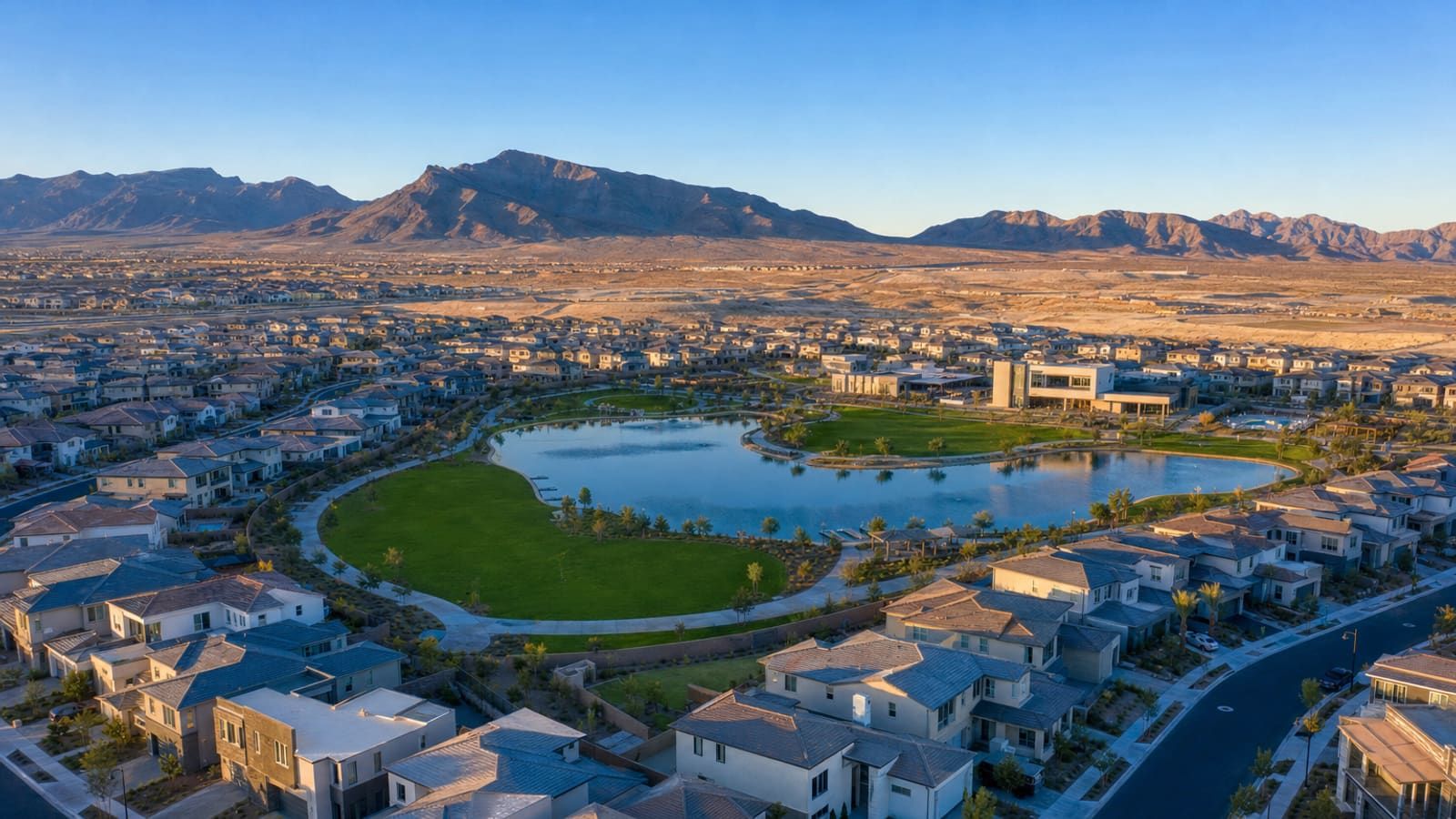
At Cadence in the northeast and Inspirada in the southwest, national builders are actively delivering homes and actively buying down rates. A builder can offer a forward commitment that drops a buyer's effective rate by a full point or more, plus $10,000 to $25,000 in closing cost assistance, plus design center credits — and structure all of it without cutting the recorded sale price. A resale seller cannot match that with anything except a price reduction.
Practically, that means a 2019-built resale home in Inspirada listed at $625,000 is competing against a brand-new home at $639,000 with a 5.5% rate and $15,000 toward closing. The resale is nominally cheaper and functionally more expensive. Sellers in those two master plans need to price against the builder's effective cost, not the builder's sticker.
Where resale still wins: mature landscaping, finished backyards, window coverings, and location inside the master plan. A finished yard in Southern Nevada is a $35,000 to $80,000 item that new construction does not include. Make the buyer do that math explicitly in your marketing.
Buyers should be running the same comparison in reverse. Our new construction page tracks what is actively selling across Henderson's builder communities, and the incentive structures shift quarter to quarter.
When Is the Best Time of Year to List a Henderson Home?
Southern Nevada has a real seasonal rhythm and it is not the same as the national one.
Our strongest listing window runs from mid-January through May. Relocating households target summer moves to align with the Clark County School District calendar, snowbirds who spent the winter here decide in March that they want to own, and the weather is pleasant enough that curb appeal actually photographs well. According to the Clark County School District, the academic calendar drives a large share of family relocation timing across the valley, and Henderson's family-heavy submarkets feel it most.
June through August is the weakest showing window in the entire year. When it is 110 degrees, buyer traffic drops, open house attendance drops, and the homes that do sell are usually the ones that were already priced correctly. Listing in July is not fatal — it just requires sharper pricing and better photography, because the buyer has to want it enough to leave the air conditioning.
September through mid-November recovers. Serious buyers who did not find anything in spring come back with real urgency, and inventory is thinner because summer sellers have withdrawn. This is my favorite underrated window for well-presented homes in the $500,000 to $900,000 range.
Mid-November through early January is genuinely slow on volume but strong on buyer quality. Nobody tours homes on December 22 for entertainment. If a $1.2 million buyer walks a Seven Hills property between Thanksgiving and New Year's, that buyer is transacting.
Who Wins in the Current Henderson Negotiation Environment?
Depends on the price band, and the pattern is consistent enough that I will state it plainly.
| Price Band | Leverage | Typical Concession Pattern |
|---|---|---|
| Under $400,000 | Seller | Near list price; $0 to $5,000 in credits |
| $400,000 – $600,000 | Seller, modestly | 1% to 3% off list; $5,000 to $12,000 in credits |
| $600,000 – $900,000 | Balanced | 2% to 5% off list; rate buydowns common |
| $900,000 – $1,500,000 | Buyer, modestly | 4% to 8% off list; longer marketing time |
| $1,500,000 – $3,000,000 | Buyer | 6% to 12% off list; repairs negotiated fully |
| Above $3,000,000 | Buyer, strongly | Case by case; appraisal risk material |
The mechanism behind that gradient is simple arithmetic on the buyer pool. There are thousands of Henderson households that can qualify for a $475,000 purchase. There are a few hundred that can close at $1.4 million. There are a few dozen realistic buyers, valley-wide, for a $4 million hillside estate in a given quarter. Scarcity of buyers, not weakness of the asset, drives the concessions at the top.
That also explains why over-improved homes struggle in Henderson's upper tier. If you put $600,000 into a custom finish package that reflects your taste rather than the market's, the pool of buyers who will pay for that specific vision shrinks further still. If your home has been on the market a while, our breakdown of why Las Vegas homes are not selling in 2026 applies to Henderson almost line for line.
Is Renting a Better Move Than Buying in Henderson This Year?
For some households, yes, and I would rather say that plainly than push everyone toward a purchase.
Run the comparison honestly. A $550,000 Henderson purchase with 20% down carries an all-in monthly cost somewhere around $3,400 to $3,700, plus a maintenance reserve most owners underestimate — figure 1% of value annually, so about $5,500 per year, or $458 per month. That is a true carrying cost near $3,900 to $4,150. A comparable Henderson rental in a similar neighborhood may run meaningfully less per month, and the renter's $110,000 down payment stays liquid.
The purchase wins when three conditions hold: you will stay past the break-even horizon, the payment is comfortable at today's rate without assuming a refinance, and you value control over the asset. With roughly 6.8% in seller costs plus buyer closing costs of 2% to 3%, you need somewhere around 8% to 10% of appreciation or principal paydown just to break even. In a flat-price year, that break-even sits around four to six years, not two.
The purchase also wins on a factor that never shows up in rent-versus-buy calculators: payment stability. According to the U.S. Department of Housing and Urban Development, housing cost burden is measured against income, and a fixed principal and interest payment simply does not follow rents upward over a decade. A Henderson owner locked at $2,781 in 2026 is paying $2,781 in 2036.
If you land on the buy side, our buyer guidance covers qualification, inspection sequencing and how to structure an offer that survives appraisal in this market.
How Do Taxes, HOA Dues and Carrying Costs Change the Answer?
Nevada's tax structure is one of the strongest arguments for owning here, and most out-of-state buyers do not understand it until closing.
There is no state income tax in Nevada. According to the Nevada Department of Taxation, the state's revenue model leans on sales and gaming taxes rather than a personal income tax, which is why relocating households from California, Oregon and Minnesota consistently find that their after-tax housing budget stretches further here than the sticker price suggests.
Property tax works differently from most states too. Nevada assesses at 35% of taxable value rather than full market value, and, according to the Nevada Legislature, state law caps annual increases in the tax bill at 3% for owner-occupied primary residences and up to 8% for other property. That cap compounds in the owner's favor. A Henderson family that bought in 2016 may be carrying a tax bill dramatically below what an identical home purchased today would generate. Verify your parcel's specific taxable value and cap status with the Clark County Assessor before you model anything.
HOA dues deserve honest accounting. Base master-plan dues in Henderson commonly run $50 to $200 per month. Sub-association dues in gated enclaves add $100 to $400. Anthem Country Club and the Lake Las Vegas villages carry club and community obligations well beyond that. Over ten years, a $250 monthly HOA is a $30,000 line item. Put it in the spreadsheet.
| Cost Component | Low Scenario | High Scenario |
|---|---|---|
| HOA dues | $7,200 | $48,000 |
| Property taxes (capped growth) | $32,000 | $44,000 |
| Homeowners insurance | $14,000 | $26,000 |
| Maintenance and reserves | $38,000 | $70,000 |
| Ten-year total (excl. P&I) | $91,200 | $188,000 |

What Signals Should You Watch Before Committing Either Way?
Forget national headlines. Four local indicators tell you almost everything about Henderson, and you can track all four yourself.
Months of supply in your price band. Not citywide — your band, your zip code. Under three months favors sellers. Four to six is balanced. Above six favors buyers. Henderson's sub-$500,000 tier and its above-$1.5-million tier routinely sit on opposite sides of that line in the same week.
The ratio of price reductions to new listings. When more than about a third of active listings in a submarket have taken a reduction, pricing discipline has broken down and buyers know it. This is the fastest-moving signal available and it usually shifts two months before median price does.
Employment and in-migration. According to the Bureau of Labor Statistics, the Las Vegas-Henderson metro's employment series tracks the leisure, hospitality, construction and health care sectors that drive local household formation. Job growth precedes housing demand. Watch it.
Builder incentive depth. When builders in Cadence and Inspirada widen incentives, resale sellers in those bands lose pricing power within 60 days. When incentives narrow, resale regains it. This is the most actionable Henderson-specific signal there is, and it is publicly observable — just walk the sales offices.
You can monitor active inventory yourself through our property search, filtered to your submarket and price band. Track it weekly for a month and you will have a better read on your local market than any national forecast will give you.
Can You Do Both Well in the Same Twelve Months?
Yes, and most of our Henderson clients do exactly that. The reason it works is that the flat market cuts both ways.
Suppose you sell a Green Valley home for $650,000 and buy in Anthem for $850,000. In a rising market, waiting a year costs you: the $850,000 home appreciates faster in dollar terms than your $650,000 home, so the gap widens. In a flat market, that gap does not move, which means you have time — but you also gain nothing by waiting. The trade is neutral on price and positive on lifestyle, which is why "should I wait" usually has no financial answer for a same-market move.
The one scenario where waiting genuinely pays: you are selling in a soft tier and buying in a strong one. Selling a $2.1 million MacDonald Highlands estate to buy a $700,000 single-story in Sun City Anthem means you are taking the discount on the way out and paying full freight on the way in. That trade improves if the luxury tier tightens. It is worth modeling patience there.
The reverse — selling a $520,000 Whitney Ranch home to buy a $1.3 million Seven Hills property — is the trade that currently favors moving now. You sell into relative strength and buy into relative softness. According to the Internal Revenue Service, the capital gains exclusion on the sale of a primary residence applies when ownership and use tests are met, which for most Henderson move-up sellers means the gain on the outbound sale is not the obstacle they feared. Confirm your specific situation with a CPA.
Frequently Asked Questions
Is 2026 a buyer's market or a seller's market in Henderson?
Both, depending on price. Henderson's resale tier under roughly $600,000 still favors sellers who present well and price to the comparable sales — homes there routinely go under contract within a few weeks. Above about $1 million, and especially above $1.5 million in the guard-gated communities, buyers hold clear leverage and concessions in the 6% to 12% range are being accepted. The middle, $600,000 to $900,000, is genuinely balanced, and outcomes there come down to condition and marketing quality rather than market direction.
How much does it cost to sell a house in Henderson?
Budget roughly 6% to 8% of the sale price in total. On a $650,000 sale, our full line-item model comes to about $44,015 — brokerage compensation on both sides, real property transfer tax around $3,315, escrow and settlement near $1,800, an owner's title policy around $2,200, HOA demand and transfer fees near $700, and a repair or credit allowance of about $3,500. That excludes any loan payoff and any pre-listing improvements. Sellers who invest $4,000 to $9,000 in preparation typically recover it and more.
Will Henderson home prices drop in 2026 or 2027?
Nobody can answer that responsibly, and I will not pretend otherwise. What I can say is what the current structure suggests: inventory has been rising while prices stayed roughly flat, which historically produces a slow drift rather than a break. Henderson's supply constraints are real — federal land ownership limits developable acreage across Southern Nevada — and household formation continues. A dramatic decline would most likely require a significant employment shock rather than a housing-specific trigger. Watch the Bureau of Labor Statistics metro employment series if that is your concern.
Should I wait for lower mortgage rates before buying in Henderson?
Consider the math rather than the hope. A half-point improvement on a $440,000 loan saves about $143 per month. If waiting a year means competing with the additional buyers that same rate drop unlocks, and prices firm by even 2% on a $550,000 home, that is $11,000 in added price against roughly $1,716 in annual payment savings. Buying when the payment works and refinancing later if rates cooperate is usually the stronger position. A refinance costs $3,000 to $6,000; a lost purchase costs the difference in price.
What is the median home price in Henderson right now?
Our June 2026 Henderson report put the local median near $480,000, and it has stayed in a narrow band for several quarters. Treat that figure as a reference point, not a valuation. Henderson's submarkets range from roughly $340,000 in older Whitney Ranch inventory to well above $3 million in Ascaya and MacDonald Highlands, so the citywide median describes almost no individual property. Las Vegas REALTORS publishes updated Southern Nevada statistics monthly, and we track Henderson-specific figures on our Henderson market page.
Is new construction a better buy than resale in Henderson?
It depends on what your money is actually buying. Builders at Cadence and Inspirada are offering rate buydowns and closing cost assistance that can be worth $30,000 to $60,000 in present-value terms — a genuine advantage. But new homes typically arrive without finished backyards, window coverings or mature landscaping, and finishing a Southern Nevada yard runs $35,000 to $80,000. Resale gives you those improvements at a discount to replacement cost. Compare the total move-in-ready cost, not the sticker price, on both sides.
How long do homes take to sell in Henderson in 2026?
Marketing time varies enormously by tier. Well-priced, well-presented homes under $600,000 frequently go under contract in two to four weeks. The $600,000 to $900,000 band typically takes four to eight weeks. Above $1.5 million, three to six months is normal and is not a sign of a problem, though it does require an owner who can carry the property and hold pricing discipline. Overpriced listings in any band stall, take reductions, and ultimately sell below where correct initial pricing would have landed them.
Can I sell my Henderson home and buy another without moving twice?
Usually, yes. The most common structure we use is a sale with a 30 to 60 day rent-back, giving you closing proceeds in hand and time to close on the replacement property before you vacate. Sellers in Southern Nevada accept rent-backs routinely. The alternatives are a bridge loan or HELOC-funded purchase, which costs $5,000 to $14,000 in fees and interest but removes contingency risk entirely. We model all three against your equity position — call (702) 637-1759 or reach us through our contact page.
Which Sources Inform This Guide?
- Las Vegas REALTORS — monthly Southern Nevada housing statistics including median price, closed units and inventory
- Freddie Mac Primary Mortgage Market Survey — weekly national average mortgage rates
- U.S. Census Bureau QuickFacts — Henderson and Clark County population and housing characteristics
- U.S. Bureau of Labor Statistics — Las Vegas-Henderson metro employment and wage series
- Clark County, Nevada — Assessor parcel data, Recorder transfer tax schedules and recorded document search
- Nevada Legislature — Nevada Revised Statutes governing property tax caps, disclosures and common-interest communities
- Nevada Department of Taxation — state tax structure and property tax administration
- Nevada Real Estate Division — licensing, agency disclosure and common-interest community regulation
- Federal Housing Finance Agency — annual conforming loan limits and house price index data
- Internal Revenue Service — primary residence capital gains exclusion rules and ownership and use tests
- U.S. Department of Housing and Urban Development — housing cost burden standards and fair market rent data
- Federal Reserve Bank of St. Louis (FRED) — long-run mortgage rate, inventory and housing price series
- City of Henderson — permitting, master plan documents and municipal services
- Clark County School District — attendance zones and academic calendar affecting relocation timing
- National Association of REALTORS — national existing-home sales trends and industry practice changes