
By Chris Nevada, Nevada Real Estate Group, NV License S.181401. Video conversation with Daniel Pittman and Kimberly James. Line-item budgets rebuilt from published tariffs and MLS closings on September 19, 2026; home price, rent and mortgage-rate lines refreshed October 21, 2026; electricity lines refreshed October 31, 2026; cited sources re-checked November 14, 2026.
The most useful question in our latest video is not whether Las Vegas is cheaper than somewhere else. It is whether living here would leave you enough money to enjoy the life you moved for. Most of the cost-of-living numbers on the internet are index scores rather than bills, and an index will never tell you that a 2,000-kilowatt-hour month on NV Energy's current residential schedule runs about $261, that HUD prices a two-bedroom at $1,686, or that the median single-family home closed at $470,000 in September 2026.
As Nevada Real Estate Group's founder, with 16+ years in this market, I built this guide around the advice the speakers close on: do your research, know your budget and decide what matters to you before you commit. In this episode, Daniel Pittman and Kimberly James bring the question down to everyday decisions. Below their conversation I have rebuilt the whole ledger from the tariffs, the tax formulas and the closing record, with a dated window on every figure. Watch the full 16-minute conversation, or use the timestamp links throughout this guide.
Our October 2026 worked examples put monthly Las Vegas living costs at $3,426 for a single renter, $6,765 for an owning couple and $9,182 for a four-person household with two children in licensed care, before income taxes, savings and debt payments. These are worked examples, not universal income requirements. Replace the dated inputs with quotes for your move and test a higher-cost month.
- Southern Nevada's median single-family home sold for $470,000 in September 2026, level with a year earlier.
- HUD's FY 2027 fair market rent is $1,435 for a one-bedroom and $1,686 for a two-bedroom.
- NV Energy charges $18 monthly plus $0.11514 per kilowatt-hour, so a 2,000-kilowatt-hour month runs about $261.
- Nevada levies no income tax, Clark County sales tax is 8.375%, and a claimed primary home's tax rises 3% a year at most.
- Licensed infant care in Clark County averages $12,744 a year, and care for two children is the second-biggest line in our family budget.
Can You Still Afford a Comfortable Life in Las Vegas in 2026?
Yes for many households, and the reason is arithmetic rather than optimism. According to the cost of living index composite that Nevada Tomorrow publishes, which compares living costs for the typical middle-class family and lists NV Energy Economic Development as its data source, the Las Vegas-Henderson-Paradise metro scored 96.9 in Q1 2026, up from a prior reading of 95.5, where 100 is the average of all participating places. An index describes a basket rather than your bills, which is why the rest of this guide prices the lines one by one.
At 2:42 in the video, Daniel and Kimberly separate getting by from living comfortably. Kimberly describes comfort as having room to save and enjoy life instead of spending every paycheck on bills. That definition matters because two households with the same salary can experience the same city very differently. Debt, dependents, housing equity and work schedules all change the answer, which is why the rest of this guide prices each line separately instead of quoting one citywide income target.
| Line item | Las Vegas figure | Comparison | Source and window |
|---|---|---|---|
| Median single-family home | $470,000 | United States $422,700 | Las Vegas REALTORS and NAR, September 2026 |
| Two-bedroom fair market rent | $1,686 | Set near the 40th percentile of recent-mover rents | HUD, fiscal year 2027 |
| Median gross rent, city of Las Vegas | $1,563 | United States $1,413 | Census ACS 2020-2024 |
| Residential electricity | 12.72 cents per kWh | United States 18.16 cents | EIA, August 2026, preliminary |
| State income tax | None | Barred on wages and personal income | Nevada Constitution, Article 10 |
| Sales tax | 8.375% | 6.85% statewide minimum | Nevada Department of Taxation, Clark County rate since 2020 |
| Regular gasoline | $5.00 per gallon | United States $3.84 | AAA, November 14, 2026 |
| Licensed infant care | $12,744 a year | Nevada ranks 17th least affordable for center infant care | Children's Cabinet, 2025 |
| Composite cost index | 96.9 | 100 equals the participating-place average | Nevada Tomorrow, Q1 2026 |
Two cautions before the line items. First, the metro hides an enormous internal spread: over the 12 months ending September 18, 2026, the median home closed at $340,000 in the 89122 ZIP and at $845,000 in Summerlin's 89135, so the metro median is a starting point rather than a quote. Second, inflation is not landing evenly. According to the Bureau of Labor Statistics' West Region consumer price index for September 2026, all items rose 3.4% over the year while energy rose 17.6%, medical care only 1.5% and shelter 3.0%. That is the latest 12-month reading, because BLS could not publish October 2026 changes where October 2025 data were never collected. The West Region index covers the western states rather than Nevada alone, but your 2026 budget will likely feel the pump far more than the pharmacy.
How Much Does It Cost to Buy a Home in Las Vegas Right Now?
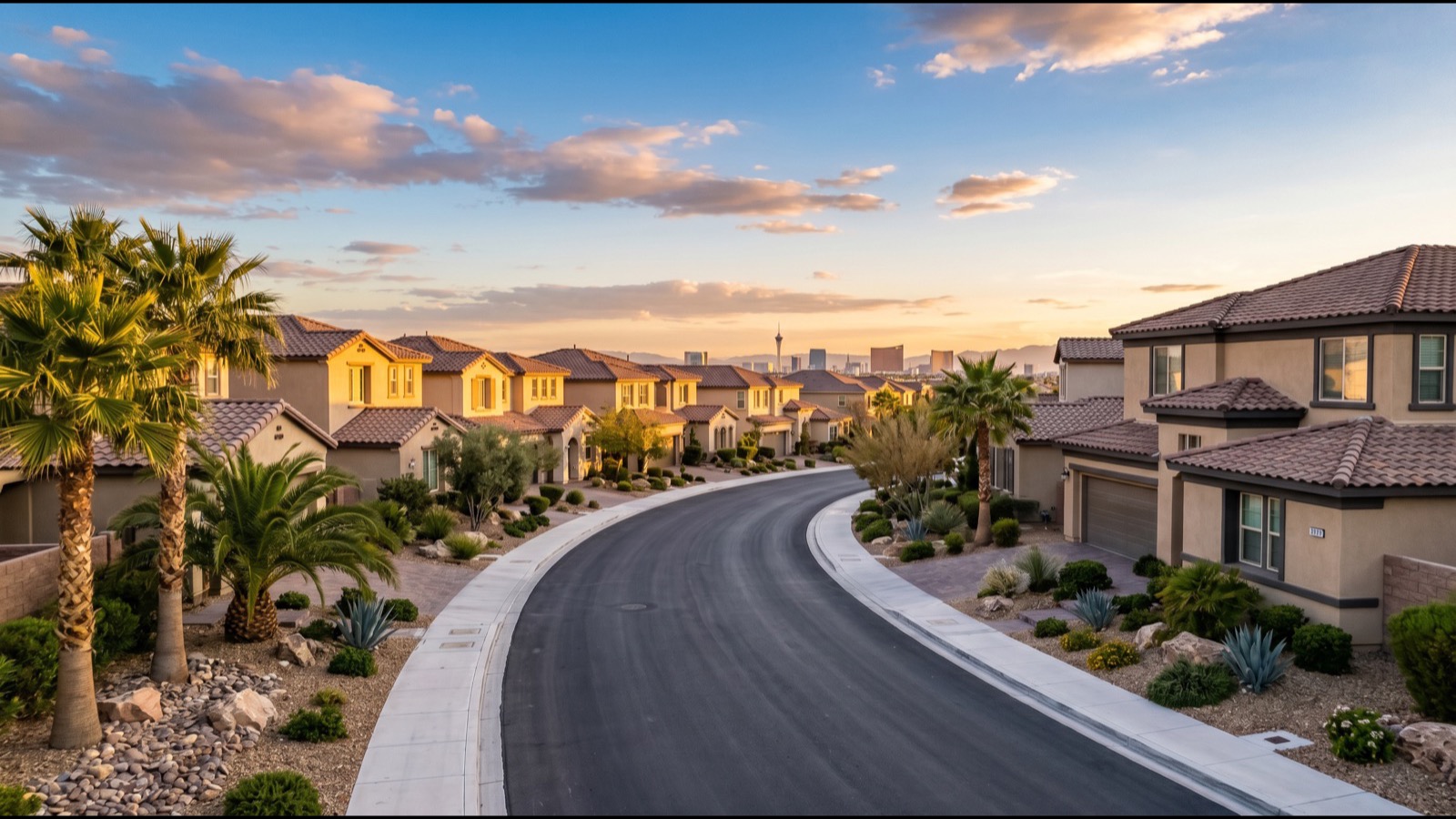
Housing decides everything else in the budget, so it deserves three windows rather than one number. According to Las Vegas REALTORS' September 2026 report, released October 6, the median existing single-family home in Southern Nevada sold for $470,000 in September, down 1.1% from August, the same as September 2025 and below the record $490,000 set in May and June. That sits above the national single-family median of $422,700 in the National Association of REALTORS' September release. Condos and townhomes ran $290,000, down 1.4% from a year earlier. A total of 2,169 existing homes, condos and townhomes sold in September, with sales down 7.4% for homes and down 12.6% for condos and townhomes compared with September 2025, and single-family listings without offers rose 6.6% to 7,995. That is a market with more choice than a year ago and prices that have stopped climbing, a shift we track monthly in our September 2026 Las Vegas market report. The board's October figures, reported by FOX5 on November 6, put the single-family median at $475,000, up 0.1% from October 2025; the worked budgets in this guide stay on September's $470,000.
The second window is our own count. Across Las Vegas MLS data re-pulled through Repliers by closing date on October 26, 2026, covering closings from September 19, 2025 through September 18, 2026, the valley recorded 27,746 closings at a $445,000 all-types median. Split by style, single-family homes closed at a $484,900 median in 28 days, townhouses at $344,000 in 34 days and condominiums at $225,000 in 41 days. Monthly medians in that window stayed between $435,000 in January 2026 and $455,000 in June 2026, and August closed at $445,000, so the honest description of 2026 pricing is flat inside a $20,000 band.
The third window is the active board. Our November 2026 Las Vegas market report counted 8,144 homes for sale in the MLS city of Las Vegas on November 11, 2026, at a $450,000 median asking price, and 45.6% of them had already cut their price at least once. Across Southern Nevada, Las Vegas REALTORS counted 8,112 single-family homes listed without an offer in October, up 7.6% from a year earlier. With nearly half the city's listings reduced, compare a home's asking price with recent closings on the same street before you make an offer. Watch the counts move on our live market report or browse current inventory on the Las Vegas homes for sale page.
What Does the Median Las Vegas Mortgage Payment Look Like at Today's Rates?
At 8:12, Daniel compares a historical income example with a much higher figure today, and that $110,000 conversation is about how purchasing power has changed rather than a salary everyone needs. The honest version is a payment calculation. According to Freddie Mac's Primary Mortgage Market Survey weekly data, the 30-year fixed rate averaged 7.40% for the week of October 15, 2026, unchanged from the week before. Rates climbed from 5.98% in late February to above 7% by October, so the tables below use 7.40%, where every quarter-point is worth about $64 a month on this loan. By November 12, 2026, the survey's average had eased to 7.11%, which would trim the 20%-down payment by about $74 a month.
| Line | 20% down, $376,000 loan | 10% down, $423,000 loan | Basis |
|---|---|---|---|
| Principal and interest | $2,603 | $2,929 | Freddie Mac survey, week of October 15, 2026 |
| Property tax | $188 | $188 | Census median-to-median ratio, about 0.48% in Clark County |
| Homeowners insurance | $108 | $108 | Assumed $1,300 a year; NAIC's 2023 Nevada HO-3 average was $1,013 |
| Mortgage insurance | None | Lender-quoted, added on top | May be required under 20% down on a conventional loan |
| HOA dues, if any | Varies | Varies | Confirm the amount in the association's resale package |
| Total before HOA and mortgage insurance | $2,899 | $3,225 | Excludes utilities, maintenance and reserves |
The 20% down buyer carries about $2,899 a month before any association dues. Under the 28%-of-gross-income housing limit in the 28/36 rule, as Chase's homebuying guide describes it, that implies a household income near $124,000, above the $76,472 Clark County median household income in the Census 2020-2024 survey. Two full-time earners at the metro's May 2025 average wages for healthcare practitioners, construction or management occupations would clear it. Twenty percent down is used for comparison, not presented as a requirement. According to the Consumer Financial Protection Bureau's Loan Estimate explainer, principal and interest are only part of the picture, so ask your lender which costs are inside the quoted payment and which you will pay separately. The CFPB also notes that private mortgage insurance may be required on a conventional loan with less than 20% down.
Two things move this table in your favor. The price band below the median is deep: over the 12 months ending September 18, 2026, the 89122, 89108 and 89121 ZIPs closed at $340,000, $365,000 and $371,000 medians on 598, 663 and 648 closings, which pulls the monthly payment, with tax and the insurance allowance, to between about $2,130 and $2,310 with 20% down at 7.40%. And if you are weighing new construction, ask the builder whether it offers a rate buydown and get the terms in writing, while a resale seller crediting closing costs is a reasonable ask when nearly half the city's listings have already cut price. Pair our Las Vegas homebuying income guide with a lender's written estimate, and read the first-time buyer guide for the down-payment programs that stack on top of these numbers.
What Does Rent Cost in Las Vegas in 2026?
Renters have two official yardsticks here, and they measure different things. According to HUD's fiscal year 2027 fair market rent schedule, which took effect on October 1, 2026 under HUD's Federal Register notice, fair market rent for the Las Vegas-Henderson-North Las Vegas metro is $1,310 for an efficiency, $1,435 for a one-bedroom, $1,686 for a two-bedroom, $2,317 for a three-bedroom and $2,652 for a four-bedroom. HUD sets these near the 40th percentile of recent-mover rents, so they describe a decent rather than a luxury unit. The two-bedroom figure fell $49 from fiscal 2026's $1,735 and the three-bedroom fell $96 from $2,413, the second straight annual decline for both after fiscal 2025's $1,750 and $2,452, according to HUD's fiscal 2026 calculation for the metro.
The second yardstick is the Census. According to the U.S. Census Bureau's 2020-2024 American Community Survey, median gross rent, which includes utilities, was $1,563 in the city of Las Vegas, $1,626 across Clark County, $1,705 in North Las Vegas and $1,824 in Henderson, against $1,413 nationally. The samples contain different property mixes; they do not establish what an equivalent rental would cost in each city.
What both yardsticks blur is the detached rental market. HUD's three-bedroom figure blends apartments and houses, so price a three-bedroom house with a two-car garage in a master plan such as Cadence or Skye Canyon from current listings rather than from the $2,317 benchmark. One structural note worth money: check whether a lease includes water, sewer and trash. When it does, an apartment renter's utility exposure is mostly electricity, while a house you rent or buy can put all four on your own account.
Should You Rent First When Moving to Las Vegas?
Renting first can be sensible when you are unfamiliar with the valley or uncertain about your job, timeline or preferred neighborhood. Buying sooner may fit when your plans are stable, the finances work and you have already tested the location. There is no universal waiting period that makes every relocation better, and paying rent for a year to learn a city is only cheap if you actually use the year to learn it.
At 4:54, Kimberly explains why the decision depends on the person. She rented when she first arrived and found the experience useful. She also describes callers who know Summerlin by reputation before they know whether its daily routine suits them. Living in an area reveals preferences that listing photos cannot answer, from how the commute feels at 6 a.m. to whether the amenity you paid a premium for is one you ever visit.
A rental trial should therefore have a written purpose. Decide what you need to learn before signing: the commute during your actual shift, how much space the household really uses, what the neighborhood sounds like on a Tuesday night. Then price the trial honestly. Deposits, application charges, parking, pet rent, utility responsibilities and the cost of a second move all belong in the comparison, alongside the fact that a year of renting at $1,686 is $20,232 that builds no equity. Compare that against the roughly $2,900 all-in payment on the median home, of which about $285 of the first payment goes to principal, and the answer stops being ideological and starts being arithmetic for your specific household.
How Much Are Utilities in Las Vegas Each Month?
This is where Las Vegas surprises people in the right direction, with one seasonal exception. According to the U.S. Energy Information Administration's Electric Power Monthly, Nevada's average residential price in August 2026, the latest preliminary month, was 12.72 cents per kilowatt-hour against 18.16 cents nationally, 29.75 cents in California and 15.05 cents in Arizona. Cheap power is the desert's consolation prize for a hot summer.
The tariff itself is simple. According to NV Energy's residential rate schedule for October 2026, a single-family customer pays an $18.00 monthly basic service charge plus a total effective rate of $0.11514 per kilowatt-hour, a 5% local government fee on the subtotal and a universal energy charge of $0.00039 per kilowatt-hour. Apartment customers on the multi-family schedule pay $8.20 plus $0.10611. Run that formula and 600 kilowatt-hours costs about $92, 1,099 about $152, 1,400 about $189, 2,000 about $261 and 2,500 about $322. Treat these as planning figures rather than quotes, because the energy rate is adjusted quarterly; the October 1, 2026 change cut the average single-family bill by 3.63%, or $5.01 a month. The bill's structure changes next. According to NV Energy's June 2026 Daily Demand fact sheet, Southern Nevada bills split out a daily demand charge on January 1, 2027, about $0.49 a day for a typical household, while the per-kilowatt-hour rate drops, and the company says the change is designed to keep total bills about the same. Your own usage history, not the examples above, decides which of those bills you should budget for.
Water is cheap by volume and expensive if you waste it. According to the Las Vegas Valley Water District's rate schedule, a 5/8-inch residential meter carries a $0.4627 daily service charge, about $13.88 per 30-day cycle, and usage bills in four tiers: $1.61 per 1,000 gallons for the first 5,000, $2.87 for the next 5,000, $4.27 for the next 10,000 and $6.33 above 20,000, with a $9 per 1,000-gallon excessive-use charge above the seasonal threshold. A household using 10,000 gallons pays about $36 before the regional charges that also appear on the bill, 15,000 gallons runs about $58 and 20,000 about $79. Trash is a flat franchise fee: according to the City of Las Vegas Republic Services rate sheet for July 1, 2026 through June 30, 2027, weekly trash and recycling with every-other-week bulky pickup costs $20.02 a month for a single-family home. Sewer is a separate charge whose provider depends on the address, and internet plus mobile adds about $150 a month, the MIT Living Wage Calculator's $1,806 a year for a single Clark County adult. Our move-in utilities checklist lists which provider serves which address, because the answer changes between Las Vegas, Henderson and North Las Vegas.

What Does It Cost to Drive and Get Around Las Vegas?
Transportation is where a driving city's costs pile up, and this year the pump adds to them. According to AAA's fuel price survey for November 14, 2026, regular gasoline averaged $4.999 in the Las Vegas metro and $4.920 statewide, down from $5.454 in the metro a month earlier but up from $4.001 a year ago, against a $3.841 national average. At 12,000 miles a year and 25 miles per gallon, that is about $200 a month in fuel for one car, roughly $40 more than the same driver paid a year earlier. Prices move, so treat that as this month's number.
The full cost of a car is much larger than fuel. According to AAA's 2026 Your Driving Costs study, published September 15, 2026, owning and operating a new vehicle now averages $12,863 a year, or $1,071.92 a month, across fuel, maintenance, tires, insurance, depreciation, registration and finance charges over five years and 75,000 miles, with depreciation alone averaging $4,422. A gas-powered medium sedan runs $10,582. That is a national figure for a new car, so the budgets below instead use the MIT Living Wage Calculator's $9,103 annual transportation figure for a single Clark County adult, which MIT builds from used-vehicle, fuel, insurance, maintenance and transit costs rather than a new car.
Registration is a Nevada quirk worth understanding before you ship a car here. A passenger car pays a flat $33 registration fee, according to the Nevada DMV's FAQ. According to the DMV's registration fee schedule, it also pays a governmental services tax of 4% of the vehicle's depreciated DMV valuation, where valuation starts at 35% of the original manufacturer's suggested retail price and depreciates 5% the first year and 10% each year after, never falling below 15%. Clark County adds a supplemental tax of 1% of that same valuation. The DMV's own worked example, a two-year-old car with a $20,000 original price, produces a $5,950 valuation, $238 in governmental services tax, $60 supplemental and $298 total, plus the $33 fee. Apply the identical formula to a three-year-old $35,000 SUV and you get about $492 all in, front-loaded on newer cars and shrinking at every renewal. Transit is the other option: according to the RTC of Southern Nevada's fare proposal reported by Fox5 in May 2026, a 30-day pass cost $65 at full fare and $32.50 reduced, and the RTC proposed replacing it with an $80 31-day pass, with public comment open through June 23, 2026. Check the RTC's current fares before you budget for transit.
How Do Nevada Taxes Change the Comparison With California?
Taxes can tip the comparison for a household whose housing costs look similar in both places. Nevada's constitution bars an income tax on the wages or personal income of natural persons (Article 10, Section 1), so there is no personal state income tax on wages, capital gains, retirement distributions or pass-through business income, which we cover in full in our complete answer on Nevada income tax. According to the Nevada Department of Taxation's rate components, Clark County's combined sales tax rate is 8.375%, the 6.85% statewide minimum plus 1.525% in county add-ons, and the department's sales tax page notes that food for home consumption and prescription medications are typically exempt, so the rate falls mostly on purchases such as restaurant meals, cars, furniture and electronics.
Property tax is the line that confuses newcomers, so here is the actual formula. According to the Clark County Assessor, property is assessed at 35% of its taxable value, and the district tax rate is applied to that assessed figure. According to the Clark County Treasurer's tax rates by district, the fiscal 2026–27 rate per $100 of assessed value is $3.2782 inside the city of Las Vegas, $3.3544 in North Las Vegas, $2.9613 in Henderson, $2.9328 in the unincorporated towns of Summerlin, Spring Valley and Paradise, and $2.7081 in Enterprise's main town district. Then comes the cap. Under NRS 361.4723, a primary residence's tax can rise no more than 3% over the prior year's, and the Clark County Assessor's abatement page applies a cap of up to 8% to homes that are not owner-occupied. Any recorded ownership document removes the owner-occupied 3% abatement, so a buyer who will live in the home has to claim it. The purchase price is not the taxable value, so multiplying a $470,000 sale price by 35% and the district rate does not establish a tax ceiling. Use the actual parcel assessment and bill, and confirm applicable abatement and new-construction treatment with the county. For historical context, according to the U.S. Census Bureau's 2025 American Community Survey (table B25103 and table B25077), the median Clark County owner paid $2,169 in real estate taxes on a median home value of $453,500, about 0.48%. That is a median-to-median ratio, not a statutory rate; applied to the $470,000 median it is about $2,250 a year, the $188 a month carried as an illustrative allowance in the tables above and below. It is not a parcel-specific quote.
| Tax | Rate or formula | What it means on a typical budget |
|---|---|---|
| State income tax | None | Zero on wages, gains, pensions and Social Security |
| Sales tax, Clark County | 8.375%, the 6.85% statewide minimum plus 1.525% county add-ons | About $2,512 on a $30,000 furnishing budget; food for home consumption exempt |
| Property tax | 35% of taxable value times the district rate; a claimed primary home's bill rises 3% a year at most | About $2,250 a year on the $470,000 median at the Census median ratio |
| Vehicle registration | $33 plus 4% of depreciated valuation plus 1% county supplement | About $492 a year on a three-year-old $35,000 SUV, falling each renewal |
| Gasoline | State and federal excise built into the pump price | Included in the $5.00 Las Vegas metro average on November 14, 2026 |
For someone arriving from California, compare actual take-home pay rather than multiplying every dollar by a top marginal rate, and do not spend the saving before a professional confirms it. California taxes nonresidents only on income from California sources, as the state's Office of Tax Appeals restated in a 2024 opinion citing Revenue and Taxation Code sections 17041 and 17951, so California-source income can stay taxable after you move, which matters if you keep California property, travel there for work or run a business with continuing ties. Then compare the rest of the move on equal terms: complete housing cost, insurance quotes, transportation, utilities and the flights home. Always pull the current bill on the specific parcel before writing an offer, because the cap can hold a long-held home's bill below that of a new house next door, whose new improvements fall outside the cap calculation in the year they are added.
What Do Groceries, Healthcare and Insurance Cost in Las Vegas?
Food prices are rising more slowly than the overall index. According to the BLS West Region consumer price index for September 2026, food rose 2.8% over the year and food at home 2.4%, below the 3.4% rise in all items. The MIT Living Wage Calculator for Clark County, updated February 15, 2026, builds its food line from the USDA's Low-Cost Food Plan and budgets $4,241 a year for a single adult and $12,413 for two adults with two children, or about $353 and $1,034 a month. MIT describes that plan as a diet prepared at home, so restaurant meals come on top of it.
Healthcare is where the regional numbers favor you this year, with medical care up only 1.5% over the twelve months ending September 2026. According to the same MIT dataset, a single adult should budget $2,715 a year in medical costs, about $226 a month, and a two-earner family of four $7,817, about $651 a month, both built from employer-sponsored premiums plus out-of-pocket costs. Anyone with an ongoing specialist relationship should book the new provider before the move rather than after. Retirees should treat coverage as a separate checklist item: according to Medicare's Special Enrollment Period guidance, moving can open a window to change Medicare Advantage or prescription drug coverage, and telling your plan before you move starts that window the month before the move.
Insurance splits in two directions. Auto is above average: according to the National Association of Insurance Commissioners' auto insurance database report, Nevada's average auto expenditure was $1,461.47 in 2023 against $1,281.60 countrywide, having risen 13% from $1,292.58 in 2019. That is about $122 a month per vehicle at the average expenditure, or about $133 at Nevada's 2023 average combined premium of $1,600.39 for liability, collision and comprehensive. Homeowners insurance runs the other way. According to the NAIC's homeowners insurance report, Nevada's 2023 average HO-3 premium was $1,013 against $1,737 countrywide. The tables in this guide carry an assumed $108 a month, about $1,300 a year, above that 2023 average, and your own quote should be pulled on the specific address before you commit to a price range.
What Should Families Budget for Childcare and Schools in Clark County?
If you have children under five, childcare decides whether the second income makes sense, and it deserves its own line. According to the Children's Cabinet's 2025 Early Education and Care Fact Sheet, the average annual price of licensed center care in Clark County is $12,744 for an infant and $10,739 for a four-year-old, while licensed family child care homes average $9,319 for an infant and $8,451 for a four-year-old. Statewide the center average is $12,659 for infants, which ranks Nevada the 17th least affordable state for center-based infant care and the 8th least affordable for infant care in licensed family child care homes. Washoe County's center average for infants is higher still at $13,926.
Translate that to a monthly budget and a family with an infant and a preschooler in centers pays about $1,957, being $1,062 for the baby and $895 for the four-year-old. That is more than the property tax, insurance and utilities on the median home combined, and in our family budget below it is the second-largest line after the mortgage. There are mitigations: the same fact sheet counts 30 district Pre-K sites with 1,125 slots in Clark County, employer dependent-care benefits can be excluded from federal income, up to $7,500 a year ($3,750 if married filing separately) starting with tax year 2026 under IRS Publication 15-B, and the state subsidy program serves lower-income families, though the fact sheet says it served about 6.5% of children living under 200% of the federal poverty level in September 2024. For most relocating households the realistic plan is to budget the full center price for the first year and treat any subsidy or family help as upside.
At 10:41 the video turns to family costs, and Daniel describes being quoted $1,200 a month for one child, above the $1,062 monthly Clark County center average for an infant in the 2025 fact sheet. School assignment needs its own verification. The Clark County School District's zoning page links the district's zoning search for finding the schools assigned to a home address, and a neighborhood name or a nearby campus does not establish a child's assignment. Ask providers about registration charges, deposits, meals, holiday closures and late-pickup terms, map both journeys against the workday if two children need different care, and decide what happens on a school closure day before you commit to an address that only works on a perfect Tuesday.
Do Las Vegas Wages Keep Up With These Costs?
A cost-of-living figure means nothing without the income side, so here is the honest picture. According to the Bureau of Labor Statistics' occupational employment and wages release for Las Vegas, covering May 2025, the metro's all-occupations mean hourly wage was $29.23, about 13% below the national $33.54. Wages vary widely by occupation: food preparation and serving occupations averaged $18.41 an hour, or $38,280 a year, slightly above the national $17.86 for that group, while management occupations averaged $62.21 an hour, healthcare practitioners $48.76, computer and mathematical occupations $47.47 and construction and extraction $32.53.
Household income points the same way. According to the Census Bureau's 2020-2024 American Community Survey, median household income was $73,877 in the city of Las Vegas, $76,472 across Clark County, $79,542 in North Las Vegas and $90,138 in Henderson, against $80,734 nationally. So the metro's mean wage runs about 13% below the national figure while the cost index runs about 3% below the participating-place average, which is the real tension in this city: the arithmetic tends to favor people who bring their income with them over people who arrive hoping to find it in the tourism base.
The living-wage math makes that concrete. The MIT calculator puts the living wage for a single adult in Clark County at $24.20 an hour, about $50,337 before taxes, and $29.30 an hour for each of two working parents with two children, about $121,903 combined before taxes. The May 2025 average wages for healthcare practitioners, management and construction and extraction occupations clear both bars; the $18.41 food-service average does not clear the single-adult bar. On jobs, according to Nevada's Department of Employment, Training and Rehabilitation September 2026 report, as covered by Fox5, the statewide seasonally adjusted unemployment rate fell to 4.7% from 5.2% a year earlier, and the Las Vegas metro rate was 4.8%, down from 5.7% in September 2025.
What Does a Monthly Las Vegas Budget Look Like in 2026?
Here are the three worked budgets the rest of this guide has been building toward. Each uses the tariffs, rents, medians and rates cited above, with the home price, rent and mortgage-rate lines as of October 21, 2026, electricity at the October 1, 2026 tariff and the other lines as of September 19, 2026, and each excludes federal income and payroll taxes, savings and debt payments, which vary too much by household to model. Nevada adds no state income tax on top of any of them.
| Line | Monthly | Basis |
|---|---|---|
| Rent, one-bedroom | $1,435 | HUD fiscal 2027 fair market rent |
| Electricity | $87 | NV Energy multi-family schedule, 700 kilowatt-hour month |
| Water, sewer, trash | None | Assumed included in rent; confirm in the lease |
| Internet and mobile | $150 | MIT Living Wage, $1,806 a year |
| Food | $353 | MIT Living Wage, $4,241 a year |
| Transportation, one car | $759 | MIT Living Wage, $9,103 a year including fuel and insurance |
| Medical | $226 | MIT Living Wage, $2,715 a year |
| Other essentials | $416 | MIT Living Wage, $4,992 a year |
| Total | $3,426 | About $41,100 a year after tax |
That single-renter total sits within about $1,700 of MIT's own $42,812 after-tax requirement, which also counts a $3,876 civic line this budget leaves out. A renter who splits a two-bedroom at $1,686 drops the housing line to $843 and the total under $2,900.
| Line | Monthly | Basis |
|---|---|---|
| Principal and interest | $2,603 | $376,000 loan at 7.40%, Freddie Mac week of October 15, 2026 |
| Property tax | $188 | Census median-to-median ratio, about 0.48% in Clark County |
| Homeowners insurance | $108 | Assumed allowance, about $1,300 a year |
| Electricity | $152 | NV Energy single-family schedule at 1,099 kilowatt-hours |
| Water | $36 | Water district tiers at 10,000 gallons, before regional charges |
| Trash and recycling | $20 | Republic Services, City of Las Vegas 2026-27 rate |
| Internet and mobile | $150 | MIT Living Wage |
| Food, two adults | $706 | Twice the MIT single-adult line |
| Transportation, two cars | $1,518 | Twice the MIT single-adult line |
| Medical, two adults | $452 | Twice the MIT single-adult line |
| Other essentials | $832 | Twice the MIT single-adult line |
| Total | $6,765 | About $81,200 a year after tax, before HOA dues |
The couple's budget is dominated by the house, and the house is dominated by the rate: the same home at 6.0% would cut the payment by about $349 a month. Add any association dues from the resale package, and expect a 2,000-kilowatt-hour summer month to add about $110 to the electricity line.
| Line | Monthly | Basis |
|---|---|---|
| Principal, interest, tax, insurance | $2,899 | Same home and loan as the couple above |
| Electricity | $189 | NV Energy single-family schedule, 1,400 kilowatt-hour month |
| Water | $58 | Water district tiers at 15,000 gallons |
| Trash and recycling | $20 | Republic Services |
| Internet and mobile | $202 | MIT Living Wage, $2,429 a year |
| Food | $1,034 | MIT Living Wage, $12,413 a year |
| Childcare, two children | $1,957 | Clark County center averages, $12,744 and $10,739 a year |
| Transportation, two cars | $1,272 | MIT Living Wage, $15,270 a year |
| Medical | $651 | MIT Living Wage, $7,817 a year |
| Other essentials | $900 | MIT Living Wage, $10,804 a year |
| Total | $9,182 | About $110,200 a year after tax |
The family total sits between MIT's $107,553 after-tax and $121,903 pre-tax requirements for the same household. The two levers that move it most are childcare, which may change when the four-year-old starts kindergarten but can still include before-school, after-school and holiday care, and the purchase price, which drops the total by roughly $445 a month for every $75,000 shaved off the house.
Which Parts of the Valley Cost Less to Live In?
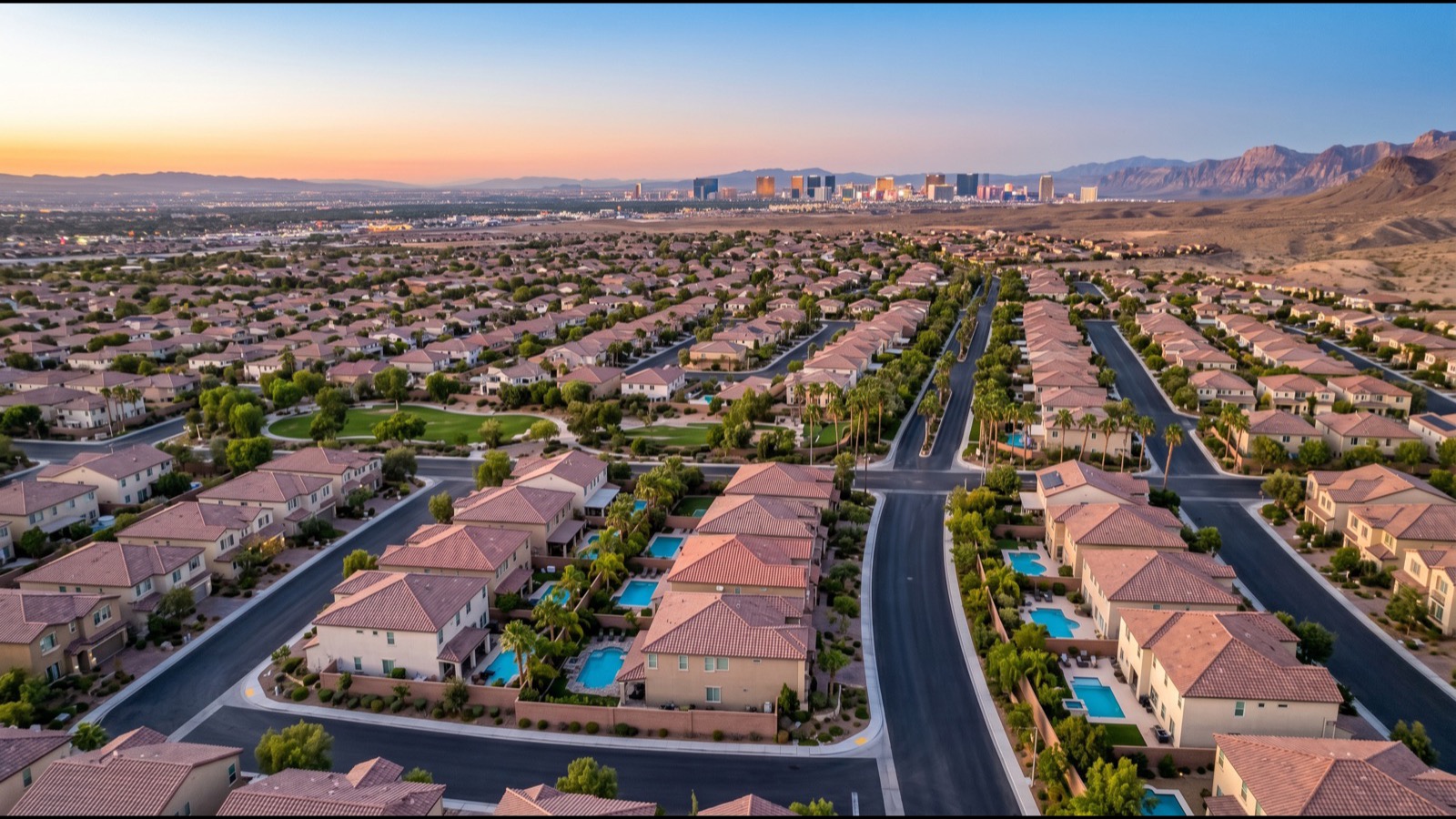
The metro median hides a $500,000 spread between ZIP medians, and that spread is where a relocating household actually saves money. Across Las Vegas MLS data re-pulled through Repliers by closing date on October 26, 2026, covering the 12 months ending September 18, the lowest medians among ZIPs with 400 or more closings were 89103, west of the Strip, at $320,000, where 62% of closings were condos and townhomes, 89122 at $340,000, 89108 at $365,000, 89121 at $371,000 and 89110 at $376,500. North Las Vegas paired mid-range prices with fast sales, with 89031 closing 900 homes at $418,944 in a 22-day median and 89081 at $418,500 in 19 days. At the upper end, Summerlin's 89135 closed at $845,000 and 89138 at $770,000.
| Area | Closings | Median sold | Median days on market | Principal and interest, 20% down at 7.40% |
|---|---|---|---|---|
| 89122, east Las Vegas | 598 | $340,000 | 30 | $1,883 |
| 89108, northwest Las Vegas | 663 | $365,000 | 23 | $2,022 |
| 89015, Henderson | 658 | $405,000 | 29 | $2,243 |
| 89031, North Las Vegas | 900 | $418,944 | 22 | $2,321 |
| Green Valley, Henderson | 268 | $485,000 | 22 | $2,686 |
| Skye Canyon, northwest Las Vegas | 309 | $535,000 | 34 | $2,963 |
| Summerlin, all villages | 1,936 | $630,000 | 34 | $3,490 |
| 89135, Summerlin | 667 | $845,000 | 34 | $4,680 |
Use the community rows to identify properties to investigate, not to assign an area to a household type. Communities outside the table, such as Aliante, Cadence and Spring Valley, also contain different inventory and association arrangements. Compare current homes on the same price, layout, condition and travel requirements. For age-qualified inventory, check the applicable community rules in our 55-plus guide. The Henderson inventory page shows available homes; the historical sample above does not promise current availability or travel times.
The video reaches the same conclusion from the other direction. At 6:18 Kimberly describes moving from Summerlin to Downtown as her preferences developed, and at 12:36 she compares North Las Vegas, where she says buyers get more house and yard but fewer nearby amenities, the Southwest for its central location, and the East side, where she says your money buys the most land. Those are starting points for touring, not price guarantees. Test the convenience against your own destinations rather than a map: a casual claim about being close to the airport cannot tell you how long the trip takes from a particular driveway at 7:45 on a Tuesday. Keep the search consistent across areas, with the same bedroom count, the same monthly ceiling and the same destinations, and the differences become obvious.
How Can You Stress-Test Your Own Relocation Budget?
Use take-home income and actual commitments rather than a single “salary needed in Vegas” headline. The following original example uses deliberately round hypothetical inputs. It is arithmetic for planning, not a survey, a lender qualification calculation or a forecast of Las Vegas prices. Its purpose is to show whether a household can absorb two costs moving against it at once.
| Budget line | Base case | Higher-cost case |
|---|---|---|
| Take-home income | $8,000 | $8,000 |
| Living expenses, including housing | $6,500 | $7,000 |
| Separate planned savings | $1,000 | $1,000 |
| Unallocated monthly buffer | $500 | $0 |
The higher-cost case adds $350 to housing and $150 to transportation. Together those changes use the entire $500 buffer and add $6,000 over a full year. The example does not say those increases will happen; it shows the consequence if they do. If a candidate home only fits by removing savings or ignoring recurring debt, revise the home price or another input before treating it as affordable.
Keep moving cash separate: deposits, travel, packing, temporary housing and overlap between old and new homes do not disappear because the monthly budget balances. For a purchase, use the first-time buyer cash worksheet to distinguish cash paid at closing from money retained afterward. For an association property, use the Summerlin fee worksheet and obtain the actual documents for your location.
Finally, run a timing test. Note when annual bills, school breaks, insurance renewals and seasonal utility peaks occur. A monthly average can look comfortable while a particular month is tight. Record the date of each quote and recheck the uncertain inputs before committing to a lease or purchase. The budget should describe your proposed move, not a household that happens to resemble one of our examples.
Ready to Price Your Own Move to Las Vegas With Nevada Real Estate Group?
Every number in this guide is a metro average or a published tariff, and your budget will not be average. Your income structure decides what the zero-income-tax line is worth. Your household size decides whether childcare or the mortgage is the larger number. Your choice of ZIP decides whether principal and interest run about $1,900 or $4,700 a month. Near 14:24 the speakers return to research, lifestyle and budget, and their strongest advice is to decide what makes sense for your own circumstances before committing to a version of Las Vegas you saw on a screen.
Before you commit, separate moving cash from ongoing affordability. Deposits, transportation, temporary lodging, closing costs and first-month furnishings consume money that looked available for a down payment, and an affordable monthly payment does not help if the transaction leaves nothing for the first surprise. Then get written figures for the finalists: rental terms, lender estimates, insurance quotes and the actual parcel tax bill, all describing the same address, all dated.

That is the conversation to have before a relocation. Nevada Real Estate Group is the #1 real estate team in Nevada, with 150+ agents, 9,600+ closed transactions and $4.85B+ in career sales volume, including 789 homes in 2025 alone. Start with our moving to Las Vegas guide, pull current inventory on the Las Vegas homes for sale page, or compare Henderson against the city of Las Vegas side by side. When you are ready to run real numbers, call (702) 637-1759 to talk through the budget for the homes you are considering. Brokered by LPT Realty, license S.181401, 8945 W Russell Rd Suite 170, Las Vegas NV 89148.
Frequently Asked Questions
How much money do you need to live comfortably in Las Vegas?
Our October 2026 worked examples total $3,426 monthly for a single renter, $6,765 for an owning couple and $9,182 for a four-person household with two children in licensed care. Those amounts depend on the stated assumptions and are not minimum income rules. Replace housing, care, transport, debt and savings inputs with your actual numbers, then test whether your take-home income leaves a sufficient buffer.
Do you need to earn $110,000 to live in Las Vegas?
No. The $110,000 figure discussed in our video relates to homebuying power, not a universal cost-of-living threshold. Owning the September 2026 median home with 20% down at 7.40% does imply a household income near $124,000 under the 28%-of-gross-income housing rule of thumb, but buying in the $340,000 to $420,000 band on the east side or in North Las Vegas drops that requirement to roughly $91,000 to $112,000, and renting drops it further. Build a complete spending plan from your take-home pay, then get a separate lender assessment if you intend to finance a purchase.
What is the average rent in Las Vegas in 2026?
HUD's fiscal year 2027 fair market rents for the Las Vegas metro, in effect since October 1, 2026, are $1,310 for an efficiency, $1,435 for a one-bedroom, $1,686 for a two-bedroom and $2,317 for a three-bedroom, and the two-bedroom figure fell $49 from fiscal 2026. The Census Bureau's 2020-2024 survey put median gross rent, which includes utilities, at $1,563 in the city of Las Vegas, $1,705 in North Las Vegas and $1,824 in Henderson. HUD's three-bedroom figure blends apartments and houses, so price a detached rental with a yard and garage from current listings.
How much are utilities in Las Vegas per month?
Electricity is the big one. On NV Energy's single-family schedule for October 2026, which charges $18 a month plus $0.11514 per kilowatt-hour before the 5% local government fee, a home using 1,099 kilowatt-hours pays about $152 while a 2,000-kilowatt-hour month runs about $261. Water from the Las Vegas Valley Water District costs about $36 a month at 10,000 gallons before regional charges, trash is $20.02 a month inside the city of Las Vegas, and internet plus mobile runs about $150. Budget about $360 a month across those lines on an annual-average basis.
How much is property tax on a $470,000 home in Las Vegas?
Purchase price alone does not determine the bill. Clark County uses assessed value equal to 35% of taxable value, then applies the parcel’s district rate and relevant abatement, and a buyer who will live in the home must claim the owner-occupied 3% cap because a recorded deed removes the seller's. The $188 monthly allowance in our worked budgets comes from a historical county median-to-median ratio, not a quote for a $470,000 home. Obtain the actual parcel bill and the lender’s escrow estimate before making an offer.
Does moving to Nevada eliminate all income taxes?
Nevada's constitution bars an income tax on the wages or personal income of natural persons, so there is no state tax on wages, self-employment income, capital gains, dividends, pensions, Social Security or retirement account withdrawals. Federal tax still applies, and another state's rules may still reach income connected to that state. California's Office of Tax Appeals has restated that nonresidents owe California tax on income from California sources, which matters if you keep property, clients or a business there. Get advice on your own residency and income facts before spending the saving.
Is childcare in Las Vegas really $1,200 a month?
It can be. Daniel's $1,200 quote is about $140 a month above the published center average for an infant. The Children's Cabinet's 2025 fact sheet puts the average price of licensed center care in Clark County at $12,744 a year for an infant and $10,739 for a four-year-old, which is $1,062 and $895 a month, while licensed family child care homes average $9,319 and $8,451. Two children in centers therefore run about $1,957 a month. Request current quotes for the hours you actually need, including registration fees and closure schedules, then add transportation and a backup arrangement to the family budget.
Which Las Vegas neighborhood offers the best value for my budget?
It depends on the home and your routine rather than the label. Over the 12 months ending September 18, 2026, the east-side 89122 ZIP closed at a $340,000 median and Summerlin's 89135 at $845,000, about a $2,800 monthly difference in principal and interest at 7.40% with 20% down. Over the same window, Henderson's Green Valley closed at a $485,000 median and northwest Las Vegas's Skye Canyon at $535,000. Compare complete housing costs, condition, dues and travel time using identical criteria.
Which Sources Inform This Las Vegas Cost of Living Guide?
Source review: September 19, 2026; home price, rent and mortgage-rate sources re-checked October 21, 2026; cited sources re-checked November 14, 2026, when HUD's fiscal 2027 schedule could not be opened (its figures match our November 1, 2026 reading). The video supplies the speakers' experiences and discussion examples; published tariffs, government datasets and MLS records support every figure. Worked budgets are illustrations built from those sources, not quotes.
- NREG video: Living, Moving and Thriving in Las Vegas with Daniel Pittman and Kimberly James, 16 minutes 11 seconds.
- Las Vegas REALTORS September 2026 report as reported by Fox5 for the $470,000 median, sales counts and inventory, and the October 2026 report as reported by Fox5 for the $475,000 October median.
- National Association of REALTORS September 2026 existing-home sales release for the $422,700 national single-family median.
- Las Vegas MLS data pulled through Repliers on September 19, 2026, covering closings from September 19, 2025 through September 18, 2026 (re-pulled by closing date on October 26, 2026; ZIPs 89121, 89015 and 89135 rechecked November 14, 2026), and active listings counted November 11, 2026 for our November 2026 Las Vegas market report.
- HUD fiscal year 2027 fair market rent schedule for the Las Vegas-Henderson-North Las Vegas metro, HUD's Federal Register notice for the October 1, 2026 effective date and HUD's fiscal 2026 calculation for the metro.
- U.S. Census Bureau 2020-2024 American Community Survey for gross rent and household income, and the 2025 survey for Clark County real estate taxes and home value.
- Freddie Mac Primary Mortgage Market Survey weekly data for the 7.40% 30-year fixed average, week of October 15, 2026, and the current survey for 7.11% on November 12, 2026.
- NV Energy residential rate schedule for October 2026, October 1, 2026 quarterly adjustment notice, Daily Demand fact sheet and the U.S. Energy Information Administration Electric Power Monthly.
- Las Vegas Valley Water District rates and the City of Las Vegas Republic Services rate sheet.
- AAA 2026 Your Driving Costs study, AAA Nevada fuel prices, the Nevada DMV registration fee schedule and DMV FAQ, and the RTC fare proposal as reported by Fox5.
- Nevada Constitution, Article 10, the Nevada Department of Taxation's sales tax rate components and sales tax page, the Clark County Assessor and its tax abatement page, Clark County Treasurer district tax rates and Nevada Revised Statutes Chapter 361.
- California Office of Tax Appeals opinion 2024-OTA-153 on taxing nonresidents' California-source income.
- Bureau of Labor Statistics West Region consumer price index for September 2026 and Las Vegas occupational wages, and Nevada's September 2026 jobs report as covered by Fox5.
- MIT Living Wage Calculator for Clark County, updated February 15, 2026, and its methodology.
- Children's Cabinet 2025 Early Education and Care Fact Sheet, IRS Publication 15-B and the Clark County School District zoning page.
- NAIC auto insurance database report, NAIC homeowners insurance report, Medicare Special Enrollment Periods, the CFPB's Loan Estimate explainer and private mortgage insurance answer, Chase's 28/36 rule guide and the cost of living index composite on Nevada Tomorrow.
Nevada Real Estate Group, brokered by LPT Realty, 8945 W Russell Rd Suite 170, Las Vegas NV 89148, (702) 637-1759, NV License S.181401. Budget illustrations are educational; obtain current property, financing, tax and insurance information for your own move.