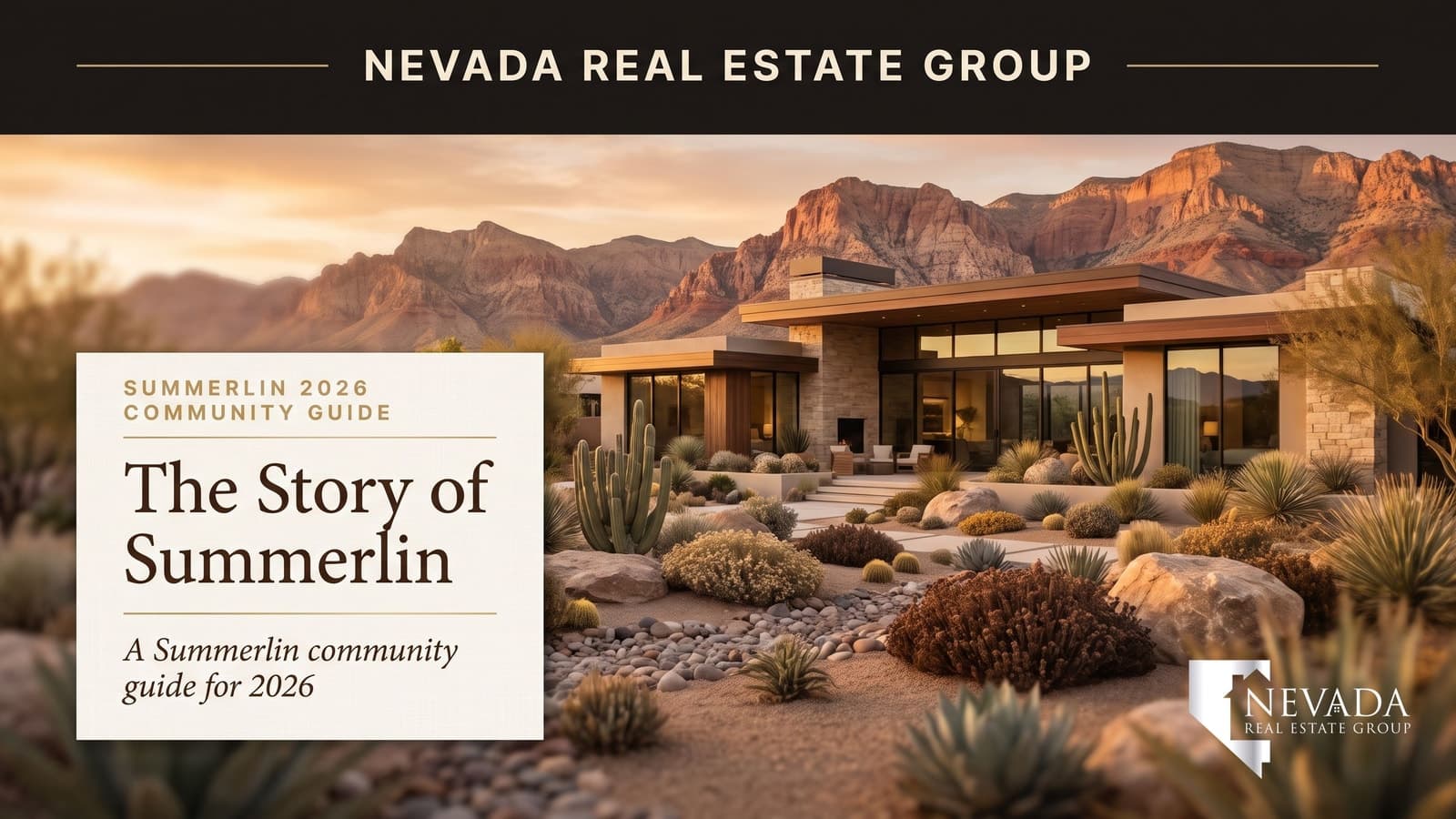

If you stand on a high ridge in The Paseos or The Ridges today, looking out over the 22,500 acres of parks, golf courses, and meticulously planned villages, it is hard to imagine that this was once barren desert on the edge of town. As a local agent, I tell clients that Summerlin was not simply built — it was curated across more than seven decades of vision, land banking, and patience. That history is not trivia. It is the single biggest reason the median Summerlin home sold for $575,000 over the trailing six months while a comparable resale in an unplanned pocket of the valley trades for far less.
Entering its 36th year of vertical development in 2026, Summerlin is now home to more than 120,000 residents and functions almost like a self-sufficient city inside the Las Vegas Valley. But to understand why homes here command the prices they do — and which villages give a 2026 buyer the most for the money — you have to look back at how a reclusive billionaire's $3-an-acre gamble became one of the most valuable master plans in the country.
Summerlin sits on land Howard Hughes bought in 1952 for roughly $3 an acre and renamed in 1988 for his grandmother, Jean Amelia Summerlin. Development began in 1990; the plan now spans 22,500 acres and 120,000+ residents. Over the last six months, GLVAR recorded about 1,611 Summerlin closings at a $575,000 median (around $346 per square foot), while newer Summerlin West homes carried a higher $607,500 median — the phased build-out drives village pricing.
- Hughes bought roughly 25,000 acres in 1952 for about $3 per acre; the name Summerlin arrived in 1988.
- The 1988 BLM land exchange fixed the Red Rock conservation boundary — the reason western villages keep unobstructed views.
- Core villages (The Hills, The Vistas) sold at a $485,000–$569,000 median; Summerlin West runs about $607,500.
- The Ridges, the 2000s luxury era, posted a $2,575,000 median at roughly $648 per square foot in 2026.
- Most of Summerlin is inside the City of Las Vegas; a few southern pockets fall in unincorporated Clark County.
Shopping the area? Browse live Summerlin homes for sale — every active MLS listing with prices, photos, and instant filters — or reach our team to tour a specific village.
How we ground these numbers: Every price figure below is pulled from GLVAR-recorded MLS closings over the trailing six months and cross-checked against the roughly 9,600+ closings Nevada Real Estate Group has represented across Nevada since 2011. So when I tell a client a village's vintage predicts its price, it reflects deals we have actually negotiated in Summerlin — not just aggregate portal data.
Who Was Howard Hughes And Why Does He Matter To Summerlin?
Most people know the name Howard Hughes, but fewer realize how directly he shaped the western rim of Las Vegas. In 1952, Hughes purchased a massive parcel — roughly 25,000 acres along the valley's western edge. At the time, locals thought the land was practically in the middle of nowhere, a buffer of creosote and rock between the city lights and the Red Rock escarpment.
He paid a price that makes modern investors wince: about $3 per acre, or on the order of $75,000 for the entire holding. Hughes dubbed the property "Husite" — a contraction of Hughes Aircraft Site — and intended to relocate his aviation and defense operations there. Those plans never materialized. For decades the land sat dormant while the Strip boomed to the east.
It was not until the late 1980s, more than a decade after Hughes died in 1976, that his successor company, the Summa Corporation, looked at the desert differently. According to the Howard Hughes Corporation, the firm recognized that the acreage could become a master-planned community large enough to redefine desert living. That pivot — from idle land bank to phased build-out — is the origin of every pricing pattern a Summerlin buyer navigates today. When our team walks clients through luxury communities on the valley's west side, nearly all of them trace back to this single 1950s purchase.
Why Is Summerlin Named After Jean Amelia Summerlin?
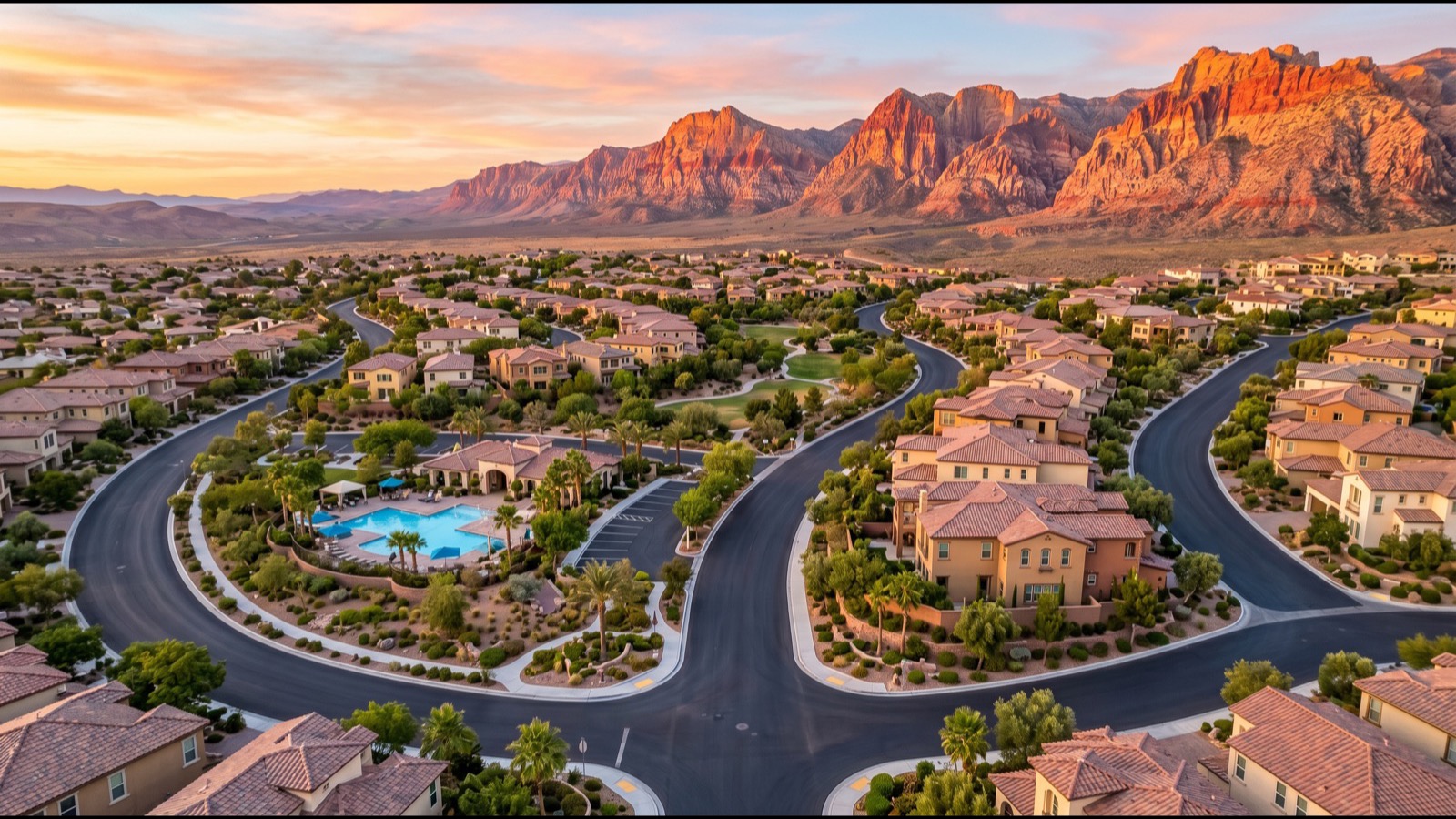
In 1988, Summa made a pivotal branding decision. The industrial-sounding "Husite" was retired, and the land was rechristened Summerlin in honor of Jean Amelia Summerlin, Howard Hughes' paternal grandmother. The choice was deliberate: the developers wanted a name that sounded established and elegant rather than corporate, signaling to future buyers that this was a place with heritage, not a speculative subdivision.
That naming decision matters more than it looks. A master plan's brand equity is a real, priceable asset. Across the Summerlin transactions our team has represented over the years, the "Summerlin" name on a listing consistently draws relocating buyers who have never set foot in Nevada but already associate the word with schools, parks, and safety. According to the U.S. Census Bureau, the broader Las Vegas metro added hundreds of thousands of residents since 2010, and a disproportionate share of the high-earning arrivals gravitate to name-recognized master plans. A recognizable name is why an identical floor plan can list for a premium inside Summerlin versus an unbranded pocket a few miles east.
How Did The 1988 BLM Land Exchange Shape Today's Views?
The transition from raw desert to livable community required one of the most consequential land deals in Nevada history. In 1988, Summa initiated a land exchange with the federal Bureau of Land Management, trading roughly 5,000 acres of environmentally sensitive terrain for development-ready parcels closer to the valley floor. According to the BLM, exchanges like this let the government consolidate conservation land while releasing suitable acreage for growth.
This deal did two things at once. First, it established the permanent conservation boundary for the Red Rock Canyon National Conservation Area. Second — and this is the part that shows up on every appraisal today — it froze the western development line. If you enjoy unobstructed mountain views and trailhead access from a Summerlin West cul-de-sac, you have this 1988 agreement to thank. Homes that back to protected land carry a premium precisely because no one can ever build behind them. That scarcity is baked into the map, which is why view lots in guard-gated communities near the boundary routinely trade at six- and seven-figure premiums over interior lots in the same village.
What Happened When Summerlin Broke Ground In The 1990s?
Construction officially began in 1990 with the first village, The Hills. To connect the new community to downtown, developers built Summerlin Parkway across miles of empty desert. Locals skeptically nicknamed it the "Road to Nowhere" because it stretched for miles before reaching any construction. It was a gamble on a simple thesis: build the infrastructure first, and the residents will follow.
The gamble paid off. The first families moved in during March of 1991. Unlike developments that promised amenities "coming soon," Summerlin front-loaded them — The Hills Park opened in 1990 and the Library and Performing Arts Center followed in 1993. That early commitment set the template for every village since.
It also created a distinct resale market. The Hills is now more than three decades old, and its housing stock reflects 1990s architecture and lot sizes. Over the trailing six months, GLVAR recorded roughly 735 closings tied to The Hills area at a median of about $485,000 — the valley's most attainable entry point into an established Summerlin village. Buyers who want mature landscaping, wide streets, and a sub-$500,000 price accept the tradeoff of dated interiors and renovation budgets. First-time buyers frequently start their Summerlin search exactly here, then trade up into a newer village later.
The full arc of milestones is worth keeping in view, because each one added a value layer that a buyer still pays for today.
| Year | Milestone | Why it matters for buyers today |
|---|---|---|
| 1952 | Hughes buys ~25,000 acres at about $3/acre | Created the land bank the entire master plan sits on |
| 1988 | Renamed "Summerlin"; BLM land exchange | Brand equity plus a permanent Red Rock view boundary |
| 1990–1991 | The Hills breaks ground; first residents arrive | The valley's most affordable established-Summerlin entry (about $485,000) |
| 2000s | CC-215 Beltway; The Ridges and Red Rock CC | Access-driven demand plus a lasting luxury tier ($2.5M+) |
| 2014–2019 | Downtown Summerlin, City National Arena, Ballpark | Walkable-core premium that did not exist before 2014 |
| 2020s | Summerlin West: Redpoint, Kestrel, Grand Park | Newest stock at a size premium (about $607,500 median) |
How Did The Beltway Fuel Summerlin's 2000s Growth?
As the new millennium arrived, the pace shifted from steady to explosive. The single biggest catalyst was the CC-215 Beltway. Before the loop, living in Summerlin meant long commutes on surface streets. Once the Beltway connected the western valley to McCarran (now Harry Reid International) and Henderson, accessibility improved dramatically and demand surged. According to the Regional Transportation Commission of Southern Nevada, the 215 corridor remains one of the region's busiest, and the property values along it reflect that access.
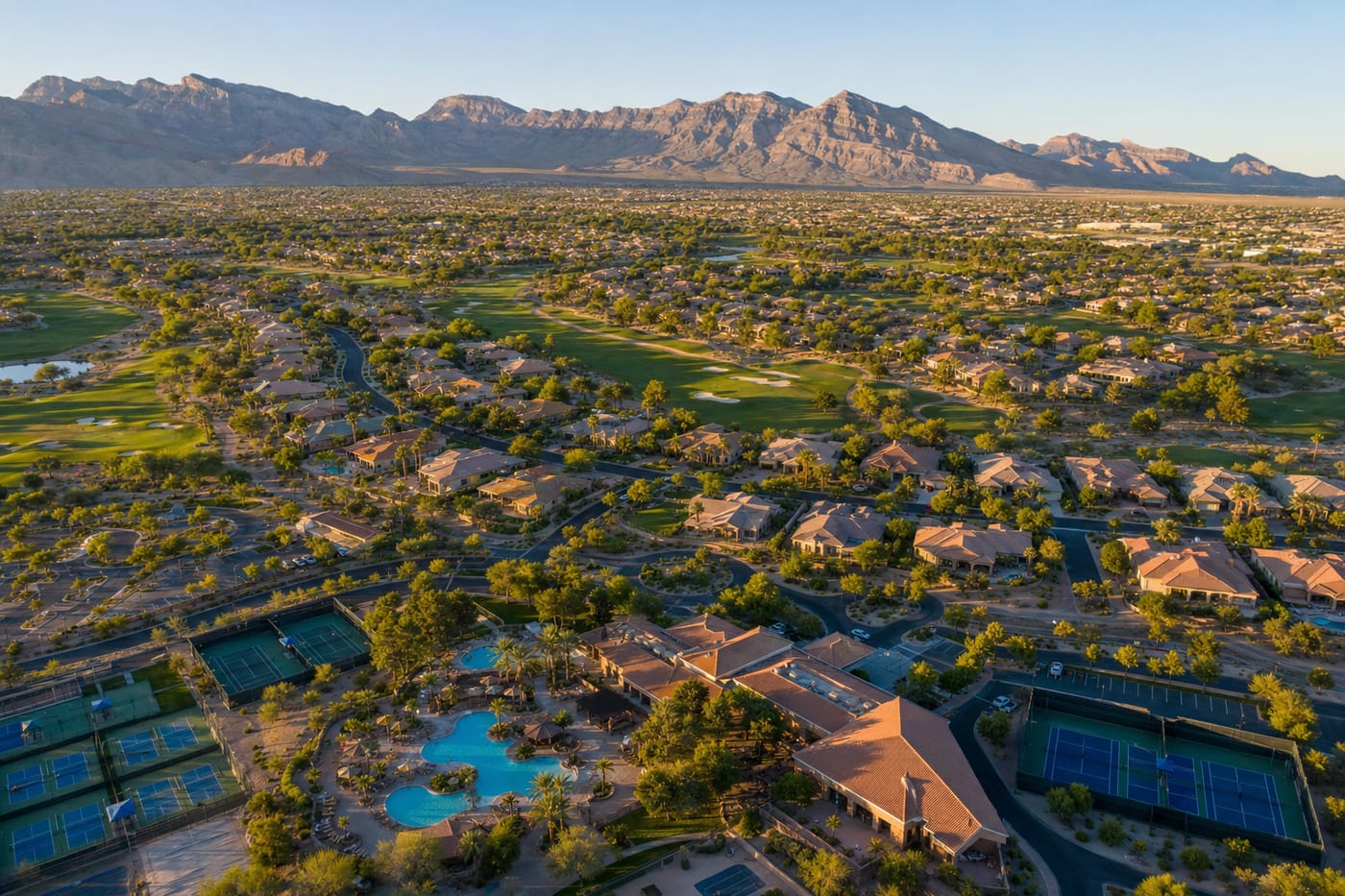
During this decade the "village" concept matured. The Gardens, The Vistas, and The Willows opened, each with its own parks, housing styles, and personality. Today The Vistas remains one of the deepest resale pools in the master plan — GLVAR logged roughly 143 recent closings there at a $569,000 median, with larger homes pushing the average sold price near $982,000.
This was also the decade luxury took root. The Resort at Summerlin (now the JW Marriott) brought high-end hospitality, while Red Rock Country Club and the early phases of The Ridges introduced custom estates that rivaled anything on the West Coast. Those homes seeded a luxury reputation that still drives the Las Vegas high-end market. When you look at a Ridges estate today, you are looking at the legacy of this pivotal expansion.
When Did Downtown Summerlin Turn A Suburb Into A City?
For its first twenty years, Summerlin was a "bedroom community" — a beautiful place to sleep and play, but most residents still drove to the Strip or downtown for office work and major entertainment. That changed decisively in the 2010s.
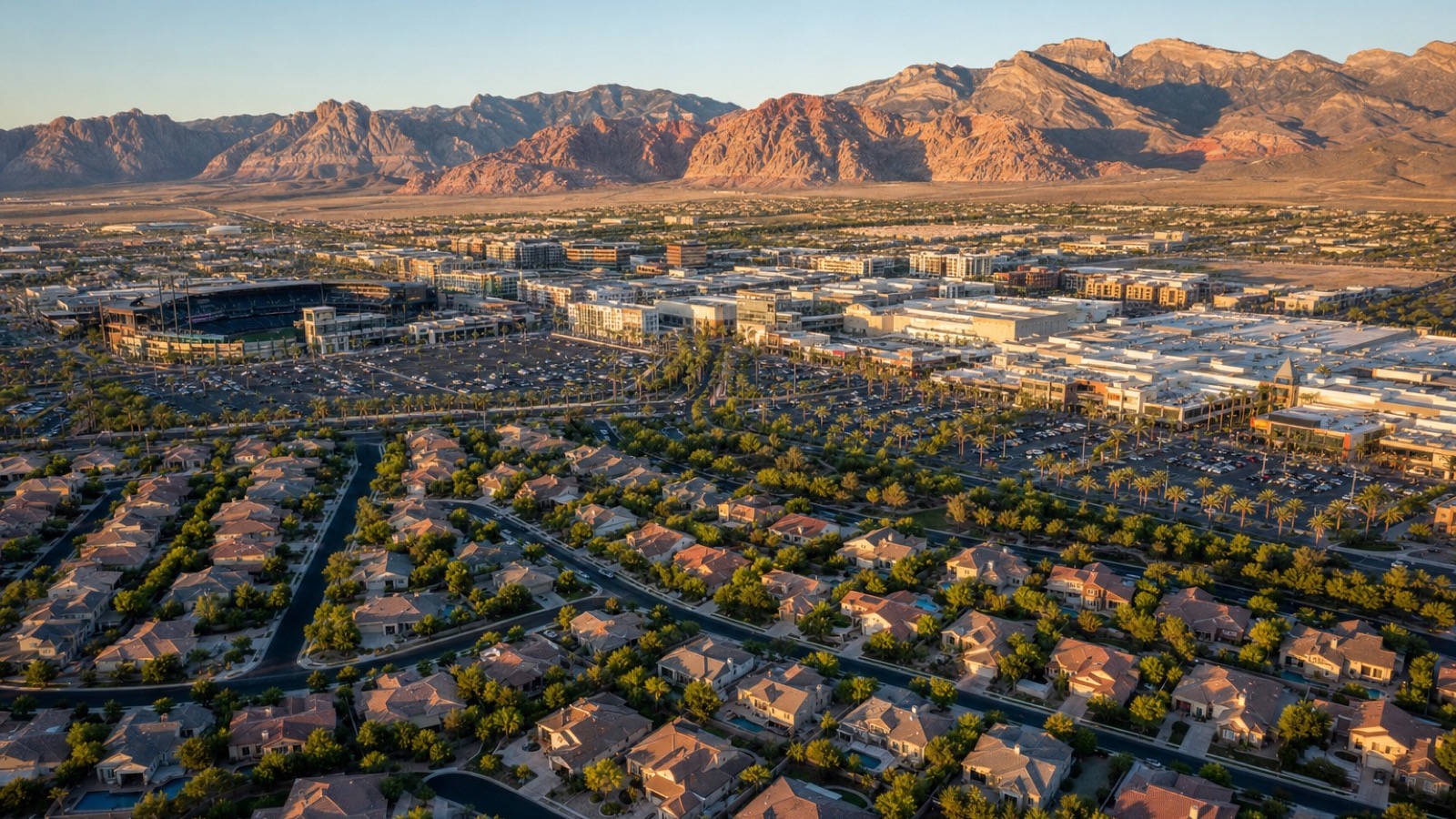
The game-changer arrived in October 2014 with Downtown Summerlin, a 400-acre walkable center featuring premium retail, Class-A office space, and a deep dining scene. Suddenly residents could work, shop, and dine at a high level without ever touching the freeway. The community spirit solidified further with major sports anchors: the Vegas Golden Knights opened City National Arena in 2017, and the Las Vegas Ballpark — home of the Aviators — opened in April 2019 right next door.
According to the Clark County Assessor, parcels near an activity core reliably outperform on assessed value over time, and Downtown Summerlin is the textbook case. Walkable-core proximity is now one of the top three questions relocating clients ask us. Condos and homes within walking distance of the ballpark and arena command a lifestyle premium that did not exist before 2014 — a value layer created entirely by the master plan's decision to build its own downtown.
What Is Summerlin West And Why Does It Cost More?
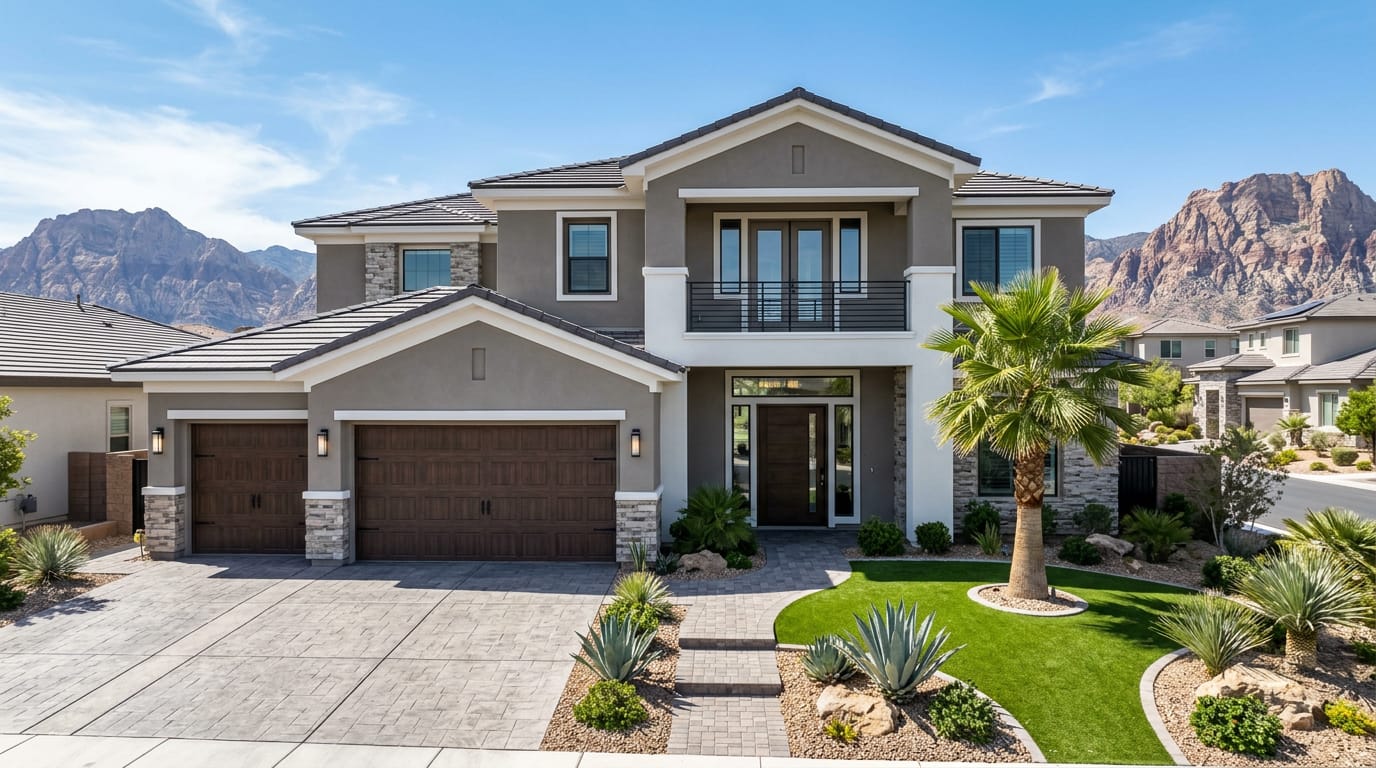
As of 2026, the master plan's frontier has shifted west toward the mountains. Summerlin West is the current build-out chapter, spanning emerging districts like Redpoint, Redpoint Square, Kestrel, Kestrel Commons, The Cliffs, and the "Grand Park" village anchoring a new central park system. The architectural language has shifted too — away from 1990s Mediterranean stucco toward "desert contemporary" with clean lines, indoor-outdoor living, and higher-density options.
Newer inventory carries a newer price. Over the trailing six months, Summerlin West posted a $607,500 median sold price — roughly $32,500 above the Summerlin-wide $575,000 — despite a slightly lower $340 per square foot figure, because Summerlin West homes are simply bigger and better-equipped for the money. Days on market ran near 34. Individual new-era villages price even higher: Redpoint closings clustered around a $1,190,000 median, and gated Reverence landed near $1,052,500. To compare active builder inventory across these districts, our Summerlin new-construction roundup tracks what is releasing now.
For buyers weighing new construction against a resale, the tradeoff is straightforward: Summerlin West buys you current design, builder warranties, and energy efficiency at a premium; the core villages buy you mature trees, larger interior lots, and a lower entry price. In my experience, the new construction decision almost always comes down to how much a buyer values warranty and layout over established landscaping — and I've toured enough of both to say there is no universally "right" answer, only the right fit for a given household.
Is Summerlin In The City Of Las Vegas Or Clark County?
This trips up more buyers than almost any other question, so let me be precise. Most of Summerlin lies within the incorporated City of Las Vegas. As the master plan expanded, the City of Las Vegas annexed the bulk of its acreage, which is why the majority of Summerlin addresses receive City of Las Vegas municipal services and vote in city elections. According to the City of Las Vegas, Summerlin is one of its signature planned communities.
There are exceptions. A handful of southern Summerlin pockets — and parcels along the master plan's edges — sit in unincorporated Clark County rather than the city, which changes the jurisdiction handling permits, policing, and certain taxes. This is not a "Summerlin versus Summerlin South" branding split alone; it is a real jurisdictional line that affects your property tax bill and which agency issues your building permit. Before you write an offer, confirm the exact jurisdiction on the Clark County Assessor parcel record — it is a two-minute check that our team runs on every Summerlin listing so a client is never surprised at closing.
What Do Summerlin HOA Fees Actually Cover?
Summerlin's carrying cost is not a single number — it stacks in tiers, and a buyer who budgets for only one line will underestimate the total. According to Nevada common-interest-community law under NRS Chapter 116, each association must disclose its assessments, so you can and should verify every layer before closing.
| Tier | What it is | Typical range | What it funds |
|---|---|---|---|
| Summerlin master assessment | Master-plan-wide dues (Summerlin Council) | approx. $50–$100 / quarter | Trails, parks, arterial landscaping, community identity |
| Village / sub-association | Your specific village or gated enclave HOA | approx. $50–$450+ / month | Local parks, gates, private streets, guard service |
| SID / LID bonds (Summerlin West) | Special / Local Improvement District assessment | Varies — appears on the tax bill | Infrastructure financing for newer villages |
The third tier catches new-construction buyers off guard. Many Summerlin West parcels carry a Special Improvement District (SID) or Local Improvement District (LID) bond that finances the streets, sewers, and utilities for a brand-new village. According to the Nevada Department of Taxation, these assessments appear on the annual property tax bill separately from your HOA dues — so a $600,000 Summerlin West home can carry both a village HOA and a multi-year SID line the buyer must factor into affordability. Always request the SID/LID payoff status before you commit.
How Does A Village's Vintage Affect Its 2026 Price?
Here is where the history becomes a buyer's tool. Because Summerlin built outward in waves, a village's decade of origin is the fastest predictor of its price, lot size, and architecture. The table below compares the three broad tiers our team uses when steering clients — established core, current-era Summerlin West, and the luxury Ridges enclave.
| Dimension | Core Villages (1990s–2000s) | Summerlin West (2020s) | The Ridges (2000s luxury) |
|---|---|---|---|
| Median sold price | $485,000–$569,000 | $607,500 | $2,575,000 |
| Price per square foot | approx. $346 | approx. $340 | approx. $648 |
| Median days on market | 20–26 | 34 | 36 |
| Typical architecture | Mediterranean stucco | Desert contemporary | Custom modern / estate |
| Best-fit buyer | Value / first upgrade | New-build / warranty | Luxury / view estate |
The pattern is consistent: older villages move faster (lower DOM) and cost less, newer villages command a size-and-design premium, and the luxury tier operates in a separate universe entirely. According to Las Vegas REALTORS, valley-wide inventory has loosened somewhat, but Summerlin's established villages still clear in under a month — a durability that traces directly to the master plan's front-loaded amenities.
Which Summerlin Villages Offer The Best Value In 2026?
"Value" depends on what you weight. For a buyer chasing the lowest entry price into a name-brand master plan, the older core is unbeatable: The Hills at roughly a $485,000 median and Stonebridge near $760,500 (with newer builds) both open the door to Summerlin schools and trails. For a buyer who wants square footage per dollar, Summerlin West's $340 per square foot edges out the plan-wide $346, meaning a larger, newer home for a comparable rate.
The Paseos occupies an interesting middle — a mature village that has held value strongly, posting roughly a $1,000,000 median as buyers pay up for its elevation and Red Rock proximity. Across our recent Summerlin representations, we've negotiated deals in each of these tiers, and the pattern holds: buyers who match their budget to the right vintage close faster and negotiate from a stronger position. And for the luxury buyer, The Ridges' $2,575,000 median and $648 per square foot reflect a scarcity that the 1988 conservation boundary guarantees will never be diluted. For a village-by-village breakdown of the newest districts, our Cliffs, Kestrel, and Redpoint comparison walks through each Summerlin West option in detail.
What Does Summerlin's History Mean For Buyers In 2026?
The practical lesson of 70 years of history is that in Summerlin, when a village was built tells you almost everything about how it prices. A 2026 buyer should reverse-engineer the map: decide whether you value mature landscaping and a lower price (core villages) or current design and warranties (Summerlin West), then let vintage narrow the search.
Second, the conservation boundary is permanent, so view premiums near Red Rock are structural, not speculative — they will not erode as the plan builds out. Third, always price the full carrying cost: the master assessment, the village HOA, and any SID/LID bond stacked on newer construction. According to the Federal Housing Finance Agency, Las Vegas home values have appreciated substantially over the past decade, and Summerlin has generally led the metro — but the appreciation is uneven across villages, which is exactly why the history matters. If you want the full transactional playbook, our Summerlin master plan buyer's guide and our analysis of whether Summerlin is worth its price premium go deeper on the numbers.
How Should Sellers Use Summerlin's Story To Position A Home?
Sellers, take note: the same history is a listing asset. A home in an established core village should lean into what money cannot buy quickly — mature trees, wide streets, proximity to a park that opened in 1990, and a walkable route to Downtown Summerlin. A Summerlin West seller should market the opposite: current architecture, energy efficiency, and the permanence of a protected view.
Pricing a Summerlin home correctly means benchmarking against the right vintage cohort, not the master plan as a whole — a mistake that costs sellers weeks on market. Our sellers team runs a village-specific comparative market analysis so a 1990s home is never mispriced against a 2025 build, and you can learn more about our track record before you list. Whether you are buying or listing, you can start with a live property search and then bring us the shortlist.
Frequently Asked Questions
Who is Summerlin named after?
The community is named after Jean Amelia Summerlin, the paternal grandmother of Howard Hughes. The name was chosen in 1988 by the Summa Corporation to give the project heritage and elegance, replacing the original industrial name "Husite" (Hughes Aircraft Site).
When was Summerlin founded?
Howard Hughes purchased the land in 1952, but development did not begin until 1990 with the first village, The Hills. The first residents moved in during March 1991, so 2026 marks the master plan's 36th year of vertical development.
Who owns and develops Summerlin?
Summerlin is developed by the Howard Hughes Corporation, successor to Hughes' original Summa Corporation. It continues to oversee the master plan, commercial development like Downtown Summerlin, and land sales to homebuilders in Summerlin West today.
Is Summerlin part of the City of Las Vegas or Clark County?
Most of Summerlin lies within the incorporated City of Las Vegas, which annexed the bulk of the master plan as it grew. A few southern and edge pockets fall in unincorporated Clark County, which changes permitting and some taxes — always verify the parcel's jurisdiction on the Clark County Assessor record before you buy.
How much are Summerlin HOA fees?
Fees stack in tiers: a master Summerlin Council assessment (roughly $50–$100 per quarter), a village or gated sub-association (roughly $50–$450+ per month depending on amenities and guard service), and, for many Summerlin West homes, a SID or LID bond on the property tax bill. Budget all three before you make an offer.
Why is Summerlin West more expensive than older Summerlin villages?
Summerlin West carries newer construction, desert-contemporary design, and builder warranties, so its median sold price ran about $607,500 over the last six months versus $575,000 plan-wide. On a per-square-foot basis it is actually similar (about $340 vs $346) — the homes are simply larger and newer, so the total price is higher.
What is the most affordable way into Summerlin in 2026?
The established core villages — especially The Hills at roughly a $485,000 median — are the lowest-cost entry into a name-brand Summerlin address with access to the same trails and schools. Buyers trade updated interiors for a lower price and mature landscaping, and many renovate over time.
Which Sources Inform This Summerlin History Guide?
All market figures reflect GLVAR-recorded MLS activity over the trailing six months as of July 2026, pulled through our brokerage data feed; medians and days-on-market are rounded and will shift with the market. Village-name aggregates can overlap adjacent areas, so treat them as directional. Historical dates and land-deal details are drawn from public records and the developer's published history.
- Las Vegas REALTORS (GLVAR) — monthly market statistics and MLS activity
- Howard Hughes Corporation — Summerlin master-plan developer history
- Bureau of Land Management — 1988 Summerlin land exchange and Red Rock conservation
- City of Las Vegas — municipal jurisdiction and planned-community services
- Clark County Assessor — parcel jurisdiction and assessed values
- Nevada Department of Taxation — SID/LID and property tax treatment
- Nevada Revised Statutes Chapter 116 — common-interest-community (HOA) disclosure law
- U.S. Census Bureau — Las Vegas metro population and migration
- Regional Transportation Commission of Southern Nevada — CC-215 Beltway corridor data
- Federal Housing Finance Agency — Las Vegas house-price appreciation index
Questions about a specific village, or want a village-matched valuation on your current home? Call our Summerlin team at (702) 637-1759 or get in touch — we will match your budget and timeline to the right chapter of Summerlin's history.