
When most people picture Las Vegas, they see the neon of the Strip, a Formula 1 race down Las Vegas Boulevard, or a Super Bowl at Allegiant Stadium. It is easy to treat the city as a place without a past — a mirage that simply appeared in the desert. But dig into the property records and you find something more interesting: a 120-year chain of boom-and-bust cycles that explains exactly why our housing market behaves the way it does today.
The real estate roots of this valley run far deeper than the mega-resorts. For anyone buying a home in Las Vegas in 2026, this history is not trivia — it is the key to reading the market. We went from a dusty railroad land auction in 1905 to a metro of roughly 2.4 million people, and the median home has traveled from a few hundred dollars a lot to a City of Las Vegas median list price near $470,825. If you want to understand where the valley is going, you first have to understand how it got here.
Across the 9,600+ transactions the Nevada Real Estate Group has closed across Nevada, we've seen the same pattern repeat: the neighborhoods whose value holds up best are almost always the ones whose history built in scarcity — water rights, master-plan amenities, or a hard federal-land boundary. In our experience, that historical lens beats any short-term price chart when you are deciding where to buy.
Las Vegas real estate began on May 15, 1905, when the Union Pacific Railroad auctioned 110 acres of downtown lots for roughly $100 to $1,750 apiece. Gaming legalization and the Hoover Dam authorization in 1931, the Strip's rise in unincorporated Paradise, and master plans like Green Valley and Summerlin built today's metro of about 2.4 million. In 2026, the City of Las Vegas median list price sits near $470,825.
- The market was born in one day — May 15, 1905 — when the railroad auctioned 110 downtown acres near Fremont Street.
- 1931 was the hinge year: Nevada legalized gaming and Congress funded the Hoover Dam, sparking the first housing shortage.
- The Strip sits in unincorporated Paradise township, not the city — a 1940s tax dodge that still shapes luxury addresses.
- Green Valley (1970s) and Summerlin (1990) invented the master-plan blueprint that now commands valley-wide premiums.
- The 2008 crash bottomed near $118,000 in 2012; the 2026 median sale near $438,437 shows the recovery's reach.
When Did Las Vegas Officially Begin as a Real Estate Market?
The City of Las Vegas has a birthday, and it is unusually precise: May 15, 1905. On that scorching afternoon, agents for the San Pedro, Los Angeles & Salt Lake Railroad (soon absorbed by the Union Pacific) auctioned roughly 1,200 lots across 110 acres in what is now Downtown Las Vegas. Buyers bid under the shade of mesquite trees, with corner lots on Fremont Street fetching as much as $1,750 and modest interior parcels going for $100 to $300.
That auction laid down the street grid that still defines downtown. The town incorporated as a city in 1911, six years later, but growth stayed slow and gritty for two decades. According to the U.S. Census Bureau, the entire settlement held well under 5,000 residents in 1930 — a railroad service town, not a metropolis.
Understanding that origin matters for buyers today. The oldest deeds, the smallest lots, and the most walkable original blocks all cluster near Fremont — which is exactly why the historic core has become a value story of its own inside the broader Las Vegas market. The city did not grow outward from a town square in the traditional sense; it grew outward from a rail depot and a land sale.
How Did Water and the Railroad Create the First Land Auction?
Before there were casinos, there was water. The name "Las Vegas" translates from Spanish as "The Meadows," a nod to the artesian springs that fed grassy oases on the valley floor — a rare reliable water source on the Salt Lake-to-Los Angeles route. That water is the entire reason the railroad chose this spot for a division point and repair yard.
The railroad owned the water rights to the original townsite, and that control created the valley's first geographic divide. The company-favored grid east of the tracks got utilities and investment; the McWilliams Townsite — the original "Westside" platted just before the 1905 auction — was left to fight for resources. According to the Clark County historical record, that early split shaped development and investment patterns for decades and still echoes in today's neighborhood-by-neighborhood price map.
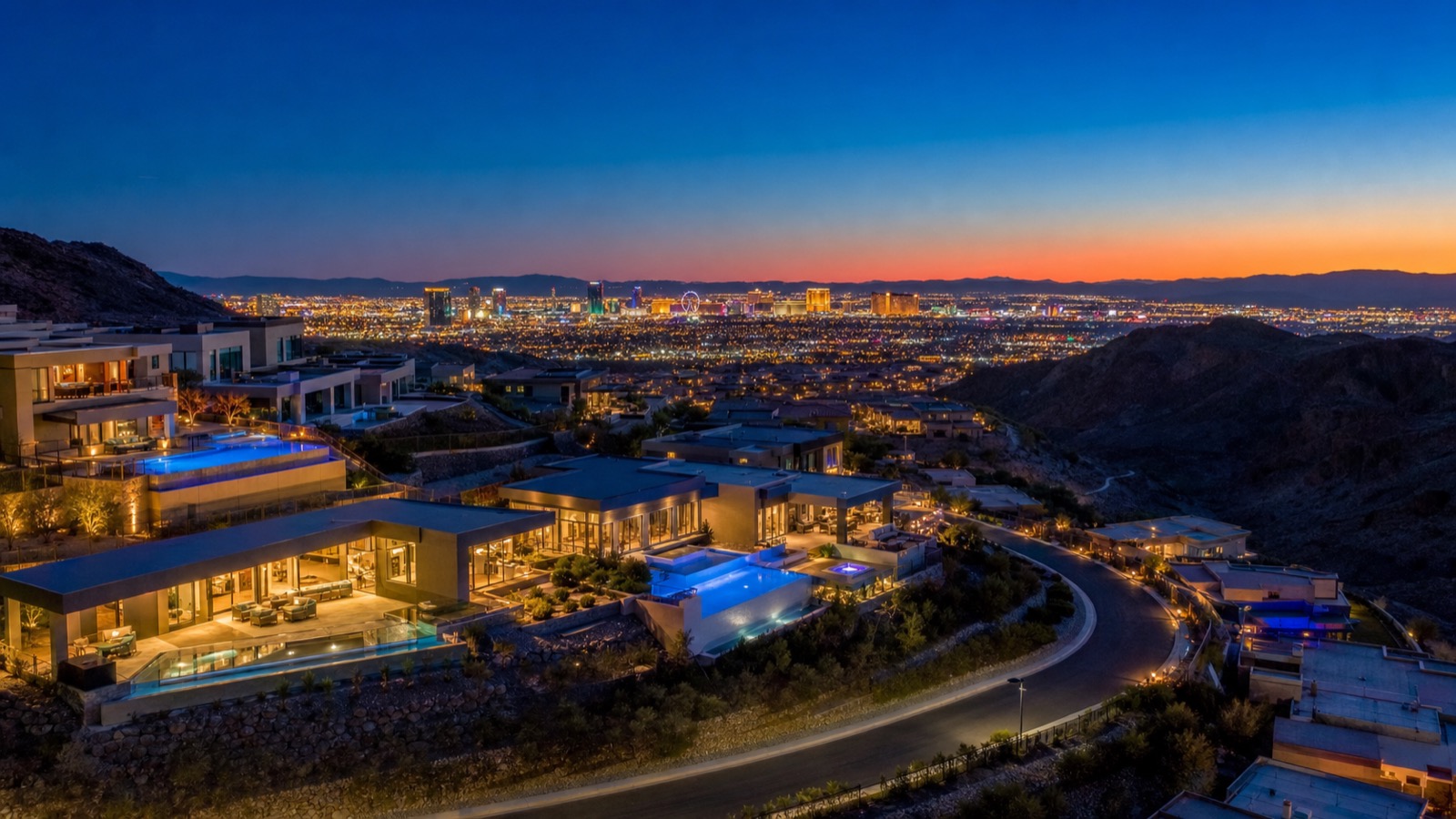
For a buyer, the lesson is that water and infrastructure — not scenery — decided where value first concentrated. That principle never stopped being true. The 215 Beltway, the master-plan trunk lines, and today's water-conservation rules are simply the modern versions of the same story that started with railroad wells.
Why Did the Hoover Dam and 1931 Gaming Law Trigger the First Housing Boom?
If you chart the valley's population, the line turns vertical in the 1930s — and the cause is two decisions made in a single year. In 1931, the Nevada Legislature legalized wide-open casino gambling (codified in what is now Nevada Revised Statutes Chapter 463), and Congress funded construction of the Hoover Dam, then called Boulder Dam.
According to the Bureau of Reclamation, roughly 21,000 workers cycled through the dam project between 1931 and 1936, and the federal government built Boulder City from scratch to house them — the valley's first fully planned community. Thousands more workers spilled into Las Vegas proper, creating the region's first genuine housing shortage and its first real building boom. According to the U.S. Census Bureau, the city's population more than tripled across the 1930s.
World War II locked the growth in. The Army opened a gunnery school that became Nellis Air Force Base, and Basic Magnesium's plant in what is now Henderson pulled in thousands of defense workers. Suddenly the economy was not just tourists and rail — it was federal payroll and manufacturing. Tract neighborhoods like Huntridge went up to house war workers with sturdy, modest homes that vintage buyers now prize. This is also the era that seeded Henderson as an industrial-turned-residential city rather than a Vegas suburb.
The population-and-price arc across the last century tells the whole story in one glance:
| Year | Approx. metro population | Median home-price milestone |
|---|---|---|
| 1905 | Under 1,000 | Lots $100–$1,750 at auction |
| 1930 | Under 5,000 | Pre-boom railroad town |
| 1950 | About 48,000 | Postwar tract housing |
| 1970 | About 273,000 | Corporate-era sprawl begins |
| 2000 | About 1.4 million | Median near $140,000 |
| 2006 | About 1.8 million | Peak near $315,000 |
| 2012 | About 2.0 million | Bottom near $118,000 |
| 2026 | About 2.4 million | Median sale near $438,437 |
Every one of those inflection points was a demand shock that outran housing supply. In our experience walking buyers through the valley, the decades where population outpaced construction — the 1940s, the early 2000s, and the post-2020 in-migration wave — are precisely the ones that minted the most home equity.
How Did the Strip End Up in Paradise Township Instead of the City?
Here is the quirk that still confuses out-of-state buyers: the Las Vegas Strip is not in the City of Las Vegas. In 1950, county commissioners created the unincorporated township of Paradise, and resort developers deliberately built their casinos along Highway 91 — today's Las Vegas Boulevard South — just outside the city limits to dodge municipal taxes and annexation.
That decision is why, to this day, the Strip, Harry Reid International Airport, and much of the valley's most famous real estate sit on Clark County land rather than city land. When you shop the luxury high-rises and estates near the Strip corridor, you are usually buying in unincorporated Clark County, with county services and county tax districts — a distinction that affects everything from law enforcement to special improvement district assessments on your tax bill.
According to the Clark County Assessor, parcels are tracked by township, and the Paradise, Winchester, Enterprise, Spring Valley, and Sunrise Manor townships hold the bulk of the valley's population despite carrying "Las Vegas" mailing addresses. For buyers, the practical takeaway is simple: your mailing address says Las Vegas, but your governing jurisdiction — and your tax structure — may be the county.
What Changed When Howard Hughes and Corporations Took Over?
For its first postwar decades, Las Vegas was synonymous with mob-financed casinos. That began to change in 1966, when billionaire Howard Hughes arrived, moved into the Desert Inn, and started buying hotels and enormous tracts of raw desert land. Hughes alone accumulated tens of thousands of acres on the valley's western edge — land that would later become Summerlin.
The corporate turn mattered for housing because it made Las Vegas bankable. Once publicly traded companies and legitimate lenders replaced cash-only mob operators, traditional mortgage financing and large-scale residential development became possible. The Nevada Gaming Control framework, tightened through the 1960s Corporate Gaming Acts, let corporations own casinos — and corporate money is patient money that builds subdivisions.
As legitimacy grew, the footprint sprawled. Residential zones pushed east toward Sunrise Mountain and west toward the Spring Mountains. Builders shifted from custom mid-century homes to large production tracts. The stage was set for the single most important innovation in valley real estate: the master-planned community.
How Did Green Valley Invent the Master-Planned Community Era?
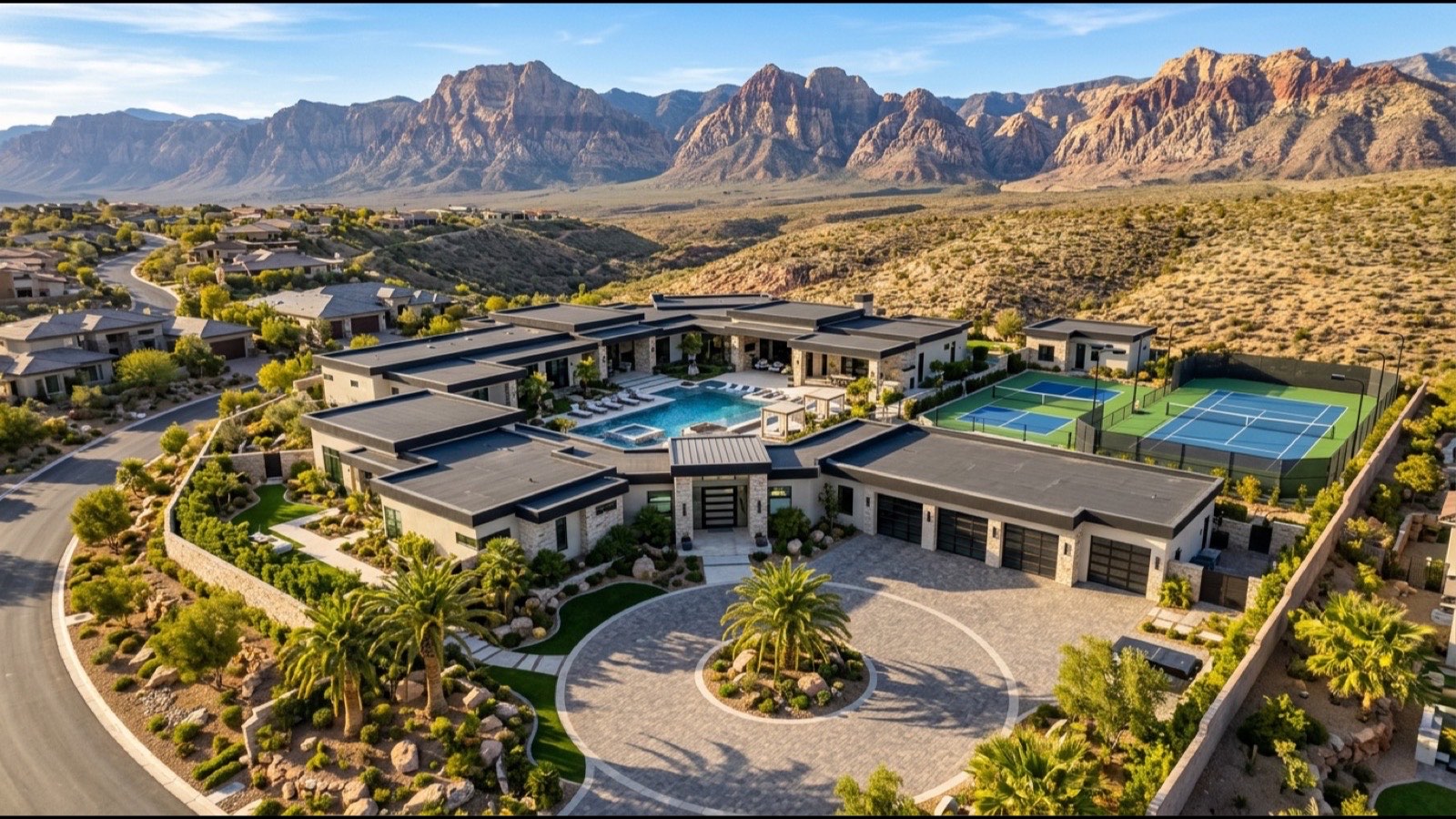
In the late 1970s, the American Nevada Corporation broke ground on Green Valley in Henderson — and quietly rewrote how the entire valley would be built. Instead of selling raw lots and hoping amenities followed, Green Valley designed homes, parks, schools, retail, and trails together before the first shovel hit dirt. It was a radical idea in a desert boomtown.
The concept worked because it solved a real buyer problem. Families wanted structured, amenity-rich neighborhoods with predictable quality, and they were willing to pay for it. According to Las Vegas REALTORS market data, Henderson's master-planned cores still command a premium over comparable non-planned tracts — in 2026 the City of Henderson median list price runs about $540,134 against roughly $470,825 for the City of Las Vegas, a spread of nearly $70,000.
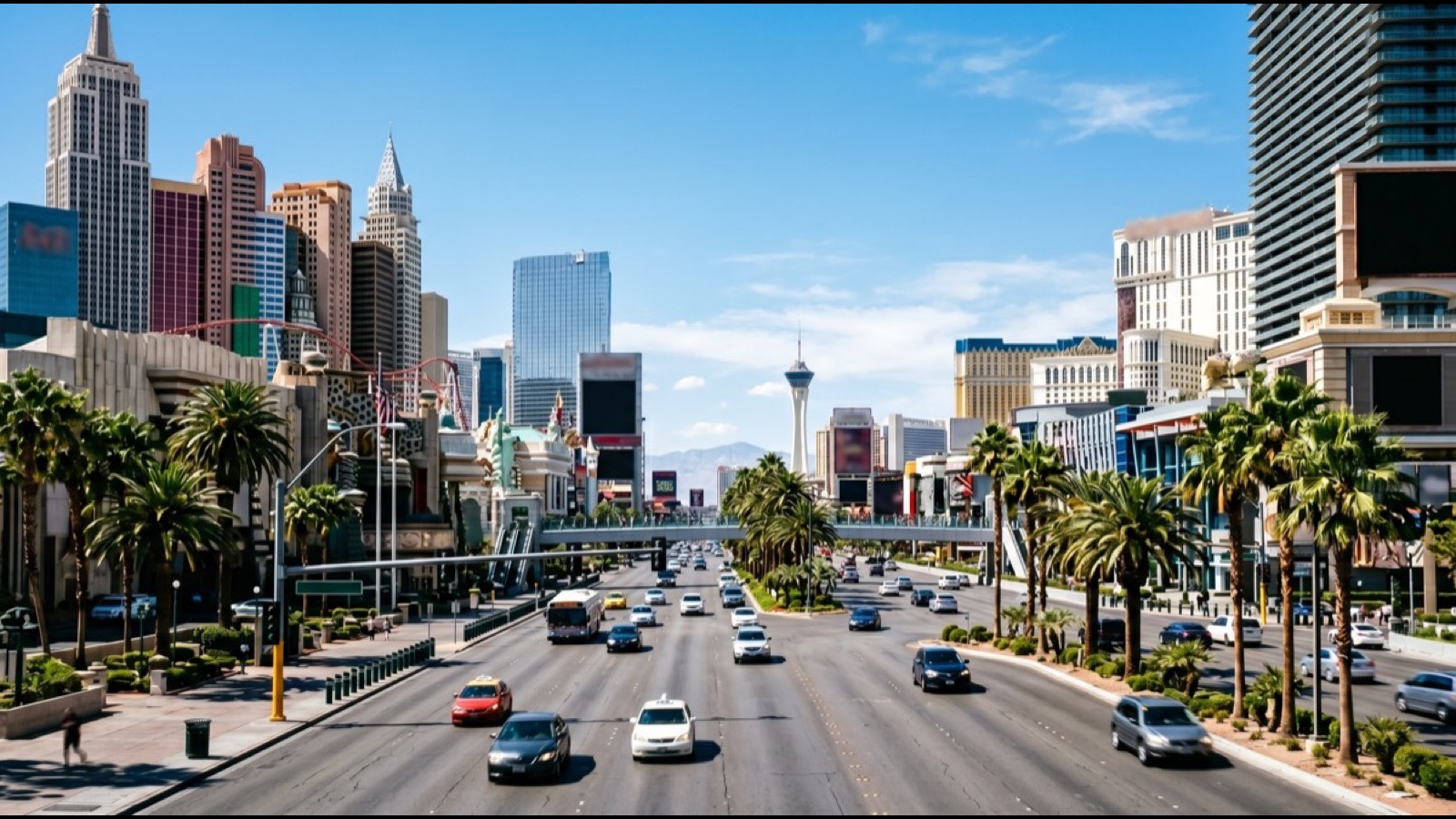
Green Valley proved the template, and everyone copied it. Anthem, Inspirada, Cadence, MacDonald Highlands, and dozens of others all descend from that late-1970s experiment. If you want the full modern hierarchy, our ranked guide to Las Vegas master-planned communities breaks down which plans hold value best. The master-plan is now so dominant that in much of the valley, "buying a home" effectively means "buying into an HOA-governed master plan."
Why Did Summerlin and the Mega-Resort Boom Reshape the Valley?
The opening of The Mirage in 1989 kicked off a construction wave the country had never seen. Between 1989 and 2007, the Strip added tens of thousands of hotel rooms and, with them, tens of thousands of jobs. Every dealer, housekeeper, and cook needed a place to live, and the homebuilders answered.
In 1990, the Howard Hughes Corporation began developing Summerlin on roughly 22,500 acres along the western rim — the land Hughes had assembled decades earlier. Summerlin became the national benchmark for master-planned living and, according to Las Vegas REALTORS data, still carries a clear premium: the community's 2026 median list price sits around $649,000, well above the citywide figure. Our full Summerlin history traces how that premium was engineered village by village.
The 2000s poured fuel on the fire. Easy credit and speculation sent prices soaring — the valley's median more than doubled from roughly $140,000 in 2000 to a peak near $315,000 in 2006. The 215 Beltway opened previously landlocked desert to builders, who put up homes as fast as they could pull permits. According to the Clark County Department of Building, permit volumes hit records that would not be matched again for years. It felt like the party would never end. It did.
What Did the 2008 Foreclosure Crash Do to Las Vegas Home Values?
We have to be honest about the crash, because it reshaped who owns Las Vegas real estate today. When the housing bubble burst, Las Vegas was arguably ground zero for the national foreclosure crisis — the market had been built on speculation and subprime lending, and it fell the hardest.
Construction cranes froze mid-project, leaving the skeletons of the Fontainebleau and Echelon standing unfinished for a decade. According to Las Vegas REALTORS, the valley's median single-family price collapsed from about $315,000 in 2006 to roughly $118,000 by early 2012 — a decline of nearly 60% that wiped out a generation of equity. At the bottom, Las Vegas led the nation in foreclosure rate.
That devastation created an opening. Institutional investors and hedge funds swept in, buying tens of thousands of single-family homes at pennies on the dollar and converting them to rentals. The move cleared out bad loans, reset the price baseline, and — crucially — shifted a meaningful slice of the valley's housing stock into corporate hands, a structural change that still affects rental supply and starter-home inventory in 2026. If you are weighing renting versus buying here, that investor overhang is part of the context.
How Has the Sports City Reinvention Diversified the Economy Since 2013?
The last decade rewrote the valley's identity again. Las Vegas stopped being only a gambling town and became a major-league sports and entertainment capital. The Vegas Golden Knights arrived in 2017, the Raiders relocated to Allegiant Stadium in 2020, Formula 1 returned in 2023, and the city hosted Super Bowl LVIII in 2024.
That matters for real estate because it diversifies the job base. According to the U.S. Bureau of Labor Statistics, the metro's employment has broadened well beyond leisure and hospitality into logistics, healthcare, professional services, and technology. A more diverse economy means a more stable housing market — the 2026 valley is far less dependent on the Strip's slot revenue than the 2006 valley was.
The other structural driver has been in-migration. Since the pandemic, buyers relocating from higher-cost states — especially California — have kept demand steady, drawn by Nevada's lack of a state income tax and larger square footage per dollar. According to the U.S. Census Bureau, Clark County has consistently ranked among the nation's fastest-growing large counties. That steady inflow is why our new-construction communities keep selling and why buyer demand held up even as mortgage rates rose.
What Do Las Vegas Home Prices Look Like in 2026?
History is best understood next to today's numbers. Here is the live snapshot across the valley's core Southern Nevada submarkets, pulled from current GLVAR / Las Vegas REALTORS MLS data. It shows how the postwar-planned Henderson core, the founding city of Las Vegas, the newer North Las Vegas tracts, and the historic dam town of Boulder City price out relative to one another.
| Metric | Las Vegas | Henderson | North Las Vegas | Boulder City |
|---|---|---|---|---|
| Median list price | $470,825 | $540,134 | $425,000 | $432,500 |
| Median sale (12 mo) | $438,437 | $489,538 | $417,244 | $445,000 |
| Price per sq ft | $272 | $286 | $235 | $282 |
| Median days on market | 31 | 32 | 24 | 38 |
| Active listings | 8,785 | 2,488 | 1,075 | 138 |
The story the table tells is the story of the history. Henderson, built on the master-plan model since the 1970s, prices highest at roughly $286 per square foot. North Las Vegas, dominated by newer production tracts and the fastest to sell at 24 days, offers the lowest entry near $417,244. Boulder City — the 1930s dam town that legally caps its own growth — stays scarce, with just 138 active listings and the longest days on market. You can browse current inventory anytime through Las Vegas homes for sale or the full valley-wide property search.
Which Historic Neighborhoods Can You Still Buy Into Today?
If you want a home with more character than a stucco production box, the valley has genuine historic pockets that have held their value beautifully. These are the neighborhoods where the 1905-to-1970 story is still standing.
| Neighborhood | Peak era | Architectural style | Who bought there |
|---|---|---|---|
| Scotch 80s | 1950s–1960s | Sprawling mid-century estates | Casino owners and celebrities |
| John S. Park | 1930s–1940s | Period-revival cottages | Early professionals and merchants |
| Huntridge | 1940s | Modest wartime tract homes | WWII defense workers |
| Paradise Palms | 1960s | Palm Springs–style modernism | The valley's first planned-community buyers |
The Scotch 80s was the valley's Beverly Hills — full-acre lots and mid-century estates once owned by casino magnates, now among the most sought-after infill trophies in the city. John S. Park, near downtown, offers tree-lined streets and 1930s revival homes with an "Anytown USA" feel. Huntridge remains an eclectic, artistic enclave of affordable vintage cottages, and Paradise Palms — Clark County's first planned community — delivers the Eichler-style modernism that design buyers chase. According to the Clark County Assessor, several of these areas carry local historic-district overlays that shape what you can build and remodel, so work with an agent who knows the rules before you make an offer.
How Does Las Vegas History Shape Where Value Concentrates Now?
Every layer of the valley's history left a fingerprint on the current price map. The railroad grid set downtown. The Paradise tax dodge put the Strip and its luxury towers in the county. The 1970s master-plan revolution pushed premium value to Henderson and, later, Summerlin. And the 2008 crash handed a chunk of the starter-home stock to institutional landlords.
Read together, those forces explain why the same three-bedroom home can differ by $150,000 across the valley. Land locked inside a mature master plan with schools, trails, and retail already built commands a premium. Land near the original townsite trades on walkability and character. Land at the growth edge — the newest North Las Vegas and far-southwest tracts — trades on price and freshness. According to the Bureau of Land Management, roughly 85% of Nevada is federal land, and the BLM disposal boundary that rings the valley is the hard wall that makes every buildable acre inside it more valuable over time.
For a practical framework on choosing among these submarkets, our comparison of the valley's luxury and guard-gated communities maps the modern hierarchy back to these historical roots. The history is not a museum exhibit — it is the reason your neighborhood costs what it costs.
What Does History Tell Us About the Future of Las Vegas Real Estate?
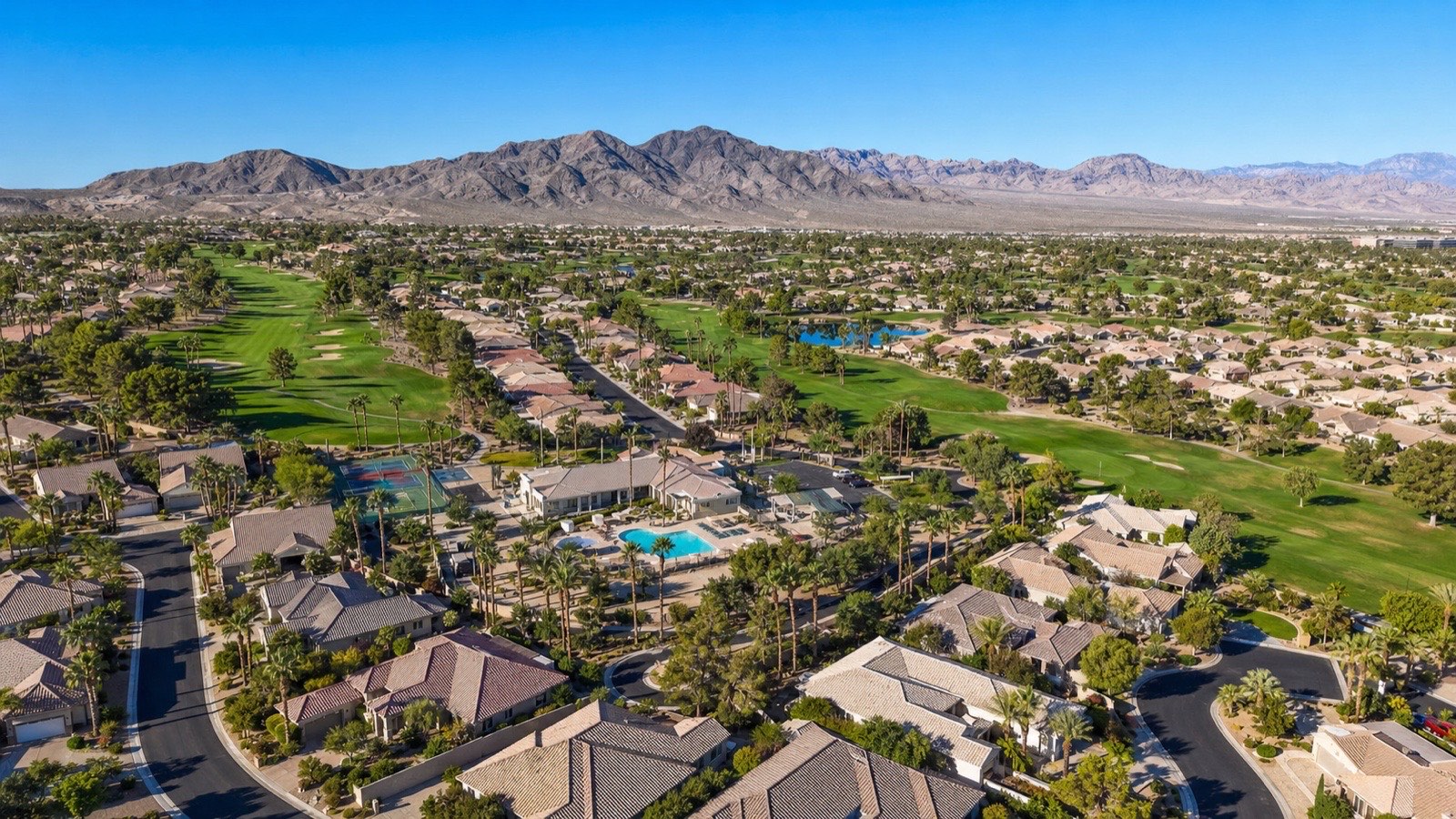
Look at the timeline and one pattern jumps out: Las Vegas reinvents itself every 20 to 30 years. Railroad town, mob haven, family-vacation spot, luxury playground, and now a sports-and-tech metro. Each reinvention pulled in a new wave of residents and a new layer of housing demand.
The next chapter is about density, not sprawl. Because the valley is boxed in by federal land and mountains, it physically cannot keep expanding outward the way it did from 1990 to 2007. According to the Bureau of Land Management, the developable land inside the disposal boundary is finite and shrinking, which pushes future growth toward vertical construction, infill, and the redevelopment of older cores like downtown and the Charleston corridor. Rising land scarcity is a structural tailwind for existing homeowners.
Just as important, the 2026 market is far less speculative than the 2006 one. A diversified economy — logistics, healthcare, pro sports, technology, and a steady inflow of tax-motivated relocators — means demand no longer rises and falls solely with the Strip. That does not make the valley crash-proof, but it does make the next cycle look less like 2008 and more like a normal, supply-constrained metro.
How Can You Use This History When Buying in Las Vegas Today?
History gives buyers an edge because it tells you which value drivers are permanent and which are hype. The permanent drivers are water, infrastructure, master-plan quality, and the federal-land boundary. The temporary ones are interest-rate noise, individual resort openings, and short-term investor churn. Weight your decision toward the permanent drivers and you will rarely overpay.
Practically, that means asking three questions on every property: Is it inside a mature, amenity-rich master plan or a historic character district that history shows holds value? Is it in the county or the city, and how does that change the tax and service picture? And is it near the growth boundary, where scarcity is compounding, or in the overbuilt middle? Sellers benefit from the same lens — our home-selling resources show how to position a home's location story to buyers who understand the valley's history.
If you want a data-backed read on your specific target neighborhood, or you are deciding which agent to trust with a Las Vegas purchase, that is exactly the kind of decision we've represented buyers through across thousands of valley closings. Reach the Nevada Real Estate Group at (702) 637-1759 or through our contact page — we will map any address back to the history that sets its price.
Frequently Asked Questions
When was Las Vegas founded?
Las Vegas was officially founded on May 15, 1905, when the San Pedro, Los Angeles & Salt Lake Railroad (soon part of the Union Pacific) auctioned 110 acres of downtown land near what is now Fremont Street. Corner lots sold for as much as $1,750 and interior lots for as little as $100. The settlement incorporated as a city in 1911.
Why is the Las Vegas Strip not in the City of Las Vegas?
The Strip sits in the unincorporated township of Paradise, created by Clark County in 1950. Resort developers deliberately built along Highway 91 just outside the city limits in the 1940s and 1950s to avoid municipal taxes and annexation. As a result, the Strip, Harry Reid International Airport, and much of the valley's most famous real estate are on county land, not city land.
Why did the Las Vegas housing market crash so hard in 2008?
Las Vegas was hit harder than almost any U.S. metro because its boom ran on speculation and subprime lending, with investors buying multiple homes they could not afford. When credit tightened, the valley's heavy reliance on construction and tourism jobs triggered a foreclosure cascade. According to Las Vegas REALTORS, the median single-family price fell from about $315,000 in 2006 to roughly $118,000 by 2012 — a decline near 60%.
What is the oldest neighborhood in Las Vegas?
The oldest residential areas sit near Downtown Las Vegas, around the original 1905 townsite. Districts such as the Las Vegas High School Historic Neighborhood, John S. Park, and parts of the historic Westside contain some of the earliest surviving homes from the 1920s and 1930s, several of which now carry historic-district overlays.
How much has the Las Vegas population grown over time?
The growth has been exponential. The city held under 5,000 residents in 1930, reached roughly 250,000 in the metro by 1970, and passed 2 million valley-wide around 2015. According to the U.S. Census Bureau, the Las Vegas metro area is now home to roughly 2.4 million people, making Clark County one of the fastest-growing large counties in the nation.
Who owns most of the land around Las Vegas?
The federal government does. According to the Bureau of Land Management, roughly 85% of Nevada is federal land, and a BLM disposal boundary rings the developed valley. Private owners hold the built-out interior, but the surrounding desert is federally controlled, which caps how far the city can sprawl and makes every buildable acre inside the boundary more valuable over time.
How did master-planned communities change Las Vegas real estate?
Green Valley in Henderson pioneered the master-plan model in the late 1970s by designing homes, schools, parks, and retail together before construction. Summerlin scaled it in 1990. The model now dominates the valley and commands a price premium — in 2026 Henderson's median list price runs about $540,134 and Summerlin's roughly $649,000, both above the citywide Las Vegas figure near $470,825.
Which Sources Inform This Las Vegas History Guide?
- U.S. Census Bureau — Las Vegas QuickFacts
- Bureau of Reclamation — Hoover Dam
- Nevada Revised Statutes Chapter 463 (Gaming)
- Nevada Gaming Control Board
- Clark County government
- Clark County Assessor
- Bureau of Land Management — Southern Nevada District
- U.S. Bureau of Labor Statistics — Las Vegas MSA
- Las Vegas REALTORS (GLVAR) — median price and MLS market data
- GLVAR / Repliers MLS live market snapshot (July 2026), Nevada Real Estate Group analysis
Methodology: Historical facts are drawn from the U.S. Census Bureau, Bureau of Reclamation, Nevada Legislature, Clark County, and public real estate record. Current price, inventory, days-on-market, and price-per-square-foot figures are pulled from live GLVAR MLS data via Repliers as of July 2026 and reflect the City of Las Vegas, Henderson, North Las Vegas, and Boulder City submarkets. Median values move monthly; contact the Nevada Real Estate Group at (702) 637-1759 for a current, address-specific read.