

Here is the sentence that surprises almost every new Nevada homeowner: your homeowners insurance does not cover floods. Not in a flood zone, not outside one, not anywhere — flood damage is excluded from every standard policy in America, and the only coverage comes from a separate flood policy most desert buyers never think to ask about. That gap matters here more than newcomers imagine, because the desert floods hard. The Las Vegas valley funnels summer monsoon bursts down mountain washes into neighborhoods at speeds that fill streets in minutes; the region has spent nearly $2.52 billion on flood-control infrastructure for a reason. Meanwhile, in the north, the Truckee River has put parts of downtown Reno under water repeatedly — most famously in the 1997 New Year's flood, which the Truckee River Flood Management Authority puts at roughly $700 million in Washoe County alone and more than $1 billion across northern Nevada.
Add the second squeeze — Nevada homeowners insurance premiums climbing year after year as insurers reprice wildfire, hail, and reinsurance costs — and the case for understanding this corner of homeownership gets strong. This guide covers it all in plain language: how to look up your home's actual FEMA flood zone in two minutes, what the zones mean, when flood insurance is required versus merely smart, what it really costs (often only a few hundred dollars a year in low-risk zones), why your regular premiums keep rising and what actually lowers them, and the flood questions to ask before you buy any Nevada home near a wash, a river, or the bottom of a slope. It draws on the roughly 9,600 transactions our team has closed statewide, in both the monsoon south and the river-and-snowmelt north.
Standard homeowners insurance never covers flood damage, so protection requires a separate flood policy through FEMA's National Flood Insurance Program or a private carrier. Check any home's zone free at FEMA's Flood Map Service Center: zones A and AE are high-risk (coverage required with a mortgage), X is lower-risk (optional, often $400–$800). Las Vegas floods through monsoon washes, Reno through the Truckee River — and 29% of NFIP claims come from outside high-risk zones.
- No homeowners policy covers flood damage — protection requires a separate NFIP or private flood policy.
- NOAA's September 10, 2026 advisory gives a greater than 90% chance of a very strong El Niño.
- A new NFIP policy takes 30 days to start, so buying in December protects nothing.
- Nearly one-third of NFIP claims from 2014 to 2024 came from outside high-risk flood areas.
- Las Vegas and Henderson hold CRS Class 5, worth up to 25% off NFIP premiums.
Why Does the Desert Flood — and Why Should Las Vegas Buyers Care?
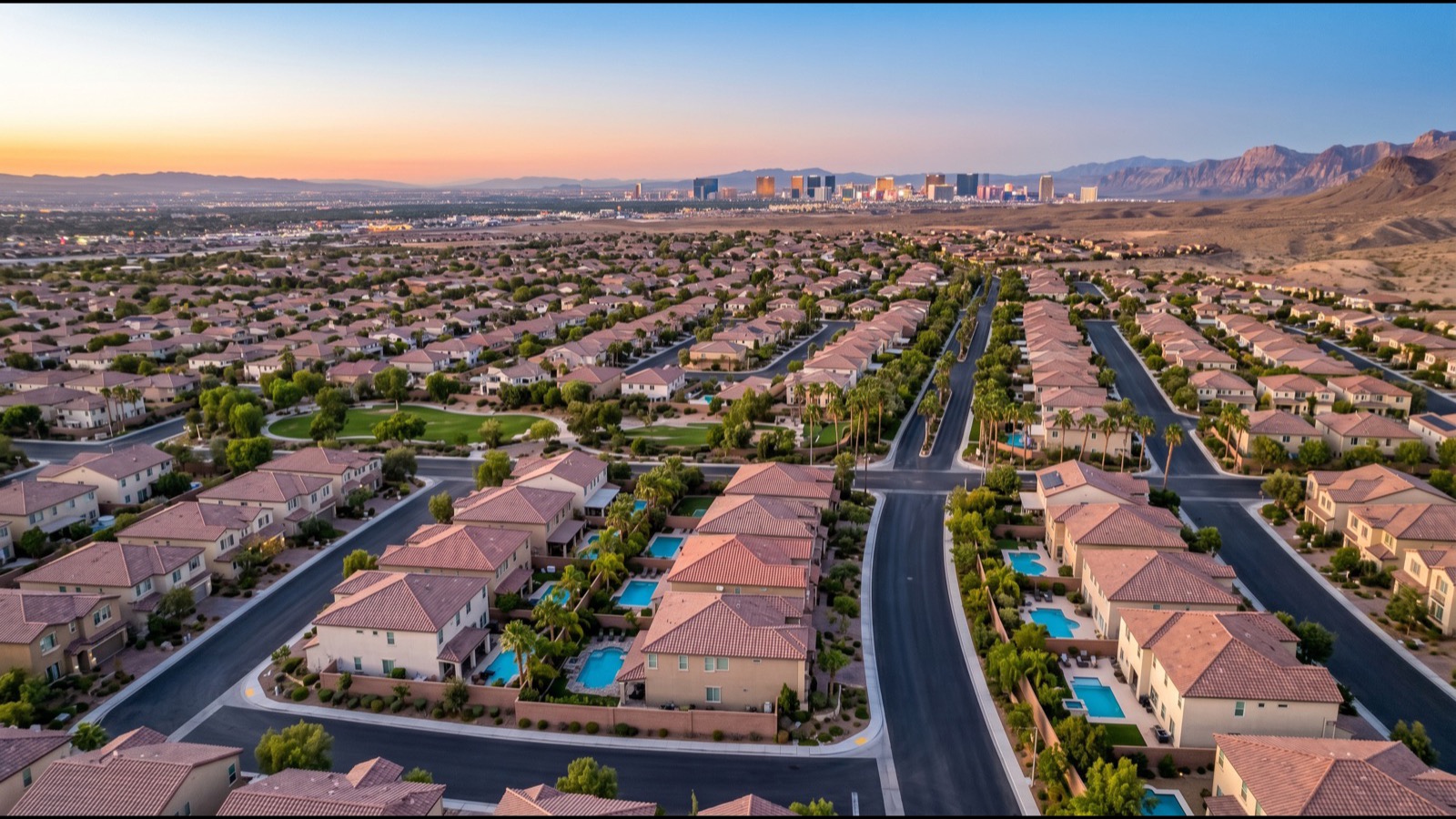
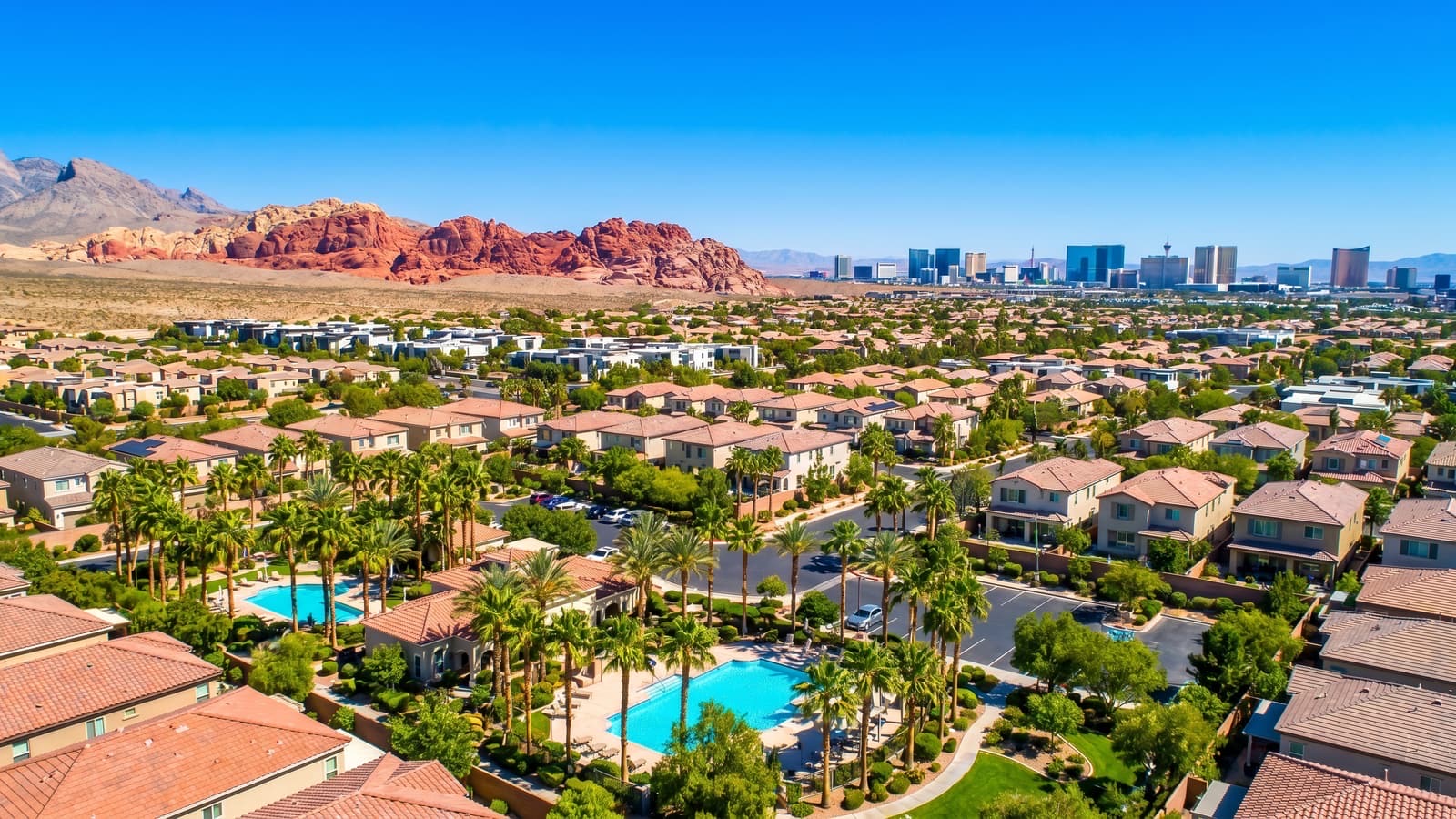
The physics work against us. Desert soil bakes hard and absorbs almost nothing, so when the summer monsoon drops an inch of rain in an hour on the mountains ringing the Las Vegas valley, that water does not soak in — it runs, gathering speed down natural washes toward the valley floor where two million people live. According to the Clark County Regional Flood Control District, the valley's flash-flood season runs July through September with the summer monsoon, and as of 2026 the district's interconnected system includes 113 detention basins and more than 722 miles of channels and underground storm drains, built with nearly $2.52 billion of publicly funded improvements — roughly 75 percent of the master-planned system, and built precisely because the historic flooding kept happening. The infrastructure works remarkably well, but it channels risk rather than eliminating it: homes near washes, at the feet of slopes, and in older neighborhoods built before the basins carry real exposure a sunny January showing never reveals.
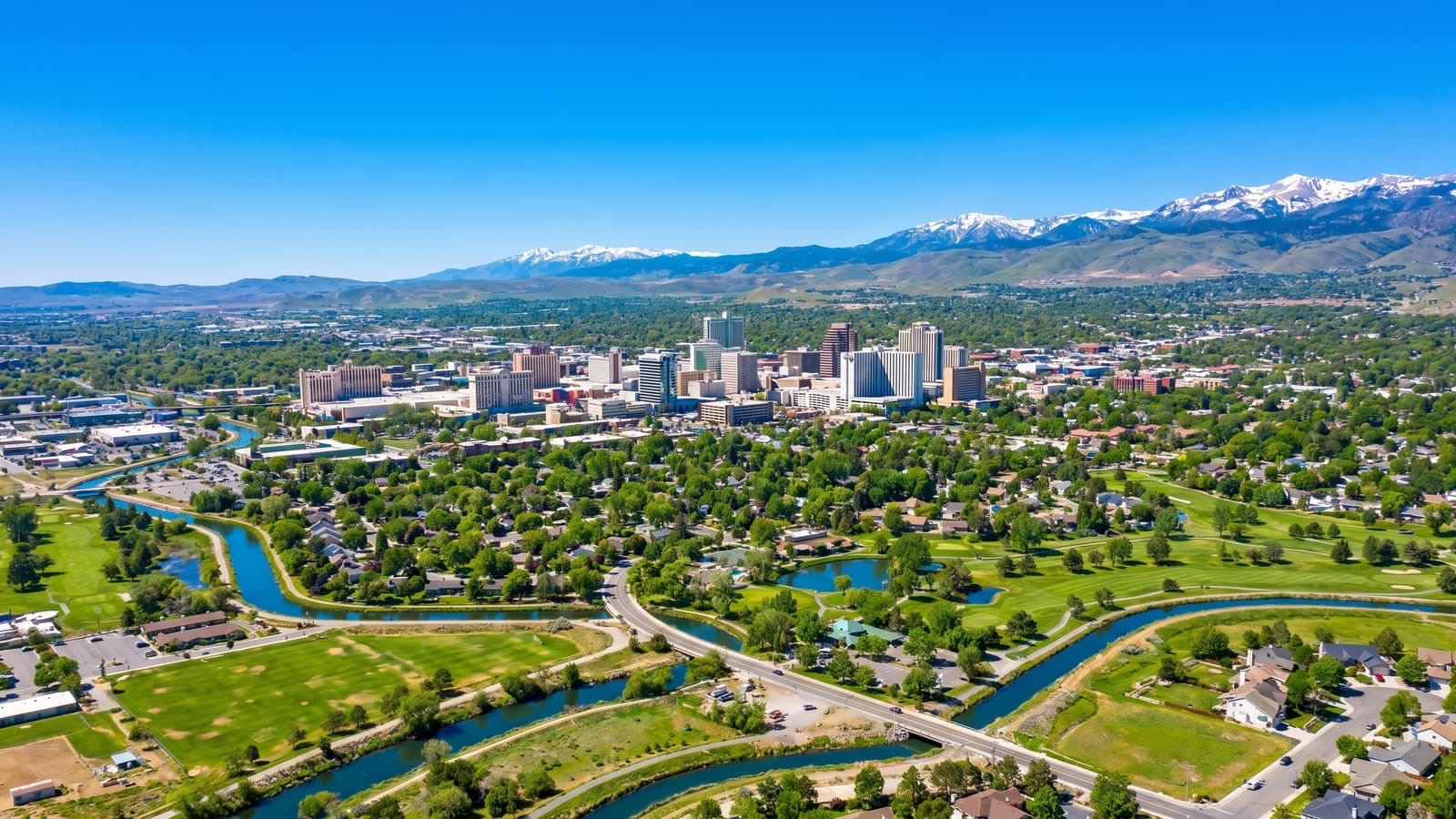
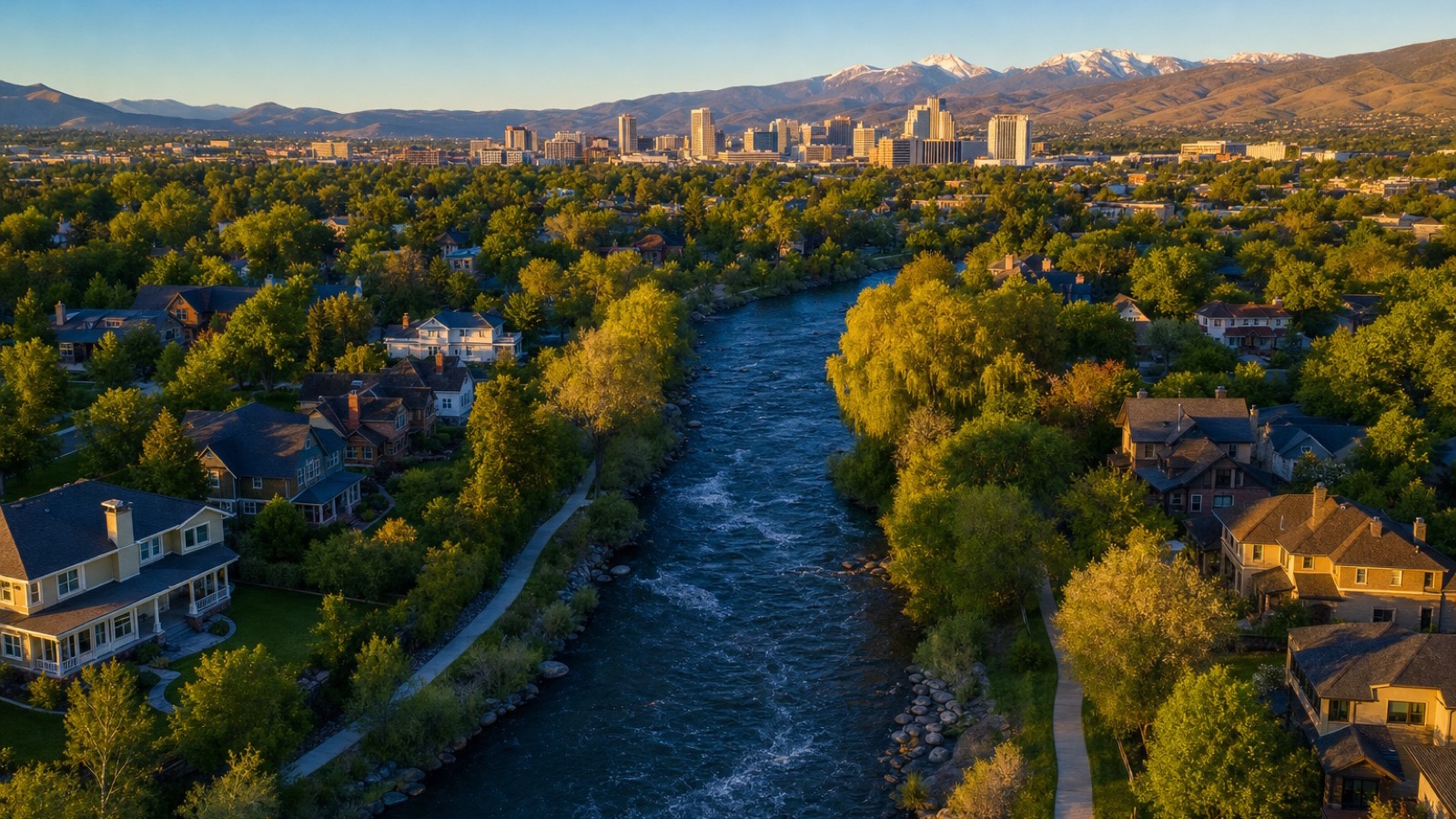
Northern Nevada floods differently but just as seriously. Reno's threat is the Truckee River and snowmelt: the New Year's flood of 1997 put downtown Reno and Sparks under water and caused hundreds of millions in damage, and river neighborhoods carry mapped flood zones to this day. Add localized burn-scar flooding after wildfire seasons — scorched hillsides shed water like pavement — and the statewide truth emerges: "it's a desert" is not a flood-risk analysis. Every Nevada home has a specific, knowable flood profile, and the smart buyer looks it up before falling in love.

What Does NOAA's El Niño Advisory Mean for Nevada This Winter?
This is the part that changed since this guide first ran in July 2026, and it is the reason to read it again before the first storm. According to NOAA's Climate Prediction Center, the ENSO Alert System Status is an El Niño Advisory, and the September 10, 2026 ENSO Diagnostic Discussion opens with this synopsis: "El Niño is strengthening, with a greater than 90% chance of a very strong event during the Northern Hemisphere fall and winter 2026-27." The same discussion puts the odds at 75% that the October-December 2026 season delivers "a historic event that would exceed the strength of previous El Niño events dating back to 1950 (+2.5°C or more for a 3-month RONI value)."
Then comes the sentence most coverage leaves out, and the one that matters most to a homeowner. According to the Climate Prediction Center, "with an event of this magnitude, the chances of experiencing impacts consistent with El Niño are larger, though not guaranteed." A seasonal forecast is a shift in odds, not a promise about your street, and nobody — including me — can tell you what your winter will be.
Now the part that is genuinely different north and south, and where national "El Niño winter" coverage tends to get Nevada wrong. According to a University of Nevada, Reno Extension review of the state's ENSO record by Benjamin Khoh and Stephanie McAfee, far southern Nevada — Clark County plus southern Nye and Lincoln counties — is the one part of the state with a readable signal: El Niño winters there "are often (but not always) cooler and wetter than usual." For the rest of Nevada, including the Truckee Meadows, Washoe County and the Sierra front, the same researchers are blunt: "El Niño and La Niña do not consistently predict fall, winter or spring precipitation," and "in most of the state, ENSO is not a good predictor of how much rain and snow will fall."
The federal modeling lands in the same place. According to the U.S. Geological Survey's Southwest Climate Adaptation Science Center, seasonal models "tend to agree that winter will be wetter than normal over much of the Southwest, with a couple of models indicating normal or dry conditions over parts of northern Utah and Nevada" — and the 2015-16 event is the cautionary tale, having delivered drier-than-normal conditions to Southern California and Arizona while much of Nevada came in wet. The Climate Prediction Center's own seasonal discussion issued September 17, 2026 puts the strongest wet tilt over California, "reaching a maximum of 50-60 percent near the coast," with the robust October-December signal running "from the Four Corners region eastward."
So the honest read as of September 20, 2026: Southern Nevada's odds of a wetter-than-normal winter are genuinely elevated, Northern Nevada's are close to a coin flip, and neither reading tells you whether water reaches your door. What the advisory does tell you is that this is the wrong autumn to leave a flood policy unbought — because the insurance calendar, unlike the weather, is completely predictable.
| Question | Southern Nevada (Clark, southern Nye, Lincoln) | Northern Nevada (Washoe, Truckee Meadows, Sierra front) |
|---|---|---|
| Is there a readable El Niño precipitation signal? | Yes — often cooler and wetter than usual, though not always | No — ENSO does not consistently predict winter precipitation here |
| What do seasonal models show for 2026-27? | Wetter than normal across much of the Southwest | Mixed — a couple of models show normal or dry over northern Nevada |
| What is the dominant flood mechanism? | Flash flooding down washes and alluvial slopes | River rise, snowmelt and rain-on-snow on the Truckee and Carson |
| What should an owner do either way? | Buy or confirm flood coverage now — it takes 30 days to start | Buy or confirm flood coverage now — it takes 30 days to start |
How Do You Check a Nevada Home's Flood Zone?
Two minutes, zero dollars, and it should happen before any offer. Go to FEMA's Flood Map Service Center (msc.fema.gov), type the address, and the map returns the property's zone designation. According to FEMA, the zones translate like this:
| Zone | Risk level | Flood insurance |
|---|---|---|
| A / AE / AO | High risk (1% annual chance — the "100-year" zone) | Required by lenders |
| Shaded X | Moderate (0.2% annual — "500-year" zone) | Optional, recommended |
| X (unshaded) | Lower risk | Optional, often very cheap |
| D | Unmapped / undetermined | Judgment call — get data |
Three Nevada-specific notes on reading the result. First, the "100-year flood" label misleads everyone: a 1% annual chance compounds to roughly a 26% chance over a 30-year mortgage — closer to a coin flip quarter than a once-in-a-lifetime event. Second, maps age: Clark County's flood-control build-out has removed some areas from high-risk zones over the years, while new development changes drainage in ways maps catch late — so pair the FEMA lookup with the seller's disclosure and your own eyes (look for washes, channels, and slope). Third, according to FEMA, nearly one-third of NFIP claims from 2014 through 2024 — 29% — came from outside high-risk flood areas — an X-zone designation means cheaper insurance, not no risk. In our experience showing homes across the valley, the block-by-block variation surprises buyers: two streets apart can be two different zones and two very different insurance conversations.
When Is Flood Insurance Required — and What Does It Cost in Nevada?
The rule is mechanical: if the home sits in a high-risk zone (A/AE) and you have a federally-backed mortgage — which covers nearly every conventional, FHA, and VA loan — your lender must require flood insurance for the life of the loan. No zone-A policy, no closing. Outside high-risk zones it is optional, which is where Nevada buyers make their most common insurance mistake: skipping a policy that costs less than a nice dinner per month on a home worth half a million dollars.
The pricing reality is friendlier than people fear. Flood coverage comes through FEMA's National Flood Insurance Program (NFIP) — capped at $250,000 for the structure and $100,000 for contents — or through the growing private flood market, which often beats NFIP pricing and limits in Nevada's lower-risk zones. Under the NFIP's Risk Rating 2.0 pricing, each home is rated individually on its actual characteristics (distance to water, elevation, foundation, rebuild cost) rather than zone alone. In practice across our closings: an X-zone Las Vegas or Henderson home commonly quotes around $400–$800 a year, while true AE-zone homes near washes or the Truckee can run $1,200–$3,000+. One critical mechanic: NFIP policies carry a 30-day waiting period before coverage starts (waived when purchased at a loan closing) — so the week the monsoon forecast turns ugly is a month too late to buy protection.
When Should You Buy Flood Insurance Before a Wet Winter?
Before the storm window opens, not during it — and the calendar is unforgiving in a way most Nevada owners discover far too late. According to FEMA's National Flood Insurance Program, "your flood insurance coverage will go into effect 30 days after your date of purchase." Buy a policy on September 20, 2026 and it protects you around October 20. Buy it the week a December storm shows up in the forecast and you are covered some time in January, after the event you were trying to insure against has already run through your garage.
There are exactly four ways around that wait, and FloodSmart lists all of them. According to FEMA: "There is no wait if you buy flood insurance while making, increasing, extending or renewing a mortgage." "There is no wait if you change your flood insurance coverage while renewing your policy." "There is a one-day wait if your property is in a newly-designated high-risk flood zone and you buy a policy within 12 months of the update." And "there is a one-day waiting period if a flood is caused or worsened by a wildfire on federal land and you buy a policy within 60 days of the wildfire containment date."
Read those exceptions closely and a pattern emerges: each one belongs to somebody in the middle of a transaction, a renewal, a map change or a fire. None of them belongs to the ordinary owner who has lived in the same Henderson house for nine years and never carried flood coverage. That owner gets the full 30 days, every single time. It is the most common flood-insurance mistake we see in Nevada, and it is a calendar problem rather than a money problem — the policy costs a few hundred dollars in most of the valley, but only if it is bought early enough to exist when the water arrives.
The wildfire clause deserves a Northern Nevada footnote. Burn scars on federal land shed water like pavement for several seasons after a fire, and a Washoe County or Carson Valley home downslope of a recent burn can qualify for the one-day wait — but only inside that 60-day post-containment window. Miss it and you are back to 30 days like everyone else. The map-change clause works the same way: a Letter of Map Revision that moves your parcel into a high-risk zone opens a 12-month door to next-day coverage, which is a good reason to actually read the notice your county mails rather than filing it unopened.
| Situation | When coverage starts | Time limit |
|---|---|---|
| Existing owner buys a new policy | 30 days after the purchase date | None — this is the standard rule |
| Bought while making, increasing, extending or renewing a mortgage | No waiting period | Must be tied to the loan transaction |
| Coverage changed at policy renewal | No waiting period | At renewal only |
| Parcel newly designated high-risk by a map change | One day | Within 12 months of the update |
| Flood caused or worsened by wildfire on federal land | One day | Within 60 days of the containment date |
How Does Risk Rating 2.0 Price a Nevada Flood Policy Today?
By your building, not by your zone — which is the most misunderstood thing about flood pricing in 2026. According to FEMA, "as of April 1, 2023, FEMA has fully implemented the National Flood Insurance Program's (NFIP) pricing approach, Risk Rating 2.0," and under that approach "the NFIP's pricing approach does not use flood zones to determine flood risk." The rating engine weighs flood frequency, the types of flooding a property faces, distance to a water source, first-floor height and elevation, foundation type, occupancy, number of floors, the cost to rebuild, and prior claims history.
For Nevada that cuts both ways. An X-zone home sitting a few dozen feet off a wash on the northwest rim can price higher than its zone letter suggests, because the engine sees the wash even when the map has the parcel outside the high-risk shading. A mapped AE-zone home set well above the channel with a raised first floor can price lower than its neighbors assume. Flood zones still govern the mandatory-purchase rule and local floodplain management — your lender still reads the letter — but the letter no longer sets the price, and quoting a home by zone alone is now simply out of date.
The second lever is local, automatic, and almost nobody checks it. According to FEMA's Community Rating System, communities that exceed minimum floodplain-management standards earn their policyholders premium discounts applied straight through the rating engine from the community's identification number, with no paperwork from the owner. FEMA's September 2024 CRS guidance states that "the CRS discount is available to all NFIP policyholders in CRS communities" unless narrow exceptions apply, such as a policy already capped by a rate cap or a building with known floodplain-management violations. Nevada's standings, taken from the NFIP Community Status Book dated September 20, 2026, are worth knowing before you shop a quote.
| Community | CRS class | NFIP premium discount |
|---|---|---|
| Las Vegas, city of | Class 5 | Up to 25% |
| Henderson | Class 5 | Up to 25% |
| Washoe County, unincorporated | Class 6 | Up to 20% |
| Clark County, unincorporated | Class 7 | Up to 15% |
| North Las Vegas | Class 7 | Up to 15% |
| Reno and Sparks | Not enrolled in the CRS | No CRS discount |
That table is a live argument for checking the jurisdiction line on a listing, not just the city on the mailing address. A home inside Henderson city limits and a home a mile away in unincorporated Clark County sit ten CRS points apart, which is the difference between up to 25% off and up to 15% off the same NFIP premium. And one number to keep in view while you compare quotes: according to FEMA, the average NFIP claim payment between 2020 and 2024 was $82,614. Across the 9,600-plus closings our team has represented statewide, owners who regretted paying a flood premium are vanishingly rare; the ones who regretted skipping it are not.
How Much Does Flood Damage Cost Without Insurance?
The uninsured downside is what makes the $400–$800 optional policy such lopsided math. According to FEMA, even shallow flooding is devastating to a home's interior — the agency's own estimates put one inch of water inside an average home at roughly $25,000 in damage, and the numbers climb fast from there:
| Water depth | Estimated damage | What's destroyed |
|---|---|---|
| 1 inch | ~ $25,000 | Flooring, baseboards, drywall bottom, furniture legs |
| 6 inches | ~ $40,000 | Lower cabinets, doors, electrical outlets, appliances |
| 1 foot | ~ $70,000+ | Full drywall cuts, kitchen, HVAC, most contents |
Against a $472,000 Las Vegas home, a single six-inch monsoon event can erase $40,000 — fifty-plus years of the X-zone premium — in one July afternoon. And the federal backstop most people vaguely count on is thinner than assumed: FEMA disaster assistance applies only in federally declared disasters, comes mostly as loans that must be repaid, and historically averages a few thousand dollars per household — not a rebuild. The private math is simple and cold: the people made whole after a flood are the ones holding a flood policy, and in Nevada's lower-risk zones that policy costs about what one water-heater replacement does.
What Does Flood Insurance Actually Cover — and What Doesn't It?
A flood policy covers direct physical damage from flooding — surface water entering the home: the drywall, flooring, systems, and (with contents coverage) your belongings. What surprises owners at claim time are the boundaries. Basements get limited treatment — structural elements and equipment are covered, but finished surfaces and contents below grade largely are not (a modest issue in mostly-slab Nevada). Detached structures beyond a garage need their own coverage. Landscaping, pools, and outdoor property — real money in Las Vegas backyards — are excluded. And temporary living expenses while your home dries out are not covered by NFIP policies, a gap some private flood policies fill and a genuine reason to quote both markets.
Just as important is the reverse boundary — what your homeowners policy handles that flood insurance does not. Water from above (a roof leak in a monsoon, a burst pipe) is a homeowners claim; water rising from the ground is a flood claim. The distinction sounds academic until an adjuster stands in your living room applying it: rain through a wind-damaged roof is covered by the policy you have, while the same inch of water arriving across your threshold from the street is covered only by the flood policy you maybe bought. Sewer backup — a real risk during flash floods — needs its own endorsement on the homeowners side. The practical move: ask your agent to walk both policies' water rules before the first storm, not after.
Why Are Nevada Home Insurance Premiums Rising — and What Can You Do?
The flood conversation lives inside a bigger squeeze: Nevada homeowners premiums have been climbing steadily. According to the Nevada Division of Insurance, the drivers are structural — wildfire exposure repricing everything in the West (acutely in Reno-Tahoe's urban-wildland interface), reinsurance costs that jumped after years of national catastrophes, and construction-cost inflation that raises the rebuild value every policy must cover. Statewide averages still undercut disaster-heavy states like Florida or Louisiana, but the direction is one-way, and Northern Nevada homes near forested slopes have seen the sharpest quotes — some carriers now inspect defensible space before writing or renewing.
The good news: this is a market you can work. Across our closings, the same moves keep saving owners real money:
| Move | Typical impact |
|---|---|
| Shop 3+ carriers at every renewal | Often $300–$800/year — loyalty is penalized |
| Raise the deductible ($1,000 → $2,500+) | 5–15% premium cut |
| Bundle home + auto | 10–20% multi-policy discount |
| Roof, alarm, and mitigation credits | Newer roof and monitored alarm both earn discounts |
| Defensible space (North) | Keeps wildfire-zone homes insurable at standard rates |
One warning as premiums rise: do not chase savings by underinsuring the rebuild value or dropping to actual-cash-value roof coverage without understanding what that means at claim time. The goal is paying less for real protection, not paying less for a policy that fails when the storm finally lands.
The Northern Nevada wildfire wrinkle deserves its own paragraph, because for Reno-Tahoe buyers it has become an availability question, not just a price question. Homes in the urban-wildland interface — the forested slopes around Galena, the Mount Rose corridor, parts of the Carson Range foothills — have seen carriers decline to write new policies or non-renew existing ones after big fire seasons, and a home you cannot insure is a home you cannot finance, since every lender requires coverage in force at closing. The practical sequence for buyers in those areas: get an insurance quote during your due-diligence period, not the week of closing; ask the seller for their current carrier and premium (an existing insurable home is easier to re-insure); and know that defensible space — cleared brush, ember-resistant vents, Class A roofing — has moved from nice-to-have to the difference between a standard-market policy and an expensive surplus-lines fallback. Nevada does not yet face California's insurer exodus, but the same weather drives the same underwriting, and the Sierra-adjacent buyer who treats insurability as a contingency item is the one who never gets surprised. For most of the valley floor around Reno and Sparks, and virtually all of the Las Vegas metro, this remains a non-issue — standard carriers compete for the business, and the flood policy is the only extra conversation the desert requires. Buyers weighing a forested Carson City or Tahoe-area property against a valley alternative should simply price both insurance pictures side by side before falling in love with the pines — sometimes the premium difference funds a lot of weekend drives to the lake.
One more premium lever worth knowing statewide: the wind/hail deductible structure. Some Nevada policies now carry separate, percentage-based deductibles for wind events — 1% or 2% of dwelling coverage rather than the flat $1,000–$2,500 — which on a $400,000 rebuild value means a $4,000–$8,000 out-of-pocket before the roof claim pays. It hides in the declarations page, it changes the math on hail-battered roofs, and agents rarely volunteer it. Ask explicitly, compare it across quotes, and price the flat-deductible option when it is offered; a slightly higher premium that avoids a percentage deductible often wins over the life of the policy.

Which Nevada Areas Carry the Most Flood Risk?
Patterns, not panic — and always verified per-address on the FEMA map. In the Las Vegas valley, attention goes to homes adjacent to the wash system (the Las Vegas Wash and its tributaries feeding toward Lake Mead), the alluvial edges where mountain slopes meet neighborhoods — the west and northwest rim, parts of the southeast valley — and pockets of the older central valley built before modern detention basins. Newer master plans generally engineered drainage well, one more quiet advantage of planned communities in Summerlin and Henderson. In Northern Nevada, the mapped zones follow the Truckee River through Reno-Sparks, the Carson River through the Carson Valley, and low-lying stretches near Washoe Lake — plus the post-wildfire burn-scar zones where a scorched hillside sheds water like a roof for several seasons. That corridor is being actively re-engineered: the Truckee River Flood Management Authority announced on December 1, 2025 that its Vista Narrows project moved into final design, widening the river channel and creating a series of floodplain terraces east of Sparks. TRFMA's own flood-history page estimates that a repeat of the 1997 New Year's flood would now cost over $2.5 billion across Reno, Sparks and Washoe County, so buyers along the river should treat the project timeline as context, not as protection they already have.
Rural buyers add one more layer: homes outside city drainage systems in Pahrump, Fernley, or the outlying valleys depend on natural drainage and county-maintained channels, making the FEMA lookup and a hard look at the lot's grading even more important. None of this makes any area unbuyable — hundreds of thousands of Nevadans live happily in or near mapped zones with correct coverage costing modest money. The failure mode is not the zone; it is not knowing the zone until the water arrives.
What Flood Questions Should You Ask Before Buying a Nevada Home?
Fold these into your standard due diligence, right alongside the inspection and contingency process. Pull the FEMA zone yourself — two minutes, before you write. Read the seller's disclosure carefully: Nevada's required disclosure form asks about flooding and drainage problems, and answers there are binding. Ask the neighbors and look at the lot during rain if you can — where does water go, does the grading slope toward the house, is there a wash or channel within a block? Get a flood-insurance quote during your contingency period, because in an AE zone the premium belongs in your monthly-payment math before you commit, not after. Check the community's drainage history — your agent can pull whether the area had flood-control projects or repeated claims. And on new construction, ask the builder for the drainage study and the lot's grading plan; well-planned communities engineer this, but the lot at the bottom of the street is still the lot at the bottom of the street.
None of this is exotic — it is an hour of diligence protecting a half-million-dollar purchase against the one peril standard insurance ignores. Our team runs these checks as a matter of course on every home we help buyers evaluate, from North Las Vegas to Sparks.
What Should Buyers and Sellers Do Before This Winter Arrives?
Sequence matters more than effort here, and the September-to-November window is when the work is cheap. Start with escrow timing. A buyer under contract has the best deal in flood insurance: according to FEMA, a policy bought in connection with making a mortgage carries no waiting period at all, so a zone-A purchase closing in November is insured the day it funds. The trap is the opposite case — the owner who already closed years ago and never bought. If that is you, the 30-day clock starts the day you call an agent, which means a policy bought the week of Thanksgiving is not live until close to Christmas.
Second, ask the elevation-certificate question in writing during your due-diligence period. According to FEMA's March 2023 guidance, Elevation Certificates are "an optional tool" under Risk Rating 2.0 — not required to buy a policy — but "if property owners provide an EC with more detailed FFH and elevation information, the flood insurance rating engine may return a lower annual premium." You do not have to pay a surveyor to find out. FEMA points to three free sources first: a prior owner may have a copy, the builder or developer may have been required to obtain one if the structure sat in a mapped high-risk area at construction, and the local floodplain manager may have one on file. Put the request in your inspection-period document demand and you either win a rate reduction for nothing or get a definitive no — which is itself worth knowing before you own the house.
Third, be precise about what a lender will and will not do. A federally backed lender must require flood insurance when the property sits in a high-risk A or V zone, will escrow the premium alongside taxes and hazard insurance, and will confirm the policy is in force before funding. What a lender will not do is require coverage in zone X, warn you that the NFIP caps out at $250,000 on the structure and $100,000 on contents, or point out that the mandatory amount can fall well short of your rebuild cost. Those gaps are yours to close, and on a new-construction home or a larger luxury property the private flood market is usually where the excess coverage comes from.
Finally, pull the maps yourself rather than trusting a listing remark or a relocation packet. FEMA's Flood Map Service Center returns the effective FIRM panel for any address in the country, and in Clark County the Regional Flood Control District runs both a parcel-level flood-zone lookup and a FloodView map of the actual channel and basin network. That second layer answers the question the FEMA panel cannot: where does the water on my street physically go, and how far is my lot from the nearest piece of it? For anyone moving to Las Vegas from a state where flooding means a river, that map is the fastest way to understand how differently the desert handles rain.
What Should You Do During and After a Flood Event?
A short, practical playbook, because monsoon season arrives every summer. During: never drive through flooded streets. According to the Clark County Regional Flood Control District, six inches of water is enough to make you lose control of a vehicle, one foot of water can float most cars, and nearly half of flood deaths happen in cars, trucks or SUVs; Las Vegas floods recede fast, so waiting an hour beats risking the crossing. Keep storm drains and private channels near your home clear before the season; document your home and belongings (a ten-minute phone video, updated yearly) while everything is dry. After: photograph everything before touching anything, file the claim immediately (NFIP and private carriers both run faster on early claims), separate flood damage from wind-and-rain damage with your adjuster — remember, they route to different policies — and beware the post-storm contractor wave; the same verification rules apply to flood repairs as any renovation. If damage is severe, county assessors offer damage reassessment that can temporarily lower your property-tax bill — a small offset families forget.
The theme across all of it: preparation costs almost nothing, and improvisation after the water is expensive. A documented home carrying the right two policies — homeowners for the water from above, flood for the water from below — turns what would have been a financial catastrophe into a thoroughly manageable bad month, which is the entire point of insurance done right.
Why Work With Nevada Real Estate Group on Flood-Smart Buying?
Because the flood conversation belongs inside the purchase, not after it. Nevada Real Estate Group is the #1 real estate team in Nevada by RealTrends Verified, with roughly 9,600 closings statewide — including homes along the valley's washes, the Truckee corridor, and everywhere the FEMA map gets interesting. We pull the zone before you tour, read the disclosure and the lot with trained eyes, time the insurance quote inside your contingency window so the premium is in your math before you commit, and connect you with insurance brokers who quote both NFIP and private flood markets. Selling a home in a mapped zone? We know how to present it honestly and correctly — priced right with coverage explained, zone-A homes sell every week in Nevada.
What that looks like in practice, in the weeks before a winter NOAA has already flagged: we pull the FEMA panel and the county's parcel-level zone lookup on every address you tour, we ask the listing side for an existing Elevation Certificate during the inspection period rather than after, we check the jurisdiction line so you know whether the parcel earns a CRS Class 5 discount or a Class 7 one, and we make sure the flood quote is sitting in your file before your contingency expires instead of after. If you already own and have never carried a flood policy, the most useful thing we do is simply remind you that the 30-day clock is real and that it starts the day you call — not the day the storm is named. Current inventory and pricing across the valley sit on our market report page if you want the wider picture first.
Buying or selling anywhere the water question matters — which is everywhere in this state — call our Las Vegas team at (702) 637-1759 or our Northern Nevada team at (775) 277-2120, or contact us here. Two minutes on a flood map now beats two months of recovery later.
Frequently Asked Questions
Does homeowners insurance cover flooding in Nevada?
No — and this is the single most important fact in this guide. Standard homeowners policies exclude flood damage everywhere in America; water rising from the ground (flash flood, river overflow, surface runoff) is covered only by a separate flood policy through FEMA's NFIP or a private carrier. Your homeowners policy does cover water from above, like rain through storm damage or a burst pipe. The two claims route to two different policies, and owning only one leaves half the water risk uncovered.
How do I find out if a Las Vegas or Reno home is in a flood zone?
Look it up free at FEMA's Flood Map Service Center (msc.fema.gov) — type the address and the zone appears in about two minutes. Zones A and AE are high-risk (insurance required with a mortgage); X is lower-risk (optional coverage). Do it before you make an offer, and pair it with the seller's disclosure, which must report known flooding and drainage problems, plus a look at the lot itself — washes, channels, and downhill grading tell you what the map might miss.
How much does flood insurance cost in Nevada?
Less than most people fear in lower-risk zones: X-zone homes in the Las Vegas valley commonly quote around $400–$800 a year, while true high-risk AE-zone homes near washes or the Truckee River can run $1,200–$3,000+. NFIP policies are rated per-home under Risk Rating 2.0 and capped at $250,000 structure / $100,000 contents; private flood carriers often beat NFIP pricing and limits in Nevada. Remember the 30-day NFIP waiting period — buy before the season, not before the storm.
Is flood insurance required in Las Vegas?
Only when both conditions are met: the home sits in a FEMA high-risk zone (A/AE) and carries a federally-backed mortgage — then the lender must require coverage for the life of the loan. Most of the valley sits in zone X, where coverage is optional. Optional is not the same as unnecessary: 29% of NFIP claims from 2014 through 2024 came from outside high-risk flood areas, and a few hundred dollars a year is cheap protection in a city that averages several flash-flood events every monsoon season.
Why is my Nevada home insurance premium going up?
Statewide structural forces: Western wildfire exposure repricing (sharpest in Reno-Tahoe's forested interface), reinsurance costs that jumped after years of national catastrophes, and construction-cost inflation raising the rebuild value every policy covers. It is not personal, but it is fightable — shopping three or more carriers at every renewal commonly saves $300–$800 a year, bundling home and auto earns 10–20%, higher deductibles trim 5–15%, and newer roofs and monitored alarms earn credits. Loyalty, statistically, is penalized.
Should I buy flood insurance if I'm not in a flood zone?
Often yes, and it is cheapest exactly where it is optional. An X-zone designation means lower mapped risk, not no risk — 29% of NFIP claims from 2014 through 2024 came from outside high-risk flood areas, and desert flash flooding does not read maps. At $400–$800 a year on a home worth $472,000, the math resembles the insurance you happily carry against far less likely events. Homes near washes, at the foot of slopes, or in older neighborhoods with dated drainage are the strongest candidates for optional coverage.
Which Sources Inform This Nevada Flood & Insurance Guide?
Market figures come from live Greater Las Vegas and Northern Nevada Regional MLS data (via our Repliers feed), cross-checked against the roughly 9,600 transactions Nevada Real Estate Group has closed statewide. Premium ranges reflect quotes observed across our closings and vary by home. Flood and insurance rules draw on the authorities below; confirm specifics with a licensed insurance professional.
- NOAA Climate Prediction Center — ENSO Diagnostic Discussion, September 10, 2026 — the El Niño Advisory, the greater-than-90% figure and the 75% historic-event odds
- NOAA CPC — Monthly and Seasonal Prognostic Discussion, September 17, 2026 — regional winter precipitation probabilities
- University of Nevada, Reno Extension — El Niño, La Niña and Nevada winter precipitation — why the ENSO signal is readable in the far south and unreliable elsewhere
- USGS Southwest Climate Adaptation Science Center — Regional Super El Niño Impacts — model spread over Nevada and the 2015-16 precedent
- FEMA Flood Map Service Center — look up any address's effective FIRM panel and flood zone
- FloodSmart — Buy a Flood Insurance Policy — the 30-day waiting period and its four exceptions
- FEMA — Risk Rating 2.0 — the April 1, 2023 pricing method and why zones no longer set the price
- FEMA — Understanding Elevation Certificates (March 2023) — ECs as an optional tool that can lower a premium
- FEMA — Community Rating System Discount FAQ (September 2024) — the class-to-discount table and its exceptions
- FEMA — NFIP Community Status Book, Nevada — current CRS classes for every Nevada jurisdiction
- FloodSmart — What Is My Flood Risk — the 29% out-of-zone claim share and the $82,614 average claim
- Clark County Regional Flood Control District — 113 detention basins, 722+ miles of channels and nearly $2.52 billion invested
- RFCD FloodView and parcel flood-zone lookup — parcel-level zone checks and the valley's channel network
- Truckee River Flood Management Authority — 1997 flood damage and the Truckee Meadows flood project
- Nevada Division of Insurance — carrier licensing and consumer resources
- Consumer Financial Protection Bureau — escrowed insurance and mortgage requirements
- Nevada Department of Taxation — damage reassessment and property-tax rules