
When I first published this article in April 2026, the story was investment: who was building, how many jobs, which corridors would feel the demand. Five months later the question that matters to a buyer is different and more personal. A listing in northwest Reno can sit a few blocks from a data center that went vertical in November 2025. A Henderson buyer may want to know what the July 2026 council vote means for a vacant industrial parcel behind a subdivision. A family relocating to Sparks may wonder whether the Tahoe-Reno Industrial Center's power plants will show up on their NV Energy bill.
So this is a rebuild, not a refresh: what a data center near a home actually changes, what the research says about nearby values (less than you would think), what the rules are now in Reno-Sparks, Henderson and the Las Vegas valley, and how to check a specific parcel against each jurisdiction's own planning records. Every figure below traces to a government document, a named outlet, or MLS data we pulled ourselves on September 24, 2026.
A data center near a Nevada home is mainly a noise, power-rate and land-use question, not a proven price hit: NAR's September 2026 survey found 25% of agents reporting higher nearby values and 22% lower, and no Nevada study exists. Rules now differ by city: Reno accepts no new data center permits through August 31, 2027, Henderson requires negotiated development agreements, Clark County approves case by case. Pull the parcel's planning file before you write an offer.
- Reno accepts no new data center conditional use permits through August 31, 2027; permitted projects like Keystone proceed.
- Henderson rejected a 180-day moratorium on July 21, 2026 and now negotiates development agreements per project.
- Keystone's permit caps equipment noise near 43 dBA at the property line, with a 15-foot rooftop barrier.
- Research on nearby home values is thin and mixed; no Nevada-specific study exists, so treat claims cautiously.
- Search each county's planning portal for the parcel before offering; notices only reach owners within 750 feet in Reno.
Where Are Nevada's Data Centers, and Which Neighborhoods Sit Closest?
According to a May 12, 2026 background memo from the Nevada Legislative Counsel Bureau's Research Division, roughly 70 data center locations were planned, under construction or operational in Nevada as of March 2026, across Clark, Washoe, Storey, Lyon and Elko counties. The memo notes that the two industry maps it relied on disagreed slightly (71 sites on one, 68 on the other) and that the LCB could not verify completeness. By early July 2026, The Nevada Independent counted 74 planned or constructed, and separately reported that about 30 were operating in Southern Nevada.
The heaviest cluster is the Tahoe-Reno Industrial Center in Storey County, east of Sparks along Interstate 80, where Google, Switch, NOVVA and Apple operate and Tract, Vantage, EdgeCore, Colovore and PowerHouse are building or planning. TRIC is larger than the city of Reno, and most of its data centers are miles from any subdivision. The exception that matters to buyers is the handful of smaller facilities approved inside the City of Reno itself, including the Keystone Data Center at 265 Keystone Avenue, the Webb Data Center and the Oppidan project, all near established neighborhoods.
In Southern Nevada, Switch's Core Campus along Warm Springs Road near Decatur Boulevard is the largest concentration, and Clark County approved another building there in June 2026. Google's Henderson campus sits at 560 W. Warm Springs Road in ZIP 89011, the same ZIP as the Cadence master plan. NOVVA operates in North Las Vegas, and NV Energy's filings show 390 megawatts requested at the Apex Industrial Park versus 3,820 megawatts at TRIC, according to the Desert Research Institute's January 2026 analysis.
| County or city | Operating examples | Building or planned | Closest residential context |
|---|---|---|---|
| Storey County (TRIC) | Google, Switch, NOVVA, Apple | Tract, Vantage, EdgeCore, Colovore, PowerHouse | Industrial park; nearest homes in east Sparks and Fernley, miles away |
| City of Reno | Centra, Lumen | Keystone (Centra), Webb, Oppidan | Keystone is a 3.26-acre site near northwest Reno homes |
| Clark County (unincorporated) | Switch Core Campus, Flexential | Switch LAS 19 (approved June 2026) | Warm Springs Road corridor, southwest valley |
| Henderson | Google (560 W. Warm Springs Rd) | One conditional use permit approved November 2025 | ZIP 89011, shared with Cadence |
| North Las Vegas | NOVVA | Apex Industrial Park requests (390 MW) | Apex is north of the city on I-15 |
| Lyon County | None | Monarch (1,000 MW), Victory Logistics District (Fernley) | Rural; tribal and Yerington-area opposition |
What Did Reno Do in May and June 2026, and What Does the Pause Cover?
Reno moved first, in two steps. On Thursday, May 14, 2026, at a packed special meeting, the Reno City Council voted 6-1 to stop accepting new conditional use permit applications for data centers for up to 30 days. The Las Vegas Review-Journal, in coverage republished by Government Technology, described the vote as making Reno "the first local government in Nevada to pause new data center applications." On Monday, June 1, 2026, the council voted 6-1 again to extend the pause through August 31, 2027, or until adequate regulations are adopted, whichever comes first.
According to the City of Reno's development services page, "The City will not be accepting applications for conditional use permit requests for data centers during this timeframe," and every new data center in Reno requires a conditional use permit. Two details matter for a buyer. First, the pause is not retroactive: KRNV reported that it "does not affect already permitted data centers, including the one under construction on Keystone Ave.," and the city's assistant director of development services told the Review-Journal it would not apply to four data centers already in the permitting pipeline. Second, the pause cannot simply lapse. Under the June 1 resolution it stays in place until new regulations are adopted and in effect and officials find that lifting it would not harm public health, safety or welfare.
The regulations are being drafted through a Title 18 text amendment the council initiated on April 22, 2026, with the Truckee Meadows Regional Planning Agency running public engagement. According to The Nevada Independent, the list runs to roughly a dozen topics: water and energy use, community benefit agreements, noise, air quality, fire and building safety, and where data centers may locate at all. Councilmember Devon Reese pushed the August 2027 date so the city could see what the Legislature does in its February-to-June 2027 session first. For a Reno buyer in the 12 months ending September 2027, the practical read is this: nothing new gets entitled inside city limits, the four pipeline projects proceed, and the code governing the next wave is still being written.
What Have Keystone's Neighbors Objected To, and What Did the City Actually Require?
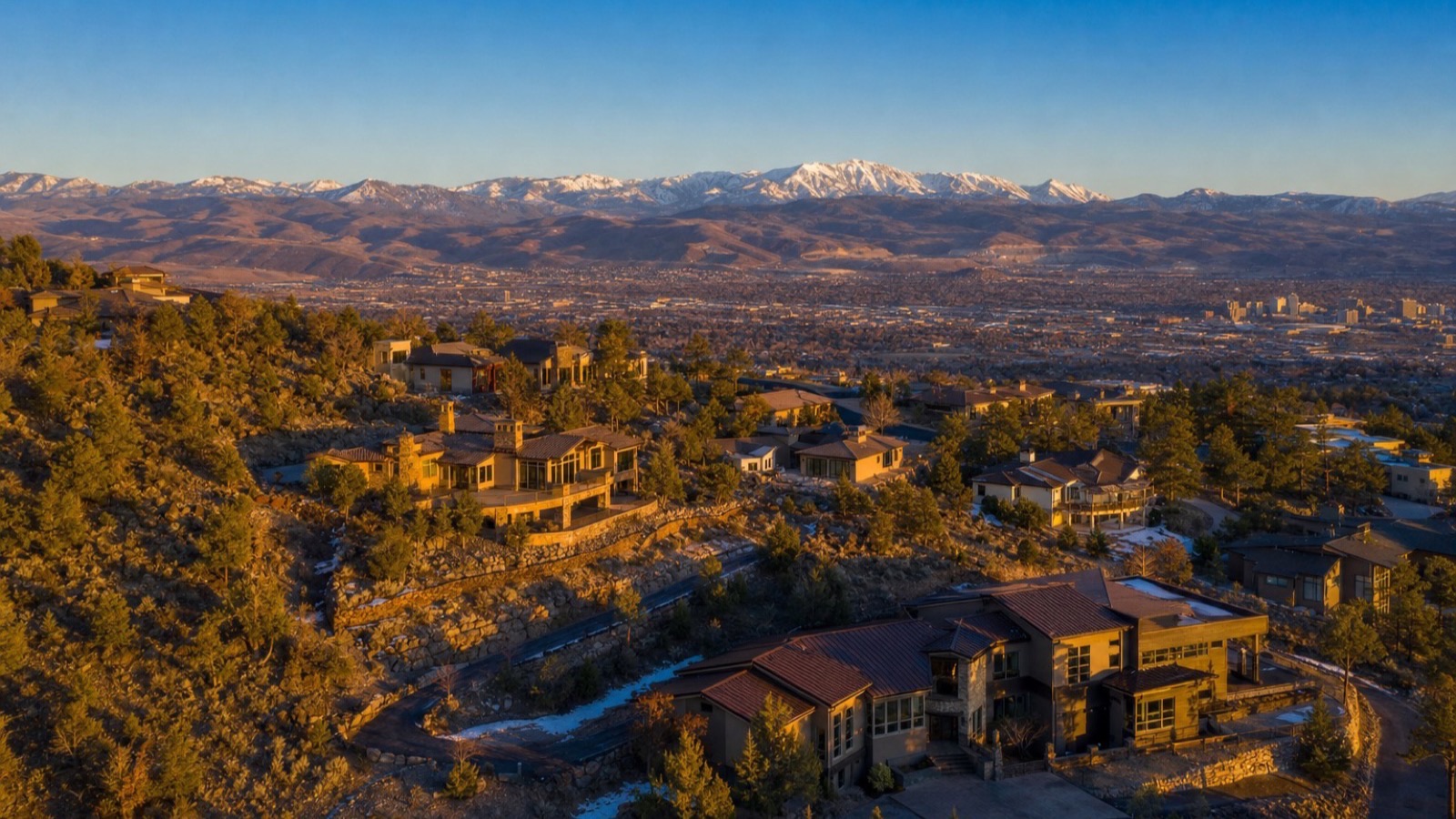
The Keystone Data Center is the case study every Nevada buyer should understand, because it is the only approved facility in the state inside a walkable residential area rather than an industrial park. Centra announced the groundbreaking of its RNO2 project at 265 Keystone Avenue on November 18, 2025, describing it as a carrier-neutral interconnection facility with 4.4 megawatts of critical capacity, and topped out the two-story structure on May 4, 2026. One resident who spoke at the May 14 council meeting told the Review-Journal he lives 100 yards from the site.
The approval history explains the anger. According to the City of Reno's Keystone FAQ, updated July 28, 2026, the conditional use permit application arrived in fall 2024, postcards went to property owners within 750 feet, a second round of notices and a site sign preceded the hearing, and the Planning Commission approved the permit on January 15, 2025 with no appeal filed. The LCB memo adds that in February 2025 the council voted against adding data center rules on water, power and noise. By the time steel went up, many neighbors said they had never heard of the project; the city's answer is that building permits require no public notice, only the earlier permit did.
What neighbors objected to, per KTVN's April 22, 2026 coverage: sound, water use, proximity to the Truckee River, traffic and the density of the surrounding area. The Sierra Club Toiyabe Chapter's engagement coordinator, who lives in northwest Reno, put it as "it's right on the river." Residents also reported construction outside approved hours, which the FAQ concedes: the contractor received approval for early-morning concrete pours on specific May and June dates, staging from 4:00 a.m.
What the city actually required is more than most people assume. The acoustical study found the site's lowest nighttime ambient level at approximately 53 dBA, so equipment noise must be held to approximately 43 dBA at the property line, enforced by a 15-foot acoustically absorptive barrier around all rooftop chillers. Emergency generators may run only during outages and daytime testing, and Code Enforcement has noise-monitoring equipment for once the facility operates. When the developer changed cooling systems during building-permit review, staff required an updated acoustical study and confirmation from the Truckee Meadows Water Authority that water demand would not rise significantly. According to the TMRPA, Keystone's projected water use is about 0.29 acre-feet per megawatt, which the LCB memo converts to roughly 651,000 gallons a year.
What Are Henderson's Rules After the July 21, 2026 Vote?
Henderson took the opposite path, and the difference matters if you are shopping in ZIPs 89011 or 89015. According to KTNV, Mayor Michelle Romero first raised a data center pause publicly on June 2, 2026, the item went on the June 16 agenda, and a proposed 180-day moratorium on new conditional use permit applications was set for a July 21 vote. The staff report, quoted by The Nevada Independent, said that while existing code addresses noise and water use, "additional criteria and deeper analysis are needed to properly evaluate items under current conditions," listing electricity demand, heat, air quality and proximity to residential areas.
On July 21, 2026, after nearly two hours of discussion and public comment from dozens of residents, the council declined to adopt the moratorium. According to News 3 Las Vegas, it instead directed staff to strengthen requirements through an updated development agreement framework, so any future applicant must address water consumption, electrical demand, noise impacts and site-specific issues before a project advances. Mayor Romero's reasoning: "a development agreement proactively gives us the ability to change the codes now and adaptively update them as technology changes."
Where that leaves a Henderson buyer in September 2026: the city has one operating data center, Google's campus that opened in 2019, one conditional use permit approved in November 2025, and, per the city, no other applications pending as of the June review. Any new proposal will be negotiated through a development agreement that comes to the council, which means a public hearing and a public file you can read: a weaker guarantee than Reno's pause, a stronger one than the code offered before April 2026.
The water issue is Henderson-specific. FOX5's July 2026 investigation reported that Google's Henderson facility used more than 404 million gallons in 2024 to cool its servers, water that is not reclaimable because it is converted to mist. The Nevada Independent, citing Review-Journal reporting, put the 2024 figure at 352 million gallons, roughly what 2,700 average households use in a year; the two figures differ in how withdrawal and consumption are counted. The technology is the point. According to the Southern Nevada Water Authority, evaporative cooling takes nearly 10 percent of Southern Nevada's Colorado River allocation, and the SNWA board passed a resolution supporting a moratorium on new evaporative cooling in commercial and industrial buildings, which local jurisdictions have written into code. Google's 2019-era campus is grandfathered; a new Henderson data center would have to use closed-loop or air cooling, and the newer facilities the Independent describes recycle up to 99 percent of their water.
What Are the Rules in Las Vegas, Clark County and North Las Vegas Right Now?
The Las Vegas valley has no moratorium and, as of late August 2026, no adopted data center ordinance. According to The Nevada Independent's August 26, 2026 jurisdiction roundup, the Clark County Commission discussed uniform standards on July 7 but took no formal action, directing staff to research regulations; the City of Las Vegas and the City of North Las Vegas, which have separate land-use authority, had taken no independent action. Approvals still happen the old way: a use permit or design review on a specific parcel, heard by a planning commission and council or, for unincorporated land, by the County Commission sitting as the Zoning Commission.
The June 2026 Switch decision shows how that works. According to FOX5, on Wednesday, June 17, 2026, Clark County commissioners approved Switch's LAS 19 facility, roughly 56,000 square feet east of Edmond Street and north of Warm Springs Road, next to the company's existing Core Campus. Sierra Club representatives and environmental-justice advocates objected over grid strain, utility affordability, water and heat. The county attached conditions: Switch withdrew its landscaping waivers and agreed to fund a sidewalk safety barrier along Warm Springs Road. Commissioner Tick Segerblom called for an ordinance on resource use and two weeks later told the Independent, "We need some type of ordinance. Let's try to get ahead of the game."
For a buyer, three implications follow. First, the southwest valley's data center corridor is the Warm Springs Road industrial strip; homes to the south in Las Vegas subdivisions along Blue Diamond Road are separated by commercial and industrial zoning that has been in place for years. Second, North Las Vegas exposure is concentrated at the Apex Industrial Park, north of the city on I-15, far from Aliante or Tule Springs. Third, if a parcel near you is zoned industrial or commercial, the county can approve a data center on it with a use permit and a hearing, so the parcel's zoning, not the absence of an ordinance, is what to check.
| Jurisdiction | Status | Key date | What it means for a nearby buyer |
|---|---|---|---|
| City of Reno | No new conditional use permit applications accepted | June 1, 2026 through August 31, 2027 | Nothing new gets entitled; four pipeline projects including Keystone proceed |
| City of Sparks | Code changes in drafting; awaiting TMRPA report | Directed September 2025 | Applications still accepted under existing code |
| Washoe County | Awaiting TMRPA regional recommendations | Ongoing in 2026 | No data center cases on the current applications list on September 24, 2026 |
| Storey County (TRIC) | No moratorium; special use permits case by case | PUCN approved 362 MW of temporary gas plants September 18, 2026 | Industrial park; check NDEP air permits, not just county files |
| Henderson | Moratorium rejected; negotiated development agreements required | July 21, 2026 | Every new project comes to council with a public file |
| Clark County | Case-by-case approvals; staff researching an ordinance | July 7, 2026 discussion, no action | Zoning of the parcel is the controlling fact |
| Las Vegas and North Las Vegas | No independent action | As of August 26, 2026 | Existing use permit process applies |
| Lyon County | Workshop held; Monarch approved 3-1 | August 3 and August 7, 2026 | Rural; water basin already over-appropriated |
How Far Does Data Center Noise Carry, and What Limits Actually Apply?
Noise is the impact a neighbor feels first and the one Nevada's permits regulate most concretely. The sources are continuous: rooftop chillers and dry coolers, air handlers, transformers and switchgear, plus intermittent diesel generator testing. According to the Environmental and Energy Study Institute's March 23, 2026 review, cooling and generator noise "can be heard for hundreds of feet around the facilities," some facilities sit within 50 feet of homes, and in rural settings high-velocity fans have been heard miles away. Prince William County, Virginia residents documented levels routinely above 60 decibels; EESI notes that sustained noise above 65 decibels is associated with stress and that industrial diesel generators can reach 105 decibels. An August 2026 review by BGR reported generator load tests audible up to a mile away and a low-frequency hum that carries farther than peak noise, while cautioning that the health evidence is not conclusive.
Nevada's own numbers are more useful than national anecdotes. Reno's Keystone permit sets the working benchmark, 43 dBA at the property line against a 53 dBA nighttime ambient, because the city's goal was no measurable increase over the existing baseline. Henderson's July 2026 development agreement framework lists noise impacts as a required element, and Clark County's Switch approvals sit in an industrial corridor where the ambient level is set by trucks and the I-15, not by chillers.
What a buyer can do with this: ask for the acoustical study. In Reno it is part of the conditional use permit file; in Henderson it will be part of the development agreement record; in Clark County it may be attached to the use permit application. Read the property-line limit and the measurement points, then map the distance from the site boundary to the home. Sound falls off with distance and intervening structures, so 43 dBA at a fence 900 feet away is a very different exposure from an unregulated fan line 200 feet away. Visit the block on a weeknight after 10 p.m. and again on a Saturday morning, when generator tests are typically scheduled, and check who enforces the limit: Reno's Code Enforcement Division owns monitoring equipment, and not every jurisdiction has said the same.
How Much Water Do Nevada Data Centers Use, and Does It Reach Your Neighborhood?
Water is where numbers get thrown around most loosely, so here they are with sources. In Southern Nevada, according to the LCB memo's summary of Review-Journal reporting, Google's Henderson site used approximately 352 million gallons in 2024, Flexential about 20 million, and all Southern Nevada data centers combined more than 716 million gallons that year. FOX5 put Google's figure at more than 404 million gallons. For comparison, the LCB cites an average household at roughly 110,000 gallons a year, and the City of Reno's planning figures put a casino at about 97.8 million gallons, a hospital at 32.6 million and an affordable apartment complex at 7.5 million.
Northern Nevada's approved facilities are far smaller consumers than Google's evaporative-cooled campus. According to the TMRPA, Reno's three recently approved projects average about 0.45 acre-feet of water per megawatt, with Keystone at 0.29, Webb at 0.07 and Oppidan at 1.6; the LCB converts those to about 651,000 gallons a year each for Keystone and Webb and 2.6 million for Oppidan. According to the Truckee Meadows Water Authority, the three data centers under construction in its service area are estimated to use 22 acre-feet of water a year, less than 0.02% of its annual deliveries, and a single-family home typically uses about a third of an acre-foot, so the three together equal the water of roughly 66 homes. (Brian Bonnefant of UNR's Center for Regional Studies told KUNR in May 2026 that the three use the annual water of 24 homes; TMWA's own figures work out closer to 66.) TMWA also notes that the region's largest data centers, in Storey County, are not connected to its municipal system. In the Truckee Meadows Water Authority's service area, according to the LCB, developers must buy water rights on the open market and dedicate them to TMWA plus an additional 11 percent for drought reserve, so a Reno data center does not draw on the existing residential supply; it has to bring its own rights.
The larger question is TRIC and the power plants that feed it, and here the figures are projections. The Desert Research Institute's January 2026 report by Erik Henzl and Sean McKenna modeled the 12 data center projects NV Energy expects to drive 25,590 gigawatt-hours of new load by 2033, most of it in Sierra Pacific's northern territory including TRIC. DRI estimated that after the buildout those facilities could directly consume between 5,021 and 37,343 acre-feet a year for cooling depending on efficiency (9,647 acre-feet in the medium case), and that generating their electricity could indirectly consume another 12,448 acre-feet a year. The authors are explicit that these are estimates built on announced capacity. Statewide, the LCB adds, more than half of Nevada's groundwater basins are already over-appropriated.
For a homeowner, water is therefore a regional policy question more than a per-house one; your tap comes from TMWA or the Las Vegas Valley Water District, and neither has signaled residential supply changes tied to data centers. Where it can touch you directly is a well: if you are buying on a domestic well in Lyon or Storey County near a project that intends to pump groundwater as backup, ask the Nevada Division of Water Resources about the basin's status before you close.
Will a Data Center Raise Your NV Energy Bill?
This is the concern with the biggest numbers and the least settled answer. According to DRI's January 2026 report, S&P Global estimated that Nevada's roughly 40 data centers accounted for about 22 percent (8.6 terawatt-hours) of the state's electricity generation capacity in 2024 and could reach 35 percent by 2030. NV Energy's own resource plan is steeper: 12 data center projects requesting 5,900 megawatts of capacity by 2033, driving 24,633 gigawatt-hours of load growth at Sierra Pacific Power and 957 at Nevada Power. DRI notes that the combined 25,590 gigawatt-hours would be more than half of Nevada's net generation in 2024. That figure is a projection derived from utility requests, not a measurement, and DRI's authors say so; treat any version that drops the caveat as marketing. The Nevada Independent offered a more tangible scale: one approved Reno data center is expected to use as much power annually as 11,000 to 26,000 homes.
Who pays for the wires and generation is decided at the Public Utilities Commission of Nevada, not at city hall, a point the City of Reno's Keystone FAQ makes bluntly: "Power usage is not regulated by the City of Reno." According to the LCB, NV Energy requires data center operators to fully fund their infrastructure and energy generation, the PUCN in 2025 approved a Clean Transition Tariff letting large users negotiate long-term clean energy contracts, and state law excludes co-located data centers from regulation as public utilities. The national data point comes from the National Association of Realtors' September 2026 Data Center Impact Report: residential electricity rates rose 21.4 percent from 2020 to 2024 in counties with 10 or more data centers versus 15.7 percent in counties with none, though NAR notes the increase did not consistently track the number of facilities.
The newest development is at TRIC. On September 18, 2026, the PUCN approved two temporary natural gas generating facilities totaling 362 megawatts (the 144-megawatt South Valley project and the 218-megawatt Peru Ridge project) for Tract Capital's Fleet Data Centers on private land at or near the industrial center, to run an estimated two to three years until permanent NV Energy service arrives, subject to Nevada Division of Environmental Protection air permits and Storey County approvals. For east Sparks and Fernley buyers that is an air-quality question as much as a rate one. For everyone else, watch PUCN dockets for NV Energy's rate cases, because that is where the split between large customers and households is actually set.
Who Grants the Tax Abatements, and Does Your County See the Money?
Tax abatements are the part of the story cities cannot control, which frustrates councils and confuses buyers who assume the county cut the deal. According to the Governor's Office of Economic Development's program sheet, updated August 2025, a data center approved under NRS 360.754 can receive a 75 percent abatement of personal property tax for 10 or 20 years and a sales and use tax rate reduced to 2 percent for the same term, the latter requiring a two-thirds vote of the GOED board. A 10-year abatement requires 10 full-time Nevada-resident employees, wages at 100 percent of the statewide average ($31.57 an hour for fiscal 2026) and $25 million of capital investment within five years; the 20-year tier requires 50 employees and $100 million.
Those decisions are made in Carson City by the GOED board. According to the TMRPA, seven data centers in the greater Reno-Sparks region including Storey County have qualified for state abatements since 2016, and the LCB memo notes that the 2027 Legislature is separately evaluating the incentive statutes, one reason Reno wanted its pause to run past the session.
The buyer-relevant point is what abatements do and do not touch. The personal property abatement applies to the servers and equipment inside the building; the land and structure still pay ordinary property tax to the county, the school district and any special districts. What an abatement does not do is fund the road, the substation or the noise wall next to your subdivision; those come from the conditions the local jurisdiction negotiates, or they do not come at all. Henderson's shift to development agreements in July 2026 is, in part, an attempt to capture community benefits the state abatement structure leaves on the table.
The jobs case is real but smaller than the construction phase suggests. According to the LCB memo's summary of Brookings research, data center construction can create 1,000 to 10,000 one-time construction jobs but only 50 to 400 permanent operations roles; a 2017 U.S. Chamber of Commerce study put a typical large project at about 1,700 construction workers and roughly 150 permanent employees. That is why I no longer frame this as a housing-demand story: a 150-person workforce does not move a ZIP code's prices, and whatever effect a data center has on the homes around it comes from the building, not its payroll.
What Does the Research Say About Data Centers and Nearby Home Values?
Less than either side claims, and nothing specific to Nevada. The most current national evidence is the National Association of Realtors' 2026 Data Center Impact Report, published September 9, 2026, which surveyed agents and analyzed county-level data across more than 3,200 counties. According to NAR, 25 percent of agents reported a positive effect on nearby residential values, 22 percent a negative effect, and roughly a third were unsure. Chief economist Lawrence Yun's summary: "There is no single data center effect. Instead, the story varies significantly depending on the local market." NAR also cited a Realtor.com projection that more than 2 percent of U.S. home sales will occur within five miles of a large active data center by the end of 2027, double the 2018 share.
The one rigorous regional study points the opposite direction from the anecdotes. According to George Mason University's Center for Regional Analysis, whose report "Data Centers and 2023 Home Sales in Northern Virginia" was published November 10, 2025, homes closer to data centers sold for more, not less, after controlling for other price factors, across single-family homes, townhouses and condos. Co-author Keith Waters cautioned that the result is at least partly explained by amenities, and that many data centers sit in places most people are not aware of. The study shows a data-center-heavy submarket did not depress prices in the most mature data center market in the country; it does not show what happens to the specific house 200 feet from the fence line.
What the literature cannot tell you is the individual-adjacency effect, which is precisely what a buyer of a house within a few hundred feet of a site cares about. Neither study measured Nevada, and no Nevada university or agency has published a study of Keystone, Switch or Google's neighbors; Keystone is not yet operating, so the data does not exist. Be suspicious of any Nevada agent, including me, who tells you a percentage. The defensible statements are narrow: data-center-heavy counties have not shown weaker housing markets in the national data; some agents in some markets see a discount on immediately adjacent homes; noise, lighting and generator testing are the complaints that produce that discount where it appears; and mitigation conditions separate a bad neighbor from an invisible one.
What Do Our Own MLS Numbers Show Near Nevada's Data Center Clusters?
Since no study exists, we pulled our own numbers: MLS data pulled through Repliers on September 24, 2026 for the 12 months ending that day and the prior 12 months, comparing the ZIP codes closest to each cluster with their parent city. These are our figures, not official Las Vegas REALTORS or Northern Nevada Regional MLS statistics, and a ZIP median cannot isolate a single block; read them as a check on whether a data center has visibly dented an entire submarket, which is the claim you will hear most often.
| Area | Closings, 12 months ending September 24, 2026 | Median sale price | Median, prior 12 months | Change | Median days on market |
|---|---|---|---|---|---|
| Reno, city-wide | 3,973 | $575,539 | $539,816 | +6.6% | 60 |
| Reno 89503 (Keystone Avenue corridor) | 316 | $481,000 | $465,000 | +3.4% | 52 |
| Sparks, city-wide | 1,617 | $530,000 | $527,500 | +0.5% | 56 |
| Sparks 89434 (east Sparks, nearest TRIC) | 306 | $462,750 | $455,000 | +1.7% | 45 |
| Sparks 89436 (Spanish Springs) | 830 | $568,645 | $555,000 | +2.5% | 62 |
| Fernley 89408 (Victory Logistics District) | 416 | $409,000 | $390,000 | +4.9% | 56 |
| Henderson, city-wide | 5,661 | $489,402 | $490,902 | -0.3% | 33 |
| Henderson 89011 (Google campus, Cadence) | 1,258 | $478,950 | $494,995 | -3.2% | 40 |
| Henderson 89015 (east Henderson) | 658 | $399,990 | $400,000 | 0.0% | 32 |
Three things stand out, and none of them is a data center effect. Northwest Reno's 89503, where Keystone went vertical, gained 3.4 percent year over year on 316 closings, trailing the city's 6.6 percent but on an older housing stock that has lagged Reno's south and west for years; its 52-day median was faster than the city's 60. East Sparks 89434, the closest residential ZIP to TRIC, rose 1.7 percent against the city's 0.5 percent and sold fastest of any northern area at 45 days. Fernley, where the Victory Logistics District is planned, was the strongest northern gainer at 4.9 percent. In Henderson, 89011 slipped 3.2 percent while the city was flat, but 89011 is where Cadence's new-build inventory concentrates, and builder pricing moves that ZIP's median far more than a data center that has operated since 2019. If Google's campus were depressing its neighbors, 89015 next door would show it, and it was unchanged at a $399,990 median.
What the table does not show is the house 300 feet from a chiller line. Our Las Vegas home prices coverage makes the same point about master plans: ZIP medians are a blunt tool. For an adjacent property, the only honest method is a comparable-sales analysis of the immediate street before and after construction began, and for Keystone that comparison cannot be made until the facility has operated through at least one summer.
How Do You Check a Parcel's Distance to a Planned or Permitted Data Center?
This is the section to bookmark. Every Nevada jurisdiction keeps its land-use applications in a public system, and a data center of any size needs a conditional or special use permit, a design review or a development agreement, all of which generate a searchable record before construction starts. The steps are the same everywhere: get the assessor's parcel number, identify which jurisdiction has land-use authority (city limits versus unincorporated county, which the assessor's map shows), then search that portal for pending and approved cases on the industrial or commercial parcels within about a mile. Then check two state systems cities do not control: PUCN dockets for power and NDEP for air permits.
| Jurisdiction | Where to search | What to look for |
|---|---|---|
| City of Reno | Accela Citizen Access (Reno) by record number, parcel number or address; the city's Keystone FAQ and Data Center Fact Sheet | Conditional use permit records; hearing notices go only to owners within 750 feet |
| City of Sparks | Accela Citizen Access (Sparks), used for all planning applications since October 16, 2025 | Special use permits and site plan reviews on industrial parcels |
| Washoe County | Community Services Department current applications list, organized by case number, commission district and hearing date | Any case with a TBD hearing date on an industrial parcel |
| Storey County | Planning Department, 26 S. B Street, Virginia City, (775) 847-1144; Planning Commission then Board of County Commissioners | Special use permits at TRIC; NDEP air permit applications for on-site generation |
| Clark County | Accela Citizen Access (Clark County); Document Image Search (pre-review, pre-meeting, applications, research portals); OpenWeb GIS map; zoning counter (702) 455-4314 | Use permits and design reviews along Warm Springs Road and near Apex |
| City of Henderson | Public Hearing Notices page; EnerGov Citizen Access portal for approved entitlements; interactive zoning map; (702) 267-1500 | Development agreements, which come to council with a public file |
| City of Las Vegas | Search Development Records (land-use case files); Zoning Interactive Map; Upcoming Agenda Items; Planning and Zoning (702) 229-6301 | Site development plan reviews and special use permits |
| City of North Las Vegas | Pending Planning Commission Applications page; Current Planning division | Conditional use permits near Apex and the I-15 corridor |
A few practical notes from running these searches. Reno's Accela portal needs a record number, parcel number or address, so search the neighboring industrial parcels by address, not the home you are buying. Washoe County's current-applications list had no data center cases on it when I checked on September 24, 2026, but it changes weekly. Clark County's Document Image Search is the most complete public system in the state; its pre-meeting portal shows cases still being processed, exactly the stage a buyer wants to catch. In every jurisdiction, the planning counter will tell you by phone whether anything is pending on a parcel; that call takes five minutes and is worth making before writing an offer within a half-mile of industrial zoning. Ask the seller in writing, too, and the HOA board, since Nevada HOA rules give boards notice of nearby applications that owners often miss.
Should You Buy, Sell or Wait If a Data Center Is Planned Near a Home You Want?
My framework, after a summer of these conversations, sorts by distance and permit status rather than by headline. Inside roughly 1,000 feet of a site boundary, treat a data center like any industrial neighbor: read the acoustical study, confirm the property-line limit and the generator testing schedule, price the home against comparables that already border industrial zoning rather than the interior of the subdivision, and negotiate. That is where the documented complaints (noise, lighting, construction hours) concentrate, and where NAR's agents who report a discount are seeing one. Between 1,000 feet and about a mile, the risks are generator test noise on still mornings and construction traffic during the build; in the 12 months ending September 2026 our northern-Nevada ZIP data shows no submarket-wide effect at that range. Beyond a mile, the effect is the regional one everybody shares: rates, water policy and air permits, none of which depend on your address.
Permit status matters as much as distance. A permitted project with conditions (Keystone) is a known quantity; you can read exactly what it may and may not do. A pending application is the moment of maximum leverage, because you can comment, and in Henderson or Clark County the hearing is where conditions get added. A parcel that is merely zoned industrial with no application is a possibility, not a plan; do not pay a discount for it as a buyer, and do not accept one as a seller. Reno inside city limits is the unusual case where, through August 31, 2027, nothing new can be entitled, which is a real, dated protection for buyers there.
Sellers near an approved site should get ahead of the question: disclose what you know in writing, attach the permit conditions, and if the facility operates, get a nighttime decibel reading at your property line from a qualified acoustical consultant, because a documented reading ends the conversation in a way a reassurance never will. Buyers relocating from out of state can pair the moving to Las Vegas guide and our moving to Reno page with this article, and anyone weighing Summerlin villages against Henderson or Reno can add the Cliffs, Kestrel and Redpoint comparison, where industrial adjacency is not a factor. For the northern precedent, the Tesla Gigafactory's effect on nearby real estate is the closest analogue TRIC offers, and it argues for patience over panic.
Frequently Asked Questions
Is Reno's data center moratorium still in effect in September 2026?
Yes. The Reno City Council voted 6-1 on May 14, 2026 for an initial 30-day pause and 6-1 again on June 1, 2026 to extend it through August 31, 2027, or until adequate regulations are adopted. According to the City of Reno, no conditional use permit applications for data centers will be accepted during that window, and the pause cannot be lifted early unless new rules are in effect and officials find that ending it would not harm public health, safety or welfare. Already-permitted projects, including Keystone, are unaffected and continue construction.
Does Henderson have a data center moratorium?
No. Henderson considered a 180-day moratorium in June 2026, but on July 21, 2026 the council declined to adopt it, directing staff instead to build a development agreement framework requiring future applicants to address water consumption, electrical demand, noise impacts and site-specific issues. According to the city, Google's campus at 560 W. Warm Springs Road is its only operating data center, one conditional use permit was approved in November 2025, and no other applications were pending as of June. Any new proposal comes to the council as a negotiated agreement with a public file.
How loud is a data center, and what noise limit applies in Nevada?
It depends on the permit. Nationally, EESI documents facilities audible hundreds of feet away, generator testing that BGR reports can carry up to a mile, and Prince William County readings above 60 decibels at homes. Nevada's most specific standard is Reno's Keystone permit: equipment noise held to approximately 43 dBA at the property line against a 53 dBA nighttime ambient, a 15-foot absorptive barrier around rooftop chillers, daytime-only generator testing and city Code Enforcement monitoring. Ask for the acoustical study in the permit file and measure distance from the site boundary, not the building.
Do data centers lower home values?
The research does not support a blanket answer. NAR's September 2026 Data Center Impact Report found 25 percent of agents reporting a positive effect on nearby values, 22 percent negative and a third unsure; chief economist Lawrence Yun concluded there is "no single data center effect." George Mason University's November 2025 study of 2023 Northern Virginia sales found homes closer to data centers sold for more, though the authors credit amenities in part. No Nevada study exists, and our MLS pull on September 24, 2026 shows no ZIP-level discount near Keystone, TRIC or Google's campus.
How much water does a Nevada data center use?
It ranges by three orders of magnitude depending on cooling technology. According to the LCB's summary of Review-Journal reporting, Google's evaporative-cooled Henderson campus used about 352 million gallons in 2024 (FOX5 reported more than 404 million), while Reno's Keystone and Webb projects are expected to use about 651,000 gallons a year each. In the TMWA service area, developers must dedicate their own water rights plus 11 percent for drought reserve, and new Southern Nevada commercial buildings cannot use evaporative cooling under the SNWA-backed moratorium, so a new data center there must use closed-loop or air cooling.
Will data centers raise my NV Energy bill?
Rates are set by the Public Utilities Commission of Nevada, not by cities, and according to the LCB, NV Energy requires data centers to fund their own infrastructure and generation. Whether that fully insulates households is disputed: NAR found residential rates rose 21.4 percent from 2020 to 2024 in counties with 10 or more data centers versus 15.7 percent in counties with none. DRI's projection that 12 announced projects could add load exceeding half of Nevada's 2024 net generation is a scenario built on utility requests, not a forecast of your bill.
How do I find out if a data center is planned near a house I want to buy?
Get the parcel number, confirm whether the home is inside city limits or in unincorporated county, then search that jurisdiction's land-use portal for cases on the industrial parcels within a mile: Accela Citizen Access in Reno, Sparks and Clark County, Washoe County's current applications list, Henderson's public hearing notices and EnerGov portal, Las Vegas's Search Development Records tool, and North Las Vegas's pending Planning Commission applications page. Call the planning counter to confirm nothing is pending, then check PUCN dockets and NDEP air permits. Ask the seller and the HOA in writing.
Should You Tour Homes Near a Nevada Data Center With Nevada Real Estate Group?
If a listing you love sits within a mile of one of these sites, do not decide from a headline in either direction. A home next to an industrial use is a problem mainly when nobody researched the site before pricing it. This guide draws on the Keystone permit file, the TMRPA engagement materials and the PUCN's September 18, 2026 order on the TRIC gas plants, and the same public files exist for the Warm Springs corridor and the Cadence and 89015 submarkets. We will pull the parcel's planning history, request the acoustical study, run a street-level comparable analysis rather than a ZIP median, and, if warranted, walk the block with you after 10 p.m.
Sellers near an approved site should assemble the disclosure package early and, where a facility is operating, consider a property-line sound reading so the number is in the file before the first showing. For buyers relocating from California, Arizona or the Pacific Northwest, we fold this into the same market report and neighborhood work we do for every purchase, from Reno 89503 and Sparks to Henderson and Fernley. Nevada Real Estate Group is brokered by LPT Realty, license S.181401, and we close in every county named in this article. Call (702) 637-1759 in Southern Nevada or (775) 277-2120 in Northern Nevada, or email info@nevadagroup.com, and tell us the address. We will tell you what is filed on the parcels around it before you write.
Nevada Real Estate Group · 8945 W Russell Rd, Suite 170 · Las Vegas, NV 89148 · (702) 637-1759 · NV License S.181401
Which Sources Inform This Nevada Data Center Guide?
Statewide counts, water comparisons, TMWA rules and workforce context: the Legislative Counsel Bureau's May 12, 2026 memo. Reno's moratorium: the City of Reno's initiatives page, the Nevada Independent, KRNV, KOLO and the Review-Journal via Government Technology. Keystone: the City of Reno's Keystone FAQ, KTVN, Centra's groundbreaking announcement and Baxtel.
Henderson: KTNV, News 3 Las Vegas and the Nevada Independent's June and July reports. Clark County: FOX5's June 17, 2026 report, the Nevada Independent's July 1 preview and its August 26, 2026 jurisdiction tracker. Water and power: FOX5 Investigates, the Desert Research Institute's January 2026 report, the Truckee Meadows Regional Planning Agency, Truckee Meadows Water Authority's data-center water page, KUNR, the Southern Nevada Water Authority and ConstructConnect on the PUCN's September 18, 2026 order.
Abatements: the GOED program sheet and NRS 360.754. Home values: the National Association of Realtors and George Mason University. Noise: the Environmental and Energy Study Institute and BGR. Lyon County's Monarch approval: the Nevada Independent. Planning portals: Clark County Comprehensive Planning, City of Las Vegas Planning and Zoning, Washoe County current applications, Storey County Planning, Henderson public hearing notices and North Las Vegas pending applications. Closing and pricing figures are MLS data pulled through Repliers on September 24, 2026, not official Las Vegas REALTORS or NNRMLS statistics. Final guidance on any purchase should come from a licensed Nevada Realtor and, where warranted, an acoustical consultant and Nevada counsel.