

Published April 30, 2026 · Last updated September 4, 2026 · By Chris Nevada
Tesla's Gigafactory Nevada, located in Storey County east of Reno, has received more than $3.5 billion in additional investment since 2023, expanding its workforce to approximately 11,000 employees. The factory is one of the largest buildings in the world and produces battery cells, energy storage products, and the Tesla Semi. That expansion has driven housing demand across the Reno-Sparks metro, and the ripple effects reach Las Vegas, where the supplier network and the broader EV ecosystem are adding jobs at Apex Industrial Park. According to Freddie Mac, the 30-year fixed averaged 6.71% for the week of September 3, 2026, which is the number every Gigafactory household is qualifying against this fall.
Tesla's Gigafactory Nevada employs roughly 11,000 workers and has added $3.5 billion in new investment since 2023, making it the largest single housing-demand driver in Northern Nevada. Production wages of $48,000 to $58,000 buy a $152,000 to $187,000 home at today's 6.71% rate, so most Gigafactory households rent first or buy on two incomes. Engineers and managers reach $373,000 to $551,000. Buy near the commute, not the factory.
- Tesla added $3.5 billion to the original $5 billion Gigafactory for battery cells and the Semi.
- At 6.71% a single production wage buys $152,000 to $187,000; two incomes reach about $358,000.
- Engineers ($90,000 to $130,000) reach $301,000 to $444,000 on a single income at today's rate.
- Nevada's incentive package for Tesla totaled roughly $1.3 billion in tax abatements and credits.
- Tesla's supplier network feeds Apex Industrial Park, where North Las Vegas homes sell in 20 days.
What Should Readers Know First?
- Tesla's Gigafactory Nevada employs approximately 11,000 workers, with $3.5 billion in additional investment since 2023 per Tesla and Nevada GOED announcements.
- Gigafactory wages range from roughly $48,000 for production associates to $130,000-plus for engineers per Bureau of Labor Statistics occupational data, creating demand across two distinct price bands.
- According to Freddie Mac, the 30-year fixed averaged 6.71% on September 3, 2026, up from 6.50% a year earlier, which caps what a single Gigafactory income can buy.
- The factory's supplier network has attracted dozens of companies to Northern Nevada and feeds North Las Vegas's Apex Industrial Park, multiplying the employment impact statewide.
- Nevada's tax incentive package for Tesla totaled approximately $1.3 billion per the Nevada Department of Taxation and GOED, and the economic return has far exceeded that investment.
For related insights, see our coverage of the Four Seasons Henderson luxury high-rise, Nevada growth and real estate, and the top 10 high-rises on the Las Vegas Strip. Northern Nevada buyers should start with our Reno relocation guide.
How Big Is Tesla's Investment in Nevada?
When Tesla announced the Gigafactory in 2014, it was the largest economic development deal in Nevada history. A decade later, the investment has grown far beyond initial projections. The original $5 billion facility has been supplemented with an additional $3.5 billion for battery cell production and the Tesla Semi assembly line, per the company's January 2023 announcement with Nevada GOED.
The numbers are staggering:
- 11,000-plus current employees
- 5.4 million square feet of operational floor space
- Plans for an additional 4 million square feet
- Annual economic impact estimated at $5.5 billion to the Nevada economy
For the real estate market, this means sustained housing demand across Northern Nevada and ripple effects that extend throughout the state.
How Has the Gigafactory Affected Reno-Area Home Prices?
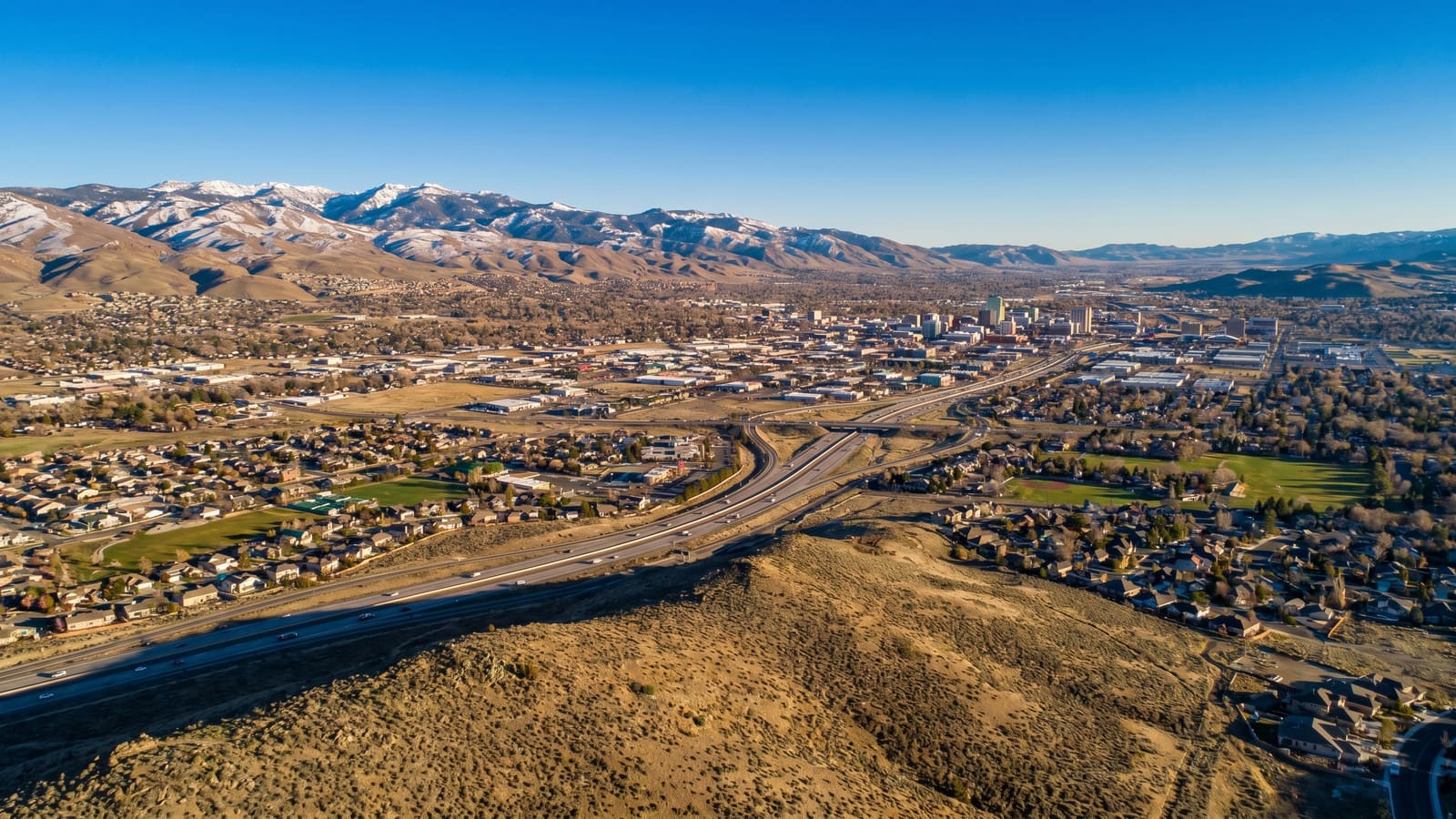
When this post was first published in the spring, the Washoe County median sat near $520,000 with Sparks and Fernley posting the strongest appreciation in the region. The direction has not changed. Across the closings we've represented in Northern Nevada, the communities closest to the Gigafactory commute, Sparks, Spanish Springs, and Fernley, continue to draw the most Gigafactory households, and Fernley in particular has transformed from a small bedroom community into a fast-growing town with new master-planned developments, retail, and services driven primarily by Gigafactory demand.
| Community | Commute to Gigafactory | Product mix | Typical Gigafactory buyer |
|---|---|---|---|
| Sparks (east) | 15 minutes | 1990s to 2020s resale, entry level and move-up | Production associates, technicians |
| Spanish Springs | 20 minutes | Master plan, new construction phases | Technicians, dual-income households |
| Fernley | 20 minutes | New master plans, lowest price point in the region | Production associates, first-time buyers |
| Reno (east) | 25 minutes | Established neighborhoods, condos | Technicians, engineers |
| South Reno (Damonte Ranch, Double Diamond) | 35 minutes | Newer master plans, premium tier | Engineers, managers |
| Carson City | 50 minutes | Capital-city resale, Redwood Materials commute | Supplier-network employees |
The pattern is the same one we see around every major Nevada employer: the closest affordable communities absorb the production workforce, and the premium master plans 30 minutes out absorb the engineers and managers. Browse Reno homes for sale and the Northern Nevada communities hub for current inventory.
What Does This Mean for Las Vegas Real Estate?
While the Gigafactory is 450 miles from Las Vegas, the ripple effects are meaningful and measurable.
Supplier network. Tesla's supply chain includes dozens of companies that have established operations in both Northern and Southern Nevada. Battery material suppliers, logistics companies, and component manufacturers have set up facilities in North Las Vegas's Apex Industrial Park and Henderson's business districts. According to our analysis of Las Vegas REALTORS MLS data via Repliers for the 90 days ending September 4, 2026, North Las Vegas closed 496 homes at a $415,000 median in a 20-day median time on market, the fastest city in the valley, and its new builds sold in 12 days.
State-level economic confidence. Tesla's commitment to Nevada reinforces the state's reputation as business-friendly, attracting additional corporate investment that benefits Las Vegas directly.
Worker migration patterns. Some Gigafactory workers who started in Reno have transferred to supplier roles in Las Vegas, and vice versa. Nevada's zero state income tax per the Nevada Department of Taxation makes the state attractive for high-skilled manufacturing workers regardless of which metro they choose.
EV ecosystem growth. The Gigafactory has catalyzed a broader electric vehicle and clean energy ecosystem in Nevada. Companies like Panasonic, Redwood Materials, and various EV component manufacturers have established Nevada operations, creating a technology corridor that spans the state.
For Las Vegas homebuyers working in the EV or clean energy sector, communities in Henderson and the northwest valley offer strong options; see our communities hub.
What Are Gigafactory Workers Earning and Where Can They Buy?
The wage spectrum at the Gigafactory creates demand across the entire housing market, but the 6.71% rate environment per Freddie Mac sets a hard ceiling on what each income can buy. The table below uses Bureau of Labor Statistics wage bands, a 28% front-end housing ratio, 5% down, the September 3, 2026 rate, a 0.5% effective property tax rate, and $125 per month for insurance:
| Role | Annual salary band | Monthly housing budget (28%) | Max price, single income | Max price, two incomes at band midpoint | Preferred communities |
|---|---|---|---|---|---|
| Production associate | $48,000 to $58,000 | $1,120 to $1,353 | $152,000 to $187,000 | $358,000 | Fernley, East Sparks |
| Technician | $60,000 to $75,000 | $1,400 to $1,750 | $195,000 to $248,000 | $462,000 | Sparks, Spanish Springs, Sun Valley |
| Engineer | $90,000 to $130,000 | $2,100 to $3,033 | $301,000 to $444,000 | $764,000 | South Reno, Damonte Ranch |
| Manager | $110,000 to $160,000 | $2,567 to $3,733 | $373,000 to $551,000 | Above $900,000 | Caughlin Ranch, Somersett |
| Executive | $150,000 to $250,000-plus | $3,500 to $5,833 | $515,000 to $871,000 | Above $1,000,000 | ArrowCreek, Montreux |
The honest read: a single production wage does not buy a Reno-area home at today's rate, which is why production households rent in Sparks and Fernley first and buy on two incomes later. Engineers and managers are buying in premium Reno communities that rival the quality of Summerlin and Henderson. That split is the single most important thing to understand about Gigafactory housing demand: it is two markets, an entry-level rental and starter market east of Sparks and a move-up market in South Reno, not one.
How Has the Supplier Network Expanded Nevada's Economy?
Tesla did not just bring one factory. It brought an ecosystem. Key suppliers and related companies that have established Nevada operations include:
- Panasonic Energy: Battery cell manufacturing partner at the Gigafactory, employing several thousand workers on site
- Redwood Materials: Battery recycling company founded by former Tesla CTO JB Straubel, based in Carson City
- AESC: Battery manufacturer that has announced a multi-billion-dollar Nevada facility
- Tier-2 and tier-3 suppliers: Dozens of smaller companies providing components, materials, and services
This clustering effect means the employment impact far exceeds Tesla's direct headcount. Total EV ecosystem employment in Nevada is estimated at 25,000 to 30,000 workers, all of whom need housing.
What Tax Incentives Did Nevada Provide Tesla?
Nevada's incentive package for Tesla totaled approximately $1.3 billion in tax abatements and credits. Critics initially questioned whether the deal was worth it, but the economic returns have been decisive:
- More than $8.5 billion in total Tesla investment, far exceeding projections
- 11,000 direct jobs with above-average wages
- An estimated $5.5 billion in annual economic impact
- Property tax revenue from the factory itself and surrounding development
- An elevated profile for Nevada as a tech-friendly state, attracting subsequent investments
According to the Nevada Department of Taxation and the Governor's Office of Economic Development, the Tesla deal has been cited as a model for future economic development negotiations. For the housing market, the lesson is clear: major employer recruitment directly drives residential real estate demand and appreciation.
How Is the Reno Housing Market Different From Las Vegas?
Tesla's presence has made the Reno-Sparks market notably different from Las Vegas:
- Tighter supply: Washoe County has less developable land than Clark County, constraining new construction
- Higher per-square-foot costs: Reno homes trade at a premium per square foot to the Las Vegas city median of $252, according to our analysis of Las Vegas REALTORS MLS data via Repliers
- Seasonal patterns: Reno's market has stronger seasonal swings because of weather and the ski and outdoor recreation calendar
- Tech worker concentration: A higher percentage of tech and manufacturing workers compared to Las Vegas's hospitality-heavy economy
The Las Vegas side of the comparison is easier to quantify. According to Las Vegas REALTORS, the Southern Nevada single-family median hit a record $490,000 in May and June 2026 before easing to $480,000 in July, 1% below July 2025, on 2,508 sales versus 2,251 a year earlier and roughly four months of supply. Condos and townhomes sit at a $290,000 median.
| Measure | Las Vegas (city) | North Las Vegas | Henderson | Summerlin West 89138 |
|---|---|---|---|---|
| Active listings | 8,605 | 1,021 | 2,453 | 354 |
| 90-day closings | 3,025 | 496 | 968 | 123 |
| Median sold price | $437,111 | $415,000 | $489,890 | $750,000 |
| Median days on market | 28 | 20 | 34 | 38 |
| Sold price per square foot | $252 | $232 | $258 | $332 |
| New-build median sold (2025+) | $569,150 | $482,905 | $507,995 | Included in Las Vegas |
For buyers considering either market, I serve both the Las Vegas and Reno areas. Visit Nevada Real Estate Group for listings in both metros, or use our moving to Las Vegas guide and Reno relocation guide to compare.
What Is Next for Tesla in Nevada?
Tesla has signaled continued expansion in Nevada. Additional Gigafactory phases, the Semi production ramp-up, and potential new product lines could push employment above 15,000 within two to three years. The company has also acquired additional land in Storey County for future development.
For real estate investors and homebuyers, the message is clear: Tesla's commitment to Nevada is long-term and growing. Communities within reasonable commuting distance of the Gigafactory will continue to see demand-driven appreciation.
Should You Buy Near the Gigafactory?
For buyers considering the Reno-Sparks area, proximity to the Gigafactory is a legitimate factor in home appreciation. Communities like Sparks, Spanish Springs, and Fernley have strong fundamentals driven by Gigafactory employment. The key considerations are:
- Commute time (the factory sits in a relatively remote location in Storey County along I-80)
- Community amenities and schools
- Long-term appreciation potential versus current pricing
- Rental demand from Gigafactory workers if purchasing as an investment
| Metric | 2020 | 2023 | 2026 (estimate) |
|---|---|---|---|
| Direct Nevada employees | 7,000 | 9,500 | 11,000-plus |
| Cumulative Tesla investment | About $5 billion | $5 billion plus $3.5 billion announced | More than $8.5 billion |
| Operational floor space | Under 5 million sq ft | 5.4 million sq ft | 5.4 million sq ft plus 4 million planned |
| Entry production wage band | About $48,000 | About $54,000 | $48,000 to $58,000 |
| 30-year fixed rate (Freddie Mac) | Under 3% | Above 7% at the peak | 6.71% (September 3, 2026) |
The rate row is the one that changed the buyer math. In 2020 a production associate could finance a starter home in Fernley on one income. At 6.71% that same household needs two incomes or a builder rate buydown, which is why the new-construction phases in Spanish Springs and Fernley are leaning so hard on incentives this fall.
What Changed Between Spring and September 2026 for Gigafactory Buyers?
When this post was first published in April, the Gigafactory story was mostly an employment story: 11,000 workers, $3.5 billion in new investment, and a Reno-Sparks market that had appreciated faster than almost any metro in the West since 2020. Five months later the employment story is unchanged and the financing story has gotten harder.
According to Freddie Mac, the 30-year fixed averaged 6.71% for the week of September 3, 2026, up from 6.50% a year earlier. That is not a dramatic move, but it lands on a workforce whose median wage sits in the $50,000 to $75,000 band, and at that income the difference between 6.5% and 6.71% is real money every month. In my experience the production households we work with in Sparks and Fernley have responded in two ways: more of them are buying on two incomes with a builder rate buydown, and more of them are renting for a second year while they build a down payment.
The Las Vegas side of the ledger moved in the other direction. According to Las Vegas REALTORS, the Southern Nevada median set a $490,000 record in June before easing to $480,000 in July, and supply rose to roughly four months, which restored some negotiating room for buyers valley-wide. But the submarket where Tesla's supplier network actually lands, North Las Vegas around Apex Industrial Park, did not loosen at all: 20 days on market and sellers getting essentially full asking price per square foot, according to our analysis of Las Vegas REALTORS MLS data via Repliers. Employment-anchored submarkets are holding while the broader metro softens, in both halves of the state. That is the Gigafactory lesson applied statewide.
What Should Buyers and Sellers Understand About the Wider 2026 Nevada Picture?
Anchor every Gigafactory read against the wider context both metros are operating in. According to Las Vegas REALTORS, 2,508 existing homes closed in Southern Nevada in July 2026 at a $480,000 single-family median with roughly four months of supply. That single-line summary obscures a real dispersion: North Las Vegas inventory under $450,000 is clearing in 20 days, while luxury inventory above $1 million in Las Vegas takes 28 days and closes at a $1,402,500 median. Buyers shopping at $415,000 are competing against pressure that buyers shopping at $1.4 million are not, and the carrying-cost calculus runs differently across the two bands.
Why Does Nevada Operate Differently Than Coastal California?
The structural answer is the absence of a state income tax, the presence of major employers (the Strip in the south, the Gigafactory and its suppliers in the north) as an employment floor, and the trailing 24 months of net inbound migration from California. According to the U.S. Census Bureau American Community Survey, the Las Vegas-Henderson-Paradise MSA absorbed roughly 45,000 net California-origin residents over the trailing 24 months, with roughly 38% landing in the Summerlin master plan, 31% across Henderson submarkets, and the remaining 31% spread across Las Vegas Southwest, the North Valley growth corridor, Mountain's Edge, and Centennial Hills. Reno-Sparks draws its own California stream from the Bay Area and Sacramento, and the Gigafactory is the anchor employer that stream points at.
How Does the September 2026 Mortgage Rate Environment Reshape the Decision?
According to the Freddie Mac Primary Mortgage Market Survey, the 30-year fixed averaged 6.71% for the week of September 3, 2026, up from 6.66% the prior week and 6.50% a year earlier. The carrying-cost math at 6.71% on a $500,000 mortgage is about $3,230 in principal and interest per month, before property taxes (roughly $250 to $350 per month at the typical 0.5% effective rate), HOA (roughly $80 to $300 per month in most master plans), and homeowner's insurance (roughly $150 to $250 per month). A buyer modeling $4,000 per month in total carrying cost is realistic at a $500,000 purchase price with 10% to 15% down, in either metro.
How Do Builder Incentive Cycles Affect the 2026 Decision Math?
Builders across both metros (Toll Brothers, Lennar, Tri Pointe, Richmond American, KB Home, D.R. Horton, Pulte) run quarterly incentive cycles worth $15,000 to $40,000 per home: rate buydowns, closing cost credits of $10,000 to $25,000, design center allowances of $10,000 to $30,000, and lot premium waivers on select inventory homes. For a dual-income production household in Fernley or Spanish Springs, a 2-1 buydown is often the difference between qualifying and not qualifying. See our new construction guide for how to stack them.
How Can Nevada Real Estate Group Help Gigafactory Households?
Every framework in this article is calibrated against real Nevada transaction data, not a national-average abstraction. Nevada Real Estate Group is the #1 real estate team in Nevada and #44 in the nation, with 9,600+ closings, $4.85 billion+ in total sales volume, 150+ agents, and 9,061+ verified five-star reviews, with the 2025 single year contributing 789 closings and $440 million+ in production. Across the 9,600+ closings we've represented, the buyers and sellers who navigate the state most successfully are the ones who pair a framework like this one with a live consultation early, before the offer is written, before the listing is priced, and before the builder reservation is signed.
Northern Nevada buyers and sellers can reach the team at (775) 277-2120. Southern Nevada buyers and sellers can call (702) 637-1759 or contact us online. Buyers can start on the buyers page, sellers on the sellers page, and anyone can search homes statewide right now.
Frequently Asked Questions
How many people does the Tesla Gigafactory employ?
The Tesla Gigafactory Nevada employs approximately 11,000 workers directly, including Tesla and Panasonic employees, per Tesla and Nevada GOED announcements. When including the broader supplier network in the region, total EV ecosystem employment in Nevada reaches an estimated 25,000 to 30,000.
What is the average salary at the Tesla Gigafactory?
Salaries range from approximately $48,000 for entry-level production associates to $130,000-plus for engineers and $250,000-plus for senior executives, per Bureau of Labor Statistics occupational wage bands. At the 6.71% rate reported by Freddie Mac for September 3, 2026, a single production income supports a $152,000 to $187,000 purchase, and two production incomes reach about $358,000.
Has the Gigafactory increased home prices in Reno?
Yes. The Reno-Sparks metro has seen significant appreciation since the Gigafactory opened, with the communities closest to the commute, Sparks, Spanish Springs, and Fernley, absorbing the most demand. Not all appreciation is attributable to Tesla, but the factory's employment and economic impact are primary drivers.
Does the Gigafactory affect Las Vegas real estate?
Indirectly, yes. Tesla's supplier network has operations in Southern Nevada, including North Las Vegas's Apex Industrial Park, where homes closed in a 20-day median over the summer of 2026, according to our analysis of Las Vegas REALTORS MLS data via Repliers. The company's commitment to the state also reinforces Nevada's business-friendly reputation.
Is Nevada still offering tax incentives for manufacturers?
Nevada continues to offer competitive tax incentive packages for major employers through the Governor's Office of Economic Development. The state's zero corporate income tax, no personal income tax, and favorable regulatory environment make it attractive for manufacturers beyond the incentive packages.
Will the Gigafactory keep expanding?
Tesla has signaled continued expansion plans with additional investment and land acquisition in Storey County. The Semi production ramp-up and potential new product lines suggest employment could exceed 15,000 within two to three years.
Should a Gigafactory worker buy in Sparks or Fernley?
It depends on income and commute tolerance. Fernley offers the lowest entry price in the region at a 20-minute commute and is the natural fit for dual-income production households. Sparks and Spanish Springs cost more but sit inside the Reno-Sparks amenity and school footprint, which matters for technician and engineer households planning a longer hold.
Which Sources Inform This Tesla Gigafactory Nevada Guide?
Investment, employment, and expansion figures reference Tesla announcements and the Nevada Governor's Office of Economic Development. Incentive and tax context references the Nevada Department of Taxation. Wage bands reference the Bureau of Labor Statistics Occupational Employment Statistics.
Southern Nevada market data comes from Las Vegas REALTORS monthly MLS statistics through the July 2026 report, and from our analysis of Las Vegas REALTORS MLS data accessed via the Repliers API on September 4, 2026 (90-day window). Mortgage rates reference the Freddie Mac Primary Mortgage Market Survey for the week of September 3, 2026. Migration and demographic context references the U.S. Census Bureau American Community Survey. Parcel and assessed-value data reference the Clark County Assessor and the Washoe County Assessor. Macro housing context references the Federal Housing Finance Agency House Price Index and the Federal Reserve. Road network and commute context references the Nevada Department of Transportation. License verification references the Nevada Real Estate Division.
This article is for informational purposes only and is not legal, financial, or investment advice. Employment figures, salary ranges, and real estate data are approximate, sourced from publicly available reports, and current as of September 4, 2026. Chris Nevada is a licensed Nevada REALTOR (S.181401) with Nevada Real Estate Group, brokered by LPT Realty, 8945 W Russell Rd, Suite 170, Las Vegas, NV 89148, (702) 637-1759.