
Here's a number that surprises almost everyone: the same manufactured home, same floor plan, same year, can cost its owner either roughly $1,750 a month or roughly $2,400 a month — purely based on how it's titled and financed. Not the house. The paperwork.
Manufactured housing is a real and growing slice of Nevada's affordability answer — from Pahrump's acreage setups to Sun Valley north of Reno to the 55+ communities scattered through Clark County. Across the 9,600+ closings Nevada Real Estate Group has represented statewide, the factory-built deals that go wrong almost never fail on the home; they fail on financing that nobody structured correctly — a chattel loan where a mortgage was available, a pre-1976 unit no mainstream lender can touch, a "permanent foundation" that was never certified. This guide is the financing map we wish every manufactured buyer saw before writing an offer, whether you're shopping Pahrump listings or Lyon County acreage.
Manufactured homes in Nevada finance two ways: as real property — FHA, VA, USDA, or conventional mortgages near 6.9% in mid-2026 — when the home sits on a permanent foundation on land you own and is titled as real estate, or as personal property via chattel loans (typically 8-12%) on leased or unconverted land. The home must be built after June 15, 1976 for mainstream financing. Own the land, convert the title — the rate gap can exceed $500 monthly.
- Real-property mortgages price near 6.9% in 2026; chattel loans run 8-12% — often $400-600 more monthly.
- Homes built before June 15, 1976 (pre-HUD-code) are essentially unfinanceable through mainstream lenders.
- Nevada title conversion — permanent foundation plus affidavit recorded with the county — unlocks mortgage financing.
- Land-lease parks force chattel financing; space rents of $400-900 monthly stack on top of the payment.
- Fannie Mae's MH Advantage and FHA Title II take down payments as low as 3-3.5% on qualifying homes.
Why Is Manufactured Home Financing So Different From Regular Mortgages?
Because the law sees two different things where you see one house. A manufactured home starts life as personal property — legally closer to a vehicle than a house, with a title issued through Nevada's Manufactured Housing program rather than a deed recorded at the county. Financing follows the legal status, not the appearance: personal property gets personal-property loans (chattel), real property gets mortgages.
That single distinction drives everything downstream — the rate, the term, the down payment, the consumer protections, even the appreciation profile. According to the Consumer Financial Protection Bureau's manufactured housing research, chattel borrowers pay meaningfully higher rates than mortgage borrowers on comparable homes, and a large share of buyers who own their land still end up in chattel loans — paying the premium for no structural reason. That last statistic is the entire reason this guide exists.
The good news: the path from expensive financing to cheap financing is a known, documented process in Nevada. The rest of this guide walks it.
What Is a Chattel Loan and What Does It Really Cost?
A chattel loan is a personal-property installment loan secured by the home itself — not the land. It's the default (and often only) option when the home sits in a land-lease park or on land that hasn't been legally married to the structure.
| Dimension | Chattel loan | Real-property mortgage |
|---|---|---|
| Typical 2026 rate | 8-12% | Near 6.9% (market rate) |
| Term | 15-23 years | 30 years |
| Down payment | 5-20% | 0-5% (VA/USDA zero; FHA 3.5%; MH Advantage 3-5%) |
| Closing costs | Lower (no title/escrow apparatus) | Standard mortgage costs |
| Speed | Fast — days to 2 weeks | Standard 30-45 day escrow |
| Consumer protections | Thinner (installment-loan rules) | Full RESPA/TILA mortgage protections |
| Works in land-lease parks | Yes | No |
| Monthly on a $220,000 home (20 yr chattel at 9.5% vs 30 yr mortgage at 6.9%) | About $1,864 (on $200,000 financed) | About $1,382 (on $209,800 financed after 3.5% down + financed MIP) |
The bottom row is the story: on the same $220,000 home, the chattel structure costs roughly $480 more every month — about $115,000 over twenty years — before adding park space rent. Chattel isn't irrational (it's fast, cheap to close, and the only tool for leased land), but nobody should land there by accident.
What Is the June 1976 HUD-Code Cutoff?
According to HUD, the Manufactured Home Construction and Safety Standards took effect June 15, 1976 — the federal building code that turned "mobile homes" into "manufactured homes." Every unit built since carries a HUD certification label (the red metal tag) and a data plate documenting compliance.
The financing consequence is binary: pre-1976 units are essentially unfinanceable through FHA, VA, USDA, Fannie Mae, or Freddie Mac — no permanent foundation or remodel changes that. They transact in cash or through rare private/seller financing, which is why a tidy pre-1976 single-wide lists for $60,000-90,000 in a market where a comparable 1990s unit brings $150,000+. If you're buying one as a cash toehold, price the exit honestly: your future buyer pool is cash-only too.
Verify before you fall in love: the HUD tag on the exterior, the data plate (usually in a kitchen cabinet, closet, or near the electrical panel), and the year on the Nevada title. Missing tags on a genuinely post-1976 home can sometimes be cured with an IBTS certification letter for about $100 — a detail that has saved more than one escrow.
How Do You Convert a Manufactured Home to Real Property in Nevada?
This is Nevada's unlock, governed by NRS 361.244. The sequence:
- Own the land the home sits on (or buy home and land together).
- Install the home on a permanent foundation — engineered footings/piers per HUD's Permanent Foundations Guide; tongue, axles, and wheels removed.
- Record the conversion — file the affidavit of conversion with the county assessor and recorder (Clark County for Pahrump-adjacent Nye setups it's Nye County; Washoe for Sun Valley), surrendering the personal-property title so the home legally merges with the land.
- Get the engineer's foundation certification — a Nevada-licensed structural engineer's letter certifying HUD-guide compliance, typically $450-700, required by FHA/VA lenders at purchase or refinance.
In our experience the conversion process runs two to six weeks when the foundation already complies, and a purchase escrow can often run it in parallel — the affidavit records at closing, so the buyer's loan funds against real property on day one. Budget realistically for the retrofit case too: taking a home that sits on blocks-and-ties to an engineered permanent foundation typically costs $6,000-15,000 in Nevada depending on size and site, which is exactly the kind of number to negotiate into the purchase price when a seller lists an unconverted home to a financed buyer.
Once converted, the home is real estate: it appraises with site-built comps where available, taxes flow through the county roll, and every mainstream mortgage program is on the table. For sellers, conversion before listing widens the buyer pool from cash-and-chattel to everyone — we've watched it add five figures to sale prices in Fernley and Silver Springs, because financed buyers outbid cash bottom-fishers.
Which Loan Programs Finance Manufactured Homes in 2026?
| Program | Down payment | Key requirements | Best for |
|---|---|---|---|
| FHA Title II | 3.5% | Post-1976, permanent foundation, real property, 400+ sq ft, moved only from factory/dealer | Most owned-land buyers |
| FHA Title I | 5%+ | Home-only loans allowed (leased land OK with qualifying lease); loan caps apply | Park buyers wanting FHA protections |
| Conventional (Fannie MH Advantage / Freddie CHOICEHome) | 3-5% | Newer homes with site-built features (pitched roof, drywall, garage/carport eligibility); real property | Strong-credit buyers on new units |
| Standard conventional MH | 5%+ | Multi-wide, real property, post-1976 | Double-wides on owned land |
| VA | 0% | Veteran eligibility; permanent foundation; real property | Nevada's veterans, full stop |
| USDA | 0% | Generally new units in eligible rural areas; real property; pilot allows some existing | New installs in Pahrump/Fernley/Fallon-type towns |
| Chattel | 5-20% | Post-1976 helps but isn't federally required | Land-lease parks, speed closes |
Notes worth money: according to Fannie Mae, MH Advantage prices essentially like site-built lending for qualifying homes — the appraisal can even use site-built comparables — making it the cheapest path onto a new high-spec unit. FHA's Title I program, per HUD, is the rare federally-backed option for leased-land buyers, with loan limits that were raised substantially in recent years — ask lenders about it by name, because most don't volunteer it. And USDA stacks zero-down on top of everything in eligible towns — the pairing our USDA rural Nevada guide covers town by town.

What Changes When the Home Sits in a Land-Lease Park?
Everything. In a land-lease community you own the box and rent the dirt — so the home stays personal property, financing stays chattel (or FHA Title I), and a second permanent line item enters your budget: space rent, typically $400-900 a month in Nevada parks in 2026, higher in premium 55+ communities in Las Vegas and Henderson, and it escalates annually.
Run the real math before calling a park home "cheap": a $130,000 park-model purchase with a 10% chattel loan (about $1,127 a month on 20 years) plus $700 space rent is $1,827 a month — with the space rent portion building zero equity forever. Against that, a $290,000 site-built condo at 6.9% with 5% down runs about $2,150 with taxes and HOA — $325 more, all of it working on an appreciating, conventionally-financeable asset. Sometimes the park still wins (cash buyers, 55+ lifestyle, lock-and-leave); it should just win on purpose.
Park-specific diligence matters here. According to NRS 118B, Nevada's landlord-tenant law for manufactured communities governs rent increases and park closures — read the park's rent-increase history, not just this year's rate, and understand that park redevelopment risk is real in high-land-value corridors. A park closure notice turns your home into a $15,000-25,000 relocation problem, and homes older than a park's move-in standards sometimes can't relocate at all.
What Does a Complete Purchase Actually Cost? A Worked Example
Two buyers, same $360,000 all-in budget, Pahrump in mid-2026 — one buys land plus new home, one buys an existing setup:
| Line item | New install on purchased acre | Existing converted home + land |
|---|---|---|
| Land | $85,000 (1 acre, utilities at street) | $360,000 combined (2019 double-wide on 1.1 acres, already real property) |
| Home + delivery + setup | $235,000 (28x56 double-wide, installed) | |
| Well/septic or hookups + foundation + conversion | About $40,000 | Included (verify certs) |
| Financing | Construction-to-perm or land + home package loan | Standard FHA/conventional |
| Down payment (FHA 3.5% / land deals often 10%+) | About $36,000 typical | $12,600 (FHA 3.5%) |
| Monthly P&I at mid-2026 rates | About $2,250 | About $2,290 (incl. MIP) |
| Taxes + insurance | About $260 | About $270 |
| Total monthly | About $2,510 | About $2,560 |
The lesson inside the table: the existing converted home gets FHA's 3.5% down ($12,600), while the new install's land-plus-construction structure typically wants closer to $36,000 up front — but delivers a brand-new home with modern insulation and a 2026 HUD-code build. Neither is wrong. What's wrong is comparing either against a $130,000 park unit without adding the space rent column.
Where in Nevada Do Manufactured Homes Make the Most Sense?
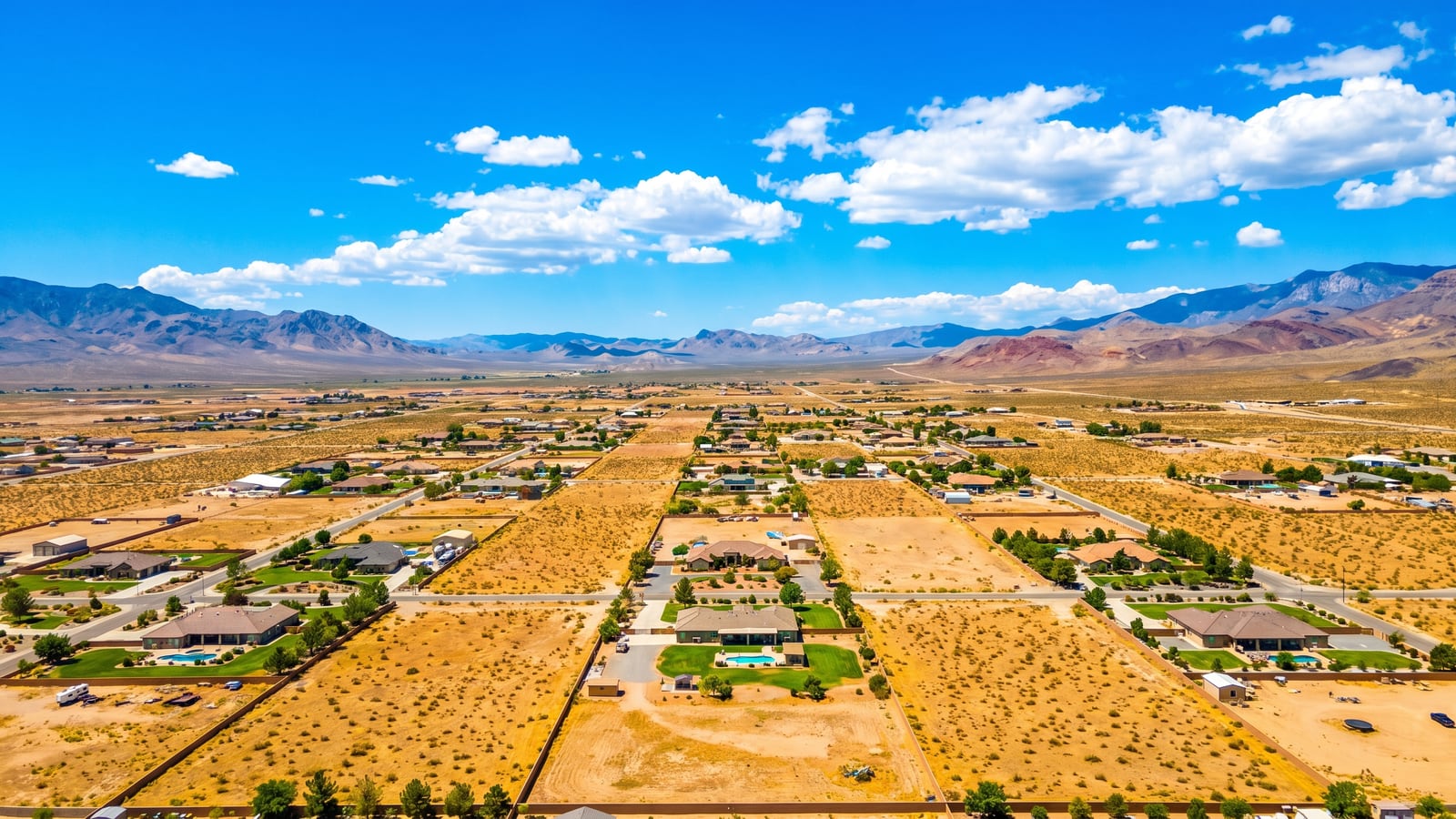
- Pahrump — the state's manufactured capital: acre-plus lots, no-HOA culture, and a deep inventory of already-converted homes. The full setup above buys what $500,000+ costs in the Vegas valley.
- Lyon County — Fernley, Dayton, Silver Springs — Northern Nevada's equivalent, with USDA zero-down stacking on eligible parcels.
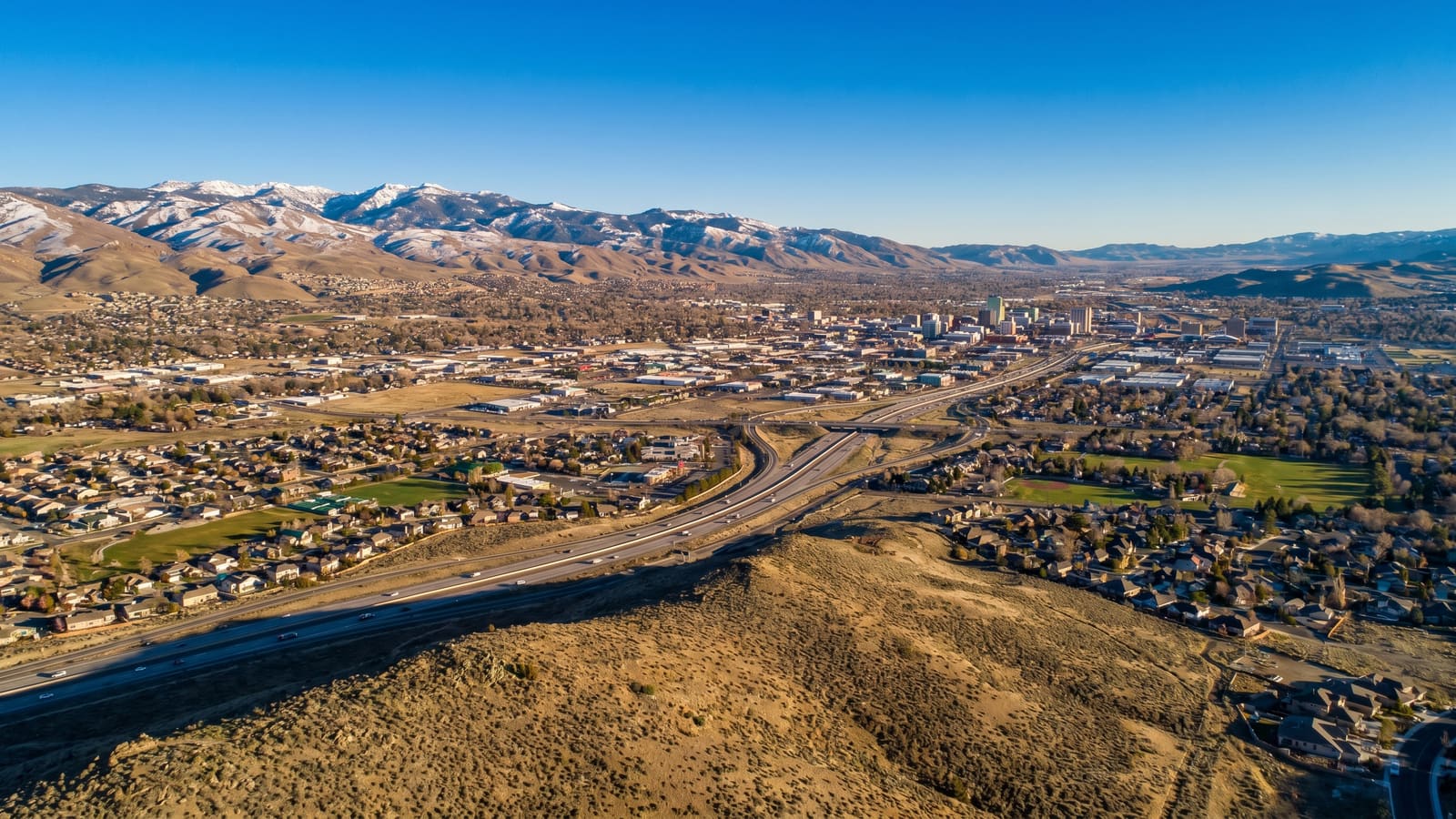
- Sun Valley (Washoe County) — the Reno area's long-standing manufactured community, minutes from Sparks jobs; with the Reno-Sparks median at $529,500 on our May 2026 Reno data desk, Sun Valley's converted homes are among the last sub-$400,000 detached options in the valley.
- Moapa Valley and Sandy Valley — rural Clark County setups an hour from the city, usually on acreage with wells and septic (inspect both — our upcoming well-and-septic field guide applies doubly here).
- Clark County 55+ parks — lifestyle plays in Las Vegas and Henderson where the land-lease math above decides it, against alternatives like site-built 55+ communities.
The affordability spread is structural, not cyclical: factory construction saves 30-50% per square foot, land in Nye and Lyon counties costs a fraction of metro dirt, and both discounts stack in the buyer's favor. Against the Las Vegas metro's $442,713 May median on our data desk — and June's record $490,000 single-family median according to Las Vegas REALTORS — a $300,000-360,000 owned-land manufactured setup is the largest affordability discount in the state that still comes with a yard.
What Happens When You Go to Sell It Again?
Financing is the question everyone asks first. Resale is the one that decides whether the purchase was a good idea, and it gets asked far less often — so here is what the market actually shows.
Pulling our Southern Nevada MLS feed on August 11, 2026, manufactured homes closed at a median of $242,750 over the trailing twelve months across 734 sales, against $477,617 across 21,983 single-family sales. That is roughly half the price, which is the point of buying one. The resale story is in the other three numbers.
| Measure | Manufactured | Single-family | What it means at resale |
|---|---|---|---|
| Median sold price | $242,750 | $477,617 | Half the entry cost |
| Closed sales | 734 | 21,983 | A much thinner buyer pool |
| Median days on market | 34 | 29 | About 17% slower to sell |
| Active listings | 352 | 8,822 | |
| Months of supply | 5.8 | 4.8 | Steadier tilt toward the buyer |
| Median sold price per sq ft | $171 | $257 | About 33% less per foot |
Read the last row carefully, because it is the one people misinterpret. Manufactured homes trading at $171 per square foot against $257 is not evidence that they are a bad buy — it is most of the reason they are an affordable one. What matters is whether that gap widens while you own it, and the honest answer is that it depends almost entirely on one thing.
Do you own the land? A manufactured home on land you own, converted to real property and on a permanent foundation, behaves much more like a house: it appreciates with the land under it, and a normal mortgage buyer can purchase it from you. A home in a land-lease park does not. You own a depreciating structure and rent the ground, your buyer usually needs a chattel loan at a higher rate, and the park can raise lot rent between your purchase and your sale — which reduces what any buyer can afford to pay you for the same home.
That single distinction is worth more to your resale than the age, the condition, or anything you renovate.
Three other factors move the number:
The HUD-code date. A home built before June 15, 1976 cannot be financed by most lenders at all, so your buyer pool at resale is cash only. The June 1976 cutoff discussed above is not just your problem when buying — it is your buyer's problem when you sell.
Whether it is titled as real property. If it is still titled as a vehicle, you are selling to a narrower group on worse terms. Converting is paperwork you do once and benefit from twice.
The 34-day median, and what sits behind it. Half of manufactured homes sold faster than that, which is a perfectly healthy market. But 5.8 months of supply against 4.8 for single-family means there is consistently a bit more competition and a bit less urgency, so pricing accurately matters more here than it does on a tract home where the comparable sales are unambiguous.
The practical takeaway is not "avoid manufactured homes." It is that the land question, decided at purchase, is the resale question. Buying on owned land at $171 a foot is a different asset from renting a lot under the same structure, and only one of the two behaves like real estate when you go to sell.
How Do Taxes and Insurance Work on Nevada Manufactured Homes?
Title status decides the tax lane too. A converted real-property home lands on the county's real property roll — Nevada's effective property tax rates run well under 1% with the state's abatement caps limiting annual increases to 3% on owner-occupied homes, so a $360,000 Pahrump setup typically carries roughly $2,400-3,000 a year. An unconverted home pays personal property tax through the county instead, billed like other titled personal property, while the land (if you own it) is assessed separately — two bills, and the combination often lands within a few hundred dollars of the converted equivalent. What changes more is the paperwork and what happens at resale, not the annual total. According to the U.S. Census Bureau's manufactured housing survey, the average new manufactured home sells nationally for well under half the price per square foot of site-built construction — Nevada's tax structure preserves most of that gap rather than eroding it.
Insurance is the quieter cost difference. Manufactured homes are insured under specialized HO-7-style policies rather than standard homeowners forms; in Nevada expect roughly $800-1,600 a year depending on age, value, and location — with wind and wildfire exposure driving the Northern quotes and age driving everything. Three underwriting realities to plan around: pre-1990 homes get fewer carrier options and higher rates; tie-down and foundation documentation directly lowers premiums; and in land-lease parks you're insuring only the structure, but you also need enough liability coverage to satisfy the park's lease requirements. Lenders on real-property loans escrow all of it exactly like a site-built mortgage — one payment, taxes and insurance included, which is itself a small argument for the conversion path: the whole financial life of the home starts behaving like ordinary homeownership.
How Does the Appraisal Work on a Manufactured Home?
Expect the appraiser to verify things site-built appraisals never touch: the HUD tags and data plate, the foundation system, that the unit was never moved from a prior installed site (an FHA/VA requirement — factory-to-dealer-to-site only), and skirting/tie-down compliance. Comparable selection is the pain point — in Pahrump and Lyon County, manufactured comps are plentiful; in mixed urban areas, thin comps can drag values. MH Advantage homes escape some of this by permitting site-built comps.
Budget and timeline: the appraisal itself runs standard cost, the engineer's foundation certification $450-700, and any foundation remediation (retrofit piers, missing tie-downs) $2,000-8,000 — negotiate that against the seller like any inspection item. Sellers: order the engineer's cert before listing; handing a clean cert to every FHA/VA buyer's lender removes the most common two-week delay in manufactured escrows.
Two appraisal outcomes to game out in advance. If the value comes in light because comps were thin, the cures are the same as any appraisal gap — renegotiate, bring cash to the difference, or challenge with better comparables (in manufactured corridors like Pahrump, a local agent can usually surface converted-home sales the appraiser's search missed). If the appraiser flags condition items — skirting gaps, missing tie-down hardware, unpermitted additions — FHA and VA will require the cure before closing, so get a handyman quote the same week rather than letting the file sit. Additions deserve special caution: a site-built room addition attached to a manufactured home must itself be permitted and engineered, and unpermitted additions are among the most common reasons manufactured escrows die late. Ask for permits on any addition in your first offer conversation, not in week four.
What Are the Biggest Manufactured Financing Mistakes in Nevada?
- Taking a chattel loan while owning the land. The single most expensive unforced error — often $400-600 a month for no structural reason. If you own the dirt, convert and mortgage.
- Buying pre-1976 without pricing the cash-only exit. Cheap in, illiquid out.
- Comparing a park-unit sticker price to a house price. $130,000 versus $420,000 looks like a landslide until the space rent, chattel rate, and zero land equity enter the spreadsheet — run the twenty-year cost, not the day-one price.
- Ignoring space-rent escalation. A $700 space rent compounding at 4-6% annually is $1,150+ within a decade — underwrite the trajectory, not the teaser.
- Skipping the foundation cert until escrow. It's a $500 document that saves a two-week delay and a renegotiation.
- Assuming "moved once" is fine. A home relocated from a previous site is ineligible for FHA/VA — verify the movement history on the title before writing.
- Not shopping the loan. Chattel pricing varies wildly between lenders — 200+ basis points between quotes is common. Three quotes minimum, and always ask whether the same deal can be structured as real property instead. In our experience that one question, asked early, changes more outcomes than any other in factory-built financing.
How Do You Start a Manufactured Purchase With NREG?
Sequence it like the lenders will: confirm the home is post-1976 (HUD tag + data plate), confirm the land status (owned or leased — it decides your entire financing menu), then get quoted both ways before you offer. Nevada Real Estate Group closes manufactured and land deals across the whole state — 150+ agents, 9,061+ verified five-star client reviews, and the rural experience to read a foundation cert and a park lease. Browse current inventory on our search, or talk it through first: (702) 637-1759 in Southern Nevada, (775) 277-2120 in the north, or send us the listing you're eyeing and we'll flag the financing traps the same day.
Frequently Asked Questions
Can you get a normal 30-year mortgage on a manufactured home in Nevada?
Yes — when the home was built after June 15, 1976, sits on a permanent foundation on land you own, and has been converted to real property through Nevada's county recording process. Then FHA, VA, USDA, and conventional programs all apply at market rates near 6.9% in mid-2026. Miss any of those conditions and you're in chattel territory at 8-12%.
What credit score do you need to finance a manufactured home?
Real-property routes track normal mortgage floors — 580-640 practical minimum for FHA, 620+ for conventional, with MH Advantage favoring 680+. Chattel lenders commonly want 600-650 and price heavily by score: the gap between a 620 and a 720 chattel quote can exceed two full percentage points, which on $200,000 is about $260 a month.
Why are chattel loan rates so much higher?
The loan is secured only by a depreciable, movable structure — no land — so the lender's recovery in default is weaker, and the loans live outside most of the mortgage system's securitization and consumer-protection apparatus. According to CFPB research, that structural difference, not borrower quality alone, drives most of the 2-5 point spread over mortgages.
Do manufactured homes appreciate in Nevada?
On owned land, converted setups broadly track their local land market — Pahrump and Lyon County owned-land homes have appreciated with their markets over the past decade. In land-lease parks the home alone behaves more like a vehicle: values can hold or drift down while space rents climb. Land is the appreciation engine; the box is the shelter.
Can I put a manufactured home on land I already own in Nevada?
Usually, subject to county zoning — most rural and suburban-edge parcels in Nye, Lyon, Churchill, and unincorporated Clark County allow it, while some master-planned and CC&R-restricted areas prohibit it. Budget the full install stack: site prep, foundation, utilities or well/septic, delivery, and setup typically add $35,000-60,000 to the home's sticker price.
Is it harder to sell a manufactured home later?
Only if the financing status is messy. A converted, post-1976 double-wide on owned land with a foundation cert sells to the full financed-buyer market. A pre-1976 unit or an unconverted home on owned land sells mostly to cash — a thinner, lower-paying pool. Sellers who spend the $500-1,500 to paper the conversion and certification before listing recover it multiple times over.
Does the June 1976 rule have any exceptions?
Not for mainstream financing — FHA, VA, USDA, Fannie, and Freddie all hold the line at HUD-code homes. Pre-1976 units move by cash, credit union portfolio loans in rare cases, or seller financing. If the home is post-1976 but missing its HUD tags, an IBTS label-verification letter (about $100) can usually document compliance and restore financeability.
Which Sources Inform This Manufactured Financing Guide?
Program rules come from HUD's manufactured housing standards program and Title I lending pages, Fannie Mae's MH Advantage program, Freddie Mac's CHOICEHome initiative, and USDA Rural Development. Chattel-market pricing analysis is from the CFPB's manufactured housing finance report. Nevada conversion law is NRS 361.244; park tenant law is NRS 118B. Rate context from Freddie Mac's Primary Mortgage Market Survey; market medians from Las Vegas REALTORS and NREG's locked monthly data desks; census context from the U.S. Census Bureau. Worked examples use typical mid-2026 Nevada pricing; quotes vary by lender and county — verify current numbers before committing.