

Whitney is the part of the Las Vegas valley that almost nobody outside the east side can place on a map, and that is exactly why it is one of the last genuine value plays left in the metro. Tucked into unincorporated Clark County along the Boulder Highway between the City of Las Vegas and Henderson, Whitney is a workforce township of roughly 40,000 people where a first-time buyer can still find a single-family home in the $300,000s — well under the valley median — inside a fifteen-minute drive of two of Southern Nevada's biggest job cores. It is also one of the most misunderstood submarkets I work in, routinely confused with Whitney Ranch in Henderson, which is an entirely different place. This is the honest 2026 guide to what Whitney actually is, what it costs, and who it fits.
Living in Whitney, Nevada in 2026 means trading newness for affordability and location. This unincorporated east-valley township of roughly 40,000 trades homes commonly in the $300,000s to low $400,000s — below the $478,000 valley median — with quick Boulder Highway access to Las Vegas and Henderson jobs. The tradeoffs are older 1960s-to-1990s stock and default-zoned schools. For first-time buyers and workforce households, few valley submarkets stretch a dollar further.
- Whitney is an unincorporated Clark County township in east Las Vegas, core ZIP 89122, not a city.
- Homes commonly trade in the $300,000s to low $400,000s, below the $478,000 valley median.
- It borders the 2,900-acre Clark County Wetlands Park, the county's largest park.
- Whitney is NOT Whitney Ranch — that is a separate master plan inside Henderson.
- Best-fit buyers: first-time buyers, workforce households, and value-focused investors.
What Counts as Whitney, Nevada in 2026?
Whitney is not a city and never has been — it is an unincorporated town and census-designated place (CDP) governed directly by Clark County rather than by its own municipal government. According to the U.S. Census Bureau, the Whitney CDP holds a population of roughly 40,000 residents, which makes it a substantial community by any measure, even if it lacks the name recognition of Summerlin or Henderson. The town takes its name from Jud Whitney, a former Clark County commissioner, and it grew up organically along the Boulder Highway rather than as a single planned development.
That organic growth is the key to understanding Whitney. Instead of one master developer setting a single price ladder and architectural theme, Whitney accumulated over decades — postwar tract homes, 1970s and 1980s subdivisions, mobile-home parks, apartment complexes, and pockets of newer infill construction. The result is a working, lived-in township with real economic diversity rather than a curated brand. A buyer shopping "Whitney homes" is really shopping a patchwork of eras and price points inside one east-valley footprint, which is both the challenge and the opportunity here. If you want to see current inventory across the whole township, browse Whitney homes for sale before you settle on any one street or era of construction.
Where Is Whitney Located in the Las Vegas Valley?
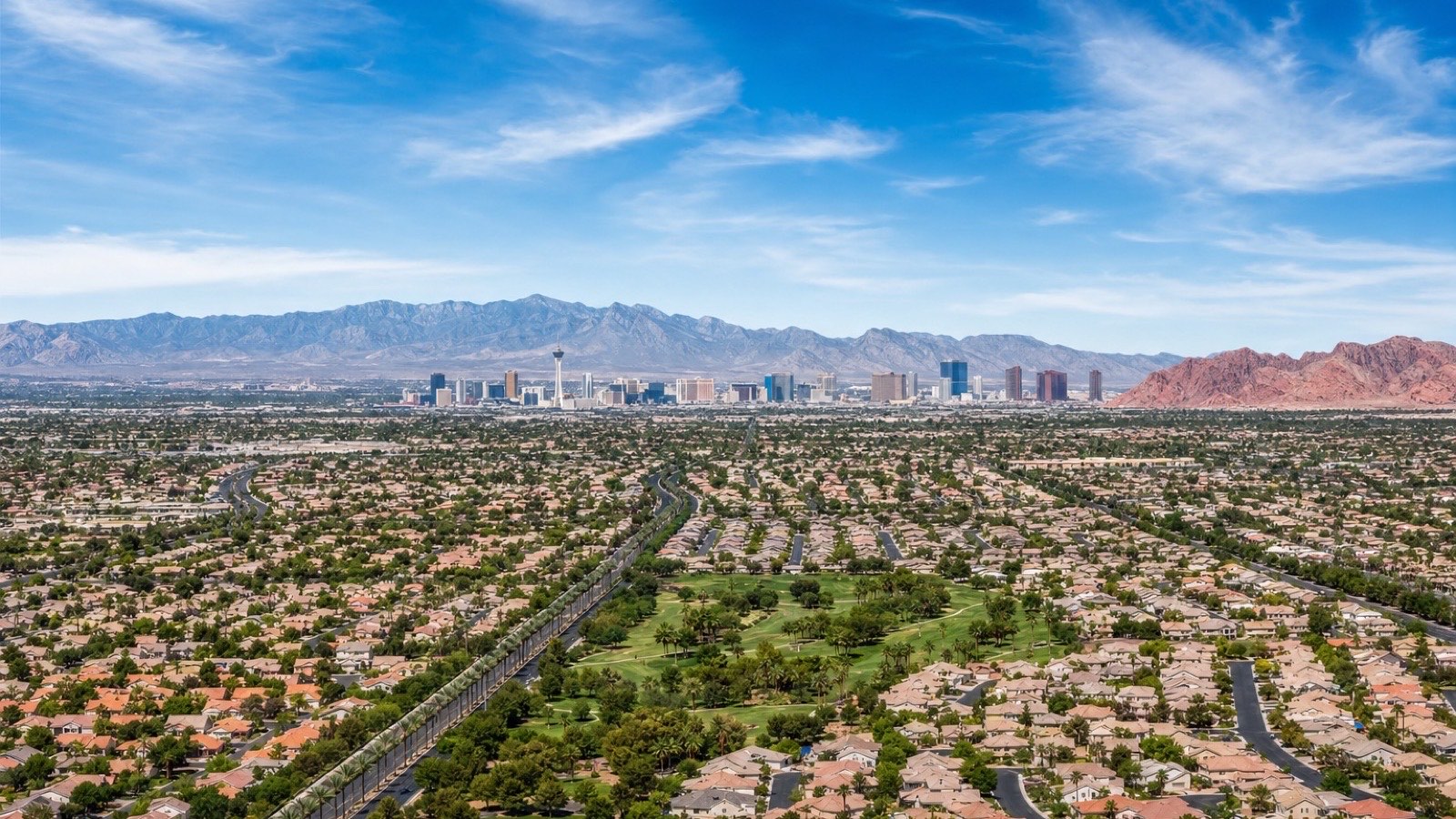
Whitney occupies the east-central valley along the Boulder Highway, wedged between the City of Las Vegas to the northwest and the City of Henderson to the southeast. The core of the township sits in ZIP code 89122, with edges bleeding into 89142, 89110, and 89011 depending on how you draw the lines. That location is Whitney's single biggest asset: it is one of the few affordable submarkets that is genuinely central to the whole metro rather than pushed out to the far exurban edge.
From Whitney, a resident can reach the Henderson job corridor, the airport, the resort corridor, and the east-side industrial and warehouse employers without the long haul that far-northwest or far-southeast buyers accept. According to the Regional Transportation Commission of Southern Nevada, the Boulder Highway is one of the valley's busiest transit spines, with frequent bus service linking Whitney directly to downtown Las Vegas and to Henderson. For a workforce household without the budget for a Summerlin or Henderson master plan, that central position is worth real money in saved commute time and fuel — a benefit that far cheaper outlying land cannot match. In our experience, the buyers who thrive in Whitney are the ones who value that centrality over a shinier ZIP code.
How Affordable Is Whitney Compared to the Rest of the Valley?
Affordability is the entire reason Whitney belongs on a buyer's shortlist. According to Las Vegas REALTORS, the valley-wide median existing-home price sits near $478,000 in 2026, a level that has priced a large share of first-time and workforce buyers out of the newer master plans. Whitney consistently trades well below that median, with single-family homes commonly landing in the $300,000s to the low $400,000s depending on size, age, and condition. That gap of roughly $70,000 to $150,000 against the valley median is the difference between qualifying and not qualifying for many households.
The mechanics behind that discount are straightforward. Whitney's housing stock is older, its lots and floor plans are more modest, and its brand carries none of the premium that a name like Green Valley or The Ridges commands. None of that changes the fundamentals of shelter — a three-bedroom home in Whitney keeps the rain out exactly as well as a three-bedroom home in a pricier ZIP — but it does change the price by a wide margin. Here is how Whitney's directional 2026 pricing stacks against the valley benchmark and a couple of neighboring submarkets. These are directional bands from local MLS activity, not guarantees, so always price a specific address against current comps.
| Submarket | Directional 2026 range | Position vs. valley median |
|---|---|---|
| Whitney (89122) | $300,000s – low $400,000s | Well below the $478,000 median |
| Sunrise Manor (adjacent) | $320,000 – $450,000 | Below median |
| Valley-wide median | about $478,000 | Benchmark |
| Henderson (median) | $500,000 – $650,000+ | Above median |
Across the 9,600-plus closed transactions Nevada Real Estate Group has handled since 2011, the pattern in submarkets like Whitney is consistent: buyers who focus on total cost of ownership rather than the prestige of the ZIP code get into equity years earlier than they would by renting or by stretching for a master plan. Call us at (702) 637-1759 to run the all-in monthly math — mortgage, taxes, and insurance — on any specific Whitney address.
What Kind of Housing Stock Does Whitney Have?
Whitney's housing is a genuine mix, and understanding the eras is the key to buying smart here. The bulk of the single-family stock dates from the 1960s through the 1990s — postwar and mid-century tract homes near the older core, then successive waves of 1970s, 1980s, and 1990s subdivisions filling in around them. Layered on top are pockets of newer infill construction on former vacant parcels, plus a meaningful share of manufactured and mobile-home communities and apartment complexes that keep the township's overall cost of living down.
For a buyer, that variety means the inspection matters more here than in a uniform new build. A 1972 ranch home can be a superb value with updated systems, or a money pit with original galvanized plumbing and an aging HVAC — and the two can sit on the same block at similar asking prices. The playbook is to shop by condition and systems, not just by square footage and price per foot. In my experience, the Whitney homes that deliver the best long-run value are the ones where a prior owner already tackled the roof, the plumbing, the electrical panel, and the air conditioning, because those four systems are where an older east-valley home quietly drains a budget. A rigorous inspection is non-negotiable on anything built before 1990.
What Is It Like Living Along the Boulder Highway Corridor?
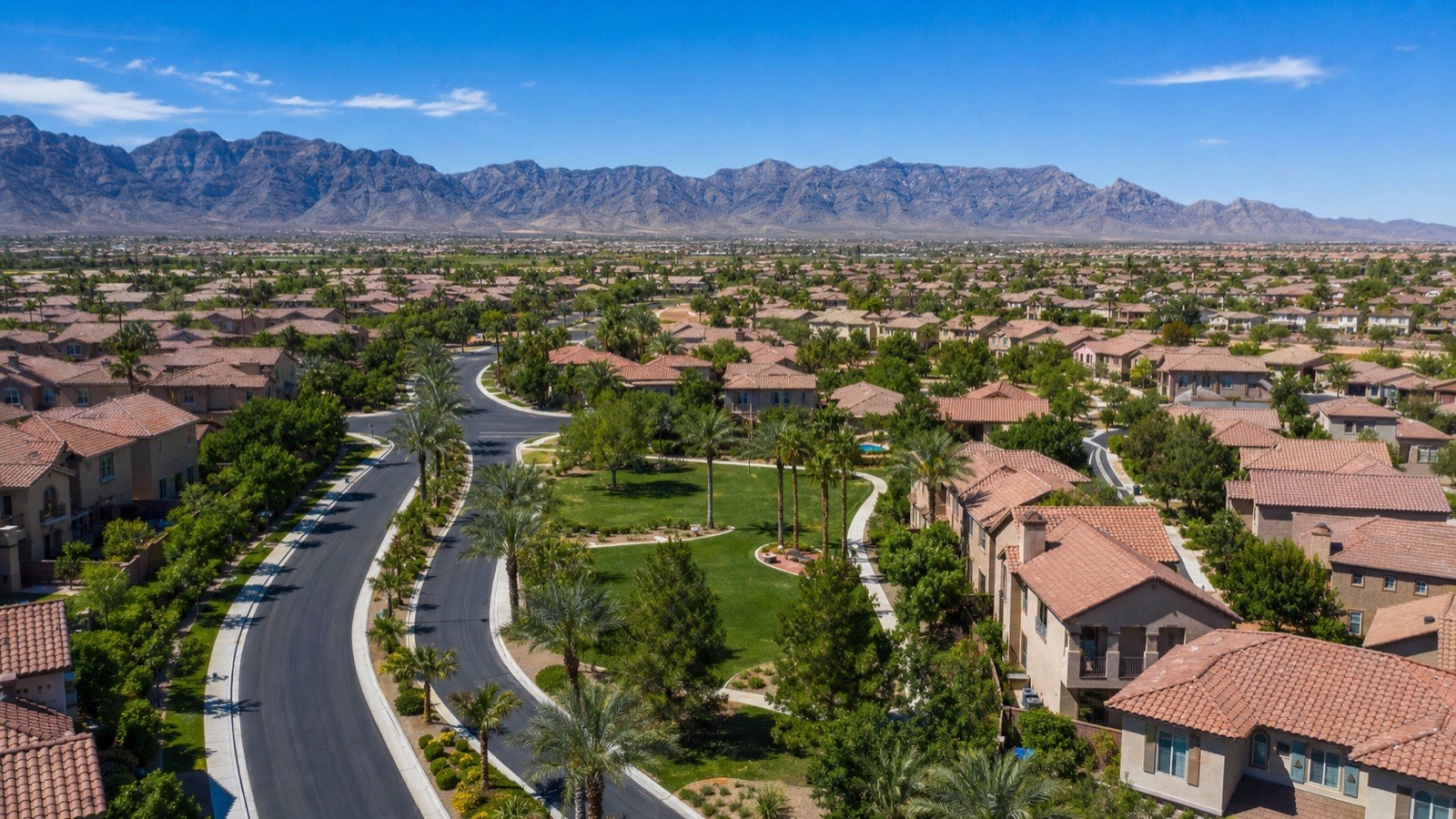
The Boulder Highway is Whitney's main street, its transit spine, and its personality all at once. Historically the route from Las Vegas to the Hoover Dam, the highway is lined with legacy casinos like Boulder Station and Sam's Town, older motels, strip retail, and the everyday services — grocery stores, pharmacies, auto shops, and restaurants — that make daily life work without a long drive. For residents, that means most errands are close, and the corridor's transit frequency makes a car-light lifestyle more realistic here than in an outlying master plan.
The honest tradeoff is that the Boulder Highway is a working commercial artery, not a manicured parkway. Some stretches are dated and transitional, with the mix of uses you find on any older urban highway. That said, Clark County and the RTC have invested in the corridor's future: according to the Regional Transportation Commission of Southern Nevada, the Boulder Highway is a designated high-capacity transit corridor slated for significant complete-streets and rapid-transit improvements, which over time should reshape the frontage and lift adjacent property values. Buying near a corridor that is scheduled for public investment is one of the quieter value angles in Whitney, and it is exactly the kind of forward-looking read a local agent brings that a portal estimate cannot. We've toured enough east-valley homes to know the difference a block off the highway makes for noise and resale alike.
How Close Is Whitney to the Clark County Wetlands Park?
This is Whitney's best-kept secret and one of the strongest quality-of-life arguments for the township. Whitney sits adjacent to the Clark County Wetlands Park, which according to Clark County Parks and Recreation spans roughly 2,900 acres, making it the largest park in the county. The park offers miles of trails, a nature center, and a genuine slice of the Las Vegas Wash ecosystem — cottonwoods, ponds, birdlife, and desert-riparian habitat — right on the edge of an affordable neighborhood.
For a household weighing Whitney against a pricier submarket, that adjacency is a real amenity that the price does not reflect. Instead of paying a master-plan premium for a manicured community park, a Whitney resident gets walk-and-bike access to one of the largest natural open spaces in the metro at no added cost. In a valley where open space is scarce and heavily monetized, living next to 2,900 acres of protected wetland trails is a lifestyle upgrade that most buyers do not associate with an entry-level price point. It is also a differentiator worth naming in any listing, because a buyer touring on foot feels it immediately. Whitney is also near the former Sam Boyd Stadium site, another large parcel whose future redevelopment could reshape the eastern edge of the township over the coming decade.
What Are the Schools Like in Whitney?
Schools are the honest weak spot in most affordable east-valley submarkets, and Whitney is no exception — with the usual asterisks. According to the Clark County School District, the default-zoned neighborhood schools serving Whitney generally rate below the top suburban campuses in Summerlin or Green Valley, which is the single biggest reason some families with young children look to pricier ZIP codes. This is a real consideration, and any family-buyer should weigh it honestly rather than discovering it after closing.
The asterisks are the same ones that apply valley-wide. First, ratings vary campus by campus, so a specific Whitney address may zone to a school that outperforms the township average — always verify current-year zoning for the exact home, because CCSD boundaries shift. Second, according to GreatSchools, CCSD operates a magnet and select-school lottery that gives east-valley families access to top programs across the district that their default zoning does not reach. The practical move for a Whitney family is to treat the magnet lottery as central to the decision, not an afterthought. And third, for buyers without school-age children — a large share of Whitney's first-time and workforce buyers — the school gap is simply not the binding constraint that it is for families, and the affordability more than compensates.
How Do You Get Around Whitney and Commute From It?
Getting around from Whitney is one of its underrated strengths, and it comes back to that central location. The Boulder Highway, U.S. 95, and Interstate 515 all thread through or near the township, giving drivers fast access in three directions — northwest to downtown Las Vegas and the Strip, southeast to Henderson, and toward the airport and the eastern industrial employers. A commute that would eat 45 minutes each way from a far-edge master plan often runs 15 to 25 minutes from Whitney to the same job core, and that difference compounds into hundreds of hours a year.
Transit is genuinely usable here too. According to the Regional Transportation Commission of Southern Nevada, the Boulder Highway carries some of the valley's most frequent bus service, and the corridor is targeted for high-capacity transit upgrades that would further improve car-light living. For a household trying to run one car instead of two, that transit access is worth real money — potentially $8,000 to $12,000 a year in avoided payments, insurance, fuel, and maintenance on a second vehicle. When you fold that transportation savings into the affordability picture, Whitney's total cost of living advantage over an outlying submarket gets even wider than the sticker price suggests.
Who Is Whitney Actually Right For?
Whitney is a fit-driven submarket, and being honest about the fit saves everyone time. It works cleanly for three profiles. The first is the first-time buyer who needs to get into the market and cannot clear the $478,000 valley median — Whitney is one of the few central submarkets where a starter home in the $300,000s is still realistic. The second is the workforce household — the nurses, tradespeople, hospitality workers, and warehouse and logistics employees who keep the valley running and need to live close to their jobs without overpaying. The third is the value-focused investor who wants rental cash flow and a central location at an entry price that pencils.
It is a weaker fit for buyers who prioritize top-zoned schools, the newest construction, a big lot, or a prestige address. Those buyers are better served in Henderson or the newer master plans, and forcing Whitney to be something it is not leads to disappointment. Based on the buyers we've represented across the east valley, the ones who love Whitney are the ones who came in wanting affordability and central access and got exactly that, without expecting a manicured brand. Be honest about which buyer you are, because Whitney rewards the value-seeker and frustrates the prestige-seeker. First-time buyers in particular should map the financing side early — our first-time buyer resources walk through the down-payment and loan options that make a Whitney purchase work.
What Are the Property Taxes and Ongoing Costs in Whitney?
Ongoing costs are part of Whitney's value story, and they start with property taxes. Because Whitney is unincorporated Clark County rather than an incorporated city, its property-tax rate reflects the county rate structure rather than an added municipal levy. According to the Clark County Assessor, effective property-tax rates across unincorporated Clark County run in a modest band, and Nevada's statewide tax-abatement cap limits how fast the taxable value on an owner-occupied primary residence can rise year to year. I am not going to quote a fabricated exact rate — verify the current figure for a specific parcel with the Assessor — but the practical takeaway is that Whitney's combination of a lower purchase price and a modest county tax rate keeps the annual tax bill meaningfully lower than a comparable home in a pricier ZIP.
Beyond taxes, Whitney's ongoing costs skew low by valley standards. Many of the older single-family neighborhoods carry no homeowners-association dues at all, unlike the $50 to $200 a month common in master plans, which further widens the affordability gap. Here is how the recurring line items typically stack for a Whitney owner versus a comparable Henderson master-plan buyer.
| Cost line item | Whitney owner | Henderson master plan |
|---|---|---|
| Purchase price (typical) | $300,000s – low $400,000s | $500,000 – $650,000+ |
| Monthly HOA dues | $0 (many neighborhoods) | $50 – $200 |
| Property-tax basis | Modest county rate | County rate + city levy |
| State income tax | $0 (no Nevada income tax) | $0 (no Nevada income tax) |
| Maintenance reserve | Higher (older systems) | Lower (newer build) |
The offset is maintenance: older homes need more upkeep, so a prudent Whitney owner should budget a reserve for the roof, HVAC, and plumbing systems that a brand-new home would not yet require. According to the Nevada Department of Taxation, Nevada levies no state income tax, which is a structural cost advantage every Whitney household enjoys on top of the low housing costs. Fold it all together — lower price, modest taxes, often no HOA, and no state income tax — and Whitney's total monthly carrying cost is among the lowest paths to valley homeownership.
How Does Whitney Compare to Nearby Submarkets?
Whitney's closest comparisons are its east-valley neighbors and the Henderson submarkets just across the line, and the contrast clarifies exactly what Whitney offers. Against neighboring Sunrise Manor, Whitney is broadly similar in price and vintage but sits slightly closer to the Henderson job corridor and the Wetlands Park. Against Henderson proper, Whitney gives up newness, top-rated schools, and prestige but wins decisively on entry price and central location. First-time buyers priced out of Henderson or the newer Las Vegas suburbs frequently land in Whitney for exactly that reason. Here is how the tradeoffs line up on the factors buyers weigh most.
| Factor | Whitney | Sunrise Manor | Henderson master plan |
|---|---|---|---|
| Entry price | $300K – low $400K | $320K – $450K | $500K – $650K+ |
| Housing vintage | 1960s–1990s + infill | 1960s–1990s | 2000s–new build |
| Schools (default) | Below top suburban | Below top suburban | Top-rated |
| Open space | Wetlands Park adjacent | Nearby parks | Master-plan parks |
| Best for | Value + central access | Value buyers | Families needing schools |
The honest framing is that Whitney is not competing on prestige or schools — it is competing on the lowest realistic entry price for a central-valley location, plus that Wetlands Park adjacency. If you want to see the value neighbor for yourself, compare Sunrise Manor homes for sale against Whitney inventory; they trade in a similar band and reward the same value-first buyer.
What Are the Risks and Tradeoffs of Buying in Whitney?
Every affordable submarket carries gotchas, and naming Whitney's helps you buy smart rather than scaring you off. The first is housing age. The bulk of the stock is 30 to 60 years old, so systems — roof, HVAC, plumbing, and electrical panel — are the real variable that separates a great buy from a costly one. Budget for a thorough inspection and, ideally, a home warranty on anything with original systems. The second is block-by-block variation. Whitney is not a uniform master plan; one street can be settled and well-kept while the next is more transitional, so touring the specific block at different times of day matters more here than in a curated community.
The third is the Boulder Highway proximity itself. Homes immediately fronting or backing the highway carry more noise and traffic, and while the corridor's planned transit upgrades are a long-run positive, the near-term reality is a working commercial artery — so weigh how close a given home sits to it. The fourth is resale liquidity: Whitney's affordability means strong buyer demand at the entry level, but a home priced above the submarket's ceiling, or one with unaddressed deferred maintenance, can linger. According to Las Vegas REALTORS, pricing to current comps from day one is the single biggest driver of a fast sale in any east-valley submarket. None of these are dealbreakers; they are reasons to buy with a local agent who knows the specific blocks and the systems to scrutinize.
Is Whitney a Good Investment in 2026?
For the right property, Whitney is one of the more compelling value-investment cases in the valley — with eyes open. The core thesis rests on three durable factors. First, affordability: entry prices in the $300,000s to low $400,000s keep the buyer and renter pool deep, because Whitney serves the workforce demand that never disappears in a growing metro. According to the U.S. Census Bureau, Nevada remains one of the fastest-growing states, and that in-migration keeps pressure on affordable housing at exactly Whitney's price point. Second, location: a central township cannot be replicated on the far edge, and central land tends to appreciate as the metro fills in around it.
Third, catalysts: the planned Boulder Highway transit and complete-streets investment, the Wetlands Park amenity, and the long-horizon redevelopment potential of large adjacent parcels including the former Sam Boyd Stadium site all point toward gradual upside on the eastern corridor. According to the Bureau of Labor Statistics, the Las Vegas metro's employment base continues to broaden beyond hospitality into logistics, healthcare, and light industry — much of it on the valley's east and south sides, close to Whitney's workers. The risk, as always, is selectivity: a poorly chosen block or a home with runaway deferred maintenance can underperform. My take is that Whitney is a patient value buy, not a flip play — buy the affordability and the central location, hold through the corridor's improvement, and the appreciation tends to follow.
How Is the Whitney Market Trending in 2026?
Whitney is behaving like the affordable end of the valley usually does in a cooling market — resiliently. According to Las Vegas REALTORS, the valley as a whole has settled from the 2021-2022 frenzy into a more balanced market, with inventory rebuilding and price growth flattening to low single digits around the $478,000 median. In my experience representing buyers across the east valley, the sub-median submarkets like Whitney have held demand better than the upper end, because when affordability tightens, buyer traffic concentrates exactly where the entry prices are — and Whitney is one of the lowest-priced central options on the board.
That resilience does not mean every Whitney listing sells fast. The spread between a correctly priced, move-in-ready home and an overpriced or deferred-maintenance home is wide here; the first moves quickly while the second sits. Across our 789 closings in 2025 — $361.5M+ in production — the east-valley sellers who priced to current comps from day one and addressed obvious system issues before listing consistently outperformed those who chased an aspirational number. For buyers, the 2026 Whitney window is favorable: more inventory and steadier prices mean you can inspect carefully and negotiate rather than waive contingencies in a bidding war. If you are weighing Whitney against a stretch into Henderson or the broader Las Vegas market, the honest read is that Whitney is not competing on prestige — it is competing on the lowest realistic path into central-valley ownership. Value-focused buyers priced out of Summerlin or Henderson also cross-shop nearby North Las Vegas, quieter Boulder City, and the valley's new-construction incentives before deciding.
What Should Whitney Buyers Do Next?
Start by getting fully underwritten, because in an affordable submarket the winning offer is often the one that can close cleanly and quickly, not just the highest number. Then decide your non-negotiables — proximity to a specific job core, distance off the Boulder Highway, school zoning if you have children, and your comfort level with home age — because those filters narrow Whitney's varied stock fast. When you tour, prioritize systems over cosmetics: a dated kitchen is a cheap fix, but a failing roof or a 30-year-old HVAC is not, and in Whitney's older stock that is where the real money hides.
Then lean on local, block-level knowledge, because Whitney rewards it more than a uniform master plan ever could. One street can be settled and quiet while the next is transitional, and two similar homes can carry very different long-run costs based on which systems a prior owner already replaced. That is exactly the nuance a portal estimate cannot capture and a local agent lives in every day. Buyers comparing Whitney with the neighboring Sunrise Manor market, or first-timers mapping a budget with our first-time buyer resources, get the clearest picture by looking at both side by side. Browse current Whitney homes for sale, and when you find a home worth pursuing, call Nevada Real Estate Group at (702) 637-1759 for the all-in monthly math and the honest read on that specific address.
Frequently Asked Questions
Is Whitney the same as Whitney Ranch in Henderson?
No — and this is the single most common confusion about the area. Whitney is an unincorporated Clark County township in east Las Vegas along the Boulder Highway, near but outside the Henderson border, with a core ZIP of 89122. Whitney Ranch is a completely separate master-planned community located inside the City of Henderson, with newer homes, its own recreation center, and Henderson jurisdiction. The two sit in different jurisdictions, carry different housing stock, and price differently. If someone tells you they live in "Whitney," ask which one they mean, because the name overlap trips up buyers, lenders, and even some agents.
Is Whitney, Nevada a good place to live?
For value-focused buyers, it is one of the better places in the valley to live. Whitney offers home prices commonly in the $300,000s to low $400,000s — below the $478,000 valley median — inside a central location with quick Boulder Highway access to both Las Vegas and Henderson jobs, plus adjacency to the 2,900-acre Clark County Wetlands Park. It fits first-time buyers, workforce households, and value investors best. It is a weaker fit for buyers who prioritize top-zoned schools, new construction, or a prestige address.
How much does it cost to buy a home in Whitney?
Single-family homes in Whitney commonly trade in the $300,000s to the low $400,000s in 2026, depending on size, age, and condition, which lands well under the roughly $478,000 valley-wide median. Many older Whitney neighborhoods carry no HOA dues, unlike the $50 to $200 a month common in master plans, and unincorporated Clark County property-tax rates are modest. Always price a specific address against current comps, since Whitney's mix of eras and conditions produces a wide range even within the same price band.
What ZIP code is Whitney, Nevada in?
Whitney's core ZIP code is 89122, with the township's edges reaching into 89142, 89110, and 89011 depending on the boundary. Because Whitney is an unincorporated census-designated place rather than an incorporated city, its footprint does not line up perfectly with any single ZIP, so a specific home near the edge may carry an adjacent code. When you shop, confirm the exact ZIP and the Clark County jurisdiction for any address, since it affects everything from mail to tax parcel lookups.
Are the schools good in Whitney?
Default-zoned CCSD schools serving Whitney generally rate below the top suburban campuses in Summerlin or Green Valley, which is the main reason some families with young children look elsewhere. Ratings vary campus by campus, so verify current-year zoning for the specific home. The major offset is CCSD's magnet and select-school lottery, which gives east-valley families access to top programs district-wide that their default zoning does not reach. For buyers without school-age children, the school gap is not the binding constraint, and the affordability more than compensates.
What is near Whitney, Nevada?
Whitney borders the Clark County Wetlands Park — the county's largest at roughly 2,900 acres — with trails and a nature center. Along the Boulder Highway you find legacy casinos including Boulder Station and Sam's Town, plus everyday grocery, retail, and dining. The township is a short drive from downtown Las Vegas, the airport, the Henderson job corridor, and the former Sam Boyd Stadium site. That central position, with the Wetlands Park on the doorstep, is a big part of what makes Whitney's affordability so compelling.
Is Whitney a good place for first-time buyers?
Yes — it is one of the valley's clearest gateways to first-time ownership. Whitney is among the few central submarkets where a starter home in the $300,000s remains realistic against a $478,000 valley median, and many neighborhoods carry no HOA dues. The keys are getting fully underwritten before you shop, budgeting for a rigorous inspection on older systems, and mapping down-payment and loan options early. Our first-time buyer resources walk through the financing side that makes a Whitney purchase work for buyers stretching into their first home.
Which Sources Inform This Whitney Guide?
This guide draws on local MLS activity, county and city records, transit and school data, and federal population and labor figures. According to the sources below, every figure cited is directional as of mid-2026; confirm current numbers, tax rates, and school zoning for any specific parcel before a transaction.
- Las Vegas REALTORS — local market statistics
- U.S. Census Bureau — Nevada QuickFacts
- U.S. Census Bureau — American Community Survey
- Clark County Assessor — property data and tax rates
- Clark County Parks and Recreation — Wetlands Park
- Clark County School District
- GreatSchools — Las Vegas school ratings
- Regional Transportation Commission of Southern Nevada
- Bureau of Labor Statistics — Las Vegas metro data
- Nevada Department of Taxation