

Published April 29, 2026 · Last updated September 4, 2026 · By Chris Nevada
A national real estate portal is a fine place to start browsing Las Vegas. It is a poor place to decide what a house is worth. According to Las Vegas REALTORS, the Southern Nevada single-family median hit a record $490,000 in May and June 2026 and eased to $480,000 in July, 1% below a year earlier. Underneath that headline, the gap between what sellers ask and what homes close for runs from under 1% in North Las Vegas to 18% above $5 million, according to our analysis of Las Vegas REALTORS MLS data via Repliers for the 90 days ending September 4, 2026. An algorithm trained on asking prices and county records cannot see that spread. A local agent who watches the closings every week can.
A local Las Vegas real estate expert beats a national portal on pricing accuracy, off-market access, and negotiation. Over the 90 days ending September 4, 2026, Las Vegas homes closed at $252 per square foot against a $260 asking median, and $5 million-plus estates closed at $870 against $1,057 asked. Portals anchor on the asking side. Use them to browse, then price and negotiate with a local agent.
- Las Vegas city closed 3,025 homes at a $437,111 median and 28 days on market this summer.
- The asking-versus-closing gap runs 3% in Las Vegas city, 5% above $1 million, and 18% above $5 million.
- Strip high-rise condos in 89109 take 81 days to sell and close 13% under asking per square foot.
- CCSD boundaries change every spring; portal school badges can lag by a year.
- Freddie Mac's 30-year fixed averaged 6.71% on September 3, 2026, so pricing precision matters more.
Why Do National Real Estate Portals Fall Short in Las Vegas?
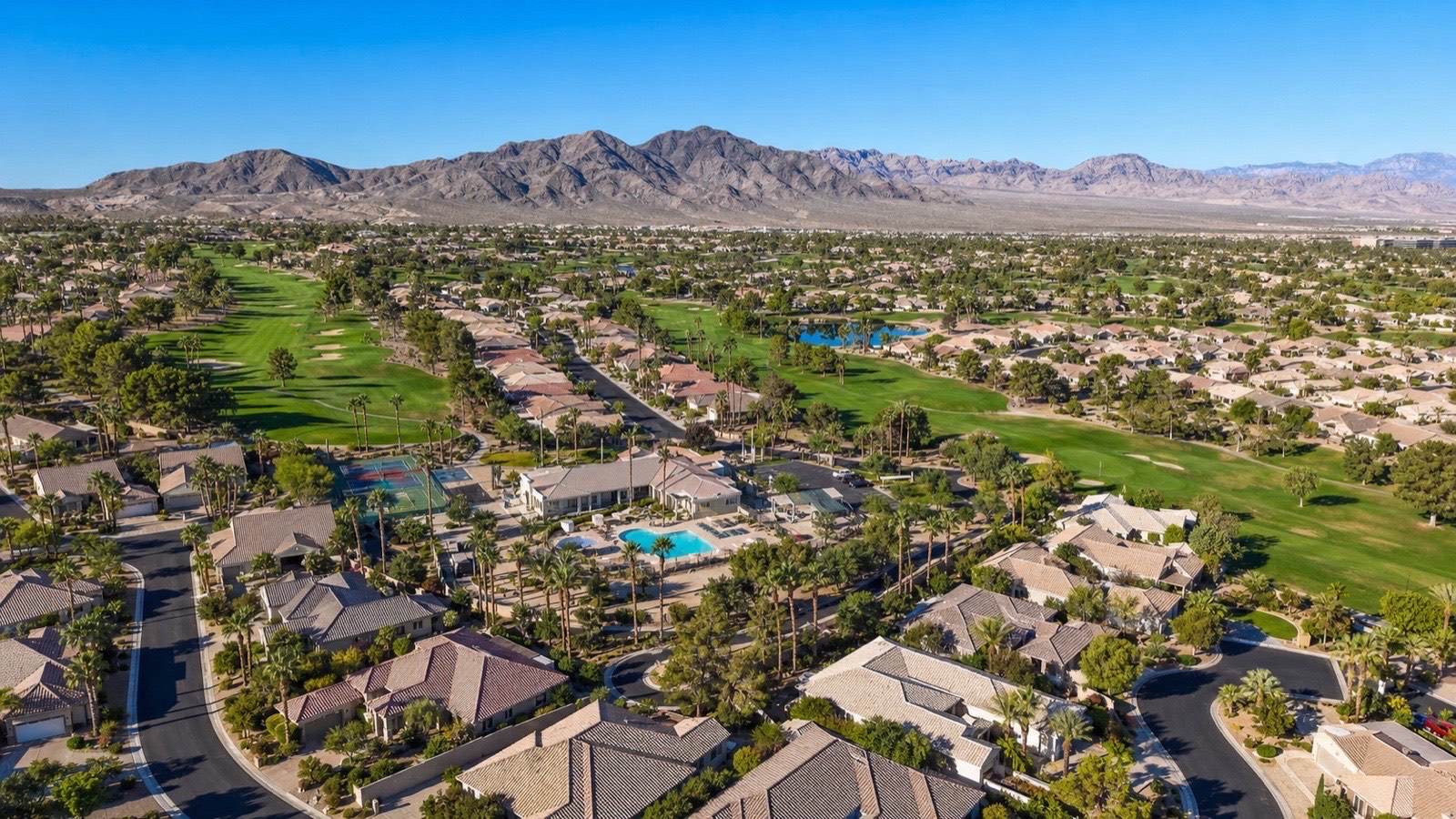
National platforms scrape county records, MLS feeds, and tax data, then run a machine-learning valuation across millions of homes nationwide. That model works for cookie-cutter suburbs in Phoenix or Atlanta. It breaks in Las Vegas, where price per square foot can swing 20% within a single ZIP code based on lot orientation, mountain or Strip views, HOA structure, and the difference between a 1990s Spring Valley tract home and a 2024 Summerlin custom build.
The numbers show the spread. According to our analysis of Las Vegas REALTORS MLS data via Repliers for the 90 days ending September 4, 2026, Las Vegas city closed at a $437,111 median, Henderson at $489,890, Summerlin West (89138) at $750,000, and Summerlin South (89135) at $832,500. A portal that publishes a single "Las Vegas estimate" on your home routinely lands $40,000 to $80,000 off, in either direction. Chris Nevada and the 150-agent NREG team review every comp by hand against block-level closed activity, not nationwide algorithms.
What Does a Local Las Vegas Expert See That a Portal Misses?
Three things sit outside the public data feeds that drive national platforms.
Off-market listings. In tight luxury communities like MacDonald Highlands, The Ridges in Summerlin, and Lake Las Vegas, a meaningful share of transactions close before the listing goes live on the MLS. Local agents hear about those homes from listing agents over coffee, at office tours, or through brokerage networks weeks before any portal indexes them.
HOA and CC&R nuance. Clark County has more than 3,000 master-planned community sub-associations. Two homes on the same street can carry HOA fees that differ by $200 a month, rental restrictions, paint-color rules, or short-term rental eligibility. A portal lists the headline HOA dues and stops there. A local agent reads the CC&Rs.
School zone reality. Clark County School District publishes annual boundary updates each spring. Portal school ratings sometimes still reflect the prior year's attendance map. We've seen Summerlin buyers walk into homes thinking they were zoned for Palo Verde HS, only to discover at registration that boundary changes had moved the address to a different attendance zone. Verify with CCSD directly, never with a portal badge.
How Accurate Are National Portal Home Valuations in Las Vegas?
National portal automated valuation models (AVMs) publish their own median-error rates, typically a few percent on listed homes and materially more on off-market homes. According to the Federal Reserve, AVMs underperform in markets with high price dispersion, which describes Las Vegas precisely.
The cleanest local test is the gap between asking price per square foot and closing price per square foot, because portal estimates lean heavily on the asking side of that pair. According to our analysis of Las Vegas REALTORS MLS data via Repliers for the 90 days ending September 4, 2026:
| Segment | Active listings | Median list $/sq ft | Median sold $/sq ft | Gap | Median days on market |
|---|---|---|---|---|---|
| North Las Vegas | 1,021 | $233 | $232 | 0.4% | 20 |
| Las Vegas (city) | 8,605 | $260 | $252 | 3.1% | 28 |
| Henderson | 2,453 | $277 | $258 | 6.9% | 34 |
| Las Vegas $1M+ | 1,019 | $444 | $423 | 4.7% | 28 |
| Las Vegas $2M+ | 343 | $672 | $651 | 3.1% | 28 |
| Las Vegas $5M+ | 59 | $1,057 | $870 | 17.7% | 100 |
| Strip high-rise 89109 | 306 | $482 | $420 | 12.9% | 81 |
The pattern is the whole argument. In the entry-level North Las Vegas market, asking and closing are nearly identical, so a portal estimate is close enough to be useful. In Henderson the spread is 7%. Above $5 million it is nearly 18%, and on the Strip the condo market clears 13% under asking per square foot after 81 days. The more distinctive the home, the worse the algorithm does, and the more a local agent who has watched the last 90 days of closings is worth.
Which Las Vegas Neighborhoods Are Hardest for Portals to Value?
The harder a neighborhood is for a national algorithm to model, the more value a local agent adds. Six Las Vegas pockets routinely confuse AVMs:
| Neighborhood | ZIP | 90-day median sold | Why portals miss |
|---|---|---|---|
| Summerlin South (The Ridges, Red Rock Country Club) | 89135 | $832,500 | View premium, custom-build variance, gated micro-communities |
| Henderson foothills (MacDonald Highlands, Seven Hills, Anthem) | 89012, 89052 | $566,000 and $640,000 | Off-market luxury sales not in feeds; ridge-line view tiers |
| Lake Las Vegas | 89011 | $464,990 | Resort HOA layers; lakefront versus golf-course pricing splits |
| Strip high-rise corridor | 89109 | $378,000 | Floor and view premiums, resort fees, 81-day market time |
| Mountain's Edge | 89141 | Within Las Vegas city median of $437,111 | Trail-system access, mountain views, builder-tier mix |
| Spring Valley (NREG HQ ZIP) | 89148 | Within Las Vegas city median of $437,111 | 1990s to 2020s mixed inventory; varied HOA structures |
Do National Portals Show Every Las Vegas Listing?
No. National platforms only show what brokerages syndicate. In Las Vegas, several scenarios keep listings off public portals: pocket listings between agents, coming-soon status that the seller wants kept quiet, builder allocations that go to repeat-buyer lists, and luxury homes where the seller's agent restricts marketing for privacy. Under the National Association of REALTORS Clear Cooperation policy, office-exclusive listings are still permitted, and in the luxury tiers they are common.
When a buyer relies only on a portal, they self-select out of that slice. In the $2 million-plus tier, where only 62 homes closed across the whole valley in the 90 days ending September 4, 2026 against 343 active listings, according to our analysis of Las Vegas REALTORS MLS data via Repliers, every quiet listing matters. A 150-agent team carrying that volume sees those homes before the public ever does.
How Does Negotiation Differ When You Work With a Local Las Vegas Agent?
Negotiation in Las Vegas runs on relationships. The same listing agent who represents a Henderson seller this month represented a Summerlin buyer last month with one of our agents. Brokers know whose word holds, whose buyers close on time, and whose escrow falls apart over inspection items. A local agent walks into a multiple-offer situation with that history. A national platform's automated "make an offer" tool walks in cold.
Across the 9,600+ closings we've represented, the buy-side wins that matter most are rarely the headline price. They are seller-paid closing costs, repair credits, and rate buydowns negotiated after the home is already under contract. With the 30-year fixed at 6.71% per Freddie Mac as of September 3, 2026, a seller-paid 2-1 buydown on a $437,111 purchase is worth roughly $8,000 to the buyer and cuts the first-year payment by more than $400 a month. National platforms cannot replicate that. Their tooling is transactional, not relational.

What About the 215 Beltway, the Strip, and Other Las Vegas Geography?
Geography in Las Vegas is more than a map pin. The 215 Beltway loops the metro and creates a clear inside-versus-outside distinction in commute pattern. Homes near Harry Reid International Airport face flight-path noise that varies by runway use; portals do not flag this. Red Rock Canyon and the Spring Mountains create view premiums on the west side that portals cannot see from satellite. Hoover Dam and Lake Mead create water-rights and HOA-pool arrangements unique to the Boulder City corridor. Sloan Canyon NCA shapes the southern Henderson buyer experience around hiking and wildlife.
None of those local realities show up in a portal's walk score. A local Las Vegas agent factors them into pricing and matching.
How Do Clark County Schools and CCSD Zones Affect Home Value?
Clark County School District (CCSD) is the fifth-largest district in the United States, with annual boundary updates and magnet program lotteries that can swing a home's desirability by tens of thousands of dollars. Faith Lutheran in Summerlin, Coronado HS and Foothill HS in Henderson, Bishop Gorman, and Las Vegas Day School all carry strong reputations. But the catchment lines and out-of-zone variance applications change with each school year. Portal school ratings routinely lag actual CCSD data, sometimes by a full academic year.
For relocating families, this is the single biggest pricing factor a portal will misread. We always cross-reference the address against the current CCSD zoning map before a buyer makes an offer. GreatSchools ratings are a useful second opinion, but the district map is the only source that tells you where a child will actually enroll.
Which Las Vegas Resources Cover This in More Depth?
If you are comparing neighborhoods or weighing a relocation, three NREG resources go deeper than this article can:
- Moving to Las Vegas from California in 2026, the most-read relocation piece on this site.
- Summerlin community hub, with live inventory, school zones, and master-plan villages mapped.
- Search homes by neighborhood, the NREG MLS feed refreshed continuously from the Las Vegas REALTORS data feed.
How Much Does a Local Las Vegas Expert Cost vs a National Portal?
For buyers, the 2024 National Association of REALTORS settlement requires a written buyer-broker agreement before touring, and buyer-broker compensation is negotiated per transaction. In most Las Vegas deals the seller still offers a concession that covers some or all of it, and in new construction the builder's commission budget covers it almost universally. For sellers, listing compensation is negotiated per listing as well; the Nevada Real Estate Division requires every agreement to be in writing.
National platforms charge sellers in different ways: flat-fee listing services, lead-referral fees on agent matches, or premium agent advertising programs. Those often net out to similar or higher cost once the seller's home undersells by even 2% of true market value, which on the $480,000 Las Vegas REALTORS median is $9,600. The math favors a local Las Vegas agent who prices the home correctly the first time.
| Decision point | Local Las Vegas expert | National portal |
|---|---|---|
| Valuation basis | Closed comps from the last 90 days, walked in person | Algorithm weighted toward asking prices and county records |
| Off-market inventory | Office exclusives, coming-soon, builder allocations | Only syndicated MLS listings |
| HOA and CC&R detail | Reads sub-association fees, rental rules, SID/LID bonds | Headline dues only |
| School zone accuracy | Current CCSD boundary map checked before offer | Third-party badge that can lag a year |
| Negotiation | Relationship with the listing agent; concessions after contract | Automated offer tool, no relationship |
| New-construction incentives | Knows which phase is closing out and where $15,000 to $40,000 in credits sit | Lists builder homes after incentives are gone |
| Cost to buyer | Negotiated; typically covered by seller or builder concession | Free to browse; lead sold to an advertising agent |
What Questions Should You Ask Before Hiring a Local Las Vegas Agent?
Five questions filter strong agents from average ones:
- How many transactions did you (or your team) close in Las Vegas last year, and in what neighborhoods?
- Can you show me the last five comps you ran for a home like mine?
- How do you handle off-market and pre-MLS inventory in my price range?
- What is your average days on market versus the Las Vegas REALTORS metro figure?
- What is your buyer-broker agreement, and what is your fee structure?
If an agent cannot answer the first two from memory, keep looking. Local expertise shows up in numbers, not in tagline copy. For reference, Nevada Real Estate Group closed 789 transactions and $440 million+ in volume in 2025 alone.
How Do You Get a Real Las Vegas Home Valuation, Not a Portal Estimate?
The fastest way: call a local agent who will run a comparative market analysis (CMA) using the active MLS, recent solds within a quarter mile, and any pending or off-market activity that has not hit public data yet. NREG runs CMAs at no cost for sellers and refreshes them while the home is listed. Compare that to a portal AVM that updates automatically from regional data and routinely misses block-level reality.
In my experience the honest answer for a lot of Las Vegas homes is a range, not a number. Across the 90 days ending September 4, 2026, Henderson's median asking price was $536,059 while its median closed price was $489,890, according to our analysis of Las Vegas REALTORS MLS data via Repliers. Those are different pools of homes, but the $46,000 spread is exactly the zone where an algorithm picks a number and a local agent picks a strategy. Start with our sellers page if you want the CMA conversation.
For relocation buyers, the same applies in reverse: a buyer-side agent runs a target-market CMA on neighborhoods you are considering, factoring in CCSD zones, HOA fees, view tiers, and lot orientation. That is the layer of detail no national platform reproduces.

How Do Off-Market and Pre-MLS Las Vegas Homes Actually Move?
National platforms only show you homes that are actively listed on the public MLS feed. In a metro the size of Las Vegas, that misses a meaningful slice of true inventory: pre-MLS, coming-soon, office-exclusive, and builder-direct homes that trade with limited or no public exposure. For the buyer relying on portal alerts alone, those homes simply do not exist.
A 150-agent team in Las Vegas works that off-market layer continuously. Listing agents inside the team know which sellers are 30 days from listing and call buyer agents inside the team first. Builder reps in Summerlin, Cadence in Henderson, Skye Canyon in the northwest, and Lake Las Vegas hold quiet inventory that never reaches the national portals until allocations are exhausted. Off-market access is most powerful in tight micro-markets, the 89135 single-story segment, 89052 view lots above the golf corridors, the 89148 Mountain's Edge cul-de-sac inventory, where every well-priced public listing draws multiple offers inside a week.
Pre-MLS access shifts the math. A buyer who tours an off-market Summerlin home before it lists publicly faces zero competing offers, can negotiate normal contingencies, and avoids the escalation that the same home commands once it goes live. A national portal, by definition, only sends you alerts after that public-listing moment, the most expensive moment to enter a deal.
What HOA, View-Premium, and Lot Details Do Portals Miss in Summerlin and Henderson?
Portal AVMs treat a home as a bundle of square footage, bedrooms, bathrooms, and recent comps. They do not understand HOA structure, view tiers, lot orientation, or sub-association overlays, and Las Vegas master-planned communities are built almost entirely around those four variables. Two homes on the same Summerlin street, identical floor plans, identical year built, can trade $80,000 apart based on whether the rear yard faces Red Rock Canyon or backs to a busy collector road. A national platform will price them the same.
HOA fees are the second blind spot. The Summerlin master association stacks a base fee with sub-association fees that can range from $50 to $400 per month depending on village and tier. Lake Las Vegas has its own multi-tier association structure with separate marina and golf assessments. Cadence in Henderson and Skye Canyon in the northwest each carry their own structures. Buyer-side debt-to-income ratios at $400 per month in HOA dues are dramatically different than at $80 per month, and that single line item changes how much home a buyer qualifies for at a 6.71% rate. Portals do not surface that detail in their estimates.
Lot orientation in Las Vegas is also non-trivial: a west-facing rear yard runs a higher cooling load than a north-facing one, which the appraiser knows and the buyer should know. View premiums for the Strip skyline (visible from parts of 89052 and 89012) and Red Rock Canyon (visible from 89135 and 89144) routinely add a double-digit percentage to comparable square-foot pricing. A local Las Vegas agent flags those tiers before you write the offer; a portal estimate flattens them into a single number.
How Does a Local Agent Change New-Construction Incentives for Buyers?
New construction in Las Vegas is one of the largest blind spots in the portal model. National platforms typically list builder homes only after the builder syndicates to the public MLS, which usually happens after the most aggressive incentives have already been redirected to early buyers. The buyer who walks into a model home alone, without a buyer-side agent, frequently leaves $15,000 to $40,000 on the table in lender credits, design-center allowances, and rate buydown concessions that an experienced agent would have negotiated as standard.
The data shows how much incentive money is in the system. According to our analysis of Las Vegas REALTORS MLS data via Repliers, Las Vegas new builds from 2025 and newer closed at a $569,150 median across 222 sales in the 90 days ending September 4, 2026, against a $609,950 median asking price, a $40,800 gap that is mostly incentive. Henderson new builds closed at $507,995 against $590,925 asked. Builders in Las Vegas (Lennar, Toll Brothers, Tri Pointe, KB Home, and Pulte/Del Webb in particular) stagger incentives by phase, by quarter, and by community. The local-agent advantage is knowing which Summerlin phase is closing out, which Cadence section just opened, and which inventory home in 89084 is sitting more than 90 days. Those signals are not in any national platform feed. See our new construction guide for the full playbook.
Buyer agents are paid out of the builder's commission budget, not the buyer's pocket, in nearly every Las Vegas new-construction deal, so the buyer who brings an agent on day one captures the negotiation upside without paying for it. Buyers who go direct to a builder model home without registering an agent forfeit that representation in writing on the first visit; that signature is hard to undo. The lesson: register a local agent before walking into any Summerlin, Skye Canyon, Cadence, or Lake Las Vegas model.
What Proof Exists That Local Las Vegas Agents Outperform Portal-Only Shoppers in 2026?
The most concrete proof is in the asking-versus-closing spread above. According to Las Vegas REALTORS, 2,508 existing homes closed in July 2026, up from 2,251 in July 2025, at a median 1% below last year. Volume is up and prices are flat, which means the negotiation happens in the middle: the buyer who prices off the closed comps, not the asking price, is the one capturing the 3% to 18% spread. On a typical $600,000 Las Vegas single-family home, 3% is $18,000.
The second proof point is days on market for sellers. Across the 9,600+ closings we've represented, the listings that sell fastest at the highest net share a system: pricing to closed comps, professional photography, syndication to every portal on day one, and showing logistics that absorb buyer traffic in the first 14 days. A seller listing without an agent gets the portal exposure and none of the system.
The third proof is in financing outcomes. Buyers working with a local Las Vegas agent get referred to local lenders who price the loan against the same MLS comps the agent uses. With the 30-year fixed at 6.71% per Freddie Mac and jumbo pricing typically running above conforming, a local lender relationship on a Summerlin or Lake Las Vegas jumbo loan is worth real money over the life of the loan. None of that pricing is exposed on a national real estate portal.
How Does the Las Vegas Relocation Buyer Journey Work With a Local Agent?
A majority of NREG's 2026 buyer pipeline is relocation: California, Washington, Oregon, Arizona, Texas, New York, Illinois. National portals optimize for the in-state shopper who can drive to a home this Saturday. Relocation buyers do not have that luxury, and the gap between what a portal shows and what a buyer actually needs gets larger the further away the buyer lives. Start with our moving to Las Vegas guide.
The local-agent relocation workflow starts with a 30 to 45 minute discovery call covering target price band, school priorities, work-from-home setup, commute pattern, and lifestyle anchors: golf, hiking the Lake Mead shoreline, Strip access, Red Rock proximity, kid-friendly cul-de-sacs. From that call, a local agent narrows the metro from 8,605 active Las Vegas listings to 25 to 40 homes across three to five communities that match the brief. National portals send 200-plus alerts a day and let the buyer self-filter, which costs hours per week and almost always produces a lower-quality shortlist.
Step two is virtual or in-person showings. NREG's agents run live video walkthroughs for relocation buyers, recording every house with audio commentary on details a buyer cannot see in still photography: ceiling height, finish quality, traffic noise from the 215 Beltway, mid-day sun exposure on the rear yard. Those details kill a large share of homes that look good on a portal feed. That filter happens inside the first week, not on a wasted weekend trip from out of state.
Step three is the offer write-up against the local-agent CMA, not against a portal number. A buyer-side CMA in 89148 or 89052 accounts for HOA tier, view, lot orientation, recent off-market trades, and listing-agent reputation. Writing offers off the local CMA, not the portal estimate, is the single biggest reason relocation buyers in Las Vegas come in below where they would have come in alone. That margin pays for the move, the closing costs, and the first year of HOA dues, and that is the entire case for a local Las Vegas expert in one paragraph.
What Changed Between Spring and September 2026 for Las Vegas Buyers?
When this post was first published in April, the valley was reading as a soft market with a 2.5% year-over-year decline. Five months later the picture is more nuanced and, if anything, makes the local-expert case stronger.
According to Las Vegas REALTORS, the single-family median climbed to a record $490,000 in May and June before easing to $480,000 in July, with monthly sales up 11% year over year and roughly four months of supply. Condos and townhomes sit at a $290,000 median, down from $292,000 in June. According to Freddie Mac, the 30-year fixed averaged 6.71% for the week of September 3, 2026, up from 6.50% a year earlier. Rates did not come down, prices did not fall, and volume rose anyway.
That combination, flat prices on rising volume with four months of supply, is a negotiator's market. Sellers who price to closed comps sell in about 28 days in Las Vegas city. Sellers who price to portal estimates and spring asking prices sit. Buyers who write offers off a 90-day CMA capture the spread. Buyers who write offers off a portal number pay it. The tool that mattered most in September 2026 is the one that reads closings, not listings.
What Is the Bottom Line on Local Las Vegas Experts vs National Portals?
National platforms are useful at the very top of the buying funnel, for browsing, learning the metro, and getting a rough price band. They are a starting point, not a finishing tool. Once you are ready to make a real decision, on a $437,000 home in Mountain's Edge, an $832,500 Summerlin South custom, or a $5.9 million estate that will take 100 days to trade, you need a local Las Vegas agent who walks the home, reads the comps, and knows the listing agent on the other side. That is where the pricing edge lives, and that is the reason 150-agent teams like NREG exist.
Nevada Real Estate Group is the #1 real estate team in Nevada and #44 in the nation, with 9,600+ closings, $4.85 billion+ in total sales volume, 150+ agents, and 9,061+ verified five-star reviews. If you want a real number on a real house, contact us or call (702) 637-1759 and we will run the comps against the last 90 days of closings, not an algorithm. Buyers can start on the buyers page; sellers on the sellers page.
Frequently Asked Questions
How accurate are national portal home value estimates in Las Vegas?
Accurate enough to browse with, not accurate enough to price with. According to our analysis of Las Vegas REALTORS MLS data via Repliers for the 90 days ending September 4, 2026, Las Vegas homes closed at $252 per square foot against a $260 asking median, a 3% gap, while $5 million-plus estates closed at $870 against $1,057 asked, an 18% gap. Portal models lean on the asking side, so their error grows with the home's price and distinctiveness.
Do national portals show off-market Las Vegas listings?
No. Portals only display listings brokerages syndicate to the public MLS feed. Office-exclusive, coming-soon, and builder-allocation homes never appear until they are gone. In the $2 million-plus tier, only 62 homes closed valley-wide in the 90 days ending September 4, 2026, so every quiet listing matters.
Does a buyer pay for a local Las Vegas agent?
Buyer-broker compensation is negotiated in writing under the 2024 National Association of REALTORS settlement rules. In most Las Vegas resale deals the seller offers a concession that covers some or all of it, and in new construction the builder's commission budget covers it almost universally. Registering an agent before your first builder visit is the only way to preserve that.
Why do portal school ratings mislead Las Vegas buyers?
CCSD redraws attendance boundaries every spring. Portal badges pull from third-party rating services that can lag a full academic year, so a home badged for one high school may enroll at another. Verify the address against the current CCSD zoning map before writing an offer.
How much does the Las Vegas market cost a seller who prices off a portal estimate?
On the $480,000 Southern Nevada median reported by Las Vegas REALTORS for July 2026, a 2% mispricing is $9,600. Overpricing costs time as well: Las Vegas city homes priced to closed comps sell in a median of 28 days, and a listing that sits past that window tends to close below where a correct initial price would have landed.
What data should a local Las Vegas agent show you before you hire them?
The last five comps they ran for a home like yours, their team's closed transaction count for the prior year, and their handling of off-market inventory in your price range. Nevada Real Estate Group closed 789 transactions and $440 million+ in 2025; any agent worth hiring can quote their own numbers from memory.
Are national portals useful at all for a Las Vegas search?
Yes, at the top of the funnel. Use them to learn the metro, compare price bands across Summerlin, Henderson, and North Las Vegas, and build a first list. Then hand the list to a local agent who can add the off-market layer, verify the HOA and school details, and price each home against the last 90 days of closings.
Which Sources Inform This Local Expert vs National Portal Guide?
Market data in this article comes from Las Vegas REALTORS monthly reports through July 2026, and from our analysis of Las Vegas REALTORS MLS data accessed via the Repliers API on September 4, 2026 (90-day window). Mortgage rates reference the Freddie Mac Primary Mortgage Market Survey for the week of September 3, 2026. Buyer-broker agreement and Clear Cooperation rules reference the National Association of REALTORS. Automated valuation research references the Federal Reserve.
School boundary data references the Clark County School District and GreatSchools. Licensing and agency disclosure rules reference the Nevada Real Estate Division and Nevada Revised Statutes Chapter 645. HOA structure references the Summerlin and Lake Las Vegas master associations and Nevada Revised Statutes Chapter 116. Recreation and geography context references the National Park Service for Lake Mead. Population and migration context references the U.S. Census Bureau, and employment context references the Bureau of Labor Statistics. Parcel and assessed-value data reference the Clark County Assessor.
Editorial independence: Nevada Real Estate Group reports market data sourced from Las Vegas REALTORS, the U.S. Census Bureau, and Clark County public records. Estimates and ranges in this article are educational and not a substitute for a comparative market analysis on a specific property. School zoning is current as of September 4, 2026; verify directly with CCSD before relying on it. Chris Nevada, Nevada Real Estate License S.181401, Nevada Real Estate Group, brokered by LPT Realty, 8945 W Russell Rd, Suite 170, Las Vegas, NV 89148, (702) 637-1759, info@nevadagroup.com.