

Most Las Vegas luxury sellers plan around the wrong number. They anchor on the list price, subtract a commission percentage in their head, and treat the result as what they will bank.
The closing record says otherwise, and it is remarkably consistent. Of Las Vegas sales between $1 million and $1.5 million measured against list, 94% closed below asking. Between $1.5 million and $2 million, 92%. Between $2 million and $3 million, 91%. Whatever band you are in, the overwhelming likelihood is that your sale price starts below your list price — and everything else comes out from there.
This guide walks every line between the two numbers.
Between 91% and 94% of Las Vegas luxury homes close below asking, so net-proceeds math should start from a realistic sale price, not your list price. Subtract listing commission (2% to 3%, negotiable), any buyer-side compensation, Nevada's transfer tax, title and escrow, and preparation. Total costs commonly land between 3.5% and 6%. Call (702) 637-1759 for a line-by-line estimate.
- 94% of Las Vegas $1M–$1.5M sales closed below asking; 92% between $1.5M and $2M.
- The $1M–$1.5M band is the busiest luxury tier, with 808 closings in twelve months.
- Nevada's transfer tax runs roughly $5,993 on a $1,175,000 sale at the Clark County rate.
- Commission is negotiable in Nevada and always has been — get every figure in writing.
- Buyer-side compensation is now negotiated separately following the 2024 settlement.
Why Should Net Proceeds Start Below Your List Price?
Because the data says your sale price almost certainly will.
Across the trailing twelve months, Las Vegas closed 808 homes between $1 million and $1.5 million at a $1,175,000 median in 39 days, and 258 between $1.5 million and $2 million at $1,649,950 in 40 days. Of those with a measurable list-to-sold comparison, 94% and 92% respectively closed below their asking price.
That is not a statement about a soft market. It is how this segment transacts: the asking price functions as an opening position, and buyers at this level negotiate as a matter of routine.
The planning consequence is straightforward. If you model net proceeds from your list price, you are modelling the least likely outcome. Model from a realistic sale price — the one your agent can support with closed comparables — and treat anything above it as upside.
| Metric | $1M–$1.5M | $1.5M–$2M | $2M–$3M |
|---|---|---|---|
| Closed sales | 808 | 258 | 230 |
| Median sold price | $1,175,000 | $1,649,950 | $2,328,500 |
| Median days on market | 39 | 40 | 37 |
| Closed below asking | 94% | 92% | 91% |

What Does the Listing Commission Actually Cost?
Commission is negotiable in Nevada and always has been. What changes above a million dollars is that the dollar figures make the conversation worth having carefully.
A full-service listing side commonly runs between 2% and 3%. On the $1,175,000 median in the busiest luxury band that is roughly $23,500 to $35,250. On a $1,649,950 sale, $33,000 to $49,500. On $2,328,500, $46,570 to $69,855.
Since the 2024 industry settlement, buyer-side compensation is negotiated separately rather than assumed. As a seller you may choose to offer it, and in practice many do because it widens the buyer pool — but it is a decision with a number attached, and it should be in writing before you sign anything.
What matters more than the headline percentage is what it buys. On our listings the team absorbs professional photography, drone, floor plans, video and paid placement rather than billing them at closing. Ask any agent you interview to state plainly which costs are theirs and which become yours — the answer varies far more than the commission rate does.
How Much Is Nevada's Real Property Transfer Tax?
Nevada charges a transfer tax on the sale, calculated on value rather than on your equity.
In Clark County the combined rate is $2.55 per $500 of value, set under Nevada Revised Statutes Chapter 375 and administered by the Nevada Department of Taxation. Confirm the current rate before you rely on it — statutory rates change, and this one applies as of writing.
On the $1,175,000 median that is roughly $5,993. On $1,649,950, about $8,415. On $2,328,500, about $11,875. On a $4 million estate, roughly $20,400.
Custom in Southern Nevada is for the seller to pay the transfer tax, but it is negotiable like everything else in the contract, and in a market where 91% to 94% of homes sell below asking it occasionally becomes part of the negotiation.
What Do Title and Escrow Cost on a Luxury Sale?
Less than most sellers expect, and it does not scale the way commission does.
Title and escrow on a luxury transfer in Southern Nevada commonly runs $2,500 to $5,000 combined, depending on price and the complexity of the transaction. Unlike commission, it is broadly flat — the work of clearing title and administering an escrow is not four times harder on a $4 million home than on a $1 million one.
Whether the seller buys the owner's title policy for the buyer is customary but negotiable, and worth clarifying early rather than discovering in the closing statement. The Clark County Assessor maintains the parcel records that underpin the title work, and any liens, easements or unpermitted additions surfacing there are far cheaper to resolve before listing than during escrow.
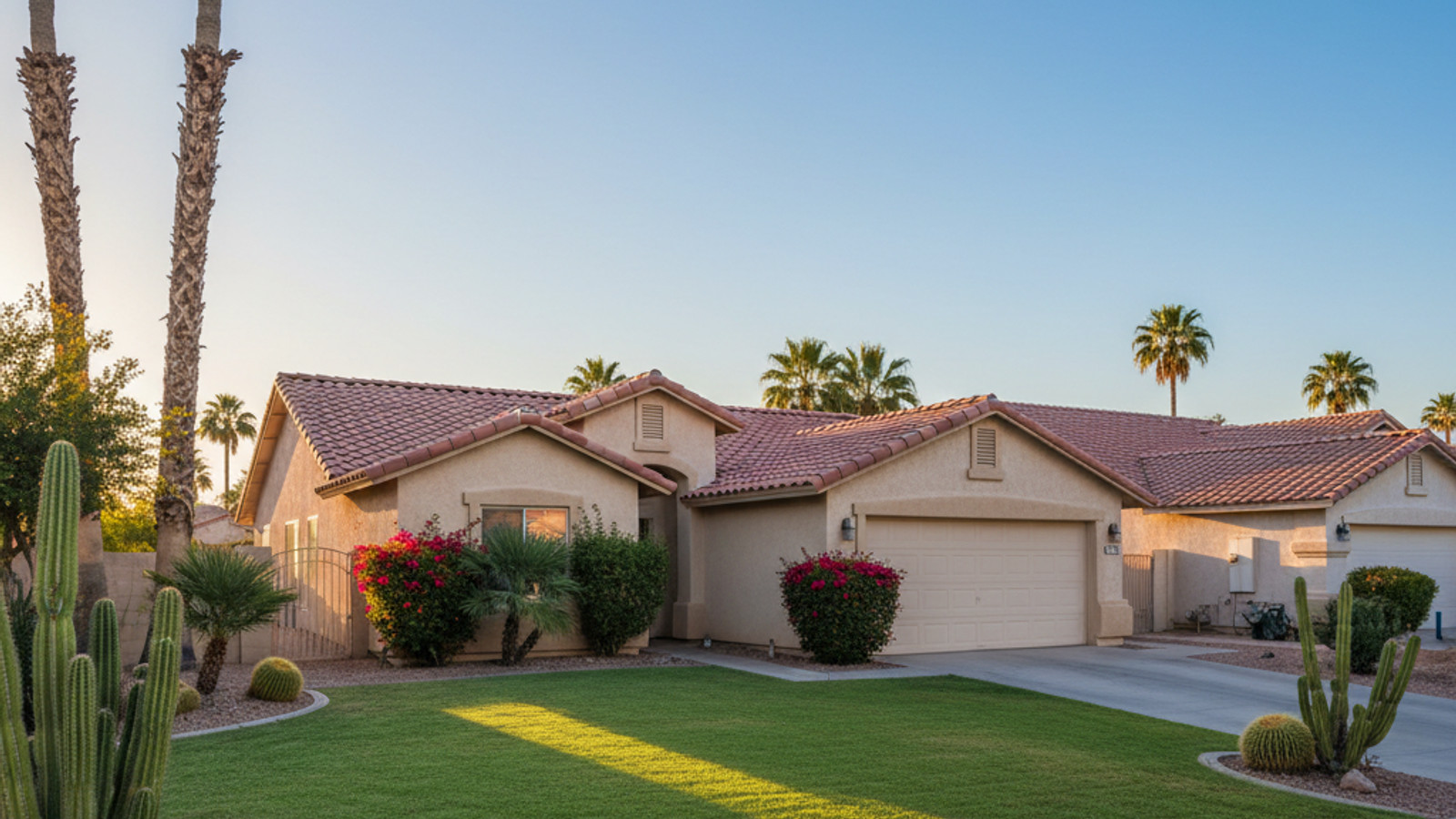
What Should You Budget for Preparing a Luxury Home for Market?
This is the line sellers most often leave out, and it is frequently the difference between the top and bottom of your realistic price range.
Professional media is not optional at this level. Photography, drone, floor plans and video for a luxury listing commonly run $2,000 to $6,000 if you are paying for it. Ask whether it is absorbed by the brokerage — it is one of the clearest differences between a luxury operation and a generalist taking a luxury listing.
Beyond media, budget realistically for whatever the home needs to show at its price: paint, landscaping refresh, deep cleaning, minor repairs, and staging on a vacant property. In Summerlin and Henderson — where much of the valley's luxury inventory sits — buyers tour several comparable homes in a weekend, and the one that shows worst anchors their expectations for all of them.
That comparison effect is the reason preparation pays. A buyer who has just walked three well-presented estates does not evaluate the fourth on its merits; they evaluate it against what they have just seen. Presentation is not vanity at this level, it is the frame the offer gets written in. Across the closings Nevada Real Estate Group has represented, the pattern is consistent — money spent on presentation before listing returns more reliably than the same money conceded in negotiation afterwards, because a home that shows badly gets discounted by every buyer who walks it, not just the one who buys.
The counter-case is genuine too. Full renovations rarely return their cost on a sale, and a kitchen remodel undertaken to sell is usually a poor investment compared with pricing correctly for the kitchen you have.
What About Repair Credits After Inspection?
Plan for something, because at this price point buyers inspect thoroughly and the reports are long.
A luxury home has more systems to fail: multiple HVAC units, pool and spa equipment, water features, irrigation across a large lot, and often a guest house or casita with its own systems. Even a well-maintained estate typically produces an inspection report with real items on it.
There is no reliable average to quote here, and inventing one would be worse than useless. What is predictable is the shape of the negotiation: buyers at this level generally prefer a credit to a repair, because they would rather choose their own contractor than inherit yours. Budget a contingency in your net-proceeds model rather than assuming zero.
According to the Consumer Financial Protection Bureau, buyers are advised to treat inspection findings as a negotiating input rather than a pass/fail test — which is exactly how they arrive in practice.
What Do the Full Numbers Look Like on a Real Sale?
Worked at the median of the busiest luxury band, with every figure labelled.
On a $1,175,000 sale: a listing side at 2.5% is $29,375. Transfer tax at the Clark County rate is about $5,993. Title and escrow at the middle of the range, $3,750. Media and preparation, say $4,000. That totals roughly $43,118, or about 3.7% of the sale price — before any buyer-side compensation you choose to offer, and before repair credits.
Offer 2.5% buyer-side compensation and you add $29,375, taking the total to about $72,493 or 6.2%.
On a $2,328,500 sale the same structure produces roughly $58,213 listing side, $11,875 transfer tax, $4,500 title and escrow, and $6,000 preparation — about $80,588, or 3.5%, again before buyer-side compensation.
The percentages are the useful part. Between 3.5% and 6% of the sale price covers most luxury transactions in this market depending on how buyer-side compensation is handled — and that is applied to a sale price that, 91% to 94% of the time, will be below what you listed at.
| Line item | Basis | Amount |
|---|---|---|
| Sale price | Band median | $1,175,000 |
| Listing commission | 2.5%, negotiable | $29,375 |
| Transfer tax | $2.55 per $500 | $5,993 |
| Title and escrow | Mid-range | $3,750 |
| Media and preparation | Typical | $4,000 |
| Subtotal before buyer-side | 3.7% of price | $43,118 |
| Optional buyer-side compensation | 2.5% if offered | $29,375 |
| Total if buyer-side offered | 6.2% of price | $72,493 |
How Do the Costs Scale Across the Luxury Bands?
Less than proportionally, which is the one piece of good news in this guide.
Commission scales with price because it is a percentage. Transfer tax scales too, because it is calculated per $500 of value. But title, escrow and preparation are broadly flat — the work does not double when the price does. The result is that total cost as a percentage of the sale price falls slightly as you move up the bands, even as the dollar figure climbs.
At the $1,175,000 median the total lands near 3.7% before buyer-side compensation. At $1,649,950, about 3.6%. At $2,328,500, roughly 3.5%. The dollar cost nearly doubles across that range while the percentage drifts down.
| Line item | $1,175,000 sale | $1,649,950 sale | $2,328,500 sale |
|---|---|---|---|
| Listing commission (2.5%) | $29,375 | $41,249 | $58,213 |
| Transfer tax | $5,993 | $8,415 | $11,875 |
| Title and escrow | $3,750 | $4,000 | $4,500 |
| Media and preparation | $4,000 | $5,000 | $6,000 |
| Total before buyer-side | $43,118 | $58,664 | $80,588 |
| As a share of sale price | 3.7% | 3.6% | 3.5% |
The figures above are estimates built on the stated assumptions, not quotes. Your commission is whatever you negotiate, your preparation cost depends on the home, and buyer-side compensation is a decision rather than a fee. The purpose of the table is the shape, not the precision: costs are a smaller share of a bigger sale, and the largest single variable remains the sale price itself.

What Is the Single Biggest Variable in What You Net?
The sale price, by a wide margin — and it is the one most within your influence before you list.
Every cost in this guide is a percentage or a fixed range. The sale price is neither. The gap between a well-prepared, correctly priced luxury home and the same home launched at an aspirational number and reduced twice is routinely larger than the entire commission, and it does not appear on any closing statement.
According to the Las Vegas REALTORS reporting, the valley's broad market behaves quite differently from the luxury tier — which is why sellers who benchmark against general market commentary tend to launch high. In a segment where 91% to 94% of sales close below asking, launching high is not a negotiating strategy; it is a slower path to the same or a lower number.
According to the U.S. Census Bureau, the Las Vegas metro continues to attract in-migration, which supports demand generally — but demand for a specific $2 million home is a handful of buyers, not a trend. Your net proceeds are decided by how those few people respond in the first three weeks. Buyers researching the other side of this transaction can start on our Las Vegas and buyers pages, and current inventory is on our search page.
Does Your Mortgage Payoff Match Your Balance?
Not exactly, and the difference is worth knowing before you plan around it.
Your payoff figure includes interest accrued to the closing date, not just the principal on your last statement, plus any prepayment provisions on your loan. On a large balance the interest between statement and closing is meaningful — request a written payoff quote from your lender early rather than working from the app.
If you have a HELOC or second position, it must be paid and released at closing too, and releases can take time to process. According to Freddie Mac, rate movements also affect timing decisions for sellers who are buying again — if your next purchase carries a materially higher rate than the loan you are retiring, that belongs in the same calculation as your proceeds. Our buyers page covers the purchase side.
How Does Days on Market Affect What You Net?
Indirectly but reliably: the longer a listing sits, the more the eventual buyer expects a discount.
The median is 39 days in the $1 million to $1.5 million band and 40 days between $1.5 million and $2 million. Those are medians, so half of all sales take longer, and a listing at day 60 is not unusual.
The cost of time is not the carrying cost — that is real but modest over a few months. It is the negotiating position. A listing with visible price reductions and a long market history invites lower offers than a freshly launched one at the same price, which is the strongest argument for pricing correctly at launch rather than discovering the number through cuts.
According to the National Association of REALTORS research, pricing accuracy in the opening weeks is the single strongest predictor of final sale price relative to list. That finding is about net proceeds even though it never mentions them.

Will You Owe Capital Gains Tax on the Sale?
Possibly, and at luxury price points it is worth real planning rather than an assumption.
Nevada has no state income tax, which is one reason the state attracts equity-rich sellers from higher-tax states — but federal capital gains rules still apply. The primary-residence exclusion shelters a portion of the gain for qualifying sellers, and the rest may be taxable depending on your basis, improvements made over the years, and how long you have lived in the property.
At a $2 million-plus sale price the gain frequently exceeds the exclusion, which makes your documented cost basis — original purchase price plus capital improvements — genuinely valuable. Sellers who kept receipts for a pool, a casita, or a major renovation often reduce their taxable gain materially.
This is a question for your CPA rather than your agent, and worth asking before you list rather than in April. Investment properties raise different questions again, including whether a 1031 exchange fits — see our investment resources and speak to a qualified adviser.
What Do Buyers Actually Negotiate on Above a Million Dollars?
Price, but rarely only price — and the non-price terms often carry more value than sellers realise.
Closing timeline is frequently worth more than a small price concession. A seller who needs sixty days to move into their next home may find a buyer willing to accommodate that in exchange for a modest adjustment, and that trade is usually better than it looks on paper.
Personal property is a real negotiation at this level: furnishings selected for the house, art, outdoor furniture, pool equipment, and occasionally vehicles. These are worth pricing deliberately rather than conceding late.
Repair credits, as covered above, and occasionally the transfer tax or the owner's title policy. In our experience the sellers who net most are the ones who decide in advance which terms they will trade and which they will not, rather than responding to each request as it arrives. Our sellers page and our 7-day listing agreement set out how we approach the listing side, and our companion guide to what actually sold above $2 million covers the band data behind these negotiations.
Frequently Asked Questions
How much do Las Vegas luxury sellers actually net?
Typically 94% to 96.5% of the sale price before buyer-side compensation, and around 93.8% if you offer 2.5% buyer-side. On a $1,175,000 sale, total costs of roughly $43,118 without buyer-side compensation or $72,493 with it. And remember the sale price itself is below list in 91% to 94% of luxury transactions.
What percentage of Las Vegas luxury homes sell below asking price?
94% between $1 million and $1.5 million, 92% between $1.5 million and $2 million, and 91% between $2 million and $3 million, among sales carrying a measurable list-to-sold comparison. Selling below asking is the norm across every luxury band.
How much is the transfer tax on a Las Vegas home sale?
Clark County's combined rate is $2.55 per $500 of value under NRS Chapter 375 — roughly $5,993 on a $1,175,000 sale, $11,875 on $2,328,500, and about $20,400 on a $4 million estate. Custom is for the seller to pay it, though it is negotiable. Confirm the current rate with the Nevada Department of Taxation.
Is real estate commission negotiable in Nevada?
Yes, and it always has been. Listing sides commonly run 2% to 3% at luxury price points. Since the 2024 settlement, buyer-side compensation is negotiated separately rather than assumed — get both figures in writing before signing.
Who pays for photography and marketing on a luxury listing?
It depends entirely on the brokerage, and the difference is worth asking about. Professional media for a luxury listing runs $2,000 to $6,000. On our listings the team absorbs it rather than billing at closing — ask any agent you interview to state plainly which costs are theirs.
How long does it take to sell a luxury home in Las Vegas?
A 39-day median between $1 million and $1.5 million and 40 days between $1.5 million and $2 million. Those are medians, so half take longer, and a listing at day 60 is not unusual. Add 30 to 45 days from accepted offer to close on a financed purchase.
Should I renovate before selling a luxury home?
Usually not a full renovation — major remodels rarely return their cost on a sale. Presentation work does: paint, landscaping, deep cleaning, minor repairs, and staging on a vacant property. Money spent on how the home shows returns more reliably than the same money conceded in negotiation.
Do I pay capital gains tax when selling a Las Vegas home?
Nevada has no state income tax, but federal capital gains rules still apply. The primary-residence exclusion shelters part of the gain for qualifying sellers; above $2 million the gain frequently exceeds it. Documented improvements raise your basis and reduce the taxable gain — a question for your CPA before you list.
Which Sources Inform This Net Proceeds Guide?
Closed-sale figures — counts, median sold prices, days on market, and the share closing below asking — were retrieved from GLVAR MLS data via Repliers on 2026-08-01, covering the trailing 365 days for Las Vegas. Below-asking percentages reflect only sales carrying a measurable list-to-sold comparison and describe how often a sale closed under list, not the size of the discount.
Cost figures are stated as ranges typical of this market rather than as quotes, because commission, title, escrow and preparation costs are negotiated per transaction. The transfer tax rate is the Clark County combined rate as of writing; confirm the current statutory figure before relying on it. No repair-credit average is offered because no reliable one exists, and inventing one would be worse than leaving the line open.
- Nevada Revised Statutes Chapter 375 — real property transfer tax statute
- Nevada Department of Taxation — transfer tax administration and current rates
- Clark County Assessor — parcel records and assessed values
- Las Vegas REALTORS — monthly market statistics
- National Association of REALTORS — pricing and negotiation research
- Consumer Financial Protection Bureau — buyer and seller guidance
- Freddie Mac PMMS — mortgage rate survey
- Internal Revenue Service — capital gains on home sales
- Nevada Real Estate Division — licence lookup and disciplinary records
- U.S. Census Bureau — population and housing characteristics
- Bureau of Labor Statistics — Las Vegas metro employment
- Nevada Revised Statutes Chapter 645 — real estate licensing law
Want the Net Proceeds Math on Your Specific Home?
We will build the line-by-line estimate for your address and price band — sale price supported by closed comparables, every cost itemised, and the realistic range rather than the flattering one.
Call (702) 637-1759 or reach us through the contact page.
Chris Nevada · Nevada Real Estate Group · LPT Realty · Nevada licence S.181401 · 8945 W Russell Rd, Suite 170, Las Vegas, NV 89148