
Ask what a Las Vegas home above $2 million is worth and you will get asking prices. Asking prices are opinions. This guide uses the closing record instead.
Over the trailing twelve months the Las Vegas market closed 405 homes at or above $2 million, at a median of $2,725,000, 42 days on market, and $728 per square foot. But the single most useful number is not in that sentence. Of the sales above $2 million measured against their list price, 84 closed below asking and 7 closed above — meaning roughly 92% of ultra-luxury sellers took less than they asked for.
That one ratio should shape how both sides approach a transaction at this level.
Las Vegas closed 405 homes above $2 million over twelve months at a $2,725,000 median, 42 days on market, and $728 per square foot. Of those measured against list, 92% sold below asking. The market thins sharply as price rises: 230 sales between $2M and $3M, 111 between $3M and $5M, and 61 above $5M, where the median stretches to 70 days. Buyers have real negotiating room here. Call (702) 637-1759 for the comparables in your band.
- 405 Las Vegas homes closed above $2 million in twelve months at a $2,725,000 median.
- 92% of measured sales above $2 million closed below their asking price.
- Above $5 million the median stretches to 70 days — nearly double the $2M-$3M band.
- Price per square foot climbs $564 → $713 → $1,446 as you move up the bands.
- Henderson closed 192 above $2 million at a higher $3,215,000 median than Las Vegas.
How Many Homes Actually Sell Above $2 Million in Las Vegas?
405 over the trailing twelve months — roughly 34 a month across the entire valley.
That number matters more than any price figure in this guide, because it sets the scale of the market you are transacting in. Las Vegas closed 17,484 homes below $1 million in the same period. The ultra-luxury tier is about 2.3% of that volume.
Within the $2 million-plus tier, the thinning is just as steep. 230 sales fell between $2 million and $3 million, 111 between $3 million and $5 million, and 61 above $5 million. By the time you reach eight figures you are counting individual transactions, not analysing a market.
According to the Las Vegas REALTORS monthly reporting, the valley's overall sales volume runs in the thousands per month — so the ultra-luxury segment is a rounding error in the headline statistics that most buyers and sellers read.
| Metric | $2M–$3M | $3M–$5M | $5M and above |
|---|---|---|---|
| Closed sales | 230 | 111 | 61 |
| Median sold price | $2,328,500 | $3,400,000 | $7,000,000 |
| Median days on market | 37 | 44 | 70 |
| Average price per sq ft | $564 | $713 | $1,446 |
Do Las Vegas Luxury Homes Sell for Their Asking Price?
Overwhelmingly, no — and this is the finding worth carrying into any negotiation above $2 million.
Of the sales above $2 million that carry a measurable list-to-sold comparison, 84 closed below their asking price and 7 closed above. That is roughly 92% below list. In the broader valley market, homes routinely close at or near asking; at this level, closing below asking is the norm rather than the exception.
For a buyer, that reframes the opening offer. Paying list above $2 million puts you in the smallest minority of transactions in this segment. The evidence says there is room, and asking for it is ordinary rather than aggressive.
For a seller, it argues for pricing close to reality from day one. Across the 9,600+ closings Nevada Real Estate Group has represented, the pattern in this tier is consistent: the homes that close nearest to asking are the ones priced correctly at launch, not the ones that started high and negotiated down. Every price reduction is public, and a listing carrying a visible reduction history invites a lower offer than one without.
It is worth being precise about what that 92% does and does not mean. It is a count of sales carrying a measurable list-to-sold comparison — 84 below, 7 above — not a claim about the size of the discount. A home that closed $25,000 under a $2.6 million asking price counts the same as one that closed $400,000 under. The useful conclusion is directional: in this band the asking price is an opening position for almost everybody, and both sides should plan on that.
Why Does the Market Slow So Much Above $5 Million?
Because the buyer pool shrinks faster than the inventory does.
The $2 million to $3 million band closes in a 37-day median. $3 million to $5 million takes 44 days. Above $5 million the median stretches to 70 days — nearly double the entry band, and that is the median, meaning half of those homes took longer still.
There is nothing wrong with a market that moves at that pace. It is simply what happens when only 61 buyers a year exist for a given kind of property. Sellers who plan around a 40-day timeline at this level will be making decisions from a position of anxiety by month three.
The practical planning number for an ultra-luxury seller is closer to six months from listing to funds: roughly 70 days to contract at the median, then 30 to 45 days to close on a financed purchase, plus the time it takes to prepare a home of that calibre for market properly.
What Does Price Per Square Foot Do Across the Ultra-Luxury Bands?
It roughly triples, which tells you the metric has stopped measuring the building.
The $2 million to $3 million band averages $564 per square foot. $3 million to $5 million averages $713. Above $5 million, $1,446 — about 2.6 times the entry band.
No construction cost explains that. What it reflects is land: acreage, elevation, view protection, and privacy, none of which scale with interior floor area. A $7 million estate is frequently not much larger than a $3.4 million one; it sits somewhere different.
According to the Federal Housing Finance Agency, repeat-sales methodology exists precisely because averages mislead when properties are not comparable, and the ultra-luxury tier is where that breaks down most completely. Anyone valuing a home in this range from a per-square-foot average is using the wrong instrument — our guide to Summerlin price per square foot works the same problem at the zip level.
How Does Henderson Compare Above $2 Million?
Henderson is the smaller market and the more expensive one.
Henderson closed 192 homes above $2 million against Las Vegas's 405 — but at a $3,215,000 median, roughly $490,000 above the Las Vegas median of $2,725,000. Above $3 million, Henderson closed 107 at a $4,450,000 median and $837 per square foot.
That reflects where Henderson's ultra-luxury inventory sits: the hillside communities on the city's western edge, engineered into the McCullough Range with valley-wide views. Elevation is finite and priced accordingly.
Days on market run close between the two: 41 days in Henderson above $2 million against 42 in Las Vegas. The Henderson market is not faster, it is simply priced higher for the same tier.
| Metric | Las Vegas $2M+ | Henderson $2M+ | Henderson $3M+ |
|---|---|---|---|
| Closed sales | 405 | 192 | 107 |
| Median sold price | $2,725,000 | $3,215,000 | $4,450,000 |
| Median days on market | 42 | 41 | 47 |
| Average price per sq ft | $728 | $700 | $837 |
What Should a Buyer Above $2 Million Take From This Data?
Four things, all of them arguable with evidence rather than instinct.
You are in the majority if you offer below asking. 92% of measured sales in this band closed under list. An offer below asking is the normal case, not an insult.
Time is on your side above $5 million. A 70-day median means most sellers at that level will have sat through a quiet stretch by the time you appear. That is leverage, and it grows with each week the listing ages.
Do not use a per-square-foot average to justify your number. The seller will produce a different one from a different band. Use closed comparables in the same band, ideally the same community, from the last six months.
Budget realistically for financing. Most purchases at this level exceed conforming limits, which means jumbo underwriting, stricter reserves, and appraisal risk that grows as comparables thin. According to the Consumer Financial Protection Bureau, obtaining loan estimates from several lenders is worth the effort — on a $2.7 million loan the spread between lenders is measured in tens of thousands of dollars. Our buyers page covers how we structure this side of a purchase.
What Should a Seller Above $2 Million Do Differently?
Price at the number you expect to receive, and market to a buyer who does not live here yet.
Because 92% of sales close below asking, an aspirational list price does not produce an aspirational sale — it produces a longer marketing period and a lower final number. The listings that hold closest to asking are the ones that never needed a reduction.
Marketing has to reach beyond the valley. A meaningful share of ultra-luxury buyers in Las Vegas are relocating, frequently from California, and are still deciding which market to buy in — our moving to Las Vegas guide covers the tax and timing questions those buyers work through first. According to the National Association of REALTORS research programme, out-of-state buyers make up a substantial share of purchases in high-growth Sun Belt metros — and Nevada's lack of a state income tax keeps that pipeline open. Local-only marketing reaches a fraction of the real audience.
Plan the timeline honestly. Across the closings we have represented in this tier, the sellers who do best are the ones who agreed a six-month plan at the outset and stuck to it, rather than reacting at week four. Our sellers page sets out how we approach it, and we publish the terms of our 7-day listing agreement so no one is locked into a twelve-month commitment while they find out.
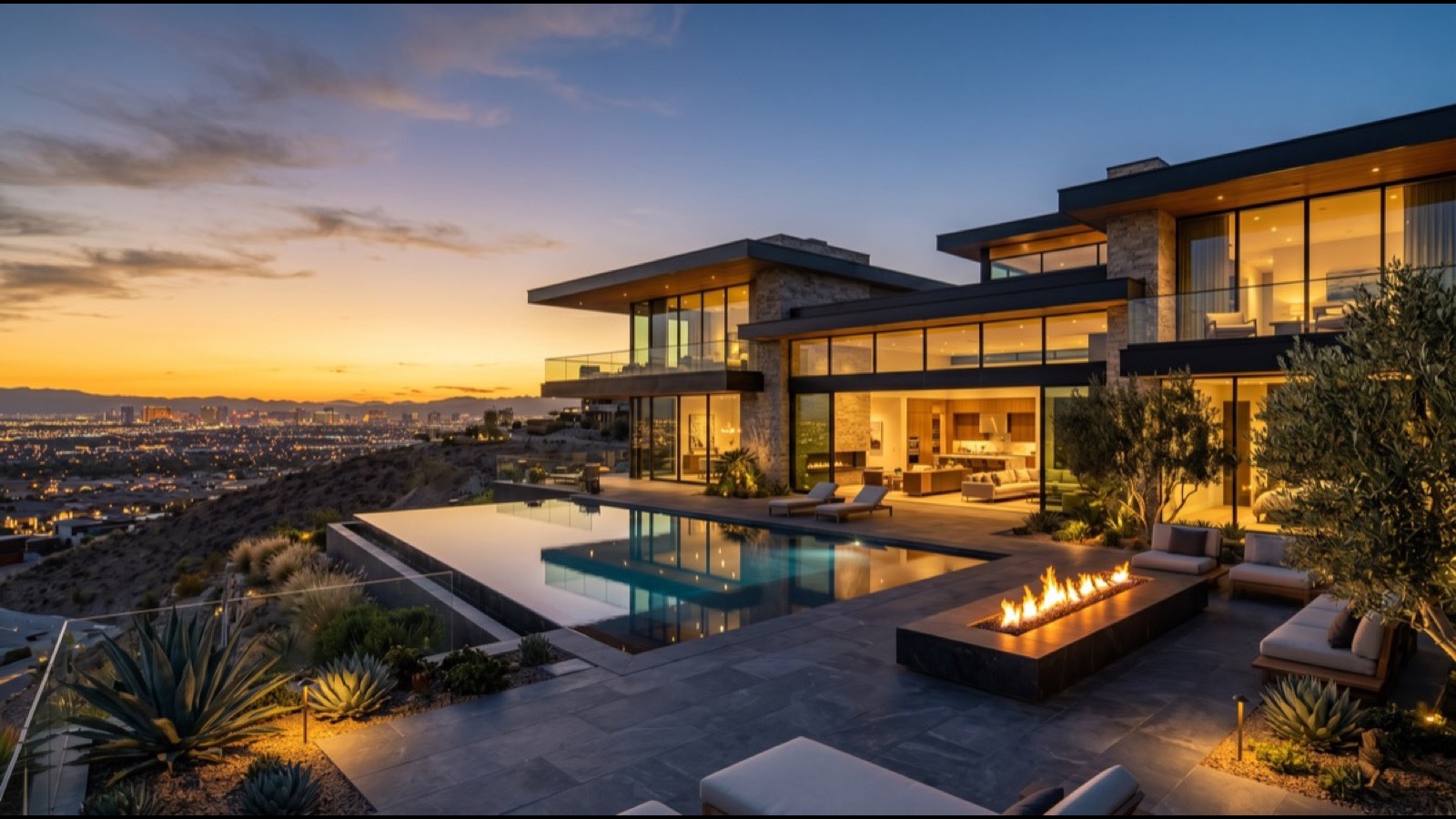
Which Areas Hold the Most $2 Million-Plus Inventory?
The ultra-luxury inventory concentrates in a short list of places, and knowing which one you are in changes the comparables that matter.
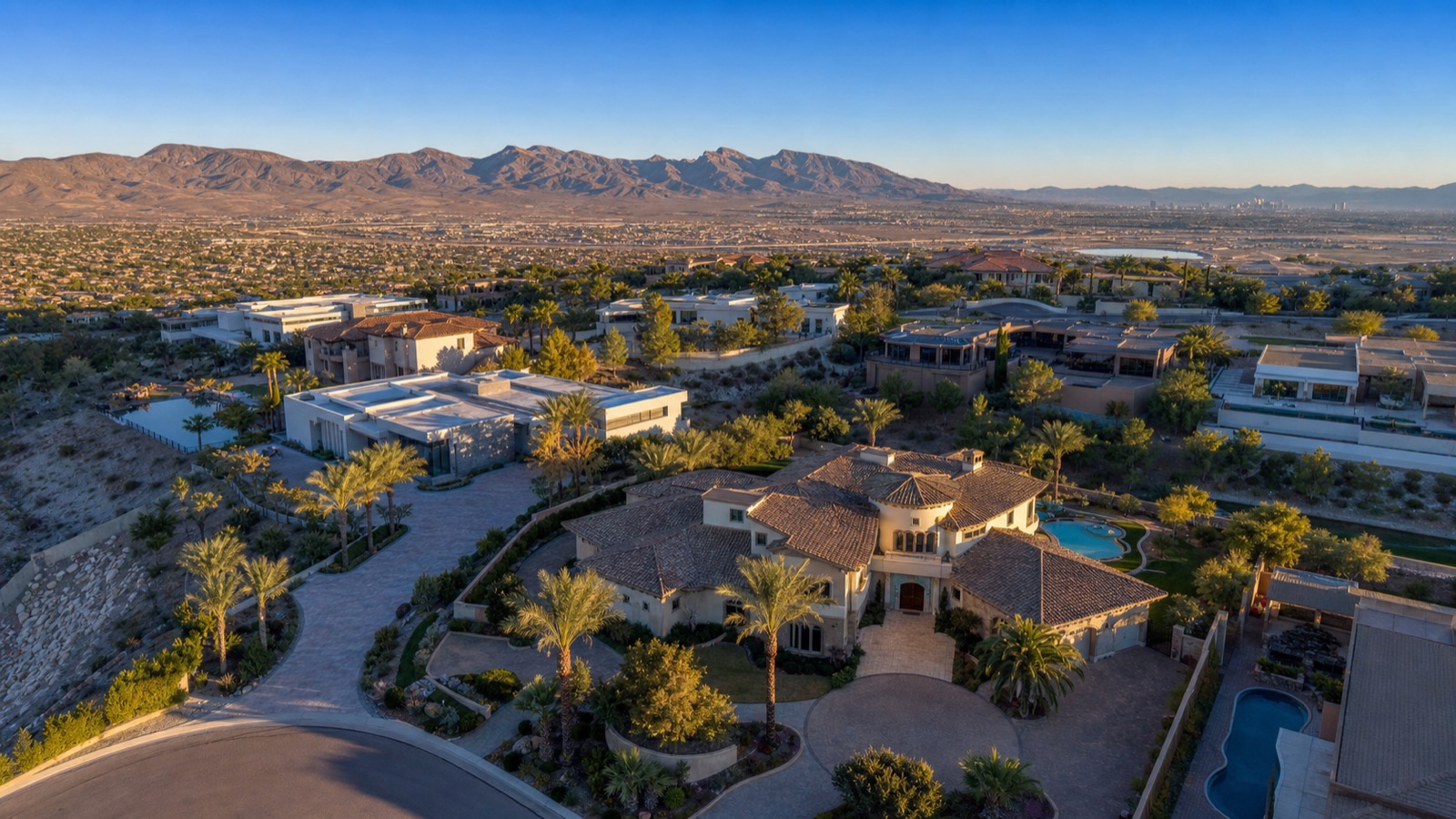
In Las Vegas, Summerlin's 89135 is the densest luxury zip — it alone closed 150 homes above $2 million in the period, a substantial share of the city's 405. Our Summerlin price-per-square-foot guide works that zip in detail, and the best luxury real estate agent in Las Vegas guide covers how to verify who actually transacts at this level. The Ridges and The Summit Club sit inside it. Southern Highlands anchors the southwest with its private golf club.
In Henderson, MacDonald Highlands and Ascaya define the hillside custom tier, and Lake Las Vegas offers waterfront living around a 320-acre lake. Anthem Country Club delivers guard-gated golf at generally more accessible entry points.
Our luxury communities and guard-gated communities pages break these down by price band and HOA structure, and you can filter current inventory directly on our search page. Buyers weighing a build instead of a resale should also read our new construction guide, since builder pricing in this tier is structured very differently. A caution: MLS neighbourhood fields in Southern Nevada are inconsistently populated, so community-level closing counts are unreliable and this guide does not publish them. Zip and city figures are trustworthy; village-level ones are not.
How Does Ultra-Luxury Compare With the Rest of the Las Vegas Market?
It behaves like a different asset class, and the contrast is stark.
Below $1 million, Las Vegas closed 17,484 homes at a $423,211 median in 30 days at $254 per square foot. Above $2 million: 405 homes, a $2,725,000 median, 42 days, $728 per square foot.
That is 43 times the volume at the bottom, closing 12 days faster, at less than a third of the price per square foot. The two segments share a city and almost nothing else — different buyers, different financing, different marketing, different timelines.
It is why general market commentary is close to useless above $2 million. A headline that Las Vegas inventory is tightening or prices are rising describes the 17,484, not the 405. According to the Bureau of Labor Statistics, the metro's employment base has broadened well beyond hospitality — which supports the broad market, while the ultra-luxury tier tracks wealth migration and equity from other states instead.
What Does the Full Las Vegas Price Ladder Look Like?
Set side by side, the three tiers of this market barely look like the same city.
Below $1 million, Las Vegas closed 17,484 homes at a $423,211 median, in 30 days, at $254 per square foot. The $1 million-plus tier closed 1,476 at $1,352,975, 40 days, $482. Above $2 million: 405 at $2,725,000, 42 days, $728.
The pattern is consistent in every column. Volume collapses by a factor of forty-three from bottom to top. Time on market grows by twelve days. Price per square foot nearly triples. And the list-to-sold behaviour flips completely — the broad market routinely closes at or near asking, while 92% of ultra-luxury sales close below it.
| Metric | Under $1M | $1M and above | $2M and above |
|---|---|---|---|
| Closed sales | 17,484 | 1,476 | 405 |
| Median sold price | $423,211 | $1,352,975 | $2,725,000 |
| Median days on market | 30 | 40 | 42 |
| Average price per sq ft | $254 | $482 | $728 |
This is why a single "Las Vegas market update" cannot serve both audiences. The statistics that make headlines are driven almost entirely by the 17,484 — inventory levels, median price movement, days on market. None of it describes what happens to a $4 million estate, and acting on it at that level is how sellers end up mispriced.
How Should You Read a Days-on-Market Number at This Level?
As a description of the submarket, not a verdict on the home.
A 42-day median above $2 million means half of all sales took longer than 42 days. That is not a warning sign; it is the centre of the distribution. Sellers who treat day 43 as evidence of failure make expensive decisions — usually a price reduction that was not warranted, which then invites a lower offer than the one that was already coming.
The distribution also has a long tail that the median hides. A genuinely distinctive property — an architect-designed estate, an unusual lot, a home with a very specific layout — can reasonably take six months to find the one buyer who wants exactly that. Its eventual sale price is often unaffected by the wait, because the buyer who wanted it was always going to pay for it.
What should concern a seller is a different pattern: steady showing traffic producing no offers. In our experience that combination points at condition, layout or presentation rather than price, and no reduction fixes it — it just sells a poorly presented home for less. The diagnostic question is not "how long has it been listed" but "how many people have walked through it and what did they say."
According to the National Association of REALTORS research, pricing accuracy in the opening weeks is the strongest single predictor of the final sale price relative to list. That is an argument for getting the number right at launch rather than discovering it through reductions.
What Are the Real Risks of Buying at This Level?
Three, and all are manageable if you plan for them.
Appraisal risk. With only 405 sales above $2 million a year, a given property may have very few genuine comparables. An appraiser working outside their usual band can return a number that jeopardises financing.
Liquidity risk. A 70-day median above $5 million on the way in is also a 70-day median on the way out. If there is any chance you sell within three years, that matters more than the purchase price.
Carrying cost. Property tax, insurance, HOA dues on a guard-gated estate, pool and grounds maintenance, and utilities on a large home add up to a meaningful monthly figure independent of the mortgage. The Clark County Assessor publishes the assessed values behind the tax bill, and the Nevada Department of Taxation sets out the transfer tax due at closing.
What Does This Mean for Timing a Purchase or Sale?
Seasonality matters less at this level than most people expect, and inventory matters more.
In the broad Las Vegas market, spring brings a reliable surge of both buyers and listings. Above $2 million the pattern is far weaker, because the buyer is usually relocating on their own schedule — a job change, a business sale, a decision to leave a higher-tax state — rather than moving before a school year. With only 405 transactions a year spread across twelve months, seasonal effects are hard to distinguish from ordinary noise.
What genuinely moves the odds is how many comparable homes are competing with yours at the moment you list. One additional estate of similar size, position and price in the same community can materially change how long yours takes, in a way no seasonal rule of thumb captures. That is a question worth asking before choosing a launch date, and it takes about ten minutes to answer from current inventory.
For buyers, the corresponding question is how long the homes you are considering have already been listed. A property at day 20 of a 42-day median is in a different negotiating position from one at day 90, even at an identical asking price — and the second seller has now watched several weeks pass without an offer.
Across the closings Nevada Real Estate Group has represented in this segment, the single most common avoidable mistake on the sell side is launching against known competition without adjusting for it, and on the buy side it is treating every listing at the same asking price as equally negotiable. Neither is visible in a market report.
How Much Should You Budget Beyond the Purchase Price?
More than most buyers model, and the gap widens with the size of the home.
Property tax is assessed on the Clark County Assessor valuation rather than your purchase price, so the bill on a newly purchased estate is not simply a percentage of what you paid — it is worth checking the parcel record before you budget. Nevada's real property transfer tax is set out by the Nevada Department of Taxation and is due at closing.
Beyond that, insurance on a multi-million dollar home is a different product from a standard homeowner's policy, frequently requiring specialist carriers for high-value contents and specific coverage for pools, guest houses and detached structures. HOA dues in the guard-gated communities where much of this inventory sits run well above valley norms, since they fund staffed gates, private roads and shared amenities.
Then there is the running cost that surprises people: grounds and pool maintenance, systems servicing, and utilities on a home of six or seven thousand square feet in a desert climate. None of it is difficult to plan for, but it belongs in the model before the offer rather than after the first summer.
Frequently Asked Questions
How many homes sell above $2 million in Las Vegas each year?
405 over the trailing twelve months — about 34 a month across the whole valley. Of those, 230 fell between $2 million and $3 million, 111 between $3 million and $5 million, and 61 closed above $5 million.
Do Las Vegas luxury homes sell above or below asking price?
Below, overwhelmingly. Of sales above $2 million measured against list, 84 closed below asking and 7 above — roughly 92% below. Offering under list in this tier is the normal case, not an aggressive one.
How long does it take to sell a home above $2 million in Las Vegas?
The median is 42 days above $2 million, but it varies sharply by band: 37 days between $2M and $3M, 44 days between $3M and $5M, and 70 days above $5 million. Plan on roughly six months from listing to funds at the top end.
What is the price per square foot for luxury homes in Las Vegas?
$728 on average above $2 million, but the figure climbs steeply by band — $564 between $2M and $3M, $713 between $3M and $5M, and $1,446 above $5 million. Use the band that matches your home rather than a blended average.
Is Henderson or Las Vegas more expensive above $2 million?
Henderson. It closed 192 homes above $2 million at a $3,215,000 median against the Las Vegas median of $2,725,000 — roughly $490,000 higher — driven by the hillside estate communities on its western edge.
What percentage of Las Vegas home sales are above $2 million?
About 2.3% of the volume that closes below $1 million. Las Vegas closed 17,484 homes under $1 million in the same twelve months against 405 above $2 million, so ultra-luxury barely registers in valley-wide statistics.
Do I need a jumbo loan to buy above $2 million in Las Vegas?
Almost certainly, since these purchases far exceed conforming limits. Expect stricter underwriting, meaningful post-closing reserve requirements, and appraisal risk that rises as comparables thin. Get loan estimates from more than one lender.
Which Las Vegas communities have the most homes above $2 million?
Summerlin's 89135 zip is the densest, closing 150 above $2 million on its own — it contains The Ridges and The Summit Club. Southern Highlands anchors the southwest, and in Henderson the hillside communities of MacDonald Highlands and Ascaya lead, with Lake Las Vegas and Anthem Country Club below them.
Which Sources Inform This Las Vegas Ultra-Luxury Guide?
Closed-sale figures — counts, median sold prices, days on market, average price per square foot, and the list-to-sold comparison — were retrieved from GLVAR MLS data via Repliers on 2026-08-01, covering the trailing 365 days for Las Vegas and Henderson. The 92% below-list figure reflects sales above $2 million carrying a measurable list-to-sold comparison (84 below, 7 above); sales without that comparison are excluded rather than assumed.
Community-level closing counts were deliberately omitted. The MLS neighbourhood field is inconsistently populated in Southern Nevada and returns implausible counts for named communities, so this guide reports zip and city figures only.
- Las Vegas REALTORS — monthly market statistics for the valley
- Clark County Assessor — property records and assessed values
- Nevada Department of Taxation — real property transfer tax
- Federal Housing Finance Agency — house price index methodology
- Consumer Financial Protection Bureau — mortgage shopping guidance
- National Association of REALTORS — buyer and seller research
- Bureau of Labor Statistics — Las Vegas metro employment
- U.S. Census Bureau — population and housing characteristics
- Freddie Mac PMMS — mortgage rate survey
- Nevada Real Estate Division — licence lookup and disciplinary records
- Clark County Department of Building and Fire Prevention — permit and construction records
- Nevada Revised Statutes Chapter 645 — real estate licensing law
Ready to See the Comparables in Your Price Band?
Whether you are buying or selling above $2 million, the number that matters is what comparable homes actually closed at — not what anyone is asking.
Call (702) 637-1759 or reach us through the contact page and we will send the closed-comparable report for your band and community, whether or not you work with us.
Chris Nevada · Nevada Real Estate Group · LPT Realty · Nevada licence S.181401 · 8945 W Russell Rd, Suite 170, Las Vegas, NV 89148