
Published April 24, 2026 · Updated July 12, 2026 · By Chris Nevada, Nevada Real Estate Group · NV License S.181401
Selling a luxury home in Las Vegas is a completely different exercise from selling the median $485,000 valley house. The buyer pool is smaller, the marketing timelines are longer, and the gap between a well-priced, well-presented listing and a mispriced one is measured in hundreds of thousands of dollars — not a few thousand. This guide is the pricing-and-process companion to our deep-dive on how Las Vegas luxury listings are marketed: that post covers the photography, video, and syndication protocol; this one covers how you actually price the home and run the sale to capture top dollar.
To sell a Las Vegas luxury home for top dollar in 2026, price within about 3% of your last 90 days of comparable closings, plan for a longer marketing window (median 40 days at $1M+, 63 days at $5M+), and invest in staging and full media before listing. Our Greater Las Vegas MLS analysis found 82% of $1M-plus homes sold below list at a 93%–94% list-to-sold ratio.
- Across 2,029 Greater Las Vegas $1M-plus closings, median days on market ran 40 at $1M+, 44 at $2M+, and 63 at $5M+.
- 82%–87% sold below original list; median list-to-sold held near 91%–94% by tier, so build in negotiating room.
- Months of supply climbs with price — about 10 at $1M+, 14.5 at $2M+, nearly 21 at $5M+.
- Staging, twilight photos, and cinematic video return several times their cost above $1.5M.
- Verify your agent has closed comparable $2M-plus homes in your ZIP; the wrong one can cost 5%–10%.
What counts as a luxury home in Las Vegas in 2026?
In the Greater Las Vegas market, the luxury tier begins at roughly $1 million and tiers up sharply from there. According to Las Vegas REALTORS, the local median price for an existing single-family home sits near $485,000, so anything above $1 million already places a home in the upper slice of valley inventory. The genuinely competitive luxury bracket — the one that demands white-glove pricing and marketing — starts around $2 million, and a separate ultra-luxury layer opens above $5 million, concentrated in The Ridges, MacDonald Highlands, Ascaya, and Lake Las Vegas.
Where your home sits inside that ladder changes everything about the sale. A $1.3 million Summerlin home competes against a deep, active pool of buyers and closes in weeks. A $6 million custom estate competes against a handful of buyers nationwide and can take four to six months. Understanding your exact rung — and the buyer behavior that comes with it — is the first move toward top dollar. If you want to see what your bracket looks like from the buyer's side, our breakdown of what $2 million buys across Summerlin versus Henderson is a useful mirror.
How does luxury actually sell — what does the current GLVAR data show?
This is where most seller advice goes wrong: it quotes the broad market's fast days-on-market and low inventory, then applies those numbers to a $3 million estate where they simply do not hold. To ground this guide in the real high-end market, our team pulled Greater Las Vegas MLS closings across every luxury tier for the trailing twelve months.
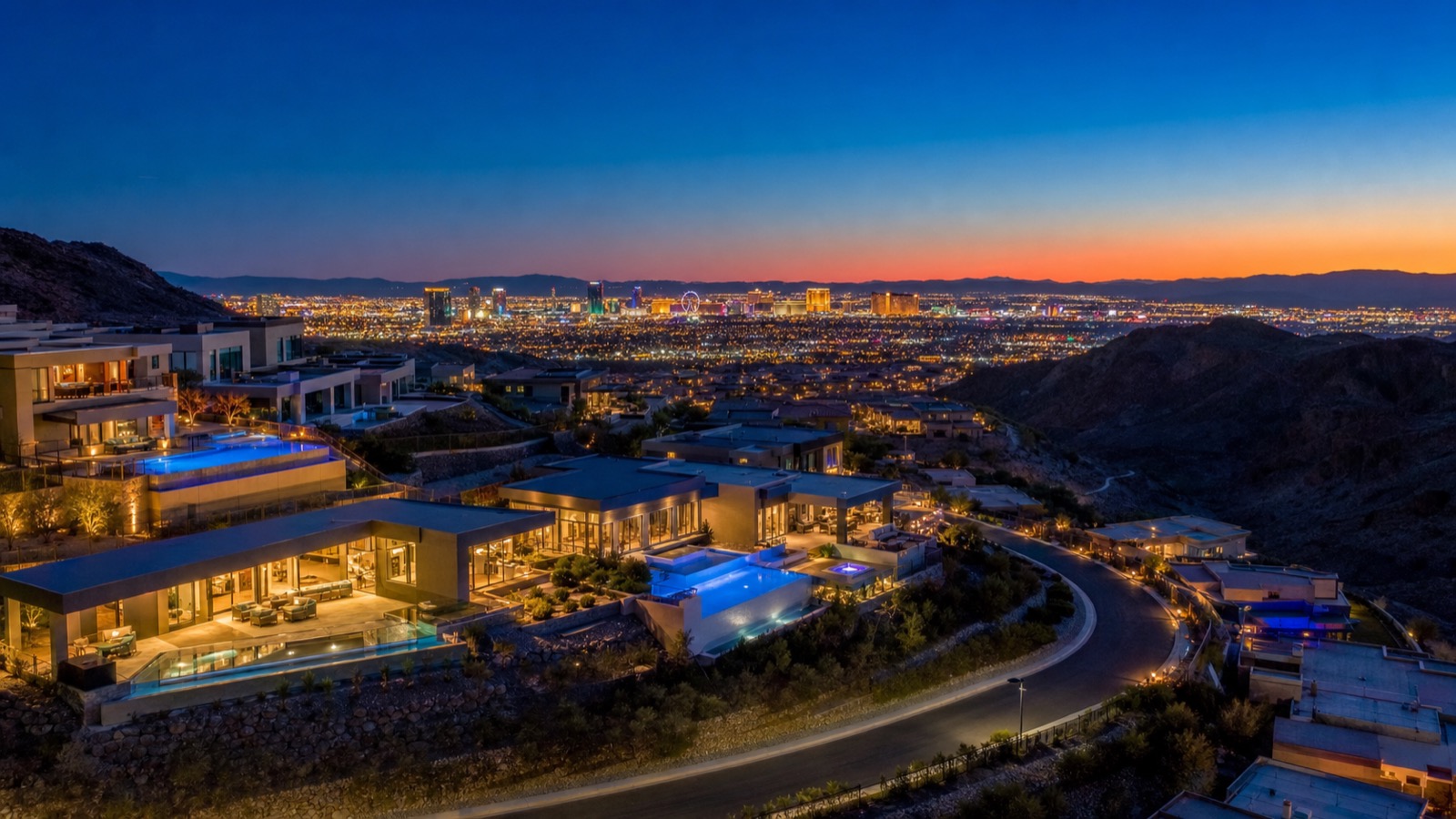
Here is the reality by tier, drawn from that dataset. Notice how every metric that matters to a seller — days on market, months of supply, and the share of homes selling below asking — gets worse as the price climbs.
| Metric | $1M+ | $2M+ | $3M+ | $5M+ |
|---|---|---|---|---|
| Homes closed (12 mo) | 2,029 | 595 | 273 | 110 |
| Median sold price | $1,398,501 | $2,795,000 | $4,175,000 | $7,087,500 |
| Median days on market | 40 | 44 | 49 | 63 |
| Average days on market | 67 | 82 | 89 | 121 |
| Months of supply | 10.0 | 14.5 | 17.9 | 20.8 |
| Share sold below list | 82% | 84% | 84% | 87% |
| Median $/sq ft | $481 | $716 | $908 | $1,262 |
Two numbers should reset your expectations immediately. First, months of supply doubles from about 10 at the $1 million entry to nearly 21 above $5 million — meaning the ultra-luxury tier carries almost two years of standing inventory at the current absorption pace. Second, the share of homes that closed below their original asking price never dips under 82% and reaches 87% at the top. This is not a market where luxury sellers name a number and buyers pay it. It is a market where the seller who prices with discipline and presents flawlessly gets the top of a negotiated range, and the seller who overprices donates the first month of momentum.
Why do luxury homes sit longer, and what should that tell you about pricing?
The longer days-on-market at the high end is not a sign of weakness — it is structural. According to the National Association of REALTORS, luxury and second-home markets across the Sun Belt run on smaller, more deliberate buyer pools with a higher share of cash, and those buyers evaluate fewer properties more slowly. A median $485,000 valley home might see a dozen showings in its first weekend. A $4 million estate might see three qualified showings in its first month, because there are only so many buyers in the country shopping that bracket at that moment.
That longer runway has a direct pricing consequence: your first three weeks matter more, not less. In our experience across the luxury listings Nevada Real Estate Group has represented, the strongest offers — the ones within a few percent of a realistic list price — cluster in the opening 21 days, when the pent-up pool of waiting buyers sees the home fresh. Price above the market and you burn that window generating no offers, and then you are the stale listing that every buyer's agent uses as leverage. The homes in our scorecard that closed nearest to asking almost universally launched at a defensible number and held it, rather than testing a high price and cutting later.
The tiering also means you cannot borrow comparables from a lower bracket. A home listed at $2.2 million competes on the psychology and inventory of the $2M+ tier — 14.5 months of supply, 84% closing below list — not on the tighter $1M+ dynamics. Pricing a $2.2 million home as if it will behave like a $1.3 million Summerlin listing is one of the most expensive mistakes we see.
How should you price a Las Vegas luxury home to sell for top dollar?
Pricing a luxury home is a research exercise, not an ego exercise. Three rules govern it in this market.
Anchor to the last 90 days, not the last year. The luxury segment moves in quarters, and the composition of what sells shifts fast. According to the Clark County Assessor, assessed values lag the market by design, so never anchor to your tax card. Pull every closed sale above your target inside a one-mile radius from the last 90 days, weight the most recent five most heavily, and build from there.
Adjust for finishes, not just square footage. A 5,200-square-foot home with a 2018 builder kitchen does not trade at the same price per foot as a 5,200-square-foot home with a 2024 designer remodel — and at $716 per foot for the $2M+ tier and $908 at $3M+, those per-foot gaps compound into six figures fast. Build a line-item adjustment grid across the five categories that move luxury value most: kitchen, primary bath, flooring, windows and doors, and outdoor living.
List with negotiating room built in, because the buyer will use it. Our data is unambiguous: 82% to 87% of luxury homes close below original list, and the median list-to-sold ratio runs roughly 94% at $1M+, 92% at $2M+, and 91% at $5M+. If your true target is $2.6 million and history says buyers negotiate 6% to 9% off asking at that tier, a $2.75 million list gives the buyer room to feel they won while you still land your number. Listing at $2.6 million flat leaves you nowhere to go but backward.
What list-to-sold reality should luxury sellers plan around?
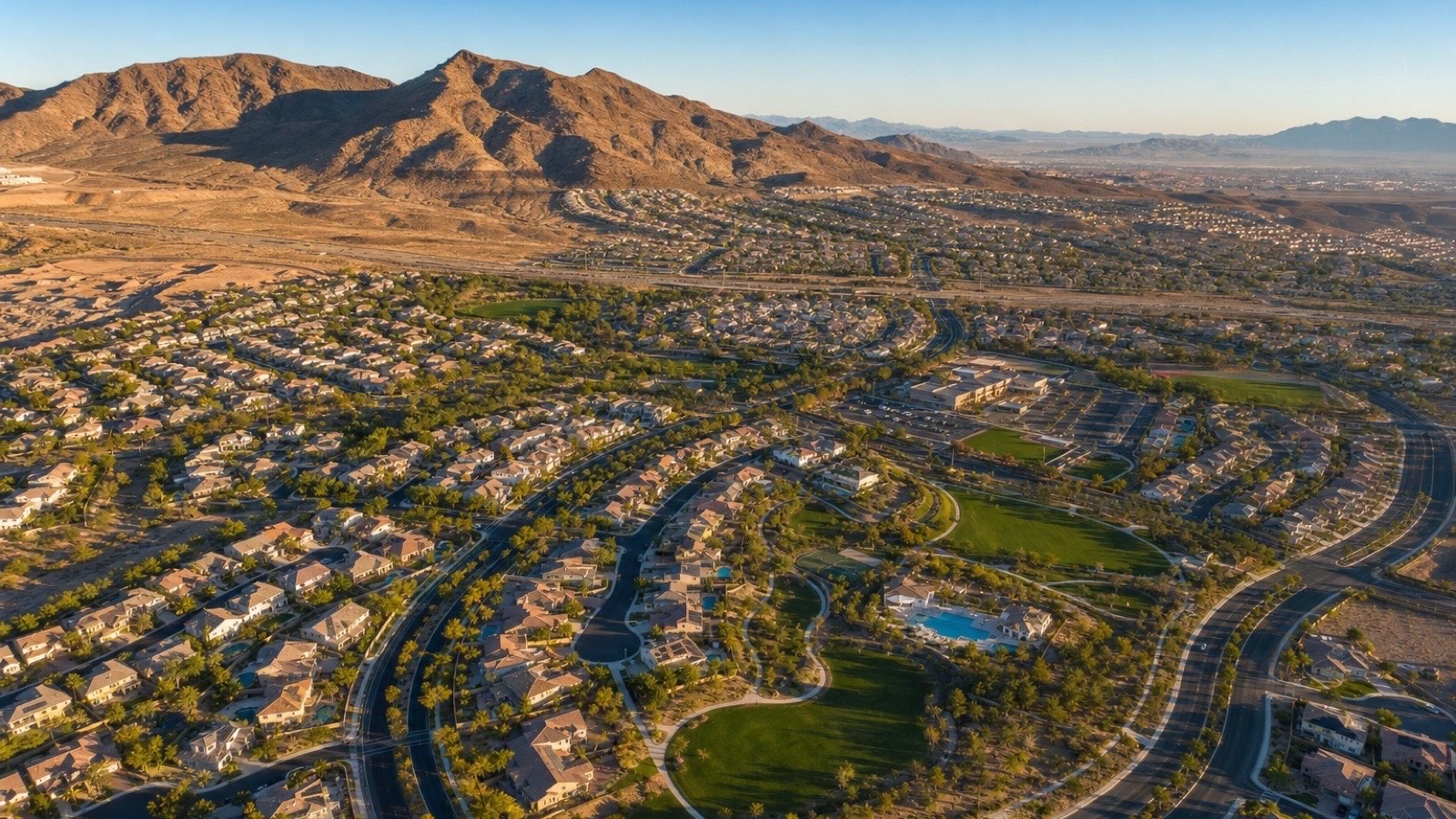
Submarket matters. The same $1M+ label behaves differently in Las Vegas proper versus Henderson, and the spread is real money. Here is how the two largest luxury submarkets compared over the trailing twelve months.
| Submarket & tier | Homes closed | Median sold price | Median DOM | Median list-to-sold |
|---|---|---|---|---|
| Las Vegas $1M+ | 1,466 | $1,350,000 | 41 | 93.8% |
| Henderson $1M+ | 525 | $1,515,000 | 36 | 95.7% |
| Las Vegas $2M+ | 395 | $2,700,000 | 44 | 91.9% |
| Henderson $2M+ | 187 | $3,200,000 | 42 | 93.5% |
| Metro $1M+ (all) | 2,029 | $1,398,501 | 40 | 94.0% |
Henderson luxury has been closing tighter to asking and faster than Las Vegas at both tiers — a reflection of the guard-gated, master-planned inventory in Anthem Country Club, MacDonald Highlands, and Lake Las Vegas, where scarcity supports pricing. That does not mean a Henderson home prices itself; it means your comparable set has to come from your specific community, not a metro average. If you are weighing where your home stands, our home value estimator is a starting point, but a true luxury comp analysis is hand-built.
How much should you invest in staging, photography, and video?
For a luxury listing, presentation is not a line item you trim — it is the highest-ROI money you will spend. The luxury buyer is not imagining a renovation; they want a turn-key, magazine-ready experience the moment the door opens. According to Freddie Mac, financing conditions have stabilized enough that qualified move-up and relocation buyers are active again, which means presentation is once more the deciding variable between two similar homes.
Here is how the investment scales with price. These are Las Vegas market ranges, and above roughly $1.5 million the listing agent — not the seller — typically funds the media package.
| Item | $1M–$2M | $2M–$5M | $5M+ |
|---|---|---|---|
| Professional staging | $4,000–$8,000 | $8,000–$15,000 | $15,000–$30,000+ |
| Photography + twilight | $800–$1,800 | $1,800–$4,500 | $4,500–$8,000 |
| Drone + cinematic video | $1,200–$3,500 | $3,500–$8,500 | $8,500–$20,000 |
| 3D Matterport tour | $450–$900 | $900–$1,500 | $1,500–$3,000 |
| Pre-listing inspection | $500–$800 | $800–$1,500 | $1,500–$3,000 |
The math is straightforward. A staging-plus-media package on a $2.5 million home might total $18,000 to $30,000. If skipping it costs you even 3% of the sale — a conservative figure for a vacant, poorly-photographed luxury home — that is $75,000 left on the table to save $25,000. Out-of-state relocation buyers from California, Washington, and Illinois make their first cut-or-keep decision almost entirely from video and 3D tours, so a listing without them is invisible to a large slice of your buyer pool. For the full media protocol, deliverable by deliverable, see our companion guide on luxury listing marketing.
Should you sell off-market or on the MLS?
Off-market has a mystique in luxury, but for most sellers the open market produces the highest price because it manufactures competition. The MLS-driven seller process puts every qualified buyer's agent in the region in front of your home simultaneously, and competition — not privacy — is what pushes an offer to the top of its range.
Off-market makes sense in narrow cases: a genuinely private seller (a public figure, a sensitive divorce or estate), a seller testing price appetite quietly before a public launch, or an ultra-luxury property so unique that only a handful of known buyers exist. Even then, the strongest approach is usually a hybrid — a 5-to-10-day pre-market or "coming soon" phase to build a buyer list and gauge interest, followed by a full MLS launch to convert that interest into competing offers. Our 7-day listing agreement is built for exactly this kind of controlled, no-lock-in launch. The one thing the data will not support is a permanent whisper-listing strategy at the $1M–$3M tier: with 10 to 15 months of supply, you need every eligible buyer seeing the home, not a curated few.
How do you reach relocating and out-of-state luxury buyers?
A large share of Las Vegas luxury demand originates outside Nevada. According to the U.S. Census Bureau, Clark County has been one of the fastest-growing large counties in the country, and much of the high-end in-migration comes from California, Washington, Illinois, and New York — states where buyers are trading a higher-tax jurisdiction for Nevada's zero state income tax. That relocation buyer behaves differently from a local move-up buyer, and your marketing has to account for it.
Three tactics move the needle with this buyer. First, video and 3D tours are non-negotiable — the relocation buyer will evaluate your home multiple times online before deciding whether to book a flight, and a listing without a walkable tour gets skipped. Second, geo-targeted digital advertising into high-net-worth ZIP codes in feeder states puts the home in front of buyers who are not yet searching Las Vegas but should be. Third, lead with the Nevada value proposition — no state income tax, comparatively low property tax, and the lifestyle amenities of guard-gated communities — because for a California seller relocating equity, the tax math is often the reason the deal closes. Framing the home inside that relocation story converts browsers into buyers.
What guard-gated logistics slow down a luxury sale?
A large share of Las Vegas luxury inventory sits inside guard-gated communities, and that gate changes the mechanics of your sale in ways sellers routinely underestimate. First, showings require pre-authorization: every buyer's agent has to be cleared at the gate, which adds friction and can quietly suppress showing volume if your agent has not built a smooth entry process with the guardhouse. A home that is hard to show is a home that sells for less.
Second, understand the geography and the fees. Guard-gated communities such as The Ridges and Red Rock Country Club are sub-associations within the master-planned Summerlin community — a seller there pays both the Summerlin master association assessment and the guard-gated sub-association's dues, and in many cases a Special Improvement District (SID) or LID bond still on the tax bill. Anthem Country Club and MacDonald Highlands sit inside Henderson's master plans the same way. A buyer's agent will surface every one of those line items during due diligence, so a seller who has the full HOA and SID picture documented up front — master dues, sub-association dues, and any bond balance — negotiates from strength instead of scrambling. According to the Nevada Real Estate Division, Nevada sellers must deliver the resale package and required disclosures, and in a common-interest community that package is more complex; ordering it early prevents a closing-table delay.
How do you negotiate a luxury offer without leaving money on the table?
Luxury negotiation is where the top-dollar seller separates from the rest, and it starts with reading the offer beyond the price. A cash offer that closes in 14 to 21 days with a short inspection contingency can be worth accepting a 2% to 4% lower number than a financed offer that needs 45 days and an appraisal — because certainty and speed have real value, especially in a tier carrying 15-plus months of supply. Roughly a third to nearly half of $2M+ closings in our market are all-cash, so you will often be weighing exactly this trade.
The inspection is the second negotiation, and it is where deals most often lose money. Rigidity blows up transactions; strategic concessions hold them together. A seller who commissioned a $500 to $1,500 pre-listing inspection controls the narrative — surprises get fixed on the seller's terms and timeline instead of handing the buyer a mid-escrow lever to renegotiate. When a buyer does request credits, the disciplined move is to concede on genuine defects and hold firm on cosmetic or lifestyle items, always in writing. Withholding showings, refusing reasonable repairs, or treating your renovation cost as the buyer's problem are the three fastest ways to turn a top-of-range sale into a price cut.
What pre-listing improvements actually raise the final price?
Selective, high-ROI updates can lift a luxury sale 3% to 8%; expensive full remodels on a tight timeline almost never recover their cost. Prioritize the improvements that change a buyer's first emotional read of the home:
- Fresh paint in a neutral palette — $4,000 to $10,000 typically returns three to five times at closing, because it reads as clean and move-in-ready.
- Lighting upgrades — swap dated fixtures and add LED recessed lighting in dark rooms; "feels bright" is one of the most consistent emotional drivers luxury buyers cite.
- Landscaping refresh — curb appeal sets the price expectation before the buyer opens the door; budget $3,000 to $8,000 for desert-appropriate updates.
- Smart-home essentials — thermostats, integrated lighting, and a camera system check boxes for tech-forward buyers at low cost.
- Pre-listing inspection — the $500 to $1,500 that keeps you in control of the repair conversation.
Skip full kitchen and bath remodels unless your finishes are 15-plus years old — buyers in the $2M+ tier expect to put their own stamp on the home and will discount a dated-but-recent renovation less than you fear. For a room-by-room prep sequence, our guide on how to stage and prep a Las Vegas home to sell walks through the order of operations.
How do you choose the right luxury listing agent?
This is the single highest-leverage decision in the entire process, and the wrong choice can cost 5% to 10% of your sale price. Use a hard checklist, not a personality pitch:
- Have they personally closed at least five $2M+ homes in your specific community in the last 12 months? Verify it in the MLS, not on their website.
- What is their list-to-sold ratio on luxury closings? Above 96% is excellent; below 92% at your tier deserves a hard question.
- What is their median days on market versus the tier benchmark from the scorecard above?
- Will they hand you a written, line-item marketing budget — who pays for staging, media, and advertising, and how much?
- Can they connect you to two references from sellers in your price range who closed in the last 90 days?
- Are they backed by a full team — transaction coordinator, photographer, videographer, stager, and in-house marketing — or is it a solo operation stretched thin?
Nevada Real Estate Group runs a 150-plus agent team with a dedicated luxury division focused on $1M+ listings across Las Vegas, Henderson, and Summerlin, backed by 9,600-plus career closings and more than $4.85 billion in total sales volume. To study what is actively competing at your price, browse Henderson homes for sale or the broader luxury communities inventory before you set a number.
What are the most common mistakes luxury sellers make?
- Pricing on emotion. Your renovation cost is not the buyer's concern, and with 82%-plus of luxury homes closing below list, an aspirational number just extends your days on market.
- Skipping staging. Vacant, phone-photographed luxury homes typically trade at a discount and photograph poorly for the relocation buyer who decides from video.
- Hiring a friend "in real estate." Luxury is a specialty; a general agent at this tier is the costliest way to save on nothing.
- Refusing reasonable repairs after inspection. Strategic concessions hold deals together; rigidity blows them up.
- Withholding or complicating showings. Every blocked or hard-to-access appointment — especially behind a guard gate — is a buyer who may never come back.
- Cutting marketing to save money. A $5,000 media cut routinely costs $50,000 or more at closing.
Frequently Asked Questions
What does it cost to sell a luxury home in Las Vegas?
Plan for roughly 5% to 6% in total commissions plus 1% to 2% in closing costs, staging, and pre-listing prep. On a $2 million home that is approximately $100,000 to $160,000 in total selling costs, though above $1.5 million the media package is typically funded by the listing agent rather than the seller. The right agent and marketing plan generally recover that spread several times over through a higher final price.
How long does it take to sell a luxury home in Las Vegas?
Our trailing-12-month GLVAR analysis shows a median of 40 days on market at $1M+, 44 at $2M+, 49 at $3M+, and 63 at $5M+ — with averages running considerably higher because a handful of mispriced listings sit for many months. Plan for a total list-to-close window of 60 to 120 days at the $1.5M–$3M tier and 90 to 180 days above $3M. The first 21 days generate most of your strongest offers.
Should I sell off-market or use the MLS?
For most sellers the MLS produces the highest price because it creates competition among all qualified buyers at once. Off-market suits genuine privacy needs or a quiet price test, and a hybrid — a short pre-market phase followed by a full MLS launch — is increasingly popular above $3 million. With 10 to 15 months of supply in the luxury tiers, a permanent whisper listing usually leaves money on the table.
How do cash offers actually work in luxury?
Roughly a third to nearly half of $2M+ Las Vegas closings are all-cash. These deals typically close in 14 to 21 days versus 30 to 45 for financed offers, but cash buyers often expect a 2% to 4% discount in exchange for speed and certainty. Whether that trade is worth it depends on how quickly you need to close and how strong your other offers are.
Do guard-gated community rules affect my sale?
Yes. Showings require gate pre-authorization, which can suppress showing volume if not managed well, and buyers will scrutinize the full fee stack — master association dues, guard-gated sub-association dues, and any Special Improvement District or LID bond on the tax bill. Documenting all of it up front and ordering the resale package early prevents mid-escrow delays and strengthens your negotiating position.
Is now a good time to sell a luxury home in Las Vegas?
For a well-prepared seller, yes. Financing conditions have stabilized, Nevada continues to attract relocating equity from higher-tax states, and the $1M–$3M range remains active. That said, "good time" assumes you price correctly and invest in real marketing — a mispriced luxury home struggles in any market, and the higher tiers carry meaningful standing inventory.
Do I need a real estate attorney to sell a luxury home in Nevada?
Nevada does not require attorney involvement — title and escrow companies handle most closings — but at the $3M+ tier, or when trusts, LLCs, complex tax situations, or out-of-state buyers are involved, an attorney is well worth it. Your listing agent should coordinate with title early to keep the transaction clean.
Ready to sell your Las Vegas luxury home?
If you are considering listing a luxury home in Las Vegas, Henderson, Summerlin, or anywhere across Southern Nevada, start with a private valuation built on real community comparables — not a metro average. We will walk you through your last 90 days of comps, a defensible target list price, a line-item marketing plan, and a timeline tailored to your tier.
Call (702) 637-1759 or reach us through our contact page to begin. You can also browse current luxury communities and new-construction inventory to see exactly what your home will be competing against.
About the author
Chris Nevada is the founder and team leader of Nevada Real Estate Group, a 150-plus agent team based in Las Vegas serving Las Vegas, Henderson, Summerlin, North Las Vegas, and Boulder City. A 16-year U.S. Navy veteran, Chris combines disciplined process with deep local market expertise to help sellers maximize their final sale price and buyers find homes that fit both lifestyle and long-term investment goals.
Nevada Real Estate Group · 8945 W Russell Rd, Suite 170 · Las Vegas, NV 89148 · (702) 637-1759 · info@nevadagroup.com · Nevada real estate license #S.181401 — verify at red.nv.gov
Which Sources Inform This Las Vegas Luxury Selling Guide?
- Las Vegas REALTORS (GLVAR) — local median price and monthly market statistics.
- GLVAR MLS closing data via Repliers — trailing-12-month luxury-tier days on market, list-to-sold, months of supply, and price-per-square-foot (our analysis, pulled July 12, 2026).
- National Association of REALTORS — luxury and second-home market behavior and cash-buyer share.
- U.S. Census Bureau — Clark County population growth and in-migration.
- Clark County Assessor — assessed value methodology and property records.
- Freddie Mac Primary Mortgage Market Survey — mortgage rate trends affecting move-up and relocation demand.
- Nevada Real Estate Division — seller disclosure and resale-package requirements.
- Nevada Revised Statutes Chapter 116 — common-interest community resale disclosure obligations.
- Nevada Department of Taxation — property tax framework and the state's zero income-tax posture.
- U.S. Bureau of Labor Statistics — regional employment context underpinning high-end demand.